Buscar:mess

Estilos
Todo
Sepultura - Roorback LP 2x12"

Sepultura

Roorback LP 2x12"

2x12inch4050538670875
BMG Rights Management
21.10.2022
  • A1: Come Back Alive 3:06
  • A2: Godless 4:21
  • A3: Apes Of God 3:36
  • A4: More Of The Same 3:58
  • A5: Urge 3:16
  • A6: Corrupted 2:32
  • B1: As It Is 4:26
  • B2: Mind War 2:59
  • B3: Leech 2:24
  • B4: The Rift 2:56
  • B5: Bottomed Out 4:35
  • B6: Activist 1:53
  • B7: Outro 3:06
  • C1: Messiah
  • C2: Angel
  • C3: Black Steel In The Hour Of Chaos
  • D1: Mongoloid
  • D2: Mountain Song
  • D3: Bullet The Blue Sky
  • D4: Piranha
Reservar21.10.2022

debe ser publicado en 21.10.2022

20,13
Makaya McCraven - In These Times LP

Today Chicago-based percussionist, composer and producer Makaya McCraven announces the details of his new album In These Times, which is set for release on September 23rd via International Anthem / Nonesuch / XL Recordings. The first offering from the new album is a song tiled "Seventh String," which encapsulates the various musical dimensions present on McCraven's new album, a career-defining body of work that is a remarkable new peak for the already-soaring McCraven. In These Times is a collection of polytemporal compositions inspired as much by broader cultural struggles as McCraven's personal experience as a product of a multinational, working class musician community. It's the recording that he's been trying to create for 7+ years, as it's been consistently in process in the background while he's put forth a prolific run of releases including: In The Moment (2015), Highly Rare (2017), Where We Come From (2018), Universal Beings (2018), We're New Again (2020), Universal Beings E&F Sides (2020), and Deciphering the Message (2021). With contributions from over a dozen musicians and creative partners from his tight-knit circle of collaborators - including Jeff Parker, Junius Paul, Brandee Younger, Joel Ross, and Marquis Hill - the music was recorded in five different studios and four live performance spaces while McCraven engaged in extensive post-production work at home. Featuring orchestral, large ensemble arrangements interwoven with the signature "organic beat music" sound that's become his signature, the album is an evolution and a milestone for McCraven, the producer. But moreover, it's the strongest and clearest statement we've yet to hear from McCraven, the composer. Profiled in the New York Times, Vice, Pitchfork, Rolling Stone, the Guardian, and NPR, among other publications, Makaya and the music he makes today is what Passion of Weiss explains, "is part of a necessary conversation about the next evolution of the Black improvised music known colloquially as 'jazz.' He's found the threads connecting the past with the present, and is either wrapping them with new colors and textures, or he's plucking them gleefully like the strings of a grand instrument." McCraven, who has been aptly called a "cultural synthesizer" and "beat scientist," has a unique gift for collapsing space, destroying borders and blending past, present, and future into poly-textural arrangements of post-genre, jazz-rooted 21st century folk music. In These Times encompasses his artistic ethos, his experiences, identity and lineage, while pushing his music to new heights.

Reservar20.10.2022

debe ser publicado en 20.10.2022

23,07
VOHKINE - SET THEORY EP

Craig McWhinney returns to Southern Lights under his Vohkinne alias, delivering a dystopian vision of the world with the Set Theory EP.

The A-side features the abrasive original of Infinite Space together with a searing remix from Denise Rabe, while the B-side delivers the might of Goliath and a classic B2 cut in the form of Traversing the Messier.

No en stock

Haga su pedido ahora y le encargaremos el artículo en nuestro proveedor.

10,88

Ültimo hace: 2 Años
Lee Tracy & Isaac Manning - Is it What You Want

As the sun sets on a quaint East Nashville house, a young man bares a piece of his soul. Facing the camera, sporting a silky suit jacket/shirt/slacks/fingerless gloves ensemble that announces "singer" before he's even opened his mouth, Lee Tracy Johnson settles onto his stage, the front yard. He sways to the dirge-like drum machine pulse of a synth-soaked slow jam, extends his arms as if gaining his balance, and croons in affecting, fragile earnest, "I need your love… oh baby…"

Dogs in the yard next door begin barking. A mysterious cardboard robot figure, beamed in from galaxies unknown and affixed to a tree, is less vocal. Lee doesn't acknowledge either's presence. He's busy feeling it, arms and hands gesticulating. His voice rises in falsetto over the now-quiet dogs, over the ambient noise from the street that seeps into the handheld camcorder's microphone, over the recording of his own voice played back from a boombox off-camera. After six minutes the single, continuous shot ends. In this intimate creative universe there are no re-takes. There are many more music videos to shoot, and as Lee later puts it, "The first time you do it is actually the best. Because you can never get that again. You expressing yourself from within."

"I Need Your Love" dates from a lost heyday. From some time in the '80s or early '90s, when Lee Tracy (as he was known in performance) and his music partner/producer/manager Isaac Manning committed hours upon hours of their sonic and visual ideas to tape. Embracing drum machines and synthesizers – electronics that made their personal futurism palpable – they recorded exclusively at home, live in a room into a simple cassette deck. Soul, funk, electro and new wave informed their songs, yet Lee and Isaac eschewed the confinement of conventional categories and genres, preferring to let experimentation guide them.

"Anytime somebody put out a new record they had the same instruments or the same sound," explains Isaac. "So I basically wanted to find something that's really gonna stand out away from all of the rest of 'em." Their ethos meant that every idea they came up with was at least worth trying: echoed out half-rapped exhortations over frantic techno-style beats, gospel synth soul, modal electro-funk, oddball pop reinterpretations, emo AOR balladry, nods to Prince and the Fat Boys, or arrangements that might collapse mid-song into a mess of arcade game-ish blips before rallying to reach the finish line. All of it conjoined by consistent tape hiss, and most vitally, Lee's chameleonic voice, which managed to wildly shape shift and still evoke something sincere – whether toggling between falsetto and tenor exalting Jesus's return, or punctuating a melismatic romantic adlib with a succinct, "We all know how it feels to be alone."

"People think we went to a studio," says Isaac derisively. "We never went to no studio. We didn't have the money to go to no studio! We did this stuff at home. I shot videos in my front yard with whatever we could to get things together." Sometimes Isaac would just put on an instrumental record, be it "Planet Rock" or "Don't Cry For Me Argentina" (from Evita), press "record," and let Lee improvise over it, yielding peculiar love songs, would-be patriotic anthems, or Elvis Presley or Marilyn Monroe tributes. Technical limitations and a lack of professional polish never dissuaded them. They believed they were onto something.

"That struggle," Isaac says, "made that sound sound good to me."

In the parlance of modern music criticism Lee and Isaac's dizzying DIY efforts would inevitably be described as "outsider." But "outsider" carries the burden of untold additional layers of meaning if you're Black and from the South, creating on a budget, and trying to get someone, anyone within the country music capital of the world to take your vision seriously. "What category should we put it in?" Isaac asks rhetorically. "I don't know. All I know is feeling. I ain't gonna name it nothing. It's music. If it grabs your soul and touch your heart that's what it basically is supposed to do."

=

Born in 1963, the baby boy of nine siblings, Lee Tracy spent his earliest years living amidst the shotgun houses on Nashville's south side. "We was poor, man!" he says, recalling the outhouse his family used for a bathroom and the blocks of ice they kept in the kitchen to chill perishables. "But I actually don't think I really realized I was in poverty until I got grown and started thinking about it." Lee's mom worked at the Holiday Inn; his dad did whatever he had to do, from selling fruit from a horse drawn cart to bootlegging. "We didn't have much," Lee continues, "but my mother and my father got us the things we needed, the clothes on our back." By the end of the decade with the city's urban renewal programs razing entire neighborhoods to accommodate construction of the Interstate, the family moved to Edgehill Projects. Lee remembers music and art as a constant source of inspiration for he and his brothers and sisters – especially after seeing the Jackson 5 perform on Ed Sullivan. "As a small child I just knew that was what I wanted to do."

His older brother Don began musically mentoring him, introducing Lee to a variety of instruments and sounds. "He would never play one particular type of music, like R&B," says Lee. "I was surrounded by jazz, hard rock and roll, easy listening, gospel, reggae, country music; I mean I was a sponge absorbing all of that." Lee taught himself to play drums by beating on cardboard boxes, gaining a rep around the way for his timekeeping, and his singing voice. Emulating his favorites, Earth Wind & Fire and Cameo, he formed groups with other kids with era-evocative band names like Concept and TNT Connection, and emerged as the leader of disciplined rehearsals. "I made them practice," says Lee. "We practiced and practiced and practiced. Because I wanted that perfection." By high school the most accomplished of these bands would take top prize in a prominent local talent show. It was a big moment for Lee, and he felt ready to take things to the next level. But his band-mates had other ideas.

"I don't know what happened," he says, still miffed at the memory. "It must have blew they mind after we won and people started showing notice, because it's like everybody quit! I was like, where the hell did everybody go?" Lee had always made a point of interrogating prospective musicians about their intentions before joining his groups: were they really serious or just looking for a way to pick up girls? Now he understood even more the importance of finding a collaborator just as committed to the music as he was.

=

Isaac Manning had spent much of his life immersed in music and the arts – singing in the church choir with his family on Nashville's north side, writing, painting, dancing, and working various gigs within the entertainment industry. After serving in the armed forces, in the early '70s he ran The Teenage Place, a music and performance venue that catered to the local youth. But he was forced out of town when word of one of his recreational routines created a stir beyond the safe haven of his bohemian circles.

"I was growing marijuana," Isaac explains. "It wasn't no business, I was smoking it myself… I would put marijuana in scrambled eggs, cornbread and stuff." His weed use originated as a form of self-medication to combat severe tooth pain. But when he began sharing it with some of the other young people he hung out with, some of who just so happened to be the kids of Nashville politicians, the cops came calling. "When I got busted," he remembers, "they were talking about how they were gonna get rid of me because they didn't want me saying nothing about they children because of the politics and stuff. So I got my family, took two raggedy cars, and left Nashville and went to Vegas."

Out in the desert, Isaac happened to meet Chubby Checker of "The Twist" fame while the singer was gigging at The Flamingo. Impressed by Isaac's zeal, Checker invited him to go on the road with him as his tour manager/roadie/valet. The experience gave Isaac a window into a part of the entertainment world he'd never encountered – a glimpse of what a true pop act's audience looked like. "Chubby Checker, none of his shows were played for Black folks," he remembers. "All his gigs were done at high-class white people areas." Returning home after a few years with Chubby, Isaac was properly motivated to make it in Music City. He began writing songs and scouting around Nashville for local talent anywhere he could find it with an expressed goal: "Find someone who can deliver your songs the way you want 'em delivered and make people feel what you want them to feel."

One day while walking through Edgehill Projects Isaac heard someone playing the drums in a way that made him stop and take notice. "The music was so tight, just the drums made me feel like, oh I'm-a find this person," he recalls. "So I circled through the projects until I found who it was.

"That's how I met him – Lee Tracy. When I found him and he started singing and stuff, I said, ohhh, this is somebody different."

=

Theirs was a true complementary partnership: young Lee possessed the raw talent, the older Isaac the belief. "He's really the only one besides my brother and my family that really seen the potential in me," says Lee. "He made me see that I could do it."

Isaac long being a night owl, his house also made for a fertile collaborative environment – a space where there always seemed to be a new piece of his visual art on display: paintings, illustrations, and dolls and figures (including an enigmatic cardboard robot). Lee and Issac would hang out together and talk, listen to music, conjure ideas, and smoke the herb Isaac had resumed growing in his yard. "It got to where I could trust him, he could trust me," Isaac says of their bond. They also worked together for hours on drawings, spreading larges rolls of paper on the walls and sketching faces with abstract patterns and imagery: alien-like beings, tri-horned horse heads, inverted Janus-like characters where one visage blurred into the other.

Soon it became apparent that they didn't need other collaborators; self-sufficiency was the natural way forward. At Isaac's behest Lee, already fed up with dealing with band musicians, began playing around with a poly-sonic Yamaha keyboard at the local music store. "It had everything on it – trumpet, bass, drums, organ," remembers Lee. "And that's when I started recording my own stuff."

The technology afforded Lee the flexibility and independence he craved, setting him on a path other bedroom musicians and producers around the world were simultaneously following through the '80s into the early '90s. Saving up money from day jobs, he eventually supplemented the Yamaha Isaac had gotten him with Roland and Casio drum machines and a Moog. Lee was living in an apartment in Hillside at that point caring for his dad, who'd been partially paralyzed since early in life. In the evenings up in his second floor room, the music put him in a zone where he could tune out everything and lose himself in his ideas.

"Oh I loved it," he recalls. "I would really experiment with the instruments and use a lot of different sound effects. I was looking for something nobody else had. I wanted something totally different. And once I found the sound I was looking for, I would just smoke me a good joint and just let it go, hit the record button." More potent a creative stimulant than even Isaac's weed was the holistic flow and spontaneity of recording. Between sessions at Isaac's place and Lee's apartment, their volume of output quickly ballooned.

"We was always recording," says Lee. "That's why we have so much music. Even when I went to Isaac's and we start creating, I get home, my mind is racing, I gotta start creating, creating, creating. I remember there were times when I took a 90-minute tape from front to back and just filled it up."

"We never practiced," says Isaac. "See, that was just so odd about the whole thing. I could relate to him, and tell him about the songs I had ideas for and everything and stuff. And then he would bring it back or whatever, and we'd get together and put it down." Once the taskmaster hell bent on rehearsing, Lee had flipped a full 180. Perfection was no longer an aspiration, but the enemy of inspiration.

"I seen where practicing and practicing got me," says Lee. "A lot of musicians you get to playing and they gotta stop, they have to analyze the music. But while you analyzing you losing a lot of the greatness of what you creating. Stop analyzing what you play, just play! And it'll all take shape."

=

"I hope you understood the beginning of the record because this was invented from a dream I had today… (You tell me, I'll tell you, we'll figure it out together)" – Lee Tracy and Isaac Manning, "Hope You Understand"

Lee lets loose a maniacal cackle when he acknowledges that the material that he and Isaac recorded was by anyone's estimation pretty out there. It's the same laugh that commences "Hope You Understand" – a chaotic transmission that encapsulates the duality at the heart of their music: a stated desire to reach people and a compulsion to go as leftfield as they saw fit.

"We just did it," says Lee. "We cut the music on and cut loose. I don't sit around and write. I do it by listening, get a feeling, play the music, and the lyrics and stuff just come out of me."

The approach proved adaptable to interpreting other artists' material. While recording a cover of Whitney Houston's pop ballad "Saving All My Love For You," Lee played Whitney's version in his headphones as he laid down his own vocals – partially following the lyrics, partially using them as a departure point. The end result is barely recognizable compared with the original, Lee and Isaac having switched up the time signature and reinvented the melody along the way towards morphing a slick mainstream radio standard into something that sounds solely their own.

"I really used that song to get me started," says Lee. "Then I said, well I need something else, something is missing. Something just came over me. That's when I came up with 'Is It What You Want.'"

The song would become the centerpiece of Lee and Isaac's repertoire. Pushed along by a percolating metronomic Rhythm King style beat somewhere between a military march and a samba, "Is It What You Want" finds Lee pleading the sincerity of his commitment to a potential love interest embellished by vocal tics and hiccups subtlely reminiscent of his childhood hero MJ. Absent chord changes, only synth riffs gliding in and out like apparitions, the song achieves a lingering lo-fi power that leaves you feeling like it's still playing, somewhere, even after the fade out.

"I don't know, it's like a real spiritual song," Lee reflects. "But it's not just spiritual. To me the more I listen to it it's like about everything that you do in your everyday life, period. Is it what you want? Do you want a car or you don't want a car? Do you want Jesus or do you want the Devil? It's basically asking you the question. Can't nobody answer the question but you yourself."

In 1989 Lee won a lawsuit stemming from injuries sustained from a fight he'd gotten into. He took part of the settlement money and with Isaac pressed up "Saving All My Love For You" b/w "Is It What You Want" as a 45 single. Isaac christened the label One Chance Records. "Because that's all we wanted," he says with a laugh, "one chance."

Isaac sent the record out to radio stations and major labels, hoping for it to make enough noise to get picked up nationally. But the response he and Lee were hoping for never materialized. According to Isaac the closest the single got to getting played on the radio is when a disk jock from a local station made a highly unusual announcement on air: "The dude said on the radio, 107.5 – 'We are not gonna play 'Is It What You Want.' We cracked up! Wow, that's deep.

"It was a whole racist thing that was going on," he reflects. "So we just looked over and kept on going. That was it. That was about the way it goes… If you were Black and you were living in Nashville and stuff, that's the way you got treated." Isaac already knew as much from all the times he'd brought he and Lee's tapes (even their cache of country music tunes) over to Music Row to try to drum up interest to no avail.

"Isaac, he really worked his ass off," says Lee. "He probably been to every record place down on Music Row." Nashville's famed recording and music business corridor wasn't but a few blocks from where Lee grew up. Close enough, he remembers, for him to ride his bike along its back alleys and stumble upon the occasional random treasure, like a discarded box of harmonicas. Getting in through the front door, however, still felt a world away.

"I just don't think at the time our music fell into a category for them," he concedes. "It was before its time."

=

Lee stopped making music some time in the latter part of the '90s, around the time his mom passed away and life became increasingly tough to manage. "When my mother died I had a nervous breakdown," he says, "So I shut down for a long time. I was in such a sadness frame of mind. That's why nobody seen me. I had just disappeared off the map." He fell out of touch with Isaac, and in an indication of just how bad things had gotten for him, lost track of all the recordings they'd made together. Music became a distant memory.

Fortunately, Isaac kept the faith. In a self-published collection of his poetry – paeans to some of his favorite entertainment and public figures entitled Friends and Dick Clark – he'd written that he believed "music has a life of its own." But his prescience and presence of mind were truly manifested in the fact that he kept an archive of he and Lee's work. As perfectly imperfect as "Is It What You Want" now sounds in a post-Personal Space world, Lee and Isaac's lone official release was in fact just a taste. The bulk of the Is It What You Want album is culled from the pair's essentially unheard home recordings – complete songs, half-realized experiments, Isaac's blue monologues and pronouncements et al – compiled, mixed and programmed in the loose and impulsive creative spirit of their regular get-togethers from decades ago. The rest of us, it seems, may have finally caught up to them.

On the prospect of at long last reaching a wider audience, Isaac says simply, "I been trying for a long time, it feels good." Ever the survivor, he adds, "The only way I know how to make it to the top is to keep climbing. If one leg break on the ladder, hey, you gotta fix it and keep on going… That's where I be at. I'll kill death to make it out there."

For Lee it all feels akin to a personal resurrection: "It's like I was in a tomb and the tomb was opened and I'm back… Man, it feels so great. I feel like I'm gonna jump out of my skin." Success at this stage of his life, he realizes, probably means something different than what it did back when he was singing and dancing in Isaac's front yard. "What I really mean by 'making it,'" he explains isn't just the music being heard but, "the story being told."

Occasionally Lee will pull up "Is It What You Want" on YouTube on his phone, put on his headphones, and listen. He remembers the first time he heard his recorded voice. How surreal it was, how he thought to himself, "Is that really me?" What would he say to that younger version of himself now?

"I would probably tell myself, hang in there, don't give up. Keep striving for the goal. And everything will work out."

Despite what's printed on the record label, sometimes you do get more than one chance.

No en stock

Haga su pedido ahora y le encargaremos el artículo en nuestro proveedor.

11,72

Ültimo hace: 3 Años
Various - MIDNIGHT TO SIX...FIRST TIME FROM JAMAICA

2022 Repress

The legendary gig that Joe Strummer, singer from the Punk Rock band 'The Clash' attended and inspired his writing their classic 'White Man In Hammersmith Palais' took place on the 05th June 1977.
At the Hammersmith Palais venue on Shepherd's Bush Road W6, London during the height of Punk Mania. The full line up for the show were all Jamaican artists Dillinger, Leroy Smart, Delroy Wilson (all the first time from Jamaica) and Ken Boothe.
'Ken Boothe for UK pop reggae' who had already scored some hits with 'Everything I own' and 'Crying Over You' in 1974. Joe Strummer was expecting Roots, Rock, Reggae but the Sound System this evening 'Admiral Ken Sound' was playing 'Four Tops all night' as in soul and northern soul that were staple crowd pleasers at the time to warm up the audience, but in Joe's eyes the music should have reflected more Jamaican roots based music. The song also deals with bigger issues of black and white unity, but some people including the Punk Rockers.
'They're all too busy fighting, for a good place under the lighting'. Joe Strummer himself was looking for fun. 'I'm the Whiteman in the Palais....Just Looking for Fun'

The artwork supplied by Punk Artist MAL-ONE has used the two posters that were made for this gig, the reggae promoters 'Star Promotions' poster, that contained a picture of Ken Boothe and the venue's own poster that used text to announce it's line up for that evenings performance. Alongside these lost relics he has also combined the groups own poster for the 'White Man In Hammersmith Palais' single that incorporated the use of rifle target sights, perhaps enhancing the air of violence contained in the songs message.
MAL-ONE has collaged these together joining the two stories as indeed the song lyrics reflected. People often forget that the songs release was in fact as year after the actual gig, we have tied this release to the 40th anniversary of the song's release. Joe Strummer was one of the few voices from the Punk Era that used his lyrics as a weapon to tell the events that were happening around him and their relevance to those times.
The song itsel a Clash Classic and also a Punk Anthem, released on the 16th June 1978. We have compiled this album with songs by these artists, most of which you would have heard that night. As a post script to this story when the Hammersmith Palais sadly closed its doors for the last time after 82 years' service in 1999, the owners thought it fitting to present Joe Strummer with a sign from the venue's entrance. Mr Strummer's understated reply 'I guess I'll have to send a man with a van round to pick it up'.
Hope you Enjoy the set....

No en stock

Haga su pedido ahora y le encargaremos el artículo en nuestro proveedor.

13,40

Ültimo hace: 3 Años
Black Loops & James Pepper - Three Drops EP

When James Pepper met Riccardo Paffetti (Black Loops) a bromance was quick to bloom. After touring the Berlin-based Italian across Australia, the two soon realised they not only loved each others company but records too.

Following Black Loops maiden trip down under, the dudes stayed in touch and led to Pep crashing on Riccardo’s sofa bed for a week in Berlin. The duo went to work in the studio, brewing up some gems that were released on classy imprints Neovinyl Recordings and Haŵs.

It was on Paffetti’s most recent trip to Oz (well before the world shutdown) that brought about their most anticipated tracks to date. Bunkering down in a Marrickville studio, the cross-continent pairing got up close and personal with some neat hardware. Experimenting with an array of compressors, a TR8 and the Elektron Analog Four MKII ‘Three Drops’ EP was born.

The EP is a lively affair. A rampant message to club folk far and wide. Founded on lo-fi percussion, a crunchy kick and echoed key sections ‘Three Drops’ throws a flurry of punches. Varied combinations of electro, acid and techno rolling together just right. Here we have a welcome jab of adrenaline. You can almost visualise the duo grinning from ear-to-ear, as they bring in each piece of machinery.

'Three Drops’ made its live debut at Pepper’s recent Boiler Room in Sydney and has since taken the interwebs by storm. Hundred’s of ID requests later and the time is right to share this gem as the clubs open back up across the globe.

The B side and new single has arrived in ‘Arp Love’. A frantically beautiful dose of techno. Soaring risers make way for pulsating chords and shimmering TR8 patterns, as we’re led deep into a clubby rabbit hole. In signature Black Loops style, a spoken word sample on the disappointment of love breaks the piece in two.

For a burgeoning Sydney producer like Pep it must be truly amazing to co-write alongside Riccardo - an artist who’s clocked tens of millions of streams worldwide, claimed Deep House Artist of The Year (2017) via Traxsouce plus released weaponry on revered labels such as Shall Not Fade, Toy Tonics, Gruuv and Good Ratio.

We’re grateful James Pepper and Black Loops got together. These two on tracks makes sense.

No en stock

Haga su pedido ahora y le encargaremos el artículo en nuestro proveedor.

11,13

Ültimo hace: 2 Años
DIVES - WANNA TAKE YOU THERE LP

"A melodic, harmony-driven slice of laid back, surfer indie-guitar." Louder Than War - "Teenage angst has paid off well, DIVES are now ready to have it all." Guitar Girl Mag - "Catchy, vigorous surf-pop." - Nothing But Hope & Passion - DIVES sind zurück! Die drei Wienerinnen präsentieren nach ihrem gefeierten Debut-Album "Teenage Years Are Over" mit dem sie in die letzten drei Jahren über 150 Shows in 13 Ländern gespielt haben ihren neuen Longplayer. Zum Herbst veröffentlichen Dora de Goederen, Viktoria Kirner und Tamara Leichtfried ihre neues Album und verlängern so ein wenig den Sommer mit einem den Soundtrack zum Draußensein, Rollschuhfahren oder Herumcruisen mit offenem Verdeck. Inklusive klugen Lyrics und Statements gegen gesellschaftlichen Bullshit, Selbstsucht und Narzissmus. DIVES sind Rock'n'Roll-Zeitreisende - spielen mal gechillten Surfpop, mal energievollen Garagerock wie aus dem 70er-Roadmovie oder der Venice Beach-Nostalgie, packen dazu aber wichtigste Messages aus dem Jetzt: gegen jegliche Diskriminierung und für Gleichberechtigung und Menschlichkeit. Klug und zugänglich, tanzbar und zeitlos. Dass man zwischenmenschliche Konflikte, Statements gegen das Patriarchat und gegen Machoattitüden in eingängige Rock'n'Roll-Songs mit Hooks und Finesse verpacken kann, haben DIVES schon in der Vergangenheit bewiesen, machen das auch nochmal eindringlich im zweiten Album "WANNA TAKE YOU THERE".

Reservar14.10.2022

debe ser publicado en 14.10.2022

18,45
DIVES - WANNA TAKE YOU THERE LP

"A melodic, harmony-driven slice of laid back, surfer indie-guitar." Louder Than War - "Teenage angst has paid off well, DIVES are now ready to have it all." Guitar Girl Mag - "Catchy, vigorous surf-pop." - Nothing But Hope & Passion - DIVES sind zurück! Die drei Wienerinnen präsentieren nach ihrem gefeierten Debut-Album "Teenage Years Are Over" mit dem sie in die letzten drei Jahren über 150 Shows in 13 Ländern gespielt haben ihren neuen Longplayer. Zum Herbst veröffentlichen Dora de Goederen, Viktoria Kirner und Tamara Leichtfried ihre neues Album und verlängern so ein wenig den Sommer mit einem den Soundtrack zum Draußensein, Rollschuhfahren oder Herumcruisen mit offenem Verdeck. Inklusive klugen Lyrics und Statements gegen gesellschaftlichen Bullshit, Selbstsucht und Narzissmus. DIVES sind Rock'n'Roll-Zeitreisende - spielen mal gechillten Surfpop, mal energievollen Garagerock wie aus dem 70er-Roadmovie oder der Venice Beach-Nostalgie, packen dazu aber wichtigste Messages aus dem Jetzt: gegen jegliche Diskriminierung und für Gleichberechtigung und Menschlichkeit. Klug und zugänglich, tanzbar und zeitlos. Dass man zwischenmenschliche Konflikte, Statements gegen das Patriarchat und gegen Machoattitüden in eingängige Rock'n'Roll-Songs mit Hooks und Finesse verpacken kann, haben DIVES schon in der Vergangenheit bewiesen, machen das auch nochmal eindringlich im zweiten Album "WANNA TAKE YOU THERE".

Reservar14.10.2022

debe ser publicado en 14.10.2022

21,43
The Damned - Damned Damned Damned LP

‘Damned Damned Damned’ is now available on yellow vinyl for National Album Day. The Damned blazed a trail when they became the very first British punk band to release a single (New Rose) on 22nd October 1976, which was swiftly followed by the release of the very first British punk album, their classic debut long-player Damned Damned Damned, originally released by Stiff Records on 18th February 1977. Charting at 36 in the UK upon release the album has reached legendary status over the 45 years since it's initial release. At just half an hour long, Damned Damned Damned is a stone cold classic of rock & roll fire and coupled with the band's take-no-prisoners aesthetic, the Damned left rhetoric for the theoreticians and political posing for the Clash. All the foursome wanted to do was rock. The original line-up of Dave Vanian, Captain Sensible, Brian James and Rat Scabies regrouped last year and will perform the album in its entirety this coming November on a one off tour.

Reservar14.10.2022

debe ser publicado en 14.10.2022

31,72
Banu - TransSoundScapes LP

South-east Turkey born DJ, sound artist and producer Banu uses music as a political tool. For her, the strong message carried through sound is a vehicle to express emotions as well as a means of fighting against oppression. Using participation, social design, ecology, feminist and queer theory to create multimedia installations with sound as a main element, Banu‘s practice is closer to contemporary art and activist spaces than the club realm.

Banu‘s debut album TransSoundScapes is an exercise in female solidarity between her as a migrant woman and her sisters from the trans community, where an artist from one marginalised group is showing support towards her trans sisters, using her platform to help them amplify their voices and building a bridge towards a mutual understanding of femininity.

Conceptually, TransSoundScapes comes in continuation of Banu‘s previous research-based work, using music as a positive tool for change while working with various marginalised communities. The album originated from the very real experience of being confronted with verbal harassment in Berlin on a daily basis, particularly aimed at her transfeminine friends and companions. As a queer woman of Turkish and Kurdish origin, Banu did not only observe the verbal aggression directed at her friends, but also understood most of the insults shouted in languages such as Arabic. Seeing how she got signifi cantly more verbal violence directed at them when in company of trans people made a lasting impression on her, so she wanted to try and use her relative privilege to amplify transfeminine voices through her music.

Coming from a very conservative family, making music has been her lifelong dream. It was the moment she had the opportunity to work with the iconic Arp 2600 synthesiser (a younger sibling to Eliane Radigue‘s infamous 2500 machine) that all her disparate interests came into place to create an empowering soundscape with the aid of analogue drum machines. TransSoundScapes has a very full, porous sound, where every element that comes into play sounds soft yet clear. Across the 7 tracks, Banu conjures pounding subterraneous bassy techno („Surgery“), slithering tentacular EBM („First Time“) and pulsating cavernous soundscapes („Harem“), where oversized dancefl oor elements are woven with poetic spoken word passages, resulting in sensusous yet political anthems. Banu artfully merges loosely related genres such as techno, electro, dub and sound poems into a sound that is at once deeply personal and extremely compelling.

All of the tracks are collaborative efforts, Banu seeing the process as an exchange of care and shared experiences, while integrating research into her writing process. The lyrics in „Transition (part 1+2)‘‘ are an adaptation of Sara Ahmed’s “Living a Feminist Life”, while „Surgery“ was born out of series of interviews with trans people, channeling the metallic sounds of a surgery room to refer to society‘s perception of transness as a medical condition. Tracks like „First Time feat. Patricia“, „Harem feat. Prince Emrah“ or „We feat. Aérea Negrot“ document her encounters with various trans women, centering their life experiences while also developing a deep dialogue through the process of making music together.

The darkest and perhaps the most emblematic track is ‚‘Bianka (In Memory Of)‘‘, dedicated to the late Bianka Shigurova, a 22-year old Georgian actress found dead in her apartment. It was her Tbilisi photographer friend George Nebriedze who told her Bianka‘s tragic story, whose death is suspected to be an assasination due to transphobia. Banu chose one of Nebriedze‘s analogue photos of Bianka as the album‘s cover art.

No en stock

Haga su pedido ahora y le encargaremos el artículo en nuestro proveedor.

15,92

Ültimo hace: 3 Años
William The Conqueror - Proud Disturber of the Peace

Fifth Anniversary reissue of William The
Conqueror’s debut album, ‘Proud Disturber of the
Peace’, featuring all-new mixes by Joseph Lorge
(Hiss Golden Messenger, Blake Mills, Phoebe
Bridgers et al) and new artwork by Australian
design studio Headjam.
The album includes fan favourites ‘Tend to the
Thorns’, ‘Cold Ontario’ and ‘Sunny is the Style’,
delivered with bluesy, alt-rock swagger and wry,
cerebral lyrics that find the band in the same lane
as Built to Spill, Spoon and Pavement.
Tourdates - October 12 Southampton Joiners, 13
Tunbridge Wells Forum, 14 Cambridge Portland Arms, 16
Liverpool Jimmy’s, 17 Manchester Night & Day, 18
Glasgow Attic, 19 Todmorden The Golden Lion, 20 Stoke
Sugarmill, 21 Sunderland Pop Records, 22 Scunthorpe
Café Indie, 23 London The Lexington, 25 Ashford The
Glass House, 26 Bristol Thekla, 28 Falmouth The Cornish
Bank.

Reservar14.10.2022

debe ser publicado en 14.10.2022

27,94
L.A. Salami - Ottloline

Since the release of 2020’s acclaimed ‘The Cause of Doubt & a Reason to Have Faith’, London based Lookman Adekunle Salami has been busy working on the eagerly-awaited follow up and today has released the first taste of what’s to come in the form of new single ‘Desperate Times, Mediocre Measures’. After four studio albums and with well over 35 million streams, Salami’s music continues to push genre boundaries and is certainly no stranger to spoken word - ‘Desperate Times, Mediocre Measures’ sees him return to this method as he waxes poetically about the state of power and wealth in the modern world; "Desperate Times, Mediocre Measures" is a song that tackles the idea of the cyclical and corrosive nature of power structures across our societies - Hierarchical Structures that, like all structures in our reality, are made up of, and reinforced by people who find themselves, more often than not, enforcing the very corrupted elements of those structures purely due to the fact that this can become the prime method of propping themselves up.” Very much a shift in a new musical direction, Lookman enlisted the help of renowned string arranger Stephen Bentley-Klein, who has worked with the likes of John Barry and Deep Purple, to provide the lush orchestration which works in perfect tandem with Salami’s thought provoking word play. L.A. Salami’s message is - once again - a highly interesting insight into the pitfalls of today’s society, constantly proving how is he is an artist we should all be paying serious attention to.

Reservar14.10.2022

debe ser publicado en 14.10.2022

34,83
Paisley Fields - Limp Wrist

Paisley Fields

Limp Wrist

12inchLPDG261C
Don Giovanni
14.10.2022

Active since 2013, Paisley Fields is a singer, songwriter, and bandleader
splitting time between Brooklyn, New York and Nashville, Tennessee.A
touring member of the newly reformed Lavender Country, Paisley also
played keyboard on their album "Blackberry Rose"
On his new album, "Limp Wrist", he draws inspiration from queer icon Andy
Warhol and the myriad drag artists with whom he's collaborated. His years of
experience in Manhattan piano bars did not diminish his love for country music,
and he released two albums that pay homage to the music of his youth.
"Limp Wrist" is an exploration of where rural queerness intersects religion.
Paisley's family were devout Catholics, and he served as the official church
pianist in his parish throughout his teens, playing every Sunday.
The songs on the album are deeply personal, and often touch on what it was like
to grow up closeted and queer in rural Iowa in the early 2000s. "Black Hawk
County Line" tells the story of Paisley being outed by a former friend his senior
year in high school, "Dial Up Lover" is about logging on to gay AOL chat rooms to
find other queers in the area, and "Plastic Rosary" recounts the experience of
being told he'll never get into heaven while praying the rosary.
The most personal and biographical moment comes during "Iowa", which
recounts the tragic murder of Matthew Shepard, and the visceral fear he had to
wrestle with since he was already aware of how different he was.
The album ends on an uplifting note, sharing a message of friendship and hope
with "Tomorrow Finds a Way".
The stories are his, but the feelings they convey - love, loneliness, lust, fear - are
still universal.
Pressed on Red color vinyl.

Reservar14.10.2022

debe ser publicado en 14.10.2022

30,55
Initiative H - Polar Star

Initiative H

Polar Star

12inchNLP4258
NEUKLANG
14.10.2022

The French neo big band celebrates its 10th anniversary with a live
concert broadcasted live on the French radio station France Musique.
The genesis of this one is an ode to the explorers who went to visit "the
ends of the world", the North and the South poles
Between icebergs, extreme cold, icy waters, infinite landscapes, clear skies and
current and crazy expeditions as led by Jean-Louis Etienne with Océan Polaire.
POLAR STAR embodies the visual and soundtrack of these crazy epics: a music
that is at the same time intimate, fragile and epic, and sometimes abyssal to
escape in a dreamlike exploration movie.
It is an "awareness" album, taking care of the extreme beauty of the world, but
also a message full of hope: to be amazed and to continue to be. POLAR STAR
reveals a new breath, at the same time powerful, sensitive and luminous. It is an
epic whirlwind that immerses us into the depths of a progressive jazz with rock,
electro, and sometimes pop fragments.
"We love what amazed us and we protect what we love" Jean-Yves Cousteau

Reservar14.10.2022

debe ser publicado en 14.10.2022

33,57
Sanctuary - Sanctuary

Sanctuary

Sanctuary

12inchLPSUND5593
Sunday Best Recordings
14.10.2022

Progressive rock bent with a considerable amount of rock 'n' roll gospel
soul!
.Sanctuary's virtuosity is undeniable, and every song displays each
member's considerable talents
The album is abundant with soaring and passionate vocal arrangements that are
carried on high by the lively interplay of Norm Weinberg's percussive flurries as
they weave their way through a tapestry of flutes, strings, and guitars. Deeply
resonant keyboards set the foundation for the band's sound, and in fitting, albeit
unsuspecting, fashion, it is Eric Bikales' flute playing that shepherds the listener
through the album.
Beginning with "All In My Dreams," the flute's light and colorful timbre captures the
ear, serving as a clarion call for all to follow and creating moments of majesty, as
music and message seamlessly transform into one. Sanctuary's interpretations
of Yes's "Time And A Word" and Edgar Winter's "Winter's Dream" are not mere
covers. They are bright and bold musical statements, refusals to submit to the
negativity of the times. Their unique take on these compositions, as well as their
own, provides the kind of bright eyed anthems their generation's voice needed to
compete against the backdrop of war and social upheaval dominating the
headlines.

Reservar14.10.2022

debe ser publicado en 14.10.2022

30,46
Delta Spirit - One Is One

Delta Spirit has been making music for nearly 17 years and with five
albums under their belt they are set to release their follow up record to
2020's What Is There - One Is One was recorded in southern Vermont and
mixed in Texas by Matt Pence (Jason Isbell, Nikki Lane, Paul Cauthen)
The album has a distinctly anthemic quality with songs like "Villians" "One Is One"
and "What's Done is Done" inducing goosebumps upon the first listen. Other
tracks like "Lottery", "Ghost of Caddo" and "Thoughts on Seneca" are more quiet in
sound and song structure but deliver heavy lyrical messages that capture the
listeners attention. One Is One is made for the headphones and the live concert
experience.Packaging: CD Digit Wallet with an insert

Reservar14.10.2022

debe ser publicado en 14.10.2022

27,94
EMERALDS - SOLAR BRIDGE LP
 
2
También disponible

Black Vinyl[21,22 €]


Emeralds _ musicians John Elliott, Steve Hauschildt, and Mark McGuire _ emerged from the rust-pocked, post-millennial Midwest drone/noise scene seemingly unable or uninterested in keeping up with themselves. Their proliferation of material was intimidating; mountains of improvised, home-recorded music were released on limited-edition tapes, CD-Rs, and split LPs. There is and was a sense that the Ohio trio was after something beyond physical mediums. By 2008, their sprawling live sets were a known can't-miss at any underground experimental event. Tiny Mix Tapes reviewed that year's appearance at No Fun Fest: "No one's sawtooths, sines, and other various waveforms were so beautifully sculpted and beamed out into the Plejades as Emeralds'." These basement dwellers were shaping meditative, psychedelic, arpeggiated electronic music in the veins of German kosmische forebears like Ash Ra Tempel, Klaus Schulze, and Tangerine Dream. Made primarily with synthesizers and guitar, Emeralds' music possessed the same astral psyche with a home-crafted punk edge, a distant descendant of that pioneering era, and a bridge to someplace new, someplace scorched. Released on Aaron Dilloway's (Wolf Eyes, etc.) Hanson imprint, Solar Bridge was the first Emeralds album to receive any kind of proper distribution and represents the first attempt to archivally preserve their fluid craft. The first of an inimitable five-LP run before the band dissolved in 2013, Solar Bridge is a moment of glistening primacy that boots up a catalog and legacy that the heads still grapple with. Emeralds begin to make sense of it in the fall of 2022 with a remas- tered Solar Bridge LP release on Ghostly International. Emeralds materialized as a fully formed entity radiating cosmic potential. Their discography evolved and incorporated different qualities and vocabularies, but hearing where it started will always feel different. The density, the patience, and the sheer refinement presented on Solar Bridge legibly demonstrates how and why Emeralds has become a legendary part of the contemporary electronic music canon.

No en stock

Haga su pedido ahora y le encargaremos el artículo en nuestro proveedor.

22,48

Ültimo hace: 3 Años
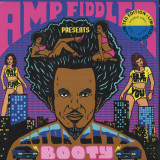
Amp Fiddler - Motor City Booty LP 2x12"

South Street delve into the The Sound Of Detroit from one of its unsung heroes, reissuing Amp Fiddler's 'Motor City Booty' LP on Yellow & Blue vinyl respectively. Coming straight off the D Funk assembly line, it's a full on dance floor affair from Motown to P-Funk, Techno and Neo Soul.

This 12 track album produced by Amp Fiddler & Yam Who? includes the massive 'Soul Fly' sounding like a Mark Ronson production had he been hanging out with George Clinton's Parlet followed by the bonafide P-Funk anthem 'Steppin' both featuring the stunning vocals by the Dames Brown girls.

Amp Fiddler is credited for taking both a young J Dilla and also Q-Tip under his wing teaching them his Akai MPC techniques, setting the path for some of Hip Hop's finest recordings which have defined the shape of things to come.

His musical collaborations & current duties include: Moodymann's musical maestro, keyboard wizard for Theo Parrish's live band, a longstanding Funkadelic member, co-writer for Sly & Robbie, Prince, Maxwell, Jamiroquai & Seal to name a few.

No en stock

Haga su pedido ahora y le encargaremos el artículo en nuestro proveedor.

25,17

Ültimo hace: 4 Meses
Pete Rock - Petestrumentals 4 LP (2x12")

Als renommierter Produzent, der für seine innovativen Produktionen und sein Gehör gelobt wird, ist Pete Rock weithin als einer der einflussreichsten Hip-Hop-Produzenten aller Zeiten anerkannt. Als Pionier der Verschmelzung von Jazz, Funk und Soul im Hip-Hop gilt er für viele als Wegbereiter einer gefühlvollen Produktion im Hip-Hop. Er revolutionierte die Rap-Produktion mit seinen Studiotechniken, machte Remixe wichtiger als Originalsongs, etablierte Ad-Libs als Standard für Aufnahmen ... und die Liste geht weiter. Pete Rock hat mit großen Namen wie Run-D.M.C, Public Enemy, J Dilla und Busta Rhymes etc. zusammengearbeitet und seine Arbeit als Produzent hat sich in über 25 Millionen verkauften Alben weltweit niedergeschlagen.

No en stock

Haga su pedido ahora y le encargaremos el artículo en nuestro proveedor.

28,53

Ültimo hace: 3 Años
Novelists FR - Déjà Vu LP

Novelists FR sind zurück! Aber „Déjà Vu“ setzt sie die Messlatte höher als je zuvor. Mit einem Vibe der an Bring Me The Horizon erinnert, kreieren viele Songs einen Pop-zentrierten Ansatz zeitgemäßer Rockmusik mit Akzenten des modernen Metalcore. Das Resultat sind große Riffs und eingängige Refrains, die in „Smoke Signals“ und „Made By Design“ perfekt vermischt sind.
Auf „Déjà Vu“ gibt es fünf atmosphärische Interludes, die als angenehme Zwischenspiele inmitten der explosiven Songs, wie „Terrorist“, „Do You Really Wanna Know“ und „Lost Cause“ zu finden sind. Diese Zwischenspiele reichen von elektronischen Soundscapes („Mae“) über liebevoll gespielte klassische Gitarre („Erre“) hin zu beflügelndem Post Rock („Colas“).
Novelists FR halten 2022 noch immer ihren groovigen und druckvollen Metalcore Sound („Heretic“). Die Band zeigt immer noch ihre Gitarrenskills, die in kurzen Solopassagen durchblitzen und sich mitsamt der Synthesizer-lastigen Klangwelten perfekt in Szene setzen. Darüber hinaus sind es die elektronischen Elemente, die die Produktion des Albums unglaublich reich klingen lassen.
Viele Dinge haben sich geändert, aber es ist auch aufgrund von Tisches eingängigen Vocals, das Novelists FR ihr Level auf „Déjà Vu“ erneut angehoben haben und am Ende mit einer gewissen Leichtigkeit ihr stärkstes, überzeugendstes, sowie authentischstes Material überhaupt abliefern.

Reservar07.10.2022

debe ser publicado en 07.10.2022

23,32
Artículos por página
N/ABPM
Vinyl