Robert Groslot's Concerto for Bass Guitar and Orchestra represents the
next step in the evolution of the bass guitar
Groslot's composition pushes the instrument to its technical limits, while creating
a unique symbiosis between the soloist and the orchestra. Although he may not
be the first composer to write for the bass guitar in a symphonic setting, Groslot
brings a level of artistry and sophistication to the composition that will continue
and accelerate the legitimation of the bass guitar within contemporary classical
music. "The idea of a concerto for bass guitar is something that I have been
dreaming of for decades. Since its invention, the bass guitar has firmly
established itself as an essential and integral part of practically every genre of
music. The bass guitar, as we now know it, was invented and produced by Leo
Fender starting in 1951. The more portable bass guitar, in comparison to the large
and unwieldy double bass, was capable of playing at higher volumes via
amplification and satisfied the new sonic demands created by the widespread
use of electrification in popular music. By increasing the overall scale of the
electric guitar and only using the lowest four strings (E, A, D, G), Fender gave birth
to a new instrument. Traditional double bassists could quickly adapt, with the
added benefit of more accurate intonation due to the frets. Hence the original
name: The Precision Bass. At the same time, guitarists could also become bass
players when called upon. As a result, many of the early bass guitarists began
their musical life as guitar players, with the most well-known example being Paul
McCartney of The Beatles.
The fact that the bass guitar had no direct lineage like the evolution of the piano
or violin over time, led to a variety of disparate playing styles without any
fundamental methodology. Unlike the more traditional instruments, the bass
guitar does not sit upon a foundation of centuries of proven methods and
established schools of playing. The evolution of the bass guitar has been a
patchwork of trial and error by active musicians. This has led to a plethora of
personal approaches and hybrid-styles, effectively leading to the rapid evolution
of bass guitar technique. Given its relatively young history, it is remarkable how
the bass guitar has grown from being an instrument taken up out of necessity, or
as an afterthought, to being as respected and vital to modern music as any of the
older, more established instruments." - Thomas Fiorini
Suche:method
- A1: Go! (Opening)
- A2: Red Drugs
- A3: Z Names
- A4: Entering The Bank (With Romance Remix By Jimmy Crash)
- A5: Clarinets
- A6: Safe Heroin (Disco 2000 Remix By Dj Keoki)
- B1: The Assembler (Words By Stephanie Rubin)
- B2: Gold
- B3: But You Must (Brothers In Rhythm Remix By Rhythm Method)
- B4: Ambient Dixie
- B5: Canaan
- B6: Flying Home (Music & Lyrics By Robin O'brien)
Black Vinyl[37,44 €]
• DELUXE HEAVYWEIGHT SLEEVE WITH SPOT-VARNISH AND ALTERNATIVE ARTWORK
• INCLUDING INSERT WITH LINER NOTES
• PVC PROTECTIVE SLEEVE
• 1994 BANK HEIST MOVIE PRODUCED BY ROGER AVARY & QUENTIN TARANTINO
• SCORE BY TOMANDANDY (THE HILLS HAVE EYES, THE STRANGERS)
• AVAILABLE ON VINYL FOR THE FIRST TIME
• LIMITED EDITION OF 2000 INDIVIDUALLY NUMBERED COPIES ON FLAMING COLOURED VINYL
Killing Zoe is a 1994 crime / bank heist film written, directed and produced by Roger Avary and co-produced by Quentin Tarantino. Killing Zoe follows the story of a safe cracker named Zed who returns to France to aid an old friend in performing a doomed bank heist. The film was labeled by acclaimed film critic Roger Ebert as “Generation X’s first bank caper movie”. After the production of Killing Zoe, Avary and Tarantino continued their collaboration and produced both the iconic award winning movie Pulp Fiction and several radio dialogues in Reservoir Dogs.
The score to Killing Zoe was produced by Tomandandy, aka Thomas Hajdu and Andy Milburn. This duo is best known for their horror scores like The Hills Have Eyes and The Strangers amongst others and many collaborations with great artists such as Lou Reed, David Byrne, U2 and Laurie Anderson.
Killing Zoe is available on vinyl for the first time as a limited edition of 2000 individually numbered copies on flaming coloured vinyl and includes an insert with liner notes.
Black & Opaque Silver vinyl. ZZK Records Presents Uji's TIMEBEING. A prehistoric tribe dances around the fire. Young revelers lose themselves on a packed dancefloor. Explorers fly a rocket toward another galaxy. In the TIMEBEING universe, these things are all connected. From the earliest days of humanity, people have strived to expand their reality beyond the limitations of the here and now and have used technology to make it happen. Their methods and machines may have changed across the centuries, but the drive remains constant, vibrating through history and occupying a space where time loses all meaning. "The art of making music is the art of manipulating time," says Uji. "I have had experiences where time shifts dramatically; sometimes it slows down to a halt, while moments seemingly become infinite. This is where the magic happens. This is when the fabric of what we call reality begins to show its seams." An Argentinian electronic producer and ethnomusicologist, Uji has been navigating those seams for more than two decades, initially as one half of the pioneering duo Lulacruza, but more recently with his own solo work. TIMEBEING continues that lineage, but also elevates it, taking shape as a interdisciplinary multimedia journey that includes a new album, an accompanying short film, an immersive live show and the birth of a new decentralized community of like-minded artists, creators, seekers, and dreamers. Mesmerizing and deeply psychedelic, the TIMEBEING LP certainly reflects the rich sound palette of Latin America and its intersection with various strains of electronic music but Uji taps into traditions both musical and spiritual that can't be hemmed in by borders and boundaries. Transcendence is the goal, and the album moves through fantastical spaces that may or may not exist: a metallic jungle, a Balkan spaceship, a cloud that morphs into a tumultuous whirlpool. All the while, Uji criss-crosses history, consulting elders and futurists alike as he throws open the doors of perception and pens a new mythology about what it means to be human. Some of that mythology takes shape in the TIMEBEING film. Written by Uji himself, the eight-part opus has been brought to life by Jazmin Calcarami, who makes her directorial debut following years of working as an experimental make-up artist with the likes of Björk and Cirque de Soleil. On stage, the transportive TIMEBEING live show is set to premiere at the Artlab Cultural Center in Buenos Aires, where it will be debuted as a part of a weekly residency this spring. More than just a concert, it's a dazzling theatrical experience, complete with dancers, costume changes, arresting visuals and even an on-stage "ship" (shaped like mollusk) where Uji himself will perform. "What we see on the surface, is only that the surface," says Uji. "There is so much more. Music is the bridge and the possibilities are limitless." Track listing: 1. Mito 2. Oropo 3. Truenatruena 4. QuemaQuema (feat. Nyaruach) 5. Kinto 6. Lunay (feat. Zola Dubnikova) 7. Flechas 8. Sirios (feat. Kristine Barrett)
Horse Lords return with Comradely Objects, an alloy of erudite influences and approaches given frenetic gravity in pursuit of a united musical and political vision. The band's fifth album doesn't document a new utopia, so much as limn a thrilling portrait of revolution underway. Comradely Objects adheres to the essential instrumental sound documented on the previous four albums and four mixtapes by the quartet of Andrew Bernstein (saxophone, percussion, electronics), Max Eilbacher (bass, electronics), Owen Gardner (guitar, electronics), and Sam Haberman (drums). But the album refocuses that sound, pulling the disparate strands of the band's restless musical purview tightly around propulsive, rhythmic grids. Comradely Objects ripples, drones, chugs, and soars with a new abandon and steely control. This transformation came, in part, due to circumstance. Sidelined from touring their early 2020 album The Common Task in a world turned upside down, Horse Lords promptly returned to their Baltimore practice space and began piecing together the music that became Comradely Objects (Bernstein, Eilbacher, and Gardner have since relocated to Germany). Removed from their tried and true method of refining new music on the road, the quartet invested less energy ensuring live playability and more rehearsing and recording. The deliberate writing and tracking process, a rarity since the band's earliest days, led to a collection of pieces that signal a new peak of creativity and musical heft without devolving into studio sprawl or frippery. Comradely Objects reflects familiar elements of Horse Lords' established palette_the mantra-like repetition of minimalism and global traditional musics, complex counterpoint, the subtleties of microtonality, a breadth of timbres and textures drawn from all across the avant-garde_with some standout stylistic innovations. At different moments, the album veers closer to free jazz than anything else in the band's catalog, channels spectral electroacoustic tones, and throbs with unexpected yet felicitous synth. While these new elements are evidence of additional studio time and care, Comradely Objects retains the dizzying obsessive rhythmic energy that galvanizes the best moments of the band. Music for people who like Mdou Moctar, This Heat!, Battles, Ndagga Rhythm Force, Can, Captain Beefheart, Art Ensemble of Chicago, LaMonte Young.
Tony Q & Barry Scran, also known as production and DJ duo 't e s t p r e s s', substitute their well-beloved moniker on Bout To Get It EP and explore a more world-building approach to their productions; featuring four patient and intricate pieces in search of new ground.
‘You Should Be Listening’ opens up the A-side with its larger-than-life and levitating textures, held in suspense by its solidified groove. ‘Bout 2 Get It’ comes in steady, and hits pace at the one minute park; the track's bassline opening and closing for maximum effect, and a tantalising vocal-loop that helps build as much suspense as it keeps the track in forward-motion.
‘Vivarium’ show’s off the pairing's knack for hybridized methods, with its UKG drum patterns and trance-tinged leads; paired with a sense of optimism and world-building, it feels like a special and versatile record; fit for multiple purposes. Finally ‘Horsepower’ shuts things down with enough energy and grace to close any set. The duo unleash a barrage of layered brakes against a silhouette of hypnotic leads and gnarly bass; embodying many of the ideas and knowledge from previous tracks, into a breathless masterstroke.
- A1: Go! (Opening)
- A2: Red Drugs
- A3: Z Names
- A4: Entering The Bank (With Romance Remix By Jimmy Crash)
- A5: Clarinets
- A6: Safe Heroin (Disco 2000 Remix By Dj Keoki)
- B1: The Assembler (Words By Stephanie Rubin)
- B2: Gold
- B3: But You Must (Brothers In Rhythm Remix By Rhythm Method)
- B4: Ambient Dixie
- B5: Canaan
- B6: Flying Home (Music And Lyrics By Robin O’brien)
Flaming Vinyl[36,09 €]
• DELUXE HEAVYWEIGHT SLEEVE WITH SPOT-VARNISH AND ALTERNATIVE ARTWORK
• INCLUDING INSERT WITH LINER NOTES
• PVC PROTECTIVE SLEEVE
• 1994 BANK HEIST MOVIE PRODUCED BY ROGER AVARY & QUENTIN TARANTINO
• SCORE BY TOMANDANDY (THE HILLS HAVE EYES, THE STRANGERS)
• AVAILABLE ON VINYL FOR THE FIRST TIME
Killing Zoe is a 1994 crime / bank heist film written, directed and produced by Roger Avary and co-produced by Quentin Tarantino. Killing Zoe follows the story of a safe cracker named Zed who returns to France to aid an old friend in performing a doomed bank heist. The film was labeled by acclaimed film critic Roger Ebert as “Generation X’s first bank caper movie”. After the production of Killing Zoe, Avary and Tarantino continued their collaboration and produced both the iconic award winning movie Pulp Fiction and several radio dialogues in Reservoir Dogs.
The score to Killing Zoe was produced by Tomandandy, aka Thomas Hajdu and Andy Milburn. This duo is best known for their horror scores like The Hills Have Eyes and The Strangers amongst others and many collaborations with great artists such as Lou Reed, David Byrne, U2 and Laurie Anderson.
Killing Zoe is available on vinyl for the first time as a limited edition of 2000 individually numbered copies on flaming coloured vinyl and includes an insert with liner notes.
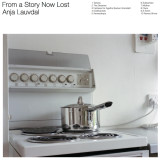
Produced by Laurel Halo and released via Norway's respected Smalltown Supersound label, Anja Lauvdal's first solo release, From a Story Now Lost, is a gorgeous musical essay reflecting on time, its perception, and lost histories rediscovered. Finally exploring her own voice after more than a decade of collaborative improvisational playing - starting at her time in jazz conservatory in Trondheim - the album is a jewel of subtle beauty and innovative detail. A freeform musician on piano, synthesizers, and electronics, Lauvdal's discography stretches back to 2013 and includes her participation in a myriad of ensembles and collaborations exploring the limits of sound and music in many forms, including noise, jazz, and more. Following her move to Oslo after graduation, she became deeply embedded in the music community there, touring with Jenny Hval as well as playing on her records. When pandemic hit and isolation was the norm, Lauvdal began working on her own, recording her improvisations in an attempt to capture something new for herself. Connecting to Laurel Halo via Smalltown's founder Joakim Haugland, the acclaimed American artist agreed to work with Lauvdal in shaping her solo record, becoming integral to its creation through all of its stages. Lauvdal credits Halo as a deep listener and gentle "thought-provoker", who contributed ideas as well as helping to shape the finished versions (Halo also worked alongside Rashad Becker on the final mix of the album). Together, they found a method of recording Lauvdal's improvisations, making small loops from those, feeding them back into the synthesizers, and making synthesizers out of the improvisations, which Lauvdal would then re-improvise with. She describes the end result, "like seeing different pieces of time around in the universe." While the record is based on Lauvdal's improvisations, some tracks were inspired Agathe Backer Grondahl, a Norwegian classical pianist and composer from the latter half of the 19th century. Lauvdal notes that Grondahl is not widely known, although her best friend Edvard Grieg is still considered Norway's most famous composer. Yet now, partly through Lauvdal, her story resurfaces and persists. "From a Story Now Lost means the story is still there," Lauvdal explains. "It hasn't gone anywhere even though nobody heard it, or maybe you're hearing it for the first time. And actually it was told a long time ago - maybe you weren't ready to hear that story at the time." This hints at the limitless nature of her music, as well as its new emotional texture. Direct in its vulnerability, immediate in its tenderness, From a Story Now Lost is a sophisticated evocation over restrained artistry spilling over with meaning.
- A1: Tnt
- A2: Swung From The Gutters
- A3: Ten-Day Interval
- B1: I Set My Face To The Hillside
- B2: The Equator
- B3: A Simple Way To Go Faster Than Light That Does Not Work
- C1: The Suspension Bridge At Iquazu Falls
- C2: Four-Day Interval
- C3: In Sarah, Mencken, Christ, & Beethoven There Were Women & Men
- D1: Almost Always Is Nearly Enough
- D2: Jetty
- D3: Everglade
TNT is the third full length studio album released by Tortoise in 1998 1998 : Tortoise"s third studio album TNT is released. In and out of print over the past decade we are happy to finally give everyone what they have been asking for - TNT on vinyl again! Pressed on high quality virgin vinyl, the two LPs are packaged in a deluxe old-style tip?on gatefold jacket fully replicating the original artwork and includes a download coupon for the first time! Tortoise"s third full-length release, TNT, was written and recorded during a 10-month interval in 1997. This longer-than-usual writing/production schedule was purposefully undertaken by the group in the hopes of crafting an expansive, diverse, yet thematically coherent offering. TNT builds upon the spare, instrumental framework of the group"s first, self-titled album, and the extended edits, melodic adventures, and klangfarben of the subsequent full-length release, Millions Now Living Will Never Die. Further to this, Tortoise"s interest in the possibilities offered by the remixing of tracks was realized within the actual production of TNT; individual elements, sections, or sometimes whole compositions mutate within the album"s shifting framework. These techniques were suitably realized thanks in part to the use of non-linear digital recording and editing methods, the first example of such work for the group
Limited edition white vinyl w/download.
This is van Wyk’s 5th full-length and first following a plethora of soundtrack work.
The followup to “Threads”, his 2021 debut on n5MD, Descendants advances the narrative of van Wyk’s broad- er-scope, atmospheric sound.
This new work brings into focus an approach that builds on van Wyk’s production methods. Underlying elements are taken further and pushed to the extremes while the influence of his film composition work continues to shine through.
Descendants is a slow dive into enigmatic depths; disarming, explorative, evolved. A tentative descent into introspection, with each track a sonic rumination of drifting elements, tunneling into a subterranean wilderness.
- 1: Lettuce And Cabbage
- 2: Pay Me
- 3: Flamboyant (Feat. Frankie Storm)
- 4: Beastie Boyz (Feat. Ron Browz & Method Man)
- 5: Billy Joel
- 6: Feast (Bo Blakk & Milly D.o.d.)
- 7: Got It Movin (Feat. Ron Browz)
- 8: Faith (Feat. Ron Browz & American Bboy)
- 9: Shark Tank (Feat. Steel & Ruste Juxx)
- 10: Hood Up (Feat. Frankie Storm)
- 11: Squad (Feat. Ron Browz & Last American Bboy)
- 12: The Answer
Since making his mark in the ‘90s through the early aughts as a part of the legendary Boot Camp Clik and one half of “Da Incredible Rap Team” and duo Heltah Skeltah, Rock (also known as the Rockness Monsta) has been conservative with solo efforts. With one of the most distinct voices in hip-hop, the Brooklyn emcee released his full-length debut solo albumRockness AP in 2017, and now looks to step back into the spotlight with his sophomore album, Ether Rocks.
Produced entirely by Harlem, New York’s Ron Browz (Nas’s “Ether”, Jim Jones’s “Pop Champagne”, etc.), the project sees Rock’s ominous tone and sharp flow transposed from the traditional Boom-Bap beats of Da Beatminerz and others, into a sonic backdrop that retains grit yet bolsters an updated and more sophisticated style from the legendary emcee.
The 12 track LP boasts guest appearances from Method Man, Steele (Smif-N-Wessun), Ruste Juxx and more, and is available via DSPs, CD and vinyl through American B Boy Records in partnership with Fat Beats.
“Dope is dope. I'm trying to break out of the underground rap box and ease into ‘grown man rap’. This album is basically my way of showing y’all more sides to myself musically and conceptually. A lot of our culture wants you to do the same thing over and over. That’s understandable but not realistic as we are forever evolving as human beings. So, while I continue to serve jedi level barbarian bars, I’m adding some things to the menu.” – Rockness Monsta
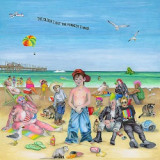
The Older I Get, the Funnier I Was, which follows Thomas’ brilliant 2020 HBO special The Golden One and his Can't Believe You're Happy Here EP released earlier this year, surveys a range of emotion and offers a broad sonic palette, moving between pop punk, electro, and the obvious influence of the singer-songwriters he grew up listening to in early childhood. It conjures the ennui of Bright Eyes alongside the barefaced storytelling of John Prine, the overstuffed lists of Fred Thomas with the lackadaisical humor of Colleen Green, among many others.
Thomas attributes the dexterity of the record to Duterte, who recorded and engineered most of it in addition to serving up plenty of encouragement when Thomas got down on the process. “As a comic, I used to test out new songs during sets to see if the funny bits were hitting, but since I wrote this in isolation I ended up writing lyrics and worrying less about making jokes,” Thomas says. That said, the album’s plenty funny. Stand-out and lead single “Rigamarole” opens with a Thomas-voiced infomercial that recalls his oft-cited lookalike Jim Carrey as the Grinch, before launching into a buoyant pop song about being depressed.
Whitmer Thomas will admit that when he traveled home to small town Gulf Shores, Alabama to record his HBO stand-up special, The Golden One, he expected to be greeted as a returning hero, a conquering king, or at minimum, a guy with a moderately successful career as an entertainer in Los Angeles. “I expected a big welcome home, open arms, but when I went back I realized: nobody fucking knows me. Nobody remembers me,” Thomas says. “In the years I’d been performing that show, I’d been romanticizing my childhood in this mythologized place, but the visit made me see that I’m not really from there anymore.”
The sense of alienation compounded when Thomas recognized how few people in town remembered his mom, to whom The Golden One is dedicated and largely about. Thomas grew up watching her perform with her twin sister at the legendary Flora-Bama Lounge, where he set the special, and still counts her as one of his musical influences. His new album, The Older I Get, the Funnier I Was, isn’t overtly about his mom, her presence is deeply felt throughout. While in Gulf Shores, Thomas discovered dozens of her old recordings, all of which had been wrecked by Katrina, but upon returning to LA, Thomas paid “a fancy place in Hollywood” to fix the tapes and hired Melina Duterte (Jay Som, Bachelor, Routine) to mix them. The two struck up a collaborative friendship, and Thomas had the sound of his mom’s voice back. “I was listening to songs she recorded when she was about my age, just these heartfelt, sweet Americana songs,” he says. “I decided then that I wanted to lose the Ian Curtis voice I always sing with; I wanted to do what came naturally, because my mom always sounded like herself, even when she was singing some cheesy reggae song about, like, Jamaica.”
Thus he went into The Older I Get, the Funnier I Was knowing it was time to retire his darkwave persona, and leaning into his natural, chirpier voice, which he says sounds “like a 12-year-old’s.” It makes sense: much of the album chronicles what Thomas calls “being a kid and feeling like you have no control and overcompensating by being annoying.” “So much of the album is about witnessing drug and alcohol addiction as a kid and seeing what it does to people, but also realizing that there's nothing you can do about it,” Thomas says. It’s familiar territory (see: “Partied to Death”) but the methodology is different this time around; true to its title, The Older I Get, the Funnier I Was isn’t always looking for laughs. Thomas might’ve left his hometown behind, but his kid self is still tagging along, a Peter Pan shadow he can’t untether himself from. The first line he sings on The Older I Get, the Funnier I Was is: “There should be a room at every party where you can just sit and watch a movie.” Find a 12-year-old who wouldn’t say the same.
A prehistoric tribe dances around the fire. Young revelers lose themselves on a packed dancefloor. Explorers fly a rocket toward another galaxy. In the TIMEBEING universe, these things are all connected. From the earliest days of humanity, people have strived to expand their reality beyond the limitations of the here and now_and have used technology to make it happen. Their methods and machines may have changed across the centuries, but the drive remains constant, vibrating through history and occupying a space where time loses all meaning. "The art of making music is the art of manipulating time," says Uji. "I have had experiences where time shifts dramatically; sometimes it slows down to a halt, while moments seemingly become infinite. This is where the magic happens. This is when the fabric of what we call reality begins to show its seams." An Argentintian electronic producer and ethnomusicologist, Uji has been navigating those seams for more than two decades, initially as one half of the pioneering duo Lulacruza, but more recently with his own solo work. TIMEBEING continues that lineage, but also elevates it, taking shape as a interdisciplinary multimedia journey that includes a new album, an accompanying short film, an immersive live show and the birth of a new decentralized community of like-minded artists, creators, seekers, and dreamers. Mesmerizing and deeply psychedelic, the TIMEBEING LP certainly reflects the rich sound palette of Latin America_and its intersection with various strains of electronic music_but Uji taps into traditions_both musical and spiritual_that can't be hemmed in by borders and boundaries. Transcendence is the goal, and the album moves through fantastical spaces that may or may not exist: a metallic jungle, a Balkan spaceship, a cloud that morphs into a tumultuous whirlpool. All the while, Uji criss-crosses history, consulting elders and futurists alike as he throws open the doors of perception and pens a new mythology about what it means to be human. FOR FANS OF: Floating Points, Four Tet, Oneohtrix Point Never, Actress, Nicola Cruz, Dengue Dengue Dengue, Nicolas Jaar, Mount Kimbie, Mucho Indio.
Jan Anderzén and his partners celebrate the transcendental power of ecstatic music. Alas Rattoisaa Virtaa is the first Kemialliset Ystävät album in four years. It is the result of chance enhancing online collaboration methods, desire to get lost in the sound archives and the high art of meticulous editing. The album title is from visions of rivers running down from Heart of Darkness to the City of Joyful Noise. If contemporary music is a high speed train passing by then KY's music would be an orgy of light under a railway bridge.
A band member Lars Mattila experiences the music of Alas Rattoisaa Virtaa in spatial terms:
"There are worlds accessed only through our auditory system. I hear a Wunderkammer of freestanding sound objects. Rhythms like sequences of seemingly random stuff laid out on the forest floor: a pair of thrones, a Henry Moore sculpture, a watermelon, two thrones, a Moore sculpture, a melon... I trust the path to go on even if I can't see behind the hill. There's motion, wether it be drunk driving or super human rapid eye movement. The sheer amount of detail makes it impossible to take everything in at once. One's perception and shifting focus reshape the experience on each listen. I remember my visit to Cappella Palatina in Palermo where Normann architecture, Arabic arches and Byzantine dome form a harmonious whole. Various cultural and spiritual influences are recognized as equals. The sense of space also brings to mind the end scene of The Lawnmower Man when the dude is trying to escape the virtual world."
An original and particular approach to rhythmic electronics, with an incredible sound, like in all of Potter's works. Six hypnotic tracks from Colin's archive of rarities, for the first time on vinyl, perfect to play really loud.
These six pieces were recorded between the late 80s & mid-90s at IC Studio, which was then located in Tollerton, North Yorkshire.
“I wanted to make some tracks which were much more rhythmic. By then the studio was a 16-track and I had acquired more equipment for making sounds and changing sounds. There was an Akai S950 sampler, an Emulator II, Roland TR727 and Yamaha RX11 digital drum machines, a Roland Juno 60, and some new effects processors. I even, briefly, used an Atari for MIDI sequencing, but using a computer in the studio felt a bit weird in those days. Ironic really, given the situation now. There were a lot of new methods to learn and the tracks on this album were the result of some of these experiments, during which I also found ways of integrating the old analog synths with the newer machines. Mixing was still done hands-on, in real-time, with alternative and often radically different takes being made of the same multitrack. Very different to the way things are done now. Better or worse? Who knows? But different.” - Colin Potter, IC Studio, London 2022.
Colin Potter is a sound engineer and musician currently based in London. He has worked within the fields of electronic and experimental music for over 40 years, collaborating with the likes of Current 93, The Hafler Trio, Organum, Andrew Chalk, and most notably as a key part of Nurse With Wound alongside Steven Stapleton. He started the esteemed ICR (Integrated Circuit Records – still active today) label in 1981 releasing a several wonderful home studio recordings of his own, as small run cassette releases.
Since the release of 2020’s acclaimed ‘The Cause of Doubt & a Reason to Have Faith’, London based Lookman Adekunle Salami has been busy working on the eagerly-awaited follow up and today has released the first taste of what’s to come in the form of new single ‘Desperate Times, Mediocre Measures’. After four studio albums and with well over 35 million streams, Salami’s music continues to push genre boundaries and is certainly no stranger to spoken word - ‘Desperate Times, Mediocre Measures’ sees him return to this method as he waxes poetically about the state of power and wealth in the modern world; "Desperate Times, Mediocre Measures" is a song that tackles the idea of the cyclical and corrosive nature of power structures across our societies - Hierarchical Structures that, like all structures in our reality, are made up of, and reinforced by people who find themselves, more often than not, enforcing the very corrupted elements of those structures purely due to the fact that this can become the prime method of propping themselves up.” Very much a shift in a new musical direction, Lookman enlisted the help of renowned string arranger Stephen Bentley-Klein, who has worked with the likes of John Barry and Deep Purple, to provide the lush orchestration which works in perfect tandem with Salami’s thought provoking word play. L.A. Salami’s message is - once again - a highly interesting insight into the pitfalls of today’s society, constantly proving how is he is an artist we should all be paying serious attention to.
LP[12,56 €]
Alex G - the Philadelphia singer, songwriter, and producer Alex
Giannascoli - releases his highly anticipated ninth studio album,
‘God Save The Animals’, on Domino.
‘God’ figures in the album’s title and multiple of its thirteen
tracks, not as a concrete religious entity but as a sign for a
generalized sense of faith (in something, anything) that fortifies
Giannascoli, or the characters he voices, amid the songs’ often
fraught situations.
Filtering his experiences through fact and fiction, Giannascoli
also opened up the songs through a more practical method:
collaboration. ‘God Save The Animals’ features several
individual contributions from his bandmates (guitarist Samuel
Acchione, drummer Tom Kelly, and bassist John Heywood) or
frequent collaborator Molly Germer on strings and / or vocals.
CD in printed inner wallet and spined capacity outer wallet with
8-page folded poster insert.
LP in gatefold outer sleeve with special gold foil print and white
polylined inner sleeve with digital download card.
C45 audio cassette in coloured shell and standard clear plastic
outer case with cassette inlay (J-card with panels) and digital
download card.
UK headline tour in 2023.
LP[26,26 €]
Alex G - the Philadelphia singer, songwriter, and producer Alex
Giannascoli - releases his highly anticipated ninth studio album,
‘God Save The Animals’, on Domino.
‘God’ figures in the album’s title and multiple of its thirteen
tracks, not as a concrete religious entity but as a sign for a
generalized sense of faith (in something, anything) that fortifies
Giannascoli, or the characters he voices, amid the songs’ often
fraught situations.
Filtering his experiences through fact and fiction, Giannascoli
also opened up the songs through a more practical method:
collaboration. ‘God Save The Animals’ features several
individual contributions from his bandmates (guitarist Samuel
Acchione, drummer Tom Kelly, and bassist John Heywood) or
frequent collaborator Molly Germer on strings and / or vocals.
CD in printed inner wallet and spined capacity outer wallet with
8-page folded poster insert.
LP in gatefold outer sleeve with special gold foil print and white
polylined inner sleeve with digital download card.
C45 audio cassette in coloured shell and standard clear plastic
outer case with cassette inlay (J-card with panels) and digital
download card.
UK headline tour in 2023.
Jerry Hunt, Philip Krumm, Jerry Willingham, James Fulkerson, Larry Austin, Dary John Mizelle, BL Lacerta, Gene DeLisa, Robert Michael Keefe, Rodney Waschka II Irida Records: Hybrid Musics from Texas and Beyond, 1979-1986 Irida Associates U.S.A., an obscure and short-lived record label formed by composer-performer Jerry Hunt, offers a glimpse into the revelatory world of new music and composition in the artist's native Third Coast. Based first in Dallas and later in Hunt's home outside the rural town of Canton, Texas, Irida presented the innovative and daring experiments_into aleatoric methods, environmental acoustics, improvisation, homemade technologies, and more_pursued by Hunt and his select collaborators, primarily working in or near Texas between 1979 and 1986. Irida's brief and compact output_seven non-sequentially numbered LPs released in unknown quantities_shared work by artists whose practices often challenged the limitations of vinyl recording. Hunt called the label a "vanity project" and frequently talked of a tax loophole he could claim if it all went belly up, but in its short lifespan Irida captured a tremendous period of creative experimentation by the artist and his friends and collaborators. This boxed set gathers Irida's complete discography for the first time. These records include early attempts by Hunt to record his generative and highly permutable scores and performances on vinyl in Cantegral Segment(s) 16.17.18.19. / Transform (Stream) / Transphalba / Volta (Kernel), as well as his only composition for piano, "Lattice," on Texas Music (both records 1979). The label distributed solo and group recordings by those in Hunt's circle as well, including Larry Austin's electroacoustic, syncretic compositions in Hybrid Musics; James Fulkerson's unique, extended techniques for the trombone on Works; a fusion of three overlaid compositions in Dary John Mizelle's Music of Dary John Mizelle; spontaneous pieces and riff-based "character improvisations" in Music of BL Lacerta by the four piece "orchestra in miniature" BL Lacerta Improvisation Quartet; and experiments in compositional "mapping" by external structures in Cartography, featuring Austin, Gene De Lisa, Robert Michael Keefe, and Rodney Waschka II. Accompanying the boxed set is a richly-illustrated reader with a detailed essay on on the label by Lawrence Kumpf and Tyler Maxin; never-before-published archival materials; newly commissioned reflections by Fulkerson and the composer Jerry Willingham; as well as an interview with Hunt and ephemera including album and concert reviews, artworks, posters and flyers, and correspondences from the musicians and composers involved.
The Orielles have created their first genuinely
contemporary record - an experimental double
album self-produced in collaboration with producer
Joel Anthony Patchett (King Krule, Tim Burgess).
In doing so, The Orielles have utilised holistic jazz
practices, oblique 21st Century electronica,
experimental 1960s tape loop methods,
otherworldly Auto-Tuned vocal sounds, the downer
dub of Burial, Sonic Youth’s focus on improvisation
and feedback, and Brian Eno’s legendary Oblique
Strategy cards.