- A1: So Far So Good;Electric Cello, Cello – Michael Peter Olsen*
- A2: Biorhythms; Electric Cello – Michael Peter Olsen*; Electric Guitar, Frame Drum – Zoon*
- A3: Terms Of Desertion; Electric Cello – Michael Peter Olsen*
- A4: Murmers; Electric Cello, Cello – Michael Peter Olsen*; Harp – Mairi Chaimbeul
- A5: Muscle Milk; Electric Cello – Michael Peter Olsen*
- B1: Sweet Meet; Electric Cello, Electronic Drums – Michael Peter Olsen*; Violin, Viola – Owen Pallett
- B2: Feel To Heal; Electric Cello – Michael Peter Olsen*
- B3: Sweat Equity; Drums, Percussion, Synth – Alaska B; Electric Cello – Michael Peter Olsen*
- B4: It's Complicated; Electric Cello – Michael Peter Olsen*
Cerca:michael peter
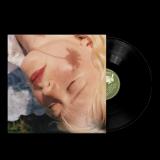
As the music industry continuously evolves, pushing boundaries and challenging conventions, artists like Michael Peter Olsen emerge to redefine the very essence of their chosen instruments. With an
impressive career spanning nearly three decades, Olsen has had mainstream exposure through collaborations with renowned artists like Drake, Ed Sheeran, and Arcade Fire and developed multifaceted talents as a player, producer, composer, and Grammy-nominated songwriter.
However, it is his electric cello based solo project, which debuted in a grimy basement club in Berlin in 2019, and his 2021 album “Yearning Flow'' that truly showcased his desire to subvert expectations of what a cello can be. With the release of "Narrative of a Nervous System," Olsen taps into the prevailing sense of disconnection in modern society, accentuated by the recent pandemic. The record delves into the increasing divisions between the mind and body, metaphorically capturing the struggles many individuals face with their mental health.
Olsen aims to bridge this disconnect through his music,
creating a powerful fusion of sonic and visual elements. While the album is instrumental and conceptually-driven, Olsen remains committed to making the music accessible and relatable. Olsen's
vision is further realized through the inclusion of special guests Owen Pallet, Màiri Chaimbeul, alaska B, and Zoon, each representing older music traditions. Celtic, European, North American Indigenous,
and Traditional Chinese are explored and stretched, offering a modern perspective on ancient intuitively based traditions. While Michael Peter Olsen dismantles the preconceived notions surrounding the cello, he continues to create evocative emotional music.
"Narrative of a Nervous System" invites listeners to explore the disconnections between mind and body, and offers a transformative musical journey that resonates with both the modern world and ancient traditions. “Essentially I’m trying to destroy the cello, but do it in a nice way”
- A1: David Stout - The Seven Rays
- A2: Phyllyp Vernacular - The Clinging
- A3: Peter Thomas - Shimmer
- A4: Peter Kardas - Other Playgrounds
- B1: Kim Carter - Energy
- B2: Nathan Griffith - Great Moves
- B3: Joel Horwitz - Finale From A Walk Down Serenity Lane
- B4: Michael Chocholak - Skomorokhi
- C1: Derryl Parsons - Floating Landscape (Including Chase Scene)
- C2: Scott Blair - Dance Pacific
- C3: Heather Perkins - Burning Through
- C4: Carl Juarez - Self-Regulation (Ii)
- C5: Talvé - The Ride
- D1: Kevin Courcey - Fallout
- D2: Suse Millemann - Patterns
- D3: Peter Nothnagle - New Snow
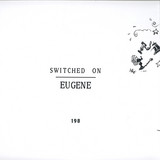
Switched-on Eugene Documents The Eugene Electronic Music Collective And Some Of The Many Synthed-out Figures In And Around Oregon's Iconic Hippie Stronghold During The 1980s. Whether Connected By Membership, Geography, Or The Tape Trading Scene, The Artists In And Around The Eemc Shared Compelling Visions Of The Future We Now Inhabit, Vividly Captured On Home-recorded Tapes And Distributed Via Zines, Classifieds, And Local Radio. Switched-on Eugene Is A Deep Dive Into A Heretofore Forgotten Sonic Microcosm Unlike Any Other.
- A1: Cat People (Putting Out Fire) - David Bowie
- A2: Major Tom (Völlig Losgelöst) - Peter Schilling
- A3: Blue Monday - Health
- A4: C*Cks*Cker - Tyler Bates
- B1: 99 Luftballons - Nena
- B2: Father Figure - George Michael
- B3: Der Kommissar - After The Fire
- B4: Cities In Dust - Siouxsie And The Banshees
- C1: The Politics Of Dancing - Re-Flex
- C2: Stigmata - Marilyn Manson & Tyler Bates
- C3: Demonstration - Tyler Bates
- D1: I Ran (So Far Away) - A Flock Of Seagulls
- D2: 99 Luftballons - Kaleida
- D3: Voices Carry - 'Til Tuesday
- D4: London Calling - The Clash
- D5: Finding The Uhf Device - Tyler Bates
A cool film needs a cool soundtrack, right And none come cooler than ATOMIC BLONDE. A double LP filled to the brim with needledrops of some of the '80s best known cuts, as well as some under the radar gems, and a smattering of brand new tracks recorded especially for the movie.
David Bowie, George Michael, The Clash, Nena, Siouxsie and the Banshees, and A Flock Of Seagulls of course need no introduction, and they all contribute absolutely killer songs here. Rubbing shoulders with these A-listers are lesser known acts such as Re-Flex, whose track 'The Politics of Dancing' was a minor hit in the UK and is a pure '80s synth-pop banger from start to finish. After The Fire went from playing uninspired prog rock to recording the should-have-been classic 'Der Kommissar,' full of funky guitar licks and a chorus so hook-laden it should be illegal. 'Voices Carry' by American new wave band 'Til Tuesday features Aimee Mann on vocals and is an all-timer everyone needs on vinyl.
- A1: Fbi Warning - Of Flesh
- A2: Rose E Kross - Access Denied
- B1: Collin Crowe - Never Gonna Die
- B2: Bergsonist - Legacy Of The Modernist Worldview
- B3: Stallone The Reducer - Impossible Theater
- C1: Jared Wilson - Frankenacid
- C2: Maroje T - Bosnian Witch
- D1: Golden Donna - Soteriophobia
- D2: Shit And Shine - Dallas Skyline
- D3: Peter Fonda - If You Rave Just Right
- E1: J Tijn - Offside
- E2: Richard P - Subjectivity
- E3: Michael Kuntzman - Space Bugs
- F1: Vapauteen - Lost Digital
- F2: Motiv-A - Untitled
"We Are What You Think We Are" is a 3 part compilation celebrating 10 releases from New York-based label and promoters Lost Soul Enterprises. The groupings of artists on each 12" represent slightly different sonic territory, from darkwave and synthpop, to acid and electro, to industrial techno, all of which together have come to define the identity of the label and the community surrounding its legendary parties.
- A1: Mary Janes
- A2: Audrey Hepburn
- A3: Say My Name In Your Sleep
- A4: Old Fashioned
- A5: Houses
- A6: Kingmaker (With Julia Michaels)
- A7: Vampire Time
- A8: My Regards
- B1: You You You
- B2: If You Let Me (With Marcus Mumford)
- B3: Flat Earther
- B4: Questions
- B5: Girl’s Just Flying
- B6: You Then Me Now
- B7: Nothing Like Being In Love
Chart topping British singer-songwriter Maisie Peters returns with much anticipated third studio album ‘Florescence’, co-produced with 2x Grammy Winner Ian Fitchuck with collaborators including Marcus Mumford and Julia Michaels. Florescence reflects on how the right love can help heal the wrong ones. It’s an album about perspective, self-realisation, healing, and ultimately, learning how to flourish. This lands as Maisie’s first new LP since she became the youngest solo British female artist in almost a decade to land a UK No.1 album with ‘The Good Witch’ back in 2023. Since then, she’s had the A-list co-signs via Phoebe Bridgers, Sam Smith and Olivia Rodrigo. She’s had a fiercely devoted fandom flock to headline tours around the world. And she’s played shows from Wembley Arena, to Glastonbury, to stadium slots with Taylor Swift and Coldplay.
“Florescence means ‘the process of flowering, of developing richly and fully’ and to me, this album describes exactly that. These 15 tracks depict a blossoming of myself from ages 23 to 25 and a blossoming of a true real love that anchors both me and this record. It tells the story of the last few long winters, with all of their villains and thorns, heartbreaks and rains, and it leads you, by the end, into a perfect English spring, into the hope and catharsis that comes when the first wildflower blooms. It’s a true representation of healing, of finding hope and peace and strength not just in somebody else, but in yourself. It is clear skies, cherry pits on the grass, windows flung open - it is Sussex country roads and London corner shop wine that leaves a stain when you kiss. It is the feeling of flying, then falling, then flying again. It is knowing that there was a point to all the sadness of before, and the point is the woman you see in this mirror now, and the person you see by her side. Love is weaved into every strand of every song on this album and for good reason - love is timeless, love is pure, love is organic and simple and effortless and real. I hope you find this album to be that as well.”
- 12-Zoll-Single, Custom Greensleeves Vintage, 12-Zoll-Hülle mit weißem Papier-Innencover - Michael Palmers „I’m still dancing” erhält auf der A-Seite ein tiefes und schweres Extended Workout mit den Radics in voller Wirkung - Eine weitere Greensleeves-Doppel-A-Seite mit großem Mehrwert, auf der Robert Ffrenchs Botschaft „No War” die B-Seite ausmacht. - Eine weitere preiswerte Doppelseite von Greensleeves mit Robert Ffrenchs Botschaft „No War” auf der B-Seite. - Beide Seiten gemischt von Peter Chemist bei Channel One im 12”-Murder-Stil - Original Roots Radics Drum and Bass aus der goldenen Ära des Reggae - Beide Seiten fachmännisch produziert von Jah Thomas
'Epiphany' is an album by composer and arranger Vince Mendoza, released in 1999, it is appearing here on vinyl for the first time and features the London Symphony Orchestra and seven jazz soloists, including John Abercrombie, Michael Brecker, Peter Erskine, and Kenny Wheeler. The album consists of eight original compositions by Mendoza, ranging from the lyrical "Impromptu" to the rhythmic "Barcelona". The music is a blend of classical and post-bop, with influences from show tunes and Spanish folk music. Mendoza's orchestrations are subtle and evocative, creating a rich and varied sonic palette. The soloists interact with the orchestra in different ways, by blending in, contrasting, and often improvising over the written parts. This prefund musical journey is a testament to Mendoza's creativity and versatility as a composer and a conductor.
“Raggamuffin Soldier” was recorded at Channel One Recording Studio in 1983 with Soldgie as engineer and a rhythm track played by Jolly Stewart and Daniel “Axeman” Thompson. Growing up in the Waterhouse neighborhood of Kingston, Jolly Stewart obviously developed this singing style and gave us a killer early digital dancehall missile with pure conscious lyrics “Raggamuffin soldier, big ina your area...me no deal with badness, me nah deal inna war, me is a raggamuffin soldier...mi raggamuffin ina foreign, raggamuffin sit down pon di riddim...how you know the raggamuffin? Me no wear no gold chain, me no wear no gold ring...”. “Raggamuffin Soldier” was produced by Fitzroy Peterkin who also produced the digital lover tune "Angie".
The Waterhouse style is a particular style of singing that emerged in the late seventies and early eighties within the Jamaican reggae scene. The Waterhouse style is commonly described as a plaintive, groaning and fluctuating vocal style, often nasal and strident, characteristics that will give it a sound that is distinct from the rest of the reggae singers. The commonly recognized founders of the Waterhouse style are the singers Michael "Mykal" Rose, Junior Reid and Don Carlos. The name derives from the famous neighborhood of the same name in Kingston, the capital of Jamaica, the place where the three pioneers were born and emerged. The Waterhouse style influenced many dancehall reggae artists of the eightiesvsuch as Tenor Saw, Half Pint, Nitty Gritty, Anthony Red Rose, King Kong, Yami Bolo, Andrew Bees...
Vincent Stewart aka “Jolly Man” is a reggae singer from Kingston 11, born december 16 1960 at Hunts Bay Lane, 4 Miles, Jamaica. Jolly started singing at age 13, he was placed in an approve School for 3 years and at the age of 16 he was released.
He started his musical career in the late 70's with Ossie Thomas, Phllip Morgan and Tristan Palmer from Black Solidarity label. Jolly Stewart recorded his first song entitled "Money Pyaka" on the classic "Pretty Looks" riddim which was recorded for Oswald Thomas on Ganja Farm label and released in 1979. Tristan Palmer who has another tune "Disappointed Lover" on the same riddim backed by The Soul Syndicate made the link with Jolly Stewart because he liked his style of song writting.
Jolly Stewart wrote three songs for Black Solidarity label: "Collie Man", "Bad Minded" and "Symbol Of Justice". All three tracks were covered by Triston Palmer. As a song writter, Jolly Stewart is behind Yami Bolo's hit on Stalag riddim “When A Man Is In Love” released on Winston Riley's label Techniques.
Jolly Stewart then decided to move on with his singjay career. He ventured to Tuff Gong studio where he met two producers. One was Prince Jazzbo from Ujama label, and the other was John John who owned the Bun Fi Bun label. He recorded "Praise jah" for Ujama and "Poverty Rush" for Bun Fi Bun. Still not satisfied with how his career was heading, he moved on to Lannaman's Preparatory School. There he learned to play guitar from a man named Fred McMurray aka Faf and Donald Jackson. Later he learned to play the keyboards by watching other musicians.
In the late 80's and early 90's, Jolly Stewart recorded many songs for various labels such as “Do Me Like So” for Bunny Gemini's label “Bun Gem Records” in 1987, “Late Last Night” and “War” for producer Zelma Rust and his label Myotta Ruff.
He also recorded for Augustus Pablo on his label Rockers International just before he died in the late 90's but we never heard about this release so probably Addis Pablo have it on old master tapes in the Rockers International archives....only Jah knows!
Brownswood Recordings releases the 7th edition of their Future Bubblers Compilation. An expansion of Gilles Peterson's network supported by Arts Council England, the ongoing talent discovery and artist development scheme focuses on developing unsigned talent and building audiences for new left-field music. With support from PRS Foundation as Talent Development Partners, the professional recording, manufacturing and physical release of Future Bubblers 7.0 is made possible. Unlike any other initiatives within music, the compilation acts as a springboard for the musician's careers, with the cooperative model providing direct revenue to the artists by a share of the profits, resulting in a sustainable income to work from. Previous Future Bubblers include artists such as Yazmin Lacey, KinKai, MC Snowy, Forest Law, Victoria Jane, NeOne The Wonderer and Kayla Painter, to name a few.
The 8-track compilation is a musically diverse collection of tracks, fusing genres across Alt-R&B, Dance, Electronic, Jazz, Rap and Trip-Hop. Opening the project, ROMY NOVA flaunts her hypnotic harmonies on a tender offering, 'The Way', whilst Sheffield-born Jackie Moonbather delivers a Funk performance on 'Separate Ways'. Up next, Ney Liqa's 'Blomster' captures a blend of Trip-Hop and Swedish-Pop, fusing her earliest musical influences before Birmingham's very own Landel's cloud-Rap excellence on '2 Many'. Maintaining the ethereal sonic, Petrelli Purple's 'Brisk' is reflective of his ability to curate a "miscellaneous north" sound, followed by MARYSIA OSU's 'Stryder' that highlights her self-coined "harps, beats, and dreams" ethos. Michael Diamond showcases his ability to float between jazz and electronic landscapes on 'Aether' before COEX rounds off the project nicely with 'Reflections'.
A new artist on the Citizen Records / Clivage Music roster, Vhinz is a musician based in Brussels. After taking his time to break onto the electronic scene, he’s now ready to share Belvédère, his debut, dreamlike album, confidently intense, sweeping between cinematic songs and soaring, epic electronic sounds.
Vincent Honca is Belgian, with Armenian roots and a love of keyboards: the mini synth he used to play as a child, the classical piano of his years of training at the Académie de Musique, the Yamaha synth of his teenage years... During the noughties of his adolescence, electronic music was omnipresent in his life as he listened to and admired Daft Punk, Moby, Vitalic, Air and The Chemical Brothers. He also went out dancing, a lot, in the nightclubs and parties of Brussels and the vicinity, and soon his love of computers, technology and synthesisers led to him producing his own music. “I wanted to create beautiful textures with synths,” he says. “I wanted to have fun and discover the possibilities. As part of the internet generation, I taught myself everything I know through reading magazines and checking the forums.”
Vincent went on to become a computer programmer and decided to make music in as much of his spare time as possible. His first productions came out in 2015, including “Drastical”, one of three deep house dancefloor-orientated tracks recorded with none other than Kris Menace. “At the time I was really searching for my musical identity,” explains Vincent, and progressively his music started to lean towards another of his passions – films and film music. “I’ve listened to soundtracks a lot since I was a teenager, and they’ve been a big influence, in particular the music for Heat by Elliot Goldenthal, Gladiator (Hans Zimmer), Saving Private Ryan (John Williams), The Last Temptation of Christ (Peter Gabriel), The Virgin Suicides (Air) and Leon (Eric Serra).” Coincidentally, Vincent has already worked on two independent Belgian films by director Christophe Karabache, UltravoKal and Vortex, both collaborations with Michel Duprez.
Now Vincent has chosen the name Vhinz, bringing together his expertise with machines and computers, his passion and enthusiasm for the electronic sounds of his adolescence and his adoration of cinema’s powerful, impactful soundtracks. Vhinz’s first track is thus called “Aether”, a track brimming with character and confidence, with sung-spoken vocals that sweeps the listener up in bewitching synthetic themes and drums like an off- kilter heartbeat. The track perfectly encapsulates the Vhinz sound, and Citizen Records – the only label he sent it to – immediately loved it and were ready to release a 12” with more. “Then Covid and the lockdown happened, and everything came to a complete halt,” remembers Vhinz. During those long two years without anything being released, the project continued its gestation and has now grown in a mini-album of eight coherent, fascinating tracks. “I really wanted a strong concept for everything, and so was born this album that I’ve called Belvédère. I imagined myself on a belvedere with a panoramic view of the world, channelling all the emotions it elicited in me into music.”
Belvédère is a dreamlike debut album, confidently intense, sweeping between cinematic songs and soaring, epic electronic sounds. It’s a place for Vhinz to showcase his dreams, talk, sing and invite others too: Margot Ferro sings on “Le Passage” and “Envole-moi”, and Michael Meers lends his vocals to “Evolution”. “My album tells a story, with the tracks in chronological order. There are both times of hope and darker periods of my life, with sadness and love,” meaning that listeners are invited to experience a suite of different emotions and be swept along by the author’s musical daydreams. Musically, the album falls somewhere between Moby, Vitalic, Air and Serge Gainsbourg, with a density and atmosphere that are completely Vhinz. “With Belvédère I was looking for beauty, but also something darker, dirtier, more organic. The album is the culmination of that.”
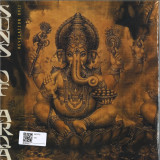
Suns of Arqa is a sonic mission created by luminary Michael Wadada, who began in 1979 after receiving higher guidance in Jamaica while working with roots reggae chanter Prince Far-I. It is a prolific traveling music collective that has seen over 200 collaborators, meant to connect people from all cultures and walks of life through a “deeply spiritual vibration that merges cultures, faiths and musical genres”. Wadada combines ancient Hindustani raga systems with Piobaireachd and Nyabinghi roots drumming, creating ritualistic world music infused with dub and reggae.
The lyrics combine both mystical and sensory elements, often including prayer and referencing a higher power but finding root in experiences common to all people- memory, sight, and physical sensation.
Their first album, Revenge of the Mozabites, was a collaboration between Wadada and On-U Sound creator Adrian Sherwood. Following its 1980 release,Peter Gabriel invited them to perform at the first WOMAD festival. Today, the record is regarded by some as a cult classic. Over the years they have played at many major music festivals including Glastonbury, Big Chill, Telerama Dub Festival, and Transmusicales, and released over 40 albums on Virgin, EMI, Interchill Records, Antler Subway, Red Rhino, and their own label, Arka Sound.
Suns of Arqa has had a seminal influence on the World Beat sound, and continued to make appearances at seasonal festivals and sacred ritual spaces all over the world until 2021. Michael Wadada passed away in the midst of planning their U.S. tour for this release. The record is a compilation of some of Wadada’s and Sleepers Record’s favorite old Sun of Arqa tracks, mixed by Youth and Adrian Sherwood, and mastered by Eroc (drummer of Grobshnitt).
Notable collaborating artists include: Guy Called Gerald, UK producers Youth and John Leckie, Greg Hunter, 808 State's Graham Massey, Finley Quaye, Sounds From the Ground, Bryn Jones aka MuslimGauze, Adrian Sherwood, John Cooper-Clarke, The late great Professor Stanley Unwin, Eric Random, New age guru Tim Wheater, Astralasia, Prince Far-I, The Orb's Alex Patterson, Zion Train, and Gaudi.
"And although the Great Spiritual being Michael Wadada has returned to source and his body to earth at our time, his music is alive and will continue to be a great force for higher spiritual realms and raising vibration through occult frequencies...Suns of Arqa will continue to raise the vibration of the hearts and minds of humanity" – Angela aka Angel-Eye (Wadada's wife and bandmate)
Jackie Mclean&Michael Carvin/Chris Mcgregor’s Brotherhood Of Breath
Melodies Record Club 001: Four Tet selects
We’re excited to be launching a new release series: “Melodies Record Club”, a string of DJ and artist curated mini compilations in loud 12” format.
The first instalment was put together by Four Tet, selecting two big peak-time Jazz tracks he used to spin regularly at Plastic People.
On one side, we’ve got all time jazz greats Jackie McLean and Michael Carvin’s De I Comahlee Ah, taken from their seminal album Antiquity recorded in Denmark back in 1975. A year and a half ago, we visited Steeplechase, the original label in the outskirts of Copenhagen. They informed us that at the time, the track was cut short as it didn’t fit on the full LP. They were kind enough to provide us with the tape of the full original recording, allowing us to release for the first time the full extended version capturing twelve and a half minutes of studio magic. Speaking with Michael back in November, he told us that every song on that album was recorded without any overdubs. They had taken their shoes off and organised the studio in such a way that they could move from instrument to instrument during the take (!!)
On the flip, we have Chris McGregor’s Brotherhood of Breath – MRA. Back in 70s London, the Brotherhood had brought together musicians who had sought refuge from South Africa’s apartheid regime and the best of a new generation of British jazz musicians. Music journalist Richard Williams, who had originally reviewed the band in the 1970s tell us: “They made music that appealed in equal measure to the head, the heart and the feet, taking the jazz legacy of Duke Ellington and Charles Mingus and adding to it the fantastic dance rhythms and gorgeous harmonies of the townships and untethered collective improvisations of the new free music”.
Four Tet’s instalment is out early May in 12” format and digitally (stream & download), first press comes with a folded A2 insert with words from and about the artists. Graphic design by Studio ChoqueLeGoff, illustration and animation by Nevil Bernard and for the audiophiles out there, remastered and cut at half speed by Matt Colton at Metropolis Studios!
The second instalment curated by Ben UFO is scheduled shortly, which will be followed over time by a string of releases including selections from Hunee, Mafalda, Floating Points, Anya & Julia from Javybz, Daphni, Josey Rebelle, Charlie Bones, Gilles Peterson… and more, stay tuned!
- The Time Bender
- Nature Boy Ft. Immanuel Wilkins
- Gloria Ft. Maro
- Moon Of Knives
- Strange Magic Ft. Michael Mayo
- Refuge
- Gigi's Metamorphosis
- Sleepwalking Roses
- A Little Thank You Note
- The Lion And Me Ft. Alon Lotringer
Seine Kunstfertigkeit hat ihn zu einer prägenden Figur des zeitgenössischen Jazz gemacht, der Improvisation, Komposition und globale Einflüsse zu einem Klang verschmilzt, der sowohl filmisch als auch zutiefst persönlich ist.
Maestro begann im Alter von fünf Jahren mit dem klassischen Klavierunterricht und entdeckte mit acht Jahren den Jazz durch die Aufnahmen von Keith Jarrett und Oscar Peterson.
Mit neunzehn schloss er sich dem Trio des Bassisten Avishai Cohen an, war Co-Autor des gefeierten Albums „Gently Disturbed“ und trat weltweit auf.
2011 gründete er sein eigenes Trio und nahm sechs Alben auf, die seinen Ruf als einzigartige Stimme im modernen Jazz.
Das neue Album stellt einen mutigen Sprung nach vorne dar und kombiniert die Sensibilität des modernen Jazz mit elektronischem Sounddesign
und der harmonischen Tiefe der klassischen Musik. The Guesthouse schafft einen üppigen, filmischen Raum, in dem Grenzen verschwimmen und verkörpert aestros Erkundung von Offenheit und Zusammenarbeit.
- A1: Another Thought (02:16)
- A2: A Little Lost (03:18)
- A3: Home Away From Home (05:12)
- A4: Lucky Cloud (02:16)
- B1: This Is How We Walk On The Moon (04:42)
- B2: Hollow Tree (02:30)
- B3: See Through Love (04:46)
- C1: Keeping Up (06:20)
- C2: In The Light Of The Miracle (06:05)
- C3: Lucky Cloud (Return) (03:00)
- C4: Just A Blip (03:42)
- D1: Me For Real (04:55)
- D2: Losing My Taste For The Night Life (04:34)
- D3: My Tiger, My Timing (05:41)
- D4: A Sudden Chill (02:45)
2026 Repress
Another Thought was the first collection of Arthur Russell’s music to be released after his death in 1992. Released in 1993 on Point Music it marked the beginning of nearly 30 years of work to let the world hear the enormous archive of unreleased recordings Arthur left behind. Be With revisits this first compilation for a new gatefold double vinyl version and a triple-fold digipak CD reissue.
Both versions of Be With’s 2021 reissue of Another Thought have been mastered by Simon Francis and the vinyl cut by Pete Norman. The original artwork has been restored and tweaked at Be With HQ for the gatefold sleeve and the triple-fold digipak, with the essential help of Janette Beckman. Each version comes with an insert reproducing the liner notes and lyrics from the original CD release.
Together with Calling Out Of Context, Soul Jazz’s World of Arthur Russell, and much of the ongoing work of Audika, Another Thought is absolutely essential for even the most casual Arthur Russell collection. In fact we’d argue it’s essential for any fan of non-obvious pop music. This is the only place where you can hear some of Arthur’s most recognisable tunes and it’s an album that absolutely deserves to be kept in press.
We’ll assume that by now you’re all at least a little familiar with the story of Arthur Russell, the farm boy from Iowa who moved to 1970s New York. Arthur Russell the genuine musical genius who died just 40 years old, leaving behind a wealth of music that dwarfed the few 12"s and LPs that were released during his short life.
Although Arthur had been working on an album for Rough Trade during his last years, with the label no-longer operating it was Point Music (Philip Glass and Michael Riesman’s label set up together with Philips) who stepped in to help Arthur’s partner Tom Lee start working out exactly what Arthur had left behind.
Tom suggested that Arthur’s friend Mikel Rouse was the right person to make the first catalogue. Working in Tom and Arthur’s apartment he had only two weeks to go through what turned out to be around 800 tapes.
As Tom explained “at the end of each day he would generally wait for me to come home and I would, to the best of my knowledge, name and identify pieces in question from that day’s work. As he worked Mikel compiled about a dozen cassettes that he thought would present the most finished sounding songs for Don/Point to use. As Don listened he would then suggest and ask me and thus we collaborated on the choices.”
Don is Don Christensen, Another Thought’s producer. With a final selection of songs from recordings made between 1982 and 1990, including sessions with some of Arthur’s regular collaborators Peter Zummo, Steven Hall, Mustafa Ahmed, Elodie Lauten, Julius Eastman, Jennifer Warnes and Joyce Bowden, it was then Don’s job to turn these into a finished album.
Another Thought is a little different from the compilations of Arthur’s music that came out since. In our conversations with Steve Knutson (who founded Audika Records and who manages Arthur’s estate together with Tom), he explained that “more than any project released by Arthur during his lifetime or posthumously by Audika, ‘Another Thought’ is the most worked over. The material was significantly edited and rearranged from the original source tapes”.
If the aim was to release a comprehensive exploration of every facet of Arthur’s music, from the most avant-garde of his avant-garde compositions through to the most disco-not-disco of his disco-not-disco tunes then the project was a spectacular failure. But as a coherent album of non-obvious pop music Another Thought is wonderful.
Starting with the sparse voice-and-cello of the title track, A Little Lost adds some guitar along with the sneaking suspicion that we’re listening to something nowhere near as simple as it first sounds. By the time we get to This Is How We Walk On The Moon - it could be the moment you notice the congas, or the percussion that’s been building behind them, or maybe it’s that blast of trumpet and trombone - we realise we’ve gone from splashing around to being completely submerged in the musical world of Arthur Russell.
From here the album heads off on its journey around the sounds of the left-field contemporary classical music of the time, re-directed towards pop ears, with minor detours through the swirling woozy disco of the half-remembered night before on In The Light Of The Miracle and My Tiger, My Timing. Whether it’s just Arthur, his cello and some bleeps on Just A Blip, or whether he has some vocal help as he does on the bounding Keeping Up, this is difficult music made so, so easy. And through it all is Arthur’s voice and cello. Sometimes drowned in distortion and sometimes clear as a bell, but always there somewhere.
A Sudden Chill finally returns us to the calmer waters we started in and this last track closes the album with a melancholy that’s not surprising given how soon after Arthur’s death the album was put together.
Whilst Another Thought holds together with the consistency of a proper album, there’s still no getting away from the fact that this was put together from audio recorded in different ways, in different places, with different people at different times. Those with keen ears will hear traces of tape hiss, the occasional blown-out note and some digital fuzz, all fingerprints of those original recordings as well as of the 1990s digital equipment that was used to piece Another Thought together.
Add to this Arthur’s obvious pleasure in making music from the sort of sounds that can make microphones, speakers and ears uncomfortable, it’s no surprise that Another Thought isn’t glossy and pristine. Don Christensen’s productions have been careful to not scrub up those original recordings so much that they lose their original vibe, understandable given that Arthur wasn’t around as a guide. We’ve applied a similarly light touch with the mastering for these Be With versions, just working to make sure they sound like they should on both the vinyl and the CD.
Despite the Discogs rumours, Another Thought was never originally released as an LP. So when it came to the sleeve for this Be With vinyl version we took the original CD artwork as a starting point to come up with something that looks like it could have been in the record racks back in 1993.
We have to thank Janette Beckman for helping us reproduce her iconic photograph of Arthur in his newspaper boat hat. One of many photographs she took of Arthur, Janette shot this in her New York studio back in 1986 for a short article in the January ’87 issue of The Face Magazine. Those with eagle-eyes will notice we’ve used an ever-so-slightly different shot from the one that appeared in The Face and then again on the original cover of Another Thought. The original has long since been lost so we’ve worked with what is left in Janette’s archives. And we also have to thank Tom Lee for giving us permission to reproduce his liner notes from the original CD booklet, together with Arthur’s lyrics.
"And what about you? What are you looking for?" - René Daumal
This musical journey pays tribute to René Daumal and his enchanting world of mysteries and magic. The album shares its title with Daumal's novel, Mount Analogue: A Novel of Symbolically Authentic Non-Euclidean Adventures in Mountain Climbing, published posthumously in 1952, eight years after the author's untimely death.
Mount Analogue is a classic allegorical adventure novel. The novel describes an expedition undertaken by a group of mountaineers to travel to and climb the titular Mount Analogue an enormous mountain on a surreal continent, that is invisible and inaccessible to the outside world and can be perceived only by the application of obscure knowledge. The central theme of mountaineering is extensively explored through literary and philosophical lenses. Daumal died before the novel was completed, providing an uncanny one-way quality to the story, which ends abruptly in the middle of a sentence.
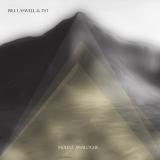
The first disc features a fifty-minute composition divided into six chapters: Introduction, Meeting, Supposition, Crossing, Arrival, and Conclusion. This album weavestogether a rich tapestry of diverse instruments, sounds, and voices that collectively tell the story of this conceptual work, loaded with a synesthetic multitude of colors, aromas, meanings, textures, and moods.
Contributors to this musical poem include Bill Laswell (bass), Henry Kaiser (guitar), Anna Clementi (vocals), Percy Howard (voice), Hideo Yamaki (percussion), Graham Haynes (cornet), Dorian Cheah (violin), Nils Petter Molvaer (trumpet), Peter Apfelbaum (keyboard), and P.ST (concept, electronics), who all lend their talents to a series of excerpts from Daumal's text.
A truly global project, the recordings took place across various locations in Europe, North America, and South America, culminating at Orange Music Studio in New York, thanks to the collaborative efforts of Bill Laswell, James Dellatacoma, and Michael Fossenkemper.
The second disc presents five improvisations for solo electric guitar by Henry Kaiser. The first solo, Jodorowsky's Peradam, draws its inspiration from Alejandro Jodorowsky's 1973 film The Holy Mountain, which was inspired by the Daumal novel. Kaiser's initial forty-eight-minute guitar solo serves as a foundational guide for his four subsequent, Rashomon-esque, solo musical interpretations of Mount Analogue, as seen through the psychedelic labyrinth of Jorodrowsky's cinematic masterpiece.
"And what about you? What are you looking for?" - René Daumal
This musical journey pays tribute to René Daumal and his enchanting world of mysteries and magic. The album shares its title with Daumal's novel, Mount Analogue: A Novel of Symbolically Authentic Non-Euclidean Adventures in Mountain Climbing, published posthumously in 1952, eight years after the author's untimely death.
Mount Analogue is a classic allegorical adventure novel. The novel describes an expedition undertaken by a group of mountaineers to travel to and climb the titular Mount Analogue an enormous mountain on a surreal continent, that is invisible and inaccessible to the outside world and can be perceived only by the application of obscure knowledge. The central theme of mountaineering is extensively explored through literary and philosophical lenses. Daumal died before the novel was completed, providing an uncanny one-way quality to the story, which ends abruptly in the middle of a sentence.
The first disc features a fifty-minute composition divided into six chapters: Introduction, Meeting, Supposition, Crossing, Arrival, and Conclusion. This album weavestogether a rich tapestry of diverse instruments, sounds, and voices that collectively tell the story of this conceptual work, loaded with a synesthetic multitude of colors, aromas, meanings, textures, and moods.
Contributors to this musical poem include Bill Laswell (bass), Henry Kaiser (guitar), Anna Clementi (vocals), Percy Howard (voice), Hideo Yamaki (percussion), Graham Haynes (cornet), Dorian Cheah (violin), Nils Petter Molvaer (trumpet), Peter Apfelbaum (keyboard), and P.ST (concept, electronics), who all lend their talents to a series of excerpts from Daumal's text.
A truly global project, the recordings took place across various locations in Europe, North America, and South America, culminating at Orange Music Studio in New York, thanks to the collaborative efforts of Bill Laswell, James Dellatacoma, and Michael Fossenkemper.
The second disc presents five improvisations for solo electric guitar by Henry Kaiser. The first solo, Jodorowsky's Peradam, draws its inspiration from Alejandro Jodorowsky's 1973 film The Holy Mountain, which was inspired by the Daumal novel. Kaiser's initial forty-eight-minute guitar solo serves as a foundational guide for his four subsequent, Rashomon-esque, solo musical interpretations of Mount Analogue, as seen through the psychedelic labyrinth of Jorodrowsky's cinematic masterpiece.
- 1: Intro
- 2: I Wanna Be With You (Feat. Marina B)
- 3: Sungalz (Feat. Marina B)
- 4: Rest Easy
- 5: Easy, Easy
- 6: Wake Up (Feat. Marina B)
- 7: When Will I See U (Feat. Kim Foxen)
- 8: It's Not Over (Feat. Shoshy)
- 9: Ah Ha
- 10: The Deep
Brooklyn duo The Still Brothers is a musical project of childhood friends Evan Heinze (The Shacks/Big Crown) and Andrew LeCoche (Ula Ruth). Heinze has toured with the likes of Khraungbin, Lee Fields and Cut Chemist, while LeCoche’s old band once opened for Paul Simon and Edie Brickell. A former student of Madlib’s uncle Jon Faddis, LeCoche has scored music for Netflix and Patagonia and sound design for Twitter, Patron, and Marvel. Signing to Lewis Recordings in 2020 the band’s first single ‘The Deep’ was instantly picked up by Steve Lamacq on BBC 6 Music who regularly plays it to this day. ‘Wake Up’ featuring the vocals of Marina B. spent six weeks on the BBC 6 Music playlist gaining support from Lauren Laverne, Gilles Peterson, Mary Anne Hobbs, Craig Charles, Huey Morgan, Cerys Matthews, Don Letts, Tom Ravenscroft and Guy Garvey. Lockdown didn’t slow down the band’s creativity with many tracks on their self-titled debut EP recorded remotely. Two such tracks were the collaborations with London based singer/songwriter Shauna Kelly aka Shoshy. ‘It’s Not Over’ and ‘Crazy’ were released on 7” and both received BBC radio support. Marina B stepped back on the mic with the upbeat hit ‘I Wanna Be With You’, a dancefloor filler mixed by St. Frances Hotel (producer for Michael Kiwanuka). The b-side ‘Sungalz’ is a hazy dream pop number that started life as an instrumental jam
- 01: Joy (Reprise)
- 02: Keep You Close
- 03: Hebron
- 04: Axis (Feat. Saul Williams)
- 05: Day&Apos;S Gon&Apos; Come
- 06: Listen
- 07: The Honourable
- 08: Hollows &Amp; Grooves
- 09: Wishful Thinking (Feat. Michael King)
- 10: Giving Thanks
- 11: Peace. Love. Life
- 12: After Home (Feat. Tony Kofi)
- 13: Sea Song
- 14: With Care
- 15: Faith (Feat. Deschanel Gordon)
MidnightRoba is the solo project of vocalist, songwriter and producer Roba El-Essawy. The voice of Attica Blues (Mo Wax 1997, Sony 2000), Raise A Symphony is MidnightRoba's second solo album. Her first album, Golden Seams, very much rooted in jazz, received support, airplay and features from DJs such as Gilles Peterson (BBC Radio 6), Tony Minvielle and China Moses (Jazz FM), Robert Elms (BBC London Live) and Kevin Le Gendre on J to Z (BBC Radio 3). Single releases from this second album have been played by Gilles Peterson (WorldWideFM & BBC Radio 6), Kate Hutchinson (Soho Radio), Marshmello (NTS), Rob Luis (Tru Thoughts), Kev Beadle, Patrick Steele, DJ Amazon, and more.
'Raise A Symphony' is music of our time. A 15-track electronic offering, it comments on topics ranging from colonialism to complicity of silence; from compromised politicians to the power of protest and gratitude to those on the frontlines of change; from displacement and sea migration to the desire to protect our loved ones and the need for kindness; to have faith in the future and the importance of searching for joy in the meantime. The self-produced album 'Raise A Symphony' sees contributions from Saul Williams, Deschanel Gordon, Michael King and Tony Kofi, amongst others. The album title takes it's name from Martin Luther King's 'I Have A Dream' speech where King calls for the nation to rise to gather together and form a 'beautiful symphony of brotherhood'.
"..in Raise A Symphony, Midnight Roba has transmuted talent into something more powerful, where bridges built from her exquisite, unique harmonies, soaring songs and percussive productions allow competing emotions to co-exist and feed into each other. This album itself is a form of community; voices in unison, reaching outwards and offering restoration and upliftment throughout this remarkable work of love and fury." Emma Warren
a 01: Joy (Reprise) [feat. Deschanel Gordon]
Das zweite Werk eines Künstlers hat in der öffentlichen Kritik meist einen besonders schweren Stand. Die
Vorschusslorbeeren, die beim Debüt noch großzügig verteilt werden, sind schnell aufgebraucht. So erging
es auch der zweiten Fehlfarben-LP bei ihrer Veröffentlichung im Herbst 1981. Zu sehr wurde „33 Tage in
Ketten“ an dem Überalbum „Monarchie und Alltag“ gemessen.
Bei „33 Tage in Ketten“ war der charismatische Shouter Peter Hein nicht mehr dabei. Kurz vor einer
geplanten Deutschlandtour im Frühjahr 1981 hatte er der Band den Rücken gekehrt, weil er mit dem Erfolgsdruck nicht fertig wurde. Gitarrist Thomas Schwebel, der bei „Monarchie und Alltag“ noch die Texte mit
Peter Hein zusammen schrieb, übernahm schließlich das schwere Amt des Frontmanns. Das im Sommer
1981 in den Kölner EMI-Studios eingespielte Album ist wesentlich härter und aufwühlender als „Monarchie
und Alltag“. Beim wuchtigen Opener „Tanz mit dem Herzen“ trommelt der 2023 verstorbene Uwe Bauer,
der ohnehin nie ein Freund leiser Töne war, wie ein junger Gott, während Bass (Michael Kemner) und
Gitarre (Uwe Jahnke) marschieren.
Für die strikt limitierte 2LP-Reissue in braunem Vinyl konnte neben raren B-Seiten auch das komplett
unveröffentlichte Stück „Warten auf“ sowie bislang ebenfalls noch nie gehörte Live-Aufnahmen von einem
81er-Gig bei Radio Bremen gesichert werden. Feuilleton-Autor Marc Hairapetian steuert zudem aktualisierte und exklusive Linernotes bei.
Ein absolutes Must-Have!