vorbestellen25.05.2025
erscheint voraussichtlich am 25.05.2025
25,63 €
erscheint voraussichtlich am 25.05.2025
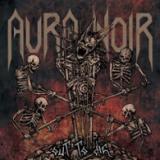
Norway's Aura Noir was formed in 1993 by Aggressor & Apollyon in pursuit of a more thrash- based form of black metal than much of what was coming out at the time - particularly in their homeland - citing bands such as Slayer, Sodom & Kreator as inspirations along with purveyors of the scene such as Venom, for a dirtier, stripped down, violent black/ thrash metal sound. Their first official release was the 'Dreams Like Deserts' EP on Hot Records, & from there-on the band became a truly cult act, releasing a string of albums among ongoing live performances over the subsequent decades. All members of Aura Noir have had illustrious careers to date, with Carl-Michael Eide (Aggressor) notable for his work in Ved Buens Ende, Dodheimsgard, Virus, & Fleurety, as well as being part of other scene icons such as Ulver & Satyricon in their formative years. Apollyon, currently also seen in Coffin Storm with Darkthrone's Fenriz, previously featured in Dodheimsgard, as well as Lamented Souls & Immortal. Completing the trio is Blasphemer, formerly of fellow Norwegian legends Mayhem, as well as being current mainman in his recently established band, Ruim. Originally released in 2012, 'Out To Die' was the band's fifth full length release, & a continuation of the savage raw & ugly feast offered by its predecessors, containing eight relentless tracks in praise of the old thrash masters & early primal black metal forefathers of the 80's. 'Out To Die' features additional guest lyrics by Dirge Rep (Gehenna/Enslaved), & Fenriz, whilst the fittingly underground cover art was created by the prolific artist, Costin Chioreanu.
erscheint voraussichtlich am 02.10.2026
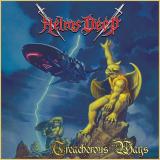
Members of Raven (NWOBHM). Incredible old school USPM with gorgeous art from Michael Whelan. FFO: Griffin, Liege Lord, (early) Nasty Savage, Satan.
erscheint voraussichtlich am 07.08.2026

Alongside the legendary Mercyful Fate and more obscure acts such as Alien Force, Randy, and Crystal Knight, Copenhagen's Witch Cross are undoubtedly one of the best Danish metal bands of all time. Their 1984 album “Fit For Fight” is definitely among the top five metal records in the country. One of the two guitarists on this masterpiece was a certain ‘Cole Hamilton’. His real name is Ole Hamilton Poulsen. He joined the band after the recording of Witch Cross' debut single, “Are You There” (from 1983). His partner on guitar was Mike Wlad (his birth name is Michael Koch). Mike Wlad is not only a founding member of Witch Cross, but also their main songwriter. After the premature end of the original Witch Cross, Mike Wlad formed a band called Harlot, which released a hard-to-find album called “Room With A View” in 1988. He then moved to London. Witch Cross are now active again and are currently working on their third album.
erscheint voraussichtlich am 27.03.2026

-Boxset mit vier Alben featuring Drummer Neudi (u.a. Manilla Road, Trance, Griffin, Savage Grace…)
- Limited Edition mit handsignierter Autogrammkarte
Schon mit 8 Jahren entdeckte Andreas Neuderth, der seit Mitte der Achtziger nur noch den Spitzname NEUDI benutzt, sein Talent für das Schlagzeug. Sogar bereits schon etwas früher wurde er zum Fan harter
Rockklänge, die üblichen Verdächtigen wie Kiss, Status Quo und Rush. Mit 15 Jahren, im Jahr 1986, taucht sein Drumming erstmals auf einem Tape der Band SUDDEN DARKNESS auf, was 2026 zu einem Jubiläumsjahr für
den heute in Rheinhessen lebenden Musiker darstellt. Seine bekanntesten Stationen sind neben MANILLA ROAD (2011 bis zum Tod von Mark Shelton im Jahr 2018) und SAVAGE GRACE (2009/2010) aktuell TRANCE,
ROXXCALIBUR, ANGEL OF DAMNATION, IRONSWORD, JAMESON RAID und die Manilla Road-Nachfolgeband SENTRY. Das 1994er ECONOMIST Album „New Built Ghetto Status“ bezeichnet Neudi trotz all diesen genannten Namen als „eines der drei besten Alben, auf denen ich zu hören bin“. In der Tat darf man getrost sagen, dass es den Stil von ECONOMIST wohl nur einmal gibt. 1995 wurde die CD von Massacre/Intercord lizensiert, doch
mit dem progressiven Stil war man seiner Zeit einfach zu weit voraus.
Als Reissue, erstmals als Doppel LP mit dem unveröffentlichten zweiten Album „Mind Movies“ erschienen, erntete man nun endlich die verdient euphorischen Kritiken. VIRON (2004/2006 und 2008) war nach einer Zeit
der Experimente Neudis Rückkehr zum traditionellen Metal, den er als Fan auch zuvor nie verlassen hat. Die zwei hochgelobten Alben waren indirekt der Vorgänger der erfolgreicheren Band ROXXCALIBUR. SCROLLKEEPER
ist eine Band aus Texas, die für ihre EP „Wetico“ als Manilla Road-Fans mit Neudi zusammenarbeiten wollten. Neudi ist bekannt für sein „busy drumming“. Beeinflusst von Neil Peart (Rush), Randy Foxe (Manilla Road) oder Ian Paice (Deep Purple) bietet er nicht nur die genreübliche Rhythmusarbeit „im Hintergrund“, sondern bringt das Instrument teils auffällig in den Vordergrund. (Infotext von Michael Gresner, Januar 2026)
erscheint voraussichtlich am 06.03.2026

Leviathan Whispers is an album of longings, laments, deliriums and drones, savage and sublime. Within are breaths, hums and bone songs for shadows and fl ames to dance to. Tim Hill is an inspirational fi gure within the UK arts, jazz, noise and improv world. A shapeshifting maverick exploring Britain's diverse musical traditions, from rough music to industrial folk, free jazz to dub, post-punk to avant-rock, incorporating ambient electronics, hymns and noise. Having worked with pioneering arts company Welfare State International, Tim’s performed inside Stonehenge, on the back of trucks at Notting Hill Carnival, leading giants through the streets of London, Dublin and Galway, at Olympic Torch events, celebratory feasts and leading humanist funerals. Tim is also festival director for The Sound of the Streets, a charity promoting outdoor music and musical director of the Wye Valley River Festival where he helps street bands across the country including The Big Noise in Taunton and Horns of Plenty in Oxford.
Leviathan Whispers is a spectral, contemplative selection of Tim's recorded work, including material created for art installations, outdoor projects, solo performances and personal meditations. Inspired by landscape and the eternal pull of Blake's Albion, baritone, alto and soprano saxophones are mixed with tape loops, old synths, recycled live recordings, woodwinds and reeds. Other sounds are processed by Colin Potter (Nurse With Wound) and drone artist Jonathan Coleclough. The album artwork and accompanying videos feature sound sculptures by Michael Fairfax (Royal Society of Sculptors) alongside unsettling visuals by fi lm-maker and junk-alchemist David Young. "an amazing player - there's a weight to his music with a wonderfully dark edge" Corey Mwamba / BBC Radio 3 Fans of Colin Stetson, John Surman, Anna Von Hausswolff , William Basinski and La Monte Young will fi nd much to savour on this new 12" LP. LAUNCH PARTY: we're holding a special launch event with a live performance and talk by Tim Hill on Saturday, 15th November inside a beautiful Victorian chapel beneath Royal Berks Hospital, Reading.
erscheint voraussichtlich am 21.11.2025

I’m Sad as Hell and I’m Not Going to Fake It Anymore is the best, sharpest, briefest, and fourth record from Paper Castles, the band fronted by Jericho, Vermont’s Paddy Reagan. In one way, it’s a simple and modest collection of nine fuzzy guitar-led pop songs. The title, a play on the iconic scene from Network (written by Paddy Chayefsky), can be clocked as nothing more than that at first glance, playful. But like the music behind it, Reagan thinks you can sit with the title if you want.
I'm Sad as Hell... was tracked by Benny Yurco (Michael Nau, Lily Seabird, Robber Robber) in a little over eight hours across two days, a testament to the quartet’s perfection of these songs on stage, and to Yurco’s comfortable Little Jamaica Recordings in Burlington.
Tompkins and Mangan lock into a wonderful foundation for Kitz’s lolling guitar lines on “Clean + Organized,” while on “Avalon,” the band sings harmony for the most ironic line in the waltz (“We don’t really want company”) before their instruments explode into technicolor. “Lying Here” showcases PC deftly navigating washed out verses and tight knit, twangy choruses, all in a tidy, under-three minute package.
Lyrically, Reagan is at his finest: playful and savage, biting and beautiful. Double entendres and clever wordplay abound—a line like “it's not the ideals but the high heels that’ll make you a man” from “Modern Myth” will make you wish John Prine was still around to hear it. On “Name Changer,” when Reagan sings “I’ll never change my name again / Got a real good handle and I don’t want to give it in,” what kind of “handle” is he referring to? I’d like to think Elvis Costello would smile at most lines in the Attractions rave-up “Content Creator.”
erscheint voraussichtlich am 09.05.2025

Rock and Roll Hall of Fame Member Little Richard is a musical institution. The Architect Of Rock ’n’ Roll’s 1970 return. Pressed on opaque pink vinyl. Mastered by Grammy®-winning engineer Michael Graves. Lacquers cut by Jeff Powell at Take Out Vinyl/Sam Phillips Recording Service in Memphis. Packaging contains liner notes from Bill Dahl. Some successful recording artists are lucky to enjoy a lengthy career and perhaps one successful comeback after their popularity wanes over time. Rock ’n’ roll pioneer and absolute legend, Little Richard, achieved several. In the ’50s he racked up a non-stop string of smashes for Specialty Records with producer Bumps Blackwell like the blistering cuts, “Tutti Frutti,” “Long Tall Sally,” and “Rip It Up.” The Georgia Peach was deemed too uninhibited and unpredictable for TV variety shows to present to the nation, but the records were undeniable hits. He was clearly, an artist far ahead of the culture and times. Little Richard returned in 1970 with The Rill Thing and instead of sticking around his adopted home of Los Angeles, Richard set out for Rick Hall’s FAME Recording Studios in Muscle Shoals, Alabama to record the album for Reprise, joined by Bumps, who was now his manager. The opening track, “Freedom Blues,” was released in April of 1970 and hit #28 on the charts. The second cut, “Greenwood Mississippi,” was also released as a single in August and also made a Billboard appearance. The marathon title track (running a whopping 10 minutes and 20 seconds) was an intense funk jam that was captured in one take. The album also featured covers of tunes by The Beatles and Hank Williams—it was a different sound by far than the savagely rocking attack he’d ridden to fame like a rocket at Specialty close to a decade and- a-half earlier, but it was every bit as effective. The Rill Thing bore the slogan “The Little Richard Sound” on its labels. “He was at his peak with his vocals on there,” says guitarist Travis Wammack admiringly. “He was just singing his booty off!” The Rill Thing is back as a 12" long player, and pressed on opaque pink vinyl with a printed inner sleeve that includes liner notes by Bill Dahl.
erscheint voraussichtlich am 13.12.2024

FOLLOWING THEIR RECENT REUNION, THE DELGADOS REISSUE THEIR FOURTH STUDIO ALBUM HATE ON COLOURED VINYL AND CD TO MARK ITS 21st ANNIVERSARY
Ushering in a new era of emotionally vulnerable and cinematic songwriting for celebrated Glasgow group The Delgados, 2002’s Hate is the group’s most ambitious recorded statement to date. Recorded amidst a backdrop of personal change and international crisis, Hate’s internal alchemy transmogrifies darkness into light. It’s an enclosed universe full of tragedy and magic, a swirling galaxy of lush orchestration, misanthropy dealt with kindness and black humour. Above all it showed a band coming to terms with their fragility with a new power and grace.
In Hate, the band’s ambition saw them striving to reflect the breadth of human experience, both the joy and tragedy of living in tumultuous times. Initially commissioned by The Barbican in London to compose music for a film about artist Joe Coleman, the instrumental music that instigated Hate was laden with darkness from the outset. The Delgados’ worldview has always been informed by nuance, an oblique but incisive lyrical perspective but on Hate a new rawness is woven throughout the songs. Coleman’s original subject matter - portraits of troubled historical figures like Ed Gein, Mary Bell and Jayne Mansfield - influenced the tonality of the music but the songs were written against a backdrop of international tumult and personal life changes for the band members. Beginning writing sessions following a family bereavement in drummer Paul Savage’s family, Hate was then recorded while both Alun Woodward and co-singer/guitarist Emma Pollock were expecting new additions to their young families, the latter with drummer Paul Savage. In the background to the recording process were the attacks on the World Trade Center of September 2001 and their aftermath. In this context, it’s remarkable that an album was made at all, let alone one so grand and compassionate. It’s a masterclass in restraint and imagination.
Hate sounds like the world in all its ugly glory. Recorded in Glasgow and New York with Tony Doogan, Dave Fridmann and the band as producers and using over 20 additional musicians, Hate grabs the baton from the group’s breakthrough critical and commercial success The Great Eastern. Bolder, broader and more all-encompassing than anything the band had previously attempted, the album’s palette is furnished by a string section, brass and reed instrumentation, a choir and electronic elements augmenting the core group of Emma Pollock, Alun Woodward, Paul Savage and Stewart Henderson. Far from being over the top, the group’s skill is in attention to detail, in honing and refining each arrangement, allowing each element its space.
It’s a fine balancing act that pays massive dividends. Woodward’s new lyrical vulnerability is spotlighted on tracks like The Drowning Years, which throws elegiac string arrangements against the narrative of characters living in darkness, punctuated by couplets that bring a real-life documentary feel to the narrative. All Rise brings a black comedy to the idea of a confessional before a transcendent, choir-led refrain brings ecstatic resolution to Woodward’s vocal in its highest register. On the single All You Need Is Hate, Woodward’s trick of subverting the Beatles standard showcases the dark humour at the centre of Hate. Here The Delgados’ perversity is in full flow, nurturing a glowing light from darkness, the resolving melody and Fridmann production recalling contemporaries The Flaming Lips (whose Michael Ivins assisted in mixing) or Mercury Rev. The perversity is the surging serotonin induced by the group while singing the lines “Hate is everywhere, inside your mother’s heart and you will find it there. You ask me what you need? Hate is all you need.”
It’s a dark magic that pervades Hate, indeed it’s almost the driving force throughout the album. Flipping minor to major and back again, Favours is fuelled by fear and violence before blasting into the heavens with the gauche line “and you’re feeling fine,” operating in stark contrast to the verses’ tone. Album opener The Light Before We Land finds Emma Pollock in the aftermath of recent family trauma. Her vocal is effortless; a study in steady restraint against the massive, Fridmann-patented drum sound powering Savage’s playing and Henderson’s instantly recognisable melodic basslines. Coming In from the Cold is Pollock in full flight, lifted to the heavens by wide-screen, instrumental texture. Her presence on Hate highlights her knack for lyrical impressionism, the timbre of her voice lending itself to drama while always retaining a mystique. Never Look At The Sun, inspired by the Coleman painting The Big Bang Theory (itself an explosives-themed study), revels in paranoia, her performance ringing out in the eye of the storm conjured by the swirling arrangements. It reaches the peak of a redemptive arc while seemingly parodying the very idea of redemption.
Hate was the sound of The Delgados completely fulfilling their potential, a fully realised vision buoyed by the weight of coming through a darkness into light. For its 21st anniversary, the album is being reissued on the band’s own Chemikal Underground on coloured vinyl and CD. Hate is all you need
erscheint voraussichtlich am 31.01.2024

Red Vinyl
Auf "Wages Of Sin" muss sich die neue Sängerin Angela Gossow nun zum ersten Mal einem scheinbar übermächtigen Schatten aus der Vergangenheit stellen. Schließlich ersetzt sie keinen Geringeren als Johan Liiva, der bereits vor dessen Carcass-Tagen mit Arch Enemy-Gitarrist Michael Amott in der Ur-Death-Metal-Combo Carnage zusammengespielt hatte. Dass sie diese Aufgabe so bravourös gelöst hat, ist unglaublich!Ähnlich wie 'Burning Bridges' aus dem Jahr 1999 ist 'Wages Of Sin' ein mächtiges Sperrfeuer an komplexen Riffs, das zwischen blendend brutal und atemberaubend melodisch wechselt und dabei eine Intensität beibehält, die man bei heutigen Metal-Aufnahmen nur noch selten hört. Das musikalische Können ist wie immer tadellos, wobei die Amott-Brüder einmal mehr beweisen, dass sie Meister ihres Fachs sind, wobei der Großteil ihrer Gitarrenarbeit ebenso viele Death-Metal-Obertöne aufweist, wie sie von einem traditionelleren Hard-Rock-Ansatz abgeleitet zu sein scheinen, insbesondere bei den Songarrangements, die nur selten vom Konventionellen abweichen.- Schweres 180g Vinyl als schwarze sowie farbige Version, jeweils inklusive 2-seitigem Einleger- Special Edition CD, in "PocketPac" (umweltfreundliche Verpackung) und mit 16-seitigem Booklet
erscheint voraussichtlich am 26.05.2023

Black Vinyl
Auf "Wages Of Sin" muss sich die neue Sängerin Angela Gossow nun zum ersten Mal einem scheinbar übermächtigen Schatten aus der Vergangenheit stellen. Schließlich ersetzt sie keinen Geringeren als Johan Liiva, der bereits vor dessen Carcass-Tagen mit Arch Enemy-Gitarrist Michael Amott in der Ur-Death-Metal-Combo Carnage zusammengespielt hatte. Dass sie diese Aufgabe so bravourös gelöst hat, ist unglaublich!Ähnlich wie 'Burning Bridges' aus dem Jahr 1999 ist 'Wages Of Sin' ein mächtiges Sperrfeuer an komplexen Riffs, das zwischen blendend brutal und atemberaubend melodisch wechselt und dabei eine Intensität beibehält, die man bei heutigen Metal-Aufnahmen nur noch selten hört. Das musikalische Können ist wie immer tadellos, wobei die Amott-Brüder einmal mehr beweisen, dass sie Meister ihres Fachs sind, wobei der Großteil ihrer Gitarrenarbeit ebenso viele Death-Metal-Obertöne aufweist, wie sie von einem traditionelleren Hard-Rock-Ansatz abgeleitet zu sein scheinen, insbesondere bei den Songarrangements, die nur selten vom Konventionellen abweichen.- Schweres 180g Vinyl als schwarze sowie farbige Version, jeweils inklusive 2-seitigem Einleger- Special Edition CD, in "PocketPac" (umweltfreundliche Verpackung) und mit 16-seitigem Booklet
erscheint voraussichtlich am 26.05.2023

White Vinyl[33,24 €]
DOUBLE BLACK LP : 2 x 140 G Black Vinyl , Sleeve & 2 x Heavy Weight Printed Inner with UV Gloss Finish
Legendary electronic music duo Orbital return Early 2023 with new album “Optical Delusion”, the Hartnoll brothers first studio album since 2018’s Monster’s Exist. Recorded in Orbital’s Brighton studio, “Optical Delusion” includes contributions from Sleaford Mods, Penelope Isles, Anna B Savage, The Little Pest, Dina Ipavic, Coppe, and perhaps most surprisingly, The Medieval Baebes.
Earlier this year, Orbital celebrated their storied history with “30 Something” which, unlike other Best Of’s, contains reworks, remakes, remixes and re-imaginings of landmark Orbital tracks including “Chime”, “Belfast”, “Halcyon”, “Satan”, and “The Box”
SHORT BIOG:
“A human being experiences himself, his thoughts and feelings as something separate from the rest of humanity – a kind of optical delusion of his consciousness. This delusion is a kind of prison for us, restricting us to our personal desires and to affection for a few persons nearest to us. Our task must be to free ourselves from this prison…”
You many have seen this quote attributed to Albert Einstein on social media, the archetypal Smartest Guy Ever apparently having an out-of-character religious epiphany. It certainly leapt out at Paul Hartnoll of Orbital who spotted it in Michael Pollan’s 2018 book How to Change Your Mind: What the New Science of Psychedelics Teaches Us About Consciousness, Dying, Addiction, Depression and Transcendence.
“As soon as I saw ‘optical delusion’ I thought Oh hey, that’s the album title,” says Paul. “It just seemed to say so much about how people construct their own realities, how we see patterns that aren’t there, how we see what we want to see.
“But it’s actually a misquote. He never quite said that. In the German original what he’s really saying is that human experience is as relative as physics. Wouldn’t it be good if we could accept that, and find a kind of universal theory of everything for the human race? Then you look at everything from history to art to your Twitter feed and you think yeah, that’s what we’re all trying to do all of the time…”
Hence ‘Optical Delusion’, the tenth original Orbital album and the latest in a burst of renewed post-pandemic creativity for two brothers who’ve stayed at the top of their game longer than anyone from the post-1988 Class of Acid House.
Now with ‘Optical Delusion’ the Hartnolls dig deeper into the unquiet psyche of our increasingly surreal and disordered world. Sketched out partly during lockdown but fully recorded in the uncertain After Times, the album summons up conflicting emotions and sometimes beguiling images from years when the science fiction doomsdays that the Hartnolls watched on TV as kids finally came true. There are mesmeric tracks with names like ‘The New Abnormal’ and ‘Requiem For The Pre-Apocalypse’ and ‘Day One’. But there are also straight-up bangers and ethereal cosmic dreams, abstract sound wars and deeply human songs of separation and loss.
And it all starts with a bang. Lead single ‘Dirty Rat’, an outright Fall-meets-Front-242 class rant with vocals by Sleaford Mods mob orator Jason Williamson, harks right back to the Hartnolls’ days of politicised anarcho-squatpunk. It began as a remix swap (Orbital did the Sleafords’ ‘I Don’t Rate You’) and morphed into a comic, brutal, bass-driven harangue not so much against our rulers but at the petty, mean-spirited, frightened, Mail-reading voters who put them there: the people who are “blaming everyone in hospital/blaming everyone at the bottom of the English Channel/blaming everyone who doesn’t look like a fried animal.”
Also key to the album is opening track ‘Ringa Ringa (The Old Pandemic Folk Song)’ which returns to an Orbital truism, that time always becomes a loop. This chugging, cyclical Orbital groove gives way to an unnerving past-meets-present timeslip fit for ‘Sapphire And Steel’ as goth maenads The Mediaeval Baebes materialise to sing ‘Ring O’Roses’ – the innocent nursery rhyme whose roots are in the Black Death.
“I’ve always liked folk music and mediaeval sounds,” says Paul, himself an occasional Morris dancer. “I had the basis of that track and I wanted to spin it off somehow.” Trawling his archives he stumbled on The Mediaeval Baebes’ version of ‘Ring O’Roses’ “and my hackles just went up. I was like, my God, this is the original pandemic folk song.”
?his being Orbital, there are collaborations galore on the album, the roles once played by Alison Goldfrapp, Lady Leshurr or David Gray now filled by new talents. London singer-songwriter Anna B Savage contributes a compellingly fragile, Anohni-like vocal to ‘Home’, in which nature reclaims the scorched and vacant mega-cities. ‘Day One’ is a pulsing techno track featuring the singer Dina Ipavic. Paul got in touch with her after working on a score for a sculpture show of giant robotic installations by his friend Giles Walker during the pandemic. First Paul cut up his own score and Ipavic’s vocals on the track The Crane, which appears on the deluxe version of the album. Then he thought, Why not work with her for real? The result is school of ‘Belfast’, a bassy dreamscape with vocalised clouds billowing above.
The pensive ‘Are You ?live?’ adds to the Orbital product range of existential questions (‘Are We Here?’, ‘Where Is It Going?’) in collaboration Bella Union signings Penelope Isles, AKA brother and sister act Lily and Jack Wolter. “They’re our studio mates, they work upstairs!” says Paul happily. “And they’ve both got amazing voices.”
But Orbital are Orbital and never far from the dancefloor. “Eventually the more abrasive bits came back into the fold…” ‘You Are The Frequency’, first of two tracks to feature mysterious vocalist The Little Pest, surrounds the listener with warped voices ordering you to the dancefloor (Phil: “we wanted the idea that the music is kind of absorbing you”). And the second, the sinister ‘What A Surprise’, traps you in a paranoid electronic hall of mirrors.
In another nod to Orbital’s resurgent past the cover artwork once again comes from fine art painter John Greenwood, creator of fantastical grotesques for the covers of ‘Snivilisation’, ‘In Sides’ and Orbital’s most recent album, 2018’s ‘Monsters Exist’. Orbital had just had a slick Mark Farrow cover for ‘30 Something’ – this is a return to the overripe and bulbous techno-organic constructions that somehow express Orbital’s own uncontrollably fertile sound.
There are gaps in the future that Orbital are desperate to fill too; there will be tours and festivals and rooms and fields full of people. Those long paralysed months when we had little to look forward to but a Zoom DJ set made Paul and Phil appreciate the things that make life worth living.
Bestelle jetzt und wir bestellen den Artikel für dich beim Lieferanten.

Black Vinyl[31,05 €]
2 x Solid White LP, 5mm spine Sleeve UV Gloss Finish, 2x Heavy Weight Printed Inner Sleeve UV Gloss finish, marketing sticker.
Legendary electronic music duo Orbital return Early 2023 with new album “Optical Delusion”, the Hartnoll brothers first studio album since 2018’s Monster’s Exist. Recorded in Orbital’s Brighton studio, “Optical Delusion” includes contributions from Sleaford Mods, Penelope Isles, Anna B Savage, The Little Pest, Dina Ipavic, Coppe, and perhaps most surprisingly, The Medieval Baebes.
Earlier this year, Orbital celebrated their storied history with “30 Something” which, unlike other Best Of’s, contains reworks, remakes, remixes and re-imaginings of landmark Orbital tracks including “Chime”, “Belfast”, “Halcyon”, “Satan”, and “The Box”
SHORT BIOG:
“A human being experiences himself, his thoughts and feelings as something separate from the rest of humanity – a kind of optical delusion of his consciousness. This delusion is a kind of prison for us, restricting us to our personal desires and to affection for a few persons nearest to us. Our task must be to free ourselves from this prison…”
You many have seen this quote attributed to Albert Einstein on social media, the archetypal Smartest Guy Ever apparently having an out-of-character religious epiphany. It certainly leapt out at Paul Hartnoll of Orbital who spotted it in Michael Pollan’s 2018 book How to Change Your Mind: What the New Science of Psychedelics Teaches Us About Consciousness, Dying, Addiction, Depression and Transcendence.
“As soon as I saw ‘optical delusion’ I thought Oh hey, that’s the album title,” says Paul. “It just seemed to say so much about how people construct their own realities, how we see patterns that aren’t there, how we see what we want to see.
“But it’s actually a misquote. He never quite said that. In the German original what he’s really saying is that human experience is as relative as physics. Wouldn’t it be good if we could accept that, and find a kind of universal theory of everything for the human race? Then you look at everything from history to art to your Twitter feed and you think yeah, that’s what we’re all trying to do all of the time…”
Hence ‘Optical Delusion’, the tenth original Orbital album and the latest in a burst of renewed post-pandemic creativity for two brothers who’ve stayed at the top of their game longer than anyone from the post-1988 Class of Acid House.
Now with ‘Optical Delusion’ the Hartnolls dig deeper into the unquiet psyche of our increasingly surreal and disordered world. Sketched out partly during lockdown but fully recorded in the uncertain After Times, the album summons up conflicting emotions and sometimes beguiling images from years when the science fiction doomsdays that the Hartnolls watched on TV as kids finally came true. There are mesmeric tracks with names like ‘The New Abnormal’ and ‘Requiem For The Pre-Apocalypse’ and ‘Day One’. But there are also straight-up bangers and ethereal cosmic dreams, abstract sound wars and deeply human songs of separation and loss.
And it all starts with a bang. Lead single ‘Dirty Rat’, an outright Fall-meets-Front-242 class rant with vocals by Sleaford Mods mob orator Jason Williamson, harks right back to the Hartnolls’ days of politicised anarcho-squatpunk. It began as a remix swap (Orbital did the Sleafords’ ‘I Don’t Rate You’) and morphed into a comic, brutal, bass-driven harangue not so much against our rulers but at the petty, mean-spirited, frightened, Mail-reading voters who put them there: the people who are “blaming everyone in hospital/blaming everyone at the bottom of the English Channel/blaming everyone who doesn’t look like a fried animal.”
Also key to the album is opening track ‘Ringa Ringa (The Old Pandemic Folk Song)’ which returns to an Orbital truism, that time always becomes a loop. This chugging, cyclical Orbital groove gives way to an unnerving past-meets-present timeslip fit for ‘Sapphire And Steel’ as goth maenads The Mediaeval Baebes materialise to sing ‘Ring O’Roses’ – the innocent nursery rhyme whose roots are in the Black Death.
“I’ve always liked folk music and mediaeval sounds,” says Paul, himself an occasional Morris dancer. “I had the basis of that track and I wanted to spin it off somehow.” Trawling his archives he stumbled on The Mediaeval Baebes’ version of ‘Ring O’Roses’ “and my hackles just went up. I was like, my God, this is the original pandemic folk song.”
?his being Orbital, there are collaborations galore on the album, the roles once played by Alison Goldfrapp, Lady Leshurr or David Gray now filled by new talents. London singer-songwriter Anna B Savage contributes a compellingly fragile, Anohni-like vocal to ‘Home’, in which nature reclaims the scorched and vacant mega-cities. ‘Day One’ is a pulsing techno track featuring the singer Dina Ipavic. Paul got in touch with her after working on a score for a sculpture show of giant robotic installations by his friend Giles Walker during the pandemic. First Paul cut up his own score and Ipavic’s vocals on the track The Crane, which appears on the deluxe version of the album. Then he thought, Why not work with her for real? The result is school of ‘Belfast’, a bassy dreamscape with vocalised clouds billowing above.
The pensive ‘Are You ?live?’ adds to the Orbital product range of existential questions (‘Are We Here?’, ‘Where Is It Going?’) in collaboration Bella Union signings Penelope Isles, AKA brother and sister act Lily and Jack Wolter. “They’re our studio mates, they work upstairs!” says Paul happily. “And they’ve both got amazing voices.”
But Orbital are Orbital and never far from the dancefloor. “Eventually the more abrasive bits came back into the fold…” ‘You Are The Frequency’, first of two tracks to feature mysterious vocalist The Little Pest, surrounds the listener with warped voices ordering you to the dancefloor (Phil: “we wanted the idea that the music is kind of absorbing you”). And the second, the sinister ‘What A Surprise’, traps you in a paranoid electronic hall of mirrors.
In another nod to Orbital’s resurgent past the cover artwork once again comes from fine art painter John Greenwood, creator of fantastical grotesques for the covers of ‘Snivilisation’, ‘In Sides’ and Orbital’s most recent album, 2018’s ‘Monsters Exist’. Orbital had just had a slick Mark Farrow cover for ‘30 Something’ – this is a return to the overripe and bulbous techno-organic constructions that somehow express Orbital’s own uncontrollably fertile sound.
There are gaps in the future that Orbital are desperate to fill too; there will be tours and festivals and rooms and fields full of people. Those long paralysed months when we had little to look forward to but a Zoom DJ set made Paul and Phil appreciate the things that make life worth living.
Bestelle jetzt und wir bestellen den Artikel für dich beim Lieferanten.

The third and most seasoned Drugdealer album, Hiding In Plain Sight, almost didn't happen at all. Frustrated and insecure with his own singing voice prior to the pandemic, Drugdealer founder and primary songwriter Michael Collins was nearly ready to throw in the towel. Due to a frequent impulse to hand over the microphone to friends and collaborators like Weyes Blood, Jackson MacIntosh, and his trusty musical companion Sasha Winn, Collins became increasingly unsure of himself as a singer. While attending Mexican Summer's annual Marfa Myths festival, a chance encounter with artist and composer Annette Peacock changed his outlook. Collins says, "I was so inspired by Annette. But similarly to all these other vocalists I'd worked with, I didn't feel like I had it in me." he recalls. "I told her my plight, then I played her a song, and she told me I wasn't singing high enough for my speaking voice. When I returned to LA, I started coming up with new progressions, which I'd modulate up three half steps. It forced me to find a new way to sing." "Madison," is the first song Collins wrote singing in this suggested range. His newfound confidence as a yarn-spinning vocalist in the gruff tenor tradition of Nick Lowe, or even Van Morrison, is readily apparent, with Conor "Catfish" Gallaher's pedal steel adding a dusting of cosmic country to Collins' down-hard love song. When Collins wrote the would-be AM Gold hit, he was summoning an imaginary vision of a love that had eluded him in reality. Tim Presley sings on the second song, "Baby," and Collins had a clear role in mind for the California avant-rock mainstay. "I love White Fence so much, but I also wanted to hear Presley sing a song that sounded like an early '60s sock hop band who had never tried drugs in their life." Meanwhile, Kate Bollinger floats an effervescent lead vocal over the Rhodes-driven groove in “Pictures of You.”. Taking inspiration from a canon of gruff but soulful rock vocalists like Phil Lynott, Collins looks back on his nocturnal meanderings through LA's warrens of bars and clubs ("New Fascination"). He’s right up front in the mix, detailing a search for love in all the wrong places.
erscheint voraussichtlich am 28.10.2022

We can't think of many other performers like the singer/songwriter/dancer/actress Asha Puthli who have excelled in such a broad range of genres. From 60s psych, Classical Indian music, Free Jazz, Pop, Soul, Disco, to Rock, the list goes on. A 'best-of' or an 'essential collection' is always going to be a subjective thing, but for what is unbelievably the first official compilation covering the full breadth of Asha's illustrious career, we aimed to provide a snapshot into her ever-evolving musical journey and a tribute to the vast richness of her catalogue.
Some singers want to be famous, others are pop star icons, and some are artists; Asha is the latter. Asha is a true force of nature, regardless of the genre she explores, she fully commits, moves on, and reinvents herself, always progressing. Looking back on Asha's career, it is evident what a trail-blazer she was, opening doors for her contemporaries and those who came later to step through. Whether it was conscious or not, you can recognise Asha’s influence in aspects of Kate Bush's ethereal image and performance, in Donna Summer’s high-smooth vocal sound and disco stylings, and in the gumption and power of Grace Jones.
Kick-starting the compilation is ‘Pain’, the Indian psychedelic garage rock sounds of The Savages featuring Asha. We have to admit, we had to strongarm Asha into letting us include this track at first; also due to its rare nature (and lack of any master tapes) the recording we present here is raw and low-fi. However, we felt its inclusion was important to fully represent the journey of Asha's career, the same consideration was also applied to two of the Asha & The Surfers’ songs that we have included in this collection.
Asha saw a link between jazz and classical Indian music "the improvisation, the minor chords, the free form, the liberalness of the art" we showcase her love of jazz here with seminal works with the legendary Ornette Coleman, taken from the revered 'Science Fiction’ album. Asha's 'CBS years' are represented here, how could we not include 'Space Talk' on this collection, and how these years progressed into her amazing disco offerings such as 'I'm Gonna Dance' & 'Music Machine'. The bizarre 'We're Gonna Bury The Rock With The Roll Tonight' from 1980 has also won us over. A pseudo-50s throw-back song that sounds not un-similar to the post-modern, leftfield, pop of an MIA production to come years later. Rounding off the compilation we have Asha's interpretation of a Michael Jackson classic that sat lost on a cassette-only released in India.
Bestelle jetzt und wir bestellen den Artikel für dich beim Lieferanten.

The Classic 1977 Folk album .and follow up to Savage Amusement.
Feat: Mick Ronson, Andy Latimer & Keef Hartley.
Recorded at Sawmills Studios, Cornwall, Tapestry Studios, London and Fairview Studios, Hull.
Incl. Extensive Sleeve Notes from Andru Chapman & Marc Higgins
With bonus track: Steel Bonnets (Instrumental)
Limited Edition on 180 gram vinyl
erscheint voraussichtlich am 29.04.2022

Tripe. It’s what graces the cover of Cassels’ third album, A Gut Feeling. It looks gross. And Cassels are a rock band who’ve often sounded gross. You know the adjectives. ‘Discordant’. ‘Angular’. ‘Cynical’. Shellac quickly mentioned. I’ve done it already, see?Listening to A Gut Feeling, though, Cassels sound different. Not too different – the molten riff of advance single ‘Mr Henderson Coughs’ puts paid to the idea that the London-based duo have taken a hard 180. But instead of writing as quickly as possible, riding the churn forced on DIY bands by an indifferent ecosystem, the Covid-19 pandemic gave the brothers Beck (Jim, guitar/vocals, and Loz, drums/BVs) some time to mull things over. Instead of sticking with the stripped-back recording approach of previous LPs, Jim and Loz spent time at Tom Hill’s Bookhouse Studios in South London, considering tone, layering tracks, and bringing new instruments into the fold. Lyrically, the approach has changed too. Rather than presented as personal experience, Jim notes that his words this time around “are an intentionally muddy mix of experience, opinion, red herrings and fiction,” adding, “I found that setting myself the brief of writing character pieces offered a nice way of sneaking quite personal things into the songs without being explicitly autobiographical.” The result is the most satisfying and unexpected collection of songs in the Cassels catalogue. Instruments at turns razor-sharp and bludgeon-blunt provide the backing track to a savage, hilarious, and tender collection of short stories. Jim notes that “writing can be a great way of unearthing hang-ups and becoming acquainted with your own anxieties”. Hardly new ground for a rock band, but presented in this third person format – unbiased and filled to the brim with human warmth – these songs are more empathetic than anything the band have written before. You might have been Michael on his daily commute. Perhaps you’re Sarah, or have a mum like her. And many of us will recognise ourselves in the heart-breaking ‘Family Visits Relative’. It’s clear that the band still aren’t afraid to tackle weighty subjects too, with A Gut Feeling picking up where their previous album, The Perfect Ending, left off. ‘Charlie Goes Skiing’ pulls a similar trick to Future of the Left’s ‘Goals in Slow Motion’ – setting a screed against consumerism to one of the most propulsive, catchy tracks on the record. It’s followed by ‘Dog Drops Bone’, a rustling loop overlaid with sad, simple chords reminiscent of a Sparklehorse tune, which uses the internal monologue of a beloved canine companion to question the true depth and sincerity of human relationships. This kicks into the breakneck ‘Beth’s Recurring Dream’ – a track exploring a sexual identity crisis which owes as much to early Los Campesinos! as it does Steve Albini. Of ‘Your Humble Narrator’, the album’s punishing, pulsing opener and A Gut Feeling’s thematic frame, Jim explains: “I liked the idea of introducing an unreliable narrator who frames the album as an exercise in manipulation for personal gain. When a person engages with a piece of art they are invariably being manipulated by the artist to some degree – that’s part of the fun. The artist aims to elicit some sort of emotional response, the audience buys into the conceit at the promise of experiencing some form of escape.” as listeners, we experience that manipulation first-hand on A Gut Feeling. But the fact Cassels have packaged it up as offal feels like another bleak wink. This is far from a stinking by-product, salvaged and sold to maximise profit. It’s nothing less than the most complete, relatable, and fully realised piece of art the duo has produced to date. Emotional response elicited. Conceit embraced.
erscheint voraussichtlich am 11.02.2022

This is the first record issued by new label A.MA Edizioni from Bari, a mini lp with four tracks written, produced and arranged by DJ and producer Gerardo Frisina. Production is exclusively on vinyl but the music is not limited to the dance floor. Each track has its own well-defined identity: Burak is characterized by ethnic rhythms evoking an intense atmosphere of oriental flavors. Zagara is the track that is closest to Gerardo Frisina's past productions,the brasilian sound is enhanced by the vocals of Francesca Sortino and interplay between the flute and piano. On the AA side, Michael's Vision displays striking jazz influence. The atmosphere generated by strong rhythmic impulse is reinforced by the tenor sax improvisations of Germano Zenga and refined by the piano work of Giovanni Guerretti. In the Burak Jazz Version the track is embellished in a jazz style with soprano sax, electric piano and vibraphone, maintaining the original concept but creating a perfect listening experience.
Personnel:
Germano Zenga Tenor Sax/Soprano Sax
Giovanni Guerretti piano/electric piano
Francesca Sortino Vocals on Zagara
Alexandra Savage Flute on Zagara
Joseph S. Wilson Bass
Paul Herrera Drums
Bestelle jetzt und wir bestellen den Artikel für dich beim Lieferanten.

“The earth shall rise again...”
AMOR/LEMUR finds the Glasgow quartet AMOR in partnership with Norwegian improvising ensemble LEMUR to hopeful and ecstatic effect. Conceived before the onset of Covid 19 but finished during spring lockdown, their eponymous EP is the most loose, alive and elevated recording in AMOR’s catalog. AMOR/LEMUR takes the template of throbbing avant disco expanded upon on previous recordings for Night School and lifts it into new
territories, with new tonalities and unexpected turns on the journey. More than anything, the expanded, near- cinematic expression of human connectivity feels like a lightning new energy to grasp in the dark.
Following a revelatory concert in Glasgow in January 2020 wherein the two sets of musicians met and performed together for the first time, a recording session was arranged the following day, resulting in the most elevated permutation of AMOR’s art to date. Each track was built upon a rhythmic bedrock of percussion and drums performed by Paul Thomson and samples/synthesizer by Luke Fowler. Thomson used bamboo Javanese gamelan (most notably on For You) and scrap metal, as well as traditional percussion and drums while Fowler incorporated processed ambient field recordings recorded in enclosed acoustic spaces around Glasgow. Singer/pianist Richard Youngs contributes some of the most bright and mindful work of his career. Acoustic bass player Michael Francis Duch, whose lush playing as ever provides the elastic spine to each song, scored the string parts for LEMUR on piano at home in Norway. The addition of swelling strings and drones fills out the AMOR sound significantly, lending a sonorous tone to 8 minute, epic closer For You or an ascending melodic introduction to Stars Burst that feels like a new morning dawning on a world saved from certain death. With the circumstances of lockdown forcing the musicians to work differently, a thread of optimism and utopia grounded in the moment weaves through these tracks. Unravel reveals a spine tingling vocal from Youngs. It’s a song about the simultaneously grounding and ecstatic effect of love, feeling connected to others. It’s a simple message, “I’m finding myself in your smile, always unravels me” speaks of ego death, the dissipation of the material into a nirvana of pure energy, the power of surrender. This isn’t a quasi-religious message, this is the power of each other, a love song to connection in a temporary age of isolation. Stars Burst is a play on the inner and outer cosmos, with narrator Youngs exploring wonder to a pounding galloping rhythm and snake-charming synth. It’s an open dance, with the group locked in together for the wild ride. Fear is the centerpiece of the record, starting with drones and scraped overtones before swirling synth notes filter upwards to meet reverberating minor chords. Over 8 minutes of tight but loose playing, Youngs is the shaman instructing us to use Fear as a celebration of the moment, embrace it and jump into the unknown. The only way to overcome your fear is to feel it, use it as an energy. The use of the studio as an instrument throughout side 2 is particularly important, with the dubbing and mixing prowess of engineer Paul Savage (who mixed unattended due to lockdown restrictions) and tape manipulations performed by Jason Lescallet coming into play. For You closes out with a largely instrumental, evolving composition that uses many of the abstract and novel aspects of this permutation to aid the trance. It’s massive, an unfurling creature with unexpected tonalities and serious heft.
erscheint voraussichtlich am 22.01.2021

Sinking Into A Miracle is the debut album by Glasgow's AMOR, a quartet of musical travellers exploring the sonic open-ended-ness of dance music. Following two critically acclaimed 12-inches, this is a fully developed treatise on ecstasy and transcendence. Here, Richard Youngs, Michael Francis Duch, Paul Thomson and Luke Fowler are more honed, razor sharp in focus and timing, testing their instrumental prowess on condensed song structures and new, enlightened feelings of expansive hope and bliss. From the outset, it's an ambitious yet ultimately inclusive journey. Recorded to 24-track tape at Chem 19 and mixed by Paul Savage and Richard McMaster (Golden Teacher), this full length retains the elastic grooves of Paradise and Higher Moment, the group's previous singles, but relinquishes the classic Philadelphia International-tinged sound in favor of looser rhythmic patterns. There are new depths to the compositions: a more free-flowing approach to percussion and deft experiments in hybridity make for a full and rounded, emotionally tinged record. Indeed, there are times when AMOR sound like the lost house band from David Mancuso's Loft parties: Richard Youngs' uplifting, gospel-tinged lyrics talk about moving beyond, universal truths, sailing through the horizon. It's a wideeyed optimism Mancuso would perhaps have approved of and which is embroidered with spectral details that begs to be auditioned on large, tweaked out sound-systems.
Fantastic cover art by Robert Beatty.
Bestelle jetzt und wir bestellen den Artikel für dich beim Lieferanten.
