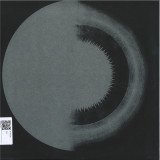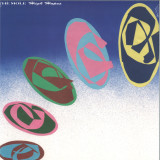
High Hopes - New album from the Mole.
High Hopes is 17 songs across 40 minutes on one slice of wax that, as advertised, sounds nothing like last month’s Ep, High Dreams. Here, rather than the long form dance form, is a continuation of the beat tape pacing from the last album, a collection of moments posing as ideas posing as a narrative stuffed with oddities and surprises that reward the close listen.
What’s heard on High Hopes is the Mole’s exploration of a love letter, from one person to a family, from the northern Pacific to the southern Atlantic, from a boy to a painted bird. Vancouver Island to Manantiales. The songs range from ambient sound bath and hip hop sludge, up to micro boogie and almost House before tumbling back down and forth again. Bubbling synths, MPCs swung out, samples chopped and chewed, bass and violins from Rick and Sophie, field recordings of birds and frogs and beaches, friends and family and fiestas. Did we mention the love ?! This album has got it all! Original collages from Antonio Carrau envelope this wax: jacket, sleeve and cookie. Antonio’s work is typified by playful combinations and bold statements about living in a embrace of analog and digital health. His co lages marry the corporeal world with an updated, digitalized age of reproduction, inducing feelings of gratitude for the simple everyday scenes we sometimes lose touch with when we forget to slow down. Good living, like breathing, requires inhaling as well as exhaling.
We can’t always produce content, make art, we must also pause, and listen. And enjoy. The Mole is joined by friends and colleagues on several songs included on High Hopes. Rick May plays bass on both Que Rico and album stand out GoinF4er. Sophie Trudeau (Godspeed You Black Emperor) plays and arranges violins on GoinF4er and Danuel Tate (Cobblestone Jazz) and Julz Chaz (Wagon Repair) both play Vibes and Emaxx throughout the album. Working with these incredible talents not only enriched this album, but fulfilled a long standing goal of the Mole’s; to work again with the musicians from whom he learned so much. People who helped inform the shape of Mole to come.
The Mole who was As High As The Sky. The Mole has been ‘recognized’ by the ‘global underground’ since his critically celebrated premiere album, As High As The Sky, but his earlier Eps (Wagon Repair, Philpot, Musique Risquee) got the attention of Top DJs, clubs, and festivals around the world first. His sound remains unique, fresh and deep: enjoying plays in a wide variety of spaces and places.
High Hopes is the Mole’s 5th solo album and his 2nd album for Circus Company (The River Widens) who have also proudly released two eps of Mole magic (Little Sunshine, High Dreams).
*Isn’t that too much time for one record? Short answer - No. Long answer - depends on the material. Due to the many quiet passages in the album, the groove spacing can be modulated and the needle can slow it’s progress towards the center/end resulting in longer sides with continued high gain and low distortion.
Suche:micro on
High Hopes - New album from the Mole.
High Hopes is 17 songs across 40 minutes on one slice of wax that, as advertised, sounds nothing like last month’s Ep, High Dreams. Here, rather than the long form dance form, is a continuation of the beat tape pacing from the last album, a collection of moments posing as ideas posing as a narrative stuffed with oddities and surprises that reward the close listen.
What’s heard on High Hopes is the Mole’s exploration of a love letter, from one person to a family, from the northern Pacific to the southern Atlantic, from a boy to a painted bird. Vancouver Island to Manantiales. The songs range from ambient sound bath and hip hop sludge, up to micro boogie and almost House before tumbling back down and forth again. Bubbling synths, MPCs swung out, samples chopped and chewed, bass and violins from Rick and Sophie, field recordings of birds and frogs and beaches, friends and family and fiestas. Did we mention the love ?! This album has got it all! Original collages from Antonio Carrau envelope this wax: jacket, sleeve and cookie. Antonio’s work is typified by playful combinations and bold statements about living in a embrace of analog and digital health. His co lages marry the corporeal world with an updated, digitalized age of reproduction, inducing feelings of gratitude for the simple everyday scenes we sometimes lose touch with when we forget to slow down. Good living, like breathing, requires inhaling as well as exhaling.
We can’t always produce content, make art, we must also pause, and listen. And enjoy. The Mole is joined by friends and colleagues on several songs included on High Hopes. Rick May plays bass on both Que Rico and album stand out GoinF4er. Sophie Trudeau (Godspeed You Black Emperor) plays and arranges violins on GoinF4er and Danuel Tate (Cobblestone Jazz) and Julz Chaz (Wagon Repair) both play Vibes and Emaxx throughout the album. Working with these incredible talents not only enriched this album, but fulfilled a long standing goal of the Mole’s; to work again with the musicians from whom he learned so much. People who helped inform the shape of Mole to come.
The Mole who was As High As The Sky. The Mole has been ‘recognized’ by the ‘global underground’ since his critically celebrated premiere album, As High As The Sky, but his earlier Eps (Wagon Repair, Philpot, Musique Risquee) got the attention of Top DJs, clubs, and festivals around the world first. His sound remains unique, fresh and deep: enjoying plays in a wide variety of spaces and places.
High Hopes is the Mole’s 5th solo album and his 2nd album for Circus Company (The River Widens) who have also proudly released two eps of Mole magic (Little Sunshine, High Dreams).
*Isn’t that too much time for one record? Short answer - No. Long answer - depends on the material. Due to the many quiet passages in the album, the groove spacing can be modulated and the needle can slow it’s progress towards the center/end resulting in longer sides with continued high gain and low distortion.
Gavin Vanaelst runs the space Aboli Bibelot in Antwerp where exhibitions and musical performances can happen side to side with dealings in centuries-old furniture and unique pieces of folk art or volkskunst. Gavin makes music under the aliases DJ Charme, Kassett and So Sorry. This is the first album under his birth name. Takeaway Loops cycles back to the days when Gavin was working as a courier for .
is a food delivery company. Their couriers - ehm, brand ambassadors, as the company prefers to call them - dressed in bright orange, they race their bikes around the city. They deliver meals and groceries for all sorts. Thanks to them, the privileged can stay tucked in their private spaces. Interaction between the two groups - the privileged and the brand ambassadors - is mostly kept to the bare minimum. And sparse communications are often driven by annoyances - “my Coke is warm because you kept it too close to the French Fries.” And on the streets the general public dis-approaches the brand ambassadors with pity. We tell our peers: “That’s not a good job,” and “stay away from the Sharing Economy.” Because, you know, in our capitalistic dollhouse we all stand our grounds and play our parts wholeheartedly.
During his shifts for , Gavin recorded location sounds on his phone at fast food restaurants while waiting on the orders he had to pick up and deliver. Later in his home studio Gavin added piano and electronics to this source material. The result: a gloomy soundtrack for a shadow world. Seven songs in evening blue with a bright orange glare.
A few years ago, our favorite Belgian publishing house Het Balanseer released Seizoenarbeid by Heike Geissler (available in English trough Semiotext(e)). Geissler writes about her job at Amazon in Leipzig. Because her writing and freelance work did not pay the bills any longer, she was forced towards this underprivileged shadow-world of unwanted jobs. Seizoenarbeid shed a light on freedom in an unfree world. A monument of ‘we are all in this, but not together’. Takeaway Loops gives us a similar peak in a world that is at the same time so visible, but then also very veiled for many. A world that we prefer to use, yet that most of us prefer not to see - a world that we don’t like to enter.
Last year at Harbourland subway station in Kobe i was mesmerized by its sound design, created by Hiroshi Yoshimura. For each part of the subway station he composed a short phrase. While walking trough the station, a full composition grows in your head. The looping melodies guide you trough a microworld. Trough a blue world of commuters, of the homeless, of the lonely, of the fast paced, of the tourist. Gavin creates a similar effect with Takeaway Loops. The tonality somehow corresponds to Yoshimura’s work. Yet instead of being guided trough a building, we are now taken to the after dark. You feel the concrete evening heat of the city. You hear the rain. Stiff fingers during cold winters’ nights. You are alone on the bike, cruising. Your maps app telling you where to go. You just left the fake leather bench of the well-lit pastiche interior of a fast food restaurant.
Next order, number ECN44! Please wait outside, sir?
10 years after their debut, City Of All Times audio-visual enquirers John B McKenna and Richard Greenan re-appear as Devonanon, to share the findings of a decade-long sonic experiment. Like its predecessor, Richard & John is a living, breathing collection of field recordings and compositions, gathered gradually from remote corners of the pair's lives. Familiar waypoints - interwoven microtonal synths, regurgitated live performances, polite whispering, and the gurgling hum of vehicles (land and sea) - all fold into the perpetual stew.
Where City read like a crumpled postcard account of fraternal reportage, Richard & John is a tone poem on something more amorphous, and out of time - a garbled history of human closeness, upheaval and mark-making, that seems to buckle and creak like a tapestry with no beginning or end. No two spoonfuls are the same, as our story reels through kosmische library stylings ('Wilderness Engine'), to cortex-quieting free association ('Generate Countryside'), and baroque instrumentation ('Blood Laughing', which features beautiful turns from Masayoshi Fujita on vibraphone, and Rosa Juritz on bassoon).
Black vinyl 180g made only in 100 numbered copies.
This record is different. It is different from what might be expected of Jan Emil Mlynarski by those who know him, from sold-out shows and platinum albums of his bands – Jazz Band Młynarski – Masecki and Warsaw Dance Combo, as an old-timer, curator and reenactor of pre-World War II Warsaw's plush dancehalls and backyards folklore. Quite likely they may not recognize him until the last song, when he removes his shaman mask and bows down: Yeah, that's really me, folks, your good ol' Jan Emil, the entertainer. They might not have even known that he ever played drums because in his flagship bands, clad in a white tux in the former or in a Peaky Blinder hat in the latter, he sings and plays mandolin banjo. In fact, Młynarski has been a drummer for a lot longer than a singer. He stands clear of the jazz mainstream but is active on the progressive scene. A record he contributed to, trumpeter Tomasz Dąbrowski's 2022 release The Individual Beings, was recognized by Downbeat magazine as "excellent" and awarded the highest rating of five stars.
However, this is the first instrumental record to bear his name. As an album by a drummer, it stands out from other records, especially as it features drums as the principal content rather than the performance by a band with a drummer as the leader. It's all about drums, there is neither an articulate melody – because the melodies that are there are only micro-linesencased in ostinato modules – nor is harmony as an intentional chord progression – because whatever harmony-wise there is, is rather a product of the counterpoint of overlapping voices. All sounds other than the drums make only a riverbed through which runs a raging stream of rhythms. And indeed, this record took off just with this stream. At first all the drums were recorded live onto an analog tape, all at once, without overdubs or editing. After that, synthesizer riffs were added, and the record was ultimately assembled on tape without the use of computers or complex postproduction, which sets it apart from most releases today.
Młynarski the drummer acknowledges that he follows the trail beaten by Art Blakey, Max Roach, Roy Haynes, and Billy Higgins, but he walks it in his own strides. He treats the jazz drumming with specific reversed engineering by decompiling the jazz drum kit originally compiled by the pioneer jazz drummers from an array of instruments that had made their way from a jungle to New Orleans, first to Congo Square and then to street brass bands.
This takes him back to the jungle, his drums don't sound like jazz drums, the snare is rare, and the hi-hat and ride aren't there at all. Instead, there are drums and bells from Nigeria, Ghana, Burkina Faso, and Côte d'Ivoire. He doesn't sound like a jazz drummer either, but like a gang of drummers, each playing their own rhythm, and it's hard to believe that all this is the work of one man.
Not only his drumware comes from the jungle, but also the software – his approach to rhythm and time. Its essence is polyrhythm and ostinato. The polyrhythmic matters were unveiled to Młynarski and Piotr Zabrodzki, his creative partner in many projects and co-composer/producer of this album, by the legendary eccentric veteran-drummer Władysław Jagiełło, who introduced them, aged thirteen, to his concept and practice of "17 Latino rhythms at once". Ostinato, an obstinate repetition of a phrase or rhythm, "arrests" time, turning its linear course into cyclical in-place rotations. This is specific not only to African music but also to cultural music of other regions and differs from Western artistic music in that it does not "run" to fulfil an aesthetic intention but "stays" to provide the framework for recurrent routines of communal proceedings.
So, this record is different. And, if you are different too, this is the record for you.
If Katsuhiro Otomo’s Akira were a utopia instead of its opposite, this EP could be a possible sound track. Using the ingredients of classic house as a platform (pianos anyone?), Nick Nikolov‘s imagination as a producer for his new new NKLV project is far too vivid to stay on the beaten track.
The sound design and nerdy attention of IDM and ambient (Clusters) connects with the brazen boogie approach of the French touch, micro-sampling manifestos have to stand up to the weirder moments of signature sounds like Basement Jaxx or KiNK‘s musical side (Heartbeat). Not too far off from his peer‘s early approach, the Bulgarian‘s take is emotionally charged, play- and powerful.
For instance, Speak to Me and No More hit their respective topical nails on the head and the EPs title track Inbetween is sultry serotonin soul. If you are looking for plain and pure euphoria in between all the hardships, happiness is just around the bend.
qebrus (pronounced Ké-brusse) was a project by Thomas Denis, an enigmatic French musician and producer born in 1981 and based in Caen, France, before his untimely passing in February of 2018. His undefinable otherworldly compositions and internet glitch trickery turned many heads catching the attention and support of esteemed artists such as Aphex Twin, Four Tet and Venetian Snares. The appeal of his music to other forward-pushing producers was emblematic of the uniqueness of his productions and led to collaborations with the likes of Tom Middleton, Otto Von Schirach and Mr Bill. His only release on Love Love Records, 'ᐔ ᐌ ᐂ ᐍ ᐚ', proved to be one his furthest reaching, originally released on CD during a flurry of musical productivity during 2017. Those 6 tracks of intricate extraterrestrial electronics now get the vinyl treatment, having been lovingly remastered or this reissue and pressed on green coloured wax.
The qebrus guise was that of an alien stranded on Earth and this concept was consistent throughout. The project gained notoriety almost exclusively on the internet, with many people's first experiences of his persona coming from the use of chaotic ASCII syntax in track titles which at the time 'broke' many of the websites he used to host his music. This theme of incomprehensibility extended to the sonic qualities of his music, foregoing any shred of familiar sounds in favour of an entirely electronically synthesised sound palate resulting in jarring and frenetic works full of near-imperceptible micro-details.
qebrus rarely performed live with one of the few occurrences being at an after-party following the now legendary Day For Night Festival 2016 in Austin, Texas where Aphex Twin played some of Qebrus' music to a crowd of 20,000 as Thomas watched on in what was undoubtedly an otherworldly experience for him.
Despite his vision being entirely self-driven without a care for popularity or recognition, there were many people across the globe that connected with the sheer weirdness of it all. 7 years on 'ᐔ ᐌ ᐂ ᐍ ᐚ' still sounds wholly futuristic and will likely remain so for centuries to come. In a time where it seems everything has already been done before Thomas leaves behind a legacy of an artist who was truly 'doing their own thing'.
Thomas is survived by his two children who will be receiving his proceeds from sales of this release.
“really alien sounding music”
Aphex Twin —
“Did you know that guy, Qebrus? He was on his own shit, he was making some really out there music, his music was incredible”
Venetian Snares —
“Listening to intelligent dance music producer Qebrus feels a lot like entering another dimension, his music stumbling its way through electronic chaos, leaving the listener unsure over what just happened.”
Thomas Hobbs — Crack Magazine
On alene et, Michaela Turcerová, a Copenhagen-based, Slovakia born musician, takes minutiae — the tiniest scrapes and breathiest hums — and distorts them into sprawling, collaged webs that barely resemble the instrument in its natural state. Each shard, when pieced together, makes a rhythmic, undulating sound born from the subtlest motions.
Alene et marks Turcerová’s debut as a soloist, putting a spotlight on the exploratory approach she has developed on her own and across a variety of collaborations. She has long studied the quiet excavation of her instrument, pulling it apart to find a new vocabulary. To develop this language, she unearths shards of sound from the instrument, muting it or bringing out its scratchiness and grittiness. Primarily working with open-ended scores and improvisation, she is inspired by various percussive music, looking to deep sonic awareness to guide her. As a soloist, her music harkens to the abstracted electronics present across the Editions Mego catalog or the distorted ruminations of Nyege Nyege tapes. And no matter where she goes, she is constantly in the pursuit of the unknown — the hidden elements of music that come to life through experimentation and listening.
With alene et, Turcerová presents her singular language on the saxophone to the fullest. To make this music, she placed many microphones close to her instrument, zeroing in to each sound and examining it from multiple different angles. She emphasizes the percussive possibilities of her instrument, puzzle-piecing each note into pulsating webs. Each track highlights a different side of the saxophone — the bristling distortion and amplification of a column of air as it blows through her saxophone’s body, the trickling tapping of the keys as she places her fingers onto them.
At its core, alene et presents Turcerová’s curiosity. The saxophone lives many different lives within her hands, shapeshifting through the uncovering of its possibilities. She shows us how the instrument is an ever-changing entity, a distorted and blown out drone with a thousand shards poking out from inside of it. But more than just a showcase of an individual instrument, alene et feels like a statement of the act of exploration. Turcerová is an excavator, always looking for new worlds hidden within her saxophone, and leaving room for more to come alive with each listen.
On this new LP Harry Bertoia shows why he may have been the first industrial musician. Bertoia often referred to his sound sculptures as a "collaboration with industry" and on this LP Bertoia is intentionally creating heavy, rhythmic music he described as "mechanized," "mechanical" and "factory like."
Recorded in 1971, percussion and repetition emulate the pounding rhythms of machinery on this unique pair of conceptual Bertoia compositions. Bertoia utilizes innovative performance techniques to create new sounds unheard in his ouevre. Even in the busy factory of Bertoia's mind, distant stillness rises up as Bertoia exhibits the massive amount of control he possesses over his many looming sculptures.
"Mechanization" is just one of the many sonic directions Bertoia took while composing and recording between the late 1950's and his death in 1978. He documented all of his ideas and directions in notes accompanying the hundreds of tapes discovered in his barn.
Bertoia's recordings are as much a celebration of sustained tones, intervallic relationships, healing vibrations, deep listening and shimmering harmonics as Indian Classical music, singing bowls, The Well Tuned Piano or Benjamin Franklin's glass armonica. Through these rich harmonics and pulsing pure tone, Bertoia was able to more clearly articulate his inner spirit than he could with sculpture alone – a point he made himself many times in interviews.
Harry Bertoia first came into artistic prominence in the late 1930s and his sculptural, ergonomic chairs, produced by Knoll Furniture beginning in 1952, were soon modernist furniture classics. Inspired by the resonant sounds emanating from metals as he worked them and encouraged by his brother Oreste, whose passion was music, Harry restored a fieldstone "Pennsylvania Dutch" barn as the home for this experiment in sounding sculptures which he had begun in the 1950s. Bertoia was an obsessive composer and relentless experimenter, often working late into the night and accumulating hundreds of tapes of his best performances; Oreste, too, would explore and record the sculptures' sounds during his annual visits to his brother's home in rural Pennsylvania.
Learning by experimentation was common for Bertoia and he mastered the art of tape recording, turning the Sonambient barn into a sound studio with four overhead microphones hanging from the rafters in a square formation. He would experiment with overdubbing by performing along to previous recordings, sometimes backwards, constantly improving his methods while also honing his performance skills. Bertoia was a careful editor of his own work and only chosen recordings remained, each with a date and carefully considered observations written on a note included with each tape. Through these pieces of paper a greater logic can be uncovered, a careful approach to composition, ideas, feelings and forms. The story of Sonambient barn collection will slowly be told through the release of recordings from the archive as well as installations and performances built from Bertoia's own recordings, lectures and a book.
Limited black bio-vinyl (600 copies worldwide) with obi-strip and download card.
THE GREEN CHILD has grown into four people. Originally the recording project of Raven Mahon (furniture maker and member of Grass Widow, Rocky) and Mikey Young (recording engineer and band member of Total Control, Eddy Current Suppression Ring, Shutdown 66), The Green Child now boasts Shaun Gionis (of Boomgates) on drums and Alex Macfarlane (who runs the excellent label Hobbies Galore) on guitar and synths.
- A1: Date
- A2: Favorite Lover -Mizuhara Chizuru Solo Ver
- A3: Date (Instrumental)
- A4: Mami Rap
- A5: Favorite Lover -Nanami Mami Solo Ver
- A6: Mami Rap (Instrumental)
- B1: Kanojo Sengen
- B2: Favorite Lover -Sarashina Ruka Solo Ver
- B3: Kanojo Sengen (Instrumental)
- B4: Sakura Selfish
- B5: Favorite Lover -Sakurasawa Sumi Solo Ver
- B6: Sakura Selfish (Instrumental)
**Synopsis:** Kazuya Kinoshita is a fairly ordinary college student who has just been dumped by his girlfriend, who decided to move on. Devastated and feeling at rock bottom, he decides to download the new trending app, Diamond, on his phone and rents a new girlfriend to feel better. He ends up meeting a certain Chizuru Mizuhara, a young woman who, at first glance, seems to have everything he's looking for.
This vinyl includes songs dedicated to each girl from the anime (Ruka, Chizuru, Nami, Sumi) sung by their respective Japanese voice actresses, as well as the corresponding instrumental versions. Each song reflects the adventures, thoughts, and emotions that each of the girls experiences.
- A1: Refrigerator Mothers - Yaya Suitor
- A2: Sikhara - Zenjouki Temple
- A3: Catherine Danger - Le Carburant
- A4: Thar Mapsal Program - Khubilgan
- A5: Microloop - Rapture In Malaysia
- B1: Tzii - Our Impact On Other Egos
- B2: Officium - Where Flesh Circulates
- B3: Nur - Lost In The Desert Of My Mind
- B4: Contagious Orgasm - Demolition Costs
- B5: Dissonant - Dimana Batas
- C1: Catastrophic Mermaids On Parade - New Drunk School Of Dying Love With Manners
- C2: Cham - The 4Th Day After The 23
- C3: Venimeuses - Soupirail
- C4: Indra Menus - Murkaning Dunyo
- C5: Excess Of Fat - Ain’t No Way To Leave No More
- C6: Jealousy Party - Vuota
- C7: Moineau Ecarlate - Rush Me No Badness
- D1: Rinus Van Alebeek - Let’s Make War
- D2: Ss Mylitta - Night On Earth
- D3: Âme De Boue - Green Moon Over Cintra Street
- D4: Ripit - Kraut Founding
- D5: The Radar Threat - Conflict Heroes
- D6: Solar Skeletons - We Won’t Kiss
Night On Earth records
is an independent structure/label created 20 years ago which deals with
the invisible and the deviant,
the void and the love,
the parallax and the unknown …
we release vinyls and tapes
we organise events
we are you and us
we are nothing and everything
we are oblivion and memory
we are your egotrip’s nightmare
we are your deviancy catharsis
meet us through this double LP which is one cartography of the night on earth vortex across 3 continents and several generations of music freaks and braincrackers
Some Artists missing there (there are too much : RINUS VAN ALEBEEK, SS MYLITTA, SOLAR SKELETONS, THE RADAR THREAT, ÂME DE BOUE, and.. RIPIT !
When the quartet of Luke Martin, Gabriel Salomon, Klaus Janek and Andy Graydon gathered to record an afternoon of sessions in Andy's studio, it was both the result of years of cultivation and an afterthought. Klaus and Andy had been long-time, and now long-distance, collaborators since their shared years in Berlin. That city was also where Andy was introduced to Gabriel at one of his solo performances by their mutual friend, the painter Paul McDevitt. Years passed, and cities. After meeting and working together in Boston, Luke and Andy both found themselves transplanted to Minneapolis. And by happenstance Gabriel arrived a few years later. A new conversation was just starting to emerge when Klaus announced his arrival, stopping by on a North American tour. Suddenly the four got a chance to listen and play together performing on a bill at a local gallery, in one configuration or another, for the first time. Packing up after that show, Klaus leaned over to ask, "isn't there a moment we could meet again, to play?"
Nothing was expected, and so anything was possible. The circumstances lent their gathering an impromptu but grounded feeling, a unique mix of chance encounter and reunion. As befits an opening encounter, the focus was as often on listening to the unfolding sonic conversation as it was on making a recording. Everyone seemed to intuit the direction despite not knowing where they were headed. The four faced each other in a loose circle surrounded by speakers and microphones pointed haphazardly, as likely to catch the dog padding around curiously as the bowing of strings or rattling of a cymbal. The permissive spirit of the day was declared early, just before rolling, when Gabriel asked if we should close the studio windows or leave them open. "You know what my answer is," replied Luke. If it's in the nature of a recording to become fixed, to be bottled up, let us at least leave open the windows to hear what might be coming next.
Joel Sarakula's new album "Soft Focus" is a mid-career album spanning his many influences and genres including Soft-Rock, Funk and Indie Pop, all brought under the umbrella of his gentle gaze and a 'soft' aesthetic. "Soft Focus" is also the name of a photographic technique born out of a spherical abberation of the lens where the image is a bit blurry and undefined: it's both flattering and forgiving on the subject. It's an apt title. As a lifetime wearer of (vintage) glasses, Sarakula knows a lot about spherical abberations. Perhaps he produced these songs with his glasses off as these are abstract and warm vignettes, never overstaying their welcome and for this reason Sarakula manages to feature twelve new tracks on "Soft Focus".
Highlights include one of the two Shawn Lee produced tracks "I'll Get By Without You", the rockier, iberic beat of "King Of Spain", the soulful affirmation of "Back For Your Love" and the psychedelic-tinged "Bird Of Paradise" and "Microdosing". This is a lovingly crafted album, well polished and it feels like the culmination of Sarakula's adventures in soulful soft-rock and his defining statement in the genre. While comparisons will be made with contemporary projects like Shawn Lee's Young Gun Silver Fox, Drugdealer, Benny Sings and Prep, echoes of soft-rock icons Ned Doheny, Boz Scaggs, Todd Rundgren and Michael Franks also ripple gently through the album.
Imagine if Ray Manzarek was the frontman for the Bee Gees... It's a neat visual introduction to Joel Sarakula, a UK-based Australian artist who writes, produces and sings Soulful Pop, gazing out at a contemporary world through vintage glasses, vintage threads and long blond hair. His music is informed by a rich, 1970s-inspired palette, drawing on soft-rock, funk and disco influences: sunny, uptempo jams for darker times. Self-aware that he looks and occasionally sounds like the love child of Ray Manzarek and the Gibb brothers, his self-deprecating sense of humour is always there just below the fringe.
Born in Sydney, based in UK and international in outlook Sarakula is a songwriter who has travelled the world in search of his muse, experiencing everything from being a victim of Caribbean carjackings to performing in the remote fishing villages of Norway before finally establishing his career in the UK and Europe. Since then he has released albums such as "Island Time" (2023), "Companionship" (2020), "Love Club" (2018) and "The Imposter" (2015) that have racked up plays on rotation across national UK and European radio and got him noticed in The New York Times, The Independent (UK), The Irish Times, Rolling Stone Germany, El Pais (Spain) and Sydney Morning Herald. It's- been a long road finding his current cult status starting out at the piano from a young age in suburban Sydney, writing and singing songs by the time he was a teenager and onstage by fifteen years old playing jazz standards in his local golf club. "I came from humble beginnings, it's best not to mention" as he sings in his 70s boogie influenced song "I'm Still Winning". Joel Sarakula is a fixture on the festival and club circuit having previously performed at SXSW, Primavera Sound and Glastonbury festivals. Ever the internationalist, he tours with pickup bands sourced from each territory he plays in: a Barcelona band for Spain, a Berlin band for Germany and so forth. This cross-cultural exchange is another echo of the 1970s when world travelling soul and pop artists from the US did the same and guarantees that his live shows remain fresh, exciting and absolutely contemporary.
Gi Gi returns to Quiet Time with a new album, Dreamliner. His last full-length for Quiet Time, Lumino Pleco, was built on familiar samples, melted into a skunky sludge. It evoked a heat-warped meditation cassette unearthed from a Goodwill located in a black hole. The Texas producer’s latest, Dreamliner, is comparably immediate and propulsive. Here, Gi Gi explores spacey, kosmische-laced trip-hop. At first, these eight tracks come across placid and twinkly — calling to mind glitter stars twinkling atop a navy canvas, or tropical sun beams cutting through crystal water. But a jaggedness becomes apparent when lended a focused ear. Beneath slow motion arpeggiations and lullaby melodies, dubby percussion and sound effects gnash and quiver.
Scored by the legendary Italian film composer Armando Sciascia, Sea Fantasy is a conceptual suite of twelve exotic themes evoking the many moods and dramas of life under the sea. Recorded in 1972 for Sciascia's own Vedette label, the album is a key recording within the micro-genre of Italian underwater library music. A mosaic of evocative modern classical, flamenco textures and a surge of raw analogue synthesizers. Mysterious aquatic music that sits comfortably alongside other Italian Soundtrack and Library recordings including the lush bossa of Daniele Patucchi's Men Of The Sea (CAM) as well as the experimental electronics of Biologia Marina by Amedeo Tommasi & Alessandro Alessandroni (Rhombus). With several cues used for the English-version soundtrack to Harald Reinl's 1976 (Erich von Däniken inspired) mondo-documentary Mysteries Of The Gods, Sea Fantasy is reminiscent of the exotic mood-music scored for Folco Quilici's documentary Oceano composed by Ennio Morricone as well as Luigi Scattina's legendary tropical sexploitation film Il Corpo composed by Piero Umiliani. This new 2019 edition has been newly remastered and expanded with additional liner notes and photos.
Remastered and expanded edition.
Legendary Italian underwater Library recording
Replica vinyl reissue of the rare 1972 LP
Mysterious aquatic mood music
JS is an alias of James Zeiter and is also the name of his own label. This seventh transmission once again showcases his signature take on minimal, dub and techno. 'JS-07' rolls out with deep, pillow drums and well buried sub bass that slowly sweeps you up and locks you into a state of hypnosis. 'JS-07R' on the flip side is run through with slightly more warmth and light, like beams of sun piercing the surface of an ocean and catching microscopic organisms floating on the sea bed. It's a heady sound full of soul.
The 2015 edition of Winnipeg’s send + receive festival, focussed on rhythm, turned out to be a generative meeting of minds. There, Mark Fell encountered the music of Will Guthrie, a meeting that was eventually to result in the frenetic acoustic drumkit and digital synthesis pairing heard on Infoldings and Diffractions (2020). At the same festival, Limpe Fuchs first heard and appreciated the music of Mark Fell, planting the seed of a collaboration that came to fruition when Fell (along with his son Rian Treanor) visited Fuchs at her home in Peterskirchen, Germany in September 2022. Black Truffle is pleased to announce the release of the results of this extensive session in the audacious form of a triple LP, housing over two hours of music across its six sides. The collaboration might appear unlikely: what common ground could exist between Fuchs, classically trained pianist, legend of improvised music, instrument builder and sound sculptor active since the 1960s, whose group Anima Sound connected the dots between free jazz, krautrock and ritual, and Fell, proponent of radical computer music, known for his bracingly austere productions that twist remnants of club music into algorithmic stutters? For all their seeming disparity in technology, approach and background, the music on Dessogia/Queetch/Fauch makes it immediately evident the pair share a great deal in their essentially percussive approach and ability to, in Fuch’s phrase, ‘establish silence’. Recording at her home studio, Fuchs had the use of her entire array of instruments, found, invented, and traditional, and treats the listener to some that don’t often make their way to concerts, including extensive passages performed (with Gundis Stalleicher) on pieces of wooden parquetry. Alongside metallic, wooden and skin percussion of all kinds, sounded and struck in every conceivable way, we also hear bamboo flute, viola, and Fuchs’ distinctive free-form vocalisations. Fell also stretched himself, with his contributions ranging from characteristically fizzing pitched percussive pops to swarms of sliding tones and abstract digital noise. Showing both remarkable restraint and improvisational freedom, much of the music consists of duets between a single percussion instrument and a distinctive mode of digital sound, often lingering in one timbral-rhythmic space for minutes at a time. Improvisational forward momentum coexists with a free-floating, wandering quality. On opener ‘Dessogia I’, the shimmering almost-gilssandi tones of Fuchs’ enormous set of microtonally tuned metal tubes ripples across Fell’s rubbery pulse, which moves up the frequency spectrum as Fuchs becomes more animated and switches to horn. At some points, as on the metallic chiming tones that open ‘Fauch I’, only the unexpected dynamic behaviour of Fell’s sounds distinguish them from Fuchs’ acoustic instruments. At others, like on ‘Queetch III’, the waves of sliding tones and noise textures are bracingly synthetic, joined by piercing squeaks and scrapes from Fuchs’ metal objects. Epic in scope, immersing the listener in an entirely distinctive world of sounds, and thrillingly bold in its melding of the most ancient musical procedures with cutting edge technologies, Dessogia/Queetch/Fauch is an unexpected major statement from two of the great mavericks of contemporary music.
RADIAL
Acoustic Rhythm & Texture Sequencer
Available as C60 Limited Edition of 50 mirror dubs- (same on both sides) + Inserts
written and produced by
S.Gordon 2024.
additional percussion by Islay Spalding - TRK 7, recorded at SFS studios 2024
Synths & Radial - SDGordon.
The Radial instrument was designed to explore various material's acoustic characteristics in ways that could only be achieved through mechanical and electronic control.
It creates sporadic dense percussive sequences & sharp reciprocating sweeps or can focus in on tiny acute angles to produce deep shaking drones among a host of other planned and unplanned acoustic sounds.
Radial uses 5 voltage controlled motors and interchangeable textured cylinders captured via contact microphones positioned within the chassis. The cylinders can be synchronised or independent & the blades are interchangeable allowing the flex of certain materials to skew and augment the movements and sounds and sequences.
Playing the Radial instrument is a direct visceral experience. Its sequences sound unlike anything else i have used and the simple design by no means limits the scope of its rhythmical output. After feeling out the controls you arrive somewhere in-between the rubbery juddering fuzz or clockwork blasts of percussion and can step back allowing the physicality of the instrument itself to dictate how things proceed. Minor adjustments can have a butterfly effect on the entire tone inmate rewardingly unpredictable but controllable way.
On certain tracks there’s some synth work in a move away from the potential “instrument study” vibe of the release and Islay Spaldings blistering scrap metal percussion on Track 7 was incredible to watch.. Additional thanks to Stephan P Richter “SPR” for the advice and encouragement through the whole build.
“Reflex” is Gábor Lázár’s debut album on raster. His new record is a collection of seven tracks, featuring an extended sound palette of percussions and synthesizers drawing our attention towards the essential soundscapes of techno while maintaining his distinct, uncompromising and meticulously detailed style. While the tracks do not follow traditional narratives, the album has an evolution: it gently builds up from challenging, unpredictable, and organically composed structures to linear yet playful forms of techno-infused tracks, taking us on a journey from home listening environments to club contexts.
Our senses are stimulated by micro-variations of textures and patterns, leading us to the feeling of here and now, allowing us to observe our own reactions and thoughts evoked by the listening experience. Gábor’s consistent production techniques and intuitive compositional approach work together coherently, addressing the listener’s cognition from different angles simultaneously, offering a variety of ways for the listener to get immersed.
“Reflex” will be released on raster in September 2024 on vinyl and CD.