
Suche:microtonal records


repressed !!
It´s been a while since Microtrauma dropped their debut EP for Microtonal - but the duo wasn´t that lazy !!! Remixes for Traum, Firefly UK and Mangue Records were done and shaped the definition of their sound. And "Spinal EP" finally is the result - three hard and up-building techno tunes hitting all your cells and nerves.


Played & supported by Rodriguez Jr, Max Cooper, Erman Erim, Dubfire, Dinamoe, Alec Troniq, Electric Rescue, Kaiserdisco, Microtrauma, Abnormal Boyz, Jorge Ciccioli, and many more (...)
Titel der 12" MICRO010 "Generation Einzelkind" ... Formation Rosarot Blind ... Schau, der Himmel ist blau ... Du kannst mehr sein als 'TV'.

Microtonal proudly presents SQL from Amsterdam with his Vinyl Debut EP. After hitting the scene hard with "Distorted Reality" which topped Beatport Charts for weeks and reached heavy support from Richie Hawtin and Marco Carola the boy delivers another primetime tune with a remix by Tickles (Ipoly Music). The B-side is a much more progressive tech-house tune for fans of Deadmau5 & Co.


start of the miditonal sub-label for reduced techno music - supported by gabriel ananda, troy pierce, paco osuna, dominik eulberg, ivan smagghe, holgi star, remute (denis karimani), renato figoli, tim xavier, perc, blood & tears, nudisco, chris fortier, joseph capriati, da fresh, david keno, xpansul and many many more !!!

Introducing the Second Release from Microtonal Records on Vinyl Microtonal Records presents its highly anticipated second release, a celebration of the rich and diverse sounds of Aotearoa / New Zealand.
This exclusive vinyl release features five exceptional artists who are making waves in the electronic music scene. Side A opens with two remarkable collaborations. The first track, "Osiris Call," is a mesmerising creation by Seb Selknam, the mastermind behind Cultrun Cult Records, and Herman Saiz, the force behind Sounds of Sirius. This track has been expertly pre-mastered by the renowned Silat Beksi, ensuring an unparalleled auditory experience. Following this is "Phantasus," a captivating piece by Herman Saiz and HRZNTL, the owner of Microtonal Records. Side B continues the journey with Arokz's "Musical Gees," a track that showcases his unique sonic signature. Concluding the release is Vedana's "Lost in Nostalgia," a beautiful and evocative composition that lingers in the mind long after the needle lifts.
Immerse yourself in the vibrant sounds of Aotearoa / New Zealand with this exceptional vinyl release from Microtonal Records.

The first release from Microtonal Records, Residents of Aotearoa: Microtonal Showcase (ROAMS) EP, presents producers currently living in New Zealand and their interpretation of a warm, atmospheric and dark sound with a groove that provokes movement and thought.
Track A1: Astral Aura by Seb Selknam
A pure analog production from Seb Selknam - Astral Aura provides an instant groove from a warm bassline that sits in pure harmony with the kick to give structure to the melodic and atmospheric landscape you are led into. Minimal crisp percussion and echoing vocals add a familiar and human element to the journey as you slowly float through vista's unknown and aura's unseen. This is 08:22 of pure bliss.
Track A2: Bosun by HRZNTL
The last beat drops, the party ends, the taxi awaits. Bosun by HRZNTL is a reflective piece, the transition from pure adrenaline and the buzz of the rave into a lasting memory of a night spent with family and friends dancing at a castle in the hills of Barcelona. The track itself is built around a detuned dubby key which represents the emotions of ending an epic night, it is surrounded by dark and haunting stabs to add to the atmosphere and a bubbling synth which brings an optimistic reality that it's only day one at Sonar.
Track B1: Admiral Frick by Harvo x Patella
The first ever demo sent to Microtonal HQ, Admiral Frick by Harvo and Patella is pure energy. Taking elements of tribal percussion and combining it with acidic stabs, it is balanced perfectly with a wandering atmospheric pad. There are subtle shifts between four four and breakbeat, as it builds with syncopated snares and a beautiful unrecognisable monotonous vocal calling you deeper into mysteries of the jungle at night. Calmness descends to create space for a powerful sweeping drone like bass that drops you back into a hypnotic state of being. Your relationship with this track will be like an addiction, constantly seeking a hit.
Track B2: Introspection by Felipe Martinez
The epitome of a Microtonal Records track; warm, atmospheric, dark and with a groove. Introspection by Felipe Martinez is a microbreaks track that draws you in with a wide pulsating low end and irregular percussive stabs that float from left to right at the high end. A soft acid synth builds and explodes like a solar flare creating an outer planetary experience. The beautifully crafted breakdown gives you time to pause, observe and contemplate, creating space to process your mental state and explore your emotions from the past, present and future. Introspection; 10 minutes of self healing.

Kutiman joins Batov Records’ Middle Eastern Grooves Series with explosive double-sider
Batov Records is thrilled to announce the debut of pioneering producer, multi-instrumentalist, and multidisciplinary artist Kutiman on its highly collectable Middle Eastern Grooves 45s series. The release features two essential, souk-fuelled, psych-funk heaters: “Haraka” and “Khamsin”.
A prolific musical force, Kutiman delivers the goods on “Haraka” (“movement”), layering neck-snapping rock drums, irresistible psychedelic basslines, and haunting organ riffs, with microtonal-bending synths and tabla-inspired percussion.
On the B-side, “Khamsin” (“heatwave”) continues the trip with another heavy dose of Middle Eastern psych and funk, culminating in a blistering guitar solo in his signature Middle Eastern style by longtime collaborator Uri Brauner Kinrot (Ouzo Bazooka, Boom Pam), who also contributes beguilingly languid bass guitar riffs.
Both tracks showcase Kutiman’s distinctive ability to fuse regional traditions with modern grooves, marking a bold new addition to the label’s standout series.


Repressed !!! Ipoly Music is the new imprint A&Red by Alec Troniq and Mentalic. After various releases for Etui Records, Phonocake and Microtonal the two talented travellers have found their own place of creativity and reveries. Early support by Laurent Garnier, Alland Byallo, Jamie Stevens, Anderson Noise, Chris Fortier and Gunjah

After a long development with several releases for Labels like Microtonal and Inclusion Records
Sascha finally decided to set up his own playground to release music with heart and emotions.
The debut EP is pretty much showing his large variety of producing unique music.
Played & supported by Laurent Garnier, Toni Rios, Max Cooper, Slam (Soma), Alexi Delano, Paco Osuna (Plus 8),
Anderson Noise, Alex Flatner (Cocoon, Poker Flat), Patrick Kunkel (Cocoon), Tim Xavier (Clink),
Kolombo (Kompakt, Systematic), Carlos Sanchez (8bit Supernature), Patrick Lindsey, Franco Bianco (Argentina),
Hanne and Lore, Microtrauma (Traum), Alec Troniq (Ipoly), Beatamines, Summer - Brendon Collins (Manual Music),
Fine Cut Bodies (Chi Recordings, Resopal), Turm 3 (Seenplatte), Laurent N. (France) and more
After several releases on labels like Bar25, Microtonal, Dantze and Etui Records End Of Tape finally hit the box with their Tape Jam EP.
These guys don´t talk with each other, they just do music and that´s the best. The result of this gone wrong musician friendship (but tight producer team at the same time) you can celebrate with this EP.
This is no snow from yesterday, it´s the musical climatic change of tomorrow - without any opportunity. Played & supported by Paco Osuna, Anderson Noise, Lexy, Electric Rescue, Beatamines, Gabriel Ananda, Piemont, Carlo Lio, Markus Kavka and many more.
11
As Nathan Fake rises from the nocturnal subterranea and rave catharsis of his previous records, on Evaporator, he resurfaces into the domain of daylight, bringing a tangible sense of air rushing against your face, of big skies, and endless landscapes.
The idea of pop accessibility that trickled into 2023’s Crystal Vision is refracted here through the prism of sweeping ambient, deep electronica, and trance uplift. Evaporator is Fake’s idea of “airy daytime music”, with each track a different barometer reading across the album’s varying atmospheres, which range from vibrant sunbursts, bracing rainscapes, and fine mists of clement melodics. “It’s not overtly confrontational electronic club music,” states Fake. “It’s quite pleasant, it’s accessible. As I was progressing through making the tracklist, I called it a daytime album. It doesn’t feel like an afterparty album.” For the past decade Fake has been gingerly introducing collaborations with heroes and friends alike into his lone, idiosyncratic working process.
Border Community alumni Dextro AKA Ewan Mackenzie transmutes his ferocious drumming for Pigs Pigs Pigs Pigs Pigs Pigs Pigs into the blurred choral thump of ‘Baltasound’. ‘Orbiting Meadows’, meanwhile, is his second collaboration with Clark, an eerily idyllic duet where microtonal 18EDO piano clangs slowly twirl around wailing pads. Evaporator marks the junction point of old technology and ever fresh creativity for Nathan. The trusty “dinosaur” age software, particularly Cubase VST5, that has powered two decades of music is rarely updated. “I used to sort of feel a bit ashamed of using such old software, and then I kind of had an epiphany – that’s just how I work”, comments Fake. “That’s just how I play. I’m very fond of these old tools, and I get the most joy out of them, but now I’ve incorporated new technology too.” When an artist accumulates so much synergy with their instrument, music making becomes instinctual. By Fake’s account, much of Evaporator just fell into place. The album title arrived randomly in his head (“it felt completely perfect. Airy.”), ideas looped and developed until things locked into place and just felt right. ‘The Ice House’ is a fleeting glimpse of the sonic world he taps into in this creative state, its glassy FM synths built around a counterpoint between rough-hewn crystalline arpeggios and sparse yet gravitas-bearing bass. “That riff I just wrote out on the keyboard, I just played it forever and ever and ever.
The original track ended up being really short. Here you go, and it’s gone!” These unplanned channellings of sound call forth records from Fake’s past while he looks ahead, perhaps getting at the very essence of his musicianship. The opener ‘Aiwa’ (“the breeziest,” he muses) reminds of the introspection that characterised Providence, excited by the fire and grit of Steam Days’ textural experiments, its chunky slams and clatters surging into a flood of harmonic buzzing as they reach out for old wisdom. ‘Hypercube’ stampedes in a similar chronological confluence, infusing an incessant synth line reminiscent of the golden age of rave with the crackling, ecstatic energy of modern festival anthems. Like the vaporisation of liquid to particles, everything that Evaporator presents has a mutant desire to be amorphous. Sounds rarely settle; the irradiated garage beat of ‘Bialystok’ is pitched downwards to driving, rebounding effect, while ‘You’ll Find a Way’ warps static into shivering energy, cinematic synth strings building anticipation into a gradual gush of chords. This translates into a more expansive stereo field than Fake has explored before.
‘Slow Yamaha’ saves the wildest, most kinetic transformations for last with a cornucopia of crispy melodies and fried drums; a sibilance of cymbals on the left, a susurrus of shakers on the right, and kaleidoscopic lasers pulsing and fizzing all around. Evaporation culminating in pure excited atoms.
11
As Nathan Fake rises from the nocturnal subterranea and rave catharsis of his previous records, on Evaporator, he resurfaces into the domain of daylight, bringing a tangible sense of air rushing against your face, of big skies, and endless landscapes. The idea of pop accessibility that trickled into 2023’s Crystal Vision is refracted here through the prism of sweeping ambient, deep electronica, and trance uplift. Evaporator is Fake’s idea of “airy daytime music”, with each track a different barometer reading across the album’s varying atmospheres, which range from vibrant sunbursts, bracing rainscapes, and fine mists of clement melodics. “It’s not overtly confrontational electronic club music,” states Fake. “It’s quite pleasant, it’s accessible. As I was progressing through making the tracklist, I called it a daytime album. It doesn’t feel like an afterparty album.” For the past decade Fake has been gingerly introducing collaborations with heroes and friends alike into his lone, idiosyncratic working process. Border Community alumni Dextro AKA Ewan Mackenzie transmutes his ferocious drumming for Pigs Pigs Pigs Pigs Pigs Pigs Pigs into the blurred choral thump of ‘Baltasound’. ‘Orbiting Meadows’, meanwhile, is his second collaboration with Clark, an eerily idyllic duet where microtonal 18EDO piano clangs slowly twirl around wailing pads. Evaporator marks the junction point of old technology and ever fresh creativity for Nathan. The trusty “dinosaur” age software, particularly Cubase VST5, that has powered two decades of music is rarely updated. “I used to sort of feel a bit ashamed of using such old software, and then I kind of had an epiphany – that’s just how I work”, comments Fake. “That’s just how I play. I’m very fond of these old tools, and I get the most joy out of them, but now I’ve incorporated new technology too.” When an artist accumulates so much synergy with their instrument, music making becomes instinctual. By Fake’s account, much of Evaporator just fell into place. The album title arrived randomly in his head (“it felt completely perfect. Airy.”), ideas looped and developed until things locked into place and just felt right. ‘The Ice House’ is a fleeting glimpse of the sonic world he taps into in this creative state, its glassy FM synths built around a counterpoint between rough-hewn crystalline arpeggios and sparse yet gravitas-bearing bass. “That riff I just wrote out on the keyboard, I just played it forever and ever and ever. The original track ended up being really short. Here you go, and it’s gone!” These unplanned channellings of sound call forth records from Fake’s past while he looks ahead, perhaps getting at the very essence of his musicianship. The opener ‘Aiwa’ (“the breeziest,” he muses) reminds of the introspection that characterised Providence, excited by the fire and grit of Steam Days’ textural experiments, its chunky slams and clatters surging into a flood of harmonic buzzing as they reach out for old wisdom. ‘Hypercube’ stampedes in a similar chronological confluence, infusing an incessant synth line reminiscent of the golden age of rave with the crackling, ecstatic energy of modern festival anthems. Like the vaporisation of liquid to particles, everything that Evaporator presents has a mutant desire to be amorphous. Sounds rarely settle; the irradiated garage beat of ‘Bialystok’ is pitched downwards to driving, rebounding effect, while ‘You’ll Find a Way’ warps static into shivering energy, cinematic synth strings building anticipation into a gradual gush of chords. This translates into a more expansive stereo field than Fake has explored before. ‘Slow Yamaha’ saves the wildest, most kinetic transformations for last with a cornucopia of crispy melodies and fried drums; a sibilance of cymbals on the left, a susurrus of shakers on the right, and kaleidoscopic lasers pulsing and fizzing all around. Evaporation culminating in pure excited atoms. In a world where music has increasingly become background content, making albums remains lifeblood for Fake: “It makes me realise how long; twenty years is ages! It’s weird to see how much the world has changed. Release day back then you did fuck all, now you spend all day on socials. When I grew up the people who made the electronic music I was into were quite mysterious, and the artwork was very abstract. There was a massive distance between you and that music, and that was a key part of it, really. Now it helps to be an extrovert, and I'm just not, but the album marks the first time my face has graced the cover art. I’ve never wanted to do this before, I'm very shy, and generally I don’t like being seen,” he professes. “But, twenty years in, I supposed I could try something new. I'm very lucky that I'm somehow surviving in this world, where the media world favours extroverts and interesting looking people. It’s not my world but somehow I’m still in it.” Evaporator continues to prove Nathan’s necessary presence, with some of his most engaging, varied, and magical music yet.

"Amir ElSaffar (b. 1977, USA) is a composer, trumpeter, vocalist, santur player, and modular synthesizer artist whose innovative compositions blend elements of jazz, classical, and traditional Arabic music. His newly established label, Maqām Records, released its first album earlier this year, Maqam Al-Iraq, by legendary vocalist, Hamid Al-Saadi and is now following up with an album of ElSaffar’s work, New Quartet Live at Pierre Boulez Saal. Recorded live in Berlin in 2023, the album captures the ineffable magic of ElSaffar’s first encounter with Greek pianist Tania Giannouli, a star on the European jazz scene, alongside his NYC-based collaborators: acclaimed drummer and bandleader, Tomas Fujiwara, and saxophonist Ole Mathisen, who is also a featured member of ElSaffar’s Two Rivers and Rivers of Sound orchestra. The quartet merges Arabic maqām with jazz harmony and features microtonal and prepared piano. In addition to the concert itself, the album features alternate takes that were recorded at Pierre Boulez Saal the next day without an audience.
RIYL: Classic artists: Miles Davis - “Sketches of Spain,” “Kind of Blue,” John Coltrane - “A Love Supreme,” “Ballads,” Don Cherry - “Relativity Suite,” Ahmed Abdul Malik - “Jazz Sahara,” “East Meets West,” Cecil Taylor, John Hassel, Hossam Ramzy, Ziad Rahbani.
Contemporary artists: Vijay Iyer, Ibrahim Maalouf, Ambrose Akinmusire, Rabih Abou-Khalil, Dhafer Youssef"

- 01: Forests, Tales, Cities, Forests: I
- 02: Forests, Tales, Cities, Forests: Ii
- 03: Forests, Tales, Cities, Forests: Iii
- 04: Forests, Tales, Cities, Forests: Iv
- 05: Forests, Tales, Cities, Forests: V
- 06: Forests, Tales, Cities, Forests: Vi
- 07: Forests, Tales, Cities, Forests: Vii
- 08: Forests, Tales, Cities, Forests: Viii
- 09: Forests, Tales, Cities, Forests: Ix
9
Award-winning producer and composer Giorgi Koberidze offers up a head-spinning debut of Georgian modern classical music shot through with 360° electroacoustic textures.
Giorgi Koberidze is an electronic and classical music composer from Georgia. He currently serves as a professor of music at Tbilisi State Conservatoire, as well as at Ilia State University, and the private music school "303 Herz". Giorgi's work is rooted in the Georgian musical tradition, cross-pollinating indigenous instrumentation with electronic and western classical timbres. He recently won first prize in the Tbilisi Conservatoire Composers Awards, and received Georgia's most prestigious cultural gong, the Tsinandali Award.
The Album was premiered in Georgia at the Kutaisi Film Festival, and later showcased at the Tbilisi Film Festival. Working from graphic scores, Giorgi's ensemble includes strings, woodwind and traditional instruments from the Caucasus (doli, chuniri). Fleeting voices, field recordings and skittering percussion converge to paint a storied map of Tbilisi, and its surrounding terrain of forested polyphony and microtonal peaks and crags.
Each listen of the album is projectively rich, like a dizzying series of sonic inkblot images. The piece is designed to be absorbed in the surround sound of darkened movie theatres, conjuring a multiverse of narratives in the half-light of sensory acuity. At home, Giorgi invites listeners to set aside time to experience the record in a dark, comfortable space absent of external stimuli.
This album was made with the support of the Tbilisi State Conservatoire. The recordings were funded by Nicolas Jaar. Thank you. We are beyond proud to present this incredible project.
Recommended for fans of Pierre Bastien, Roméo Poirier, Jan Jelinek.

9
In celebration of its 10th anniversary, Aesthetical Records is honoured to reissue Peau Froide, Léger Soleil, the groundbreaking collaboration between Finnish electronic music luminary Mika Vainio and French experimental music pioneer Franck Vigroux. Originally released in 2015, this new edition revives a work of unparalleled sonic intensity and textural exploration. The album is set to release on double vinyl and CD on May 24, 2025.
This iconic album is the result of a three year recording process that began after Vainio and Vigroux’s first live performance in Paris in 2012. Their collaboration serves as an intricate balance of minimalist meditations and maximalist energy, pushing electronic music into radical new directions. Peau Froide, Léger Soleil is a journey through psychic resonance and spatial abstraction, constructed through Vainio’s intense, brutalist grooves and Vigroux’s explorations in tonal extremities. Spanning a total of nine tracks, the album unfolds like an odyssey, densely layered yet free from structural limitations, traversing vast emotional landscapes where each sound feels at once intimate and tectonic.
Beginning with the ominous, bass-heavy textures of “Deux,” Vainio and Vigroux establish a dynamic atmosphere, setting the stage for the intense soundscapes to follow. “Mémoire” introduces ghostly voices that weave through thick waves of sub-bass and distorted noise, while “Souffles” explores uncharted sonic territories with its microtonal landscapes and spectral ambiance. Vigroux’s mastery over spatial abstraction comes to life in “Le Souterrain,” adding an atmospheric weight reminiscent of Ennio Morricone’s stark loneliness or Neil Young’s Dead Man soundtrack. In contrast, tracks like “Parabole” and “Le crâne tambour” unleash fierce, maximalist grooves, making them some of the most aggressive and memorable moments in Vainio’s discography.
Peau Froide, Léger Soleil represents a landmark in its sonic identity, embodying a vision of uncompromising, avant-garde sound design. This anniversary reissue on Aesthetical honours that legacy while inviting new listeners into Vainio & Vigroux’s collaborative universe—a space where electronic music becomes both weapon and sanctuary.
The 10th-anniversary edition promises a fresh listening experience, preserving the legacy of two artists who have redefined the boundaries of sound.
10
The road is a wrinkled timeline. Uncanny flatness conceals unfolding textures, transparent layers and open tabs. The truck cuts the landscape, tracing the road with a line of mad logic that composites time, space, thought. On “Le Camion de Marguerite Duras,” French duo Jean-Marie Mercimek have returned with a road movie for the blind. Composed and recorded by Marion Molle and Ronan Riou over six years across France and Belgium, this unlikely distillation of microtonal MIDI composition, French B.O., and post-punk chansons brazenly expands the duos’ penchant for lowkey narrative spectacle.
Across “Le Camion,” sounds form a theatrical screen. Our ears are the curtains drawn wide and listening with a look that pans across the shot. No title cards, they cut straight to action. The truck is a camera, zooming and framing the tracks as scenes. Songwriting and sound design blur in a tangle of delicate economy. The balance of mutant music-boxes and dewy miniatures recalls otherworldly hits from Gareth Williams’ Flaming Tunes, Residents, and catchier corners of the Lovely Music catalog. Strange, sure, but this flick is never quite a cartoon. Molle and Riou’s vocals dilate into a cast of very human characters. Voices sing borrowed texts like untrained actors (playing themselves, in fact) stepping into the frame once before disappearing forever. And when they’re gone, you miss them. But here in the truck, it all comes back again under the cyclic spell of repose in perpetual motion. Turn up the radio and appuyez sur le champignon. - Turner Williams Jr.
The Ottawa composer/performer and head of Black Bough Records plays every instrument on his CST debut: an accessibly avant-garde work of dark/ambient modern chamber music. Mark Molnar has been a linchpin of the Ottawa experimental music scene for over two decades, spanning contemporary classical, electroacoustic, industrial/noise, and improv. As a string player in a wide range of projects, an organizer and curator of innumerable shows, and via his own avantgarde label Black Bough Records, Molnar's unflagging contributions to independent music culture in Canada's capital city have been significant. EXO is his Constellation debut: a remarkable and bracing suite of post-classical composition on which Molnar plays every instrument. Meticulously self-recorded, primarily with strings, harp, and piano, EXO balances thematic melodicism, polytonality, and dissonance across three elegiac pieces of exquisitely expressive dynamism. This is exacting modern chamber music that blends formal and harmonic complexity with a solemn emotive sensibility accessible to a broad audience. Listeners that yearn for some edge and disquietude in a landscape of often all-too-approachable post-classical music should find EXO eminently worth their time and attention. While Molnar is a highly trained string player, and studied music under Aubrey Wolfe, microtonality with James Tenney, and composition with R. Murray Schafer, his trajectory has been entirely and intentionally outside the academy, signalling a socio-artistic commitment to DIY culture, forged from an early passion for the sonic worlds of post-hardcore, post-punk, no-wave, free improv, power electronics, and other independent/underground musics. His classically-informed works have been described as "tense currents of musical modernism invigorated with punk's raw vitality." EXO carries an undercurrent influenced by dark industrial and ambient metal in particular, with microphones purposely placed to pick up the low-end frequencies of the piano body, and of a bass drum positioned as a resonant skin in the acoustic space; an electroacoustic strategy organically meshed to the crisply defined and pristinely recorded pointillisms and polychords of strings, harp, and piano, which feed into this noisefloor of crepuscular sub-bass disquietude and decay. It's a production aesthetic that lends EXO a distinct undertow of tension and feeling, a sort of roiling maximalism where the chamber instrumentation traces arcs and waves of form and flow as if drawn from a dark, impervious ocean below. It also reinforces the profound hermeticism of Molnar's process, as a forbiddingly solitary creative act of immersion and navigation. The album artwork, featuring semiabstract stills of the sea by British photographer Ed Allen, further reifies this metaphor. The album's opening piece 'Sub Luna' (and its shortest at 8 minutes) showcases Molnar's adeptness at naturalistic and flowing complexity: tight cascades of climbing and descending chordal clusters hold their polytonal densities for various durations, yielding to more clarified harmonic suspensions and motifs, as melodic themes led primarily by violins in the higher registers provide a fractured lyricism. Molnar says: "the opening and closing figures of this piece act as opposing shorelines; the shorelines provide a reliable expression of range and key signature, and the tides come in and swallow them up, the motion of a body that addresses the relationship between states of lucidity and melodic figures." On 'Terre Sacer' everything happens in soupier waters, as a slow and doleful theme, anchored by grinding bass notes, circles in a gyre of dark resonances, until glistening strings gradually ascend to enrobe a plaintive and gently harrowing single-voiced ostinato over the composition's final third. Molnar's drone, ambient, minimalist, and goth-industrial influences are on display here. Side Two of EXO features the 18-minute multi-movement 'pallida Mors' (pale death): a waterfall of heterophony introduces dense chordal movements where strings are recorded and mixed to evoke pipe organ, in the album's most overtly dissonant and (anti)liturgical sequence. This gives way to ever more open and fragile spaces, before a resurgence of dark clusters and noise treatments introduces a final repeating piano coda, shrouded in devastated bass resonance, settling into what Molnar calls "a meditative hollow." Constellation is honoured to release this work by Mark Molnar, a longtime fellow-traveler whose selfless and boundlessly generous activities as an independent arts enabler sometimes obscure his own accomplished and uncompromising artistry. We trust EXO can help shed some much deserved light on this fine composer. Thanks for listening.

- A1: My Lowville (2025 Remaster) 10 54
- A2: Auto Show Day Of The Dead (2025 Remaster) 07 11
- A3: Fucking Milwaukee's Been Hesher Forever (Part 1) (2025 Remaster) 03 50
- B1: Fucking Milwaukee's Been Hesher Forever (Part2) (2025 Remaster) 05 34
- B2: Re We're Again Buried Under (2025 Remaster) 07:026
- B3: The Surge Is Working (2025 Remaster) 08 14
6
'the fun years', comprised of multi-instrumentalists Ben Recht and Isaac Sparks, have been making music together since the turn of the century, producing intriguing interrogations of ambient, drone, post-rock, and turntablism. Originally released in 2008 on the now-defunct Barge Recordings, 'baby it’s cold inside' is perhaps the high watermark of their discography. Equally concerned with microtonal nuance and harmonic intensity, it is both a product of its time and something well past it. The chief protagonist is surely the turntable, deployed to create woolly, evocative loops from unidentifiable source material that recall, at times, the work of Philip Jeck or Jan Jelinek—churning, roiling, hissing, atrophied textures further articulated with nuanced processing and buoyed by baritone guitar drones and anti-riffing.
The title of opener "my lowville" feels like a wink to the famed slowcore duo, with spare post-rock motifs hovering in a dusty ether, slowly consumed by distorted washes of rich, harmonic sound. One of the most satisfying aspects of the album is that despite the recumbent nature of most of their sound design choices and compositional proclivities, Recht and Sparks are loath to sit still. "auto show of the dead" is a serpentine piano/guitar exploration full of subtle detail, preceding the immaculately titled "fucking milwaukee’s been hesher forever," in which the tactile delights of clicks+cuts are liberated from the laboratory and allowed to slum it in the world of tape gunk and '90s plate reverb. Later, "re: we’re again buried under" presents an inky black ambience that feels truly expansive and almost overwhelming, and closer “The Surge is Working” tears apart an anthemic shoegaze dirge at the seams, leaving only billowing filtered noise and negative space in its wake.
Presented here with a brilliant remaster by LUPO, 'baby it’s cold Inside should be considered alongside records like Belong’s October Language and Polmo Polpo’s Like Hearts Swelling—an arresting early aughts ambient marvel that warrants ongoing investigation.

In addition to the unique musical proposals and the large body of work that they have developed separately, Amelia Cuni and Werner Durand have been performing together as a duo as well as in collaborations (Tonaliens, Born of Six) for more than 20 years. Fusing her Indian Raga singing in the Dhrupad style with his minimalist and experimental approach, they have expanded the reach of their soundworlds as well as proposed new paths for contemporary music.In this occasion, Uli Hohmann joins them in a range of hand drums from the Middle East and North Africa, plus a dulcimer-sounding hammered guitar. Durand's various self-made wind instruments, soprano sax, and blown kalimba shine along with Cuni's astounding vocals, which are sometimes sung through a mirliton (a medieval type of kazoo). Clearing is the trio's first published recording.
Seconds of Thirst, recorded in one session at Uli´s studio in Bavaria in early 2014, is truly a conjuring where distinctive balances come to gather. A deep drone unfolds patiently in a hypnotic manner, comprised by Werner's characteristic PVC clarinets, a hammered guitar played by Hohmann, and subtle electronic tones. Above all, Amelia's singing voice, filtered through the mirliton, drifts buzzing along the gradually shifting harmonic waves, meandering through serpentine melodic lines and microtonality.
In the middle pieces, vocals turn into an ethereal multi-layered chorus, an exotic and astonishing instrument pulsing delicate and vaporously, like a gliding silk sail without a mast to bind it. Misty ambiances linger on as the soft atmosphere disperses the weight of undelivered syllables. Just intonation aligns the pan-ney's winds with vocal navigation. Foe to scattering, hurry, and affectation, Clearing's pace has lifted a fog translucent enough to reveal treetops calmly appearing, efficiently condensing damp into definite drops that fall drumming, forecasting what's yonder.
With a condensing sound going from Buddhist morning chants down to Indian festive traditional music, the title track, which closes the album, is the most vibrant of all, permeating a bit of commotion through buzzing drones and galloping percussion. Without disorder, yet without measure. Clearing is therefore this shuttle into the distance, this space that weaves, unites, and tenses the different cords that we are made up of.
When the clouds advance silently, gray, until they become dark in a few minutes, it means that the monsoon is coming. It reaches us without apparent noise, but then resounds in its images, leaving behind lightness, freshness, clarity, and a tremendous luminosity that comes from so far away: from the Himalayas, from so ancient, from Sanskrit, from a sound where the darkness and the divine, where the concrete and the landscape, where the rock and the humidity leave a mark that brings together and ties a sky loaded with new clouds.

13
10 years after their debut, City Of All Times audio-visual enquirers John B McKenna and Richard Greenan re-appear as Devonanon, to share the findings of a decade-long sonic experiment. Like its predecessor, Richard & John is a living, breathing collection of field recordings and compositions, gathered gradually from remote corners of the pair's lives. Familiar waypoints - interwoven microtonal synths, regurgitated live performances, polite whispering, and the gurgling hum of vehicles (land and sea) - all fold into the perpetual stew.
Where City read like a crumpled postcard account of fraternal reportage, Richard & John is a tone poem on something more amorphous, and out of time - a garbled history of human closeness, upheaval and mark-making, that seems to buckle and creak like a tapestry with no beginning or end. No two spoonfuls are the same, as our story reels through kosmische library stylings ('Wilderness Engine'), to cortex-quieting free association ('Generate Countryside'), and baroque instrumentation ('Blood Laughing', which features beautiful turns from Masayoshi Fujita on vibraphone, and Rosa Juritz on bassoon).

8
The Peace Chant compilation series is a Temple, a reliquary of sacred harmonious statements made by enlightened artists throughout time. With Tramp Records' latest offerings, "Peace Chant, Raw Deep and Spiritual Jazz volumes 5 & 6, deeper, darker, and even more remote chambers of this already exalted temple are brought to light. The team at Tramp, with their torch of love and with reverence for those builders who came before, have returned from their quest with musical treasures unfathomable. Indeed, some of these tracks sound as if they may have literally been plucked from the ancient hands of some towering golden idol. But this quest was no looting effort, no. The Gods, as well as the artists and their families were fairly compensated through Tramp Records' rigorous and historically conscious licensing efforts.
Volume 6 ululates with a rich flute and Fender Rhodes-rich microtonal fusion called "Cataracts" by Musica Orbis that even comes with some sparkling Afro-harping moments ala Dorothy Ashby; a 5/4 dreamscape conjured by the Fredric Rabold Crew called "Januschka" with enraptured wailing soprano; and a very interesting and likely heretofore unheard version of a tune that, in Dizzy's words, "... has withstood the vicissitudes of the contingent world and rocketed in an odyssey into the realm of the metaphysical...", A Night in Tunisia, with rich vocals and scatting.

4
Scale and Scope is a set of four colour flexidisc records, each containing an instantiation of an individual microtonal designer scale, developed by Stefan Goldmann. The four discs are housed in a printed cardboard portfolio.
The flexidisc medium plays like a vinyl record, but is inherently noisier and tends to exhibit more signal disruptions than conventional vinyl. Expect occasional clicks, crackle and other variations, which differ substantially from copy to copy. These make each set unique.
The digital file versions are re-recorded directly from the flexidiscs, with very few corrections and a few spectral interventions by the original artist. The full resolution digital files used for cutting the flexidiscs will be available exclusively and individually to collectors who wish to acquire one of the scales as
instantiated in the recordings.

Ltd Edition - 200 copies**
Canadian-currently-residing-in-Berlin and multi intstrumentalist Aidan Baker teamed up with Dutch demolition duo Dead Neanderthals late 2023 to work on the collaborative album entitled Cast Down and Hunted.
Cast Down and Hunted is an abstract affair. Angular and dark, droney and lush. Two lengthy tracks, Subterfuge and Paranoia, each fill one side of the LP, which will be released by the Dutch label Moving Furniture Records.
The artwork was made by Steven Kenny and the album layout was done by Rutger Zuydervelt (Machinefabriek).
The album was mixed and mastered by Marlon Wolterink at White Noise Studio.
ABOUT AIDEN BAKER
Aidan Baker is a classically-trained multi-instrumentalist focusing on the electric guitar as his primary instrument. Using prepared and alternate methods of playing the guitar, along with various electronic effects, Baker creates music which generally falls within the ambient/experimental genre but draws on influences from post-rock, shoegaze, electronica, neo-classical, and jazz.
A highly prolific artist, Baker has released numerous recorded works, both solo and with various group projects—most notably his dreamsludge duo, Nadja—and including collaborations with Tim Hecker, Carla Bozulich, Jussi Lehtisalo, and Andrea Belfi, among others—on such independent labels as Karlrecords, Gizeh Records, Important Records, and his own imprint, Broken Spine Productions. A frequent live performer, Baker has toured extensively around the world, including appearances at such international festivals as FIMAV, SXSW, Incubate, Unsound, Roadburn, and Mutek.
Originally from Toronto, Canada, Baker currently resides in Berlin, Germany.
ABOUT DEAD NEANDERTHALS
Dead Neanderthals have spent more than a decade putting together an eclectic and envious back catalogue that spans multiple genres – from free-jazz to grindcore to doom drone by way of psychedelia – and continuously throwing curve balls that defy expectations. You never know what you’ll get, but you know it’ll be heavy.
ABOUT MOVING FURNITURE RECORDS
Moving Furniture Records is a label based in Amsterdam, The Netherlands specialized in releasing experimental electronic music, run by Sietse van Erve, started in October 2008. We are mostly interested in drones, minimalist, microtonal and field-recordings music.
Moving Furniture Records has released music by both renowned, musicians such as Richard Chartier, BJNilsen, Jos Smolders, Gareth Davis & Merzbow and Machinefabriek, as (young) new talent such as Gagi Petrovic, Fani Konstantinidou, and Ryan van Haesendonck.
Aside from the regular releases Moving Furniture Records has two special series: Eliane Tapes: music inspired by and dedicated to the work of Éliane Radigue. Contemporary Series: contemporary music written for acoustic and electro-acoustic ensembles and solo artists.
Moving Furniture Records also organizes concerts in various venues in Amsterdam. For all our releases and more information

8
Acid-washed motorik drone with buried vocals from experimental duo.
Follows up, thirteen years later, from critically acclaimed album Common Era.
Realistic IX, the third full-length by the duo of Michael Jones and Turk Dietrich aka Belong, is both an expansion and excavation of their signature acid-washed songcraft.
Bleached guitars, metronomic drums, and buried voices rev, swirl, and seethe across shifting gradients of haze and hypnosis, alternately driving and diffuse. Melodies surge closer to the surface, flexing their form before resubmerging into quickening currents of feedback. Elsewhere the elements dissipate into a dusk of murk and microtonalities, electricity liberated back into infinite night.
Although it’s been thirteen years since Belong’s prior Kranky offering, Common Era, none of the duo’s rare synergy has decayed in the interim. Jones and Dietrich’s commitment to oblique states of motorik drone and liminal emotion continues to evolve and unfold, increasingly tactile and unreal, an alluring glow glimpsed through fogged windows at witching hours.

Søren Skov Orbit's debut album, "Adrift," is at once subtle and profound. The saxophonist and his collaborators have created something quite special and consistently deep. This record may not easily be classifiable, but the most interesting music creeps between the lines
Danish tenor and soprano saxophonist Søren Skov (Debre Damo Dining Orchestra) and keyboardist Peder Vind co-founded the trippy quintet Søren Skov Orbit in 2016 to explore “more jazzy ideas,” as the saxophonist puts it. Joined by a rhythm section steeped in contemporary improvisation and psychedelia, bassist Casper Nyvang Rask, drummer Rune Lohse and percussionist Ayi Solomon of the legendary 80's Ghanaian roots/highlife band Classique Vibes, the Orbit belts out a richly focused helping of broadly African-inspired modern jazz with a hazy sheen.
On the opening “Notifications of Nothingness,” Skov digs in his heels, a steely but languid unspooling of burnished tenor lines atop condensed, quavering piano and the thick footfalls of bass and percussion. As a tenor player, Skov has done his homework and has a kinship with Albert Ayler, Archie Shepp, J.R. Monterose, and the Dutchman Hans Dulfer, but he clearly has got his own robust phraseology and expressiveness. He also cites multi-reedists John Gilmore, Yusef Lateef, and Bilal Abdurahman as, “some of the players I’ve been listening to the most for the last 10-15 years.”
A healthy dose of reverb is present throughout the album, echoing Alton Abraham’s studio wizardry with the Sun Ra Arkestra or the trance-inducing and compressed fidelity of certain Ethio-jazz and Mystic Revelations of Rastafari sessions. Skov notes that, “everything is recorded live at the same time in the same room. I wanted to do it that way in order to catch the dynamics and authenticity of the music.” There is, in fact, a complex teeter- totter between crisp and hazy execution, achieved by a delicately balanced mix that keeps the group’s sound simultaneously advancing and receding. Vind’s phrasing is terse and introspective, a vibrating echo that nudges and reflects on Skov’s brusque tenor in a dance of sonic displacement.
“Orbiting” pits a chunky backbeat and the teetering, taut hand-rhythms of Solomon against an infectious, almost microtonal piano riff, while Skov’s arpeggios are clean and florid as he patiently rises up from under a carpet of funky loops. Following the freer “Reflections of Rif,” “Naration” lilts with a wink at “Footprints” and tugs between up-tempo polyrhythmic drive, clanging keyboard accents, and the innately steadfast keenness of the bandleader. The coupling of Solomon and Lohse is a big part of the group’s detailed energy; as the leader puts it, “Ayi knows everything about regional differences in drum patterns. He is always listening and super responsive, and his and Rune’s dynamics are amazing.” The music both presents a “vibe” and keeps the door open for engaging well under the surface as repeated listens will be extremely rewarding.

The explorer Walter Maioli makes his most amazing adventure, the journey to the center of the Earth. Retracing the exploits of the Platonic demiurge, he identifies in the cave the deepest meaning of myth. Primordial sounds, not shadows, are at the center of this magical path straddling geology and Paleolithic polyphony. The recordings between 1985 and 2002 capture the sonic imperceptibility of the great subterranean womb, investigate the secret dialogue between the trickling of pond waters and the faint percussive reverberation of stalactites and stalagtites. Rocky sediments are played as tubular organs, glockenspiels, xylophones or stone marimbas. Crystalline timbral variations and subtle microtonal passages recall the chimes of Tibetan gongs and bells, of the scales of Java and Bali. Amidst muffled pauses and silences, trills and rings, echoes and tremolos, hisses and pops of vibration, Maioli builds his most imaginative niche of sound, a magnetic and telluric chant that is pure symphony and archetypal synaesthesia. Co-produced with Holidays Records.

- A1: Dawn Dance
- A2: Microtonal Ghost Piano Song
- A3: I Dreamt Of The Woods And U Were There
- A4: When The Light In Us Shines Through
- A5: Theme For Bear Island
- A6: Storm Song
- A7: End Melody / The Spell
- B1: When I Think Of Us I Think Of The Rivers
- B2: Forest Song
- B3: Brothers
- B4: Living In A Lullaby
- B5: Dusk Dance
- B6: Overthink Everything
- B7: The Small Things
14
The Finnish composer, producer, and pianist Otto Taimela is ticking at 6000+ monthly listeners on Spotify with streams in the 100s of thousands. His discography covers everything from avant-garde piano to breakbeat, ambient-dub techno back to cinematic contemporary classical music, with releases on labels such as Cold Blow, Ultraääni, Cudighi Records, Reflections by Anjunadeep and Finite Source. Otto has performed in festivals such as Ilmiö and Solstice. Kimmeltie LP, the 2020 predecessor to Inner Beauty has become a rare collector's item.
His rendition of Clouds together with Olli Aarni received praise from Gigi Masin himself, commenting "Maybe the BEST cover ever".
On the 24th of May Otto was the "selector of the week" on the largest radio station in Finland, YleX, playing a track from Inner Beauty.

8
First reissue of these cult 1974 recordings of a Mayan brass band playing funeral dirges and popular songs in its distinctive extended harmonic and rhythmic style. The members of the San Lucas Band lived in the mountain village of San Lucas Tolimán, Guatemala, playing local events of both religious and social nature. The pride of their town since 1922, the band represented a fast-disappearing musical tradition when these recordings were originally released in 1975. Their unique sound derived from an unusual combination of instruments, a repertoire including pieces dating from more than fifty years before the recordings were made to more recent ones, and above all from the highland Maya style of their playing, which is characterized by a preference for freer rhythmic structures and a wider variety of pitches than Western scales allow. One of Jon Hassell and Charlie Haden's favorite records, it was nominated for a Grammy Award upon first release and has remained much beloved by a small community of enthusiasts for decades. A profound and rewarding musical experience for all adventurous listeners, notably fans of Albert Ayler, microtonal and raw cosmic music.

After his participation in a masterpiece such as Popol Vuh’s Hosianna Mantra, in the early 1980s Klaus Wiese produced a series of seminal works in the field of ambient-drone and healing music. The first of these, Baraka, was released on tape by Acquamarin in 1981, and already contained all the aspects of his future research into the mysticism of sound. Wiese shares the path with other German explorers such as Hamel, Fricke, Micus or Deuter, but he focuses his attention on the most essential nature of sounds, on their acoustic purity, which is always infinite spiral, vortex of frequencies and cosmic bath. It takes only a few means (zither, tampoura, cybals, singing bowls) to reach the absolute through vibration. Like the archaic mood of a great universal harmony, the sound suggests a complete state of otherworldly meditation, an enveloping cloud of peace in the eternity of the present. The musician is only the one who distributes and directs the thickenings of ethereal matter, microtonal agglomerates, cascades of celestial harmonics and emotional floods, petals and stems of devotion.

8
“F(r)icciones is a complicated piece of miscellaneous works. A set of experiments in preparation for a gig at a noise convention in Orozco that never happened, an 18 women choir piece composed for a soundtrack to a documentary that doesn’t have a release date yet or trying to create a drone piece by accumulating guitar noise. The result? Burnt psychedelic blues with electronics ”
Partly an official soundtrack to “Durangas”, a documentary focusing on women and heritage, discussing civil war, education, sex or violence in the town of Durango, Basque Country. And partly a non musical accompaniment to an imaginary movie, F(r)icciones is the new album by A. Maiah.
Self described as Guitarist / Composer / Improviser of Idiomatic Noise / Microtonal Blues Ist or Psychedelic Populist, Asier has been self-releasing albums for nearly a decade now, focusing mostly on prepared guitar or improvised noise
Durangas was composed by Asier, arranged/conducted by Garazi Navas, performed by an 18 women choir from Durango and recorded live at San Agustin Cultural Centre. All of the other tracks were recorded between 2021-2022 in between portable recorders in Burgos or at Estudios Nomadas.
10
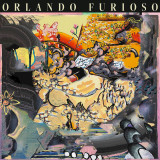
“Orlando Furioso is a haunting, one-of-a-kind statement, from an important new voice in improvised music.” - Steve Lehman
“…imagining instruments that haven’t been invented yet: space harps, cosmic gamelan, Venusian banjo. It’s the purest distillation of Atria’s musical language, simultaneously grounded and unearthly.” - Stewart Smith for The Wire (November 2022)
“Making liberal use of microtonal harmony and hypnotic, ostinato rhythms – as well as the occasional stylistic smash-cut, reminiscent of John Zorn – Orlando Furioso announced itself on Wednesday as a punchy, creative force on the New York scene. (…) Atria’s rhythms had a welcoming, social propulsion, and the microtonality of his writing for keyboard proposed an individual – even insular – language.” - Seth Colter Walls for The New York Times.
Early European composers felt that their work reflected in its structure the divine nature of the material world. Via tuning, form, and contrapuntal alchemy, these musicians sought to illuminate and edify the complex and perfect order of existence. The music recorded here also reflects the contours of an ordered world, but it is no place any of us has ever visited. By assembling far-flung building blocks from the detritus of a 21st-century musical vocabulary, Orlando Furioso brings the listener into a bizarre new cosmos. The result is deeply expressive music that speaks not with the voice of a narrator or memoirist, but with that of a cartographer.
Like a science-fiction Dante, the listener is taken on a tour of many diverse and colorful provinces of an alien world. Though each composition references its own set of real-world musical locales (from the Andes to Indonesia to Italy to New Orleans), they are bound by stylistic consistency into a coherent, continuous geography. Permeating this world is an uncompromising commitment to microtonal harmony, rhythmic intensity, and an ability to deploy the esoteric (Nicola Vicentino's notorious 31-tone temperament) and the head-smackingly obvious (a surprise djent breakdown) with equal conviction. Though Vicente's compositions are steering the ship, serious recognition is due to all the players on the record for their ability to meet these demands.
Our omnivorous musical diets offer real abundance. They enrich our craft by providing access to limitless approaches from which to choose - more masters to study, traditions to absorb, and techniques to hone than is possible in multiple lifetimes. They can also inflict heavy and often contradictory burdens of influence. When every corner of the map has been charted, it becomes difficult to find a new direction in which to travel. One solution I hope to see more often is the one pursued on this record: breaking down distinct musical worlds into component parts and reassembling them into a language. When completed with precision and with no stone left unturned, the seams between the pieces vanish and the listener is deposited somewhere beautiful and strange, left to assign their sensations meanings of their own. - Mat Muntz
Orlando Furioso is led by Vicente and features David Acevedo, David Leon, Andrew Boudreau, Alec Goldfarb, Daniel Hass, Simón Willson, and Niña Tormenta. Orlando Furioso celebrated its release at Roulette Intermedium in Brooklyn, NY, as a part of Wet Ink Ensemble's 24th Season opening concert, a performance which The New York Times heralded as "virtuosic", "punchy, creative" and "even revelatory."
Winner of the Deutscher Jazz Preis: Best International Debut Album 2023

Sucesiones is a compilation of studies written for 53 equal divisions of the octave (53 EDO). This tuning temperament was selected after analyzing the work of Mexican researcher and visionary Augusto Novaro, one of the microtonal and just intonation pioneer theorists. Novaro claims that 53 EDO is one of rich musical qualities, which has good approximations to the harmonic series.
The use of simple textures such as sine waves was a conscious decision, this in order to maintain the focus on the relationship between the frequencies and the possibilities this tuning allows, that fluctuate from aggressive beat frequencies to pure intervals. These four compositions serve as an introduction and familiarization to the tuning’.
Recorded, mixed and mastered by José Orozco Mora in his studio (Mexico City)
José Orozco Mora (Chapala, México) has worked with different aspects of sound creation, such as composition, sound design, recording and production. His work mainly explores the fundamental aspects of the sonic spectrum, implementing alternate tunings and temperaments, exploring their harmonic content through the combination of frequencies, using both acoustic and electronic sources. These explorations had led Orozco to utilize different artistic mediums such as quadraphonic compositions, sound installations, and others.
Orozco has released his work in labels such as Debacle Records (USA), Constellation Tatsu (USA), Hole Records (MEX). He has performed and presented his work in Austria, Germany, Greece, Italy, México, Netherlands, New Zealand, Switzerland, etc.

Sababa 5, Tel Aviv’s funkiest export, upgrade their signature Middle Eastern psychedelic funk with the addition of Hoodna Orchestra’s dynamic brass section, another essential 45 from Batov Records’ Middle Eastern Groove series.
Labeled by the likes of Truth & Lies as a “serious contender in the world of instrumental funk”, Sababa 5 have created a modern sound, fusing funk, disco, and psychedelic rock with a wide range of Middle Eastern influences, culminating in last year’s acclaimed self-titled debut album, Named after their new studio address on the border of Jaffa and Tel Aviv, “Eilat 22” & “Elifelet 23” spring from the same sessions that delivered us the enormous ‘Funk #1 / Funk #2’ 45, as championed by the Nostalgia King, Skeme Richards, BBC Radio 6 Music host, Huey Morgan, and influential music portal, Music Is My Sanctuary.
Sababa 5’s tight-as-ever instrumental grooves are enriched by the bright bass sounds of The Hoodna Orchestra brass section, comprising Bar Ashkenazi on trumpet, Eylon Tushiner on tenor, and Elad Gelert on baritone saxophone. Hoodna are renown for their energetic take on Afrobeat, and have been touring and recording recently with Ethio jazz legend Mulatu Astatke, and here they supply a touch of JB’s meets Africa ‘70 energy.
On the flip “Eiffelet 23” grooves along like a Dap Kings funk nugget, except in this case there’s room for Eitan to improvise across the jam with a microtonal organ sound reminiscent of legendary Egyptian musician Magdi el- Husseini.
Due for full release on vinyl and digital on 2 June, “Eilat 22” & “Elifelet 23” open another page in Sababa 5’s rapidly diverse and ever-engaging discography, with two songs destined to head light up dancefloors over the coming months.
