"The letter X marks the spot, crosses over, literally with a cross. It’s the former, the ex-. The ex-lover known simply as “an ex”. Ex- is the latin prefix meaning “out”. Exterior, an exit. Extraordinary. Excellent. It’s exciting. Generation X. X-files. X is the unknown. X is Extreme“
Extreme is Molly Nilsson’s tenth studio album. Recorded in 2019 and throughout the 2020 global pandemic at home in Berlin, Extreme is a departure for Nilsson, an explosion of angry love. It’s an album of anthems for the jilted generation, soaked with joy and offering solace, bristling with distorted, Metal guitars and planet-sized choruses that bring light to the dark centre of the galaxy. It’s an album of the times, by the times and for the people. It’s a record about power. About how to fight it, how to take it and how to share it.
Absolute Power explodes with massive guitars, double kick beats and the instantly iconic line “It’s me versus the black hole at the centre of the galaxy.” Nilsson’s performance itself portrays absolute power in its confidence but the song is a call-to-arms, an entreaty to grasp the here and now, to take the power back. It’s Nilsson pacing the ring and we’re instantly in her corner. Earth Girls takes familiar Molly Nilsson themes - female empowerment and subverting the patriarchy - but casually throws in one of the choruses of her career. “Women have no place in this world” she sings, but it’s the world that isn’t good enough. Stadium-sized but still warmly hazy, Earth Girls has its fists in the air, glorifying in harmony, almost ecstatic in its feeling good. Nilsson’s Springsteen-level conviction and righteousness bleeds through the speaker cones, the cognitive dissonance between the song’s cadences and angry lyrics redolent of Bruce in his prime. Female empowerment isn’t always an angry energy on Extreme, however. On Fearless Like A Child, Nilsson’s anthem to the female body and women’s sovereignty of it, she croons over a mid-80s blue-eyed Soul groove. It sets a nocturnal scene as the narrator surveys her past and her surroundings. Before we’re fully submerged in a dreamlike, Steve McQueen-era Prefab Sprout poem to learning from your mistakes the song erupts into one of those lines only Molly Nilsson can get away with: “I love my womb, come inside I feel so alive” she fervently sings. Against the backdrop of ever-encroaching, conservative rulings on women’s reproductive rights in places like Texas, it’s simultaneously angry and full of love.
Every song on Extreme is a gleaming gem in a pouch of jewels. On Kids Today, Nilsson is the voice of wisdom, archly commenting on the eternal struggle between youth and authority. Wisdom infuses Sweet Smell Of Success with a transcendent love that forgives the narrator’s shortcomings and celebrates the moment, it’s a letter to the author from the author that asks “what is success” and concludes that this is it, this song, this moment. It’s a rare moment of simple reflection that is generous in its insight to Nilsson’s inner life. “Success” is a tool of power and we don’t need it… We need power tools and there are moments on Extreme where it feels like Nilsson is showing us how to find them. It's an open conversation through out Extreme. She’s a warm, comforting presence through out the album and specially on these songs of encouragement, songs perhaps sang to a younger Molly Nilsson or, really, to whomever needs to hear them. “They’ll praise your efforts, they’ll call you slurs a rebel, a master, an amateur / Merely with your own existence, you already offer your resistance.” On Avoid Heaven she’s even more direct, pleading with us to avoid concepts of purity and to embrace the glorious, ebullient, emotional mess we’re often in as a method of upending the power structures who need things to be perfect.
They Will Pay brings back the big, distorted power chords in the form of a agit-punk, pop slammer. Of course, when Molly Nilsson does punk pop we get the catchiest chorus this side of The Bangles or The Nerves. It’s rendered in an off the cuff, throwaway manner that is just perfect in its roughness. However, it’s on Pompeii that Nilsson delivers the album’s epic, emotional heartbreaker. Like 1995 on Nilsson’s album Zenith, or Days Of Dust on Twenty Twenty, the lyrics of Pompeii are heavy with a transcendent sadness, an aching poetry that cuts to the truth of the heart like the best Leonard Cohen lines, though here delivered with an uplifting, life-affirming love. It contains the most personal moments of Extreme, a song lit by the dying embers of romance. Yet it’s here where the alchemy at the base of all Nilsson’s best work is found. Turning small nuggets of personal truth into big, generous universal moments that invite everyone to cry, to love and to fight the power. In an album of jewels, it might be the shining star.
Molly Nilsson’s biggest, boldest and most vital album to date, Extreme is about power. Against the love of power and for the power of love.
Suche:mid air
Joona Toivanen Trio makes their We Jazz Records debut with their new album "Both Only", out 25 Feb 2022. A landmark work for the long standing group, the album showcases a new sound for the band, trekking deep into new ideas for an acoustic jazz piano trio. Since their formation as teenagers in mid-1990's, the trio of pianist Joona Toivanen, bassist Tapani Toivanen and drummer Olavi Louhivuori (of Superposition, Ilmiliekki Quartet and Linda Fredriksson "Juniper") has developed their remarkably coherent band sound step by step, touring the world over. Nowadays, the trio is geographically split between Gothenburg, Sweden (Joona), Copenhagen, Denmark (Tapani), and Helsinki, Finland (Olavi), but the unit has never sounded so together as one, and as adventurous as on "Both Only".
"Both Only" by Joona Toivanen Trio is a cocoon, a welcoming shelter of sound that opens up naturally for the listener to inhabit. The album is moody and introspective, even dark at times, but by the time you get to the closing track, "This and This", you'll likely notice something hopeful brewing up. This is not music dealing with nostalgia or a world lost. Instead, it's a body of work with delicate dynamics, taking a minute just to listen and to look inwards to learn something, to move forward.
The first single "Enlightened" is perhaps the most traditional piece on the album, yet it flows like a vessel beyond genre, conveying a mood, a feeling and an idea. Listen to how the piano, bass and drums discuss, how the groove moves with the instruments having their clear roles but also supporting each other and documenting a musical aging process exactly as that of a quality bottle of red wine. As a song like "Direction" proves, the melody is there all the way, yet there is nothing obvious about how it's carried by the trio. Things remain surprising, fresh and moving at all times. "Except For" keeps its intensity, while nearly erupting into a full on 4-to-the-floor banger. Nearly! The key here is how the energy sustains itself, building the intensity within the music.
"Both Only" is a powerful statement from a band ready to renew itself time and again, and one willing to do it slowly, outside of the hype. This process makes the impact enduring, nuanced and lovely.
WJLP37 Joona Toivanen Trio "Both Only" is available on vinyl as a black vinyl edition and as a LP+7" bundle also including WJ0716 "Except For (7" Edit)" / "Keyboard Study No. 2".
“More excellent poetic soundscapes from We Jazz! Love the flow through the tracks here – textural pieces moving into more rhythmic jazz abstractions. Beautifully recorded too.”
Quinton Scott — Worldwide FM
“Following on from the excellent Linda Fredriksson album We Jazz extend the journey with this innovative Joona Toivanen Trio set.”
Paul Bradshaw — Straight No Chaser
“You’ll look in vain here for extravagant splashes of color or bright swathes of sound, but what you will discover are a finely-chiselled set of compositions that make the most of the trio’s limited palette: flint-sharp melodies hewn from the ice, crisp and crackling rhythms.”
Cal Gibson — Ban Ban Ton Ton
“Incredible album from Joona Toivanen Trio and a strong start to the new year from We Jazz.”
Kerem Gokmen — Dubmission
“Encapsulating a new movement in jazz.”
Jay Scarlett — Sounds Supreme
“Interesting listen on the shortest day of the year. They have a very definite and saturated style.”
John Chacona — All About Jazz
“Airplayed the track”
Tom Ravenscroft — BBC6 Music
“Jazz album of the year released already in February?”
Ralf Sandell — Hufvudstadsbladet
“★★★★★”
Iida Simes — Voima Magazine
World renowned extreme Metal titans KREATOR are back. 5 Years after their incredibly successful “Gods Of Violence” album (2107, #1 in the German album charts, #4 in Austria, #7 in Czech Republic and Finland + chart entries in numerous other territories), the genre-defining band presents their most political effort to date. “Hate Über Alles” (in tradition of US punk icons DEAD KENNEDYS’ “California Über Alles”) is a bold statement against hate and the division of society in today’s world. While perfecting their signature sound of thrash metal that inspired countless other bands over the past 4 decades, KREATOR have managed to close the gap between the old and new school, still reaching new audiences, playing sold out shows to even bigger crowds as they move on. “
Hate Über Alles” features 11 tracks that once again show who’s boss in this game that many begin but only few ultimately last in. The crushing frenzy of the title track, the pounding “Strongest Of The Strong” featuring world famous vegan strongman Patrik Baboumian, the nostalgia of “Become Immortal” or the extravaganza of “Midnight Sun” make the band’s 14th album their most diverse and thrilling so far. “Hate Über Alles” will be accompanied by massive online and out-of-home campaigns, leading up to the band’s European co-headlining tour with Grammy-nominated US powerhouse LAMB OF GOD in November/December 2022. The album is available in various lavish vinyl editions featuring a beautiful, yet grim trifold artwork by famous artist Eliran Kantor (TESTAMENT, SOULFLY, HELLOWEEN, HEAVEN SHALL BURN, HATEBREED among others) as well as in a noble CD Digibook and bold box set including an extended Making-Of Book, a live album of the band’s 2021 Bloodstock Open Air appearance, an art print of the cover and a pin of the band’s iconic logo.
Diabolical Death Metal titans BELPHEGOR unleash their twelfth studio album!
With “The Devils”, long-running Diabolical Death Metal titans BELPHEGOR unleash their twelfth studio album upon the masses, which proves to be one of the strongest and most elaborate records in the group’s career. Produced at renowned Fascination Studios with Jens Bogren (Kreator, Rotting Christ, At The Gates), “The Devils” sounds absolutely crushing and dynamic, sonically pushing the immense variety of the eight tracks to new heights. Blending German and English lyrics, lead single ‘Totentanz – Dance Macabre’ is as ferocious as it gets with its insane barrage of blast beats, spiteful lyrics, and sinister guitar melodies. ‘Glorifizierung des Teufels’ (= ‘Glorification of the Devil’) and ‘Virtus Asinaria – Prayer’ offer epic, mid-paced grandeur and chanted vocals and choirs adding new shades of black to their stylistic palette. The title-track or ‘Damnation – Höllensturz’ prove to be more complex pieces, shifting moods and tempos with ease and expanding BELPHEGOR’s blasphemous onslaught with fascinating twists and turns. Rounded off by impressive artwork created by Seth Siro Anton (Septicflesh, Nile, Paradise Lost), “The Devils” marks the band’s third collaboration with one of metal’s most prolific designers. Ultimately, “The Devils” is an album that musically builds upon BELPHEGOR’s trademark sound, in essence a combination of traditional death and black metal, deeply rooted in the 90’s, yet boasts with intricate compositions and detailed arrangements underlining their outstanding position within the international extreme metal circuit. Known as tirelessly touring band, BELPHEGOR currently presents a few of the new songs during an European tour with I Am Morbid and Hate before hitting South America in May/June 2022, and an intense festival season including Wacken Open Air, Bloodstock, Sweden Rock and many more.
Mix and mastering by Jens Bogren at Fascination Street Studios Örebro, Sweden. Drum engineering by David Castillo at Fascination Street Studios in Stockholm.
Guitars, Bass and Vocals recorded by Jakob Klingsbigl at Studio Mischmaschine Oberalm, Austria.
Artwork by Seth Siro Anton
‘4-Vesta’ is the brightest asteroid visible from Earth. Measuring around 500km in diameter, it’s one of the four largest objects in the asteroid belt between Jupiter and Mars. Fragments of Vesta have been found on Earth, as meteorites that were ejected into space after two collisions that left huge craters on its surface. These fragments show that Vesta was probably once a planet itself, made of the same material as the four terrestrial planets (Mercury, Venus, Earth and Mars).
It was an encounter with one of these fragments that inspired the name for Azu Tiwaline’s latest EP for I.O.T Records, ‘Vesta’, which features tracks that were written and recorded around the same time as ‘Magnetic Service’, her break-through EP for Livity Sound. Holding a piece of Vesta that had been found in the Saharan Desert - already a place of deep significance for her - she felt a sense of wonder, on a cosmic scale. In her hands, was an object so apparently familiar, of the same age and made of the same fundamental materials as the Earth on which she stood, yet from somewhere else entirely. A perfect name for the four tracks that make up ‘Vesta’. And also the perfect source material for the EP’s cover, an electron microscope image of a razor-thin slice of that same cosmic fragment that Azu held in her hand.
‘Vesta’ is familiar, yet distinct. It’s recognisably Azu Tiwaline from the very start, yet the unexpected always finds a way in. A booming, echoing kick opens ‘Low’, followed by the rattling, shivering sound of a tanbur hand-drum, courtesy of his regular collaborator, Franco-Iranian percussionist and producer Cinna Peyghamy. But then, tentatively at first, a jazzy synth line emerges, and disappears again, only to reappear later. An another colour to add to Azu Tiwaline’s already rich palette?
Azu Tiwaline’s music has always explored the dynamics between space and depth, and the contrasts between light and density. ‘Vesta’ often feels like a high-wire act, an exercise in finding space even as the air fills with drum patterns and synth lines. ‘Medium Time’ builds from a chorus of buzzing insects into a thick percussive track across eight minutes, without ever losing that initial wide-open sound of the dusk. ‘Into The Void’ pays homage to her well-worn collection of Rhythm & Sound and Basic Channel 12-inch singles, all swaying dub echoes and languid kick drums. Then mid-track, it pivots in intensity, each element suddenly expanded and magnified: a psychedelic shift. Those who’ve had the chance to see Azu Tiwaline perform in the past few years might get a few flashbacks - it’s been a key part of her live set.
But it’s the final track ‘Deep Theko’ that best fits the EP’s cosmic title. A shape-shifting ‘ambient’ track that never seems to settle, it drifts restlessly, sporadic percussion and synth washes injecting random bursts of activity. A sonic representation of planetary debris floating through space? Here, as with the airless void of space, emptiness enables a certain perspective. If the distances between the stars weren’t so enormous, we wouldn’t be able to gaze upon them in their entirety, after all.
A.B. Crentsil is a heavyweight of Highlife music and the main vocalist of Sweet Talks, one of the most popular Ghanaian bands of the 1970’s. In 1992, musician Charles Amoah and producer Richie Osei Kuffour offered him the opportunity to explore a new popular sound: Bürger Highlife. Little did he know these studio sessions would give birth to the biggest song of his career.
Charles Amoah, who had released his Sweet Vibrations LP in 1984 to great acclaim, extensively toured in Europe with bands such as Black Earth and Saraba, was eager to bring a new sound to Crentsil, an artist he had admired for years. Throughout the 1980’s, Highlife had been changing pretty radically, following the same evolution as Congolese Soukous, Caribbean Zouk and most popular black music
genres of that era: Heavy use of drum machines, synths and digital technology was conveniently replacing big bands and expensive
analog studios and equipments. Mostly recorded, produced or mixed in Germany, this new breed of electric Highlife dubbed ‘Bürger Highlife’ could be defined as a fusion of Disco, Jazz, Funk and Pop with the popular Highlife beats, rhythms and lyrics.
According to A.B. Crentsil, the name was a reference to the ever present American cultural influence on Ghanaian musicians. Charles
Amoah has his own take: “I initially called this particular kind of Highlife ‘Ethno Pop’. Bürger is the German word for citizen, and that’s how Ghanaian musicians living and working in Germany were calling each other”.
The music for both “Obi Baa Wiase'' and “Sika Be Ba” was entirely composed and played by Charles Amoah, using minimal equipment: a
DX7 synth, a Korg M1, a Yamaha RX5 drum machine, and an Akai 1000 sampler. A.B. Crentsil provided the lyrics for both tunes on the spot. Obi Ba Wiase’s message is one of gratitude and faith: it says we should appreciate our life way more and follow the example of people who have a lot less but still praise God all day.
Charles remembers fondly Crentsil’s larger than life personality: "A.B. slept a lot, he really loved sleeping. His lack of punctuality was easily dismissed by his wonderful sense of humour and it wasn't uncommon to find musicians rolling with laughter on the studio floor."
Charles also remembers vividly the "Obi Baa Wiase" session: he could feel the magic in the air while working on the soon to be hit, and
knew something special was happening. A.B. asked for a break in the middle of the session, which Charles adamantly refused until the song was finished and the magic fully captured.
Success was not immediate, and Charles was first a little concerned by the lack of buzz following the immediate release of the Gyae Me
Life Ma Me album. But a few months down the line, the situation took a new turn. "Obi Baa Wiase" was making its way into radio playlists,
weddings and festive celebrations. It was covered by local bands, and soon most of Ghana and its European and American diasporas were hooked. It became A.B. Crentsil’s most requested song at live events for the following decades.
As producer Richie Moore wrote on the album back cover : "A perfect integration of two musical geniuses, the result of which are the
scintillating tracks of music on this record… so all you party fans go onto the floor and dance the body music"
World renowned extreme Metal titans KREATOR are back. 5 Years after their incredibly successful “Gods Of Violence” album (2107, #1 in the German album charts, #4 in Austria, #7 in Czech Republic and Finland + chart entries in numerous other territories), the genre-defining band presents their most political effort to date. “Hate Über Alles” (in tradition of US punk icons DEAD KENNEDYS’ “California Über Alles”) is a bold statement against hate and the division of society in today’s world. While perfecting their signature sound of thrash metal that inspired countless other bands over the past 4 decades, KREATOR have managed to close the gap between the old and new school, still reaching new audiences, playing sold out shows to even bigger crowds as they move on. “
Hate Über Alles” features 11 tracks that once again show who’s boss in this game that many begin but only few ultimately last in. The crushing frenzy of the title track, the pounding “Strongest Of The Strong” featuring world famous vegan strongman Patrik Baboumian, the nostalgia of “Become Immortal” or the extravaganza of “Midnight Sun” make the band’s 14th album their most diverse and thrilling so far. “Hate Über Alles” will be accompanied by massive online and out-of-home campaigns, leading up to the band’s European co-headlining tour with Grammy-nominated US powerhouse LAMB OF GOD in November/December 2022. The album is available in various lavish vinyl editions featuring a beautiful, yet grim trifold artwork by famous artist Eliran Kantor (TESTAMENT, SOULFLY, HELLOWEEN, HEAVEN SHALL BURN, HATEBREED among others) as well as in a noble CD Digibook and bold box set including an extended Making-Of Book, a live album of the band’s 2021 Bloodstock Open Air appearance, an art print of the cover and a pin of the band’s iconic logo.
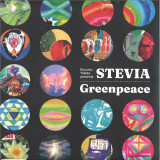
In 1997 and 1998, the late great Japanese composer, producer, and DJ Susumu Yokota released two of the most eclectic albums of his decades-long career, Fruits of The Room and Greenpeace. Recorded under his Stevia alias for Tokyo Techno pioneer DJ Miku’s Newstage Records/NS-COM, they were Yokota-san’s homage to the foundational days of club music in Japan.
This year, Glossy Mistakes are proud to present the first official vinyl editions of Fruits of The Room and Greenpeace, originally released on CD during the golden days of the format. Packaged in reimagined cover artwork created by the celebrated Japanese visual artist Masaho Anotani, these two albums perfectly capture the diversity at the heart of Yokota-san’s oeuvre. Across Greenpeace sees Yokota-san conjuring up a heady concoction of dusty loops, sampledelic breaks, kraut-rock and psychedelic downbeat. A remarkable listening experience based on the inspired era of a genius.
When Yokota-san wrote and produced the music on Fruits of The Room and Greenpeace in 1997, he was reflecting on the broader culture that surrounded dance music in Japan in the early to mid-nineties. It was an era when the psychedelic culture of late sixties America, the afterglow of UK acid house/rave, the new age movement and cyberpunk dovetailed together. Within DJ Miku and Yokota-san’s social circles, the thinking of Timothy Leary, Ram Dass, Allen Ginsberg, Jack Kerouac and William S. Burroughs electrified the air.
By 1996, the moment, brilliant and blinding as it was, was over. “We all felt that the rave scene fizzled out,” DJ Miku says. As he puts it, there was a collective feeling around him that it had all become too much. From the calm that followed, DJ Miku, Yokota-san and their open-eared peers made the decision to switch tracks and start from scratch. DJ Miku believes that with his Stevia releases, Fruits of The Room and Greenpeace, Yokota-san wanted to express the sweet and sour nature of the passing of those wild early days and his wish for true peace. “At the time, we saw eye-to-eye, with an implicit understanding of each other,” he explains. “Even now, twenty-five years later, I am confident it was like that.”
Joona Toivanen Trio makes their We Jazz Records debut with their new album "Both Only", out 25 Feb 2022. A landmark work for the long standing group, the album showcases a new sound for the band, trekking deep into new ideas for an acoustic jazz piano trio. Since their formation as teenagers in mid-1990's, the trio of pianist Joona Toivanen, bassist Tapani Toivanen and drummer Olavi Louhivuori (of Superposition, Ilmiliekki Quartet and Linda Fredriksson "Juniper") has developed their remarkably coherent band sound step by step, touring the world over. Nowadays, the trio is geographically split between Gothenburg, Sweden (Joona), Copenhagen, Denmark (Tapani), and Helsinki, Finland (Olavi), but the unit has never sounded so together as one, and as adventurous as on "Both Only".
"Both Only" by Joona Toivanen Trio is a cocoon, a welcoming shelter of sound that opens up naturally for the listener to inhabit. The album is moody and introspective, even dark at times, but by the time you get to the closing track, "This and This", you'll likely notice something hopeful brewing up. This is not music dealing with nostalgia or a world lost. Instead, it's a body of work with delicate dynamics, taking a minute just to listen and to look inwards to learn something, to move forward.
The first single "Enlightened" is perhaps the most traditional piece on the album, yet it flows like a vessel beyond genre, conveying a mood, a feeling and an idea. Listen to how the piano, bass and drums discuss, how the groove moves with the instruments having their clear roles but also supporting each other and documenting a musical aging process exactly as that of a quality bottle of red wine. As a song like "Direction" proves, the melody is there all the way, yet there is nothing obvious about how it's carried by the trio. Things remain surprising, fresh and moving at all times. "Except For" keeps its intensity, while nearly erupting into a full on 4-to-the-floor banger. Nearly! The key here is how the energy sustains itself, building the intensity within the music.
"Both Only" is a powerful statement from a band ready to renew itself time and again, and one willing to do it slowly, outside of the hype. This process makes the impact enduring, nuanced and lovely.
WJLP37 Joona Toivanen Trio "Both Only" is available on vinyl as a black vinyl edition and as a LP+7" bundle also including WJ0716 "Except For (7" Edit)" / "Keyboard Study No. 2".
“More excellent poetic soundscapes from We Jazz! Love the flow through the tracks here – textural pieces moving into more rhythmic jazz abstractions. Beautifully recorded too.”
Quinton Scott — Worldwide FM
“Following on from the excellent Linda Fredriksson album We Jazz extend the journey with this innovative Joona Toivanen Trio set.”
Paul Bradshaw — Straight No Chaser
“You’ll look in vain here for extravagant splashes of color or bright swathes of sound, but what you will discover are a finely-chiselled set of compositions that make the most of the trio’s limited palette: flint-sharp melodies hewn from the ice, crisp and crackling rhythms.”
Cal Gibson — Ban Ban Ton Ton
“Incredible album from Joona Toivanen Trio and a strong start to the new year from We Jazz.”
Kerem Gokmen — Dubmission
“Encapsulating a new movement in jazz.”
Jay Scarlett — Sounds Supreme
“Interesting listen on the shortest day of the year. They have a very definite and saturated style.”
John Chacona — All About Jazz
“Airplayed the track”
Tom Ravenscroft — BBC6 Music
“Jazz album of the year released already in February?”
Ralf Sandell — Hufvudstadsbladet
“★★★★★”
Iida Simes — Voima Magazine
Recorded back in 1999, 'Half a Dove in New York, Half a Dove in Buenos Aires' is the recorded debut of a NetCast improv between deep listening pioneer Pauline Oliveros and Argentinian free music trio Reynols >> a fascinating early example of the internet’s capacity to foster remote creativity in-the-moment that deploys the slowest electronics, accordion, voice, trombone and computer sounds on a next level ritual drone incantation recorded in another era, but made for our time.
As the story goes, Oliveros first met Reynols in the mid ‘90s at a Deep Listening workshop she held in their home city, Buenos Aires, where they impressed her with an improvised brass serenade. Years later, in 1999, they met again via NetCast - a series of very early online live improvisations - to explore the Internet’s potential for collaborations between artists thousands of miles apart. Finally mixed down in 2021 and mastered by Helge Sten (aka Deathprod) after marinating in the archive for 22 years, the album resonates with the late, great Oliveros’ legendary work in exploring alternate tunings, spatial dynamics and methods of intuitive performance - a remarkable slab of omnidirectional drone bearing traces of Miguel Tomasin's vox and Oliveros’ just-intoned accordion embedded in its cosmic roil.
Broadcasting from fabled record shop The Thing in NYC, with Oliveros (Accordion) joined by Jennifer McCoy (ICR), Kevin McCoy (Computer processing), and Monique Buzzarté (Trombone), and Reynols revolving Miguel Tomasin (Electronics, subliminal voice & Alclorse drums), Rob Conlazo electronics, leather gloves & e-gtr), and Anla Courtis (electronics, rubber foot & e-gtr) and dialling-in from Florida 943 in Buenos Aires, the results are an incredibly absorbing and consistently surprising testament to vanguard, experimental spirits prizing the internet’s nascent, unprecedented ability to connect minds and art across continents, language barriers, and modalities.
The album's first side, titled 'Micro Macro Wind Dance', puts Oliveros' accordion under a microscope, enhancing it with lower case rumble and noise from Reynolds' arsenal. Shifting glacially over 22-minutes, Oliveros plays subtly and slowly at first, letting the accordion breathe in-and-out like a sleeping mythical beast, before she transitions to fluttering bird-like phrases by the end of the side.
'Astral Netcast Pigeon' expands the dissonant drones to widescreen, submerging Oliveros' trills and drones beneath layers of dirt and grit. It's time-altering music that dissasembles yr head before you've completely worked out what's happening >> basically the perfect mid-point between Oliveros' deep listening practices and Reynols' wildly inspirational free-noise-drone freakouts.
Born into a musical family, as a child Charlie Hickey would obsessively
watch videos of his parents on tour in their old band Uma, learning all the
lyrics that he loved but didn’t understand. This introduction to music sowed a
seed and Hickey was soon writing songs of his own, playing on the guitars
that lay around him and singing about the little details of his school days. He
continued throughout his teen years, his songs becoming an outlet for the
growing anxieties that Hickey now understands to be Obsessive Compulsive
Disorder.
This journey has led to ‘Nervous At Night’, Hickey’s debut album which is
released via Phoebe Bridgers’ Saddest Factory Records. Where 2021’s
‘Count The Stairs’ EP was an attempt to capture the rawness of his
performance, ‘Nervous At Night’ comes alive within its production, Hickey
and producer Marshall Vore leaning into their perfectionist tendencies to find
the best version of each track. “He’s always interested in how you can push
things further but also reigns them in when necessary,” Hickey says. “I think
that’s the true hallmark of a good producer.”
Hickey calls it a pop record but admits that sonically it moves in many
directions, an amalgamation of his love for the folk singers of yesteryear and
more contemporary peers, from Taylor Swift and The 1975 to the Californian
songwriter and producer Blake Mills. This shifting of styles - from the album’s
quiet heavy-hearted ballads to its more gleaming, hook-led tracks - mirrors
its overarching theme: life’s graceless passage between teenage years and
adulthood.
And so we have ‘Planet With Water’, a plaintive love song that bristles with
nostalgia, Hickey singing of phone calls after school, of hearing a neighbour’s
TV through the wall. Elsewhere, ‘Mid Air’ holds a similar weight, Hickey
singing of “spinning in mid-air, waiting for somewhere to land, or some face
to show up” as the song flourishes around his voice, delicately accompanied
by guest turns from fellow LA musicians Harrison Whitford, Christian Lee
Hutson and Mason Stoops.
‘Nervous At Night’ comes alive in its juxtapositions, chronicling the constant
push and pull of life, both its stagnancy and motion. Chiefly though, this is an
album about connection, how even through those struggles we rely on the
people around us to keep moving forwards. “I’d like to write songs that are
for everyone, that let people into my inner world while also hopefully making
people feel less alone on their own. I hope that these songs can be there for
somebody the way my favorite songs have been for me.”
Collaborated with MUNA on track ‘Seeing Things’.
2022 live shows include The Great Escape and SXSW, as well as shows in
London, NY and LA’s Troubadour. Recent US tour with Samia.
LP available on opaque yellow vinyl.
Born into a musical family, as a child Charlie Hickey would obsessively
watch videos of his parents on tour in their old band Uma, learning all the
lyrics that he loved but didn’t understand. This introduction to music sowed a
seed and Hickey was soon writing songs of his own, playing on the guitars
that lay around him and singing about the little details of his school days. He
continued throughout his teen years, his songs becoming an outlet for the
growing anxieties that Hickey now understands to be Obsessive Compulsive
Disorder.
This journey has led to ‘Nervous At Night’, Hickey’s debut album which is
released via Phoebe Bridgers’ Saddest Factory Records. Where 2021’s
‘Count The Stairs’ EP was an attempt to capture the rawness of his
performance, ‘Nervous At Night’ comes alive within its production, Hickey
and producer Marshall Vore leaning into their perfectionist tendencies to find
the best version of each track. “He’s always interested in how you can push
things further but also reigns them in when necessary,” Hickey says. “I think
that’s the true hallmark of a good producer.”
Hickey calls it a pop record but admits that sonically it moves in many
directions, an amalgamation of his love for the folk singers of yesteryear and
more contemporary peers, from Taylor Swift and The 1975 to the Californian
songwriter and producer Blake Mills. This shifting of styles - from the album’s
quiet heavy-hearted ballads to its more gleaming, hook-led tracks - mirrors
its overarching theme: life’s graceless passage between teenage years and
adulthood.
And so we have ‘Planet With Water’, a plaintive love song that bristles with
nostalgia, Hickey singing of phone calls after school, of hearing a neighbour’s
TV through the wall. Elsewhere, ‘Mid Air’ holds a similar weight, Hickey
singing of “spinning in mid-air, waiting for somewhere to land, or some face
to show up” as the song flourishes around his voice, delicately accompanied
by guest turns from fellow LA musicians Harrison Whitford, Christian Lee
Hutson and Mason Stoops.
‘Nervous At Night’ comes alive in its juxtapositions, chronicling the constant
push and pull of life, both its stagnancy and motion. Chiefly though, this is an
album about connection, how even through those struggles we rely on the
people around us to keep moving forwards. “I’d like to write songs that are
for everyone, that let people into my inner world while also hopefully making
people feel less alone on their own. I hope that these songs can be there for
somebody the way my favorite songs have been for me.”
Collaborated with MUNA on track ‘Seeing Things’.
2022 live shows include The Great Escape and SXSW, as well as shows in
London, NY and LA’s Troubadour. Recent US tour with Samia.
LP available on opaque yellow vinyl.
Featuring Squirrel Flower and Liam O’Neill (SUUNS). Recommended If You Like: Mount Eerie, Low, Richard Swift, the Weather Station, Lomelda, Fleet Foxes, Squirrel Flower, L’Rain. Cedric Noel is a songwriter, bassist, collaborator and producer currently based in Montréal, Québec. The newest longplayer from Tio'tiá:ke/Montreal staple Cedric Noel lands with a stunning sense of surety and self. Hang Time stands as a high water mark for a songwriter who's spent the past decade quietly expanding the borders of his music. Longtime fans will recognize the fluid elements of the album’s open-ended rock formations: reflective strumming, soaring choruses, searing guitar lines, subtle bass grooves; all occasionally dissolving into pools of pure ambience. New listeners will find surprises throughout: threads of folk pop, ambient and sound collage fasten the foundations of this expressive whole. However, what’s most striking on Hang Time is Noel’s newfound sense of voice, both literal and metaphorical. Written primarily in 2017-18 during an intense period of self-reflection, this collection of songs finds Noel wrestling profoundly with his sense of identity, self and place. The album’s material was captured faithfully at The Pines, a beloved downtown Montreal studio whose doors shuttered shortly after amidst the strain of the pandemic. Noel worked closely and patiently with friend and engineer Steve Newton, ensuring the songs had the time and space needed to come fully to fruition. Hang Time features subtle rhythm work from drummer Liam O’Neill (SUUNS) and guest spots from Brigitte Naggar (Common Holly) and Tim Crabtree (Paper Beat Scissors) among others. The album opens in mid-air with ‘Comuu’, a song that implores a becoming-more while hovering triumphantly. Then follows a suite of songs (‘Headspace’, ‘Keep’, ‘Stilling’) that recall the heart-rending power of y2k-era Low, albeit with a more vigorous beat. On ‘Bass Song’, an intimate duet with musician Ella Williams (Squirrel Flower) that explores the depths of interpersonal constriction. At the crux of the album sits ‘Born’, a deceptively pleasant-sounding song that explores the confounding emotionality of adoption before fading into a distended soundfield. Throughout the back half of the album, Noel double’s down on this commitment to his genuine, proud, Black self. The most confrontational track, ‘Allies’ finds him refraining “Are you on my side?” as a trailing guitar solo interweaves a Malcolm X soundbite, eventually engulfing the composition. Glorious lead single ‘Nighttime (Skin)’ traces the artist’s sense of ancestral dissociation through to a triumphant moment of pride in self-acceptance. Throughout Hang Time, Noel finds a way to ask hard questions (both of the listener and himself) in ways that are compassionate, open and honest. The ebb and flow of tension and tenderness that moves within these tracks helps to grow the heart and redefine what Black music can be in 2021.
This second release on Heads High brings an EP from label owner Mike Misiu under the moniker Day Out Of Time. Four diverse tracks forged from a year of studio jams, road tested on airwaves and discerning dancefloors and now honed and available for your delectation.
Opening 4/4 cut 'Rising Tide' builds the atmosphere and tension with synth stabs, morphing arps and a throbbing sub-bass. 'The Urge' struts in on a hybrid electro-funk tip, twisting, chopping and vocoder-ing an 80's rock vocal and sax into a dance-floor detonator.
On the flip side 'Private Ay' chugs along on a mid-tempo Moog bass groove that re-imagines and re-works some infamous guitar licks, before the E.P. climaxes with 'When Love Beckons' - a pulsing electro-discoid ode to love, powered by moody analog bass, acid lines and an impassioned poetic vocal.
All tracks produced by Mike Misiu, mastered by Curved.
Four years in making, Voyeurs In the Dark is Toronto artist Barzin’s fifth studio album. That the album is more cinematic in its scope and conceptual in feel than his previous studio albums can be attributed to the time he spent over the past several years composing the soundtrack for the independent film, Viewfinder. Voyeurs In the Dark retains that cinematic quality, and at the same time infuses the music with elements taken from Jazz, electronica, rock and pop. Having primarily explored the quiet side pop and folk in his previous four albums, Barzin has expanded his musical palate, broadening his sound towards a more an experimental direction, while still retaining his preoccupation with exploring the internal landscape. The uniformity of sound that characterized the previous albums has been abandoned for the expression of differing aspects of the self that at times hold opposing views and desires. This is best represented in the image chosen for the cover of the album, which depicts three figures in one body. The album seems to be the expression of not one unified self, but the various aspects of the self. Voyeurs In the Dark sees the artist plot a seductive, contemplative route through city haze, shuttling between graceful glimmering interludes, with wonderfully atmospheric songs at every stop. From opener Voyeurs In the Dark’s first guitar strums and the fizz of its drum machine, the record envelopes itself in a glorious shadow, as shown in the slow waltz of I Don’t Want To Sober Up, dancing around its own swirling guitar chords. On Watching, Barzin plunges himself deeper into a wash of cyclic bass, guitar and synth riffs, as the gloom grooves into light. It’s Never Too Late To Lose Your Life has a much more affirming and urgent tone, shade turning into shapes and motion, while To Be Missed In the End builds its own smoke in a cloud of saxophone and sparse guitar notes, closing out a record full to the brim with scatterbrain beauty and eclectic dusk. Voyeurs In the Dark will be released worldwide on Monotreme Records on May 6th on CD and limited edition180 g black vinyl LP with printed inner discobag and digital download card. Press highlights so far: Video premiere and feature interview on Rumore.IT. Airplay on BBC 6Music, Amazing Radio (UK and US), Glastonbury FM, Shoreditch Radio, Indie Music Discovery, Listen to Discover, Norfolk Radio. Press coverage in V13, Skope, Whisperin and Hollerin, Fame Magazine, High Violet, Indie Midlands, Beehive Candy, Music Won’t Save you. Feature confirmed for Wonderland Magazine. PUBLICITY - UK and North America press and radio Cannonball PR. Europe Five Roses Press
Much in demand album from 1986.
Not much is known about the mysterious pop sensation Vumani or his short musical career. Originally from KwaZulu Natal he made his way to Johannesburg in the mid 80’s to follow his dream of becoming a recording artist. He was able to make that dream come true when talent scouts from Decibel Music came across the charismatic youngster. At the time Decibel was still a small fish trying to make waves and the label believed in Vumani they had found the star they were looking for. Being a label with mostly groups signed to the catalog they needed a Front Man to push into the growing demand for Solo Artists that were dominating the airwaves and catching the hearts of youngsters.
Up to this point Decibel had one major hit record. In 1986 they released a single by an artist named David Thanzwane. The music was a direct rip off of the first hit Single by Shangaan Disco pioneer Paul Ndlovu. Copying the music of both sides of the original single the “covers” offered different lyrics and hooks also sung in xiTsonga. This was enough to trick the masses and the single led to record sales for the small label. The unintentional outcome of the single was that from then on the producers and label had one sound they wanted to pump out in hopes of recreating that magic. This desire to create another Shangaan Disco hit would be the backbone of the Vumani sound and what makes his music so special and collectable after all these years.
That same year Vumani would release two Singles, Black Mampatile and Guy Fawkes. Musically these playful and fun singles would have great appeal to youngsters as they sung of daily life in the Townships. Black Mampatile being a game of Hide and Seek, Banana Kari referring to the trucks that would go around the Township exchanging chips and snacks for glass bottles and of course every child’s favourite reason the dress up on November 5th, Guy Fawkes Day. Both singles were received well and a few more tracks were later recorded to create the full album Isiqedakoma. Although he would sing in Zulu the music was unmistakable for Shangaan Disco. The synth heavy bass lines and happy melodies along with relatable fun lyrics were a perfect blend for an album that would make people dance if they were out at a Tavern or Shabeen on a weekend or just enjoying at home with family and friends.
Vumani quickly became the Label’s top priority with managers making sure he always had the freshest clothing styles to go along with his persona, and he never missed any performances or opportunities to impress a crowd. His popularity grew in the Township’s but with that came the unfortunate and all too common problems with fame. He started getting mixed with wrong crowds. He would record another album for Miracle Music, the Decibel sub label that had emerged to focus on the more underground sounds of the post synth pop era. Musically things were going well for Vumani but it would be his life off the stage that would catch up with him. Always known for his commitment to his music and fans one day he uncharacteristically failed to show up and was never heard from again. His body would later be found in a burnt car on the outskirts of Soweto. What led to his tragic death was never known but with the company he kept it is not hard to imagine what one of the many situations that led to that horrific ending could be. His funeral was attended by the entire Township it seemed as people packed the service and flowed out onto the streets, a testament to his popularity and the love the people had for one of their own.
Dena Miller grew up on a diet of folk before spending 6 years writing and exploring projects through Philly's punk scene, Oberlin's conservatory experimentalist and NY's DIY history before arriving at her debut album 'Woodpecker' . Think Waxahatchee, Told Slant & Moldy Peaches...
Black vinyl with inner sleeve lyrics & download.
Deer Scout’s debut full length Woodpecker is a record about memory and the subconscious. And like an unforgettable dream that keeps you puzzling over its riddles for days, it’s as packed with direct symbols as it is with ruminative haze. “I approach songwriting as a process of boxing things up, or putting away a time capsule,” explains front person Dena Miller, who wrote the album over a period of six years. It’s a culminating collection of the project’s many sounds and influences to date, from Philly’s punk cooperatives to Oberlin’s conservatory experimentalism to New York’s DIY history. At the center is Miller’s assured guitar fingerpicking and boldly clear voice, firmly grounded even as it gently probes uncertain emotional and musical terrain.
Raised by two folk musicians in Yonkers, Miller began recording songs as Deer Scout her freshman year of college in Philadelphia. There, she wrote Woodpecker’s earliest song “Synesthesia” about a train ride home from a basement show: “Night in the city / Big house on the corner / Her voice has the timbre of summers ago,” recalls Miller resonantly. After Miller’s transfer to Oberlin College, Deer Scout began touring DIY venues around the country and sharing stages with favorite artists including Waxahatchee and Told Slant. The twinned intimacy and intricacy of those two influences is reflected in the carefully adventurous arrangements on Woodpecker, which features, among other contributors, bass from close collaborator Ko Takasugi-Czernowin, cello from Zuzia Weyman, drums from Madel Rafter, and guitar from Miller’s father Mark—who also wrote the song “Peace with the Damage” and originally released it with his band Spuyten Duyvil in 2011.
Many of the songs on Woodpecker were written during periods of grief or change. “I used to sing myself to sleep as a baby and I think music still plays the same role in my life—it’s a way of self-soothing or seeking comfort,” explains Miller. “But there’s also part of it that comes from wanting to connect with people." Recorded and mixed primarily by Heather Jones at So Big Auditory in Philly with overdubs by Miller at home, Woodpecker is an exercise in portraying the incommunicable. “Cup”—about a relational psychology test called “a walk in the woods” that turns encounters with symbols into meaning—uses watery arpeggios, wintry strings, and roving bass to create a liminal sonic space, optimistic but tense. “Cowboy,” with airy layers of acoustic guitar riffs and Miller’s charmingly double tracked voice, takes its little fish, big pond inspiration from the character Joe Buck in Midnight Cowboy. And “Afterthought,” with its unexpectedly bright resolutions, is about God, love, and the complexity of empathy; “Heaven isn’t watching us,” sings Miller candidly over pedal steel.
Though Woodpecker is a record about uncertainty and the unknown, it’s also about compassion and connection—as Miller was able to find over the course of writing and recording this next chapter for Deer Scout and first release for Carpark, which she’s excited to at last share with the world.
After the Bend is the second album from Louisville based Flanger Magazine, and the follow up to FM’s 2018 debut, Breslin. Whereas Breslin was the solo creation of Christopher Bush, an album noted for “an astute synthesis of ‘library music’ and solo acoustic guitar,” and “a seamless blend into the uncluttered and airier side of classic 1970’s giallo,” After the Bend is an ensemble affair. An ecosystem, a perfect mutualism bodies forth—of strings, outdoor recordings, electronics, reeds, and percussion—featuring new FM players Anna Krippenstapel (Frekons (Freakwater + Mekons), The Other Years), Jim Marlowe (Equipment Pointed Ankh, Tropical Trash, Sapat), Eric Lanham and Benjamin Zoeller (both from Caboladies). The various combos perform with both a distinguished efficacy and unhurried Sunday drift—charged and beautiful, pulsating and pleasing. The production is subtle and tasteful. Mutating past the old saws of bounded individualism, a strange form of tentacular life accrues, cyborgian-fungral-tangles of the more-than-human variety.
Robert Beatty’s cover art of otherworldly and interconnected river-scape gradients, coupled with song titles like “Reservoir,” “Falls Fountain Removed,” and “Sympathies for the River,” cue and clue the listener toward a river as a singular multitude analogue for the album. Interstitial gaps, clearings and openings give rise and merge into an accumulated flow from the tributaries of spirited improvisational performance, palimpsestic song cycles, and high fidelity studio production. The composite sound-image of After the Bend refuses to put both oars down into any one of the eddies of the folk, sound, chamber, electronic, or jazz idioms, and instead glides along the currents found within the slipstreams between.
Gathering samples, a River Doctor Limnologist inspecting the properties of After the Bend might note the specter of Leroy Jenkin’s free-violin heat-light deepin the water’s thermal stratification. Or mortgage the late-Maestro’s time with Gruppo di Improvvisazione Nuova Consonanza to pay down the growing river heat budget. Or take one’s dirty buckets to the banks of the 19th laundromat where Walt Dickerson plays his vibraphone parts from Divine Gemini with dowsing rods. Or excavate the bedrock in the drainage basin, noting skeletal remains of a Shostakovich string quartet attempting to tune up a Kentucky Fiddle’s subsequent influence on the chemical composition of the water. Or consult the historical revisionist reenactment troupe’s episode of Fishing with John (Fahey) in which Codona, The Sea Ensemble and Nuno Canavarro guest host as their fleet of paddle boats churn river water into a regal lager, and all the fish get drunk in their quest for the leaner enamel Hosianna Mantra GPS coordinates of the Fattened Herb.
Bush and Marlowe recorded and produced the album at End of an Ear Studios, located in the Portland neighborhood, in the west end of the city of Louisville, bordering the Ohio River, between Kentucky’s Upper South and the Indiana’s Midwest, during the first year of the global pandemic, amidst the planet’s sixth great extinction event. As good a time to be alive as any other. (by Kris Abplanalp)