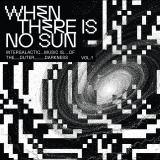
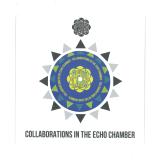
When the ghost in the machine meets the breath in the reed, expect sparks. Electronic sound artist Robin Rimbaud – Scanner joins forces with acclaimed British bass clarinetist Gareth Davis to create an album where circuitry hums, wood vibrates, and the air between notes crackles with possibility.
This is no polite meeting of minds — it’s an elegant collision. Scanner’s intricate electronic textures weave around Davis’s deep, resonant tones, blurring the boundary between acoustic breath and digital pulse. The result is a sound world that’s at once intimate and expansive, familiar yet thrillingly unpredictable.
Think late-night conversations in abandoned buildings. Think fog rolling over neon. Think sound that slips through your fingers even as it takes hold of you.
The songlines in question , memories and distorted images of travels across various continents, form an imagined biography of places that might or might not have been but somehow seem to exist . Landscapes of blurred statements , lost words and echoes of meandering structures.
"If Miles Davis had been raised on shortwave radio static and midnight phone calls, it might have sounded like this."
Buscar:mid air
DJ Vibe, widely regarded as one of Portugal’s most influential and sought-after DJs, has played a pivotal role in shaping the country’s electronic music scene. Not only has he been instrumental in launching some of Portugal's most iconic clubs, but he is also behind some of the biggest anthems in the scene, such as “So Get Up” and “Dance With Me,” both released in 1994 on Kaos Records and Tribal America. Since the early 90s, he has released music on seminal labels such as Nervous, Twisted, and Innervisions, among many others.
From the underground rave scene to iconic club parties, from radio airwaves to packed dance floors, from DJing to production - DJ Vibe has traversed many paths in his decades-long career, contributing to the foundation of the modern "dance culture" that emerged in the mid/late 80s.
After over four decades of dominating clubs and festivals worldwide, what’s left to accomplish? For DJ Vibe, the answer is simple: a new adventure fueled by the same passion and excitement that defined his career. In 2024, he took a bold step forward with his debut album, Frequências—his first full-length work under his own name.
Frequências is an album defined by freedom and passion—two words that might sound cliché but perfectly capture its essence. A balanced body of work that seamlessly moves between high-energy moments for the dance floor and introspective chapters ideal for late-night reflection and relaxation.
- A1: Ancient Kings
- A2: Wonderful World
- A3: Ordinary Life
- A4: Activists
- A5: Dr. Martens
- B1: Brown Eyes
- B2: Stay
- B3: Monde Nouveau
- B4: Mr. Plastic
- B5: Lisbon
- B6: Je Ne Penserai Jamais Plus À Toi
End of 2023, changes surfaced in and around me. In the middle of it, I decided to pack a bag, turn off my phone and leave for Los Angeles. I found this tiny house on Airbnb that had a studio in the back. I spent 95% of my time there, figuring out what was happening inside of me while writing demo after demo. When I came back to France a couple of months later, everything had changed, my old life was gone.
The year that followed was full of new experiences, feelings, habits and occasional songs. I went back to my parents’, rented a 22m2 apartment in Paris for 6 months, travelled to the other side of the world, ran a lot, started therapy, had sex, missed, chased and eventually held.
One thing that never left was the music. I’m so grateful for what it has brought and keeps bringing into my life every day.
Archwood is the playlist of these past 2 years of my life. It’s the name of the street where I stayed in LA. Archwood is a chapter I’m finally able to share and it feels very, very good.
First Word Records are proud to bring you 'Penny Ballads', a 5-track EP from Royce Wood Junior.
Royce Wood Junior is a Grammy & Mercury Award-nominated musician, songwriter and record producer from London, currently based in Brighton. As a multi-instrumentalist, he's collaborated with a litany of brilliant artists over the years, such as Jamie Woon, Nao, Disclosure, Jessie Ware, Olivia Dean, Joy Crookes, Jamie Lidell and Jordan Rakei, additionally to touring with the likes of the legendary Thomas Dolby. He's released two acclaimed solo albums to date ('The Ashen Tang' in 2015, and 'No Two Blue Ticks' in 2021).
'Penny Ballads' demonstrates RWJ's varied talents, with a collection of alternative soul compositions, each one as unique as the next. It includes the first two singles, the Poplife-Prince era flavoured 'Go Get Your Money', and the double-time future funk adrenaline shot, 'Clean Up', along with three previously-unreleased tracks. 'Beretta' is low-slung soul funk, beginning with quirky squelchy synths, before the soulful lead vocal of feature artist Lucey Way breezes in to melt everyone's hearts. 'Things' sweeps in next, an infectiously soulful midtempo heavy soul bop, with an instant earwork of a hook, like a modern-day Steely Dan / Doobie Brothers, complete with a head-nodding string section to end the track. The collection concludes on a more melancholy downtempo tip with 'Rolling'; an almost-folktronic anthem, with a key refrain that wouldn't be out of place on a 70's Stevie piece.
RWJ (aka Jim Wood) says of this project… "Back in the 17 and 1800's Troubadours and minstrels would go from Tavern to Tavern selling Penny Ballads, single sheets of music and lyrics written quickly and frivolously to make a quick buck.. It strikes me that we're in a similar phase in the way we value music in 2025. An old Penny Ballad was cheap and dog-eared, ink-smudged, sung aloud by firelight, Now songs live in the digital ether, dissolved in the air, a ghostly breath paid in micro cents. The new era of Penny Balladry is here, and weird.
This EP is a snapshot of my writing over a two year period. Focussed on minimal recording styles, one mic on the drums, generally first or second takes on parts and vocals, I wanted the music to feel like small moments with lyrics that talk about the weird nuances of being alive as a latter stage human on the cusp of the Ai revolution. Culturally so evolved, but physiologically still just a bunch of mammals walking about with primitive fears and needs. Just trying to reconcile it all moment to moment…"
Previous support for Royce's music has included Radio 1's Future Sounds, BBC 6 Music's New Music Fix, Annie Mac, Clara Amfo, Jo Whiley (BBC Radio 2), Mary Anne Hobbs, Jamz Supernova, Tom Robinson, Huw Stephens (BBC 6 Music), Zane Lowe and MistaJam. There have been sessions previously for the likes of Red Bull and press from Huck, Line of Best Fit, Clash, Aesthetica & DIY magazine.
Entirely self-written and self-produced, this EP gives a solid taste of RWJ's talents. A deeply funky diverse set of music from an immensely talented individual.
'Penny Ballads' is due to be released on vinyl & digital, 24th October 2025.
The vinyl version also includes an exclusive additional mix of the first single 'Go Get Your Money'.
- 1: Redcurrants
- 2: Healing
- 3: Placeholder
- 4: Erica
- 5: Number's Game
- 6: Dead Inside
- 7: Kind Eyes
- 8: Boy Bingo
From the humdrum to the huge; Tiia explores heartbreak, disappointment, climate change, and dying house plants. The record plays with contrasts, light and shadow, fizz and gloom. Keys melt into darker textures before guitars and drums lift them back into sparkle. It's heaviest moment is the title track, written in an airport bathroom after Tiia's father passed, yet even here, hope breaks through in irresistible vocal harmonies and inventive melodies. "To me, 'Kind Eyes' is a feelings record," Tiia says. "The grief for my dad passing sits at the centre and expands towards the edges, but there's a range of other feelings too. Sometimes they're hard to pin down and navigate but the songs are my map, trying to chart where you are and where you're going. And listeners should remember that sometimes X does mark the spot."
Lead single 'Healing' hits like a mascara- smeared midnight drive through Lynch's America. First sketched with Prince in mind, it finally found its teeth on a long, lonely walk in north-east London: a rock song hiding in plain sight. Tiia says "As soon as I had a rough idea for the driving beat, I knew I had to get Sean Berry (fellow bandmate from the once mighty Comet Sands) involved on the guitar, and the hooks all fell into place". Dusted with plush keys, on 'Numbers Game', Tiia leans into classic rock drama - warmth turning suddenly cold, the floor falling away from underneath you. "The lesson here is don't spy on your exes, but when you do, be prepared to write a song about it. It was the first track I asked Paul Rains (of Allo Darlin' fame) to play guitar on and he instantly got where I was trying to go with it. Now he's my partner, I have no idea how he feels about the lyrics!" Tiia laughs. Having also worked with Tiia's previous cult all-girl indie band The Minor Characters, Seb Kellig lent his trademark dub- inspired production influences at the legendary sonic heaven of Sausage Studios, east London, which Tiia calls "My happy place".
Tiia will again be playing keys for Allo Darlin's four UK tour dates this October followed by tour dates as Count Jaakola. 'Kind Eyes' is set for release 21st November 2025 via Tip Top Recordings (Mandrake Handshake, Japanese Television, Pearl & The Oysters, Golden Toad).
- A1: Sascha Cawa & Britta Arnold - Good Life 25 Mix 26 36
- B1: Sascha Cawa & Britta Arnold - Counting 04 17
- C1: Sascha Cawa & Britta Arnold - Reformer 04 40
- C2: Sascha Cawa & Britta Arnold - Good Life 05 07
- D1: The Nes - Ngvmnt (Sascha Cawa & Britta Arnold Remix) 04 48
- D2: Sascha Cawa & Britta Arnold -Beam 04 58
25 has always been a mystical number in the world of Kiosk ID, woven into our story since the earliest days of Bar 25, Holzmarkt 25, and every chapter since. When midnight struck on December 31st of last year and 2025 arrived, the magic of the number was undeniable,echoing through Kater Blau, Holzmarkt, and Kiosk ID—and calling for a celebration like no other. As our lasers lit the night, two core Kiosk ID artists—Britta Arnold and Sascha Cawa—took to the decks, weaving a spellbinding journey crafted specifically for this moment. Months in the making, they unfolded a beautifully hypnotic tribute to the magic of 25, premiering five tailormade tracks in the process. That moment lives on as Kiosk ID no. 40—a special double LP capturing the magic of that night. Side A features the live New Year’s recording: an unfiltered document of Britta and Sascha’s hypnotic, otherworldly, and deeply danceable set, as it unfolded in real time—strobing into the first moments of the new year. Sides B, C, and D feature five exclusive studio originals, written and produced specifically for this night. On ‘Counting’, Britta and Sasha unfold their brand of stripped darkness and rolling groove work, while ‘Reformer’ teeters on taut coils of suspended synths. With ‘NGVMT’, the energy bursts open—a radiant block-party roller with throbbing staccato swagger and clanking metallic arpeggios. ‘Beam’ lifts off into pure cosmic wonder, its fluttering, airy themes spiralling skyward. ‘Good Life’ rolls the credits with a beautifully introspective soliloquy, tender and reflective beneath gentle waves of aspirating piano chords. Together, these recordings offer both an auditory keepsake and an invitation to relive that unforgettable night or discover it anew. Across five hypnotic compositions and a half hour of dance floor bliss, ‘Good Life 25’ encapsulates the ever-evolving sound
EN/JP liner notes by Doran and a hyper-realistic cover by Japanese visual artist/graphic designer Kai Yoshizawa using 3DCG software.
"8 Automated Works", the first full release by Componium Ensemble, an "indeterminate chamber music" ensemble helmed by Spencer Doran of Visible Cloaks. The project is inspired by the long history of automated musical instruments, beginning with the ancient Greek Archimedes and further developed by the Banū Mūsā brothers in 9th century Baghdad, who "first perfected the concept of a programmable, automated musician: a mechanically controlled flute which used hydraulic water pressure and a system of arrangeable punchcards using a visionary proto-MIDI structure", as Doran explains in the liner notes. This mechanical music-making was extended a millennium later with the use of aleatoric principles by the European Dietrich Nikolaus Winkel, inventor of the self-composing Componium mechanical music system. Doran continues this lineage further, using the possibilities of digital technology and its ability to automate a huge range of virtual instruments and introduce aleatoric elements, moving beyond human impulses and limitations, allowing "new shapes to emerge". Dedicated also to Noah Creshevsky, pioneer of what can be considered cyber-human music, Componium Ensemble features a wide and intriguing range of instruments including prepared piano, bowed harpsichord, celesta, bass clarinet, flute, cello, Balinese tingklik, and more, often in multiple groupings. Despite this variety of instrumentation and the seemingly formidable theoretical underpinnings, the music is very accessible and attractive, spacious and fresh, with a light touch and a sophisticated melodic sense which will appeal to pop fans as well as classical/contemporary music listeners. The album is mixed by longtime collaborator Joe Williams (Motion Graphics, Lifted) and available in 10-inch vinyl, ,
Local Action is proud to present Daughters, the debut album by Jennifer Walton.
Walton is a beloved figure across various sectors of the alternative music underground. Outside of her own music and soundtrack work, she has been a live drummer for Kero Kero Bonito, collaborates with Sarah Midori Perry on the pair’s Cryalot project, has remixed Metronomy and worked with Iceboy Violet, BABii and more. She also makes music and DJs with close friends aya and 96 Back under the name Microplastics, and recently contributed to London collective caroline’s acclaimed caroline 2 album.
The first seeds of Walton’s debut album were sowed during touring North America in 2018, where whilst ticking off life-long music goals, Walton’s father was dying of cancer. Grief is a constant presence throughout Daughters, and specifically the surreal nature of having to process it amongst a blur of airports, flight connections, hotel rooms and battles for stolen medication with the American healthcare system. Strip malls, drug deals, panic attacks; the artificiality of downtown American city districts dovetailing with reality in its most brutal form. Miss America for a day while life is changed forever.
Weaving between real life diary entries, travelogue-style storytelling, imagery that ranges from mechanical to religious and a scattering of fiction (though we are obliged to mention that ‘Shelly’ is based on a true story), Daughters climaxes with the staggering run of ‘Saints’, ‘Miss America’ and its title track. Sampling unattended machines harmonising bleeps into the void in a London hospital ward, ‘Saints’ narrates Walton taking her father to and from cancer research trials, “sat, hunched and sick in the concourse as minutes became hours”. And to be very real for a moment, Jen is a friend, and first hearing the ‘Miss America’ demo is up there with the most emotional moments we’ve had in 15 years of running this record label.
Finished in London across the second half of 2024, Daughters features musical contributions from some of the closest friends and collaborators that Walton has made in her time as a musician: aya (who also mixed the album), Daniel S. Evans, Joshua Barfood and Nick Granata (all of Shovel Dance), Alex McKenzie (of caroline and Shovel Dance), Aga Ujma and Bob Lockwood.
Reflecting years of listening from behind the drum kit with Animal Collective, Boredoms, Dan Deacon, and Lifted arrives Low Air, the first solo LP from Jeremy Hyman.
The record is collected from home studio sessions, taken on the road, and sequenced through reflections of the live experience. Building on previous dance-floor-tuned outputs for Max D’s Future Times label, Low Air moves into a broader compositional arena: pared-down rhythms guide a wash of understated harmony, and compositions surface from a stream of purling noise. There were no standard operations across the music, but one key to the sound is the doubling and tripling of playback speed to fit musical passages into old sampling equipment. This process opened up a new line of inquiry into fidelity and pitch that can be heard throughout the LP.
* Blocks & Escher return to release on their own Narratives Music imprint with a double A side single, highlighting all of the musical emotion, production detail and bass weight, for which they are so highly regarded.
* Tracklist:
A. Charm Pt1 & Pt2: After five years with no release, Narratives Music is a fitting platform for the statement lead track “Charm” which disregards current trends and presents a full 11-minute journey through colors and moods. From the soothing nostalgic chords of the intro, Charm builds up through two contrasting movements, opening to a switching crescendo of bass hits at the mid-way point before delivering a cavernous “third drop”.
A2. All That Glitters: A long introduction intertwines tones of sorrow, joy and longing through its strings, guitars and vocals. This track breathes with space and beauty - even when the drums finally arrive, the intricate beat and low bass has air and a maturity to move a dancefloor without compromising its essence. This track has been a regular intro for DJs throughout the summer of 2025.
Young Gun Silver Fox are the captains of AM Waves, setting sail towards an isle where melodies soak the shoreline and grooves sway like palm trees. Their route traces a natural progression fromWest End Coast, an album that cast Andy Platts (Young Gun) and Shawn Lee (Silver Fox) as musical virtuosos of SoCal-infused pop. AM Waves does more than duplicate the perfection of West End Coast. It improves it.
Recorded at The Shop in London and Roffey Hall in the English countryside, AM Waves burnishes the blend between the duo's modern aesthetic and their sumptuously crafted homage to '70s-styled pop, rock, and soul. "This music hits a certain spot for me personally that nothing else quite does," says Shawn, who produced the album amidst his projects for Saint Etienne, Shawn Lee's Ping Pong Orchestra, and several other acts. "It's real high-caliber music. It's easy and breezy to listen to but it's really hard to make. Every aspect is A game."
The A game behind AM Waves fuels 43 minutes of Young Gun Silver Fox in peak form. "AM Waves is much more instinctive," says Andy, whose penchant for writing irresistible hooks and melodies also shapes his role as lead singer and lyricist/composer for the band Mamas Gun. "It's more vivid. You can see the clarity to the colors of AM Waves whereas West End Coast is slightly more impressionist, as it were."
Originally issued as a single in September 2017, "Midnight in Richmond" is the anchor of AM Waves. "I hit one chord, which I'd never played before, and the song sort of wrote itself," notes Shawn. "It was intuitive. In many ways, the primary function of what I'm doing is trying to find that chord that opens a door and takes you someplace else. Those chords have magic." Andy embellishes the song's appeal by nimbly juxtaposing wistful emotions with a sun-kissed melody, his voice evoking richly drawn memories. The qualities that make "Midnight in Richmond" an instant classic abound throughout the album.
"Lenny" and "Take It or Leave It" spotlight Andy's versatility as a songwriter. The former was inspired by a dream he had where Lenny Kravitz owned a bar. "It was surreal," he says. "He was polishing the glasses and just serving me hit after hit." Like swimming through moonshine, Andy languorously savors every syllable in the song. "Take It or Leave It" is pure pop bliss. "That was one of those songs that fell out in half an hour," he says. "I had everything and it was done." Shawn adds, "It's such a perfect song in itself. When I listen to it, it's like you've created a record that already existed."
Young Gun Silver Fox introduce a five-piece horn section on "Underdog" that literally trumpets the song's protagonist. Shawn affectionately dubbed them the "Seaweed Horns" in honor of the Seawind Horns, an LA-based unit that recorded with powerhouses like Michael Jackson,Rufus & Chaka Khan,and Earth, Wind & Fire during the late-'70s. Andy explains, "The horns grab another hue of the west coast sound, which is the starting point, but it's also maybe the point where we're injecting a little bit more of ourselves and some outside colors into the familiar west coast palette."
A bounty of treasures course through AM Waves' ebb and flow. "Mojo Rising," which the duo penned with Rob Johnson, is a veritable retreat to paradise. "Sky-bound, heaven sent / Way above the clouds watching shootingstars descend," Andy sings, mirroring the music's celestial undertones. Sensuality contours the notes on "Just a Man," a song that basks in the allure of a woman who leaves "footprints on the water" while "Love Guarantee" is festooned with the Seaweed Horns. "I wanted to bring more of that R&B slickness into the mix," Shawn notes about the latter track. "We hadn't done a tune with that sort of groove." Similar to his work on "Underdog," Nichol Thomson's intricate horn arrangement on "LoveGuarantee"exemplifies another distinction between AM Waves and its predecessor.
"Caroline" occupies a special place on AM Waves, beyond spawning the album title. It tells the story of Radio Caroline, a pirate radio station that broadcast from an offshore vessel during the '60s and '70s. "They played the music that kids wanted to hear, whether it was the old stuff or cutting edge stuff," says Andy. "'Caroline' is about Radio Caroline's eventual capture." Complementing Andy Platts' deft wordplay, which draws parallels between radio airwaves and the station's literal home on the ocean, Shawn Lee layers nearly a dozen different parts on "Caroline," showcasing the vastness of his musicality. "I loved that track as soon as I heard it," Andy continues. "It's a beautiful fusion of me and Shawn."
The Seaweed Horns joinYoung Gun Silver Foxas they detour to the dance floor on "Kingston Boogie." Shawn explains the track's genesis, "I was thinking, what have we not done yet We definitely should get an AOR disco thing happening. I quite like disco. The beat is so metronomic that it allows you to be really sophisticated on top. 'Kingston Boogie' just laid itself out. I call it 'midnight disco.'" With a nod to "Lenny," Andy Platts sets "Kingston Boogie" back at Lenny's Bar, this time revealing a detail or two about its mysterious proprietor as he pours sweet wine and moonshine.
In a sense, AM Waves ends with the beginning. Even before there was Young Gun Silver Fox, there was "Lolita," the first song Andy Platts and Shawn Lee wrote together and a crowd-pleasing staple of the duo's live sets. The tale of a femme fatale who harbors a secret was recorded for West End Coast but instead furnished the B-side to "Long Way Back" as well as a bonus track on the North American edition of the album. Despite the song's checkered trajectory, its infectious chorus sparked the brighter, more buoyant orientation of AM Waves.
Like the moon pulling the tide, Young Gun Silver Fox are a magnet for good songs. "We're both so obsessed and constantly interested in music-making," says Andy. "We're both thinking about it all the time. When you know you have an accomplice with you that's the same as you, it's very liberating. Suddenly, worlds of color start to appear." Indeed, AM Waves is elemental in its power to induce pleasure. Dive right in.
Christian John Wikane
(New York City / February 2018)
- A1: Dead Or Alive - You Spin Me Round (3 19)
- A2: Buggles - Video Killed The Radio Star (3 17)
- A3: John Paul Young - Love Is In The Air (3 23)
- A4: Katrina - Walking On Sunshine (3 54)
- A5: Coolio - Gangster's Paradise (4 02)
- B1: Nik Kershaw - Wouldn't It Be Good (4 45)
- B2: William Pitt - City Lights (3 46)
- B3: Debbie Gibson - Lost In Your Eyes (3 35)
- B4: Robbie Dupree - Steal Away (3 16)
- B5: The Motels - Only The Lonely (3 13)
- C1: Wild Cherry - Play That Funky Music (3 45)
- C2: Limahl - Neverending Story (3 31)
- C3: Color Me Badd - I Wanna Sex You Up (3 53)
- C4: Sisqo - Thong Song (4 14)
- C5: Crazy Town - Butterfly (3 37)
- D1: Spagna - Call Me (4 06)
- D2: Wax - Right Between The Eyes (4 07)
- D3: Stories - Brother Lou (3 56)
- D4: Stevie B - Because I Love You (4 19)
- D5: Maria Muldaur - Midnight At The Oasis (3 33)
"One Hit Wonders" ist eine dynamische Doppel-LP-Zusammenstellung, die die unvergesslichen Songs feiert, die den Äther beherrschten und zu zeitlosen Klassikern wurden. Diese Sammlung vereint legendäre Hits aus verschiedenen Jahrzehnten und Genres, von den energiegeladenen Beats von "You Spin Me Round (Like a Record)" von Dead or Alive bis zum sanften Yacht-Rock von "Steal Away" von Robbie Dupree. Mit Tanzhymnen, gefühlvollen Balladen und genredefinierenden Titeln ist dieses Album eine nostalgische Reise durch Songs, die trotz der Tatsache, dass sie die einzigen großen Chartstürmer ihrer Künstler waren, in der Musikgeschichte unverzichtbar geblieben sind.
Diese sorgfältig zusammengestellte Auswahl umspannt die Welten von Pop, Rock, Funk, R&B und Hip-Hop. LP1 enthält Wohlfühl-Hits wie "Walking on Sunshine" von Katrina and the Waves, den Synthie-Pop-Charme von "Wouldn't It Be Good" von Nik Kershaw und die eindringliche Schönheit von "Only the Lonely" von The Motels. LP2 hält die Energie hoch mit funkgetriebenen Grooves wie "Play That Funky Music" von Wild Cherry, der filmischen Magie von "Neverending Story" von Limahl und sanften Balladen wie "Because I Love You" von Stevie B. Jeder Track auf dieser Compilation ist einkultureller Meilenstein, der von der ersten Note an erkennbar ist.
"One Hit Wonders", herausgegeben von MPO, ist ein Muss für Musikliebhaber, Sammler und Fans von klassischen Hits, die Generationen überdauern. Ob Sie diese Hymnen wiederentdecken oder zum ersten Mal erleben, dieses Album fängt die Magie von Songs ein, die Geschichte geschrieben haben, auch wenn ihre Schöpfer nie wieder denselben Erfolg in den Charts hatten. Sichern Sie sich noch heute Ihr Exemplar und lassen Sie sich von der Musik in die Momente zurückversetzen, in denen diese Titel die Charts beherrschten und und die Welt in ihren Bann zogen.
Tracklisting
2025 Repress
FINALLY! The very first commercial release of two legendary remixes of Arthur Russell's "In The Light Of The Miracle". Both are widely regarded as transcendent masterpieces and very much befitting of the title “holy grails”.
These long-beloved mixes are the types you'd wish would last for eternity. With almost 30 minutes of music here, we very nearly get our desires granted. At last, these jaw-dropping mixes are widely available to every Arthur fan in the world. This is musical perfection.
The deep Loft classic "In The Light Of The Miracle" remained unreleased during Arthur's lifetime, finally discovered when Phillip Glass included the original version on Another Thought on Point Music in 1993. As Steve Knutson told us, when Another Thought was being put together, the plan was to release a companion album of remixes that was overseen by Steve D'Aquisto but the project only got as far as these two remixes of "In The Light Of The Miracle".
Some dodgy scans of some centre label designs suggest that Point Music might’ve been planning to release these on a 12" but it didn’t happen. The story goes that Gilles Peterson heard the remixes on a visit to the Point Music offices and wanted to release them on Talkin’ Loud. We’re not sure how many white label copies made it out into the wild, but again, these remixes didn’t make it to a proper release.
These remixes both extend and undeniably enhance the original, elevating it to new heights. The 13 minute remix on the A-side is by Danny Krivit & Tony Smith with editing duties performed by Tony Morgan. As ever with Arthur, the music is almost impossible to describe: is it Disco? Garage House? Avant Garde? None of these tags do full justice to its sheer majesty. You best just listen. Stretching out the original with some unbelievably great percussive elements, until we're in a deeply spiritual, otherworldly realm, it's just too beautiful for words. As many have claimed, it's the prototype for EVERYTHING.
The "Ponytail Club Mix (Part 1 & 2)", produced by Tony Morgan in the mid-90s, is in a more up-tempo style, with vocals higher in the mix, the BPM upped to 120 and the addition of a housey 4/4 kick drum. A 14 minute epic, you could say this is a more straight ahead "club-friendly" mix (but can things ever be that straightforward with Arthur?!) It also has some really interesting vocal parts not used in the other versions, including some vocals from guest poet Allen Ginsberg.
These remixes are part of the same original project that also produced the Another Thought album so it seems only right that they have a sleeve that matches. Thanks again to Janette Beckman for letting us use another of her photos of Arthur and the rest of the design follows what Margery Greenspan, Tina Lauffer and Michael Klotz did for Another Thought back in 1994.
Simon Francis remastered the original audio for both tracks and Cicely Balston's precise cut for Alchemy at AIR Studios ensures this 12" well and truly slaps. The immaculate Record Industry pressing will ensure this incredibly sought-after treasure finds a home in many more collections, this and every year.
Australia's powerhouse Hammond Organ trio Cookin' On 3 Burners serve up a heavy double-sider, offering DJs and collectors a taste of what's to come from their first studio LP in six years, due October 2025. With a 27-year legacy in the global funk and soul scene, CO3B have earned praise from the likes of Dusty Groove, Wax Poetics, and Rolling Stone Australia, and boast over 2 billion streams worldwide — thanks in part to their breakout hit "This Girl" (Kungs remix).
Side A – Cookin' The Books
A gritty, upbeat Hammond-led instrumental cooked low and slow in the heart of Melbourne's funk scene. It's all business up front — deep pocket drums, greasy organ licks, and guitar work that snaps and struts. No vocals, no fat — just a raw funk workout that's ready for the crates.
Side B – Give a Little Bit More (feat. Stella Angelico)
A classic-feeling, mid-tempo soul joint with a message that cuts deep. Longtime collaborator Stella Angelico delivers a powerful vocal performance about generosity, empathy, and turning things around when it matters. With uplifting lyrics, smooth horns, and a groove that nods to vintage 45s, this one lands straight in the heart — timeless, spiritual, and soul-drenched.
Captured live to tape at Soul Messin' Studios using vintage gear, the record oozes warmth and authenticity. Supported with airplay from Craig Charles (BBC6) and limited to just 500 copies on black vinyl in a Soul Messin' Records disco sleeve, this 45 is a must-stock item for funk, soul, and groove-focused retailers.
FFO: The Meters, El Michels Affair, Menahan Street Band, Quantic, Daptone Records
In an interview released to Billboard in 2017, east coast veteran AZ explains how this collaboration with legendary DITC producer Buckwild came along:
"The sound was shifting. A lot of brothers in the street were telling me "You got to save us." And I'm like, "Save y'all from what?" So I took that title to save the people, then Buckwild played a joint in the studio called "Save Them," and I was like, "This is it."
The two don't really need no introduction: with the Brooklyn lyricist gracing the mic since the mid 90's beginning with one of his first appearances alongside Nas on "Life's A Bitch" and dropping legendary classics such as "Doe Or Die", and the Bronx producer providing beats to artists that range from old school acts such as The Notorious B.I.G., Jay Z, Kool G Rap, Big Pun, modern day legends such as Vinnie Paz, Meyhem Lauren, Termanology and, last but not least, legendary DITC members Big L, Fat Joe, Diamond D and the list goes on and on.
AZ had to recruit "some brothers who I know respect the craft" and found them in Wu-Tang Clan's own Raekwon alongside the late great Prodigy of Mobb Deep. The song was released in April 2017 and brought a breath of fresh air with its classic vibe, together with a video being released just days before Prodigy's untimely passing in June 2017. The rest, you already know, is straight up hip-hop history.
Still Forms in Air is the debut album by Italian composer Francesca Marongiu under her own name. It draws inspiration from mid-1980s Japanese ambient music — Hiroshi Yoshimura, Satoshi Ashikawa, Takashi Kokubo — and, more subtly, from Italian experimental echoes rooted in both personal and cultural memory.
The album unfolds like suspended time, like architecture that quietly bears witness to the shifts that have shaped our cities and the ways we live in them. These tracks reflect an emotional and urban landscape, shaped by a gaze cast upon the mid-1980s and early ’90s — a time of subtle yet lasting changes in the form and meaning of shared space. That period marked a delicate turning point, later described as les années d’hiver: the slow onset of fragmentation beneath a surface of creative openness.
Still Forms in Air doesn’t dwell in nostalgia (though it draws from it), but reimagines that duality through a contemporary lens. Its sound blends memory and presence, layering ambient textures with a refined spatial sensitivity. It is a dialogue across decades — clear-eyed, affectionate, and quietly luminous.
Written, arranged and recorded by Francesca Marongiu in Rome and Pistoia between May 2024 and March 2025.
Francesca Marongiu: electronics, synthesizers, vocals, sound objects.
Antonio Gallucci: wind arrangements on track 1 and 4, bass and sound objects on track 3, drums on track 3 and 4.
Mixed by Francesca Marongiu and Antonio Gallucci. Mastered by Antonio Gallucci at Mercurial Mastering in Pistoia. Artist photo by Elisabetta Scarpini. Artwork by Daniel Castrejón.
The discovery of Doris Dennison's score represents a genuine musicological breakthrough—what once would have been "a tree falling in the woods" thirty years ago now holds the potential to render "a thunderous clap in our minds." While researching Anna Halprin's lesser-known collaborators, scholar Tom Welsh uncovered the archives of AA Leath, one of Halprin's principal dancers. Buried within these materials was Dennison's handwritten score for Earth Interval, dated May 1956. Born in Saskatchewan, Canada, in 1908, and raised near Seattle, Dennison (1908-2009) encountered John Cage while teaching Dalcroze eurythmics at the Cornish College of the Arts. She joined Cage's earliest percussion quartet—alongside Margaret Jansen, the composer and his wife Xenia—in the group widely regarded as having performed the first complete concert of percussion music in the United States. This historic December 1938 concert was followed by tours and the landmark May 1941 performance at the California Club, comprising Cage and Lou Harrison's Double Music, the premiere of Cage's Third Construction, and Harrison's 13th Simfony.
As Bradford Bailey observes in his extensive liner notes, Earth Interval demonstrates "an extraordinary balance of elements that imbues the piece with a sense of clarity, directness, and constraint that is both distinct and ahead of its time." The work's most remarkable innovation lies in its approach to extended techniques, particularly Dennison's notation for the central movement: "In 2nd movement, 1st player lowers + raises a gong into a tub of water while beating." This technique, absorbed from Cage's experimental vocabulary, generates what Bailey describes as "fields of acoustic abstraction that bend and warp time through sustained resonances, beat, and space." The temporal sophistication of these manipulations anticipated Karlheinz Stockhausen's Mikrophonie I (1964) and Annea Lockwood's water-based sound investigations by over a decade. After joining Mills College as dance accompanist, Dennison maintained crucial connections to the Bay Area's experimental scene, collaborating with figures like Merce Cunningham and programming Cage's music throughout the 1950s.
Comprising three movements—Land Form, Air Tide, and Earth Play—Earth Interval is scored for recorder, drums, gongs, maracas, muted gongs, and bowl gongs. In total, the piece is just under eight minutes: "a fleeting glimmer of moment in time, a life spent at the cutting edge, and a singular creative vision that packs a powerful punch." When viewed in historical context, placed in contrast to roughly contemporaneous avant-garde percussion works by Cage, Harrison, Louis Thomas Hardin (Moondog), and Harry Partch, or important precursors like Edgard Varèse's Ionisation (1931) and Henry Cowell's Ostinato Pianissimo (1934), it's clear that Dennison was following her own path. Earth Interval is not derivative. It is a precursor to what was yet to come, alluding to developments of avant-garde and experimental music that wouldn't begin to appear on the cultural landscape until the 1970s and '80s, with the emergence of Post-Minimalism and more idiosyncratic artists and ensembles like Midori Takada, Ros Bandt, Peter Giger, Frank Perry, Christopher Tree, Michael Ranta, Gamelan Son of Lion, and Niagara.
This recording by Chicago's Third Coast Percussion, captured in March 2022, represents the first complete documentation of this pioneering work. The ensemble's interpretation reveals the piece's remarkable contemporaneity while maintaining its historical specificity. Where Cage, Harrison, and Partch employed "self-consciously off-kilter polyrhythms," Dennison's rhythmic sensibility anticipates minimalist developments by nearly a decade, yet integrates "forceful rests, as well as sharp shifts in sonic character, tempo, and meter, that break the momentum and breathe a sense of life into the piece's structure." This positions her work closer to Post-Minimalism decades before its emergence. The architectural approach demonstrates Dennison's understanding that "the composer almost entirely disappears" in favor of phenomenological listening experience, creating what might be called an egoless music that places its realities and meaning entirely in the ear of the beholder. The present recording, realized by Chicago's distinguished Third Coast Percussion ensemble, represents a significant achievement in experimental music scholarship and performance practice. As specialists in the Cage tradition and contemporary percussion repertoire, Third Coast Percussion approached Earth Interval with the historical sensitivity and technical precision required to illuminate Dennison's subtle compositional innovations. The March 2022 recording sessions, engineered by Colin Campbell, capture both the work's intimate chamber music qualities and its bold exploration of extended techniques. The ensemble's interpretation reveals the piece's remarkable contemporaneity—its ability to speak directly to current musical concerns while maintaining its historical specificity.
This recording serves multiple scholarly functions: it provides the first complete documentation of Dennison's compositional voice, offers insight into the broader network of experimental music practitioners surrounding Cage and Harrison, and demonstrates the sophisticated level of compositional thinking that was occurring within the Bay Area's dance-music collaborations of the 1950s. The work's emphasis on phenomenological listening—what might be called an "egoless" approach to musical experience—places it within a lineage of American experimental music that prioritizes perceptual process over compositional personality. The work's original obscurity—limited to AA Leath's performances at venues like the 1957 Pacific Coast Arts Festival at Reed College—paradoxically allowed it to remain "entirely on its own terms," free from the constraints of historical categorization. Drawing on Jacques Derrida's Archive Fever, the argument emerges that "the archive can acknowledge, celebrate, and resurrect" overlooked voices, transforming our understanding of experimental music history. The present Blume edition, featuring Third Coast Percussion's authoritative interpretation, includes a lavishly illustrated 16-page booklet designed by Bruno Stucchi / dinamomilano, containing complete scholarly apparatus, historical photographs, and detailed production notes. This recording enables "cross-temporal intersectionality," allowing Dennison to "belong to a newly formed and more dynamic understanding of the present and past," demonstrating how forgotten voices can reshape entire historical narratives when given proper scholarly attention and performance advocacy.
- A1: Suzanne - Greg Bowman
- A2: Livin’ In The Middle - Rick Steffen
- A3: A Place In Your Heart - Charmer
- A4: Warmth - Bluejays
- A5: Oh Realle - Saffire
- A6: Love Be Kind - Greg Boehme
- B1: Gypsy Wind - Allan Mackey
- B2: Small Talk - David Ireland
- B3: Back In My Arms - Dan Strimer
- B4: Let It Flow - David Hollen
- B5: Paradise Island - Gasper & Dukes
A warm breeze drifts through the open cabin of the boat, carrying the scent of salt and sunwarmed teak as it stirs the linen curtains. The man moves easily, bare feet against the wooden floor, the slow rhythm of the harbor rocking beneath him. He flips through his records with a knowing touch, pulling out a favorite—something smooth and mellow, with buttery vocals and melodies that drift like a sailboat on calm waters. The needle drops, and honeyed guitar riffs spill into the air, effortless and sunlit. He reaches for the bottle of rum, the ice in his glass chiming softly as he pours, then adds a squeeze of lime, a lazy stir. Outside, the water glows in the last light of day, golden ripples stretching toward the horizon. He leans back against the cushioned bench, drink in hand, the music swirling around him like the evening breeze—unhurried, weightless, exactly where he wants to be.
Small Talk brings together a carefully curated selection of long-forgotten, yet remarkably smooth and captivating soft rock and AOR tracks from the ‘70s and ‘80s, compiled by Brandon McMahon. These lesser-known songs are drenched in lush harmonies, dreamy guitar riffs, and mellow rhythms, capturing the essence of an era without the mainstream recognition. For those with an ear for the obscure and a taste for the subtle, Small Talk offers a fresh perspective on an era’s most overlooked gems.
The Island Festival presents its first vinyl sampler — a celebration of groove and unity
Born from the spirit of one of northern France’s most beloved electronic gatherings, The Island Festival unveils its very first vinyl sampler on its freshly launched label, The Island.
Held annually on the stunning Île des Saules, The Island has become a beacon for house and electronic music lovers. This limited-edition record captures that magic with four carefully selected tracks, bridging international talent and local energy.
The sampler features:
• A standout cut by Italian duo The Deepshakerz (Great Stuff, Defected, Toolroom, Crosstown Rebels), bringing their trademark blend of funky, percussive house.
• A feel-good track from Etienne & Eddsax, offering sun-soaked grooves and uplifting vibes.
• A deep and dreamy voyage by The Sandman, blurring the lines between groove and introspection.
• And the iconic “Midnight in New York” by Michael Sanctorum.
This release is a sonic snapshot of the festival’s soul. From open-air euphoria to late-night intimacy, The Island Sampler EP 1 is both a collector’s item and a dancefloor weapon.
Français
The Island Festival dévoile son premier vinyle sampler — une célébration du groove et de l’unité
Né de l’esprit de l’un des festivals électroniques les plus emblématiques du nord de la France, The Island Festival présente son tout premier vinyle sampler, lancé sur son propre label : The Island.
Organisé chaque année sur la magnifique Île des Saules, The Island est devenu un rendez-vous incontournable pour les amoureux de house et de musique électronique. Cette édition limitée en vinyle capture l’essence du festival à travers quatre titres soigneusement sélectionnés, mêlant talents internationaux et énergie locale.
Ce sampler réunit :
• Un titre percutant du duo italien The Deepshakerz (Great Stuff, Defected, Toolroom, Crosstown Rebels), fidèles à leur style house percussif et groovy.
• Un morceau feel-good signé Etienne & Eddsax, aux accents ensoleillés et aux rythmes entraînants.
• Une plongée onirique et profonde avec The Sandman, à la frontière entre groove hypnotique et ambiance introspective.
• Et le classique intemporel “Midnight in New York” de Michael Sanctorum.
Cette sortie est un instantané sonore de l’âme du festival. De l’euphorie en plein air à l’intimité des sets nocturnes, The Island Sampler EP 1 s’impose comme un objet de collection autant qu’une arme pour le dancefloor.
Highly respected Brooklyn-based record store Archivio Records launches its flagship label, with the help of legendary UK Tech House pioneer Affie Yusuf.
This remarkable four track EP made up of previously unheard and unreleased gems, captured from DATs long thought lost during the mid-90s golden era of Swag Records, Wiggle, Surreal and co. delivers four distinct tracks, perfectly curated to suit the mood of the most discerning dance floors, at any time of the night!
Uba Cuba sees Affie transport you to pre-Revolution Havana, where the rum flowed and the good times rolled. A playful Latin-infused tech house roller, this track is guaranteed to put a smile on the face of everyone on the dance floor!
For the first track under his Parkwalker alias, Pashtwo is a decidedly deeper and darker excursion with a driving bassline, trippy vocals and a constant forward motion, perfect for those moments when you have the crowd really locked in.
Urgez Untold, the second Parkwalker contribution to the EP is an airy, groovy journey designed for those after hours moments when the sunlight is creeping in and the crowd is ready to let it all go in the pursuit of euphoria. Hypnotic bass, ethereal synths and bouncy, tropical drums give this one a universal appeal and a timeless feel.
Finally, Ode Reticular is Affie Yusuf at his brilliant, inventive best, crafting an epic track with three distinct phases. Starting as a dubby minimal chugger before morphing in to a quirky, playful tech house roller, then final chapter sprinkles mystical progressive elements to take you to another dimension, without ever needing to lose your spot on the dance floor.
An essential release for lovers of the early UK Tech house sound, seeking out undiscovered gems from the glory days of mid-90s London.
With future releases featuring Mark Ambrose, Pure Science, Carl Finlow and more, this is a label to watch closely and collect religiously.
- A1: Eyeroll (Feat Elvin Brandhi) (4 01)
- A2: Malikan (Feat Abdullah Miniawy) (4 08)
- A3: Move On (Feat Iceboy Violet) (3 44)
- A4: 99 Favor Taste (Feat Juliana Huxtable) (0 57)
- A5: Nontrival Differential (Feat Elvin Brandhi) (4 25)
- A6: Partygoodtime (Feat Ledef) (0 09)
- B1: Cut Cut Quote (Feat Elvin Brandhi) (4 22)
- B2: Pique (4 26)
- B3: If The City Burns I Will Not Run (Feat Abdullah Miniawy & James Ginzburg) (3 23)
- B4: Hasty Revisionism (3 14)
- B5: Lacrymaturity (2 43)
Black Vinyl LP. The world has changed, we shouldn't try and pretend otherwise. While we were shut away in isolation our routines shifted, social patterns evolved, and our hopes and dreams were twisted into cobwebs we're still trying to wipe from our fingers. Ziúr tentatively approached this on her last album Antifate, an ambitious and complex hybrid pop fever dream that looked back to a Medieval escapist fantasy as the scent of revolution seemed to hum in the air. But when restrictions were eased, she found herself staring down a discombobulated society that had trapped itself in a spiral of microwaved nostalgia and detached, narcotic repetition. Eyeroll then is Ziúr's musical panacea, a tincture to wake us from our creative slumber and prompt external connection and reflection. It's a polyphonous hex that demands human interaction, and Ziúr's hand-picked alliance of collaborators - Elvin Brandhi, Abdullah Miniawy, Iceboy Violet, Juliana Huxtable, Ledef, and James Ginzburg - each provide distinct voices that together herald a bewildering sonic epoch. Ziúr's palette had to evolve to match the scope of the project, but it was pure necessity that informed the album's defining tone. Recording mostly at night, Ziúr was conscious of the noise she was making so developed a unique way to record organic percussion. Using a set of rototoms - low profile tunable drums - she scratched, scraped and gently tapped the skins to build up the undulating and unstable rhythmic backdrop for each track. It's the first sound we hear on the opener 'Eyeroll', rattling like lost marbles against Elvin Brandhi's primal croaks and screams. And when Brandhi's twisted articulations form words, Ziúr matches the energy with chaotic thuds and serrated blasts of saturated electronics. "I roll the shittiest cigarette," she squeals like she's about to start a mosh pit at Paris's GRM Studios. Without pause, Abdullah Miniawy takes over on 'Malikan', building on the promise of material with Simo Cell, Carl Gari and HVAD with corrosive trumpet blasts and charged, politically incendiary Arabic vocals. Inspired by pre-Islamic poetry and the Qu'ranic chanters he heard growing up in Saudi Arabia and Egypt, he spins labyrinthine stories that cross between the worlds, breaking down physical and spiritual borders simultaneously. Miniawy's scope is expanded even further on his second collaboration, 'If The City Burns I Will Not Run'. "If it rains and the city drowns," he utters over gaseous electronics, "I will not run away, but I will be anxious for the heart of one close to me." After a supple vocal turn from Manchester's Iceboy Violet on 'Move On' and a surreal interlude from poet- DJ-artist-theorist Juliana Huxtable on '99 Favor Taste', Brandhi returns with two more hyperactive collaborations: ,'Nontrivial Differential' and 'Cut Cut Quote'. On the former she slices into Ziúr's skeletal jazz eruptions, screaming and crooning interchangeably, fluxing between the rap battle and the cabaret. The latter is completely different meanwhile, with Brandhi settling into her role as front-woman and groaning dizzying improvised passages that sound like grunge crossed with psychedelic no-wave. Brandhi's spiky musical history has prepared her well for this collaboration; she's a prolific producer and has been using her voice spontaneously since debuting with father-daughter improv duo Yeah You in the mid 2020s. She's found an ideal foil in Ziúr, a producer who matches her restless energy and willingness to bend formality, and leaves an indelible mark on Eyeroll. But the album's most tender moments are from Ziúr herself, who winds the album down on 'Hasty Revisionism', growling over collapsible beats and cascading strings, and comes to an unexpected conclusion with country coda 'Lacrymaturity'. Its feverish amalgamation of country music and euphoric, experimental electronics might seem incongruous at first, but in context with the rest of the album is the only possible conclusion. With Eyeroll Ziúr is making a firm statement about togetherness, humanity, and the renewal of hope when all seems lost. By bringing together such a wide but philosophically harmonic team of collaborators, she's conducted a body of work that speaks to the creative fringe in no uncertain terms. Now's the time to throw away what you think you know, and build bridges you didn't think you need. Now's the time for action. She may have spent her entire career avoiding the solipsistic trappings of "queer art", but by assembling a communal statement that questions so many normative assumptions about music, politics, and beyond, Ziúr has chanced upon her queerest album yet. Cringe? Eyeroll.
Following their acclaimed debut Spirits, New Zealand"s boundary-pushing jazz collective The Circling Sun return with their sophomore LP Orbits - a deeply layered fusion of spiritual jazz, analog electronics, and percussive groove. Where Spirits explored 1960s influences, Orbits shifts into the mid-"70s, drawing inspiration from Rahsaan Roland Kirk, Yusef Lateef"s Atlantic era, and the Brazilian jazz of Azymuth and Airto Moreira. The ensemble blends arpeggiating Prophet synths and modular electronics with acoustic instrumentation: saxophone, upright piano, vintage drums, and hand-played percussion. Tracks move seamlessly between danceable Afro-Cubanrhythms and expansive, ambient jazz meditations - with layered vocals and choral textures guiding the listener through an interstellar sonic journey. Lush yet accessible, Orbits appeals to both deep jazz heads and fans of ambient, soulful instrumental music.
Pioneering British electronic musician Mark Van Hoen is set to release his latest solo album, The Eternal Present, on 23 May 2025 via Dell'Orso, a remarkable collection of tracks spanning nearly three decades of recordings from 1998 to 2024.
The Eternal Present embodies its philosophical title, inspired by Joseph Campbell's concept that "Eternity isn't some later time... Eternity is that dimension of here and now that all thinking in temporal terms cuts off." The album explores music as the ultimate expression of existing in the present moment, transcending time and creating a sonic experience that is simultaneously "spectral, ghostly, melodic, harmonic, and decayed."
An influential contemporary of Aphex Twin, Autechre, LFO and Boards of Canada, Van Hoen is best known for his solo work as Locust in the mid-'90s, which helped push post-rave electronic music into newly challenging realms. His extensive discography spans releases on influential labels including R&S, Touch, and Editions Mego. Van Hoen has worked on numerous collaborations throughout his career, including with Nick Holton and Neil Halstead of Slowdive under the moniker Black Hearted Brother—their album Stars Are Our Home was released in 2013.
The Eternal Present continues the lineage of Van Hoen's most significant works, with artwork by Ian Anderson (Designers Republic) reflecting the album's "eternal present" concept with a mysterious visual approach, allowing listeners to form their own imaginary landscapes. The mastering by Stefan Betke (Pole) enhances this document of the evolution of the artist over the years as he continues to hone his signature sound. Using a host of instruments including analogue synthesisers and employing various recording approaches, Van Hoen's equipment changed dramatically over the years—from early DSP processing used on his first solo record on Apollo ‘Playing With Time’ to various synthesisers, modular systems, tape machines, and digital workstations—contributing to the album's rich sonic diversity.
Throughout The Eternal Present, ideas are woven together through spoken word quotations and abstract vocals featuring notable collaborations from Rachel Goswell on the Slowdive cover "Shine" (from 1998), Megan Mitchell (Cruel Diagonals) on "Somewhere", and session vocalists Clare Dove and Dorothy Takev on "No-One Leave" and "It's Not You (In A Way)" respectively. The use of cleverly assembled vocal samples from an "undisclosed but very famous female vocalist" on "Multiplex" (2016) and the indistinct vocalisations on the Cabaret Voltaire-influenced "Only Me" (2017), constantly challenges and disorientates the listener through fluctuating, ever-changing musical elements.
The album was recorded across multiple locations including Somerset, London, Los Angeles, and New York—even beginning compositions during flights and in airport lounges—reflecting Van Hoen's changing personal circumstances, environments, and situations throughout the years.
Of Indian-Jamaican descent, Van Hoen was born and raised in England, absorbing diverse musical influences from his neighbors—African-Jamaican on one side and Punjabi Indian on the other. "Each family played their own music frequently, and I absorbed it." His musical foundations include Brian Eno, Kraftwerk, OMD, Tangerine Dream, Japan, Cabaret Voltaire, and Cocteau Twins, later finding inspiration in My Bloody Valentine, LFO, and '90s producers Robert Leiner and CJ Bolland.
These eclectic influences are evident on The Eternal Present, which contains snapshots of different periods in his life, with changing circumstances across decades creating a variety of textures and sounds. As Mark explains: "It holds the same sonic signature as many of my solo releases and early Locust albums. It's a natural development that has taken place in the last few decades. It's even related to the earliest music I made as a teenager, although perhaps more sophisticated."
“What a remarkably affecting, majestically broad and captivating work it is..what strikes you most is the album’s myriad diversity. Outstanding” (Electronic Sound)
“Whether channelling mid- 70’s Eno, early Aphex Twin or Neu! his vivid sounds shimmer with emotional weight” (Mojo 4*)
"Musically, Van Hoen belongs to a distinguished family tree. Originally influenced by the likes of Brian Eno and Tangerine Dream, and later presaging both Autechre's glitch and Boards of Canada's pastoral IDM." (Pitchfork)
- 1: We Have Arrived
- 2: Red Sky
- 3: Faith
- 4: Horsemen Of The Apocalypse
- 5: Castles In The Sand
- 6: Heroes, Saints And Fools
- 7: Flame Of Youth
- 8: Jekyll And Hyde
- 9: Menage A Trois
- 10: Ride Shotgun With The Wind
- 11: Angel Eyes
- 12: Follow The Piper
Lifelong friends Richard Lowe and Rob Bendelow formed their first band “Lammergier” during the mid 1970’s together with bassist Barry Yates. Following their first love performance in 1977 the band gigged extensively across the British midlands. The standard of these performances combined with their unique brand of symphonic rock saw “Lammergier” amass a large and loyal following. Then a new decade arrived changes were made, the music remained the same, but they called themselves “Saracen”.
After several months on the road Saracen decided it was time to record an album, and in October 1981 they released “Heroes, Saints and Fools” to critical acclaim. Saracen tracks received regular airplay on Tommy Vance’s Friday night rock show and the single “We have arrived” was recorded. In 1983 line-up changes occurred and the band eventually stopped touring in 1985.
Two decades later and the band re-appear with a vengeance and the release of “Red Sky” in March 2003 put the band firmly back on the map, and it was a rework of some of the old classics with new tracks added. The band regained its popularity, and a further three albums have emerged to critical acclaim, namely “Vox in Excelso”, “Marilyn” and “Redemption”.
With renewed interest in the vinyl format of recorded music “Vox In Excelso” has been re-released in 2025 as a numbered limited edition with new artwork and now “Red Sky” is to follow, again with new artwork. These are beautiful works of art and the recordings sound fresh and vibrant, its classic progressive rock brought into the present day and it doesn’t get better than this..
Repress!
In the mid-1970s, a force of nature swept across the continental United States, cutting across all strata of race and class, rooting in our minds, our homes, our culture. It wasn’t The Exorcist, Goodbye Yellow Brick Road, or even bell-bottoms, but instead a book called The Secret Life of Plants. The work of occultist/former OSS agent Peter Tompkins and former CIA agent/dowsing enthusiast Christopher Bird, the books shot up the bestseller charts and spread like kudzu across the landscape, becoming a phenomenon. Seemingly overnight, the indoor plant business was in full bloom and photosynthetic eukaryotes of every genus were hanging off walls, lording over bookshelves, and basking on sunny window ledges. The science behind Secret Life was specious: plants can hear our prayers, they’re lie detectors, they’re telepathic, able to predict natural disasters and receive signals from distant galaxies. But that didn’t stop millions from buying and nurturing their new plants.
Perhaps the craziest claim of the book was that plants also dug music. And whether you purchased a snake plant, asparagus fern, peace lily, or what have you from Mother Earth on Melrose Avenue in Los Angeles (or bought a Simmons mattress from Sears), you also took home Plantasia, an album recorded especially for them. Subtitled “warm earth music for plants…and the people that love them,” it was full of bucolic, charming, stoner-friendly, decidedly unscientific tunes enacted on the new-fangled device called the Moog. Plants date back from the dawn of time, but apparently they loved the Moog, never mind that the synthesizer had been on the market for just a few years. Most of all, the plants loved the ditties made by composer Mort Garson.
Few characters in early electronic music can be both fearless pioneers and cheesy trend-chasers, but Garson embraced both extremes, and has been unheralded as a result. When one writer rhetorically asked: “How was Garson’s music so ubiquitous while the man remained so under the radar?” the answer was simple. Well before Brian Eno did it, Garson was making discreet music, both the man and his music as inconspicuous as a Chlorophytumcomosum. Julliard-educated and active as a session player in the post-war era, Garson wrote lounge hits, scored plush arrangements for Doris Day, and garlanded weeping countrypolitan strings around Glen Campbell’s “By the Time I Get to Phoenix.” He could render the Beatles and Simon & Garfunkel alike into easy listening and also dreamed up his own ditties. “An idear” as Garson himself would drawl it out. “I live with it, I walk it, I sing it.”
But as his daughter Day Darmet recalls: “When my dad found the synthesizer, he realized he didn’t want to do pop music anymore.” Garson encountered Robert Moog and his new device at the Audio Engineering Society’s West Coast convention in 1967 and immediately began tinkering with the device. With the Moog, those idears could be transformed. “He constantly had a song he was humming,” Darmet says. “At the table he was constantly tapping.” Which is to say that Mort pulled his melodies out of thin air, just like any household plant would.
The Plantae kingdom grew to its height by 1976, from DC Comics’ mossy superhero Swamp Thing to Stevie Wonder’s own herbal meditation, Journey Through the Secret Life of Plants. Nefarious manifestations of human-plant interaction also abounded, be it the grotesque pods in Invasion of the Body Snatchers or the pothead paranoia of the US Government spraying Mexican marijuana fields with the herbicide paraquat (which led to the rise in homegrown pot by the 1980s). And then there’s the warm, leafy embrace of Plantasia itself.
“My mom had a lot of plants,” Darmet says. “She didn’t believe in organized religion, she believed the earth was the best thing in the whole world. Whatever created us was incredible.” And she also knew when her husband had a good song, shouting from another room when she heard him humming a good idear. Novel as it might seem, Plantasia is simply full of good tunes.
Garson may have given the album away to new plant and bed owners, but a decade later a new generation could hear his music in another surreptitious way. Millions of kids bought The Legend of Zelda for their Nintendo Entertainment System back in 1986 and one distinct 8-bit tune bears more than a passing resemblance to album highlight “Concerto for Philodendron and Pothos.” Garson was never properly credited for it, but he nevertheless subliminally slipped into a new generations’ head, helping kids and plants alike grow.
Hearing Plantasia in the 21st century, it seems less an ode to our photosynthesizing friends by Garson and more an homage to his wife, the one with the green thumb that made everything flower around him. “My dad would be totally pleased to know that people are really interested in this music that had no popularity at the time,” Darmet says of Plantasia’snew renaissance. “He would be fascinated by the fact that people are finally understanding and appreciating this part of his musical career that he got no admiration for back then.” Garson seems to be everywhere again, even if he’s not really noticed, just like a houseplant.
LDF (Lello Di Franco) makes a powerful return to Skylax, this time teaming up with Detroit's own Javonntte. Following his stellar release with Gari Romalis, LDF delivers a release that is pure gold for fans of the original Detroit sound. If you appreciate the styles of Moodymann, Theo Parrish, or Omar S, this record is bound to resonate deeply. The EP opens with "Disco One (All Night Long)," a groove-heavy track that embodies the essence of classic Detroit house. It pulses with soulful basslines and infectious rhythms, setting a hypnotic tone that's perfect for late-night sessions. "Saved" ventures into Chicago acid territory, a tribute to the raw, driving energy of classic acid house. With its punchy 303 basslines and tight, snappy percussion, it channels the best of Chicago's underground with a fresh, modern edge. "After Midnight" offers a smooth, after-hours vibe, balancing deep, jazzy chords with a pulsating rhythm that keeps the energy simmering. It's a track that brings warmth and intimacy, ideal for closing sets or introspective moments. "Martha" is a lush, emotionally rich track that embodies LDF's Italian roots while staying grounded in Detroit's heritage. With warm melodies and a rolling bassline, it delivers a balance between soulful warmth and a classic dancefloor feel. "Love Anthem" is a heartfelt groove, merging lush pads and laid-back percussion with a sense of nostalgic euphoria. It's a track that brings people together, a true love letter to house music. "People From Mars" pays homage to Omar S, with its stripped-down, gritty approach. The track has a rough, analog feel, capturing the raw energy and spirit of Detroit's underground. Finally, "The Dirty Digital Show" closes the EP on an intense note, with a driving rhythm and futuristic soundscapes. As an Italian DJ and producer from Naples, LDF brings his decades of experience—starting from his early inspirations in house and techno in 1993—into this record. Also, as co-owner of Frole Records and co-founder of Basic Frame Distribution, his knowledge of the scene is profound, and it's reflected in each meticulously crafted track. This release is a testament to the timelessness and diversity of house music.
Artwork done by legendary french cult designer H5 (Daft Punk, Air, Etienne de Crecy …)
- 1: Barbados Bbq
- 2: The Earth's Mandrill
- 3: Mowin' The Lawn
- 4: Pluto
- 5: Freeman
- 6: Whale Tale
Named after a (US) West Coast grocery store chain, The Whitefronts started out in 1982 as a quartet of art and theater students attending UCSB. The band quickly mutated into a sextet. In 1984, they moved north to establish themselves as part of the SF DIY culture. Live shows usually consisted of open jams drawing from what the band was obsessing about at the time—free jazz, The Velvet Underground, Caribbean music, improv noise—as well as their own unheralded genres that popped in and out of existence like subatomic particles. Shows with local bands like Slovenly, Camper Van Beethoven, Caroliner Rainbow, Vomit Launch, Barnacle Choir and Barbara Manning provide some context as to their eccentric position within the indie scene of the era.
In 1985, the band released their sole LP, Roast Belief, on their own Bogden label. This was an ambitious attempt to document the various ideas that were happening live. Though practically unknown today, it’s an extraordinary record—a mid-80s classic serving up eclectic derangement on a par with contemporaries like the Butthole Surfers, Meat Puppets, Sun City Girls, Tuxedomoon and Eugene Chadbourne.
The Mamo Waves LP was compiled from recordings made between 1982-1987. As with Roast Belief LP, it’s a mind-melting jumble of the genres explored by Whitefronts throughout their existence. It was originally supposed to be released by Camper Van’s Pitch-A-Tent imprint, as a couple of WF members were touring with CBV in 1987, but the release fell through the cracks when CBV was airlifted to Virgin Records in 1988. Today, it’s clear that Mamo Waves belongs to the same 1980s Californian sub-underground aesthetic that nurtured mythical 80s bands like Departmentstore Santas and Prominent Disturbance. It’s a real WTF m.o. that still sounds like the future.
Reissue of Don Cherry's 'Relativity Suite', recorded with the Jazz Composer's Orchestra in 1973. At this time, Cherry was becoming increasingly interested in Middle Eastern and traditional African and Indian music, having traveled extensively and studied with Indian musician Vasant Rai. This suite of songs was particularly influenced by the Indian karnatic singing tradition, as can be heard from the very opening moments of the album. Featuring Carla Bley on piano, Charlie Haden on bass, and Ed Blackwell on drums, as well as an extended horn and string section.
- Easter Parade
- Heatwave
- Family Life
- Body And Soul
- Mid Air
- Because Of Toledo
- The Downtown Lights
- Let's Go Out Tonight
Ladies & gentlemen - get ready for something truly special: Scotland"s best jazz musicians meet one of the best and most influential bands from Scotland! The Colin Steele Quartet play the music of The Blue Nile, undisputed masters of Sophisti-Pop. Especially their second album "Hats" (1989) is regarded as an all-time classic masterpiece. The beautiful and atmospheric, often synth-driven songs of The Blue Nile get the deluxe jazz treatment in exciting new arrangements. All-time classics like "Easter Parade", "Heatwave" and "Let"s Go Out Tonight" shine in bright new shades and colours, and get transformed into something unique by Colin Steele"s very own trumpet style. The album perfectly captures and even enhances the late-night moods and aural landscapes of The Blue Nile"s music, while also adding some unexpected, and, yes, even slightly funky turns to songs like "Body & Soul" and "Headlights On The Parade". Colin Steele"s smooth and emotive trumpet caresses and lifts these beautiful songs to new heights.
- A1: Premier Contact
- A2: Le Manège Des Vanités
- A3: Dead Hip Hop
- A4: Avec Les Larmes
- B1: Autour D’un Café
- B2: Ne Plus Y Croire
- B3: Toute La Vérité
- B4: Poussière D’enfants
- C1: Le Rendez-Vous Manqué
- C2: De L’amour À La Haine
- C3: Sous Le Signe Du V
- C4: Un Peu Seul
- D1: Baise Les Gens
- D2: Peut-Être Un Verre ?
- D3: Pas Stable
- D4: Depuis Que J’étais Enfant
- D5: Perspectives
- D6: Il Faut Qu’on Parle
A l’occasion des 20 ans de cet album devenu culte, Record Makers réédite une version spéciale anniversaire limitée (vinyles transparents – 500 exemplaires) qui ravivera la flamme des fans de la première heure, des nouveaux fans et des collectionneurs. "Vive la Vie" est aujourd’hui un album référent pour les amateurs de rap, reconnu par ses pairs lyricistes, c’est un de ses albums qui marquent à jamais une époque, celle des années 2000 et de son rap aux rimes fines et puissantes.
Le 15 novembre 2004 sortait "Vive la Vie" le premier album du Klub des Loosers.
On ne présente plus le Klub des Loosers et son unique membre Fuzati. Pourquoi ? parce qu'on en a un peu honte quand même. Imaginez un jeune versaillais que tout prédestinait à devenir écrivain maudit ou chanteur d'un groupe de pop répétant dans le garage parental le dimanche de 16h à 20h. Le genre de type qui passait ses samedis après-midi à la bibliothèque municipale, ses samedi soir à boire de la bière dans les squats de jeunes où on recense une fille pour dix mecs et où la phrase qui revient le plus souvent est "qui roule un joint ?"
Imaginez maintenant que ce type ait une illumination, au milieu de ces jeunes que tout prédestine à la réussite (HEC, science-po) et qui lorsqu'ils se retrouvent ensemble ne savent pas faire autre chose que de se défoncer. "Nous sommes un klub de loosers".
Comme il n'aime pas trop les gens, Fuzati fondera un klub dont il sera le seul membre. Comme il n'a pas de guitare que le hip hop est son seul ami il se dit qu'il fera ça comme musique. Bah oui c'est sympa le hip hop. Comme on lui a dit qu'il n'avait pas une tête de rappeur et que les casquettes à l'envers lui vont mal il ne montrera jamais son visage et portera un chapeau. S'en suivra un parcours classique de MC underground qui rappe pour la rue (mais aussi les avenues) et représente ses refrés illégalement enfermés derrière les murs des prépas t'as vu. Mixtapes, nombreux freestyles dans l'émission Greckfrite diffusée sur la chaine internet Canalweb, concert à la MJC de Versailles mais aussi dans un entrepôt désinfecté à Dunkerque.
En 2003 Il signe sur le label parisien Record Makers parce qu'on lui a appris qu'il ne fallait pas trop se mélanger avec les gens d'autres milieux. Sortiront deux EP, "Baise les Gens" et "La Femme de Fer" qui sont déjà des classiques pour au moins 32 personnes. La même année sort également l'album de l'atelier "Buffet des Anciens Elèves" auquel il participe avec Tékilatex du groupe TTC, James Delleck, Cyanure et deux producteurs de talent, Tacteel (Lex Records) et ParaOne (Institubes). En juillet 2004 sort le maxi du Klub des Loosers où collaborent MF DOOM, légende hip hop, et Jean-Benoit Dunckel, moitié du groupe AIR.
- A1: Space Drift
- A2: Memory Loss
- A3: Siren-Call
- A4: Harmonisers Of The Spheres
- A5: Telepathy Beyond Time
- A6: Older Than Time
- A7: Congestion Hoe-Down
- A8: Shadowland
- A9: Celandine & Columbine
- A10: The Dying Of The Light
- A11: Cloud
- A12: Darkness At Noon
- A13: Future Perfect
- A14: The Killing Skies
- B1: Into The Depths She Calls
- B2: Lazy Summer Afternoons
- B3: Insects Revolt
- B4: Blood Runs Cold
- B5: Post Apocalypse Fog
- B6: Fish Don’t Cry
- B7: Ghost In The Abbey
- B8: Insects Dance
- B9: Dreams Of Magic & Cornfields
- B10: Devil’s Lightening
- B11: Danger Hurts
- B12: Why Me?
First ever release of pioneering radiophonic / experimental / electronic / soundtrack composer you may never have heard of but really should have by now. 26 tracks in all.
As we began the mammoth task of whittling down material for this album Elizabeth recalled the time she met Delia Derbyshire. It was during a party for existing and former Radiophonic Workshop composers at BBC Maida Vale in the early 1980s. Delia introduced herself with typical energy and exuberance proclaiming "It's up to you now - I'm passing the baton. Show these men how we get things done". That must have been quite an honour and responsibility for a young, female composer establishing herself within the male-dominated environs at Delaware Road.
Looking back over a musical career spanning almost five decades, it's clear Elizabeth rose to the challenge and made her mark. She was consistently in demand with television and radio producers, composing for an array of ground-breaking, critically acclaimed and popular BBC projects. Whilst Delia's legacy has achieved mythical status with her position as an innovator and feminist icon secured, the majority of Elizabeth's recorded work remains unavailable so her contribution to the output of the Workshop and evolution of British electronic music is somewhat under-appreciated.
Perhaps this record will help start to remedy the situation. Included are early tape experiments, home demos and non-BBC commissions from the early 1970's to the late 2000s. Having listened to 260+ digital audio tapes from Elizabeth's personal archive we have barely scratched the surface but hope to provide an indication of the breadth of her compositional and sound design skills.
Classically trained in cello and piano, Elizabeth graduated from the University of East Anglia with a degree in Music in 1973. She was mentored by Tristram Cary who helped her to become UEA's first recipient of a Masters in Electronic Music and later awarded an Honorary Doctorate by Staffordshire University. Joining the BBC as a studio manager in 1975, Elizabeth transferred to the Radiophonic Workshop in 1978. One of her first tasks was to create special sound effects for Blake's 7 using tape loops, the EMS 100 and trusted VCS3.
Her celebrated score for The Living Planet in 1982 featured early use of the PPG synthesizer and earned an Emmy nomination. Over the following years studio technology evolved rapidly, but Elizabeth transitioned from analogue recording techniques to newer digital platforms with relative ease, using samplers, midi sequencing and computer controlled workstations.
With an incredible 1,400 commissions to her name, she created special sound for The Day Of The Triffids, Lord Of The Rings, countless radio dramas including Iris Murdoch's The Sea, The Sea, Harold Pinter's Moonlight, all of Howard Barker's plays, productions of King Lear, Wordsworth's Prelude and The Pallisers. The success of The Living Planet led to further work for the BBC Natural History Unit followed by numerous commissions for The Natural World. At one point in the late 1980's at least five of her signature tunes were being broadcast every week including Points Of View, Horizon, Doctors To Be and Everyman.
After the closure of the Workshop in 1996 Elizabeth became freelance, arranging Faure's Pavane for the BBC World Cup '98 coverage (reaching no. 9 in the UK singles chart). She wrote additional music for Monty Python's Holy Grail DVD, scored Michael Palin's Full Circle and Sahara TV series, The Lost Gardens Of Heligan and The Human Body with Robert Winston.
Retiring from the music industry in the late 2000's, Elizabeth recently returned to her East Anglian roots and now lives near the coast. She walks daily, listening to all kinds of music, new and old, on her beloved air-pods.
"For Japanese people, min'yo is both the closest, and most distant, folk music" explains band-leader Katsumi Tanaka. "We may not feel it in our daily, urban lives, yet the melodies, the style of singing and the rhythm of the taiko drums are engrained in our DNA".
Initially indifferent to min'yo, a tragic event in recent Japanese history set Tanaka on his current path: "Following the Tohoku earthquake of 2011, I reflected on my life, work and identity. A fan of world music, I began searching for Japanese roots music I could identify with. Discovering mid-late 20th century acts like Hibari Misora, Chiemi Eri and the Tokyo Cuban Boys, I was captivated by their eccentric arrangements and how they mixed min'yo with latin and jazz music."
Lead singer Freddie Tsukamoto fell for min'yo after hearing a song from his hometown on a TV competition whilst in a restaurant. It was a revelation – until then he had been an aspiring jazz singer yet was uncomfortable singing in English. The restaurateur told him a min'yo teacher was his neighbour and the two connected. Tanaka and Freddie formed Minyo Crusaders in 2011 in Fussa, a city where the US military Yokota Air Base is located, in western Tokyo.
Recruiting other local musicians versed in afro and latin rhythms, they began hosting jam sessions at the Banana House, a building that was previously part of the military base and that used to house US soldiers. The band started recording their music, and their debut album "Echoes Of Japan" was released in 2017. It received huge acclaim in Japan and abroad, and was also released by British label Mais Um in 2019. Several European tours followed, as well as some US and South America gigs.
In this second opus, the Minyo Crusaders take us on a trip to Japanese folk songs fused with latin rhythms. Their unique arrangements breathe new life to classics like Kiso Bushi, Sado Okesa or Soran Bushi, among many other min'yo songs from all over Japan that were originally performed by Japanese fishermen, coal miners and sumo wrestlers hundreds of years ago. The magical groove created here proves once again that the Minyo Crusaders are one of the most dynamic representatives of the current Japanese world music scene. Yoi Yoi, Enjoy!
- A1: Crashing Cars
- B1: Never Smile
‘You are behind the damn wheel every day and you don’t even know it’ , weightily remarks Powerplant’s band leader Theo Zhykharyev on the reading of his latest single. London-based project signals the return to signature formula of marching drum machines and wailing synthesisers, matured by life experiencing of prolonged touring. ’Car is life, brother. Sometimes you drive it, other times - the car drives you. And, statistically, we’ll all see the airbags go off sooner than later as consequence of choices made by us or onto us, consciously or not.’
Crashing Cars breaks out the gates to the heavy low end driven dance floor. ‘I was listening to a lot of Bladee when I wrote it and needed a similar thick kick to get you moving’, says Theo. Its an emotionally loaded cannon of a track that will keep you in its grip until it has run its course and told its story. Yearning from connection unfulfilled, rings out through the heartbroken and weeping synth and choir lines. The ever-morphing and dynamic bass works in tandem with razor sharp guitars. The instrumentation, through combined ‘no looking back’ forward charge and immediacy, conjure a manic and emotional forward momentum, which rings out in the song’s lyrics. The vocal performance ranges from the trademark Powerplant goblin squeaks, to more mature, tour-hardened singing. On a sonic aesthetic level, Crashing Cars vibrates in a familiar fashion to Powerplant’s biggest hit Dungen. However, this time far less playful and harder hitting. Described as the fallout of “avoiding, chasing and running away”, lyrically it paints a dead end in human relationships concluding it car-crash heading for the scrapyard. The song concludes with a loaded four line spoken word poetry segment, that hangs over the fleeting outro.
The B side of the single, Never Smile, rolls the speed back, but throws in jangly guitar hooks and bouncy bass lines. Zhykharyev’s vocals sit in a lower register, hence are more stoic and melancholic. If this track had to be a day of the week, it would be a calm, introspective Sunday. With lyrics about looking into evil omens, the sky and reading people as ‘not something different’, it paints an ambiguous, but heavy conclusion about the world and its people. It tells a story about circumstantially settling into an identity and playing the assigned part for the convenience of the external world. It’s easier to fit than to stand apart. It's a perfect balance of mid-tempo radio-rock that builds and changes, before exploding into a shaggy guitar solo, only to go into an unexpected ethereal outro and this 7”s crescendo.
‘Both of these songs are kinda old now, sitting at around 4 years old. And although I haven’t changed the lyrics since then, I somehow find new meaning in them as time goes on. Being Ukrainian and going into the fourth year of the full scale Russian invasion back home, the chorus “my death to you - a better price to pay” makes a lot of sense looking at how the world powers are trying to spin the devastation of my people for a quick profit and an easier life for themselves. This single coming out now at this very point in my life feels both profound and very ironic. Life never ends’, summarises Zhykharyev.
With their EP triptych "Thee Church Ov Acid House Volume 1–3," Oliver Bradford and Jörn Elling Wuttke created a holy trinity of diverse dancefloor variations, a self-contained circle of rave history.
In itself already a heavyweight statement, which they now crowned with “Bells & Whistles - Thee Remixes”. So to speak the quadrature of the circle And as with their original material, this release also reveals a profound knowledge of dance history in the selection of remixers - combined with the best of the here and now.
A1:
The trip begins with Jamie Hodges' ( Born Under A Rhyming Planet ) version of “Acid House Planet”. Hodge was responsible for a number of legendary EPs on Richie Hawtin's Plus 8 label in the early 90s, which explored the deep poetry of techno music. In this sense his remix is also a delicate affair of rarely heard beauty.
A2:
There's Thee Church Ov Acid House themselves, who stretch the swinging groove of Tyson's “G Phunk”, far too short in the original, to almost six minutes. A groove that won't stop.
B1:
And that brings us to the next two legends, this time from the local area. D-Man and Move-D have had a significant influence on dancefloor culture between Heidelberg and Mannheim since its inception. Their lysergic “Theme” remix, with Terrence McKenna vocals and acid twist in the middle, is an epic open air classic to come.
B2:
Lennard Poschmann's aka O-Wells' version of “Rave Mantra”, on the other hand, is deep, digging bass techno for the darkest moments of the night.
Vinyl EP2 featuring remixes of Man Power, As One ( Kirk Degiorgio ), HRDVSION ( Nathan Jonson ), Cosmic Cars ( Pudel Produkte, Smallville, Bureau B )
LIMITED 300 ONLY CRYSTAL CLEAR VINYL WITH PURPLE BLOB AND BLACK SPLATTER. HOUSED IN FULL COLOUR MATT SLEEVE WITH POLYLINED INNER BAG AND DOWNLOAD CODE. NON-RETURNABLE.
Following his two sold out releases ‘Vertigo’ & ‘Water Music’ on Riot Season last year, the ever prolific Ivan The Tolerable returns with ‘An Orphan Form’
A beautifully strange and immersive suite that feels both otherworldly and rooted in something organic. Drawing on kosmische drift, loose-limbed jazz, and warped psychedelic textures, the record moves like a half-remembered dream.
Field recordings and nature sounds weave in and out, grounding the swirling synths and off-kilter rhythms in real earth and air. It's a record that doesn’t follow a straight line, but instead wanders, curious, alive, and quietly spellbinding.
Recorded in winter 2024 in Middlesbrough, UK and Utrecht, Netherlands
Oli Heffernan: bass/guitars/synths/drones/field recordings/electric piano
Mees Siderius: drums/percussion/vibraphone
Elsa Van Der Linden: saxophones/flutes
- 1: Family Dinner
- 2: Clear The Clutter
- 3: Tired
- 4: Guilt And Blame
- 5: Caffeine Od
- 6: Flyblown
- 7: Sydney Sizzles
- 8: Over The Bridge
- 9: Government Flu
- 10: I Still Call This Punk Scene My Home
- 11: Bond Clean
- 12: Explosives In The Headlights
- 13: Chemical Solution
- 14: Cabanossi
- 15: The Scene Expands
- 16: Opinionated Fuck
- 17: Nothing Ever Goes Your Way
- 18: 4 Fatal Collision
- 19: Circular Motion
- 20: Beyond The Pale
- 21: The Executioner
- 22: West Side Story
- 23: S-O-S 75
Black[25,00 €]
Howdy punkè rocke fans, welcome to FORCED COMMUNAL EXISTENCE - the wonderful and frightening world of ALIEN NOSEJOB’s EP’s & singles. Anti Fade and Agitated Records are teaming together to bring you a paint stripping, mind altering, rare collection of EP and compilation tracks recorded in various Australian bedrooms and garages between 2017 and 2022. The sound of goofy obnoxiousness will soon be permeating your bedroom airwaves and perforating your eardrums. Kicking off this long player is an EP that was recorded by Billy from Anti Fade in his childhood bedroom in July 2017. The songs came to fruition while AUSMUTEANTS were on tour in Japan 2016.
There was a lot of ‘WALLABY BEAT’ / ‘MURDER PUNK’ being played in the background while seeing the sites of Mount Fuji and ‘Bar Fuck Yeah’. In between shows Jake was organising the release of DANNY GRAHAM and PLASTIC AND THE EP’S records on the label he co-ran XEROX MUSIC. Both artists played parts in the sound and ethos of the PANEL BEAT EP. The goal was to make the songs sound unapologetically Australian without pretending to be something they’re not. There’s no fake accents or songs about VB and mullets. Instead, there’s songs about every day struggles, like dealing with fickle fashion followers, having too many fucking records, playing PlayStation, resentment and manipulation.
500 copies were pressed and self released, with a photo slipped inside each copy at random. Next is THE DEATH OF THE VINYL BOOM which was self recorded in a shed in November 2017. This is the only Alien Nosejob release (besides this comp, smartarse) to feature a cover - Flyblown by Adelaidean arty weirdo band JACKSON ZUMDISH. The idea behind this EP was to incorporate the simplicity and scrappiness of the late 70’s DIY Australian sound, but give them the complicated structures of prog songs. Scum stats - 500 copies, self released. Several copies were smeared with Jake’s blood and had smashed pieces of vinyl glued to the front cover.
Now we have a cover of the DEAD KENNEDYS. The conspiracy theorist wet dream Government Flu. Recorded September 2020 during lockdown in one-man-band with a tape recorder fashion for a 20 minute unedited ‘live set’ video where all instruments were played one by one, sung and mixed in the space of a couple of hours. The HC45 7” was recorded at the same time as a disco 12” maxi, which I hear were originally meant to come out on the same day. Shit happens I guess? This EP came out in Feb 2020 and sounds somewhere between early GANG GREEN, DIE KREUZEN and the BEASTIE BOYS old bullshit. Self recorded on a 4 track with a broken pinch roller. Lyrically this thing is cynical and choc-a-bloc full of satire and hate. A year later a sequel was recorded the same way, on the same machine.
No fucking disco this time though. Cold Bare Facts is the most recent recording on this comp. Self recorded in Jake‘s bedroom 2022 It has the same mid paced tempo as DYS or SSD when they’re at their slowest (pre-Boston Curse, of course!). Both songs take a stinky shit on the Australian state police. 300 copies. Finishing the record is a cover by THE AINTS. Originally written by ED KUEPPER for THE SAINTS Eternally Yours album, but it sounded too similar to Lost and Found. Originally released on ‘ALTA’ cassette compilation during the lockdown. FORCED COMMUNAL EXISTENCE binds this mouthful of releases into one neat package from June 6th, 2025. Catch the ALIEN NOSEJOB band on tour in Europe & UK from June 13 - July 2nd, 2025.
- 1: Family Dinner
- 2: Clear The Clutter
- 3: Tired
- 4: Guilt And Blame
- 5: Caffeine Od
- 6: Flyblown
- 7: Sydney Sizzles
- 8: Over The Bridge
- 9: Government Flu
- 10: I Still Call This Punk Scene My Home
- 11: Bond Clean
- 12: Explosives In The Headlights
- 13: Chemical Solution
- 14: Cabanossi
- 15: The Scene Expands
- 16: Opinionated Fuck
- 17: Nothing Ever Goes Your Way
- 18: 4 Fatal Collision
- 19: Circular Motion
- 20: Beyond The Pale
- 21: The Executioner
- 22: West Side Story
- 23: S-O-S 75
Red Vinyl[25,00 €]
Howdy punkè rocke fans, welcome to FORCED COMMUNAL EXISTENCE - the wonderful and frightening world of ALIEN NOSEJOB’s EP’s & singles. Anti Fade and Agitated Records are teaming together to bring you a paint stripping, mind altering, rare collection of EP and compilation tracks recorded in various Australian bedrooms and garages between 2017 and 2022. The sound of goofy obnoxiousness will soon be permeating your bedroom airwaves and perforating your eardrums. Kicking off this long player is an EP that was recorded by Billy from Anti Fade in his childhood bedroom in July 2017. The songs came to fruition while AUSMUTEANTS were on tour in Japan 2016.
There was a lot of ‘WALLABY BEAT’ / ‘MURDER PUNK’ being played in the background while seeing the sites of Mount Fuji and ‘Bar Fuck Yeah’. In between shows Jake was organising the release of DANNY GRAHAM and PLASTIC AND THE EP’S records on the label he co-ran XEROX MUSIC. Both artists played parts in the sound and ethos of the PANEL BEAT EP. The goal was to make the songs sound unapologetically Australian without pretending to be something they’re not. There’s no fake accents or songs about VB and mullets. Instead, there’s songs about every day struggles, like dealing with fickle fashion followers, having too many fucking records, playing PlayStation, resentment and manipulation.
500 copies were pressed and self released, with a photo slipped inside each copy at random. Next is THE DEATH OF THE VINYL BOOM which was self recorded in a shed in November 2017. This is the only Alien Nosejob release (besides this comp, smartarse) to feature a cover - Flyblown by Adelaidean arty weirdo band JACKSON ZUMDISH. The idea behind this EP was to incorporate the simplicity and scrappiness of the late 70’s DIY Australian sound, but give them the complicated structures of prog songs. Scum stats - 500 copies, self released. Several copies were smeared with Jake’s blood and had smashed pieces of vinyl glued to the front cover.
Now we have a cover of the DEAD KENNEDYS. The conspiracy theorist wet dream Government Flu. Recorded September 2020 during lockdown in one-man-band with a tape recorder fashion for a 20 minute unedited ‘live set’ video where all instruments were played one by one, sung and mixed in the space of a couple of hours. The HC45 7” was recorded at the same time as a disco 12” maxi, which I hear were originally meant to come out on the same day. Shit happens I guess? This EP came out in Feb 2020 and sounds somewhere between early GANG GREEN, DIE KREUZEN and the BEASTIE BOYS old bullshit. Self recorded on a 4 track with a broken pinch roller. Lyrically this thing is cynical and choc-a-bloc full of satire and hate. A year later a sequel was recorded the same way, on the same machine.
No fucking disco this time though. Cold Bare Facts is the most recent recording on this comp. Self recorded in Jake‘s bedroom 2022 It has the same mid paced tempo as DYS or SSD when they’re at their slowest (pre-Boston Curse, of course!). Both songs take a stinky shit on the Australian state police. 300 copies. Finishing the record is a cover by THE AINTS. Originally written by ED KUEPPER for THE SAINTS Eternally Yours album, but it sounded too similar to Lost and Found. Originally released on ‘ALTA’ cassette compilation during the lockdown. FORCED COMMUNAL EXISTENCE binds this mouthful of releases into one neat package from June 6th, 2025. Catch the ALIEN NOSEJOB band on tour in Europe & UK from June 13 - July 2nd, 2025.
Repress now on 140 gram black vinyl comes with download code. SLOW AIR is the fourth album by Still Corners. Evoking the atmospheric sounds Still Corners are known for, SLOW AIR continues the band's journey with an album full of tension and brooding all the while wrapped in a reverb laden dream. Written in the hill country in Austin, Texas, Slow Air nods towards a classic sound with emphasis on the guitar, both acoustic and electric, combined with the alluring and ghostly voice of Tessa Murray.
- Apartment Life
- The Machinist
- The Men Are Fighting
- Lakeland
- Seven And Seven
- Over & Over, Pt. 1
- Bells And Bells
Fit for Consequences: Original Recordings, 1984–1987 is the first ever archival release from Repetition Repetition, the “two-man electric minimalist band” consisting of Ruben Garcia and Steve Caton hailing from Los Angeles in the mid 1980’s. Repetition Repetition’s unique blend of cosmic art-rock minimalism / maximalism was self-released across a series of cassettes produced in micro editions, and while garnering the attention and participation of luminaries such as Harold Budd, remained under the radar during the band’s existence. Fit for Consequences: Original Recordings, 1984–1987 collects select material from across the duo’s catalog.
It was over a plate of Mexican breakfast food when Ruben Garcia and Steve Caton first told Harold Budd of Repetition Repetition and the worlds they intended to explore by respective way of synthesizers and guitars --- a rendezvous instigated by the former’s fan mail to the legendary composer. If the upstarts entered this restaurant from a one-way street of admiration, they would leave with not only Budd’s interest but, sometime later, a blessing in the wake of many hours shared by the three in Garcia’s Los Angeles home recording studio: “This is going to be difficult, but God help them, I think they’re great,” noted Budd in a USC lecture in 1985. Now several degrees removed from prior rock music aspirations, the real game was afoot.
Between 1984 and 1988, Repetition Repetition operated within something akin to the underground of the experimental underground, although even that designation perhaps overstates the case. The duo’s sparse output consisted of three cassettes self-released on Garcia’s Third Stone Music label: Repetition Repetition (1985), Lakeland (1987), and The Machinist (1987). Their songs would also be included during this period on Trance Port Tapes’ vital scene-scanning compilations assembled by A Produce. Live performances occurred with similar infrequency, but Garcia and Caton counted converts in quality over quantity, numbering among them the aforementioned Budd, a Chambers Brother, and, judging by a memorably drop-jawed reaction following a rare Repetition Repetition gig, Jackson Browne.
Likewise, critical support materialized in the form of KCRW deejays Brent Wilcox and Dean Suzuki, whose steady airplay positioned Repetition Repetition’s music amidst fearless company like Jon Hassell, Hiroshi Yoshimura, and Richard Horowitz. Yet, to hear fellow Trance Port featured players like Tom Recchion and Bruce Licher of Savage Republic tell it, Garcia and Caton moved as ghosts --- a notion more vexingly endorsed by the silence of record companies that failed to come knocking --- and therein lies an overarching truth to the work itself.
Journey to the heart of Repetition Repetition and one discovers a collective ear impossibly attuned to the hypnotic possibilities of stylistic convergence, the resulting music possessed of seamless multimodalities which beckon to a glimmering plane of the disembodied. Where Caton sought his artistic fixes at an intersection of popular genres, Garcia zoned in on the sonically spare, drawing from the same wellspring as the Enos and Rileys of his personal avant-garde pantheon, and in their coming together the two tapped into a deeper cosmic source. Synthetic walls of keyboard sound in forever states of reprise met waves of shimmering --- and at times even punishing --- guitar in reply, their soundscapes hovering convincingly between, as suggested in fittingly dualistic fashion in a press kit assembled by Garcia, such disparate sensations as bird flight in one song and oil drilling in the next.
But don’t call it a push-pull dynamic, as this was a creative partnership founded upon fluidity and organicism by way of, naturally, repetition. In contrast to, say, the Bressonian ideal of repetitive motion as a great stripping away, the concept in the hands of Garcia and Caton equated to ascendancy via continuous unfolding, a maximal route to minimalism. To be sure, their recording philosophy morphed over the course of the act’s short history, and what started as a process defined by consistent in-person interplay developed into a more isolated method formulated by Garcia, who eventually took to his own one-man bedroom-studio sessions in order to fully chart any and all potential ostinato-loaded paths which he could travel down, the Tascam-captured resonances subsequently provided to Caton as blueprints from which to take flight himself, adding layer upon layer of steel to the proceedings.
If the practice and execution changed, however, the evidence certainly didn’t rest in the results: The seamlessness remained, and, despite the brevity of their time together, so has Repetition Repetition. With this finely calibrated collection of songs in Fit for Consequences: Original Recordings, 1984–1987, Freedom To Spend sees to it that the private worlds of Garcia and Caton can now be visited by all rather than just the count-‘em-on-both-hands lucky few whose musical endeavors or collector vocations carried them into this once-distant dimension.
Repetition Repetition’s Fit for Consequences: Original Recordings, 1984–1987 will be released on Freedom To Spend in vinyl and digital editions on May 30, 2025. The collection includes extensive liner notes from Bill Perrine, and wil be offered alongside Over & Over, a supplemental collection of music available exclusively as a mail order cassette from Freedom To Spend and RVNG Intl.
Salty Millers einziges Album ist ein verstecktes Juwel der Yachtrock-Szene, das 1980 in begrenzter Auflage erschien. Aufgenommen mit Mitgliedern der legendären Yachtrock-Combo The Embers, mischt die LP Soul, Disco und Midtempo-Stepper zum charakteristischen Szenetanz, dem Shag. Durchdrungen von pazifischen Sounds und gefühlvollen Streichern dient die LP sowohl als Liebesbrief an die goldenen Yachtrock-Jahre als auch als Ausreisser, der die Konventionen überschreitet. Während viele Songs nostalgische Yachtrock-Themen wie Liebe und Freude feiern, bieten andere mit einem nachdenklicheren Unterton eine seltene Abkehr vom traditionell sonnendurchfluteten Geist des Genres. Lang ersehnte, in den AIR Studios neu remasterte und geschnittene Neuauflage mit neuen Liner Notes.