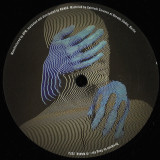
"Jolifanto" takes its name from the first verse of "Karawane", a seminal Dadaist phonetic poem by Hugo Ball. When Ball first recited it in 1916 at the Cabaret Voltaire, both the author and the audience embraced a trance that left Ball exhausted, requiring assistance off the stage as the audience claimed the spotlight.
Over a century later, by a series of fortuitous events, "Jolifanto" is also the title of an album featuring two powerful musical entities. Artists stemming from diverse backgrounds converge with a shared experimental spirit, curiosity and passion for exploration in their music.
"Jolifanto" is an unexpected explosion propelled by (poly)rhythm, expanding into seemingly distant territories under the influence of flamenco. The Dadaist spirit permeates the work, where a constant tension between the improvised and the meticulously planned is evident. ZA! and Perrate together form an organism traveling from the roots to the rave, with nothing sounding out of place because the place is yet to be defined.
Perrate witnessed ZA!'s concert in a festival he attended as part of the audience. The Catalans surprised him with a proposal that he found radical and unclassifiable. Later, after being invited to prepare a collaboration for the Música y Museos season in Seville, Perrate decided to move off the beaten path, approaching ZA!, who quickly embraced the proposal. Exchanges of ideas and audio tracks ensued in a short time and they quickly found out that they were in the same wavelength. A week before the concert, they met in the same physical space for the first time, dedicating a couple of days to composition and preparing the gig at La Mina Studios in Seville. The concert took place, hailed as "the best concert most attendees had experienced in a long time", as reported by the Diario de Sevilla. That energy needed to be captured, and so it was, at the Happy Place studio in Seville, where the album was recorded between March 6th and 9th, 2023.
The Catalan duo ZA!, "the duo that mash up terrace-chant mayhem with... everything else" (The Wire #384), has operated independently and self-managed since their inception in 2004. They overlap genres and amalgamate sounds that move, with intensity, between wild jazz, post-rock and avant-garde electronics, among other influences. In their acclaimed latest work, they have revived the Phoenician language, exploring Mediterranean sounds alongside MegaCobla and Tarta Relena.
Perrate, active since the late 90s, explores the outer edges of flamenco without forsaking its profound essence rooted in lineage and tradition, evident in every note of his voice. His latest work, "Tres golpes" (Lovemonk/El Volcán, 2022), named flamenco album of the year by Babelia/El País, and one of the albums of the year for BBC3's Late Junction, reflects an innate curiosity, possibly the seed of all the fortuitous events leading to this album.
The encounter between Perrate and ZA! is the result of serendipitous events interwoven with the narrative of artists dedicated to experimentation and radicalism in all its forms.
quête:midi
Band Of Nowhere is a new constellation project by Juanjo Sánchez, together with other collaborators with whom he had previously worked. It is worth mentioning Bob Drake on drums, former member of the legendary formation Thinking Plague (also on Hail, 5UU's, The Science Group) who has also mastered the project from their studio in the Midi-Pyrénées and also to mention the guitarist Jordi Cabayol (Camino al Desván) both Juanjo and Jordi began their career in a significant band of Barcelona of the early eighties, such as Entr'acte.
The becoming of Juanjo Sánchez would take him to other latitudes as a member of Alondra Satori and without losing the lighthouse of his city, he would collaborate with other outstanding musicians such as Quicu Samsó (Koniec, Macromassa).
The fluidity and chromaticism of his previous album Gonza Magilla is still perceived in here, but in a much more electrified way with guitars that are sometimes expansive, other times exuberant wrapped up with contagious synthesizer modulations and very marked rhythms. The production and especially the arrangements are fantastic with those special presences of synthesizers that are not common around here.
Its original improvisation and experimentation is skilfully adjusted by Juanjo Sánchez, giving a much more playful result with unexpected combinations, very much in continuity with a certain European Art Rock such as Aksak Maboul, Etron Fou, Zamla,The Work or the mischievous resonances of The League of Gentlemen; all this mapping the sound transit, to an unpredictable and vibrant non-place.
Housed in it's original hand made artwork with the little upgrade twist of silk-screen printing textured grey cardboard and including a insert colour with photos and text provided by Juanjo Sánchez.
Housed in it's original hand made artwork with the little upgrade twist of silk-screen printing in Plastic clear cover and including a insert colour with photos and text provided by Juanjo Sánchez.
Javier Hernando
a1 Calling All Beginners
a2 Fleeing To the Poles
a3 Ashes
a4 Rouler ma Bosse
a5 Sunday Machinery
b1 lucid Dreams
b2 Twisted Maze
b3 Rolla Bolla
b4 Chinese Forecast
“But into my miserable brain, always concerned with looking for noon at two o’clock" - Charles Baudelaire (1869)
The Foreign Department is the second album by Astrel K, the solo project helmed by Stockholm-based British ex-pat, Rhys Edwards. Those already familiar with Edwards’ work will likely know him for fronting the cultishly great Ulrika Spacek, and given he operates as the principal songwriter in both projects, much of the same hallmarks of his cathartic, elliptical songwriting are present in Astrel K. Nonetheless, The Foreign Department feels like a rubicon moment of sorts, and the album that Edwards has unconsciously been working towards his entire creative life.
As a title, The Foreign Department offers an instructive guide for the listener, framing a life-in-transition/artist-in-exile document that maps two impromptu moves in twelve months for its songwriter: the first from London in pursuit of a relationship, the second between homes in Stockholm as that decade long relationship then suddenly dissolved. Indeed, diffusion, dissolution and reconstitution feel like appropriate touchstones for its recurring themes. Written amidst the flux of two states, at once isolated from home and then any established emotional anchor, the resulting eleven tracks came to represent a precognitive search for shifting identity and with it forming an unwittingly biographical record. It's commendable and somewhat telling that during this shake up, Edwards somehow landed upon his most realised and original work.
With a former life stripped away, there emerged an opportunity to reinvent a sense of self through art, now not just as a writer, but a composer also. Developing the confidence to arrange songs in ways he'd previously considered off-limits, while also taking cues from the opulent string and brass arrangements of records like Mercury Rev's Deserters' Songs and Death of A Ladies Man by Leonard Cohen, Edwards enlisted a range of performers to bring to life the mini-symphonies forming in his head. Perhaps it's inevitable that an album written while facing the consequences of being alone would eventually ossify around the process of bringing people together.
For all its troubled origins, The Foreign Department is a remarkably warm sounding collection. Edwards' lyrics are typically knotty and neurotic, dancing around the poetry of quarter-life anxiety, but the music itself is often joyous and even uplifting, the combination expressing that neat duality of melancholic euphoria. Edwards sings variously of crises, "torrid pieces of art", of "houses on fire" and not "having the guts for it", yet these troubling sentiments are framed by seemingly incongruous swelling strings, chirping horns or motorik percussion, creating that sense of pushing forward or floating above, of wrapping your troubles in dreams, a salve for the moments when you get a bit too much for yourself.
Lead single, 'Darkness At Noon', likely captures this all best. Named for the French idiom "midi a quatorze heures", the maddening idea of attempting the impossible for the sake of some greater possibly pointless cause, it directly grapples with the opposing notions of wanting and not wanting, of being here and being there at the same time. The conflicting and impossible self. It’s something Edwards addresses in the song at perhaps his most open, opining, “I know I want to be seen, but I hate most of what comes out of me”. And yet here is, putting it all out in the open and on the line, the dialectics of his enlightenment up on show.
- A1: Opening (Destruction Of The Space Colony)
- A2: Theme Of Super Metroid
- A3: Spaceship (No Sfx)
- A4: Boss Confrontation 1
- A5: To Planet Zebes
- A6: Planet Zebes (Arrival On Crateria)
- A7: Crateria (The Space Pirates Appear)
- A8: Item Acquisition Fanfare (No Sfx)
- A9: Item Room
- B1: Chozo Statue Awakens
- B2: Brinstar Overgrown With Vegetation Area
- B3: Mini Boss Confrontation
- B4: Brinstar Red Soil Swampy Area
- B5: Norfair Hot Lava Area
- B6: Tension
- B7: Boss Confrontation 2
- C1: Theme Of Samus
- C2: Wrecked Ship
- C3: Maridia Rocky Underwater Area
- C4: Maridia Drifting Sandy Underwater Area
- D1: Norfair Ancient Ruins
- D2: Mysterious Statue Chamber
- D3: Tourian
- D4: Continue
- D6: Mother Brain
- D7: Ending
- D5: Samus Aran's Appearance Fanfare
WRWTFWW Records is happy to announce the first-ever physical release of Louisiana-based composer and producer Jammin’ Sam Miller’s full HD re-creation/restoration of the beloved Super Metroid video game soundtrack. The limited biovinyl double LP is packed with 27 tracks and features an exclusive artwork by French illustrator Pierre Thyss, as well as an obi strip.
Composed by Kenji Yamamoto and Minako Hamano, the soundtrack for 1994 SNES exploration / action-adventure / sci-fi / alien video game Super Metroid has always been a fan-favorite. A true masterclass in music storytelling, it beautifully evokes the epic and eerie adventure of the game’s protagonist Samus Aran with superb use of atmospheric sounds, space-operatic arrangements, rumbling bass, oppressive techno-futurist moods, tribal drums, and airy synth themes, admirably balancing the ominous feel of a dark menace and contemplative, even soothing, ambient soundscapes.
Jammin' Sam Miller assiduously recreated the soundtrack note by note, by finding the original equipment used to create it, translating the MIDI into a modern studio context, adding in keyboard samples, and re-mixing and re-mastering the whole score. He explains: "This was made possible by locating the original instrument samples from workstation keyboards and drum machines before they were put into the game and rebuilding the soundtrack from the ground up, applying some modern mixing techniques along the way to lift the veil of 16bit compression and create an updated listening experience."
Super Metroid is pressed on biovinyl, a sustainable alternative to traditional vinyl. Biovinyl replaces petroleum in S-PVC by recycling used cooking oil or industrial waste gases, resulting in 100% CO2 savings in bio-based S-PVC production. Furthermore, it is 100% recyclable and reusable, embracing the circular economy ideology.
Artisjok Records is happy to announce the first release of XL Regular's album, "Store Duties". Hailing from the city of Rome, XL Regular is a young and innovative producer who seamlessly weaves together a tapestry of musical genres, including jazz, broken beat, house, and soul, into a mixed journey experience. The foundation of XL Regular's identity is grounded in a profound love for percussions and grooves. Drawing inspiration from global percussion traditions, XL Regular weaves intricate rhythms that form the backbone of his tracks. The result is a sound that is both dancefloor-friendly and artistically rich, showcasing his abilities producing over a broad spectrum of electronic music genres. You'll notice a rich fusion of traditional and contemporary influences. The jazz elements add a layer of sophistication and intricacy to the compositions, while the broken beat rhythms create a dynamic and ever-evolving sound. This blend is skilfully infused with the groove-inducing essence of house music and the timeless emotive power of soul. In the vast realm of the internet, where connections are not often strong and sometimes superficial, XL and AliA discovered each other in the world of music. It all began with a simple online exchange, a connection that would evolve into a profound friendship and a transformative journey into life inside and outside the music industry. "The album for me is an occasion to fullfill the need to express myself throughout every style of music I want to produce, without forcing myself into genres, something that felt natural for a label like Artisjok" - XL Regular
The second self-titled album from Will Miller"s Resavoir interweaves modern-day soul-jazz with bedroom beats, synth serenades and twilight sonatas - an endlessly listenable, subtly radiant symphony suitable for both the composition-minded musician"s musician and the hook-seeking playlist populist. This album follows Resavoir"s 2019 self-titled debut album, a breakout success that landed in "Best of 2019" lists by NPR Music and BBC"s Gilles Peterson. Through his movement further into an expanded palette of synths, pianos, live and programmed drums in addition to his MIDI-augmented trumpet, Miller has developed a signature cinematic soul-jazz sound rooted in hip-hop structures. No surprise, then, that his profile as a producer has raised significantly since the Resavoir debut, and that the years since have seen him operating the controls and guiding the ship on tracks for Eryn Allen Kane, Whitney, Knox Fortune, and SZA"s recently-released album SOS (which spent 10 weeks as the #1 spot on the Billboard 200 chart).
Story Of Collapsed Dimention unfold in 4 tracks multi-genres musical accompaniment and 12 frame comics, as artwork. The EP symbolizes a journey of personal transformation, the courage to confront the unknown and fight against circumstances and suffering. In order to become something new, we need to give up what we are now.
The tracks span across various styles, including funky house with a live-band feel, featuring infectious rhythms and vibrant instrumentation. There is a breakbeat track infused with a groovy bassline seized from NBA Live 95 on Sega Genesis, accompanied by turntablism hard drops and scratchy sounds that add an edgy and gritty vibe.
B-side explores psychedelic frequency modulations of polyharmonic intertwined with jungle-oriented breaks, creating a mesmerizing fusion of intricate melodies and rhythmic complexity. Finally, the EP concludes with an electro banger that has been accidentally reinvented with its captivating energy and a profound message.
Overall, the EP showcases a diverse and dynamic musical journey through these genres, offering a rich and immersive listening experience or valuable universal DJ-tool.
The artwork features hand-drawn comics by the talented artist Larisa Shalyapina, script and production by CDA.
The unique texture, blurriness, and overall quality of the illustration are meticulously preserved through a process of manual assembly and duplication, resulting in a visually captivating and tactile experience.
Used gear: Roland MC-808, Roland MC-505, Moog Subphatty, Waldorf Wave XT, MAM33, Volca FM, Volca Bass, Tascam Midistudio 644, Jomox t-resonator II, Boss Digital Delay, Teletron SAQ-206B Amp, KME Sound GBA 80 Bassbox, Culture vulture distortion, Distress compressors. DAW Ableton.
conceptualization:
Tracks are written during frequent relocations, capturing experienced moments and raw emotions. As the physical changes in our living environment are comparable to the collisions and evolving paths within the domain of knowledge reflected in the trials of spiritual awakening.
In Berlin, a city of expats, it has a special relevance to people who came here to find themselves. It also resonates with those who have been brought here by circumstances.
Record id released with all Ukrainian brothers and sisters in heart.
While we find comfort in our safe spaces, it is inevitable that some stress will eventually provoke us to take action. We may long for that period of comfort and feel a sense of anger or sadness for what once was. Once the truth is revealed, much like the unveiling of light, there is no turning back — a path to enlightenment shall be accepted.
Within the EP, each track serves as a chapter for this path.
A1
First track encapsulates escapism by chasing a feel-good sense in the run from responsibilities into fantasy-land. In the moment of careless life in careless time, where the future is sacrificed in the name of immediate pleasure.
A2
Robotboy incorporates a superficial state of mind with a reactive personality rooted in a narcissistic ego, dishonestly denying the righteous path. Subconscious struggle from hedonistic lifestyle with no relief.
B1
A deeply intimate and personal, embodied introspective sentiment kept hidden from the world, revealing when we’re alone and usually stifled with distraction and entertainment. Nostalgic feeling of loss follows us during the abandonment of a beloved place. Overwhelming weight of regret in presents.
B2
Taking action of the first step makes us unstoppable and disclosure of knowledge leads to destruction of the illusory world. Finding out the truth, same as seeing the light, excludes the retreat into darkness. As comprehension is the way to enlightenment.
"This is an album to treasure - it'll surprise you at every turn" Joel McIver (Record
Collector) One of the most influential bands to emerge from the UK's festival
scene, the Ozrics layer ambient & ethereal landscapes with freeform dub trips,
incredible rave grooves & psychedelic progressive rock. It's an open exploration
of music & the soul. For over 30 years, the Ozrics have experienced the
vicissitudes of the rock & roll life. The band has flourished through a number of
line- up changes, spawned several side projects, created their own record label,
scored a hit record & sold over a million albums world-wide. And yet, the basic
motivation behind the band's existence has never wavered.Their signature blend
of hippy aesthetics & raver electronics with spiraling guitars, textured waves of
keyboard & midi samplers & super- groovy bass & drum rhythms continue to
delight fans across the world to this day.Originally released in September 1999,
'Waterfall Cities' was a giant leap forward for the band, taking a more obvious
step into electronica, whilst still managing to retain their unique sound. An
explosion of keyboards, acid squelches & blistering guitar passages, the musical
& technical brilliance of the Ozrics comes to the fore in strange & unexpected
ways on this album.'Waterfall Cities' - Remastered by Ed Wynne & available on
Double LP via Kscope.
- A1: Marika Hackman – Driving Under Stars (Piano)
- A2: Pale Waves – Last Christmas
- A3: Allo Darlin’ – Will You Please Spend New Years With Me?
- A4: Julia Jacklin – Baby Jesus Is Nobody’s Baby Now
- A5: The School – Shouldn’t Be Alone For Christmas
- A6: The Big Moon – It’s The Most Wonderful Time Of The Year
- A7: Los Bitchos – Los Chrismos
- B1: Linda Lindas – Groovy Xmas
- B2: Black Midi – Jingle Bell Rock
- B3: Chubby And The Gang – Violent Night (A Christmas Tale)
- B4: Peaness – Kiss Me Sweetpea
- B5: Bubble And Squeak – The Christmas Stick
- B6: Ellie Bleach – Merry Christmas, Do You Ever Think Of Me?
- B7: Sinkane – Christmas Wrapping
Ein Weihnachtsgeschenk von Rough Trade Shops für alle Pop-Picker weltweit: In der Welt von Spotify, Bandcamp und anderen rein digitalen Releases hat Rough Trade Shops beschlossen, genau diese Songs auf dem Weihnachtsalbum 'Jangle Bells' zusammenzufassen. Die zeitliche Bandbreite reicht von Allo Darlin' aus 2008 bis zu Marika Hackmans Song, aufgenommen mitten in einer Semi-Hitzewelle 2023. Auf 14 LP- und 19 CD-Tracks finden Sie Pale Waves wunderschöne Interpretation von Wham's Crimbo-Klassiker 'Last Christmas' bis zu 'Violent Night (A Christmas Tale)' von Chubby And The Gang, das 2022 nur als Flexidisc erschien. Sie können Sich mit Julia Jacklin oder Ellie Bleach zusammensetzen und melancholisch werden oder mit Linda Lindas und Black Midi, die eine ziemlich originalgetreue Version von 'Jingle Bell Rock' spielen. Frohe Weihnachten 2023 von allen bei Rough Trade Shops!
Clear Vinyl
On Rock Island, their second LP, Palm produces evidence of a distinct musical language, developed over time, in isolation, and out of necessity. On the island, melodies are struck on what might be shells or spines. Rhythms are scratched out, swept over, scratched again. Individual instruments, and sometimes entire sections, skip and stutter. There is the sense of a music box with wonky tension or a warped transmission in which all the noise is taken for signal.
Like other groups so acclaimed for their compulsive live show, Palm has been burdened by the constant comparison between their recorded material and their touring set. On Rock Island, they render this tired discussion moot, using the album form to present that which could never be completely live, reserving for performance that which could never be completely reproduced.
Despite appearing behind the instruments typical of rock music, Palm trades in sounds of their own making. On these songs, one of the guitars and the drum kit are used as MIDI triggers, producing an index that can be combed through later and replaced with new information. The percussion is sometimes augmented so as to suggest a multiplication of limbs. The strings are manipulated to choke, crack, and hum like other instruments, or other bodies, might.
Working again with engineer Matt Labozza, the band spent the better part of a month in a rented farmhouse in Upstate New York. With the benefits of time and space, Palm recorded the various elements piecemeal, only rarely playing together in groups larger than two or three. While some members tracked, others holed up in the next room, experimenting with quantization, beat replacement, and other methods borrowed from electronic music. Even accounting for the many labors that brought them to be, these materials seem produced by an organic logic. Their complex friction forms a habit of thought, scores a network of grooves on the floor of the mind.
This is music with dimensionality. Sonic objects are deployed, developed, and dissected in various states of mutation. The listener flits about between the field and the lab. The tone is warm in a way only the sun could make, the pace as forceful and as variable as a gale. Whether one locates Rock Island in a sea or in a refinished attic (as in Greg Burak's album cover), whether one escapes to there or is banished, its psychic environs are charted clearly enough. Only at this remove from the mainland can we sense the conditions necessary for such a strange species of sound.
If there's one specific component that grounds 'Sky Flesh', it's focus. Italian musician and sound designer Marta De Pascalis flexed her technical muscle on 2020's 'Sonus Ruinae', layering various sounds and processes in an attempt to touch the sublime. In contrast, 'Sky Flesh' is a single thought, composed using just one instrument: the Yamaha CS-60. A slimmed-down sibling to the gargantuan CS-80 - the analog synthesizer used by Vangelis to create his iconic 'Blade Runner' score - the CS-60 was released in 1977, a few years before the MIDI protocol was introduced to help standardize production methods. MIDI would change the electronic music landscape completely, offering a level of control that De Pascalis consciously relinquishes, preferring to highlight expressiveness and timbre, elements more readily associated with acoustic instruments. The album arrives as much of the wider experimental scene busies itself with algorithmic composition and AI-assisted modeling; De Pascalis chooses to work instead like an organologist, harnessing the CS-60's mercurial magic to suggest deeper truths about our evolving relationship with machines.
Currently based in Berlin, De Pascalis grew up in Rome, where she was surrounded by atrophied ruins that piqued her interest in decay and memory. Over her last three albums, she used tape loops and advanced synthesizer techniques to create a unique sound world that's guided by her musical philosophy, rather than a specific aesthetic. As she's developed her technique and confidence, her music has become even more idiosyncratic, and at this stage in her career she's stripped her sound down to its core elements, focusing on emotion, narrative and mystery. Using timbres that recall a time when electronic music still waved towards the future
A limited edition of 300 copies of this 1985 masterpiece, remastered and presented in a renewed artwork. Berlin School synth sequences, American minimalism vibes, new age and oriental influences, guitar-synthesizers, genius arrangements... A masterpiece exploring the emerging MIDI technology of the time. A transportive selection of calming ambient soundscapes punctuated by glassy synth work and meditative drum patterns.
Acclaimed by many, Steve Roach himself said: »I heard Traces on vinyl back in the early 80s. It is still one of my top 10 albums. There is just an elegant, efficient, and emotional quality about it that just holds up like it was created today. A truly timeless piece of beauty.«
Recalling the »Traces« times, Wøllo explained: »I quit all the bands I played in. I wanted to work on my own using the modern electronic studio as an instrument, like a painter with his oil canvasses. I wanted to make a music that had expansive synthesizer textures and sequencer patterns, layered together with expressive melodic electric guitars. Working with depth, time and space. In those years in the early eighties the studio technology was new and revolutionary, and I wanted to explore all the new possibilities. To be able to control the infinite variations of electronic sound, using an endless palette for creative expression«.
Finally, a YouTube comment about the record that we enjoyed: »This sounds like vaporwave before vaporwave had anything to be nostalgic over«.
Roxane Métayer is a french musician and artist based in Brussels. Between folk and experimental music, her project is made of sound recordings made in nature, violin, wind instruments, percussion, and his own voice. Her albums have been released by Kraak label, Morc, Primordial Void, Wabi-Sabi tapes, Marionnette Label and Matière Mémoire.
Roxane Métayer was born in France in 1992. She learned to play the violin at a young age, and then continued her studies in Belgium, at the Ecole de Recherches Graphiques, where she obtained her Master’s degree, in Speculative Narration, Narratives and Experiments.
Roxane Métayer is a french musician and artist based in Brussels. Between folk and experimental music, her project is made of sound recordings made in nature, violin, wind instruments, percussion, and his own voice. Her albums have been released by Kraak label, Morc, Primordial Void, Wabi-Sabi tapes, Marionnette Label and Matière Mémoire.
Roxane Métayer was born in France in 1992. She learned to play the violin at a young age, and then continued her studies in Belgium, at the Ecole de Recherches Graphiques, where she obtained her Master’s degree, in Speculative Narration, Narratives and Experiments.
#A1# Eighteen months ago the first evidence of intelligent life off the Earth was discovered.
#A2# It can only be attributable to human error.
#B1# I'm not sure, what do you think? I've got a bad feeling about him.
Roland TR-909
Roland TR-808
Roland TR-707
Roland TR-606
Roland TB-303
Sequential Circuits Prophet 5
Oberheim SEM
Oberheim Matrix 12
Ensoniq DP/2
Alesis Midiverb III
Allen & Heath GL2400
Prozpektiva reaches its fifth release so far, and on this special occasion, we are proud to present the rising talent from Ukraine - Aliana.
With a remarkable debut on Variable Records in 2021, swiftly followed by a standout LP (an album for only her second release) for Finest Hour, and a series of co-produced tracks under the alias Midibasics, Aliana now brings us her latest four-track solo EP. Get ready for dubby grooves, plenty of swing, and some serious heads-down action.
A thrilling immersion into FM synthesis and a puzzle of MIDI data, the Los Angeles based multi-instrumentalist Gregg Kowalsky returns to Mexican Summer with Eso Es, his sophomore outing for the label and first new music since 2017’s L'Orange L'Orange. Representing a significant creative leap for the veteran composer, Eso Es unfolds as a hypnotic journey into Kowalsky’s inner world, laced with a depth of emotiveness and vulnerability that’s rarely encountered in the electronic music realm. Raised in South Florida and trained at Mills College under Fred Frith and Pauline Oliveros, Kowalsky first came to prominence during the mid-2000s as a member of the thriving experimental music scene in the Bay Area, issuing a series of stunning albums on imprints like Kranky and Root Strata and contributing to a reinvigoration of American made Minimalist and electroacoustic music. In an addition to composing solo works, pieces for large ensembles, film soundtracks, dance performances, and site-specific installations over the past twenty years, during the 2010s Kowalsky concentrated his energies as one half of the critically acclaimed duo Date Palms, performing extensively and releasing three hypnotic albums, including 2011’s Honey Devash on Mexican Summer.
Novo Line – aka Berlin's algorave maestro Nat Fowler – delivers a noisy, ultramarine voyage into the depths of his archaic hardware. Clawing at the periphery between leftfield electronics and avant-garde pop, Zeit is an entirely new sonic universe, eerily familiar yet utterly uncharted. A visionary synthesist, Fowler is renowned for his productions that make use of mainly '80s equipment including vintage digital synths, discarded MIDI Hi-Tech, tape delay and even an ancient Atari ST computer. But, despite the aged technology, the result is far from nostalgic.
'Ain't That a Mess' slams in with Monica Kremidi's crooning à la Little Annie Anxiety with reeving car engines and guitar-rock static fed through a pan effect. Multilayered melodies soar on 'Stein', the pounding drums matched by gliding strings, crafting that holy grail of cavernous, booming textures and uplifting euphoria that mark out the most transcendent of rave tracks. The deceptively gentle opening bars of 'Morning Star' are interrupted by a viscously squelching bassline, Cass McCombs' vocals dancing deliciously with the raw beat.
Rejecting contemporary tech-fetishism, Novo Line has a near-supernatural ability to exorcise novel sequences, weaving together a record that speaks to the ghost in the machine.
The second self-titled album from Will Miller"s Resavoir interweaves modern-day soul-jazz with bedroom beats, synth serenades and twilight sonatas - an endlessly listenable, subtly radiant symphony suitable for both the composition-minded musician"s musician and the hook-seeking playlist populist. This album follows Resavoir"s 2019 self-titled debut album, a breakout success that landed in "Best of 2019" lists by NPR Music and BBC"s Gilles Peterson. Through his movement further into an expanded palette of synths, pianos, live and programmed drums in addition to his MIDI-augmented trumpet, Miller has developed a signature cinematic soul-jazz sound rooted in hip-hop structures. No surprise, then, that his profile as a producer has raised significantly since the Resavoir debut, and that the years since have seen him operating the controls and guiding the ship on tracks for Eryn Allen Kane, Whitney, Knox Fortune, and SZA"s recently-released album SOS (which spent 10 weeks as the #1 spot on the Billboard 200 chart).
Welt Discos' latest delivery is the debut solo record from DJ/producer/radio host Stephen Howe. The Mimesis EP gives us a convincing introduction to his highly musical sound: spontaneous yet tightly arranged, referential yet idiosyncratic, and not afraid to take the odd left turn. From 80s electro dynamism to loopy techno deepness to broken introspection, this is a diverse and surprising set of dancefloor grooves brought together by Stephen's knack for harmony, counterpoint and tone.
Sampha kündigt mit "LAHAI" sein mit Spannung erwartetes zweites Album an, das am 20. Oktober auf Young erscheint. Nach dem Namen seines Großvaters väterlicherseits benannt, der gleichzeitig auch Samphas zweiter Vorname ist, fließt die Musik auf "LAHAI" zwischen der Ehrfurcht vor dem Leben und der Magie der weltlichen Existenz und beschreibt das Chaos, das man erlebt, wenn man sich dem Kreislauf des Lebens und dem Jenseits stellt. Auf den 14 Tracks hat Sampha enge Freunde und Kollegen zusammengerufen - darunter fantastische Künstler wie Yaeji, Léa Sen, Sheila Maurice Grey (Kokoroko), Ibeyi, Morgan Simpson (Black Midi), Yussef Dayes, Laura Groves und Kwake Bass. Im Gegensatz zum Vorgänger "Process" ist "LAHAI" ein eher kollaboratives Album. Die neueste Single "Only", die von einem Musikvideo von Dexter Navy in Zusammenarbeit mit Sampha begleitet wird und auf dem Vorab Track "Spirit 2.0" folgt, zeigt einen extrem lebendigen Sampha, der melodisch über einen fragmentierten Hip-Hop-Beat mit Co-Produktion von spanischen Musiker El Guincho singt. Im Juni kehrte Sampha zum ersten Mal seit fünf Jahren für seine Satellite Business Residencies in London und New York auf die Bühne zurück. Das einzigartige Setup, bei dem Sampha und seine Band in der Mitte des Raums auftraten, ermöglichte den Fans einen intimen Zugang zu der improvisierten Performance neuer, unveröffentlichter Musik und alternativer Arrangements von Samphas Katalog, die das Publikum "wie gebannt" (Pitchfork) zurückließ. In diesem Herbst wird Sampha eine größere Version der Satellite Business Live-Show auf Tournee mitnehmen. Den Anfang machen mehrere Abende in London in der St. Johns at Hackney Church im Oktober, bevor er nach Nordamerika zurückkehrt, um in großen Städten aufzutreten: Los Angeles, Toronto, New York City, Chicago, San Francisco, Washington D.C., Philadelphia und Atlanta. Anfang Dezember kehrt er nach Europa zurück und spielt in Berlin, Amsterdam und Paris. Wie sein Schöpfer lässt sich auch "LAHAI" nicht in eine Schublade stecken. Das neue Album ist eine Mischung aus Jazz, Soul, Rap, Dance, Jungle und westafrikanischer Musik, mit der Sampha seine produktionstechnischen und stimmlichen Ambitionen auf ein neues Niveau hebt. Als begnadeter Sänger , Songwriter und Produzent ist es kein Wunder, dass Künstler wie Kendrick Lamar, Stormzy, Travis Scott und früher auch Drake, Solange, Frank Ocean, Beyoncé, Lil Wayne und Alicia Keys ihn für seine unnachahmliche Stimme sowie seine Beiträge zum Songwriting und zur Produktion ihrer Musik um Unterstützung baten. Zu seinen früheren kreativen Partnerschaften gehören die Modedesignerin Grace Wales Bonner, das Shy Light Zine mit Durimel (der auch das LAHAI-Artwork gedreht hat), sein Process-Film mit dem Regisseur Kahlil Joseph und kürzlich die Zusammenarbeit mit Jonny Lu, mit dem Sampha das Artwork für sein LAHAI-Album und sein neues Logo entwickelt hat. Wenn "Process", Samphas 2017 mit dem Mercury-Preis ausgezeichnetes Debütalbum, einen Künstler zeigte, der seinen eigenen Platz in der Welt suchte und schließlich auch fand, ist "LAHAI" eine Übung in der radikalen Akzeptanz und Freude am Leben und der Schönheit der Reise bis hierhin. Willkommen zu Samphas nächstem musikalischen Kapitel: LAHAI.
Sampha announces the full details of his highly-anticipated, sophomore album LAHAI, out October 20th on Young. Taken from his paternal grandfather’s name, which is also Sampha’s middle name, LAHAI revels in the awe and magic of our existence, synthesizing the exquisite chaos that one experiences confronting the cycle of life and the beyondness. Spanning 14-tracks, with contributions from some of Sampha’s closest friends, peers and collaborators including: Yaeji, Léa Sen, Sheila Maurice Grey (Kokoroko), Ibeyi, Morgan Simpson (Black Midi), Yussef Dayes, Laura Groves and Kwake Bass, LAHAI, in contrast to Process, is a communal affair seeing Sampha explore the many ways in which we as humans connect to each other, and to something bigger than ourselves. On the album’s latest single “Only,” premiering today via a new music video directed by Dexter Navy in collaboration with Sampha, which follows the recent “Spirit 2.0,” we meet a newly energized Sampha, as he spits melodically over a fragmented hip-hop hued beat with co-production from El Guincho.
Not unlike its maker, LAHAI defies clear categorization. Spanning jazz, soul, rap, dance, jungle and west African music, LAHAI sees Sampha elevating his production and vocal ambition to great new heights. A notable singer, songwriter and producer, it’s no wonder that artists like Kendrick Lamar, Stormzy, Travis Scott and previously, Drake, Solange, Frank Ocean, Beyoncé, Lil Wayne and Alicia Keys have all tapped the artist for his inimitable voice plus songwriting and production contributions to their music. His work expands across multiple disciplines, with previous creative partnerships including the fashion designer Grace Wales Bonner, the Shy Light zine with Durimel (who also shot the LAHAI artwork) his Process film with director Kahlil Joseph, and most recently creative director Jonny Lu, with whom Sampha worked to create the LAHAI album artwork and logo.
If Process, Sampha’s 2017 Mercury-Prize-winning debut album, was an artist figuring out his own place in the world, engulfed in the shadows of grief and loss, LAHAI is an exercise in the radical acceptance and joy in the human condition, and the beauty in the journey itself. Welcome to Sampha’s next musical chapter: LAHAI.
Over the course of 20 years, German artist Black To Comm (Marc Richter) has pushed the limits of / and merged the aesthetics of art, conceptual installations, and music, coming in a wave of innovation alongside his peers Pita, Fennesz, and later Sarah Davachi to name a few. Through it all Richter as Black to Comm has challenged assumptions, explored identity, and confronted the concept of authorship itself. At Zeenath Parallel Heavens finds Black to Comm contemplating the hybridity within each and every one of us, be it sexual, racial, cultural, or linguistic. Richter mirrors personal dualities musically with a combination of sounds he created and manipulated samples, blurring their boundaries. "I always try to blur the line between sampling and my own recordings, also between "real" instruments,MIDI, electronics, editing, between authenticity and theatrics/artificiality," says Richter. When recording he became aware of how AI text programs processing resembles his own methods. "I had the realization recently that the way I compose is not too dissimilar to what AI software is doing nowadays - especially when the AI is hallucinating (this is the term used when the AI is overloaded/overcharged/inundated and comes up with made-up results)." Human behavior reflected in a computer facsimile of human intelligence appealed to the ethos of Black to Comm, whose titles and concepts are often oblique and tongue-in-cheek.
- 01: Ah, Cruel!
- 02: L`eau Du Nil
- 03: Image & Dialogue
- 04: L`issue
- 05: Une Après-Midi D`or
- 06: L`échappée Belle
- 07: Errant Aux Alentours
- 08: La Partie De Cartes
- 09: Gelée Anglaise
- 10: Derrière Le Chardon
- 11: Sous Le Soleil Couchant
- 12: Attendre Sur Un Galet
- 13: L`accident Du Poisson Rouge
- 14: Rien N`est Plus Clair Que Ça
14 track Studio from Fabien Guiraud released by HIDD
Sampha announces the full details of his highly-anticipated, sophomore album LAHAI, out October 20th on Young. Taken from his paternal grandfather’s name, which is also Sampha’s middle name, LAHAI revels in the awe and magic of our existence, synthesizing the exquisite chaos that one experiences confronting the cycle of life and the beyondness. Spanning 14-tracks, with contributions from some of Sampha’s closest friends, peers and collaborators including: Yaeji, Léa Sen, Sheila Maurice Grey (Kokoroko), Ibeyi, Morgan Simpson (Black Midi), Yussef Dayes, Laura Groves and Kwake Bass, LAHAI, in contrast to Process, is a communal affair seeing Sampha explore the many ways in which we as humans connect to each other, and to something bigger than ourselves. On the album’s latest single “Only,” premiering today via a new music video directed by Dexter Navy in collaboration with Sampha, which follows the recent “Spirit 2.0,” we meet a newly energized Sampha, as he spits melodically over a fragmented hip-hop hued beat with co-production from El Guincho.
Not unlike its maker, LAHAI defies clear categorization. Spanning jazz, soul, rap, dance, jungle and west African music, LAHAI sees Sampha elevating his production and vocal ambition to great new heights. A notable singer, songwriter and producer, it’s no wonder that artists like Kendrick Lamar, Stormzy, Travis Scott and previously, Drake, Solange, Frank Ocean, Beyoncé, Lil Wayne and Alicia Keys have all tapped the artist for his inimitable voice plus songwriting and production contributions to their music. His work expands across multiple disciplines, with previous creative partnerships including the fashion designer Grace Wales Bonner, the Shy Light zine with Durimel (who also shot the LAHAI artwork) his Process film with director Kahlil Joseph, and most recently creative director Jonny Lu, with whom Sampha worked to create the LAHAI album artwork and logo.
If Process, Sampha’s 2017 Mercury-Prize-winning debut album, was an artist figuring out his own place in the world, engulfed in the shadows of grief and loss, LAHAI is an exercise in the radical acceptance and joy in the human condition, and the beauty in the journey itself. Welcome to Sampha’s next musical chapter: LAHAI.
In spring 1994 Mouse on Mars contributed an exclusive piece to Sähkö Recordings’ ambient radio project, a one-week public radio program that was aired citywide in Helsinki, Finland. Andi Toma and Jan St. Werner recorded sounds in and around their studio in Düsseldorf Bilk to construct one continuous composition that spanned the course of one neighborhood walk. Midi-controlled synths, samplers, analogue effects, tape delays, effect pedals, guitars and a jew’s harp were juxtaposed with recordings captured during the walk. An additional microphone that pointed out of the studio window was occasionally dubbed into the mix. The resulting collage was broadcast just a few months before the group’s debut album Vulvaland came out and never aired again. 30 years into the band’s existence Andi Toma and Jan St. Werner revise the duo’s history by producing three LPs that would place the band’s discography under a slightly different light. Bilk marks the beginning of that investigation: a free-flowing assemblage of everything that vibrates and can be caught on tape. A 30 year old recording with subtle new edits and additions.
Recorded at the Academy of St. Martin in the Fields by Andi Toma and Jan St. Werner.
Artwork Soulis Moustakidis. Art Direction Rupert Smyth. Vinyl Master Cem Oral.
UK drummer and sound artist Cameron Graham dances between EDM, joyous calypso colour, cellular Glassian minimalism, and hyperrealist AI on debut album Becoming a Beach Angel, evoking a SNES world of blissful vibrancy.
Creating his dizzying, dayglo MIDI explorations with drumkit triggers, UK musician Cameron Graham conjures a multitude of soundworlds from dense compositional structures. The music of debut album Becoming a Beach Angel touches on neon, videogame digitisation, the finessed, mechanical precision of IDM, even the rhythmic intensity of gamelan, whilst retaining a thrilling and wholly singular energy. The record is an electrifying experience, full of colour.
Becoming a Beach Angel flips and trips through headspinning, hyperspeed effervescence, like an entire rave condensed into a moment. Instantly joyful, its textures - formed in wavetable synthesis triggered by live-performed percussion pads - thread and bob through hyperreal abstract space, millisecond snippets of organ chords and steel pans zooming like stars in a galaxy rocketed past at
lightspeed. “It’s about grabbing and holding a close person going through depression or self-doubt, taking them out the door,” Cameron explains. “Dance music for that moment you need only to find a way to move forward.”
Wewantsounds is delighted to announce the release of Ryuichi Sakamoto's classic LP "Ongaku Zukan", originally issued in Japan on his own School label in 1984.
The reissue will replicate the original Japanese release which offered two versions: a normal edition featuring the LP with a bonus 2-track 7" EP (WWSLP71), and a limited edition which includes a 3-track 12" EP in place of the 7" (WWSLP72)
Remastered by Saidera Mastering in Tokyo the reissue boasts the original gatefold artwork plus an extra 2-page insert with new liner notes by Andy Beta
The early '80s were a turning point for Japanese musician Ryuichi Sakamoto. As a solo artist, the smash hit soundtrack he had composed for 1983's "Merry Christmas Mr. Lawrence" (a film in which he had also acted), had put him on the verge of becoming a global superstar. Meanwhile he had called a halt to his work with Yellow Magic Orchestra; the influential, globally successful pop trio calling it quits after the release of their 1983 album "Naughty Boys".
Against this backdrop, Sakamoto descended on Tokyo's Onkyo Haus Studio to record his fourth solo album, "Ongaku Zukan" ("Musical Encyclopedia") accompanied by a handful of musicians including his ex-YMO partners Haruomi Hosono and Yukihiro Takahashi, and the prolifically talented Yasuaki Shimizu, Tatsuro Yamashita and Toshinori Kondo. Sakamoto began with no particular plan in mind, recording 30 basic tracks over the best part of 1983. It was on his return to the studio the following year that the album truly began to take shape. Accompanied by a newly acquired Fairlight CMI sampler, the musician made extensive use of the revolutionary equipment to create a wide palette of sound textures which he added to the tracks, a creatively fertile process that was captured on film for the French documentary "Tokyo Melody, A Film about Ryuichi Sakamoto".)
Released in August 1984 the album "Ongaku Zukan" proved a huge success, providing Sakamoto with his first top 5 hit in Japan. Filled with inspired melodies that showcase his unique gift as a composer, it offers up a fascinating mix of styles. Asiatic electro pop nuggets ("Tibetan Dance") share space with futuristic ambient pieces ("Hane no Hayashi de"), and brilliantly creative fusions of jazz, funk, techno and reggae ("Etude" and "Tabi no Kyokuhoki.")
Two simultaneous editions of the album were released in Japan: the regular one featuring a bonus 7" EP with two extra tracks: "Replica" and "Ma Mère l'Oye" while a limited edition added a 12" EP (in lieu of the 7") which included a third track, "Tibetan Dance (Version)." An international version was released two years later in 1986 by 10 Records/Virgin under the title "Illustrated Musical Encyclopedia," but with a very different track list. Five tracks from "Ongaku Zukan" were dropped, namely "Self Portrait," "Tabi no kyokuhoku," "Mori no Hito," "A Tribute to N.J.P" and "Tibetan Dance (Version)", to be replaced by two non-album singles from 1985, "Stepping Into Asia" and "Field Work."
This is the very first time that the two 1984 Japanese editions of Ryuichi Sakamoto's classic album have been released internationally in collaboration with the artist's management and Midi Inc., with remastered audio and the original artwork faithfully reproduced, paying tribute to one of contemporary music's undisputed geniuses.
Wewantsounds is delighted to announce the release of Ryuichi Sakamoto's classic LP "Ongaku Zukan", originally issued in Japan on his own School label in 1984.
The reissue will replicate the original Japanese release which offered two versions: a normal edition featuring the LP with a bonus 2-track 7" EP (WWSLP71), and a limited edition which includes a 3-track 12" EP in place of the 7" (WWSLP72)
Remastered by Saidera Mastering in Tokyo the reissue boasts the original gatefold artwork plus an extra 2-page insert with new liner notes by Andy Beta
The early '80s were a turning point for Japanese musician Ryuichi Sakamoto. As a solo artist, the smash hit soundtrack he had composed for 1983's "Merry Christmas Mr. Lawrence" (a film in which he had also acted), had put him on the verge of becoming a global superstar. Meanwhile he had called a halt to his work with Yellow Magic Orchestra; the influential, globally successful pop trio calling it quits after the release of their 1983 album "Naughty Boys".
Against this backdrop, Sakamoto descended on Tokyo's Onkyo Haus Studio to record his fourth solo album, "Ongaku Zukan" ("Musical Encyclopedia") accompanied by a handful of musicians including his ex-YMO partners Haruomi Hosono and Yukihiro Takahashi, and the prolifically talented Yasuaki Shimizu, Tatsuro Yamashita and Toshinori Kondo. Sakamoto began with no particular plan in mind, recording 30 basic tracks over the best part of 1983. It was on his return to the studio the following year that the album truly began to take shape. Accompanied by a newly acquired Fairlight CMI sampler, the musician made extensive use of the revolutionary equipment to create a wide palette of sound textures which he added to the tracks, a creatively fertile process that was captured on film for the French documentary "Tokyo Melody, A Film about Ryuichi Sakamoto".)
Released in August 1984 the album "Ongaku Zukan" proved a huge success, providing Sakamoto with his first top 5 hit in Japan. Filled with inspired melodies that showcase his unique gift as a composer, it offers up a fascinating mix of styles. Asiatic electro pop nuggets ("Tibetan Dance") share space with futuristic ambient pieces ("Hane no Hayashi de"), and brilliantly creative fusions of jazz, funk, techno and reggae ("Etude" and "Tabi no Kyokuhoki.")
Two simultaneous editions of the album were released in Japan: the regular one featuring a bonus 7" EP with two extra tracks: "Replica" and "Ma Mère l'Oye" while a limited edition added a 12" EP (in lieu of the 7") which included a third track, "Tibetan Dance (Version)." An international version was released two years later in 1986 by 10 Records/Virgin under the title "Illustrated Musical Encyclopedia," but with a very different track list. Five tracks from "Ongaku Zukan" were dropped, namely "Self Portrait," "Tabi no kyokuhoku," "Mori no Hito," "A Tribute to N.J.P" and "Tibetan Dance (Version)", to be replaced by two non-album singles from 1985, "Stepping Into Asia" and "Field Work."
This is the very first time that the two 1984 Japanese editions of Ryuichi Sakamoto's classic album have been released internationally in collaboration with the artist's management and Midi Inc., with remastered audio and the original artwork faithfully reproduced, paying tribute to one of contemporary music's undisputed geniuses.
Mit einer fesselnden Zusammenstellung neu-geschriebener, klangmalerischer Arrangements für Violine und Orchester von bekannten Film- und Serien-Soundtracks und neuen Kompositionen der Oscar-prämierten Komponistinnen Rachel Portman und Anne Dudley zeigt die Geigerin Esther Abrami auf Cinéma ihre Vielseitigkeit, musikalische Sensibilität und Raffinesse. "Ich bin so stolz auf mein neues Album. Ich wollte eine abwechslungsreiche musikalischer Reise zusammenstellen, die meinen klassischen Hintergrund, mein französisch-jüdisches Erbe, meine Unterstützung für Frauen in der Musik und meine Liebe zu Filmen und Anime widerspiegelt und verschiedene Genres, Kulturen und Generationen verbindet. Ich hoffe, dass sich die Zuhörer*innen in die Musik von Cinéma genauso verlieben wie ich", erklärt Esther Abrami. Cinéma enthält neue Arrangements von Blockbuster-Hits aus Animes, Serien und Kinofilmen wie Naruto und Demon Slayer, The Witcher oder The Hunger Games, genauso wie Musik aus ikonischen französischen Filmen wie die Die fabelhafte Welt der Amelie und Die Kinder des Monsieur Mathieu. Darüber hinaus sind klassische Stücke aus Filmen mit Musik von Pjotr Tschaikowsky, Dmitri Schostakowitsch und Astor Piazzolla sowie zwei Weltpremieren der Oscar-prämierten Komponistinnen Anne Dudley und Rachel Portman enthalten, mit denen Esther Abrami persönlich bekannt ist. Besonders emotional ist die Verbindung der durch ihre Großmutter zur Geige gekommenen Musikerin jedoch zu den Filmen Das Leben ist schön und Das Tagebuch der Anne Frank. Ein ebenfalls sehr emotionales Stück auf Cinéma ist das neue Arrangement vom Thema des Protagonisten "Zeyn" aus dem Oscar-nominierten libanesischen Sozialdrama Capernaum, das Komponist und Film-Produzent Khaled Mouzanar eigens für Esther Abrami geschrieben hat. Für die Erstellung der Arrangements von Cinéma hat Esther Abrami mit einem Team von Arrangeur*Innen zusammengearbeitet. Bis auf das ursprünglich für Klavier geschriebene Stück "Comptine d'un autre été, l'après-midi" aus Die fabelhalte Welt der Amelie, das Esther Abrami mit einer Loop-Station auf der Geige neu aufgebaut hat, und "Libertango" von Astor Piazzolla aus Le Pont du Nord, für das sie nur von dem Gitarristen Marcin begleitet wird, ist jedes Stück auf dem Album mit Orchester produziert. Die Aufnahmen zu Cinéma fanden mit dem City of Prague Philharmonic Orchestra unter der Leitung des Dirigenten und Arrangeurs Ben Palmer in den legendären Smecky Studios in Prag statt.
On Rock Island, their second LP, Palm produces evidence of a distinct musical language, developed over time, in isolation, and out of necessity. On the island, melodies are struck on what might be shells or spines. Rhythms are scratched out, swept over, scratched again. Individual instruments, and sometimes entire sections, skip and stutter. There is the sense of a music box with wonky tension or a warped transmission in which all the noise is taken for signal.
Like other groups so acclaimed for their compulsive live show, Palm has been burdened by the constant comparison between their recorded material and their touring set. On Rock Island, they render this tired discussion moot, using the album form to present that which could never be completely live, reserving for performance that which could never be completely reproduced.
Despite appearing behind the instruments typical of rock music, Palm trades in sounds of their own making. On these songs, one of the guitars and the drum kit are used as MIDI triggers, producing an index that can be combed through later and replaced with new information. The percussion is sometimes augmented so as to suggest a multiplication of limbs. The strings are manipulated to choke, crack, and hum like other instruments, or other bodies, might.
Working again with engineer Matt Labozza, the band spent the better part of a month in a rented farmhouse in Upstate New York. With the benefits of time and space, Palm recorded the various elements piecemeal, only rarely playing together in groups larger than two or three. While some members tracked, others holed up in the next room, experimenting with quantization, beat replacement, and other methods borrowed from electronic music. Even accounting for the many labors that brought them to be, these materials seem produced by an organic logic. Their complex friction forms a habit of thought, scores a network of grooves on the floor of the mind.
This is music with dimensionality. Sonic objects are deployed, developed, and dissected in various states of mutation. The listener flits about between the field and the lab. The tone is warm in a way only the sun could make, the pace as forceful and as variable as a gale. Whether one locates Rock Island in a sea or in a refinished attic (as in Greg Burak's album cover), whether one escapes to there or is banished, its psychic environs are charted clearly enough. Only at this remove from the mainland can we sense the conditions necessary for such a strange species of sound.
Piotr Kurek’s new album “Smartwoods” is a sprawling root system of tiny melodic phrases that loop and curl around subtly evolving instrumental thickets. The Warsaw-based producer and composer takes his cues from early music, baroque music and experimental jazz, entangling his influences with filigree traces of contemporary computer music and fueling it with sonic vapors from the near future.
Made up of seven distinct segments, the album blurs its acoustic and electronic elements into an illusory hedge of abstract sound. Harp, saxophone, clarinet, double bass, voices and guitar twist into computerized processes and synthesizer chirps, creating an uncanny dreamworld where the real isn’t always what it seems. Each player is entwined with the other to create a living, breathing whole.
Like Kurek’s painterly 2021 album “World Speaks”, “Smartwoods” is also inspired by visual art - particularly the whimsical work of Algerian-French graphic designer Jean Sariano. The album cover features artwork by Polish painter Tomasz Kowalski, whose shapeshifting creatures and miniature stories aptly reflect the music’s wild fantasy. The first manifestation of “Smartwoods” – a live show at Unsound in Kraków in 2022 – featured animations by Italian artist Francesco Marrello, who put together a visual treatment for the single “Harps”.
Music composed, arranged and produced by Piotr Kurek
Anna Pašic - harp
Tomasz Duda - clarinets, saxophone, flute
Wojtek Traczyk - double bass, electric bass
Piotr Kurek - keyboards, MIDI wind controller, electric guitar
Recorded in June and November 2022 by Piotr Kurek, Piotr Zabrodzki (Studio Pasterka) and Tomasz Duda
YMO DRUMMER YUKIHIRO TAKAHASHI'S SOPHISTICATED CITY FUNK CLASSIC FROM 1978 CO-PRODUCED BY RYUICHI SAKAMOTO AND FEATURING HARUOMI HOSONO, MINAKO YOSHIDA AND TATSURO YAMASHITA. RELEASED FOR THE FIRST TIME OUTSIDE OF JAPAN - WITH REMASTERED AUDIO, LP COMES WITH OBI AND FOUR PAGE INSERT
Wewantsounds is delighted to announce the release of Yukihiro Takahashi's debut solo album 'Saravah!'. One of the key Japanese albums of the 70s, it was released in 1978 at a key time when, following his tenure with Sadistic Mika Band, Takahashi had just joined the nascent line up of Yellow Magic Orchestra. A sophisticated mix of Disco Funk, synth Pop, Ambient, French Exotica and Bossa Nova, the album has the stylish feel of a night out clubbing in Paris circa 1978. It’s the missing link between the City Pop scene of the late 70s and the synth sound of YMO which was about to revolutionise the world. Newly remastered by renowned engineer Mitsuo Koike, the LP features original artwork with photos by Masayoshi Sukita (David Bowie's Heroes), a 4-page insert and a new Introduction by Benjamin Barouh (Saravah records).
The month before recording the YMO debut album that would help alter the course of music, Yukihiro Takahashi entered the studio with his fellow band-members Ryuichi Sakamoto and Haruomi Hosono to record 'Saravah!' together with the cream of the Japanese scene. He drew his inspiration from globe-trotting French musician Pierre Barouh who had introduced Bossa Nova in France in 1966 with "Samba Saravah" (featured in soundtrack the Oscar Winner A Man And A Woman which he co-wrote) and subsequently launched Saravah Records.
'Saravah' starts off with a couple of French and Italian exotica classics ('Volare' and 'C'est Si Bon') with delicious touches of synth while 'Saravah!' a nod to Pierre Barouh, is a languid Bossa Nova with beautiful soulful strings arranged by Ryuichi Sakamoto. The album gets hotter with 'La Rosa' a superb mid tempo ambient funk featuring Takahashi's beat backed by Haruomi Hosono's bumping bass line, Sakamoto's Hammond Organ and Shigeru Suzuki's fluid guitar.
The first side ends with an amazing exotica-synth version of the standard 'Mood Indigo', announcing the midi revolution that was to come before things get funkier on Side Two starting with Ryuichi Sakamoto's superb up-tempo Disco instrumental ‘Elastic Dummy’ featuring soulful strings and horns with solos by Sakamoto and guitarist Tsunehide Matsuki. The album then moves on to the ambient synth pop of ‘Sunset’ before switching back to Disco Funk with 'Back Street Midnight Queen’ which. like 'Elastic Dummy' has become a dancefloor cult classic over the years.' Saravah! ends on a perfect note with the beautiful 'Present' a perfectly crafted pop song which Takahashi wanted to do in a City Pop mode, featuring a superb melody and high-class arrangements. The perfect soundtrack to an early morning stroll in the Paris streets as illustrated by Masayoshi Sukita's photos featured on the album cover.
A sophisticated album full of glitz and fun, 'Saravah!' gives a unique insight into the versatility the YMO musicians and how funky they could play under Yukihiro Takahashi's influence. This was a key time when the three musicians were just transitioning to a sound that would be dominated by synthesizers and 'Saravah' catch them just at that fascinating moment.
The free folk/jazz sound of modern Los Angeles. Featuring a heavy bunch of musicians and vocalists including Moor Mother.
"Fearlessly Accessing the Divine Spirit From Here on Out" is the vinyl debut from pianist, composer, and producer Diego Gaeta. He has previously released projects as Club Diego and with the trio Human Error Club (whose members Mekala Session and Jesse Justice helped produce this record). He has quickly become a fixture in a number of Los Angeles musical environments, working with Lionmilk, The Pan Afrikan Peoples Arkestra, Carlos Niño, Black Nile among others. This album is a synthesis of these many LA environments, and carries chamber, jazz, ambient, and folk influences, ultimately giving it an uncategorizable feel similar to works by Arthur Verocai or David Axelrod.
Gaeta recorded the initial ideas for the album by himself after experiencing a burst of creativity during the lockdown of 2020, in the aftermath of a season of protests in Los Angeles, on a piano at his home in El Sereno. "I was constantly not in tune with myself, always awaiting outrage and tragedy in a very unstable world. However, hitting the streets in support of various ongoing pandemic community actions felt necessary and it marked a point in time that ushered in large societal changes. The weight of that era made me feel allergic to making art at the time. All of these ideas came after that period, expressing my reflections subconsciously. I remember that the ideas came in a short amount of time, and then they developed."
Once he had created the tracks as Ableton sessions, he realized the gravity and context of how he was processing his ideas so he, as he puts it, "felt like taking them outside the hands of midi and into the hands of friends." Gaeta was able to assemble his dream band, which ended up being a 9-piece ensemble, or a nonet. "I felt that at some point I was channeling the geometrical balance of that nonet...it's almost as if I had a sextet and then the three of the sextet that's not the rhythm section were doubled. It's a really dense sextet, that's how I see it."
The recording process began the following summer in June 2021 as the musicians were all adjusting to the newfound dynamic of getting tested for COVID, waiting a few days, and then meeting up to record. "We were eating Indian food, some of us were smoking, it was a nice memory, but I felt a little stressed, because I was the bandleader, and I felt the emotional weight of my music."
The title track and single, featuring vocals by Jimetta Rose, begins with a speech by Gaeta delivered when playing with Black Nile in 2019 at the Levitt Amphitheatre in MacArthur park. Gaeta provides the following account: "Even though it was in 2019, socio-political tensions and issues were at the forefront for me at that time. I wrote a speech that was intended to be critical of the US but it ended up becoming a collage inspired by different women that had messages of freedom that spoke to me the most. I quoted Nina Simone and Georgia Anne Muldrow, it wasn't something that I read but something that she said "kicking it with consciousness and style" that phrase stuck with me, so I used it in that speech. Although critical, the speech had a positive feeling to it, and it was hopeful. I gave that speech while fireworks were going off."
Moor Mother & Zeroh are found on their respective tracks, Memory Screen & Eccolo - both delivering a distinct, commanding vocal performance. Low Leaf colors the track Soft Spot with harp, a beautiful ballad nestled in the center of the album. Other players include Gregory Uhlmann on guitar, Jon Kaye on violin, Devin Daniels on alto saxophone, Caleb Buchanan on bass, Dante Luna on vibraphone, Patrick Behnke on viola, Bryan Baker on tenor saxophone/flute, and Mekala Session on drums.
"I’d like for us tonight to embody a freedom oriented life. Freedom isn’t just a dream, it’s a place we must all arrive at together, as one by one the people of the Earth help each other to be Free of power, hate, and insecurities. Let’s kick it with consciousness and style. Can y’all dig that? YEAH. I can too. So now we’d like to present to you a spiritual transmission I like to call: 'Fearlessly Accessing the Divine Spirit of Freedom From Here On Out.' YEAH" - Diego Gaeta