Local Action is proud to present Daughters, the debut album by Jennifer Walton.
Walton is a beloved figure across various sectors of the alternative music underground. Outside of her own music and soundtrack work, she has been a live drummer for Kero Kero Bonito, collaborates with Sarah Midori Perry on the pair’s Cryalot project, has remixed Metronomy and worked with Iceboy Violet, BABii and more. She also makes music and DJs with close friends aya and 96 Back under the name Microplastics, and recently contributed to London collective caroline’s acclaimed caroline 2 album.
The first seeds of Walton’s debut album were sowed during touring North America in 2018, where whilst ticking off life-long music goals, Walton’s father was dying of cancer. Grief is a constant presence throughout Daughters, and specifically the surreal nature of having to process it amongst a blur of airports, flight connections, hotel rooms and battles for stolen medication with the American healthcare system. Strip malls, drug deals, panic attacks; the artificiality of downtown American city districts dovetailing with reality in its most brutal form. Miss America for a day while life is changed forever.
Weaving between real life diary entries, travelogue-style storytelling, imagery that ranges from mechanical to religious and a scattering of fiction (though we are obliged to mention that ‘Shelly’ is based on a true story), Daughters climaxes with the staggering run of ‘Saints’, ‘Miss America’ and its title track. Sampling unattended machines harmonising bleeps into the void in a London hospital ward, ‘Saints’ narrates Walton taking her father to and from cancer research trials, “sat, hunched and sick in the concourse as minutes became hours”. And to be very real for a moment, Jen is a friend, and first hearing the ‘Miss America’ demo is up there with the most emotional moments we’ve had in 15 years of running this record label.
Finished in London across the second half of 2024, Daughters features musical contributions from some of the closest friends and collaborators that Walton has made in her time as a musician: aya (who also mixed the album), Daniel S. Evans, Joshua Barfood and Nick Granata (all of Shovel Dance), Alex McKenzie (of caroline and Shovel Dance), Aga Ujma and Bob Lockwood.
Buscar:mido
WRWTFWW Records is happy to announce the self-titled debut from Throwing Shapes, a new collaborative project featuring harpist Méabh McKenna, percussionist Ross Chaney, and label mainstay composer/producer Gareth Quinn Redmond. The immersive electronic meets traditional album is available on limited-edition LP housed in a heavyweight sleeve and including a beautiful mini-poster designed by artwork creator Stina Sandström. It is also available digitally.
A hypnotic, texturally rich exploration in sound led by the striking timbre of the Irish wire strung harp, Throwing Shapes weaves intricate instrumental tapestries with ambitious electronic synthesis and arrangements. The result is an immersive soundscape that feels rooted yet experiential and through which a unique vocabulary emerges - cinematic harp driven avant electronic conjuring lush sonic worlds that evoke both heritage and futurism.
Gareth Quinn Redmond's previous albums, Laistigh Den Ghleo, a ode to the work of Satoshi Ashikawa, Umcheol, mixing ambient with traditional Irish music instruments, his tape loops wonder Ar Ais Arís, and his collaborative effort with Albert Karch, Warszawa, are still available on WRWTFWW Records - complete the collection…again and again!
Points of interests
- For fans of ambient, minimalism, environmental, experimental, electro-acoustic, traditional Irish instruments, synth, cinematic harptronica, Satoshi Ashikawa, Erik Satie, Midori Takada, Albrt Karch, ambient supergroups, mini posters inside record sleeves, heritage, futurism, and meditative journeys.
- Super limited edition vinyl of Méabh McKenna, Ross Chaney, and Gareth Quinn Redmond collaborative effort Throwing Shapes with an artwork by Stina Sandström.
Following releases on labels like Inner Islands, Home Normal and Muzan Editions, Japanese composer and sound artist Kenji Kihara is back with a new album that expertly channels the tranquil surroundings of his coastal hometown, Hayama, which is nestled between sea and mountains. What comes out is an immersive ambient work that is indebted to nature, marbled with field recordings of rustling leaves, waves and birdsong, and serene compositions that exude warmth through meticulous tonal layers. His music reflects the patient rhythm of daily life and the quiet shift of seasons, and is a great invitation to calm the mind and reflect. This is ambient that is in direct dialogue with the natural world.
The discovery of Doris Dennison's score represents a genuine musicological breakthrough—what once would have been "a tree falling in the woods" thirty years ago now holds the potential to render "a thunderous clap in our minds." While researching Anna Halprin's lesser-known collaborators, scholar Tom Welsh uncovered the archives of AA Leath, one of Halprin's principal dancers. Buried within these materials was Dennison's handwritten score for Earth Interval, dated May 1956. Born in Saskatchewan, Canada, in 1908, and raised near Seattle, Dennison (1908-2009) encountered John Cage while teaching Dalcroze eurythmics at the Cornish College of the Arts. She joined Cage's earliest percussion quartet—alongside Margaret Jansen, the composer and his wife Xenia—in the group widely regarded as having performed the first complete concert of percussion music in the United States. This historic December 1938 concert was followed by tours and the landmark May 1941 performance at the California Club, comprising Cage and Lou Harrison's Double Music, the premiere of Cage's Third Construction, and Harrison's 13th Simfony.
As Bradford Bailey observes in his extensive liner notes, Earth Interval demonstrates "an extraordinary balance of elements that imbues the piece with a sense of clarity, directness, and constraint that is both distinct and ahead of its time." The work's most remarkable innovation lies in its approach to extended techniques, particularly Dennison's notation for the central movement: "In 2nd movement, 1st player lowers + raises a gong into a tub of water while beating." This technique, absorbed from Cage's experimental vocabulary, generates what Bailey describes as "fields of acoustic abstraction that bend and warp time through sustained resonances, beat, and space." The temporal sophistication of these manipulations anticipated Karlheinz Stockhausen's Mikrophonie I (1964) and Annea Lockwood's water-based sound investigations by over a decade. After joining Mills College as dance accompanist, Dennison maintained crucial connections to the Bay Area's experimental scene, collaborating with figures like Merce Cunningham and programming Cage's music throughout the 1950s.
Comprising three movements—Land Form, Air Tide, and Earth Play—Earth Interval is scored for recorder, drums, gongs, maracas, muted gongs, and bowl gongs. In total, the piece is just under eight minutes: "a fleeting glimmer of moment in time, a life spent at the cutting edge, and a singular creative vision that packs a powerful punch." When viewed in historical context, placed in contrast to roughly contemporaneous avant-garde percussion works by Cage, Harrison, Louis Thomas Hardin (Moondog), and Harry Partch, or important precursors like Edgard Varèse's Ionisation (1931) and Henry Cowell's Ostinato Pianissimo (1934), it's clear that Dennison was following her own path. Earth Interval is not derivative. It is a precursor to what was yet to come, alluding to developments of avant-garde and experimental music that wouldn't begin to appear on the cultural landscape until the 1970s and '80s, with the emergence of Post-Minimalism and more idiosyncratic artists and ensembles like Midori Takada, Ros Bandt, Peter Giger, Frank Perry, Christopher Tree, Michael Ranta, Gamelan Son of Lion, and Niagara.
This recording by Chicago's Third Coast Percussion, captured in March 2022, represents the first complete documentation of this pioneering work. The ensemble's interpretation reveals the piece's remarkable contemporaneity while maintaining its historical specificity. Where Cage, Harrison, and Partch employed "self-consciously off-kilter polyrhythms," Dennison's rhythmic sensibility anticipates minimalist developments by nearly a decade, yet integrates "forceful rests, as well as sharp shifts in sonic character, tempo, and meter, that break the momentum and breathe a sense of life into the piece's structure." This positions her work closer to Post-Minimalism decades before its emergence. The architectural approach demonstrates Dennison's understanding that "the composer almost entirely disappears" in favor of phenomenological listening experience, creating what might be called an egoless music that places its realities and meaning entirely in the ear of the beholder. The present recording, realized by Chicago's distinguished Third Coast Percussion ensemble, represents a significant achievement in experimental music scholarship and performance practice. As specialists in the Cage tradition and contemporary percussion repertoire, Third Coast Percussion approached Earth Interval with the historical sensitivity and technical precision required to illuminate Dennison's subtle compositional innovations. The March 2022 recording sessions, engineered by Colin Campbell, capture both the work's intimate chamber music qualities and its bold exploration of extended techniques. The ensemble's interpretation reveals the piece's remarkable contemporaneity—its ability to speak directly to current musical concerns while maintaining its historical specificity.
This recording serves multiple scholarly functions: it provides the first complete documentation of Dennison's compositional voice, offers insight into the broader network of experimental music practitioners surrounding Cage and Harrison, and demonstrates the sophisticated level of compositional thinking that was occurring within the Bay Area's dance-music collaborations of the 1950s. The work's emphasis on phenomenological listening—what might be called an "egoless" approach to musical experience—places it within a lineage of American experimental music that prioritizes perceptual process over compositional personality. The work's original obscurity—limited to AA Leath's performances at venues like the 1957 Pacific Coast Arts Festival at Reed College—paradoxically allowed it to remain "entirely on its own terms," free from the constraints of historical categorization. Drawing on Jacques Derrida's Archive Fever, the argument emerges that "the archive can acknowledge, celebrate, and resurrect" overlooked voices, transforming our understanding of experimental music history. The present Blume edition, featuring Third Coast Percussion's authoritative interpretation, includes a lavishly illustrated 16-page booklet designed by Bruno Stucchi / dinamomilano, containing complete scholarly apparatus, historical photographs, and detailed production notes. This recording enables "cross-temporal intersectionality," allowing Dennison to "belong to a newly formed and more dynamic understanding of the present and past," demonstrating how forgotten voices can reshape entire historical narratives when given proper scholarly attention and performance advocacy.
- A1: Dramatic Market Ride (Tv Size) 1:35
- A2: Happy Tamako 2:10
- A3: Even More Happy Tamako 1:36
- A4: Tamako Thinking 1:43
- A5: Tamako Thinking Part 2 1:43
- A6: Sentimental Tamako 1:32
- A7: Angry Tamako 1:40
- A8: Sleepy Tamako 1:35
- A9: Happy Tamako - Piano Solo 2:10
- A10: Even More Happy Tamako - Piano Solo 1:35
- A11: Dera In Love 2:34
- A12: Funny Dera 1:32
- B1: Shrine In The Morning 2:03
- B2: Kitashirakawa's House Theme 1:49
- B3: Grandpa's Rice Cake 1:46
- B4: Father's Rice Cake 1:24
- B5: Midori's Theme 1:43
- B6: Shiori's Theme 2:09
- B7: Michizou's Theme 1:47
- B8: Tamako's Pretty Happy Intro 0:53
- B9: After School 2:24
- B10: After School - Piano Solo 2:23
- B11: Dramatic Market Ride (Tamako's Humming Version) 2:00
- B12: Bedhead (Tv Size) 1:31
Tamako Kitashirakawa is a secondary school pupil. She divides her time between her badminton club and the family shop, where mochi (rice cakes) are made and sold.
Her quiet life is disrupted by the arrival of a strange talking bird who moves in with Tamako...
The vinyl includes the credits from the anime as well as the most memorable BGMs*. The music is very peaceful, relaxing and almost nostalgic for fans of the series, with a strong piano presence on many of the BGMs.
Originally released in 1987 on a private cassette - this is the first vinyl release of the absolute gem. Comes with obi strip.
Masahiro Sugaya is a Japanese composer with a prolific career in music for film, television, and the performing arts. Renowned for crafting soundscapes that invite deep contemplation, his music blends synthesizers, field recordings, and traditional Japanese instruments, achieving a delicate balance between minimalism, ambient, and folk influences.
In addition to his experimental compositions, Sugaya has been a pivotal figure in Japanese television and cinema. He collaborated with NHK, Japan’s national broadcaster, creating soundtracks for documentaries and educational programs that explored both the everyday and the extraordinary. His ability to translate emotions and landscapes into sound has made him stand out in projects that connect the visual and the musical.
In cinema, Sugaya worked as an arranger for GONTITI, the iconic Japanese guitar duo, and contributed to soundtracks for renowned directors such as Hirokazu Koreeda. His work captures the stillness and subtleties of everyday life, resonating deeply with audiences.
The Pocket of Fever, originally conceived in 1987 as a soundtrack for Pappa Tarahumara’s avant-garde dance company, merges traditional Japanese elements with modern compositional techniques, reflecting the fluid and dreamlike choreography. The album shifts between nostalgia, as in Green of the Future, and the poetic hypnosis of Conversation with the Wind. These pieces invite the listener to explore deeply evocative and intimate sonic landscapes.
Now available for the first time on vinyl, this album was originally released solely on cassette and has been carefully remastered to preserve its delicate textures and vibrant sound. Presented in a limited edition, The Pocket of Fever remains essential for fans of ambient and experimental music. Inspired by figures such as Hiroshi Yoshimura, Midori Takada, and Brian Eno, this timeless masterpiece invites introspection and the appreciation of its serene beauty.
- Wave To Wave
- Shedding Shadows
- Mirages, Memories
- Ahead Of The Dawn
- Sudden Fruit
- Flowers Of Gravity
- Play Echoes
- Waltz For Returnal
- Disperse
Die in Kyoto geborene und heute in Berlin lebende Midori Hirano schafft minimalistische, ätherische Musik, in der akustisches Klavier nahtlos mit elektronischen Texturen verschmilzt. In Anlehnung an Ryuichi Sakamotos spätere Werke (Async, 12) erforscht, dekonstruiert und erfindet Hirano den traditionellen Rahmen der klassischen Musik neu und verwandelt jede Klaviernote in eine introspektive und immersive Reise. Unter ihrem Pseudonym Mimicof produziert sie auch elektronischere, Ambient Techno/IDM-orientierte Werke. Es war daher fast unvermeidlich, dass Midori eines Tages mit Ivan Pavlov zusammentreffen würde. Der russische Künstler, der heute in Frankreich lebt, ist eine Schlüsselfigur der experimentellen elektronischen Musik der letzten 30 Jahre. Als ehemaliger Akustikingenieur der russischen Marine ist COH ein Freigeist mit chirurgischer Präzision. In den späten 1990er Jahren trat er mit avantgardistischem, präzisem Post-Techno hervor, bevor er sich mit Glitch beschäftigte und später akustische und Ambient-Sounds in seine Klangskulpturen einbaute. Seine frühere Zusammenarbeit mit Peter Christopherson (COIL), Cosey Fanni Tutti und Abul Mogard (COH Meets Abul Mogard) sowie Veröffentlichungen auf renommierten Labels wie Raster-Noton und Editions Mego unterstreichen sowohl seinen Einfluss auf die elektronische Avantgarde als auch seine bemerkenswerte Fähigkeit zur Kollaboration. Mit Sudden Fruit liefern COH und Midori Hirano ein immersives und chimärisches Werk ab. Vom ersten Track an, ,Wave to Wave", spürt man das empfindliche Gleichgewicht zwischen dem Organischen und dem Digitalen, dem Fließen der Natur und der Poesie, die es verkörpert.
- A1: Edo River - Carnation
- A2: Futari Bun No Atsui Yum - Yakushi Nakanishi
- A3: Stardust Night - Jadoes
- A4: Don't Call Me On The Phone - Keiko Kimurai
- B1: Samugari - Tomoki Kikuchi
- B2: Mayonaka No Denwa - Yumi Seino
- B3: Fuyu Kitari Naba - Takaki Horigome
- B4: Spacewalk - Midori Hara
- C1: Me Ni Mienai Mono- Emi Necozawa
- C2: Umi Ni Ukabu Piano - Nanako Sato
- C3: Harumi Futo - Kyoko Furuya
- C4: Fly High - Escalators
- D1: Weekend Night - Mitsuko Horie
- D2: Moonlight, Starlight - Namihiko Ohmura
- D3: Nostalgic Spaceman - Chikako Ueno
- D4: F.w.y. - Hiroshi Sato
Ein prächtiges Doppelalbum (2x LP) im Gatefold welches die besten Beispiele eines bis vor kurzem sehr unterschätzten Genres enthält.
Jetzt ist es natürlich der angesagteste Sound überhaupt.
Aus dem umfangreichen Nippon Columbia-Katalog hat Cunimondo Takiguchi die heißesten Stücke der innovativsten Schöpfer des City Pop-Genres zusammengestellt.
Wenn man dann noch die berühmte hohe Produktionsqualität und Qualitätskontrolle von Gearbox hinzunimmt, hat man einen frühen Anwärter auf die Compilation des Jahres!
- Scale A
- Scale B
- Scale C
- Scale D
- Scale E
- Scale F
- Scale G
- Scale Aa
CRYSTAL CLEAR VINYL[29,20 €]
Midori Hirano and Brueder Selke"s debut album Split Scale unites two artists who share both inimitable skill and depth of expression. Pillars of Berlin"s new music community and globally lauded composers, they each share a background in classical tradition while practicing on the cutting edge of modern music. Split Scale is an elegant emotive ambient album built primarily from pianos and cello and electronics. After tracks on Longform Editions and the creation and curation of the Q3Ambientfest, this power pairing should be an immediate hit with fans of quality ambient or minimal modern music. As Brueder Selke, the polymath duo brothers Daniel and Sebastian Selke"s interdisciplinary partnerships are vast and include classical institutions like the Hamburg Elbphilharmonie and Filmorchester Babelsberg. The brothers have additionally been working as musical directors of the Schaffrath Chamber Orchestra and curating their own festival Q3Ambientfest which has featured the likes of fellow artists such as Laura Cannell, Mabe Fratti/Resina, Jules Reidy, Grand River, Yair Elazar Glotman, and now-collaborator Midori Hirano. Midori Hirano"s mastery of sound sculpting has put her in high demand as a composer for film and television, including recent soundtracks for All or Nothing, Tokito, and a documentary on the Premier League, alongside astounding collaborations with artists including Hprizm of Anti Pop Consortium and Ilpo Väisänen of Pan Sonic. In addition to her own composing, Hirano has remixed the likes of Robot Koch and Rival Consoles. Split Scale, the group"s first album together, follows a series of live collaborations. The artists chose a simple concept, following a western scale from beginning to end, and from this created a suite of sublime, synesthetic soundscapes and cinematic movements. The vivid tapestry of sound and color is luminous and emotive.
- A1: La Balançoire (Sports Et Divertissements) 1914
- A2: Berceuse (Enfantillages Pittoresques) 1913
- A3: Caresse 1897
- A4: Ce Que Dit La Petite Princesse Des Tulipes (Menus Propos Enfantins) 1913
- A5: 5Ème Gnossienne 1889
- A6: Colin-Maillard (Sports Et Divertissements) 1914
- B1: Danses De Travers (Pièces Froides) 1897
- B2: 2Ème Gnossienne 1890
- B3: 2Ème Gymnopédie 1888
- B4: Harmonie 1895?
- B5: Idylle (Avant-Dernières Pensées) 1915
- B6: Idylle Cynique (Préludes Flasques) 1912
- B7: Lui Manger Sa Tartine (Peccadilles Importunes) 1913
- C1: La Pêche (Sports Et Divertissements) 1914
- C2: Petite Ouverture À Danser 1900
- C3: Petit Prélude À La Journée (Enfantillages Pittoresques) 1913
- C4: Prière 1895
- C5: 4Ème Gnossienne 1891
- C6: 4Ème Nocturne 1919
- D1: Rêverie Du Pauvre 1900
- D2: Son Binocle (Les Trois Valses Distinguées Du Précieux Dégoûté) 1914
- D3: Songe Creux 1906-08?
- D4: Sur Un Vaisseau (Descriptions Automatiques) 1913
- D5: Tyrolienne Turque (Croquis Et Agaceries D’un Gros Bonhomme En Bois) 1913
- D6: Vexation 1895
- D7: Voix D’intérieur (Préludes Flasques) 1912
WRWTFWW Records is delighted to announce the first official worldwide reissue of Satsuki Shibano’s Wave Notation 3: Erik Satie 1984, the final album from the sound-defining Wave Notation environmental music series curated by Satoshi Ashikawa. Originally released in 1984 on the Sound Process label, Wave Notation 3 followed Ashikawa’s own Still Way (1982) and Hiroshi Yoshimura's Music For Nine Postcards (1982).
The highly sought-after album, sourced from the original master tape, is available as a double LP (housed in a luxurious heavyweight sleeve) for the first time ever. Digipack CD and digital formats are also available. This exclusive reissue, including English and Japanese liner notes by the artist, was supervised by Japanese ambient legend Yoshio Ojima.
Wave Notation 3 is a splendid tribute to seminal French composer and pianist Erik Satie, himself one of the main influences behind kankyo ongaku / environmental music (alongside Brian Eno, John Cage to name a few). The alphabetically-sequenced album features 26 pieces showcasing Shibano's unique piano interpretation of Satie’s works.
The artist explains: « For this album, I sequenced the compositions in alphabetical order of each title, irrespective of the period of each composition or style. By doing this, I attempted to effectively create ‘Music as an environment’ and at the same time, allow the listener to genuinely experience Satie’s music. »
Satsuko Shibano’s minimalistic approach to ambient classical is simply perfect and offers a beautiful and tranquil listening experience, furniture music with extra comfort and soothing simplicity, relaxing to the mind and to the soul. This Wave Notation deserves a spot among the pillars of Japanese environmental music, next to Midori Takada’s Through The Looking Glass, Hiroshi Yoshimura’s Green, and Satoshi Ashikawa’s Still Way.
- A1: A Better Day (Dj Spinna Remix) Featuring Raul Midon
- A2: Love Is On The Way (Roots Mix) Featuring Blaze
- B1: Nos Vida (Masters At Work Remix) Featuring Anané
- B2: Mon Amour (Dj Gregory Remix) Featuring Anané
- B3: Mozalounge (Jazz N' Groove Remix)
- C1: Messin' About
- C2: Love Is On The Way (Louie Vega Latin Mix) Featuring Blaze
- D1: Our People (Eol Bonus Track)
- D2: Steel Congo Featuring House Of Rumba
Warehouse Find!
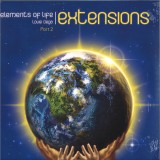
Vega Records are proud to present the re-release of EOL Extensions by Elements Of Life, the second album from Louie Vega’s critically acclaimed live orchestral project. With an allstar cast of remixers the lineup is a who’s who of worldwide talent. On the repertoire are Jazzy Jeff, Kenny Dope, Dj Spinna, Joe Claussell, House of Rumba, & Dj Gregory, along with EOL Alumni lead vocalists Josh Milan, Anané & Raul Midon. The Vinyl release is in two parts, two double packs, get it on your turntable, close your eyes and listen to the cosmic sounds of EOL. The new tracks “Messin’ About”, “Our People”, and the unreleased mix of “Love Is On The Way” are ones not to be missed.
- A1: I Will Be Your Only One (Monika Werkstatt Version)
- A2: Paradise (Monika Werkstatt Version)
- A3: Radiator (Monika Werkstatt Version)
- A4: Komm Darling Lass Uns Tanzen Gehen (Monika Werkstatt Version)
- A5: You You (Monika Werkstatt Version)
- A6: Schreiender Tag (Monika Werkstatt Version)
- B1: Geld (Monika Werkstatt Version)
- B2: Mother (Monika Werkstatt Version)
- B3: White Sky White Sea (Monika Werkstatt Version)
- B4: Herzschlag (Monika Werkstatt Version)
- B5: Zukunft (Monika Werkstatt Version)
- B6: Nite Time (Monika Werkstatt Version)
M_Sessions - Reworks is offering a contemporary version of Mania D., Malaria and Matador’s music for the 40th anniversary. Bringing the past into the now and into the future.
Monika Werkstatt seemed the perfect choice for new interpretations. Founded in 2015, comprising female electronic musicians and producers from the entourage of Monika Enterprise and Moabit Musik. The loose collective played dozens of improvised concerts around Europe and released a studio album and live recordings in everchanging artist constellations. The M_Sessions involved Pilocka Krach, Beate Bartel, Midori Hirano, Mommo G, Lucrecia Dalt, Antye Greie-Ripatti, Natalie Beridze, Annika Henderson and myself. Here the form of interpretation is focussing on keeping the freedom of their improvised work and adapting it to the collective appropriation of songs. I cannot imagine a better reinterpretation of the material with its real life ups and downs and with its enthusiasm. (G.Gut)
"The three, reunited: Malaria, Matador and Mania D, unter einem Dach, but gutted, replaced with electronic hearts, new beats, new beasts, the time has changed, yet the politics, the problems, the heartache remains the same. 2021 sees the anniversary of the 3 M’s and therewith the production of an album of songs, covering a selection of the bands’ finest output, this time assembled by a new set of feminist misfits; producers, fangirls, instrumentalists, under the strict guidance of original members Gudrun Gut and Beate Bartel. M-Sessions features: AGF, Lucrecia Dalt, Sonae, Midori Hirano, Islaja, Natalie Beridze, Pilocka Krach, Annika Henderson (Anika), Lupe, Gudrun Gut and Beate Bartel. Beginning in West Berlin, in 1979, with the inception of Mania D, spawning Malaria! and later Matador; in a time when music was essential to movement, to escape, to space, to the scene and to the rebellion of the people; three bands stood for trial and error, trial and terror, anti- conformity, and anti-consumerism, for girl power and sticking it to the man, and for just doing whatever the hell they wanted. The three, their existence slightly staggered, with different members, different grudges, different heartbreaks, different instrumental expressions, were joined by a string of barbed wire, piecing pigeon hearts, within the playground that was the desolate ex-capital, now again capital, Berlin; a place where artists and freaks could run free amongst the wrinklies and army dodgers; no microscopes, no rules, no property developers." (ANNIKA HENDERSON)
WRWTFWW Records is happy to further its collaboration with Japanese electronic/ambient group Interior by releasing their never-heard-before soundtrack for environmental artist NILS-UDO’s 1987 Laserdisc Sculpture of Time (Apocalypse). The intriguing sound design/kankyo ongaku/new age album is available as a limited edition LP housed in a heavyweight 350gsm sleeve and comes with a obi strip. It is also available in digital format.
In 1987, Intermission published a Japan-only Laserdisc showcasing one hour of works created by renowned German environmental artist NILS-UDO. To accompany the visuals, they commissioned electronic music group Interior, fresh off their Haroumi Hosono-produced self-titled debut (also available on WRWTFWW Records) and their Windham Hill Records-released sophomore album Design. For the first time ever, the soundtrack is now available in full HD glory, demonstrating Daisuke Hinata, Eiki Nonaka, Mitsuru Sawamura, and Tsukasa Betto’s precise, subtle, and spellbinding approach to ambient sound design.
Calming nature sounds, ritualistic synths, meditative atmospheres, and eruptive forays into darker territories mesh superbly in a 4-part soundscape that flirts with oeuvres such Midori Takada’s Through The Looking Glass and Hiroshi Yoshimura’s Green, making Sculpture of Time one of one of the best kept secrets of kankyo ongaku – a must have for mystery hunters and levitating music lovers.
Sculpture of Time (Apocalypse) follows WRWTWW’s reissue of Interior’s debut album and precedes the upcoming release of Tarzanland, band member Daisuke Hinata’s pitch perfect solo from 1989.
returning, dream’ is the second album from Paradise Cinema – the‘Fourth World’ inspired project led by multi-instrumentalist Jack Wyllie (Portico Quartet/Szun Waves). While Wyllie’s other projects move between tightknit electronica, widescreen minimalism and improvised ambient sounds, ‘returning, dream’ contains nods to Jon Hassell, Terry Riley, Don Cherry and Midori Takada as well as more contemporary electronic, ambient and non-western music and even draws inspiration from physics and science fiction.
The first, eponymous, Paradise Cinema record, released in 2020, was recorded in Dakar (Wyllie lived in Senegal for a while in the late 2010s) and featured the dense rhythms of Mbalax music combining with Wyllie’s textural saxophone and synth playing, but here he takes a step into the unknown:
The music is no longer built primarily around the rumbling
propulsiveness of Mbalax, but takes its inspiration from the Many-Worlds Interpretation of quantum mechanics, which suggests that there are many different worlds that branch off from our own. Wyllie explains: “It is an imagining of what music could be like in a different time and space, ancient and futuristic from everywhere and nowhere at once. I was listening to a lot of physics podcasts when I created this record. I loved the many-worlds interpretation of quantum mechanics; about the multiple paths we are taking each time a quantum decision is taken. The different worlds then splitting off like branches on a tree. I could imagine different histories and worlds and multiple versions of myself, others and even other societies existing. In this album I’ve dug into these ideas andattempted to make music that would come from those different spaces, trying to poke my finger through to the other selves and stories. Effectively a form of composed science fiction, the music is an idea of what might be occurring or have occurred on a branch of the tree in a different world. But I like to think the tracks might actually have been composed somewhere or sometime.”
Created in London by Jack Wyllie with additional recordings from Dakar and Sydney, ‘returning, dream’ blends sounds that do not typically live together. It features Khadim Mbaye (sabar drums) and Tons Sambe (tama drums) who provide the dense Sengalese rhythms, plus Szun Waves colleague Laurence Pike, also on drums.
returning, dream’ is the second album from Paradise Cinema – the‘Fourth World’ inspired project led by multi-instrumentalist Jack Wyllie (Portico Quartet/Szun Waves). While Wyllie’s other projects move between tightknit electronica, widescreen minimalism and improvised ambient sounds, ‘returning, dream’ contains nods to Jon Hassell, Terry Riley, Don Cherry and Midori Takada as well as more contemporary electronic, ambient and non-western music and even draws inspiration from physics and science fiction.
The first, eponymous, Paradise Cinema record, released in 2020, was recorded in Dakar (Wyllie lived in Senegal for a while in the late 2010s) and featured the dense rhythms of Mbalax music combining with Wyllie’s textural saxophone and synth playing, but here he takes a step into the unknown:
The music is no longer built primarily around the rumbling
propulsiveness of Mbalax, but takes its inspiration from the Many-Worlds Interpretation of quantum mechanics, which suggests that there are many different worlds that branch off from our own. Wyllie explains: “It is an imagining of what music could be like in a different time and space, ancient and futuristic from everywhere and nowhere at once. I was listening to a lot of physics podcasts when I created this record. I loved the many-worlds interpretation of quantum mechanics; about the multiple paths we are taking each time a quantum decision is taken. The different worlds then splitting off like branches on a tree. I could imagine different histories and worlds and multiple versions of myself, others and even other societies existing. In this album I’ve dug into these ideas andattempted to make music that would come from those different spaces, trying to poke my finger through to the other selves and stories. Effectively a form of composed science fiction, the music is an idea of what might be occurring or have occurred on a branch of the tree in a different world. But I like to think the tracks might actually have been composed somewhere or sometime.”
Created in London by Jack Wyllie with additional recordings from Dakar and Sydney, ‘returning, dream’ blends sounds that do not typically live together. It features Khadim Mbaye (sabar drums) and Tons Sambe (tama drums) who provide the dense Sengalese rhythms, plus Szun Waves colleague Laurence Pike, also on drums.
2024 Repress
Dauw welcomes Berlin based musician Midori Hirano to the label with her new album Soniscope. Award winning composer Robot Koch provided a rework of the track Patterns under his recently announced new ambient project Foam and Sand.
With releases on acclaimed labels such as Longform Editions, Sonic Pieces and Alien Transistor, Midori Hirano is no stranger within the field of electro-acoustic piano music. While she is more known for her studio-work, it is often forgotten that she also has a long tradition of writing for films and theatre productions. This forms an important part in her work and a constant inspiration for her autonomous work. Soniscope is no exception in that regard. While working on the film Mizuko (Kira Dane, Katelyn Rebelo, 2019), a still of many little Jizo statutes got her attention and came to be the first steps of her new album.
“I was fascinated by the combination of the image and sound which well emphasized the stillness with a slight of emotion.” (Midori Hirano)
With the Jizo statutes on her mind, Midori Hirano wanted to make an album and started envisioning several personal narratives. Soniscope can be considered as the soundtrack of her own personal stories related to these statues of which Mizuko Jizo was the starting point. With Soniscope, Hirano continues in the same vein as her previous albums in which piano and electronic arrangements hold a central place. However, on this record she specifically explored new possibilities in terms of techniques and instruments.
Midori Hirano is a Japanese musician, composer and producer, born in Kyoto and living in Berlin since 2008. She started learning the piano as a child, and this triggered what was to later see her study classical piano at university. Therefore her productions are based on the use of acoustic instruments such as the piano, strings or guitars, but yet experimental and an eclectic mixture of modern digital sounds with subtle electronic processing and field recordings.
Her first two albums were released on noble records, and her second, “klo:yuri”(2008), saw her further develop of her sound, garnering critical acclaim from various media including TIME magazine , BBC radio and FACT Magazine. Over the following years Midori has performed in venues and festivals as diverse as Club Transmediale, Heroines of Sound Festival, Erased Tapes Sound Gallery, L.E.V. Festival, Boiler Room Berlin, and Wonderfruit Festival.
The nine solo albums and numerous single track releases to date include the works of her other moniker MimiCof, in which she explores the realm of experimental music and detailed rhythmic patterns, combined with an idea of drawing melodic shapes and harmonies. Her recent works have been released by labels such as Sonic Pieces, Daisart, Alien Transistor, raster-media, 7k! Music and Longform Editions.
Besides producing her own works, she composes music for films, video installations and dance performances. The films that have commissioned works by Midori have been screened at Berlin International Film Festival, SXSW Film Festival, International Documentary Film Festival Amsterdam and among others.
»Other Rooms« is an uncompromisingly adventurous and engaging listen. It manages the rare feat of remaining concise while brimming with detail and inventiveness.
Ten years into a multifaceted career in experimental sound, Belgium’s Adriaan de Roover presents »Other Rooms«, his second solo album and a product of the thoroughly unexpected things we all experience, from societal freeze to the dissolution of individual relationships. Originally recorded for a performance with Fennesz at Église Notre-Dame de Laeken in 2020, »Other Rooms« was reworked into its final form in 2023. De Roover notes an inspiration from »looking at different versions of a life, sitting in a space between them; a constant focus on those alternate things... What if, what if.« It is introspective music informed by a desire for connection to oneself, to others, and to the boundless scale of everything else.
»Other Rooms« is Adriaan’s second outing through the acclaimed Dauw imprint, which is also the home to Midori Hirano, Dylan Henner, H.Takahashi, Lieven Martens and Taylor Deupree. Stepping back from rhythm-oriented motifs, this latest work is a concise but varied collection of weightless melodies and expertly sculpted, computerized soundscapes.
Abstrakce recover this lost gem recorded in 1999 and published by Keliehor himself in a very short-run CD named "Create Music", which had almost no diffusion.
An outstanding collection of exotic tracks with a wide range of influences from primitive cultures all over the world. An unexplored region where the Minimalism concepts developed by Steve Reich, La Monte Young, or Terry Riley and renewed by Midori Takada meet Jon Hassell's 4th world ideas.
You will find here repetitive patterns that evolve and transform the sound space, unlikely instruments gathered together in a perfectly harmonic way, making flow an unusual melodic sense when the uncommon combinations of these instruments interact with one another. Simple instruments, yet exotic, primitive sound makers with complex personalities, timeless sound treasures unchanging a hundred years. Crude or sophisticated, most of the instruments, compel us to listen to them. A more flexible and wider range of tonality is discovered by limiting the number of instruments that play together and choosing those whose tones and harmonics resonate together.
The record results from a didactic project for nursery and primary school environments while searching for ideas to guide children in following the details of music. The music architectures are often transparent, even repetitive, but the culminative effect soon becomes more than that. These pieces are aural landscapes for dreams and adventures, doorways to imaginative worlds.
The Artists:
Jon Keliehor and Signy Jakobsdottir performed together in Seattle, Venezuela, and Scotland. During their stay in Seattle, both had studied gamelan music with Gamelan Pacifica under the direction of Jarrad Powell. After returning to Scotland, they continued to study and perform with Gamelan Naga Mas, in Glasgow, in projects directed by dhalang Joko Susilo, dancer/director Nyoman Wenten, and Professor Matthew Issac Cohen.
In Scotland, they created adult and children's workshops under the banner of Luminous Music. Preceding the formation of Luminous Music, Keliehor had worked as percussionist and composer with contemporary dance companies, both in London and Seattle. Following on studies in percussion music at Dartington College of the Arts, Signy moved to Seattle to begin work with Jon. The partnership that ensued brought them to Caracas, Costa Rica, Brazil and Spain to create music for the dance company DanzaHoy. In 1996, they returned to Glasgow, and continued to work together at the newly created Luminous Music Studios. Signy's involvement with musicians/groups has continued beyond this to include genres in Scottish/Celtic traditions, in Jazz, as well as music innovations of her own design.