On a "Balearic-Jazz trip", the phenomenally hyped Thought Leadership returns with another X ideas: the deck this time chooses the Ace of Swords. In the acclaim garnered by III of Pentacles, there were many whispers of “Balearic” from those in the know. As soon as you drop the needle on XI you will be basking in turbo Balearica.
Originally out on cassette only, we present the first ever vinyl issue. It's a hideously limited pressing of 300 for the world, so don't sleep on this.
The sonic palate has been augmented by the addition of synth and bass; there are more guitar layers, more pedals and more organic drums this time – a much fuller production. Still DIY, and still recorded straight to multitrack, just ever so slightly grander in scale; think a rough-hewn, long-lost Claremont 56 cut and you’ll have some idea of how XI opens this future classic LP.
The touchstones so key to the vision of Pentacles (Cocteau Twins, Dif Juz, Durutti Column) are all still present and correct; XII could be a piece from Extractions, XIII is pure Garlands-era Guthrie and, now with the shuffling jazz drums, XV makes TL even more LC – but more disparate influences are found this time out too. ECM guitar legends John Abercrombie and Pat Metheny in the more considered melodic phrasing and harmonic structure of the ideas and a nod to the cosmic Balearic spirit in the overall vibe, means more is offered to the listener across Swords.
XVI and XVII are the biggest indicators to Thought Leaderships’ new found love of The Real Book and their grasp of jazz chords. The former sounds like if Mike Hedges had produced on a heavily sedated ECM date in the early 80s, whilst the latter is Bright Size Life condensed into a most post-punk shard of Strat conversation. The syrupy Phase 90 on the lead parts lends much weight to the guitar melodies, a beautiful tonal counterpoint to the Vox-ish chimes of the plangent chords we’ve all come to love.
The flip again treats us to three extended, improvised jams. XVIII owes as much to Canterbury as it does to Krautrock, another modal voyage through the stars. Light the incense and drift away, guided by delayed cymbals and weaving ribbons of guitar. XIX has almost a New-Wave/Sophisti-Pop energy to it in tone, if not in structure and execution. Something almost Tears for Fears-esque in the chiming chorus guitars. An interesting outlier that has already received a lot of love from those that have heard it. XX is the starkest idea, and the only piece this time with no drums. What we do get, however, is a free exploration over a two chord-vamp. It’s Harvest Time meets Planet Caravan and a fitting end to this Balearic jazz trip.
Be With is honoured to present the first ever vinyl release of Ace Of Swords, carefully remastered by Be With's engineer Simon Francis to ensure it sounds better than ever after its initial tape release. Cicely Balston's expert skills have made sure nothing is lost in the cut at Abbey Road Studios whilst the records have been pressed to the highest possible standard at Record Industry, in Holland. The original tape cover artwork, so crucial to Thought Leadership's striking visual aesthetic, has been rejigged for vinyl issue here at Be With.
The last one flew. You have been warned.
quête:mike vamp
- 1
After a stunning set of releases for labels including Acid Artists In Action(Triple A), Stay Up Forever, Hydraulix and Interruption in the past few months, ACERBIC goes for broke delivering a massive triple vinyl limited edition LP on the SUF/Hydraulix collaboration label. Every track is literally a slamming floor- filler beginning with the anthem 'Acid Way Of Life', and moving through some solid techno and acid techno masterpieces that re-define the sound of both these genres. All killer, no filler, this is an LP that is crammed with peak time tracks that won't disappoint. Already road tested by label owners D.A.V.E. The Drummer and Chris Liberator we know that this LP is going to go down as a classic.
- A1: Tom Hooker - Looking For Love
- A2: Hypnosis - Droid
- A3: Samoa Park - Tubular Bells And Foreign Affair
- A4: Kinky Go - Gimme The Love
- B1: Ken Laszlo - Don‘t Cry
- B2: Doctor`s Cat - Watch Out
- B3: Gazebo - Lunatic
- B4: Italian Boys - Forever Lovers
- C1: Baby‘s Gang - Happy Song
- C2: Miko Mission - The World Is You
- C3: Mike Cannon - Voices In The Dark
- C4: Laserdance - Power Run
- D1: Den Harrow - Catch The Fox
- D2: Koto - Visitors
- D3: Raggio Di Luna (Moon Ray) - Comanchero
- D4: Cyber People - Doctor Faustu`s
- E1: Body Power - Nothing
- E2: Valerie Dore - It‘s So Easy
- E3: Radiorama - Vampires
- E4: Biba - Top Model
- F1: Savage - I`m Losing You
- F2: Jimmy & Susy - Come Back
- F3: Public Passion - Flash In The Night
- F4: Colors - Lonely Night
- G1: Brando - Rainy Day
- G2: J D. Jaber - Don‘t Stop Lovin‘
- G3: G J. Lunghi - Acapulco Nights
- G4: Brian Ice - Tokyo
- H1: Paul Paul - Good Times
- H2: The Voyagers - Distant Planet
- H3: R Bais - Dial My Number
- H4: Max Coveri - Bye Bye Baby
vol 1[46,01 €]
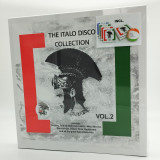
Enter the glittering world of Italo Disco with the exclusive 4LP
box set „The Italo Disco Collection Vol. 2“.
This limited edition box features four vinyl records that capture
the essence of the Italo Disco era. Discover and enjoy musical
treasures from Ken Laszlo, Miko Mission, Baby‘s Gang, and
Laserdance. „The Italo Disco Collection Vol. 2“ is not only a
musical journey through time, but also a collector‘s item for
all vinyl lovers and fans of Italo Disco. This carefully compiled
collection has been designed with great care and attention to
detail and includes a colorful beach ball as a summertime fun
maker. This box brings the best of the 80s straight into your
living room and guarantees unforgettable musical moments.
Tauchen Sie ein in die glitzernde Welt des Italo Disco mit der
exklusiven 4LP Box „The Italo Disco Collection Vol. 2“.
Diese limitierte Box enthält vier Vinyl-Schallplatten, die
die Essenz der Italo Disco Ära einfangen. Musikalische
Schätze von Ken Laszlo, Miko Mission, Baby’s Gang, und
Laserdance werden hier geborgen. „The Italo Disco Collection
Vol. 2“ ist nicht nur eine musikalische Zeitreise, sondern
auch ein Sammlerstück für alle Vinyl-Liebhaber und Fans des
Italo Disco. Diese sorgfältig zusammengestellte Kollektion,
wurde mit großer Sorgfalt und Liebe zum Detail gestaltet und
enthält als sommerlichen Spaßbereiter einen farbenfrohen
Wasserball. Diese Box bringt das Beste der 80er Jahre direkt in
Ihr Wohnzimmer und garantiert unvergessliche musikalische
Momente.
- A1: Radiorama - Vampires (Swedish Remix)
- A2: Valerie Dore - King Arthur (Extended Version)
- A3: Mozzart - Jasmin China Girl
- A4: Grant Miller - Red For Love (Remix)
- B1: Hypnosis - Droid (Extended Swedish Remix)
- B2: Joe Yellow - I'm Your Lover
- B3: Charlie G - Llama L'amour (Extended Version)
- B4: Lee Marrow - Mr Fantasy (Vocal)
- C1: Ken Laszlo - Glasses Man (Vocal)
- C2: Duke Lake - Satisfaction, Love & Passion (Vocal)
- C3: Jimmy & Suzy - Come Back (Versione Disco)
- C4: Flexy Summer - Indio
- D1: Mike Cannon - Stay (Vocal)
- D2: Mirage - Change Your Life (Vocal)
- D3: Alex Chroma Band - A New Day
- D4: Mark - Dreamland (Vocal)
- E1: Brian Ice - Night Girl (Swedish Remix)
- E2: Amy & Alba - Look Into My Eyes (Vocal)
- E3: Mex - Calling You (Vocal)
- E4: Micaela - 4, 3, 2, 1 (Number Version)
- F1: Robert Camero - Lady Surprise (Vocal)
- F2: Visions - Everybody (Remix First Version)
- F3: Mauro Micheloni & Fm Band - Looking For Love (Vocal)
- F4: Karl Olivas - It's Alright
Debut album of heavy Colombian salsa by the obscure and short-lived El Clan Antillano. Founded in 1975 by singer Jacky Carazo and radio personality / composer Mike Char and backed by a studio orchestra comprised mostly of Fruko Y Sus Tesos band members. The record has been remastered from the original tapes, with an additional three bonus cuts taken from two rare 45 singles, including the sought after track ‘Alma’. First time reissue. 180g Vinyl.
El Clan Antillano was an obscure, short-lived salsa group started in 1975 by singer Jacky “El Caballo” Carazo, originally from Cartagena, and radio host / song composer Mike Char, from Barranquilla. The band was active only until 1977, with a mere two albums to its name. Carazo and Char, “los amigos costeños” (friends from the Caribbean coastal area) created El Clan Antillano as a fresh start after the previous group Carazo had been the lead singer for, El
Afrocombo, had become inactive.
Char primary passion was music, especially songwriting. One of his skills in this area was adapting foreign songs, often in a different language, rhythm, arrangement or genre, and refashioning the tune in an uptempo Caribbean dance mode as a salsa or cumbia. This formula, as well as his own original compositions, soon brought him success not only with costeño friends like Carazo and Vicentini, but also with Medellín’s Fruko, allowing him to make a name for himself with record labels in that city. It was at this juncture, in 1975, that El Clan Antillano was born. This is their first album and was recorded with local studio musicians. It’s been said that most on the first album were from Fruko Y Sus Tesos (the voice of Joe Arroyo can be heard on coro) as well as others involved with various groups like La Protesta (de Colombia) and Juan Piña’s La Revelación.
The album kicks off with ‘Donde ‘sta? Donde ‘sta?’, a medley of costeño lyrical phrases quoting various popular porros. Gradually changing the vibe, this is followed by Enrique Aguilar’s ‘El baile del
ratón’, a humorous cumbia that changes into a salsa halfway through. As if El Clan Antillano were not entirely confident about featuring purely salsa from the start, the same cumbia/salsa hybrid formula is used in the third piece, a faithfully rendered version of Eddie Palmieri’s ‘Mi cumbia’.
‘Estás equivocada’ rocks hard like the best Venezuelan salsa of the time. ‘Esta mañana’ is a cover version of an obscure bolero from Curaçao’s Erwin Castaneer with Super Combo Castaneer. ‘En la oscuridad’ is an interesting mashup of Puerto Rican bomba and New York style pachanga. ‘El despertar’ is a sunny sounding pop song reinvented as a Nelson y sus Estrellas style salsa/cumbia hybrid with a fantastic ‘montuno’ section.
Up next is a hard salsa jam in the ‘pregón’ (street vendor’s cry) genre, written by Fruko Y Sus Tesos percussionist Álvaro Velásquez (composer of ‘El preso’). The original album track list closes out with a fantastic rendition of Puerto Rican singer/composer Bobby Capó’s classic ‘El negro bembón’ that the world first leaned to love through Cortijo y Su Combo. Three bonus tracks have been added to the album as it was originally very short. Interestingly, there were four songs from two 45 singles cut by the band that were never included on either long play. While the ephemeral El Clan Antillano may not be as well known as the groups it’s related to, namely El Afrocombo and Fruko Y Sus Tesos, it certainly deserves credit as a worthy participant in the historical evolution of salsa colombiana.
- Salsa Con Charanga
- Sonaremo El Tambo
- Delirio
- La Peluca
- La Puerta Del Dolor
- A Los Muchachos De Belén
- Ensaya Chamaco
- El Tibiri Tabara
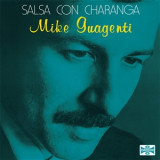
"Salsa con charanga" is really a feast for all salsa music lovers, a true jewel, which deserved much better when it originally came out in 1978. In addition to being a great salsa album, has the distinction that was released on Orfeon, a Mexican record label, due to the diligent work of the extraordinary producer Bobby Marin, and which miraculously received air play when powerhouse Fania label and few others ruled radio in the salsa music world. It comprises eight great, solid tracks; some, new interpretations from other albums in which Mike Guagenti participated with his handsome and captivating voice - a crooner with a salsero soul -, that, at times, could remind us of the late Tito Rodríguez, and even Ray Ramos. "The Mike Guagenti album," as indicated by Marin, "is a compilation of recordings by other artists. Originally a salsa album, I brought in Cuban Pupi Legarreta (violin and flute) and [Panamanian] Mauricio Smith (flute) to give it a charanga sound." With the exception of the cut 'Salsa con charanga,' which is an instrumental, the rest feature vocals by Guagenti. "Salsa con charanga" has developed a cult following, and finding a copy of the original could be quite expensive. Luckily, this officially licensed and restored edition will fill that void.
- Special
- B.a.b.e
- Fantasy
- Not Hell, Not Heaven
- Tonight (I'm Afraid)
- Fleshed Out
- Let You Down
- Cellophane
- Suffer The Fool (How High Are You?)
- Haunted
- Are We All Angels
OLIVE GREEN VINYL[22,27 €]
Produziert von Will Yip (Turnstile, Title Fight, Mannequin Pussy, etc.), der auch schon an der 2023er "Psychic Dance Routine" EP der Hardcore-Band Scowl aus Santa Cruz mitgewirkt hat, findet man auf "Are We All Angels" die giftige und antagonistische Band, die ihre Aggression durch eine expansivere Version ihrer selbst leitet. Das Album wurde von Rich Costey (Fiona Apple, My Chemical Romance, Vampire Weekend, etc.) gemischt. "Are We All Angels" ist geprägt von Entfremdung, Trauer und Kontrollverlust, und setzt sich größtenteils mit ihrem neu gefundenen Platz in der Hardcore-Szene auseinander, einer Gemeinschaft, die die Band in den letzten Jahren sowohl umarmt als auch zu einer Art Blitzableiter gemacht hat. Auf "Are We All Angels" erkunden Scowl auf Schritt und Tritt ehrgeizige neue Richtungen und verbiegen Genre-Normen. Sängerin Kat Moss macht die am unmittelbarsten erkennbare Entwicklung, indem sie einen strukturierteren und manchmal zarten Ansatz wählt. Sie spielt mit Harmonien und melodischem Feingefühl, das selbst die eingefleischtesten Scowl-Fans überraschen dürfte. Moss nennt eine breite Palette von Einflüssen außerhalb des harten Rock - alles von Billie Eilish bis Radiohead, Car Seat Headrest bis Julien Baker. "Die meisten von uns waren wirklich keine geübten Musiker, als die Band begann", gibt sie zu. "Es war in dieser Hinsicht sehr Germs-esque, wie die erste Hardcore-Band eines Babys, was großartig ist. Jetzt wissen wir vielleicht immer noch nicht, was wir tun, aber wir haben eine bessere Vorstellung davon, was wir tun wollen." Instrumental gibt die Band Einflüsse von Negative Approach, Bad Brains, Hole, Mudhoney, Garbage, Ramones, Pixies, Sonic Youth, Rocket From The Crypt und anderen an. Bassist Bailey Lupo merkt an: "Das Songwriting für die neue Platte war das bisher kollaborativste in der Geschichte von Scowl. Jeder hat so viele Ideen eingebracht, und wir konnten sie alle in Ruhe analysieren und uns Zeit nehmen. Wir haben alle so unterschiedliche Geschmäcker, Einflüsse und Persönlichkeiten, und das kann man auf diesem Album wirklich in jeder Ecke hören." Selbst durch diesen eklektischen Ansatz verlieren Scowl nichts von ihrer Schärfe und schaffen es immer noch, die Wut und Frustration zu vermitteln, die dahinter steckt. Sie sind zutiefst dem Ethos des Punk und seinem Gemeinschaftssinn verpflichtet. "Hardcore und Punk haben uns geprägt, wie wir arbeiten, was wir als Band tun wollen und wie wir uns beteiligen", sagt Greene. "Im Kern sind wir eine Punk- und Hardcore-Band, unabhängig davon, wie sich der Song verändert." Das Album wird von dem bereits veröffentlichten "Special" eröffnet, einen Song mit großer, hymnischer Energie, der die rohe Intensität von Scowl beibehält. Scowl haben sich schnell als einer der dynamischsten und fleißigsten Acts in der Rockszene etabliert und ausgiebig in den USA und international mit Bands wie Limp Bizkit, Destroy Boys, The Bronx, Militarie Gun, Show Me The Body, Zulu, Touche Amore, A Day To Remember, Speed, Sunami und vielen anderen getourt, sowie Festivalauftritte beim Coachella, Reading & Leeds, No Values, Outbreak, Primavera und Sick New World, um nur einige zu nennen, absolviert. Die Band - Malachi Greene (Gitarre), Bailey Lupo (Bass), Cole Gilbert (Schlagzeug), Mikey Bifolco (Gitarre) und Kat Moss (Gesang) - gründete sich 2019 und feierte 2021 mit ihrem Debütalbum "How Flowers Grow" ihren Durchbruch. Seitdem sind sie unaufhaltsam auf dem Vormarsch.
“Salsa con charanga” is really a feast for all salsa music lovers, a true jewel, which deserved much better when it originally came out in 1978. It comprises eight great, solid tracks; some, new interpretations from other albums in which Mike Guagenti participated with his handsome and captivating voice - a crooner with a salsero soul -, that, at times, could remind us of the late Tito Rodríguez, and even Ray Ramos.
It In addition to being a great salsa album, has the distinction that was released on Orfeon, a Mexican record label, due to the diligent work of the extraordinary producer Bobby Marin, and which miraculously received air play when powerhouse Fania label and few others ruled radio in the salsa music world. It comprises eight great, solid tracks; some, new interpretations from other albums in which Mike Guagenti participated with his handsome and captivating voice - a crooner with a salsero soul -, that, at times, could remind us of the late Tito Rodríguez, and even Ray Ramos. "The Mike Guagenti album," as indicated by Marin, "is a compilation of recordings by other artists. Originally a salsa album, I brought in Cuban Pupi Legarreta (violin and flute) and Panamanian Mauricio Smith (flute) to give it a charanga sound." With the exception of the cut ‘Salsa con charanga,’ which is an instrumental, the rest feature vocals by Guagenti. “Salsa con charanga” has developed a cult following, and finding a copy of the original could be quite expensive. Luckily, this officially licensed and restored edition will fill that void.
- On Old Broadway
- Toma Guajira
- Look To Me
- You Put A Hurt In My Heart
- Rhythm And Soul
- Mojo Shingaling
- Barbara With The Kooky Eyes
- Tell Her I Love Her
- Let Me Do My Thing
In 1969, producer and boogaloo godfather Bobby Marin conceived this undeservedly obscure funky, psychedelic Latin soul gem. Released on Ralph Lew’s short-lived Dorado label and engineered by Jon Fausty, Bobby was backed by a top-notch studio band that included Ricardo Marrero, Joey Pastrana, Bernard Purdie, Louie Ramirez, Orlando Marin and Ozzie Torrens. Includes liner notes by genre expert Pablo Yglesias telling the story behind the music. 180g vinyl. Generally, when discussing the first wave of Latin soul and boogaloo, it’s the bands and their leaders, the singers and the songs that get all the recognition. But what of the producers, composers, and arrangers? One of the top old-school New York Latin music producers, Bobby Marin, was behind the scenes for some of the best independently produced boogaloo and salsa of the ‘60s and ‘70s. “Saboreando - Pot Full Of Soul”, is the album Bobby created in 1969 for his friend Ralph Lew’s newly launched Dorado label. Fifty-five years later, Bobby confirms that he commemorated his humble Barrio beginnings playing stickball on West 107th Street and singing doo-wop while some kids played percussion on junkyard drums, by christening the band The 107th Street Stickball Team. The 107th Street Stickball Team was basically the same pool of friends as Ricardo Marrero’s group (Bernard Purdie on drums, Mike Viñas on guitar, Ricardo Marrero on vibes), with the addition of Louie Ramirez playing piano and organ, Orlando Marin, Joey Pastrana and Ozzie Torrens on percussion, Mike Viñas handling the electric bass, and Butch Johnson and Danny Agosto on lead vocals for a few numbers. At that time, soul music was seen by the present Latin generation, indeed the youth market in general, as something that was different, that broke with tradition. The record, with Bobby singing several of the best tunes including ‘Mojo Shingaling’ and ‘Rhythm and Soul’, highlights an affinity or connection between African American and Cuban music in a convincing blend that was emblematic of the scene and allowed the young generation to feel they had a fresh kind of music all their own. No wonder the LP notes boast The 107th Stickball Team is “a bunch of groovy youngsters.” We are now happy to make this undeservedly obscure funky, psychedelic Latin soul gem available again!
- Los Vampiranos - El Vampiro
- Johnny Eager - The Howl
- Dick Dewayne Combo - Witchcraft
- Tommy Falcone & The Centuries - Like Weird
- The Madmen - Haunted
- The Big Guys - Zombie
- Baron Daemon & The Vampires - Ghost Guitars
- The Phantom - The Last Ride
- Moe Koffman - Cool Ghoul
- Kenny & The Fiends - House On Haunted Hill
- The Plaids - Creepin
- Dave Gray & The Graytones - Weird One
- Jerry Bryan - Vampire Daddy
- Mysterions - Transylvania
- The Playboys - Whatizit
- The Tomkos - The Spook
- The Phantoms Band - Phantom Freight
- The Bluenotes - Rigor Mortis
Greasy Mike präsentiert 18 Scheiben Rott n' Roll-Platten aus Weirdsville, USA. Rockabilly, Garage, Psych, Surf, Horror, Swamp, Weirdo, Exotica - von Vampiren, Werwölfen, Ghostridern, Hexern und Monstern. "Hier ist niemand außer uns Monstern!", rief ich verzweifelt. "Monster? Hier sind keine Monster!", kam die Antwort aus der Dunkelheit, "Das sind meine Kinder! Meine Babys!!" Ich drehte meinen Kopf zurück und schrie die schattenhafte Gestalt an, die ich zurückgelassen hatte: "Das ist Hexerei, du verrückter Vollidiot! Du durchgeknallter, schizoider Abschaum!" Und damit verschwand ich durch die Leere und in die Nacht.
The collection spans the decade-plus career of this remarkable band, whose goth-tinged, theatrical punk-pop sound earned them legions of devoted fans. It features their most beloved songs, including the hits 'I'm Not Okay (I Promise)', 'Helena' and 'The Ghost Of You' from 2004's 'Three Cheers For Sweet Revenge'; 'Welcome To The Black Parade', 'Famous Last Words' and 'Teenagers' from 2006's 'The Black Parade'; and 'Na Na Na (Na Na Na Na Na Na Na Na Na)' and 'Sing' from 2010's 'Danger Days: The True Lives of the Fabulous Killjoys', plus many others.
It also includes a previously unreleased song, 'Fake Your Death', one of the last songs the band worked on in the studio together, three songs from the infamous 'Attic Demos', as well as a long-form DVD with two hours of never-before-seen outtakes from MCR's official music videos.
'The title is fitting, because as sad as it was to say goodbye to the band, we look at this collection as a celebration of our best songs, and hope the memory of them continues to bring joy to you all as they have for us,' said band members Gerard Way, Mikey Way, Frank Iero and Ray Toro in a statement. 'We hope you take the journey with us into MCR's past, and enjoy the small taste of what might have been.'
Vinyl:
1. Fake Your Death
2. Honey, This Mirror Isn't Big Enough For The Two Of Us
3. Vampires Will Never Hurt You
4. Helena
5. You Know What They Do To Guys Like Us In Prison
6. I'm Not Okay (I Promise)
7. The Ghost Of You
8. Welcome To The Black Parade
9. Cancer
10. Mama
11. Teenagers
12. Famous Last Words
13. Na Na Na (Na Na Na Na Na Na Na Na Na)
14. SING
15. Planetary (GO!)
16. The Kids From Yesterday
17. Skylines And Turnstiles (Demo)
18. Knives/Sorrow (Demo)
19. Cubicles (Demo)
DVD:
20. I'm Not OK (I Promise) Version 1
21. I'm Not OK (I Promise) Version 2
22. Helena
23. The Ghost Of You
24. Welcome To The Black Parade
25. Famous Last Words
26. I Don't Love You
27. Teenagers
28, Blood (previously unreleased)
29. Na Na Na (Na Na Na Na Na Na Na Na Na) and Art
Debut standalone VHF album by the Elkhorn duo of Drew Gardner and Jesse Sheppard, a tight set of six studio recordings in a variety of moods and featuring a lot of new sound textures. Elkhorn’s prolific stream of releases since 2016 has highlighted their mastery of sprawling long-form, acoustic-driven hypno-jams, with an emphasis on live performance (including on their collaboration with Pelt’s Mike Gangloff on the Shackamaxon Concert album). The Red Valley is a more layered and composed-sounding set, with the duo overdubbing extensively on top of their own dual guitars. Leading off the LP, “Crystal Hummingbird” features one of their signature minor-modal vamps, with layers of fuzz bass, zither, and frame drum providing weight and psychedelic density. “Gray Salt Trail” continues the vibe, with thick fuzz vibraphone supplementing the cinematic palate, leading into the spare side-closer “Black Wind Of Kayenta,” where Sheppard plays electric 12-string and Gardner solos on acoustic guitar. Side two starts with “Road to Chaco Canyon,” a brooding duet that builds momentum with Gardner’s insistent frame drum cadence, dropping down into the quiet string pool of “Inside Spider Rock” (featuring Fern Knight’s Jesse Sparhawk on gloriously swirling lever harp) and the graceful finale “Jackrabbit Hops.”
- Benzedrine
- Pink Lightning
- Beautiful Boy
- Knees
- Rollin', Rollin', Rollin
- Jane Greer With A Gun
- Monkey
- Git Paid
- In Some Dreams
- Drinkin' 'Bout You
- None Of Us Became Anything
- Bacall
- January
- Sit N Squirm
- Howlin' Heart
- Ketamine
- With Half Your Heart
- True Love Waits
- Lil Dead Eye-D
- Gene
- Love
- Inchyra Blue
- The Beach
- Pineapple
- Sandra's Stuff
- Postcard
- Further 2 Fall
- Disappeared Planets
- Estonia
- Sister Wives
- Everytime
"Richard Edwards is in the pocket. He’s been there for several albums now: 2017’s Lemon Cotton Candy Sunset, 2020’s The Soft Ache & the Moon, and 2022’s Ghost Electricity/Vampire Draw. Just as the Margot records defined his twenties, this “Beach Bum” era, as he calls it, may well define his thirties. That era is expanded in Two Sad Little Islands Drift Together, Two Lonely Little Monkeys Find A Tree: Rare and Unreleased 2015-2023.
Beginning with Lemon Cotton Candy Sunset, Richard has been steering his ongoing body of work toward capturing a feeling of being at sea. Life can find us at sea in any number of ways–in a marriage or partnership, or in longing for one; in parenting, and its ceaseless wonders and worries; in bodies and minds that confound understanding (whether just our own, or also that of professionals); in our rotting world, which we’ve fucked up beyond all repair.
“What does that sound like, though?” you may ask. Like Mike Bloom’s cascading fingerpicking in “Lil Dead Eye-d (b.),” or the tranquilizing combination of Dave Palmer’s piano and Perla Batalla’s multi-tracked vocals on “Love (b.)” Like the L.A. based Section Quartet on “True Love Waits,” or the triumphantly stoned Velvet Ocean jam-session that is “Jane Greer With A Gun.” Like Richard’s use of melody and imagery on “Pink Lightning (b.)” and lead single “Benzedrine,” where he is masterfully accompanied by Erin Rae (on the former) and Maria Taylor (on the latter).
Unlike Richard’s past archival releases which have often featured home demo recordings, everything on Two Sad Little Islands has been produced in-studio. With this 3-LP vinyl set, Richard presents just over two hours of material that once again makes his case as one of the “most underrated songwriters of our time” (LA Review of Books)."
- A1: Captain Kronos Vampire Hunter (Laurie Johnson)
- A2: Twins Of Evil (Harry Robinson)
- A3: The Kiss Of The Vampire (James Bernard)
- A4: The Mummy (Franz Reizenstein)
- A4: Dracula (James Bernard)
- A6: Quatermass And The Pit (Tristram Cary)
- A7: The Legend Of The 7 Golden Vampires (James Bernard)
- A8: The Lost Continent (Roy Phillips)
- A9: Dracula Ad 1972 (Mike Vickers)
- B1: The Devil Rides Out (James Bernard)
- B2: Countess Dracula (Harry Robinson)
- B3: The Gorgon (James Bernard)
- B4: Hands Of The Ripper (Christopher Gunning)
- B5: Dr Jekyll & Sister Hyde (David Whitaker)
- B6: She (James Bernard)
- B7: Taste The Blood Of Dracula (James Bernard)
- B8: Frankenstein And The Monster From Hell (James Bernard)
This album brings some of Hammer’s greatest music to vinyl for the first time. It’s an evocative and diverse collection of themes that are just as memorable as the remarkable films they accompanied. The release showcases a selection of classic themes from the film company's varied soundtrack catalogue from composers that range from the great James Bernard to David Whitaker and spans Hammer's golden years between 1958 and 1974.
A wild and funky collection of Afro grooves that was ahead of its time in 1977 and has become a collector’s item in recent years, especially due to the growing international interest in Colombian picó sound system culture. Fruko and his studio bands Wganda Kenya and Kammpala Grupo treat us to a diverse set of African and Caribbean styles, laced with crazy synths, psychedelic guitar and infectious pan-African polyrhythms. By the time Discos Fuentes released the album “Wganda Kenya Kammpala Grupo” in 1977, Wganda Kenya’s discography was expanding with many 45 singles and appearances in various artists collections. The group’s 1975 debut record “África 5.000” was a full length LP in the U.S. and a various artists compilation in Colombia, which was followed by the self-titled long player the following year. However, Kammpala Grupo, which shared the album’s title and was credited to three songs on the record, had never appeared before, yet was basically the same studio group as Wganda Kenya. Most likely the creation of this short-lived studio band was just a ploy by the label to make it seem like there were more groups playing the type of exotic afro tracks favored by the picotero DJs of Colombia’s Caribbean coast (especially in Barranquilla and Cartagena). 1974 Discos Fuentes’ management had sent musician, band leader and producer Julio Ernesto “Fruko” Estrada to the coast on an A&R mission to discover what people were dancing to in the verbenas (communal open air neighborhood parties) run by the owners of picó sound systems (decorated mobile DJ rigs). Always game for an adventure, Fruko was tasked with bringing some popular examples of these esoteric, hard-to-find African, French and Dutch Antillean records back to Medellín to serve as inspiration (or to outright copy) so that the label could enter into the growing regional market and spread its popularity to the interior of Colombia and other Latin American countries via its own studio creation, Wganda Kenya. Fuentes was always returning to exploit the rich African-rooted culture of the coast as it had with the cumbia and other regional genres before, so in a way it was not surprising that they were attuned to this particular niche phenomenon from a marginalized sector of the population. The most popular genres with the champeta dancers in the 70’s and 80’s were styles like Congolese rumba, highlife, afrobeat, juju, mbaqanga and soukous as well as the music of Haiti, Guadeloupe, Martinique, Curaçao and Dominica, all of which were fiercely guarded by the DJs who had managed to acquire them often through extreme means of travel, barter and intense digging. The record kicks off with the joyful ‘El Gallo Africano’ which features exquisite interplay between Sepúlveda’s highlife style guitar and an authentic-sounding African style saxophone, perhaps played by Carlos Piña. In reality it was ‘Go Call Police Chief’ by prolific Nigerian highlife guitarist Chief Oliver Sunday Akanite, aka Oliver De Coque. Next up is Kammpala Grupo’s ‘La Yuca Rayá’ (‘Grated Yuca’), written by Isaac Villanueva in a style he termed son haitiano which sounds much more like Zimbabwe Shona mbira music. Wganda Kenya’s ‘Caimito’ (star apple, a type of tropical fruit), on the other hand, is actually a cover of a relatively well-known Haitian merengue song. Kammpala Grupo then takes us from the French Antilles to the multi-cultural discotheques of Paris, where a cover version of Black Soul’s Afro-boogie anthem ‘Black Soul Music’ is retooled and renamed ‘King Kong’, perhaps in a nod to the 1976 remake of the monster flick of the same name. Side two introduces us to the infectious merengue rebita of Angola via ‘La riphyta’ with “Paparí”, aka Mariano Sepúlveda, doing the vocals and faithfully replicating the Angolan guitar style. ‘La Trompeta Loca’ (‘The Crazy Trumpet’), probably the nuttiest track on the album, is an ingenious cover of ‘Ye Gbawa Oo Baba (Tribute To Nigeria)’ by Joe Mensah of Ghana. As with all their covers of African tunes, this rendition tightens up the original with some pop sheen, more consistent drumming and higher production values, remaking it into a powerful slow-burning dance floor filler. This is followed by one of the most powerfully original songs to come out of the entire Wganda Kenya project, Mike Char’s reggae anthem ‘El Nativo’ with Joe Arroyo on vocals. The record ends on a more authentically Caribbean sounding note with the instrumental ‘El testamento’, a cheerful islands banger with bright brass, syncopated calypso beats and chunky cuatro guitar (or ukulele). The original was in the mento genre and titled ‘Sweet meat’, written and recorded by Jamaican trumpeter Bobby Ellis. First time reissue. 180g vinyl.
Steve Gunn has always had one foot in indie rock and the other in an expansive improvisational scene. His songwriter albums alternate with freewheeling jams, most notably in his Gunn-Truscinski Duo, but are not confined to that. So when Gunn decided to revisit Other You, it made sense that he brought in some guests from the far side of the commercial/experimental spectrum to reimagine his songs. Nakama presents five tracks from that last album, reshaped by artists that Gunn admires. The process loosens the songs up considerably.
To start, he calls in Mdou Moctar’s backing band (the American bassist Mikey Coltun and the other guitarist Ahmoudou Madassane) for “Protection.” The song already had a bit of blues-y swagger to it, with sharper-edged guitar rhythms also heard on the ultra-smooth Other You, but here the heat has an otherworldly desert sheen. Its caravan-traveling rhythm sways from side to side, digging in to to the upbeats in a way that is both kinetic and also hypnotically still. There’s some crowd noise in the background, the knot of people that regularly forms when Mdou and his compatriots plug in from Agadez, and a few mournful afro-blues licks arcing off the vamp. But mostly it’s a cut that reminds you how much African guitar music Gunn has absorbed (listen to “Tommy’s Congo” from Way Out Weather for proof), and how well it fits with what he does.
Gunn also brings in Circuit Des Yeux’s Haley Fohr to reconfigure “Ever Feel That Way,” and she sets the song’s drifting melancholy amid pensive minor-key piano chords. She strips back the ambient whoosh that surrounds the original, slows down the pace and presents the song in startling, unadorned clarity. Her version removes some of the sticky, over-prettiness that I found so distracting in Other You. The melody is better, purer and more focused without the frills. There is also an electronic remake of “Reflection” from David Moore’s ambient ensemble Bing and Ruth, which traps Gunn’s fragile vocals in a shivering palace of synthetic tones. It’s enjoyable in its way, but the two sensibilities never quite meld together.
The best part comes when Gunn joins forces with Joshua Abrams’ Natural Information Society in remakes of “Good Wind” and “On the Way.” The former is a matter of subtle differences: the gentle pitch and roll under Gunn’s voice, the intermittent liquid runs of bass between widely spaced phrases. Abrams and his crew open up the jazz-leaning, reiterative possibilities under Gunn’s song, but they don’t change it fundamentally. “On the Way” is even stronger, a glowing drone and a pattern of hand drums enveloping the melody. It makes the music seem more spiritual, more resonant, more deep and full of mysteries. It was striking enough that I had to go back to Other You to hear again an album that had left me cold. This new version of “On the Way” didn’t change that chill, but it gave me an idea of how strong the songs might have sounded in another setting. (by Jennifer Kelly)
- A1: Ziggy Gee & His Combo - Egor's Chant 2 11
- A2: Googie Rene Combo - The Chiller 2 19
- A3: The Poets - Dead 2 03
- A4: The Nite Caps - Haunted Sax 2 17
- A5: Morgus With The Daringers - The Morgus Creep 2 09
- A6: The Sadists - Night Sweats 2 07
- A7: The Gravestone Four - Rigor Mortis 2 40
- A8: Rebel Rousers - Zombie Walks 2 27
- A9: The Nightmares - The Nightmare! 2 59
- B1: Tony & The Monstrosities - Igor's Lament 2 25
- B2: George Barnes - Spooky 2 23
- B3: The Metropolitans - Screaming 1 37
- B4: The Regal-Aires - It 2 07
- B5: Ken Meyer - Lock Your Door 2 41
- B6: Dick D'agostin - Night Walk 2 26
- B7: The Idols - The Prowler 2 15
- B8: Johnny Cale - Shock Hop 2 00
- B9: The Crystals - Vampire 2 35
A new series from Jazzman featuring the lowest of the lowball schlock n' roll 45s never known to exist!
After many years in hiding, notoriously shady Super Spiv of the record world Greasy Mike has finally opened up his vinyl dungeon, and we were first to raid it!
We have left no box untouched, no crate unrummaged, no pile unpilfered! Just the greasiest and grimiest, the most shocking and sordid 45s have made it onto our selections. Watch out for more!!!
But first - and just in time for your Halloween Horror Shock Hop - Greasy Mike unearths his alltime all-hallowed Halloween Monsters: The Zombie Walk, Night Sweats, the Chiller, Prowler and Screaming Vampire! Putrid pieces of raucous rot n' roll records direct from Greasy Mike's manky mitts! Oww-ooooh!!!
- A1: The Blue Rondos - Little Baby
- A2: The Cryin' Shames - Please Stay
- A3: John Leyton - Johnny Remember Me
- A4: The Outlaws - Crazy Drums
- A5: Chick Lewis - North Wind
- A6: The Blue Men - Valley Of The Saroos
- B1: Jason Eddie And The Centremen - Singing The Blues
- B2: The Moontrekkers - Night Of The Vampire
- B3: Mike Berry & The Outlaws - Tribute To Buddy Holly
- B4: The Sound Offs - The Angry Dessert
- B5: Glenda Collins - It's Hard To Believe It
- B6: The Blue Men - The Bublight
A trip through the productions of pioneering genius Joe Meek. Here we have a mix of hits that have appeared on comps before and real out-there obscurities. Designed to be highly listenable. Never a dull moment amongst these songs that cover subjects close to Joes' heart such as vampires, love (and the lack of it), death, outer space, the human soul, Buddy Holly, and more. Artists featured are The Blue Rondos, The Blue Men, Jason Eddie and the Centremen, The Sound Offs, The Moontrekkers, Johnny Leyton, The Cryin' Shames, Mike Berry, The Outlaws, Chick Lewis, Glenda Collins and even Joe himself warbling out a tune. One time very small pressing so please don't sleep.
Sam Gendel’s new album, DRM, is the follow-up to his Nonesuch debut, Satin Doll, released earlier this year. DRM features Gendel’s solo musical experiments with vintage instruments such as a forty-year-old Electro Harmonix DRM32 drum machine, antique synthesizers, and a sixty-year-old nylon-string guitar — accompanied by his voice. While Satin Doll was a futuristic homage to classic jazz, DRM includes just one cover song: Lil Nas X’s ‘Old Town Road’, which Gendel interprets as an instrumental, playing the melody on an old German analogue synthesizer. The album’s accompanying short films were directed by Marcella Cytrynowicz and filmed at various locations around Gendel’s home state of California during COVID lockdown.
“I’m imagining people listening to DRM and thinking, ‘What the hell is this?’, like they’d just encountered some sailing ship in the sky,” Gendel says of the new work. “I imagine it as if someone many years into the future listened to the popular music of today and then tried to recreate it, without any of the tools or the understanding. Stylistically, it’s not too far from so much contemporary pop-rap music that you hear on the radio. A lot of those electronic backgrounds and instrumentals you hear today are tending towards something really out-there and experimental. It’s rhythmic and pointillistic, collaging different, seemingly unfitting elements together in cool ways. The visuals aren’t necessarily dictated by the music, but they both share the same slightly surreal feel, like I’m a video game character, inhabiting all these different backgrounds,” says Gendel.
Gendel is best known as a world-class saxophonist — it’s the instrument with which he’s led most of his bands, as well as the instrument on which he’s guested with the likes of Vampire Weekend, Ry Cooder, Moses Sumney, Sam Amidon, and Louis Cole’s Knower — but DRM is saxophone-free. “There was no active effort on my part not to include it; it just wasn’t part of the equation when I started recording it,” he says. “I just found a formula, working around this DRM32 drum machine, and rolled with it. I don’t consider myself just a saxophonist, I’m just someone who works in music.”
DRM was recorded in one sixteen-hour session, and then manipulated by Gendel with electronic percussionist Philippe Melanson. It was mixed by Blake Mills, and mastered by Grammy-nominated engineer Mike Bozzi. Gendel’s previous discography includes 2018’s Music for Saxofone & Bass Guitar with bassist Sam Wilkes, 4444, and Satin Doll, which the Los Angeles Times called “a woozy, blissfully twisted album.” He also performs on two other Nonesuch releases this month: Joachim Cooder’s Over That Road I’m Bound and Sam Amidon’s new self-titled album.
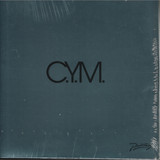
C.Y.M. is the collaboration between British producer and DJ Mike Greene (otherwise known as Fort Romeau) and LA-based American musician Chris Baio, who releases music as Baio in addition to playing bass in the acclaimed band Vampire Weekend. Their debut, self-titled EP arrives on Phantasy as an elegant pean to the infinite possibilities of kosmische music, driven by a motorik strain of psychedelia. The foundations of a wider project, C.Y.M. speaks not for analogue nostalgia, but a subtle and modern update on imagined futures that are still open to interpretation.
‘Capra’ immediately establishes the duo’s masterful if unsurprising grip on rhythm, a man-machine stomp that persists as the track takes myriad turns, from post-punk guitar licks and processed vocals, through bubbling modular synthesis and culminating in a soaring, cathartic melody. On ‘Far Gone’ C.Y.M. turn their studio inward for a more brooding and intimate interpretation of their sound, a balearic amalgam of intriguing vocals, feedback soaked riffs and no-wave inspired movement. The bliss beneath the waves of noise that crash across C.Y.M’s music emerges fully on the driving conclusion, ‘Super-Cannes’. A hypnotic tempo and blistering drums intertwine with whirling organs, and shimmering keys, providing a wistful and warm finale.
- 1