Buscar:mila

Estilos
Todo
MARYLINLOVE - ANOTHER LOVE
 
2
También disponible

Yellow Vinyl[24,33 €]


Back to the 80s: A Holy Grail of Italo Disco Returns on Vinyl

Oh, those magical 1980s… an era forever entwined with iconic music that still stirs the soul. For the young, it’s a source of fascination; for those who lived it, a flood of unforgettable memories. And when you combine that nostalgia with a collector’s thrill and the magic words “Italo Disco”, only a handful of legendary labels come to mind. One of them? Sensation Records: the experimental sub-label of the iconic Disco Magic, headquartered at Via Mecenate 78/A in Milan. Known for its distinctive blue label, Sensation was home to less commercial, often bold and boundary-pushing releases – tracks that dared to be different.

Today, Vintage Pleasure Boutique dives deep into the vaults of Sensation Records to revive one of the genre’s most coveted treasures: Marylinlove – “Another Love.”

Produced by none other than Bruno Mosti – a mastermind behind some of the most sought-after Italo tracks of the era. This is more than a reissue. It’s the return of a true cult classic, a holy grail for collectors and genre lovers alike.

If you know, you know. And if you don’t, this is your moment to own a piece of history. Don’t miss your chance to grab this stunning vinyl reissue, before it disappears again.

No en stock

Haga su pedido ahora y le encargaremos el artículo en nuestro proveedor.

19,12

Ültimo hace: 7 Meses
Various - Night City Life II (Compiled by ILAN PDAHTZUR) 2x12"

Much has changed for Ilan Pdahtzur since the release of his Night City Life compilation six years ago. Back then, he was a little-known record collector who shared obscure, synth-heavy music that “captured the night-time glow” of the city he calls home, London, via a dedicated Instagram page. Fast forward to 2025 and Ilan is now a respected member of the international digger-selector community, having delivered must-check mixes for the likes of Bordello A Parigi, Bayete, Hunee’s Lifetones and Sound Metaphors.

It seems a fitting time, then, for Spacetalk to unleash Night City Life II, a second deep dive into Ilan’s distinctive, neon-lit sound world – a place where European synth-pop rarities, Italo-dance treats, dancefloor-focused post-boogie instrumentals soundtrack strolls around shuttered skyscrapers, dockside housing estates and wharf-side warehouse conversions.

In the six years that have passed since the release of Night City Life, Ilan has uncovered many more rarities, private-press gems and slept-on treats, with 14 of these featuring on the dusty-fingered crate-digger’s sublime sequel. As with its predecessor, much effort has been made to track down the artists behind the synth-heavy songs on show, with the vinyl edition featuring extended liner notes where some tell the story of their track in detail. Musically, there’s much to set the pulse racing within Ilan’s superb selections, from the slow-motion shuffle of Playground’s self-released 1984 B-side ‘Rainy Day Woman’ and the brilliance of Shamor’s 1985 South African synth-pop special ‘Close To You (Bwela Pafupi)’, to Sharon & Tracy’s ‘The Sheik’ – a belly-dancing inspired slab of TB-303 bass-driven house – and the kaleidoscopic, piano-rich 1992 Euro-house brilliance of ‘Come Into My Life’ by Jennifer.

Dive deeper into the collection and more under-appreciated musical masterpieces make their presence felt. There’s Sicilian musician Claudio D’Ignoti’s lesser-known boogie-era single ‘Anche Per Noi’, where rubbery bass guitar, Nile Rodgers style disco guitar licks and spacey synths dominate the sound space, Lena’s fashion circuit-inspired, early Pet Shop Boys-esque ‘Embrasse-Moi (Strumentale)’ – one that members of Milan’s Paninaro movement would surely have enjoyed – and a sublime, spaced-out and effects laden dancefloor dub of ‘Rescue Me (Imagination)’ by Jimmy D, a genuinely sought-after jam originally released on a now impossible-to-find seven-inch single. Offering another genuinely distinctive, carefully curated collection of lesser-known musical treats, Night City Life II is another essential, immersive and synthesizer-powered journey through Ilan’s unique sonic world.

No en stock

Haga su pedido ahora y le encargaremos el artículo en nuestro proveedor.

31,05
Ricardo Baez - The Life Of Larry

Ricardo Baez, a Milan-based DJ and producer, returns with his second single on Mule Musiq. Known for his regular party “Tropical Animal,” Baez launched a label of the same name and has released music on Toy Tonics and Live at Robert Johnson—the label of the renowned German club Robert Johnson. He continues to establish himself as one of the most promising artists in the scene. His latest release opens with a jazzy deep house track reminiscent of Larry Heard, followed by “Dark Room NRG,” a slowed-down take on '90s rave house. “Whisper Wood” reinterprets '90s Italian Balearic house with a modern touch, while “Animarara,” a highlight from his previous digital-only release, makes a return. The record closes with “The Life of Larry,” a cinematic breakbeat track. The variety showcased across the release speaks to the depth and range of Baez's musical vision.

No en stock

Haga su pedido ahora y le encargaremos el artículo en nuestro proveedor.

13,87

Ültimo hace: 4 Meses
TARUN BALANI - KADAHIN MILANDAASIN
  • Lajpat Nagar Sometimes
  • Kadahin Milandaasin
  • The Laburnum Blooms
  • Sailaab
  • Locusts Are Descending
  • Samadhi 02.11.2024
  • For Everyman Saved A Victim Will Be Found

Der Jazz-Schlagzeuger und Komponist Tarun Balani veröffentlicht am 16. Mai sein neues Album Kadahin Milandaasin über BERTHOLD records. Das Werk ist eine tief persönliche Auseinandersetzung mit seinem Sindhi-Erbe und erzählt die Geschichte der Migration seines Großvaters von Sindh nach Neu-Delhi. Der Titel Kadahin Milandaasin bedeutet "Wann werden wir uns wiedersehen?" und greift Themen wie Sehnsucht, Identität und kulturelle Bewahrung auf. In seinen Kompositionen verbindet Balani traditionelle Sindhi-Folklore mit modernem Jazz, geprägt von komplexen Rhythmen und improvisatorischer Tiefe. Gemeinsam mit seiner Band Dharma - Olli Hirvonen (Gitarre), Sharik Hasan (Piano) und Adam O'Farrill (Trompete) - erschafft er ein einzigartiges Klangbild, das Vergangenheit und Gegenwart vereint. Mit Kadahin Milandaasin erforscht Balani seine musikalischen Wurzeln und öffnet eine emotionale Klangwelt voller Geschichte und persönlicher Reflexion. Jazz drummer and composer Tarun Balani is set to release his new album Kadahin Milandaasin on May 16th through BERTHOLD Records. This deeply personal work explores his Sindhi heritage, tracing the migration journey of his grandfather from Sindh to New Delhi. The album's title Kadahin Milandaasin, translates to "When Will We Meet?" and reflects themes of longing, identity, and cultural preservation. Balani's compositions blend traditional Sindhi folk music with contemporary jazz, creating a rich tapestry of rhythm and improvisation. Together with his band Dharma - Olli Hirvonen (guitar), Sharik Hasan (piano), and Adam O'Farrill (trumpet) - he crafts a sonic landscape that bridges the past and present. With Kadahin Milandaasin, Balani embarks on a deeply personal journey, offering a poignant musical reflection on his roots.

Reservar02.05.2025

debe ser publicado en 02.05.2025

30,21
Kamaal Williams - The Return

Kamaal Williams

The Return

12inchBFR001LP
Black Focus
23.04.2025

Whether Re-defining Experimental Fusion Sounds With The Hugley Acclaimed Yussef Kamaal, Or His Catalogue Of 12's For Imprints Such As Mcde, Eglo, And Rhythm Section As Henry Wu, South London's Kamaal Williams Has Been A Key Figure In His Thriving International Scene For The Past Few Years. The Return Is A Natural Evolution From The Yussef Kamaal Project, Mining The Influence Of Visionary Jazz But Blended With All Kinds Of Texture, Sounds And Signals From The Over-saturated London Streets.
At Times The Keyboard Work Evokes The Classic 70s Fusion Work Of Lonnie Liston Smith Or Roy Ayers, But Underpinned By Rhythms More Reminiscent Of Blunted Hip-hop And Arrangements Subliminally Laced With The Cut-ups Of Pirate Radio. Progressive, Funky, Cosmic, Exploratory And Effortlessly Musical, This Is The Sound Of A Musician Honing Their Craft Into Thrilling New Shapes.
In The Us The Like Of Kamasi Washington And Thundercat Have Made Great Strides In Opening A Whole New Dialogue Between Jazz And Hip-hop, Drawing In A Young, Highly Engaged New Audience In The Process. Kamaal Williams Mine A Similar Seam On The Other Side Of The Atlantic Alongside Other Exciting London Talents Such As Ezra Collective, Ruby Rushton And Shabaka Hutchings.
The Return Is Exactly That: A Return And Refinement To The Sound Yussef Kamaal Were Progenitors Of, And First Set The Scene For One Of The Most Exciting Musical Movements London Has Had In Years.
Notable Tracks For Old And New Listeners Are 'slow', 'situations', 'medina', 'london Shuffle' Which Features Mansur Brown (of Mansur's Message) And For Those Die Hard Yussef Kamaal Fans - They Should Hear The Interpolated Roots Of 'strings Of Light' In The Title Track 'the Return'. And That Signature Wu Funk Can Be Heard On Broken Theme, And High Roller.
The Return Will Be The Debut Album Released On Wu's New Label Black Focus Records.

No en stock

Haga su pedido ahora y le encargaremos el artículo en nuestro proveedor.

20,97

Ültimo hace: 11 Meses
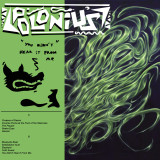
Polonius - You Didn't Hear It From Me LP
  • Creases Of Desire
  • Incense Puma At The Foot Of The Staircase
  • The Pauper
  • Snake Eyes
  • Velvete
  • Mosquito Boat
  • Setanakam Acid
  • Elephant
  • Cold Sweat
  • You Didn’t Hear It From Me

Full page feature in Wire Magazine (March 2025, Issue 493) 'the freak audio series continues with the lysergic You Didn't Hear It From Me which combines dubbed out sampledelia and metallic beats with ghostly saxophone soaked in an acid bath'

Polonius AKA Egyptian-French artist Seif Gaber, whose works spans a decade of “science fiction archeomiragical time travel" explorations and is an important piece of the healthy electronic/far out mosaic in Milan.

With a considerable number of releases under his name, both self released and through such likeminded labels as Ikuisuus, Goaty Tapes or Sun Araw's Sun Ark, Polonius grand vision encompasses a myriad of languages culled from kosmische travelings, exotica's dreamlands, soundtrack psychedelia, spiritual jazz escape routes and transmuted beat science to convey them into a sonic fiction where all these trails intertwine in a cosmological soundscape filled with wonder and speculation.

Building on last year's more beat-centric excursions of his self-titled vinyl debut on Stoned to Death, Polonius' first entry into the Discrepant extended family via Souk finds him dwelling deeper into rhythmic mystic extrapolations through a series of hallucinatory tracks. Conveying jungle's kinetic energy, dubwise meditations on bass weight, collapsing beats, globetrotting percussion accents and synth-driven night drives, 'You Didn't Hear It From Me' finds Polonius with a strong sense of purpose and direction, reconvening bits and pieces from the netherworld into a more urban scenario, not quite any we can stand or dance on. Just dream of.

Reservar18.04.2025

debe ser publicado en 18.04.2025

19,29
Various - Q1#1EP

Various

Q1#1EP

12inchQ1E2012
Q1E2 RECORDINGS
04.04.2025

Electronic music at its best offers a tantalising glimpse of the future, capturing the moment of conception where new worlds and genres are brought into being. Amsterdam-via-Berlin label Q1E2 (standing for “quality first, ego second”) embodies this expansive promise on their new various-artists compilation, a thrilling speed-run through the cosmic outer-reaches of contemporary club sounds that highlights the work of essential emerging producers from around the globe.

Milan producer Jack Bags opens the proceedings with “Natural Thing”, an astral deep-dance immersion with zero-gravity synthesizer pads and skeletal dub percussion that echo out through the void, sensuous vocal samples arriving like scattered transmissions from the stereo of some long-lost spacecraft. datSIM’s “Influx” races through kaleidoscopic sci-fi spacescapes, presenting a futuristic reimagining of UK bass sounds with dextrous organ melodics and widescreen atmospherics. Mike Riviera and Marco Ohboy bring us back down for a more earthly kind of ecstatic experience, cranking up the humidity and coaxing out the endorphins with the appropriately-titled “Euphoria” - a rugged, rave-adjacent heater that cleverly rearranges elements of classic house and garage into a decidedly modern club workout.

Elsewhere there’s a distinctive undercurrent of jazz flowing through the compilation, mapping out thrilling new evolutions of the music on and off the dancefloor. Dr Sud’s mesmeric rhythm excursion “Zaffiro” unfurls like the coils of a cosmic serpent, tessellating percussion and slinking subs tracing intricate beat geometries. A Soft Mist Production’s “Upside Down Rainbows” settles in for the afters with smoked-out soulful atmospherics, syrupy vocals curling and turning in the air like smoke vapors from the last vestiges of a still-lit cigarette. The Rabbit Hole’s “Tail Groove” closes out the proceedings with a surprising bait-and-switch - opening on lustrous lounge piano that could have been comped straight from a Bill Evans record, the track quickly gives way to interstellar bass ‘n’ breaks. The producer’s canny use of cello licks adds a grounded, organic feel, jazz futurism that recalls Photek or LTJ Bukem’s sampling experiments.

Taken together, the label’s new compilation provides a snapshot of a scene in constant evolution, taking the temperature of the modern electronic scene and finding it to be in rude health.

Written by Matthew Fidler

No en stock

Haga su pedido ahora y le encargaremos el artículo en nuestro proveedor.

12,56

Ültimo hace: 12 Meses
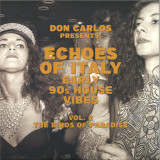
Various - ECHOES OF ITALY – THE BIRDS OF PARADISE – EARLY 90S HOUSE VIBES VOL.2 (2x12")

Googling “paradise house”, the first results to pop up are an endless list of European b&b’s with whitewashed lime façades, all of them promising “…an unmatched travel experience a few steps from the sea”. Next, a little further down, are the institutional websites of a few select semi-luxury retirement homes (no photos shown, but lots of stock images of smiling nurses with reassuring looks). To find the “paradise house” we’re after, we have to scroll even further down. Much further down.

It feels like yesterday, and at the same time it seems like a million years ago. The Eighties had just ended, and it was still unclear what to expect from the Nineties. Mobile phones that were not the size of a briefcase and did not cost as much as a car? A frightening economic crisis? The guitar-rock revival?! Certainly, the best place to observe that moment of transition was the dancefloor. Truly epochal transformations were happening there. From America, within a short distance one from the other, two revolutionary new musical styles had arrived: the first one sounded a bit like an “on a budget” version of the best Seventies disco-music – Philly sound made with a set of piano-bar keyboards! – the other was even more sparse, futuristic and extraterrestrial. It was a music with a quite distinct “physical” component, which at the same time, to be fully grasped, seemed to call for the knotty theories of certain French post-modern philosophers: Gilles Deleuze, Félix Guattari, Paul Virilio... Both those genres – we would learn shortly after – were born in the black communities of Chicago and Detroit, although listening to those vinyl 12” (often wrapped in generic white covers, and with little indication in the label) you could not easily guess whether behind them there was a black boy from somewhere in the Usa, or a girl from Berlin, or a pale kid from a Cornish coastal town.

Quickly, similar sounds began to show up from all corners of Europe. A thousand variations of the same intuition: leaner, less lean, happier, slightly less intoxicated, more broken, slower, faster, much faster... Boom! From the dancefloors – the London ones at least, whose chronicles we eagerly read every month in the pages of The Face and i-D – came tales of a new generation of clubbers who had completely stopped “dressing up” to go dancing; of hot tempered hooligans bursting into tears and hugging everyone under the strobe lights as the notes of Strings of Life rose up through the fumes of dry ice (certain “smiling” pills were also involved, sure). At this point, however, we must move on to Switzerland.

In Switzerland, in the quiet and diligent town of Lugano, between the 1980s and 1990s there was a club called “Morandi”. Its hot night was on Wednesdays, when the audience also came from Milan, Como, Varese and Zurich. Legend goes that, one night, none less than Prince and Sheila E were spotted hiding among the sofas, on a day-off of the Italian dates of the Nude Tour… The Wednesday resident and superstar was an Italian dj with an exotic name: Don Carlos. The soundtrack he devised was a mixture of Chicago, Detroit, the most progressive R&B and certain forgotten classics of old disco music: practically, what the Paradise Garage in New York might have sounded like had it not closed in 1987. In between, Don Carlos also managed to squeeze in some tracks he had worked on in his studio on Lago Maggiore. One in particular: a track that was rather slow compared to the BPM in fashion at the time, but which was a perfect bridge between house and R&B. The title was Alone: Don Carlos would explain years later that it had to be intended both in the English meaning of “by itself” and like the Italian word meaning “halo”. That wasn’t the only double entendre about the song, anyway. Its own very deep nature was, indeed, double. On the one hand, Alone was built around an angelic keyboard pattern and a romantic piano riff that took you straight to heaven; on the other, it showcased enough electronic squelches (plus a sax part that sounded like it had been dissolved by acid rain) to pigeonhole the tune into the “junk modernity” section, aka the hallmark of all the most innovative sounds of the time: music that sounded like it was hand-crafted from the scraps of glittering overground pop.

No one knows who was the first to call it “paradise house”, nor when it happened. Alternative definitions on the same topic one happened to hear included “ambient house”, “dream house”, “Mediterranean progressive”… but of course none were as good (and alluring) as “paradise house”. What is certain is that such inclination for sounds that were in equal measure angelic and neurotic, romantic and unaffective, quickly became the trademark of the second generation of Italian house. Music that seemed shyly equidistant from all the rhythmic and electronic revolutions that had happened up to that moment (“Music perfectly adept at going nowhere slowly” as noted by English journalist Craig McLean in a legendary field report for Blah Blah Blah magazine). Music that to a inattentive ear might have sounded as anonymous as a snapshot of a random group of passers-by at 10AM in the centre of any major city, but perfectly described the (slow) awakening in the real world after the universal love binge of the so-called Second Summer of Love.

For a brief but unforgettable season, in Italy “paradise house” was the official soundtrack of interminable weekends spent inside the car, darting from one club to another, cutting the peninsula from North to centre, from East to West coast in pursuit of the latest after-hours disco, trading kilometres per hour with beats per minute: practically, a new New Year’s Eve every Friday and Saturday night. This too was no small transformation, as well as a shock for an adult Italy that was encountering for the first time – thanks to its sons and daughters – the wild side of industrial modernity. The clubbers of the so-called “fuoriorario” scene were the balls gone mad in the pinball machine most feared by newspapers, magazines and TV pundits. What they did each and every weekend, apart from going crazy to the sound of the current white labels, was linking distant geographical points and non-places (thank you Marc Augé!) – old dance halls, farmhouses and business centres – transformed for one night into house music heaven. As Marco D’Eramo wrote in his 1995 essay on Chicago, Il maiale e il grattacielo: “Four-wheeled capitalism distorts our age-old image of the city, it allows the suburbs to be connected to each other, whereas before they were connected only by the centre (…) It makes possible a metropolitan area without a metropolis, without a city centre, without downtown. The periphery is no longer a periphery of any centre, but is self-centred”.

“Paradise house” perfectly understood all of this and turned it into a sort of cyber-blues that didn’t even need words, and unexpectedly brought back a drop of melancholic (post?)-humanity within a world that by then – as we would wholly realise in the decades to come – was fully inhuman and heartless. A world where we were all alone, and surrounded by a sinister yellowish halo, like a neon at the end of its life cycle. But, for one night at least, happy."

No en stock

Haga su pedido ahora y le encargaremos el artículo en nuestro proveedor.

28,99

Ültimo hace: 6 Meses
Kapote - Para Mytho Disco  LP 2x12"

Toy Tonics Music Berlin presents "Para Mytho Disco". The 2nd "Kapote" album of label founder and creative director Mathias Modica.
Keyboarder, DJ, producer, music nerd, graphic designer, multi-instrumentalist, sub-culture impressario and artist (formerly known as Munk of Gomma records.)

Kapote & Toy Tonics
In the last years Kapote was in the spotlight mainly for building the Toy Tonics label with his friends. Developing a platform for new positive quality dance music with a human touch. Toy Tonics is the opposite of the dark, druggy Techno and Trance sounds of the last years.
The warm inclusive music of Toy Tonics represents a new vibe that a young generation of diverse, stylish and culturally intersted generation of dancers loves now. Kapote's Toy Tonics became the key label for that vibe. (In 2024 Toy Tonics made 150 Toy Tonics events in 18 countries. With more than 150.000 people dancing. 90 millions streams on their music.)
Toy Tonics is more than a music label: It's a audio - visual universe. A community, almost a movement.
Based on a new positive attitude and aesthetic diversity. Mixing musicianship with DJ culture, analogue music with electronic, ideas from the past with sounds from now. To create something new. Connecting dance music with graphic design, art and underground fashion.
Kapote and his gang release vinyl, posters, shirts, art fanzines and make exhibitions and partys.

Toy Tonics started in Berlin as a underground niche project. But now became the key label of the new house, wild style disco and organic dance music scene.
Probably one of Berlin's biggest electronic music phenomena along with Keinemusik and Live from Earth.

It went fast: 2020 Kapote's crew started to make small parties in Berlin's off spaces. The "Toy Tonics Jams". The parties became "talk of the town", and Berlin clubs like Griesmühle and Panorama Bar invited the crew. Then international clubs and festival called. Toy Tonics were invited to SONAR (playing the mainstage with Kaytranada and DJ Tennis), KALA festival, Montreux Jazz festival.
Now TT has a residency at Panorama Bar Berlin and sold out events in Europe leading clubs like Phonox in London, Rex Club in Paris, Tunnel in Milan.
Toy Tonics now is the reference brand of a new generation of music loving dancers. Similar to Gomma records, Kapote's former label (2003 - 2015) that was one of the key labels of the "indie dance" scene of the Y2K years (along with DFA and Output Records).

Kapote created a multi-cultural movement with graphic designers, photographers, illustrators from the Berlin scene.
They publish the Toy Tonics Pocket Poster magazine, posters and design shirts. They organize the Toy Tonics Pop Up Galleries mixing music and art. In underground venues in Berlin and in new gallery spaces and museums around Europe.
Toy Tonics has been invited by Palais de Tokio museum in Paris, Triennale Museum Berlin, Design week Milano to create events.
The new Kapote album
The 12 tracks have a very own style. Based on dance music, but going much further. "Para Mytho Disco' is a futuristic mix of sounds. It's far away from the dark monotone techno and trance music from Kapote's hometown Berlin. Instead, he creates warm friendly atmospheres full of sonic colours and little musical surprises.
Kapote's knowlege of music history and his backround as a jazz piano student and son of classic music composer is clearly inside this music. Before turning into a DJ and electronic music producer he has been playing in bands since he was 13 years old.
The album is full of emotional chord progressions played by Kapote on various keyboards. Sometimes reminding music from the past, without being retro at all. The basslines and melodies are inspired by jazz fusion from the 1970ies. And he programmed syncopated grooves that come from afro-american dance music. There are influences from Japanese electronic music (Yellow Magic Orchestra), from 1980s Synthwave and from 1990s electronica (like Squarepusher and Luke Vibert).

Kapote plays keys, bass, flutes and percussions, he plays synth solos and sings on a few tracks. The complexity of the arrangements makes this music never boring. Lot of melodies and solos that catch the listener. Colourful soundscapes that make you want to listen or dance to this album more, and discover details also after you heard it several times.

Kapote background

Before starting Toy Tonics, Kapote used to run a label called Gomma. He produced four albums under the name Munk and music for other artists.
He produced music with Peaches, Franz Ferdinand founder Nick McCarthy, with New York street art legend The Rammellzee, Italian actress Asia Argento, the first three albums of WhoMadeWho and worked with LCD Soundsystem (listen to "Kick out the chairs", the Munk song with James Murphy )
In those "Gomma days" Kapote aka Munk was also one of the main DJs for VICE magazine parties and made music for art projects and fashion brands (Margiela, Prada, Colette).
In 2015 he stopped Munk and Gomma and started Toy Tonics. He found young producers and helped to develop their sound (Coeo, Cody Currie, Gee Lane, Barbara Boeing, Sam Ruffillo). Later he founded the sublabel Kryptox to release music by Berlin based bands that make new forms of jazz or neo classical sounds.

Under the name Kapote Mathias didnt release much:
Only his Kapote debut album "What it is" (2019) and an EP called "Electric Slide" (2022) and a collabo EP with Italian producer Sam Ruffillo ("Robot Salsa").

An although his Munk and Kapote music was an underground phenomena his music has always been a favourite of many great people from the scene.
Supported by DJs like Harvey, Chromeo, Moodymann, Jennifer Cardini, Gerd Janson, MYD, Andrew Weatherall to Blessed Madonna, Justice and Laurent Garnier… to name just a few.

No en stock

Haga su pedido ahora y le encargaremos el artículo en nuestro proveedor.

20,59

Ültimo hace: 8 Meses
THE HILLBILLY MOON EXPLOSION - BUY BEG OR STEAL
  • Buy Beg Or Steal
  • Broken Heart
  • She Kicked Me To The Curb
  • Natascia
  • Trouble & Strife
  • My Love For Evermore (With Sparky)
  • Night Of The Living Ted
  • Imagine A World
  • Goin' To Milano
  • Touch Me
  • Rock'n'roll Girl
  • Chalk Farm Breakdown
  • Enola Gay
  • Non Ho L'età (Lp Only)

Emanuela Hutter and Oliver Baroni front this Anglo-Italian masterly, modern rockabilly band, making worldwide waves from their home base of Zurich. Highlights of this 2011 relaunch album Buy Beg or Steal include a rockabilly cover of Enola Gay and their classic hit duet between Demented Are Go"s Sparky and Emanuela: My Love For Evermore. The song"s murder ballad viral video now has over 25,000,000 views. An international cult hit, it has also inspired myriad tattoos, multiple 7" pressings and well over fifty cover versions. The LP version features an exclusive extra track.

Reservar07.03.2025

debe ser publicado en 07.03.2025

19,96
The Robinson - The Al Go Rithmic EP

The latest from The Robinson - that'll be Milan-based brothers Marco and Riccardo Augeri to you - opens with the jazz, live-sounding and improvised 'Life Decisions' with its cosmic synths reaching up to the stars over raw beats. 'Unconscious Habits' follows on, bringing deep, dubby drums, organic percussive lines and a deep jungle vibe while 'Running Algorith' is another humid deep house closer with warm, diffuse pads and a spiralling of deft percussion.

No en stock

Haga su pedido ahora y le encargaremos el artículo en nuestro proveedor.

12,48

Ültimo hace: 8 Días
Kenny Dope ft. Josh Milan - Be Your Freak

Kenny Dope's Top 10 Billboard Club Hit original "Be Your Freak" featuring Josh Milan of Honeycomb Music and former half of legendary Soulful House duo, Blaze now on 45 with Instrumental on Side B

No en stock

Haga su pedido ahora y le encargaremos el artículo en nuestro proveedor.

23,11

Ültimo hace: 5 Meses
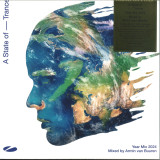
Armin Van Buuren - A State Of Trance Year Mix 2024 LP 3x12"
 
104

f11 FLRNTN, Benjamin Duchenne - "Last Man Standing" (feat Sivan) (1:08)
f12 Nicholas Gunn & Harshil Kamdar - "Here I Am" (feat Alina Renae - Richard Durand remix) (1:08)
f13 DJ TH X TH3 ONE X Sue McLaren - "Everything To Me" (1:08)
f14 Matty Ralph - "Te Adoro" (1:08)
f15 Armin Van Buuren & Vini Vici - "Sarabande" (feat Anna Timofei) (1:08)
f16 Lilly Palmer - "Hare Ram" (1:08)
f17 David Forbes - "Techno Is My Only Drug" (1:08)
f18 Armin Van Buuren - "Blah Blah Blah" (Lilly Palmer remix) (1:08)
f19 Armin Van Buuren - "The Road To Your Destination" (A State Of Trance Year mix 2024 outro) (1:14)

No en stock

Haga su pedido ahora y le encargaremos el artículo en nuestro proveedor.

46,64

Ültimo hace: 10 Meses
TV DUST - TRANSITION LP

After four EPs of skeletal kraut-punk and slimmed down post-motorik alienage Milan’s Tv Dust are back with an entirely different beast, their proper debut ‘Transition’, an incredible collection of no-jazz, breakneck rhythms, mutant-wave, trance-funk, shredded sax jags and furious, yet mysterious assaults.

Tv Dust run a tight ship, they jam econo, with the album strongly based around the incredible interplay of drums (Sergio Tringali), bass (Filippo Aloisi) and sax/synth (newest member Gaetano Pappalardo). Shedding the use of vocals has completely freed the band up into a mutating beast, wild horses racing beside a volcano eruption, improv bursts that perfectly soundtrack the ruins of a city facing the inhuman consequences of wild expansion and dumb economics.

Transition is a no-jazz, no-panic, no-border album, born between a small bar and a basement, reworking some ideas from the first Tv Dust sessions with a new mindset, with improvisation becoming an important tool in the trio's new path that already sees releases on Occult Punk Gang, My Own Private Records, Sentiero Futuro and Maple Death.

Transition like the transformation of the group, you still get the original package of furious hypnotic grooves, shortwave radio alien funk, devo-id convulsions, jittery no-wave and Italo post-punk tradition alongside dada-jazz and freeform freakouts.

Reservar21.02.2025

debe ser publicado en 21.02.2025

25,83
Wilbert Roget, II - Helldivers 2 (Original Game Soundtrack) (LP)

Helldivers 2 auf Vinyl. Dieser explosive Soundtrack komponiert von Wilbert Roget, II und Ross Tregenza fängt die Unruhe, das Miteinander und den unerbittlichen Willen der Helldivers ein und lassen Sie das Spiel noch einmal ganz neu erleben.Gepresst auf translucent Yellow Vinyl in einer Single-Pocket Jacket mit Einleger, ist dieses Vinyl ein Muss für Fans des Spiels und der herausragenden Musik von Wilbert.

Reservar14.02.2025

debe ser publicado en 14.02.2025

24,16
Lorenzo Dada / Leo Benassi - Island EP

he debut release of italian new artist “lorenzo dada & leo benassi”.

we’ve met in milano and they sent us a beautiful 90’s italian balearic deep house EP.

it’s a modern re-interpretation of italian deep house like 90’s IRMA records releases.

if you like that sound, you will love this record!

No en stock

Haga su pedido ahora y le encargaremos el artículo en nuestro proveedor.

14,71

Ültimo hace: 3 Meses
Various - ECHOES OF ITALY - ARTISTS IN WONDERLAND – EARLY 90S HOUSE VIBES VOL.1 LP 2x12"

Volume 1 of this expertly curated project of 90s Italian House - put together by Don Carlos.

If Paradise was half as nice… by Fabio De Luca.

Googling “paradise house”, the first results to pop up are an endless list of European b&b’s with whitewashed lime façades, all of them promising “…an unmatched travel experience a few steps from the sea”. Next, a little further down, are the institutional websites of a few select semi-luxury retirement homes (no photos shown, but lots of stock images of smiling nurses with reassuring looks). To find the “paradise house” we’re after, we have to scroll even further down. Much further down.

It feels like yesterday, and at the same time it seems like a million years ago. The Eighties had just ended, and it was still unclear what to expect from the Nineties. Mobile phones that were not the size of a briefcase and did not cost as much as a car? A frightening economic crisis? The guitar-rock revival?! Certainly, the best place to observe that moment of transition was the dancefloor. Truly epochal transformations were happening there. From America, within a short distance one from the other, two revolutionary new musical styles had arrived: the first one sounded a bit like an “on a budget” version of the best Seventies disco-music – Philly sound made with a set of piano-bar keyboards! – the other was even more sparse, futuristic and extraterrestrial. It was a music with a quite distinct “physical” component, which at the same time, to be fully grasped, seemed to call for the knotty theories of certain French post-modern philosophers: Gilles Deleuze, Félix Guattari, Paul Virilio... Both those genres – we would learn shortly after – were born in the black communities of Chicago and Detroit, although listening to those vinyl 12” (often wrapped in generic white covers, and with little indication in the label) you could not easily guess whether behind them there was a black boy from somewhere in the Usa, or a girl from Berlin, or a pale kid from a Cornish coastal town.

Quickly, similar sounds began to show up from all corners of Europe. A thousand variations of the same intuition: leaner, less lean, happier, slightly less intoxicated, more broken, slower, faster, much faster... Boom! From the dancefloors – the London ones at least, whose chronicles we eagerly read every month in the pages of The Face and i-D – came tales of a new generation of clubbers who had completely stopped “dressing up” to go dancing; of hot tempered hooligans bursting into tears and hugging everyone under the strobe lights as the notes of Strings of Life rose up through the fumes of dry ice (certain “smiling” pills were also involved, sure). At this point, however, we must move on to Switzerland.

In Switzerland, in the quiet and diligent town of Lugano, between the 1980s and 1990s there was a club called “Morandi”. Its hot night was on Wednesdays, when the audience also came from Milan, Como, Varese and Zurich. Legend goes that, one night, none less than Prince and Sheila E were spotted hiding among the sofas, on a day-off of the Italian dates of the Nude Tour… The Wednesday resident and superstar was an Italian dj with an exotic name: Don Carlos. The soundtrack he devised was a mixture of Chicago, Detroit, the most progressive R&B and certain forgotten classics of old disco music: practically, what the Paradise Garage in New York might have sounded like had it not closed in 1987. In between, Don Carlos also managed to squeeze in some tracks he had worked on in his studio on Lago Maggiore. One in particular: a track that was rather slow compared to the BPM in fashion at the time, but which was a perfect bridge between house and R&B. The title was Alone: Don Carlos would explain years later that it had to be intended both in the English meaning of “by itself” and like the Italian word meaning “halo”. That wasn’t the only double entendre about the song, anyway. Its own very deep nature was, indeed, double. On the one hand, Alone was built around an angelic keyboard pattern and a romantic piano riff that took you straight to heaven; on the other, it showcased enough electronic squelches (plus a sax part that sounded like it had been dissolved by acid rain) to pigeonhole the tune into the “junk modernity” section, aka the hallmark of all the most innovative sounds of the time: music that sounded like it was hand-crafted from the scraps of glittering overground pop.

No one knows who was the first to call it “paradise house”, nor when it happened. Alternative definitions on the same topic one happened to hear included “ambient house”, “dream house”, “Mediterranean progressive”… but of course none were as good (and alluring) as “paradise house”. What is certain is that such inclination for sounds that were in equal measure angelic and neurotic, romantic and unaffective, quickly became the trademark of the second generation of Italian house. Music that seemed shyly equidistant from all the rhythmic and electronic revolutions that had happened up to that moment (“Music perfectly adept at going nowhere slowly” as noted by English journalist Craig McLean in a legendary field report for Blah Blah Blah magazine). Music that to a inattentive ear might have sounded as anonymous as a snapshot of a random group of passers-by at 10AM in the centre of any major city, but perfectly described the (slow) awakening in the real world after the universal love binge of the so-called Second Summer of Love.

For a brief but unforgettable season, in Italy “paradise house” was the official soundtrack of interminable weekends spent inside the car, darting from one club to another, cutting the peninsula from North to centre, from East to West coast in pursuit of the latest after-hours disco, trading kilometres per hour with beats per minute: practically, a new New Year’s Eve every Friday and Saturday night. This too was no small transformation, as well as a shock for an adult Italy that was encountering for the first time – thanks to its sons and daughters – the wild side of industrial modernity. The clubbers of the so-called “fuoriorario” scene were the balls gone mad in the pinball machine most feared by newspapers, magazines and TV pundits. What they did each and every weekend, apart from going crazy to the sound of the current white labels, was linking distant geographical points and non-places (thank you Marc Augé!) – old dance halls, farmhouses and business centres – transformed for one night into house music heaven. As Marco D’Eramo wrote in his 1995 essay on Chicago, Il maiale e il grattacielo: “Four-wheeled capitalism distorts our age-old image of the city, it allows the suburbs to be connected to each other, whereas before they were connected only by the centre (…) It makes possible a metropolitan area without a metropolis, without a city centre, without downtown. The periphery is no longer a periphery of any centre, but is self-centred”.

“Paradise house” perfectly understood all of this and turned it into a sort of cyber-blues that didn’t even need words, and unexpectedly brought back a drop of melancholic (post?)-humanity within a world that by then – as we would wholly realise in the decades to come – was fully inhuman and heartless. A world where we were all alone, and surrounded by a sinister yellowish halo, like a neon at the end of its life cycle. But, for one night at least, happy.

No en stock

Haga su pedido ahora y le encargaremos el artículo en nuestro proveedor.

28,99

Ültimo hace: 6 Meses
PIEZO - ECSTATIC NOSTALGIA

Piezo

ECSTATIC NOSTALGIA

12inchDKMNTL-UFO13
Dekmantel Records
03.02.2025

A cybernetic rush of non-conformist techno from Italian maverick Piezo.

Milan-based Piezo is usually found at the helm of his Ansia label, exploring a versatile spectrum of experimental club music grounded in soundsystem presence and non-linear structures. On Ecstatic Nostalgia he edges his sound into a more driving, techno-spirited framework which lends itself to the energy of the UFO series beautifully. From tightly wound, artfully fractured 150 rumble and elegant sci-fi breakbeat on to needlepoint electronica and subtly trance-brushed atmospherics, Piezo's broad palette fuels an ear-snagging EP which balances visceral impact with a deft touch.

Anyone familiar with Dekmantel's flagship festival will know the UFO stages showcase spikier strains of modernist body music, and the label series serves to push these sounds forwards in the hands of consistently visionary producers. After a what could be seen as a brief pause in the UFO series - it's with a fresh wave of releases.

No en stock

Haga su pedido ahora y le encargaremos el artículo en nuestro proveedor.

12,56

Ültimo hace: 11 Meses
Maria Callas - Maria Callas Remastered

Maria Callas was born to a Greek family in New York in 1923. Her vocal training took place in Athens, where her teacher was the coloratura soprano Elvira de Hidalgo, who had sung with Enrico Caruso and Feodor Chaliapin. After early performances in Greece, Callas’s international career was launched in 1947 when she performed the title role in Ponchielli’s La Gioconda at the Arena di Verona in Italy.

Her voice defied simple classification and her artistic range was extraordinary. In her early twenties she sang such heavy dramatic roles as Gioconda, Turandot, Brünnhilde and Isolde, but over the course of her career her most famous roles came to be: Bellini’s Norma and Amina (La sonnambula); Verdi’s Violetta (La traviata); Donizetti’s Lucia di Lammermoor and Anna Bolena, Cherubini’s Medea and Puccini’s Tosca. Though her timbre was not always conventionally beautiful, Callas’s musicianship and phrasing were in a class of their own. She brought characters to vivid life with her skill in colouring her tone and making insightful use of the text.

She is credited with changing the history of opera: by placing a perhaps unprecedented emphasis on musical integrity and dramatic truth, and by transforming perceptions – and reviving the fortunes – of the bel canto repertoire, particularly Bellini and Donizetti.

The 1950s marked the height of Callas’s career. Its base lay in the opera houses of Italy, and she became the prima donna assoluta of Milan’s legendary La Scala – notably in the productions
of Luchino Visconti – but her operatic appearances also encompassed London’s Royal Opera House, the New York Metropolitan Opera, Paris Opéra, the Vienna State Opera, and the opera houses of Chicago, Dallas, Houston, Lisbon, and, in the early 1950s, Mexico City, São Paolo and Rio de Janeiro.

From 1959, when she started a life-changing love affair with the Greek shipping magnate Aristotle Onassis, her performing career slowed down and her voice became more fragile. Her final stage performances came in 1965, when she was only 42.

There were many plans for a return to the stage – and for further complete recordings – but they never reached fruition, though in 1974 she gave a series of concerts in Europe, North America and Japan with the tenor Giuseppe di Stefano; he had partnered her frequently in the opera house and in the studio, not least in the 1953 La Scala Tosca under Victor de Sabata, considered a landmark in recording history. Callas died alone in her Paris apartment in September 1977.

Reservar20.01.2025

debe ser publicado en 20.01.2025

25,00
BETINS, ANSIS & CUKURS, ARTURS - SLAVIC FOLK SONGS LP 2x12"
  • A Boq Adama Stvoriv Rukama
  • Marijo Deli Bela Kumrijo
  • Koj Ce Ti Kupi Al Kanarice
  • A Sto Ti Je Mila Kceri
  • Gusta Mi Magla
  • Oy Ne Xodi Barabasu
  • Mire Lukaviy
  • Oy U Poli Verba
  • Oy Çiy To Kinn Stoit
  • Poroy Odinokoy Uniloy (Live)
  • Tuman Yarom, Tuman Dolinoyu (Live)
  • A Boq Adama Stvoriv Rukama (Live)
  • Ixav, Ixav Kozak Mistom (Live)
  • Qey, Nalivayte Povnii Çari (Live)
  • Spivsya Kozak, Spivsya (Live)
  • Kales Bre Ando (Live)
  • Vixoyu Odin Ya Na Doroqu (Live)
  • Tixo Nad Riçkoyu (Live)
Reservar17.01.2025

debe ser publicado en 17.01.2025

33,57
Artículos por página
N/ABPM
Vinyl