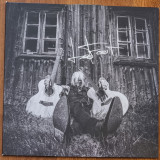
Hailing from Baltimore, Punjabi-American sitar player, songwriter and ambient musician Ami Dang unites the disparate worlds of Indian classical music and dreamy synth-infused song composition on beguiling new album The Living World’s Demands.
Envisioned as a lament to the challenges to which humanity has subjected the world and itself, Ami Dang’s newest album builds on the floating, blissful ambience of 2019’s Parted Plains and the vocal-led, pop structures of 2020 collaborative release Galdre Visions (a bona fide ambient supergroup also featuring Green-House and Nailah Hunter). The Living World’s Demands is an immensely evocative and expressive collection, just as complex, nuanced and precious as the living world in its title. Within are themes of trauma, survival, resistance, desperation and righteous vitriol, responding to greed, fear and injustice, yet the music is often euphoric, disarming and breathtakingly beautiful. Lilting sitar lines sparkle about an unpredictably broad spectrum of synthesis; Indian classical percussion rattles and snakes through its drum programming. And atop, Ami’s astonishing singing voice - with lyrics of English and Punjabi - deftly weaves her two worlds together with silken threads of both contemporary and traditional textures.
Buscar:min bul
- A1: Victory Or Die
- A2: Thunder & Lightning
- A3: Fire Storm Hotel
- A4: Shoot Out All Of Your Lights
- B1: The Devil
- B2: Electricity
- B3: Evil Eye
- B4: Teach Them How To Bleed
- B5: Till The End
- C1: Tell Me Who To Kill
- C2: Choking On Your Screams
- C3: When The Sky Comes Looking For You
- C4: Sympathy For The Devil
- D1: Heroes
- D2: Bullet In Your Brain
- D3: Greedy Bastards
Motörhead veröffentlichen ihr 23. (und letztes
Studioalbum) Bad Magic von 2015 noch einmal in einer
erweiterten Version.
"Bad Magic: SERIOUSLY BAD MAGIC" beinhaltet
frisches Bonusmaterial und zwei bisher unveröffentlichte
Tracks: "Bullet in Your Brain" und "Greedy Bastards",
sowie eine glanzvolle Live Performance von der Bad
Magic Tour beim gigantischen Mt Fuji Festival in Japan
2015. Als Bad Magic 2015 veröffentlicht wurde, tat es
einen gewaltigen Schlag und alle, die meinten Motörhead
wären zahmer geworden, wurden eines Besseren belehrt.
Das Album erreichte in Deutschland auf Anhieb die Top 1
Chart Position. Producer Cameron Webb hatte seinen
Anteil daran; er überzeugte die Band, das Album in den
NRG North Hollywood, Maple Studios und Grandmaster in
Kalifornien live aufzunehmen- zum allerersten Mal in der
Ära Kilmister/Campbell/Dee.
Eine der versteckten Juwelen des Albums auf "Bad
Magic: SERIOUSLY BAD MAGIC", ist Motörheads
berühmteste, international gefeierte Version des David
Bowies Klassiker, "Heroes". Ursprünglich sollte der Song
auf Bad Magic (2015) erscheinen, wurde jedoch in der
letzte Minute wieder heruntergenommen. Jetzt aber fand
"Heroes" seinen Platz auf "Seriously Bad Magic".
WRWTFWW Records is deeply honored to announce the release of Chu Ishikawa & Der Eisenrost’s soundtrack for experimental action drama Tokyo Fist, released in 1995 and directed by legendary director/producer/writer Shin’ya Tsukamoto (Tetsuo: The Iron Man and its sequels, Bullet Ballet, Hiroki The Goblin, Nightmare Detective). Previously only published on CD in Japan, the cult movie soundtrack is available on vinyl for the first time ever and housed in a heavy 350gsm sleeve.
The Tokyo Fist soundtrack gorgeously blends explosive industrial music, heavy percussion, martial rhythms and noise experimentations with contemplative ambient and emotion-filled synth soundscapes, perfectly encapsulating the nihilistic pain felt by the characters of the movie and the brutally visceral rebirth they go through. Ishikawa and Der Eisenrost’s compositions hit hard, sometimes truly terrorizing, sometimes heart-gripping in gloomy and bewitching ways. This is no holds barred music, a venture into the darkest yet most strangely beautiful corners of the human mind (and heart).
The late great Chu Ishikawa was one of the innovators of the industrial and experimental scene in Japan and has collaborated with Shin’ya Tsukamoto on numerous movies. He also worked extensively with Takashi Miike, another visionary filmmaker from his home country. Ishikawa was the leader of groundbreaking Industrial-Metal-Percussion unit Der Eisenrost whose live performances around Japan left an indelible mark on the genre’s history.
This new project by WRWTFWW Records follows previous Japanese soundtracks from the catalogue: Ghost in the Shell, Patlabor 2, Evil Dead Trap…and more to come.
- A1: The Mighty Typhoons - I'm Com'un Home In The Morn'un (Feat Beaulah Enser)
- A2: The Spinshots - Seven Bullets, One Gun
- A3: Rosie Stevens & The Dry Riverbed Trio - Scorched
- A4: Working Voodoo Club - Do It All Night
- A5: The Uppertones - Open Your Heart
- A6: 44 Shakedown - Gigglewater
- A7: The Mighty Typhoons - Waddasei (Feat Viky De Sentis)
- B1: The Might Typhoons - One More Chance (Feat Beaulah Enser)
- B2: Rose Stevens & The Dry Riverbed Trio - Sweet Baby Of Mine
- B3: The Mighty Typhoons - The Snake
- B4: Voodoo Working Club - For A Minute
- B5: The Uppertones - Sometimes I Feel
- B6: 44 Shakedown - Ramrod
- B7: Skepticals - Diabolik
Tardam Records was born out of a collaboration between the Southern Italian City of Taranto at the top of the Puglian isthmus and Amsterdam, the far more northerly metropolis. The label was founded by DJ Goffredo Santovito and musicians Fabrizio Carrieri and Mikel Van Der Meulen. They were passionately motivated to release the music of a select set of European groups that were capturing a new sound in retro soul and R&B. Over the next four years they released nine singles from groups including the Mighty Typhoons, The Spinshots, The Ska related Uppertones and the raw R&B sound of the Working Voodoo Club, which resulted in dance floor winners, rare 45s and many great moments.
In celebration Acid Jazz asked their friends from Tardam if they could release a compilation of their work, and when they said yes, the label commissioned an exceptional mid-Century style illustration by Dutch illustrator Emanuel Wiemans to wrap it all up in.
‘Fuxsake, what a great ride this album is... …Somewhere John Lee Hooker is smiling and stampin' his foot to 'Runnin' Till I'm Done'! Love the 12 string riffing so much - You just don't hear that enough these days - Brings to mind Stevie Ray on killing it on acoustic. Ledfoot on the Goodfoot got some serious mojo'. - Winter Lazerus, mastering master This record was recorded and mixed in two days - live - straight to tape… no edits, no punching in…just me… honest for better or worse – honesty - What a precious thing ‘ - Ledfoot - In short: 10 tracks recorded analogue live to tape during two magic days at Studio Studio Nyhagen. No bullshit, just a unique artist spitting out his soul in the most naked and real setting possible. Gothic blues! Still, the sound, the lyrics and the performance are very much a product of today. Ledfoot aka Tim Scott McConnell is a 12-string guitarist who plays with fitted heavy strings,
a brass slide, steel fingerpicks and a stompbox. He has been touring and releasing music since the late 1970’s and written for artists as varied as Highasakite and TnT to Sheena Easton. In 2014, Bruce Springsteen recorded ‘High Hopes’ as the title track of his album, written by Tim Scott McConnell for the Havalinas debut album in 1990. It debuted as #1 in over 10 countries including the U.S. and the U.K.
"I Can't Let Go" ist das erste Album der britischen Sängerin und Schauspielerin Suki Waterhouse und wurde von dem Grammy-nominierten Produzenten und Songwriter Brad Cook (Bon Iver, The War On Drugs, Snail Mail, Waxahatchee) produziert. Neben ihrer Tätigkeit als Schauspielerin (The Bad Batch, Assassination Nation, Misbehaviour) und Model (Burberry, Ferragamo, Tommy Hilfiger) katalogisiert die Britin ihre intimsten, prägendsten und bedeutendsten Momente ihres Lebens am liebsten in Songs. Die in London geborene und aufgewachsene 30-Jährige fühlte sich schon früh zur Musik hingezogen und sah das Medium immer als eine Möglichkeit, Kreativität auszudrücken und Geschichten zu erzählen. Bis heute haben Bands wie Oasis einen ganz besonderen Platz in ihrem Herzen, Suki hört aber auch gerne Songwriterinnen wie Sharon Van Etten, Valerie June oder Lou Doillon. Bevor sie sich mit dem angesehenen Produzenten Brad Cook für ihr Sub Pop-Debüt zusammengetan hat, erschienen bereits die auf eigene Faust veröffentlichten Singles "Brutally", "Good Looking" und "Valentine", die auch ohne großes Label im Rücken bis heute fast 20 Millionen Mal gestreamt wurden.
At the start of the pandemic, Carrellee turned to the microKORG and Yamaha DX7 synths after finding traditional folk music to fall a bit flat in expressing the personal intensity of the year including the dissolution of her marriage. Following her weekly demo videos amassing nearly one million streams on Facebook in 2021, Carrellee teamed up with producer Brett Bullion (Low, Poliça, Now Now), Con Davison (Bad Bad Hats) and Huntley Miller (Lizzo, Slyvan Esso) in Minneapolis to distill 40 demos down to 10 cohesive album tracks. The resulting album conjures crushed artifacts of desire, with each instrument processed through crumpled and scorched analog tape. Carrellee draws inspiration from 80's new wave icons Cockteau Twins and Kate Bush, as well as a wide variety of Italo disco and synthwave artists. The single and music video "Morning Sun" by Doug Pray (Hype, The Defiant Ones) will be released in advance of the album on Negative Gain (Mr Kitty, Twin Tribes) with tour dates to follow.
Manasyt vs Sam Lowry. A clash, mashup and/ or battle between two minds yet one and the same face. Hailing from the twilight zone, Bulgaria. The currently Xiamen, China, based Petar Tassev has joined the forces of his alter ego's on this 9 tracker. A side 4 celestial and daring Electro tracks followed by the more eerie B side. An experimental, future horror movie-like sound. Thrilling in all the right ways!
Y Bülbül is back on the controls accompanied by Yumurta, a percussionist from Istanbul. Pingipung introduced the London based artist in 2020 with his psychedelic, synth-laden debut “Fever”.
“Not One, Not Two” is based on a one-way transmission of improvised drum recordings from an industrial estate in Maslak, Istanbul to another one in Tottenham, London, where Y Bülbül laid down fragmented layers of bass, synths, guitars and field recordings over Yumurta’s singular drum takes. The result is a free-form deep listening album for fans of dub, ambient and kosmische music, where the groove and harmonies are mystically interwoven, yet somehow manage to stay on the brink of collapse. Although the sessions were non concurrent and scattered over two continents, the collaboration evokes scenes of a telepathic communion where individual perspectives, circumstances and stories are exchanged between the two.
Resembling Moondog, Holy Tongue or Luis Paniagua in the sense that they favor the raw over the polished, holistic presence over conceptual perfection and questions over answers, the duo’s focus on bare sounds and repetition guides the listener throughout the album. The ride cymbal opening the minimalistic “I’m This”, for instance, briskly disarms the listener who might have been looking for more traditional songwriting or production clues. There are plenty of immediately rewarding moments too in “Not One, Not Two,” like the organic acid bassline in “Maurin Quina”, the euphoric drum fills of “Big K” and the intoxicating groove of the hypnotic vibe-setter “Jah Oto”.
Bülbül is Turkish for a singing bird while Yumurta simply means egg. Which one is first? Who is to follow? It’s this enigmatic entanglement between the two artists which creates the lurking tension, emphasized by the Zen Kōan-like title. The beauty in this album is a peculiar one, and it certainly is a rabbit hole too. Dissonance is fluid as everything moves, and whenever two sounds collide, a third one emerges.
repress!
ØEN Records is back with a special two track EP from up and coming Copenhagen based producer Fruit. Originally from Iceland, but based in Denmark Fruit has been making waves in the Copenhagen club scene with his eloquent DJ and live-sets. Following up his acclaimed 2019 Drømmeland EP for Coastal Haze he is finally back with two epic, fast-paced and euphoric tracks to light up the summer dance floors.
Drawing inspiration from myths and legends and particularly the Epic of Gilgamesh – a 4000 year old poem from ancient Mesopotamia – “Gilgamesh” is a hypnotic and trancey trip destined for the peak hours of the post-corona parties.
Created during the peak of the pandemic on an old half broken borrowed MacBook, the two distinct but kindred tracks are testament to Fruits unique production style, effortlessly navigating between euphoric fast-paced house, ambient soundcapes, hypnotic percussion and haunting atmospheres. Skillfully crafted and executed “Gilgamesh” is primed for both floor and mind.
180gm Clear Vinyl housed in a 3mm wide spine sleeve with printed
inners, Remastered by Alchemy Mastering At AIR from the original
production tapes
The Selecters's second album, Celebrate The Bullet was released in February
1981 as the follow up to the successful 2 Tone debut album Too Much Pressure,
along with the hit singles On My Radio, Three Minute Hero and Missing
Words.Switching labels to Chrysalis Records, the band returned to On My Radio
producer Roger Lomas, moving into a more melodic slower pace, whilst keeping
their lyrical commentary on racial and social issues. Original members Desmond
Brown and Charley Anderson departed before the recording began, with Lomas
and Norman Watt- Ray (Ian Dury) helping on bass before new members James
Mackie and Adam Williams joined to complete the recording.
Due to unfortunate timing, upon release the title of this album was
misunderstood due to the recent murder of John Lennon and an assassination
attempt on U.S. President Ronald Regan meant radio stations didn't support the
single or album and the release was largely ignored.
This forgotten classic from the 2 Tone era is a timely reissue and will give time
for a re- evaluation in the same way the 2021's reissue of too Much Pressure
showed the band as relevant.
Pauline Black, who was recently awarded an OBE in 2022, and the band will be
touring in November 2022 and into 2023 performing the album in full along with
selections of their previous album.
Bubbling up from the psychedelic tar pits of L.A., Frankie and the Witch Fingers have been a constant source of primordial groove for the better part of the last decade. Formed and incubated in Bloomington, IN before moving west to scrap with Los Angeles’ garage rock rabble, the band evolved from cavern-clawed echo merchants to architects of prog-infected psych epics that evoke a shift in reality. After a stretch on Chicago/LA flagship Permanent Records the band landed at yet another fabled enclave of garage and psychedelia - Brooklyn’s Greenway Records, now working in tandem with psych powerhouse LEVITATION and their label The Reverberation Appreciation Society, the groups latest effort is dually supported by a RAS / Greenway co-release. After years of searching for the specific alchemy that would tear open the cosmos, they found the formula with the addition of Shaughnessy Starr on drums in the summer of 2018. They began a new cycle and tripped into tip-on double gatefold territory, flesh-ing out their lysergic impulses into a monolith of sound that closes in from all sides. The band reached new levels of grandiosity and utilized every minute to manifest their psych-soul Sabbath in four dimensions, spilling psychic blood on a populace ready and eagerly waiting. Yet, as expansive, inventive, and immersive as any studio album might be, the band is born for the stage. As their live prowess caught the ears of some legends in their own right, the band practically lived on the road last year with stints opening for Oh Sees, Cheap Trick and ZZ Top. Along the way the constant pulpit of the stage would form ZAM into a transformative experience while plotting their next permutation of space and time. That transformation, Monsters Eating People Eating Monsters... (repeated infinitely,) rises like a Phoenix from the road tar, van exhaust, and ozone crackle of amps in heat. Once off the road it was recorded in just five blistering days. Though, while the tour may have hammered the album into shape and brought about a wind of change, those changes stretched to the band itself as well. In the wake of the tour the band’s longtime bassist Alex Bulli made his exit, with the majority of bass parts on the album being written and played by multi-instrumental magician Josh Menashe with occasional pitch in from songwriter Dylan Sizemore. Stripped to their core the band has created their most ambitious work to date, an album that takes the turbulence of ZAM and crafts it into a beast more insidious and singular than anything in their catalog. Moving forward, the band has taken on new blood. Completing their lineup, Nikki Pickle (of Death Valley Girls) will join them working the new album out roadside on bass. A new horizon of Frankie and the Witch Fingers draws near and we’re all set to follow them into the unknown.
The original line up of Monster Magnet are pleased to announce a new album 'Test Patterns: Vol. 1' on God Unknown Records. It will be on 180gm black vinyl and housed in a beautiful gatefold sleeve, with acid blotter insert. The track Tab was originally released back in 1991. This is a 2021 mix of the original track and the never before released 1988 demo version, with both tracks being over 24 minutes each. It's viewed as an influential track with psychedelic / heavy psych / space rock and stoner rock fans and will sit nicely alongside Sleep's 'Dopesmoker'. Julian Cope described the original release as distilling Hawkwind, Sabbath and The Stooges into a lysergic soup of brown acid and bathtub meth, and ultimately cultivating a “Altamont vibe”; that is, the negative end of the psychedelic spectrum. Get ready for lift off! Hail the BULLGOD
Cassette[11,56 €]
RIYL Harold Budd, Max Richter, Nihls Frahm. Limited Transparent Orange Vinyl LP. Final album from Roberth Haigh of SEMA, Nurse With Wound, Omni Trio. Smut shines a spotlight on the sounds of the 90s across genres – a record scratch, a spacey synth line, a breakcore beat – all while maintaining freshness and originality. The collaborative project of vocalist Tay Roebuck, guitarist Andrew Min, bassist and synth-player Bell Cenower, guitarist and synth-player Sam Ruschman, and drummer Aidan O'Connor, Smut have conquered national tours with Bully, Swirlies, Nothing, and WAVVES. Based in Chicago, IL, the band hits their stride in 'How the Light Felt'. It is an exercise in coping, an electrifying statement of hope in the thick of resounding loss, and a love letter to the people that keep us going. With their powers combined, Smut meld the songwriting sensibilities of Oasis with the vocal delivery of the Cocteau Twins – the percussive grooves of Gorillaz with the sensuality of Massive Attack. An electric current of hope led by Tay Roebuck's powerful, femme vocals, Smut puts on a live show that is not to be missed. Also Available From Smut: Power Fantasy 7”. Track listing: 1 Beginner's Mind 2 Twilight Flowers 3 Waltz on Treated Wire 4 Contour Lines 5 Rainy Season 6 Lost Albion 7 Like a Shadow 8 Still Life with Moving Parts 9 The Fourth Man 10 Signs of Life 11 The Nocturnals 12 Baroque Atom 13 On Terminus Hill
Orange Vinyl LP[24,33 €]
RIYL Harold Budd, Max Richter, Nihls Frahm. Limited Transparent Orange Vinyl LP. Final album from Roberth Haigh of SEMA, Nurse With Wound, Omni Trio. Smut shines a spotlight on the sounds of the 90s across genres – a record scratch, a spacey synth line, a breakcore beat – all while maintaining freshness and originality. The collaborative project of vocalist Tay Roebuck, guitarist Andrew Min, bassist and synth-player Bell Cenower, guitarist and synth-player Sam Ruschman, and drummer Aidan O'Connor, Smut have conquered national tours with Bully, Swirlies, Nothing, and WAVVES. Based in Chicago, IL, the band hits their stride in 'How the Light Felt'. It is an exercise in coping, an electrifying statement of hope in the thick of resounding loss, and a love letter to the people that keep us going. With their powers combined, Smut meld the songwriting sensibilities of Oasis with the vocal delivery of the Cocteau Twins – the percussive grooves of Gorillaz with the sensuality of Massive Attack. An electric current of hope led by Tay Roebuck's powerful, femme vocals, Smut puts on a live show that is not to be missed. Also Available From Smut: Power Fantasy 7”. Track listing: 1 Beginner's Mind 2 Twilight Flowers 3 Waltz on Treated Wire 4 Contour Lines 5 Rainy Season 6 Lost Albion 7 Like a Shadow 8 Still Life with Moving Parts 9 The Fourth Man 10 Signs of Life 11 The Nocturnals 12 Baroque Atom 13 On Terminus Hill
Low Company presents Yuta Matsumura’s Red Ribbon, a sequence of introspective, lavishly melodic dream-songs and amphibian atmospheres recorded in scattered periods over 2018-21. Having played in bands like Low Life, M.O.B. and Orion, and the duo Jay & Yuta (with Jay Cruikshank), Red Ribbon is Matsumura’s first solo outing, and represents a conscious effort to move away from guitar-based songwriting. He composed its nine tracks mostly on piano - layering vocals, bass, keyboards, flute (courtesy of Maeve Parker), violin/cello (Laurence Quinn) and clacking drumbox rhythms into dynamic, dubwise avant-pop structures which are supple and spacious but fizzing with detail and vivid inner life. The laconic 4/4 pulse, heat-warped synth-tones and haunting vaporous melodica of opener ‘Box Garden’ set the tone: its surreal psychedelic patternings barely concealing a deep sting of longing and regret. The cryptic lyrics suggest chance encounters, hidden logic, missed opportunities, fatalism, serendipity. A city submerged: everyone else paused mid-movement, while you’re allowed to swim free and fish-like through the streets, over the rooftops...‘Tangled Orchid’ is a tense night-drive through dry desert heat and into the unknown, running away from your old life, chased down by dust-devils of half-baked schemes and abandoned plans, while ‘Myth Machine’ drops the tempo and something mind-altering, guiding us on a tripped-out dub-disco scuba among alien flora and fauna, a world of impossible shapes and sensations. At which point, the mood of the album decisively shifts, firstly with ‘Sake No Otoh’, sung in Japanese by Haruka Sato: an instant-classic, breathtakingly intimate lover's lament that sounds like it got lost on its way to heaven and is now doomed to orbit the earth forever. The songs that follow continue in this more confessional, imploring mode. As if the travelling's done, the baggage has been cast off, and we’ve arrived at our destination, where the real process of rebirth and repair can begin. The music’s textures become less overtly dubby and electronic, with more of an organic, earthy, chamber-pop/avant-folk feel, at once sad and hopeful-sounding. Three songs in particular bear the influence of Eno’s 70s work (and its mutant bedsit offspring Lifetones, Flaming Tunes, etc): ‘‘E. Potential’, where baroquely chorused vocals - half-agonised, half-beatific - teeter on top of simple oscillating piano loops, and the stately, dawntreading ballads ‘Tabula Rasa’ and ‘No Sleep For Birds’. The bulk of the album was made prior to lockdowns and all of that; its themes of reset, self-examination, the need to f**k it all off and take spiritual stock, are timeless. Though they perhaps have a more bittersweet resonance now the world has returned pretty much to how it was, only worse. Track list: 1. Box Garden 2. Tangled Orchid 3. Myth Machine 4. Red Ribbon 5. Soko No Ato 6. Tabula Rasa 7. E. Potential 8. No Sleep For Birds 9. Zookeeper's Trial
- A1: Come Back Alive 3:06
- A2: Godless 4:21
- A3: Apes Of God 3:36
- A4: More Of The Same 3:58
- A5: Urge 3:16
- A6: Corrupted 2:32
- B1: As It Is 4:26
- B2: Mind War 2:59
- B3: Leech 2:24
- B4: The Rift 2:56
- B5: Bottomed Out 4:35
- B6: Activist 1:53
- B7: Outro 3:06
- C1: Messiah
- C2: Angel
- C3: Black Steel In The Hour Of Chaos
- D1: Mongoloid
- D2: Mountain Song
- D3: Bullet The Blue Sky
- D4: Piranha
- A1: Rock This Mother
- A2: Talk To Me Girl
- A3: You Can Find Me
- A4: Check This Out
- A5: Jesus Going To Clean House
- A6: Hope You Understood
- A7: Is It What You Want
- A8: Love Is Everlasting
- A9: This Is Hip-Hop Art
- A10: Opposite Of Love
- A11: Do You Know What I Mean
- B1: Saving All My Love For You
- B2: Look Out Here I Come
- B3: Girl You Always Talking
- B4: Have A Great Day
- B5: Take My Hand
- B6: I Need Your Love
- B7: Your Town
- B8: Talk Around Town
- B9: Booty Head/Take A Little Walk
- B10: I Love My Mama
- B11: I Never Found Anyone Like You
Vinyl LP[23,49 €]
As the sun sets on a quaint East Nashville house, a young man bares a piece of his soul. Facing the camera, sporting a silky suit jacket/shirt/slacks/fingerless gloves ensemble that announces "singer" before he's even opened his mouth, Lee Tracy Johnson settles onto his stage, the front yard. He sways to the dirge-like drum machine pulse of a synth-soaked slow jam, extends his arms as if gaining his balance, and croons in affecting, fragile earnest, "I need your love… oh baby…"
Dogs in the yard next door begin barking. A mysterious cardboard robot figure, beamed in from galaxies unknown and affixed to a tree, is less vocal. Lee doesn't acknowledge either's presence. He's busy feeling it, arms and hands gesticulating. His voice rises in falsetto over the now-quiet dogs, over the ambient noise from the street that seeps into the handheld camcorder's microphone, over the recording of his own voice played back from a boombox off-camera. After six minutes the single, continuous shot ends. In this intimate creative universe there are no re-takes. There are many more music videos to shoot, and as Lee later puts it, "The first time you do it is actually the best. Because you can never get that again. You expressing yourself from within."
"I Need Your Love" dates from a lost heyday. From some time in the '80s or early '90s, when Lee Tracy (as he was known in performance) and his music partner/producer/manager Isaac Manning committed hours upon hours of their sonic and visual ideas to tape. Embracing drum machines and synthesizers – electronics that made their personal futurism palpable – they recorded exclusively at home, live in a room into a simple cassette deck. Soul, funk, electro and new wave informed their songs, yet Lee and Isaac eschewed the confinement of conventional categories and genres, preferring to let experimentation guide them.
"Anytime somebody put out a new record they had the same instruments or the same sound," explains Isaac. "So I basically wanted to find something that's really gonna stand out away from all of the rest of 'em." Their ethos meant that every idea they came up with was at least worth trying: echoed out half-rapped exhortations over frantic techno-style beats, gospel synth soul, modal electro-funk, oddball pop reinterpretations, emo AOR balladry, nods to Prince and the Fat Boys, or arrangements that might collapse mid-song into a mess of arcade game-ish blips before rallying to reach the finish line. All of it conjoined by consistent tape hiss, and most vitally, Lee's chameleonic voice, which managed to wildly shape shift and still evoke something sincere – whether toggling between falsetto and tenor exalting Jesus's return, or punctuating a melismatic romantic adlib with a succinct, "We all know how it feels to be alone."
"People think we went to a studio," says Isaac derisively. "We never went to no studio. We didn't have the money to go to no studio! We did this stuff at home. I shot videos in my front yard with whatever we could to get things together." Sometimes Isaac would just put on an instrumental record, be it "Planet Rock" or "Don't Cry For Me Argentina" (from Evita), press "record," and let Lee improvise over it, yielding peculiar love songs, would-be patriotic anthems, or Elvis Presley or Marilyn Monroe tributes. Technical limitations and a lack of professional polish never dissuaded them. They believed they were onto something.
"That struggle," Isaac says, "made that sound sound good to me."
In the parlance of modern music criticism Lee and Isaac's dizzying DIY efforts would inevitably be described as "outsider." But "outsider" carries the burden of untold additional layers of meaning if you're Black and from the South, creating on a budget, and trying to get someone, anyone within the country music capital of the world to take your vision seriously. "What category should we put it in?" Isaac asks rhetorically. "I don't know. All I know is feeling. I ain't gonna name it nothing. It's music. If it grabs your soul and touch your heart that's what it basically is supposed to do."
=
Born in 1963, the baby boy of nine siblings, Lee Tracy spent his earliest years living amidst the shotgun houses on Nashville's south side. "We was poor, man!" he says, recalling the outhouse his family used for a bathroom and the blocks of ice they kept in the kitchen to chill perishables. "But I actually don't think I really realized I was in poverty until I got grown and started thinking about it." Lee's mom worked at the Holiday Inn; his dad did whatever he had to do, from selling fruit from a horse drawn cart to bootlegging. "We didn't have much," Lee continues, "but my mother and my father got us the things we needed, the clothes on our back." By the end of the decade with the city's urban renewal programs razing entire neighborhoods to accommodate construction of the Interstate, the family moved to Edgehill Projects. Lee remembers music and art as a constant source of inspiration for he and his brothers and sisters – especially after seeing the Jackson 5 perform on Ed Sullivan. "As a small child I just knew that was what I wanted to do."
His older brother Don began musically mentoring him, introducing Lee to a variety of instruments and sounds. "He would never play one particular type of music, like R&B," says Lee. "I was surrounded by jazz, hard rock and roll, easy listening, gospel, reggae, country music; I mean I was a sponge absorbing all of that." Lee taught himself to play drums by beating on cardboard boxes, gaining a rep around the way for his timekeeping, and his singing voice. Emulating his favorites, Earth Wind & Fire and Cameo, he formed groups with other kids with era-evocative band names like Concept and TNT Connection, and emerged as the leader of disciplined rehearsals. "I made them practice," says Lee. "We practiced and practiced and practiced. Because I wanted that perfection." By high school the most accomplished of these bands would take top prize in a prominent local talent show. It was a big moment for Lee, and he felt ready to take things to the next level. But his band-mates had other ideas.
"I don't know what happened," he says, still miffed at the memory. "It must have blew they mind after we won and people started showing notice, because it's like everybody quit! I was like, where the hell did everybody go?" Lee had always made a point of interrogating prospective musicians about their intentions before joining his groups: were they really serious or just looking for a way to pick up girls? Now he understood even more the importance of finding a collaborator just as committed to the music as he was.
=
Isaac Manning had spent much of his life immersed in music and the arts – singing in the church choir with his family on Nashville's north side, writing, painting, dancing, and working various gigs within the entertainment industry. After serving in the armed forces, in the early '70s he ran The Teenage Place, a music and performance venue that catered to the local youth. But he was forced out of town when word of one of his recreational routines created a stir beyond the safe haven of his bohemian circles.
"I was growing marijuana," Isaac explains. "It wasn't no business, I was smoking it myself… I would put marijuana in scrambled eggs, cornbread and stuff." His weed use originated as a form of self-medication to combat severe tooth pain. But when he began sharing it with some of the other young people he hung out with, some of who just so happened to be the kids of Nashville politicians, the cops came calling. "When I got busted," he remembers, "they were talking about how they were gonna get rid of me because they didn't want me saying nothing about they children because of the politics and stuff. So I got my family, took two raggedy cars, and left Nashville and went to Vegas."
Out in the desert, Isaac happened to meet Chubby Checker of "The Twist" fame while the singer was gigging at The Flamingo. Impressed by Isaac's zeal, Checker invited him to go on the road with him as his tour manager/roadie/valet. The experience gave Isaac a window into a part of the entertainment world he'd never encountered – a glimpse of what a true pop act's audience looked like. "Chubby Checker, none of his shows were played for Black folks," he remembers. "All his gigs were done at high-class white people areas." Returning home after a few years with Chubby, Isaac was properly motivated to make it in Music City. He began writing songs and scouting around Nashville for local talent anywhere he could find it with an expressed goal: "Find someone who can deliver your songs the way you want 'em delivered and make people feel what you want them to feel."
One day while walking through Edgehill Projects Isaac heard someone playing the drums in a way that made him stop and take notice. "The music was so tight, just the drums made me feel like, oh I'm-a find this person," he recalls. "So I circled through the projects until I found who it was.
"That's how I met him – Lee Tracy. When I found him and he started singing and stuff, I said, ohhh, this is somebody different."
=
Theirs was a true complementary partnership: young Lee possessed the raw talent, the older Isaac the belief. "He's really the only one besides my brother and my family that really seen the potential in me," says Lee. "He made me see that I could do it."
Isaac long being a night owl, his house also made for a fertile collaborative environment – a space where there always seemed to be a new piece of his visual art on display: paintings, illustrations, and dolls and figures (including an enigmatic cardboard robot). Lee and Issac would hang out together and talk, listen to music, conjure ideas, and smoke the herb Isaac had resumed growing in his yard. "It got to where I could trust him, he could trust me," Isaac says of their bond. They also worked together for hours on drawings, spreading larges rolls of paper on the walls and sketching faces with abstract patterns and imagery: alien-like beings, tri-horned horse heads, inverted Janus-like characters where one visage blurred into the other.
Soon it became apparent that they didn't need other collaborators; self-sufficiency was the natural way forward. At Isaac's behest Lee, already fed up with dealing with band musicians, began playing around with a poly-sonic Yamaha keyboard at the local music store. "It had everything on it – trumpet, bass, drums, organ," remembers Lee. "And that's when I started recording my own stuff."
The technology afforded Lee the flexibility and independence he craved, setting him on a path other bedroom musicians and producers around the world were simultaneously following through the '80s into the early '90s. Saving up money from day jobs, he eventually supplemented the Yamaha Isaac had gotten him with Roland and Casio drum machines and a Moog. Lee was living in an apartment in Hillside at that point caring for his dad, who'd been partially paralyzed since early in life. In the evenings up in his second floor room, the music put him in a zone where he could tune out everything and lose himself in his ideas.
"Oh I loved it," he recalls. "I would really experiment with the instruments and use a lot of different sound effects. I was looking for something nobody else had. I wanted something totally different. And once I found the sound I was looking for, I would just smoke me a good joint and just let it go, hit the record button." More potent a creative stimulant than even Isaac's weed was the holistic flow and spontaneity of recording. Between sessions at Isaac's place and Lee's apartment, their volume of output quickly ballooned.
"We was always recording," says Lee. "That's why we have so much music. Even when I went to Isaac's and we start creating, I get home, my mind is racing, I gotta start creating, creating, creating. I remember there were times when I took a 90-minute tape from front to back and just filled it up."
"We never practiced," says Isaac. "See, that was just so odd about the whole thing. I could relate to him, and tell him about the songs I had ideas for and everything and stuff. And then he would bring it back or whatever, and we'd get together and put it down." Once the taskmaster hell bent on rehearsing, Lee had flipped a full 180. Perfection was no longer an aspiration, but the enemy of inspiration.
"I seen where practicing and practicing got me," says Lee. "A lot of musicians you get to playing and they gotta stop, they have to analyze the music. But while you analyzing you losing a lot of the greatness of what you creating. Stop analyzing what you play, just play! And it'll all take shape."
=
"I hope you understood the beginning of the record because this was invented from a dream I had today… (You tell me, I'll tell you, we'll figure it out together)" – Lee Tracy and Isaac Manning, "Hope You Understand"
Lee lets loose a maniacal cackle when he acknowledges that the material that he and Isaac recorded was by anyone's estimation pretty out there. It's the same laugh that commences "Hope You Understand" – a chaotic transmission that encapsulates the duality at the heart of their music: a stated desire to reach people and a compulsion to go as leftfield as they saw fit.
"We just did it," says Lee. "We cut the music on and cut loose. I don't sit around and write. I do it by listening, get a feeling, play the music, and the lyrics and stuff just come out of me."
The approach proved adaptable to interpreting other artists' material. While recording a cover of Whitney Houston's pop ballad "Saving All My Love For You," Lee played Whitney's version in his headphones as he laid down his own vocals – partially following the lyrics, partially using them as a departure point. The end result is barely recognizable compared with the original, Lee and Isaac having switched up the time signature and reinvented the melody along the way towards morphing a slick mainstream radio standard into something that sounds solely their own.
"I really used that song to get me started," says Lee. "Then I said, well I need something else, something is missing. Something just came over me. That's when I came up with 'Is It What You Want.'"
The song would become the centerpiece of Lee and Isaac's repertoire. Pushed along by a percolating metronomic Rhythm King style beat somewhere between a military march and a samba, "Is It What You Want" finds Lee pleading the sincerity of his commitment to a potential love interest embellished by vocal tics and hiccups subtlely reminiscent of his childhood hero MJ. Absent chord changes, only synth riffs gliding in and out like apparitions, the song achieves a lingering lo-fi power that leaves you feeling like it's still playing, somewhere, even after the fade out.
"I don't know, it's like a real spiritual song," Lee reflects. "But it's not just spiritual. To me the more I listen to it it's like about everything that you do in your everyday life, period. Is it what you want? Do you want a car or you don't want a car? Do you want Jesus or do you want the Devil? It's basically asking you the question. Can't nobody answer the question but you yourself."
In 1989 Lee won a lawsuit stemming from injuries sustained from a fight he'd gotten into. He took part of the settlement money and with Isaac pressed up "Saving All My Love For You" b/w "Is It What You Want" as a 45 single. Isaac christened the label One Chance Records. "Because that's all we wanted," he says with a laugh, "one chance."
Isaac sent the record out to radio stations and major labels, hoping for it to make enough noise to get picked up nationally. But the response he and Lee were hoping for never materialized. According to Isaac the closest the single got to getting played on the radio is when a disk jock from a local station made a highly unusual announcement on air: "The dude said on the radio, 107.5 – 'We are not gonna play 'Is It What You Want.' We cracked up! Wow, that's deep.
"It was a whole racist thing that was going on," he reflects. "So we just looked over and kept on going. That was it. That was about the way it goes… If you were Black and you were living in Nashville and stuff, that's the way you got treated." Isaac already knew as much from all the times he'd brought he and Lee's tapes (even their cache of country music tunes) over to Music Row to try to drum up interest to no avail.
"Isaac, he really worked his ass off," says Lee. "He probably been to every record place down on Music Row." Nashville's famed recording and music business corridor wasn't but a few blocks from where Lee grew up. Close enough, he remembers, for him to ride his bike along its back alleys and stumble upon the occasional random treasure, like a discarded box of harmonicas. Getting in through the front door, however, still felt a world away.
"I just don't think at the time our music fell into a category for them," he concedes. "It was before its time."
=
Lee stopped making music some time in the latter part of the '90s, around the time his mom passed away and life became increasingly tough to manage. "When my mother died I had a nervous breakdown," he says, "So I shut down for a long time. I was in such a sadness frame of mind. That's why nobody seen me. I had just disappeared off the map." He fell out of touch with Isaac, and in an indication of just how bad things had gotten for him, lost track of all the recordings they'd made together. Music became a distant memory.
Fortunately, Isaac kept the faith. In a self-published collection of his poetry – paeans to some of his favorite entertainment and public figures entitled Friends and Dick Clark – he'd written that he believed "music has a life of its own." But his prescience and presence of mind were truly manifested in the fact that he kept an archive of he and Lee's work. As perfectly imperfect as "Is It What You Want" now sounds in a post-Personal Space world, Lee and Isaac's lone official release was in fact just a taste. The bulk of the Is It What You Want album is culled from the pair's essentially unheard home recordings – complete songs, half-realized experiments, Isaac's blue monologues and pronouncements et al – compiled, mixed and programmed in the loose and impulsive creative spirit of their regular get-togethers from decades ago. The rest of us, it seems, may have finally caught up to them.
On the prospect of at long last reaching a wider audience, Isaac says simply, "I been trying for a long time, it feels good." Ever the survivor, he adds, "The only way I know how to make it to the top is to keep climbing. If one leg break on the ladder, hey, you gotta fix it and keep on going… That's where I be at. I'll kill death to make it out there."
For Lee it all feels akin to a personal resurrection: "It's like I was in a tomb and the tomb was opened and I'm back… Man, it feels so great. I feel like I'm gonna jump out of my skin." Success at this stage of his life, he realizes, probably means something different than what it did back when he was singing and dancing in Isaac's front yard. "What I really mean by 'making it,'" he explains isn't just the music being heard but, "the story being told."
Occasionally Lee will pull up "Is It What You Want" on YouTube on his phone, put on his headphones, and listen. He remembers the first time he heard his recorded voice. How surreal it was, how he thought to himself, "Is that really me?" What would he say to that younger version of himself now?
"I would probably tell myself, hang in there, don't give up. Keep striving for the goal. And everything will work out."
Despite what's printed on the record label, sometimes you do get more than one chance.
The Perth-based psychedelic rock n roll machine rip through a full platter of their high-speed tunes, shot in two locations and heralding their new LP, Night Gnomes. Crunchy riffage, addictive melodies and no-holds barred psychedelia is on tap. Get it at the link below! "Thank you Levitation for getting us out the house! Absolute pleasure to be asked to collaborate on something together. There’s a brilliant story involving an angry local and a bulldozer if you’re won-dering why the location changes, but for the minutes we were filming it was magical. Gnomes till we die! Thanks to Jelly, Tay, Jared, Dima, & the McEwan crew for helping us put this together, love you all." – PPC
Random Color Vinyl[33,40 €]
CAUSTIC CASANOVA, die psychedelischen Heavy-Riffonauten aus Washington, DC nutzen auf ihrem fünften, das Gehirn schmelzenden Album die starke Kernkraft ihres hyperkinetischen Zentrums, um diverse Soundpartikel in die musikalische Wechselwirkung einzubinden und in einer kaleidoskopischen Heavy-Rock-Extravaganz explodieren zu lassen. Im Jahr 2005 als Trio gegründet, schlagen Schlagzeugerin und Sängerin Stefanie Zaekner, Bassist und Sänger Francis Beringer sowie Gitarrist Andrew Yonki, mit CAUSTIC CASANOVA immer wieder neue Wege ein, um ihre ebenso packende wie unvorhersehbare Musik spannend zu verfeinern. In ihren Klangräumen verbindet sich sardonischer Noise-Rock und proggiger Sludge im Stile von BARONESS, RED FANG und TORCHE mit der gewaltigen Wucht der MELVINS, der Experimentierfreude von BORIS und flottem Gitarren-Heldentum sowie einem Hauch von verdunkeltem Post-Punk. Mit der Aufnahme eines zweiten Gitarristen in der Person von Jake Kimberley im Jahr 2019 machte sich das nunmehrige Quartett auf eine Abenteuerreise mit dem erklärten Ziel, das waghalsigste und rockigste CAUSTIC CASANOVA Album aller Zeiten zu erschaffen. Dabei nutzen die Amerikaner geschickt alle erweiterten Möglichkeiten, die sich aus ihrer Verstärkung mit einer zweiten Gitarre ergeben. Gleichzeitig unterstreichen die Vier auf "Glass Enclosed Nerve Center" auch all ihre bisherigen Stärken: Beringers straffer, melodischer Bass pumpt heftig die beiden heiß-bruzzelnden Gitarren auf, die den gesanglichen Dreiklang flankieren. Zaenkers flexibles Schlagzeugspiel treibt die fünf mäandrierenden Songs des Albums einfallsreich an und fühlt sich sowohl im swingenden Bill-Ward-Stomp als auch in der Hibbeligkeit des Math-Rock wohl. Langjährige Reisende in CAUSTIC CASANOVAs Fahrwasser dürfen "Glass Enclosed Nerve Center" als eine Art von berauschender Rückkehr empfinden, zu der auch das ehrgeizig ausufernde, 22-Minuten-Epos 'Bull Moose against the Sky' erheblich beiträgt, welches die gesamte B-Seite des Albums in Beschlag nimmt. Doch auch wer den massiven Sound dieser galoppierenden Psychedelic-Sludge-Büffel noch nicht kennt, bekommt hier herausragendes Songhandwerk und eine reiche lyrische Erzählkultur geschenkt, die jede Sekunde und unzählige Wiederholungen wert sind. Drei, zwei, eins... nun geht es rund!
Transparent Blue Vinyl[33,40 €]
CAUSTIC CASANOVA, die psychedelischen Heavy-Riffonauten aus Washington, DC nutzen auf ihrem fünften, das Gehirn schmelzenden Album die starke Kernkraft ihres hyperkinetischen Zentrums, um diverse Soundpartikel in die musikalische Wechselwirkung einzubinden und in einer kaleidoskopischen Heavy-Rock-Extravaganz explodieren zu lassen. Im Jahr 2005 als Trio gegründet, schlagen Schlagzeugerin und Sängerin Stefanie Zaekner, Bassist und Sänger Francis Beringer sowie Gitarrist Andrew Yonki, mit CAUSTIC CASANOVA immer wieder neue Wege ein, um ihre ebenso packende wie unvorhersehbare Musik spannend zu verfeinern. In ihren Klangräumen verbindet sich sardonischer Noise-Rock und proggiger Sludge im Stile von BARONESS, RED FANG und TORCHE mit der gewaltigen Wucht der MELVINS, der Experimentierfreude von BORIS und flottem Gitarren-Heldentum sowie einem Hauch von verdunkeltem Post-Punk. Mit der Aufnahme eines zweiten Gitarristen in der Person von Jake Kimberley im Jahr 2019 machte sich das nunmehrige Quartett auf eine Abenteuerreise mit dem erklärten Ziel, das waghalsigste und rockigste CAUSTIC CASANOVA Album aller Zeiten zu erschaffen. Dabei nutzen die Amerikaner geschickt alle erweiterten Möglichkeiten, die sich aus ihrer Verstärkung mit einer zweiten Gitarre ergeben. Gleichzeitig unterstreichen die Vier auf "Glass Enclosed Nerve Center" auch all ihre bisherigen Stärken: Beringers straffer, melodischer Bass pumpt heftig die beiden heiß-bruzzelnden Gitarren auf, die den gesanglichen Dreiklang flankieren. Zaenkers flexibles Schlagzeugspiel treibt die fünf mäandrierenden Songs des Albums einfallsreich an und fühlt sich sowohl im swingenden Bill-Ward-Stomp als auch in der Hibbeligkeit des Math-Rock wohl. Langjährige Reisende in CAUSTIC CASANOVAs Fahrwasser dürfen "Glass Enclosed Nerve Center" als eine Art von berauschender Rückkehr empfinden, zu der auch das ehrgeizig ausufernde, 22-Minuten-Epos 'Bull Moose against the Sky' erheblich beiträgt, welches die gesamte B-Seite des Albums in Beschlag nimmt. Doch auch wer den massiven Sound dieser galoppierenden Psychedelic-Sludge-Büffel noch nicht kennt, bekommt hier herausragendes Songhandwerk und eine reiche lyrische Erzählkultur geschenkt, die jede Sekunde und unzählige Wiederholungen wert sind. Drei, zwei, eins... nun geht es rund!
One of the most violent thrash metal albums ever! Raging riffs, outraging drums, screaming solos and totally pissed vocals. Total aggression! Death metal wouldn’t sound like it does without that album. Then the 10 tracks on this legendary album... Let’s start with Side A: The opener “Malleus Maleficarum/Anthropomorphia” sets the tone and remains a classic to this day, with a switch after 50 seconds and then a full on thrash attack only comparable to the best and most intense moments on “Pleasure to Kill”. The mid-tempo part and the solo’s/leads are haunting still and hint at more melodies to come in the future. “Parricide” is brutal Thrash, surely echoing a bit of Slayer/Infernal Majesty as well, but just very intense and brutal. Next up is “Subordinate to the Domination”, another bulldozer song, that simply pounds you into ashes, very thrashy, but also brutal. As a short intermezzo we get “Extreme Unction”, which with it’s one and a half minute echoes a bit the crossover/thrash metal attitude of the late 80’s, and it is in its intensity and compactness a strange, yet fitting track that leads us to the closing song on Side A of the LP (yep, bands did think on closers on album sides when vinyl was the standard)... “Commandments” that is, starting with its acoustic intro, fully bursting out after 35 seconds into one of the standout songs of this album, to some possibly the best song on the album (who am I to disagree) because it is one of those brutal thrash songs that is among the best ever recorded, and a song that everyone knew back then, because of the “Stars on Thrash” compilation.
These mint late 90's early 2000's Italian deadstocks come straight from Afro / Cosmic and Tribal Italia headquarters near Rimini where the club Melody Mecca spread the movement following Daniele Baldelli & Beppe Loda seeds. Consider "Afro" like what some would have called "World" has we're speaking about crazy African, Oriental, Indian, Reggae, Latin, Brazilian and even Bulgarian & Irish downtempo wrong speed trance tracks and edits like (!) Might be cheesier and more fun than expected since Dizonord recent Studiolo compilation, hope you're ready for the ride.
Live is a double live album released by Dutch rock band Golden Earring in 1977. With its long, spun out versions of classic Golden Earring songs (lasting between 5 and 12 minutes each), this record is vastly different than other live registrations by the band. It’s also one of only three albums where guitarist Eelco Gelling was a band member, adding a new dimension to the band’s sound. Furthermore, this album emphasises Golden Earring’s strong rhythm section on swinging songs like “Mad Love’s Comin’” and “Radar Love”.
Live celebrates its 45th anniversary in 2022 and is therefore being remastered for the first time from the original master tapes. This 2LP is available as a 45th anniversary edition of 2000 individually numbered copies on “Blade Bullet” coloured vinyl.
- A1: Rock This Mother
- A2: Talk To Me Girl
- A3: You Can Find Me
- A4: Check This Out
- A5: Jesus Going To Clean House
- A6: Hope You Understood
- A7: Is It What You Want
- A8: Love Is Everlasting
- A9: This Is Hip-Hop Art
- A10: Opposite Of Love
- A11: Do You Know What I Mean
- B1: Saving All My Love For You
- B2: Look Out Here I Come
- B3: Girl You Always Talking
- B4: Have A Great Day
- B5: Take My Hand
- B6: I Need Your Love
- B7: Your Town
- B8: Talk Around Town
- B9: Booty Head/Take A Little Walk
- B10: I Love My Mama
- B11: I Never Found Anyone Like You
Cassette[11,72 €]
As the sun sets on a quaint East Nashville house, a young man bares a piece of his soul. Facing the camera, sporting a silky suit jacket/shirt/slacks/fingerless gloves ensemble that announces "singer" before he's even opened his mouth, Lee Tracy Johnson settles onto his stage, the front yard. He sways to the dirge-like drum machine pulse of a synth-soaked slow jam, extends his arms as if gaining his balance, and croons in affecting, fragile earnest, "I need your love… oh baby…"
Dogs in the yard next door begin barking. A mysterious cardboard robot figure, beamed in from galaxies unknown and affixed to a tree, is less vocal. Lee doesn't acknowledge either's presence. He's busy feeling it, arms and hands gesticulating. His voice rises in falsetto over the now-quiet dogs, over the ambient noise from the street that seeps into the handheld camcorder's microphone, over the recording of his own voice played back from a boombox off-camera. After six minutes the single, continuous shot ends. In this intimate creative universe there are no re-takes. There are many more music videos to shoot, and as Lee later puts it, "The first time you do it is actually the best. Because you can never get that again. You expressing yourself from within."
"I Need Your Love" dates from a lost heyday. From some time in the '80s or early '90s, when Lee Tracy (as he was known in performance) and his music partner/producer/manager Isaac Manning committed hours upon hours of their sonic and visual ideas to tape. Embracing drum machines and synthesizers – electronics that made their personal futurism palpable – they recorded exclusively at home, live in a room into a simple cassette deck. Soul, funk, electro and new wave informed their songs, yet Lee and Isaac eschewed the confinement of conventional categories and genres, preferring to let experimentation guide them.
"Anytime somebody put out a new record they had the same instruments or the same sound," explains Isaac. "So I basically wanted to find something that's really gonna stand out away from all of the rest of 'em." Their ethos meant that every idea they came up with was at least worth trying: echoed out half-rapped exhortations over frantic techno-style beats, gospel synth soul, modal electro-funk, oddball pop reinterpretations, emo AOR balladry, nods to Prince and the Fat Boys, or arrangements that might collapse mid-song into a mess of arcade game-ish blips before rallying to reach the finish line. All of it conjoined by consistent tape hiss, and most vitally, Lee's chameleonic voice, which managed to wildly shape shift and still evoke something sincere – whether toggling between falsetto and tenor exalting Jesus's return, or punctuating a melismatic romantic adlib with a succinct, "We all know how it feels to be alone."
"People think we went to a studio," says Isaac derisively. "We never went to no studio. We didn't have the money to go to no studio! We did this stuff at home. I shot videos in my front yard with whatever we could to get things together." Sometimes Isaac would just put on an instrumental record, be it "Planet Rock" or "Don't Cry For Me Argentina" (from Evita), press "record," and let Lee improvise over it, yielding peculiar love songs, would-be patriotic anthems, or Elvis Presley or Marilyn Monroe tributes. Technical limitations and a lack of professional polish never dissuaded them. They believed they were onto something.
"That struggle," Isaac says, "made that sound sound good to me."
In the parlance of modern music criticism Lee and Isaac's dizzying DIY efforts would inevitably be described as "outsider." But "outsider" carries the burden of untold additional layers of meaning if you're Black and from the South, creating on a budget, and trying to get someone, anyone within the country music capital of the world to take your vision seriously. "What category should we put it in?" Isaac asks rhetorically. "I don't know. All I know is feeling. I ain't gonna name it nothing. It's music. If it grabs your soul and touch your heart that's what it basically is supposed to do."
=
Born in 1963, the baby boy of nine siblings, Lee Tracy spent his earliest years living amidst the shotgun houses on Nashville's south side. "We was poor, man!" he says, recalling the outhouse his family used for a bathroom and the blocks of ice they kept in the kitchen to chill perishables. "But I actually don't think I really realized I was in poverty until I got grown and started thinking about it." Lee's mom worked at the Holiday Inn; his dad did whatever he had to do, from selling fruit from a horse drawn cart to bootlegging. "We didn't have much," Lee continues, "but my mother and my father got us the things we needed, the clothes on our back." By the end of the decade with the city's urban renewal programs razing entire neighborhoods to accommodate construction of the Interstate, the family moved to Edgehill Projects. Lee remembers music and art as a constant source of inspiration for he and his brothers and sisters – especially after seeing the Jackson 5 perform on Ed Sullivan. "As a small child I just knew that was what I wanted to do."
His older brother Don began musically mentoring him, introducing Lee to a variety of instruments and sounds. "He would never play one particular type of music, like R&B," says Lee. "I was surrounded by jazz, hard rock and roll, easy listening, gospel, reggae, country music; I mean I was a sponge absorbing all of that." Lee taught himself to play drums by beating on cardboard boxes, gaining a rep around the way for his timekeeping, and his singing voice. Emulating his favorites, Earth Wind & Fire and Cameo, he formed groups with other kids with era-evocative band names like Concept and TNT Connection, and emerged as the leader of disciplined rehearsals. "I made them practice," says Lee. "We practiced and practiced and practiced. Because I wanted that perfection." By high school the most accomplished of these bands would take top prize in a prominent local talent show. It was a big moment for Lee, and he felt ready to take things to the next level. But his band-mates had other ideas.
"I don't know what happened," he says, still miffed at the memory. "It must have blew they mind after we won and people started showing notice, because it's like everybody quit! I was like, where the hell did everybody go?" Lee had always made a point of interrogating prospective musicians about their intentions before joining his groups: were they really serious or just looking for a way to pick up girls? Now he understood even more the importance of finding a collaborator just as committed to the music as he was.
=
Isaac Manning had spent much of his life immersed in music and the arts – singing in the church choir with his family on Nashville's north side, writing, painting, dancing, and working various gigs within the entertainment industry. After serving in the armed forces, in the early '70s he ran The Teenage Place, a music and performance venue that catered to the local youth. But he was forced out of town when word of one of his recreational routines created a stir beyond the safe haven of his bohemian circles.
"I was growing marijuana," Isaac explains. "It wasn't no business, I was smoking it myself… I would put marijuana in scrambled eggs, cornbread and stuff." His weed use originated as a form of self-medication to combat severe tooth pain. But when he began sharing it with some of the other young people he hung out with, some of who just so happened to be the kids of Nashville politicians, the cops came calling. "When I got busted," he remembers, "they were talking about how they were gonna get rid of me because they didn't want me saying nothing about they children because of the politics and stuff. So I got my family, took two raggedy cars, and left Nashville and went to Vegas."
Out in the desert, Isaac happened to meet Chubby Checker of "The Twist" fame while the singer was gigging at The Flamingo. Impressed by Isaac's zeal, Checker invited him to go on the road with him as his tour manager/roadie/valet. The experience gave Isaac a window into a part of the entertainment world he'd never encountered – a glimpse of what a true pop act's audience looked like. "Chubby Checker, none of his shows were played for Black folks," he remembers. "All his gigs were done at high-class white people areas." Returning home after a few years with Chubby, Isaac was properly motivated to make it in Music City. He began writing songs and scouting around Nashville for local talent anywhere he could find it with an expressed goal: "Find someone who can deliver your songs the way you want 'em delivered and make people feel what you want them to feel."
One day while walking through Edgehill Projects Isaac heard someone playing the drums in a way that made him stop and take notice. "The music was so tight, just the drums made me feel like, oh I'm-a find this person," he recalls. "So I circled through the projects until I found who it was.
"That's how I met him – Lee Tracy. When I found him and he started singing and stuff, I said, ohhh, this is somebody different."
=
Theirs was a true complementary partnership: young Lee possessed the raw talent, the older Isaac the belief. "He's really the only one besides my brother and my family that really seen the potential in me," says Lee. "He made me see that I could do it."
Isaac long being a night owl, his house also made for a fertile collaborative environment – a space where there always seemed to be a new piece of his visual art on display: paintings, illustrations, and dolls and figures (including an enigmatic cardboard robot). Lee and Issac would hang out together and talk, listen to music, conjure ideas, and smoke the herb Isaac had resumed growing in his yard. "It got to where I could trust him, he could trust me," Isaac says of their bond. They also worked together for hours on drawings, spreading larges rolls of paper on the walls and sketching faces with abstract patterns and imagery: alien-like beings, tri-horned horse heads, inverted Janus-like characters where one visage blurred into the other.
Soon it became apparent that they didn't need other collaborators; self-sufficiency was the natural way forward. At Isaac's behest Lee, already fed up with dealing with band musicians, began playing around with a poly-sonic Yamaha keyboard at the local music store. "It had everything on it – trumpet, bass, drums, organ," remembers Lee. "And that's when I started recording my own stuff."
The technology afforded Lee the flexibility and independence he craved, setting him on a path other bedroom musicians and producers around the world were simultaneously following through the '80s into the early '90s. Saving up money from day jobs, he eventually supplemented the Yamaha Isaac had gotten him with Roland and Casio drum machines and a Moog. Lee was living in an apartment in Hillside at that point caring for his dad, who'd been partially paralyzed since early in life. In the evenings up in his second floor room, the music put him in a zone where he could tune out everything and lose himself in his ideas.
"Oh I loved it," he recalls. "I would really experiment with the instruments and use a lot of different sound effects. I was looking for something nobody else had. I wanted something totally different. And once I found the sound I was looking for, I would just smoke me a good joint and just let it go, hit the record button." More potent a creative stimulant than even Isaac's weed was the holistic flow and spontaneity of recording. Between sessions at Isaac's place and Lee's apartment, their volume of output quickly ballooned.
"We was always recording," says Lee. "That's why we have so much music. Even when I went to Isaac's and we start creating, I get home, my mind is racing, I gotta start creating, creating, creating. I remember there were times when I took a 90-minute tape from front to back and just filled it up."
"We never practiced," says Isaac. "See, that was just so odd about the whole thing. I could relate to him, and tell him about the songs I had ideas for and everything and stuff. And then he would bring it back or whatever, and we'd get together and put it down." Once the taskmaster hell bent on rehearsing, Lee had flipped a full 180. Perfection was no longer an aspiration, but the enemy of inspiration.
"I seen where practicing and practicing got me," says Lee. "A lot of musicians you get to playing and they gotta stop, they have to analyze the music. But while you analyzing you losing a lot of the greatness of what you creating. Stop analyzing what you play, just play! And it'll all take shape."
=
"I hope you understood the beginning of the record because this was invented from a dream I had today… (You tell me, I'll tell you, we'll figure it out together)" – Lee Tracy and Isaac Manning, "Hope You Understand"
Lee lets loose a maniacal cackle when he acknowledges that the material that he and Isaac recorded was by anyone's estimation pretty out there. It's the same laugh that commences "Hope You Understand" – a chaotic transmission that encapsulates the duality at the heart of their music: a stated desire to reach people and a compulsion to go as leftfield as they saw fit.
"We just did it," says Lee. "We cut the music on and cut loose. I don't sit around and write. I do it by listening, get a feeling, play the music, and the lyrics and stuff just come out of me."
The approach proved adaptable to interpreting other artists' material. While recording a cover of Whitney Houston's pop ballad "Saving All My Love For You," Lee played Whitney's version in his headphones as he laid down his own vocals – partially following the lyrics, partially using them as a departure point. The end result is barely recognizable compared with the original, Lee and Isaac having switched up the time signature and reinvented the melody along the way towards morphing a slick mainstream radio standard into something that sounds solely their own.
"I really used that song to get me started," says Lee. "Then I said, well I need something else, something is missing. Something just came over me. That's when I came up with 'Is It What You Want.'"
The song would become the centerpiece of Lee and Isaac's repertoire. Pushed along by a percolating metronomic Rhythm King style beat somewhere between a military march and a samba, "Is It What You Want" finds Lee pleading the sincerity of his commitment to a potential love interest embellished by vocal tics and hiccups subtlely reminiscent of his childhood hero MJ. Absent chord changes, only synth riffs gliding in and out like apparitions, the song achieves a lingering lo-fi power that leaves you feeling like it's still playing, somewhere, even after the fade out.
"I don't know, it's like a real spiritual song," Lee reflects. "But it's not just spiritual. To me the more I listen to it it's like about everything that you do in your everyday life, period. Is it what you want? Do you want a car or you don't want a car? Do you want Jesus or do you want the Devil? It's basically asking you the question. Can't nobody answer the question but you yourself."
In 1989 Lee won a lawsuit stemming from injuries sustained from a fight he'd gotten into. He took part of the settlement money and with Isaac pressed up "Saving All My Love For You" b/w "Is It What You Want" as a 45 single. Isaac christened the label One Chance Records. "Because that's all we wanted," he says with a laugh, "one chance."
Isaac sent the record out to radio stations and major labels, hoping for it to make enough noise to get picked up nationally. But the response he and Lee were hoping for never materialized. According to Isaac the closest the single got to getting played on the radio is when a disk jock from a local station made a highly unusual announcement on air: "The dude said on the radio, 107.5 – 'We are not gonna play 'Is It What You Want.' We cracked up! Wow, that's deep.
"It was a whole racist thing that was going on," he reflects. "So we just looked over and kept on going. That was it. That was about the way it goes… If you were Black and you were living in Nashville and stuff, that's the way you got treated." Isaac already knew as much from all the times he'd brought he and Lee's tapes (even their cache of country music tunes) over to Music Row to try to drum up interest to no avail.
"Isaac, he really worked his ass off," says Lee. "He probably been to every record place down on Music Row." Nashville's famed recording and music business corridor wasn't but a few blocks from where Lee grew up. Close enough, he remembers, for him to ride his bike along its back alleys and stumble upon the occasional random treasure, like a discarded box of harmonicas. Getting in through the front door, however, still felt a world away.
"I just don't think at the time our music fell into a category for them," he concedes. "It was before its time."
=
Lee stopped making music some time in the latter part of the '90s, around the time his mom passed away and life became increasingly tough to manage. "When my mother died I had a nervous breakdown," he says, "So I shut down for a long time. I was in such a sadness frame of mind. That's why nobody seen me. I had just disappeared off the map." He fell out of touch with Isaac, and in an indication of just how bad things had gotten for him, lost track of all the recordings they'd made together. Music became a distant memory.
Fortunately, Isaac kept the faith. In a self-published collection of his poetry – paeans to some of his favorite entertainment and public figures entitled Friends and Dick Clark – he'd written that he believed "music has a life of its own." But his prescience and presence of mind were truly manifested in the fact that he kept an archive of he and Lee's work. As perfectly imperfect as "Is It What You Want" now sounds in a post-Personal Space world, Lee and Isaac's lone official release was in fact just a taste. The bulk of the Is It What You Want album is culled from the pair's essentially unheard home recordings – complete songs, half-realized experiments, Isaac's blue monologues and pronouncements et al – compiled, mixed and programmed in the loose and impulsive creative spirit of their regular get-togethers from decades ago. The rest of us, it seems, may have finally caught up to them.
On the prospect of at long last reaching a wider audience, Isaac says simply, "I been trying for a long time, it feels good." Ever the survivor, he adds, "The only way I know how to make it to the top is to keep climbing. If one leg break on the ladder, hey, you gotta fix it and keep on going… That's where I be at. I'll kill death to make it out there."
For Lee it all feels akin to a personal resurrection: "It's like I was in a tomb and the tomb was opened and I'm back… Man, it feels so great. I feel like I'm gonna jump out of my skin." Success at this stage of his life, he realizes, probably means something different than what it did back when he was singing and dancing in Isaac's front yard. "What I really mean by 'making it,'" he explains isn't just the music being heard but, "the story being told."
Occasionally Lee will pull up "Is It What You Want" on YouTube on his phone, put on his headphones, and listen. He remembers the first time he heard his recorded voice. How surreal it was, how he thought to himself, "Is that really me?" What would he say to that younger version of himself now?
"I would probably tell myself, hang in there, don't give up. Keep striving for the goal. And everything will work out."
Despite what's printed on the record label, sometimes you do get more than one chance.
Musician and sound/video installation artist Steve Batespresents a solo ambient/noise album ofmelodic smear, radiostatic blur, panoramic noise clouds and dissolving tones. Made primarilyunder the self-imposed 'limitation' of a Casio SK-1, this is his first entirely solo full-length albumin almost a decade. All The Things That Happen showcases the more deliberate, intensive, noise-clustered side of Bates' wide-ranging sonic sensibilities and practices. An isolation record (like so many), itcombines an ineffable melancholy with claustrophobictension and simmering political rage.Powerfully composed from layers of glistening distortion-drenched melody, pulsing and droningoscillation, bursts of blown-out chords, sweeps of static and sheets of crackling hiss, Bates hasmade an impressively dynamic, ardent and iridescent noise album of real depth and underlyingdevastation."This was supposed to be an ambient record; quiet, minimal and sad. These tracks all startedoff that way but I kept reaching for more texture and noise. Somehow the noisier the record got,the less sad it was also. I was listening to, and loving, a lot of music by Andrew Chalk and I hadfinished a year-long run of listening to Eno's 1 and 4. I preferOn LandtoMusic for Airportsalthough I love both.On Landjust has a darkness and uncertainty that appeals to me. Addingmore noise also got me excited about ways this material could be played live even though italso felt like that could never happen again.In 2022, I opened for Godspeed You! BlackEmperor in Saskatoon to give it a try and waspleasantly pleased to hear it all live and loud."A fixture of Winnipeg's burgeoning punk and social justice community in the 80s-90s, Batesplayed in hardcore and indie rock bands (Pull My Daisy, Bulletproof Nothing) prior to foundingthe Send + Receivefestival in 1998. A crucial development in putting Winnipeg on the map foravant music and sound art, Bates helmed Send + Receive for seven years, then moved toTiohti:áke/Montréal, became Sound Coordinator at Hexagram (Concordia University), releasedsolowork on Oral and two albums with his Black Seas Ensemble on Dim Coast, and pursuedmyriad other ongoing audio research, installation and collaborative projects. Relocating toTreaty 6/Saskatoon the year before pandemic,All The Things That Happenis Bates' mostrecent purposive and purely 'recorded' work.Thanks for listening.
Tape
"Samples, movies and beats. That's the essence of Dead End's brand new LP titled Kino Vol.1. The Portuguese producer takes the chair and delivers a masterful performance that combines music and cinema. Kino Vol.1 is a multidisciplinary album built around samples picked from some of his most loved blockbusters and inspired by iconic movie clips. For the occasion, Saturate's Instagram profile has turned into a video gallery, featuring footage from cult movies and series such as The Office, Sicario, A Fistful Of Dollars, perfectly synched with Dead End's productions.
The album experience itself resembles that of a mini-series like Netflix's Love Death Robot or Oat Studios, where every episode is a story on its own, written and shot in a different way. The fourteen tracks, or episodes as I like to call them, range from heavy club to hip hop and halftime. Some are more colorful and atmospheric like the ending tripled composed by 'Cocoon,' 'Voyage' (feat Dj Ride) and 'Flowers Bloom'. These cuts seem to come off reflective and introspective movies. Others are way heavier, as they were made straight for fighting and chase scenes. In this group, you can count 'Melee Attack,' 'Though Break,' 'Stealth', 'Thin Ice'. My favorite instead are those which set up an ambiguous and sinister mood. 'Bullit Drift,' 'The Fog,' 'Shindeiru,' 'The Road,' all these episodes could fit very well in both mental thrillers (a la Nolan) and unconventional psycho/horror movies. They build a palpable tension that successfully keeps me on my toes as I expect a jump scare or a sudden plot twist to come in at every second given.
In conclusion, Dead Ends' Kino Vol.1 has the virtue of creating a listening experience that, thanks to its references to the world of cinema, becomes interactive and involves the listener in first person. It's impossible not to try to figure out from which films the samples are taken or to try to imagine which scene would be perfect for a specific track."
- A1: Mallo Cup
- A2: Glad I Don't Know
- A3: 7 Powers
- A4: A Circle Of One
- A5: Cazzo Di Ferro
- B1: Anyway
- B2: Luka
- B3: Come Back Da
- B4: I Am A Rabbit
- B5: Sad Girl
- B6: Ever
- C1: Strange (Mp3)
- C2: Mad
- C3: Sad Girl
- C4: Nothing True/Glad I Don't Know
- C5: Luka (Live On Vpro 1989)
- C6: Interview With Lemonheads (Holland 1989)
- C7: Mallo Cup (Live On Vpro 1989)
- C8: Glad I Don't Know (Original Ep Version)
- C9: I Like To (Original Ep Version)
- C10: I Am A Rabbit (Original Ep Version)
- C11: So I Fucked Up (Original Ep Version)
Repress!
Note - Sleeve says contains a bonus CD, these represses do not have a bonus CD, they have a download card.
Fire Records will be reissuing the first 3 albums by the Lemonheads, Hate Your Friends (1987), Creator (1988) and Lick (1989), featuring copious bonus tracks and many never-before released rarities and live recordings on the download card. Together, these seminal albums showcase the band's early punk rock roots and trace the Lemonheads’ transformation towards becoming one of the most successful and influential bands in indie rock. Before the 90s. Before the internet. Before Nevermind. Back when something called “independent music” first began reaching a wider audience, through college radio, word-of-mouth, and that small “underground” record store you seem to find in every town…there was a band from Boston called Lemonheads. High school friends Ben Deily and Evan Dando, Lemonheads’ primary songwriters, co-guitarists and co-vocalists, first recorded together on 4-track cassette in the spring of 1985; by the end of the decade they—together with bass player Jesse Peretz, sometimes-guitarist Corey Brennan, and successive drummers Doug Trachten and John P. Strohm—had created a body of recordings which would see them on MTV’s fledgling “120 Minutes,” beating out the Grateful Dead on college radio charts, and entering the consciousness of a generation of music fans. Cited as influences by artists as varied as Billie Joe Armstrong and Ryan Adams, these fledgling Lemonheads recordings—part rock, part pop, part unique hybrid of the 80s punk styles beloved by the band members—mark the start of the trajectory that would eventually lead to “mainstream” success and stardom for a later version of the band. But they also represent a distinct, never-repeated phase of the band’s history: one that is finally receiving the attention it deserves. Lick is the third full-length album by the Lemonheads, and the last to feature founding member Ben Deily. It was the group's last independent label-released album before signing to major label Atlantic. An odd mixture of brand-new, and considerably older, sounds, 1989’s Lick brings together the output of several distinct recording sources: six brand new songs recorded with Minneapolis-based band friend and producer Terry Katzman, and a collection of older, B-side and never-released material originally overseen by producer and engineer Tom Hamilton. The difficulties of writing and creating a new full-length album every year (Hate Your Friends and Creator were released in 1987 and 1988, respectively) are clearly in evidence on Lick. While the newest material (“Mallo Cup,” “A Circle of One,” “7 Powers,” “Anyway”) hints at promising new song writing directions for both Deily and Dando, there’s an almost valedictory sense of the past in the inclusion of versions of “Glad I Don’t Know” and “I Am a Rabbit” (from the band’s first-ever, self-released EP), and the now-classic track “Ever,” a previously-unreleased tune from the original 1986 Hate Your Friends sessions. At moments, Lick almost sounds like an elegy for itself—or an elegy for a band that has reached the end of the beginning. Also audible in the heterogeneous songs are the tensions of line-up changes—and inchoate, growing frustrations. After various band break-ups or threatened break ups (such as Dando’s brief departure to play bass for Boston band the Blake Babies), the Lemonheads convened to record new material for Lick now featured Dando on drums, Peretz on bass, Deily on guitar (and “piano,” according to the album credits) along with the addition of long-time band friend—and former member of TAANG! labelmates Bullet LaVolta—Corey Loog Brennan on lead guitar. And yet the frenzied, quasi-ironic hammer-ons of Corey’s axe provide some of Lick’s most entertaining moments—like the unaccountably-translated-into-Italian paen to 70s detective Ironside, “Cazzo Di Ferro.” (The song’s music was originally composed by Brennan for his Italian punk band, Superfetazione.) After the album’s completion, Deily opted out of the subsequent European tour, before leaving the band permanently. Jesse Peretz stayed on to record their Atlantic records debut Lovey, but left after the supporting tour in '91. Since then, Dando has been the Lemonheads' sole permanent member. BONUS TRACKS: Features bonus tracks including several never-before-released live tracks from a 1987 radio session, live tracks and an interview from the 1989 European tour, and the 4 tracks of the Lemonheads self-released debut EP, Laughing all the way to the cleaners.
Pretty Girl is in some sort of purple patch. Storming off the back of stellar releases ‘Arc’ and ‘Sun Phase’, the Naarm neophyte has officially arrived with her debut EP ‘Middle Ground’. What is now becoming somewhat of a signature, the artist lathers the debut in her very own saintly vocals. This is a four-track exposé of emotive dance music.
The A1 ‘Arc’ sets the tone. Flexing her muscles in sound design, PG pieces together a shimmering house runner. Featuring laser-like chords and delectable drum patterns, ‘Arc’ sends you skyward. Racking up giant streaming numbers and snaring features on more than 20 Spotify Editorial playlists, this one’s an underground bullseye.
'Empathy’ is the next to arrive. A call and response record that walks a lovely tightrope, perfectly balanced in both vocals and production. As the name suggests, the piece is stacked with deep motif’s that act as a window into Pretty Girl’s day-to-day. Her standout vocal production to date is met with her distinctive driving percussion and melancholic chord progressions.
'Lavender’ is a sharp percussive creation and a fitting welcome to the B-side. A one-line affair that burrows deeper and deeper. Once again, showing off her prowess in production, PG plays masterfully with sub-bass and glitchy drums resulting in a stellar display of late-night audio.
Although devoid of lyrics ‘The Only Way Is Through’, brims with feeling and is the perfect climax. Here’s a record full of hope and promise. Manipulating an array of judiciously chosen synths, PG shapes a vast interstellar space. Over the 8 minute trip, a palette of tight drum patterns come knocking, pleasantly surprising you with each visit. With time on her side, the producer gives each sonic element its moment in the spotlight. And girl do they shine! Where there is light, there is darkness and PG plays with both moods to perfection. Listen closely and you can almost hear the concentration involved in piecing this moving galaxy together.
With staggering streaming numbers across multiple platforms along with additions to some of the world’s most sought-after playlists, the time is now for Pretty Girl and the release of ‘Middle Ground’.
Labyrinth is dark, brooding, beat-heavy, melancholic mood music courtesy of Ian Carr and the Nucleus crew. A favourite of Madlib, it goes without saying that this is one magnificent record. Originally released on Vertigo in 1973, Labyrinth was never re-pressed and of course those original copies are now very tricky to score. Like all the Nucleus records, it’s aged ridiculously well and this Be With re-issue, re-mastered from the original analogue tapes, shows off just why this deserves to be back in press.
Genius trumpeter and visionary composer Ian Carr was one of the most respected British musicians of his era. He was a true pioneer and saw the potential in fusing the worlds of jazz with rock, just as Miles Davis and The Tony Williams Lifetime did in the US. In late 1969, following the demise of the Rendell-Carr quintet, and tiring of British jazz, Carr assembled the legendary Nucleus. Regarding music as a continuous process, Nucleus refused to “recognise rigid boundaries” and worked on delivering what they saw as a “total musical experience”. We can get behind that.
Under bandleader Carr, Nucleus existed as a fluid line-up of inventive, skilled musicians. This constant evolution and revolution was all part of the continuous musical exploration and discovery that took jazz to new levels. And the music has kept relevant. To steal a line from a recent review of our re-issue of Roots, when it comes to anything Nucleus “it’s basically already hip-hop”.
At this point Carr had parted ways with guitarist Alan Holdsworth and as a result the Nucleus sound found itself returning to the core elements of groove and melody. Carr had become bolder and more self-confident in his compositions and it shows in the sheer ambition of Labyrinth. Composed by Carr, and with lyrics written by his wife Sandy, Labyrinth was the result of a commission from the Park Lane Group and funded by the Arts Council of Great Britain. Originally a live performance by an augmented Nucleus, some of the expanded cast were brought back for the recording sessions, including vocalist Norma Winstone. So as the front cover of the finished album says, this is literally “Nucleus Plus”.
Labyrinth is presented as a suite, based on the ancient Greek legend of the Minotaur with musical instruments representing the various elements of the mythology. According to the LP’s original sleeve notes, the bass clarinet represents the tragic element, the trumpet represents the heroic element and the voice represents the human element. The rest of the musicians represent the two societies of Athens and Crete and their comments on the story as it unfolds.
The album opens with the experimental, sumptuously dissonant “Origins”. Teasing strands of atmospheric bass clarinet introduce the first theme before swiftly fading out with a startling blast of staccato fanfares and big drums. Heavy. The album soon finds its rhythm as it alights on the spell-binding and groove-friendly “Bull-Dance”, showing off the best Nucleus has to offer: subtle trumpet melodies, compelling rhythms, a psych-rock vibe and tight soloing. And of course there’s Norma Winstone’s stunning wordless vocals, that also take the lead in the next track “Ariadne”, a spacey-jazz song with beautiful piano, flute and clarinet, and the only recognisable lyrics on the album. You might recognise a snatch of it being looped by Madlib on Quasimoto’s “Astro Travellin”. The first part of the improvised “Arena” closes out the first side of the album, a short experimental piece with piano and horns.
Over on the flip-side, the powerful second part of “Arena” introduces a new theme. It swiftly builds, with vocal melodies, piano and horns all pronounced over the thick drums snapping your neck. It comes on like an alternate take on “Bull-Dance”, noisier, with a looser rhythm. The triumphant, shuffling Latin-jam “Exultation” leans on more scintillating vocals from Winstone, and a chunky counter melody from the rhythm section. It’ll get you moving.
The final track, the haunting, twelve minute “Naxos”, is an incredible way to close out this remarkable record. A circling bass guitar loop inspiring the group to a meditative psychedelic jazz rock improvisation in a silent, Miles kind of way, with a great flugelhorn solo from Carr and an ace synth climax.
This Be With edition of Labyrinth has been re-mastered from the original Vertigo master tapes, Simon Francis’ mastering working together with Pete Norman’s cut to weave their usual magic with these wonderful recordings. Another great Keith Davis sleeve has been restored in all its airbrushed Golden Age of comics, gatefold splendour. Complete with Minotaur of course.
Copenhagens own dj legend and veteran producer KIM KEMI releases another jacking and euphoric banger- ONLY SMOKE - his stylish and subtle sound design and varied arrangement take hints of Robert Hoods minimal riffs and flesh out a full funky arrangement taking us on that classic luxurious sonic journey. Pres play and trigger the
smoke machine - or the soap bubbles.
Martinez ́s remix is a more electro affair that could blend well with classic Underground Resistance releases. Watch out for the acid topline. Martinez is a Swedish electronic music producer and DJ, currently based in Copenhagen. Martinez kick started his carrier
in 2000 with his "Laidback Grooves EP" on the notorious Chicago based Deep-House label Guidance Recordings.
Asmus Odsats remix of SMOKE KILLS is taking the track in a more broken but funky IDM territory, breaking the track down adding avantgarde dub details over the stuttering beat.
Asmus Odsat is a former resident at Culture Box and co-founder of Ritual Malmö as well as the BULK club night releases via. FALK DISKS, the club focused sub-label of FALK (Fuck Art Lets Kill) with his ‘Ecstatic Half Truth’ EP, is played by Courtesy - even in her BBC Radio 1 show mix.
An added bonus to these 3 unique remixes is Kim Kemis beautiful
Tropical Tucan, a perfect opening track fusing sensual chilly Detroit pads and jacking understated beats into a growing glowing mind-state that is worthy of a Carl Craig spin - let it ride - don't miss the climax - you will end up looping it. An essential tool. Enjoy!
Wooohaaa! The figure 8 always meant more to us than just a symbol on your screen. For this very reason on our eighth vinyl release from Minor Notes Recordings we’re featuring non other than the legendary producer BMB SpaceKid. Stemming from St. Petersburg and from an early age, BMB proved himself to be an extraordinary musician. Able produces top quality compositions with ease, and in any style, but all with his unique twist.
To date BMB is best known in hip-hop circles as he made album beats for many key underground rap artists. He also went international and produced joint tracks with Dj Premier, Anderson Paak, Raekwon, GoldLink and many others.
BMB has also performed at the Fabric Club in London, the Outlook Origins festival, live on Boiler Room and BBC Radio 1. He also participated in the Red Bull Bass Camp and the Hip-Hop Academy.
On the record "Taste Booster" BMB SpaceKid showcases his taste and skills in the production of house style dance music. A tribute to the traditions of African-American music, the virtuoso mastery of MPC and sampling techniques, and an outstanding approach to melodic rhythms.
We are convinced that this record will appeal to everyone who loves true house music, acting as a breath of fresh air. To enhance the overall effect we invited one of our favorite French producers Art Of Tones, who for a long time, and just like us, has been promoting the organic sound of electronic music 4x4.
Rot-schwarz und orange-schwarzes marbled Vinyl. "Black Screen Records freut sich den rifflastigen Metal-Soundtrack zu Awe Interactives Rhythmus-Shooter BPM: Bullets Per Minute auf Vinyl zu veröffentlichen. Der von Joe Collinsons und Sam Houghtons im Home-Studio komponierte Soundtrack erscheint auf limitiertem marmoriertem Vinyl und kommt in einem Gatefold Sleeve mit Key Art von Jacob Briggs und enthält den Bonus Track "Yggdrasil's Roots" von Reuben Hawthorn."Als wir den Soundtrack während der Pandemie Zuhause remote komponierten, hätten wir nicht damit gerechnet, dass er so ein breites Publikum erreichen würde. Es freut uns sehr, dass so viele Leute unsere - offen gesagt ziemlich alberne - Musik genießen. Wir sind stolz auf die Zusammenarbeit mit Black Screen Records und freuen uns auf das Ergebnis, das in unseren Augen die einzig wahre Art ist, den Soundtrack zu BPM: Bullets Per Minute zu hören. Das BSR-Team hat während unserer Zusammenarbeit dafür gesorgt, dass sowohl Mastering, Artwork und Verpackung exzellent sind. Wir wünschen euch viel Spaß bei eurer Reise zurück nach Asgard, jetzt geschnitten auf 33RPM!"- Joe Collinson & Sam Houghton"
Johnny Clarke ruled the Dancehall in the mid 1970’s, using the cleaver 'Flyers Rhythms' that gave some of his tunes an edge with the Sound Systems. But his voice was always.
bigger than this and his versatility to sing a wide range of vocal styles, has seen him cut through the decades as one of Reggae’s best voices.
Johnny Clarke (b.1955.Jamaica) cut his musical teeth at the age of seventeen, recording his first song ‘God made the sea and sun’ for Producer Clancy Eccles. A low-key release but one that led to Johnny catching Producer Rupie Edwards eye, when he appeared at a talent contest at Bull Bay. Impressed by his voice both live and on disc, Rupie cut a few tunes with Johnny, ’Don’t Go Julie’ and ‘Everyday Wondering’ the latter of which had success not only in Jamaica, but also in the UK reggae market. The back bones of ‘Everyday Wandering’ now voiced by Rupie himself would lead onto an even bigger hit in the 70’s with the classic ‘Irie Feelings’.
Johnny Clarke’s decision to move on around this time coincided with producer Bunny ‘Striker’ Lee looking for a new singer to compete in the ever-moving Dancehall arena. Johnnie’s break came in a strange way, having provided backing vocals initially to a Bunny Lee produced cut, Earl Zero’s ‘None Shall Escape the Judgment’. The very same session the drummer on the track, Carlton ‘Santa’ Davis, when asked by Bunny to come up with some new sound and while working the High - Hat cymbals, hitting it when open, then when shut (based on the Philadelphia Disco Sound known as the Phili - Sound) gave what the reggae world would call a ‘Flyers Sound’. On transferring the tune to four tracks to mix down at King Tubby’s studio, Earl Zero’s vocal was mistakenly left off. Johnny Clarke being present at King Tubby’s and knowing the track already inside out, then sang the lead vocal. The track became a smash Sound System favourite and the rest as they say is history.
Johnny Clarke became one of Bunny’s main vocalists during the heyday that was the 1970’s. It’s from this vast cannon that we have selected some of the singer’s finest cuts. His soulful voice worked the musical field from Dread to Rockers to Lovers Rock.A great gift that on playing this album we hope you’ll agree carries through with the tests of time.
Lion & Lamb is of course the unlikely but cult pub in London that plays hosts to some of the underground's best DJs on a sporadic basis. After a few years of special events there it has recently branched out to come a label. After a fine various artists debut it follows suit with a second featuring electro don Radioactive Man whose 'Golden Mane' is deep and bleepy minimal electro classic. Fat Svelte offers a groggy late night number, Thoma Bulwer's 'Proper Wiggelr' is just that and Silverlining closes with a fresh tech house pumper.
As Spacemoth's Maryam Qudus was hard at work in her recording studio, synthesizers piled high, she found her mind in another place, hypnotized by the questions swirling inside her: “How could I ever face this world alone?” she wondered. “How long will I be able to stay in this place that I love?” Attempting to understand her position in the universe, the relationships that hold her together, and the climate crisis unfolding around her, she realized ruminating over these concerns was paradoxically taking her away from precious experiences. No Past No Future is the reckoning point between nostalgia and nihilism: the struggle to hang on to a moment as it warps in time.
Devotion to music has driven Qudus—a performer, composer, and producer based in the Bay Area—for as long as she can remember. At age twelve, she traded chores for guitar lessons; at sixteen, she took on after school jobs to pay for voice lessons. As a first-generation Afghan-American child of working-class immigrant parents, finding a place in music has been nothing short of a challenge for Qudus.
The bulk of performance on Spacemoth songs comes from Qudus herself, who favors vintage synths like the Yamaha CS-50 and Korg Polysix alongside fluttering tape manipulations; these create cosmic, lush soundbeds, drawing comparisons to beloved projects like Broadcast and Stereolab. On songs like “Waves Come Crashing,” a whirlwind of noise leads into darker, bass-heavy instrumentation as she confronts the inevitability of death: “These fears, they have taken our years,” she laments about the anxiety of mortality. On “Pipe and Pistol,” Qudus explores the experience of being an immigrant starting over in America. The song showcases punchy rhythms, reminiscent of Devo’s post-punk dynamism: “I see your face / my powers, they raise,” she sings with potency. Identifying cyclical habits inspired “Round In Loops,” which highlights patterns we endure in our lives and minds. “Boss is waiting / we run / love is fading / we run,” Qudus commands, encouraging escapism and a break to the cycle of mundanity.
Every track flows with Qudus’ low timbered vocals, in harmony with the watery, glowing synthesizers that anchor the album. The result is a record rich in intergalactic, avant-pop, radiating in astonishment at the vast, emotional landscape humans contain within ourselves, and in wonder at the preciousness of our time on earth.
Portland troublemakers Hurry Up are up to it again - They've had it up to
here - and they're here to tell you about it
Lauded + feared for their ferocious 2015 self-titled LP, they've only grown bolder
and sharper, honing their craft in a radon-soaked basement lit by one bare party
bulb. Between tours with Drive Like Jehu, Hot Snakes, Protomartyr and other
luminaries of post-punk firmament, Hurry Up wrote the songs that would become
Dismal Nitch. Recorded on the brink of disaster (late 2019-early 2020), the record
is a cracked crystal ball with fire in its heart. Drummer Kathy Foster (Thermals, All
Girl Summer Fun Band, Roseblood), guitarist Westin Glass (Thermals) and bassist
Maggie Vail (Bangs) share equal writing / singing duties, conjuring a vision of a
world whirling with firestorms - social, emotional, political and literal. Dismal
Nitch is one of 2022's most compelling releases, impossible to ignore
Newly minted Berlin label Bulging Discs begins with a bang, with their first physical release from Novocastrian turned Berliner Okayokayokay. On the Zonts, is an introspective journey through a blend of nostalgic sounds from breakbeat, electro, garage, house and trance. While contrasting these eclectic and disparate influences via unexpected twists and turns, Okayokayokay uses these reference points to create something distinctly futuristic.
Soul icon Otis Redding made immeasurable contributions to the form. As a singer-
songwriter, producer, arranger and talent scout, Redding was responsible for some of the
music’s biggest and most lasting hits during the 1960s, though his death in an airplane crash
in 1967 brought his life and career to a tragically premature end. He was born Otis Redding
Junior in 1941 in the small town of Dawson, Georgia, the son of a sharecropper and preacher,
and moved to the city of Macon at the age of two, where he learned to sing at the Vineville
Baptist Church. After singing in the high school band, he performed weekly gospel songs on
radio station WIBB, winning local talent contests after being inspired by Little Richard and
Sam Cooke. Since his father became ill with tuberculosis, Redding began supporting the
family at the age of 15, working as a gas station attendant, a digger of water wells, and
occasionally by playing piano with pianist Gladys Williams at the Hillview Springs Social
Club. Then, in 1958, Redding had a repeat prize run at a talent contest held by broadcaster
Hamp Swain, bringing him first into a group called Pat T Cake and the Mighty Panthers, and
later into Little Richard’s band (during a time when Richard switched rock and roll for
gospel). Moving to Los Angeles in late 1960, debut single “She’s All Right” was issued on
the Trans World label (a subsidiary of Al Kavelin’s Lute Records), credited to The Shooters
featuring Otis; following the birth of their first child and his subsequent marriage to Zelma
Atwood, Redding recorded the popular “Shout Bamalam” for Macon’s Confederate Records
(who swiftly reissued it on the Orbit label since some radio stations objected to the original
label’s confederate flag logo, during a time of terrible racial segregation in the South).
Redding cut the movingly emotive “These Arms Of Mine” at Stax studios in Memphis in
1962, backed by Booker T and the MGs, which surfaced on the subsidiary Volt label in
October, reaching the charts some six months later (and eventually selling a reported 800,000
copies). Subsequent singles “What My Heart Needs” and “Pain In My Heart”/“Something Is
Worrying Me,” recorded in September 1963, formed the bulk of debut album, Pain In My
Heart, which was padded out by standard cover tunes of songs such as “I Need Your Lovin’,”
Ben E King’s “Stand By Me” and Little Richard’s “Lucille.” The album, which surfaced at
the start of 1964, reached the top 20 of the US R&B chart and also hit the Billboard Hot 100;
this edition has an alternate track listing that includes the Trans World debut single tracks
“She’s All Right” and “Getting’ Hip,” as well as “Mary Had A Little Lamb,” the B-side to
“That’s What My Heart Needs.” Carefully remastered, spinning at 45 rpm for enhanced qudio quality.
The music world is most fortunate that the past two decades have witnessed the rediscovery of mind-opening music that went under-recognized when originally released, and the wellspring of musical content produced by a generation of brilliant musicians. One such musician was the late great drummer Steve Reid, whose reissued eclectic recordings on his own Mustevic Sound label gave his career a second wind.
Though teased on a well-received compilation, one Mustevic release never saw reissue: New Life Trio’s Visions Of The Third Eye, a tremendous collaborative effort between Reid, guitarist Brandon Ross and bassist David Wertman.
Due to overwhelming demand, Early Future Records and Finders Keepers Records are proud to announce a second limited edition pressing of the classic and final Mustevic recording. The release also includes a 20-page written zine featuring an in-depth testimonial and interview with Brandon Ross, and an explorative essay by Finders Keepers’ Andy Votel, as well as a wealth of archival photos, scores and reviews.
Reid’s long and varied career began in his native New York City, where he was involved early on as a member of the Apollo Theater House Band and the R&B scene of the 1960s, including recordings with Martha Reeves and James Brown. In the late 1960s, Reid spent three years in West Africa absorbing musical traditions and experimenting with artists such as Fela Kuti, Guy Warren and Randy Weston. After a stint in prison for dodging the draft as a conscientious objector, the drummer came out swinging in the 1970s. He worked regularly as a session and Broadway musician even while immersing himself into the jazz world, from the straight-ahead styles of Freddie Hubbard and Horace Silver to the otherworldly sounds of Sun Ra and Charles Tyler.
The do-it-yourself ethos of the New York Loft Scene inspired Reid to create his own label, Mustevic Sound, on which he began releasing his own recordings and those of a couple of friends. One of these trusted friends was David Wertman, a young bassist from New York who released his own Kara Suite on Mustevic in 1976.
New Life Trio’s story began when Wertman moved from New York to the more sedate but creatively vibrant town of Northampton, Massachusetts. Here Wertman met Brandon Ross, a young guitarist from New Jersey who had relocated there with his brother to join a coterie of New York expats who had found a comfortable, collaborative environment amidst the liberal college towns in the area, including avant-garde legends Archie Shepp and Marion Brown. Wertman and Ross became friends and began to perform together regularly, both formally and informally.
A string trio of Wertman, Ross and violinist Terry Jenoure was set to record, but Jenoure dropped out just prior to the date. This led Wertman to call his friend Steve Reid to come join the two at the Tin Pan Hollow Studios in Vermont to record what would become Visions Of The Third Eye on December 6, 1978. Originally conceived as an all-acoustic date, the recording would morph slightly when Ross added electric guitar muscle on a number of pieces. Reid would then take the helm and release the recording in 1980, giving a very auspicious birth to what has now become a classic spiritual jazz recording.
Fast forward to 1995…..New Life Trio gets a belated second wind from Stuart Baker’s inclusion of the Ross-voiced “Empty Streets” on his Universal Sounds of America compilation. The brief, haunting lead track just hinted at what the full Visions Of The Third Eye album had to offer. Audience awareness resulted in the pursuit of out-of-print original LPs, thus the rarity of Visions Of The Third Eye led to it becoming a kind of “holy grail” record for collectors of jazz and creative music. The album’s cover image was even incorporated into the cover of Freedom, Rhythm & Sound (SJB, 2009), a wonderful coffee table book presenting album covers from those revolutionary decades in Black creative music. The recording’s legend was cemented.

New Life Trio’s legend continues to grow partly due to the brevity of its existence. The triumvirate of Reid, Ross and Wertman would never work together again. Each member would continue along his own path, finding success in numerous projects. Reid’s career was reinvigorated with the reissue of the bulk of his Mustevic Sound recordings in the early 2000s, which led him to a rewarding partnership with Four Tet’s Kieran Hebden until Reid’s untimely passing in 2010. Wertman balanced life between Florida and Massachusetts as a regular in the local jazz scene, recording numerous projects with his wife, Lynne Meryl, before passing away in 2013. The fantastically creative Ross has remained active in the New York creative music scene with a number of projects, most notably with Henry Threadgill, Cassandra Wilson and Harriet Tubman, a wildly eclectic co-led band with underpinnings of rock, dub and free jazz.