
Disponible
En el almacen y preparando para el envío
Ültimo hace: 55 Días
13,87 €
En el almacen y preparando para el envío

Mind Against and Sideral join forces for the latest Afterlife intermission.
A new drama unfolds as ‘Colossal’ lands on Afterlife. Punchy beats drive the momentum on this powerful cut while deep pulsating frequencies occupy the low end. This is all complemented by jagged synth stabs and soaring trance-esque pads.
En el almacen y preparando para el envío

On their new "CANT U HEAR ME / Trust" EP, Mind Against reunite with rising producer CAY to craft a release that pulses with raw emotional energy and dancefloor innovation, marrying the euphoric rush of UK club culture with their signature cinematic sound. Building on the momentum of their last collaboration "FLORAL," the title track leads with hypnotic vocals that float over crystalline percussion and cascading synths. The result is a perfect alchemy of Mind Against's atmospheric mastery and contemporary British club music, pointing toward an exciting new chapter where melodic techno meets peak-time euphoria.
Haga su pedido ahora y le encargaremos el artículo en nuestro proveedor.

The brothers Fognini aka Mind Against return to Life And Death with their new single Love Seeking with a remix from friends and fellow masters of the emotional dancefloor Âme.
It’s fitting that techno storytellers Mind Against should revisit the home of their first EP with a revamped sound and turbo-charged take on current-day disco. Their history with DJ Tennis and Life and Death is almost as old as the label itself, harking back to their days living together in Berlin.
Now the brothers leave behind their signature hypnotic techno palette for a boogie-fied stepper that’s equal parts pop breeze and deep synth trip, full of hopeful anticipation. For the remix, Innervisions duo and cultural tour-de-force Âme twist the knobs and stretch out the heartstrings for an extended slice of big room goosebumps.
In the words of Mind Against themselves:
“10 years after releasing our very first EP Atlant on Life and Death, we’re excited to come back to our first imprint with such a special track and remix by Âme.
We’ve stepped out of our usual comfort zone and done something that can be both linked to our own musical world and to the sounds that Life and Death have evolved in recent years.
Our friendship with DJ Tennis is about as old as the label is, bringing us back to the times we used to share a flat in Kreuzberg. One may say this release is both an ode to the past and to a bright future, full of promises.”
Haga su pedido ahora y le encargaremos el artículo en nuestro proveedor.
Haga su pedido ahora y le encargaremos el artículo en nuestro proveedor.

Mit brachialen Tempowechseln und sägenden Gitarrenriffs sowie klebrig-süßen Arrangements und ungestümen Ausbrüchen zwischen Hardcore, Punk und Alternative stiegen die Pixies gegen Ende der Achtziger zu Independent-Superstars auf. 1987 nahmen Frank Black & Co. bei einer dreitägigen Session 17 Songs für das Demo "The Purple Tape" auf. Eines dieser lila Bänder fiel Ivo Watts-Russel in die Hände, der die Pixies schließlich bei 4AD unter Vertrag nahm. Acht der Demo-Stücke landeten auf der EP "Come On Pilgrim", der ersten Veröffentlichung der Band. Im Jahr 1988 entstand das Debütalbum der Pixies, "Surfer Rosa", produziert von Steve Albini. Wieder hielt sich das Quartett nicht lange im Studio auf, in vierzehn Tagen war alles im Kasten. "Surfer Rosa" enthält "Where Is My Mind?" und damit den sicherlich berühmtesten Song der Band. Das Debüt begeisterte die Kritiker, "Melody Maker" und "Sounds" zeichneten es als "Album des Jahres" aus. Auch rückblickend gilt die Platte als eines der wichtigsten Rockalben jener Zeit. Zum 30-jährigen Veröffentlichungsjubiläum bringt 4AD die beiden Meilensteine zusammen mit dem 1986 mitgeschnittenen Radiokonzert "Live From The Fallout Shelter" noch einmal als Triple-Album heraus.
debe ser publicado en 28.09.2018

Jos & Eli debut on HABITAT with the I Can See EP, led by “Refraction”—a cinematic, peak-time melodic house & techno weapon blending hard kicks, shimmering pads, and euphoric breakdowns.
With a decade-long track record on Diynamic, Stil vor Talent, and Watergate Records, and support from Mind Against and Adriatique, the duo delivers a confident, club-ready statement built for both emotion and impact.
En el almacen y preparando para el envío
OSFUR, UVITA & Lampetee unite on Crosstown Rebels with their ‘Self Control’ EP. The three rising acts explore the space between instinct and restraint across two productions.
OSFUR, UVITA & Lampetee come together for their debut EP on Crosstown Rebels with ‘Self Control’, a two-tracker that, at its core, challenges the need to always be in control. Following their #4 Beatport Indie House charting track ‘Stukk’ on Essential Part earlier this year, and fresh from a B2B with Bedouin at their SAGA residency at Club Chinois as well as a headline show at SAVAYA, OSFUR and UVITA have continued to elevate their presence on the international circuit. In tandem, their productions have received heavy support from across the scene, including names such as Adriatique, Mind Against and Keinemusik. Joining them, Greek duo Lampetee - formed by brothers Merter and Mertchan Tzivan Sali - have curated a sound that traverses darker club, hypnotic rhythms and a strong focus on groove and progression, releasing on the likes of Crib Records, Madorasindahouse Records, and Ultra. Arriving on the 18th of September, this meeting of minds finds natural alignment on Damian Lazarus’ renowned imprint, capturing the shared language that has emerged between the three acts.
Built around a groovy bassline that pulls you in, ‘Self Control’ is about letting instinct take over and exploring the space between the mainstream and the underground, all tied together by Joshua Morris’ catchy vocals. On the B-side, ‘Chema’ takes a deeper, introspective approach, delicately crafted with brooding sonics and deft textures that have become synonymous with the trio, providing the perfect counterpart to close out the EP.
En el almacen y preparando para el envío

Once upoun a time Fat Mike came up with the idea of calling up 101 of the best old and new punk rock band around, have them each record a 30-second long song, then put all the tracks out on one record to make the best punk compilation ever. And guess what, the dream came true. The 101 most famous punk rock bands around doing each a 30 seconds long song Back in print for the first time in ten years! Pressed to Lime Vinyl Features super rare songs (recorded exclusively for this compilation) by Green Day, The Offspring, Blink- 182, Pennywise, Rancid, Less Than Jake, The Vandals, Bad Religion, and more
debe ser publicado en 16.10.2026
Deep, deep stuff on the debut album from K Wata. Long and dubwise, dark and detailed. With bass that fills and warms a space.
All noir. Cast shadows against the wall. Weight being shifted and distributed with singularly delicate poise, like a knife being balanced on the end of a finger.
There’s a silvery, loose flow state to this record that maybe reveals the way some tracks were first written to be deployed live at Sustain Release 2025. Then taken back to the lab and tightened up further into the album’s final form, with beautiful mixing work between Kenzo and Chris Botta.
With that in mind, Give U Space unfolds slowly and fluidly, giving the listener the chance to access and open up to the deepness of the sound, being led down a path. It rolls and builds momentum and groove, and ratchets tensions up toward peaks of energy "Whisper Dub" and "There Will Be Love".
The tunes feel architectural. Rooms to be in and settle into. Simultaneously stripped back and then etched with neat little details and characterful or atmospheric sound choices. The silhouette of slo mo Memphis and Houston trap is a leading influence, especially with the drums. Mixing with bits of click’n’cut sampling and psychoacoustic tricks, the penumbra of dub techno and drowsier dubstep, and SG’s soft vocals rising in the ether.
The presence and inspiration of the sound system is obvious in all of Kenzo’s work, the music can rattle when spun up louder or blended into the club. But K Wata’s uniqueness and signature comes from an often equally inward facing quality, touched by distance and longing and a sort of chiaroscuro incandescent light set up.
Written and produced by K Wata.
Mixed by K Wata and Christopher Botta at Fer Sound Studio.
Vocals on “Give You Space” and “Go” by SG.
Clarinet on “Radio Embrace” by Eugene Lai.
Mastered and cut by Mike Grinser at Manmade.
Art by S. Gong
debe ser publicado en 19.10.2026
The annual Bonkers Music compilation is back with another dose of high-energy bangers. For its seventh anniversary, the series takes a fresh step forward, exploring a slightly evolved musical direction while keeping the distinctive sound that defines it. “Year VII” lands on 12” vinyl.
A1 David Meyer & Ludviq – Mandanga 2.0 (Feat Nick Hanzo)
The collaboration between Ludviq and David Meyer strikes a compelling balance between tension and movement. Drawing from underground electronic influences, Mandanga 2.0 evolves through hypnotic layers, acid-driven momentum, and a powerful groove, resulting in a distinctive cut that feels both immersive and uncompromising. Mandanga 2.0 is a dark, hypnotic electronic track built around squelching acid sequences, deep rolling grooves, and haunting vocal elements from Nick Hanzo. Atmospheric textures and a relentless rhythmic drive create a tense, immersive journey through shadowy soundscapes, blending raw energy with a refined sense of space.
A2 Neskeh – Liquid Sky
A raw trip built entirely around samples from Liquid Sky, Neskeh’s one of all-time favorite films. Crunchy saturated highs, basement-shaking low end, heroin-soaked wonky vocals, and freaky alien leads drifting through the mix. A warped tribute to an iconic soundtrack. Welcome to the space trippy club
A3 Your Reference – Afterparty
Julia Konor aka “Your Reference” one of the hidden gems of Barcelona’s underground scene, lands for the first time on the label with “Afterparty”
”Afterparty” draws inspiration from abandoned industrial spaces, empty warehouses, and nights where the only thing that mattered was the music. No rules, no expectations. Just raw energy, dusty air, concrete, and people completely immersed in the moment. The track is a personal postcard from that world.
B1 Lebollet & Mar Bravo – Aleta
“Aleta” is one of those Colombian words that somehow made its way into our shared language. We use it for raw, intense, dark tracks. Hard to translate. Makes sense when you feel it.
B2 Funboys – Skin In The Game
“Against the persistent ebb and flow of a breaking heart’s pulse, echoes of half-faded memories tease your attention… On the edge of forgetting, you can almost remember. And then it hits you – the coalescence of feeling into colour and form, warm in its familiarity, powerful in its simplicity. Uncanny, because it was right there all along. Don’t hold your breath… Listen!”
B3 Milla Campollo – Brote Psicodélico
“Brote Psicodélico” emerges from a hypnotic intersection of acid rhythms, psychedelic textures and raw downtempo energy. The track slowly unfolds through repetition and movement, creating a constantly evolving state between tension and release. Dark, trippy and physical, it is built around a groove that pulls you deeper with every layer. Distorted elements and acidic patterns weave in and out of the rhythm, giving the track an organic yet alien character. A journey designed for listening, less about following a linear narrative and more about entering a state of mind, where the boundaries between rhythm, body and psychedelia begin to blur.
debe ser publicado en 02.11.2026
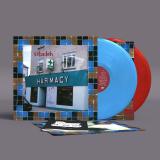
Harmacy (30th Anniversary Expanded Edition) finally makes Sebadoh’s seminal 1996 indie-rock album available again, and adds 16 bonus tracks, including alternate versions, rare B-sides, BBC sessions, and live material from the Harmacy era.
Sebadoh was formed in 1986 in Northampton, Massachusetts, by Eric Gaffney and Lou Barlow (Dinosaur Jr., The Folk Implosion), with multi-instrumentalist Jason Loewenstein completing the line-up in 1989, and Bob Fay taking Gaffney’s spot in 1994. By 1994, the band had released five albums and more or less changed the pockmarked face of indie rock. Their albums were mostly home recordings, decried for their lack of sharp production, but embraced by fans of Barlow's intimate songwriting style, which owed as much to Joni Mitchell as Bob Mould. In 1996 Harmacy, their breakout sixth album, arrived, finding Sebadoh as conflicted as ever: torn between screaming punk and gentle crooning, replete with highly personal songs guaranteed to bring down even the most super-charged midnight ravers.
Released in the wake of The Folk Implosion’s Top 40 hit "Natural One," Harmacy became Sebadoh's first charting album in the U.S., and yielded the hit "Ocean." Interview said, “Harmacy is nothing short of a masterpiece.” The New Yorker called it a collection of “perfectly crafted, honest (read: ambiguous and emotionally twisted), impassioned songs about love and hate.” Harmacy was hailed as one of the best albums of 1996 by Rolling Stone, The Village Voice, and NME.
debe ser publicado en 20.11.2026
For UnExposed Records first vinyl release, Uruguay’s Marcos Coya wanted to show the world a different side of his artistic approach. In a world of monotonous copy/paste, Marcos wanted to bring something unique to the table. A compilation of spacey, dreamy & emotional tunes custom built for the dance floor yet still experimental as well. Deep grooves & long developments. No fluff. No overbearing bangers. True underground production principles. Crafted for those with a refined palate.
The A-side is dedicated to Marcos Coya’s four to the floor production work. This sonic expedition begins w/ a bang: the record’s title track “Moon Trippin”! A showcase of freaky melodies accompanied by groovy percussions which bolster a vocal of Prince speaking his mind about the true essence of creating musical art & his disdain for mainstream music industry critics.
“Delirium” closes out the A-side w/ a dreamy acid house tune adding an emotional touch to the record. After hours material. A real step forward for Marcos and his production work. Leaning heavier than ever into trusting his melodies. Taking a bit more risk with his approach by creating something you’ve never heard from him on any of his nearly 20 vinyl releases over his career.
For the B-side we shift over to a more breakbeat approach with 2 absolute heaters. B1 introduces the track Hearthug has claimed to be one of the tracks of the year: “Rage Dog”. Rage Dog is a Marcos Coya signature track due to its rock & hip hop influences developed during his adolescence. Marcos even purchased new synthesizers specifically to improve this track & its melodies. The cherry on top is the vocal from Rage Against The Machine’s front man, Zack de la Rocha, which adds a rebelliously political undertone to the record, something UnExposed & Marcos both are very proud to address w/ passionate conviction during this time of war and injustice.
We close out the record with “D.N.A.”, the most experimental piece of art on this vinyl release. A wild combination of breakbeats, guitars, melodies & crazy vocals. The perfect bizarrely fascinating conclusion to this wild trip to the moon and back.
Early support from heavy hitters such as: DJ Koolt, Anthea, Velasco, KT, Hearthug, Mario Liberti, Daïf & many more!
El artículo no se ha publicado. Tú puedes reservar ahora el artículo y después de ser pagado se te será enviado.
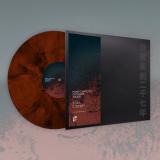
High-definition world building collides with incisive physical urgency around 170 BPM as Pianeti Sintetici makes his first appearance on Samurai Music. Davide Perrone's vivid production style found a more downtempo outlet on last year's release for Samurai sub label Saibai, but he pivots naturally towards the weightier presence of the Exoverse with a richly rendered suite of sonic systems teeming with life and pockmarked with mystery. The spacious drums that lead on 'Agilus' have an acoustic, in-the-room quality that instantly grounds the track before the myriad layers of synthesis start spiralling skywards, pitting twinkling pads against rapid, undulating acid wielded with assured control. By way of contrast 'Mimoide' burrows downwards, using needlepoint marks to puncture the brooding beds of sound looming in the middle distance. At the same time, Perrone weaves lithe, rubbery shapes across the foreground of the mix for a three-dimensional expression you can almost reach out and touch. Opening up a B side tipped towards a mellower pace, 'Living Plasma' leans into a 4/4 meditation as a vessel for another distinctive tapestry of modulating sound design from Perrone's seemingly infinite sonic resources. 'Exoverse' edges towards a more melodic standpoint with its teased flutters of arpeggio that sneak in and out of the mix and a harmonic dimension to the atmospheric layers that shape out the size of the track. Across all four pieces, the sheer detail at play in the Pianeti Sintetici universe is mind-boggling. By rights it should be a busy, stress-inducing experience, but Perrone's gift lies in the ability to take a macro view on these incredibly complex creations, zooming out by boiling the parts down into a symbiotic whole that feels patient and considered. The reward for the listener comes from taking the time to zoom in and marvel at every micro detail writhing across the surface.
En el almacen y preparando para el envío

G.A.M.O. (Gods Against Man's Oppression) recounts events leading to Napoleon Da Legend transformation after being bestowed a metal helmet, which is a weapon against our modern dystopia. The album features a blend of soulful and dystopic grit featuring the likes of Vinnie Paz, Goretex, General Steele, Skyzoo, Passport Rav, Nejma Nefertiti, Innocent?, SKAM2?, Eloh Kush, CF, Dontique and more. It has production from Dub Sonata, Maitre D, Homage Beats, Passport Rav Proffeny and Napoleon Da Legend. The result is 23 tracks that blend retro-sci fi "Noir Wave" and modern Boom Bap. It features an exclusive 2 page comic illustrated by UK's Dan Lish. Limited to 300 copies only.
En el almacen y preparando para el envío

Silicon Scally and Fleck E.S.C. need no introduction at this stage. Both artists are veterans not just of Sheffield's Central Processing Unit label but of modern electro as a whole, with the pair having decades of skin in the game at this point. Their new release, a four-track EP entitledSlipwhere Silicon Scally handles the first half and Fleck E.S.C. the second, carries itself with the adventurous confidence of a record made by masters of their craft.
Slipopener 'Phased Array' is exactly the kind of top quality machine-funk tackle you'd expect from this meeting of minds. The beat programming is deliciously tactile from the off, hissing and clanking like machinery in an old Detroit factory. The feel of 'Phased Array' is altered, though, when the chords come in, a series of alternating floating sounds which give the track an altogether eerier feel. When all of this is coupled with the otherworldly synth blurts that periodically force their way to the front of the track, the overall effect is a piece of real depth assembled by an expert practitioner.
'Phased Array' is followed up by 'Stax', another brilliantly propulsive number. Here we find the drum beat - one which is a little reminiscent of that Kraftwerk tune about the numbers, no less - once more offset by some decidedly more shadowy synth work, all while arpeggiated keyboard licks work against an intricate web of basslines, chords and unidentifiable flying synth tones.
Fleck E.S.C. opens theSlipB-side with 'Good Ride', a number where the nudge-wink title is borne out by a track built around looped snippets of sighing vocals. That said, with a bassline that sounds like a blurting old landline telephone, a ghoulish synth lead and all manner of motion-sick breakdowns, the 'ride' in question could just as well be aWipeout-style whizz through hyperspace as anything more suggestive. 'Good Ride' also sets itself apart from the other joints here by showing off a swaying halftime breakdown.
'Intox Remedy',Slip's closer, wraps the EP in a manner which continues some of the trends of the record's earlier tracks - richly tuneful chords, precision-engineered broken beat drum programming and a wide palette of delightfully unusual synth tones are all present and correct. However, there is also something about the chords here which pares back the eeriness of previous joints for a bit more of a wide-eyed, stargazing feel, and as such 'Intox Remedy' sees the record out by placing the listener firmly back in the cosmos.
Tough enough for the dancefloor and intricate enough for home listening, theSlipEP is a fabulous collaboration from two of the most respected voices in the electro game.
En el almacen y preparando para el envío

After a series of successful outings alongside sidekicks Ofofo and Zongamin, studio wizard MYTRON turns in his debut solo full-length for Multi Culti World Records. With contributions on Invisible Inc, Calypso, Bongo Joe, Kalahari Oyster Cult, LYO, Codek Records and Earthly Measures, Mytron has carved out a name for himself in a carefully-curated left-field quadrant of the indie-dance galaxy. Tuning his oscillators to myriad sounds — from dub and disco to krautrock — the London-based producer perhaps most notably channels the pristine compositional style of Kraftwerk. While most apparent in the use of vocoder, there’s a consistent efficiency of arrangement that recalls the man-machine in effervescent, idealistic fashion. Mytron manages to keep it simple, funky and musical — whimsical tunes that bop along with analog grit, wilderness, and wonk. There’s a warmth and wit that shine through every synth line, an understated confidence that speaks of years spent tangled in wires and waveforms, with an inclusive sonic eclecticism that flattens hierarchies between genres, geographies, and generations. Each influence is invited to the table, treated not as pastiche but invited to dine and dance in a space where kosmische dub disco and Afro rhythms can coexist without borders. The sleeve design echoes this philosophy: video-feedback patterns hinting at our modern screens, both portals and filters — coloured, distorted intermediaries through which we perceive the world. In the trippiest sense, the record is both reflection and refraction — a sonic mirror held up to an interconnected, glitchy reality. Tailored equally for DJ use and home-listening head trip, the album is meticulous, mischievous and merry.
BanBanTonTon review:
On Mytron’s debut long-player for Multi Culti groovy 21st Century leftfield house gear collides with Daniele Baldelli and Beppe Loda’s hugely influential `80s afro / cosmic. The 9 tracks are chunky, chugging and full of funky, funny noises. Old school B-lines mixing with eccentric electronics. Spinning, spiralling sounds.
Sugar is an electro-pop, vocoder confection, cut from the same sonic cloth as cult classics like Codek’s Tam Tam. Created from tough trap drums, splashing effects and a mutant Giorgio Moroder bass arpeggio. The title track, Propellor, pits Kraftwerk-esque hardware harmonised vocals against a bongo loop and a whistling hook. Playground has simian shrieks surround tumbling tom-toms. Highway Maintenance adds kosmische synths to a dance of woodblocks and buzzing bottom end. Keep On Dubbing is an organ-led, clip clopping percussive canter.
Tracks such as Speaker Can Talk, shot through with disco lasers blasts and recalling Curt Cress’ Dschung Tek, also lift the tempo up, but the bulk of the music here is a mid-tempo, techno drum circle. Squelchy sequences gurgling in and out of programmed percussion. On Quasar, spiky acid edges in and slowly takes over.
Key references that come to mind are Baldelli’s own turn-of-the-2000s Cosmic Sound Project productions, and Wolf Müller’s scene shaking sides on Themes For Great Cites, from around a decade later.
En el almacen y preparando para el envío
repressed !
Francois Kevorkian is a name that should need no introduction. With over 40 years in the game FK has occupied numerous roles in his long and storied career - drummer, DJ, A&R man, remixer and producer - his skills know no boundaries. Having DJ-ed during the nascent days of club culture in NYC alongside Walter Gibbons, Larry Levan and more, Kevorkian has been there from day one. Years spent in the seminal clubs of the day sharpened his ears and his prowess behind the mixing desk saw him become the A&R man at the legendary Prelude records in the early 80's, this in turn led to him working with everyone from The Eurythmics, Depeche Mode, Erasure, D-Train, Yazoo, The Smiths, Kraftwerk and many many more. A true NYC original and legend, Kevorkian is still active today and the respect he commands amongst his peers has never waned, his adventurous extended DJ sets, seminal mixes and remixes and his open ears and open mind have ensured that he will go down in history as a musical pioneer.
Rewind to 1995. Kevorkian's 'Wave Music' imprint has come into existence with a handful of releases. No-one could imagine that his self-produced 'FK EP' - the next release on the label - would be a stone cold classic. Easily one of the most consistent, exciting and solid EP's to come out of NYC during this golden era of dance music. Across 4 tracks we are taken on a sound journey through a world that is undoubtedly informed by FK's time as an engineer, DJ and most importantly, a music lover.
EP opener 'Hypnodelic' brings us into this world, a deep, driving cut that fuses the dubbed out vocals of Freddie Turner against FK's keyboards and immaculate drum programming, oozing cosmic electronic soul, this track was destined to be a future classic. 'Mindspeak' also boasts some tough drums and with a respectful nod to Chicago is an incredibly mixed and arranged peak-time cut that will drive your dancefloor into deep space again and again. 'Edge Of Time' welcomes us to the flipside of the EP, wild Latin percussions, tablas and old school horn stabs drive this monstrous cut, not to mention cavernous dub FX and that huge bassline that just doesn't let up. Essential. 'Moov' rounds things out on a more subdued, stripped back vibe. Reversed percussions and spaced-out synth chords lace this beautifully understated and warm track, one that builds into a crescendo of melodies and hypnotic rhythms and the perfect way to close what has been a truly special musical journey.
This essential reissue of the 'FK EP' has been fully licensed, sanctioned and remastered in conjunction with FK from the original master sources by Optimum Mastering, Bristol UK, repressed onto high quality vinyl and packaged as the 1995 release was. A truly classic record indeed, available again for 2018. Welcome back Wave Music!
En el almacen y preparando para el envío

A year after her rebirth on the 2.0 EP, Maedon returns to her Rant & Rave imprint with the intentions of her previous release now distilled and focused into bold new forms. Whereas before the artist was transitioning from her earlier work towards new directions, Matter & Form arrives as an extended concept piece featuring four variations on a bracing, developed sound, an equally impressive remix from Lady Starlight, and a contrasting mix of the opening track. Where 2.0 charted emergence, 'Entelechy I-IV' unites to actualize this potential into a single-minded purpose behind fundamental principles.
Immediately launching into territory her last release only hinted at, 'Entelechy I' is a showcase for her now-mature approach. Her rhythmic dexterity and groove focus remains, with drum programs subtly evolving phrase by phrase, but they now form the basis for layered, complex compositions in a decidedly contemporary vein. 'Entelechy II' shifts focus towards the arrangement while keeping its drums steadily driving, drawing attention to details in its densely designed sounds through deliberate, gradual processing. Relaxing the tempo slightly, 'Entelechy III' fills in the extra space with more dark atmospherics and finely detailed soundscapes, finding a heavy medium between dark ambience and hammering techno. Another deeper effort, 'Entelechy IV' counterbalances insistent, finely-tooled percussive bleeps and equally persistent bass figures against another sweeping bass pulse, at times breaking down into carefully-controlled atonal aggression. Lady Starlight's remix is skeletal in comparison, deploying its parts sequentially over ticker hi hats and a massive kick while using small shifts to incrementally build tension. 'Entelechy I (Bent Mix)' is more accurately described as hellbent, stripping out the original's harmonic elements to grind the heavy rhythmic workout against an unrelenting acid line.
En el almacen y preparando para el envío

Space Echo is proud to present the new single by Derane Obika and Go.Soul.Map., arranged and performed by Sicilian
mastermind producer Salvo Dub - an overwhelming fusion of electronic sounds and soulful vibes. This track is a balance
of pulsating rhythms and enveloping melodies, a sonic journey that invites dancing and reflection.
The production stands out with its electronic soul — a rich blend of synthesizers and deep bass lines that pull the listener
into an energetic and immersive atmosphere. Every beat is crafted to move your feet and light up even the most
sophisticated dance floors.
It’s an explosion of energy, set against the unmistakable voice of Derane Obika. With his warm, soulful tone reminiscent of
Seal, Derane brings a unique spirit to the track, infusing every word with raw emotion and deep.
Here, Derane and Go.Soul.Map. don’t just celebrate dance music — they invite the listener into a full-bodied sensory
experience, where electronic beats meet soul tradition to create something truly extraordinary.
The lyrics expresses the idea of a complete fulfilment found in someone or something essential. It suggests that this
presence — a person, an emotion, or a spiritual guide — is so fundamental and complete that everything else becomes
unnecessary.
It evokes a profound sense of connection, purpose, and clarity. Like a path that leads directly to the essence of existence,
it conveys the feeling of being guided, inspired, and grounded all at once. It is a declaration of absolute trust, of love or
devotion — where the journey and the destination fully coincide.
Side B features a new version of “Walkin’ a Dream” from the debut album “Peaceful Sound for Broken Minds”. The new
rework 25, offers us futuristic and electronic sounds with 70s and 80s disco influences, mixing with space and cinematic
themes - very interesting!
En el almacen y preparando para el envío

Step into the emotional landscapes of Saudade’s new EP Expensive Noise, a multi-textured journey where analog machines speak louder than words. Each track captures a different state of mind, blending depth and groove with raw, honest sound design. The EP opens with “Expensive Noise” — direct, grounded, and hypnotic. No detours, no hesitation — just raw analog power locking into a loop with magnetic tension. The groove builds steadily, shifting your state of mind as the rhythm takes hold. “Anyway” brings a dreamy, bittersweet touch. Exclusive to vinyl, this extended version unfolds like a teenage memory you never shared — warm, nostalgic, somewhere between electro and pop, glowing softly from within. “Colored Life” dives into detailed minimal deep house territory. Rounded and generous, its sound design sculpts soft clouds of melodies against crisp, syncopated snares — floating between dream and presence, like a cushion made of rhythm and light. “Porte de la Villette 45” echoes the EP’s birthplace — a raw area near the Parisian périphérique, where engines roar, people hustle, and concrete weighs heavy. Yet within this urban friction stands Studio Villette 45 — a funky, soulful shelter where the machines find their groove. The record closes on “Cœur” (heart in French) — a stripped-down, heartfelt outro. Just a Prophet 5 pad, no tricks. A moment of vulnerability, stillness, and truth — as if the music had finally dropped its armor. Between analog heat and emotional honesty, Expensive Noise is Saudade at his most sincere — building bridges between power and softness, body and soul, sound and silence.
En el almacen y preparando para el envío

Limited repress!
What is it about New York City, that concrete jungle that continually inspires the creative spirit? From Warhol’s Factory to Larry Levan’s Paradise Garage to David Mancuso’s Loft, collectives that celebrate and nurture unfettered, organic artistry have been absolutely intrinsic to the story of this sprawling metropolis. Its latest chapter is being written at the hands of ‘The Maestro’, Grammy Award winner Louie Vega and his Expansions NYC parties, the sound documented in his latest album Expansions In The NYC (Nervous Records).
Starting in February 2019 in Manhattan and Brooklyn venues, Vega’s Expansions NYC parties have their origin not in his revered prowess as a DJ but rather his whole-hearted appreciation of the different elements of the dance floor surrounding him: the dancers, the musicians who bring their instruments to join him ad-hoc on the night, the small, dedicated crowd of clubbers whose ears to the ground keep them informed on the underground party information. The events included 6-hour DJ Sets with Louie under his select curation, and would usually end with 3 AM jam sessions involving keyboardists, guitar players and poets all performing in front of a jam packed crowd. In just a few short years the Expansions NYC events have evolved into an NYC-clubland institution, an intimate celebration of house, funk, disco, afro, R&B and more.
As with his parties, so goes his album. The collective vibe that forms the beating heart of Expansions NYC parties is absolutely front and centre in Expansions In The NYC, Vega drawing in one of the most comprehensive lists of collaborators in recent memory. House heavyweights Honey Dijon, Joe Claussell, Moodymann, Kerri Chandler and Anané rub up against legendary vocalists Bernard Fowler, Cindy Mizelle, Lisa Fischer, Audrey Wheeler and Tony Momrelle. Gospel royalty BeBe Winans and Debbie Winans, pop icon Robyn and rising star Karen Harding sit alongside disco-era champions Unlimited Touch, Cuban jazz pianist Axel Tosca, Nico Vega, Two Soul Fusion with Josh Milan and Vega and underground legend DJ Spinna. At the centre of it all, fingerprint on every beat, touch on every groove, sits a master at work, weaving the individual threads into a rich dance music tapestry.
"In the past few years I’ve found new inspiration both from the musicians I’m working with and the audiences coming to see me at my DJ shows,” Vega says. “So for me this album represents new beginnings, bringing together a beautiful mosaic of artistic perspectives to express musically what we call Expansions In The NYC."
At its heart, Expansions In The NYC is a love letter to New York, as much as melting pot as the city it represents, the scope of its line-up possible only because of the influence and reverence of Vega the artist, the DJ, the producer, the curator. In creating this album, Louie Vega has once again utterly enriched the lives and libraries of music lovers the world over, far beyond the hustling streets of NYC that have so indelibly left their mark on his work.
En el almacen y preparando para el envío

Just when you thought every holy grail must have been unearthed by now, here come Basic Unit with their deep cover late 90s masterpiece Timeline, the dankest darkcore-electronica-tech step album you've likely never heard.
Ben England and Rick Dallaway formed Basic Unit and debuted on Moving Shadow in 1997. They also moved on Nocturnal, a cult label that reached beyond D&B to platform some more experimental sounds. It was a short-lived label with some ominous footnotes — 'Several people involved with Nocturnal have vanished or are dead' reads the label's Discogs description. But in 1998 Nocturnal put out Timeline, a CD-only album from Basic Unit that cut a sharp, scathing figure against most D&B of the era. England and Dallaway embraced the album format as a chance to go deep, inhaling their inspiration from early days Autechre as much as Source Direct and boiling down the results to a steely, minimalist framework.
The likes of 'Resolution' are desolate, stark workouts that feel fractured and raw enough to align with early grime, complete with the strings, but the rhythms move in mysterious formations designed to confound like the most bloody minded electronica artists of the late 90s. Blown out bass and scattered flurries of machine gun breaks, squashed tundra drones that sound like they were pulled from 10th generation VHS b-movies and bit-crushed animal grunts fit for a Mega Drive beat 'em up. The sonics are redolent of the times, but Basic Unit chisel them mercilessly into their spartan vision, deploying brain-frying beat science with a stern restraint.
It's the kind of record that gives so much while holding so much back — a deadly tease that has flown under the radar for too long. This is the sort of shock reissue material that gets us gassed at Sneaker, and we're proud to be giving it a re-boost and a first ever outing on wax, all the better to shock you out.
En el almacen y preparando para el envío

Serenda is a London-based DJ and producer of Guyanese and Greek heritage, known for her rich, eclectic sound rooted in house but never confined by it. Her sets fold between soulful depth and experimental edge, always delivered with a bold, contemporary vision.
Her sets are grounded in rhythm and instinct, built less around genre than sensation. She blends percussive house, warped club music, and raw, organic textures; crafting dancefloors that feel immersive and visceral and emotioanlly charged . There’s a physicality to her sound that edges toward the primal. For Serenda, DJing is a form of play - fluid, responsive, and deeply connected.
She deconstructs and distorts house music with intent, letting in pressure, dissonance, and emotional rupture. Her sets draw on the “timeless mindless states” of Mancuso’s The Loft, unfolding as rituals that don’t smooth over the chaos, they work with it.
Following the release of her debut EP The Prophecy on Josh Caffe’s Love Child label, she made her mark with a headline show in Fabric’s Room 2 and a Rinse FM residency. A regular in London’s queer underground, Serenda is also shaped by New York’s experimental club scene, where experimental sound and unfiltered expression mirror her own ethos.
Afro-diasporic and South American ritual in tension with city life, instinctive rhythm against digital overstimulation. Her fascination with world-building and quantum physics runs through everything she creates, fusing sonic design and sensory experience into one evolving landscape
En el almacen y preparando para el envío

The second part of Roy’s return to Emotional Response and the While Line Sunrise series dives further in old Hard Drives and DATs to unearth more lost techno for the brain, heart and feet.
Ensuing melody for driving beats, Fenix Haus 6 is a TB303 blast. Electro meets acid, the focus is on the rhythm, percussion is pushed to the fore and the rest will follow. Exit Ren8 brings some melody touches to the jacked-up ride, acid melodies ride classic Roy beats, programming for the mind and soul.
As with Part 1, here the flip expands the retinae of the found sound, Cristia Theme with flourishes of IDM and industrial touches, wrapped in a sheen of acid squelches and snap hats.
The series completes with the theme, the ambient meets kosmiche of White Line Sunrise III. Minimalist keys against cathedral sweeps, motorik drums float in and are gone, a grandiose ending with, as always, a light hearted ending, Roy’s return is a welcome and an intriguing interlude.
En el almacen y preparando para el envío
En el almacen y preparando para el envío

Longcut Records thrives on the transformative power of music. Discover concept albums that tell stories of journeys, struggles and raw emotions. Find your next soundtrack to let your mind wander or join us in our social activism, amplifying the voices that deserve to be heard. Just like our emblem—a spirited dachshund in motion—we embody relentless energy and a rebellious spirit against mainstream music. Mind us, but our true heartbeat resonates most powerfully with modern composition, ambient, techno, jazz, and experimental sounds.
En el almacen y preparando para el envío

‘Subtle Bodies’ is the new album by US-based sound artist and composer Francis Morning, released on Ltd. cassette via Lo Recordings, which contemplates the concept of the non-physical, energetic layers of a person that exist alongside the physical body. Being the next installment of Lo Recordings' ongoing SPACIOUSNESS series, the album features 15 tracks that embrace the theme through hints of electric piano melodies buried under layers of tape hiss, meandering sine wave bass notes, and expansive ambient textures.
The compositions on ‘Subtle Bodies’ are meditations on impermanence, imperfection, and the natural process of decay, approached without judgment. They arise from moments of introspection, often inspired by the contemplation of inner channels, energies, mindfulness, breath, and other Tibetan Buddhist practices. Deliberately recorded using minimal equipment, each piece explores and pushes against the thresholds in an attempt to strike a balance of texture and noise. About Francis Morning:
Francis Morning is a US-based sound artist, musician, and composer known for crafting gently textured sonic environments using a simplified palette of musical hardware, including analog tapes and cassettes, field recordings, synths, pedals, pianos, and acoustic and electric guitars. His work embraces imperfection, human quality and touch, and the transient nature of life. The music began to take shape as simple, personal daybreak rituals with no audience or expectations. Each piece was recorded live in single takes, with the original elements eventually discarded or recorded over, as a statement and exercise in impermanence and letting go.
En el almacen y preparando para el envío

Black Vinyl[35,08 €]
We’re teaming up with ELUCID and Fat Possum for a limited edition of 300 copies of a Rush Hour black ice coloured edition.
E L U C I D, one half of the illustrious duo Armand Hammer, is here with the full-length follow-up to 'I Told Bessie'. Further experiments in the sonic, expanding on the 'live' side of music paired with the embracing of chaos. Something you haven't heard, or not so for a very long time. E L U C I D is here to reveal the bleakness of reality.
---------------------------------------------------------------------------------
''There is never time in the future in which we will work out our salvation. The challenge is in the moment; the time is always now.''
James Baldwin
A raw, crackling urgency runs through rapper-producer ELUCID’s new album REVELATOR like an underground power line. There is no space here for sepia-toned reminiscences or indulgent self-mythologizing. Intellectual rabbit holes have been filled in with concrete and rebar ; there is nowhere to hide and no off ramp from the audio Autobahn that ELUCID has fashioned—a renegade Robert Moses with gold fronts, bulldozing the homes of the powerful and the complicit. REVELATOR brims with the energy of now, with a refusal to look away. Carpe diem in a murder one mask.
Born in Jamaica, Queens, ELUCID has been on the cutting edge of New York’s underground scene since the mid-2000s. From the beginning, he has defied both convention and expectation. He ran with Okayplayer darlings Tanya Morgan, but his own music eschewed their throwback charm for glitchy noise experiments and bass-swamped culture jamming. His 2016 debut studio project Save Yourself (re-released in a deluxe edition last year) announced him in earnest. But in recent years, his Armand Hammer releases with partner-in-crime billy woods have received significant attention and acclaim. Serving as a followup to his last solo album—2022’s comparatively balmy I Told Bessie—ELUCID hoped to “re-distinguish” himself with REVELATOR, setting himself apart amidst the increasing attention around the music he and his friends are making together.
For ELUCID, this meant setting bold new challenges for himself. One of these was diving further into live instrumentation than ever before—”getting my Quincy Jones on,” as he puts it. The testing ground for this approach was Armand Hammer’s most recent project, 2023’s We Buy Diabetic Test Strips’ Möbius strip soundscapes, warmed with instrumental flourishes and skin-shedding beat progressions. With REVELATOR, though, ELUCID strove to create an atmosphere of chaos, embracing experimental electronics and atonal sample bursts. He worked on much of the album with co-producer Jon Nellen, who comes from a background in avant-garde and Indian classical music. “I wanted to get as freaky as I could at this moment. I wanted people to hear things, maybe for the first time, or in a way they haven’t for a long while,” the rapper explains.
ELUCID arrived at the studio with a collection of noise sources: non-referential samples, glitches and noises. Together he, Nellen, and others created forms out of them and, as ELUCID recalls, “just started playing drums with it.” Their fried, distorted sound was directly inspired by Miles Davis at his most uncompromising—specifically, the tone-clustering funk track “Rated X” from his 1974 double LP Get Up With It. At times, the pairing of rap with avant-fusion sounds also brings Emergency! from The Tony Williams Lifetime to mind, perhaps in an alternate timeline where the late drummer was listening to Ice Cube’s AmeriKKKa’s Most Wanted.
“The World is Dog,” REVELATOR’s lead single, functions as the album’s aesthetic thesis statement. Like the Davis track, the textures are punishing, the tonality is in free-fall, and the driving breakbeat of a groove cuts in and out unceremoniously. Avant-jazz bassist Luke Stewart, who appears throughout the record, holds the whole thing together just long enough for ELUCID to tightwalk over the beat. This tension is exactly where REVELATOR sets itself apart; in a time of drumless loops, and safe soul samples, this is a high-wire act with no safety net. Similarly, the song announces the themes of the album within just a few phrases, evoking the way societies accept and adjust to new levels of debasement and brutality while suffocating under the weight of history: “Can’t clock the kill, all a mystery/Forced past will eating everyone eventually/The world is dog.”
Many of the songs on REVELATOR grapple obliquely with dissolution and disenfranchisement in America and across the world—the grim realities of our domestic sociopolitical climate and our involvement in foreign conflicts. “Much of my artistic and political sensibility comes from the Black arts movement here in New York,” ELUCID explains. “Recognizing the interconnected global struggles against oppression, artists and thinkers created works and actions in solidarity with freedom movements in South Africa and Palestine.” ELUCID cites intellectuals like Amiri Baraka, Kwame Nkrumah, Audre Lorde, Sonia Sanchez, and Nikki Giovanni among his heroes. (One track on the album is specifically inspired by Lorde’s work, “SKP,” citing the scholar’s paper “Uses of the Erotic: The Erotic As Power.”) Songs like REVELATOR’s insistent closer “ZIGZAGZIG,” find ELUCID applying up-to-the-minute messaging, making explicit reference to the conflict in Gaza: “Feed a war machine…from river to sea, in lieu of peace.”
Despite ELUCID’s preference for cacophonous system overload here, the rapper also provides moments of respite. Recorded at The Alchemist’s Los Angeles studio, the laid-back, wheezing “INSTANT TRANSFER” is a collaboration with billy woods, which crystallizes their shared sense of creative determination. “With much momentum behind us and even more on the horizon, I knew a purpose, and that every step was ordered to that purpose,” ELUCID said of the experience. Meanwhile, the jittery “HUSHPUPPIES” is a playful anomaly on the track list, providing a snapshot of ELUCID watching his grandparents in the kitchen while preparing for Friday night fish fry dinners.
“Love still rules over on this side,” ELUCID says. ”I’m raising a family. We are making meaning and finding joy in the midst of all the fucked up-ness of everything around us because the alternative is cowardice and slow death. We remain rooted. We celebrate our people and our wins. Struggle is necessary.”
“IKEBANA” is one of ELUCID’s strongest statements of purpose on the record, blending the record’s heaviest themes with its most hopeful sentiments. supported by a shoutalong refrain and an urgent prog-funk groove. Breaking away from images of dissolution and crumbling societal systems that populate REVELATOR, ELUCID notes that the only way to navigate life’s bleakest landscapes is to cling to love and believe in those around you—to look forward toward something better that may or may not be possible. For the rapper, one of the album’s most trenchant lines comes during a centerpiece of a beat drop: “Being alive/I must look up.”
“The lyric ‘being alive I must look up’ is important especially in the context of this album. Much of the album imagery is harsh and reflects the actual doom some of us experience. But still I/we exist,” ELUCID explains.
Every artist is, in one way or another, the product of their time, bound by life’s leaden gravity to operate within the space of that which is already known. But there are some who are able to shake free of these ties, to shape the culture as it unfolds, to make the present their own.
Revelation, as a concept, points to the scales falling from people’s eyes—something that has been hiding in plain sight becoming clear. “The revelator relates to things that have been talked about, things that have been forecasted,” ELUCID adds. “And now they’re really here, and everyone sees it. And there’s no escaping.” REVELATOR plays out with the unmitigated power of those storms, laying waste to any genre conventions in pursuit of a certain physicality. Here, ELUCID develops a wholly distinctive musical language to explore our fractured modernity.
REVELATOR's packaging was designed by longtime Armand Hammer / Backwoodz art director, Alexander Richter.
En el almacen y preparando para el envío

Michael Mayer albums don’t come round too often, which is one of many reasons why his fourth collection, The Floor Is Lava, is a genuine event. It’s been eight years since his last one, the collaborative & released on !K7; its predecessors, Mantasy (2012) and Touch (2004), took their sweet time, too. It’s no real surprise, given the many hats Mayer wears – globetrotting DJ, revered remixer, inveterate collaborator, and boss of both Kompakt and Imara – that his solo productions are relatively sparing. But this also speaks to their quality: Mayer’s name on a record sleeve is a sign of quality, of music that’s both looking to the future and calling back to the past, that balances the imperatives of the dancefloor and the loungeroom, that’s as exploratory as it is functional.
On The Floor Is Lava, Mayer seems to be taking the temperature of both the music that surrounds him (past and present), and the ides of the industry he works within. There’s that iconic album title, for a start. “The album’s mindset,” he says, reflecting on those four words together. For Mayer, it’s partly a critique of the way the industry boxes in both producer and listener, focuses them on genre, on market, on the next new thing: “Being a free minded spirit that transcends genres has become an uphill battle.” A battle worth fighting, though, and with The Floor Is Lava, the result is an album that’s varied, quixotic, idiosyncratic, charming, and deeply, addictively listenable.
Throughout, Mayer finds thrills in exploration and juxtaposition, allowing unexpected things to blossom and giving them their life, their platform, throwing the listener exciting curveballs: “It’s a DJ album by a DJ that’s easily bored.” Either easily bored, or endlessly curious, The Floor Is Lava is rich with ideas. It opens with “The Problem”, which looks back to look forward, embracing the rickety way early house productions threw samples together with gleeful abandon. Mayer mentions Pal Joey, and the scene around Rockers Hi-Fi and their Different Drummer imprint, as reference points, and you can hear that freewheeling spirit throughout.
It’s followed by “Vagus”, a slinky, sensual minimal house number that Mayer describes as his “musical catnip”. The flow of these two opening cuts defines the dynamic of The Floor Is Lava, defining the dialectical drive at its core: thesis and antithesis leads to synthesis, but with a welcome prickliness that means you’re always excited, always engaged. It’s also productive in the way it derives energy from rubbing genres and sounds against each other, in unexpected ways, for maximum musical frisson. There’s psychedelic techno on “Feuerstuhl”, more minimal techno with “Ardor” (Mayer mentions ‘Immer 1’ era 90s minimal as inspiration), slippery, Shepard-tone breakbeat through “Sycophant”, a lovely, lush vocal turn on the poppy “The Solution”.
The album closes with the melancholy “Süßer Schlaf”, where Mayer sets a poem by Goethe to one of his most haunted, moving pieces of music yet, in abstract tribute to a lost friend. It’s one of the most affecting moments on The Floor Is Lava. There’s also an update on 2020’s wild Brainwave Technology EP, with the surrealist glitter-stomp of “Brainwave 2.0” (check out those handclaps!),where Mayer’s thinking about the socio-political precipice of the now: “I’m reading with great interest about this whole complex of how humanity is about to cross so many lines and the implications that the resulting financial and educational inequality will bring.”
That’s The Floor Is Lava: then and now, brainwaves and nerve structures, problems and solutions, genres on fire; the real, the unreal, and the surreal. An album for the easily bored and the endlessly curious. Mayer has the last word, telling us all you need to know about the album’s spirit: “Burning for the cause, being zealous, being addicted to the heat of the night, the exuberant powers of music.”
Michael Mayer veröffentlicht nicht oft Alben, was einer von vielen Gründen ist, warum ‘The Floor Is Lava’ ein echtes Ereignis ist. Es sind acht Jahre vergangen seit seinem letzten Werk, dem Kollaborationsalbum &, das auf !K7 erschien; seine Vorgänger, Mantasy (2012) und Touch (2004), ließen ebenfalls auf sich warten. Es überrascht nicht wirklich, da Mayer viele Rollen gleichzeitig erfüllt – weltreisender DJ, vielbeschäftigter Remixer, unermüdlicher Kollaborateur und Chef von sowohl Kompakt als auch Imara – weshalb seine Solo-Produktionen eher sparsam ausfallen. Doch das spricht auch für deren Qualität: Ein Album mit Mayers Namen auf dem Cover steht für Qualität, für Musik, die sowohl in die Zukunft blickt als auch auf die Vergangenheit verweist, die das Gleichgewicht zwischen den Anforderungen des Dancefloors und des Wohnzimmers hält, die genauso erforschend wie funktional ist.
Auf The Floor Is Lava scheint Mayer sowohl die Musik um ihn herum (vergangen und gegenwärtig) als auch die Strömungen der Branche, in der er arbeitet, zu reflektieren. Da wäre zunächst der ikonische Albumtitel. „Die Grundhaltung des Albums“, sagt er, drückt sich in diesen vier Worte aus. Für Mayer ist es teilweise eine Kritik daran, wie die Industrie sowohl Produzenten als auch Hörer in Schubladen steckt, sie auf Genres, auf den Markt und auf das nächste große Ding fokussiert: „Ein freier Geist zu sein, der Genres überschreitet, ist zu einem steinigen Weg geworden.“ Ein Kampf, der sich jedoch lohnt, und mit The Floor Is Lava ist das Ergebnis ein Album, das vielfältig, eigenwillig, charmant und tiefsinnig, aber auch süchtig machend ist.
Im gesamten Album findet Mayer Freude an der Erforschung und Gegenüberstellung von Stilen, lässt unerwartete Dinge erblühen und gibt ihnen Raum, überrascht den Hörer mit spannenden Wendungen: „Es ist ein DJ-Album von einem DJ, der sich schnell langweilt.“ Entweder langweilt er sich schnell oder er ist unendlich neugierig – The Floor Is Lava ist reich an Ideen. Es beginnt mit „The Problem“, das in die Vergangenheit blickt, um nach vorne zu schauen, und die wilde Art, wie frühe House-Produktionen Samples mit fröhlicher Unbekümmertheit zusammenwarfen, aufgreift. Mayer nennt Pal Joey und die Szene um Rockers Hi-Fi und ihr Label Different Drummer als Referenzpunkte, und dieser freie Geist zieht sich durch das gesamte Album.
Es folgt „Vagus“, eine sinnliche Minimal-House-Nummer, die Mayer als seine „musikalische Katzenminze“ beschreibt. Der Fluss dieser beiden Eröffnungstracks definiert die Dynamik von The Floor Is Lava und den dialektischen Antrieb im Kern: These und Antithese führen zu einer Synthese, jedoch mit einer willkommenen Schärfe, die dafür sorgt, dass man immer aufgeregt und engagiert bleibt. Zudem gewinnt das Album Energie, indem es Genres und Klänge auf unerwartete Weise aneinanderreibt, um maximalen musikalischen Nervenkitzel zu erzeugen. Es gibt psychedelischen Techno in „Feuerstuhl“, mehr Minimal Techno mit „Ardor“ (Mayer erwähnt ‘Immer’ Ära Minimal als Bezugspunkt), gleitenden Shepard-Ton-Breakbeat in „Sycophant“ und einen lieblichen, üppigen Vocal-Auftritt im poppigen „The Solution“.
Das Album schließt mit dem melancholischen „Süßer Schlaf“, in dem Mayer ein Gedicht von Goethe vertont und eine seiner bisher eindringlichsten und bewegendsten musikalischen Kompositionen schafft, als abstrakten Tribut an eine verschiedene Freundin. Es ist einer der ergreifendsten Momente auf The Floor Is Lava. Ebenfalls gibt es ein Update der wilden Brainwave Technology-EP von 2020, mit dem surrealistischen Glitzer-Stampfer „Brainwave 2.0“ (hör dir diese Handclaps an!), in dem Mayer über den sozio-politischen Abgrund der Gegenwart nachdenkt: „Ich lese mit großem Interesse über diesen ganzen Komplex, wie die Menschheit dabei ist, so viele Grenzen zu überschreiten und welche Auswirkungen die daraus resultierende finanzielle und bildungstechnische Ungleichheit haben wird.“
Das ist The Floor Is Lava: Damals und heute, Gehirnwellen und Nervengeflechte, Probleme und Lösungen, brennende Genres; das Reale, das Unreale und das Surreale. Ein Album für die schnell Gelangweilten und die unendlich Neugierigen. Mayer hat das letzte Wort und sagt uns alles, was wir über den Geist des Albums wissen müssen: „Brennen für die Sache, leidenschaftlich sein, süchtig nach der Hitze der Nacht, den überschwänglichen Kräften der Musik.“
En el almacen y preparando para el envío

En el almacen y preparando para el envío

"Let's dream of underground raves or enigmatic gatherings of the clandestine, where your mind shall wage ethereal battles against soulless algorithms amidst the nocturnal dance, traversing a labyrinth of dystopian dreams. Dance the night away, dance the night away."
Strange times are here.
En el almacen y preparando para el envío

The story of Ultrasonic Grand Prix is one of two vintage 60s guitars and their owners. I love my 1967 Vox Grand Prix guitar,” declares multi-instrumentalist/producer Shawn Lee - creator, among other feats, of the soundtrack for Rockstar video game classic Bully, and one half of Ultrasonic Grand Prix. “It is a serious beast and an important part of my arsenal. Every tone you need…’For guitar maestro Barrie Cadogan - of Nottingham Freakbeaters Little Barrie, best known for the main title theme of ‘Better Call Saul’, The The, Liam Gallagher and playing on the soundtrack for Baz Luhrmann’s ‘Elvis’ - it was the Vox Ultrasonic, also from the same period, that caught his eye. “I first became interested in Vox guitars because of people who used them like Spacemen 3 and the James Brown band of the late 60’s”, he explains, “but it was when I was part of a recording session at Anton Newcombe’s studio in Berlin that I had chance to get to know the Vox gear better. I was borrowing an Ultrasonic from a friend for a while and Shawn already had his Grand Prix. I thought it would be a good name for our project whenever we got it going.’ It was with this shared passion for these weapons of vintage, psychedelic gold that the suave, velvety, and off-kilter cool of INSTAFUZZ was born. While a project born of recent times, the flames of INSTAFUZZ were first ignited all the way back in 2010, where the two met during mixing sessions for Little Barrie’s 2011 LP King of the Waves. Snap forward a decade and we find Cadogan ripping guitar licks on Instagram, the workaholic Lee using these as inspiration to lay down rhythm tracks on analogue drum machines. And not long after that, cut to the two trading files back and forth furiously online, birthing music together in ever more completed forms. And the music that did emerge was weird, startling, and insatiably groovy. With one foot dipped in the organ-warbling garage of 60s psych, and the other vibrating in the mind-expanding fractals of the British Acid House boom, INSTAFUZZ plies the earthly quintessence’s of blues, rock, soul and jazz, against the preternatural discomforts of programmed drums and unhinged synthesisers to produce something distinctly and nostalgically futuristic
En el almacen y preparando para el envío

microCastle’s first offering of 2024 welcomes Adrian Roman back to the label for his second artist showcase. Hailing from Spain, Adrian Roman first rose to prominence in 2021 with a string of superlative releases which redefined his sound, resulting in an aesthetic that was both cutting edge and effortlessly cool. F, nmully formed within the creative confines of his Castello studio, Adrian’s first microCastle project, 2022’s‘ Disturbing the Perception’ succeeded in showcasing his inventive approach to composition, while remaining club-effective, and in turn earning play from Aera, Fideles and Jimi Jules, amongst others. Moving forward the next eighteen months have proved to be impactful for the young Spaniard, recording standout projects for AZZUR and Sum Over Histories, releases which continued to build on his creative acumen, while remaining in the playlists of underground tastemakers Ame and Dixon. With 2024 beginning with Adrian’s latest Sum Over Histories vehicle ‘Oratorical Ability’, the Spaniard now makes a welcome return to microCastle with a six-track showcase entitled ‘This Is What I Was For A Moment’.
From the opening monochromes of ‘Le Sabbat’ Adrian’s craftsmanship reveals itself across this slow-burning piece, one where grating growls, granular flares and panoramic arps ultimately set the pace for the groove-centric ‘Customized Reality’. It’s here where Adrian puts a greater focus on the dancefloor, marrying hopeful vocal phrasing and silky chord stabs for a rejuvenating experience, while a drum-driven drop ultimately charts the course for a finale of deconstructed sonics and post-rave bliss. The haywire electricity of ‘Faces of Belmez’ finds the Spaniard once again flexing his creative muscles, as corrugated bleeps and cataclysmic rhythms provide a vast sense of space, creating the ultimate backdrop for distorted synths to propel choppy rhythms into dark underground passages, and perhaps onto some of the world’s most adventurous dancefloors.
The collection’s midway point is marked by the hypno-architecture of ‘Mind Design’. Trickling reverberations and long sighs of tonal tension wade through its pulsating framework, with frayed effects and thumping rhythms submerged beneath a buzzing panoramic glow. Played by Ame and sitting as one of the project's most enigmatic tracks is ‘TAGDI’ (They Are Gonna Do It). Tinted with contemplative synths and guttural vocals, Adrian’s unique emotionality peaks here, as he crafts a low-slung, slow-building dystopian romance, all while weaving in cerebral manipulations for an unforgettable ride. The mist breaks instantly on the collection’s final piece, as your thrusted into the muscular grooves of ‘Fear Track’. Horrifying vocal stabs strike, leaving the gauzy purple skies of ‘TAGDI’ behind for a more robust romp, one where anabolic bassline, retro-arps and off kilter percussion bring the release to a feverish peak. A fitting conclusion to a diverse collection of music, one where Adrian creates a journey that speaks to the complexities of life against an immersive and challenging backdrop.
Artwork: Maurcio Seidel
En el almacen y preparando para el envío

Sam Shure drops the Regency EP on December 14th, a DJ favorite embraced by Mind Against. The title track, "Regency," pulsates with relentless beats, while "Heir of Snare" explores rhythmic depths. "Magnus" climaxes with melody and cutting-edge sound design. Shure's EP resonates with innovation and emotion, an electrifying journey for the dancefloor.
En el almacen y preparando para el envío

OOO002 - second, vinyl-only release debuts dark, galactic grooves featuring heavy bass lines and experimental elements from artists Chad Andrew and Len Lewis.
A1: “Battle 303”
Inspired by the soundscape of the 90’s techno scene, Battle 303’s punchy bass drums hold you captive as its sine wave bounce lures you into hypnosis with a progressive rhythmic beat. The track’s rolling 303, pyramid’s a myriad of elements before awakening you to the crisp subliminal vocal, just shy of the midway point. Battle 303’s multidimensional fury of movement refuses to slow its pace, inducing pure cardio for both the mind and body, inspiring peak dance performance.
A2: “Area 15”
Area 15 intros the swirling ambiance of dark, atmospheric, easy listening as it gradually accelerates into a journey of the unknown. Utilizing distortion effects, eerie drones and chimes, coupled with the rhythmic pattern of arpeggiated synths brings about a sense of intrigue that lends the listener the flexibility to determine their personal musical trajectory and experience.
B1: Battle 303 (Len Lewis S!th Remix)
Battle 303 (Len Lewis S!th Remix) is an introspective, sonic journey that slings you through a brooding origin story of tribal, galactic funk that echoes iconic samplings spanning over 5 decades seamlessly merged into one futuristic bop. Maintaining it’s old school, breakbeat roots with a driven, heavy bassline, claps and snares, Lewis remains true to his S!th style, by altering path and speed with his signature, unexpected musical transitions, highlighted by timely breaks and experimental elements. Be prepared to move and groove as this track reaches hyperspeed early on, stimulating intense movement and journey from start to finish.
B2: Battle 303 (Len Lewis G.H.M. Remix)
Battle 303 (Len Lewis G.H.M. Remix) leads with traditional, minimal components and a suspenseful bassline, laced with piercing elements and garbled synth vocals, creating a sense of awareness and urgency that gradually builds in intensity before throwing you into punchy, sinister darkness.
This groove, set against the backdrop of deep space and all its musical element oddities, mimics the drive of the original 303’s rolling bass line while seamlessly exploring Lewis’ S!thstylings of metallic synth scales and spooky drone effects, keeping you captivated as you strut the dance floor
Ordena ahora - una vez que hayan recibido suficientes pedidos, el artículo se reimprimirá.

Mind Against launch their eagerly awaited imprint Habitat with a 15-track compilation titled “METAFLORA”, available as a deluxe transparent vinyl 3LP box set including a 24x12” fold-out poster.
Suitably, the compilation features new and emerging artists with whom Mind against have relationships, and recurrent motifs of subtly unsettling melodic house/techno building alternate worlds in soundscapes.
Mind Against & Sideral – ‘Criseide’ heralds this new world with portentous pounding beat/bass, the melodic synth singing beneath like beauty surviving under threat, the vocal/lyrics with an edge of alarm: ‘if you think it couldn’t happen to you…’
‘Talk To Me’ by Dyzen (who also collab’ed with Mind Against on their fabric presents compilation) has stately chords riding a prancing beat while sombre piano and sweet high vocal create a heraldic, post-apocalyptic nu-medieval world, whereas Sam Shure’s ‘Plus Ultra’ has rattling percussion, with melody like a coded message from an abandoned spaceship to which something replies in stark tones…
Marino Canal, whose debut album was released by Nicole Moudaber’s MOOD, and who has support from many big names including fabric’s founder Keith Reilly, features plangent notes veering up, down and off the scale for a disturbing effect in ‘Ample’, while Swiss duo Read The News in ‘A Place’ set a fast, kicking beat against a female voice yearning for ‘a space where I can just be’.
Remcord, often played by Black Coffee, Tale of Us and more besides MA, show us why in ‘Entourage Effect’ while Laroz gives a lively melody and raucous chords in ‘Don’t Touch’ feat. Sheera as her cool, raunchy, layered vocals come to the fore.
En el almacen y preparando para el envío
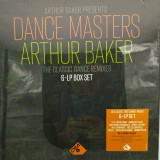
This latest instalment of ARTHUR BAKER Presents DANCE MASTERS finds the production/ song-writing/ remixing maestro taking the spotlight for a long overdue snapshot of his own classic 12” mixes during a crucial evolution of dance music, club
and pop culture.
“I’ve always felt like I was on a mission to make music from the time I heard Motown, Philly and Sly and the Family Stone. My mission started as a hobby and still feels like one now. You’ve got to keep on pushing and hustling. It can be a drag sometimes but
if you really love what you’re doing, it’s worth the work. I still really love what I do.”
Arthur Baker helped codify the remixer as artist. His genre-fluid approach to projects
has resulted in a joyous myriad of classics that spans many decades. This ’80’s focused DANCE MASTERS collection offers a welcome glimpse at Baker’s illustrious career and many long out-of-print 12” versions and previously unavailable mixes.
This 35-track, six LP expanded edition includes a wide array of selections from the likes of Robbie Nevil’s “C’est La Vie,” Fleetwood Mac’s “Big Love,” Neneh Cherry’s “Buffalo Stance”, Jeffrey Osborne “Soweto”, Freeez “I.O.U”, Rockers Revenge “Walking On Sunshine” and of course the juggernaut “Planet Rock” with Afrika Bambaataa & Soulsonic Force.
Complete with in-depth liner notes by Bill Coleman, track by track notes written by Arthur Baker himself, previously unseen session photos from Arthur’s personal archives and a signed insert.
All tracks remastered by Nick Robbins at Sound Mastering
En el almacen y preparando para el envío

On April 7th electronic luminary Nathan Fake presents the new longplayer ‘Crystal Vision’ on his own Cambria Instruments imprint, which features collaborations with Clark and Wizard Apprentice.
This is music for music’s sake – recorded without angles, agendas and themes – so Fake was free to simply continue honing his craft and express himself non-literally. Aptly titled, there’s a clarity of execution and ambition, and a peak effectiveness to the record that just sounds right.
Continuing to set a personal bar higher and topping his own best, the mark of master craftsperson is everywhere, but that doesn’t mean it’s polished; There’s plenty of rawness evident, with spiky sonics keeping ears on high alert – full of endorphin-flooded rave energy.
Following a short, scene-setting ‘Arrival’ – a simple major chord arpeggio played on a Jupiter 6 which sounds like curtains opening at dawn, things begin apace with ‘The Grass’, which hurtles like a precision-tuned bullet train through Arctic tundra. The undulating effect of compression is emphasised by the classic techno trope where 2 rhythms jar yet interlock, creating an exquisitely disorientating strobe-like flutter. On the track’s guest, Fake comments, “I fell in love with Wizard Apprentice's ‘I Am Invisible’ and felt our musical styles were similar. Their vocals are smooth and clear and sharp at the same time. They’re like a calm within the storm.”
Inspired by Italo disco but sounding wholly alien and futuristic, ‘Vimana’’s fizzing buzzsaw arpeggiated bassline, popping snares and bright whirling melody are equally an electro trance melange, with an effervescent major chord Arp that kicks in midway.
Reminiscent of what used to be called ‘funky techno’ but with sparklier sounds, ‘Boss Core’ blinds like sunshine bouncing off ice. Using his trusty Boss DR550 drum machine, and inspired by Autechre's ‘Vose In’, the track peaks by reaching that melancholic/euphoric axis for which he is loved.
With chugging slow breakbeats not a million miles from Board Of Canada or trip hop, ‘Crystal Vision’ rolls along, with the melody opening up, revealing more hidden notes as it progresses, building into a fractal, kaleidoscopic mosaic.
An emotional outpouring with serotonin surging through the circuitry, classic breakbeats and layers of lazers, ‘Bibled’ has all the hallmarks of a classic. This is a bonafide festival-set closing, hugging-your-mates, moment – or, with its guitar solo, “a power ballad” – as Nathan calls it.
A minimalistic moment of calm midway through the album, ‘CMD’’s gently comforting dreamscape is conjured with FM stacked and detuned sine waves which are left to breathe, whilst the chunky Chicagoan house jack of ‘Hawk’ brings to mind classic Relief records, but even more detuned and wibbly, and laden with synths.
As the title suggests, ‘Amen 96’ is in Fake’s own words, “me having a go at jungle. I grew up listening to it, and I remember as a teenager it sounded like the most intense and otherworldly music ever. It still does. This track is an experiment to see how my melodic style works against amen breaks”. Closer to the braindance end of the spectrum than ‘proper’ jungle (and all the more interesting for it), Fake channels the spirit of Squarepusher but makes it his own, brimming with melodious twinkle.
A collaboration with Nathan’s close friend and genuine musical hero Clark. ‘Outsider’ finds this dream team alchemising pure gold that’s bigger than the sum of their parts. Skittering, intense, far-reaching end epic, the pair close proceedings on a grandly dramatic note. In 2020 Nathan released the album ‘Blizzards’, which was described by The Quietus as “his best work”, and “his best LP yet” yet by Resident Advisor. The equally well received ‘Blizzards Remixes’ EP which featured Afrodeutsche and Irene Dresel followed in 2021, as did a nationwide UK tour.
An in-demand remixer, Fake has added his magic to tracks by Radiohead, Clark, Perc, Jon Hopkins, GoGo Penguin, Dominik Eulberg, Christian Löffler and Damian Lazarus, working for labels including Ninja Tune, Domino, Warp, Blue Note and Kompakt.
En el almacen y preparando para el envío

August Greene culminates years of mutual respect and friendship, channeling the musicians’ various talents into a cohesive project. The perfect marriage of jazz, hip-hop and soul, it’s music that just is. This is black expression the way God intended: earnest, unfiltered, and harmonious. Throughout August Greene, you feel the abundance of Glasper’s rolling keys, the sheer honesty of Com’s lyrics, and the nuanced subtlety of Riggins’ drum work. It’s a fluid sound that’s sorely needed in today’s landscape, and a teachable moment for the next wave of creators. “I feel like we need to set the bar for this generation of musicians and producers,” Riggins says. “There’s a lot of computer-driven music. This is the opposite of that. We’re showing you can still use your creative muscle on an instrument to generate your own sound.” August Greene is a meditative offering that stands tall against the era of “fake news.” “They body snatching black girls in D.C. / Politics and propaganda on the TV,” Common observes on the opening track. On “Nirvana,” the lyricist uses a stuttering percussive loop and faint piano chords to search his inner being: “Thought I was gonna fly when Obama became the king … when it’s all done, will I have heaven’s dress code, and been able to let God and let go.” As Com puts it, Glasper and Riggins’ soundtrack allowed him to open up in ways he hadn’t done previously. Like on “Fly Away,” for instance, where he riffs on the public relationships he’s had. Other songs, like “Black Kennedy,” feel spacious and scenic. “I got to go new places with the music, and it didn’t have to fit within a genre for me to participate on it,” he says. “This gave me an experience I haven’t had in a long time, so I want people to feel that. I want this to be a cleansing of whatever doesn’t feel good or inspiring.” In the end, August Greene speaks to those pushing through the dark for brighter days. It's a masterpiece from which virtue can shine. “I want people to go on the ride and be open,” Glasper says. “We just created and it became a sound. I want people to approach this with an open mind and without expectations.” —Marcus J. Moore
En el almacen y preparando para el envío
