When his mother brought Stanley Turrentine’s Salt Song LP back from a trip to Canada, Julien Lourau, then a teenager, was impressed by the scope of the sound and the groove of the saxophone. He was also charmed by the lush arrangements and funky sound of the record, typical of releases on the CTI label. Created by producer Creed Taylor, CTI left an imprint in the minds of 70s jazz fans much like Blue Note did in the 60s, and it even ended up releasing work by artists who started out on this mythical label such as Stanley Turrentine and Freddie Hubbard. The two even shared the same sound engineer, the great Rudy van Gelder.
Yet CTI, though highly prolific during its 15 years of activity, has not benefitted from the same aura as its predecessor. “To breathe life into this album, I listened to a wealth of CTI releases and discovered some I had never heard before. I noticed, oddly, that many of today’s musicians know very little about CTI - a label unfairly considered as minor.”
The choice of tracks was determined by Julien’s personal tastes, always keeping in mind a desire to help people discover them yet focusing on the joy of actually playing them too.
"The album is made up of 9 pieces. Mathieu Débordes got everything down to the nearest note before we even attempted to play them. CTI didn’t hold back in fuelling their compositions with brass and violins, but I erased this aspect and pared things down to a bass, drums and two keyboards."
English drummer Jim Hart, someone Julien worked with during his London years, propels the group - from hard-bop polyrhythms with “drum & bass” inflections to a reworking of classic Red Clay.
Sylvain Daniel on the bass and Arnaud Roulin on the analogue keys are two musicians close to the saxophonist, and that he met when they were students in 1999 while organising a master class at the Conservatoire de Nantes. Since then, they have become his esteemed companions.
The collaboration with young pianist Léo Jassef began on this recording, where he also plays the Prophet 5. The dynamic and overlap of the many keyboards played by Arnaud and Léo bring the record a richness of timbre and harmony that the strings and brass provided on the CTI recordings.
For the final track on the record, Julien called upon his friend of 30 years, guitarist Bojan Z, for a fresh, Gospel take on Love and Peace, a track recorded by Quincy Jones in 1969, which here, is dedicated to Bojan’s recently departed brother.
“When it comes down to it, this album really is as I had imagined it, with, luckily, a few unexpected turns. I created a playlist I then claimed as my own. But in the end, I must admit that I would have loved to have composed some of these tracks.”
Поиск:mind to mind
Все
- A1: Power Of Mind (Feat Raw Poetic)
- A2: Reporting
- A3: Enchanted Spirits (Feat Insight)
- A4: Upload Optimism
- A5: God Speed (Feat Blu)
- B1: Four Better Or Worse (Part 1 - Feat Nitty Scott)
- B2: Four Better Or Worse (Part 2 - Feat Blu)
- B3: Four Better Or Worse (Part 3 - Feat Raw Poetic)
- B4: Four Better Or Worse (Part 4)
Blue vinyl[25,76 €]
The music that would become Conversation Peace began with a trip to KPM’s London HQ in late January of 2020. I had just finished wrapping up post production on my album Ocean Bridges with Archie Shepp and Raw Poetic. I actually received the invitation during the summer of 2019 during studio sessions for Ocean Bridges and scheduling for the top of 2020 made the most sense. So I packed up a few records and a few drum machines then embarked on my first trip to England. We had a quick meeting about expectations, then it was time to see the archive. As a record collector, I’m very familiar with the legacy of the KPM brand. I had been lucky enough to find a few over the past decade during my digging trips up and down the east coast, but looking at the complete vinyl catalogue was a great privilege. I anxiously began combing through records from morning to night looking for the right sounds. The whole experience was surreal.
Listening to the entire catalogue was a history lesson and the amount of great composers and compositions in the recordings was endless. I’d be lying if I said it wasn’t somewhat overwhelming. As a producer looking for textures, inspiration and grooves, the abundance of those things made it extremely difficult to narrow down what I wanted to use. From drums to sound fx to orchestras to small rhythm sections to ambient noises, I heard a wide variety of things and they were all so well produced and recorded. Every instrument you can think of was there! I spent a little over a week capturing sounds knowing that my work was cut out for me when I returned to my home in DC. Once I got home, I got to work. I captured so much, that it took me about a month just to organize all those ideas. Little did I know the world would drastically change in the next month following my return. My flight to and from London would indefinitely be my last time traveling for a while. I worked diligently with the material and took my time making sure I had strong ideas. The history of KPM and the opportunity to collaborate with the prestigious lineage made the stakes very high for me and I knew I needed to deliver a quality product. It’s an honor to be the first artist to release a KPM Crate Diggers title. - Earl Davis (Damu the Fudgemunk)
In the most literal sense, globally renowned whistler Molly Lewis makes her gorgeous
and curious compositions out of thin air.
New entrees into the Exotica canon; sprawling, would-be Spaghetti Western scores;
and a dash of Old Hollywood glamour - the whistle-led songs on her debut EP ‘The
Forgotten Edge’ are as complex, delicate and indelible as anything performed with
viola or piano.
“Whistling is like a human theremin,” said Lewis, an Australian native who’s spent the
last several years in LA and whose performances there and around the world are
changing any preconceived notions of whistling by the room-full.
That’s not to say Lewis is all serious and snooty about the craft. Quite the contrary.
Her sense of humour is witty, self-deprecating and zany. She’s as likely to reference
the slapstick Leslie Nielsen film series ‘Naked Gun’ for music video concepts as she
is a classic piece of noir cinema.
Look no further than the equatorial and breezy opening cut ‘Oceanic Feeling’, a
lovely walk across the flotsam-sprinkled sands in the rum-pumping vein of Les
Baxter. Meanwhile, the title track - and really, the entire collection here - is a loving,
albeit rather haunting, salute to one of Lewis’s heroes, the Italian composer and
musician Alessandro Alessandroni, whose whistle and guitar you hear on the title
theme of Ennio Morricone’s ‘A Fistful of Dollars’. Lewis and her ensemble create
classic cinema for your mind.
Her own love for the artform began when, around the age of twelve she was given
the CD ‘Steve ‘The Whistler’ Herbst Whistles Broadway’. Something contained in it
clicked. “It wasn’t that I was immediately obsessed, but I knew it was something I
could do well,” Lewis said.
The daughter of a musician mother and a documentary filmmaker father who often
focused his films on niche communities and topics, Lewis recalls watching a
television documentary with her parents about The International Whistlers
Convention in Louisburg, North Carolina. “My dad said, ‘If you ever make it into the
competition, I’ll take you there’,” Lewis said. Turns out, there was no bar to entry, just
a small fee. And so, several years later, she and her father travelled to the
convention. New to the form, Lewis didn’t take home one of the bigger prizes but they
were awarded the prize for Whistler Who Traveled The Greatest Distance. “We really
just used the trip to drive around the United States,” she said.
After studying film in Australia, Lewis moved to Los Angeles to be close to the film
industry. There, her circle of artist friends grew naturally and with providence - her
unique talent drawing more and more recognition. And over the last few years,
Lewis’s Café Molly events at LA spots like Zebulon, Non Plus Ultra and The Natural
History Museum have become fabled, elegant happenings with appearances from
guests like John C. Reilly, Karen O and Mac DeMarco.
Recorded with a crack team of friends and musicians during 2020’s quarantine, ‘The
Forgotten Edge’ is rife with incredible performances from Thomas Brenneck (Sharon
Jones & The Dap-Kings / Budos Band), Joe Harrison (Charles Bradley, Lee Fields),
Eric Hagstrom (Brainstory), Abe Rounds (Meshell Ndegeocello, Andrew Bird, Blake
Mills), Leon Michels (El Michels Affair), Gabriel Rowland and Dave Guy.
Porcupine is Echo & The Bunnymen’s most profound and personal album from their early period. Weathering band turmoil, rejections from their record company and spans of songwriting drought, the group emerged with a passionate and compelling set of songs described by vocalist Ian McCulloch as “coming to terms with the opposites in me.” Following their fourth Peel session in early 1982, the band chose Ian Broudie, leader of The Lightning Seeds and co-producer of Echo’s 1980 album Crocodiles, to produce Porcupine. While the album includes both “The Back of Love” and “The Cutter” (two of their most upbeat and successful singles), most of the material was fairly introverted and autobiographical.
Unfortunately suffering negative reviews upon release (including a misguided hate-piece in the NME), Porcupine has since become a gold standard for both the band and British underground rock from the ’80s. It’s also simultaneously their most retro album and their most forward-looking. The production is full of guitar effects that must have set the mind of Kevin Shields onto the path to My Bloody Valentine’s own masterpiece, Loveless.
In addition to the “The Cutter” and “The Back of Love”, Porcupine includes songs such as “My White Devil,” “Heads Will Roll,” and “Porcupine” that transcend and enlighten to this day. It’s an essential album from one of the most influential bands of the post-punk movement.
Un Singe En Hiver (“A Monkey in Winter”) starred the greatest name of the
time in French Cinema, Jean Gabin and a “rising newcomer”,
Jean-Paul Belmondo.
This is popular early 60s mainstream French cinema, with a certain ‘quality’
that would not be to the taste of the nouvelle vague aficionados. In fact this
film is nothing less than the reflection of a certain Gaullist spirit of rebellion,
fiercely individualistic and disabused of all ideologies.
The music of Michel Magne outlines the nostalgic wanders of Albert Quentin
(Jean Gabin) who after an adventurous youth on the Yang-Tse-Kiang now lives
a quiet life with Suzanne (Suzanne Flon) whom he met at the Bourboule and
manages the Stella hotel at Tigreville (actually Villerville in the Normand Calvados) and takes care of Gabriel Fouquet (Jean-Paul Belmondo), a young adman
whose heart was broken in Madrid.
The genius of Magne is found in his evocations of Spain and China not as they
were at the time but as the two main characters picture them with the help
of not just a few drinks. Here is a jolly good record you will want to go back to
every time the right-minded ones try to mess with your basic rights.
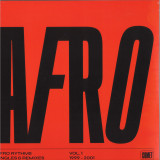
Comet Records is excited to present Afro Rhythms Vol. 1 the first repress since 1999 of Singles and Remixes out of Black Voices’s LP from Tony Allen Afrobeat pioneer, along with the iconic Psyco On Da
Bus creating a new sound between experimental, electronica and afrobeat, both albums produced by sound activist Doctor L
The compilation is a proper trawl through the vault of the early years of Comet Records featuring producers and artists as IG Culture, Eska, Catalyst aka Alex Attias, Psycho On Da Bus Featuring Doctor L and Tony Allen, Cinematic Orchestra and the legendary Parisian duo Chateau Flight.
The tracks "The Drum" and "Brotherhood" produced respectively by IG Culture (Son Of Scientist) and Cinematic Orchestra are part of The Allenko Brotherhood Ensemble project, a collaboration between the
unique drumming style of Tony Allen and the best in contemporary producers.
Comet label continues its hypnotic elliptical orbit through radical funk realms and dancefloor wormholes, connecting to five decades of music from four continents and still heading for the future, a pure and positive light to guide our way on.
First ever vinyl release of ‘Silent Movies’, the 2010 solo album from guitar
great Marc Ribo that finds him taking another surprising step in a career
filled with unexpected turns.
One might expect a program of solo guitar music from Ribot to be filled with
bracing atonality or studies in texture. Instead, Silent Movies is filled with performances of gorgeous contemplation that linger on the mind long after they
are over.
The album reflects Ribot’s fascination with movies and contains pieces intended to function as music for films: some are adaptations of music he has actually
written for films, others for classic silent movies that he scored for his personal
amusement, still others for films of his own imagination.
His goal is to explore, as he says, “the strange area between language and spatiality that exists partly in between music and visual image, and partly as a
common property of both.”
Blending screamo and metalcore seamlessly, the three-piece drop their debut full length filled with blistering hardcore as well as slower, expansive and epic post-hardcore. Misery Never Forgets is a crimson slice of emotional violence, whose attack is both frenetic and draining, a maelstrom of vulnerability frought with pain and aggression that calls to mind such stalwarts as Pg. 99, Majority Rule and Zao. Born as an outlet for trauma, Wristmeetrazor toes the duplicitous line of suffering and salvation. This paradigm flickers brighter than ever through the cloak of darkness that is the band’s debut LP “Misery Never Forgets”, nine tracks of blinding, chaotic emotion. Conceived in the bedroom of guitarist and vocalist, Jonah Thorne, Wristmeetrazor started as a solo project influenced by the likes of screamo bands Neil Perry and Kodan Armada in Spring of 2017. Shortly after releasing a demo, Thorne enlisted help from bassist and vocalist, Justin Fornof. After releasing two EPs in the Fall of 2017, and touring across the southeast, the band rounded out their line up by adding drummer and vocalist, Bryan Prosser.
Repress !
Private Selection Records founder and curator Dreams comes crashing in with a 6-tracker falling between thick body music and gnarly, frenzied electro. With ragged rhythms, reverberating synths and heart-wrenching vocal elements these tracks tie together a dystopian journey beginning with sheer rampage, leading to devastation and ending in hopeless ruin.
Following their critically well received debut album, Seekers, in 2017 - Our Kingdom Undone sees BEYOND GRACE refining and redefining their sound into something that’s simultaneously more intricate and more intense than ever before, combining conceptually ambitious songwriting and high octane heaviness in equal measure. Our Kingdom Undone’s gestation period took place under a pall of social unrest and political uncertainty the world over, so it’s perhaps no surprise that each of these eight songs is a cathartic scream of raw emotion and primal poetry. Full to the brim with lyrics that rage with unfettered fury and unbound frustration against the rise of isolationism, exploitation, rampant militarism, and religious indoctrination. Recorded at Stuck On A Name studio by Ian Boult and Bookhouse studio by Tom Hill, before being mixed and mastered by Charles Elliott (Tastemaker Audio / Abysmal Dawn), Our Kingdom Undone (whose stunning artwork was provided by in-demand UK artist Shindy Reehal) is both a crushing statement of intent and a vital reminder that the personal is political, that the ends do not justify the means, and that we must not let our fear divide us and drive us into an age of unreason.
This is the exclusive splatter version of Slade’s third studio album Slayed?. Originally released on 1st November 1972, it entered the UK album chart at #1 and remained in it for 34 weeks and was certified Silver in early 1973.
Slade were unstoppable throughout the seventies becoming one of Europe's biggest bands, releasing 6 smash hit albums, including three UK No-1’s, a run of 17 consecutive Top 20 singles and their hits are synonymous with the glam era.
- generic sleeve repress -
It has been a little over a year since the release of 747's debut album, in which the Canadian masterfully drew notes of inspiration from the 90s to create an enchanting hour-long dream. In his first EP since, 747 returns from a temporal leap, bringing with him a blend of sounds and expressions to forge a timeless trip which hinges on the sounds of the 303.
Opening the release, "you,you" unfolds with a gentle and shimmery padded ambiance of anticipation. Gentle and light-footed percussion is soon interrupted by a dramatic siren, a warning beacon. Frenetic energy ensues, a frantic rush to the floor met with a cloudy head. Encompassed in an envelope of disorienting wailing and intermittent buzzing, but finally grounded by the familiarity of a 4/4 bass drum.
"Does Anybody Remember Laughter?" steps in to relinquish the force of gravity. The animated arpeggio and gleaming singing acid line rise up, uncovering the kaleidoscopic nature of the structural surroundings.
"While My 303 Gently Weeps" divulges further, exposing an underlying grid of dark geometry - binary and robotic. The topology of surfaces becomes increasingly fractalized, until the solo overtakes with a somber sadness. The 303 notes guide the mind on a melancholic and meditative walk along the grand staff, met after the break with a sense of hope and serenity.
Mind Dance unveils ‘Mystic Minds, Volume 1’ - a five track compilation warmly welcoming label associates old and new. The first in an ongoing series of VA outputs, Mystic Minds was established to provide a new space to foster the collaborative nature of the electronic underground. Whilst only scratching the surface of the cross-continental contemporary dance landscape, the first edition of Mystic Minds effortlessly showcases the breadth and depth of talent in Australia and afar.
Re-mastering by: Kevin Gray
This is a reissue of a now out-of-print album from live trio date by the legendary LA-based pianist, composer and multi-bandleader, Horace Tapscott. Pianist Horace Tapscott is always at his best when he is leading a trio. Born in 1934 in Houston, Texas, Horace came from a musical family centered around his mother, Mary Malone Tapscott, who worked professionally as a singer and pianist. When Horace was nine, the family moved to Los Angeles. As a teenager in the late 1940's, Horace was surrounded by the music of Central Avenue: Art Tatum, Charlie Parker, Coleman Hawkins, Dexter Gordon, were among the many cats on the set. Around this time, Horace also began to take music lessons from teachers Dr. Samuel R. Browne and Lloyd Reese, whose other students included Eric Dolphy and Frank Morgan. Horace's musical studies included trombone in addition to piano.
In 1952, Horace graduated from Jefferson High, got married to Cecilia Payne and went into the Air Force. Horace played in an Air Force Band while he was stationed in Wyoming for his term of duty. After mustering out, he returned to Los Angeles where he worked around on various gigs until he joined the Lionel Hampton Big Band as a trombonist.
In 1959, Horace finally went with the Hampton Big Band to New York, where his friend Eric Dolphy introduced him to John Coltrane. A tough winter, a lack of gigs, and too many nights on the floor of a friend's art gallery finally sent Horace packing for sunny Southern California, where a life with wife and family awaited his return.
The sixties saw Horace emerge as a die-hard leader of the Avant Garde. Horace began to gain public notice playing with his own group, that included alto saxophonist Arthur Blythe, bassist David Bryant, and drummer Everett Brown II. Horace also appeared on records for the first time.
Horace was always outspoken about racism, politics, stereotypes, and social ethics. His forward-minded vocal presence on and off the microphone is as much a part of his art as his piano playing. As a result, he was labeled a "dissident," categorized as an "employment risk," and black-listed from the music industry establishment in the early 1970's. None of this slowed Horace down. He began gigging sporadically at Parks and Recreation events and for churches around Watts. This "dark period," with his only regular gig at his friend Doug Weston's Troubadour on Los Angeles' "Restaurant Row", was also a time of intense creativity.
Around 1977, Horace reorganized the Pan-Afrikan Peoples Arkestra with the help of several old friends and many new faces. The Arkestra performances involve singing, dancing, and poetry in addition to the music. Soon after the new group's debut, Horace came to the attention of producer Tom Albach who contracted Horace to record a number of albums for Nimbus Records. Albach also helped introduce Horace to an international audience by arranging several European tours.
The 80's saw Horace emerge as one of jazz's premiere solo pianists. He recorded several solo piano albums for Nimbus.
- A1: Ash (2021 Remaster) 07 06
- A2: Chessa (2021 Remaster) 06 58
- A3: Blast (2021 Remaster) 03 04
- B1: Duh (2021 Remaster) 03 40
- B2: Marche (2021 Remaster) 05 21
- B3: Nerf (2021 Remaster) 03 40
- B4: West Nile (2021 Remaster) 02 16
- B5: Melt (2021 Remaster) 05 30
- C1: Logical (2021 Remaster) 03 01
- C2: Dead Leaves (2021 Remaster) 05 22
- C3: Scrapbook (2021 Remaster) 07 53
- D1: Habitat (2021 Remaster) 07 04
- D2: Bloom (2021 Remaster) 03 31
- D3: Angelic (2021 Remaster) 03 39
Keplar re-issues the fourth album 'Chessa' by Dan Abrams' project Shuttle358 on vinyl for the first time. The double LP edition includes 3 previously unreleased tracks from the same recording sessions back in 2004, as well as an extended artwork with unseen photographs by Dan Abrams.
While undoubtedly associated with the microsound and 'clicks & cuts' movement around the turn of the millennium, on 'Chessa' Shuttle358 left behind the classical rhythmic patterns of the genre and shifted further towards warmer territories, meandering between modern digital minimalism and the soft tones of ambient music. Counter to his microsound synthesis approach on Frame (2000), Abrams created Chessa by writing software that manipulated samples from his unreleased songs, guitar pieces, and vintage japanese films sampled from video tape. In particular, a special granulating technique was written and performed at intentionally low sample rates that gave the uniquely fragile, yet dense sound to the album. Over fourteen tracks Abrams arranges slowly evolving sonic entities of unfading elegance. Strayed and hazy melodies pulse and cascade, elongated but brittle harmonies shimmer and disappear, echoing far-off in the rounded corners of the mind. The patient and detailed way Abrams combines the broken with the beautiful in creating organic collages of sound that retain the euphonic essence of a song, makes this piece of work so powerful and timeless, sounding just as relevant today, as it did 17 years ago.
Under modern scrutiny in Abrams latest studio, he refocused the original recordings to emphasize the elements most important to the original vision. The final mastering and vinyl preparation was done in collaboration with Stephan Mathieu, vinyl was cut by LUPO.
From the original press release in 2004 by Taylor Deupree:
Without a doubt Shuttle358 has become one of the most admired artists to emerge from modern electronic music’s sea of musicians. From the humble beginnings of a demo CD in 12k’s mailbox to 4 critically acclaimed CDs, Dan Abrams is, to some, the one credited for bringing a warmth and human touch back into what has often been considered a very cold, sterile genre. It began with 1999’s Optimal.lp (12k1005), a groundbreaking debut release that immediately defined the Shuttle358 sound; a hybridization of the then-emerging “microsound” genre with Eno’s true ambient explorations. In 2000 Abrams outdid himself with Frame (12k1011) by honing his sound design and exploring production techniques at rates that made his “now” quite brief and creating what was to become one of the most sought-after CDs in the 12k catalog.
Chessa is the third release from Abrams’ Shuttle358 moniker on 12k and he continues to do what he does best: attempt to move microsound away from the world of theory and towards absolute real life. Like his photographs, Chessa is music about, and to be listened to in, unexpected places. It is a narrative, a simple slice of life that plays out through the incidental photography of the cover artwork. To achieve this Abrams fuses irregular granular sound particles, like the movements of everyday life, with a deliberate melodic base that captures emotion and simplicity.
In My Sleep is the debut vinyl release from French producer Margee. Having gained a loyal following last summer with a remix for Tommy Guerrero, released on Music For Dreams, this EP showcases his natural ability at creating low-slung, densely layered productions, perfectly aimed at the dancefloor.
The release also features two heavyweight remixes. The first of these comes courtesy of underground House legend DJ Nature, who takes the title track and gives it a completely new twist with his inimitable ‘ruff disco’ stylings. Hailing from Bristol (via New York), recent years have seen Nature release on Futureboogie, Golf Channel and Jazzy Sport.
The second remix on the release comes from Hardway Bros (AKA Sean Johnson). Having been an early champion of Margee’s work on his regular ALFOS streaming marathons, Sean took the second track on the release, Wrong Dream, and went into heavy-dub mode. The resulting remix clocks in at just over 11 minutes and is everything you’d expect from him, and more…
Margee said of the release ‘In My Sleep started while taking a shower. The bassline popped up in my mind and I ran out as quickly as possible to record it. From there, I got pulled into a deep emotional trip with groovy tones and dirty sounds. Wrong Dream is actually a lost project that I had to start over again. It turned out to be more fierce than the first one, experimenting with arps and fuzzy synths, while keeping a certain groove that was easier to reproduce.’
In My Sleep is the second release from London based label Other Goodness, following on from Bawrut’s ‘Divergent Emotions’ EP last year, which quickly became a mainstay of the live-streams and a DJs favourite.
‘Headsoup’ is a new compilation that deepens the legend of mysterious Swedish psych collective Goat even further. Collecting rarities from across band’s celebrated career, including standalone singles, B-sides, digital edits and two enormous brand new tracks, it’s a globetrotting acid trip of a record that’s even bigger in its scope than their acclaimed studio LPs.From the incendiary heavy psych of their earliest work, like debut B-side ‘The Sun And Moon’, to the serene ‘Requiem’-era alternate take ‘Union Of Mind And Soul’, to the simmering menace of their latest material, it’s a record as multifaceted as Goat themselves, packed with detours in every conceivable direction.Taking in jazz-flute solos, pounding Afrobeat rhythms, ferocious desert blues, drifting Ethio-jazz, this is, as the name of Goat’s first album made clear, ‘World Music’ in its most complete form, a sound unrestrained by genre boundaries. Yet the band are anything but lazy appropriators. They approach their forebears with upmost reverence, articulating a celebratory cultural cross-pollination.And what about these two new tracks? ‘Fill My Mouth’ is a scuzzy psychedelic funk knockout, the sleaziest thing the band have ever recorded. ‘Queen Of The Underground’, meanwhile, is truly herculean, a swaggering psychedelic powerhouse of the very highest order.Sometimes dark and heavy, at others joyous and beautiful, like Goat themselves ‘Headsoup’ is mysterious, and constantly shapeshifting, difficult to properly pin down but constantly enthralling. Almost a decade since they first emerged from the depths of Scandinavia, there is still no other band on earth that sounds quite like them.
- My Mistress’ Eyes (Sonnet No. 130)
- When In Disgrace (Sonnet No. 29)
- Tired With All These (Sonnet No. 66)
- When Most I Wink (Sonnet No. 43)
- Sin Of Self-Love (Sonnet No. 62)
- As An Unperfect Actor (Sonnet No. 23)
- Mine Eye Hath Played The
- Painter (Sonnet No. 24)
- Let Me Not To The
- Marriage Of True Minds (Sonnet No. 116)
- How Like A Winter (Sonnet No. 97)
Birgit Minichmayr captures the imagination and holds centre-stage on
‘As An Unperfect Actor: Nine Sonnets by William Shakespeare’. This
won’t come as a surprise to people in the German-speaking world,
where the Austrian actor is well-known from countless appearances on
TV and a substantial filmography. Perhaps equally unsurprising is the
deep experience she can bring to Shakespeare: as an ensemble
member of the Burgtheater company in Vienna, she has repeatedly lived
out the searingly dramatic lives of the Bard’s characters, notably the
daemonic anger of Lady Macbeth, the sadness of Ophelia and even the
uncomfortable truths of the Fool in King Lear.
What might be more of a surprise, however, is the exhilarating musicality
she shows on this, her first complete album as a vocalist. One could
have predicted the crystal clarity, meaning and intent in her words - the
desolation in her voice in “the very birds are mute... the leaves look pale”
in Sonnet 97, for example. And yet there is more, much more, not least
Minichmayr’s uncannily instinct to find artful and felicitous ways to shape
musical phrases.
Composer/ pianist Bernd Lhotzky has provided a wonderful array of
musical contexts. As Minichmayr says: “He got so deep into the meaning
of each sonnet, his music made it different every time. And we talked a
lot about the colour, the meaning of each poem.” The opening track, ‘My
Mistress’ Eyes (Sonnet 130)’ is a masterfully deft piece of gender-fluid
irony. In the poem, a man is describing possibly the ugliest woman he
has ever seen - while also declaring that she is the one he loves.
Lhotzky gives us an acerbic version in that most male-led of dances, the
tango, complete with bandoneon, in which the words are sung by... a
woman. Minichmayr then gives a masterclass in how to end a song as
she hits, holds and nails the words “false compare” with triumphant
fearlessness.
Throughout the course of the album, we are magically transported to
new musical and emotional places. As Minichmayr says: “Through
singing, through just doing it, I was able to find deep love, or deep
sadness. I was really touched by it.”
One of the secrets to this album’s success is Lhotzky’s wish to find
melodies which have a certain ease and straightforwardness about
them. He says that he approaches all music - whether he is listening to it
or writing it - with one simple and direct question: “What story is this
telling me?” Lhotzky is known for his work in the field of early jazz, but
the range here is far broader, with allusions to such examples of fine
songwriting as Brassens, Robert Plant and James Taylor.
LP pressed on 140g black vinyl.
Repress
Nina Kraviz launches her (pronounced 'trip') label with a double-EP compilation entitled 'The Deviant Octopus', featuring a pair of brand new productions from Kraviz alongside material from Terrence Dixon, emerging talent Parrish Smith & Bjarki, and veteran producers Exos & Steve Stoll.
The idea for has been gestating for some time with Nina Kraviz, an avid crate-digger and frequenter of numerous second-hand record stores, who has long wanted to begin a label of her own which would build on some of the principles of her beloved 90s techno labels in terms of attitude and aesthetics, whilst looking for forward-thinking modern productions that reflect her core tastes for idiosyncratic electronic music.
The art and title of 'The Deviant Octopus' comes from a single-sentence scenario dreamt up by Kraviz: 'Without a moment's notice an Octopus appeared and devoured everyone in sight'. Supplied with this scenario, artist Tombo rendered his own unique visualization for the artwork that adorns the release sleeve. It's Kraviz's own nod to the labels that inspire her and grab her attention while digging through second hand records, the best of which were imbued with the unique personality of the people behind them. This extends to the sound Kraviz intends for : dusky, divergent and trippy music to stimulate brains, dreams and fantasies.
In this respect 'The Deviant Octopus' is a perfect introduction: Kraviz herself is represented on the tracklist by two new tracks that take up the mantle of last year's Mr Jones EP by returning to the vocal-flecked hypnotic techno that marked out that release. Complimenting those are two new cuts from a true master of hallucinatory off-kilter techno, Terrence Dixon in his Population One guise.
Joining them will be a pair of names from the techno pantheon who have been huge influences on Kraviz: with a career that's taken in releases on Synewave, Trax, Novamute and Richie Hawtin's early-90s Probe Records, Steve Stoll has been mining his own variant on techno and acid minimalism for over twenty years, heading up the Proper NYC label and releasing under various pseudonyms, such as Cobalt, of which Kraviz has been a long-term fan. His counterintuitively titled 'Pop Song' sits alongside a 13-minute 90s techno excursion from Reykjavik's Exos - the only previously-released cut (originally appearing on Thule Records sub-label Plast Trax in 1998) - together illustrating that will also live up to its name in the geographical sense: showcasing great music from historically vibrant electronic music scenes outside of the usual Detroit-Berlin axis.
With Kraviz looking to build a small repertory of talent around , this first release also makes room for two newer names: Bjarki is an Icelandic talent to keep a firm eye on, who drew Kraviz's attention in a chance meeting after a gig at Copenhagen's Culturebox club, after which he passed her a collection of mind-bendingly odd demos; while Parrish Smith is a talented Netherlands-based producer whose short yet impactful sketch '1.0 / 8.0 Afrika Genocide' brings the second 12' to a bewitching close.
Limited Edition Polka Dot Vinyl - Includes Bonus 7" The Pipettes reissue their beloved debut album "We Are The Pipettes" on limited edition polka dot vinyl to mark the album's 15 year anniversary. Back on vinyl for the first time since its original release, the record sounds as fresh, funny and filthy as it did on it's release. Whether it's the string-drenched, four to the floor, call to the dance-floor clarion call of Pull Shapes or the lonesome melancholy of A Winter's Sky, it's a record full of the joys and the pains of youth.