On December 26th, 2018, Emily Cross received an excited email from a friend: Brian Eno was talking about her band on BBC radio. “At first I didn’t think it was real,” she admits. But then she heard a recording: Eno was praising ‘Black Willow’ from Loma’s self-titled debut. He said he’d had it on repeat.
At the time, a second Loma album seemed unlikely. The band began as a serendipitous collaboration between Cross, the multi-talented musician and recording engineer Dan Duszynski and Shearwater frontman Jonathan Meiburg, who wanted to play a supporting role after years at the microphone. They’d capped a gruelling tour
with a standout performance on a packed beach at Sub Pop’s SPF 30 festival, in which Cross leapt into the crowd and then into the sea, while the band carried on from the stage - an emotional peak that also felt like a natural ending. “It was the biggest audience we’d ever had,” she says. “We thought, why not stop here?” Following the tour, Cross went to rural Mexico to work on visual art and a solo record, while Meiburg began a new Shearwater effort. But after a few months apart
(and Eno’s encouraging words), the trio changed their minds and reconvened at Duszynski’s home in rural Texas, where they began to develop songs that would become ‘Don’t Shy Away’. Loma writes by consensus and, though Cross is always the singer, she, Duszynski and Meiburg often trade instruments. Meiburg compares their process to using an Ouija Board and says the songs revealed themselves slowly, over many months. “Each of us is a very strong flavor,” he says, “but in Loma, nobody wears the crown, so we have to trust each other - and we end up in places none of us would have gone on our own. I think we all wanted to experience that again.” The album that emerged is gently spectacular - a vivid work whose light touch belies
its timely themes of solitude, impermanence and finding light in deep darkness. “Stuck / beneath / a rock,” Cross begins, as if noticing her predicament for the first time. Then she adds: “I begin to see / the beauty in it.” A series of guests contributed to the absorbing soundscapes of ‘Don’t Shy Away’, including touring members Emily Lee (piano, violin) and Matt Schuessler (bass), Flock of Dimes/Wye Oak’s Jenn Wasner and a surprisingly bass-heavy horn section.
And then there’s Brian Eno. Loma invited him to participate in the mantra-like ‘Homing’, which concludes the album and sent him stems to interact with in any way he liked. He never spoke directly with the band but his completed mix arrived via email late one night, without warning and they gathered to listen in the converted bedroom Duszynski uses as a control room. “I was a little worried,” says Cross.
“What if we didn’t like it?” But it was all they’d hoped for: minimal but enveloping, friendly but enigmatic, as much Loma as Eno - a perfect ending to an album about finding a new home inside an old one. “I am somewhere that you know,” Cross sings, above a chorus of her bandmates’ blended voices. “I am right behind your eyes.”
First LP pressing on dark green vinyl.
Suche:mind to mind
Suzanne Ciani is a true electronic music pioneer. The five Grammy nominated Italian-American neoclassical composer is unquestionably one of the greatest minds that contemporary music has ever witnessed. After an incredible career spanning forty years, Ciani’s accomplishments have become a benchmark when discussing the origins of musical synthesis. For more than four decades she developed a body of work that transcends the music industry, composing for film, video games and famous advertising campaigns that have impacted popular culture. On December 14, 2019, after six years of sound experimentation, Lapsus Festival bid farewell to Barcelona’s Centre for Contemporary Culture. Its final event was entitled 'A Sonic Womb' and was dedicated to the musical roots of the synthesizer, with Suzanne Ciani headlining on the night. Ciani performed an exclusive show accompanied by her modular Buchla 200e synthesizer and enveloped in a specially designed multi-channel sound environment by Intorno Labs. It was a sonic voyage to the very heart of her beloved machine and a tribute to improvisation through an instrument that is said to possess its own soul. Suzanne described the night as ”an improvisation that I began using in the ’70s and continue to use now as raw material. Each performance based on this material has its own expression and one could liken it to jazz." Lapsus Records is therefore extremely honoured to present 'A Sonic Womb: Live Buchla Performance at Lapsus', a unique live recording of this extra special concert.
- A1: Infinite Stress/Stress Infinito (From 'Spasmo')
- A2: First Nebula/Nebulosa Prima (From 'The Seecret/Il Segreto')
- A3: 1970 (From 'The Cat O' Nine Tails/Il Gatto A Nove Code')
- B1: Disgust/Raccapriccio (From 'What Have You Done To Solange?/Cosa Avete Fatto A Solange?')
- B2: Followed/Seguita (From 'Cold Eyes Of Fear/Gli Occhi Freddi Della Paura')
- B3: Lemon Obstinacy/Ostinazione Al Limone (From 'What Have You Done To Solange?/Cosa Avete Fatto A Solange?')
- B4: Glass Dolls/Bambole Di Vetro (From 'Short Night Of Glass Dolls/La Corta Notte Delle Bambole Di Vetro')
- B5: Foolish Suspension/Sospensione Folle (From 'Without Apparent Motive/Senza Movente')
- C1: The Serpent/Il Serpente (From 'Night Flight From Moscow/Il Serpente')
- C2: Infinite Stress/Stress Infinito (#4 - From 'Spasmo')
- C3: Solange's End/Fine Di Solange (From 'What Have You Done To Solange?/Cosa Avete Fatto A Solange?')
- C4: Evanescent/Evanescente (From 'Cold Eyes Of Fear/Gli Occhi Freddi Della Paura')
- C5: Emmetrentatre (From 'Short Night Of Glass Dolls/La Corta Notte Delle Bambole Di Vetro')
- D1: Night Walk/Passeggiata Notturna (From 'The Cat O' Nine Tails/Il Gatto A Nove Code')
- D2: In The Middle Of The Chest/In Pieno Petto (From 'Without Apparent Motive/Senza Movente')
- D3: In The Void/Nel Vuoto (From 'Forbidden Photos Of A Lady Above Suspicion/Le Foto Proibite Di Una Signora Per Bene')
Giallo is the fourth in a series of five double vinyl releases that bring together some of Ennio Morricone’s greatest soundtrack music. Each collection centres on a different movie genre, together they allow the listener to rediscover the unmatched genius of the greatest movie composer of all time. The Maestro. This collection was announced before Ennio Morricone passed away on July 6, 2020. We’ll continue to release the series to honour this great composer.
When we think of 1960’s Italian pulp cinema, the spaghetti western is the genre that comes to mind. However, Italy was responsible for another classic cinematic exploitation movement around the same time, one that is equally as compelling, but less widely recognised. Giallo…
Giallo, meaning ‘yellow’, is the Italian term for crime fiction, it was named after the bright yellow colours of early pulp fiction paperbacks. Film audiences adopted it as the name for a peculiarly Italian sub-genre of thriller cinema that had its heyday in the 1970’s - just as the Spaghetti Western movement was waning. The Giallo can be difficult to define, but essentially it is an Italian crime film that draws from a pool of common themes: stylized murders, amateur sleuths, sleazy glamour, psychological crimes, enigmatic titles and all these themes are underpinned by creepily atmospheric Ennio Morricone music scores. Starting 70 years ago as an arranger for the piece Mamma Bianca, Ennio Morricone is the emperor of scores and soundtracks. Morricone has always been a huge influence for the likes of Hans Zimmer, Danger Mouse, Muse, Metallica and many more musicians. He was one of the most successful composers of all-time, selling over 70 million records and winning dozens of awards.
Giallo is available as a limited edition of 3000 individually numbered copies on “giallo and black marbled” (clear, yellow and black mixed) vinyl. The package includes a 4-page insert with liner notes written by Claudio Fuiano. The gatefold sleeve contains a silver foil spot varnish on the outside and images of iconic movie posters on the inside.
- A1: Crystal Drift (03:56)
- A2: Rainbow Ripples (04:08)
- A3: And Breathe (02:10)
- A4: Lost Oceans (01:34)
- A5: New Infinity (05:03)
- A6: White Mirror (02:54)
- B1: Peace Bells (02:40)
- B2: Revolving Evolving (03:34)
- B3: Mountain Dreaming (02:03)
- B4: Forest Motion (03:16)
- B5: Sleep Golden (03:16)
- B6: The Long Path (03:29)
Ocean Moon is a solo project from Jon Tye of Seahawks. A long time explorer of the sounds of spaciousness, having released the ambient classic LP iO in 1994 as MLO, Crystal Harmonics is a document of Jon’s latest discoveries. An ambient/new age/modern classical library suite for KPM, this is inter-dimensional music for mind, body and spirit.
Island Visions, the recent collection of music from Seahawks for KPM, touched on the deeper, more spatial side of music and led to Jon exploring this territory in greater depth, again for KPM, under his Ocean Moon alter ego. This time he brought along some of today’s most visionary musicians: Jon Brooks (The Advisory Circle / Ghostbox) for his intuitive melodic mastery, Seaming To (Graham Massey’s Toolshed) for her extraordinary vocal talents, Steve Moore (Zombi) for his sophisticated and inventive rhythmic sensibility and Richard Norris (The Grid) for his sensitive and deeply resonant ambience. The initial recordings were made at The Centre Of Sound in Cornwall, with the collaborators various contributions coming from London, Derbyshire and the US.
The supremely serene electronic flute and bells of “Crystal Drift” ease us into our journey and we take our next steps with “Rainbow Ripples” as it gently folds space with arpeggiated synth swells and delicate machine beats. Light vocal tones, bells and breath FX on “And Breathe” keep us going, accompanied by synth drones and billows of electric piano.
We travel through the synth-space-surf haze of “Lost Oceans”, with soft bass and warm ambience, to reach the “New Infinity” of revolving melody, spacious pads and light electronic beats. The celestial tone floats of “White Mirror” close out the first side.
Temple bells ring out to running water flowing together with deep resonant vocal tones as the second side opens with “Peace Bells”. “Revolving and Evolving” follows, a tranquil electronic meadow of lush pastoral synth tones where we rest for a while for “Mountain Dreaming”, a light rhythmic dance of zither and birdsong.
The undulating “Forest Motion” ripples with synth arpeggios, dreamy Solina strings and percussive modular electronics before allowing the crackling ambience and Cantonese whispers of “Sleep Golden” to wash over us. Finally we find ourselves on “The Long Path”, its warm temple ambience of drones and chants guiding us home.
Crystal Harmonics is inspired by four particular albums from KPM’s catalogue. There’s The Electronic Light Orchestra by Adrian Wagner from 1975 and then Temple Of The Stars, Breath Of Life and finally Keith Mansfield’s Circles, these last three coming from KPM’s mid-1980s run of modern classical/New Age gems. For Jon, “making library music can be very liberating. I really enjoyed the additional focus it brought to the music working on different facets of composition with each collaborator”.
But Crystal Harmonics is no mere exercise in vulger pastiche. As the past, present and future sound of paradise, this fresh exploration of mid-90s ambient and original New Age sounds exists outside of our linear experience of time.
The cover started as a collage Jon made a couple of years ago, a different expression of the same impulses that guided the music. As a nod to the records that provided seeds of inspiration, the collage was framed by KPM’s house style of the 1980s for the finished sleeve by Richard Robinson.
Mastered for vinyl by Be With’s sonic shaman Simon Francis, cut by the legendary Pete Norman and pressed in the Netherlands by Record Industry, Ocean Moon’s Crystal Harmonics is the tranquil balm for these turbulent times.
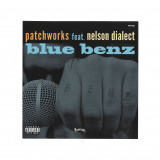
Favorite Recordings presents an exclusive collaboration between French producer Bruno ‘Patchworks’ Hovart (Voilaaa, Mr President, Taggy Matcher, …) and Australian NYC-based rapper and poet Nelson Dialect. The two artists met two years ago after Nelson’s gig in Lyon and, of course, they discussed and seriously planned to collaborate one day, both having an everliving love for early nineties hip hop. Then came the quarantine and Covid-19 with Patchworks locked in Lyon, Nelson Dialect in NYC: it seemed to be the right time to do it. A few months later and they finally drop Blue Benz, the result of their long distance collaboration, coming as a beautiful 7inch filled with proper Jazz & Soul Hip Hop vibes.
On A side, « Blue Benz » reminds indeed the best feelings of the nineties hip-hop with its infectious slapped bass rhythm and subtle Rhodes chords, all fiiting perfectly with Nelson Dialect’s serious flow!
On B Side, « Jazzy Blue Benz » offers an alternate take on the same groove, focusing more on the electric guitar gentle slides with a more percussive beat and horns arrangements with a proper NYC jazz
feeling.
From Adelaide, Australia, Nelson Dialect now lives in New York working with Bronx label Red Apples 45 started by AG of DITC and Ray West. Making music since he was 16, he has received critical acclaim for his work with producer Must Volkoff and their most recent album Magnetism. Before moving to New York, Nelson toured extensively in Australia supporting some of the biggest international Hip Hop acts including Mobb Deep, Lupe Fiasco, Ghostface Killah, GZA, RZA, Pharoahe Monch and DJ Premier among many more. He just released a new album Opal Mind with French producer NuTone.
In the late-1970s Athens, Georgia was buzzing with a raw but sophisticated music scene. Traditional Southern rock had been the Georgia musical export for years before but the turn of the decade began producing new sounds from bands like the B-52’s, REM and Alt Rock luminaires Pylon.
Before they were a band, Pylon were art-school students at the University of Georgia: four kids invigorated by big ideas about art and creativity and society. However, Pylon were less of a band and more of an art project, which meant they had very specific goals in mind, as well as an expiration date.
While their time together as a band was short lived (1979-1983), Pylon had a lasting influence on the history of rock and roll. Throughout their brief history, they were able to create influential work that would help foster the post-punk and art-rock scene of the early 80s. Artists like R.E.M., Gang of Four, Sonic Youth, Sleater-Kinney, Interpol, Deerhunter and many more claim inspiration from the band.
Their 1979 single ‘Cool’ / ‘Dub’ reached legendary status, with Rolling Stone titling it one of the 100 Greatest Debut Singles Of All Time.
In 1980 the band released their first record, ‘Gyrate’, and began touring across the country in support of the release. The band would soon develop a following across the country and specifically in the bustling music scene in New York City. One of their earliest gigs was opening for the Gang of Four in the Big Apple.
Following the critical acclaim of their debut release, Pylon went back into the studio. They gleefully pulled their songs apart and put them back together in new shapes, revealing a band of self proclaimed nonmusicians who had transformed gradually but noticeably into real musicians. The resulting album, ‘Chomp’, was barely off the press when Pylon were booked to open a run of dates for a hot new Irish band called U2 (after previously playing two arena shows with them in the month leading to the album release). Most bands would have jumped at the opportunity but Pylon were sceptical. At a critical point in the life of Pylon, they opted to become a cult band rather than stretch their defining philosophy too far.
“We fully intended Pylon to be an almost seasonal thing that we were gonna do for a minute and then get on with our lives,” says Curtis Crowe, drummer for the band. “But it just never went away. It still doesn’t go away. There’s a new subterranean class of kids that are coming into this kind of music, and they’re just now discovering Pylon. That blows my mind. We didn’t see that coming.”
New West Records are proud to partner with Pylon to reissue ‘Chomp’ and ‘Gyrate’ back into the masses. Beautifully remastered from the original audio sources and pressed on vinyl (140g) for the first time in over 30 years.
New West Records also present ‘Pylon Box’, a comprehensive look at the band that features the remastered studio LPs ‘Gyrate’ and ‘Chomp’, the 11-song collection ‘Extra’ - which includes rarities and previously unreleased studio and live recordings - and ‘Razz Tape’, Pylon’s first ever recording: a 13-song unreleased session that pre-dates the band’s seminal ‘Cool’ / ‘Dub’ debut.
‘Pylon Box’ also includes a hardbound 200-page full colour book featuring pieces written by the members of R.E.M., Gang of Four, Steve Albini, Corin Tucker and Carrie Brownstein of Sleater-Kinney, Sonic Youth, Interpol, B-52’s, Bradford Cox of Deerhunter, Mission of Burma, Calvin Johnson of Beat Happening and K Records, Anthony DeCurtis, Chris Stamey of the dB’s, Steve Wynn of the Dream Syndicate and many more. Features an extensive essay chronicling the band’s history, with interviews with the surviving members of the band as well as members of R.E.M., B-52’s, Gang of Four, Method Actors and more. It also features never before seen images and artifacts from both the band’s personal archives as well as items now housed at the Special Collections Library at the University of Georgia and the Georgia Museum of Art, UGA.
The 20th anniversary year of Dial Records couldn’t have been more exciting for us so far! After the extraordinary well-received release of Soela’s debut-album Genuine Silk and steady excitement around our ongoing series of digital anniversary compilations, we are more than thrilled to announce the second album release of this our very special year: XDB - Inspiron. As a longtime companion and true inspiration throughout the label’s twenty-year history, Kosta Athanassiadis aka XDB enriched our lives with his brilliant productions in the form of countless 12”s and legendary remixes. His long-overdue full-length debut album Inspiron in hand, we find ourselves unpacking the most beautiful jubilee present we could have ever imagined. For almost three decades now Kosta Athanassiadis aka XDB has been involved in the constantly changing world of dance music. His curiosity and dedication to electronic music spiral deep into the depth of House Music and Techno and where ever he appears he generously shares his unique knowledge in this field with equally dedicated crowds. Whether you follow his bloggish “Tracks I do really LOVE”, a collection of club essentials and a library of taste, or you witness one of his remarkable DJ sets from Panorama Bar to Freerotation Festival - XDB will elevate you to one of those unforgettably magical music moments. In 1993 Kosta Athanassiadis started his DJ career in the medieval hometown of Goettingen. To find what he was really looking for, namely, the newest and most exciting new records he frequently had to leave this picturesque city, that is most popular for inventing the traditional Baumkuchen pastry, but has not been on the maps of music connoisseurs necessarily. Frequent trips to visit records stores and clubs around Germany built a network of likely minded people. Some of his favorite and most thought after record labels of the time like the Chicago imprint Relief, or UK's Mosaic, are still fundamental to his very specific musical taste. By the turn of the century, XDB hosted a series of nights at Goettingen's Eletroosho, where he invited Dial’s own Lawrence and Carsten Jost in 2002- the beginning of a still ongoing friendship. He had established himself as a sought after and internationally active DJ and started his fist endeavors into music production as well. Later on XDB founded his own Label Metrolux and released on iconic labels like Sistrum and Wave to be followed by countless remixes for legends like Aaron Carl, Norm Talley and Patrice Scott. An extraordinary stream of gravity connects both, his productions and DJ sets. Once breaking through a seemingly transparent surface, one get’s lost in the beauty and depth of forms and figures. There’s barely DJs and producers who keep searching for this hidden formula in such a microscopically detailed way to pass a lifetime in House Music and Techno on to the world. XDB's Inspiron embraces this unique approach, filters and develops inspirations in an entirely delicate way, and magically emphasizes the desires of the most dedicated listeners and dancers.
There is definitely something "afro" inspired about this latest EP from Puma & The Dolphin, certainly in comparison to pretty much everything else I've ever heard from him, which includes a great EP on Canadian imprint Chambre Noir and some stellar inclusions on every one of Dj soFa's highly respected "Elsewhere" compilations.
I'm told that while immersed in domestic life during lockdown in Sofia, Bulgaria, the music evolved to take in what was happening at home and saw the inclusion of toy instruments, his own drum playing, the voices of his children playing and even the family parrots whistling and squawking in the background. These random ambient insertions when seen in the context of the hypnotic and percussive rhythms and timbres throughout are oddly reminiscent of the late, great Francis Bebey who, although culturally and physically a million miles removed, was also known for recording much of his work at home and who also featured the voices of his children playing.
In fact, it is as much the music's playfulness and simplicity that give the pieces their distinctive character, at times echoing the repetition and mesmerism of Raymond Scott's "Soothing Sounds For Baby" series. Yet, childrens' music this is not. There is a mysticism and depth on one hand and a willingness to experiment on the other that reminds me of pioneering experimentalist K. Leimer's early Eno-inspired tape outings as well (see "Supermarket" for example).
I asked Puma & The Dolphin's Nikko Names if he could share the story behind how these six tracks came together. He had this to say:
"This collection of pieces were created during a monotone period of my life which I have overlaid with colour: a time in which I surrender to the beauty of home life - watching my kids play, feeding the birds - entwining these sounds of my surroundings amongst the rhythmic layers of these pieces. Playing the drums to remind us of the next circle dance for four. There is something mystic to travel only in your head; a shamanic trip inside the body with no concepts and answers."
"Good stuff ... digging Am Am Am and Supermarket in particular" JD Twitch Optimo Music / Blackest Ever Black / Strut / On-U Sound
"Cool stuff" DJ SoFa Pingipung / Emotional Response / Kalahari Oyster Cult
'Say What's On Your Mind' by Rikki Aaron was the song that brought Rikki to prominence within the rare soul scene. We decided to allow UK based Ourra to give it some new life with a sprinkling of 80s boogie vibes. On the flip we've got a very raw stripped back version of the song. The song itself was originally written by Rikki whilst still at school in the 70s and is a timeless piece of classic soul music.
Society is shaped by its history, stories that have evolved over time and held to be true. Stories of the imagination, stories from the ill-informed, stories conjured by favored subjects, but all loosely wrapped in the truth. Systems such as morals, religion, politics, and a culture are powerful enough to influence the mind of one and the minds of many and therefore direct the evolution of the species. Unseen Forces is a conceptual work that dissects this idea. A collection of four songs cause the listener to re-examine not only what they believed to be real and true but also why. Side A dives head first into testing your belief system by introducing the first stage of influence - Disruption and Experimentation. Introducing a simple question into the belief system that cannot be answered and observing the result. The Disruptor - subtle but powerful making its point with eerie, off center synth lines, and synthesized drums. Driving a wedge between the listener and the comfort of familiarity. Dr. Blowfin's Experiment - a long time and highly revered classic previously released on SID, continues to re-evaluate beliefs with modifications to the original. The question of why is still unanswered. Beliefs are broken and chaos ensues. Side B begins to take direct the chaos with another classic - Crossphaze - injecting live funk and modulated filters with this flexible floor mover previously released on Accelerate. Crossing into another realm unfamiliar to the listener as new beliefs are formed. Deconstructing the Immortals - leaves the listener with no other choice but to eagerly leave their old world behind and everything they know in ruins. This offbeat and mesmerizing anthem makes the question of why unimportant, because the answer is what now.
DOWNFALL is the first album under the name SAITO created by Lena Saito, aka Galcid, and produced by accomplished analog synthesizer guru, Hisashi Saito, aka Lena’s husband. Having descended from a long line of Japanese sword-smiths, the industrial sound of smashing steel is embedded in Lena’s DNA and reflected in her music, however there are also refined, hypnotic tones showing a side with more finesse. The music itself is not scored and is predominantly improvised. Words and vocals are ad libbed as well. Sometimes the machines respond as if through telekinesis, altogether emitting a sound which can be categorized somewhere in the range between modern experimental dance music and something possibly making more sense to enlightened minds a thousand years in the future.
There is a new addition to the forge of talents of Mille Plateaux, a Japanese musician by the name of Saito whose album has been released on the label under the title of Downfall. After a whole series of releases under the signature tag clicks & cuts, there comes out a work, much more suited for a dance hall, that is different in terms of the genre from everything that has been published so far.
Like a bucket of ice-cold water poured over the head, erratic agressive hardcore rhythms pour all over the audience in the first track, interrupted only by grinding noises and minimalistic technogenic clicks.
Downfall won't fail to infect even the most experienced music connaisseur with its out-of-control energy, while offering a wide range of techniques: at times, robotic voices, one second long fragments of looped melodies and many other audio gimmicks.
Lena Saito (that is the author's name) is not afraid of conducting experiments in her chemical laboratory, freely mixing sound reagents without taking any precautions. It feels like, this new chemical substance, that she has been working on so thoroughly, contains quite a long list of ingredients, although its main component is the various rhythm breaks.
The synthesizer part of Red Hammer sounds in the best traditions of the acid style, and the rhythm section is akin to African tribal dances of the future. Downfall is absolutely unrelenting in its concept.
The melody of the composition Nucleosome is a little bit like the melancholic IDM of the 00s, finding itself secondary to the dominating, yet again convoluted rhythmical web meticulously woven by Saito.
This album can be definitely named as a big contender aspiring to start a new golden era of Mille Plateaux, and Saito as the hidden treasure of the label that can challenge even the veterans for the right to be the headliner.
Black Truffle is proud to announce the first vinyl reissue of Rafael Toral’s Aeriola Frequency, originally released by Perdition Plastics in 1998. Toral made his name in the world of mid-90’s experimental electronics with two releases, Sound Mind Sound Body (1994) and Wave Field (1995), both now recognised as classics and reissued on vinyl by Drag City, which saw him exploring the potential of electric guitar and pedals to immerse the listener in seemingly endless waves of sustained tones. On Wave Field, inspired by the striking resonance effects he experienced during a Buzzcocks gig with bad acoustics, he achieved a synthesis—often imitated but never bettered—of rock guitar, Ambient, and the acoustic exploration of Alvin Lucier, a kind of "liquid, abstract flux of rock sound".
On Aeriola Frequency, Toral continued the explorations of Wave Field but dropped the guitar, creating a series of extended pieces using only a simple feedback loop designed to work with pure electronic resonance. The result is far more delicate than Wave Field, a steady but unstable flow of filtered tones that continually reorder themselves into new forms. On both the LP’s sides, the tones, like growing plants, imperceptibly shift from drifting freely in ambient space to weaving strangely natural melodic patterns, as the loops unfold and the resonance gently outlines recurring rhythmic shapes.
The overall effect is strikingly organic, as David Toop noted in the liner notes included in the original release (and reprinted in this reissue): “A crystal garden, the sound grows in reeds and streams, blown like spider web strands, glittering and invisible, pulsing with translucent colour, bubbling and imploding, fraying and powdering.”
A classic of the non-academic approach to electronics that flourished in the 1990s— and a big influence at the time on Black Truffle head honcho Oren Ambarchi—Aeriola Frequency ushers listeners into an endlessly fascinating world of gliding tones and shifting details that they might never want to leave.
- Recorded at Noise Precision, Portugal, December 1997 and April 1998. Remastered by Rafael Toral in 2020.
- Liner notes by David Toop and Rafael Toral.
A welcome reissue of the second Zion Train album, originally released on Universal Egg in 1993.
* Zion Train were at the forefront of the UK dub scene and took their sound worldwide from continent to continent and from festival to festival.
* `…Sporting Moments’ explores the outer limits of dub electronically and mind-bendingly with ample sub-bass to cause distress to your speakers.
Another ride in the producer's unique sonic tale where digital vocalisms and fragmented musical thoughts push the listening to the edge of the brain dancefloor.car commercials are blown on repeat by the wind of conscience. Panoram long awaited return, Anova, sis an hymn to the vacant mind
180g black vinyl Star Birth and downloadcode for "Star Birth" and "Star Death". Gatefold.
'Star Birth' is a flung fisherman's net, mighty in scope, irrevocable as looking up from the stone floor of a cathedral – there is space, yet there is profound intimacy from the immediacy of the lyrics, our thoughts rattling around like panicky goldfish. Race has taken aspects of areas
previously explored, and made a quantum leap into the unknowable. With opening track Can't Make This Up, the gauntlet is flung down – 'what is need, what is greed / it's a new crush, the brain trust/ hive mind rewrite rewind/ falsehood streaming'
'Star Birth' is international maverick and music icon Hugo Race's 15th album with his band of True Spirits. It's a double album and the twin album's name is 'Star Death'. Star Birth was recorded during Australia's bushfire summer apocalypse of 2019 and mixed as the 2020 covid-19 pandemic hit. When the stars align it all makes sense, Hugo explains, adding that one oceanic evening while writing the album a bright star exploded right before his eyes, the sign of a sudden end and a new beginning...
Hugo's writes of trials, tribulations, hopes, fears, heartaches, loves, losses, highs and lows – 'everyday I die a little bit more, in a thousand ways I fight my little wars – and he sings with exquisite pathos and depth, like he's singing just for you about the times in which we live –
political disasters, our planet, the absence and the presence of spiritual values, broken promises, cracked hearts and if any of it really matters anyway. With hell raising lyrics like,Expendable, you'd have to wonder if anyone of us will make it through alive – 'hey sister, are
we all expendable? nobody wins, but so many of you think they do / don't try to fool yourself people, deep down you know the truth - everybody gets their one hot shot but no one's bullet proof'. But then The Rapture reminds us that there will always be stars dying in the glory of
new life – 'give us this day comfort and bread / implant in us the living word / empower us with divine love and deliver us from evil / for you are the one true light / the power and the glory / forever /amen'
Hugo's True Spirit deliver a lush, sonic love letter of rock, electronica and dramatic orchestration, based in blues, hypnotic repetition and sonic exhilaration. Michelangelo Russo is a huge part of this atmosphere; his approach to music is that of an artist with a palette of
mysterious implements and machinery, but the entire band and production is incredible from start to finish. Star Birth is 48 minutes of mind expanding, mind blowing, heel tapping tunes, with its sister album 'Star Death', a dub version of remixes that will send you searching for
your own exploding star somewhere in the sky…
- A1: Instant Karma! (We All Shine On) (We All Shine On)
- A2: Cold Turkey
- A3: Isolation
- A4: Power To The People
- B1: Imagine
- B2: Jealous Guy
- B3: Gimme Some Truth
- B4: Come Together (Live)
- B5: #9 Dream
- C1: Mind Games
- C2: Whatever Gets You Thru The Night
- C3: Stand By Me
- C4: (Just Like) Starting Over (Just Like)
- C5: Beautiful Boy (Darling Boy) (Darling Boy)
- D1: Watching The Wheels
- D2: Woman
- D3: Grow Old With Me
- D4: Happy Xmas (War Is Over) (War Is Over)
- D5: Give Peace A Chance
John Winston Ono Lennon would have been 80 on October 9th 2020. In celebration of his life and the incredible pleasure his music has brought to millions in his lifetime, a new Best Of will be released. A multi-format collection, entitled GIMME SOME TRUTH., this set has been personally curated by the Lennon estate and mixes the biggest hits like the classic and timeless “Imagine” with campaigning songs such as “Give Peace A Chance” and the evergreen classics like “Happy Christmas (War Is Over)” and is culled from all of his solo albums including the posthumous “Milk And Honey”.
John Lennon is simply one of the most recognised and respected musicians of the modern era. As one half of perhaps the most successful songwriting partnerships of all time he deserves his place in history. That this partnership was with Paul McCartney in The Beatles means that he is also one of the most successful recording artists in history. With every succeeding generation falling for their genius, their legend continues to grow and they dominate the pop landscape.
Their split in 1970 allowed each of the band members, by now literally some of the most famous people on the planet, to find their own voice as solo artists and to grow beyond the confines of the band. For John Lennon, this meant throwing himself headlong into life with his new wife, Yoko Ono and eventually a new life in New York City.
Being a solo artist meant that he could delve deep within himself and realise music that was both deeply personal and challenging and which sometimes required a commitment from the audience too. His songs during his solo career mixed accessible pop melodies with sometimes stark and heart-rending simplicity and all points inbetween. His lyrics ranged from deep introspection and self-analysis to subjects that were more concerned with politics (of self, of relationships, of the campaign for peace, of the place of mankind as well as global politics). After a first rush of creativity, he took a step back from the limelight to care for his son, Sean, at home in New York, but when he was ready he returned to recording with one of his most successful and impactful albums. Double Fantasy, preceded by the single (Just Like) Starting Over had been released the month before his life was tragically cut short on 8th December 1980. But this album joins the rest of his solo canon as testament to one of the truly great and truly iconoclastic musicians and personalities of the era.
- 1: The Mabon Dawud Quintet - Abeba
- 2: Thomas Meloncon - Ain't Gonna Wait Too Long
- 3: Al Williams Quintet Plus One - Sandance
- 4: Deep Jazz - Mystic Sky
- 5: Sheila Landis - Leigh Ann's Dance
- 6: Sal Nistico - Beautiful Black Casanova
- 7: Roy Hytower - Song Of Deliverance, Pt. 1 (Feat. The Crowd Pleasers)
- 8: Now - Easy Tune For Dancing
From 1963 to 2014: "Peace Chant - raw deep and spiritual jazz" exhibits 51 years of music. A well matched anthology with sounds to dive into, hard rhythms to dance to and vocals to meditate on.
The Tramp Records crew has compiled 8 tracks in nice order and dramaturgy. Some tunes you might have never heard before unless you own one of the rare original vintage vinyl records. Peace Chant is released on two separate LPs with own catalogue numbers and on one CD. Some songs I can't get out of my mind.
These days Mabon Dawud Quintet from Ethiopia is on the trail of Mulatu Astatke. Tramp Records provides the first release of "Abeba" - a funky and stoic track in Amharic mother tongue sung by a high male lamenting voice.
Even more haunting is "Ain't Gonna Wait Too Long" by Thomas Meloncon. The self-taught guitar player recorded this protest song at the age of 20. Voice, guitar, congas and double bass are plenty enough for a heavily pushing song complaining that black man's slavery isn't gone after 400 years. Artist, poet and civil right activist Meloncon (alias Muntu Mwaminifu) wrote and directed theatre and radio plays. His works are collected at Texas Southern University in Houston. "Ain't gonna wait too long" probably is his earliest artistic outing, he just had left school in 1968.
The compilation concludes with a song by Now, a band no one outside Munich might know. "Easy Tune for Dancing" can be found on a record of cultural and concert location Feierwerk form 1990. It really was a surprise to hear the quintet of trumpeter Konstantin Kern and Klaus Pfister on sax playing Afro-Cuban jazz that easily and nonchalant. If Dizzy Gillespie turned up with his bent trumpet and Lalo Schifrin sat in like he did on "Gillespiana Suite" I wouldn't be astonished!
From the fertile electronic, post-folk depths of Colombian music, the tasty "Colombian Singles series" has emerged to cast light on a blooming, rapidly expanding scene. The series is envisioned as a showcase for the country’s growing number of producers who, drawing upon their Indigenous, African and European roots and cultures, are creating new approaches to electronic dance music. Hailing from the countryside near Bogotá, where the huge city reaches down into its more tropical surroundings, Los Bulldozer is the perfect combo to inaugurate this new musical adventure. Led by the unearthly guitarist Fabian Morales and his mind-bending experiments, Los Bulldozer have their own particular way of bringing international influences like Soukous, West-African blues and post-punk to the already exquisite musical diversity of key Colombian styles such as Currulao, Champeta, and Reggaeton. Partly produced by the German godfather of global beats Daniel Haaksman, highlights on this first volume include the heavy indie dance cut ‘Pepa’, emotive Pacific blues guitars and eerie haze of ‘Currulaomali’, and the industrial reggaeton ‘Commin Down’. And there’s (a lot) more... Not your usual sun-kissed summer vibe, but a deeper, moody interpretation of the dualities felt under equatorial latitudes.
- A1: Damage Machine - Hybrid Mind
- A2: Cenobit - Alles Ist Zu Spät
- A3: Quato - Energizer
- B1: Qualkommando - Trinity
- B2: Lawrencium - Speedtongram
- B3: Noizefucker - Darkstream
- C1: Nekrosystem - Karma Vibes And Witchcraft
- C2: Voldo - Panik Attacks Since 1980
- C3: X-Core - Devilbeat
- D1: Occulkot - Gateway To Annihilation
- D2: Qualkommando - Skullcracker
- D3: Pain Alliance Vs Komprex - Shadowrun
Videosphere, the debut album by Kompakt’s latest signing, the London-based artist Lake Turner (aka Andrew Halford), swoons into focus with “The Sunbird”, a teasing drift of lilting, ambient tones, riding out a submerged piston-pulse rhythm. Across its brief 109 seconds, it manages to traverse evocative terrain – something mythopoetic, something both humble and grandiose, a glimpse of the other behind the sky’s curtain. “I wanted to conjure up something resembling an ancient ceremony or death procession,” Turner nods. “Like a hymn to the surroundings of a faraway hill.” It’s both sky-bound and earthen, a ritual incantation to call in the music of the spheres.
Turner was introduced to the Kompakt family by his sometime collaborator Yannis Philippakis of Foals. He’d previously made music in post-punk and indie groups Great Eskimo Hoax and Trophy Wife, but Videosphere is the first time he’s fully articulated his own vision of electronic music, aside from one limited lathe-cut 12”, 2018’s Prime Mover EP, on Algebra. The lush ambient-disco-techno dreams of Videosphere were constructed and completed in his London studio and at his parents’ arable and sheep farm in Worcestershire, which might help explain the hazy, unhurried pastoralism of the album.
“There was a slight bittersweetness in finishing the record (in Worcestershire) as my parents were in the middle of selling my childhood home,” he sighs, before quipping, “on the plus, I ended up shearing a lot of sheep over the summer.” A student of archaeology and ancient history, Turner is no doubt carefully attuned to the twisting cogs of history and memory, and it’s no surprise that Videosphere has a nostalgic, melancholic cast; much of its beauty rests in the way it tugs, gently, at the heart strings – see the tear-stained cheeks of the lush, dappled “Honeycomb”, or the sweetly sad electro-roundelay of “No Way Back Forever.”
It’s not all drift-dream hypnosis, though – Videosphere is very much grounded in the now. ““No Way Back Forever” is a nod to the linear nature of time,” Turner explains by way of example, “and the tipping point of the world climate crisis that scientists have now declared.” Jayne Powell’s vocals are sent spinning through the song, wound like candyfloss; she takes centre stage on the techno hymnal title track, too. Throughout, there’s a sense of forward movement, despite the life stasis we find ourselves collectively bound by in mid-2020; there’s also a yearning for the communal, for community, that’s captured in the album title, a nod to an object Turner encountered at London’s Geoffrey Museum, “a television set in the shape of a spaceman’s helmet from the 1970s.”
“The vision I loosely had was to make an electronic record that had a communal warmth and almost ceremonial or ritual feel. I wanted to examine the relationship of our archaic minds in the trappings of the modern world,” Turner concludes. “What the Videosphere also symbolizes for me is the oneness of humanity and community, prevailing.”
Eröffnet wird "Videosphere", das Debütalbum von Kompakts jüngstem Signing, dem in London ansässigen Künstler Lake Turner (alias Andrew Halford), mit "The Sunbird" - einem herausfordernden Strom aus Ambient Sounds, die zu schweben scheinen, um sich dann in einen subtilen, maschinellen Rhythmus zu verwandeln. In gerade mal 109 Sekunden gelingt es dem Stück, ein gewaltiges Terrain abzuschreiten - etwas Mythopoetisches, bescheiden und grandios zugleich, gibt uns eine Ahnung davon, was sich hinter dem Himmel verbirgt. "Ich wollte etwas heraufbeschwören, das einer alten Zeremonie oder Totenprozession ähnelt", sagt Turner, "wie eine Hymne an die Umgebung eines weit entfernten Hügels." Himmlisch und irdisch zugleich, eine rituelle Beschwörung von Sphärenmusik.
Der Kompakt Label-Familie wurde Turner von dessen zeitweiligen Mitarbeiter Yannis Philippakis (Foals) vorgestellt. Zuvor hatte er in den Post Punk- und Indie-Bands Great Eskimo Hoax und Trophy Wife gespielt. Bis auf eine limitierte lathe-cut 12", der "Prime Mover EP" auf Algebra von 2018, artikuliert Turner mit "Videosphere" zum ersten Mal seine eigene Vision von elektronischer Musik.
Die üppigen Ambient-Disco-Techno-Träume von "Videosphere" hat Turner in seinem Londoner Studio und auf der Schaffarm seiner Eltern in Worcestershire produziert, was den nebulösen, gemächlichen und beinahe pastoralen Charakter des Albums erklären könnte.
"Es gab einen bittersüßen Moment als ich mit der Platte (in Worcestershire) fertig geworden war, da meine Eltern gerade dabei waren, das Haus meiner Kindheit zu verkaufen", seufzt er, bevor er witzelt, "das Positive war, dass ich im Laufe des Sommers eine Menge Schafe geschoren habe". Als Student der Archäologie und der Geschichte des Altertums ist Turner zweifellos mit den sich unaufhörlich drehenden Rädern der Geschichte und der daran geknüpften Erinnerungen vertraut, und es ist keine Überraschung, dass "Videosphere" einen nostalgischen, melancholischen Einschlag hat; viel von seiner Schönheit liegt in der Art und Weise, wie es einem sanft ans Herz geht - die Tränen benetzten Wangen von "Honeycomb" oder der ambivalente Elektro-Reigen von "No Way Back Forever".
Trotz allem hypnotischen Driften und Träumen - Videosphere ist sehr stark im Jetzt verankert. "`No Way Back Forever`ist eine Anspielung auf die lineare Natur der Zeit", erklärt Turner beispielhaft, "und auf den Wendepunkt der globalen Klimakrise, den Wissenschaftler gerade ausgerufen haben". Jayne Powells Gesang wirbelt dabei wie Zuckerwatte durch den Song und steht auch im Mittelpunkt des technoid hymnischen Titelstücks. Überall ist ein Gefühl der Vorwärtsbewegung zu spüren, trotz der Stagnation, in der wir uns Mitte 2020 kollektiv befinden; trotzdem existiert eine Sehnsucht nach dem Gemeinsamen, nach Gemeinschaft, die im Albumtitel eingefangen ist - eine Referenz an ein Objekt, dem Turner im Londoner Geoffrey-Museum begegnete, "ein Fernsehgerät in Form eines Raumfahrerhelms aus den 1970er Jahren".
„Die lose Vision, die ich hatte, bestand darin, eine elektronische Platte zu machen, die eine soziale Wärme und eine fast zeremonielle oder rituelle Atmosphäre ausstrahlt. Ich wollte die Beziehung unseres archaischen Geistes in den Fallstricken der modernen Welt untersuchen", so Turner abschließend. "Was `Videosphere` für mich auch symbolisiert, ist die Einheit von Menschlichkeit und Gemeinschaft, die am Ende obsiegt".