'É O Que Ela Quer' is a groovy Brazilian version of The Zombies' classic 'She's Not There' recorded by the obscure Mini Trio in 1970 and released as a 7" only that should be in every DJ record box. First time reissue. Although the appeal of the post-Hair/Beatlesque hippie hook of 'Hare Krishna' on the A side of this rare single, the real gold lies on the flipside. 'É O Que Ela Quer' is a groovy Brazilian version of The Zombies' classic 'She's Not There' recorded by the obscure Mini Trio in 1970 and released as a 7" only. The band was most likely a studio group recording international hits for the local Brazilian market and their take on the 1964 classic adds a terrific dancefloor potential to the Zombies song. Very hard to find, especially in good condition, this record now gets a proper reissue for the first time.
Suche:mini trio
Analog Fingerprints Vol. 0 is a compilation bringing together the early 2000s works of Marco Passarani under his Analog Fingerprints alias, collecting key tracks originally released on Rome’s Plasmek and Pigna labels.
For Numbers, the story starts long before the label itself. In their formative years, digging in Glasgow’s Rubadub, Passarani’s records felt like dispatches from a future city. Releases on his own Nature Records and on labels such as Generator and Interr-Ference Communications were mind blowing: rooted in Detroit techno, Chicago house and electro, yet pushing somewhere new. Much like fellow travellers Autechre, who would remix him in 2001, Passarani’s music balanced machine funk with restless experimentation.
Information was scarce, and you would hear these records first on the dancefloor or at listening stations in shops like Rubadub. Print fanzines like Ear and early web outposts such as Forcefield offered only fragments. But there was a palpable axis forming between Detroit techno and a new European wave of record labels including Skam, Rephlex, Clone, Viewlexx and Nature itself. It was the sound that defined Saturday nights at Rubadub’s ‘69’ parties in Paisley, just outside of Glasgow.
Passarani’s records, in particular, were instrumental in bringing together the future Numbers co-founders. Richard had already booked him pre-Numbers; meanwhile Calum (Spencer) and Jack (Jackmaster), then 16/17 year olds working alternate Saturdays in Rubadub, were so enamoured with the Roman sound that they travelled to Rome for the Bitz Festival in 2003 to seek out Passarani and Lory D at their source.
The first Analog Fingerprints release landed as a 12” on Plasmek in 2001, following the fractured, IDM-leaning 6 Katun material. For Passarani, the project marked a recalibration. A DJ first and foremost, he had moved into production via early computer setups, from a Commodore Amiga through primitive PC audio, Cubase and Logic, later experimenting with Ableton. The IDM scene had offered a playground for trial and error, but there was always a tension between abstraction and the dancefloor. Analog Fingerprints became the bridge: still intelligent, but with more dance than distance. After years of broken beats and complex arrangements, he wanted directness without surrendering identity.
Working closely with Francesco de Bellis and Mario Pierro in the Pigneto district, the trio formed Pigna as a vehicle for reclaiming a more accessible dance sound, deliberately steering away from the minimal wave beginning to dominate Europe. Sessions were fast, instinctive, often stretching late into the night with friends dropping by. It was a studio as social space, production as collective energy.
“In that constant search for balance, Analog Fingerprints was my way of expressing something closer to the classic dance floor. The track 'Tribute' - a tribute to my favourite early Detroit techno track of all time, 'First Bass' by Separate Minds - came after I realised I had almost lost my connection with the dance floor. The simplest step was to take inspiration from early Chicago and Detroit and twist it in our Roman ‘Pigna’ way. My goal was to create more accessible dancefloor tracks by mixing my unconscious Italo roots with my teenage love for that early US sound, ensuring the result was as far as possible from the minimal sound that was starting to dominate everywhere.” - Marco Passarani
Technically, the Analog Fingerprints tracks span a transitional era: Roland TR-909, SH-101 and Alpha Juno hardware met early software experiments. A Novation Drumstation rack stood in for the unattainable TR-808, syncing with TB-303 and TR-606. Yet the true secret weapon was Jeskola Buzz, a tracker-style modular environment that allowed step-by-step parameter control and strange melodic constructions, later exported into the audio sequencer. Even the lead on ‘Tribute’ came from an early PPG Wave-style plugin. It was hybrid thinking at a moment when digital tools still felt unstable but full of possibility for technologists like Passarani.
Behind the music sat Finalfrontier, a loose Roman collective orbiting Nature and Plasmek. Distribution and production were intertwined; importing obscure records into Italy built connections with like-minded outsiders across Europe and the US. Expensive phone bills and fax machines forged an “electronix network” that linked Rome to Clone, Viewlexx, Skam, Rephlex, Rubadub and Detroit’s Underground Resistance. There was a shared sense of survival and resistance, of operating against commercial systems.
Passarani recalls “The first time I found a sheet of paper inside an Underground Resistance 12” with info about upcoming releases... and a huge picture of Spock on the back. Imagine that: you love the music, you love Star Trek, and there’s someone on the other side of the ocean sharing those same values and sounds. It was the perfect match. We even gave our original company the suffix ‘Finalfrontier’: that says it all.”
Feedback in that era arrived physically: distributor faxes, conversations with visiting DJs, the experience of playing abroad and meeting kids who had connected with the records. Glasgow became a key node in a scattered outlier network. Passarani personally brought the first two Nature releases to Fat Cat in London, playing them in-store. Shortly after, a fax arrived from Rubadub in Glasgow requesting copies.
“I still remember that phone buzz and the fax paper slowly sliding out, with someone I didn’t know saying they wanted 75 copies of Nature 001. Or like the time we got a fax from the Rephlex crew just saying, “Hello Nature Records, Keep up the good work.” That was how we knew the message was getting through. It was a fantastic feeling; just one piece of thermal fax paper as an analog notification - the mood for the entire week would change.” - Passarani
The connection to Glasgow has since stretched across generations. As Passarani reflects, links often fracture as scenes renew themselves, but in Glasgow something different happened. New and old mixed seamlessly. There was a visible trust in what came before, and a willingness to carry it forward rather than discard it. Observed from Rome, it was deeply encouraging.
Analog Fingerprints Vol. 0 captures that moment of exchange: Rome to Glasgow, Detroit to Europe, experiment to dancefloor. It documents an artist recalibrating his sound and a network of scenes discovering one another in real time, connected by vinyl, faxes and shared intent.
- 01: Dune
- 02: Kundela Mawedi
- 03: Paco
- 04: Cameo
- 05: Cacopoulos
- 06: Khettara
- 07: Hell Dorado
- 08: Papambra
- 09: Porpora
Killer Groove Records proudly presents the self-titled debut album by Italian cinematic funk trio Atabasca. A sonic journey where funk, psychedelia and desert groove merge into a timeless narrative suspended between rhythm and vision.
"Atabasca" marks the debut release from the cinematic funk trio, dropping March 27th on limited edition LP, CD digipack and digital formats, the latter featuring an exclusive bonus track. This is a project built on evocative imagery: each song unfolds as an open scene, an emotional landscape where listeners can step inside and write their own ending.
Lap steel, kalimba, percussion and guitars interweave with bass and drums, striking an original balance between tradition and experimentation that evokes unwritten soundtracks for worlds at once distant and familiar. The record navigates between melancholy and irony, tension and release, with a sharp focus on dynamics and sonic narrative.
Deserts, seas, imaginary villages, getaways, pursuits and collective rituals: "Atabasca" emerges as a collection of musical landscapes that unfolds through vivid, evocative imagery.
Jazz-funk, world music, afrobeat, psychedelia and the Italian Golden Age of movie soundtracks merge into a singular emotional geography: warm, analog and deeply human.
The musical journey opens with "Dune", a melancholic statement that leaves room for imagination, before igniting with "Kundela Mawedi" and its cascading lap steel over haunting vocal chants. "Paco" tips its hat to classic westerns, tracing a bandit's trajectory, while "Cameo" drifts back to childhood through minimal rumba and shimmering kalimba. The cinematic imagery continues in "Cacopoulos", a nod to Spaghetti westerns and Eli Wallach, built on raw drum patterns and distorted guitars. Intensity builds in "Khettara", where afrobeat rhythms and Middle Eastern textures intertwine, before "Hell Dorado" tears off in pursuit of the American dream's funk-fueled mirage. "Papambra" weaves hypnotic polyrhythms between kalimba and lap steel, while "Porpora" delivers a sensual, visceral tango of passion and tension. The digital edition closes with "Reprise", a sequel that stretches the album's central theme into an expansive, meditative interpretation.
The tracks were recorded in single takes, capturing the raw energy and natural atmosphere of the performance. Artistic production was handled by the trio alongside Andrea Fabrizii (digger, musician, producer and catalogue curator for CAM Sugar), while Riccardo Ricci mastered the album at Velvet Room Mastering Studio in Brighton.
Like a desert blooming within the evergreen forests of the planet's far north, a unique, alien, disruptive environment. This is the vision behind Atabasca, the project of Luca Mongia (guitars, lap steel, keyboards, vocals), Paolo Mazziotti (bass, keyboards, vocals) and Valerio Pompei (drums, percussion, vocals).
Individually active for over twenty years on both the national and international scenes, the three Italian musicians came together in 2023 to create a project that merges experience, experimentation and creative freedom. Their music is imaginative and at times dreamlike, blending the classic concept of the instrumental trio with the worlds of film scoring and sound design.
Atabasca's sound moves through jazz-funk, world and cinematic territories, weaving together afrobeat, desert and psychedelic influences into a personal and timeless language. Each piece is a scene; each sound, a fragment of a world, a journey between reality and imagination where groove, texture and organic timbre merge into a singular sonic ecosystem: a perpetually shifting balance that generates new inner landscapes.
For fans of Khruangbin, Surprise Chef and instrumental psych-funk!
- Miss Maybelle
- Going Down South
- Long Haired Doney
- Peaches
- Black Mattie
- Out On The Line
- Jumper On The Road
- Over The Hill
- Alice Mae
- Skinny Woman
- 44: Pistol (Bonus Track)
TOO BAD JIMS - Over The Hill ist eine leidenschaftliche Hommage an den legendären North-Mississippi-Bluesman R.L. Burnside. Das britische Trio aus Brighton - bestehend aus Little Victor, Son Jack Jr. und Nick Simonon (Bruder von Paul Simonon, The Clash) - verbindet rohe Energie, hypnotische Grooves und den unverkennbaren Hill-Country-Sound zu einem zwingenden, rauen und erdigen Blues-Erlebnis. Was einst als spontane Zusammenarbeit zweier vielfach ausgezeichneter US-Musiker begann, entwickelte sich zu einer Band, die den Spirit der Juke Joints aus Nord-Mississippi in die Gegenwart transportiert. Minimalistische E-Gitarren, treibende Bottleneck-Soli und ungeschliffener Gesang formen einen Sound, der "absolutely scorching" (Living Blues Magazine) und "relentlessly upbeat" (Blues Blast Magazine) genannt wurde. Over The Hill erscheint streng limitiert und liefert einen kompromisslosen, unmittelbaren Blues, der gleichermaßen Tradition ehrt und vor roher Spielfreude strotzt. Für alle, die echten, unverfälschten Hill-Country-Blues lieben.
Melchior Productions Ltd. returns to his own My King Is Light imprint with a brand-new 12″—this time alongside Romanian-Russian pianist-producer Mischa Blanos, one third of the acclaimed Amorf trio, Jupiter Tracks pt. 1 is a beautiful record, deep and emotional, as if beamed in from another world—yes, Jupiter.
Across “Push,” “First Eva,” and “Spirit Of 23,” the pair interlace meticulous programming and crystalline sound design into an ever-shifting strain of minimal house. Dispensing with overt drama, the EP zooms in on nuance: textures flicker between digital shimmer and tactile grit, while Melchior’s trademark restraint leaves ample space for Blanos’s melodic Midas touch to radiate quietly.
This 2026 reissue of Isolée’s 'Beau Mot Plage' revisits one of the most quietly influential tracks of early-2000s minimal techno and deep house.
Presenting a trio of reworks that stretch its sun-bleached elegance in different directions. Built around Isolée’s signature warm chords, skittering rhythms, and hypnotic restraint, 'Beau Mot Plage' remains a masterclass in subtle groove and emotional economy.
The A-side opens with the Heaven & Earth Re-Edit, Luke Solomon and Rob Mello's extended take that amplifies the track’s balearic glow while preserving its intimate pulse. This is followed by the Freeform Five vs Idjut Boys Beats version, which nudges the original toward a looser, club-ready feel, adding bounce and attitude without sacrificing its understated charm. On the B-side, Freeform Reform Parts I & II delivers a deeper, more exploratory reconstruction.
the debut solo album by henrik raabe, guitarist of the german trio wareika, who rose to prominence in the 2000s with their minimal deep house sound. departing from the cool, jazzy deep house he was known for, raabe delivers a uniquely crafted downtempo album that feels like a seamless blend of jazz, afro, dub, new age, and postmodern influences. it evokes the spirit of an imagined encounter between the durutti column and dennis bovell, with virginia astley joining in—reminiscent of the uk sound of the 1980s—yet rendered more minimal and refined, in a distinctly german way. with each listen, the album draws you deeper in. it is poised to become a defining release for mule musiq in 2026
2026 Repress
After the promo version flew off the sleeves, now comes the full picture sleeve, yellow vinyl version of French live trio, Oden & Fatzo’s chart topping, house smash hit, ‘Lauren’ limited to 1000 copies. A bootleg experiment that got out of hand, Oden & Fatzo’s Radio 1 A-listed single is the accidental hit that everyone is talking about.
So how do you go about making an ‘accidental hit’, by accident of course... The track came about when French DJ Fatzo tried to demonstrate the difference between an edit and a remix to his dad, “... I took a song from the band Men I Trust, sped it up and added a drum beat and violin. After playing it to Oden, they loved it, and in turn, added their secret ingredients.”
Unlike the name might suggest, Oden & Fatzo consists of three people: The Parisian underground collective are a powerful fusion of the electronic live duo Oden, and house DJ Fatzo. Back in 2020 a bootleg version of ‘Lauren’ was uploaded to the YouTube channel of the electronic label Novaj, kicking off an unforeseeable wave of enthusiasm. That video is now approaching 3 million views. Enthralled listeners begged for a commercial release, a year later Ministry of Sound/B1 cleared the sample and the track started its march across the airwaves and up the charts.
With its captivating beat and nostalgic catchiness, ‘Lauren’ makes up for the party nights lost to the pandemic lockdowns, and sees people dancing in their homes and on the streets, as concerts, parties, and live sets are finally making a return. As the trio put it: “This song was all about hope, freedom and a party atmosphere at a time when you couldn't go anywhere. We think it gave everyone who heard it a little bit of an escape, including us.”
Meanwhile in the UK, the track has seen early support, not only by names like Franky Wah, Danny Howard, Pete Tong, Annie Mac, Jax Jones, Jodie Harsh, HUGEL, Bakermat, Cut Snake, Salomé Le Chat, Piem, David Gausa and many more, but also by the incredibly ecstatic party crowds.
Press:
6th week A List at Radio 1
Plays from Radio 2 and added to Hits Radio Pride playlist
Airplay up +3% week on week
#1 Cool Cuts Chart
#1 Upfront Club Chart
#1 Pop Club Chart
#5 UK Shazam Chart
Holding at #12 on Shazam – over 200k tags for the track in the UK to date
Over 8.6m+ streams WW now across all platforms
Over 200k+ views for the music video
Averaging 50k daily streams in the UK
47k+ sales across UK OCC to date
#1 on Beatports Deep House for 16 consecutive weeks
- 1: Wisco (5:09)
- 2: Bborn Again (6:44)
- 3: Pez (4:4)
- 4: Coni (5:7)
- 5: Plz (6:21)
PPP: a whirlwind new link-up between contemporary club heartthrobs Piezo, DJ Plead and DJ Python. A trio of the best in the game come together for a new collaborative project on Facta and K-LONE’s Wisdom Teeth imprint.
The project was recorded gradually over a two year period at Piezo’s studio in Milan. Initial sketches were written when Python came to stay for a few days in late 2023. Later, when Plead travelled through the city, he stopped by to add his own contributions - and the record grew incrementally and organically from there across multiple visits.
The initial MO was to workshop a warped take on early 00s minimal and tech house - but at a certain point the record took on a life and soul of its own, spreading out in a number of disparate yet interconnected creative directions: from the peak-time euphoria/melancholia of ‘Wisco’ through to the shoegazed minimal of ‘Plz’, via proggy psychedelia (‘Bborn Again’), glitched Perlon reconstructions (‘Pez’) and downbeat downtempo (‘Coni’).
At points you can clearly hear their individual voices break through: be it Python’s whale-song melodies on ‘Coni’, Plead’s frenetic hand drums on ‘Wisco’, or Piezo’s sound-design freakouts on ‘Pez’. At other points the joins are harder to find as the record takes on a unique voice far beyond the sum of its parts.
Cloud Management return to Altin Village & Mine for a unique collaboration with New York writer and creative polymath Vivien Goldman.
A pairing spanning generations and geography, but with a musical overlap that is quite fitting in both process and result. Cloud Management’s jammy, improvisational approach to their dubby electronics blends well with Goldman’s idiosyncratic vocal style, which has its origins in the early days of post–punk and UK dub experimentalism. Cloud Management blend many historical aspects of German electronic music into something distinctly their own, while retaining a view well beyond those borders or any particular era. This approach fits well with Goldman’s deep multidisciplinary career, not easily defined because of its eclectic abundance across disciplines, yet always orbiting around music as its foundation.
When it comes down to it, these are great tracks created in the same way they sound: loose but refined, circling and turning inwards and outwards, back onto themselves. A dub of a dub of a dub, but never falling too far from the source — the minimalism necessary to deliver a direct, steady resolve and a gripping listen.
The B–Side of the record features three remixes by artists from across the globe, all with strong connections to the front line of dancehall, dub, and electronic music experimentalism. Longtime Equiknoxx member Time Cow from Kingston (Jamaica), delivers a version of »Quick Cover Up« that represents a major overhaul of the original. This remix strips away much of the looseness of the source material and leans into a lush yet slightly darker atmosphere, created by layered synths and a masterful use of underlying percussion and melodic stabs.
Up next are Twin Cities, Minnesota–based Feel Free Hi Fi, who take on »Judge Judge.« The duo tighten things up, overlaying weighty vintage string synths and digi–flute melodies. This version feels designed for smoky, late–night dub sound system sessions, harkening back to dub’s foundations.
Last but not least is London’s Pat Orburn. Stripped way down, the remix rides an interplay between alternating minimalism and a more lo-fi but lush exuberance, somewhat reminiscent of a bossa nova–esque minimal synth sound. This version’s lo–fi pop sensibility provides a fitting contrast and completes an eclectic yet copacetic trio of remixes for the record.
Emerging from a shared love of long-form storytelling and hypnotic groove, Techfui presents a stunning double album from Ada Kaleh and Wareika, a cross-continental dialogue between two singular visions of deep and micro house.
Romanian composer and sound alchemist Ada Kaleh channels his signature world of organic textures, dub-soaked spaces and slowly evolving rhythms, known from his forward-thinking work on R&S, Apollo and his own Ada Kaleh Romania imprint. His part of the productions unfolds like a ritual: subtle, detailed and endlessly spiralling, built for dancers who like to disappear inside the groove.
On the other side, trio Wareika bring their unique blend of live jazz sensibility, meditative dub and electronic body music, honed over years of improvisation and boundary-blurring club performances. Their contributions lean into fluid polyrhythms, elastic basslines and shimmering harmonies, tracks that feel alive, breathing and in constant motion.
The journey is expanded by a heavyweight remix cast: minimal house icon Thomas Melchior, Techfui founder and Bahrain mainstay Salah Sadeq, whose deep house productions are crafted to move both heart and floor, and the elusive studio force DUST. Each rework dials the hypnosis in further, stretching time and space without ever losing the warmth of the original material.
True to Techfuis ethos of bringing family, friends and fresh talent together to create honest, unconventional art, this double album is not just a collection of tracks, but a deep, carefully produced listening experience, timeless deep house and micro house for late nights, early mornings and every hazy moment in between.
- A1: Les Masques - Il Faut Tenir (1969)
- A2: Isabelle Aubret - Casa Forte (1971)
- A3: Christianne Legrand - Hlm Et Ciné Roman (1972)
- A4: Jean Constantin - Pas Tant D'chichi Ponpon (1972)
- A5: Billy Nencioli & Baden Powell - Si Rien Ne Va (1969)
- B1-: Marpessa Dawn - Le Petit Cuica (1963)
- B2: Jean-Pierre Sabar - Vai Vai (1974)
- B3: Sophia Loren - De Jour En Jour (1963)
- B4: Isabelle - Jusqu’à La Tombée Du Jour (1969)
- B5: Sylvia Fels - Corto Maltesse (1974)
- C1: Frank Gérard - Comme Une Samba (1972)
- C2: Ann Sorel - La Poupée Des Favellas (1971)
- C3: Charles Level - Un Enfant Café Au Lait (1971)
- C4: Andrea Parisy - Les Mains Qui Font Du Bien (1970)
- C5: Audrey Arno - Quand Jean-Paul Rentrera (1969)
- C6: Aldo Frank - T’as Vu Ce Printemps (1970)
- D1: Christianne Legrand - Cent Mille Poissons Dans Ton Filet (1972)
- D2: Clarinha - Lemenja (1970)
- D3: Hit Parade Des Enfants - Aquarela (1976)
- D4: Jean-Pierre Lang - Tendresse (1965)
- D5: Magalie Noël - Une Énorme Samba (1970)
- D6: Françoise Legrand - La Lune
Ever since the late 1950s bossa-nova revolution, Brazil’s influence on French music has been undeniable. Pierre Barouh, Georges Moustaki and a vast array of lesser known artists, all made the Musica Popular Brasileira (MPB) an axis of promotion at the service of a cool and metaphysical, modern and mixed Brazilian lifestyle. Some were seduced by the poetic languors of the bossa, some were looking for fun, and others just loved the American hybridization of jazz-bossa, jazz-samba.
What is bossa nova? One of its creators, Joao Gilberto said: "Its style, cadence, everything is samba. At the very start, we didn't call it bossa nova, we sang a little samba made up of a single note - Samba de uma nota so .... The discussion around the origins of bossa nova is therefore useless”. It is nevertheless useful to remember that these magnificent Brazilian songs, which the guitarist describes as samba, were shifted and balanced around improbable chords. "I like things that lean, the in-betweens that limp with grace," said Pierre Barrouh, quoting Jean Cocteau.
With emotion, arrangements for violin and supple guitar licks, bossa nova rapidly changed. A transformation that can be heard in the Tchic, tchic, French Bossa Nova 1963-1974 compilation, the result of a cultural reappropriation, which traveled through the United States and supplemented itself in France.
A musical revolution that has remained significant, bossa nova was born in Rio. From 1956 to 1961, Brazil lived through its golden years. In five years, the country had invented its modernist style. Elected president in 1956, Juscelino Kubitschek de Oliveira, an elegant man with a broad forehead, brandished a promising slogan: "Fifty years of progress in five years". He quickly got to work. Not worried about increasing debt, he launched the project for a new federal capital, Brasilia, designed by the communist architect Oscar Niemeyer. Volkswagen opened state-of-the-art factories and created the “fusquinha”, the Beetle. In Rio, the Vespa made its first appearance. The Arpoador Surf Club crew run into the “girl” from Ipanema, Helô Pinheiro - the tanned garota ("chick"), between a flower and mermaid, who at 17 walked by the Veloso bar, where the fiery author and composer, Tom Jobim and Vinicius de Moraes, were getting drunk on whiskey. From then on, bossa symbolized cool.
In 1958, Joao Gilberto recorded Chega de Saudade, which the directors of Philips denied, calling it "music for fagots". The marketing director, who believed in it, secretly pressed 3000 78-inch vinyls and distributed them at schools around Rio, creating a tidal wave.
American jazzmen then took over. In particular, trumpeter Dizzy Gillespie and guitarist Charlie Byrd. In November 1962, the Brazilian Ministry of Foreign Affairs funded a "Bossa-Nova" concert at Carnegie Hall in New York, inviting the genre’s pioneers. Unprepared, the show soon turned to disaster. But the troupe was invited to the White House by Jackie Kennedy. The first lady loved "the new beat" and in particular Maria Ninguem, a song by Carlos Lyra, later covered by Brigitte Bardot.
In Brazil, the 1964 military coup quickly ended this euphoria. The destructive atmosphere that ensued pushed many Brazilian musicians to leave, if not to exile. Thus, Tom Jobim, Sergio Mendes and Joao Gilberto arrived to the United States. In New York, Joao Gilberto met saxophonist Stan Getz. At the time, he was married to the Bahianese Astrud Weinert Gilberto, who had a German father. She had never sung before, but she knew how to speak English. Getz therefore asked her to replace her husband on The Girl From Ipanema. The Getz/Gilberto record with Tom Jobim on piano, was released in March 1964. Phil Ramone, the "pope of pop" was in charge of sound.
Bossa nova arrived in Paris through the classic “guitar-voice” channel (Pierre Barouh, Baden Powell, Moustaki…) But France loved jazz and Paris had already welcomed its American contributors. All these good people were to pass through Saint-Germain-des-Prés. The cabaret l'Escale became the Mecca of Latin American sound where one could find Pierre Barrouh and his friends, such as the Camara Trio, samba-jazz aces, whose only record was published by the Saravah label. With a band strangely called Les Masques (a band that included Nicole Croisille and Pierre Vassiliu, among others), the Camara Trio recorded an interesting Brazilian Sound, including the track Il faut tenir which is present on this tasty compilation of rarities.
Other enlightened musicians can also be found on the compilation, such as Jean-Pierre Sabar (songwriter for Hardy, Auffray, Leforestier ...) and the French pop rock organist Balthazar. In 1975, Sabar recorded Aurinkoinen Musiikkimatka on a Finnish label, which featured the crazy Vai, Vai, included on this record. We are now following the footsteps of Brazilian electronic musicians such as Sergio Mendes, Eumir Deodato or Marcos Valle who created funk and disco sounds on their keyboards and synthesizers. A style that influenced Véronique Sanson when she wrote Jusqu’à la Tombée de la nuit in 1969 for Isabelle de Funès, the niece of Louis and a great friend of Michel Berger - Sanson did end up singing this track on her 1992 Sans Regret record.
The pinnacle of exoticism and travel, Sylvia Fels’ Corto Maltese includes bongos, sea mist and ocean sounds. The title was taken from Jacky Chalard’s concept album written in 1974, Je suis vivant, mais j’ai peur (I am alive, but I am scared), based on Gilbert Deflez’s science fiction novel.
However, bossa nova extended the scope of popularity. "In the 1970s, I was a fan of Sergio Mendes, Getz / Gilberto. I fell in love with this music that I knew because I had been an orchestral singer, " explained Isabelle Aubret, who in 1971 delivered a composite record of covers by the very funky Jorge Ben, Orfeu Negro, Tom Jobim, Vinicius de Morais and Jean Ferrat. "I recorded this album for Meys Records in Paris, far from Brazil, with wonderful musicians, François Raubert, Roland Vincent, Alain Goraguer...". The latter wrote the arrangements for Casa Forte, a very percussive title borrowed from Edu Lobo, one of the initiators of the bossa who spent time in California. "Jazz and bossa came together and produced very rhythmic music. I love singing, it allows me to dream, to have fun, to feel a high on stage, and these songs brought me joy, made me swing, my singing felt like a dance.”
The world tours of French singers and their desire for the tropics, often brought them to Rio with its hills, forests, caipirinhas and tanned bodies. There are surprises though, like this Iemenja (Iemenja is the goddess of the sea in the Afro-Brazilian candomblé religion). Not unlike the composer and musician Jean-Pierre Lang, based in Sao Paulo, Claire Chevalier taught Brazil to Brazil. In 1970, the singer and painter published a 45-inch vinyl, Mon mari et mes amants (My husband and my lovers), under the improbable pseudonym of Clarinha (little Claire). She was then living in Rio, with her husband, Joël Leibovitz, who founded a band called Azimuth, and who owned a record label specialized in "sambas enredos" songs for samba school parades.
For its B side, she asked Pierre Perret to come up with lyrics for a song composed by Carlos Imperial: "Oh goddess of the sea, o goddess Iemenja, I bring a white rose to adorn your long hair ..." . "Perret came to see us, and we had fun, remembers Joël Leibovitz. We wrote Lemenja for fun, we recorded it at the Havaí studio, behind the Central do Brasil the central station. Erlon Chaves, the arranger who worked with Elis Regina, joined us" adding his share of Afro-Brazilian percussions and funky brass to the mix.
There is a common misunderstanding in Franco-Brazilian history: that bossa, admittedly hedonistic, is perceived as funny, even though the poets who wrote the texts are often philosophizing on the human condition. Its French interpreters pull it towards a carnival inspired universe, far removed from its fundamental essence. Thus, Jean Constantin covered the famous Samba da minha terra, an ode to the art of samba written by the classic Bahian composer Dorival Caymmi, renaming it with the enticing title of Pas tant de tchi tchi pompon: "On your pier there is no tchi tchi / when you arch your back, you know everything is alright ”(lyrics by Gérard Calvi). This expedited bossa aims for the absurd, but retains a certain elegance.
Indeed, Jean Constantin was not an idiot, the rather large man had a huge mustache and liked fantasy, (Les pantoufles à papa, Le pacha, inspired by cha-cha-cha-cha, salsa and jazz) but he was also the lyricist of Mon manège à moi interpreted by Edith Piaf, the composer of Mon Truc en plume by Zizi Jeanmaire and the soundtrack of François Truffaut’s 400 Blows. Le Poulpe, published in 1970, from which this bossa is extract, was arranged by Jean-Claude Vannier, an accomplice of Serge Gainsbourg’s Melody Nelson. In short: "There is enough of samba / By looking at the parasol / Because my poor cabeza / Is going to die in the sun".
Even the American actress Marpessa Down, who was at the heart of the bossa nova revolution with her role as Euridyce in Marcel Camus’ film Orfeu Negro, winner of the 1959 Cannes Palme d'or, fed the clichée with Je voudrais parler au petit cuica - "Tell me how you manage to always make people want to dance / It's true, I must admit that I cannot resist your magic" - in consequence, once can hear the cuica, a little drum inherited from the Bantu.
But bossa nova had many angles. Societal, of course, pushing actresses who were symbols of women's liberation like Brigitte Bardot, Jeanne Moreau, or Sophia Loren to engage in the exercise of accelerated bossa. In February of 1963, Sophia Loren made a record in French in Rome, Je ne t'aime plus, featuring the song De jour en jour, a bossa written by two Italians, Armando Trovajoli and Tino Fornai, which was released a little later by Barclay. Bossa accompanied the 1960s, a decade of moral liberation. Ann Sorel, who interpreted La Poupée des favellas, caused a sensation with L’amour à plusieurs, a provocative song written by Frédéric Bottom and Jean-Claude Vannier. As for the actress Andrea Parisy, she displayed her bourgeois cheekiness in Marcel Carné's Les Tricheurs before interpreting Les mains qui font du bien. And Magalie Noël, the friend of Boris Vian, who sung Johnny fais-moi mal, was hired to sing Une énorme Samba, composed by Alain Goraguer (arranger to Gainsbourg, Bobby Lapointe and Jean Ferrat) with lyrics by Frédéric Botton.
But in the end, of what wood is bossa nova made of? The answer is given by Christianne Legrand, daughter of Raymond the conductor, and sister to Michel the composer: "With me, with jà" - jà means "immediately" in Portuguese. In 1972, the singer, an expert in vocal jazz and a member of the Double Six, published Le Brésil de Christianne Legrand. Two songs included on the Tchic Tchic compilation that demonstrate how bossa, jazz, funk, rock, etc. work like a swiss army knife: the music is used to denounce broken systems, or miracles, HLM et ciné roman, Cent mille poissons dans ton filet, two songs from the O Cafona soundtrack, a successful telenovela broadcast, at the time in black and white, on TV Globo. The first was adapted in French by the fighter and friend of the Legrand tribe, Agnès Varda. The second is content with a play on words, jostling them into a summer fun.
Véronique Mortaigne
Niagara return to Discrepant with Buxtehude, a new work bending the legacy of Dietrich Buxtehude into their own fractured, electro-organic language.
Rather than a tribute, Buxtehude feels like an abstract dialogue with the Baroque composer’s sense of structure and flow—reimagined through Niagara’s raw synth work, off-grid rhythms and subtly warped melodic cycles. The trio let the music grow from the inside out: patterns expand and contract, harmonies tilt slightly off their axis, and small details accumulate until each piece reveals its own internal gravity.
There’s a clarity to Buxtehude that feels carved rather than composed. Tracks move with a quiet insistence, like mechanical organisms finding coherence through repetition and drift. Melodic fragments surface briefly, disappear, then return transformed, lending the album a strange balance between austerity and warmth.
With Buxtehude, Niagara continue to refine their unmistakable approach—playful yet rigorous, minimal yet full of life— remaining entirely their own.
- A1: Johnny And Dee Dee
- B1: Julie Is A Junkie
To commemorate the 40th Anniversary of the passing of James Darroch, singer/songwriter/guitarist for Sydney's incredible The Eastern Dark, Grown Up Wrong! is thrilled to announce a long-awaited reissue of the band's classic single "Julie Is A Junkie/Johnny and Dee Dee".
Heavily influenced by the Ramones - the band opened their first live show with 'Blitzkrieg Bop' and from then on opened with a new Ramones song every time they played, working through the band's complete catalogue in chronological order - as all manner of hyper-melodic and high energy rock. The Eastern Dark were a classic trio powered by former Celibate Rifles bassplayer James Darroch's blazing guitar and anchored by former Lime Spiders backing vocalist Bill Gibson's hard driving and melodic bass playing (and supreme backing vocals) and Geoff Milne's untouchable beat keeping. They set Sydney's Radio Birdman influenced scene alight in 1984 and quickly built an international following on the back of their classic single. Sadly, just hours after completing what would become their next release - the mini-LP "Long Live the New Flesh" - the band's life, and that of 26-year old James Darroch, was brutally ended in a road accident whilst the band was on its way to Melbourne.
On the back of the tragedy, the band's music lived on and it's global impact was reflected in the influence it bore on numerous bands, from Boston's the Lemoneads to Tokyo's Teengenenete, and obviously a succession of Australian bands from the Hard-Ons through to God and the Meanies and beyond.
After years of searching, surviving members Bill Gibson and Geoff Milne recently found the single's original multi-track tapes, and for the new release, the original recordings have been both remixed and remastered for maximum impact under their supervision.
2026 Repress
Laurie Torres is a Canadian musician and composer raised in Montréal, Québec by Haitian parents. Since 2008, she has been a trusted stage and studio performer for Julia Jacklin, Pomme, and Land of Talk, as well as being a founding member of Folly & The Hunter, with whom she recorded four studio albums and toured Canada, Europe and the UK.
In 2023, Laurie shifted focus to work on her own creations, a process of making time - the will and the need becoming omnipresent. Drawing creative inspiration from contemporary artists like Tirzah, Gia Margaret, Valentina Magaletti, Tara Clerkin Trio and ML Buch, 'Après coup' finds Torres intersecting at a pivotal moment where artists whose marginalized identities are at the forefront in creating a beautiful array of "other options".
"Being othered and tokenized as a woman who plays music, as well as a queer and black person, takes a toll, while also positively feeding a strong urge to push and be seen."
Centering around piano, drums and synthesizer with interweaving field recordings, 'Après coup' follows the precursor ep 'Correspondances' in the form of a sprawling 11-track album. Translating directly from French - afterwards, after the event - its title subliminally points at something deeper between the lines. Recorded in 2023 between tours in a small window of time where 'normal' life hadn't quite recommenced, Torres meticulously crafted her debut solo material in view of surrounding nature, all providing the perfect nourishment for long streams of improvisation. Built right up to the edge of a lake, Studio Wild in St-Zénon, Québec offered an unparalleled location and set up for her freeform creativity.
Instrumental music seemed like a natural response and evolution for Torres who had long basked in the world of "pop music" as she elaborates: "I had an urge to use creativity as a sort of resting place, a place where things can unfold slowly and take time to reveal themselves. In other worlds words, I felt the need to make something slower, more elusive"
The immediacy of Torres' recorded takes doubled with minimal overdubs create a fiercely direct, intimate and unpolished lo-fi beauty. 'Après coup' then is self-reflective, open and inclusive with Torres allowing herself to be fully seen. An album to be felt at close distance with unrivalled authenticity. This album stands as a testament to Laurie's artistic evolution and serves as a beacon, inspiring her to continue nurturing her own creative pursuits and finding exhilarating freedom.
If you like cold-wave music and you’re nostalgic of the 80s, “Lines & Parallels” by French Swiss trio Factice Factory clearly reveals multiple parallels with this golden decade of dark music. A delicious propulsive bass, cold synths and lots of atmosphere. A dark and at times even claustrophobic atmosphere.
On the release, two musical sides can be identified: two lines or parallels. An electronic and more hypnotic side with the Neue Deutsche Welle-like “Leuchtturm”, the minimal film noir tribute “Audran”, the eighties sounding “Sway” or the harsh industrial tainted “Extinguisher”. The other line is to be heard in tracks such as the desperate and goosebumping “Defeat”, the oriental sounding “Hatch End” or the melancholic end ballad “The Weeping Willow” These two parallel lines finally merge into one single and united sound pattern, a delight that will surely find its place in the ears of many dark music addicts.
Cititrax release Sand Clock, the new full-length album by Men With Secrets, the Italian trio of Donato Dozzy, Lino Monaco, and Nicola Buono (Retina.it). Originally emerging from a shared background in experimental techno under the name Le Officine Di Efesto, the three musicians turned toward classic post-punk, minimal wave, and synth-driven pop with the formation of Men With Secrets. Their debut album Psycho Romance (2020), released on Bunker Records, introduced a meticulously produced body of work that felt like a rediscovered European darkwave recording from the early 1980s—yet was entirely contemporary in its construction.
With Sand Clock, the trio deepen this language. The album leans more directly into the melodic clarity and romantic tension of late-80s and early-90s darkwave and synthpop while maintaining the stark restraint that defines the project. Icy synthesizers, shuddering basslines, and precise drum machine programming frame baritone vocals that are intimate, emotionally exposed, and quietly apocalyptic.
Balancing pop structure with gothic atmosphere, Sand Clock moves between shadowed dance floor momentum and solitary headphone introspection. It is not an exercise in revivalism, but a continuation—an acknowledgment that the emotional architecture of that era remains unresolved and still relevant. Written and produced by Donato Dozzy, Lino Monaco, and Nicola Buono and recorded in Rome and Pompeii.
The vinyl edition is pressed on clear 160-gram vinyl, limited to 500 copies worldwide. Each record is housed in a heavy printed jacket with a printed inner sleeve.
- A1: Al Green – Let's Stay Together
- A2: Marvin Gaye - What's Going On
- A3: Diana Ross - Ain't No Mountain High Enough (Single Version)
- A4: Stevie Wonder - Signed, Sealed, Delivered (I'm Yours)
- A5: Commodores - Easy (Album Version)
- A6: Bill Withers - Ain't No Sunshine
- A7: The Stylistics - You Make Me Feel Brand New (Let's Put It All Together Version)
- A8: Rose Royce – Wishing On A Star
- B1: Jackson 5 - I Want You Back (Single Version)
- B2: Smokey Robinson & The Miracles - The Tears Of A Clown (Single Version / Mono)
- B3: The Supremes - Nathan Jones
- B4: Frankie Valli And The Four Seasons - The Night (1972 Album Version)
- B5: Chairmen Of The Board – Give Me Just A Little More Time
- B6: The Trammps - Hold Back The Night
- B7: The O'jays - Love Train
- B8: The Blackbyrds – Walking In Rhythm
- B9: Heatwave - Always And Forever (Single Version)
- C1: The Temptations - Papa Was A Rollin' Stone (Edited)
- C2: Isaac Hayes - Theme From "Shaft" (Remastered 1991 Album Version)
- C3: Ike & Tina Turner - Proud Mary
- C4: James Brown - Get Up I Feel Like Being A Sex Machine
- C5: Edwin Starr - War
- C6: Sly & The Family Stone - Family Affair (Single Version)
- C7: The Delfonics - Didn't I (Blow Your Mind This Time)
- C8: Billy Paul - Me And Mrs. Jones (Single Version)
- D1: The Floaters - Float On (Single Version)
- D2: Minnie Riperton - Lovin' You
- D3: The Isley Brothers - Summer Breeze, Pt. 1
- D4: William Devaughn - Be Thankful For What You Got (Part I)
- D5: Detroit Emeralds – Feel The Need In Me
- D6: The Moments - Jack In The Box
- D7: Raydio - Jack And Jill
- D8: The Tymes - Ms. Grace
- E1: Barry White - Can't Get Enough Of Your Love, Babe
- E2: Aretha Franklin – Until You Come Back To Me (That's What I'm Gonna Do)
- E3: Al Green – Tired Of Being Alone
- E4: Gladys Knight & The Pips - Midnight Train To Georgia
- E5: Timmy Thomas – Why Can’t We Live Together (7" Glades Version) (2013 Remaster)
- E6: George Benson – The Greatest Love Of All
- E7: Diana Ross - Theme From Mahogany (Do You Know Where You're Going To) (Single Version)
- E8: Jackson 5 - I'll Be There
- F1: Freda Payne – Band Of Gold
- F2: Ann Peebles - I Can't Stand The Rain
- F3: Marvin Gaye - Let's Get It On (Single Version)
- F4: Harold Melvin & The Blue Notes Featuring Teddy Pendergrass - If You Don't Know Me By Now
- F5: The Stylistics - Can't Give You Anything (But My Love)
- F6: The Three Degrees - When Will I See You Again (Single Version)
- F7: Deniece Williams - Free (Single Version)
- F8: Earth, Wind & Fire - After The Love Has Gone (Single Version)
- F9: Commodores - Three Times A Lady (Single Version)
NOW That’s What I Call 70s Soul brings together 50 era-defining tracks from one of the most powerful decades in soul music, featuring classics from Motown legends, Philly Soul pioneers, smooth balladeers and funk innovators – all pressed across 3LPs on beautiful blue vinyl… Out April 24th!
LP1 opens with one of the decade’s most recognisable love songs: Al Green’s ‘Let’s Stay Together’, a US #1 and UK Top 10 hit that became his signature recording. It’s followed by Marvin Gaye’s ‘What’s Going On’, the socially conscious masterpiece and title track from his landmark 1971 album, and Diana Ross’ Ain’t No Mountain High Enough’, which topped the US chart and became her first solo #1. Stevie Wonder’s ‘Signed, Sealed, Delivered (I’m Yours)’ remains one of Motown’s most joyful recordings and comes before Commodores’ ‘Easy’ introducing Lionel Richie’s smooth ballad vocals. The side also includes Bill Withers’ timeless ‘Ain’t No Sunshine’, a Grammy-winning classic, and The Stylistics’ lush ballad ‘You Make Me Feel Brand New’, a UK Top 3 smash, before closing with Rose Royce’s beautiful ‘Wishing On A Star’, one of the most loved soul ballads of the era.
Flip the LP over and The Jackson 5’s ‘I Want You Back’ – the group’s explosive debut single opens the side. Smokey Robinson & The Miracles’ ‘The Tears Of A Clown’ became a UK #1 and is followed by The Supremes’ Nathan Jones’ showcasing the group’s evolving psychedelic-soul sound. Northern Soul classics from Frankie Valli & The Four Seasons with ‘The Night’, Chairmen Of The Board’s Top 3 smash ‘Give Me Just A Little More Time’ and The Trammps’ ‘Hold Back The Night’. The O’Jays’ joyous ‘Love Train’ leads to The Blackbyrds’ Walking In Rhythm’, before the side closes with the romantic classic ‘Always And Forever’ from Heatwave.
LP2 opens with The Temptations’ epic ‘Papa Was A Rollin’ Stone’, a Grammy-winning US #1 remains one of the most stunning recordings from the Motown catalogue, is followed by Isaac Hayes’ ‘Theme From “Shaft”’, an Academy Award-winner and a US #1 smash. More funk follows from Ike & Tina Turner, James Brown with one of his key tracks ‘Get Up (I Feel Like Being A) Sex Machine’, Edwin Starr’s powerful anti-Vietnam protest song ‘War’, and Sly & The Family Stone’s hugely influential ‘Family Affair’. The Delfonics’ sublime ‘Didn’t I (Blow Your Mind This Time)’ comes ahead of Billy Paul’s timeless ‘Me And Mrs. Jones’ which closes the side…the other side begins with the 1977 #1 from The Floaters with ‘Float On’, before the breathtaking vocals of Minnie Riperton on ‘Lovin’ You’. The Isley Brothers’ Summer Breeze’ and William DeVaughn’s ‘Be Thankful For What You Got’ have become enduring classics and are followed by a run of ‘80s pop-chart crossover hits completing LP2 from Detroit Emeralds, The Moments Raydio and The Tymes’ #1 ‘Ms. Grace’.
LP3 opens with the unmistakable voice of Barry White and his US #1 hit ‘Can’t Get Enough Of Your Love, Babe’, before Aretha Franklin’s ‘Until You Come Back To Me (That’s What I’m Gonna Do)’, delivers one of her smoothest performances. Al Green’s ‘Tired Of Being Alone’ and Gladys Knight & The Pips’ ‘Midnight Train To Georgia’ are followed by minimalist soul classic ‘Why Can’t We Live Together’ from Timmy Thomas, and the side closes with a trio of defining ballads:- George Benson’s ‘The Greatest Love Of All’ Diana Ross’ ‘Theme From Mahogany (Do You Know Where You’re Going To)’ and The Jackson 5’s ‘I’ll Be There’, their biggest hit…while over on the final side…Freda Payne’s #1 ‘Band Of Gold’, opens alongside Ann Peebles’ influential and much covered ‘I Can’t Stand The Rain’.Marvin Gaye’s sensual ‘Let’s Get It On’ became another US #1, while Harold Melvin & The Blue Notes featuring Teddy Pendergrass deliver the contemporary standard ‘If You Don’t Know Me By Now’. Three massive UK #1s are next…The Stylistics with ‘Can’t Give You Anything (But My Love)’, The Three Degrees’ peerless ‘When Will I See You Again’ and Deniece Williams’ ‘Free’. This amazing collection closes with two timeless ballads: Earth, Wind & Fire’s ‘After The Love Has Gone’, a Grammy-winning classic, along with ‘Three Times A Lady’, a huge worldwide #1 for the Commodores.
NOW That’s What I Call 70s Soul, 50 defining tracks from one of music’s greatest decades. Out April 24th.
- A1: Apt A (1) 06 29
- A2: Apt A (2) 05 52
- B1: And All You Can Do Is Laugh (1) 05 35
- B2: And All You Can Do Is Laugh (2) 05 51
- C1: I Promise Never To Get Paint On My Glasses Again (1) 05 46
- C2: I Promise Never To Get Paint On My Glasses Again (2) 06 02
- D1: Jimmybreeze (1) 07 01
- D2: Jimmybreeze (2) 05 33
- E1: (Cloud Dead Number Five) (1) 05 23
- E2: (Cloud Dead Number Five) (2) 06 00
- F1: Bike (1) 07 13
- F2: Bike (2) 06 54
european exclusive version[39,92 €]
cLOUDDEAD's debut album, compiling six 10" EPs that appeared between 2000-2001, is aurally dense and obscured. A sprawling mass of miniature beat-suites and Dadaist lyrics, this strange and beautiful 3xLP would influence a myriad of sub-genres (cloud rap, hauntology, lo-fi hip-hop, etc.) in the two decades since its initial release.
Only the three members of cLOUDDEAD – Why?, Doseone and Odd Nosdam – can speak to the group's origins, but in the context of underground hip-hop towards the end of the 20th century, their arrival makes perfect sense. Cincinnati had a vital scene; home to Scribble Jam, an annual confluence of MCs, DJs, B-boys and graffiti artists. While the trio soon relocated to the Bay Area where they co-founded the Anticon collective, their Midwestern roots – in ramshackle basements of off-campus hovels, as the "cerberus of Southern Ohio" – would remain the atomic heart of their early recordings.
As Chris Martins writes in the liner notes, "The only reason we know their names today is because of how loudly and curiously they aired their insularity. They rewrote the entire world as they knew it through their own fucked perspective, and when those mysterious 10-inches started popping up in record shops, it wasn't just a puzzle to investigate: there seemed to be a whole cosmology hidden in those grooves."
Each side of the album represents one of those elusive 10-inches, each embodying a universe unto itself. Opening salvo "Apt. A" and "And All You Can Do Is Laugh" are perhaps most emblematic of the cLOUDDEAD experience. Why? and Dose create a new language through boundless non-sequiturs, sing-song non-choruses and call-and-response hooks, while Nosdam's dexterous production shifts from crackling ambience of Flying Saucer Attack to tight Ohio Players drum breaks and oblique film samples.
Taken all together, cLOUDDEAD is an original interpretation of hip-hop in the surreal Y2K glow – a bizarre meeting point between William Basinski's Disintegration Loops and MF DOOM's Operation: Doomsday. All it took was a Dr. Sample SP-202, Tascam cassette eight-track and cheap RadioShack mic. There's truly nothing like it.
This edition has been faithfully restored by Nosdam. European exclusive version comes on clear vinyl, incl. fold-out poster and liner notes insert.
Ideologic Organ freut sich, die brandneuen Aufnahmen von The Necks zu präsentieren, dem legendären australischen Trio, das sich durch die Umgehung musikalischer Klischees auszeichnet und gleichzeitig die Praktiken der Improvisation, des Jazz, des Post-Rock, des Ambient, des Minimal und der texturierten, ,klangbasierten" Musik erforscht und erweitert. Das neueste Werk dieses langjährigen Ensembles, Unfold, präsentiert sich als Doppel-LP mit vier seitenlangen Tracks. Das bewusste Fehlen von nummerierten Seiten gibt dem Hörer viel Raum, sich einzubringen, und lässt ihn seinen eigenen Weg durch die Klanglandschaft finden. Die kürzere Länge des Vinylformats ist für die Mitglieder des Ensembles kein Hindernis, sondern bietet ihnen einen kompakteren Horizont zum Nachdenken, in dem die zurückgelegte Strecke auf unmittelbarere und dynamischere texturale Aspekte neu ausgerichtet wird. Die Unmittelbarkeit von ,Rise" bestätigt diesen neuen Weg, während die traurigen Töne von Lloyd Swantons Bass um Chris Abrahams' kristallklares Klaviermotiv wirbeln und Tony Bucks Percussion den Prozess in erleuchtende Free-Jazz-Gefilde lenkt. ,Blue Mountain" bahnt sich einen Weg durch das klangliche Unterholz, wobei Soul-Orgel, rasselnde Percussion, Pfeifen und hüpfende Schallwellen um den Vordergrund wetteifern. ,Overheard" behält eine erhabene melancholische Aura, während Percussion und Keyboards sich gleichzeitig umarmen und auseinanderfallen, während ,Timepiece" als sanfte Geste weiterer Möglichkeiten dahinspringt. Wie genau The Necks ihre besondere Magie entfalten - so einfach es auch scheinen mag -, während sie sich immer weiterentwickeln, kann nur vermutet werden, aber ,Unfold" beweist einmal mehr, dass Regeln und Schulen gebrochen und zu Mustern und Rahmenwerken umgestaltet werden müssen, die sich von denen unterscheiden, die wir kennen.
2026 Repress
White Marble Vinyl
Dutch electronic music trio, Noisia, have announced the release of their long awaited new album, 'Outer Edges' on their own label, Vision. The 18 track album is their first in six years, and the band's second in total.
With a peerless reputation and countless awards under their belts, Noisia have transcended their genre and grown into a phenomenon in their own right. Drum & Bass is at the core of Noisia's sound, but Nik, Martijn, and Thijs's visceral brand has always ventured further.
"It's called Outer Edges because it's us exploring the outer edges of what Noisia, the three of us together, is. It's about the idea that all the songs are little islands that we take to their individual edge... They're all like expeditions to far sides. That doesn't mean that it's everything; it's just that every song, if it goes in a certain direction, we've taken it all the way there. There's no real concessions, we haven't been super DJ- or radio-friendly at all and we've done no collaborations or hardly any vocals on the album." - Noisia
Gothenburg-based Finnish pianist Joona Toivanen makes his We Jazz Records debut with his long-standing trio featuring Tapani Toivanen on bass and Olavi Louhivuori of Superposition on drums. Searching for new opportunities on the minimal side of acoustic groove-based free music, the trio introduces a single edit of a hard-driving album track to be, "Except For", and a fresh take on Terry Riley's "Keyboard Study No. 2" on the flip. Fans of introspective jazz piano plus minimalist modern composition take notice.
Lady Jane Beach land on Slacker 85 with their lo-slung label debut, ‘Binman’. A short, sharp shot of minimal rhythm and rhyme, ‘Binman’ is the sound of the enigmatic London-based trio soundtracking their trips around the capital’s outer ringroads seeking adventure, trouble and corrupted drum machines. Blessed with loose, confident production and verses like glue, Slacker boss Seth Troxler doubles down on his support with a beefed-up, roadtested club edit.
An undisputed trailblazer of UK rave, Zed Bias fires up his studio for two contrasting takes on ‘Binman’, each capturing split sides of the soundsystem culture he helped define. Zed’s ‘Weighty Dub’ goes unapologetically raw, transitioning between skippy beats, heavy bass drops and a fusebox melody out of the darkness. From the basement straight through to the beach club, the ‘Nostalgia Mix’ makes good on its promise of misty-eyed reverie, recalling the first-wave of UKG domination with lush strings and steppin’ drums that still sound like a bright future.
From one generation to the next, fast-rising DJ and producer HalfPint is already familiar to dancers of Circoloco's famed Terrace and Garden. His take on ‘Binman’ finds a fresh frequency, converting the rhymes of the original into a precision-tooled tech house groove, primed for the summer season.
‘Desire’ is the sophomore full-length album by TLF Trio, following their beloved debut album ‘Sweet Harmony’ from 2022. On ‘Desire’, the group presents their signature, contemporised chamber music through their main instruments: piano, cello and electric guitar; now enhanced by a pervasive use of sampling and a distinct use of silence as musical material.
The album is an aesthetic voyage in a musical landscape of minimalism, classical music, free improvisation, left-field-electronica, and references to pop and house music. It blends into a sound that is experimental and unpredictable – yet at the same time strangely familiar and self-explanatory.
The ten pieces balance an open-ended improvisational intimacy with a tight compositional intention. Each track's repetitiveness operates as a trickling plateau of layered sentiments of times and spaces through the sampling of different acoustic rooms, the playing in specific styles and the curated selection of sounds and instrumentations; a collage of memories and associations patched together to create new meanings.
- A1: Eighteen Days
- A2: Sir Casey Jones
- A3: The Highest Tree
- A4: Deed I Do
- A5: Hide And Seek
- B1: Twig Folly Close
- B2: Lady Margaret
- B3: Cold Early Morning
- B4: Monday Morning’s No Good Coming Down
- B5: The Waterman’s Song To His Daughter
- C1: Seven Dials
- C2: Up The Hill
- C3: Quiet Joys
- C4: Would Be King
- C5: Stone Cold
- D1: Tell Me Tomorrow
- D2: Mary Anne
- D3: Dawn
- D4: Cod’ine
- D5: Flowers Of The Forest
“Released on Joe Boyd’s Hannibal label here was a band rooted in Thompson/Swarbrick Fairport but also a snatch of the Velvet Underground and a sprig of The Byrds. The Eighteenth Day Of May evoked a legendary era, and now they are a justifiably legendary band too.” – KLOF Mag
Beginning life as a trio in London, 2003, the original line-up consisted of Allison Brice (vocals, flute), Richard Olson (acoustic guitar) and Ben Phillipson (guitar, mandolin) before expanding the following year to include the rhythm section of Mark Nicholas (bass) and Karl Sabino (drums, autoharp) and finally Alison Cotton (viola).
This being the mid zeros, the independent music scene in the UK was reluctant to embrace a sun-dazed folk band but this, their sole album, has gradually feathered a bed of affection amongst international folk fans. Twenty years on, the album is now rightfully seen as a trailblazer for the myriad alternative/psych folk bands that emerged in its wake.
Andy Childs who signed the band originally takes up the story. “I first heard their music on a cover mounted CD with the much missed Comes With A Smile magazine and as far as I could tell no-one was making music like this anymore, certainly not with such panache and confidence. To my jaded ears it all sounded so uninhibited - old weird folk songs, Americana, original psych-folk, minimalist drones. Great melodies and all six of them could sing! A joyous, unfettered sound that could in one moment conjure up flashes of The Byrds and then effortlessly the spirit of Velvet Underground would drift through. They even covered a Spacemen 3 song. I loved the fact that they had the aplomb to tackle traditional folk songs like Lady Margaret and Flowers In The Forest and not be afraid to stamp their own identity on them.
Signing them to the Hannibal label was straightforward. If anything the album somehow sounds fresh and undated, even better than it did in the day when perhaps eclecticism was out of synch with the times; its subtleties have become more apparent.”
“Their rendition of Lady Margaret builds to a headswirling crescendo that challenges anyone who claims Shirley Collins, Buffy Sainte-Marie or Trees have recorded the definitive version and the hallucinatory The Waterman’s Song To His Daughter raises an already brilliant album to an unholy level” - IT’S PSYCHEDELIC, BABY Magazine
After being part of the inner circle of the ESHU family for many many years, finally it's time for Yasin Engwer's solo debut EP. His first contributions date from 2012 when SYS released their first EP on ESHU, the production trio consisting of Sinan Alakus, Steven Siwalette and Yasin. Also a recent collaboration with Jocelyn was released on ESHU and he's an important part of the mega producer crew Dilated Pupils that has been releasing beats since 2014. His long going career and hard work now finally gets rewarded with his own Onyx EP. A carefully curated club pack of razor sharp, minimalistic dub house. It's been selected by digging through 10 years of unfinished beats on long lost hard drives. And of course, it also includes collabs with his SYS crew and fellow Nijmegen producer Space Ventura. It's a classy collection of dub driven, forward pushing, tech grooves in typical ESHU fashion. An EP that's been long overdue, but perfect on time.
- A1: Design - Premonition
- A2: Vision - Lucifer’s Friend
- A3: Richard Bone - Alien Girl
- A4: John Howard - I Tune Into You
- A5: Ian North - We’re Not Lonely
- A6: Selwin Image - The Unknown
- B1: Harry Kakoulli - I’m On A Rocket
- B2: Rich Wilde - The Lady Wants To Be Alone
- B3: Billy London - Woman
- B4: Alan Burnham - Science Fiction
- B5: The Microbes - Computer
- B6: The Goo-Q - I’m A Computer
- C1: Gerry & The Holograms - Gerry & The Holograms
- C2: The Warlord - The Ultimate Warlord
- C3: Die Marinas - Fred From Jupiter
- C4: Dee Jay Bert & Eagle - I Am Your Master
- C5: Peta Lily & Michael Process - I Am A Time Bomb
- C6: Sole Sister - It’s Not What You Are But How
- D1: Alasdair Riddell - Do You Read Me?
- D2: Karel Fialka - Armband (The Mystery Song)
- D3: John Springate - My Life
- D4: Idncandescent Luminaire - Famous Names
- D5: Disco Volante - No Motion
- D6: Dream Unit - A Drop In The Ocean
2025 REPRESS ON TRANSPARENT GREEN VINYL
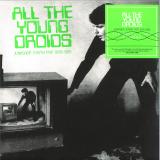
Compiled by Philip King “And then came the rise of synth pop : blokes with dodgy haircuts hunched over keyboard-operated machines stuffed with wires and do-it-yourself tone oscillators making sounds like a brood of geese passing gas in a wind tunnel. Whoopee! This is the way the ‘70s ended : not with a blood-curdling bang bang but with a cheap, synthesized, emasculating whimper.” NICK KENT, NME. All The Young Droids: Junkshop Synth Pop 1978-1985 is a new compilation that charts the underbelly of the epoch-defining sound of the synthesiser in 80s popular music. Compiled by Philip King (previously seen compiling All The Young Droogs, Glitterbest and Boobs - The Junkshop Glam Discotheque), the music here connects the dots between DIY synth enthusiasts grappling with new, cheap synthesisers at the tail-end of punk and wannabe, jobbing songwriters enthral to the new music pioneered by Gary Numan, Depeche Mode and Daniel Miller’s Mute Records. Featuring rare tracks of auto-didactic progressive pop music, proto-techno punk, shoot-for-the-stars-land-in-the-gutter chart flops and heralded, underground synth classics, School Daze paints a picture of beautiful failure. Complete with extensive sleeve notes written by King and never before seen imagery, all 24 tracks were remastered by RPM in-house engineer Simon Murphy, many from vinyl copies due to lost master tapes. The story told on All The Young Droids is one of the dawning opportunity presented by both the emergence to the market of cheaper analog synthesisers and the distribution networks plus indie labels that exploded with the advent of punk music in 1976. While the music that sprouted out all over the globe in the wake of these factors was decried as fake, plastic, a refutation of punk’s guitar-led revolution, it’s telling that much of the music on All The Young Droids.. was created in bedrooms, ramshackle studios and home-made set ups with often borrowed equipment. In the era of record labels jumping to capitalise on the success of The Sex Pistols, The Clash (both on major labels, of course) these artists struggled to stand out from a new gold-rush with next to no budget or PR team. With radio and labels desperate for the new Yazoo, what resulted was a testament to necessity being the mother of invention. At the time, the synthesiser was the music of the future, a shiny new machine that could paint like an orchestra with a single finger and a 4-track. In the hands of Manchester avant-pranksters Gerry & The Holograms it’s a pulsing, sardonic weapon.. the only instrument on the Messthetics classic lampooning of New Wave fashion. In Hamburg, a 16 year old Andreas Dorau used it to write and record (with his female classmates on vocals) a global smash in Fred Vom Jupiter (later licensed to Mute Records). The hard-to-find English version (Fred From Jupiter, natch) is included here. Many artists with alreadystoried careers caught the bug and recorded synthesiser-fuelled peons to space, computers, the future and, of course, love-interests. Harry Kakoulli, late of Squeeze, recorded a solo album in 1979 that included the incredible power-synth-pop smash-that-never-smashed I’m On A Rocket. Similarly, Ian North of Neo and American Power Pop stalwarts Milk ’n’ Cookies bought a Korg MS20 and used a tape machine to record We’re Not Lonely, an absolute lost-classic of minimal synth pop. We’re Not Lonely also features on the Junkshop Synth Pop sampler 7” twinned with John Howard unreleased track You Will See, released April 12th 2025. There are plenty of compilation debuts in evidence. Sole Sister were a mysterious trio who were featured on the Scaling Triangles compilation of female-fronted, queer-adjacent post-punk / underground music that also featured The Petticoats. Selwin Image were from San Francisco and featured members of the recently defunct power pop/punk group The Pushups. Their stupidly catchy The Unknown fizzes with New Wave energy - think XTC to Sparks but remains unreleased until now. Dream Unit’s A Drop In The Ocean is an early synth wave cut, positively teaming with Joy Division instrumentation, previously only released on a long-forgotten and super rare, self-released EP. Incandescent Luminaire’s Famous Names belies an archetypal struggle of a small-town trying to make it in a cruel industry but is a thrilling New Romantic-Synth Wave cross over with a OMD gloominess that’s a joy to hear. Feminist Minimal Wave track I Am A Time Bomb by performance artist Peta Lilly and Michael Chance is a revelation destined for new found cult status. It was released on 7” and lost until now. The flipside to the subterranean, never-made-it synth pop mentioned above are the ambitious, even fruity attempts at success that have a perennial elegance to their confidence. New Jersey-ite Billy London (real name Ed Barth) tried to cash in on the synth boom with Woman, released by a major label, a lurching new wave track built on the Louie Louie rhythm and a wonderfully camp Lou Reedstyle sleazy vocal before exploding in the synthesised chorus. The song bombed but with a chorus like this, you have to wonder why? Ex-Glitter Band member John Springate’s My Life is truly epic, with doomed chord progressions and massive sounding drums turning into at least 3 different songs in the course of the track. Before you wonder what’s going on the song resolves with a glorious return to the main refrain. The dry-ice-dressed dance floor is well catered for too. Design’s Premonition and Vision’s Lucifer’s Friend are stone-cold minimal synth bangers, well loved but given a new lease of life here. The Warlord’s The Ultimate Warlord was released in 1978, a homespun proto Hi NRG banger that was later re-recorded by The Immortals in Canada who had a club hit with it. One-man- band Disco Volante’s No Motion was re-issued by Synth wave label Medical in 2012 but makes its first vinyl compilation appearance here. Close your eyes and you can imagine what Lawrence of Felt would have sounded like with some cheap Korgs a little earlier in his career. Gibraltar-based trio The Microbes imagined a computer programming people to dance - how prescient - and ended up with a propulsive, robo-funk track with splendid rubbery bass playing over a tectonic drum machine. Previously picked up by Belgian label Stroom TV, Dee Jay Bert & Eagle’s heavily Euro-accented I Am Your Master demands the listener to “come to paradise!” In a frankly terrifying manner. All The Young Droids is the first compilation to peel away from the narrative that dour, Minimal Synth and Cold Wave were the only musical children of the first rush of synth pop. Philip King and School Daze Records describe a much more complicated world: along with the austere, Brutalist children of Daniel Miller (who produced Alan Burnham’s Bowie-Low-influenced Science Fiction here) was a plethora of desperate cash-ins, accidental mainstream hits, ambitious pop dramas and major label punts that went nowhere. Crucially, the compilation blurs the line between junk and treasure. What if the two things are interchangeable. What if it’s all science fiction?
Repress.
Fast-rising Dutch DJ/producer BELLA becomes the first new artist signing to Sally C’s Big Saldo’s Chunkers imprint, with the inspiring ‘Note to Self’ EP – her debut production.
Relationships are key for Sally C. Since the inception of Big Saldo’s Chunkers in 2020, she’s released three carefully chosen EPs, all from her own studio. When she met BELLA while playing a festival in Amsterdam during summer 2022, the click was instantaneous, with the pair going on to play an impromptu b2b that day. Vibing both musically and energetically, they kept in touch, with BELLA sending Sally her maiden productions ‘Note To Self’ and ‘Orchestra Spring’. Sally connected so deeply with the tracks that they’d form the backbone of her debut artist EP on Big Saldo’s Chunkers.
One listen to the final EP and it’s not hard to see why Sally wanted to emboss them as Chunkers. Three fresh originals taking in influence from ‘90s house, acid, electro and prog, all with a unique hard-to-pin-down energy that makes them hit with a special swing.
The title track – also the first production made for the EP - sees BELLA lay down a sonic blueprint – both for her own sound and the full body of work. “This set the vibe and guided me through the creative process. I was really trying to make something that felt my own, that was also unique and not something I’ve heard before,” she shares. ‘Note to Self’ is heavy on attitude and bounce, driven by banging old skool drums, a rapid-fire grime-style vocal and a duo of synth lines – one uplifting, the other mining a slick ‘80s sheen, and the results are memorable. An absolute tune that Sally’s delighted to add to the Chunker catalogue.
‘Orchestra Spring’ is the perky sequel, a wicked one-two punch of kaleidoscopic groovy house with lashings of attitude that loves to scribble outside the lines with lots of retro samples and trippy energy. ‘Odd Symphony’ completes the trio, a blazing late-night cut driven by a gurgling acid underbelly, gritty drums and warm chords, giving the EP a brilliant afterglow.
- 1: Lake Walk
- 2: Lazy Daisy
- 3: Ups & Downs
- 4: Silently
- 5: There Was A Nice Sunset
- 6: Somewhere Good
- 7: Slow Island
- 8: Movin’ On
If – in some parallel universe (or perhaps a not-so-distant-future version of the one we’re already sentenced to living in) – the evil overloads of artificial intelligence were actually successful in their attempts to create convincingly enjoyable “original music,” more specifically tasked with wholly encapsulating my own personal tastes by data-chugging some cocktail of – oh, I don’t know – the posters on my wall, the records in my “most listened to” pile, the mixtapes I made for others, intensive physical scans of my auditory cortex, amygdala, hippocampus, heart strings, whatever else they have splayed out on their autopsy table with the intention of generating one all-encompassing “perfect band” based on the fruitful sum of their findings – that band, for me, would be (or would at least sound exactly like) the Tara Clerkin Trio. It is, quite simply, without exception, the music I wish to hear.
Formed in Bristol UK (where none of them are from yet all of whom are deeply engrained) in 2020, the Tara Clerkin Trio – as it somewhat democratically exists today, despite the singular authority implied by its name – consists of the titular Tara Clerkin, her partner Sunny Joe Paradisos, and Sunny’s brother, Patrick Benjamin. I’ll confess, I don’t know what their respective roles are within the operation and there’s only a very small part of me that cares to learn, as one of my favorite qualities in an objective listening experience is the mystery of who is playing what, which sounds are “authentic” versus synthesized, which chunks are performed “live” in a room together versus meticulously Frankenstein’ed from measure to measure, or how exactly the overall sound is so (seemingly) effortlessly achieved. Though, I suspect, if and when I do witness a live performance by this band at any point, my enjoyment of the music will not be lost in my better understanding of it.
With two extraordinary mini-albums – In Spring (2021) and On The Turning Ground (2023) – making a splash on London’s formidable World of Echo label in wake of their self-titled 2020 debut, this upcoming Somewhere Good LP is, in many ways, the band’s most realised work. In running their usual gauntlet of idiosyncratic (*an overused adjective for which here there is regrettably no sufficient alternative) approaches, Clerkin & co. colour in and outside of compositional lines over the course of 40+ celebratory minutes - never wallowing, despite inherently somber subject matters of self-defeat, disease, displacement, restlessness, gentrification - allowing their arrangements and improvisations ample space and time to situate, stretch out, breathe, cross-pollinate, and ultimately take deeper hold on the listener’s imagination – all while somehow sounding more like themselves than ever before.
Of course, there are traceable influences herein, if one felt that such comparisons were necessary to properly examine and enjoy this music (they aren’t)… Being the big dumb American from the small boring town that I am, cornfed on ‘90s alternative radio with the enchantingly exotic sounds of Maxinquaye and Mezzanine emanating from my chunky tube television, I can’t help but to make a blatantly obvious reference to a “Bristol sound”, ie the whole trip-hop trip, the pastoral crooning over the suggestive urban grime of cracked electro/piano treatments, the digitally-yet-primitively reconstructed James Bond soundtrack string-beats, etc.. But the Tara Clerkin Trio is so infinitely much more than that. There are elements of avant-pop, modern classical, kraut-folk, audio verité, dare I say indie rock (and not of the beer guzzling, masturbatory fuzz-flex variety but perhaps more like a Trish Keenan-fronted Faust, Adrian Sherwood at the mixing desk of If You’re Feeling Sinister, or – in expanding on our alternate reality – a world in which High Llamas cut a full-length for Warp Records with Andrew Weatherall on coffee duty).
The hazy, unmappable skyline-mirage of droning harmonium, upright bass, peculiarly accentuated wind instruments, acoustic guitar, hushed yet literally mighty keys combine to hypnotizing effect. The band may make underlying nods to jazz, sure, but it’s not appropriation, it’s that they have the actual chops to build it out. Beneath the janky samples and oddball percussive embellishment lies actually great drumming. Beyond the manipulated vocal witchery and woefully reflective plain-spoke moments are Tara’s subtly inspired melodies, sung with what might honestly be the glue to the whole crazy equation. A calming consistency throughout the otherwise unpredictably dynamic, boldly intuitive, uniquely British exploration of this (their own) universe in song. – Ryan Davis (Chicago, February 2026)
- A1: Sigmund Und Seine Freu(N)De - Erdbeermund (French Kiss Mix)
- A2: Bruce & Bongo - Geil (Geilomatick Mix 1986)
- A3: O K. - Okay (Maxi Version)
- A4: Trio - Da Da Da Ich Lieb Dich Nicht Du Liebst Mich Nicht (Lange Version)
- B1: Rheingold - Dreiklangsdimensionen (Maxi Version)
- B2: U-Tek - Zahlentänzer
- B3: The Increadible T H. Scratchers Starring Freddy Love - Hip Hop Bommi Bop Bop
- B4: Off - Electrica Salsa (Maxi Version)
Nach dem großen Erfolg der CD-Ausgabe erscheint nun die exklusive Vinyl Edition mit acht sorgfältig ausgewählten Tracks.
Diese streng limitierte Ausgabe bringt die Energie und den Sound der deutschen Electro- und New-Wave-Szene der 80er und frühen 90er direkt auf den Plattenteller – authentisch, druckvoll und in bester Klangqualität.
Mit dabei sind u. a.:
Trio – Minimal-Pop mit Kultstatus
Rheingold – Pioniere der Düsseldorfer Szene
OFF – Electro-Hitprojekt von Sven Väth
U-Tek – Clubsound aus den frühen 90ern
Die German Electro Tracks – Vinyl Edition ist ein Muss für Vinyl-Sammler, DJs und Liebhaber elektronischer Klassiker.
Die Zusammenstellung vereint stilbildende Künstler, die den einzigartigen Sound „Made in Germany“ prägten – von avantgardistisch bis clubtauglich
Naarm/Melbourne trio Acopia return with Blush Response, their highly anticipated third album, and first release on Scenic Route. Arriving September 12, this 8-track LP captures the band at their most open and self-assured—an emotionally resonant work shaped by silence, space, and sincerity.
At its core, Blush Response is an exploration of emotional distance, unresolved feelings, and the quiet tension between vulnerability and strength. It’s introspective and melancholic, yet with an underlying clarity that marks a new chapter for the group.
Formed in 2018 by Kate Durman, Lachlan McGeehan, and Morgan Wright, Acopia began with a minimalist palette—slow tempos, sparse arrangements, and a distinct sense of restraint. Since then, they’ve evolved into a more fluid and expressive unit, blending elements of dream pop, downtempo, indie, and post-punk into a sound that’s as delicate as it is disarming.
Following the release of 2022’s Chances and their self-titled 2023 album, Acopia gained significant critical momentum with praise from Pitchfork, The Guardian, The FADER, and The Beat. Pitchfork described their work as “a nod to 1980s ennui and 2020s anxiety”—an apt summation of their unique place in today’s musical landscape. Their growing international footprint includes support slots for Bar Italia and Tirzah, festival appearances at Golden Plains, Rising, and NTS Naarm, and a sold-out 2024 headline show at London’s Lexington.
Recent collaborators include UK producer Daniel Avery, who’s shown strong support for the band—elevating their profile across both electronic and alternative audiences.
With Blush Response, Acopia deliver their most expansive and expressive project to date—anchored by the emotional depth fans have come to expect, but now sharpened by bold songwriting and a broader sonic reach. Their arrival on Scenic Route marks an exciting new era, one that’s already resonating with tastemakers, record buyers, and a fast-growing global fanbase.
Formed by George Thompson, Kyle Martin and Jonathan Nash, Kommune were active between 2014-2015. As close friends living near each other, their musical journeys were intertwined; Nash and Martin had recently completed their debut album as Land Of Light, while Thompson (aka Black Merlin), at that time putting the finishing touches to his debut album ‘Hipnotik Tradisi’, was also working with Martin as part of the duo Spectral Empire. Sharing equipment and ideas, Kommune arose organically, serving as a creative outlet for exploring analogue machine music in an improvisational context.
Sessions in their North London studios led to a handful of gigs at venues including Hamburg’s legendary Golden Pudel and London’s LN-CC. This fleeting chapter of musical history may well have gone entirely undocumented had it not been for the fortuitous decision to meet up for a recording session in October 2014. Filling a car with their machines, they drove to a converted barn in the south of England, proceeded to set up, settle in and hit the record button. Over the course of two days, fuelled by the experiences of recent performances, the trio immersed themselves in the machines, crafting subtly evolving, long-form compositions with an enchanting balance and flow.
Across the four long-form compositions that make up ‘Oast’, the trio summons barely controllable scrapes, acid-like bubbles, and bleeps from their machines, leaning on dub mixing techniques to give the tracks a sense of depth, dynamism and organic ambience. Mastery of the TR-808 drum machine is central, with remarkably nuanced drum programming imparting a hypnotic rhythm to the work, allowing other elements to emerge and unfold at a beautifully measured tempo.
Recorded entirely live and improvised without any overdubs, ‘Oast’ offers a profound journey into minimalist electronic music while serving as a tribute to friendship, curiosity, and the spirit of experimentation.
Sleeve art and design by Michael Willis.
Stepping out of the shadows with refined precision, Saktu returns to Heisenberg with the Fucha EP – a sharp, hypnotic exploration of minimal groove. Sleek rhythms, tactile textures, and playful low-end pressure define this trio of deep, late-night rollers.
Balancing raw functionality with subtle artistry, the Fucha EP captures the essence of what makes Heisenberg a beacon in the modern minimal scene. Crafted for the floor, tested in the booth
Following their mesmerizing debut Tradition, CHO CO PA CO CHO CO QUIN QUIN return with Correspondances—a 7-inch release that drifts effortlessly between organic textures and delicate electronic landscapes. Expanding on their signature blend of dreamy synth work and nylon-stringed warmth, the trio refines their approach with a more mature, immersive sound that feels both nostalgic and forward-thinking.
The A-side, “Adan no Umibe” (Adan’s Seashore), opens with a soft, relaxed vocal delivery reminiscent of Haruomi Hosono’s solo work, floating over a gentle groove of nylon guitars and spacious synths. It captures the essence of a quiet shore, where melodies ebb and flow like waves against the sand, infused with the scent of Okinawa.
The title track, “Correspondances,” embraces an airy, ambient minimalism. Whispered vocals glide over sparse beats, floating basslines, and interwoven birdsong—blurring the lines between nature and sound.
Closing the record, “Koe o Kikasete” (Hear Me Your Voice) introduces a subtle rhythmic pulse, with its soft vocal refrain weaving through a beautiful chord progression, layered with nylon guitar and delicate electronic textures. The birdsong theme resurfaces here, echoing the lyrics and enhancing the immersive, weightless atmosphere.
While rooted in the warmth of vintage Japanese pop experimentalism, Correspondances carries CHO CO PA CO CHO CO QUIN QUIN’s sound into new, refined territory.
This is a record of quiet yet deeply expressive beauty—an invitation to pause, listen, and drift.
- A1: Design - Premonition
- A2: Vision - Lucifer’s Friend
- A3: Richard Bone - Alien Girl
- A4: John Howard - I Tune Into You
- A5: Ian North - We’re Not Lonely
- A6: Selwin Image - The Unknown
- B1: Harry Kakoulli - I’m On A Rocket
- B2: Rich Wilde - The Lady Wants To Be Alone
- B3: Billy London - Woman
- B4: Alan Burnham - Science Fiction
- B5: The Microbes - Computer
- B6: The Goo-Q - I’m A Computer
- C1: Gerry & The Holograms - Gerry & The Holograms
- C2: The Warlord - The Ultimate Warlord
- C3: Die Marinas - Fred From Jupiter
- C4: Dee Jay Bert & Eagle - I Am Your Master
- C5: Peta Lily & Michael Process - I Am A Time Bomb
- C6: Sole Sister - It’s Not What You Are But How
- D1: Alasdair Riddell - Do You Read Me?
- D2: Karel Fialka - Armband (The Mystery Song)
- D3: John Springate - My Life
- D4: Incandescent Luminaire - Famous Names
- D5: Disco Volante - No Motion
- D6: Dream Unit - A Drop In The Ocean
Compiled by Philip King
“And then came the rise of synth pop : blokes with dodgy haircuts hunched over keyboard-operated
machines stuffed with wires and do-it-yourself tone oscillators making sounds like a brood of geese
passing gas in a wind tunnel. Whoopee! This is the way the ‘70s ended : not with a blood-curdling bang
bang but with a cheap, synthesized, emasculating whimper.”
NICK KENT, NME.
All The Young Droids: Junkshop Synth Pop 1978-1985 is a new compilation that charts the
underbelly of the epoch-defining sound of the synthesiser in 80s popular music. Compiled by Philip
King (previously seen compiling All The Young Droogs, Glitterbest and Boobs - The Junkshop
Glam Discotheque), the music here connects the dots between DIY synth enthusiasts grappling with
new, cheap synthesisers at the tail-end of punk and wannabe, jobbing songwriters enthral to the new
music pioneered by Gary Numan, Depeche Mode and Daniel Miller’s Mute Records. Featuring rare
tracks of auto-didactic progressive pop music, proto-techno punk, shoot-for-the-stars-land-in-the-gutter
chart flops and heralded, underground synth classics, School Daze paints a picture of beautiful failure.
Complete with extensive sleeve notes written by King and never before seen imagery, all 24 tracks
were remastered by RPM in-house engineer Simon Murphy, many from vinyl copies due to lost master
tapes. The story told on All The Young Droids is one of the dawning opportunity presented by both the
emergence to the market of cheaper analog synthesisers and the distribution networks plus indie labels
that exploded with the advent of punk music in 1976. While the music that sprouted out all over the
globe in the wake of these factors was decried as fake, plastic, a refutation of punk’s guitar-led
revolution, it’s telling that much of the music on All The Young Droids.. was created in bedrooms,
ramshackle studios and home-made set ups with often borrowed equipment. In the era of record labels
jumping to capitalise on the success of The Sex Pistols, The Clash (both on major labels, of course)
these artists struggled to stand out from a new gold-rush with next to no budget or PR team. With radio
and labels desperate for the new Yazoo, what resulted was a testament to necessity being the mother
of invention.
At the time, the synthesiser was the music of the future, a shiny new machine that could paint like an
orchestra with a single finger and a 4-track. In the hands of Manchester avant-pranksters Gerry & The
Holograms it’s a pulsing, sardonic weapon.. the only instrument on the Messthetics classic lampooning
of New Wave fashion. In Hamburg, a 16 year old Andreas Dorau used it to write and record (with his
female classmates on vocals) a global smash in Fred Vom Jupiter (later licensed to Mute Records).
The hard-to-find English version (Fred From Jupiter, natch) is included here. Many artists with alreadystoried careers caught the bug and recorded synthesiser-fuelled peons to space, computers, the future
and, of course, love-interests. Harry Kakoulli, late of Squeeze, recorded a solo album in 1979 that
included the incredible power-synth-pop smash-that-never-smashed I’m On A Rocket. Similarly, Ian
North of Neo and American Power Pop stalwarts Milk ’n’ Cookies bought a Korg MS20 and used a
tape machine to record We’re Not Lonely, an absolute lost-classic of minimal synth pop. We’re Not
Lonely also features on the Junkshop Synth Pop sampler 7” twinned with John Howard unreleased
track You Will See, released April 12th 2025.
There are plenty of compilation debuts in evidence. Sole Sister were a mysterious trio who were
featured on the Scaling Triangles compilation of female-fronted, queer-adjacent post-punk /
underground music that also featured The Petticoats. Selwin Image were from San Francisco and
featured members of the recently defunct power pop/punk group The Pushups. Their stupidly catchy
The Unknown fizzes with New Wave energy - think XTC to Sparks but remains unreleased until now.
Dream Unit’s A Drop In The Ocean is an early synth wave cut, positively teaming with Joy Division
instrumentation, previously only released on a long-forgotten and super rare, self-released EP.
Incandescent Luminaire’s Famous Names belies an archetypal struggle of a small-town trying to
make it in a cruel industry but is a thrilling New Romantic-Synth Wave cross over with a OMD
gloominess that’s a joy to hear. Feminist Minimal Wave track I Am A Time Bomb by performance artist
Peta Lilly and Michael Chance is a revelation destined for new found cult status. It was released on 7”
and lost until now.
The flipside to the subterranean, never-made-it synth pop mentioned above are the ambitious, even
fruity attempts at success that have a perennial elegance to their confidence. New Jersey-ite Billy
London (real name Ed Barth) tried to cash in on the synth boom with Woman, released by a major
label, a lurching new wave track built on the Louie Louie rhythm and a wonderfully camp Lou Reedstyle sleazy vocal before exploding in the synthesised chorus. The song bombed but with a chorus like
this, you have to wonder why? Ex-Glitter Band member John Springate’s My Life is truly epic, with
doomed chord progressions and massive sounding drums turning into at least 3 different songs in the
course of the track. Before you wonder what’s going on the song resolves with a glorious return to the
main refrain.
The dry-ice-dressed dance floor is well catered for too. Design’s Premonition and Vision’s Lucifer’s
Friend are stone-cold minimal synth bangers, well loved but given a new lease of life here. The
Warlord’s The Ultimate Warlord was released in 1978, a homespun proto Hi NRG banger that was
later re-recorded by The Immortals in Canada who had a club hit with it. One-man- band Disco
Volante’s No Motion was re-issued by Synth wave label Medical in 2012 but makes its first vinyl
compilation appearance here. Close your eyes and you can imagine what Lawrence of Felt would have
sounded like with some cheap Korgs a little earlier in his career. Gibraltar-based trio The Microbes
imagined a computer programming people to dance - how prescient - and ended up with a propulsive,
robo-funk track with splendid rubbery bass playing over a tectonic drum machine. Previously picked up
by Belgian label Stroom TV, Dee Jay Bert & Eagle’s heavily Euro-accented I Am Your Master
demands the listener to “come to paradise!” In a frankly terrifying manner.
All The Young Droids is the first compilation to peel away from the narrative that dour, Minimal Synth
and Cold Wave were the only musical children of the first rush of synth pop. Philip King and School
Daze Records describe a much more complicated world: along with the austere, Brutalist children of
Daniel Miller (who produced Alan Burnham’s Bowie-Low-influenced Science Fiction here) was a
plethora of desperate cash-ins, accidental mainstream hits, ambitious pop dramas and major label
punts that went nowhere. Crucially, the compilation blurs the line between junk and treasure. What if the
two things are interchangeable. What if it’s all science fiction?
2025 Repress
Burnski's Constant Black label puts out constantly good sounds for all those of a minimal and tech house persuasion. This 33rd such outing comes from Per Hammer who offers a trio of irresistible grooves. 'Everybody_hz' kicks off with rubbery drums and bass intertwining with each other while wonky synths up top add some tripped-out feels. A Varhat adds a little extra bounce and urgency to this silky late-night hypnotiser and then it's back to Hammer for 'The Danish URL'. It's a hooky groove with warped pads rippling up top while closer 'Arkivo' is a more textural and abstract affair with a nice dubby undercurrent.
When you’re running a label, a demo occasionally comes across your desk that makes you reconsider everything you thought your label was all about. For Balmat, such was the case with this stunning album from Stephen Vitiello, Brendan Canty, and Hahn Rowe. It sounds like nothing we’ve released so far—and that very otherness opened up a whole new world of possibilities for us.
Fans of ambient, experimental electronic music, and sound art will be familiar with Vitiello, a New York native, long based in Virginia, who has collaborated with a cross-generational list of greats: Taylor Deupree, Steve Roden, Lawrence English, Tetsu Inoue, Nam June Paik, Ryuichi Sakamoto, Pauline Oliveros, and many more. On labels like 12k, Room40, and Sub Rosa, he has explored a wide range of minimalism, microsound, lowercase, ambient, improv, and other styles. But this album is something different. It may begin in ambient-adjacent territory, but it quickly veers off, and it just keeps zigzagging, taking on elements of krautrock, post-punk, dub, and the groove-heavy interplay of groups like Natural Information Society and 75 Dollar Bill.
This stylistic turn is thanks in large part to Vitiello’s choice of collaborators. “We’re coming from three different schools,” Vitiello says: “sound art, art rock, and punk rock.”
Active since the early 1980s, Rowe—a violinist, guitarist, and producer/engineer—has played with, or manned the boards for, a frankly jaw-dropping list of musicians: Herbie Hancock, Gil Scott-Heron, the Last Poets, Roy Ayers, John Zorn, Glenn Branca, Swans, Live Skull, Brian Eno, David Byrne, Anohni, R.E.M., Yoko Ono, and many more. But he might be most closely associated with Hugo Largo, a one-of-a-kind New York quartet—two basses, vocals, and Rowe’s violin—that in the late 1980s helped lay the groundwork for what would eventually become known as post-rock.
Canty, of course, is the legendary drummer of Fugazi, the visionary DC post-hardcore group, as well as Rites of Spring before them, and, currently, the Messthetics, a Dischord-signed instrumental trio with guitarist Anthony Pirog and Fugazi bassist Joe Lally.
Vitiello’s trio first collaborated on First, a 17-minute piece released on the Longform Editions label in 2023. Second picks up where the freeform drift of First left off, channeling the trio’s exploratory energies into more intentionally structured tracks and—in a real first for Balmat—some almost shockingly muscular grooves. “Sometimes my projects are more conceptually driven,” Vitiello says, “but I think this was more musically geared. I just wanted to open up the references and bring in an incredible drummer, bring in some melodies, and I’m sort of the center.” But his collaborators, he stresses, are “vastly creative in making anything I might suggest better.”
Like its predecessor, Second took shape in phases, shifting between improvisation and collage. Vitiello laid down the skeleton of the music at home, sketching out initial ideas on Rhodes keyboard and acoustic and electric guitar; he then fed the parts through samplers and his modular system, recording 10- or 20-minute jams. Once he had edited them into more structured forms, he hit the studio with Canty, who added not just drums but also bass and piano; finally, Vitiello took the results of those sessions to Rowe, who played violin, viola, electric bass, and 12-string acoustic and bowed electric guitar, and assisted in some of the final structuring and mixdown.
A few more surprises along the way: Reanimator’s Don Godwin, the studio engineer where Vitiello recorded with Canty, contributed what he calls “resonant dustpan”; and none other than Animal Collective’s Geologist, who just happened to be in the studio that day, sits in on hurdy gurdy on “Mrphgtrs1,” the album’s gorgeous, stunningly atmospheric drone closer. “I love these chance encounters,” Vitiello says. “Somebody I admire, a group I admire—that was an unexpected gift.”
An unexpected gift is a great way of describing Second as a whole: three veteran musicians venturing outside their usual zones and finding a new collaborative language together. The results can’t be neatly slotted into any given genre; they belong not to any given category, but to the spirit of conversation itself.
- A1: Bo Harwood & John Cassavetes - No One Around To Hear It
- A2: Chen Ming Chang - Rainwater
- A3: Bhairavi Raman & Nanthesh Sivarajah - Bittersweet Reflections
- B1: The King Of Luxembourg - Poptones
- B2: Slapp Happy - Is It You
- B3: O.g. Jigg - Jesus Is My Jam
- B4: Klang - As It Is
- C1: Scala - Fuser
- C2: Soft Location - Let The Moon Get Into It
- C3: Gyeongsu - Yzobel (Feat. Croche)
- C4: Omertà - Moments In Love
- D1: Kasumi Trio - Cabbage Butterfly
- D2: Un - Fast Money Blues
- D3: Delphine Dora - V
- D4: Harry Plunket-Greene - The Hurdy-Gurdy Man
2025 Repress
Searchlight Moonbeam is the new narrative compilation from Time Is Away (Jack Rollo and Elaine Tierney) whose eponymous monthly NTS Radio shows, tinctured fusions of fugitive sounds and reverie-inducing archival speech, have won them an ardent following. It follows from the London-based duo’s Ballads, a remarkable driftwerk released on A Colourful Storm in 2022.
Searchlight Moonbeam is an autumnal dreamscape, intimate and vespertine, pensive and irresolute. An imagined community where differences drop off and resonances emerge – between Maher Shalal Hash Baz affiliates Kasumi Trio, Taiwanese score composer Chen Ming Chang whose ‘Rainwater’ (written for Hou Hsiao-Hsien’s 1986 film Dust In The Wind) is exquisitely heartbroken, and the plangent improvisations of self-taught French pianist Delphine Dora.
Revelations are frequent: the bedsit isolationism of Bo Harwood and John Cassavetes’ ‘No One Around to Hear It’ (from The Killing of a Chinese Bookie); the narked minimalism of Klang (an early 2000s band formed by ex-Elastica guitarist and featuring prize-winning experimental novelist Isabel Waidner on bass); the etude-grooves and echoic wobble of below-the-radar French avant-gardists Omertà ; the beautiful, plaintively dubby ‘Is It You?’ by Slapp Happy; a psych-tinged reimagining of PiL’s ‘Poptones’ by Simon Fisher Turner (one half of Deux Filles, and here, recording for él as The King of Luxembourg) that's as perverse as the cover of Throbbing Gristle’s 20 Jazz Funk Greats.
Searchlight Moonbeam is the musical analog of an Italo Calvino novel or a medieval fable. Associative, intuitive, borderless. Emotional and mysterious. Endowed with the tactility of Braille. A private language that is both unknowable and understood. It is a record of the seasons, for the seasons.
2023 marks the tenth anniversary of Time Is Away’s first broadcast. Featuring an evocative essay by writer Jeremy Atherton Lin and disarming cover art by Penny Davenport, Searchlight Moonbeam showcases Rollo and Tierney’s still-unrivalled talent for gloaming melodies, disques du crépuscule, ensorcelled storytelling.
The record captures an expansive performance in Poitiers, France in November 2023. First working together in an unpredictable trio with minimalist legend and eccentric extraordinaire Charlemagne Palestine, Ambarchi and Thielemans quickly established a remarkable musical chemistry that led to an ongoing series of duo concerts, including the performance documented on their LP Double Consciousness (Matière Mémorie, 2023).
Kind Regards finds the duo refining their shared language while continuing to take risks, allowing the music’s gravitational pull to lead them from meditative calm to unexpectedly expressive passages of melodic invention and rhythmic drive.
Recorded in sparkling fidelity and carefully mixed by Ambarchi’s longtime collaborator Joe Talia, the LP contains a single unbroken performance, stretching out for over 45 minutes. Guitar and drums weave together into a symbiotic whole that nevertheless affords us ample opportunity to marvel at the highly personal approaches these two musicians have developed to their chosen instruments through decades of diverse collaboration and prolific performance. The set begins with Thielemans’ hypnotic tom patterns, around which Ambarchi’s wavering, shimmering guitar tones—achieved with the help of the rotating speaker of a Leslie cabinet—flurry and swirl. Thielemans’ drums play subtle tricks with time and perception, adding and dropping beats within repeated patterns to create an effect at once rhythmically insistent and liquified. Growing at first into a rapidly pulsing texture of brushed drums and flickering harmonics, the music builds momentum into an irregular groove over which Ambarchi’s guitar is transformed into haunting, monumental electric organ chords, strikingly recalling the Wurlitzer work of Alice Coltrane, before settling into a section of gentle portamento melody embedded into the tactile clicks and clangs of Thielemans’ percussion.
When Thielemans adopts a more traditional jazz approach to the kit in some of the set’s second half, the results are stunning, demonstrating a feel for shifting accents and sensibility to the touch of the stick on the drum or cymbal that recalls greats like Jack DeJohnette or Billy Hart (one of Thielemans’ mentors). And when Ambarchi turns up the heat, he does so in an unexpected and delightful way, letting loose a swarm of jittering delayed tones straight out of Henry Kaiser’s classic It’s a Wonderful Life, with a more active use of the guitar’s fretboard than his usual approach to the instrument allows. As the performance draws to a close after a climactic episode of distorted harmonic groans and crashing cymbals that manages to be at once thunderous and carefully attuned to detail, it is clearer than ever that, for these two serial collaborators, this is a very special pairing.
Kind Regards shows us the kind of magic that can happen when two masters who have dedicated decades to reimagining their instruments simply begin to play, following the music wherever it goes.
Berlin’s Moses Yoofee Trio have confirmed details of their first new material since their 2023 mini-album, Ocean. ‘WHIP.wav’ will be released digitally on October 18, 2024, and represents the first taster for their debut full-length, MYT, set to be released by Nils Frahm’s LEITER on February 7, 2025. The German group recorded much of the album over ten days in April 2024 at Glaswald Studios, in the countryside outside Stuttgart, before returning to Berlin to polish the results and record two further tracks at LEITER’s Funkhaus studio. Available on vinyl and via all digital platforms, the album was produced by the trio with long-time collaborator and mixing engineer oh.no.ty. ‘WHIP.wav’, the original version of which was previously shared to social media to great response, is a perfect showcase for the band’s unique brand of sophisticated jazz, its laidback summer grooves lit up by Moses’ fluid piano lines, while drummer Noah Fürbringer’s deft rhythms lock in with Roman Klobe-Barangă‘s understated bassline. At just 100 seconds long, it’s also as succinct and straightforward as MYT’s title – and indeed many of its tracks – which reveals a lot about the Moses Yoofee Trio. The new album’s tracks display a remarkable determination to distil their work to its essence, allowing their prodigious talents and graceful versatility to flourish in uncluttered surroundings. Their goals, they state concisely, are “emotions, moments and bangers”, and careful attention was paid to arrangements to ensure nothing superfluous made the cut. Before coming together as a band, all three members were already deeply involved in the music scene, touring, recording, and producing for a wide range of artists and bands. They connected in 2020 when Moses met Roman at Berlin’s Jazz Institute, and it was the latter who suggested they jam with his friend Noah, who was living in southern Germany at the time but frequently visited Berlin. Amid the extended lockdowns of the Covid-19 pandemic, the trio embraced the chance to fully immerse themselves in the creative process. Since then, Moses Yoofee Trio have cultivated an extraordinary reputation for their shows, and this year they won the German Jazz Prize’s prestigious Live Act of The Year award. Recent highlights include a 2,500-capacity Elbjazz Festival booking beside Hamburg’s harbour, a riotous appearance at London’s Jazz Festival, and an intimate gig before 200 people at the German capital’s now redundant Tempelhof Airport on the rooftop of an air traffic control tower. Despite their own work as a trio, all three musicians remain busy elsewhere, with Moses, like Roman, often working with chart-topping Berlin-based Peter Fox, a frontman for reggae/dancehall/hip hop crossover act SEEED, and accompanying him on his extensive solo tours. Noah, meanwhile, plays with another renowned artist, German-American rapper Casper, as well as Sweden’s acclaimed Petter Eldh and German comedian / actor / musician Teddy Teclebrhan.