Antonin Appaix's project draws its inspiration from the depths of the waves, under the Latin sun. Passionate about fishing and diving, cradled in the Mediterranean culture, the aquatic universe has always been an integral part of his life. It was by chance in a Marseille cove that Antonin Appaix and Cracki Records met for the first time.
At the cinema university and then at the Beaux-Arts in Lyon, Cergy and Mexico City, Antonin tried out the caps of photographers, video artists, tried poetry, played rock and thought he was a mechanic. Already grew in him the nostalgia for the first baths, first kisses, the city and adolescence.
Graduated in 2016, he converted his plastic and literary research into a minimalist and romantic pop universe. For his first EP "Aquaplaning", composed between Paris and Marseille, he invites us to join him underwater, where he feels best.
Invoking Souchon as well as Retro X, Lucio Battisti or Brigitte Fontaine
Search:mini
First up is Nehuen, an Argentinian born but Barcelona based artist who is notorious for his abrasive dance floor workouts on I Love Acid, BNR Trax and the Classicworks label he co-owns with Cardopusher. Cardopusher is, of course, a true electronic legend from Venezuela. His dizzyingly diverse sound takes in rave, acid, electro, techno and house influences and distills them into hugely
Raw and energetic new forms.
Nehuen's Psyops Part One kicks off with the excellent title track, which contorts acid and electro into a writhing monster filled with dark energy. The visceral 'Toxic' is built on slapping hits and spangled basslines that will tie you in knots as the bumping drums drive things forward. The late-night menace continues on 'Bailar', with tight synth arps layered up in robotic forms over clunky drums that are industrial and futuristic in equal measure. Last but not least, the eerie 'Desire' strikes a more twisted note with double kicks juddering beneath echoing hits. It's pure, filthy, brilliant body music.
Cardopusher kicks off Part Two with the fantastic 'Disobedience' (feat. Lbeeze) a slow-motion drum workout that is like dark disco mangled through a psychedelic filter, with robotic vocals and stiff arp
jerking your body. 'Abyss Antidote' is then a flurry of drum breaks and electro bass, frazzled synths and whipping hits that keep you on the edge of your seat. Darkness abounds on the gritty 'Initial Decay' (ft. Lbeeze), which layers up taught drums and hits with spraying synths that come from a dystopian planet.
Closing out this epic mini-series is 'Mutant Brain', a cyborg techno meltdown with manic acid for
company.
These are devilishly distorted tracks from two of the best producers around.
Runden is a collaboration by Martin Brugger (bass) and Simon Popp (drums), both of contemporary Jazz quintet Fazer, and neo-classical pianist Carlos Cipa. Their debut LP is a conceptual record reflecting on Minimal Music, Afrobeat, and Dub Techno of the late 90s/early 2000s.
While Cipa's solo works build on clear harmonies, for the recordings of Runden he prepared the piano to make it sound like a faintly tonal percussion instrument and his mechanical patterns contrast the syncopated drum grooves of Popp and the deep and sparse basslines of Brugger.
The musicians explore, over the course of seven tracks, the concept of circular music. Each piece is based on a four-bar-motif played in a loop and varied subtly but steadily over time, creating a sense of eternal recurrence and timelessness.
This makes Runden a meditative but demanding record, that only grows with every listen.
- A1: Name Tag (Premier & The Guru) (Premier & The Guru)
- A2: Step In The Arena
- A3: Form Of Intellect
- A4: Execution Of A Chump (No More Mr Nice Guy Pt 2) (No More Mr Nice Guy Pt 2)
- A5: Who's Gonna Take The Weight?
- B1: Beyond Comprehension
- B2: Check The Technique
- B3: Love Sick
- B4: Here Today, Gone Tomorrow
- B5: Game Plan
- C1: Take A Rest
- C2: What You Want This Time??
- C3: Street Ministry
- C4: Just To Get A Rep
- C5: Say Your Prayers
- D1: As I Read My S-A
- D2: Precisely The Right Rhymes
- D3: The Meaning Of The Name
- D4: Credit Is Due
- D5: Check The Technique (Remix)
Step in the Arena is the second studio album by hip hop duo Gang Starr, printed as a 1990 release and commercially released on January 15, 1991. The album received critical acclaim and was also included in the book 1001 Albums You Must Hear Before You Die. The Source magazine stated: “Step in the Arena stands alone on a musical level, yet it also remains true to hip-hop’s underground heritage.” In 1998, the album was selected as one of The Source’s 100 Best Hip Hop Albums. Urban Legends/UMC will reissue Step In The Arena on 2LP 180 gram black vinyl on 28th June, 2019.
Following the last Ma.to's EP we joined forces with two artists taking care of music and artwork on the 4th release. The first one delivered by the infamous Italian legend Miki 'aka' Major Hypnotic Key Institute. His resume and collaboration's list are known and long enough to establish him as a pioneer and precursor of electronic and rave music since the 80s. 4 tracks ranging from slower hypnotic rhythms to speed-up marched techno/trance.
And for the occasion on the artwork we collaborated with friend and genius Conxi at Ivvoki Studio, the result speaks beautifully for itself. Proudly presenting this 4 track Ep with included a repress of an old work from Miki on Interactive Test and a Re-Edit of miki and 2Volt of an early work from the Italian synthpop electronic band A.T.R.O.X.
Well balanced music, techno / trance / minimal spreading pure 90s vibes from both sides but sounding so contemporary.
A Must! have.
2020 Re-issue of Keith Kenniff's debut under his Goldmund moniker. Originally only released on CD in 2005 via John Twells' Type Recordings, this album of rare and unusual minimalist beauty is now presented as a vinyl edition for the first time.
Multi-instrumentalist Keith Kenniff is a busy man. He has appeared as Helios on a number of acclaimed releases, including Deaf Center’s ‘Neon City EP’, and released a debut album ‘Unomia’ on Merck records which has appeared on many best of 2004 lists. All this while studying at the prestigious Berklee College of Music, and playing drums, guitar or contributing production to a host of amazing musicians. Kenniff lives and breathes music, something that is very obvious when hearing tracks under any of his pseudonyms.
As Goldmund, Kenniff has disregarded the electronic elements of his music almost entirely in favour of just a piano, a microphone and occasionally a guitar. ‘Corduroy Road’ is thirteen tracks of pure recording, the sound of the piano being opened and the feet on the pedals, the sound of fingers pressing lovingly onto the keys. This is a record of rare and unusual beauty, so shocking and yet unpretentious in its simplicity. When the guitar does emerge from beside the delicately touched piano, it serves as a balancing point for the record. Weaving in and out of the melodies, it adds another layer to what is already incredibly moving music.
‘Corduroy Road’ is rooted in Kenniff’s love of folk music from the American Civil War. We can hear this directly from his rendition of Civil War era classic ‘Marching Through Georgia’, but the influence carries throughout the record. There is an unheard voice which propels each track through history, maybe the ghosts of dying soldiers whispering in a long forgotten bar. Every haunting note drifts deep into the psyche and is lost in the ether of nostalgia. In this way it is a concept recording of sorts, it certainly has a narrative and has to be listened to in sequence. The story has clear themes; loss, history, friendship, camaraderie, forgiveness and hope, all clearly marked out by musical segments. It is no surprise that Kenniff’s passion for cinema shines through so strongly.
It would be hard to draw comparisons to music so rooted in folk traditions, but the music evokes traces of Ryuichi Sakamoto, Mark Hollis, Keith Jarret or even Eno’s more piano based compositions. Yet influence seems unimportant when listening to this deeply personal work. Just let it sink in and drift into the psyche.
Sublime, unique, sexy and peculiar unreleased scores by electronic and jazz pioneer Ron Geesin, made for the sublime, unique, sexy and peculiar films by maverick director Stephen Dwoskin. There. we’ve said it. And if you have not heard of one or either of these two dudes it doesn’t really matter. Geesin made great music and worked with Pink Floyd. Dwoskin made odd films, most of them are in the BFI permanent collection. They are great and a bit strange.
These superb unreleased soundtracks come from a fascinating, progressive and important period in British film history. They represent an intriguing collaboration between the lively Ron Geesin from Scotland and the American Stephen Dwoskin, who both met in London.
Musically they are minimal, charismatic and quite groundbreaking. Here is the story…
HISTORY:
Steve Dwoskin arrived in London in 1964, aged 25, with several 16mm films in his trunk, shot in the cold-water flats of Greenwich Village. He had been on the fringe of the Factory scene, and some of his films starred Beverly Grant, ‘the queen of the underground’. But they had scarcely been seen, and they didn’t have soundtracks. For almost a year they stayed in the trunk, and stayed silent. Then he met Ron Geesin, somewhere around Portobello Road.
‘Slept last night, completely dressed after working over 12 hours on sound tracks at Ron’s,’ wrote Dwoskin in his diary for 29 July 1965. ‘My films are not anywhere near being anything. I need more energy, more concise and positive ideas and less inhibition. And of course space, money and people.’ Dwoskin, who taught and practised graphic design by day, had recently decided to stay in London beyond the term of the Fulbright scholarship that had brought him there.
Ron, living with Frankie in a basement flat in Elgin Crescent – they would marry the next year, with Dwoskin as best man – was about to leave the Original Downtown Syncopators, the trad jazz band he had joined aged seventeen-and-a-half, and was trying to go solo. On stage he would make vigorous use of piano and banjo; at home Frankie had bought him a new kind of instrument – a tape recorder. ‘Soon I had one tape recorder, two tape recorders, three tape recorders.’
Ron, wrote Dwoskin in his unpublished autobiography, ‘loved to record, and to cut and splice the quarter-inch recording tape to make new sounds. This triggered in me the idea of getting back to my films and finishing them’. Soon he was living in a dank basement in Denbigh Road, a few minutes’ walk from Elgin Crescent. Ron’s soundtracks for Dwoskin’ films, recorded in the Geesins’ flat, encompassed Ron’s very eclectic range of styles – madcap piano and fretted banjo as well as tape manipulation.
Aside from Ron’s soundtracks, some of which belong to films that no longer exist (including Pot Boiler), Frankie would act in one of the films that Dwoskin either lost or never finished during these years. He was disabled, having contracted polio as a child, and Ron and Frankie were both carers and collaborators; Ron had met him when he was struggling into his car.
There was no London equivalent to the underground film scene that Dwoskin had known in New York, and his films remained unseen until such a scene began to come into being, in the autumn of 1966. Some of them made their debut at the Mercury Theatre, near Notting Hill Gate, that September. Dwoskin wrote that Alone, starring Zelda Nelson (from Ron Rice’s Chumlum), and Chinese Checkers, with Beverly Grant and Dwoskin’s friend Joan Adler, went over best.
Soon both Dwoskin and Geesin became involved in the nascent London Film-Makers’ Co-op, which put on screenings in Better Books on Charing Cross Road – ‘if you can call them screenings,’ Ron recalls; ‘I’d call it fifteen blokes in various stages of disarray, peering through the smoke’. One or more of the films had been ‘striped’ with magnetic audiotape; with others ‘we had no means of direct syncing to the picture, so he started the film and I started the tape recorder’.
In the same autumn, Dwoskin moved into a flat almost opposite the Geesins on Elgin Crescent. More collaborations followed, including Naissant, on which Gavin Bryars, whom Geesin had met during a stint on the northern club circuit with novelty act Dr Crock and His Crackpots, played double bass.
Around the end of 1967 Geesin released his first solo LP, A Raise of Eyebrows, and Dwoskin won recognition the Fourth Experimental Film Competition, aka EXPRMNTL 4, an occasional film festival staged at Knokke-le-Zoute in Belgium. By now the films had optical soundtracks.
It was only after this that Dwoskin completed his first ‘British’ films, including Me Myself and I, with Barbara Gladstone, an American dancer who had appeared in Barbara Rubin’s Christmas on Earth, and with whom Dwoskin and Geesin had at one point devised a stage show, never produced. For Moment, a single-shot film, Geesin provided his most experimental score yet. At the time of its debut in 1970, Dwoskin and the Geesins were sharing a house in Ladbroke Grove.
By then, Ron was working with Pink Floyd, and soon afterwards he and Frankie moved out to the country, to be replaced by Bryars both in the house and as Dwoskin’s principal collaborator.
Until now these scores have remained part of the Geesin Archive and have never been issued.
- A1: Whirlpool
- A2: Total Recall
- A3: Under You
- A4: Burning Part Of Me
- A5: Love Is Not A Ghost
- B1: Wildest Dreams
- B2: One Thousand Reasons
- B3: Restless Time
- B4: Mining For Heart
- B5: World As It Is
- B6: Temperature Drop
Demon Records presents four new vinyl reissues from English post-punk group the Sound. Whilst the Sound may never have matched the commercial success of their peers, the group are frequently hailed as one of the greatest bands of the 1980s and have a cult following to
this day. Following on from their critically acclaimed Shock Of Daylight EP, the Sound returned to the studio to record their fourth full length studio album Heads And Hearts. Includes the singles
‘One Thousand Reasons’, ‘Temperature Drop’ and ‘Under You’.
Pressed on 140g clear vinyl for the first time, with replica artwork including a printed inner sleeve.
After a first untitled EP came out earlier this year on the occasion of Record Store Day, saxophonist Mattias De Craene (Nordmann) and his drummers Simon Segers (De Beren Gieren/Absynthe Minded) and Lennert Jacobs (The Germans/Hong Kong Dong) also known as MDCIII will launch their blazing debut album Dreamhatcher on 28 September 28th.
Mattias Decraenes sensationally strident sax parts elevate the hypnotising grooves of rhythmic duo aSimon Segers and Lennart Jacobs to an ecstatic level. The almost alarming sound that stems from this combination leaves every listener in the kind of cinematic daze that would enthuse even directors like David Lynch and Quentin Tarantino.
But is it jazz Who cares! As prodigies of the new wave of Belgian jazz, Mattias and his two soulmates effortlessly marry the virtuosity and free spirit of jazz to influences from the other end of the musical spectrum: from tribal rhythms and roots to far out electronics. It makes it hard to categorise their music unless the category extraordinary counts of course!
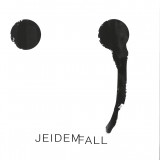
The man in the crowd is a wonderer with relaxed habits. In him the course of things and movement of the city is reproduced. The Düsseldorfer Detlef Weinrich is such a man in the crows. Some one who is constantly listening to future winds through rushes of the past. He loves the night for its free will. And his music tells stories about it. You might know him as a member of the band Kreidler. As a solo artist he goes under the name Tolouse Low Trax. And he's already got three Eps and two albums under his belt. His first solo album „Mask Talk“ thrives on a feathery beat frequency and cool new-wave-strength. His recently released piece „Corridor Plateau“, which appeared as a limited edition to accompany the exhibition „Corridor Plateau“ contains percussive electronics and Industrial sounding like its from the second industrial revolution. His third album „Jeidem Fall“, is also not from here. It sounds like music brought down to earth from the heavens. But its a dark cosmos in which there are only fleeting glimpses of light. All eight tracks were composed in a short space of time over the period of just a few months and fit together perfectly atmospherically. With a musical expressiveness that undoubtedly twists your emotions, „Jeidem Fall“ attacks the subconscious and clouds the mind. The drums have more movement that on „Mask Talk“. Along with the constant tapping of drumsticks goes melodical arpeggios dancing dark and dirty. At times longing vocals drift abstractly through the room, as on „Sa Seline“ or „Geo Scan“, without telling any obvious story.
To sound like stylistic cross references from the present and past is all just speculation for nothing on „Jeidem Fall“ really sounds like anything that has gone before. You could compare the dark minimal timbre of the drum computer aesthetic with Craig Leon's first reductive album „Nommos“. There is also a hint of the minimallist industrial of the Spanish band Esplendor Geometrico in the bubbly textures. But Tolouse Low Trax is still looking from the present into the future and filter and filters all his personal preferences through his MPC and his small synth setup to make them come alive here and now in a new way. Again Tolouse Low Trax has created a truly mysteriously vibrating drum computer music which offers hypnotic magic for the shadowy dance floor. Only a little light should illuminate the whole thing and the bodies that move above them should have no fear from threatening percussion which are displaced into a misty trance. A dark swaying shadowy mass, ideal for a journey at the end of the night and all those non-places where longing sleeps and the last romantics dance while getting drunk.
Tomotsugu Nakamura is a musician and graphic designer residing in Tokyo, Japan. His primary artistic practice is to compose music with some fragments of minimal acoustic and electronic tones and some field recordings. In Concert, he has played with various genre of musician such as "Musica Frontera Argentina". With previous releases on Kaico and Audiobulb Records, "Literature" is his 5th complete album.
Brussels-based trio schroothoop (Dutch for ‘junk yard’) is formed by Rik Staelens (wind & string instruments), Timo Vantyghem (bass & clarinet) and Margo Maex (percussion). Their tribal oriented debut mini-album features homemade instruments built from lost and found objects like wood, scrap metal or anything that would end up in a landfill. The band’s music is infused with sounds from around the world orchestrated by PVC flute melodies, jerry can beats and washtub bass lines. The trio effortlessly incorporates jazz with North African chaabi, cumbia, reggaeton, Eastern oriental melodies and Afro-Cuban rhythms, resulting in a danceable and hypnotic trip in 7 compositions through the Brussels melting pot. The musical members are part of groups such as La Clinik du Dr Poembak, Raksinaksi, Sea (Peoples), Borokov and Sea Shark Minor.
The next release in the Phonica Special Edition series comes from Ukrainian duo Asyncronous who first came to our attention after hearing their critically acclaimed debut on Berlin label Slow Life, 'The Art of Fighting In A Dream'.
A Phonica favourite, it provided the soundtrack to many days in the shop throughout the year, culminating in its inclusion in our top ten Best Singles of 2019!
The Phonica Special Edition series is focused on one-off projects, special remixes or collaborations, highlighting music that is slightly left of the dance floor and pairing it with unique artwork.
This time featuring a beautiful piece by celebrated Ukrainian artist, Mykyta Storozhkov.
The pair initially joined forces in an effort to explore human imagination and life experiences through music, focussing on creating feelings and atmosphere rather than be constrained by genre limitations. The result on this EP is a hazy cosmic trip through their universe of synth swells, deep sub bass and meticulous percussion.
The journey begins on 'Padma Kirtanam' with a constant drone providing the backbone to a building tension scattered with drums. The tension releases and makes way for A2 'Shinkansen', a beautiful track with minimal drums and dubbed out synths which echo around the listener's ear. Closing the A side 'Volta' continues this aesthetic but adds a 4x4 kick drum upping the groove to a cosmic deep house jam.
'Avalanche' kicks off the B side of the record with a syncopated bass line and skitterish hi hats. The energy is at its highest level here and only stops to make way for the next track 'Blocks of Despair'. The tempo drops and drum hits reverberate above stretched out bass notes creating arguably the most heartfelt tune of the release.
The EP ends with 'Midnight Sun' an ambient excursion that invites you to drift off with Asyncronous into outer space.
Today we have many opportunities to discover the world and travel through it without leaving your own room. In the age of globalisation, with the help of knowledge, technology and imagination, you can instantly teleport yourself to mystical temples of India or see the sun above the polar desert at midnight. No more borders - we are connected like never before, as if we are not at different ends of the globe, but on a single and indivisible continent that is not mapped but exists in a plexus of global events, information flows and digital environment.
This is our common home. Our new Pangaea.
- A1: Berserk In A Hayfield - After Dusk
- A2: The Lord - Controversial
- A3: Silicon Valley - Electro Switch
- A4: Neutron Scientists - Cabaret Futurama
- A5: Lives Of Angels - Artificial Ignorance
- B1: Modern Art - Golden Corridor
- B2: The Lord - Gonna Dream My Life Away
- B3: Echophase - Controlled Experiment
- B4: Disintegrators - Radioactive
- B5: Mystery Plane - Burning Desire
- B6: Modern Art - Dimension 2
Here is the highly anticipated sixth volume of the well received electronic compilation series from the relaunched 1980's color tapes label. As with the other volumes you can find great examples of cold wave, minimal wave and synth electronics and pro to EDM made by obscure British bands in the 1980's such as: Berserk In A Hayfield, Lives of Angels, Silicon Valley, Modern Art, Disintegrators, Echophase, The Lord and Mystery Plane
"Up there with V-O-D selections, the Color Tapes series so far has provided invaluable insight to hidden or much lesser-known currents of the ‘80s cassette subculture which gave birth to myriad artists, styles and industry conventions whose influence can still be felt over 30 years later. " - Boomkat
“Electronic work that’s way different from mainstream pop of the period - often forgedout of the same instrumentation as the hits - but in a stripped down way - with lots of dark and moody corners!” Dusty Groove
“Evil Synths and evil beats” - Norman Records
“Gary Ramon’s re-born Color Tapes imprint is every bit as essential as it’s Minimal Wave and electro-focused predecessors” - Juno
Limited edition of 500 copies comes with poster insert
First up is Nehuen, an Argentinian born but Barcelona based artist who is notorious for his abrasive dance floor workouts on I Love Acid, BNR Trax and the Classicworks label he co-owns with Cardopusher. Cardopusher is, of course, a true electronic legend from Venezuela. His dizzyingly diverse sound takes in rave, acid, electro, techno and house influences and distills them into hugely
Raw and energetic new forms.
Nehuen's Psyops Part One kicks off with the excellent title track, which contorts acid and electro into a writhing monster filled with dark energy. The visceral 'Toxic' is built on slapping hits and spangled basslines that will tie you in knots as the bumping drums drive things forward. The late-night menace continues on 'Bailar', with tight synth arps layered up in robotic forms over clunky drums that are industrial and futuristic in equal measure. Last but not least, the eerie 'Desire' strikes a more twisted note with double kicks juddering beneath echoing hits. It's pure, filthy, brilliant body music.
Cardopusher kicks off Part Two with the fantastic 'Disobedience' (feat. Lbeeze) a slow-motion drum
workout that is like dark disco mangled through a psychedelic filter, with robotic vocals and stiff arp
jerking your body. 'Abyss Antidote' is then a flurry of drum breaks and electro bass, frazzled synths and whipping hits that keep you on the edge of your seat. Darkness abounds on the gritty 'Initial Decay' (ft. Lbeeze), which layers up taught drums and hits with spraying synths that come from a dystopian planet.
Closing out this epic mini-series is 'Mutant Brain', a cyborg techno meltdown with manic acid for
company.
These are devilishly distorted tracks from two of the best producers around.
Djebali and Jorge Savoretti combine to deliver their ‘Fraires’ EP on Infuse, accompanied by a remix from Stephan Bazbaz.
Two producers at the heart of today’s modern house and minimal scenes, Paris favourite Djebali and Argentinian DJ and producer Jorge Savoretti have grown to become two of the most consistent and impressive talents active within the scene today. With over thirty years of experience between them, releasing material via the likes of Freak’n’Chic, Raum…musik and Cadenza plus Djebali’s own self-titled imprint, the pairing now turn their attention to new ground as they make their collaborative debut on FUSE sister imprint Infuse this summer, offering up three fresh productions via their ‘Fraires’ EP alongside a remix from Tel Aviv’s Stephan Bazbaz.
The slow-blooming and hypnotic sonics of ‘101’ open the EP in style as the two talents merge sweeping synth lines atop of warped electronics and slick percussion shots, whilst Stephan Bazbaz’s remix ups the tempo and builds on the original with a combination of energetic builds and icy hats. On the flip, ‘Pigalle’ delves into a deep journey guided by a resonant lead line and hazy background murmurs, before closing with the classy ‘Devote Ville’ – a smooth and well measured production which oozes sophistication and quality from the opening minute.
Bélver Yin's soul mining odysseys have been unjustly overlooked for three decades. An anomaly in the Spanish alt-pop scene, their forlorn instrumentals and ethereal romanticism would have struck a chord in the British league of Felt, The Chameleons, Cocteau Twins and Dif Juz, leaving their 1991 debut Luz Bel deserving of reappraisal.
While coining their band name from a Jesús Ferrero novel and quoting Laozi philosophy on album sleeves, Bélver Yin create illuminating textures that unlock a wordless language of memory and adolescent emotion. Formed in Salamanca by self-taught musicians Pedro Ortega Sánchez and José María Martín, the guitar-bass duo spent two years crafting their divine interplay with interim drummers before submitting a demo to Noisex Music, their only attempt at label courting. The phone rang mere days later with owner and producer Bernar Marks (The Dust Sessions) offering to cut an album and the band ventured to Valencia with cloud-touching optimism soon after.
Championed by local press, the release fell short of expectation, fueling the mythology of a vanished band known only to the initiated. Varying lineups would, however, continue to work in the shadows under Pedro's direction, recording two spatially arranged follow-ups at their own pace in 1996 and 2005.
A glorious debut that undeniably set a high watermark, Luz Bel is finally available again, faithfully remastered by Mikey Young and featuring bilingual liner notes from John Gómez, the authoritative ear behind Outro Tempo.
Jori Hulkkonen was born and raised in a small town named Kemi with a population of 20,000, in the north of Finland. Since the early 80s, his musical influences have been on the side of electronic music, quite eclectic style for a 10-year-old boy who grew up in this period still marked by the seal of the Cold War. At the end of the 1980s, Jori's passion for electronic music was reinforced when he discovered its most abstract and minimal part: techno from Detroit and House Music from Chicago. Excellent DJ, he played in the best clubs and festivals in Europe. Jori Hulkkonen is an artist well known and extremely respected in the Nordic countries for his pioneering status, with his love of music and his involvement in making it known.
vinyl only / 180 grams
Finishing off the initial "series" of Krab's vinyl-only records in style, KRB003 centres around 3 signature cuts from German duo Cedric Dekowski & Felix Reifenberg and a stellar remix from Yamen & Eda. The EP divulges into the multi-genre capabilities and eclectic nature of the HardWorkSoftDrink label owners, as there are seamless transition between genres, modular synths and all things in between are highlighted throughout the label's latest record.
Starting off with a slow burner, Act 1 is a hypnotic listen, formed around strung out sounds, glitchy breakdowns and a captivating overlaying melody. Laus highlights the pairs unique ability to shift genres seamlessly as they deliver a cut full of heavy hitting acid and emotion heavy synths suitable for any dance floor.
Internet dial up appears the theme throughout the B-side, as Feelsliker delivers a fast paced minimal roller that is stacked to the brim with bleeps, bloops and modular madness. Finishing off the record is a remix from French Duo Yamen & Eda, a pair of artists that boast a distinguished taste for electronic music. Dance floor ready, B2 is constructed around a heavy hitting bass line and an assembly of inimitable modular synths.