Tortoise has spent nearly 30 years making music that defies description. While the Chicago-based instrumental quintet has nodded to dub, rock, jazz, electronica, and minimalism throughout its revered and influential discography, the resulting sounds have always been distinctly, even stubbornly, their own. There is a always the pervasive element of group play, or ensemble?mindedness, as opposed to emphasis on a virtuoso soloist or frontman, despite the fact Tortoise is composed of members who could each easily have taken center stage in another group. In their debut, Tortoise is composed of Douglas McCombs, John Herndon, Dan Bitney, John McEntire, and Bundy K. Brown. This self-titled, incorporates many musical styles and influences, but no one style alone is sufficient to fully describe the distinct sound they craft. This unique blending of styles caused them to be recognized as the leaders of a new musical movement. Tortoise utilize the recording studio, not only to put their music to wax, but in a way that their recording process becomes a compostional tool described at times as the "sixth member", thus creating a boundless parameter in which to create and manipulate music. Tortoise's self-titled debut was originally released in 1994. This re-issue is re-mastered by Roger Seibel at SAE Mastering, in jacket with art insert, both designed by Sam Prekop as well as a free download card. 2022 version is available on limited edition white with hi-melt black vinyl
Cerca:minimal man
21st Century pop is curiously irrelevant: autotune, twelve 'writers' on a single song, sensationalist yet skin-deep social commentary . . . with none of the joy, excitement and surprises of pop's lengthy heyday, from the Brill Building through the New Wave era. Where did it go? That would be an apt introduction to an album of calculated throwbacks to a three-minute pop ideal . . . but No Place Like Home isn't that record. We doubt even Gemma could tell you where this collection of beguiling jewels came from exactly, each fully-formed, complete and satisfying, no two quite alike, and each devoid of Wet Leg or Dry Cleaning's crafty calculation, but with every bit of those acts' charm. The first single, Stop, is based on an idea so simple that it's nearly unfathomable why no one had come conjured it earlier. Like toilet paper or a pair of scissors, the song feels entirely obvious until one ponders its late arrival. Stop's motorik beat propels verses to a chorus of pure delight, bested by a bridge occurring so late in the tune that it comes across like a surprise second dessert. My Idea Of Fun, a tale of frequent drunken regret, comes with a video of minimalist humour and visual brilliance. On other songs, Gemma channels acts Delta 5, Au Pairs and The Raincoats, along with the humour of Ian Dury and a similar verité of London life found in the best of Madness. The more serious fare is equally compelling. Rabbit Hole projects a daring newness of young freedom, Dance Of A Thousand Faces veers into Sprechstimme and expands into a swooping chorus, the feel of which subtly conveys present-day tensions reminiscent of the Weimar era. Tailspin captures the dark feeling which comes burdened with real-time consciousness of a loss of control, while the album closer, Frida, a tale of the loss of a dear friend manages to end in a guardedly upbeat tone. Gemma's debut album is sure to stir up deep interest and will be supported by a number of videos and live performances, plus free digital singles featuring otherwise unavailable non- album tracks.
Concept Of Man is Martin Knorz - Berlin based keyboarder, producer and DJ.
A studied jazz pianist, Knorz is known for playing keys in the highly acclaimed, german experimental pop band Hope, with whom he’s been touring around Europe and UK over the past couple of years, as well as forming the sound of Austrian pop icon Teresa Rotschopf‘s solo debut „Messiah“.
In 2019 he started devoting himself to modular sound-synthesis, playing live shows and remixing acts as Hellotrip (Mutant Rebuilds) and Hara Crash (Bali).
His debut “Regularities” will be released on Patrick Pulsinger’s Big Beak Recordings in 2022. It’s a modular infused tape majestically crafted by a sound surgeon. Drawing inspiration from Robag Wruhme, James Holden and Patrick Pulsinger (with whom he has collaborated on his album Impassive Skies and the EP Nocturnal Cat), „Regularities“ consists of four minimal tracks and a durational modularsynth-only-performance, both of which feed the realm of sound caviar. Tribal rhythms join the darkness of modular sounds, regular beats oscillate on irregular impulses, while intriguing basslines and uplifting chords remind us that Knorz is first and foremost a pianist, a master of melody.
Wooden but soft percussive chords create a tribal rhythm that carries through the song, interrupted by a contrapuntal rhythm. Another drum group provocatively steps in the arena, together they build a rolling total. Then a „squelching“, juicy, nearly acid melody grounds the track, to be drummed out by the two groups when approaching the end.
The Idealist is one of the many projects of Joachim Nordwall who has a long history in Swedish experimental music running the quintessential iDEAL Recordings record label since 1998, as a member of the psych-drone duo Alvars Orkester, avant punk rock trio Kid Commando and ritual drone rock group The Skull Defekts and through his many solo recordings and collaborations with people such as John Duncan, Aaron Dilloway, Mika Vainio, Mats Gustafsson, Leif Elggren, Gabi Losoncy, Mark Wastell and Christine Abdelour.
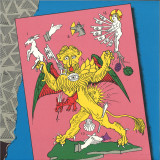
As The Idealist, he has been delving into an amalgam of experimental techno, dub and industrial music since 2006. His new A Lion Is A Lion And Not A Lamb continues this perspective unabatedly, conjuring up six tracks that shimmer with an almost psychotropic intensity, sometimes including acidic touches, dwelling in a confrontational minimalist musical stance where repetition, bursts of gorgeous noise and dubbed out skeletal rhythms make for wayward yet driving grooves at home on the dance floor and a set of headphones alike. The Idealist looks for engagement within rhythm, in its almost purest
form.
Emerging Netherlands-based pairing Parallells will land on Damian Lazarus’ Crosstown Rebels imprint for the first time next month. Gifting us an emotive offering in Ashes of Snow (The Rebirth Of The Phoenix), it acts as a tribute to their favourite Portuguese beach club, Yamba, which was tragically destroyed by a fire last year.
The title track hits a wonderful sweet spot between electronic elements and organic instrumentals. It feels raw and authentic, blending saxophone segments, electric guitar tones and a jazzy-like backbone to form a cut that feels ripe for both sunrise or sunset. On The Banks of The River comes next, manifesting as a more toughened dance music number thanks to deep bass components whilst still retaining the boys’ natural sound. Rounding off proceedings is Clive Henry, who’s remix of Ashes of Snow flies the flag for contemporary minimal. Weighty kicks reside next to delicate hats before ethereal synths are brought in, creating a romanian-inspired piece that you can’t help but dance to.
Parallells are two Amsterdam-based brothers hailing from the south of France. Multi-instrumentalists, composers, producers and label owners (Klassified), their music cuts across electronica, electro-jazz and underground dance music. Their live, hybrid and DJ sets have graced some of the world’s most esteemed stages, including DGTL, Robot Heart, Mayan Warrior, The Gardens of Babylon, Wonderfruit and many more besides. Their music is also heavily influenced by world culture, a feat that led them to launch their video series concept A Day In. Through this, they immerse in diverse cultures around the world, capturing sounds from their day-to-day life and unfold the story through the medium of music. Clive Henry is a linchpin of house music as we know it today. Cutting his teeth as one half of the tribal house duo Peace Division, he has held a long-term residency at Circoloco, Ibiza and has racked up bookings at standout venues and festivals including Printworks and Houghton to name a few.
Guitarist, composer and producer Nick Zinner (Yeah Yeah Yeahs, 13
million year old ghost) and Chaikin Records proudly present 41 Strings, a
song cycle for string orchestra, electric guitars and expanded rhythm
section
This four-movement composition was originally commissioned for a large-scale
Earth Day event and draws inspiration from and pays tribute to the four seasons.
Notable performances over the years include those at Sydney Opera House,
London's Royal Festival Hall and NYC's Rockefeller Center. Each performance of
the piece features stellar special guests; previous guests have included Lenny
Kaye (Patti Smith), Paul Banks (Interpol), Sarah Lipstate (Noveller, Iggy Pop)
among many more. The rhythm section features members of Yeah Yeah Yeahs,
TV on the Radio and Boredoms. 41 Strings's compositional style is purposefully
simple, lyrical and minimal; each of the four season's is treated as its own distinct
'character' to conjure a sentimental link of association, experience and
environment.
Decomposed recalls classic American hardcore like Bad Brains, Poison Idea and Jerry’s Kids or Japanese ragers like Paintbox, The Comes, Eiefits and Skizophrenia. But there’s also a healthy slug of classic UK and US punk and even a bit of Krautrock, psychedelia and Black Sabbath in there too. Nottingham has always been a melting pot for heavy music. For a small city, it has boasted more than its fair share of genre defining bands and artists, not to mention record labels. Bands cross-pollinate, form projects and offshoots and play one-off gigs that would result in lengthy careers and world tours if they had happened across the Atlantic. It has always been like that there. No big deal (but yet, a really big deal if you know). One such band/project/offshoot were Endless Grinning Skulls. Formed by guitarist Andy Morgan (also from Bloody Head, Army Of Flying Robots, Nadir and countless more), drummer Steve Charlesworth (Heresy, Wolves Of Greece, Meatfly, Geriatric Unit) and bassist Gords (Hard To Swallow, John Holmes, Geriatric Unit) in the early twenty-teens, they re-set the bar for the 3-piece hardcore band before (perhaps inevitably) burning out in 2018. Morgan and Charlesworth weren’t done though. They’d forged a bond in EGS and wanted to carry on playing together so - in a familiar Nottingham storyline - they recruited former Pitchshifter guitarist Stu Toolin on bass and Anmarie Spaziano (who you might know from running a famous burger joint) on vocals and formed Blind Eye. They knew Toolin was about to relocate to Portland, Oregon so they wrote and recorded an EP (released on Morgan’s own Viral Age Records). Quick-sharp. No messing about. And that – by rights – should have been that: over and out. New band please. However, the demo captured a rare intensity and vitality that more considered projects often fail to achieve. This was a band let loose, free from previous shackles and loving the noise they made. It seemed a shame to stop there. Recruiting Matt Grundy (a former bandmate of Morgan’s in both Nadir and Dead In The Woods) to the bass vacancy they went back to Stuck On A Name Studios in 2021 with Ian “Boulty” Boult at the helm again and delivered the album Decomposed.
Decomposed genuinely rocks out without losing one iota of the effervescent anger that made the demo such an essential listen. From the insistent, minimal opener Ready To Go Now via the unhinged thrash of Straw Man and the menace of the stomping Pero No Quieres, to the measured chugging and epic crescendo of closer Broken Star, this record is a fucking blast. Needle off, flip it back over, play it again. Your neighbours are loving it so much they’re banging on the walls to tell you. “I suppose the intention was to write high energy, catchy hardcore, with a nod to what has come before, but also to do our own thing,” explains Andy. “Lyrically, the album was written during the pandemic, and although it’s not ‘a pandemic album’, I think it deals with a lot of the feelings of loss, separation and isolation
Third pressing on transparent pink vinyl. At the 2018 edition of Roadburn Festival - a congregation of all things obscure, heavy and experimental in Tilburg, the Netherlands - two generations of Japanese Krautrock genius took to the stage for a live collaboration that was just as hypnotic as it was inevitable. The artists in question were Tokyo's Minami Deutsch and the legendary ex-Can frontman Damo Suzuki. With Minami Deutsch's heady metronomic jams providing the backdrop on which Suzuki was left free to deliver his distinct improvised vocals, the Live At Roadburn LP is challenging, raw and, at times, totally alien. Divided into three parts, from start to finish the LP is consumed by an unrelenting motorik rhythm section that never lets loose for a second. At the flick of a switch, intricate guitars veer from hypnotic and meditative to skewed psychedelic freak-outs drenched in fuzz. Where Minami Deutsch's playing is sharp and meticulous, Suzuki's stream-of-consciousness ramblings steer the music into whatever direction he sees fit. The result is equal parts disorientating, sporadic and totally all-consuming - the only thing keeping you grounded being that distorted and seemingly-endless 4/4 drive. Repetition. Minimalism. Improvisation. Transcendence. That was the ideology of seminal Krautrock pioneers Can, whose 1970-1973 work with Damo Suzuki at the helm unleashed something in music that would change it forever. Some 45 years since Can's final record with Suzuki - the inimitable Future Days - and the spirit of that era still lives on. Not least because ever since then Suzuki has embarked on an endless one-man tour, traveling around the world and taking to the stage backed by countless different bands. Crossing paths at Roadburn, Suzuki's ensuing performance with Tokyo via Berlin-based group Minami Deutsch is now available to relive on wax.
The Logic of Chaos is the latest release of Elisa Batti for the label One Instrument that gathers music composed over a period of 3 years. Fascinated by the idea of developing pieces with strict and limiting guidelines, the confined environment gave her the possibility to explore and expand the creativity and the freedom of composing. Each single piece has a specific story and is recorded with a different instrument.
“Asa” is produced together with Sebastian Josef Brunnlechner while composing the sound design for an installation. The piece comprises repetitions of a few simple loops layered and arranged over a carpet of long notes played with a bow. The bow has been intentionally played slowly in order to obtain as many overtones as possible. The short pizzicato melodies consist in small and simple repeated loops that appear and disappear dissolving with the other sounds. The intention behind this track is to let the beautiful sound of the instrument speak for itself evoking a dreamy atmosphere.
“Slow Fall” sees the collaboration with the pianist Marko Ivic and has an improvised approach. While Ivic was playing the piano Elisa Batti was processing the sounds on the fly. The piece is based on a minimalistic procedure, where continual loops create a scenographic effect.
“Taiga” includes different patches of the Moog Mother-32 and is an emotive landscape where sounds rise and disappear again, leaving space to thoughts and images.
The EP ends with “Ecstatic” created with the Korg Minilogue. It was part of a commissioned dance piece that afterwards has been readapted for the release. The final outcome sees a more complex and erratic behaviour.
Elisa Batti’s work induces a state where time stands still whilst simultaneously being in motion. Her sound palette is broad and expresses a high artistic achievement.
Tape
Charlemagne Palestine (born Charles Martin ni 1947 in Brooklyn, New York) wrote intense, ritualistic music in the 1970s, intended by the composer to rub against audiences' expectations of what is beautiful and meaningful in music. A composer-performer, he always performed his own works as soloist. His earliest works were compositions for carillon and electronic drones, and he is best known for his intensely performed piano works. He also performs as a vocalist. Palestine's performance style is ritualistic; he generally surrounds himself (and his piano) with stuffed animals, smokes large numbers of kretek (Indonesian clove cigarettes) and drinks cognac.
Oren Ambarchi (born 1969 in Australia) is a composer and multi-instrumentalist with longstanding interests in transcending conventional instrumental approaches. His work focuses mainly on the exploration of the guitar, "re-routing the instrument into a zone of alien abstraction where it's no longer easily identifiable as itself. Instead, it's a laboratory for extended sonic investigation". (The Wire, UK).
Oren Ambarchi's works are hesitant and tense extended songforms located in the cracks between several schools: modern electronics and processing; laminal improvisation and minimalism; hushed, pensive songwriting; the deceptive simplicity and temporal suspensions of composers such as Morton Feldman and Alvin Lucier; and the physicality of rock music, slowed down and stripped back to its bare bones, abstracted and replaced with pure signal.
From the late 90's his experiments in guitar abstraction and extended technique have led to a more personal and unique sound-world incorporating a broader palette of instruments and sensibilities. On releases such as Grapes From The Estate and In The Pendulum's Embrace Ambarchi has employed glass harmonica, strings, bells, piano, drums and percussion, creating fragile textures as light as air which tenuously coexist with the deep, wall-shaking bass tones derived from his guitar.
Ambarchi works with simple constructs and parameters; exploring one idea over an extended duration and patiently teasing every nuance and implication from each texture; the phenomena of sum and difference tones; carefully tended arrangements that unravel gently; unprepossessing melodies that slowly work their way through various permutations; resulting in an otherworldly, cumulative impact of patiently unfolding compositions.
Ambarchi has performed and recorded with a diverse array of artists such as Fennesz, Otomo Yoshihide, Pimmon, Keiji Haino, John Zorn, Rizili, Voice Crack, Jim O'Rourke, Keith Rowe, Phill Niblock, Dave Grohl, Gunter Muller, Evan Parker, z'ev, Toshimaru Nakamura, Peter Rehberg, Merzbow, Kassel Jaeger, Anthony Pateras, Crys Cole, Giuseppe Ielasi, Judith Hamann, Sunn 0))), James Rushford, Stephen O'Malley and many more.
For 10 years together with Robbie Avenaim, Ambarchi was the co-organiser of the What Is Music? festival, Australia's premier annual showcase of local and international experimental music. Ambarchi now curates the Maximum Arousal series at The Toff In Town in Melbourne and has recently co-produced an Australian television series on experimental music called Subsonics. Ambarchi co-curated the sound program for the 2008 Yokohama Triennale. Ambarchi has released numerous recordings for international labels such as Touch, Southern Lord, Table Of The Elements and Tzadik.
Belgian drummer Eric Thielemans is one of the most idiosyncratic figures in Belgian music, someone who not only demonstrates that special musicians always seek out (and find) their own place, but above all that they always remain students of the art of questioning and listening. No musician better illustrates the difference between playing music and playing with music than percussionist Eric Thielemans. He gets to the heart of the matter with an at times extremely minimalist approach, but on the other hand he frequently relies on a range of objects beyond the regular drum kit: a drum placed on its side, a bicycle wheel with a bow, hands and the body.
Tape
Charlemagne Palestine (born Charles Martin ni 1947 in Brooklyn, New York) wrote intense, ritualistic music in the 1970s, intended by the composer to rub against audiences' expectations of what is beautiful and meaningful in music. A composer-performer, he always performed his own works as soloist. His earliest works were compositions for carillon and electronic drones, and he is best known for his intensely performed piano works. He also performs as a vocalist. Palestine's performance style is ritualistic; he generally surrounds himself (and his piano) with stuffed animals, smokes large numbers of kretek (Indonesian clove cigarettes) and drinks cognac.
Oren Ambarchi (born 1969 in Australia) is a composer and multi-instrumentalist with longstanding interests in transcending conventional instrumental approaches. His work focuses mainly on the exploration of the guitar, "re-routing the instrument into a zone of alien abstraction where it's no longer easily identifiable as itself. Instead, it's a laboratory for extended sonic investigation". (The Wire, UK).
Oren Ambarchi's works are hesitant and tense extended songforms located in the cracks between several schools: modern electronics and processing; laminal improvisation and minimalism; hushed, pensive songwriting; the deceptive simplicity and temporal suspensions of composers such as Morton Feldman and Alvin Lucier; and the physicality of rock music, slowed down and stripped back to its bare bones, abstracted and replaced with pure signal.
From the late 90's his experiments in guitar abstraction and extended technique have led to a more personal and unique sound-world incorporating a broader palette of instruments and sensibilities. On releases such as Grapes From The Estate and In The Pendulum's Embrace Ambarchi has employed glass harmonica, strings, bells, piano, drums and percussion, creating fragile textures as light as air which tenuously coexist with the deep, wall-shaking bass tones derived from his guitar.
Ambarchi works with simple constructs and parameters; exploring one idea over an extended duration and patiently teasing every nuance and implication from each texture; the phenomena of sum and difference tones; carefully tended arrangements that unravel gently; unprepossessing melodies that slowly work their way through various permutations; resulting in an otherworldly, cumulative impact of patiently unfolding compositions.
Ambarchi has performed and recorded with a diverse array of artists such as Fennesz, Otomo Yoshihide, Pimmon, Keiji Haino, John Zorn, Rizili, Voice Crack, Jim O'Rourke, Keith Rowe, Phill Niblock, Dave Grohl, Gunter Muller, Evan Parker, z'ev, Toshimaru Nakamura, Peter Rehberg, Merzbow, Kassel Jaeger, Anthony Pateras, Crys Cole, Giuseppe Ielasi, Judith Hamann, Sunn 0))), James Rushford, Stephen O'Malley and many more.
For 10 years together with Robbie Avenaim, Ambarchi was the co-organiser of the What Is Music? festival, Australia's premier annual showcase of local and international experimental music. Ambarchi now curates the Maximum Arousal series at The Toff In Town in Melbourne and has recently co-produced an Australian television series on experimental music called Subsonics. Ambarchi co-curated the sound program for the 2008 Yokohama Triennale. Ambarchi has released numerous recordings for international labels such as Touch, Southern Lord, Table Of The Elements and Tzadik.
Belgian drummer Eric Thielemans is one of the most idiosyncratic figures in Belgian music, someone who not only demonstrates that special musicians always seek out (and find) their own place, but above all that they always remain students of the art of questioning and listening. No musician better illustrates the difference between playing music and playing with music than percussionist Eric Thielemans. He gets to the heart of the matter with an at times extremely minimalist approach, but on the other hand he frequently relies on a range of objects beyond the regular drum kit: a drum placed on its side, a bicycle wheel with a bow, hands and the body.
It's hard to believe it's taken this long for a proper retrospective of legendary Los Angeles collective CVE. "We Represent Billions" is a crucial portrait of one of the West Coast's most low-key influential crews - a hydra-like collective of rappers, producers, designers and engineers who were key members of the Good Life Cafe's open mic scene, going on to inspire artists like Jurassic 5, Kendrick Lamar amongst many other. Initially called Chillin Villain Posse before morphing into Chillin Villain Empire in the late 1980s, they eventually centered around the core trio of Riddlore, NgaFsh and Tray-Loc. The crew were years ahead of their time, self-producing music without samples and pioneering a stream of consciousness lyrics that still sound fresh and innovative. CVE were self-sufficient and motivated from the beginning, named "Chillin Villains" because that's how they were perceived by white America. This social motivation was channeled into their groundbreaking performances at Good Life Cafe, the South Central session that evolved into Project Blowed and later on came to influence LA club night 'Low End Theory'. It was chronicled by Ava Duvernay, herself an MC in short-lived duo Figures of Speech, in her "This is the Life" documentary, where she interviewed CVE alongside Jurassic 5, Freestyle Fellowship, Abstract Rude and Busdriver. On "We Represent Billions", we're treated to a snapshot of the CVE sound from 1993-2003, their most prolific era. The retrospective collects music from the handful of albums the crew released on their own Afterlife Recordz label (mostly as limited edition CD-R's) plus many previously unreleased tracks and highlights their untethered eccentric creativity and sheer breadth of influence. Whether twisting twitchy West Coast electro on 'All Over Da Globe' or free associating over horror synths and foley sounds on 'Made in Chillz Ville' there's a sense that their music was just too future for its time. Assembled from heaving industrial samples and graced by back-and-forth tongue twisting flows, 'Thugs and Clips' is as eerie and hard-hitting as anything 2Pac's "The Don Killuminati: The 7 Day Theory" full-length. Fuzzed-out and unsettling, 'Calistylics' welds an ambient synth loop and bone-rattling percussion to Tricky-esque percussion, while the flickering closer 'Unicycle' is a cross between Dr. Dre's icy G-gunk pressure and Three 6 Mafia's pitch black lo-fi funk. In many ways, 2022 is the perfect time to rediscover this music: an urgent, creative fusion of spine-tingling pre-grime electronic minimalism and mind bending wordplay that still sounds completely idiosyncratic and utterly alien. Tracks: 1 All Over Da Globe 2 Thugs and Clips 3 C.V. Vault 4 Made in Chillz Ville 5 Bring It On 6 Calistylics 7 No Feelins 8 Let's Get It On 9 Today Was A Fucked Up Day 10 Untitled (Freestyle) 11 Unicycle
Taking direction from both the cinematic song stylings of sardonic yet
unfettered troubadours like Randy Newman, Brian Wilson, and Harry
Nilsson and the "visual scoring" of indie pop song placement in 21stcentury films, Best Move's music suggests the sound of a decade of
winding, disparate avenues finally convening in a perfect center
The Sacramento-based trio is composed of Kris Anaya, Joseph Davancens, and
Fernando Olivia. Anaya, a talented songwriter with a penchant for wry, offbeat
guitar-based folk-pop songs, and Davancens, who holds higher education degrees
in avant- garde composition and jazz double bass, formed the electronic act
Doombird together in 2016, but in 2019 the pair gravitated back to what they
consider more natural inclinations: organic instruments, earnest songwriting, and
a more true-to-themselves direction. Adding Oliva, Best Move was born. Many of
Best Move's songs maintain an intentionally similar sonic feel. Guitars strum and
piano twinkles while a layer of manipulated or synthesized instruments spread a
hazy overtone on top of it all, and steady yet minimal drums keep things moving.
Lyrically, the standards prevail - love, loss, friendship, searching for purpose - but
the themes bubble under the surface of a sea of metaphor, leaving the listener to
decipher the message in their own way. Anaya calls the sound a "thank you to the
past," and while a warm, familiar tone echoes throughout the band's universe,
something unmistakably modern remains.
Welcome back our longtime friends on Mule Musiq.
Finland born now Berlin based producer Freestyle Man aka Sasse and no explanation needed, German house music producer Henrik Schwarz teamed up for their collaboration 12inch.
A side “Moat” feat veteran producer Jimi Tenor is elegant deep house and b side “dub 5” is German style dubby minimal House.
Hope you enjoy.
The “Tumult Hands” duet is made by Jacek Sienkiewicz and Jerzy Przezdziecki - the producers
whose composition has - to a large extent- defined the Polish techno music. Sienkiewicz - as
early as Recognition - started his adventure with music in the late 1990s. Subsequent records,
already under his own name, were released, among others, at Cocoon Records, Trapez, Klang
Elektronik and WMFRec. Przezdziecki started publishing a little later. Over the last two
decades, he has been presenting various types of electronic music, among others, as Praecox,
Epi Centrum and Jurek Przezdziecki.
“Tumult Hands” has two EPs on its account – “Tumult Hands EP” (2014) and “Tropic
Factory” (2016). Both were published by Recognition. So a full record was a matter of time.
The album titled: “TH” (Recognition, 2022) has been prepared for many years. The repertoire
was created mainly out of improvisation. As artists themselves say, “it is the result of
discovering and accepting a chance event.” For both producers, close contact with
instruments was important during their composition; the type of interaction between the maker
and an electronic device. Individual works have been maturing for a long time. Paradoxically -
the lapse of time did not cause them to be ageing but vice versa - allowed them to mature and
gain natural weight.
“TH” brings very diverse music. In part, it is the repayment of the debt that Sienkiewicz and
Przezdziecki incurred towards the most creative techno period, that is, the 90s of the 20th
century. The lovers of experimental dance music from before the quarter of the century will
easily capture in the duet’s themes the art of Cristian Vogel, producers known from the tin
series of Chain Reaction record company or early recordings of Richie Hawtin (Plastikman,
F.U.S.E.). This is a very similar, non-standard approach to sound structure and an original
approach to rhythmic structures. Minimalist melodies, accompanying e.g. the opening of the
“enter TH” or “pow” set, contribute to the composition an element of some sublimity and
metaphysical anxiety. Obviously, it is still the dance music but the duet - to some extent by
abandoning the club functionality (understood in the techno convention) - has given its music
a definitely sophisticated, artistic elegance.
Publishing cooperation between such important makers, as well as high quality of recordings,
leads us to see “TH” as something more than just another techno record. It is an event and an
electronic adventure that all lovers looking for dance music will appreciate.
- 1: Arrival
- 1: 2Sonovabitch
- 1: 3Cistern / Old On Lens
- 1: 4Swab Dog Swab / Seagull / Winslow's Story
- 1: 5Curse Your Name / Dirty Weather
- 1: 6Murder / Mermaid / Heavy Labour
- 1: 7Stranded
- 1: 8The Sea King's Fury
- 1: 9Mermaid Lust / Stabbing The Charm
- 1: 0Why'd Ya Spill Your Beans?
- 1: Filthy Dog
- 1: 2The Light Belongs To Me
- 1: 3Into The Light
Mark Korven's original soundtrack for 'The Lighthouse,' starring Robert Pattinson and Willem Dafoe, marks his second collaboration with director Robert Eggers (The Witch).
"Robert Eggers and I were rather like the two wickies that went insane in The Lighthouse, musically speaking. We travelled to some very dark harmonic and textural places. We both enjoy not just breaking the rules, but blowing them to smithereens. The spirit of experimentation was always present."
-Composer Mark Korven
"Composer Mark Korven and I developed a shorthand working together on The Witch. This made collaborating on The Lighthouse an incredibly enjoyable process. But it was not without its many challenges. Originally, I wanted a score with no strings at all. The Witch soundtrack was so string-prominent that I wanted a full departure. I only wanted horns, pipes, conch shells, concertina - things that sounded like the sea - or the lighthouse station's ominous foghorn. It would be a minimalist aleatoric soundtrack with a nod to sea shanties and ancient Greek music. As Mark and I embraced the sound of big brass sections, it quickly became a maximalist aleatoric soundtrack.
Friendsome Records and Belaria are delighted to present her debut EP Boost & Doubt. After only two singles and a remix to date she already managed to leave quite an impression, launching a very promising career. The young ‘home grown’ prodigy has produced this beautiful four tracker to take you on a retro-minimal journey of heavy beats and melodic synth.
Oscillating between Dark-Disco, Italo and Synth-Wave, starting and ending with two dancefloor oriented tracks Boost and Esteem (A1 & B2). Neither will allow you to sit still, in the middle of this you’ll find Rest In B (A2), a more poppy but still minimalist track that will remind you of throw backs of Chloé or Peaches. All sat alongside Burning Inside (B1) a downer tempo intimate song that would suite a room three or a long summer road trip. Enjoy the ride!
(Emmanuel Top, Tom Hades, Kony Donales + original remastered) Zolex heads up our next Bonzai Classics vinyl release with his 1993 cut, Time Modulator. New remixes come from Emmanuel Top, Tome Hades and Kony Donales who add their own unique twists to a techno classic.
Zolex heads up our next Bonzai Classics vinyl release with his 1993 cut, Time Modulator. New remixes come from Emmanuel Top, Tome Hades and Kony Donales who add their own unique twists to a techno classic. Back in the mid-nineties, Frank Struyf was churning out top club hits on Dance Opera, Circus, Frank’s own Zolex Records and our very own XTC and Bonzai Records imprints. Despite his busy DJ schedule Frank still found the time to produce his own sounds. Many years of producing quality records followed and he is still twiddling the knobs and spinning sets to this day.
The Original Mix graces the A1 slot, with its dark drums and rolling techno vibe hitting the spot. Moody and twisty, the groove becomes infectious and hypnotic thanks to a combination of blippy, bleepy sounds and relentless strings. The energy levels rise after the break, causing chaotic scenes on the floor, an absolute stomper. French DJ and producer Emmanuel Top takes up the A2 slot, delivering a fine remix with his instantly recognisable signature sound. Responsible for so many acid laden moments throughout his career, Emmanuel Top remains an inspiration to many. On the remix here, the tension mounts as 303 lines fade up alongside a hybrid drum construction and hypnotic FX. The acid effect takes hold, dominating the groove, the perfect set builder to whip up the crowd. Over on the flip, Belgian artist Tom Hades offers up his interpretation, turning the original into a slamming slice of techno for the modern dancefloor. Undoubtedly, Tom is responsible for some of the best techno joints released in recent years. Here, he employs his skills to great effect, using banging beats and minimalistic sounds that drive a solid, dark room techno vibe. This one is a must have, no doubt. To complete the vinyl, we have French artist Kony Donales on remix duties. Kony is the owner of Cayden Records which has churned out top techno tracks since 2011. He is known for his minimal style and he definitely knows how to work a track. The remix here brings the essence of Time Modulator into the 21st century with a strong contemporary groove. Nice pounding kicks and crispy percussions set the rhythm loose as metallic hits join raucous percussions and FX. Top-notch stuff once again.
A spellbinding tribute from one multi-faceted artist to another. New York-based artist Aki Onda (b. 1967) conjured a transduction to the Korean multi-media pioneer Nam June Paik (1932-2006). Aki himself describes the project:
“Nam June’s Spirit Was Speaking to Me occurred purely by chance. In 2010, I was spending four days at Nam June Paik Art Center in South Korea for a series of performances and had plenty of free time to wander. The building was packed with Paik’s artwork and related material. I have always felt a close kinship with him as an artist, and so it was a great opportunity to immerse myself in his works and ephemera.
It was that night I made the first contact, via a hand-held radio in a hotel room in Seoul. It was literally out of the blue. Scanning through the stations, I stumbled upon what sounded like a submerged voice and I began to record it in fascination. I concluded this was Paik’s spirit reaching out to me.
The project continued to grow organically as I kept channeling Paik’s spirit over long distance and receiving cryptic broadcasts/messages. The series of séances, conducted in different cities across the globe, began in Seoul in 2010, and continued in Köln, Germany in 2012, Wrocław, Poland in 2013, and Lewisburg, USA in 2014. The original recordings were captured by the same radio which has a tape recorder, with almost no editing, save for some minimal slicing and mastering.
Paik is known for his association with shamanism, a practice that constantly surfaces in his works all through his career. In an interview, he stated “In Korea, diverse forms of shamanism are strongly remained. Even though I have created my work unconsciously, the most inspiring thing in my work came from Korean female shaman Mudang.” Paik himself was a master shaman and vividly used shaman rituals and symbols for staging his performances and installations.
These recordings also became a way for me to explore the mythic form of radio—a medium which is full of mysteries. The transmissions captured may be “secret broadcasts” on anonymous radio stations. There are in fact hundreds of those stations around the world, although the numbers dwindle as clandestine messages can now be sent via encrypted digital channels. Some of these stations were likely for military use or espionage or relics of the Cold War. But many others continue without apparent explanation. These are just some of the questions that remain unanswered.”
Commissioned in 2017 by documenta 14's radio program “Every Time A Ear di Soun,” these recordings were continually broadcast on eight radios stations around the world that year. Nam June’s Spirit is a beautifully formed homage, I cannot think of any other like it. An intimate, flickering language discovered through the air. The LP comes replete with a booklet of photographs of Paik on the set of Michael Snow’s unreleased film Rameau’s Nephew (1974).
Sean McCann, 2020
Aki Onda, 2017
20-page art booklet including rare photographs of Nam June Paik from the set of Michael Snow’s film Rameau’s Nephew (1974), two essays on radio-wave phenomenon (by Onda and Marcus Gammel), and a remembrance of Paik by Yuji Agematsu