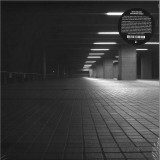
Recorded in 1991 by the quintet of vocalist Billie Ray Martin and Birmingham-based electronic musicians Brian Nordhoff, Joe Stevens, Les Fleming and Roberto Cimarosti, Electribal Soul was conceived as the sequel to the band’s 1990 debut album, Electribal Memories.
Electribal Memories had yielded the hits ‘Talking With Myself’ and ‘Tell Me When The Fever Ended’ and pushed Electribe 101 to the forefront of a crossover electronic scene that fused dance music with pop savvy. They were snapped up by Phonogram, managed by Tom Watkins and hailed as “the next band to meet the Queen” by i-D. The band took the coveted support slot for Depeche Mode on their epochal World Violation tour and supported Erasure at Milton Keynes Bowl. Seen as the next big thing, everything pointed toward enduring critical success for Electribe 101, and the band settled into putting their second album together.
“There was a degree of confidence among us when we came to write the second album,” recalls Billie Ray Martin. “To me, the songs we put down sound like some of our finest moments.” More immediately lush and warm than the dancefloor-friendly structures of Electribal Memories, the clue to the sound of Electribal Soul lies in the second word in its title: soul. Songs like the aching sensuality of opening track ‘Insatiable Love’ or the emboldened defiance of ‘Moving Downtown’ showcase Billie Ray Martin’s distinctive vocal range as it moves from haunting quiet to dramatic, euphoric rapture. Lyrics from ‘Moving Downtown’ had found their way into ‘Pimps, Pushers, Prostitutes’ by S’Express, and the song would appear as ‘Running Around Town’ on Martin’s 1996 solo album. The strikingproduction on the version of the song presented on Electribal Soul suggests classic late sixties soul influences, such as those of legendary Motown producer Norman Whitfield, with the long shadow cast by Kraftwerk never being far away.
‘Deadline For My Memories’, the song that provided the title for Martin’s first solo album, was originally intended for the second Electribe 101 album. Its lyrics document a sense of freedom and liberation from the darkness of a bad relationship, accompanied by jazzy piano and organ sounds over a quiet rhythm and discrete electronics. In contrast, ‘A Sigh Won’t Do’ finds Martin in soothing vocal mode, despite its devastating message about the final ending of a strained relationship, her lyrics framed by restrained and subtle beats and sounds.
To spend time with Martin’s voice on Electribal Soul is to find yourself moved deep into the ordinarily impenetrable emotional corners of your own psyche. “I was into big ballads at the time and listening to all kinds of US and UK singers, and I was also young enough to want to prove myself as a belter of ballads,” explains Martin of the classic soul edge the album showcased.
Electribal Soul heads into darker territory with ‘Hands Up And Amen’. Originally written by Martin in Berlin in the period before moving to London and forming Electribe 101, the song was then perfected and enhanced by the band’s production nous. ‘Hands Up And Amen’ savagely documents the mugging of a woman in Queens, NY at gunpoint, only to resolve itself with a middle section that nods reverently toward gospel tradition. The song coalesces around a regimented break and burbling synths, finally ending with layers of urgent synth sounds.
Meanwhile, a cover of Throbbing Gristle’s ‘Persuasion’ takes us into a seedy world of sexual coercion and creepy infatuation, predating Martin’s chilling version of the track with progressive house unit Spooky two years later. Supported by a minimal, nagging rhythm and barely-fluctuating sounds, Electribe 101’s take on ‘Persuasion’ makes for uneasy listening, even though Martin manages to inject a sort of twisted sympathy for the protagonist as the song progresses.
That Electribe 101 were as comfortable offering complicated, nuanced tracks like ‘Persuasion’ alongside pop house bangers like ‘Space Oasis’ – written by Billie Ray Martin with Martin King before Electribe 101 was formed – is testament to the way the band wove their way effortlessly through electronic music reference points. Framed by light, jazzy piano melodies and string sounds, the energy of ‘Space Oasis’ soars so high that it could easily reach the moon, while highlighting how well-suited Martin’s voice has always been to club music. We hear the same reminder of her dance music credentials on ‘True Memories Of My World’, finding her describing a Hollywood actress who reflects on being used by directors to sell her ‘tears’.
Hooking up with the Birmingham-based Nordhoff, Stevens, Fleming and Cimarosti after placing a Melody Maker ad in 1988 (“Soul rebel seeks musicians – genius only”), it was clear that Martin had found a group that recognised the unique power and importance of her voice. Having worked with genres as diverse as reggae, rock and R&B, the four producers proved to be perfect collaborators, presenting carefully-sculpted backdrops that emphasised the towering emotional dexterity of her voice.
“Listening back to these tracks now, I was reminded of what a bunch of great musicians they were,” says Martin. “They had a rule that if a part still sounded good after a day or two then it could stay. If it bothered the vocals, it would go.” Even more so than on Electribal Memories, Electribal Soul places Martin at the captivating centre of these pieces, surrounding her voice with everything from dubby rhythms to chunky R&B beats to nascent trip hop breaks; wiry, acid-hued synths uncoil gently without ever dominating, while horn samples and lush, disco-inflected strings provide a rich, naturalistic accompaniment for Martin’s emotional outpourings.
The band finished mixing the album at London’s Olympic Studios in 1991. They were assisted by Apollo 440’s Howard Gray on production duties for ‘Deadline For My Memories’, ‘Insatiable Love’ and ‘Space Oasis’, with Gray supported by talented engineer Al Stone. Pre-release promo tapes were issued and an enthusiastic energy started to build around the band’s anticipated second album.
It was not meant to be. Against a backdrop of a worsening relationship with Tom Watkins, and a disinterested Phonogram, instead of receiving a positive reaction to the new tracks, Electribe 101 were swiftly dropped by their label. Electribal Soul languished, unreleased, and the band yielded to pressures that had been building and split up. After collaborating with Spooky and The Grid, Billie Ray Martin went on to release her seminal debut solo album in 1996, with it securing the era-defining hit ‘Your Loving Arms’, while the other group members continued to work together as The Groove Corporation.
Thirty years after the songs were recorded, we’re now finally able to hear what the second and final chapter of Electribe 101’s story sounded like. Electribal Soul shows that the band had really only just got started when they dropped their first album in 1990. Heard only by a select and privileged few, what followed elevated the band’s music to a completely new level, making Electribal Soul musical buried treasure of the most precious and rare variety.
Electribal Soul will be released on LP, CD and digital formats on 18th February 2022 through Electribal Records. The physical formats include extensive liner notes from Billie Ray Martin, and the album sleeve features unseen archive photographs by Lewis Mulatero from the original 1990 sessions with the band that were never used in the sleeve designs for Electribal Memories.
quête:minimal man
- A1: Suzanne Ciani - Rain
- A2: Harold Budd - La Casa Bruja
- A3: Bryce Dessner - Lullaby (Song For Octave)
- A4: David Lang - Spartan Arcs
- A5: Brian Eno, Roger Eno - Celeste
- B1: Julia Wolfe - Earring
- B2: Nico Muhly - Etude N 3 Running
- B3: Caroline Shaw - Gustave Le Gray
- C1: Melaine Dalibert - 6+6*
- C2: Moondog - Prelude N 1 In A Minor
- C3: Timo Andres - Wise Words
- C4: Peter Garland - Nostalgia
- C5: Philip Glass - Etude N 6
- D1: Sylvain Chauveau – Mineral*
- D2: Philip Glass - Etude N 16
- D3: Ezio Bosso - Before 6
- D4: Ryuichi Sakamoto – Solitude*
- D5: Melaine Dalibert – Epilogue
France pianist Vanessa Wagner continues her exploration of the minimalist repertoire by introducing her audience to pieces, many rare or unpublished, by acclaimed composers, young pianists, and genre-bending personalities from the ambient and electronic scenes. In France or even Europe, Vanessa Wagner is practically the only "classical" pianist to tackle this contemporary and timeless repertoire. Study of The Invisible features interpretations of pieces by a spectrum of composers that includes Suzanne Ciani, Harold Budd, David Lang, Bryce Dessner and Phillip Glass.
Described by Le Monde as ‘the most delightfully singular pianist of her generation’, and by Libération as ‘one of the most curious and captivating pianists on the French scene, Vanessa Wagner is able to balance parallel careers. As well as performing a classic solo, chamber and concert repertoire on stages all over the world, through her output on InFiné she is continuously exploring paths that are equally personal, but perhaps more intimate. Study Of The Invisible sees her breaking new ground in a musical tradition, in a way that no other ‘classical’ pianist in France and Europe currently does. Often described as ‘minimalist’, it’s a musical tradition that covers a multitude of singular styles and musical personalities and that spans generations.
Study Of The Invisible seeks out the mysterious world that lives behind the score, the imperceptible links that unite these silences and harmonies, but also the inner resources that this music can bring to light. With this record and this journey, whose apparent melancholy ultimately proves to be powerfully comforting, Vanessa Wagner continues to give a new scale to a music which proves to be above all radiant and luminous.
*are Vinyl exclusive tracks
Previous album released on Dead Oceans. Previous album was a collaboration with Brian Eno. Past press coverage from Pitchfork, SPIN, The Guardian, Drowned in Sound, Dusted, The Quietus, and many more. Since the release of his last album 2017’s Finding Shore, a collaboration with Brian Eno pianist and singer-songwriter Tom Rogerson’s life has undergone a number of dramatic transformations. While writing his new album Retreat to Bliss, Rogerson had a child, lost a parent, and received his own diagnosis of a rare form of blood cancer. The new decade brought him from Berlin to the Suffolk of his childhood, composing profound pieces of minimal songwriting in the church next to his parents’ home. Rogerson studied composition at the Royal Academy of Music under mentors like Harrison Birtwistle, and he made his live debut as an improvising pianist in 2002, before releasing an improvised record with Reid Anderson (Bad Plus) and Mike Lewis (Happy Apple, Bon Iver) in 2004. He formed the band Three Trapped Tigers in 2007, expertly blending elements of electronic, jazz and noise rock into a cohesive whole. The band earned a reputation for innovative live shows and went on to perform and collaborate with artists like Brian Eno, Deftones, and the Dillinger Escape Plan. It was working with Eno, another Suffolk native, that eventually led Rogerson back to his roots and back to a place where he could write Retreat to Bliss, his solo debut album. “All my life, the piano has been my constant companion, my confessor, my best friend, and my worst enemy,” Rogerson explains. “I’ve always written music on and for the piano, but it felt too personal, too private to release.” Indeed, listening to Retreat to Bliss feels almost like eavesdropping, as though you’re crouched in the belfry of a Suffolk church, bearing witness to a form of musical bloodletting. For the first time in his noteworthy career, Rogerson has combined masterful piano playing and subtle electronics with the texture of his own voice, an attempt to express deeply private emotions that were difficult to articulate using instrumental music alone. “The last few years have brought some struggle, some joy, and a lot of change. My response has been to retreat to what I trust the most: the piano, my voice, and the landscape I grew up in. That’s how the album got its title, and how I came to be ready finally to release a solo record.” The eleven tracks that make up Retreat to Bliss were recorded by Leo Abrahams (Brian Eno, David Byrne, Grace Jones) over the course of just a few days, a process that emphasized spontaneity and the artist’s own commitment to improvisation. Secular yet devotional, intensely personal yet profound, the experience of listening to Retreat to Bliss seems to evade characterization. It’s physical and emotional, a glimpse into the mind of an artist who has chosen exposure over withdrawal, who uses his command of the piano to chart an unflinching path forward, never looking back. UK press campaign by Someone Great. Press Quotes "A meeting of minds that is full of rewarding surprises, challenging and surprising one another, and their listeners, with music that feels alive and wondrous…” Pitchfork // "Both mournful and dazzlingly optimistic, a taste of the conflict found so ofen in nature and reflected so elegantly across the course of the record.” The Line of Best Fit // "Many avant-garde instrumental albums exist to craf a mood; Rogerson and Eno merge these moods, sounds and themes together efortlessly and radiantly on Finding Shore” Exclaim // Track List 01 Descent 02 Oath 03 Buried Deep 04 Toumani 05 Drone Finder part 2 06 Chant 07 Rapture 1 08 Open Out Span Wide View 09 A Clearing 10 Retreat To 11 Coda
- A1: You're Pretty Good Looking (For A Girl)
- A2: Hello Operator
- A3: Little Bird
- A4: Apple Blossom
- A5: I'm Bound To Pack It Up
- A6: Death Letter
- A7: Sister, Do You Know My Name?
- B1: Truth Doesn't Make A Noise
- B2: A Boy's Best Friend
- B3: Let's Build A Home
- B4: Jumble, Jumble
- B5: Why Can't You Be Nicer To Me?
- B6: Your Southern Can Is Mine
Reissue of The White Stripes second album (originally released in June 2000), which found the band recording in the comfortable confines of Jack White's Third Man Studios, then housed on the ground floor of his house in Southwest Detroit. The on point covers of Son House and Blind Willie McTell pair wonderfully with both the minimal downtempo somber numbers and the maximum energy explosions of unadulterated power. A 13 track album pressed on 180gm black vinyl and housed in a tip on sleeve. Both releases will have promo/marketing activity.
With ‘Love on My Mind’ - the six-song mini-album, mixed by Claudius
Mittendorfer (Tennis, Parquet Courts, Johnny Marr) - Bambara condense all the energy and darkness that have made them so compelling and rearrange it into something defiantly new.
Opening track, ‘Slither in the Rain’, all hissing high-hat and spectral
synthlines, is a true statement of intent. It’s minimal and atmospheric,
foregrounding Bateh’s raw vocals as he introduces one of ‘Love on My Mind’s main characters years after the events of the album are over, a lonely man who throws bottles at airplanes and dances a two-step in the pattern of a figure-8. While Bateh has always been adept at character sketches, tracks like ‘Slither’ introduce a newfound vulnerability that runs true through the entire album and cause the songs to hit on a more human level.
Similarly, ‘Point And Shoot’ - in which each stanza describes the louche, lawless scenes of “rooftop girls / standing shoulder-to-shoulder, naked figures with their hips / cocked,” busted up jaws, and couches full of burnholes captured by the snapshots of ‘Love on My Mind’s female lead - displays an autobiographical intimacy that is not as apparent in Bambara’s previous releases. This tenderness is echoed on ‘Birds’, a rare love song (from which the EP’s title is derived), and album closer ‘Little Wars’, a gripping finale of loneliness and isolation.
But while these songs may display a softer side of Bambara, it’s important to note that they haven’t lost the thrill of what attracted so many people to them in the first place. ‘Mythic Love’ (featuring vocals from Bria Salmena), with its driving bassline and ricocheting guitar lines, brings to mind past rave-ups like ‘Serafina’ and ‘Sunbleached Skulls’ but obliterates them in the process, while ‘Feelin’ Like A Funeral’ - a dangerously oscillating tale of a city knifing - is probably the most thrillingly anthemic song the band have ever recorded.
Taken together, ‘Love on My Mind’ amounts to another massive step forward for Bambara - the boldest thing they’ve ever done - and the sound of yet another breakthrough.
“Engrossing, dark and irresistible… an adventurous group, who just keep getting better all the time.” - CLASH
“Never anything less than captivating.” - Upset
“What Athens, Georgia bunch Bambara do, they do very well… the trio’s commitment to the dark side is never in question.” - DIY
“Bambara are ice cold and sharp as a knife’s edge.” - Loud & Quiet
“Brooklyn based doom-mongers delight… the trio go further than most in their quest to rattle.” - Q (4/5)
For fans of Daughters, Protomartyr, IDLES, King Krule, Ice Age.
Colorado-based RUMTUM (aka John Hastings), an acclaimed visual artist and up-and-coming producer returns to Bastard Jazz with his first full-length offering: "Isles In Indigo." Arriving after a slew of successful singles (many of which can be found on the album) and EPs, "Isles In Indigo" both stays true to his established sound, and expands on the artistic vision; a luscious combination of aquatic ambient, lo-fi hip-hop, and mellow, melodic electronic, the record traverses the depths of the ocean to the outer reaches of the cosmos.
New offerings on the album include "Lost My Heart In Space" - an ethereal, downtempo cut - "Half Set Valley," which explores instrumental lo-fi replete with distant, chopped and edited spoken word samples, "Coastal Ruins" with nods to breakbeat, "Mystic Symbols," a trippy minimal track, and the album closer, "Commit Way," which journeys from washed-out ambient to spacey hip-hop. Of course the LP also includes many RUMTUM mainstay singles, including "Shade Fader," "Tropic Air," and "Borealis."
Electronic producer and instrumental enthusiast RUMTUM has a unique approach to crafting his melodic melodies. May it be his love for native spirits, mystic symbols or even sea life, sampling the natural world plays the biggest part in the dynamics of his writing. Ambient loops and saturated synth lines set the tone while the bass and drums do most of the story telling.
"Isles In Indigo" is a stunning freshman release from a budding artist on the rise. Stay tuned for the physical LP arriving March 2022, complete with an original art insert.
- A1: Deux Ans Plus Tôt (02:24)
- A2: Trilogie I (Tâm) (04:04)
- A3: Trilogie Ii (Belles Larmes) (01:33)
- A4: Trilogie Iii (Phoenix Rouge) (02:24)
- A5: Les Rivières Vont À La Mère (04:32)
- A6: Pour Marthe (04:08)
- B1: Mon Âme Vers La Tienne (02:19)
- B2: Sur L’embarcadère / Ðêm Tàn Be^´n Ngu?? (04:14)
- B3: Maman (02:31)
- B4: Le Rêve Noir (02:11)
- B5: Je Revive (01:57)
- B6: Regarde Maintenant (03:43)
- B7: La Floraison Du Bambou (02:52)
We finally made it: BEWITH100LP! And what better way for a re-issue label to celebrate such a landmark catalogue number than to give it to a record of new music. We couldn’t resist when the artist is Official Be With Family Member Kenny Dickenson and when the music is his lovely, lovely score to French-Vietnamese artist Mai Hua's 2020 documentary film “Les Rivières”. If you enjoy the more minimal, intimate piano of the likes of Nils Frahm or John Carroll Kirby’s solo work, you’re certain to fall for this beautiful album.
Taking six years to make, Mai’s film explores what happened when she brought her dying grandmother to France, pulling together four generations of women from the same family. Kenny’s score accompanies all the pretty things, sad things, dirty, beautiful, happy, broken and reborn moments of these women’s experiences.
The whole score is built around delicate, sparkling piano motifs. At times they’re joined by cello and complemented with ambient chords and other flourishes. It’s a very particular palette that Kenny and Mai established early on, as Kenny explains: “We had agreed on a particular sonic aesthetic early on in the process - to use specific and relatively minimal instrumentation, reflecting the intimacy of the picture. So piano and cello were quite prominent in instructing a sense of space and immediacy. Until I had to get the junkyard percussion out… ”
When it comes to describing the end results, Kenny’s happy to wear his influences on his sleeve:
“When the director and I sat down for the creative meetings early in the process, we watched ‘Wolf Children’, a Japanese animation film by Mamoru Hosoda. The amazing soundtrack by Masakatsu Takagi was a launching point for me and thereafter I leaned into more modern classical composers - Reich, Sakamoto, Glass as well as Jon Hassell’s Fourth World output. Richard Reed Parry’s ‘Music for Heart and Breath’ was a good early touchstone for me and Mark Hollis’ sparse, considered and deliberate approach was a constant presence. Also labels like Ghostly, ASIP and the ubiquitous Erased Tapes should probably get a nod here too…”
We’d even suggest there’s the occasional Yann Tiersen moment in there too.
Out of sheer necessity the collaboration between Kenny and Mai continued beyond this initial creative direction. With Kenny speaking neither French nor Vietnamese, Mai acted as translator, a process that naturally lead to discussing the film beyond just what was being said in the footage. Mai herself explains just how successful this relationship felt to her: “Music plays a very important role in all my work, particularly in Les Rivières. I cried every time Kenny sent me a new composition. I felt understood in a way that words cannot describe. It was absolutely magical and I am so happy if this music can make your soul vibrate too.”
Kenny composed much of the music in London, at the same time that Mai was shooting and editing. As the film took shape and the music also evolved, another challenge presented itself when Kenny relocated to Los Angeles part way through, resulting in Arnulf Lindners beautiful cello taking on new shapes- multi sampled, played and manipulated by Kenny into new compositions.
What Kenny has put together for the film score release is definitely a “soundtrack LP”, with the music arranged to work as a proper album in its own right that should be listened to from start to finish. Indeed the album also includes a new piece “Pour Marthe” that Kenny composed in memory of Mai’s grandmother who died after the film was finished.
Kenny’s personal highlight is also ours: “When I listen back to the album as a whole now, I never want part II of the Trilogy (Belles Larmes) to end. I have fond memories of recording it and I love how the dynamic of the piece gradually evolves from falling on the ‘1 and the 3’ to the ‘1 and the 2’. It’s so short and sweet, I keep wanting it to last for longer. But it’s kind of perfect as it is.”
Pretty much our sentiment for the album as a whole.
Running a record label means we often get asked advice about pressing a record. In this case the music was too good not to offer to release it ourselves. To Kenny, having the Les Rivières score on vinyl also feels like the final part of the project.
“It’s a beautiful thing to have it on vinyl. It’s quite an intimate soundtrack so there’s something really perfect about being able to listen to it on that format. When I was a kid, my Uncle Pat who used to work at Woolworths would visit and bring random records from their record department over to us. I can remember listening to “Theme From Exodus” by Ernest Gold. I had no idea what it was about but the imagery it conjured up when listening to that record was just mind blowing to me at that age. Soundtracks can have their own life on vinyl I think, and removed from their original context is this unique format for reinvention. So I’m excited that people who haven’t (and have for that matter) seen the film can have that experience.”
This might not be a re-issue, but the Les Rivières film score album has still been given the full Be With treatment. The vinyl has been mastered by Simon Francis (under Kenny’s ever-watchful eye/ear, of course), cut by Pete Norman and pressed at Record Industry. The sleeve follows the film’s poster and other promotional material, including Lucile Gomez’s almost magical illustration.
We’re under no illusions that many people reading this will have seen “Les Rivières”, but that doesn’t really matter when it comes to listening to the score. Just on its own, Kenny’s music still captures the robustness and the delicacy of lives lived.
- A1: Just Because .. (Lp1 Just Because)
- A2: Sticks In My Brain
- A3: Under Nylon
- A4: Take A Look
- A5: Soft Images
- A6: Brittle Hero
- B1: Dirty Hands
- B2: Willy Nilly
- B3: Lovely Monster
- B4: Welcome To The Dissidents
- B5: Pure Delight
- B6: Mouvement
- B7: Bent At The Window
- C1: You Are My Jail (Lp2 Sleep Is A Luxury)
- C2: It's So
- C3: I Met The Best
- C4: Hidden Inside
- C5: Andrei Roublev
- C6: Doron Doron
- D1: Hunted
- D2: Not Waiting
- D3: Broken Memory
- D4: The Light Goes Through My Mouth
- D5: 24 Love On My Side
- E3: Wagui
- E4: Never Never
- E5: I Love The Lovers
- E6: Other Souvenir
- E7: Unchanged (Version)
- F1: Not Such A Joke
- F2: Without Face
- F3: Meine Liebe
- F4: Shake Your Flowers
- F5: Makes Me Blind
- F6: It's No Use
- G1: Moons & Mouths (Lp4 Hot Paradox)
- G2: Hot Paradox
- G3: My Analyst "Assez
- G4: Pressure
- G5: Berlin Wall
- H1: He Saw The Light
- H2: Inside Out
- H3: I Never Tried
- H4: Where To Find It
- H5: Like A Lion
- I1: 22£ (Lp5 Accident Of Stars)
- I2: No Crying
- I3: He Calls The Sky Hector
- I4: Bit Of Smile
- I5: Lonely In His Farm
- E1: Just Because
- J1: Your Passion
- J2: Position
- J3: Searchin
- J4: Top Of The Pyramids
- J5: Lost & Late
- J6: War Game
- J7: Accident Of Stars
- J8: No Hands
- E2: No Hands
Minimal Wave presents The Complete Collection 1980-1988, a five LP box set by the highly lauded French group Martin Dupont. The band formed in Marseille in 1980 and consisted of Alain Seghir, Brigitte Balian, Beverley Jane Crew, and Catherine Loy. They were immensely talented with a rare dynamic between them that was likely inspired by a combination of their magnetic personalities, creative vision and and the home studio where they recorded. The music they made was colorful, enthusiastic and delicate, but also melancholy and mysterious. A mixture of hot and cold, light and dark. They made electronic music that incorporated guitars and clarinets and are described by many as a New Wave band yet they truly transcended genres. They had some mainstream success finding themselves opening for bands like The Lotus Eaters, The Lounge Lizards and Siouxsie and the Banshees, without any intention of ever being a commercial enterprise. In Beverley Jane Crew’s words, “the songs just tumbled out in a completely organic and spontaneous way and as soon as they were recorded on the four track, they were shared with friends on tapes, openly and excitedly.”
They released three studio albums: Just Because, Sleep Is A Luxury and Hot Paradox, one cassette entitled Inédits 1981-1983 and one 7” single entitled Your Passion. In 2008, Minimal Wave released a compilation of selected tracks entitled Lost And Late. Now one decade later, MW releases its first box set for this phenomenal band.
The Complete Collection 1980-1988 consists of all of Martin Dupont’s recorded material to date in the form of five 180 gram vinyl LPs and spans 60 songs recorded between 1980 and 1988. Along with the five LPs, the box contains a 12 page LP-sized full color booklet featuring previously unpublished photographs of the band, their history, and select song lyrics. The box itself is bound in platinum grey linen, with black foil type and both booklet and box are designed by NYC based artist Peter Miles. All five LPs are pressed on black 180 gram vinyl and feature the original artwork of the French artist Yves Cheynet.
- A1: The Lonely Guys
- A2: Little Danny
- A3: Iedereen Is Zot
- A4: Mani Meme
- A5: Lits Jumeaux
- A6: Take A Cigarette (Edit 2018)
- B1: Rendez-Vous
- B2: A Million Miles
- B3: Cardiocleptomanie
- B4: Instant Karma!
- B5: Cold Turkey
- C1: Rendez-Vous In München
- C2: Rendez-Vous (French Version)
- C3: Rendez-Vous (Mix)
- C4: Rendez-Vous (English Version)
- C5: Rendez-Vous (Instrumental)
Best known for their participation in the 1983 Eurovision Song Contest, Belgian synth pop band Pas De Deux present their complete collection. These songs were made in 1982 and 1983, including the cult hits 'Cardiocleptomanie', 'Mani Meme' and various versions of 'Rendez-Vous'. These songs were never together on one album. Some of them were only released as a single or on some special compilations made in Spain and Germany after their much discussed participation to the Eurovision Song Contest (ESC) in 1983.
The 2LP vinyl compilation is a tangible thing, a must-have for the fans with some new photos from the band's first video and all the info, credits and lyrics of the songs. Remastered & compiled on this deluxe 2LP with a special etched D side. The inner sleeves include some reactions triggered in the national printed press at that time. Are we lucky that it was before the social media took over?
Highlights of the release:
"RENDEZ-VOUS IN MÜNCHEN", for the first time on vinyl!
"At the ESC we performed Rendez-Vous, a 'minimalistic synth-pop song', accompanied by the Dieter Reith Orchestra, directed by Freddy Sunder, on a backing track with synthesizers and drum machines. Apart from the Eurovision broadcast on 23 April 1983, this (mono!) recording was never released before. We've put it on this compilation, together with 4 other alternative versions of the original song."
CARDIOCLEPTOMANIE, MANI MEME
"Cardiocleptomanie was part of the compilation 'The Hidden Tapes' by Minimal Wave in 2011. It was also the title of a personal compilation of our songs by Veronica Vasicka of Minimal Wave (sold out vinyl). It became our N°1 digital track (thank you Lieven De Ridder)."
"On our mini-LP Des Tailles (Parsley, 1982) we covered Mani Meme, an unreleased song by DE NOTA. To our happy surprise, the song was chosen by the GUCCI Epilogue collection 2020 for their campaign video. It boosted our audience internationally."
10th anniversary reissue of this rhythmically churning one-man-band monster of an album, recorded in a single inspired studio session & originally released in 2012 on Editions Mego.
From the original Editions Mego press release:
“For anyone who still associates Oren Ambarchi exclusively with the clipped, bass-heavy tones of solo electric guitar works such as Suspension, this rhythmically churning one-man-band monster of an album-length piece might seem to come out of nowhere. However, listeners who have followed the breadth of his work for the last few years (solo and in projects with collaborators from Jim O’Rourke to Stephen O’Malley and Keith Rowe to Keiji Haino) will have noted how Ambarchi has allowed increasingly clear traces of his enthusiasms as a music listener (for classic rock, minimal techno and 70’s fusion, among other areas) to surface in his performances and recordings, all the time filtering them through his signature long-form structures and psychoacoustic sonics.
Recorded in a single inspired studio session, Sagittarian Domain displaces Ambarchi’s trademark guitar sound from the centre of the mix, its presence felt only as an occasional ghostly reverberated shimmer. Endlessly pulsating guitar and bass lines sit alongside electronic percussion and thundering motorik drumming (familiar from his work with Keiji Haino) at the core of the piece, locking into a voodoo groove like Faust covering a 70’s cop show theme. The work is founded on hypnotic almost-repetition, the accents of the drum hits and interlocking bass and guitar lines shifting almost imperceptibly back and forwards over the beat as they undergo gradual transformations of timbre. Cut-up and phase-shifted strings enter around the half-way mark like an abstracted memory of the eastern-tinged fusion of the Mahavishnu Orchestra’s classic Visions of the Emerald Beyond, before returning for an extended, stark yet affecting come-down coda, equal parts Gavin Bryars and Purple Rain.
While Sagittarian Domain contains traces of a diversity of influences, it mines all of them to uncover something that is clearly an extension of Ambarchi’s own investigations up to this point, exhibiting the same care for micro-detail and surrender to the physicality of sound that are present in all of his work, extending them in new ways to repetition, pulse and rhythm”.
Soft piano notes kiss trippy electronic tones: “Kossaiko”, the only collaborative record that japanese piano player Saiko Tsukamoto and globally known electronic producer Kuniyuki Takahashi ever produced, is an unmissable profound soft classic music burner.
Together they composed and produced an eight-chapter strong deeply absorbing narrative, whose enthralling story arc dives profound into authentic drama zones, that sound like they jumped right out of a Claude Sautet movie.
Originally released in 2007 as cd only, the perfectly put together longplayer now enters the world for the first time in a vinyl edition that is tragically hip. deeply starry-eyed composi-tions full of minimalistic piano melodies that creep, twist, and dance around unobtrusive electronic notes who never call the tune, but always elevate the spectacle into higher elec-tronic spheres.
In the center of each between five- and nine-minutes long composition is the piano play of Saiko, gently hitting the keys, giving space to each note to vibrate in an endless “Pauline Oli-Veros” way, drifting until the very last sound vanish. around them, Kuniyuki plays his charming electronic tricks, opening the space for tones that sometimes pulsate, sometimes flow the ambient way.
Furthermore, occasionally a guitar notes pop up or accordion melodies cover the sorcery with a severely romantic veil.
Modern classical music, that has no fear of electronic meltdowns, that embraces digital tones while staying organic in its very inner circle.
A wise man once said: when words leave off, music begins. Those who fall for the eight poems of Saikoss will lose their speech and in return get pleased all agitations of their soul.
Italian artists Francesco Parente and Josh Kalker team up with vocalist David Blank as they get set to release Lost In Paradise on Hot Creations. Upcoming UK producer Wheats is also onboard to deliver a solid remix.
An infectious bassline entices you from the start on Lost In Paradise, as the uplifting chords and sensual tones of David Blank’s vocal make an invigorating and euphoric ride for the dancefloor. On the remix, intricate drum patterns set the pace. Minimal undertones bubble throughout, as the track unfolds with hypnotic vocal cuts, leading to a buildup that will be sure to make the crowd erupt.
Francesco Parente started producing at the age of sixteen and soon received support from the most respected artists in the underground scene like Nicole Moudaber and Marco Carola. In 2017 Francesco started playing in the famous clubs in his region followed by international bookings and support from his mentor Loco Dice, leading to releases on labels like Rawtentic, CUFF and HOTTRAX. Josh Kalker is influenced by the house and techno of the 90s. Since working full time in the studio and DJing in Europe, Josh has had the opportunity to release on labels such as La Pera Records, Nervous, Lost, Roush, Safe, Cryminal Hype, and many more. His music is supported by heavy-weights including Marco Carola, Loco Dice, Wade and Michael Bibi.
Wheats has become one of the most exciting new artists, sitting at the forefront of the UK’s surging wave of rising DJs and producers making an impact on the global scene. Releasing cuts on Hottrax, Kaluki, Circus and Solid Grooves, Wheats enjoys the backing of some of the biggest names in the underground scene.
Comet Records presents Afro Rhythms Vol. 2, the first repress of Comet’s singles and Remixes from 2009 – 2017 with floor filler tracks from Tony Allen Afrobeat pioneer 'African Man" remix by Ricardo Villalobos & Max Loderbauer along with the afro deep house reedit of "Cotton’s Field" by French producer Jeff Sharel, the "Awakening" remix from Krazy Baldhead, former artist of Ed Banger and producer of electro malian band Donso and finally Africaine 808 to end this Afro Rhythms comp with their stunning remix of Afrobeat classic tune "Afrodiscobeat". A proper trawl through the vaults of Comet Records.
Special Edition Double Vinyl LP - Pressed at Optimal
Manchester based trumpeter, composer, arranger and band-leader Matthew Halsall is one of the rising stars of the UK jazz scene. His unique sound was brilliantly described as "Rain-streaked spiritual jazz from Manchester" by the Independent On Sunday and as a label-boss he has nurtured the careers of Mammal Hands and GoGo Penguin via his Gondwana Records imprint, while his own recordings have explored modal and spiritual jazz, string-laden minimalism and hard-bop. ON THE GO was Halsall's 2011 breakthrough disc, drawing inspiration from the late 60s hard-bop sounds of Max Roach and Art Blakey as well as the Strata-East and Black Jazz labels. it's Halsall's punchiest recording and won Jazz Album Of The Year at Gilles Peterson's Worldwide Awards while the tracks Music For A Dancing Mind and Song For Charlie have proved amongst Halsall's most requested compositions.
Re-mixed and re-mastered at Gondwana's home from home, 80 Hertz studios in Manchester and reissued here due to popular demand, ON THE GO appears here in an extended format that adds three new tracks alongside the original album and appears on vinyl for the first time. Halsall explains the decision to reissue On The Go,
"I have always loved this album, and when fans kept asking me for a vinyl version I decided to make a special edition release, so I remixed and remastered the whole album with George Atkins at 80 Hertz Studios and in the process decided to include three bonus tracks that were recorded around the same time and took inspiration from one of my favourite jazz records, Miles Davis's Lift To The Scaffold "
It’s time for a new Reinhard Voigt EP on Kompakt? It doesn’t feel like it was that long ago since we last heard from him but then again, time is running! His latest release on Kompakt "Was wir spüren" (KOM 402) was released in May 2019. From there we encountered Reinhard's musical work mainly in the form of various digital reissues or in union with his brother Wolfgang together as Voigt & Voigt. Then in August of 2021, a glimmer of musical life from Reinhard reached his loyal fans in the form of a continuation of his RV ultra-minimalist concept series as "RV 05 / RV 06" via our KX imprint.
So that brings us to the present. Two new tracks that preach and spin on the classic Reinhard Voigt sound. Tracks that are as relentless as they are consistent to his signature stoic, radical, minimal techno. "Cha Cha Club" creaks and stomps along so mercilessly that they leave us impatient for the reopening of a dark, foggy club room and to have the bitter taste of gin and chemicals on our palates. Bass drum in, bass drum out - sometimes that's all it takes to be happy.
With "Die Frau, die nach Deutz ging" Reinhard discloses a small tale in the title...that this is the continuation of "Der Mann, der nie nach Deutz kam", a track from “Was wir spüren”. Elements recall Reinhard Voigt's SPEICHER tracks; sovereign, modern techno, monotonous in principle, but here and there interrupted and structured by unexpected signals and sounds in such a way that the track will also work on larger dance floors.
Eine reguläre, brandneue Reinhard Voigt 12inch? Das ist nicht nur gefühlt schon eine ganze Weile her. Time ist ja bekanntlich running. Seit “Was wir spüren” (KOM 402), erschienen im Mai 2019, begegnete uns Reinhards musikalisches Schaffen vor allem in Form diverser digitaler Wiederveröffentlichungen oder im Duett mit seinem Bruder Wolfgang als Voigt & Voigt. Im August letzten Jahres erreichte die treue Fangemeinde dann wenigstens ein kleines Lebenszeichen in Form der “RV 05 / RV 06”, der Fortsetzung seiner ultra-minimalistischen Konzeptreihe auf KX.
Nun also zwei neue Tracks, die so unerbittlich wie konsequent den klassischen Reinhard Voigt-Sound predigen und weiterspinnen – stoisch, radikal, minimal. “Cha Cha Club” knarzt und stampft dabei so gnadenlos voran, dass wir die Wiedereröffnung von geschlossenen Räumen voller Nebel und Dunkelheit und mit dem bitteren Geschmack von Gin und Chemikalien an unseren Gaumen kaum erwarten können. Bassdrum rein, Bassdrum raus, mehr braucht es manchmal nicht zum glücklich sein.
Mit “Die Frau, die nach Deutz ging” erzählt uns Reinhard zumindest im Titel die Fortsetzung von “Der Mann, der nie nach Deutz kam”, einem Track von “Was wir spüren”. Hier erinnert manches an Voigts SPEICHER-Tracks, souveräner, moderner Techno, vom Grundsatz her monoton, aber hier und da von unerwarteten Signalen und Tönen so unterbrochen und strukturiert, dass er auch auf größeren Tanzflächen funktioniert.
Lorca joins the Shall Not Fade family with a debut LP consisting of 8 melodic tracks with richly-layered soundscapes made up of samples and field recordings taken from his hometown, Brighton.
His first full-length album as Lorca, the Saudade LP sees Sam Cassman return to a melancholic and experimental sound for which he originally made a name for himself since his first release in 2012. The album's title, written in Portuguese - the language native to his current residence, Madeira - translates to English as "a feeling of longing, melancholy, or nostalgia". With stripped-back percussion and plaintive
atmospherics, it's clear to see why. We are soothed into things with the soft melody of "Lullabies" before being transported to Brighton Beach via field recordings of seagulls and the whisper of pebbles on the second track. The driving pulse of deep house track "Are You Gonna Love Me" picks up the pace whilst maintaining a sense of minimalism before the shimmering lull of "Two Pianos" brings things right back with
formless sonic collages and drifting atmospherics.
Flip the record over and the rolling beats are back. "Colraine" and "uTube" see the return of clever use of sampling, the latter including mobile phone recordings of live piano playing by friends, sampled from social media. "Colraine" offers up pulsating jazz rhythms, oozing with groove, before the aptly-named "Polly" ushers in a change of course with a razor-sharp polyrhythmic melody and acid undertones which are more suited to the club. On "Rock Paper", it's sound design that takes centre stage. To close the LP, Lorca manipulates field recordings taken from inside his studio to incorporate abstract, sample-based percussion, making for a truly unique take on techno and synthesis.
Since its inception in 2007, Minimood has continued to explore the deeper, dubbier realms of techno, house and minimal, playing host to the likes of CV313, David Hausdorf, Steve O’Sullivan, Luke Hess, Sascha Dive, Delano Smith and many more. Now, label head Voltmar returns to the subseries Minimood Extra together with his good friend Polish DJ/producer Blazej Malinowski to serve up two individual atmospheric, dub-techno reworks of Russian underground duo Advanced Dreams’ ‘Blurred Trip’ pressed on transparent wax.
Inner Tension chief Blazej Malinowski’s interpretation of the aptly titled ‘Blurred Trip’ creates a complex sonic soundscape as evocative keys, subtle percussion, reverberating basslines and ethereal samples work in harmony. On the flip, Voltmar offers up a chuggy, stripped back reshape as ghostly echoes, tight snares, and a punchy bassline carry this profoundly emotive cut.
As a confluence of ideas and methods, WILD ROCKET endeavour to interpret the subtle signals of the universe - the interplanetary vibrations - and present them as brash manifestations of sound. Scientists and Shaman alike have endeavoured to interpret the universal whispers, to elucidate meaning from the measurable and the sensible. It is known that to measure and interpret is to alter and colour those signals and this is what drives the development of WILD ROCKET's sound and interpretation.
FORMLESS ABYSS showcases the band's unflinching pummelling style, drifting from repetitive blows to unhinged swirls of din yet always remaining innately infectious and perhaps surprisingly danceable. The record is presented as a continuous piece in three parts.
The title track A FORMLESS ABYSS appears here for the first time in recorded form – a behemoth of a tune which builds around a drone, joined by dual drums and minimal bass locked into a repetitive groove. A groove that is slowly expanded via multiple guitars and synthesis. Vocals eventually join at just the right moment imploring the listener to “leave your criticisms down” and realise “we're all equal now” in the formless abyss or the place between worlds where our earthly preoccupation with human differences are meaningless. We're all in it together, whether we realise it or not.
The second track INTERPLANETARY VIBRATIONS may seem familiar to some in a simpler form. The expanded line up and extended development of the core theme brings a new interpretation and experience that is more than worthwhile. The track's vocals juxtapose the hybrid Germanic language of English with the ancient native Irish language of Gaeilge. Both used to promote meaning and interpretation of the interplanetary vibrations felt by all. The track features large dynamic shifts and changes of pace as the message that “it's time to leave” propagated by the Earth itself becomes more frantic and more desperate. The track culminates in a wash of smashed gongs and distorted guitars, leaving the listener to interpret the message for themselves. Should we leave, to protect ourselves or the Earth itself?
The final track FUTURE ECHOES is a doom/kraut juggernaut coming in at just under twenty minutes. Only one question is asked and none answered, are we doomed to repeat the mistakes of previous civilisations over and over, or can we find the cracks of light that echo through and show us a new way forward? We're left in a swirling formless abyss to consider who we are and where we're headed. Will we ever reach the cosmic truth? Or will we be continuously mocked by the cosmic trout?
WILD ROCKET have proven themselves on the live circuit, playing with such visionaries as Ufomammut, Slomatics, Earth, Boris, The Cosmic Dead and old school rock legends Girlschool. One of the heaviest bands to emerge from the melting pot of talent in the Irish music scene, WILD ROCKET's reputation precedes them wherever they travel and audiences and venues alike are left to piece themselves together in the discombobulation.
Gang of Youths today announce their biggest tour of the UK, including London’s O2 Academy Brixton to launch their upcoming album ‘angel in realtime’ which is out on February 25th through Warner Records. This week will see them support Sam Fender on his arena tour around the UK and play their own instantly sold-out club shows.
Gang of Youths say, “the album is about the life and legacy of Dave's father, indigenous identity, death, grief and God. And also the Angel, Islington.”
Despite and indeed because of frontman Dave Le’aupepe’s father’s absence, his influence permeates every talking point that the album offers. At times it’s solely focused upon the precise, personal experiences of loss: the dichotomy of intensity and peace that comes as someone passes through their final days; the overwhelming feeling in the wake of their death that life will never be the same, even if the rest of the world at large remains utterly unchanged.
Following their recent singles, ‘the angel of 8th ave.’ , telling of falling in love in a new city and making a home in another, and ‘the man himself’, a song created around a sample recording from the island of Mangaia in the Cook Islands that is about living without the guiding hand of your own father, today they release ‘tend the garden’.
Although the album is eclectic - influences range from American minimalism and contemporary classical, to drawing upon the legacy of Britain’s alternative/indie scenes, from drum ‘n’ bass to the most transcendent moments of Britpop -- it’s equally rooted in Le’aupepe’s Samoan heritage, with the majority of tracks featuring samples from David Fanshawe’s recordings of indigenous music from the Polynesian islands and the wider South Pacific. ‘angel in realtime’ also features contributions from a cast of talented Pasifika and Māori vocalists and instrumentalists.
Le’aupepe says, “I hope the record stands as a monument to the man my father was and remains long after I’m gone myself. He deserved it.”
‘angel in realtime’ will be released on digital, double white vinyl and CD and is now available to pre-order. Fans who pre-order the album will receive instant downloads of ‘tend the garden’, ‘the man himself’, ‘unison’ and ‘the angel of 8th ave.’. HMV and select independent stores will offer a special edition of the vinyl which feature an alternate cover.
Fans who pre-order the album will receive access to a pre-sale for the band’s 2022 UK and European tour. The pre-sale will open at 9am local time on Wednesday, November 17th, and remaining live until remaining tickets go on general sale from 9am local time on Friday, November 19th.
Gang of Youths are: Dave Le’aupepe (vocals, guitar), Max Dunn (bass), Jung Kim (guitar, keyboards), Donnie Borzestowski (drums) and Tom Hobden (keyboards, guitar, violin).
Matrimony emerged from the scrum of yobbos making noise in late-'80s
Australia (Cosmic Psychos, Lubricated Goat, etc), a nearly all-female
band of punk-pop minimalists as raw emotionally as musically
Building songs around simple, repetitive bass lines and the languidly morose
vocals of one Sybilla, the band reveals its disaffection more through what it
doesn't say than what it does. So while choppy guitar squalls underpin songs like
'Kitty Finger' and 'Fish and Chips Sweetheart,' elsewhere the playing is stripped
nearly bare. Sybilla's love/ hate relationship with her titular subject on 'Mr. Pop
Star' is reduced to a series of stuttered yelps, while her dispassionate plea on
'Come Back Baby' is backed only by finger snaps and the ubiquitous heavy bass
lines, distilling a lifetime of self-pitying angst into a two-minute session in front of
a cracked bedroom mirror. Matrimony also pays a nominal tribute by covering the
Scientists' 'Frantic Romantic' even more dourly than the original.