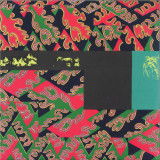
May 28 will see prolific Japanese vibraphonist, multi-percussionist and composer Masayoshi Fujita mark a new sonic direction with his forthcoming album Bird Ambience on Erased Tapes.
Bird Ambience brings several fresh changes for the artist. Until now, Fujita would separate his acoustic solo recordings from the electronic dub under his El Fog alias and experimental improvisations with contemporaries such as Jan Jelinek, Bird Ambience sees him unite all of these different sides to his work for the first time, into one singular vision. He also makes a lateral leap from his signature instrument the vibraphone, on which he created his acclaimed triptych Stories (2012), Apologues (2015) and Book of Life (2018), to the marimba, which takes centre stage on his new album alongside drums, percussion, synths, effectors and tape recorder.
“The way of playing the marimba is similar to the vibraphone, so it was kind of a natural development for me and easier to start with, yet it sounds very different”, explains Masayoshi. “The marimba bars are made with wood and it has a wider range than the vibraphone, which gives me a bigger sound palette with more possibilities. I play the instrument with bows and mallets, and sometimes manipulate it with effects.”
Bird Ambience also marks his liberation from fastidious preparation for past solo releases to new endeavours in improvisation. “I prioritised trying to capture the wonder which happens during those occasional magic improv moments. Sometimes the mic-ing and placement of instruments was pretty rough; things weren’t perfect and everything was done quickly, but it turned out as the final recording. Overall when I
couldn’t decide between two takes, I told myself to go with the first”, Masayoshi recalls.
Arranged with a perfect Kanso-like balance, the unhurried pace of Bird Ambience allows each sound and phrase enough time to be mindfully absorbed and savoured. This subtle but affective work carries ethereal remnants of Midori Takada’s minimalism, the static atmospheres of Mika Vainio, To Rococo Rot’s organics and the bucolic electronics of Minotaur Shock. Fujita vaporises contemporary and classical, ambient and dismantled dub, controlled noise and fragments of jazz into an atmospheric, static mist, which he skilfully coerces into new forms.
After 13 years in Berlin, Masayoshi recently relocated to a new home and studio in the rural Japanese mountain village of Kami-cho, Hyogo, following his life-long dream of creating music in nature. Even though the album was entirely recorded in Germany before he left, it has this palpable sense of reverie found in the natural world. From there we can only imagine the kind of impact his new life in rural West Japan will have on future works.
Search:minimal man
HIDE are an electronic duo based in Chicago. The pair create dark and heavy sample - based compositions using a combination of self - sourced field recordings and various pop culture and media references. Their music is textured, minimal, and powerful, giving raw vulnerability an opportunity to unfurl. Their work is honest, confrontational, powerful and thought - provoking.
HIDE's third album, Interior Terror further abandons traditional concepts of song structure in favor of splintered rhythms and fevered, immediate release. Expanding on previous themes of autonomy and empowerment, Interior Terror addresses and questions the corporeal and immaterial body in a physical and metaphysical sense. Turning to the dread inside, reflecting on the world around us,
HIDE gives voice to the power of destruction as a c atalyst for hope, and to the collective experiences of those who've come before us as a wellspring of our own power. Raw vocal delivery of mantra - like prose issued forth yields a raging, plaintive wail that lulls, mocks, questions, proclaims and decries. A dearth of collected field recordings give way to more fluid arrangements while retaining a scathing urgency. The result is minimal, spacious, and jarring; a distant knocking grown into the pulse of a hypnotic dirge, drones emerge from shards of decomposed sound, bending, seething their way through your body.
"Do Not Bow down" is a self - directed spell for fire and regeneration. “Nightmare” explodes, unrelenting; conflating time and space to the beat of repeated blows to the head. A reflection on perpetual suffering, generational traumas and the transformative action of release. Title track “Interior Terror” belies a new brand of body horror informed by the systemic enforcement of a contemporary Western gender binary, touching on experiences of dysphoria and disassociation . “Fear” answers the question 'Where do cops come from
HIDE are an electronic duo based in Chicago. The pair create dark and heavy sample - based compositions using a combination of self - sourced field recordings and various pop culture and media references. Their music is textured, minimal, and powerful, giving raw vulnerability an opportunity to unfurl. Their work is honest, confrontational, powerful and thought - provoking.
HIDE's third album, Interior Terror further abandons traditional concepts of song structure in favor of splintered rhythms and fevered, immediate release. Expanding on previous themes of autonomy and empowerment, Interior Terror addresses and questions the corporeal and immaterial body in a physical and metaphysical sense. Turning to the dread inside, reflecting on the world around us,
HIDE gives voice to the power of destruction as a c atalyst for hope, and to the collective experiences of those who've come before us as a wellspring of our own power. Raw vocal delivery of mantra - like prose issued forth yields a raging, plaintive wail that lulls, mocks, questions, proclaims and decries. A dearth of collected field recordings give way to more fluid arrangements while retaining a scathing urgency. The result is minimal, spacious, and jarring; a distant knocking grown into the pulse of a hypnotic dirge, drones emerge from shards of decomposed sound, bending, seething their way through your body.
"Do Not Bow down" is a self - directed spell for fire and regeneration. “Nightmare” explodes, unrelenting; conflating time and space to the beat of repeated blows to the head. A reflection on perpetual suffering, generational traumas and the transformative action of release. Title track “Interior Terror” belies a new brand of body horror informed by the systemic enforcement of a contemporary Western gender binary, touching on experiences of dysphoria and disassociation . “Fear” answers the question 'Where do cops come from
The idea for the album came in summer 2020. At first I only played around on my piano for myself. More and more ideas came up and I started to take recordings. After producing electronic music for more than 20 years and publishing it under different names, the corona pandemic slowed life down. No more gigs, clubs closed, festivals
canceled. For me the chance to try new things and find a new way to make music.
Without the club context, I was free in my mind. Making music right out of myself was a liberating feeling. I could do what had been dormant in me for a long time. There were attempts now and then, but in the end I couldn't get rid of the feeling of always
doing techno. Nice too, but not everything for me.
Many inspirations of my music come from artists such as Nils Frahm, Ólafur Arnalds, Yann Tiersen, Martin Kohlstedt, Poppy Ackroyd and many others, as well as nature, forest and city noises. And often from the instruments themselves.
I switched my setup in the studio from the electronic to a minimalist instrument setup, just piano, double bass and a Moog synthesizer. I also like the background noise that comes from an instrument, like the hammers and dampers on the piano, the fingerboard and bow noises of the double bass. So I tried a lot of recording
techniques and microphones until I found the sound I was looking for.
After a few recordings, a number of pieces came together that went well together. I decided to finish it as an album. Some of them are one-takes with the associated imperfections, others are recorded and arranged layer by layer in the studio. I also used field recordings. A warm summer rain was the starting point for "Rain".
The album will be released in May 2021 as a limited vinyl edition and digitally on my newly founded label "Feldeffekt".
Folk-minimalists announce vinyl issue for breakthrough album, Animalia.
"The semi-classical drums/sax/piano trio Mammal Hands mutate into a high-volume rave act" The Guardian
Captivating, ethereal and majestic, Mammal Hands (saxophonist Jordan Smart, pianist Nick Smart and drummer and percussionist Jesse Barrett) has carved out a refreshingly original sound from adisparatearray of influences: drawing on spiritual jazz, north Indian, folk and classical music to create something inimitably their own.
Hailing from Norwich, one of Britain's most isolated and most easterly cities, they have forged their own path away from the musical mainstream and their unique sound grew out of long improvised rehearsals. All three members contribute equally to the writing process: one that favours the creation of a powerful group dynamic over individual solos. Their recordsare entrancing and beautiful affairs,while their hypnotic live shows have seen them hailed as one of the most exciting bands in Europe as they push their unique line-up to the outer limits of its possibilities.
Over the course of three albums, Animalia, Floa and Shadow Work they have built a committed following and established themselves as one of the finest live bands in Europe. But while Floa and Shadow Work were both issued on vinyl this is the first time that Animalia has been committed to wax.
Produced by Matthew Halsall and recorded at 80 Hertz Studio, in Manchester, and engineered by George Atkins, Animalia features the band breakthrough hits Mansions of Million Years, a slow building tune that takes it's name from Egyptian mythology and draws the listener into the band's distinctive sound world. And the gorgeous hooky Kandaiki which makes stunning use of looped melodies in different time signatures, creating a wonderful interplay between the parts.
Other highlights include Snow Bough a short, melancholic, but moving, ambient composition, the Irish folk music inspired Spinning the Wheel, which also features drum beats inspired by chopped up electronic drum patterns and hip hop instrumentals. The jaunty Bustle and delightful Inuit Party and Street Sweeper. Finally the album closes with Tiny Crumb, which explores melodic ideas inspired by Alice Coltrane and Joe Henderson and builds in intensity from a quiet start to a powerful collective improvisation and heavily features Jesse's Tabla.
A fresh and open music, delicate and space-conscious, is shaped as
drummer Thomas Stronen and Ayumi Tanaka, previously heard in the
ensemble Time Is A Blind Guide on ‘Lucus’, resurface in a new trio with clarinettist/singer/percussionist Marthe Lea.
The group first came together at Oslo’s Royal Academy of Music, where for two years the players would meet each week for exploratory music making.
Stronen: “We always played freely- drifting between elements of contemporary classical music, folk music, jazz, whatever we were inspired by. Sometimes the music was very quiet and minimalistic: playing together generated some special experiences.”
The spontaneous spirit of the music is reflected in the trio’s debut recording, which was made at the Lugano radio studio and produced by Manfred Eicher.
With the exception of the title piece, based on a traditional Norwegian tune, the music on Bayou was collectively created in the moment.
Silent Room, the duo formed by Enzo Carniel and Filippo Vignato is a conversation.
Between the piano of the first and the trombone of the second, two living forces of the
European jazz scene; between France and Italy; between acoustics and electronics. A
patient dialogue initiated on the benches of the conservatory in Paris, which was nourished
by the music of German trombonist Albert Mangelsdorff (to whom the duo paid homage for a
concert at the Cité des Arts in 2014), musical moments shared as a group (Enzo Carniel's
sextet at the Jazz à la Villette festival in particular) and in pairs - for numerous concerts
given on both sides of the Alps - before perfecting their common grammar, giving birth to
their own repertoire, creating their own space.
This first album, Aria, released on the Franco-Japanese label MENACE, was recorded in the
setting of the Villa Cicaletto in Tuscany, whose Silent Room the duo made their own in
September 2019. Carniel had just released Wallsdown, the third elegiac disc of his House of
Echo project (Jazz & People, 2020) and Vignato of an intense live duo recorded with
American cellist Hank Roberts (Ghost Dance, on CamJazz in 2019).
The album is carried by simple melodies, tenuous threads on which the two improvisers who
have slowly got to know each other crisscross and let their voices express themselves. Aria
can refer to the opening of Bach's Goldberg variations, to sung opera arias, but above all to
any expressive melody that develops the imagination. Aria is also the air in Italian: the air
that comes from the breath, the air that fills the room, the air that vibrates and is transformed
into sound. The repertoire is therefore this collection of Arias composed by Enzo Carniel and
Filippo Vignato.
If the duo advocates with this album its jazz heritage - that of improvisation and
conversation, of freedom and virtuosity - and claims to be Carla and Paul Bley, Keith Jarrett,
Gary Valente, Albert Mangelsdorff, Ornette Coleman or John Surman; it also explores the
contemporary colors of electronic music, ambient and Japanese minimalism. The use of the
prepared piano, Fender Rhodes and synthesizers colors the sound space of the acoustic
piano and trombone. The eponymous composition that opens the album in acoustic, closes
it in an electronic version, illuminating the path of the duo between the two universes.
In the almost plant-like composition "In All Nilautpaula", Enzo Carniel evokes the water lily
(in Sanskrit) coming to purify the water around him. On "Babele", Filippo Vignato invokes the
great question of language: thanks to Arias, and therefore melodies, language becomes
universal through music, and only the sensory experience counts.
Born from Carniel and Vignato's desire to create a sound space that would be filled with as
many melodies as silence, a place for listening, dialogue and meditation, Aria is one of those
rare records that contain entire worlds.
Five years after the release of ‘Pressure Loss’ the modern master of electronic minimalism Nicola Ratti returns to Where To Now? in collaboration with Japanese MC ‘MA’, for a suite of submerged, outsider Trip-Hop.
‘Shinkai’ meets at the crossroads of the gloomy sonic snapshot world of Tricky, the South London DIY avant pop bloom of Curl/Mica Levi, the outer fringes of Hip-Hop heralded by the Anticon crew, and the deep textured minimalism of Machinfabriek.
‘Shinkai’ heralds the first time Nicola Ratti has worked with a vocalist, and MA’s unique brand of ritualistic vocal methods and experimental approaches to intonation and inflexion only enhances Ratti’s otherworldly soundscapes. The depth of meaning behind MA’s lyrics further expands this sprawling sound world, revealing a twisted beauty, a deep insight into the melancholic world MA reflects upon within his abstract wordplay – on ‘Suiso’ MA laments above Ratti’s mourning electronics….
“A ship with the wind in the sails erased a path to the skies.
Gone forever,
In sandy finality,
A scene never to be repeated,
Never to be understood.
Never to hatch,
Dreams of never continuing beyond the crossroads
A painting dissipates as the allure runs dry
Without consulting the dusk, dawn never arrives.
Agonising over the silence brought on by a stumble,
Attacked from all angles until I find my ground once more.
What comes next does not matter - just as long as it comes.
A not-so-distant-future, born from certain uncertainty.
Let me face it with wavering reservations,
Bury me in it
My sins left unanswered
Cover the snow on which it falls.
An unthawing aquarium.
An unanswering aquarium.
Hiding, evolving, recollecting, transferring,
A precarious contradiction befalls.
Timeframes cut, edited and replaced with resentment
The ritual aesthetics of a secret ceremony.
The thoughts of once again,
Fills me with dread and rage.
Painted in blood.
Alas, it was fun...”
On the surface this is an unlikely (yet inspired) collaboration – MA has been a part of the Tokyo Hip-Hop underground for many years, over which time he has stylistically leapt into noisier, more experimental territories. We have Rabih Beaini to thank for shining a light on MA’s talents, with the 2019 LP ‘AMA’ being released on Morphine records, and Beaini opening new doors for experimentation and collaboration.
‘Shinkai’ was composed and recorded between January and April 2020. The pair had met a couple of times in Japan first and then in Europe, undertaking a live collaborative experiment combining sounds and words that had not been designed to be performed together, ‘Shinkai’ reflects the fluidity of this encounter and is in essence a consequence of it.
Ratti assigns the following poetic grounding to the intentions and thematic form of the album – “Shinkai means deep sea, a place most of us will never see except on the surface. The sea depths do not belong to us, they are not places for us, we do not know them and they disturb us, they are a material that we can look at without seeing. I have always thought that height, verticality in general, was not a familiar dimension except in relation to our physicality. The horizon reassures us, the depth disturbs us. The Italian language is written and read horizontally, from left to right, the Japanese language can be written vertically and read from right to left. Does the horizon still reassure us?”
- A1: Bonnie
- A2: Violet
- A3: Polly
- A4: Celeste
- A5: Melody
- A6: Alice
- A7: June
- A8: Odette
- B1: Vivian
- B2: Marcy
- B3: Jude
- B4: Sabine
- B5: Isla
- B6: Claudia
- B7: Jane
- B8: Christine
Blue Chemise documents the hermetic soundworld of Australia's Mark Gomes. 'Daughters of Time' follows 2017's brilliant full-length 'Influence on Dusk,' released in micro-edition on Gomes' own Greedy Ventilator imprint. It is an elegiac set of vignettes recorded straight to dictaphone with minimal post-production. These pieces function in a manner akin to Loren Connor's evocative 'airs,' conjuring poignant, intangible senses of longing and nostalgia then disappearing well before overstaying their welcome. Regarding their genesis, Gomes points to a quote from Australian artist Robert Hunter: "It's like I'm external to them. They develop their own assertion and character; their becoming finished is a thing they decide themselves. It's unexplainable."
Erstpressung auf "Red, White & Blue hi-melt on clear" Vinyl! Das japanische Quartett CHAI veröffentlicht mit "Wink" ihr drittes Album und ihr erstes für Sub Pop. Es enthält CHAIs sanfteste und minimalistischste Musik, aber auch ihr mit Abstand bewegendstes und aufregendstes Songwriting. "Wink" ist zudem ein extrem passender Titel: eine subtile, aber kühne Geste. Ein Zwinkern ist ein unbefangener Akt der Überzeugung. CHAI besteht aus den eineiigen Zwillingen Mana (Gesang und Keyboard) und Kana (Gitarre), Schlagzeugerin Yuna und Yuuki. Nach der Veröffentlichung von "Punk" im Jahr 2019 führten CHAIs Abenteuer sie rund um die Welt, sie spielten ihre hochenergetischen und beschwingten Shows auf Musikfestivals wie Primavera Sound und Pitchfork Music Festival und tourten mit Indie-Rock-Größen wie Whitney und Mac Demarco. Wie alle Musiker waren CHAI im Jahr 2020 gezwungen, die Struktur ihrer Arbeit und ihres Lebens zu überdenken. CHAI nahmen dies als Gelegenheit, ihren Arbeits-Prozess durchzuschütteln und ihre Musik an einen aufregend neuen Ort zu bringen. Hatten CHAI zuvor ihre maximalistischen Aufnahmen genutzt, um die Ausgelassenheit ihrer Liveshows einzufangen und die Reaktionen des Publikums im Auge zu behalten, konzentrierten sie sich nun darauf, die etwas subtileren und introspektiveren Arten von Songs zu entwickeln, die sie gerne zu Hause hören - wo sie zum ersten Mal die gesamte Musik aufgenommen haben. Inmitten des globalen Shutdowns arbeiteten CHAI quasi als Garage-Band und tauschten ihre Songideen - für die sie mehr Zeit als je zuvor hatten - über Zoom und Telefonanrufe aus, wobei sie ihre Einschränkungen in eine Stärke verwandelten. Während sich die Band an einen persönlicheren Sound anlehnte, ist "Wink" auch das erste CHAI-Album mit Beiträgen von externen Produzenten (Mndsgn, YMCK) sowie einem Feature des Chicagoer Rappers und Sängers Ric Wilson. CHAI ziehen R&B und HipHop in ihre Mischung aus Dance-Punk und Pop-Rock, während sie unbestreitbar CHAI bleiben. Ob in Bezug auf diesen neu entdeckten Sinn für Offenheit oder ihre Art, zu Hause zu komponieren, das Thema von "Wink" ist, sich selbst herauszufordern.
Advanced Nature is the second offering from Chicago’s indy electronic label Tres Dias. Completed during a global pandemic this project for Michael Fabiano and Juanne had been a long time coming. The two artists had spoken about wanting to release a record together after years of working side by side in Chicago’s underground music scene. So with the time available during the wildest year in modern history they succeeded in creating a life during wartime record. With hints of industrial, ebm, acid and techno fueling the record. The two aimed to thrust back a bold tapestry of sounds. From sonic visions of a dystopian future to shamenistic prayer infused house. The two managed to flush out a record that has a raw juxtaposition that's grounded in a solid foundation. Chicago based producer Michael Fabiano debuts with the slinking, somber industrial sounds of Aesthetic Existence. Plastic Process wades into warehouse territory with its swirling, hypnotic synth lines and brooding bassline. Juanne continues with Before Midnight, a static charged minimal acid track that stabs and reaches out for more. Finally Juanne ends with Design Your Drugs, a strictly dark room magic piece that unleashes ritualistic vocals and a raging bassline that doesn't hold back.
Olafur Arnalds' highly anticipated second full-length album '...and they have escaped the weight of darkness', continues his mission to lure an indie-generation of pop and rock fans into an emotive world of beguiling electronic chamber music and delicate classical arrangements. The sense of an organic crossover recording is reinforced by the involvement of co-producer Bar?i J?hannsson of eccentric pop/rock/electronica-formation Bang Gang. Bar?i has successfully coloured the brittle minimalism of previous releases through the addition of an array of new instruments.
Those expecting a mere continuation of the minimal melancholia of his previous albums are therefore in for a surprise, as the record may be the most uplifting and richly orchestrated work of his career: "The album has a very clear theme", Arnalds relates, "which is that there is always light after darkness. To me, it has a more positive note than my previous works." When ?lafur saw how the opening scene of a Hungarian indie film metaphorically described a solar eclipse, he instantly connected it to the concept, naming the album after a key line of the film's introductory monologue. Staying true to this positive note, '...and they have escaped the weight of darkness' will herald another intense year for ?lafur Arnalds, with the album being accompanied by a world tour, starting in China in March 2010.
Born in the suburban Icelandic town of Mosfellsb?r, a few kilometres outside of Reykjav?k, the 23-year old composer has always enjoyed pushing boundaries with both his studio work and his live-shows. His new opus is set to again challenge his fan base, which is still growing rapidly. Over the past eighteen months Arnalds has advanced from a former support-act for Sigur R?s to an internationally respected artists in his own right. He was privileged to be invited to write the 'Dyad 1909' score for award-winning choreographer Wayne McGregor, aired on BBC Four and on ITV1's South Bank Show. 'Found Songs', a collection of pieces each written, recorded and released in a single day via the Erased Tapes label website, as well as the video for 'Lj?si?' have since managed to generate half a million downloads and video views.
In many ways, the new record is clearly inspired and informed by these events. Several of the pieces were, in fact, written on and off throughout his tour and benefit directly from the intensity of the live situation and the emotional roller-coaster-ride of life on the road: "The first half of 'Gleypa okkur' was written in a sound check in Munich, for example", Arnalds relates, "while the second part was scored in Braunschweig, Germany." On the other hand it is the result of meticulous studio work, of refining compositions in close co operation with compatriot Bar?i Johannsson, known for his eccentric personality and unique electro-acoustic sound: "I definitely wanted to do something a bit different this time, something more. Working with a producer was a part of that." The enthusiasm translates to arrangements displaying a new sense of sonic diversity.
?lafur Arnalds has created an even more open and spacious sound and taken his distinct style to a new level. Compared to his previous works, '...and they have escaped the weight of darkness' makes use of diverse instrumentation ? drums, guitars, voice, Rhodes, a selection of subtle synthesisers, alongside Arnalds' trademark piano as well as Tony Levin on bass. Traditional terminologies become void on his latest offering, which blends contrasting elements into an original, entirely organic new language and a sensitive ballet of the mind.
Arnalds fusion of 21st century electronics and classical vocabulary thereby continues to decisively unwrap the sealed-off world of classical music.
On “Skeleton Elevator”, a hair-tingling, spine-popping, ribcage-rattling slab of twisted tundra boogie, Finland’s Cosmo Jones Beat Machine have their bony fingers on the global pulse of underground rock’n’roll, invoking the spirits of Beefheart, the Fall and Funkadelic. Cosmo Jones Beat Machine have a history that spans over two decades and starts in the woods and the wild in eastern Finland. Over the years the band have lived through five album releases, countless lineup changes and furious live appearances around Scandinavia and Europe that have brought the band a minor cult following. Skeleton Elevator is their sixth album altogether and the first in six years. The six years spent in cultivating the album now at hand have further tempered the band’s trademark sound, which is comprised of primitive but captivating rhythms and a terrifying racket. The vocalist Pharaoh Pirttikangas’ trademark raspy delivery, which has deepened over the years, weaves stories dug up from the Mississippi Delta in the pale moonlight and distilled through an eastern Finnish swamp. The new album’s Beefheartian clatter is at times spiced with influences from unexpected directions such as disco (Minimal Brain Dysfunction Generation) and Funkadelic-style space funk (Transformed). The band recorded the bulk of the album during a 24-hour session without sleep, which only adds to the record’s pleasantly unpolished, frantic edge.
Clear Vinyl
Post-minimalist American composer Rafael Anton Irisarri makes his Umor Rex debut with his new album, The Shameless Years. Inspired by a troubled socio-political climate, buried melodies punch their way through a bleak cover of noisy drones, periodically veering into some of Irisarri's most eerily pertinent music to date.
One of Rafael Anton Irisarri's most thematically and sonically cohesive records to date The Shameless Years came together in a relatively short burst of creativity starting at the end of 2016. Rediscovering some relatively older tools - namely Native Instruments' Reaktor, Absynth, and Kontakt software - Irisarri combined them with his collection of guitars, pedals, amps, and analogue processing gear, turning his Black Knoll Studio north of NYC into a powerful writing tool. Completed quickly by Irisarri's standards, let alone during a period of social upheaval in American society, the record faces down several key personal themes. The title, suggests Irisarri, could in fact be seen as a reflection of the era of shamelessness we're currently living in, a time of fake news and alternative facts.
Two tracks were completely remotely between Irisarri in New York and Umor Rex veteran Siavash Amini from his home in Tehran, Iran. This music came together at the peak of all the anti-Muslim and anti-immigrant rhetoric happening in the USA, not to mention the banning of Iranians from entering the country, explains Irisarri. The diptych with Amini, 'Karma Krama' and 'The Faithless', seems bathed in additional waves of sorrow and dread. The wash of symphonic stormclouds of synth drones and processed notes on the latter gradually appears and disappears over the course of thirteen mournful minutes.
'Rh Negative' marches gigantic guitars through towering valleys of scarred ambient noise dealing with Irisarri's own heritage, many of his ancestors having come to America to escape poverty and oppression. The refusal of modern America to extend similar sanctuary to refugees escaping turmoil weighs heavily on the composer. Elsewhere an emotional onslaught of notes buried in mounds of greyscale noise on 'Sky Burial' aims to deal with Irisarri's very own mortality - something he was recently confronted with following health scares, an accident, and a near-death experience in 2016. Pushing 40 as this album was being made, the composer is constantly aware that he's already outlived his own father, who died at the age of 32. Facing down both intolerance and the void, the epic soundscapes of The Shameless Years are a vast cry of emotion from Irisarri. The clock is ticking - gotta make the most out of it while you still can.
All songs written and performed by Rafael Anton Irisarri, except #5 & #6 written and performed with Siavash Amini. Design by Daniel Castrejón, photos by Camilo Christen. Mastered by James Plotkin.
- 1: Bat-Yam - Minimal Compact
- 2: Too Many Of Them - Minimal Compact
- 3: Immer Vorbei - Minimal Compact
- 4: Animal Killers - Minimal Compact
- 5: Aç La Recherche De B. - Benjamin Lew
- 6: Scratch Holiday - Aksak Maboul
- 7: Odessa - Aksak Maboul
- 8: Chez Les Futuristes Russes - Aksak Maboul
- 9: Ossip Et Lili - Aksak Maboul
- 10: Lili Danse - Aksak Maboul
- 11: Retour Chez Les Futuristes - Aksak Maboul
- 12: Mort De Velimir - Aksak Maboul
- 13: Fanfare - Tuxedomoon
- 14: No One Expects The Spanish Inquisition - Tuxedomoon
- 15: Driving To Verdun - Tuxedomoon
Crammed's legendary MADE TO MEASURE Series of New Music was described at the time as the aural equivalent of a collection of art books. Charting a map of some of the most interesting instrumental music of the era, thirty-five albums came out between 1983 and 1995, including works by artists such as Hector Zazou, John Lurie (his soundtracks for the Jim Jarmusch films), Fred Frith, Arto Lindsay, Zelwer, Steven Brown, Peter Principle, Harold Budd, Brion Gysin, David Cunningham, Benjamin Lew, Ramuntcho Matta, Karl Biscuit, Daniel Schell, Aksak Maboul, Minimal Compact and more. The loose idea behind the title of the series was: this is music which has been or could have been "made to measure" as a soundtrack for other media (film, theatre, dance, video). We'll also be rolling out selected vinyl reissues of some of the series' classic early releases, starting with the inaugural volume, MADE TO MEASURE VOL. 1, the multi-artist album from 1984, containing music created by Minimal Compact, Benjamin Lew, Aksak Maboul and Tuxedomoon for films, theatre plays and dance performances.
Minimal Wave presents ‘Recordings 1980-1982’ (MW077), a triple 7” box set by pioneering south Florida synth-punk band Futurisk, in honor of their 40th anniversary. Founded by Jeremy Kolosine in 1978, Futurisk recorded many songs and performed live throughout the early 1980s. Though they had released two 7”s that sold out, had a legendary live show, and even some videos, by 1984 Futurisk was history. Eventually, the main core of Futurisk would be the Jeremy Kolosine, Richard Hess, and Jack Howard line-up though much happened leading up to this point.
In 1979, the teenage Jeremy Kolosine won studio time and money in a competition with his drum-machine-triggered guitar-synth act called ‘Clark Humphrey & Futurisk’. He decided to form a band around the name to record a more punk release titled The Sound of Futurism 1980 / Army Now. It was an ambivalent anti-war anthem with Jack Howard on drums, Frank Lardino on synth, and Kolosine on vocals and guitar synth. Many live shows ensued with the line-up which included Jeff Marcus on bass and Vinnie Scrimenti on drums but in 1981 a rift between the band caused them to part ways. They continued for a bit as ‘Radio Berlin’ (no relation to the Vancouver act) and Kolosine, who had gotten absorbed in a new analog synthesizer with sequencer continued as Futurisk.
He recruited synthesist and recording engineer Richard Hess who had a myriad collection of Moogs, Oberhieims, and CATs. Jack Howard returned on drums and syn-drums and the lineup for the Player Piano EP was cast. The EP, like the live show, was a strange blend of punk, minimalist, and disco-influenced electro-pop, with drum machine triggered synths and often frantic real drums all led by Kolosine’s schizophrenic Bowie / Ferry / Foxx adulations. It was recorded by Richard Hess and the band in the rooms of a friend’s house. The drum sound, recorded in a bathroom, rocks, even today. Reportedly, Futurisk may have been the first synth-punk band in the American South, and their 1981 track ‘Push Me Pull You (Pt. 2)’ was an early pre- ‘Rockit’ excursion into electro-funk.
The ‘Recordings 1980-1982’ box set includes three 7”s, an Army Now (1982) Flexi 5” x 7” postcard, and a 16-page full-color booklet featuring unpublished photographs of the band, the history of the band, and an interview with founder Jeremy Kolosine. The three 7”s are The Sound of Futurism 1980 / Army Now which includes an unreleased track from the same session, the Player Piano five-song 7” EP from 1982, and the Ocean Sound 7”, which has not been released in this format until now. All three 7”s are remastered, pressed on heavyweight 70-gram vinyl, and housed in heavy color printed matte sleeves featuring the band’s original artwork. The box is case wrapped and depicts an early illustration of the band printed in black on white with a spot gloss. Limited edition of 600 copies.
Rich in musical associations yet utterly singular in its voice, joyous with an inner tranquility, the music of Natural Information Society is unlike any other being made today. Their sixth album in eleven years for eremite records, descension (Out of Our Constrictions) is the first to be recorded live, featuring a set from London’s Cafe OTO with veteran English free-improv great Evan Parker, & the first to feature just one extended composition. The 75-minute performance, inspired by the galvanizing presence of Parker, is a sustained bacchanalia of collective ecstasy. You could call it their party album.
This was the second time Parker played with NIS. Joshua Abrams: “Both times we played compositions with Evan in mind. I don’t tell Evan anything. He’s a free agent.”
The music is focused & malleable, energized & even-keeled, drawing on concepts of ensemble playing common to musics from many locations & eras without any one specific aesthetic realization completely defining it.
“The rhythms that Mikel plays are not an exact reference to Chicago house, but that’s in there,” Abrams says. “I like to take a cyclic view of music history, can we take that four-on-the-floor, & consider how it connects to swing-era music? Can we articulate a through line? I dee-jayed for years in Chicago & lessons I learned from playing records for dancing inform how I think about the group’s music. The listener can make connections to aspects of soul music, electronic music, minimalism, traditional folk musics, & other musics of the diaspora as well. It’s about these aspects coming together. I don’t need to mimic something, I need to embody it to get to the spirit, to get to the living thing.”
For jazz fans, the sound of Parker’s soprano & Jason Stein’s bass clarinet might evoke Coltrane & Dolphy, even though they didn’t necessarily set out to do that & they play with complete individuality. Abrams sees a bridge to the historical precedent, too. “Since we first met in the 1990s, one of the things that Evan and I connected on was Coltrane’s music,” he says. “I hoped that we would tap into that sound world intuitively. In this case, I think that level of evocation adds another layer of depth, versus a layer of reference.”
Indeed, this is a performance in which the connections among the ensemble & the creative tension between improvisation and composition build into a complex mesh of associations & interactions. While the band confines itself to the territory mapped out by Abrams’ composition, they are remarkably attentive & responsive, making adjustments to Parker’s improvisations. When Parker’s intricate patterns of notes interweave with the band, the parts reinforce one another & the music rockets upward. Sometimes, Parker’s lines are cradled by the group’s gentle pulse & an unearthly lyrical balance is struck.
Drummer Mikel Patrick Avery is locked-in, playing with hellacious long-form discipline, feel & responsiveness. Jason Stein’s animated, vocalized bass clarinet weaves in & out with Lisa Alvarado’s harmonium to state the piece’s thematic material; the pulsing tremolo on the harmonium brings a Spacemen 3 vibe to the party. Abrams ties together melody & rhythm on guimbri, a presence that leads without seeming to. Like his bandmates, he shifts modes of playing frequently, improvising & then returning to the composed structure.
“As specific as the composition is, the goal is to internalize it & mix it up,” Abrams says. “The idea is to get so comfortable that we can make spontaneous changes, find new routes of activity, stasis & byways every gig. It’s like a web we’re spinning. If someone makes a move, we all aim to be aware of it, make room for it. Experiencing & listening is what it’s about, & Evan supercharges that.”
& “supercharged” is the word for this album. With Parker further opening up their music, descension (Out of Our Constrictions) is the sound of Natural Information Society growing both more disciplined and freer, one of the great bands of its time on a deep run.
Aguirre edition: Mastered by Helge Sten, Audio Virus, Oslo. Lacquers by Dubplates & Mastering. Liner Notes by Theaster Gates. LPs pressed on premium audiophile-quality vinyl at Pallas Records. US 2xLP edition available thru Eremite records.
Isasa’s fourth LP is a guitar excursion from a skillful, humble guide. Minimal, contemplative songs, rich in atmosphere and warm in spirit.
Some musicians give their name to their first album, signifying introduction. Some hold it in reserve — it took Wire 39 years to get around to calling an LP Wire. But whenever they do so, they are making a statement. For Conrado Isasa, an acoustic guitarist from Madrid, Spain, the decision to call his fourth album Isasa reflects the fact that his music’s relationship to his own identity has evolved. Isasa presents an artist whose work reflects that he knows and accepts where he comes from.
Between 1993 and 2003, he played electric guitar in the hardcore metal band Down For The Count and the post rock combo, A Room With A View. These were collective statements, communications between small groups and a select underground community. After the latter group’s demise, Isasa stepped back from recording, and for a while from guitar playing as well. He spent some time learning to play the trumpet, but was inspired to return to the guitar in 2007 after he heard Geoff Farina play a Mississippi John Hurt song for the encore of a Glorytellers gig. Then came another period of learning, during which he studied the playing of Hurt, John Fahey, Jack Rose, and Glenn Jones.
Performing as Isasa, he made three records, each of which can be heard as confrontation with an artistic challenge. Las Cosas (2015) is between the man and his acoustic guitar; what could he do with his fingers, a slide, six steel strings, and a box of wood? Los Días (2016) faces the broader issue of how to deal with the requirements of the American Primitive guitar style. Like Fahey, Rose, and Jones, Isasa sought to make an album that used a cohesive sequence of guitar and banjo instrumentals to express personal experiences. With its references to the sights, sounds, and tastes one might encounter in Madrid, it is like a poetic diary written with the distance that comes from having mastered a second language. After making that record, Isasa toured parts of the United States, and played at The Thousand Incarnations Of The Rose, a festival that gathered representatives of American Primitive guitar’s past, present, and future in Takoma Park, the town where the style’s original synthesist, John Fahey, was born. Insilio (2019) began to look beyond that style, dealing with Hindustani raga forms and adding other instrumental textures.
And now comes Isasa. The name suggests something very personal, and it’s true that it draws upon Isasa’s closest relationships. Two compositions are either named for or feature the voices of his children, but their presence helps this music to transcend the purely personal. For what could be more universally shared than the joy and love one feels for children? Others invoke concepts — absence, liberty, love, reunion. They may mean one thing to Isasa, and another thing to you, but by sharing his reactions to them, he invites you to recognize yours. Isasa isn’t just using his experiences to tell you about his life; he is using what he knows about life to help us know a little more about ours.
For it’s 4th release, Melodeum Records embarked on an epic quest in the search of a treasure which has remained hidden in the musical ether for many suns. After months of digging, a hidden gem emerged, a true diamond in the rough, a life form who only goes by the name of Roluce.
Roluce mastered the binding powers of enthralling House with the drawing influence of Minimal rhythms. Every frequency on the Rogustine EP was individually curated to forge this powerful composition. All 4 original tracks have the power to destroy dancefloors and cause mass euphoria - please play with the utmost care.
Support:
Dewalta, Arapu, Sascha Dive, Norm Talley, Herck, Cosmjn, Sublee, Andrea Ferlin, Barbara Preisinger, Pheek, Charliee, Matheiu, Dan Primaru,
Instead of archiving early works from the 1980s, Wah-Wah Whispers focuses on Banabilas more recent output.
It is a collection of works showcasing many facets of his music: a journey visiting the minimal and cinematic sample scape in the opener Take Me There, a robotic reggae-like rhythm (Tic Tac), contemplative ambient / fourth world scenes evolving into a downright funky beat (Hidden Story), the synth version of Secunde, and more. The album ends with a kaleidoscope of atmospheres gradually building up to a noise climax in Narita (the only collaboration track on the album, with Rutger Zuydervelt / Machinefabriek). No single compilation album could really do justice to the massive scope of Banabilas output since 1983, but with Wah-Wah Whispers, Bureau B did a wonderful job to facilitate a view into his more recent work (2013- 2020, with the exception of Tic Tac, which is from 2001). This album is an invitation that may lead to explore Banabilas back catalogue and dive deeper into the work of one of Hollands most creative independent artists.