“BLUE” is a collaborative album between Russian artist Pavel Milyakov and Kyiv-based singer Yana Pavlova. Seven pieces compiled of minimalistic guitar loops, sax (including recordings by Alex Zhang Hungtai), dubby bass guitar and shadowy vocals. Mic noises, clicks and other sonic imperfections are a natural part of these tracks, as they are all composed with the use of random and unpredictable algorithms, purely improvised. Perfect soundtrack for the troubled summer days (and nights).
Search:minimal
Brawther's label has been a pretty global affair to date with artists from all over the world adding their sounds to the mix. This fifth outing welcomes back Croatia's Mariano Mateljan for some more heady tech and minimal excursions. 'Smoke Screen' is pure loopy brilliance with an undulating rhythm made from dry metallic sounds and warmth coming from some odd synth details. 'Exodus' is another airy, smooth sound with dubby low ends and sparse synth details while '2 Overs & A Gutshot' picks things up a little with more glitchy effects and deft sonic abstractions that will make this one perfect tackle for the afters.
Only Music Matters hits release number ten with another anonymous artist serving up a trio of tasteful minimal and tech rollers that have already been supported by Dubfire and Priku. 'AAA001A' is a wicked mix of synthetic and organic sound - a heartfelt male vocal and new age flutes, sci-fi melodies and bubbly drums all coalesce into a hypnotic roller, then 'BBB001B' picks up the pace with a smattering of silvery toms and snares over dubby beats. Last of all, 'BBB002B' brings some colour next to trippy and abstract synths and whispered vocals that are stitched into a silky and ever-evolving rhythm. Classy stuff.
- A1: Orchestre Du Jardin De Guinée Sakhodou
- A2: Orchestre De La Paillote La Guinée Moussolou
- A3: Bembeya Jazz National Guantanamera-Seyni
- A4: Bembeya Jazz National Sabor De Guajira
- B1: Balla Et Ses Balladins Sakhodougou
- B2: Balla Et Ses Balladins Samba
- B3: Orchestre De La Paillote Kankan-Yarabi
- B4: Myriam’s Quintette Solo Quintette
- C1: Pivi & Les Balladins Ka Noutea
- C2: Horoya Band National N’banlassouro
- C3: Orchestre De La Garde Républicaine Sabouya
- C4: Keletigui Et Ses Tambourinis Samakoro
- D1: Keletigui Et Ses Tambourinis Miri Magnin
- D2: 22 Novembre Band Kouma
- D3: Les Frères Diabaté N’fa
On October 2 1958, after over 60 years of colonial rule, Guineans voted overwhelmingly for their independence, and Guinea was declared a Republic with Sékou Touré as President. Guinea was the first of West Africa’s Francophone colonies to gain independence. To free Guinea from its colonial legacy, president Touré sought to restore dignity to his nation and give cause for Guineans to take pride in their culture, history and newfound freedom. To achieve this, he instructed his government to implement new cultural policies that were intended to revitalise and celebrate indigenous culture. The focus of these new policies was on music.
In 1961, President Touré launched authenticité, the name of his new cultural policy for Guinea. One of its first acts was to assemble the best Guinean musicians into a new state-sponsored orchestras that were tasked with presenting traditional Guinean music in a new and modern style. All musicians in Guinea’s orchestras were officially designated as members of the public service. During the years of Sékou Touré’s presidency (1958 – 1984), the government’s cultural policy of authenticité was applied strictly to the creative arts. Guinea’s sole political party, the Parti Démocratique de Guinée exercised complete authority over artistic production. The scale of the Guinean government’s commitment and efforts to invigorate its indigenous musical cultures was unmatched in Africa, and it presented a clear contrast to the minimal endeavours undertaken by Guinea’s former colonial rulers.
From 1967 to 1983, Guinea’s government presented selections of songs from the Voix de la Révolution catalogue on its own recording label, Syliphone. These recordings were described as ‘the fruit of the revolution’. Syliphone was revolutionary in many aspects: it was the first recording label to feature traditional African musical instruments such as the kora and balafon within an orchestre setting; it was the first to present the traditional songs of the griots within an orchestre setting; and it was the first government-sponsored recording label of post-colonial Africa. Syliphone represented authenticité in action, and over 750 songs were released by the recording label on 12-inch and 7-inch vinyl discs. All are highly sought after by collectors worldwide.
This first volume of a two-volume series presents a selection of the best of early Syliphone recordings. The songs demonstrate not only the essence of Guinea’s authenticité policy and of its subsequent Cultural Revolution, but of a confluence of musical styles from Cuba, jazz, highlife and the diverse influences of Guinea’s cultural groups.
Bosom LTD returns with its 12th release, bringing a deep and hypnotic groove to the surface. DubTape delivers stripped-back yet infectious originals that rides the line of minimal finesse.
On remix duties, Direkt reimagines the track with a crisp, driving touch, perfect for late-night dancefloors, while Distilled Noise takes things deeper, twisting the elements into a trippy, heady journey.
BOSLTD012 is a tight package of groove, texture, and dancefloor functionality - a must for selectors digging into the subtleties of minimal sound.
Stepping out of the shadows with refined precision, Saktu returns to Heisenberg with the Fucha EP – a sharp, hypnotic exploration of minimal groove. Sleek rhythms, tactile textures, and playful low-end pressure define this trio of deep, late-night rollers.
Balancing raw functionality with subtle artistry, the Fucha EP captures the essence of what makes Heisenberg a beacon in the modern minimal scene. Crafted for the floor, tested in the booth
Bosom LTD returns with its 12th release, bringing a deep and hypnotic groove to the surface. DubTape delivers stripped-back yet infectious originals that rides the line of minimal finesse.
On remix duties, Direkt reimagines the track with a crisp, driving touch, perfect for late-night dancefloors, while Distilled Noise takes things deeper, twisting the elements into a trippy, heady journey.
BOSLTD012 is a tight package of groove, texture, and dancefloor functionality - a must for selectors digging into the subtleties of minimal sound.
Fletcher heads up the Social Currency label but you may also know him from his superb work with Mosaic boss Steve O'Sullivan. It's no wonder then that he calls up his dub techno buddy for the second outing here. They kick off with 'Flutter' which is a minimal dub masterpiece with light and airy synths, yep, fluttering up top above rooted, rolling drums. Fletcher then goes it alone for 'From A Different Place' which is a little more anxious in its loops but still has gorgeous melodies streaming through the mix. 'This Day Has Been Too' is another fine solo cut that explores insular and inward moods with great deftness.
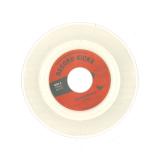
Cinematic funk visionaries The Diasonics drop a new disco-funk 45 vinyl with two killer tracks tailor made for DJs and cinematic funk fans. Only 500 copies pressed wordwide, instant collector's item. From the snowy streets of Moscow to the crates of vinyl diggers worldwide, cinematic instrumental combo The Diasonics unleash a new limited edition clear vinyl 45 with two killer tracks taken from the upcoming new album "Ornithology", set to drop worldwide on October 3 via Record Kicks. On the A side "Oriole" is a vintage disco-funk stormer taking inspiration both from the Soviet-era disco and jazz fusion records, as well as from 70s European library music and synth-funk movement. A minimalist synthesizer melody echoing the song of the oriole, paired with a steady disco-funk groove reminiscent of a train in motion ("Oriole" is also the name of a popular Russian electric train) lay the foundation of their most danceable track to date. The b-side holds the equally strong "Chickadee" a funk stomper with bold bassline and heavy b-boy breaks and percussions and a NY early 80 vibe able to set every dancefloor on fire. A peerless party-starter that you just don't want to miss it. Formed in 2019, this four-piece instrumental unit _ Daniil Lutsenko (electric guitar), Kamil Gazizov (keyboards), Maksim Brusov (bass), and Anton Moskvin (drums & percussion) _ quickly gained cult status through a series of sought-after 45s on Mocambo and Funk Night Records. Their critically acclaimed debut album "Origin of Forms" mixed by Henry Jenkins, producer of the Australian cult band Surprise Chef, came out on Record Kicks in 2022. The vinyl went sold out in few weeks and is now in-demand on the international cinematic funk scene.
veins syncopating under your skin
not knowing how or from where
it washes over us, just that it stretches
light bulbs crashing in a storm slender
waxy petals of a wild plant splitting
gazing at a nocturnal ocean, ill-met by moonlight
this is where you spend your time
the taste of tangy citrus on your tongue
the pounding of familiar tools
sculpting deeper
the echoing of distant futures
in your ears
—
Ramble is the debut LP on vinyl from experimental electronic musician Sebastiano Carghini. An ambient-no-ambient journey, his sound art unfolds like a fractured memory loop—where degraded tape hiss, layered textures, drifting echoes, and minimalist pulses dissolve into a liminal, ever-shifting landscape of sonic perception. It is released by adventurous electronic music label topo2 on July 11, 2025. The record is pressed on 180 grams of ICCS-certified minty-ice colored bio-vinyl, housed in a heavy full-colour sleeve, and comes with a download-code to the full release. Mastering is done by Ike Zwanikken, artwork by courtesy of Tjobo Kho, and poetry written by Eelco Couvreur.
- I'm | Getting Sick
- Evicted | 05 24
- We've | Made It This Far
- Undercurrent
- King | Of Swords
- Omw
- Happy | Is Hard
- Tired
- Keep | Driving
- I'll | Be Here 03 56
Vines, the solo project of New York-based multi-instrumentalist and composer Cassie Wieland, offers a window into her inner world through expansive swaths of sound. She pieces together a celestial mix of synths, percussion, strings, and vocoded voice, making music that is at once deeply personal and cinematic in scope. This diaristic approach first took shape with her 2023 EP Birthday Party, and is crystallized on her debut LP, I’ll be here. With the sweeping and vulnerable I’ll be here, Vines arrives fully formed as an artist who crafts deeply resonant and open music–the kind that invites listeners in to listen, reflect, and share in the journey of learning through living.
“It was through making music that I was able to meet myself,” Wieland said. “Anything I’m going through or feeling is something that somebody else out there can relate to, and that’s really special to me.”
I’ll be here is both a culmination of years spent creating gossamer soundscapes and an opening to a new journey for Wieland as an artist. The album grew out of her years as a composer and songwriter, and builds on the language she developed on Birthday Party, which transformed the tumultuous feelings of the passing of time into minimalist meditations. It was just a start, though–a prologue, a development of the kind of language and ideas she wanted to express. With I’ll be here, she digs deeper and writes music that feels more sprawling, further solidifying her singular voice.
Wieland’s musical composition process is similar to journaling, lending itself to the music’s honesty. When she writes, she makes room for all the ideas she has; in these sessions, there are no wrong ideas, and she allows the music to be attuned to the experiences she’s having at the time. With I’ll be here, Wieland zeroes in on themes of anxiety, loneliness, navigating human connection, and having to grow up from a young age, ultimately coming to a place of acceptance. And though it began as a journal written in solitude, her collaborators shape the music with her.
Working with friends, in fact, was a crucial part of bringing the record to life. “Everything that was supposed to happen came together so easily because of the people involved,” Wieland said. I’ll be here was co-produced and recorded with Wieland’s longtime collaborator Mike Tierney, a four time Grammy-nominated engineer who has worked with artists across the contemporary classical and experimental scene like minimalist pioneer Steve Reich, LA’s preeminent classical ensemble Wild Up, and various bands on Bang on a Can’s Cantaloupe Music label. Percussionist and composer Adam Holmes and violinist Adrianne Munden-Dixon are two other longtime collaborators who are frequent fixtures of her live show. Holmes plays synths, drums, and banjo; in live settings, his kit is loaded with elements of the songs that are then triggered by MIDI, making the music an interactive, evolving experience. The album’s gentle, filamented edges are colored by Munden-Dixon, whose poignant string melodies elevate Wieland’s introspective compositions, as well as cellist Helen Newby, saxophonists Julian Velasco and Jordan Lulloff, and bassist Pat Swoboda.
Wieland takes an economic approach to writing music, building the swirling and immersive landscapes of Vines through short melodies, lyrics, and phrases. As each element layers and interweaves, they grow into sprawling webs of ghostly sound. Prior to Vines, Wieland composed pieces for other people to play using a minimalist’s sensibility, writing slowly unfolding melodies for instruments like violin and saxophone. In recent years, she sharpened her solo style across a variety of singles and covers which have garnered significant attention on social media for their emotional resonance (“being loved isn't the same as being understood” in particular went massively viral on TikTok in 2024). Birthday Party, her debut as Vines, brought her writing to a much more intimate space, centering on her vocoded voice cloaked in feathery reverb. A series of recent singles, meanwhile, including “I am my home,” showcase the way that Wieland’s music is born from the story of her innermost feelings, extending far beyond just the self.
Though Wieland’s music often deals with dark themes, it unfolds with tender melancholy, the kind that feels like a warm embrace. On “Evicted,” Wieland wonders if she’s getting sick or moving on, if she’s lost or found. Her vocals expand with each lyrical repetition, as the instrumentals slowly encircle and the music’s rhythm grows and bursts into a heart-wrenching, yet radiant wave reminiscent of post-rock bands like Explosions in the Sky. “Tired” follows a similar trajectory, building from a looping, melancholy rhythm and floating lyrics into a solemn resignation. Elsewhere, Wieland takes a more ruminative approach: “Omw” begins with twinkling piano and melancholy strings that gradually transform into an undulating mass. It is a song born out of the warm feeling of reminiscence, the slight return of hope that comes with nostalgia.
With any searching journey, there is also a point of understanding. The title track closes the album with the freedom of acceptance. A marching drum beats steadily beneath Wieland’s open vocals, moving forward, ever onward as it flies into the ether. In Wieland’s delicately textured music, there is room to come into yourself, and learn to love whomever that is. I’ll be here is a special space that can be all your own, one in which to feel what needs to be felt. “This is music for your story,” Wieland said. “I want you to use it how you need it.”
The discovery of Doris Dennison's score represents a genuine musicological breakthrough—what once would have been "a tree falling in the woods" thirty years ago now holds the potential to render "a thunderous clap in our minds." While researching Anna Halprin's lesser-known collaborators, scholar Tom Welsh uncovered the archives of AA Leath, one of Halprin's principal dancers. Buried within these materials was Dennison's handwritten score for Earth Interval, dated May 1956. Born in Saskatchewan, Canada, in 1908, and raised near Seattle, Dennison (1908-2009) encountered John Cage while teaching Dalcroze eurythmics at the Cornish College of the Arts. She joined Cage's earliest percussion quartet—alongside Margaret Jansen, the composer and his wife Xenia—in the group widely regarded as having performed the first complete concert of percussion music in the United States. This historic December 1938 concert was followed by tours and the landmark May 1941 performance at the California Club, comprising Cage and Lou Harrison's Double Music, the premiere of Cage's Third Construction, and Harrison's 13th Simfony.
As Bradford Bailey observes in his extensive liner notes, Earth Interval demonstrates "an extraordinary balance of elements that imbues the piece with a sense of clarity, directness, and constraint that is both distinct and ahead of its time." The work's most remarkable innovation lies in its approach to extended techniques, particularly Dennison's notation for the central movement: "In 2nd movement, 1st player lowers + raises a gong into a tub of water while beating." This technique, absorbed from Cage's experimental vocabulary, generates what Bailey describes as "fields of acoustic abstraction that bend and warp time through sustained resonances, beat, and space." The temporal sophistication of these manipulations anticipated Karlheinz Stockhausen's Mikrophonie I (1964) and Annea Lockwood's water-based sound investigations by over a decade. After joining Mills College as dance accompanist, Dennison maintained crucial connections to the Bay Area's experimental scene, collaborating with figures like Merce Cunningham and programming Cage's music throughout the 1950s.
Comprising three movements—Land Form, Air Tide, and Earth Play—Earth Interval is scored for recorder, drums, gongs, maracas, muted gongs, and bowl gongs. In total, the piece is just under eight minutes: "a fleeting glimmer of moment in time, a life spent at the cutting edge, and a singular creative vision that packs a powerful punch." When viewed in historical context, placed in contrast to roughly contemporaneous avant-garde percussion works by Cage, Harrison, Louis Thomas Hardin (Moondog), and Harry Partch, or important precursors like Edgard Varèse's Ionisation (1931) and Henry Cowell's Ostinato Pianissimo (1934), it's clear that Dennison was following her own path. Earth Interval is not derivative. It is a precursor to what was yet to come, alluding to developments of avant-garde and experimental music that wouldn't begin to appear on the cultural landscape until the 1970s and '80s, with the emergence of Post-Minimalism and more idiosyncratic artists and ensembles like Midori Takada, Ros Bandt, Peter Giger, Frank Perry, Christopher Tree, Michael Ranta, Gamelan Son of Lion, and Niagara.
This recording by Chicago's Third Coast Percussion, captured in March 2022, represents the first complete documentation of this pioneering work. The ensemble's interpretation reveals the piece's remarkable contemporaneity while maintaining its historical specificity. Where Cage, Harrison, and Partch employed "self-consciously off-kilter polyrhythms," Dennison's rhythmic sensibility anticipates minimalist developments by nearly a decade, yet integrates "forceful rests, as well as sharp shifts in sonic character, tempo, and meter, that break the momentum and breathe a sense of life into the piece's structure." This positions her work closer to Post-Minimalism decades before its emergence. The architectural approach demonstrates Dennison's understanding that "the composer almost entirely disappears" in favor of phenomenological listening experience, creating what might be called an egoless music that places its realities and meaning entirely in the ear of the beholder. The present recording, realized by Chicago's distinguished Third Coast Percussion ensemble, represents a significant achievement in experimental music scholarship and performance practice. As specialists in the Cage tradition and contemporary percussion repertoire, Third Coast Percussion approached Earth Interval with the historical sensitivity and technical precision required to illuminate Dennison's subtle compositional innovations. The March 2022 recording sessions, engineered by Colin Campbell, capture both the work's intimate chamber music qualities and its bold exploration of extended techniques. The ensemble's interpretation reveals the piece's remarkable contemporaneity—its ability to speak directly to current musical concerns while maintaining its historical specificity.
This recording serves multiple scholarly functions: it provides the first complete documentation of Dennison's compositional voice, offers insight into the broader network of experimental music practitioners surrounding Cage and Harrison, and demonstrates the sophisticated level of compositional thinking that was occurring within the Bay Area's dance-music collaborations of the 1950s. The work's emphasis on phenomenological listening—what might be called an "egoless" approach to musical experience—places it within a lineage of American experimental music that prioritizes perceptual process over compositional personality. The work's original obscurity—limited to AA Leath's performances at venues like the 1957 Pacific Coast Arts Festival at Reed College—paradoxically allowed it to remain "entirely on its own terms," free from the constraints of historical categorization. Drawing on Jacques Derrida's Archive Fever, the argument emerges that "the archive can acknowledge, celebrate, and resurrect" overlooked voices, transforming our understanding of experimental music history. The present Blume edition, featuring Third Coast Percussion's authoritative interpretation, includes a lavishly illustrated 16-page booklet designed by Bruno Stucchi / dinamomilano, containing complete scholarly apparatus, historical photographs, and detailed production notes. This recording enables "cross-temporal intersectionality," allowing Dennison to "belong to a newly formed and more dynamic understanding of the present and past," demonstrating how forgotten voices can reshape entire historical narratives when given proper scholarly attention and performance advocacy.
Vinyl A Coloured Vinyl[20,59 €]
Vinyl B Black Vinyl[12,56 €]
Vinyl B Coloured Vinyl[20,59 €]
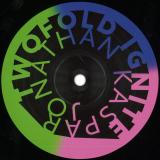
Known for his ability to create captivating, emotionally charged techno, Jonathan Kaspar eventually returns to Cocoon Recordings with his third contribution Twofold Split. One, yet simultaneously two releases that once again showcase his extraordinary talent through condensed techno with a pinch of trance, weaving together driving rhythms and atmospheric textures in a way that feels innovatively progressive.
Drifting hypnotically, this might be the most fitting way to describe what Jonathan Kaspar unfolds before us here. The rolling percussion grooves seamlessly intertwine with the siren's spectral tone, gradually blending into the alchemy of ‘Yah’ as it erupts into the mix. By the time the peak arrives, there’s a raw intensity in the air - the track seems to bend and stretch then drills and twists until it cracks, but never loses its sense of purpose and remainsanchored in its deep, pulsating groove. On the flip side, ‘Silver Lines’ stands as a counterpart, offering a contrast in both sound and atmosphere. With its minimalist arrangement, the track first nestles in gently, lulling the listener into its world—only to tighten its grip as a synth sequence gradually opens its cut-off filter, slicing through the calm, drilling into the mind, and shifting the mood from tranquil to tense.
Vinyl A Black Vinyl[12,56 €]
Vinyl A Coloured Vinyl[20,59 €]
Vinyl B Coloured Vinyl[20,59 €]
Known for his ability to create captivating, emotionally charged techno, Jonathan Kaspar eventually returns to Cocoon Recordings with his third contribution Twofold Split. One, yet simultaneously two releases that once again showcase his extraordinary talent through condensed techno with a pinch of trance, weaving together driving rhythms and atmospheric textures in a way that feels innovatively progressive.
Rooted in a minimalist rhythmic structure, ‘Power’ takes us in a new direction, steadily building momentum as its energy billows upwards, with the intensity never wavering throughout. A large, dented, tinny tuba sounds imposingly as Jonathan blows louder and louder into the old thing, its raw, metallic tone instantly commanding attention. What an explosion in the break, leading us into a wild, almost chaotic energy, before Kaspar’s meticulous attention to detail ensures that the shimmering synths feel perfectly placed, guiding us to the absolute freak-out moment. After all the insanity, Jonathan Kaspar takes us by the hand and leads us into a melodic, trancy after-hours mood with “1993,” bringing a sense of release after the wild ride of the previous tracks. What a successful closing track to this outstanding release. With its melodic trance influences, it offers a soothing, almost nostalgic atmosphere, bringing a sense of calm and closure, a perfect moment of introspection and euphoria as
the EP winds down
Jordan Passmore, an electronic music and sound producer based in Indianapolis, USA, has spent two decades crafting original songs, remixes, and live performances. His work is characterized by the use of both vintage and modern synthesizers and drum machines, creating a unique blend of house, wave, techno, and more.
Over the years, he’s been known for producing finely textured tracks that nod to early electronic traditions while pushing into new terrain.
In his latest release, KEEP IT E.P., Passmore continues to push the boundaries of his sound. This EP features a variety of tracks that range from acid techno to mellow new wave, showcasing his ability to intertwine different genres seamlessly. Each song presents a distinct mood and pacing, reflecting a more experimental approach compared to his previous works.
The EP is a kaleidoscope of styles and moods—an interplay of acid techno grit, minimal wave introspection, and rhythm-driven synthscapes. Each track carries its own personality, from the pulsing tension of “Keep It (Short Version)” to the warped funk of “Wired Access Panel” and the dreamy, cinematic sway of “Angelica and Persephone.”
KEEP IT keeps a listener in motion, in thought, and in rhythm.
Salamanda is the collaborative alias of South Korean producer/DJ duo, and close friends, Uman Therma (Sala) and Yetsuby (Manda). Together they create avant-garde electronic music inspired by minimalist concepts, harmonious rhythms and the work of American composer Steve Reich.
Across the eight tracks of Sphere, their debut for Small Méasures, the pair conjure spherical worlds inspired by bubbles, refracting light and planet earth. Soundscapes laden with percussive elements ebb and flow as arpeggiated stanzas cede to misty synths and shimmering plates, conjuring images of solitary temples sat in vast open plateaus.
“For Sphere, we came up with an abstract concept and image to explore more diversity and encourage imagination. Each track is related to different kinds of sphere we found or imagined. From the big round planet embracing every creature to dancing little bubbles underwater, fragments of ideas floating around, exploding tomatoes, and movement of lights flashing and tickling the eyes…
Or the tracks can be about completely different types of spheres in other people's perspective. We hope Sphere can unleash the imagination and take you on a delightful journey of music.’’
- A1: The Toast (Intro)
- A2: Wedding Bands Ft. Dj Eclipse
- A3: Barrel
- A4: Fistful
- A5: Ramu$ Ft. The Musalini
- B1: Project City
- B2: We Outside Ft. Maf & B.a. Badd
- B3: Type Time
- B4: Affidavit
Two titans of the underground link up for a sharp, cinematic journey through the realities of street life, loyalty, and legacy. On Checks & Balances, veteran lyricist Rasheed Chappell delivers thought-provoking bars with precision and grit, while 38 Spesh handles the boards and mic with equal finesse. The production is raw and soulful, driven by moody loops, neck-snapping drums, and minimalist flourishes that let the verses breathe. The chemistry is undeniable—this is a record that demands your full attention and rewards every listen with layers of wisdom, hunger, and mastery.
The Gospel is back. “We have our pair of scissors. And we cut into the world.”
Label-owner Tro presents yet another diverse EP filled with hypnotic grooves straight from the patchbay.
“Sauna of Bitch” kicks things straight into high gear, weaving together hard-hitting drum machines with meandering acid lines and celestial pads. Next-up, “Maybe European” sees things take a darker turn, with a raw blend of electro and progressive elements, dilated with haunting spoken-word.
On the flip, Toronto veterans Cosmic JD and Aaron Santos deliver a lush, ethereal remix of “Lost in Tres Leches” under their ‘Los Primos’ alias, countering the original’s trippy minimalism with analogue warmth.
Hidden Folder returns with its fourth transmission – HDF004 – featuring three original cuts and standout remixes from bullet tooth and K-LONE.
The EP further refines the label’s distinctive blend of UK-rooted club music and stripped-back dancefloor aesthetics.
Opening with ‘Matter of Time’, the title track is a peak-time speed garage weapon – driven by a menacing reese bassline, swing-heavy drums, and deep atmospheric pads.
‘Blurred Line’ follows with a more melodic, emotive touch, already turning heads with early support across the scene.
On the flip, ‘Can’t Get Over’ taps into classic UK Garage sensibilities, pairing housey drum grooves with lush Rhodes chords, chopped vocals, and a warm, rolling low-end.
Remix duties come courtesy of bullet tooth and Wisdom Teeth’s own K-LONE.
bullet tooth flips ‘Can’t Get Over’ into a modern house banger – punchy drums, a snarling peak-time bassline, and undeniable floor energy.
K-LONE takes a more minimalistic route, layering intricate percussion, loopy vocal cuts, and Rhodes stabs with his signature swing and subby finesse.
A forward-facing entry in the Hidden Folder archive – continuing the imprint’s streak of genre-fluid, system-ready club gear.
- A1: Way Back Then
- A2: Farewell
- A3: Don't Die In Vain
- A4: War
- A5: Sacrifice
- A6: Round The Circle I
- A7: Round I
- A8: The Rope Is Tied
- B1: Player Vs Pink Guards
- B2: No Way Back
- B3: We're Together
- B4: Way Forward
- B5: Pink Soldiers Redux
- B6: Ox I
- B7: Vote I
- C1: Jung-Bae Ya!
- C2: Gong-Gi With Bullets
- C3: The Team Hj
- C4: Birth
- C5: You're Nothing But A Puppet
- C6: Auf Wiedersehen
- C7: Let Me Be A Part Of The Game
- C8: Sad
- D1: Round The Circle V
- D2: Jun-Hee
- D3: Unfolded
- D4: Round Vi
Orange And Yellow Vinyl[46,85 €]
Jung Jaeil's haunting and innovative score for Netflix's global sensation Squid Game finally arrives on vinyl this summer! For three seasons, Jung's (of Parasite and Mickey 17 fame) iconic music has been essential in creating the intense atmosphere and emotional impact of the series. For this vinyl release, Jung Jaeil has exclusively compiled the best moments from three seasons of Squid Game. On this double LP, you'll hear Jung's mastery of blending classical, electronic and minimalist elements to create a soundscape that reflects the psychological tension and moral complexity of the show. From eerie piano motifs to unsettling ambient textures, the soundtrack heightens the suspense and emotional gravity of the survival drama. Tracks such as “Way Back Then” and “Pink Soldiers Redux” have become iconic for their chilling simplicity and dramatic impact. Squid Game's soundtrack not only complements the show's gripping visuals, but also stands as a masterclass in modern TV scoring. Jung Jaeil's work has received widespread acclaim, cementing his reputation as one of the most visionary contemporary composers. Squid Game is a limited edition of 3000 individually numbered copies on green (LP1) & pink (LP2) coloured vinyl. The records are housed in a limited edition POP-UP sleeve and include a 4-page booklet with liner notes by Jung Jaeil.