- A1: Mundo - Algo Mas (Sansibar´s Tanz-Sane Mix)
- A2: Good Joe - No More Dreaming
- A3: Mirage Man - Amygdala Hijack
- B1: Trevor Deep Jr. - Transpose Believer
- B2: Lil' Tony - Drm
- B3: Byman/Stennabb - Modern Dynamic Lounge Music
- B4: Tdj - For The People (Skit)
- C1: Inbetween Nights - Other Place
- C2: Dj Rubio - The Domicile Of Endless Heartache
- C3: Bongo Rock - Love Theme From Siltanen
- D1: V_T_X - #9Rl
- D2: Shuffles - Ratina
- D3: Tdj - All I Have Is My Memoirs
Suche:mirage man
Preservation Records dug out two killer blue eyed soul tracks from the Mirage vault.
Here is the original version of "Just Cause I'm Guilty", taken from the unissed tracks from the group. Shelved for over 40 years.
The soulful B side is another sureshot killer soulful track, you have probably heard it by Ruben Howell and Carl Carlton. This version made it to a mega limited demo 7" run on Warner Brothers, but never had an official release. The track is so good that it deserved a place on our Mirage releases.
Carefully remastered and cut by Timmion for Preservation Records.
- 1: Simpleton
- 2: Projecting
- 3: Bones
- 4: Make It Easy
- 5: Here & Now
- 6: Romanticization
- 7: Alien
- 8: Honor Roll
- 9: Serotonin
- 10: Changes
- 11: Okay
- 12: Today
- 13: Uphill Road
SIMPLETON, the third album from multi-platinum indie-rock singer/songwriter YOT CLUB, dismantles the utopian view of the American suburbs, treating finely manicured life as a mirage. Across its 13 tracks, the LP wrestles with how curated feeds and predictable routines can blur, and even erase, empathy and responsibility, creating a world where difficult questions and harsh realities are easy to ignore. In 2019, Ryan Kaiser started Y ot Club in his college dorm, crafting a lo-fi, classically cool indie rock sound grounded under a dreamlike haze. Two years later, his breakthrough single “YKWIM?” quickly reached viral status on TikTok (today, it’s been streamed more than 1 billion times) and has since taken him around the world at festivals like T reefort, Kilby Block Party and Pitchfork Paris
- A1: Herbaliser – A Mother
- A2: Small World – Livin’ Free (Soundtrack Mix)
- B1: Tango – Spellbound
- B2: The Lab Rats – Give My Soul
- B3: Statik Sound System – Revolutionary Pilot
- C1: Jmj & Flytronix – In Too Deep
- C2: Aquasky – Kauna
- C3: James Bong – Mr. Kiss Kiss Bong Bong (Big Brothers Dubbing You Full On - Dub Tractor Remix)
- D1: Hardfloor Presents Dadamnphreaknoizephunk – Dupdope (Dubdope)
- D2: Thievery Corporation – Shaolin Satellite
- D3: Kruder & Dorfmeister – High Noon
- E1: Beanfield – Keep On Believing
- E2: Sapien – Que Dolor
- E3: Shantel – Bass And Several Cars
- F1: Karma – Look Up Dere
- F2: Showroom Recordings – Radio Burning Chrome
- F3: Kruder & Dorfmeister – Black Baby (Dj-Kicks)
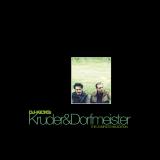
For its 30th anniversary, Kruder & Dorfmeister’s DJ-Kicks is available for the first time in mixed form on 3LP, remastered by Bernie Grundman and packaged in a special box set including original imagery. Kruder & Dorfmeister's rendition of the series created an era defining moment, which tied together a glowing array of musical registers. The Viennese downtempo royalty blended a fusion of slowed down moments across many genres with rolling Drum and Bass from the likes of Aquasky, the melting acid lines of deep Hardfloor and the 90s boom bap sampling, smoked out atmospherics of Thievery Corporation amongst many more.
These masters of mood channeled the sound of a moment with their DJ-Kicks, which still retains a certified cinematic sheen, the patina of the real – curation and mixing at its most playful and refined. It remains to this day one of the most recognizable DJ-Kicks and mixes of all time. Containing two certified cuts from K&D themselves; the wooze is strong on “High Noon” with Dorfmeister's intoxicating jazz flute licks and a trembling harmonica atop a mirage of breaks. Their DJ-Kicks original and legendary tune “Black Baby” closes the mix providing a piece of grandeur, riding off into the distance deep to the vanishing point.
When the mix dropped in 1996, the slo-beat pioneers were among the hottest producers in the dance universe. Even though they only produced two unreleased maxis, names like Count Basie, Bomb The Bass, Alex Reece or United Future Organization had some of their tracks remixed by these exceptional producers. Rumour has it during the work for DJ-Kicks and their debut album they refused doing remixes for U2, Grace Jones, Elvis Costello and the Fantastic Four! ‘DJ-Kicks: Kruder & Dorfmeister’ took its place in the pantheon a long while back, effortless in its ability to traverse sounds, styles and tempos while retaining a selection which remains timelessly recognisable as: Kruder & Dorfmeister.
The music of Foreign Material carries an invisible veil: at first glance this is great, potent and highly functional contemporary Techno. But for those willing to see, behind the veil there's more than meets the eye. An old, wise Baba-DJ once claimed that we are merely "redefining the ancient tribal ritual for the 21st century". Titles like "Kantae Niskae" and "Drums Of Kaltjär" alludes to that specific, long forgotten past that we all still carry deep within. The blissful and etheric A-side, contrasted by the caveman mania of "Kaltjär", represent the dualistic nature of our scene, our sound and our aim as a label, and encapsulates everything we love with Foreign Material's unique approach to Dance Music.
On remix duty we have none other than Stockholm based "Deep" pioneer Evigt Mörker. Expertly withdrawn, edited and added, he's created a groovy, yet atmospheric, DJ-tool for the ages. Expect to notice it in a wide array of DJ-sets in the near future.
- 1: Lake Walk
- 2: Lazy Daisy
- 3: Ups & Downs
- 4: Silently
- 5: There Was A Nice Sunset
- 6: Somewhere Good
- 7: Slow Island
- 8: Movin’ On
If – in some parallel universe (or perhaps a not-so-distant-future version of the one we’re already sentenced to living in) – the evil overloads of artificial intelligence were actually successful in their attempts to create convincingly enjoyable “original music,” more specifically tasked with wholly encapsulating my own personal tastes by data-chugging some cocktail of – oh, I don’t know – the posters on my wall, the records in my “most listened to” pile, the mixtapes I made for others, intensive physical scans of my auditory cortex, amygdala, hippocampus, heart strings, whatever else they have splayed out on their autopsy table with the intention of generating one all-encompassing “perfect band” based on the fruitful sum of their findings – that band, for me, would be (or would at least sound exactly like) the Tara Clerkin Trio. It is, quite simply, without exception, the music I wish to hear.
Formed in Bristol UK (where none of them are from yet all of whom are deeply engrained) in 2020, the Tara Clerkin Trio – as it somewhat democratically exists today, despite the singular authority implied by its name – consists of the titular Tara Clerkin, her partner Sunny Joe Paradisos, and Sunny’s brother, Patrick Benjamin. I’ll confess, I don’t know what their respective roles are within the operation and there’s only a very small part of me that cares to learn, as one of my favorite qualities in an objective listening experience is the mystery of who is playing what, which sounds are “authentic” versus synthesized, which chunks are performed “live” in a room together versus meticulously Frankenstein’ed from measure to measure, or how exactly the overall sound is so (seemingly) effortlessly achieved. Though, I suspect, if and when I do witness a live performance by this band at any point, my enjoyment of the music will not be lost in my better understanding of it.
With two extraordinary mini-albums – In Spring (2021) and On The Turning Ground (2023) – making a splash on London’s formidable World of Echo label in wake of their self-titled 2020 debut, this upcoming Somewhere Good LP is, in many ways, the band’s most realised work. In running their usual gauntlet of idiosyncratic (*an overused adjective for which here there is regrettably no sufficient alternative) approaches, Clerkin & co. colour in and outside of compositional lines over the course of 40+ celebratory minutes - never wallowing, despite inherently somber subject matters of self-defeat, disease, displacement, restlessness, gentrification - allowing their arrangements and improvisations ample space and time to situate, stretch out, breathe, cross-pollinate, and ultimately take deeper hold on the listener’s imagination – all while somehow sounding more like themselves than ever before.
Of course, there are traceable influences herein, if one felt that such comparisons were necessary to properly examine and enjoy this music (they aren’t)… Being the big dumb American from the small boring town that I am, cornfed on ‘90s alternative radio with the enchantingly exotic sounds of Maxinquaye and Mezzanine emanating from my chunky tube television, I can’t help but to make a blatantly obvious reference to a “Bristol sound”, ie the whole trip-hop trip, the pastoral crooning over the suggestive urban grime of cracked electro/piano treatments, the digitally-yet-primitively reconstructed James Bond soundtrack string-beats, etc.. But the Tara Clerkin Trio is so infinitely much more than that. There are elements of avant-pop, modern classical, kraut-folk, audio verité, dare I say indie rock (and not of the beer guzzling, masturbatory fuzz-flex variety but perhaps more like a Trish Keenan-fronted Faust, Adrian Sherwood at the mixing desk of If You’re Feeling Sinister, or – in expanding on our alternate reality – a world in which High Llamas cut a full-length for Warp Records with Andrew Weatherall on coffee duty).
The hazy, unmappable skyline-mirage of droning harmonium, upright bass, peculiarly accentuated wind instruments, acoustic guitar, hushed yet literally mighty keys combine to hypnotizing effect. The band may make underlying nods to jazz, sure, but it’s not appropriation, it’s that they have the actual chops to build it out. Beneath the janky samples and oddball percussive embellishment lies actually great drumming. Beyond the manipulated vocal witchery and woefully reflective plain-spoke moments are Tara’s subtly inspired melodies, sung with what might honestly be the glue to the whole crazy equation. A calming consistency throughout the otherwise unpredictably dynamic, boldly intuitive, uniquely British exploration of this (their own) universe in song. – Ryan Davis (Chicago, February 2026)
- 1: Frizzante
- 2: Turandot Feat Marianne Mirage
- 3: Big Top
- 4: Houdini
- 5: Zio Tony Feat. Molly Lewis
- 6: I Can't Control This Bliss Feat Dream Crease
- 7: Crema
- 8: Miss Neptune Feat Elizabeth Steiner
- 9: Sorgini Feat. Dave Guy
- 10: Sprezzatura
- 11: Hip Then
- 12: Catoni Feat. 13Th Ward Social Club
- 13: Quattro Passi Feat. Chiara Civello
- 14: Over Now
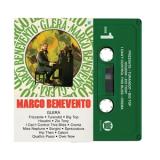
Big Crown Records freut sich, Glera zu präsentieren, Marco Beneventos Debütalbum auf dem Label. Marco Benevento hat sich schon immer wie jemand bewegt, der das Studio als eigenes Instrument begreift - nicht bloß als Raum, in dem das Spielzeug herumsteht. Lange bevor er auf Bühnen mit Freddie Gibbs und Madlib auftauchte oder in den Liner Notes von Alben von Clairo und Leon Bridges erwähnt wurde, dachte Benevento bereits wie ein Produzent: Er hörte auf Texturen, Spannungen und Negativräume - und auf jene seltsame emotionale Alchemie, die entsteht, wenn Groove und Neugier aufeinandertreffen. Sein neues Album Glera schärft diesen Instinkt und rückt Benevento nicht nur als virtuosen Keyboarder und Bandleader ins Licht, sondern als Komponisten, der aus Rhythmus, Klang und Gefühl ganze Welten formt.Glera ist ein genreübergreifendes Jazzalbum, das Soul und das elastische Low-End des Reggae mit einem offenen Sinn für Möglichkeiten verbindet. Das Projekt begann vor drei Jahren als eine Art privates Experiment: Benevento schrieb intuitiv, inspiriert von italienischen Filmmusiken und Melodien. Mit der Zeit entwickelten sich diese Skizzen zu etwas Größerem und Kraftvollerem - und mündeten schließlich in die hier zu hörende majestätische Ausformung.Entstanden ist Musik mit filmischer Bewegung, ohne dabei kostbar oder überladen zu wirken. Die Stücke fühlen sich mal wie Verfolgungsjagden, mal wie langsame Überblendungen an - manchmal sogar innerhalb desselben Songs. Jazz-Improvisation teilt sich den Raum mit Reggae-Grooves, orchestralen Elementen und einer psychedelischen Pop-Atmosphäre. Explorativ, aber geerdet; komplex, doch stets klar groove-orientiert.Der Album-Opener ,Frizzante" ist eine reine musikalische Feier - ein energiegeladener Feel-Good-Banger, auf Band gebannt, in dem Marco über einem unnachgiebigen Groove Melodien mit sich selbst austauscht. Auf ,Turandot" wird Benevento von Italiens Marianne Mirage am Gesang begleitet; der düstere, cineastische Track bewegt sich mühelos zwischen den Welten von Portishead und Serge Gainsbourg.Mit ,Big Top" erweitert sich die klangliche Palette noch weiter: ausgestattet mit Sprachaufnahmen und Pfauengeräuschen lässt sich der Song am treffendsten als ,Zirkus-Funk" beschreiben. Ein Pfiff - und das Spiel beginnt mit ,Houdini", einem jazz-fusionhaften Dancefloor-Füller, der vom ersten Schlagzeugschlag an die Tür eintritt. Auf ,I Can't Control This Bliss" mischt Benevento Dream Pop unter und bittet Dream Crease ans Mikrofon - für eine Dosis lo-fi-getränkter Schönheit. Elizabeth Steiner steuert ihre renommierte Harfenarbeit zu ,Miss Neptune" bei, getragen von einem tief vibrierenden, reggae-inspirierten Fundament.Mit Vollgas prescht ,Sprezzatura" wie eine Hochgeschwindigkeitsverfolgung durch enge Straßen, während ,Quattro Passi" das Tempo drosselt und zum entspannten Schlendern einlädt - mit Jazzsängerin Chiara Civello als Feature.Marco Benevento agiert hier auf höchstem Niveau, formt Klang mit Zielstrebigkeit und Neugier. Dieses Album kündigt sich laut an - zugleich nach außen gerichtet und zutiefst intim. Es ist Musik in Bewegung: zwischen Genres, Tempi und Registern, stets verankert in der Freude am Entdecken. Ein Album, das Bewegung verkörpert, die Vergangenheit mitnimmt und doch niemals stehen bleibt.
- 1: Frizzante
- 2: Turandot Feat Marianne Mirage
- 3: Big Top
- 4: Houdini
- 5: Zio Tony Feat. Molly Lewis
- 6: I Can't Control This Bliss Feat Dream Crease
- 7: Crema
- 8: Miss Neptune Feat Elizabeth Steiner
- 9: Sorgini Feat. Dave Guy
- 10: Sprezzatura
- 11: Hip Then
- 12: Catoni Feat. 13Th Ward Social Club
- 13: Quattro Passi Feat. Chiara Civello
- 14: Over Now
Big Crown Records freut sich, Glera zu präsentieren, Marco Beneventos Debütalbum auf dem Label. Marco Benevento hat sich schon immer wie jemand bewegt, der das Studio als eigenes Instrument begreift - nicht bloß als Raum, in dem das Spielzeug herumsteht. Lange bevor er auf Bühnen mit Freddie Gibbs und Madlib auftauchte oder in den Liner Notes von Alben von Clairo und Leon Bridges erwähnt wurde, dachte Benevento bereits wie ein Produzent: Er hörte auf Texturen, Spannungen und Negativräume - und auf jene seltsame emotionale Alchemie, die entsteht, wenn Groove und Neugier aufeinandertreffen. Sein neues Album Glera schärft diesen Instinkt und rückt Benevento nicht nur als virtuosen Keyboarder und Bandleader ins Licht, sondern als Komponisten, der aus Rhythmus, Klang und Gefühl ganze Welten formt.Glera ist ein genreübergreifendes Jazzalbum, das Soul und das elastische Low-End des Reggae mit einem offenen Sinn für Möglichkeiten verbindet. Das Projekt begann vor drei Jahren als eine Art privates Experiment: Benevento schrieb intuitiv, inspiriert von italienischen Filmmusiken und Melodien. Mit der Zeit entwickelten sich diese Skizzen zu etwas Größerem und Kraftvollerem - und mündeten schließlich in die hier zu hörende majestätische Ausformung.Entstanden ist Musik mit filmischer Bewegung, ohne dabei kostbar oder überladen zu wirken. Die Stücke fühlen sich mal wie Verfolgungsjagden, mal wie langsame Überblendungen an - manchmal sogar innerhalb desselben Songs. Jazz-Improvisation teilt sich den Raum mit Reggae-Grooves, orchestralen Elementen und einer psychedelischen Pop-Atmosphäre. Explorativ, aber geerdet; komplex, doch stets klar groove-orientiert.Der Album-Opener ,Frizzante" ist eine reine musikalische Feier - ein energiegeladener Feel-Good-Banger, auf Band gebannt, in dem Marco über einem unnachgiebigen Groove Melodien mit sich selbst austauscht. Auf ,Turandot" wird Benevento von Italiens Marianne Mirage am Gesang begleitet; der düstere, cineastische Track bewegt sich mühelos zwischen den Welten von Portishead und Serge Gainsbourg.Mit ,Big Top" erweitert sich die klangliche Palette noch weiter: ausgestattet mit Sprachaufnahmen und Pfauengeräuschen lässt sich der Song am treffendsten als ,Zirkus-Funk" beschreiben. Ein Pfiff - und das Spiel beginnt mit ,Houdini", einem jazz-fusionhaften Dancefloor-Füller, der vom ersten Schlagzeugschlag an die Tür eintritt. Auf ,I Can't Control This Bliss" mischt Benevento Dream Pop unter und bittet Dream Crease ans Mikrofon - für eine Dosis lo-fi-getränkter Schönheit. Elizabeth Steiner steuert ihre renommierte Harfenarbeit zu ,Miss Neptune" bei, getragen von einem tief vibrierenden, reggae-inspirierten Fundament.Mit Vollgas prescht ,Sprezzatura" wie eine Hochgeschwindigkeitsverfolgung durch enge Straßen, während ,Quattro Passi" das Tempo drosselt und zum entspannten Schlendern einlädt - mit Jazzsängerin Chiara Civello als Feature.Marco Benevento agiert hier auf höchstem Niveau, formt Klang mit Zielstrebigkeit und Neugier. Dieses Album kündigt sich laut an - zugleich nach außen gerichtet und zutiefst intim. Es ist Musik in Bewegung: zwischen Genres, Tempi und Registern, stets verankert in der Freude am Entdecken. Ein Album, das Bewegung verkörpert, die Vergangenheit mitnimmt und doch niemals stehen bleibt.
- 1: Frizzante
- 2: Turandot Feat Marianne Mirage
- 3: Big Top
- 4: Houdini
- 5: Zio Tony Feat. Molly Lewis
- 6: I Can't Control This Bliss Feat Dream Crease
- 7: Crema
- 8: Miss Neptune Feat Elizabeth Steiner
- 9: Sorgini Feat. Dave Guy
- 10: Sprezzatura
- 11: Hip Then
- 12: Catoni Feat. 13Th Ward Social Club
- 13: Quattro Passi Feat. Chiara Civello
- 14: Over Now
Big Crown Records freut sich, Glera zu präsentieren, Marco Beneventos Debütalbum auf dem Label. Marco Benevento hat sich schon immer wie jemand bewegt, der das Studio als eigenes Instrument begreift - nicht bloß als Raum, in dem das Spielzeug herumsteht. Lange bevor er auf Bühnen mit Freddie Gibbs und Madlib auftauchte oder in den Liner Notes von Alben von Clairo und Leon Bridges erwähnt wurde, dachte Benevento bereits wie ein Produzent: Er hörte auf Texturen, Spannungen und Negativräume - und auf jene seltsame emotionale Alchemie, die entsteht, wenn Groove und Neugier aufeinandertreffen. Sein neues Album Glera schärft diesen Instinkt und rückt Benevento nicht nur als virtuosen Keyboarder und Bandleader ins Licht, sondern als Komponisten, der aus Rhythmus, Klang und Gefühl ganze Welten formt.Glera ist ein genreübergreifendes Jazzalbum, das Soul und das elastische Low-End des Reggae mit einem offenen Sinn für Möglichkeiten verbindet. Das Projekt begann vor drei Jahren als eine Art privates Experiment: Benevento schrieb intuitiv, inspiriert von italienischen Filmmusiken und Melodien. Mit der Zeit entwickelten sich diese Skizzen zu etwas Größerem und Kraftvollerem - und mündeten schließlich in die hier zu hörende majestätische Ausformung.Entstanden ist Musik mit filmischer Bewegung, ohne dabei kostbar oder überladen zu wirken. Die Stücke fühlen sich mal wie Verfolgungsjagden, mal wie langsame Überblendungen an - manchmal sogar innerhalb desselben Songs. Jazz-Improvisation teilt sich den Raum mit Reggae-Grooves, orchestralen Elementen und einer psychedelischen Pop-Atmosphäre. Explorativ, aber geerdet; komplex, doch stets klar groove-orientiert.Der Album-Opener ,Frizzante" ist eine reine musikalische Feier - ein energiegeladener Feel-Good-Banger, auf Band gebannt, in dem Marco über einem unnachgiebigen Groove Melodien mit sich selbst austauscht. Auf ,Turandot" wird Benevento von Italiens Marianne Mirage am Gesang begleitet; der düstere, cineastische Track bewegt sich mühelos zwischen den Welten von Portishead und Serge Gainsbourg.Mit ,Big Top" erweitert sich die klangliche Palette noch weiter: ausgestattet mit Sprachaufnahmen und Pfauengeräuschen lässt sich der Song am treffendsten als ,Zirkus-Funk" beschreiben. Ein Pfiff - und das Spiel beginnt mit ,Houdini", einem jazz-fusionhaften Dancefloor-Füller, der vom ersten Schlagzeugschlag an die Tür eintritt. Auf ,I Can't Control This Bliss" mischt Benevento Dream Pop unter und bittet Dream Crease ans Mikrofon - für eine Dosis lo-fi-getränkter Schönheit. Elizabeth Steiner steuert ihre renommierte Harfenarbeit zu ,Miss Neptune" bei, getragen von einem tief vibrierenden, reggae-inspirierten Fundament.Mit Vollgas prescht ,Sprezzatura" wie eine Hochgeschwindigkeitsverfolgung durch enge Straßen, während ,Quattro Passi" das Tempo drosselt und zum entspannten Schlendern einlädt - mit Jazzsängerin Chiara Civello als Feature.Marco Benevento agiert hier auf höchstem Niveau, formt Klang mit Zielstrebigkeit und Neugier. Dieses Album kündigt sich laut an - zugleich nach außen gerichtet und zutiefst intim. Es ist Musik in Bewegung: zwischen Genres, Tempi und Registern, stets verankert in der Freude am Entdecken. Ein Album, das Bewegung verkörpert, die Vergangenheit mitnimmt und doch niemals stehen bleibt.
- A1: Perot Ft. Seth Troxler & John Camp
- A2: World Keeps Changing
- A3: Midtown Mirage Ft. Taylor Bense & John Camp
- A4: Bond Ft. Taylor Bense, John Camp & Dillon Cooper
- A5: Nrg
- A6: Real Job Ft. Taylor Bense
- B1: Hat Down Ft. No Regular Play
- B2: $1000 Ft. Taylor Bense
- B3: Hold Dear
- B4: Carousel Ft. No Regular Play
- B5: Sometimes It's About Us Ft. John Camp & Michael Feinberg
A DJ, producer and prolific collaborator, Greg Paulus’s musical career has led to a truly enviable discography. Born in Minnesota and now an essential part of New York’s sprawling musical landscape, Paulus has taken the foundations of an organic childhood education by his father, the composer Stephen Paulus, and seen it blossom into an unpredictable musical journey encompassing house, soul, jazz and hip-hop.
While touring as a trumpet player with indie band Beirut, as well as in Matthew Dear’s live ensemble, back home he was helping to redefine New York’s underground dance scene as one half of No Regular Play. Alongside childhood friend Nick DeBruyn, the pair brought their deeply musical sound to no less than fifty countries across the world. A decade on, and Paulus arrives on Seth Troxler’s Slacker 85 imprint for his long-awaited debut solo LP, ‘Close To Home’, a deeply felt long-play celebration of his personal cornerstones; family, trust and hope.
From the opening, organic swell of ‘Perot’, arranged with Seth Troxler himself alongside John Camp, ‘Close To Home’ introduces itself as a focused, conscious trip, it’s languid trumpet spilling over into the reflective ‘World Keeps Changing’, which introduces Paulus’s philosophy of music as a constant. ‘Midtown Mirage’ meanwhile leans into the idea of the city itself as a collaborator, resisting pressure and finding its own restful groove. Back over the river, ‘Bond’ roots itself in Brooklyn with a contribution from resident Dillon Cooper, flipping rap standards amid psychedelic flourishes.
Paulus nods toward his dancefloor form on ‘NRG’, a slinky, lo-slung club groove that seamlessly evolves to meld the artist’s nocturnal and studio instincts. In contrast, ‘Real Job’ switches the tempo on Paulus’s MPC to embody an old-school, beatdown flavour, subtly teased out alongside composer and sound designer, Taylor Bense. Doubling down on this languorous groove, ‘Hat Down’ introduces a full-scale No Regular Play reunion, the first of two collaborative tracks that recall the duo’s imperial phase of confidently minimal productions, while evolving their craft.
Following a few missed calls made with love taken from Paulus’s answering machine on ‘$1000’ the minimal, reflective arrangement of ‘Hold Dear’ finds the artist stripping back his layered sound for a skittering, vulnerable exploration of intimacy and life’s devotions.
For a memorable finale, Paulus recruits jazz prodigy Michael Feinberg to deliver upright funk on the deliciously rich ‘Sometimes It’s About Us’. A purely celebratory collage of bopping rhythms and vocals, sharply plucked guitars and archive samples, ‘Close To Home’ concludes with Paulus leading his friends, ensemble and many influences in rare harmony.
SCALER are the electrifying Bristol-based band hailed as the city’s “next national breakthrough” thanks to their pulverising live show and meticulous, mind-warping sound. Now they’re back with ‘Endlessly’, a sublime and stylistically expansive new album. 10 potent tracks written and recorded more collaboratively than ever before, as SCALER explore what it means to make music with no ceiling.
Building on what they know and taking it in new directions has been a constant throughout the three-year journey behind ‘Endlessly’, which came together in the studio beneath Bristol’s legendary The Louisiana. Inspired by time apart, the album finds them reconnecting with their diverse sonic touchpoints – many tangled in their city’s much-mused-on musical heritage – and the creative energy of collaborators around them. Close friends and long-admired peers, including Akiko Haruna, Art School Girlfriend, Tlya X An, Shadow Stevie, Thomas Ridley and Cold Light’s ELDON add colour to SCALER’s darkened palette and point to the left-turns they’re leaning into. The intense softens into introspection. The blistering becomes a balm.
‘Endlessly’ is the second album from SCALER, a.k.a. Alex Hill, Isaac Jones, James Rushforth and Nick Berthoud, alongside visual artist Jason Baker. The record follows 2022’s acclaimed ‘Void’ and marks their debut for Bristol’s revered Black Acre, a longtime champion of genre-defying electronic music.
Several years after a 12” for the Unrelatable imprint, Marco Passarani opens a new chapter with F.F.O.M., a work of extra-terrestrial tales that feel grounded, where the hard, dirty work of the people continues on a different planet. The scenery changes, but the story stays the same: broken dreams on arid ground.
Linking back to his early Nature Records releases, Passarani blends experimentation with an unshakable sense of groove, weaving a more abstract narrative without losing the dancefloor pulse. While distinct from his Studiomaster output, the project shares the same DNA, fusing digital and analog textures until the boundaries dissolve.
True to the raw spirit of pure techno and imbued with the unmistakable nuances of the Roman school, F.F.O.M. is both a nod to the past and a step into uncharted territory, where Martian dust meets earthly sweat.
Each track paints a fragment of this imagined frontier: Tales Of Truth reveals shadowy landscapes hiding the real nature of the so-called new promised land; Alone in the Depth drifts through liquid scenery, a classic TR-808 pulsing deep beneath unknown oceans; Clouded Shore distills the numeric essence of groove in a subtle nod to Kraftwerk; Dominion erupts into the fierce struggle for supremacy over the new territories; Passione Orbitale tells of love for the unknown and voyages toward otherworldly sunsets; Exploration Noises echoes the spirit of Ixora from Passarani’s first Nature Records release, with manic, melancholic SH-101 lines riding electro rhythms.
The digital edition includes two exclusive miniatures, fleeting transmissions from the edge of this Martian settlement.
Balearic sounds and Mediterranean warmth are the inspirations for Bruno Belissimo’s Bordello A Parigi debut. Drawing on disco, house and funk, Ottimo! is a four tracker of electronic exuberance with Belissimo’s musical ability and range immediately spilling from the speakers. Guitar strings curve around synthlines in the title piece, percussive textures giving way to the mantra-like refrain of “Ottimo!” Thick bass echoes into beaming keys for “Meduse.” Bright notes cascade, grooves melting with vocoder lyrics as classic disco tones are reimagined in this modern mirrorball medley. Organic rhythms introduce the flip. “Mirage” opens to ripples of bongos and toms as a loose structure takes hold. Hedonistic chants rise to a shimmering chord, kicks and snares funnelling the building energy as bold blasts and samples shriek with delight. “Las Piramides De Ibiza” brings the quartet to a close. Clean drum patterns support joyous notes, a machine dipped voice calling time.
The formative years of Hunter Thompson’s music as Akasha System were seeded and shaped by the shrouded meadows and wet woodlands of the Pacific Northwest: Sea Glass, Shadow Self, Echo Earth, Geomind. But pandemic flux flipped the script, prompting a migration to the monsoon tropics of Tampa. Heliocene ushers in a fresh chapter in the Akashic record, recasting the project’s precision synergy of cellular melody, holographic pads, spiral tribalism, and eco-futurist swing for a new solar age.
The album’s eight songs were recorded across 2023 and 2024, inspired by explorations of the many sanctuaries hidden in Florida’s ragged paradise: singing towers, ancient grottoes, emerald lagoons. From vortex house (“Purity Vector,” “Sun Particle”) to mirage electronica (“Haunted Planet,” “Soma Totem”) to hand drum divination (“Terraform Dream”), the sides flow, glow, and gleam, dialed in but dreaming out, tracing radiant waves of the eternal now.
“This album is a meditation to experience where and when you are, fully and wholly, regardless of where the path leads.”
- A1: Radiorama - Vampires (Swedish Remix)
- A2: Valerie Dore - King Arthur (Extended Version)
- A3: Mozzart - Jasmin China Girl
- A4: Grant Miller - Red For Love (Remix)
- B1: Hypnosis - Droid (Extended Swedish Remix)
- B2: Joe Yellow - I'm Your Lover
- B3: Charlie G - Llama L'amour (Extended Version)
- B4: Lee Marrow - Mr Fantasy (Vocal)
- C1: Ken Laszlo - Glasses Man (Vocal)
- C2: Duke Lake - Satisfaction, Love & Passion (Vocal)
- C3: Jimmy & Suzy - Come Back (Versione Disco)
- C4: Flexy Summer - Indio
- D1: Mike Cannon - Stay (Vocal)
- D2: Mirage - Change Your Life (Vocal)
- D3: Alex Chroma Band - A New Day
- D4: Mark - Dreamland (Vocal)
- E1: Brian Ice - Night Girl (Swedish Remix)
- E2: Amy & Alba - Look Into My Eyes (Vocal)
- E3: Mex - Calling You (Vocal)
- E4: Micaela - 4, 3, 2, 1 (Number Version)
- F1: Robert Camero - Lady Surprise (Vocal)
- F2: Visions - Everybody (Remix First Version)
- F3: Mauro Micheloni & Fm Band - Looking For Love (Vocal)
- F4: Karl Olivas - It's Alright
180 G. BLACK VINYL WITH LINER NOTES IN CREOLE, FRENCH, ENGLISH
Originally released in 1979, "Spiritual Sound" lives up to its name, a soaring, triumphant album, six tracks of spirit magic from Guadeloupe.
Telluric, intense, terribly alive, the gwoka drums of Guadeloupe carry the identity of a painful and fervent island. Marked forever by the crime of slavery, Guadeloupe's créolité cherishes the ka drums and their natural environment: the low-pitched boula drum with male goatskin, the high-pitched soloist makè drum with female goatskin, the chacha, ti bwa, triangle, calabash and other percussion instruments that surround them, and the voices - the fiery, proud, timbred, urgent voices of the gwoka.
This album is also a legend for its voices: in his then dazzling youth, singer Lukuber Séjor was one of the first gwoka artists to largely feminize the chorus of répondè, who converse with his text delivered in a straight and powerful voice.
And everything here sets new standards. In 1979, Mizik Filamonik - Spiritual Sound proclaimed a spiritual patriotism of ferocious intensity. The album by Lukuber Séjor - whose spelling alone is a battle - sets out to give Guadeloupe the intangible weapons of self-respect and self-knowledge, through a singular practice of traditional music.
The genesis of gwoka music is less straightforward than one might imagine... The drums performed the servile task of accompanying the work of slaves in the fields and during the “corvées” imposed by the administration, before being freely practiced by the common people after the abolition of 1848. At the heart of the conviviality of the Guadeloupeans furthest from the cities - geographically and socially - the gwoka drums come out for carnival, funeral wakes and neighborhood celebrations, but also during strikes, fits of anger and armed vigils of the riots and revolts that have punctuated the island's history. For generations, governors of the colony and then the prefects of the overseas department of Guadeloupe have been viewing the gwoka as a potential for turbulence and a threat to public order.
But as the Beatlesmania, “chanson engagée” and rock revolutions unfolded in Europe, young people turned to the drums of mizik a vié nèg (“bad negro music”, in Creole), which Guadeloupeans had learned to despise by following the “assimilation” process advocated by the school system and most of the political class. At the end of the sixties, in a Guadeloupe mourning the deadly repression of the May 1967 social movement, they played traditional music, refusing to wrap it up in tourist prettiness and madras folk costumes. Instinctively, they played a rough and contemporary gwoka, led by the incendiary Guy Konkèt. This was the era of decisive 45 rpm records such as Robert Loyson's Kann a la richès, which brought to light the fieriest words of union rallies.
At his home in Sainte-Anne, Lukuber Séjor played with flautist Olivier Vamur and his brother Claude Vamur, who cobbled together a drum kit from tin crockery and became, a few years later, the most influential drummer in Kassav'.
These were the years of the Bumidom program, when young Guadeloupeans were encouraged to emigrate to mainland France. At the age of twenty, Lukuber Séjor embarked on the liner Irpinia, disembarking at Le Havre and taking the train to the Gare Saint-Lazare - the route taken by thousands of young West Indians who went on to study or looked for work, all the while trying to maintain a link with their homeland. In this case, it's at the Antony university residence, where Lukuber played the drum and participated in a thousand gwoka updates and aggiornamentos, while exile reinforced the need for a spiritual link with the native land.
In 1978, Guy Konkèt played at the Salle Wagram, a historic event for West Indian music. After serving as répondè - i.e. backing vocalist - on one of his home-recorded albums, Lukuber joined his live band. Little by little, he became one of the key artists on a circuit parallel to French show business. At a student party in Caen, he met a young woman from Martinique who, at the time, was more motivated by her ambitions as a visual artist than by her vocation as a musician. Her name was Jocelyne Béroard and, a few years before she plunged into the Kassav' adventure and became the greatest West Indian singer of her generation, she designed the cover of Lukuber Séjor's LP.
This ambition was obvious and imposed its will. A more or less regular band was formed, with Roger Raspail, Rudy Mompière and Éric Danquin on ka drums, Claude Vamur on ti bwa, Olivier Vamur and Françoise Lancréot on flutes and Annick Noël on keyboards. Lukuber Séjor is set on wanting to extend the gwoka palette to other instruments, as the jazz-rock revolution opens a thousand new doors. Annick Noël will play a wide range of timbres and textures on electric piano and synthesizer. Another novelty: the répondè are two men and two women, Roger Raspail, Olivier Vamur, Françoise Lancréot and Maryann Mathéus ...
Mizik Filamonik - Spiritual Sound is a self-production in which the singer and leader sank all his savings, allowing him no more than a single day in the studio. The first side is more of a musical manifesto, with the first two tracks, Éritage and Penn é plézi, being instrumentals. The third, Son, forcefully celebrates the need for Guadeloupeans to connect with the gwoka. In fact, Jocelyne Béroard's cover shows a tambouyé in the shadow of a cloudy sky, against which a radiant sun is rising and whose light will soon flood the entire landscape. The silhouette and face of this man strongly evoke the immense Vélo, master of the ka, rejected at the time on the fringes of society.
The second side of the LP is surprising. Formally, three tracks are explicitly linked like the three parts of a triptych. Primyé voyaj evokes the appalling tribulation of Africans deported as slaves to Guadeloupe; dézyèm voyaj speaks of the Bumidom program and the economic, political and social forces driving young Guadeloupeans towards the mirage of prosperity in France; twazyèm voyaj closes the cycle with the emigrants' return from Europe after years away from their island...
This gwoka, obsessed with the need to save Guadeloupe spiritually, appeals far beyond the politicized audience. Mizik Filamonik - Spiritual Sound instantly became a classic, although Lukuber Séjor never really made a career for himself as a musician.
After all, the album was released in 1980, with no promotional resources in France or Guadeloupe - and therefore no concerts. The thirty-two-year-old author, composer and performer made his own third trip back to Guadeloupe. He set up a small woodworking business, which he lost in Hurricane Hugo in 1989. His other activity, teaching in a medical-educational institute, became the core of his professional life. He continued to be an active campaigner - a campaigner for the Creole language, a campaigner for the reawakening of identity, a campaigner for special education, a campaigner for a thousand causes that he ignited with his generous and perceptive enthusiasm, such as the defense of breadfruit fries...
The echoes of his 1979 album have not died down. Of course, the use of Penn é plézi as the theme tune for Radio Guadeloupe's funeral notices from 1980 to 1992 kept him in the collective memory, but he continues to sing and compose sporadically, as with his all-female
vocal group Vwapoulouéka... Still convinced that music is a means of liberating the spirit, he continues the journey of a young man eager to deploy the power of Creole music and language.
Bertrand Dicale
Repress!
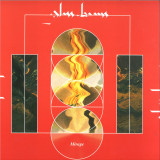
Research Records indicate their inclination for cosmic instrumentation and kraut pervaded polyrhythms once again with an introduction to newcomer Glass Beams. Recorded at the beginning of 2020, Mirage is the first release from the artist, issuing four compositions that lend from a profusion of sounds and influences.
The album's opener and title Mirage arrives with a coiling vocal mantra that conspires with a sliding bassline and transcendent synthwork, reminiscent of early 70's prog jams yet inverted and futuristic. Taurus is a brisk arrangement, steeped with spaghetti-western elements and space-jazz to pave the way for the agile Kong. Rife with psych-fusion guitar phrases and instrumentation, Kong unfolds like a forecast lysergic voyage. The finale Rattlesnake nudges the serpent with intergalactic scales and spellbinding riffs. We may not know much about the enigmatic Glass Beams but Mirage is one epic inauguration, leaving the listener with more questions than answers.
Repress!
Techno phenomenon Charlotte de Witte today announces her brand-new EP “Power Of Thought”, out October 19 on her own KNTXT label. The trio begins with the title track “Power Of Thought” - which immediately erupts into a hypnotic techno beat interspersed with spoken mantras of mindfulness. This is followed by “Pria”, a pulsating journey featuring hypnotic, mantra-like vocals. The EP ends with ambient track “Abada”, punctuated with the occasional drum and chanting vocals before it quickly strips away to silence.
“For ‘Power Of Thought’, I wanted to create an EP that touches deeper emotions and captivating the meditative trance you have when you let go on the dance floor,” says de Witte. “‘Pria’ has already brought me a lot of joy over the last few months when I have played it during my sets. It offers a moment of reflection and a chance to catch your breath during the rougher, more peak time tracks I play. ‘Abada’ is a track that I really enjoyed making. I discovered these magical chanting vocals and I just knew I wanted to use them in a track. Though this track is maybe less playable in one of my sets, I feel that Abada found its home on this EP and completes the ‘Power Of Thought’ circle.”
Best known for her “dark and stripped-back” brand of techno and crossover to other sounds of the underground, Charlotte de Witte pushes the boundaries of the electronic genre with music that has a distinct and unforgettable sound that is uniquely her own. De Witte’s innovative ability allows her to seamlessly blend genres and styles that
have won her a dedicated fan base and critical acclaim.
“Power Of Thought” is the followup EP to de Witte’s “Overdrive” EP, campaign and tour, which recently wrapped with a Los Angeles takeover last month and included performances at Brooklyn Mirage, Primavera Sound, Rock Werchter, Super Bock Super Rock, Lowlands and Rock En Seine. The “Power Of Thought” release will include an exclusive apparel drop as well and will coincide with the opening day of KNTXT Turbo Club, de Witte’s epic 3-day pop-up event series taking over Amsterdam Dance Event (ADE) from October 19 - 21, 2023.
With a different “KNTXT” each day, the turbo-charged pop-up will feature a massive lineup of performances, a dedicated KNTXT shop, immersive music experiences and other surprises at an undisclosed location in Amsterdam. Capacity will be very limited and tickets can be purchased now at https://kntxt.be/events/ade.
Following ADE, de Witte will embark upon the KNTXT Latin America Tour on October 26, which will take her to Mexico City, Buenos Aires and São Paulo.
- A1: Jake Muir - Mirage
- A2: Pent & Dylan Kerr - Incoherences
- A3: Flora Yin Wong - Oath
- A4: Qwqwqwqwa - Shadow (Ft. Sop.io)
- A5: Ex Wiish & Dorothy Carlos - Assimilation
- A6: Nexcyia & Mu Tate - Sans Titre
- A7: Tati Au Miel - House Of Gold
- B1: Kamran Sadeghi - Formula Fiction
- B2: A... ...Cha.... A... I Feel Like A Ghost Uh
- B3: Eric Frye - Plague Chain
- B4: Maxwell Sterling - Xiahe Tears
- B5: Muein - Creep
- B6: James K - Sketch 4
29 Speedway is a record label and performance series based in Brooklyn, NY featuring forward-thinking improvisational music and live multimedia. Founded in 2020 by Ben Shirken a.k.a. Ex Wiish (‘Shards Of Axel’, Incienso 2023), 29S serves as a platform for artists exploring the fringes of interdisciplinary art and music. Hosting D.I.Y-guerrilla style sound and performance art concerts at Pioneer Works (NYC), Public Records, and in Europe in partnership with Index Records, they have worked with artists such as James Hoff, J. Albert, Yolabmi, Robert Aiki Aubrey Lowe, AceMo, Flora Yin Wong, Nexcyia, Young Boy Dancing Group, UMFANG, Color Plus, Poncili Creación, Special Guest DJ, Arushi Jain, Drumloop, Isabella Koen, Ben Bondy, Kamran Sadeghi, Yawning Portal, James K., Syndey Spann, Debit, Pent and many others.
Resident Advisor called their most recent compilation record ‘Channel Plus’ “one of the most stunning documents of the ‘modern ambient-techno movement pioneered by labels such as Motion Ward and West Mineral’, with a focus on New York as well as a global outreach that encompasses chilled-out trap, electro, downtempo and even early '00s electroacoustic music”. Their debut solo artist release from J. Albert and Will August Park, entitled “Flat Earth” (2023), was based on free improvisation and ambient jazz, receiving praise from Philip Sherburne, Shawn Reynaldo, and was included in RYMs top EPs of the year. 29S has been written about on ID, Bandcamp Daily: Best Ambient, Boomkat, Paper Mag, Artnet, Dazed, Clot Mag, Nina Protocol, and Document Journal.
The newest release from 29 Speedway, UltraBody, is a compilation record featuring the music of Jake Muir, Pent & Dylan Kerr, Nexcyia & Mu Tate, James K, Flora Yin-Wong, Ex Wiish & Dorothy Carlos, Kamran Sadeghi, Tati au Miel, James Hoff, Eric Frye, Muein and Maxwell Sterling. The record is emblematic of the artists who have performed at 29 Speedway shows in New York and Europe during the past two years, and is the third in a series released by the label.
The record was born out of a desire to investiage how the self, spirituality, and language are intertwined with the intervention of subjectivity by new technologies. With increasingly sophisticated tech, and the supposed ability to remake the world and ourselves, what differentiates our individual discretion from the will imposed upon us by software? Quoting Walter Chaw from his piece on David Cronenberg’s Videodrome, “Decades of rampant, unregulated and ill-considered technological leaps have begun to evolve, to mutate, humans at a biological level”. This haphazard acceleration towards a techno-utopic transformation of humanity has faulted, and as William Gibson put it, is leading us to live in a “half assed singularity”. In this reality, artistic processes are influenced by excessive access to computational tools and assistance, but not utterly controlled.
This in-between state of dominion is explored in 29 Speedway: UltraBody. “Incoherences” samples the utterances of Dylan Kerr’s voice processed between Pent’s percolated glazes, muddying the gulf between vaporous ambient and reflexive sound design. The voice on James Hoff’s “A... ...Cha.... A... I feel l” was created by trying to get voice cloning technology to sing a gps data stream, the music an extrapolation from an earworm he got stuck in his head while shopping in Kyoto. On “Plogue Chain”, Eric Frye’s most speculative sci-fi observations spiral into a glazed pool of digital cacophony, while Kamran Sadeghi’s “Formula Fiction” is an experiment in (un)controlled generativity. Incorporating minimal pings from a 3D simulation scene based on gravitational interaction, cello bits evolve on “Assimilation”, a collaboration between Ex Wiish & Dorothy Carlos.
On UltraBody, sound has no separate existence from space.
The Surface Label based in the south of France offers you a catalog of new references limited to a few copies.
A kind of rebirth is being launched this year.
The versions are specially long and adapted to enthusiasts but also to collectors.
We hope that our selection gives you an emotion such as we have tried to convey to you since the beginning, more than 25 years ago.
The vinyl will be transmitted to the future generation who will be able to attest that the human being was still in the creativity despite the technology.
We want to be human markers unlike machine man. Don’t listen to the machine. Listen to the human emotions.
A new page opens ….. the story continues …
WandalHouz