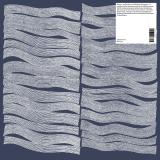
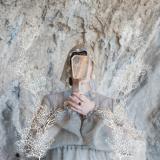
Michael A. Muller, Multiinstrumentalist und Mitbegründer von Balmorhea, hat sich ganz ins Komponieren vertieft und veröffentlicht sein DG-Debüt Mirror Music. Reflexion ist das Thema dieses Albums. In Zusammenarbeit mit elf Künstlern sind zehn Tracks entstanden, die auf Mullers Ambient-Kompositionen basieren. Muller schrieb sie am Mellotron, einem Oberheim Two-Voice Synthesizer und einer Rhodes-Orgel und teilte sie mit den Musikern, wobei jeder für sich einen Part in einem bestimmten Stück übernahm. Mirror Music eröffnet mit der taktilen, offen gestimmten zwölfsaitigen Gitarre von Danny Paul Grody, geht über in die irisierende Pedal-Steel-Gitarre von Chuck Johnson und mündet ins vokal Atmosphärische von Vestals. Es folgen Jonathan Sielaffs Bassklarinette und Ilyas Ahmeds Gitarre, die einsamen Wüstenklänge von Douglas McCombs von Tortoise, die flirrenden Rhythmen des indonesisch-australischen Perkussionisten Rama Parwata, die modularen Synthesizer-Reflexionen von Jefre Cantu-Ledesma, der samtige Gesang von Hania Rani, die weichen Soundmodulationen von Jon Porras und schließlich das gefühlvolle Cello von Clarice Jensen. Mirror Music kommt am 1. März 2024 digital heraus und am 15. März als LP in limitierter Auflage.
quête:mirror music
"phantom Dancehall" Is The Exploration Of The Greensleeves / Vp Records Catalogue By Dj Spooky Aka Paul Miller. The Musical Tapestry Is Built On Samples From Familiar (and Not So Familiar) Reggae Tracks Over Electronic Beats And Melodies Produced By Miller And Protégé Stephen Levitin (stage Name Apple Juice Kid). Selected Tracks Include The Keyboard Work Of Alex Thompson Aka Fourth Shift. Guest Vocals From Walshy Fire (major Lazer) And Dancehall Newcomer Sanjay Added To Vocal Samples Of Busy Signal, Lady Saw And Garnett Silk Give The Project An Eclectic, Modern Dancehall Flavor!
Paul Miller, Better Known By His Stage Name Dj Spooky Is A Music Producer, Arranger, Dj, Author And Performance Artist. His Unique Brand Of Experimental Hip-hop, Dubbed 'illbient' Has Resulted In Collaborations With A Diverse Range Of Artists Including Ryuichi Sakamoto, Kronos Quartet, Lee "scratch" Perry And Killa Priest. With Remix Projects For Trojan Records, Manifold Records And Six Degrees Among Others To His Credit, Miller Created "phantom Dancehall" For His Exploration Of The Greensleeves/ Vp Records Reggae Catalogue.
For Fans Of: Major Lazer, Dj Shadow, Kevin Yost
Der Wahlberliner Call Super aka JR Seaton liefert mit "Arpo" den Nachfolger seines vielgerühmten Debütalbums "Suzi Ecto" von 2014 ab, das das britische Mixmag zum "Techno Album of the Month" erhob und das Wire Magazin als eines der besten Alben des Jahres bezeichnete. Call Super, bekannt für seine spektakulären DJ-Sets im Berghain, Fabric und Boiler Room, beweist mit außergewöhnlichen Techno-Sounds wieder, dass er zu den einzigartigsten Produzenten unserer Zeit gehört, der mit nichts und niemanden vergleichbar ist.
Incl. Remixes by Red Axes, Roman Flügel & Abe Duque
What does it mean to exist in sound?
It does not begin with a beat, but with a choice. With the moment when someone decides not merely to inhabit the space, but to shape it – and in doing so, makes themselves visible.
Roman Flügel stands as a constant in the background. Not as an authority, but as a collective consciousness. Since the 1990s, he has moved through club music like a seeker, never content with the first answer. House, techno, experimentation – these are not genres, but states of being. His remix thinks, hesitates, opens, strikes like a surging acid wave, warping reality and demanding true presence.
New York taught him that club music is never neutral. It is body, friction, attitude. Abe Duque’s remix carries a strangely enchanting relentlessness, a resistance to smoothness – as if the dancefloor were a place where freedom is not claimed, but fought for.
Red Axes do not enter this space; they conjure it. Their sound is raw, repetitive, circular, as if deliberately refusing linearity. House, dub, and acid elements become material for a movement that is more trance than structure. Their remix does not ask where it is going; it asks why one should ever stand still.
And then there is Tim Paris. Not at the center, but as a narrator. As someone who knows that the voice is an attitude. “That Boy” is not a pose, but a mirror, ironic, direct, vulnerable. Paris moves between new wave house and club, always aware that identity is never fixed, but formed in the moment.
This remix record is not a gathering of names. It is a situation, four perspectives on the same question:
What does it mean to exist in sound?
Yet sound alone does not tell the full story: like music, the visual is a space to be shaped, felt, and deciphered. The cover of Tim Paris feat. Foremost Poets – That Boy, created by Konstantin Fürchtegott Kipfmüller, a visual artist at the Hochschule für Gestaltung in Offenbach under Heiner Blum, embodies this principle. Drawing inspiration from the urban environment, Kipfmüller transforms traces of decay, weather, and time into abstract narratives that, like the music of Tim Paris, Roman Flügel, Abe Duque and Red Axes, unfold meaning layer by layer. The result is no mere adornment, but a mirror of the sonic landscape: every line, every surface an echo of the question of what it means to exist – fully, in the moment, in sound.
When a Russian missile struck the ground not far from my studio in Kyiv, I vividly remember how my body reacted to the explosion, milliseconds before my mind did. That traumatic explosion reduced my essence to a primal state. There existed nothing but dread—the kind that, in scripture, accompanies the appearance of angels announcing, ’Be not afraid’.
The visions of Abbess, composer and mystic Hildegard von Bingen were preceded by bright, excruciating flashes of light. Modern medicine reduces them to cluster migraines, one symptom of which is the retinal aura, often accompanied by blurred vision and blind spots. Hildegard’s music can place great demands on the bodies of its performers, emphasizing uncomfortable intervals and the wide distance between the lowest and highest pitch. In comparison, Gregorian chant, the liturgical standard of the time, represents a tempered attempt to grasp God intellectually; indeed, Hildegard’s music was once described as a stick of dynamite thrown into a Gregorian chant.
This album is not a historically informed performance. Hildegard’s persona and music are a starting point—a distant mirror, akin to the shield of Perseus, used to reflect Medusa. It allows us to reflect, comprehend, externalise, and transcend traumatic wartime experience, reinstating the embodied origins of Christianity, which contained suffering but also offered the promise of transcendence. Andriana-Yaroslava Saienko emphasises this physical aspect of Hildegard’s music by drawing on authentic Ukrainian folk singing, a form that survived despite efforts by the Soviet occupation to replace it with a simulacrum that is naive, harmless, and devoid of contradictions—an attempt to ‘civilise’ the body by disembodying it.
The musical approach is also informed by my ongoing practice of reimagining early music in modular synthesis. I accompany Andriana-Yaroslava’s fiery singing with drones—extended sounds that also occurred in medieval music. The drones alternate with improvisations, one taking its starting point in medieval polyphony, the other working with the concept of the interchangeability of sound and light, referring both to Hildegard’s visions and the space in which we recorded the album: the Cistercian abbey of Sylvanès in Occitania, known for contemporary stained glass windows whose patterns reference the dispersion of acoustic waves inside the church.
The album features two compositions by Hildegard von Bingen: O Ignis Spiritus Paracliti (O Fire of the Spirit and Defender), dedicated to the Holy Spirit, and O Tu Suavissima Virga (O Sweetest Branch), in honour of the Virgin Mary. Both pieces are performed radically slower than usual, expanding in time and space. On vinyl, the compositions are designed to reflect one another and can be listened to in either order. In the digital edition, there is a bonus track titled Zelenaia Dubrovonka (The Green Oak Grove). Based on a Ukrainian folk song from the Polissia region, Andriana Yaroslava adapted the lyrics to reflect our contemporary reality. The green oak grove does not rustle with the wind; instead, it resonates with a different sound—perhaps the missile that struck near my Kyiv studio.
WRWTFWW Records is very happy to announce the release of Renga, the new collaborative album from Gak Sato and Tadahiko Yokogawa - available on limited edition LP (300 copies worldwide !) housed in a heavyweight sleeve with inside out print of a beautiful artwork by Aoi Huber Kono.
Renga (??, linked poem) is a genre of Japanese collaborative poetry in which alternating stanzas, or ku (?), of 5-7-5 and 7-7 morae (sound units or syllables per line) are linked in succession by multiple poets.
Inspired by the traditional Japanese poetic form of linked verses, Renga unfolds as a fluid 10-track journey spanning ambient, jazz, breakbeats, electronica, environmental music, techno, cinematic, library music, and musique concrète. Much like its literary namesake, the album is built on intuition and shared momentum, each piece emerging from what came before while opening new paths forward. Beats appear, disappear, then reassemble, while textures shift between organic warmth and electronic abstraction. The result is music that resists fixed categorization, existing somewhere between known subgenres and free-form exploration.
The album's visual counterpart, created by Aoi Huber Kono, mirrors the sensibility of the music. It's elegant, modern, and quietly expressive, extending the idea of linked forms from sound into image.
Points of interest
- For fans of ambient, experimental electronic music, jazz-inflected compositions, breakbeats, techno, cinematic soundtracks, library music, musique concrète, genre-blurring sonic exploration, linked verses, and dark blue.
- A unique collaboration between Gak Sato and Tadahiko Yokogawa, inspired by the Japanese poetic form of linked verses.
- Presented on limited edition LP housed in a heavyweight sleeve, edition of 300 copies.
- Artwork by acclaimed visual artist Aoi Huber Kono, extending the album's concept of interconnection across disciplines.
Following the release of the dreamy and bewitching darkwave debut single “Mirror Twin”, Harsh Symmetry announces the release of a full-length debut Display Model on Fabrika Records, home of Selofan, Lebanon Hanover, and She Past Away, whose own Doruk Öztürkcan mixed and mastered the LP. With a vocal style reminiscent of Cocteau Twins collaborator Cinder (This Mortal Coil, Cindytalk), and Ian McCulloch of Echo & The Bunnymen, Harsh Symmetry’s Julian Sharwarko is the epitome of old-school and post-punk and goth, capturing a vision that perfectly matches his sound, while physically resembling his music forebears to the point where he looks like he just stepped out of a copy of Smash Hits circa 1983. Hailing from Sacramento, California, Sharwarko’s love of music began at the tender age of 8, with parents who influenced his early music tastes by playing the music of Siouxsie and The Banshees, The Birthday Party, Iggy Pop, Depeche Mode, and Bauhaus. David Lynch’s work also made a profound impact on his style, specifically the short film The Grandmother.
For his new full-length on Second End Records, Lyon-based artist Jonnnah turns deeply inward. Conceived as a form of therapy, as much as a reflection and a testimony, the record retraces a process of introspection and confrontation with one’s own history, looking back at origins, DNA, and the invisible ties that connect us to our ancestors, while opening paths toward new connections.
The double-sided structure of the album makes this journey tangible. The first side lingers in uncertainty : opaque atmospheres, fragmented rhythms, and restless textures mirror the doubts, questions, and fragile states of self-analysis. The second side, in contrast, embraces clarity and resolution, dense yet luminous soundscapes where reconciliation and acceptance take shape, culminating in The Blue Comet, a piece charged with finality and revelation.
Opening with the multipart suite N-zero, symbolizing the beginning of therapy, and closing with O-one, evoking the soul’s original purity, the record traces a complete emotional and spiritual cycle. Between them, the third edition of Insomnia Never Ends once again portrays the struggle between sleep and the irresistible pull of musical distraction, a fragile tension that runs through the album as a whole.
The record condenses Jonnnah’s language into something rawer and more direct. Layers of dub and dub sonic resonate against ethereal ambient passages, while techno impulses maintain tension and forward motion. Each piece feels at once intimate and expansive, designed as much for solitary listening as for collective experience.
A new chapter in Jonnnah’s trajectory, the album is a document of transformation : from shadow to light, from questioning to acceptance.
On 27 March, fabric Originals presents Shō, a five track EP of introspective, transcendent electronics from Japanese techno icon DJ Nobu. Inspired by the Buddhist Brahmavihāras - joy, compassion, loving-kindness and equanimity - Shō unfolds as a meditative, emotional journey rooted in Nobu’s experiences of Tokyo, mindfulness and inner clarity. From kinetic renewal to serene minimalism, the EP channels presence, acceptance and the simple truth that breathing itself is living.
Each track on ‘Shō’ marks a step in an emotional and spiritual journey, channelling the foundational virtues of the Brahmavihāras, which are the four ‘Sublime States’ of Buddhist practice: ‘Muditā’ (joy), ‘Karuṇā’ (compassion), ‘Mettā’ (loving-kindness), and ‘Upekkhā’ (equanimity). Together these principles form a path towards an open, boundless heart, which is mirrored in the EP’s unfolding sonic narrative.
“In recent years I became overly sensitive to my surroundings and society, finding myself strongly affected by every daily occurrence. It was during this time that I discovered meditation. And beyond that lay Buddhism. Through this, my sensibilities became able to express themselves more naturally. I decided to portray my feelings, and the scenery in Tokyo, conveying what I was experiencing in real-time, as music.
The EP title ‘Shō’ denotes views, thoughts, and actions aligned with Buddhist truth, and encapsulates my striving for presence, clarity, and acceptance. It also represents the conscious, mindful understanding that simply breathing is living.” DJ Nobu
- What Happens Next?
- Yesterday's Donuts
- The Man I'm Supposed To Be
- Someone In My Mirror
- Shame Shame
- Screamin
- I've Got To
- Use My Imagination
- Living Your Life
- Gentle On My Mind
Rooted in modern blues but unafraid to stretch beyond tradition, the record crackles with grit, groove, and lived- in emotion, presenting an artist who isn't waiting for answers, he's moving forward without them. Across the album, Stillman digs deep into themes of self-reckoning, loss, pride, and renewal.
Songs wrestle openly with identity, shame, and hard- earned perspective, balancing moments of vulnerability with sharp wit and raw confidence. Whether confronting inner demons or finding humor in heartbreak, the writing feels honest and unfiltered, anchored by soulful vocals and muscular musicianship . What Happens Next? is an album about growth through motion-- accepting change, facing consequences, and choosing momentum over fear. High- energy, emotionally grounded, and deeply human, it marks a defining step forward for Gabe Stillman , capturing an artist fully stepping into his voice and daring the listener to do the same.
We Release JAZZ is very happy to announce the limited vinyl edition of Obad’s powerful new album Suspended, a vivid document of the Tehran ensemble’s endlessly evolving sonic universe — now available as a limited LP housed in a heavyweight sleeve with an Obi strip and featuring original artwork by Iranian painter Sadra Baniasadi.
Suspended is a superbly spontaneous, improvisational blend of exploratory jazz fusion, progressive funk-rock, and transcendental groove. Built from lived experience and shaped by Tehran’s pulse, Obad’s music is kinetic and intuitive — an ever-morphing dialogue between rhythm and texture, emotion and message.
With Farid Farzian Pour on drums, Siavash Karimi on electric guitar, Kiarash Radmehr on bass guitar, and Hamidreza Keshavrpajuh (aka Pajuh) on tenor saxophone, Obad creates a soundworld where hypnotic basslines meet thunderous, free-flowing percussion; where searing guitar motifs coil around saxophone phrases that move from whispered invocation to explosive catharsis. Suspended captures the quartet at full creative stretch: alive, unguarded, and deeply attuned to one another.
Sadra Baniasadi’s striking cover painting mirrors the album’s energy — bold, dreamlike, charged with movement, and extending Obad’s world into the visual realm.
Suspended stands as a major statement from one of Iran’s most compelling contemporary ensembles, marking Obad’s first release on We Release JAZZ and continuing the label’s commitment to boundary-pushing music born from profound listening, place, and collective intuition.
Chalybeate documents a month long stay by Tokyo based producer aus in Ikaho, one of Japan's most established Onsen (hot spring) towns, during autumn 2024.
Working from field-recordings captured inside multiple ryokan baths, aus synthesized the subterranean movement of the onsen's with local details: the bubbling of source water, the hoozuki lantern plants and wind chimes placed at each inn, and the surrounding insects and birds. Rather than portraying Ikaho as a landscape, the recordings trace the town's respiration.
The material was first presented on site as an installation unfolding across eight different baths, where visitors listened while soaking in roten-buro (open air hot baths). The project drew wide attention for proposing listening as a bodily act, inseparable from heat, moisture, and duration.
Chalybeate re constructs that installation as an album. The recordings were left to sit for a year within Ikaho's air and humidity, allowing the sound itself to slowly change. The title refers to Ikaho's iron rich mineral water, known as "Golden Water," which oxidizes upon contact with air and leaves rust colored traces in its baths. Following this process, the album's sound was repeatedly re submerged and re worked, gradually absorbing a corroded texture.
Tape hiss, gentle distortion, and subtle fluctuations rise quietly, like steam.
What remains is not documentation but residue.
Mixing was handed over to Manchester based producer The Humble Bee by Craig Tattersall, known for his work with The Boats and The Remote Viewer, after aus exhausted himself traversing Ikaho's steep stone steps. The exchange mirrors the work itself: from bathtub to hot spring, from sound to something that surrounds the body.
Woodwind like tape noise and the movement of water dissolve into one another.
The music does not arrive all at once. It settles slowly, as if lowering into warm water.
- A1: Walk Out Music
- A2: Death Of Love
- A3: I Had A Dream She Took My Hand
- B1: Trying Times
- B2: Make Something Up
- B3: Didn’t Come To Argue (Ft Monica Martin)
- C1: Doesn’t Just Happen (Ft Dave)
- C2: Obsession
- C3: Rest Of Your Life
- D1: Through The High Wire
- D2: Feel It Again
- D3: Just A Little Higher
Black Vinyl[30,67 €]
'Trying Times' is a record about being in love whilst battling the limits of the self against a backdrop of global uncertainty. James Blake explores the tension between intimacy and isolation, the pressure to curate and perform even as everything, inside and out, feels fragile and precarious. Themes of reflection, both literally and metaphorically, run through the record’s visual presentation, as Blake holds a mirror to the contradictions of modern connection - how we see ourselves, how we’re seen by others, and what gets lost in between. It’s about the disorienting loop of joy and dread: feeling safe in love, yet knowing the bubble could burst at any moment; struggling to stay present while global anxiety and private doubt pull you in different directions. A meditation on love, identity, and fragility in an age where the world feels balanced on a knife edge
13 Track Album is James' seventh studio album and first fully independent release Album features British rapper Dave, and singer-songwriter Monica Martin Marketing plan will support long term growth, audience building and connecting with super fans Strong Content Plan including Single / Focus Track Performance Videos Alternative album versions TBC inducing deluxe, piano version and more
At the core of the creative process behind “HPC” and “Bor3d” lies meta-irony, a quality that permeates much of today’s digital content landscape.
Both tracks are a deliberate attempt to push the sound toward a barely perceptible absurdity and ironic unseriousness in their interpretation of well-familiar styles of dance club music. It is a play with form, expectation, and recognizability — balancing sincerity with sarcastic exaggeration.
Okay
Okay is built around interruption. Voices, fragments of dialogue, yawns, irritation — people seem to step inside the track uninvited. Someone is bored, someone is annoyed, someone tries to stop the flow entirely. Just like in real life, the process is constantly disrupted. The track reflects the experience of being surrounded by opinions, noise, and skepticism — especially the kind that will never be convinced, no matter what you do. “Okay” becomes a quiet, ironic response to this pressure: not agreement, not approval, but endurance. The track continues anyway.
Tripatura
Tripatura is a fictional creature — a warped echo of cryptid mythology. In this narrative, Tripatura doesn’t simply exist, it hunts. Once it finds you, it drags you into an endless trip with no exit point. Time stretches, perception blurs, and the track itself becomes the trap. Its prolonged, unresolved ending mirrors the experience of being stuck inside a loop that refuses closure. Tripatura doesn’t rush. It lingers, slowly pulling you deeper, until the trip no longer feels temporary.
After years of shaping dancefloors worldwide and carefully curating the sonic and visual identity of Up The Stuss, Dutch favourite Chris Stussy presents his most expansive and personal statement to date with his debut album, ‘Lost, Found & Forgotten...’. Landing on 3rd April, the album unfolds across three interconnected chapters - ‘Lost’, ‘Found’, and ‘Forgotten’ - each revealing a different side of his creative world across 19 tracks while remaining tethered to a singular wider vision.
At its core, ‘Lost, Found & Forgotten...’ is an exploration of creative freedom. Visually and conceptually guided by the image of a kite, the album reflects movement, perspective, and balance. Floating freely yet always anchored, the kite mirrors Chris’s approach to music: unrestricted in emotion and imagination, but grounded in groove, craftsmanship, and intention. It’s a symbol that naturally extends the Up The Stuss identity; pointing skyward, embracing openness, and encouraging curiosity.
“This album has been a long time in the making, and I’m excited to finally share it with you. The process behind it - exchanging ideas with other artists and creating music outside of my comfort zone - has been an incredible experience. It gave me a true sense of freedom, allowing me to not think about boundaries or expectations. I’ve never been more proud of a project than this one. It’s deeply personal, and it represents my sound as a whole. I hope you listen with an open mind and find something in it that resonates with you.” - Chris Stussy.
The ‘Lost’ chapter opens the album by giving new life to music once left behind. These are tracks written across different moments in Chris’s journey, ideas that never quite found a home until now. Rather than relics of the past, they emerge re-discovered, refined, and fully realised. ‘
Found’ represents inspiration in motion. Sparked by collaboration, digging, and shared creative exchange, this chapter captures the moment when ideas connect, and colour floods the sky.
The album closes with ‘Forgotten’ - a nod to the deeper cuts, the B-sides, and the moments that reward patience. This chapter is for the heads and diggers; tracks that may not demand immediate attention but reveal their value over time.
The second vinyl release on Platz fur Tanz continues the narrative of techno's past and future. Experienced artists reinterpret the shadowy vibe of dancefloors around the world, giving it new form and depth.
The record opens with a track by Swedish techno futurist Lakej, featuring his signature sound of machinery on a working factory floor. The music immediately transports you into the industrial atmosphere of a rave.
This time, the Italian-born, Berlin-based artist VSK takes us on a journey through the emotional waves of deep techno. A slightly jazzy groove makes this track perfect for peak time dancefloors.
Latvian producer Ksenia Kamikaza stays true to her style, transporting us into a world of visualized melodies and rhythms. The bassline sets the groove, while the unhurried rhythm allows you to fully surrender to the dance.
Liza Aikin brings an uncompromising Berlin vibrations to the release, reminding us how a true rave should sound. Her style is not heavy but persistent. Liza never stops experimenting, and this track will be a highlight of any DJ set.
Another Latvian electronic talent closes the release. Igors Vorobjovs blends the best of electro and techno in his track. Nervous rhythms and loud sounds stir the emotions, while the raw, untamed resonance will leave no true connoisseur of feral techno indifferent.
A brash, unapologetic blend of electronic, dance, punk, industrial, and pop music, No Lube So Rude exists at the intersection of the personal and the political, where the body serves not only as a sexual and spiritual vessel, but also as the front line in a battle for basic human rights. Peaches’ lyrics are bawdy and explicit here, laced with biting sarcasm and clever wordplay, but they’re also surprisingly vulnerable, offering up a candid look in the mirror from a post-menopausal queer icon reckoning with a society that’s come to expect silence, if not outright erasure. The result is a deliberately provocative exploration of identity, sexuality, and bodily autonomy from a trailblazer, a singular work of emotional and sonic alchemy that balances the poetic and the profane in equal measure as it transforms all the friction and frustration of modern life into joy and transcendence.
Splatter Vinyl[20,97 €]
Fifteen years after it first surfaced on the short-lived Lithuanian netlabel Dumblys, Sraunus – Out Of The City returns remastered, recontextualized, and ready for a new wave of deep listeners. What once felt like a hidden gem now reads as a quiet cornerstone, a record whose significance only grew clearer with time.
Behind Sraunus is Paulius Markutis, one of Lithuanias earliest deep-dub explorers. His moniker translates to “flowing” or “fluid,” and that spirit runs through the entire album: the music breathes, circulates, and drifts with calm inevitability, revealing fresh details on every pass. Rooted in the classic Berlin-born dub tradition yet unmistakably shaped by Markutis own sense of space, mood, and narrative, the result feels beautifully suspended in time, warm in its chords, patient in its arrangements, and guided by a subtle emotional current. This is dub techno at its most enduring: fluid, deep, and endlessly replayable.
The reissue, part of Greyscales Archive Series, arrives on superbly pressed double vinyl, with artwork chosen with intent: Marija Marcelionytė-Paliukės “High Tide and Low Tide,” an image of perpetual motion that perfectly mirrors the albums flowing spirit.
WRWTFWW Records is pleased to announce its fifth collaboration with NY-LA ambient / jazz / downtempo musician Danny Scott Lane with the first ever vinyl release of his 2022 full-length album Holy Goodnight, available on limited edition LP (500 copies worldwide) housed in a heavyweight sleeve.
After Home Decor, Shower, Caput, and Songs For Sex, here’s another Danny Scott Lane classic. On Holy Goodnight, he handles synths, keyboards, bass, guitar, percussion, and field recordings for a smooth nightride through city pop, contemplative jazz, vaporwave, slow funk, cozy ambient, library music vibes, and relaxed moods.
Holy Goodnight feels like cruising through a half-asleep city with the windows down and the radio low—lush harmonies and soft grooves guiding the way. It’s warm and hazy music for late hours and early mornings, introspective, comforting, cinematic, intimate…
Following the release of chillout staples on WRWTFWW, Danny Scott Lane further cements his unmistakable sonic universe. Complete the collection and sink deeper into the night.
Points of interest
For fans of ambient jazz, city pop, downtempo, smooth funk, vaporwave, library music, night drives, neon lights, quiet introspection, cozy late hours, and peaceful goodnights.
Super limited edition vinyl (500 copies worldwide) of Danny Scott Lane’s Holy Goodnight, available on vinyl for the first time ever.
This excellent piece of music (sourced from the original DAT) was way ahead of its time in '95. Still a roller. For Selectors only.
- A1: Intro + Dreams Feat Liv East
- A2: Fruits Of The Universe Feat Douniah
- A3: Define Us Feat 30/70 & Dreamcastmoe
- A4: High Feat Cor.ece
- B1: Vibin Feat Ben Westbeech & Sanity
- B2: Without The Sun Feat Oliver Night
- B3: Bells
- C1: Rearrange Yourself Feat Ben Westbeech & Obi Franky
- C2: Downstream With Life On Planets
- C3: Be Real Feat Life On Planets
- D1: Looks Like It (Space Talk)
- D2: Illusions (Midnight Dub) Feat Ava Lavá & Life On Planets
- D3: Simulate Feat Goya Gumbani & Javonntte
DJ Support: Laurent Garnier, Dennis Cruz, Girls Of The Internet, Horse Meat Disco, Stacey Pullen, Elliot Schooling, Solomun,Marco Carola, Joseph Capriati, The Martinez Brothers, Dam Swindle, Soul Clap, Luke Solomon, Riva Starr, Franky Rizardo, Archie Hamilton, Silvie Loto, Fouk, Austin Ato, Salomé Le Chat, Blackchild, Jean Pierre, Black Loops, Kassian, Seamus Haji, Melvo Baptiste, Rimarkable, Sophie Lloyd
In-demand Amsterdam-based duo Makèz step into new ground with the release of their album ‘Arriving Home Elsewhere’, via ANOTR’s No Art label. A kaleidoscopic project that moves between deep house, cosmic jazz, R&B, broken beat, and club-ready energy, the record is both a declaration of identity and a dissolution of boundaries - proof of the duo’s rare ability to merge worlds without diluting or compromising their true essence.
Where most albums that span electronic realms lean on functionality, ‘Arriving Home Elsewhere’ reaches for something much more expansive. The project is a true hybrid: half shaped for the intimacy of a headphone listen, half designed for the electricity of the dancefloor. together forming a seamless continuum between reflection and release. Tracks like ‘REARRANGE YOURSELF’, ‘BE REAL’, and ‘LOOKS LIKE IT (SPACE TALK)’ are stripped to the core of house music’s driving pulse, made for bigger systems and peak-time release. In contrast, ‘Dreams’, ‘Fruits of the Universe’ (with douniah), and ‘Without The Sun’ (with Oliver Night) explore lush, textured arrangements where live instrumentation and improvisation carry equal weight to rhythm and groove.
Collaboration is at the heart of the LP, with Makèz inviting a constellation of voices who each expand the project’s palette. Ben Westbeech, Liv East, and SANITY bring soulful intensity; 30/70 and dreamcastmoe connect Amsterdam to Melbourne and DC; Cor.Ece and Oliver Night weave delicate threads of emotion; Goya Gumbani and Javonntte guide the production with their vibey, groove-led performances; while Life on Planets reprises his role as a core creative partner, appearing across the album on tracks including the standout ‘BE REAL’ and the previously released ‘ILLUSIONS’ alongside rising Amsterdam talent AVA LAVÁ. Together, these contributions shape an album that feels less like a singular statement and more like a living, breathing ecosystem.
For Makèz, ‘Arriving Home Elsewhere’ is as much about philosophy as it is about music. The title encapsulates a tension central to their art: the feeling of belonging to multiple worlds without ever being confined to one. Jazz, house, soul, and experimental club sounds are not separate influences but parallel languages, and in merging them, the duo has created a record that mirrors the fluidity of contemporary identity and expression. And while it may speak in many voices, the LP tells one clear story - that of Makèz, arriving, again and again, home elsewhere.
- A1: Can't Help Myself (Extended Intro Version)
- A2: Turn Da Music Up (Radio Version)
- A3: Never Alone (Euro Radio Mix)
- A4: Dreams (Will Come Alive)
- A5: Let Me Be Free
- B1: Fly (Through The Starry Night)
- B2: Come Take My Hand
- B3: Fairytales
- B4: Mirror Of Love
- B5: There's A Key
- C1: One Day
- C2: I'm Thinkin' Of U
- C3: Do You Know?
- C4: The Sun Will Be Shining
- C5: Heaven Is Here
- D1: Living In Cyberspace
- D2: Wonderful Feeling
- D3: Stand Up And Live (Dj Jose Vs. G-Spott Remix)
- D4: Dreams (Will Come Alive) (Fragiel Acoustic Version)
Bobby and Martin Boer started experimenting with music in a small bedroom in their parental house in an apartment building on the 4th floor.
The brothers brought together rapper Da Smooth Baron MC and singer Peggy “The Duchess” to form their stage act. The first single “Can’t Help Myself” was released in 1990 and became an international hit in 1991.
multiple international hits were produced as 2 Brothers on the 4th Floor. Gradually changing the style from Eurodance into happy hardcore.
Singles like “Fly (Through the Starry Night)”, “Come Take My Hand” and “Fairytales” were international bestsellers and topped charts all over Europe.
The Very Best Of 2 Brothers On The 4th Floor is available as a limited edition of 1500 individually numbered copies on crystal clear vinyl and includes an insert.
"Music, like love, surprises you, makes your heart race, gives you new eyes with which to look at yourself in the mirror..." (Gigi Masin)
With an exclusive presentation by GIGI MASIN, UP TO 23 release their second album, now with an expanded three-member lineup following the permanent addition of ENRICO CONIGLIO over the founder members MARCO BUFFETTI and FRANCESCO FINCATO. The album draws inspiration from the 1980s, evoking atmospheres reminiscent of sci-fi soundtracks. Partly romantic, partly doom ambient, the work unfolds as a requiem for our planet. Liquid and enveloping atmospheres drift between melodic ambient territories — explored through processed guitars and synthesizers — and soberly electronic paths traveled to the rhythm of sequencer-driven patterns and programmed structures.
Dramatic and evocative moments emerge throughout this succession of varied yet perfectly integrated and fluid soundscapes, where sounds and progressions combine with ever-shifting solutions, following a descriptive thread that remains consistent as it continuously unravels through encompassing and emotionally engaging textures. AN APPLE A DAY YOU DIE ANYWAY is the perfect soundtrack to these dark times that UP TO 23 want to color in order to continue to hope, to live without having to survive.
KITCHEN. LABEL is proud to present AGATE, the latest album by Japanese artist MEITEI, marking a deepening of the world he first shaped through his Kofū trilogy released between 2020 - 2023.
Named after the mineral agate, a stone formed through slow accumulation, pressure, and time, the album reflects MEITEI’s patient approach to sound. AGATE brings together extended and newly rearranged works from across the Kofū cycle alongside new compositions and passages, refining material developed through years of performance and sustained practice.
The album presents seven tracks:
HAŌ (Previously unreleased track)
SHIN-OIRAN (Remodeled from Oiran I, Kofū 2020)
SHIN-SADAYAKKO (Remodeled from Sadayakko, Kofū 2020)
SHIN-WAROSOKU (Remodeled from Wa-rōsoku, Kofū III 2023)
KYŪGEKI (Remodeled from Shinobi and Akira Kurosawa, Kofū II 2021)
SHIN-OIRAN II (Remodeled from Oiran II, Kofū 2020)
SHIN-EDOGAWARANPO (Remodeled from Edogawa Ranpo, Kofū III 2023)
Across these works, MEITEI expands the musical vocabulary first introduced in Kofū, a sound he once described as “lost Japanese mood.” While Kofū drew from fragments of folklore, theatre, ghost stories, and forgotten urban memory, it was never an act of historical reconstruction. Rather, it reflected a sensibility of the past observed from the present. With AGATE, this worldview is clarified as Shinpu, a process of discovery in which historical awareness becomes a foundation for contemporary creation rather than a constraint.
During five years of Kofū tours across Japan, Europe, and Asia, MEITEI performed this material in a wide range of spaces, from underground live houses and listening rooms to culturally significant sites. These environments influenced pacing, dynamics, and structure, shaping how the material evolved over time. AGATE is therefore not only a studio album, but the result of material refined through repeated performance.
If the Kofū albums were windows into forgotten eras, AGATE explores what lies beneath, sediment and strata formed through time and pressure. MEITEI’s approach to sound mirrors the nature of agate itself. Grains become texture. Texture becomes narrative. Voices drift through decaying layers of sound, while ancient instruments are used in non-traditional ways, forming distinctive percussive rhythms and melodies that appear and vanish without fixed resolution.
The album’s visual materials were developed under MEITEI’s direction through physical art-making processes. The cover artwork originates from a letterpress print created by Kamisoe, a Karakami atelier in Nishijin, Kyoto, using Kyo-karakami paper. The original artwork, produced through traditional woodblock techniques on handmade washi, was subsequently reproduced on print for the album edition. Kamisoe continues to reinterpret this historical Kyoto craft with a contemporary sensibility.
The title calligraphy was created by Bio Xie, whom MEITEI personally invited to participate in the project. During his performances abroad, MEITEI encountered in Taiwan a lingering atmosphere reminiscent of “Shitsunihon” — a sense of old Japanese memory that quietly endures beyond time. He was deeply drawn to Bio Xie’s distinctive use of Chinese characters, which resonated with this experience, and asked him to contribute to the visual expression of AGATE.
In parallel, MEITEI continues to reinterpret Japanese sensibility through his concept of “Shitsunihon,” presenting it as a contemporary musical language. The refined Kyoto motifs envisioned by Kamisoe and the distinctive calligraphic expression by Bio Xie intersect with MEITEI’s singular artistic direction, weaving together a newly articulated worldview.
The accompanying visual imagery, including the liner photographs, was created by photographer Hiroshi Okamoto, who was also responsible for the visual direction of MEITEI’s previous work, “Sen'nyū.” It draws from MEITEI’s lived experiences of winter seas, solitary cliffs, and breaking waves. These scenes symbolize the inner conflicts of the ten years he spent living in Hiroshima, and his confrontation with solitude and the sounds he creates.
AGATE will be released on 17 April 2025 via KITCHEN. LABEL on 180g vinyl, CD, and digital formats. The album is mastered by Kelly Hibbert, known for his work with Flying Lotus, Madlib, and J Dilla.
With AGATE, MEITEI returns to the material of Kofū with greater focus and discipline, continuing an ongoing process of working forward with inherited material.
- A1: Honey Dijon Ft. Chlöe - The Nightlife
- A2: Honey Dijon Ft. Greentea Peng - I Like It Hot
- A3: Honey Dijon Ft. Rochelle Jordan - New Wave Groove
- B1: Honey Dijon Ft. Madison Mcferrin - Smoke And Mirrors
- B2: Honey Dijon Ft. Mette - International
- B3: Honey Dijon Ft. Bree Runway - Slight Werk
- C1: Honey Dijon Ft. Adi Oasis, Danielle Ponder & Suni Mf - Just Friends
- C2: Honey Dijon Ft. Rochelle Jordan - Private Eye
- D1: Honey Dijon Ft. Mahalia - Rush Me
- D2: Honey Dijon Ft. Jacob Lusk - Satisfied
- D3: Honey Dijon Ft. Dave Gilles Ii & Cor.ece - Welcome To The Moon
12"[17,44 €]
The Nightlife finds Honey Dijon exploring the space between house music’s past, present, and future — blurring boundaries, bending conventions, and inviting an all-star cast of collaborators to help redefine what club culture sounds like for today.
Rooted in the lineage of house yet never confined by it, the album moves effortlessly from sweat-soaked basement energy to lush strains of soul and R&B — and into unexpected spaces in between. It’s not a strictly house record; it’s an expression of nightlife itself: fearless, fluid, and in constant evolution.
At once reverent and forward-looking, The Nightlife honors the foundations of the dancefloor while pushing its possibilities outward. It captures the communal pulse, the intimacy, and the transformative power that only music at night can hold.
A love letter to the dancefloor.
Pre-order now and step inside.
WRWTFWW Records is ecstatic to announce a limited edition vinyl release of the remarkable PONYBOI (Original Motion Picture Soundtrack) by Chilean-born composer, arranger, music producer, and multi-instrumentalist Cristobal "Cristo" Tapia de Veer (The White Lotus, Utopia, Smile, Black Mirror, and many more).
This collector's edition presents Tapia de Veer's complete original score for the critically acclaimed feature film PONYBOI - a bold, genre-defying neo-noir tale directed by Esteban Arango and and starring filmmaker, actor, screenwriter, model, and intersex rights activist River Gallo who also wrote the movie. The soundtrack arrives as a deluxe audiophile vinyl LP, housed in a luxurious 350gsm gold cardboard sleeve, cut with utmost precision by Sidney Claire Meyer at the legendary Emil Berliner Studios, home to Deutsche Grammophon's world-renowned legacy.
Vivid, seductive, gritty, dreamy, tender, and sometimes heart-pounding in its tension, the PONYBOI soundtrack is a sinuous creature of its own - an emotional, atmospheric, and deeply textural listening experience. Tapia de Veer fuses shimmering electronics with haunting melodies, raw rhythms, shadowy ambience, and surges of romantic intensity, perfectly embodying the film's world of danger, desire, identity, and survival on a single wild New Jersey night. It's daring, intimate, stylishly noir, and unmistakably Cristo: music that refuses boundaries and speaks directly to the pulse.
The LP showcases Cristobal Tapia de Veer's uncanny ability to blend experimental sound design with narrative emotion - a talent that has earned him global acclaim and numerous awards, including four Primetime Emmy Awards for The White Lotus.
This new WRWTFWW edition celebrates his artistry in its purest form: warm, rich, analog, and physically stunning. A must for soundtrack fanatics, ambient and experimental music lovers, and rare memorabilia collectors.
- 1: Empty Shell
- 2: Pet Cemetery
- 3: Spirit Of The Unknown
- 4: The Cure
- 5: Mirror Mirror
- 6: Cosmic Ride
- 7: The Universe Was Our Mother
- 8: With A Love So Kind
- 9: Pictures On My Wall
- 10: Goodbye Baby Blue
Angelo De Augustine kehrt mit ,Angel in Plainclothes" zurück, seinem fünften Album und bisher inspiriertesten Werk - eine tief empfundene Darstellung seiner mehrjährigen Reise der Heilung und Erneuerung. Das Album präsentiert De Augustines kraftvolle Melodien und ergreifende Texte in Titeln wie der eindringlichen Elegie ,Empty Shell", dem hoffnungsvollen ,Spirit of the Unknown" und dem herausragenden psychedelischen Country-Stück ,Mirror Mirror". Die Themen befassen sich mit der Zerbrechlichkeit des Lebens, zweiten Chancen und dem Wiederaufbauen seines Lebens, nachdem eine nicht diagnostizierte Krankheit ihn zwang, grundlegende Fähigkeiten neu zu erlernen: ,Ich versuche herauszufinden, wer ich jetzt bin", sagt De Augustine. ,Ich habe das Gefühl, dass mir eine zweite Chance im Leben gegeben wurde, und ich möchte sie leben." Das Album wurde vom Künstler in seinem Aufnahmestudio ,A Secret Place" in Südkalifornien geschrieben, aufgenommen, arrangiert, produziert und gemischt. Es ist das erste Mal seit Jahren, dass er wieder mit anderen Künstlern zusammengearbeitet hat, darunter der Streicharrangeur Oliver Hill (Kevin Morby, Helado Negro), den Harfenisten Leng Bian, die Backgroundsängerin/Percussionistin Wendy Fraser, den Produzenten Thomas Bartlett (der De Augustines ,Tomb" sowie St. Vincent und Bebel Gilberto produziert hat) und den Co-Produzenten Jonathan Wilson (Angel Oisen, Father John Misty) bei ,The Cure". Das Ergebnis ist ein kraftvolles Statement der Hoffnung: ,Eine der größten Hilfen, die mich am Leben gehalten haben, waren die Menschen in meinem Leben, die mir gesagt haben, dass letztendlich alles gut werden würde. Ich hoffe, dass diese Songs die gleiche Wirkung auf die Menschen da draußen haben und ihnen helfen zu erkennen, dass Wunder möglich sind."
Saxophonist, producer and composer Brian Allen Simon explores darker hues, transposing waking and altered states under his studio veil Anenon. On the deeply evocative new album 'Dream Temperature', he shifts electronic processing to the foreground, introducing digitized wind instruments and unworldly atmospherics, not heard since his innovating mid-late 2010s output.
A longtime Los Angeles resident, born and raised, Brian Allen Simon has expressively operated under the moniker Anenon, releasing the highly revered 'Petrol' (2016), 'Tongue' (2018) and the viscerally beautiful 'Moons Melt Milk Light' (2023), in a line of unwavering musical dialogues. While the penultimate album was a deliberate, reductive, entirely acoustic detour that was born out of a want to unplug, 'Dream Temperature' sees Brian primed with a newly discovered wind synthesizer as his central compositional tool, alongside acoustic piano and tenor saxophone. The entirety of the album's electronics are triggered by Brian's lungs, generating otherworldly synths modulated by expressive breath control, channelled through the laptop as the core processing chamber for added textural components and field recordings.
A free floating and heavy emotional resonance marks 'Dream Temperature' from beginning to end, invoking the feeling of waking up, still heavy from a night of half-remembered dreams, and continuing one's day in this state. Simon maps out the album's spatial voice early on the statement title track, a deep, yet compact cut, generated from digital saxophone rasps that whistle by in close proximity, along with haze filled textures and sub bass. There is a sonic oscillation of urban grit and pastoral drift throughout as tracks pass by like introspective thoughts, fueling both a tense and ethereal quality that underpins the album. Interluding solo and part-solo piano improvisations 'Last Sun 1' and '2' are positioned adjacent to the buffering digital soundscapes. Their softer, still processed timbres pierce the melancholic exterior, offering a contrasting tenderness that could echo the grace of Ry?ichi Sakamoto, the spiritualist rigor of ECM's Keith Jarrett and a touch akin to Aphex Twin's piano miniatures. 'Nulle Part 1+2' signals the first appearance of an acoustic wind instrument, as tenor saxophone flourishes are juxtaposed against noisy drones, all shouting at the void, with notes resurfacing like lost digital data.
The album was recorded at home during either sunset or nocturnal hours between September of 2024 and October of 2025, a period in which Brian found himself craving more lengthy and intimate studio time as he searched for more pronounced textural qualities amidst his new sonic ambitions. 'When The Light Appears, Boy' shows further evidence of this deeper universe, revealing a grittier edge as the album's essential blueprint is sonically inked. A sprawling expanse of wind synths rhythmically encircle the listener before a dreamy, ghostly ambience blankets 'Toyama'. The sound is evocative of the productions of post dubstep era luminaries such as Burial or the productions of HTRK's Nigel Yang. More isolating and enveloping than the previous all acoustic record, this is music both disorienting and yet warmly inviting all at once. A sonic diarist at heart, personal field recordings were also taken from Sardinia, Japan, Big Sur and LA which intersect at unexpected moments throughout the album's 31-minute play time.
'Dream Temperature' is a vital coalescence of both Simon's electronic and acoustic practices with repositioned electronics akin to earlier works, both haunting and elegant, yet still profoundly personal. Simon continuously resonates as an experimental outlier treading an enthralling, non-linear musical path. This music resolutely glows with an unknowing aura, like an untapped energy source waiting to be discharged.
- A1: Me Pega
- A2: Tem Carnaval
- A3: Sexy Doce
- B1: Coeur
- B2: Então Tá Bem
- B3: Para Ser Feliz
- B4: Tô Nem Aí
Fresh from releasing projects on Method 808 and Future Classic, landing a huge collaboration with Chloé Caillet, and delivering an official remix for Fatboy Slim, PPJ are entering a new chapter in full force. Their expansive take on global street sounds, ranging from neoperreo to Miami bass, gets a cool re-coating.
Led by the magnetic vocalist Páula, with production from Povoa (individually supported by Four Tet, Ben UFO, and Barry Can't Swim, with recent releases on Live From Earth), the duo operates in maximalist mode: playful, sensual, and slightly unhinged.PPJ’s new era, JOKER, embraces a figure that appears everywhere from card decks to carnival culture as a symbol that mirrors their own DNA: funny, eerie, seductive, unpredictable. The EP leans further into club territory, but rather than polishing their edges, PPJ amplify them.
At the emotional core of the record sits “Coeur,” co-produced with Chloé Caillet. It begins with an MPB-tinged foundation flirting with bossa nova. It’s unmistakably Brazilian, bathed in sunset hues before being sped up and twisted into a dance-floor-ready electronic form. The groove shimmers with tension: warm percussion, elastic basslines, and Páula’s voice hovering between intimacy and tease. It feels like a remix of itself, romantic, but slightly untrustworthy.
If “Coeur” glows, “To Nem Ai” is a slow burner. A very deep and downtempo house cut, it unfolds slowly, almost luxuriously, guided by sensual vocals that feel whispered directly into the ear of the listener. A hypnotizing piano sample that feels like a late-night confession. It’s the kind of record that transforms a dancefloor into something tactile.
Elsewhere, “Me Pega” is a high-energy reinterpretation of the tech-house sounds from Santa Catarina, one of southern Brazil’s most feverish party states, twisted and accelerated for ferocious impact. Drawing direct inspiration from Sarro, a raw and vibrant Brazilian street dance, the track captures physical intensity in its purest form: sweat, bass pressure, collective release.
Its counterpart, “Tem Carnaval” channels Páula’s vivid storytelling into a thunderous ode to Rio’s carnival spirit, euphoric, chaotic, cinematic landed just in time for this year’s celebrations.
On “Sexy Doce,” rugged electroclash melodies collide with unexpected references. “It was inspired by Budots, which is dance music from the streets in the Philippines,” Povoa explains. “Then we mixed it with Páula’s Brazilian vocals. Baile funk is similarly from the streets, so there is a connection.” The result is raw yet futuristic, a cross-continental flirtation that feels both underground and explosive.
With this new EP, PPJ make music like they’re tuning into a dozen pirate frequencies at once. Pirate radio from Rio to Berlin to Manila intercepting fragments of street culture, sensuality, and chaos, and stitching them into something deliriously cohesive.
JOKER doesn’t just nod to club culture. It challenges it, twists expectation and leaves a lasting impression.
2026 repress
On his sixth album, The Arc of Tension, the Berlin based DJ, label owner and producer OLIVER KOLETZKI yet again presents his remarkable vision of contemporary electronic music, while he assumes the role of a storyteller. The Arc of Tension speaks to its listener as a singular, self contained work, which communicates by way of its natural flow and arc of suspense. The latter is mirrored not only in the multifarious narrative of the actual album, but can also be understood as evidence for its creator's long musical history. While Koletzki focussed on a diverse range of vocal collaborations on his previous long players, he now moves on to a different form of storytelling, rooted in the quiet confidence of a veteran musician, as well as the hectic lifestyle of a globally in demand DJ. The Arc of Tension is the psychonautic journey through the various continents of Oliver's consciousness. The quiet chirps and warbles, which initially unfold on the opener 'A Tribe Called Kotori', thus act as a loose associative bridge to 'Der Muckenschwarm', Oliver's big breakthrough hit of 2005. The first minutes of the album leave no room for doubt - we are immediately locked into an autobiographical world of sound that knows how to captivate from the get go. The dreamy, exotic timbres of the downbeat tracks 'By My Side', Tankwa Town' and 'Byron Bay' penetrate our minds in a subtle yet purposeful manner. But soon the tension tightens and organic sounds one by one evolve towards a sterner, electronic cadence.
After a series of successful outings alongside sidekicks Ofofo and Zongamin, studio wizard MYTRON turns in his debut solo full-length for Multi Culti World Records. With contributions on Invisible Inc, Calypso, Bongo Joe, Kalahari Oyster Cult, LYO, Codek Records and Earthly Measures, Mytron has carved out a name for himself in a carefully-curated left-field quadrant of the indie-dance galaxy. Tuning his oscillators to myriad sounds — from dub and disco to krautrock — the London-based producer perhaps most notably channels the pristine compositional style of Kraftwerk. While most apparent in the use of vocoder, there’s a consistent efficiency of arrangement that recalls the man-machine in effervescent, idealistic fashion. Mytron manages to keep it simple, funky and musical — whimsical tunes that bop along with analog grit, wilderness, and wonk. There’s a warmth and wit that shine through every synth line, an understated confidence that speaks of years spent tangled in wires and waveforms, with an inclusive sonic eclecticism that flattens hierarchies between genres, geographies, and generations. Each influence is invited to the table, treated not as pastiche but invited to dine and dance in a space where kosmische dub disco and Afro rhythms can coexist without borders. The sleeve design echoes this philosophy: video-feedback patterns hinting at our modern screens, both portals and filters — coloured, distorted intermediaries through which we perceive the world. In the trippiest sense, the record is both reflection and refraction — a sonic mirror held up to an interconnected, glitchy reality. Tailored equally for DJ use and home-listening head trip, the album is meticulous, mischievous and merry.
BanBanTonTon review:
On Mytron’s debut long-player for Multi Culti groovy 21st Century leftfield house gear collides with Daniele Baldelli and Beppe Loda’s hugely influential `80s afro / cosmic. The 9 tracks are chunky, chugging and full of funky, funny noises. Old school B-lines mixing with eccentric electronics. Spinning, spiralling sounds.
Sugar is an electro-pop, vocoder confection, cut from the same sonic cloth as cult classics like Codek’s Tam Tam. Created from tough trap drums, splashing effects and a mutant Giorgio Moroder bass arpeggio. The title track, Propellor, pits Kraftwerk-esque hardware harmonised vocals against a bongo loop and a whistling hook. Playground has simian shrieks surround tumbling tom-toms. Highway Maintenance adds kosmische synths to a dance of woodblocks and buzzing bottom end. Keep On Dubbing is an organ-led, clip clopping percussive canter.
Tracks such as Speaker Can Talk, shot through with disco lasers blasts and recalling Curt Cress’ Dschung Tek, also lift the tempo up, but the bulk of the music here is a mid-tempo, techno drum circle. Squelchy sequences gurgling in and out of programmed percussion. On Quasar, spiky acid edges in and slowly takes over.
Key references that come to mind are Baldelli’s own turn-of-the-2000s Cosmic Sound Project productions, and Wolf Müller’s scene shaking sides on Themes For Great Cites, from around a decade later.
- A1: Hekt & Valeria Litvakov - Someday
- A2: Hekt - Up In The Air, So
- A3: Hekt - Baby
- A4: Hekt - Without You
- A5: Hekt - Beautiful
- A6: Hekt - You Won’t Believe
- B1: Hekt - Big Things
- B2: Hekt & Smerz - Forever
- B3: Hekt - Anytime Anywhere
- B4: Hekt - Promise
- B5: Hekt - Dream
- B6: Hekt - But I Can’t Really Show You
- B7: Hekt - Just Like You Said
Hekt's debut album Forever is released 1st May 2026 on Numbers, with the first single "Someday" featuring Valeria Litvakov out now.
Made with his friends Henriette Motzfeldt & Catharina Stoltenberg (solo and together as Smerz), Copenhagen-based composer/producer Fine Glindvad (who records as Fine), and Valeria Litvakov, Forever is built around juxtaposition: pop and bass brushing shoulders with dopamine fueled EDM. The record is a funhouse of mirrors where polystyrene arpeggios skitter underneath uplifting chords.
As Hekt describes the record: "Forever is desire and digital synthesis, car rides and lingering perfume. It’s missing someone who was never really there, holding on to something you didn’t want in the first place. The songs you hear when you’re falling in love on the dancefloor, and the songs you hear when you open your eyes and realize it’s just you alone with the DJ, the last one to leave. Songs to make out and break up to. A party so good you get depressed it can’t last forever."
Forever is a continuation of Hekt's work exploring the emotional core of pop music. "Someday" is the soundtrack to a hundred imagined futures with strangers in the club, as pristine arps and heartswelling chords skitter under Valeria Litvakov's ruminations, both lovestruck and terrified. Smerz add a level of fantastic to the slanted otherworldly pop of "Up in the Air, So" and "Forever." On both tracks, the melodies are squishy and impressionistic, the sound of all those memories we make in dance floors, taxis home, and in the blurry morning sunshine as we adjust to reality.
And while guest vocalists abound on Forever, Hekt also takes a turn at the mic himself. On "Without You" he shakes up a perfectly mixed cocktail of melancholy and beauty. And on "Promise" his voice is turned into another melodic accent against the fragile IDM sound design. Elsewhere he turns up the aggro. Dueting with Catharina Stoltenberg on Boys Noize's secret weapon, "Anytime Anywhere," the two trade bars across a compressed field of static and feedback while little hints of sub and wiry synths circle the edge of the stereo.
Hekt's music has always attempted to redefine what club music can and might be. This reimagining of the very basic building blocks of the dance floor is felt across Forever where he leans into the emotions of 2010s EDM. "What I loved about hardstyle and jumpstyle was the emotional intensity that kind of music can bring if you’re in the right setting. And I think that is what has stuck with me from EDM too. Emotional intensity," he explains. "It’s just been the soundtrack to some of the most fun moments in my life." On "But I Can't Really Show You," he compresses the EDM-era into 3-minutes. Vocal catharsis, dubstep womp, and soaring chords make it sound like the entirety of Tomorrowland being processed through MAX/MSP. This Skrillex-meets-Calvin Harris colossus is designed to destroy every sub woofer as it pulls on every last heart string.
And then there are the straight-up club stompers. "Baby" is UK club music reimagined with the steely lines of Danish modernism - think DJ Q going b2b with Errorsmith. It has a bassline made out of flubber with a vocal chopped beyond recognition as it bounces across chromatic synth lines. Even when he strips things down on the slinky garage-esque "Big Things," there are still unexpected twists and turns. The melody sounds like an Ibiza House compilation played in reverse, alongside drums that swing in and out of psilocybin bleeps and bloops. On other tracks like "Dream" and "You Won't Believe," the tropes of dance musics past, present, and future are dissolved in baths of synthesis and polished sound design.
Forever is a record where club music and Scandinavian EDM seamlessly mixes into avant-garde pop. Hekt has crafted singular and unclassifiable love songs alongside effortless bangers, making an ode to those eternal dance floor moments where time stops and you start hoping for something big.
- Sea Ceremony (With Karen Vogt)
- Coral And Bones (With Laryssa Kim)
- Heartsea (With Vargkvint)
- Naiade (With Mt Fog)
- Moon And Mirrors (With Elska)
- Daughter Of The Abyss (With Singer Mali)
- Serpentine (With Nightbird)
- Their Voices Rise Above The Waves (With Yellow Belly)
- For All The Sea-Girls (With Nadine Khouri)
- Ondine (With Astrid Williamson)
- Coda (With Camilla Battaglia)
Oceanine, Jolanda Moletta’s third album and her first for Beacon Sound, is a powerful and ethereal statement of artistic community. Expanding on her previous work, each track represents a collaboration with a different female vocalist, with the foundational elements being generated entirely by her own voice. By turns haunting, enchanting, and inspiring, you won’t want to come up for air once you’ve been pulled under. Representing a
musical practice that is distinctly feminist, this is an album with a longer view in mind, to an age when the altars were to goddesses and women were centered as powerful beings representing the earth’s cycles of regeneration and renewal. Oceanine then, in all its beauty, can be viewed as an album of survival. It is deeply transportive, accessing something that lies within all of us. As the late, great Lithuanian folklorist and archaeologist Marija Gimbutas noted, “We must refocus our collective memory. The necessity for this has never been greater as we discover that the path of 'progress' is extinguishing the very conditions for life on earth.”
Jolanda Moletta is a multimedia artist and one-woman electronic choir. She creates wordless compositions through extended vocal techniques, integrating wearable-controlled live processing, alongside symbolic visuals. Moletta considers her performances to be a collective ritual and creates her Sonic & Visual Spells following the cycles of nature and the moon. Jolanda's 2022 critically acclaimed album Nine Spells was released on the Ambientologist label, followed by Night Caves on Whitelabrecs in 2025. Moletta’s artistic practice is a radical and spiritual journey through sound art, ritual, and the symbolic archaeology of the feminine.
Oceanine is inspired by sirens, water nymphs, and the timeless call of the sea. At its core lies Jolanda’s deep, lifelong connection to the Mediterranean Sea and to the ancient and modern myths and folklore that have emerged from its waters. Growing up by the Mar Ligure, Jolanda was surrounded by stories carried by salt, wind, and waves: legends of sirens, echoes of ancient voices, and the sea as both origin and oracle. This intimate relationship with the Mediterranean is not merely a backdrop, but a living source that shapes Oceanine’s emotional, symbolic, and sonic world.
Each track features a different female vocalist, creating a rich tapestry of voices, styles, and perspectives. This artistic choice not only broadens the album’s sonic palette, but also deepens its narrative core: celebrating the power, beauty, and mystique of feminine energy through myth, history, and sound.
The entire album is built exclusively from the human voice, processed and layered, yet always remaining voice, and nothing else. For each piece, Jolanda invited every vocalist involved to contribute a raw stem: a short, unedited melodic fragment of just a few seconds, inspired by the album’s themes. These intimate vocal seeds became the foundation of each track: the guest artists’ voices appear as brief, melodic stems, while the entire surrounding “orchestral” fabric is created solely from Jolanda’s own layered and processed voice. In this way, Jolanda’s voice becomes the Ocean itself, embracing, absorbing, and carrying the sirens’ calls within a vast, immersive soundscape. Every song is a unique expression of the feminine experience, revealing its depth, complexity, and emotional range, echoing the call of the sea and the many faces of the siren archetype.
The figure of the siren has transformed across centuries. In myths of Ancient Greece and Rome, sirens were hybrid beings, part woman, part bird, whose irresistible songs lured sailors to their doom. During the Middle Ages, the image shifted toward the half-woman, half-fish figure, often associated with temptation and danger. Historically, the voice of women has often been feared. Sirens were considered harbingers of misfortune not simply because they seduced or destroyed, but because they were powerful liminal beings.
In Ancient Greek, sirens functioned as psychopomps: figures who existed between worlds and guided souls, especially between life and death. Their songs were believed to carry forbidden knowledge, including prophetic insight and the ability to reveal truths about fate and the future. The danger of the sirens lay in what they revealed: knowledge that humans were not meant, or ready, to hear.
Oceanine confronts this legacy head-on. The voices heard throughout the album are not merely beautiful: they are dark and luminous, wild and enchanting, magical, soothing, dreamy, and at times fractured or distorted. They whisper, lament, beckon, and enchant. Like sirens, they skim the surface of the water and sink into its depths, hovering on the edge between tenderness and danger, vulnerability and power. They rise toward the sky, dissolve into mist, and return as echoes charged with raw, elemental emotion: voices that seduce, warn, mourn, and remember. They refuse to be reduced to decoration.
Alongside the album’s release in May, Oceanine will also unfold as a visual and performative work through a short art film. The film includes a live session recorded inside a sea cave facing the Mar Ligure, the very coastline where Jolanda spent her childhood, dreaming of sirens and listening to the sea as if it were speaking directly to her. This site-specific performance reconnects the music to its place of origin, allowing the voice to resonate within stone, water, and air, and transforming the cave into both a sanctuary and a threshold between myth and reality.
What if the sirens’ songs were considered dangerous because they carried another truth, an ancient truth long forgotten?
Oceanine embraces the idea that we are still deeply woven into myth. Though we may see ourselves as rational and modern beings, our world is saturated with ancient symbols and archetypes, often distorted, simplified, or stripped of their original meaning. And if those symbols are allowed to shift, if the mirror once held by the siren becomes an invitation to look beyond appearances and into what has been obscured, then we may finally uncover a deeper truth and reclaim the voice that was always ours.
Oceanine is not just an album. It is a reclamation, a spell, and a call from the depths.
Alien Tropical: the perfect title for the second album by Servicio Al Cliente (Customer Service), the project of Colombian-born, Berlin-resident Juliana Martinez. If you were cannily seduced by the debut self-titled Servicio Al Cliente album, from way back in 2021, the wait for a follow-up has felt long, but Alien Tropical was worth the wait. Indeed, it feels like the perfect way for Michael Mayer’s Imara imprint to introduce itself to the new year: an album full of play and spirit, verve and sparkle, rich with pop spirit and with one eye smartly cocked toward the dancefloor.
That first Servicio Al Cliente album was a smart statement of intent, and a wonderful, unexpected turn from Martinez, who’d already been through plenty: being expelled from private music lessons,
training in law, joining a group named Las Palabras Correctas. 2021’s Servicio Al Cliente landed on the turntables of anyone with discerning radar (Ada included “Romántico” on her Connecting The Dots mix for Kompakt, for example). With Alien Tropical, Martinez works the sensual sway of her music even harder, building six luscious songs that twist chant-like repetitions into hypnotic mantras, each song the perfect confluence of melody and mystery.
When asked about Alien Tropical, Martinez pieces together fragments of memory: winter explorations, long road trips, navigating the highways and the heart. “I had been driving a lot at the time on the highway,” she recalls. “I depended on music I played in the car to manage my emotions and my thoughts on those long drives. Everything felt strange and unfamiliar on the highway, and I realised music was so psychological and my only tool to influence my feelings between highways and new places.”
So, the music becomes the narrative for where the body and the heart wants to go. That might explain the gentle yearning in Alien Tropical, and its eternal hypnotic, its sense of forever forward-motion, as though the music is flickering like the highway strip reflected in the rear-view mirror. But there’s also the skyward movement of the melodies, the way their loveliness lifts these six songs up through the clouds, like the helium balloons on the cover. From the sensual swelt
- A1: Can I Live Feat. Precious Okoyomon 02:36
- A2: M32 Riddim 04:06
- A3: One Exists Or Agrees To Exist 05:00
- A4: Don't Panic Feat. Ms. Carrie Stacks 02:58
- B1: Duppy Know Who Fi Frighten 06:31
- B2: Helicopter Hovers Over My Crown Heights Apartment 05:19
- C1: Exorcise The Language Of Domination Feat. Juliana Huxtable 06:12
- C2: B2B Feat. Suutoo 05:32
- D1: Effects Of Resistance Feat. Khanyisile Mbongwa 06:12
- D2: Black Trans Masculine Experience (Instrumental) 08:55
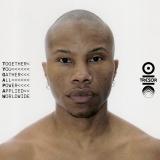
May 2026 marks the arrival of TYGAPAW (aka Dion McKenzie)’s first full-length album on Tresor Records, entitled Together You Gather All Power Applied Worldwide. An acronym of its creator’s name, TYGAPAW’s third studio album is a deeply personal collection of music building worlds where Black queer and trans siblings can thrive, while unifying dancefloors worldwide. A proposition that collective wisdom liberates us from the matrix of domination we live within. The album unfolds as the latest chapter in TYGAPAW’s ongoing techno opera opus, continuing to center the voices of Black women, which surface as layered incantations rather than lyrics - powerful, haunting, sensual, activating.
With the process of creating the album starting in 2023, as TYGAPAW (Dion McKenzie) was in the first year of their transition, the music reflects the intensity of that period, where they were experiencing deplatforming as a response to the shift in their physical appearance: Tracks like ‘M32 Riddim’ and ‘Helicopter hovers over my Crown Heights Apartment’ feature high-paced rhythms intersecting with intense siren-like synths to form demanding compositions echoing a heightened sense of alert. Yet throughout the album, relief comes in the form of TYGAPAW’s vocal features, co-conspirators, and chosen family, whose voices are treated with reverb and echo, a sonic fingerprint that leads back to the pioneers in the legendary studios of TYGAPAW’s native land, Jamaica, an important reminder that the past will always inform the future. It is an album for dancers first and foremost, where joy, defiance, and integration with the natural body coexist, and every drop feels less like a climax than a transformation. Expect a bass that permeates your soul and melodic synthesized sequenced phrases echoing the dancehall eras of TYGAPAW’s youth, reshaped into hypnotic melodies that glow over industrial kicks designed to command attention, reasserting Jamaica's pioneering yet often overlooked contribution to electronic music.
In the opening track, ‘Can I Live’, Precious Okoyomon’s words feel like the beginning of a ritual; setting the intentions for the rest of the proceedings. As McKenzie puts it, their “work is about regeneration, resetting, getting integrated into nature, and about rebirth. That’s the tone I wanted to set at the outset of the album.” Ms Carrie Stacks continues this thread of support in ‘Don’t Panic’ with heavily processed vocals on top of a beat that takes inspiration from another important ingredient in the antidote to the oppression of isolation: Ballroom culture. “ I feel like I found my queerness in Ballroom, that’s why this track is very important to me.”
Echoes of NYC Black queer nightlife scene also permeate in the energetic drums of ‘Exorcise the Language of Domination’, in which Julianna Huxtable’s spoken performance complements the various movements and tones of the music. “My producer brain thought this was the one that Juliana’s vocals would be best suited for. I hinted: ‘what do you think of this one?’ She just went into her notes and picked some passages to go with the first section of the track. From there, it was a year-long process of development. It required time and space for this thing to evolve, but I think it’s one of the most powerful tracks on the album.” London’s SUUTOO contributes the album’s only musical collaboration on ‘B2B’, a track that emerged from sessions in McKenzie’s New York studio where the real objective was to connect and have fun; a time out from the demands of life outside.
The album closes out with a double hit of emotion in the form of ‘Effects of Resistance and Black Trans Masculine Experience’. The former features South African scholar Khanyisile Mbongwa drawing connections that exist between Africa and the Black diaspora, whilst looking to the future and calling for a shared sense of community.
The latter piece, an instrumental version of the piece which featured on the IMMIGRANT E.P. of 2025 is a gentle and deeply affecting end to the record, a place of peace and acceptance. This end-of-cycle tone is mirrored in the sleeve photography, which also ties back to IMMIGRANT by finally revealing what was hidden: a portrait of the artist fully self-actualized; a step towards true inner liberation. TYGAPAW is sonically defiant across this album; bass frequencies feel tactile — less heard than inhabited — infectious lead synth melodies remain with you long after the track ends. An overall sound that leaves asserting an urgent need for connection. From Detroit to New York to Berlin to Jamaica, despite geographic distance, this album reminds us that we remain in solidarity, recognising that meaningful world-building requires collective input and action, both personal and communal, if we are to move toward liberation.
- 1: From The Air
- 2: Good Evening
- 3: Cloud
- 4: Let X=X
- 5: It Tango
- 6: Drum Solo
- 7: Teachers
- 8: Story To No One
- 9: Gravity’s Angel
- 10: Ramon
- 11: New Angels
- 12: Walk The Dog
- 13: Looking At The Moon
- 14: Church Of Panic
- 15: Dog Show
- 16: Junior Dad
- 17: O Superman
- 18: The Lake
- 19: Swimming
- 20: It’s Not The Bullet That Kills You
- 21: Only An Expert
- 22: What Are Days For?
- 23: How To Feel Sad Without Being Sad
Nonesuch Records releases Let X=X, by Laurie Anderson with Sexmob. This triple-LP/double-CD set was recorded live during a 2023 tour by Anderson and the jazz band Sexmob – Steven Bernstein and Briggan Krauss on brass, Kenny Wollesen on percussion, Douglas Wieselman on winds and guitar, and Tony Scherr on bass. Its cover and interior packaging feature paintings by Anderson. The album features 23 songs, including many favourites from throughout Anderson’s career, performed in new arrangements – plus one by Lou Reed and Metallica, ‘Junior Dad’. Anderson and Sexmob play more US and international dates this spring and summer (details below).
The New York Times said Anderson and Sexmob’s concert at the Brooklyn Academy of Music (BAM) ‘wasn’t a historical recreation of past recordings; Sexmob’s sound is a beefier one than on Anderson’s albums. With musicians who can double on electric guitar and bass clarinet, its members offered a rich range of textural variation throughout the evening.’
Laurie Anderson is one of America’s most renowned – and daring – creative pioneers. Her work, which encompasses music, visual art, poetry, film, and photography, has challenged and delighted audiences around the world for more than 40 years. In a recent 60 Minutes profile, Anderson Cooper said she ‘is a pioneer of the avant-garde, but... that doesn’t begin to describe what she creates... It’s experienced by audiences who come to see her perform: singing, telling stories, and playing strange violins of her own invention... she blends the beautiful and the bizarre, challenging audiences with homilies and humor. She blurs boundaries across music, theater, dance, and film.’ The Washington Post has said she ‘doesn’t just tell stories; she draws out every word with a kind of physical pleasure, tasting its flavor as she probes the everyday mysteries of life.’
Anderson released her first album with Nonesuch Records, the critically lauded Life on a String, in 2001. Her subsequent releases on the label include Live in New York (2002); Homeland (2010); the soundtrack to her acclaimed film Heart of a Dog (2015); and her Grammy-winning collaboration with Kronos Quartet, Landfall (2018). Nonesuch released a re-mastered edition of Big Science in 2007 for its 25th anniversary, followed by a vinyl LP re-issue in 2021; the album includes Anderson’s beloved, surprise hit, song, ‘O Superman’, which also is featured on Let X=X. Her recent Nonesuch release was 2024’s Amelia, about renowned female aviator Amelia Earhart’s tragic last flight.
Anderson’s virtual-reality film La Camera Insabbiata, with Hsin-Chien Huang, won the 2017 Venice Film Festival Award for Best VR Experience, and, in 2018, Skira Rizzoli published her book All the Things I Lost in the Flood: Essays on Pictures, Language and Code, the most comprehensive collection of her artwork to date. Recent exhibitions and installations of Anderson’s work include Habeas Corpus at New York’s Park Avenue Armory; her largest exhibition to date, The Weather, at Washington, DC’s Smithsonian’s Hirshhorn Museum of Modern Art; and Looking into a Mirror Sideways at Stockholm’s Moderna Museet, which was her largest European exhibition to date.
Laurie Anderson was awarded the 2024 Stephen Hawking Medal for Science Communication, along with Christopher Nolan and David Attenborough, and the International Astronomical Union named a minor planet in her honour: Asteroid 270588, Laurieanderson. That same year, she was awarded a Grammy Lifetime Achievement Award.
- A1: Boundaries
- A2: Cyber Dreams (Patrice Scott Remix)
- A3: Nasty (Feat. Marquinn Mason)
- B1: Cyber Dreams (Feat. Domenica Fossati)
- B2: Foster Child
Water Sign is the debut EP from producer and instrumentalist John Silas: a five-track suite that moves fluidly between peak-time dance and inward reflection. Deeply aligned with the open-eared ethos of NYC’s Love Injection Records, the release channels house and jazz into an emotive personal chronicle shaped by movement, memory, and community.
At its thematic center is “Boundaries,” a dynamically arranged dance-floor meditation that begins with piano, 4/4 kick and restless hi-hats before blooming into radiant synth work reminiscent of classic disco auteur Patrick Adams. Midway, the track shifts—electric piano, whistles and percussion reframing the groove into what Silas calls “hues of vulnerability.” The result mirrors the arc of love, release and renewal.“Cyber Dreams” leans into lush escapism, buoyed by surging keys and impassioned flute from Domenica Fossati, while a remix from Detroit mainstay Patrice Scott (Sistrum Records) adds unmistakable Motor City weight. “Foster Child” nods to Silas’ hero, the late Paul Johnson with exuberant Chicago spirit, and “Nasty” delivers a concise workout featuring Marquinn Mason’s robust saxophone.
Water Sign reflects Silas’s trajectory—from a childhood steeped in Soul Train, coming of age with hip hop, to MPC craftsmanship, his Detroit musical family and present-day Brooklyn—into a deeply personal record equally suited to discerning DJs and deep listeners.