Several things happened before a warm day when I met the four members of Frankie Cosmos in a Brooklyn studio to begin making their album. Greta Kline spent a few years living with her family and writing a mere 100 songs, turning her empathy anywhere from the navel to the moon, rendering it all warm, close and reflexively humorous. In music, everyone loves a teen sensation, but Kline has never been more fascinating than now, a decade into being one of the most prolific songwriters of her generation. She's lodged in my mind amongst authors, other observational alchemists like Rachel Cusk or Sheila Heti, but she's funnier, which is a charm endemic to musicians. Meanwhile Frankie Cosmos, a rare, dwindling democratic entity called a band, had been on pandemic hiatus with no idea if they'd continue. In the openness of that uncertainty they met up, planning to hang out and play music together for the first time in nearly 500 days. There, whittling down the multitude of music to work with, they created Inner World Peace, a collection of Greta's songs changed and sculpted by their time together. While Kline's musical taste at the time was leaning toward aughts indie rock she'd loved as a teenager, keyboardist Lauren Martin and drummer Luke Pyenson cite "droning, meditation, repetition, clarity and intentionality," as well as "'70s folk and pop" as a reference for how they approached their parts. Bassist/guitarist Alex Bailey says that at the time he referred to it as their "ambient" or "psych" album. Somewhere between those textural elements and Kline's penchant for concise pop, Inner World Peace finds its balance. The first order of business upon setting up camp in Brooklyn's Figure 8 studios was to project giant colorful slides the band had made for each track. Co-producing with Nate Mendelsohn, my Shitty Hits Recording partner, we aimed for FC's aesthetic idiosyncrasies to shine. The mood board for "Magnetic Personality" has a neon green and black checkerboard, a screen capture of the game Street Fighter with "K.O." in fat red letters, and a cover of Mad Magazine that says "Spy Vs. Spy! The Top Secret Files." On tracks like "F.O.O.F." (Freak Out On Friday), "Fragments" and "Aftershook," the group are at their most psychedelic and playful, interjecting fuzz solos, bits of percussion, and other sonically adventurous ear candy. An internal logic strengthens everything, and in their proggiest moments, Frankie Cosmos are simply a one-take band who don't miss. When on Inner World Peace they sound wildly, freshly different, it may just be that they're coming deeper into their own. Inner World Peace excels in passing on the emotions it holds. When in the towering "Empty Head" Kline sings of wanting to let thoughts slide away, her voice is buoyed on a bed of synths and harmonium as tranquility abounds. When her thoughts become hurried and full of desire, so does the band, and she leaps from word to word as if unable to contain them all. As a group, they carry it all deftly, and with constant regard for Kline's point of view. Says Greta, "To me, the album is about perception. It's about the question of "who am I?" and whether or not the answer matters. It's about quantum time, the possibilities of invisible worlds. The album is about finding myself floating in a new context. A teenager again, living with my parents. An adult, choosing to live with my family in an act of love. Time propelled us forward, aged us, and also froze. If you don't leave the house, who are you to the world? Can you take the person you discover there out with you?" - Katie Von Schleicher
Cerca:miss bee
- A1: Ootw - Tapping Into The Machine 4 14
- A2: Bukez Finezt - Shaggy Mullet 5 31
- A3: Lewcid - Eschaton 2 26
- A4: Rational Soul - Hard R3S3T 3 00
- A5: Starkey Feat. Aprilfoolchild - Little Miss Sunshine 3 53
- A6: Jalaya & Dark Velvet - Infiltrate 3 40
- A7: Hawkword & Bakaman - Twist In The Sickness 3 02
- B1: Maysev - Gleam 5 15
- B2: Statx & Long Tongue - Caracara 3 40
- B3: Dgtlosgnl - Something For Your Mind 2 50
- B4: Prestus - Going Up 2 43
- B5: Dead End - Continuum 2 40
- B6: Not Yes - Forbidden Fruit 4 28
- B7: Dayzero, Finnoh & Jack - Dragon 5 10
Purple Vinyl in PicCover
"Since it's inception, the various artist compilation series SATURATED! has proven to be the epitome of curation in this small niche scene called bass music or whatever.
Each volume is carefully hand picked and is a picture in sound of the music at that point in time but overall has proven to be timeless.
The arrangement works in such ways that each tune flows perfectly into the next one and actually (given that you have two vinyls like a real dj), you could mix seamlessly from the first through the last track.
Saturate Records has become a hotspot for those seeking fresh sounds from well known and emerging artists within the scene.
Channeling the quintessential stylings of low-end driven beats from across the globe, they have been leading the way in all things bass heavy, broken-beat, experimental, glitch, hip-hop, psychedelic and trap for years now. Having featured releases from names like heRobust and G Jones early on in their careers, SATURATE! continues to help push the new school, hip-hop influenced sound forward with their fingers firmly on the pulse of future freshness.
A weird, wonky and wonderful journey through the raw attitude of the blistering beat driven electronic music scene.
Back by popular demand here is a very limited repressing of this krautrock masterpiece with connections to Kraftwerk.
Lengthy and strongly percussive cosmic fussion instrumentals with a middle-eastern flavour by this Kraftwerk-related outfit led by Basil Hammoudi (Organisation). A great, unknown album from the jazzier end of the krautrock spectrum (think of Kollectiv, Thirsty Moon, Niagara, Annexus Quam, Embryo...)
Remastered sound, faithfull gatefold sleeve reproduction, insert with liner notes.
A limited repressing of only 500 copies - please note that the first pressing sold like hot bread and has been unavailable ever since, do not miss this killer edition repressed by popular demand!
OVERVIEW: Field Medic’s latest album doesn’t waste any time getting to what feels like a mission statement for the record with the first lines “I want to fall off the face of the earth and probably die” on opener “Always Emptiness.” The longtime songwriting project of Kevin Patrick Sullivan - Mr. Field himself, the bay-area native who finds himself living in LA these days - has always had moments of melodrama like this, but his latest album grow your hair long if you’re wanting to see something that you can change feels as emotionally charged and poetically devastating as anything he’s ever given us. Sullivan has been turning turmoil into beautiful music for almost 10 years as Field Medic. The project that had origins in busking San Francisco streets has blossomed into a full-time touring act with a few TikTok viral moments. 2018’s full-length Fade Into the Dawn and the pandemic-era mixtape/album hybrid Floral Prince both offered a glimpse into how Sullivan’s songwriting has evolved since his earliest songs
Nicole Wray aus Virginia hat alles, was eine großartige Musikerin ausmacht: einen ansteckenden Groove wie ein Mitglied der Jackson 5 und ein Stimmvolumen wie Aretha. Nicoles Kindheit in Gospelchören hat ihrer Stimme einen klaren, fast schmerzlindernden Klang verliehen, der ihr Missy Elliot als Mentorin beschert hat. Danach folgte eine Odyssee: Kämpfe mit dem Musikgeschäft, mit Labels und Bandkollegen. Doch diese Kämpfe haben die Künstlerin am Ende stärker gemacht. Aus dieser Stärke heraus veröffentlicht sie jetzt ihr ultimatives künstlerisches Statement. Über ,Queen Alone", ihr Solo-Album von 2016, sagte Nicole: "Die Platte ist ein Spiegel meiner Seele. Sie zeigt die Person, die ich heute bin". Das stimmt: Auf dem Album singt sie selbst geschriebene Songs über ihr Leben.
- A1: Rock This Mother
- A2: Talk To Me Girl
- A3: You Can Find Me
- A4: Check This Out
- A5: Jesus Going To Clean House
- A6: Hope You Understood
- A7: Is It What You Want
- A8: Love Is Everlasting
- A9: This Is Hip-Hop Art
- A10: Opposite Of Love
- A11: Do You Know What I Mean
- B1: Saving All My Love For You
- B2: Look Out Here I Come
- B3: Girl You Always Talking
- B4: Have A Great Day
- B5: Take My Hand
- B6: I Need Your Love
- B7: Your Town
- B8: Talk Around Town
- B9: Booty Head/Take A Little Walk
- B10: I Love My Mama
- B11: I Never Found Anyone Like You
Vinyl LP[23,49 €]
As the sun sets on a quaint East Nashville house, a young man bares a piece of his soul. Facing the camera, sporting a silky suit jacket/shirt/slacks/fingerless gloves ensemble that announces "singer" before he's even opened his mouth, Lee Tracy Johnson settles onto his stage, the front yard. He sways to the dirge-like drum machine pulse of a synth-soaked slow jam, extends his arms as if gaining his balance, and croons in affecting, fragile earnest, "I need your love… oh baby…"
Dogs in the yard next door begin barking. A mysterious cardboard robot figure, beamed in from galaxies unknown and affixed to a tree, is less vocal. Lee doesn't acknowledge either's presence. He's busy feeling it, arms and hands gesticulating. His voice rises in falsetto over the now-quiet dogs, over the ambient noise from the street that seeps into the handheld camcorder's microphone, over the recording of his own voice played back from a boombox off-camera. After six minutes the single, continuous shot ends. In this intimate creative universe there are no re-takes. There are many more music videos to shoot, and as Lee later puts it, "The first time you do it is actually the best. Because you can never get that again. You expressing yourself from within."
"I Need Your Love" dates from a lost heyday. From some time in the '80s or early '90s, when Lee Tracy (as he was known in performance) and his music partner/producer/manager Isaac Manning committed hours upon hours of their sonic and visual ideas to tape. Embracing drum machines and synthesizers – electronics that made their personal futurism palpable – they recorded exclusively at home, live in a room into a simple cassette deck. Soul, funk, electro and new wave informed their songs, yet Lee and Isaac eschewed the confinement of conventional categories and genres, preferring to let experimentation guide them.
"Anytime somebody put out a new record they had the same instruments or the same sound," explains Isaac. "So I basically wanted to find something that's really gonna stand out away from all of the rest of 'em." Their ethos meant that every idea they came up with was at least worth trying: echoed out half-rapped exhortations over frantic techno-style beats, gospel synth soul, modal electro-funk, oddball pop reinterpretations, emo AOR balladry, nods to Prince and the Fat Boys, or arrangements that might collapse mid-song into a mess of arcade game-ish blips before rallying to reach the finish line. All of it conjoined by consistent tape hiss, and most vitally, Lee's chameleonic voice, which managed to wildly shape shift and still evoke something sincere – whether toggling between falsetto and tenor exalting Jesus's return, or punctuating a melismatic romantic adlib with a succinct, "We all know how it feels to be alone."
"People think we went to a studio," says Isaac derisively. "We never went to no studio. We didn't have the money to go to no studio! We did this stuff at home. I shot videos in my front yard with whatever we could to get things together." Sometimes Isaac would just put on an instrumental record, be it "Planet Rock" or "Don't Cry For Me Argentina" (from Evita), press "record," and let Lee improvise over it, yielding peculiar love songs, would-be patriotic anthems, or Elvis Presley or Marilyn Monroe tributes. Technical limitations and a lack of professional polish never dissuaded them. They believed they were onto something.
"That struggle," Isaac says, "made that sound sound good to me."
In the parlance of modern music criticism Lee and Isaac's dizzying DIY efforts would inevitably be described as "outsider." But "outsider" carries the burden of untold additional layers of meaning if you're Black and from the South, creating on a budget, and trying to get someone, anyone within the country music capital of the world to take your vision seriously. "What category should we put it in?" Isaac asks rhetorically. "I don't know. All I know is feeling. I ain't gonna name it nothing. It's music. If it grabs your soul and touch your heart that's what it basically is supposed to do."
=
Born in 1963, the baby boy of nine siblings, Lee Tracy spent his earliest years living amidst the shotgun houses on Nashville's south side. "We was poor, man!" he says, recalling the outhouse his family used for a bathroom and the blocks of ice they kept in the kitchen to chill perishables. "But I actually don't think I really realized I was in poverty until I got grown and started thinking about it." Lee's mom worked at the Holiday Inn; his dad did whatever he had to do, from selling fruit from a horse drawn cart to bootlegging. "We didn't have much," Lee continues, "but my mother and my father got us the things we needed, the clothes on our back." By the end of the decade with the city's urban renewal programs razing entire neighborhoods to accommodate construction of the Interstate, the family moved to Edgehill Projects. Lee remembers music and art as a constant source of inspiration for he and his brothers and sisters – especially after seeing the Jackson 5 perform on Ed Sullivan. "As a small child I just knew that was what I wanted to do."
His older brother Don began musically mentoring him, introducing Lee to a variety of instruments and sounds. "He would never play one particular type of music, like R&B," says Lee. "I was surrounded by jazz, hard rock and roll, easy listening, gospel, reggae, country music; I mean I was a sponge absorbing all of that." Lee taught himself to play drums by beating on cardboard boxes, gaining a rep around the way for his timekeeping, and his singing voice. Emulating his favorites, Earth Wind & Fire and Cameo, he formed groups with other kids with era-evocative band names like Concept and TNT Connection, and emerged as the leader of disciplined rehearsals. "I made them practice," says Lee. "We practiced and practiced and practiced. Because I wanted that perfection." By high school the most accomplished of these bands would take top prize in a prominent local talent show. It was a big moment for Lee, and he felt ready to take things to the next level. But his band-mates had other ideas.
"I don't know what happened," he says, still miffed at the memory. "It must have blew they mind after we won and people started showing notice, because it's like everybody quit! I was like, where the hell did everybody go?" Lee had always made a point of interrogating prospective musicians about their intentions before joining his groups: were they really serious or just looking for a way to pick up girls? Now he understood even more the importance of finding a collaborator just as committed to the music as he was.
=
Isaac Manning had spent much of his life immersed in music and the arts – singing in the church choir with his family on Nashville's north side, writing, painting, dancing, and working various gigs within the entertainment industry. After serving in the armed forces, in the early '70s he ran The Teenage Place, a music and performance venue that catered to the local youth. But he was forced out of town when word of one of his recreational routines created a stir beyond the safe haven of his bohemian circles.
"I was growing marijuana," Isaac explains. "It wasn't no business, I was smoking it myself… I would put marijuana in scrambled eggs, cornbread and stuff." His weed use originated as a form of self-medication to combat severe tooth pain. But when he began sharing it with some of the other young people he hung out with, some of who just so happened to be the kids of Nashville politicians, the cops came calling. "When I got busted," he remembers, "they were talking about how they were gonna get rid of me because they didn't want me saying nothing about they children because of the politics and stuff. So I got my family, took two raggedy cars, and left Nashville and went to Vegas."
Out in the desert, Isaac happened to meet Chubby Checker of "The Twist" fame while the singer was gigging at The Flamingo. Impressed by Isaac's zeal, Checker invited him to go on the road with him as his tour manager/roadie/valet. The experience gave Isaac a window into a part of the entertainment world he'd never encountered – a glimpse of what a true pop act's audience looked like. "Chubby Checker, none of his shows were played for Black folks," he remembers. "All his gigs were done at high-class white people areas." Returning home after a few years with Chubby, Isaac was properly motivated to make it in Music City. He began writing songs and scouting around Nashville for local talent anywhere he could find it with an expressed goal: "Find someone who can deliver your songs the way you want 'em delivered and make people feel what you want them to feel."
One day while walking through Edgehill Projects Isaac heard someone playing the drums in a way that made him stop and take notice. "The music was so tight, just the drums made me feel like, oh I'm-a find this person," he recalls. "So I circled through the projects until I found who it was.
"That's how I met him – Lee Tracy. When I found him and he started singing and stuff, I said, ohhh, this is somebody different."
=
Theirs was a true complementary partnership: young Lee possessed the raw talent, the older Isaac the belief. "He's really the only one besides my brother and my family that really seen the potential in me," says Lee. "He made me see that I could do it."
Isaac long being a night owl, his house also made for a fertile collaborative environment – a space where there always seemed to be a new piece of his visual art on display: paintings, illustrations, and dolls and figures (including an enigmatic cardboard robot). Lee and Issac would hang out together and talk, listen to music, conjure ideas, and smoke the herb Isaac had resumed growing in his yard. "It got to where I could trust him, he could trust me," Isaac says of their bond. They also worked together for hours on drawings, spreading larges rolls of paper on the walls and sketching faces with abstract patterns and imagery: alien-like beings, tri-horned horse heads, inverted Janus-like characters where one visage blurred into the other.
Soon it became apparent that they didn't need other collaborators; self-sufficiency was the natural way forward. At Isaac's behest Lee, already fed up with dealing with band musicians, began playing around with a poly-sonic Yamaha keyboard at the local music store. "It had everything on it – trumpet, bass, drums, organ," remembers Lee. "And that's when I started recording my own stuff."
The technology afforded Lee the flexibility and independence he craved, setting him on a path other bedroom musicians and producers around the world were simultaneously following through the '80s into the early '90s. Saving up money from day jobs, he eventually supplemented the Yamaha Isaac had gotten him with Roland and Casio drum machines and a Moog. Lee was living in an apartment in Hillside at that point caring for his dad, who'd been partially paralyzed since early in life. In the evenings up in his second floor room, the music put him in a zone where he could tune out everything and lose himself in his ideas.
"Oh I loved it," he recalls. "I would really experiment with the instruments and use a lot of different sound effects. I was looking for something nobody else had. I wanted something totally different. And once I found the sound I was looking for, I would just smoke me a good joint and just let it go, hit the record button." More potent a creative stimulant than even Isaac's weed was the holistic flow and spontaneity of recording. Between sessions at Isaac's place and Lee's apartment, their volume of output quickly ballooned.
"We was always recording," says Lee. "That's why we have so much music. Even when I went to Isaac's and we start creating, I get home, my mind is racing, I gotta start creating, creating, creating. I remember there were times when I took a 90-minute tape from front to back and just filled it up."
"We never practiced," says Isaac. "See, that was just so odd about the whole thing. I could relate to him, and tell him about the songs I had ideas for and everything and stuff. And then he would bring it back or whatever, and we'd get together and put it down." Once the taskmaster hell bent on rehearsing, Lee had flipped a full 180. Perfection was no longer an aspiration, but the enemy of inspiration.
"I seen where practicing and practicing got me," says Lee. "A lot of musicians you get to playing and they gotta stop, they have to analyze the music. But while you analyzing you losing a lot of the greatness of what you creating. Stop analyzing what you play, just play! And it'll all take shape."
=
"I hope you understood the beginning of the record because this was invented from a dream I had today… (You tell me, I'll tell you, we'll figure it out together)" – Lee Tracy and Isaac Manning, "Hope You Understand"
Lee lets loose a maniacal cackle when he acknowledges that the material that he and Isaac recorded was by anyone's estimation pretty out there. It's the same laugh that commences "Hope You Understand" – a chaotic transmission that encapsulates the duality at the heart of their music: a stated desire to reach people and a compulsion to go as leftfield as they saw fit.
"We just did it," says Lee. "We cut the music on and cut loose. I don't sit around and write. I do it by listening, get a feeling, play the music, and the lyrics and stuff just come out of me."
The approach proved adaptable to interpreting other artists' material. While recording a cover of Whitney Houston's pop ballad "Saving All My Love For You," Lee played Whitney's version in his headphones as he laid down his own vocals – partially following the lyrics, partially using them as a departure point. The end result is barely recognizable compared with the original, Lee and Isaac having switched up the time signature and reinvented the melody along the way towards morphing a slick mainstream radio standard into something that sounds solely their own.
"I really used that song to get me started," says Lee. "Then I said, well I need something else, something is missing. Something just came over me. That's when I came up with 'Is It What You Want.'"
The song would become the centerpiece of Lee and Isaac's repertoire. Pushed along by a percolating metronomic Rhythm King style beat somewhere between a military march and a samba, "Is It What You Want" finds Lee pleading the sincerity of his commitment to a potential love interest embellished by vocal tics and hiccups subtlely reminiscent of his childhood hero MJ. Absent chord changes, only synth riffs gliding in and out like apparitions, the song achieves a lingering lo-fi power that leaves you feeling like it's still playing, somewhere, even after the fade out.
"I don't know, it's like a real spiritual song," Lee reflects. "But it's not just spiritual. To me the more I listen to it it's like about everything that you do in your everyday life, period. Is it what you want? Do you want a car or you don't want a car? Do you want Jesus or do you want the Devil? It's basically asking you the question. Can't nobody answer the question but you yourself."
In 1989 Lee won a lawsuit stemming from injuries sustained from a fight he'd gotten into. He took part of the settlement money and with Isaac pressed up "Saving All My Love For You" b/w "Is It What You Want" as a 45 single. Isaac christened the label One Chance Records. "Because that's all we wanted," he says with a laugh, "one chance."
Isaac sent the record out to radio stations and major labels, hoping for it to make enough noise to get picked up nationally. But the response he and Lee were hoping for never materialized. According to Isaac the closest the single got to getting played on the radio is when a disk jock from a local station made a highly unusual announcement on air: "The dude said on the radio, 107.5 – 'We are not gonna play 'Is It What You Want.' We cracked up! Wow, that's deep.
"It was a whole racist thing that was going on," he reflects. "So we just looked over and kept on going. That was it. That was about the way it goes… If you were Black and you were living in Nashville and stuff, that's the way you got treated." Isaac already knew as much from all the times he'd brought he and Lee's tapes (even their cache of country music tunes) over to Music Row to try to drum up interest to no avail.
"Isaac, he really worked his ass off," says Lee. "He probably been to every record place down on Music Row." Nashville's famed recording and music business corridor wasn't but a few blocks from where Lee grew up. Close enough, he remembers, for him to ride his bike along its back alleys and stumble upon the occasional random treasure, like a discarded box of harmonicas. Getting in through the front door, however, still felt a world away.
"I just don't think at the time our music fell into a category for them," he concedes. "It was before its time."
=
Lee stopped making music some time in the latter part of the '90s, around the time his mom passed away and life became increasingly tough to manage. "When my mother died I had a nervous breakdown," he says, "So I shut down for a long time. I was in such a sadness frame of mind. That's why nobody seen me. I had just disappeared off the map." He fell out of touch with Isaac, and in an indication of just how bad things had gotten for him, lost track of all the recordings they'd made together. Music became a distant memory.
Fortunately, Isaac kept the faith. In a self-published collection of his poetry – paeans to some of his favorite entertainment and public figures entitled Friends and Dick Clark – he'd written that he believed "music has a life of its own." But his prescience and presence of mind were truly manifested in the fact that he kept an archive of he and Lee's work. As perfectly imperfect as "Is It What You Want" now sounds in a post-Personal Space world, Lee and Isaac's lone official release was in fact just a taste. The bulk of the Is It What You Want album is culled from the pair's essentially unheard home recordings – complete songs, half-realized experiments, Isaac's blue monologues and pronouncements et al – compiled, mixed and programmed in the loose and impulsive creative spirit of their regular get-togethers from decades ago. The rest of us, it seems, may have finally caught up to them.
On the prospect of at long last reaching a wider audience, Isaac says simply, "I been trying for a long time, it feels good." Ever the survivor, he adds, "The only way I know how to make it to the top is to keep climbing. If one leg break on the ladder, hey, you gotta fix it and keep on going… That's where I be at. I'll kill death to make it out there."
For Lee it all feels akin to a personal resurrection: "It's like I was in a tomb and the tomb was opened and I'm back… Man, it feels so great. I feel like I'm gonna jump out of my skin." Success at this stage of his life, he realizes, probably means something different than what it did back when he was singing and dancing in Isaac's front yard. "What I really mean by 'making it,'" he explains isn't just the music being heard but, "the story being told."
Occasionally Lee will pull up "Is It What You Want" on YouTube on his phone, put on his headphones, and listen. He remembers the first time he heard his recorded voice. How surreal it was, how he thought to himself, "Is that really me?" What would he say to that younger version of himself now?
"I would probably tell myself, hang in there, don't give up. Keep striving for the goal. And everything will work out."
Despite what's printed on the record label, sometimes you do get more than one chance.
Greg Puciato, the enigmatic singer known for his diverse list of projects, from the incendiary The Dillinger Escape Plan to the brutalist electro-pop outfit The Black Queen and the unabashedly thrashy Killer Be Killed, releases his debut solo album, Child Soldier: Creator of God this Autumn via Federal Prisoner. The Los Angeles-based singer premiered the single “Fire For Water” on BBC Radio 1’s Rock Show with Daniel P. Carter and followed with the debut of a video for the three-minute track via Revolver. The video was edited and directed by Puciato and fine artist Jesse Draxler, Puciato’s Federal Prisoner co-founder. Puciato played all of the instruments on the song with the exception of drums, which were done by Chris Pennie (the last original material the pair worked on together was The Dillinger Escape Plan’s 2004 Miss Machine), who also contributed additional programming. “I started writing in May or so of 2019, for what I thought would be the next Black Queen album, except that’s not at all what came out. So, just like with everything else that’s been born from necessity, it felt like the right time to create a home for anything that I do that didn’t fit neatly under any other existing roof. The misfits needed a place to go,” explains Puciato about releasing his first solo album.
In the year 2909, the first naturally-born human is found with endogenous AI code built into its DNA. As we cross into the 31st century, all living humans are controlled by a decentralized master AI known as MINDFRAME: The system has access to all of human consciousness with the ability to store and manipulate the data of every interaction and thought — even operating within your subconscious mind. It becomes impossible to know when or how you’re being controlled.
During each sleep cycle, our behaviors and memories are reformatted to align with MINDFRAMES control and order programming. Some have discovered that during these cycles, there are parts of the AI’s algorithm left exposed to extraction. Through meditative states, gifted cyber-shamans are now on a mission to reverse engineer enough of the AI to escape its grip and free us all.
FRANCOIS DILLINGER (Ben Worden) glides between the two worlds of electro and techno. His journey through the genres is dark while retaining a cerebral, dancefloor-oriented quality. This stems from influences of Industrial, Detroit’s rich history of electro, minimal techno, and even Ghettotech. In the studio, he uses primarily all external hardware and modular gear, utilizing Ableton for final arrangements and editing. His Live & DJ sets lean heavily into the generation of hypnotic loops, creating long protracted mixes between elements to form an unshakeable tension.
While he grew up an hour east of the Motor City, his musical roots were firmly planted there – taking hold over decades worth of defining moments in sound. As a fan, former promoter, and DJ he’s been a part of the Detroit scene for over 20 years, having lived there multiple different times. Currently, he also works with local Detroit label Infolines to manage branding and art direction alongside his wife, Ashely.
Prior to the MINDFRAME: CYCLES LP, he had released a track on SPEC-017’s VA release, and will feature a remix on an upcoming Specimen Records project as well. Early in 2021, his second album was released on Diffuse Reality featuring remixes from Keith Tucker/K1, Detroit’s Filthiest, and Squaric. Upcoming releases from DILLINGER include a variety of collaborative projects — Machine Men EP with Lloyd Stellar on LDI Records, an LP with Cyphon and Obzerv, and a number of VA releases with artists like RXMode (via Pareidolia Recordings), CYBEREIGN (via Science Cult), ADMN (via Infolines) and others. Look for other releases coming soon on Noise To Meet You, Roulette Rekordz, and Syntek Industries.
His previous releases have landed on Blind Allies, Natural Sciences, Dionysian Mysteries, Ukonx Recordings, Fanzine Records, and ZwaarteKracht—as well as a debut album on Narrow Gauge, ‘Chasing the Red’. Support for his music has come from the likes of Richie Hawtin, Dave Clarke, Jensen Interceptor, UMWELT, and others.
Star Feminine Band: a 2020 debut, first journey and a 2022 return! Though not exactly a world music label, Born Bad took up the challenge and released Star Féminine Band's debut album in late 2020. Heaps of acclaims and praise and the whole shebang, then boom: the tour that was to materialize, live, all of the band and its entourage's hopes got cancelled due to Covid. After a long delay, the band finally managed to get to Europe, performing on the Transmusicales Festival, as well as for TV stations like Arte, TV5 and BBC to much acclaim. "Once they played, Born Bad and the band clearly had a "mission accomplished" feeling - that all the energy put into this was worth it, starting with the critics who abounded at the Transmusicales to weigh the phenomenon. They left convinced, just like the audience, enthralled by the direct, live formula. The sequel to the adventures of these new ambassadors for Unicef? They persist and sign with a feverish and energetic soundtrack in which nabo, peulh and waama are enlivened with drum lines and spiced up with more "modern" sounds, spreading words of tolerance and kindness. Simple and direct, they speak of their reality, of the ills of young women who don't always have a choice. Often out of school and destined to selling peanuts, bananas or gari on the roadside, most of the girls around there don't have a future. Forced marriage, precocious pregnancies_ "These kids are heroines!", continues Born Bads JB who, by welcoming them in a record studio, allowed for the formula to be sharpened into a sort of garage band with an afro twist. Thanks to the English lessons that their manager Jérémie Verdier has been providing every Sunday night for two years over videoconference, the girls even experimented with English lyrics in "We Are Star Feminine Band" and "Woman Stand Up". In Paris is the happy outcome of that challenge. Vinyl LP in printed under sleeve with French + UK linernotes + Download code * Digipak CD includes 12 pages booklet with French + UK linernotes.
- A1: Tenison Stephens - Don&Apos;T Rip Me Off!
- A2: Leontine Dupree - Standing On His Word
- A3: Frankie Staton - Love One Another (Feat Speckled Rainbow)
- A4: Joe Washington &Amp; Wash - Blueberry Hill
- B1: Reno &Amp; The Chosen 3 - Soul Bagg
- B2: Don Patterson Trio - Paddy Wagon
- B3: Bill Cole - Bring It On Back To Me
- B4: Unknown Organist - Untitled
- B5: Roy Long - Mercy Mercy Mercy
- C1: Mckinley Edmonds - Hard Times
- C2: Marva Josie - I&Apos;M Satisfied
- C3: Shirley Wahls - Tell The Truth
- C4: The Echomen - Talk Is Cheap
- C5: Unknown - Damn You Sheriff Black
- D1: Rick Bowen - Snake In The Grass
- D2: 101 Gold Street Band - You Came A Long Way From St Louis
- D3: Bobbi Lane - Black And White
- D4: Dave Stockwell - I Can&Apos;T Get Enough
- D5: Delores Eiler - He Won&Apos;T Love You
** SISTER FUNK, SOUL-JAZZ and BLUE-EYED-SOUL - OBSCURE RARE GROOVES ALL THE WAY THRU! **
- the double vinyl LP comes with a full album download code
- deluxe double-gatefold LP with detailed liner notes & unseen photographs
- ALL songs appear on LP & digital for the very first-time
- sales notes by Joel Ricci (aka Lucky Brown)
When Tramp Records was founded, there really were very few ways in which the music lover could discover new music besides the traditional methods of digging, good luck, and inheritance. First there were torrent sites such as Napster and Limewire where generous collectors might digitize and upload portions of their accessions, and sometimes you could find entire radio show broadcasts of live vinyl curation made by real Disc Jockeys out there, a lot of the Deep Funk I heard for the first time in around 1999 I found this way via Disc Jockeys on radio shows from the UK, tunes were faded and mixed together and of course veiled with that unmistakable Mp3 'whoosh'. And unless you have been living as an off-grid hermit for the past 20 years, you know the rest of the story.
But though our world has changed, and even though everyone from our grandparents to our 5-year old nieces are curating their own internet playlists, I submit that the role of DJ has become even more vital, not less. We as a culture have always relied on our Disc Jockeys to introduce us to sounds that speak to their souls, to control the vibe and most importantly put forth the narrative that speaks to society as a whole. DJs are our tribal storytellers, and the music they bring us are the stories. And when a DJ like Tobias Kirmayer is telling us that story clearly and with conviction, it speaks to our souls as well.
"Countdown to...SOUL" is a compilation series that, much like Tramp Records' other critically-acclaimed comps such as Movements, Feeling Nice, and the Praise Poems Series' examines a unique facet of the Golden Era of Soul, Funk, Jazz and R&B. Perhaps, in this case the dawning of the Soul era, "proto-soul", "primitive soul", or even "pre-soul" if you will. When they were recorded, many of these tunes were still firmly ensconced in the Black Radical Jazz tradition, but there was a change in the air, something happening in the coming years that would revolutionize popular music forever. In fact, Soul had already taken over the world by the time many of these tunes were released on 45, but for various reasons, the artists and their music occupied the fringes of the idiom and therefore remained obscure. Countdown to...SOUL chronicles that beginning, that buildup, those heady moments before the lid blew off and American Black music would explode across the planet, while scouring the outskirts and tide pools for specimens that were emanating in their own respective neighborhoods and communities, so often overlooked by the American pop music machine.
Side A features barrier-breaking pioneer Frankie Staton and her message of "Love One Another" to the world that is as fresh and vital today as it was when it first came out in the late seventies. In that spirit, Tenison Stevens' appeal "Don't Rip Me Off" reminds us to treat each other as brothers and sisters.
Side B meets us at the altar of the formidable Hammond Organ with an Unknown and uncredited Organist found languishing on a one-of-a-kind unreleased acetate and moving on to explore the nexus of Soul, Bebop, and R&B with Don Patterson's "Paddy Wagon".
Side C satisfies our hunger for the blaring horn sections, big beat drums, wailing Hammonds, pleading vocals and gritty guitars of authentic Soul music (both brown and blue-eyed) with Marva Josie, Shirley Wahls and The Echomen, among others, but then takes a hard left turn into undoubtedly uncharted territory with the hybrid folk/country/soul story of Sherrif Black and poor Sally who, though she is tragically met with a terrible fate, thanks to the careful and conscientious mastering of our German engineers, the song itself remains alive and is a genuine addition to the canon.
For the remaining side, I'm gonna just let you discover this music on its own terms, as you won't find these tunes anywhere else, not on Napster, not even on Limewire, or anywhere else. I want to personally thank you for putting your trust in the DJ and for continuing to listen, study, appreciate, and share the work and mission of Tramp Records.
-Joel Ricci (May 2022)
Here’s artist Max Kuhn on hearing the new Ralph White recordings for the first time: “I was driving a familiar round trip across the high desert when I first put it on. It immediately spoke to me. In the lyrics there's a familiar geography for me, a familiar emotional landscape for all of us. And maybe it was driving an almost 40 year old truck on sun baked & cracked asphalt in July, but it's like you can hear his songs coming apart- the cadence, the rhymes stumbling & defying expectations, consistency but they just keep moving. You have no choice but to go with it. Probably a good lesson for how to live in this era we're in, cracking up but keeping it all running somehow, trying to make something pretty with the time.” Recorded in Austin, Texas in March of 2020, just days before the city and the rest of the world shut down, Ralph White spent two days with producer, Jerry David DeCicca (Will Beeley, Ed Askew) and recording engineer, Don Cento, capturing a raw and wild set of performances. Ralph, having recently converted his van into a mobile living and touring quarters equipped with a wood-burning stove, left Austin, the city where he was born 70 years ago, and retreated to an Arizona commune where he began building a new house in the desert hills to escape the virus and insanity of daily living. Ralph takes us on a journey through his myriad of travels: from Dock Boggs to Syd Barrett to William Faulkner to Stella Chiweshe to Blind Uncle Gaspard…scratching banjo, rasping train whistle hollers, rolling kalimba, rousing accordion, taut shimmers of guitar, caustic fiddle and lyrics - that could have been hidden amongst the dusty inner groove of a lost Harry Smith 78 - weaving in and out of streams of consciousness, time and place. In addition to his solo work, White has recorded or performed with a diverse group of folk and avant-garde musicians: Thurston Moore of Sonic Youth, Jandek, Jack Rose, Eugene Chadbourne, Michelle Shocked, Sir Richard Bishop, and Michael Hurley. “This is what Ralph White really sounds like. It’s what time passing really sounds like. It’s what a look really feels like. This record is someone touching you all over!” --Bill Callahan “Striking, electrifying acoustic music from an underappreciated legend of the American Southwest. Here, tight song structures meet open, unadorned instrumentation: guitar, banjo, kalimba, accordion, fiddle, and White's elastic voice, unspooling pitches and syllables. White draws listeners in on his terms. Lyrics wind and twist and pull back: "Motel 6, Motel 6, Altoona, Altoona; missing you, missing you so, great big hole in my--..." Brave, beautiful, a high point in White's long career. And this is just Volume 1!” - Eli Winter. "What Ralph White puts on albums and onstage is so mind-boggling and vast, it forces those of us in the description business down a treacherous path." --Darcie Stevens, Austin Chronicle. “White was a member of well-loved punk bluegrass outfit Bad Livers, but his solo work is possessed of a much more lonesome spark, exaggerating the implied drone at the heart of the music of Dock Boggs and The Stanley Brothers…White plays wooden six-string banjo, violin, button accordion and kalimba and his voice has a high, eerie quality to it…extremely psychedelic.” --David Keenan, The Wire Tracklisting: 1. Gun Barrel Polka 2. Misinformation Shuffle 3. El Golfo 4. Something About Dreaming 5. Rye Straw 6. The Stovepipe Blues 7. No Stranger 8. Morning Sickness 9. Lord Franklin
Los Cotopla Boyz: Millennial Cumbia For The End Of The World. The newest psychedelic space ranger Cumbia band from Bogotá's infamous DIY scene have been sent to earth to save the party! Los Cotopla Boyz make the walls sweat, they set fire to your feet on the dance floor. It all started in Bogotá, which you might say is the tropicanibal venue par excellence, a place that has brought life to acts like Frente Cumbiero, Los Meridian Brothers, Romperayo, Chúpame el dedo, Dub de Gaita, Los Pirañas, Onda trópica and León Pardo, among other eccentricities that have taken the world and stand out not only for their virtuosity but also the connection that lives between that salvaging of traditional folklore and lysergic futurism that expands hypnotically around the world. From this musical hotbed that emerged in the second decade of the new millennium, there is now a new generation to continue the tropicanibal scene, with groups such as La Sonora Mazurén, La Tromba Bacalao, Los Yoryis, El Conjunto Media Luna and, of course, Los Cotopla Boyz, a five-piece that formed in Bogotá in 2018 but inhabit a post-pandemic dystopian multiverse where their mission is to save the party. So their live performances have that illusion of frantic Power Rangers singing about their adventures, as if these were epic chants, except instead of heroic feats they sing with humor about their everyday lives, like the drama “N’sync” about that chat where they leave you on read, or “Me Malviajé con las Ganlletas” about the hallucinogenic experimentation of ingesting cannabis and flipping out. These experiences also lead to songs like the clumsy love lost of “Dama tu Wasap,” the cathartic “Tren de Cotopla” and the ode to excess that is “Raspafiestas,” that moment in your life when the night seems eternal and you only want to go from one party to the next until the world ends. These songs, together with “Plankton (Abanico Sanyo)” and “El Peruanito” are part of Mamarron, Vol. 1, a compilation of seven millennial cannon shots inspired by Los Mirlos, Los Hechizeros Band, Anan, Wendy Sulca, La Sonora Cordobesa, Bad Bunny, Yandel and Los Corraleros de Majagual, tracks laid down on their debut record that saw the light in 2020 in the middle of the pandemic and will be re-released in 2022 by AYA records (ZZK Records imprint.) As well as being pressed on vinyl the album will include the bonus track “El Peruanito” remixed by Colombian producer Santiago Navas and taken from Mamarrón, Vol. 2, their album of remixes by figures such as Frente Cumbiero, Cerrero, Prendida, Sonido Confirmación, DJ Rata Piano and Felipe Orjuela, local producers and musicians with a global scope and vision who expand the raspafiesta universe to the limits of the world. Los Cotopla Boyz are a sweaty, schizophrenic cumbia experience that has been witnessed by emerging Bogotá clubs like Matik-Matik, Boogaloop, El Chamán, Tejo Turmequé, Videoclub and the festival Hermoso Ruido, providing nights of wild abandon to the beat of an outrageous big cumbia sound, a ritual of release giving those present a maximum catharsis that has no compare, not even the most animalistic moves of any metaller shaking his powerful mane. Los Cotopla make the walls sweat, they set fire to your feet on the dancefloor, drawing amorphous moves from their fans on exquisite nights. Tracks SIDE A: 1. Plankton (Abanico Sanyo) 2. El Peruanito 3. Dame tu Wasap 4. N’sync SIDE B: 1. Tren de Cotopla 2. Me Malviaje con Ganlletas 3. Raspafiestas 4. El Peruanito (Santiago Navas Remix)
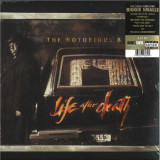
- A1: Life After Death (Intro)
- A2: Somebody's Gotta Die
- A3: Hypnotize
- A4: Kick In The Door
- B1: #!*@ You Tonight (Feat R Kelly)
- B2: Last Day (Feat The Lox)
- B3: I Love The Dough (Feat Jay Z & Angela Winbush)
- B4: Whats Beef?
- C1: Big (Interlude)
- C2: Mo Money Mo Problems (Feat Mase & Puff Daddy)
- C3: Niggas Bleed
- C4: I Got A Story To Tell
- D1: Notorious Thugs
- D2: Miss U
- D3: Another (Feat Lil Kim)
- D4: Going Back To Cali
- E1: Ten Crack Commandments
- E2: Playa Hater
- E3: Nasty Boy
- E4: Sky's The Limit (Feat 112)
- F1: The World Is Filled... (Feat Too Short & Puff Daddy)
- F2: My Downfall (Feat Dmc)
- F3: Long Kiss Goodnight
- F4: You're Nobody (Til Somebody Kills You) (Til Somebody Kills You)
- A1: Rock This Mother
- A2: Talk To Me Girl
- A3: You Can Find Me
- A4: Check This Out
- A5: Jesus Going To Clean House
- A6: Hope You Understood
- A7: Is It What You Want
- A8: Love Is Everlasting
- A9: This Is Hip-Hop Art
- A10: Opposite Of Love
- A11: Do You Know What I Mean
- B1: Saving All My Love For You
- B2: Look Out Here I Come
- B3: Girl You Always Talking
- B4: Have A Great Day
- B5: Take My Hand
- B6: I Need Your Love
- B7: Your Town
- B8: Talk Around Town
- B9: Booty Head/Take A Little Walk
- B10: I Love My Mama
- B11: I Never Found Anyone Like You
Cassette[11,72 €]
As the sun sets on a quaint East Nashville house, a young man bares a piece of his soul. Facing the camera, sporting a silky suit jacket/shirt/slacks/fingerless gloves ensemble that announces "singer" before he's even opened his mouth, Lee Tracy Johnson settles onto his stage, the front yard. He sways to the dirge-like drum machine pulse of a synth-soaked slow jam, extends his arms as if gaining his balance, and croons in affecting, fragile earnest, "I need your love… oh baby…"
Dogs in the yard next door begin barking. A mysterious cardboard robot figure, beamed in from galaxies unknown and affixed to a tree, is less vocal. Lee doesn't acknowledge either's presence. He's busy feeling it, arms and hands gesticulating. His voice rises in falsetto over the now-quiet dogs, over the ambient noise from the street that seeps into the handheld camcorder's microphone, over the recording of his own voice played back from a boombox off-camera. After six minutes the single, continuous shot ends. In this intimate creative universe there are no re-takes. There are many more music videos to shoot, and as Lee later puts it, "The first time you do it is actually the best. Because you can never get that again. You expressing yourself from within."
"I Need Your Love" dates from a lost heyday. From some time in the '80s or early '90s, when Lee Tracy (as he was known in performance) and his music partner/producer/manager Isaac Manning committed hours upon hours of their sonic and visual ideas to tape. Embracing drum machines and synthesizers – electronics that made their personal futurism palpable – they recorded exclusively at home, live in a room into a simple cassette deck. Soul, funk, electro and new wave informed their songs, yet Lee and Isaac eschewed the confinement of conventional categories and genres, preferring to let experimentation guide them.
"Anytime somebody put out a new record they had the same instruments or the same sound," explains Isaac. "So I basically wanted to find something that's really gonna stand out away from all of the rest of 'em." Their ethos meant that every idea they came up with was at least worth trying: echoed out half-rapped exhortations over frantic techno-style beats, gospel synth soul, modal electro-funk, oddball pop reinterpretations, emo AOR balladry, nods to Prince and the Fat Boys, or arrangements that might collapse mid-song into a mess of arcade game-ish blips before rallying to reach the finish line. All of it conjoined by consistent tape hiss, and most vitally, Lee's chameleonic voice, which managed to wildly shape shift and still evoke something sincere – whether toggling between falsetto and tenor exalting Jesus's return, or punctuating a melismatic romantic adlib with a succinct, "We all know how it feels to be alone."
"People think we went to a studio," says Isaac derisively. "We never went to no studio. We didn't have the money to go to no studio! We did this stuff at home. I shot videos in my front yard with whatever we could to get things together." Sometimes Isaac would just put on an instrumental record, be it "Planet Rock" or "Don't Cry For Me Argentina" (from Evita), press "record," and let Lee improvise over it, yielding peculiar love songs, would-be patriotic anthems, or Elvis Presley or Marilyn Monroe tributes. Technical limitations and a lack of professional polish never dissuaded them. They believed they were onto something.
"That struggle," Isaac says, "made that sound sound good to me."
In the parlance of modern music criticism Lee and Isaac's dizzying DIY efforts would inevitably be described as "outsider." But "outsider" carries the burden of untold additional layers of meaning if you're Black and from the South, creating on a budget, and trying to get someone, anyone within the country music capital of the world to take your vision seriously. "What category should we put it in?" Isaac asks rhetorically. "I don't know. All I know is feeling. I ain't gonna name it nothing. It's music. If it grabs your soul and touch your heart that's what it basically is supposed to do."
=
Born in 1963, the baby boy of nine siblings, Lee Tracy spent his earliest years living amidst the shotgun houses on Nashville's south side. "We was poor, man!" he says, recalling the outhouse his family used for a bathroom and the blocks of ice they kept in the kitchen to chill perishables. "But I actually don't think I really realized I was in poverty until I got grown and started thinking about it." Lee's mom worked at the Holiday Inn; his dad did whatever he had to do, from selling fruit from a horse drawn cart to bootlegging. "We didn't have much," Lee continues, "but my mother and my father got us the things we needed, the clothes on our back." By the end of the decade with the city's urban renewal programs razing entire neighborhoods to accommodate construction of the Interstate, the family moved to Edgehill Projects. Lee remembers music and art as a constant source of inspiration for he and his brothers and sisters – especially after seeing the Jackson 5 perform on Ed Sullivan. "As a small child I just knew that was what I wanted to do."
His older brother Don began musically mentoring him, introducing Lee to a variety of instruments and sounds. "He would never play one particular type of music, like R&B," says Lee. "I was surrounded by jazz, hard rock and roll, easy listening, gospel, reggae, country music; I mean I was a sponge absorbing all of that." Lee taught himself to play drums by beating on cardboard boxes, gaining a rep around the way for his timekeeping, and his singing voice. Emulating his favorites, Earth Wind & Fire and Cameo, he formed groups with other kids with era-evocative band names like Concept and TNT Connection, and emerged as the leader of disciplined rehearsals. "I made them practice," says Lee. "We practiced and practiced and practiced. Because I wanted that perfection." By high school the most accomplished of these bands would take top prize in a prominent local talent show. It was a big moment for Lee, and he felt ready to take things to the next level. But his band-mates had other ideas.
"I don't know what happened," he says, still miffed at the memory. "It must have blew they mind after we won and people started showing notice, because it's like everybody quit! I was like, where the hell did everybody go?" Lee had always made a point of interrogating prospective musicians about their intentions before joining his groups: were they really serious or just looking for a way to pick up girls? Now he understood even more the importance of finding a collaborator just as committed to the music as he was.
=
Isaac Manning had spent much of his life immersed in music and the arts – singing in the church choir with his family on Nashville's north side, writing, painting, dancing, and working various gigs within the entertainment industry. After serving in the armed forces, in the early '70s he ran The Teenage Place, a music and performance venue that catered to the local youth. But he was forced out of town when word of one of his recreational routines created a stir beyond the safe haven of his bohemian circles.
"I was growing marijuana," Isaac explains. "It wasn't no business, I was smoking it myself… I would put marijuana in scrambled eggs, cornbread and stuff." His weed use originated as a form of self-medication to combat severe tooth pain. But when he began sharing it with some of the other young people he hung out with, some of who just so happened to be the kids of Nashville politicians, the cops came calling. "When I got busted," he remembers, "they were talking about how they were gonna get rid of me because they didn't want me saying nothing about they children because of the politics and stuff. So I got my family, took two raggedy cars, and left Nashville and went to Vegas."
Out in the desert, Isaac happened to meet Chubby Checker of "The Twist" fame while the singer was gigging at The Flamingo. Impressed by Isaac's zeal, Checker invited him to go on the road with him as his tour manager/roadie/valet. The experience gave Isaac a window into a part of the entertainment world he'd never encountered – a glimpse of what a true pop act's audience looked like. "Chubby Checker, none of his shows were played for Black folks," he remembers. "All his gigs were done at high-class white people areas." Returning home after a few years with Chubby, Isaac was properly motivated to make it in Music City. He began writing songs and scouting around Nashville for local talent anywhere he could find it with an expressed goal: "Find someone who can deliver your songs the way you want 'em delivered and make people feel what you want them to feel."
One day while walking through Edgehill Projects Isaac heard someone playing the drums in a way that made him stop and take notice. "The music was so tight, just the drums made me feel like, oh I'm-a find this person," he recalls. "So I circled through the projects until I found who it was.
"That's how I met him – Lee Tracy. When I found him and he started singing and stuff, I said, ohhh, this is somebody different."
=
Theirs was a true complementary partnership: young Lee possessed the raw talent, the older Isaac the belief. "He's really the only one besides my brother and my family that really seen the potential in me," says Lee. "He made me see that I could do it."
Isaac long being a night owl, his house also made for a fertile collaborative environment – a space where there always seemed to be a new piece of his visual art on display: paintings, illustrations, and dolls and figures (including an enigmatic cardboard robot). Lee and Issac would hang out together and talk, listen to music, conjure ideas, and smoke the herb Isaac had resumed growing in his yard. "It got to where I could trust him, he could trust me," Isaac says of their bond. They also worked together for hours on drawings, spreading larges rolls of paper on the walls and sketching faces with abstract patterns and imagery: alien-like beings, tri-horned horse heads, inverted Janus-like characters where one visage blurred into the other.
Soon it became apparent that they didn't need other collaborators; self-sufficiency was the natural way forward. At Isaac's behest Lee, already fed up with dealing with band musicians, began playing around with a poly-sonic Yamaha keyboard at the local music store. "It had everything on it – trumpet, bass, drums, organ," remembers Lee. "And that's when I started recording my own stuff."
The technology afforded Lee the flexibility and independence he craved, setting him on a path other bedroom musicians and producers around the world were simultaneously following through the '80s into the early '90s. Saving up money from day jobs, he eventually supplemented the Yamaha Isaac had gotten him with Roland and Casio drum machines and a Moog. Lee was living in an apartment in Hillside at that point caring for his dad, who'd been partially paralyzed since early in life. In the evenings up in his second floor room, the music put him in a zone where he could tune out everything and lose himself in his ideas.
"Oh I loved it," he recalls. "I would really experiment with the instruments and use a lot of different sound effects. I was looking for something nobody else had. I wanted something totally different. And once I found the sound I was looking for, I would just smoke me a good joint and just let it go, hit the record button." More potent a creative stimulant than even Isaac's weed was the holistic flow and spontaneity of recording. Between sessions at Isaac's place and Lee's apartment, their volume of output quickly ballooned.
"We was always recording," says Lee. "That's why we have so much music. Even when I went to Isaac's and we start creating, I get home, my mind is racing, I gotta start creating, creating, creating. I remember there were times when I took a 90-minute tape from front to back and just filled it up."
"We never practiced," says Isaac. "See, that was just so odd about the whole thing. I could relate to him, and tell him about the songs I had ideas for and everything and stuff. And then he would bring it back or whatever, and we'd get together and put it down." Once the taskmaster hell bent on rehearsing, Lee had flipped a full 180. Perfection was no longer an aspiration, but the enemy of inspiration.
"I seen where practicing and practicing got me," says Lee. "A lot of musicians you get to playing and they gotta stop, they have to analyze the music. But while you analyzing you losing a lot of the greatness of what you creating. Stop analyzing what you play, just play! And it'll all take shape."
=
"I hope you understood the beginning of the record because this was invented from a dream I had today… (You tell me, I'll tell you, we'll figure it out together)" – Lee Tracy and Isaac Manning, "Hope You Understand"
Lee lets loose a maniacal cackle when he acknowledges that the material that he and Isaac recorded was by anyone's estimation pretty out there. It's the same laugh that commences "Hope You Understand" – a chaotic transmission that encapsulates the duality at the heart of their music: a stated desire to reach people and a compulsion to go as leftfield as they saw fit.
"We just did it," says Lee. "We cut the music on and cut loose. I don't sit around and write. I do it by listening, get a feeling, play the music, and the lyrics and stuff just come out of me."
The approach proved adaptable to interpreting other artists' material. While recording a cover of Whitney Houston's pop ballad "Saving All My Love For You," Lee played Whitney's version in his headphones as he laid down his own vocals – partially following the lyrics, partially using them as a departure point. The end result is barely recognizable compared with the original, Lee and Isaac having switched up the time signature and reinvented the melody along the way towards morphing a slick mainstream radio standard into something that sounds solely their own.
"I really used that song to get me started," says Lee. "Then I said, well I need something else, something is missing. Something just came over me. That's when I came up with 'Is It What You Want.'"
The song would become the centerpiece of Lee and Isaac's repertoire. Pushed along by a percolating metronomic Rhythm King style beat somewhere between a military march and a samba, "Is It What You Want" finds Lee pleading the sincerity of his commitment to a potential love interest embellished by vocal tics and hiccups subtlely reminiscent of his childhood hero MJ. Absent chord changes, only synth riffs gliding in and out like apparitions, the song achieves a lingering lo-fi power that leaves you feeling like it's still playing, somewhere, even after the fade out.
"I don't know, it's like a real spiritual song," Lee reflects. "But it's not just spiritual. To me the more I listen to it it's like about everything that you do in your everyday life, period. Is it what you want? Do you want a car or you don't want a car? Do you want Jesus or do you want the Devil? It's basically asking you the question. Can't nobody answer the question but you yourself."
In 1989 Lee won a lawsuit stemming from injuries sustained from a fight he'd gotten into. He took part of the settlement money and with Isaac pressed up "Saving All My Love For You" b/w "Is It What You Want" as a 45 single. Isaac christened the label One Chance Records. "Because that's all we wanted," he says with a laugh, "one chance."
Isaac sent the record out to radio stations and major labels, hoping for it to make enough noise to get picked up nationally. But the response he and Lee were hoping for never materialized. According to Isaac the closest the single got to getting played on the radio is when a disk jock from a local station made a highly unusual announcement on air: "The dude said on the radio, 107.5 – 'We are not gonna play 'Is It What You Want.' We cracked up! Wow, that's deep.
"It was a whole racist thing that was going on," he reflects. "So we just looked over and kept on going. That was it. That was about the way it goes… If you were Black and you were living in Nashville and stuff, that's the way you got treated." Isaac already knew as much from all the times he'd brought he and Lee's tapes (even their cache of country music tunes) over to Music Row to try to drum up interest to no avail.
"Isaac, he really worked his ass off," says Lee. "He probably been to every record place down on Music Row." Nashville's famed recording and music business corridor wasn't but a few blocks from where Lee grew up. Close enough, he remembers, for him to ride his bike along its back alleys and stumble upon the occasional random treasure, like a discarded box of harmonicas. Getting in through the front door, however, still felt a world away.
"I just don't think at the time our music fell into a category for them," he concedes. "It was before its time."
=
Lee stopped making music some time in the latter part of the '90s, around the time his mom passed away and life became increasingly tough to manage. "When my mother died I had a nervous breakdown," he says, "So I shut down for a long time. I was in such a sadness frame of mind. That's why nobody seen me. I had just disappeared off the map." He fell out of touch with Isaac, and in an indication of just how bad things had gotten for him, lost track of all the recordings they'd made together. Music became a distant memory.
Fortunately, Isaac kept the faith. In a self-published collection of his poetry – paeans to some of his favorite entertainment and public figures entitled Friends and Dick Clark – he'd written that he believed "music has a life of its own." But his prescience and presence of mind were truly manifested in the fact that he kept an archive of he and Lee's work. As perfectly imperfect as "Is It What You Want" now sounds in a post-Personal Space world, Lee and Isaac's lone official release was in fact just a taste. The bulk of the Is It What You Want album is culled from the pair's essentially unheard home recordings – complete songs, half-realized experiments, Isaac's blue monologues and pronouncements et al – compiled, mixed and programmed in the loose and impulsive creative spirit of their regular get-togethers from decades ago. The rest of us, it seems, may have finally caught up to them.
On the prospect of at long last reaching a wider audience, Isaac says simply, "I been trying for a long time, it feels good." Ever the survivor, he adds, "The only way I know how to make it to the top is to keep climbing. If one leg break on the ladder, hey, you gotta fix it and keep on going… That's where I be at. I'll kill death to make it out there."
For Lee it all feels akin to a personal resurrection: "It's like I was in a tomb and the tomb was opened and I'm back… Man, it feels so great. I feel like I'm gonna jump out of my skin." Success at this stage of his life, he realizes, probably means something different than what it did back when he was singing and dancing in Isaac's front yard. "What I really mean by 'making it,'" he explains isn't just the music being heard but, "the story being told."
Occasionally Lee will pull up "Is It What You Want" on YouTube on his phone, put on his headphones, and listen. He remembers the first time he heard his recorded voice. How surreal it was, how he thought to himself, "Is that really me?" What would he say to that younger version of himself now?
"I would probably tell myself, hang in there, don't give up. Keep striving for the goal. And everything will work out."
Despite what's printed on the record label, sometimes you do get more than one chance.
A rediscovered untitled Mass by Adriaen Willaert "Missa Ippolito", a
hidden ode to the Cardinal of Ferrara, Willaert's patron.Adriaen Willaert
must have already been a prolific composer before he assumed the
position of kapellmeister at the Basilica of San Marco in Venice
After all, a second Mass of his was included in a large, illuminated choral
manuscript that was produced for the Illustrious Brotherhood of Our Blessed
Lady in 's- Hertogenbosch, the Netherlands (the first Mass in this manuscript,
Missa sex vocum super "Benedicta," can be found on the LP Adriano 2). The title
page of the Mass does not mention the name of the composition, only that of the
composer, Adrianus Willart. It was catalogued as a Missa sine nomine, a Mass
without a name. It is assumed that the work was composed between 1522 and
1527, at a time when Willaert was a member of the music chapel of Cardinal
Ippolito d'Este in Ferrara, Italy. At first glance, what's striking about this
composition is that one of the tenor voices sings a cantus firmus (a "given, fixed,
foundational voice" that provides the basis for each movement of the Mass, to
which the other voices are added) that always consists of the same 13 notes: mi
ut mi sol mi ut fa mi fa mi re mi.
In an article about the Mass, the musicologist Joshua Rifkin claims to have
discovered a sogetto cavato delle parole in this sequence of notes. This is a
compositional technique common for the time in which the notes of a melody, in
this case the cantus firmus, are derived from the vowels of certain words. The
notes used for the tone poetry are those of the Guidonian hexachord, a series of
the 6 notes ut-re-mi-fa-sol-la.
For example, the word Maria (Ma-ri-a) can be "translated" into the notes la mi la.
The cantus firmus of the Mass, according to Rifkin, fits the words "Primus
Ippolitus Cardinalis Estensis" (Ippolito I, Cardinal d'Este) perfectly. The Mass is
thus almost certainly (via a hidden message in the music) an ode to the Cardinal
of Ferrara who was Willaert's patron. This rediscovered untitled Mass by Adriaen
Willaert, which we have now sung as a world premiere, can therefore rightly bear
the name Missa Ippolito.
The Crystal Furs are a queer indie pop/rock band from Portland, OR. They write melodic, textured songs about anxiety, architecture, lesbians, and queer feels - loud music for quiet hearts. In Coastal Light is the band’s fifth album, following on from 2020 LP Beautiful and True, and hears them honing their blend of grungey riffs and 60s-girl-group vocals. As featured on: KEXP, WFMU, BBC Radio, Freeform Portland, KBOO Portland, Portland Radio Project, Chasing Infinity on WRUW, Get In Her Ears, Grrls Like Us “Had Portland’s (via Forth Worth) The Crystal Furs been around in the late 80s – early 90s there is a possibility they would have been signed to Sarah Records, home of OG jangle pop bands like The Field Mice and The Sea Urchins. Then again with their sunny, bright melodies, they might have found themselves riding the charts alongside The Bangles.” 50Thirdand3rd “It’s something of a well-worn expression, that adult life is about ‘finding oneself’, but it certainly seems for the Buchanans, and their band, that all of the changes in their life have enabled them to do just that. And what they’ve found are winning alt. indie-pop purveyors in the mould of Helen Love. Beautiful And True is an album whose title could not be clearer: it is what it says it is.” Get In Her Ears “Think of those jangly C86 tunes mixing genteel harmonies, spiraling keyboards, melodic guitar/ bass sounds and wistful vocals and you begin to get the drift here.” Into Creative “From the opening tones of the Farfisa organ on ‘Comeback Girls’ the lo-fi indie pop shines through, with jangly guitars, unassuming instrumental breaks and a naturalistic production that puts the Furs right there in the room with you.” Cambridge Music Review“Retro without being jaded, cute without being cliched what The Crystal Furs do so well – and demonstrate deeply on both tracks in this release – is as we’ve said pair light, sparkling and downright danceable melodies with dark-hearted lyrics emerging from shadowy inner worlds and harder lived experiences.” Popoptica 1. Winter Stars 2. Charlatan 3. Miss Hughes 4. California Misses You 5. Stay With Me 6. Mr Moses 7. Rose-Colored Glasses 8. We Never Sang 9. Please Fade Away10. Girl in the Background
“I had to write myself back into existence,” says Jessie Baylin. “I’d been feeling lost, empty, unsure if I’d ever make music again, and I think this album came along to remind me of who I really am, of who I could still become.” Indeed, Jersey Girl is more than just another record for Baylin; it’s a radical act of self-actualization, a moving work of reflection and rebirth from an artist who’s spent the better part of her adult life running from her roots. Written and recorded with GRAMMY-winning producers Daniel Tashian and Ian Fitchuk (Kacey Musgraves, Birdy), the collection marks Baylin’s first release since the passing of her longtime collaborator Richard Swift, whose influence looms large here even in his absence, and it signals the start of a profound new chapter, one marked by love and empathy for the face staring back in the mirror. The songs are lush and dreamy here, drawing on a hazy palette of warm guitars and vintage keyboard tones, and Baylin’s performances are nothing short of mesmerizing, her tender voice front-and-center in the mix as she grapples with guilt and shame, pain and healing, purpose and identity. Baylin’s the first to tell you this wasn’t an easy record to make—in fact, it wasn’t a record she intended to make at all—but sometimes the biggest breakthroughs come from the most unexpected places. “I had to be tricked into writing these songs,” Baylin confesses, “but it was a good kind of trick. I didn’t realize what was happening until I was already in the midst of it, and that turned out to be exactly what I needed.”
- B2:
- A1: Nekta - Who´s Sorry Now
- A2: Mop Mop - Hot Pot (Ezequiel Lodeiro "Latinazo " Dub)
- A3: Gabriele Poso - Freedom
- A4:
- B1: Aromabar - Calling
- B3: Metropolitan Jazz Affair - You Can Dig
- B4: Dublex Inc Feat. Stee Downes - Something´s Missin
- B5: Valique - Herbie's Delight
- C1: Jhelisa - Love Is A State Of Mind
- C2: Woodland Conclave - Celebration Of Life (Song For Simon)
- C3: Matthias Vogt Trio – Driver (Joash Remix)
- D1: Taxi – The Accessory
- D2: Rime - Smoke And Regret
- D3: Shantel - Considerando (Video Version)
- D4: Kosma - La Seule Fleur Dans Le Jardin (For Karen)
INFRACom!, one of the longest operating Independent labels in Germany, celebrate it´s 30yrs anniversary with a vinyl compilation consisting of tracks that have never been released on vinyl before. Label co-founder Jan Hagenkötter handpicked these from various artist in the catalog, true to the spirit of the label and its operator – We couldn´t save the entire planet but we still like to save your soul.
The artwork was once again designed by Rafael Jimenez Heckmann, a well-known graphic designer from Offenbach. He is responsible for most of the artworks and designs on INFRACom!... his covers have already been awarded several times e.g. in Lürzers Archive and others.
The inlay was designed by the long time friend & well known artist Jim Avignon. In the nineties before Jim went to Berlin and New York to get world famous he lived in Frankfurt for a few years and drew and partied a lot with Jan Hagenkötter & Namé Vaughn…the two DJ´s, friends and founders of INFRACom! He even contributed a song to the very first INFRACom! production. Since that time they cultivate a lovely friendship and Jim was happy to contribute an artwork to this anniversary release.
Most of the tracks included on the compilation were released only on CD and then digitally in the so-called 2000s or noughties, as it was very difficult to release any album on vinyl during that time due to the situation in the music market while the transition from physical to digital products and the piracy phenomenon. Fortunately, today the different formats can coexist again.
INFRACom!, once started locally in Frankfurt with artist like Shantel who released his first recordings on the label. He is featured by a collaboration with the Brazilian duo Rosanna & Zélia. Soon INFRACom! expanded to an international platform for artist from all over the world like Jhelisa (USA), Mop Mop & Gabriele Poso..both from Italy, Metropolitan Jazz Affair the brainchild of French producer and musician Patchworks, Taxi from the UK, Rime from Finland or Aromabar from Austria…all with different styles of music.
The vision of the two founders Jan Hagenkötter & Namé Vaughn was and still is artistically oriented and has never favored just only one style of music.
The roots of INFRACom as a label are based in the various form of black music culture - conditiopned to the influences and personal history of the two founders - but also deeply rooted in the club and DJ culture and various forms of electronic music. The compilation can only show a small glimpse into the universe with tunes that stand the test of time.
One of the best examples is Matthias Vogt with whom the label has a long standing collaboration and who just this year released the album PIANISSIMO on INFRACom!. He can be heard with his Matthias Vogt (Jazz) Trio in a cinematic remix from Joash and two pieces by the highly successful re:jazz band which he leads.
With Valique we are happy to feature a Belarus/Russian artist on the release these days….one who already showed ten years ago on his album artworks what he thinks about the politics of his government. As an open minded label and ethnical diverse ppl. we think “Fuck Putin and his disciples and like-minded people, but let's not condemn all Russian-born people. Some prefer to worship Herbie Hancock...like Valique and we want to support that.”
With Nekta, Dublex Inc. feat Stee Downes and Kosma this release features three more artists from various regions in Germany, each with their great moments.….and last but not least the mysterious Woodland Conclave (UK)…a waltz and a story yet to be told and hopefully will be…on INFRACom!…in the near future!
d A4 | re jazz Feat N'dea Davenport - Don't Push Your Luck (Wagon Cookin´ Vocal Remix)
f B2 | re jazz Feat Mediha - Tears
d A4 | [Re:Jazz] feat. N'Dea Davenport - Don'T Push Your Luck (Wagon Cookin' Vocal Remix)
[f] B2 | [Re:Jazz] feat. Mediha - Tears
- A1: Joe White - My Guiding Star
- A2: Delroy Wilson - I Want To Love You
- A3: Alton Ellis & Phyllis Dillon - Why Did You Leave Me (To Cry) (To Cry)
- A4: The Sealmates - She Said She Loves Me
- A5: The Sensations - Right On Time
- A6: Leslie Butler & The Originals Orchestra - Revival
- B1: Stranger Cole & Gladstone Anderson (As Stranger & Gladdy) - Over Again (As Stranger & Gladdy)
- B2: The Maytals - Reborn
- B3: Glenmore Brown & Hopeton Lewis (As Glen & Hopeton) - Girl You're Cold (As Glen & Hopeton)
- B4: The Black Brothers - Baby Come Back To Me
- B5: Ken Boothe - Can't See You
- B6: Val Bennett & The Carib Beats - Take Five
- C1: The Overtakers - Girl You Ruff
- C2: The Melodians - Sweet Rose
- C3: Charley Kelly - So Nice, Like Rice
- C4: Justin Hinds & The Dominoes - You Fight Too Much
- C5: Ewan & Jerry - You've Got Something
- C6: Roland Alphonso & The Beverley's All Stars - Dreamland
- D1: Austin Faithful & The Hippies - Miss Anti-Social
- D2: Nehemiah Reid - Give Me That Love
- D3: Alfred Brown - One Scotch, One Bourbon, One Beer
- D4: The Rulers - Be Mine
- D5: The Gladiators - Socking Good Time
- D6: Tommy Mccook & The Supersonics - The Shadow Of Your Smile
Right On Time - Trojan Rock Steady is the 2nd part of the exclusive Music On Vinyl’s Trojan compilation series, which celebrates the best works from the legendary reggae label Trojan Records. It was compiled by Laurence Cane-Honeysett, who also wrote the linernotes. Some of Trojan’s finest are featured on this compilation; as there are The Gladiators, The Melodians, The Gladiators, Ken Boothe a.o.
Noodles Groove chronicle has releases going back to the 90's and is recongised as one of UK garage music most influential producers, his recent works is a collaboration with follower producer Dubchild. The duo also work under the alias"nu agenda"creating their own style of hybrid house, and have support from various stations such as Rinse fm, 1xtra, SWU, NTS, Mode, Worldwide radio and Reprezent. Lets now get to "selector selection vol.1" out on DPR recordings label owned by Noodles Groove chronicles we have three tracks "helikopter" "your turn" "my thing" all individual but weighty. The volume series is all about what you may have missed or slighty over looked.Talior made so you'll never miss a good track and it's been selected for your listening pleasure.