A student of the Weatherall school of DJing, Asa Tate has showcased an astonishingly mature approach to production over the years that belies his age. You’d be forgiven for thinking these 4 tracks had been discovered from a dusty DAT tape, locked away in the vaults of a northern Italian club and rediscovered after 30 years....Listen more closely and you’ll notice the contemporary production flair and more recent influences that make this EP a perfect reinterpretation of the mid 90s house sound: sitting somewhere between dream house and Morales finest work under the red zone moniker.
The EP wastes no time in setting it’s intentions with the A1 Title Track, “Replica” - after a brief and floaty progressive house intro the refrain “ E-e-e-e-e-e-e-ECSTASY” echoes loudly over sampled vocals, euphorias piano chords, throbbing lead synths and a bouncy tech house bass line.
“89” is a sultry deep house cut featuring rising Spanish star, Dariam Coco on Vocals. It floats like a butterfly, but stings like a bee, as the soft chords are interrupted with huge drum fills deftly transforming an after party jam to a peak time moment.
We continue to “ Unknowns” - a masterclass in building tension and holding it - this track simmers with restrained intensity for almost 6 minutes. It’s trademark Asa Tate production at its most understated and classy. We round of the EP with the fittingly titled “Last Dance” , a wistful composition that brings us back down to earth slowly, safely and gently; always grooving but never pushing - this one is the soundtrack to the end of a long summer day and reaffirms Asa Tate’s claim to be a modern master of Deep House.
Cerca:mo club
“Allergic” was born on a sweltering July afternoon in a half-empty flat in Paris’ 11th arrondissement. With the apartment mid-move and only one bare room left to work in, B.McQueen and Priori turned the stripped-back space into a studio. Mid-session, a friend sent a voice note casually mentioning she was “allergic to wasps”. A moment that felt too good not to sample, giving the track both its title and its playful edge. The result is a chugger with subtle wobbles woven throughout.
“Get Weavin’” took shape in the haze following a heavy night celebrating fabric’s 25th anniversary, an evening where Ben Klock b2b Marcel Dettmann indirectly sparked the creation of the B. McQueen alias itself. Fueled by that post-club momentum, the track later found its signature psychedelic tinge through flute samples contributed by Raphael Weikart.
Are you Looking for Love? Advice? Good Luck? Then you’ve come to the right place. Fortune Three, the third release in the Psychic Readings catalog, Peach continues to explore her sound bringing 4 tracks dedicated to the dance.
It starts with In Ur Dreams, an ode to the dreamers and lovers in your fantasies. Peach gives some subtle organ hits a whirl with deeper basslines and punchy drums. Next, a track inspired by and sampling an old Christina Aguilera interview, What U Got is a warm, beachy roller which is reminiscent of hotter temperatures. Pretty pads, shiny stabs, and a weighty bassline create an endlessly playful groove – a Peach signature.
On the flip, we see Brady’s Song mixed two ways – the first being the deeper cut of the two, Brady’s Song slowly unravels melody after melody, playing with sassy stabs and a bassline on the subbier side. The Afters Edit takes a more upfront and jacking approach, focusing on the ability of the bass to roll through the whole track – shimmering percussion and the same stabs from the B1 carry us through until the last second.
All the tracks are a testament to her many moods as a DJ. From club use to home listening, this is an EP dedicated to the dance.
2026 repress !
Blue Hour Music welcomes French artist Mathys Lenne for his debut EP as ‘The Scan’ - his go to alias for classic techno. Titled ‘Callgroove’ the record features four functional and highly seductive DJ tools aimed at darkly-lit dance floors. Each track is stripped to its essential layers, holding its own unique tension with hints of pre-pandemic club moments, lead by bold rhythmic groove manipulation, classic drum
programming and immersive atmospherics.
Before he turned 20, Lô Borges released one of the most captivating albums to come out of Brazil's rich musical landscape - a record that somehow flew under the radar at the time but has since become a cult favorite for listeners around the world. Recorded in the same whirlwind year as the legendary "Clube da Esquina" - the groundbreaking collaboration with Milton Nascimento and Beto Guedes - this self-titled solo debut finds Lô Borges in full creative flight. Pressured by Odeon Records to deliver a solo project, Borges responded with a burst of youthful brilliance, sometimes writing a song in the morning and laying it down in the studio that very night. The result? An album that's spontaneous, heartfelt, and sonically stunning. From the shimmering guitars of 'Você Fica Melhor Assim' to the dreamy melodies of 'Cançao Postal' and the jazz-infused groove of 'Calibre,' the album blends Brazilian popular music with rock, soul, and subtle psychedelic touches. It's got the intimate spirit of a bedroom recording, but with the musical sophistication of legends - with collaborators like Toninho Horta, Tenorio Jr., Nelson Angelo, and of course, Beto Guedes helping bring Borges' vision to life. Fans of Caetano Veloso, Gilberto Gil, or early Nascimento will feel right at home here - but Lô Borges brings his own voice, at once tender and electrifying, to every track. The guitars are fuzzy, the harmonies rich, and the songwriting nothing short of magical. Though it didn't make a splash in 1972, "Lô Borges" has only grown in stature over the years. It's the kind of album you discover once, then return to again and again - a timeless treasure from a young artist who helped redefine Brazilian music from the ground up. If you're into warm, soulful songwriting with a touch of experimental edge, this record is waiting for you. Give it a listen - and see why "Lô Borges" is considered one of Brazil's most underrated masterpieces. Reissue on 180g vinyl.
agoya-based multi-instrumentalist and rising DJ Hiroyuki Kato returns to the ever-consistent Flexi Cuts with Life 今 (FLEX 031), a record that perfectly distills the artist’s layered approach to sound and the label’s instinct for unearthing voices that carry both groove and depth. Having built a relationship with the label over the past two years—already signing an EP and a single—Kato now delivers a project that feels like a culmination of that dialogue: four tracks on wax, complemented by an additional cut exclusive to the digital edition.
True to its title, Life 今 exudes immediacy and presence. Kato draws on his background as a polyrhythmic player, folding live instrumentation into supple house frameworks, always with a subtle melodic sensibility. The vinyl selections range from the quietly propulsive to the rhythmically expansive, each tune infused with that warm, unhurried Flexi aura. Basslines strut with understated confidence, chords shimmer with daylight energy, and the arrangements move with a natural, unforced flow.
What stands out across the EP is Kato’s ability to balance the organic and the synthetic, never leaning too far into polish or rawness but finding a fertile middle ground that feels both contemporary and timeless. It’s the sound of someone equally at home behind a guitar as in the DJ booth, someone who understands that club music gains power not just from rhythm but from emotional resonance.
Flexi Cuts has long been a home for thoughtful, groove-driven records, and Life 今 is no exception. It is music that doesn’t demand attention with force, but rewards close listening with detail and atmosphere. At once intimate and club-ready, grounded yet expansive, it’s a confident statement from Hiroyuki Kato, an artist steadily carving his space within Japan’s evolving electronic landscape and beyond.
~~~~*
Written and produced by Hiroyuki Kato in Seto City, Japan
Mastered by Francesco Brini at Spectrum, Bologna
Distributed by Rubadub, Glasgow.
Designed by Galluzzi
A&R Simone Guerra aka Relative
Flexi Cuts, Italy 2025.
The Carpet Lab series is back with four deep, dubby and driving explorations from Italian producer Dib. The different numbered versions of ‘Socialgorithm’ evoke the fragmented anonymity of our times, while also reaching for something more human: check the bittersweet harmonies on ‘001.4’ or the vocal snippets on ’001.2’. Four pristine club moods for any dancefloor.
- Somewhere, Nowhere
- Angles Mortz
- False Prophet
- Fluoride Stare
- The Void
- Ascension
- Just A Kid
- Host
- Landslide
- Renaissance
- 7: Am
- Blue In Grey
2026 Repress
Flickering in ultraviolet, there is an elusive place where blue pill meets red, ups become downs, and day merges with night. Those liminal spaces where anything is possible is where you’ll find Nightbus and their hypnotic debut album Passenger. Doom, uncertainty, and opportunity lurk in the shadowy corners of their murky existence with stops at disassociation, co-dependency, and addiction before reaching its final destination - a glimmer of hope.
The in-between of Nightbus’ own Gotham lies where Manchester’s city pulse meets Stockport’s outer realm. An audio-visual entity formed among a musical family of friends, freaks, and foes in messy mills and after hours on dancefloors alike, their sound bleeds from tension where collective creative forces are bound together and collide with the fallout of being torn apart. Before even playing a show, their So Young released single ‘Mirrors’ – a knowing nod of respect to some well-known gloomy Northerners - may have made old school indie heads shimmy at shows in Salford’s The White Hotel but also signalled the duo’s knack for offering listeners a Bandersnatch approach to hitchhiking their own personal Nightbus in whatever direction they choose to take. “Everyone can have their moment with our songs; the music is our response to who we are as young people, living in the city full of this energy right now,” they say.
Whilst reverb hefty melodies and dread-filled loops embody isolation from writing at each of their home studio set-ups, magic happens in the ether across 90s trip-hop, indie sleaze and electronica; Jake’s production layers Olive’s pop sentimentality with drums and samples whilst tales of a cast of faceless characters place Olive as puppet master; her severed self’s perspective manipulating their stringed limbs at arm’s length to see how their stories play out when scenes reflecting her own lie close to the bone. “It’s a bit fucked; like having this out of body experience with a made-up movie running through my head,” she says. “As I write I can see they’re all from a similar world, but they allow me to explore different feelings without giving away part of myself.”
Recorded at The Nave in Leeds with producer-engineer Alex Greaves (Heavy Lungs, Working Men’s Club), surprise and danger lies in every crevice. Brooding whispers turn to chants on 6-minute opus ‘Host.’ Improvised when performed live, its immersive shift in tempo leads to hefty dub courtesy of Jake’s pedals. Even then, you won’t know shit’s hit the fan until its mid-point reveal when ominous bass blasts a thunderous soundtrack as its protagonist defiantly walks away after committing the perfect crime. “It makes you wait, and more songs should have sirens,” Olive grins.
Leaning deeper into alter-egos via the video game-psychological horror of a Silent Hill dystopia, the band’s Fight Club moment ‘Angles Mortz’ turns its literal translation of death angles on its head as it reflects upon kink and internalised shame reincarnated as pride. Elsewhere the ice cool ‘Landslide’ is a Requiem for a Dream about the addiction of being in a band; ‘The Void’ explores co-dependency and estranged relationships; and carefully selected samples revive house track ‘Just A Kid’ from the band’s early incarnation. Passenger’s every direction is to face challenges head on. “That is what’s so great about horror; you can see through predictable patterns so when the unexpected occurs it's more realistic and uncomfortable… I want to own the dark stuff!”
As for Passenger’s first single, the pulsating ‘Ascension’ is a spiralling deep dive into death, suicide, and legacy around who or what we leave behind. A noughties club banger by way of NYC beats - ergonomically designed for those who like to stay out a little too often and too late - it throbs like a house party’s partition wall as the literal levelling up undergoes a neon transformation; blue glitching to pink, diffusing the white construct of the Nightbus Matrix. “It really does feel like the end of something and was purposely written that way,” they say, “the ascension is like a firework going off!”
With wheels in motion, Nightbus has become a movement surpassing sonic realms. Between shows from Porto to Brighton taking in The Great Escape, Rotterdam’s Left Of The Dial and Paris’ Supersonic; DJing; remixing; guesting (BDRMM’s Microtonic album); and even enlisting talented like-minds to craft a 3-part queer coming-of-age music video series which ties in with a new ‘hyperpop’ phase in the evolution of their popular Nightbus Soundsystem club night, heads are now being turned from sports brands to high-end fashion designers. “There are things we can’t reveal just yet,” tells Olive, “but we’re excited about the direction this beast we’ve created is heading.” As the album philosophises and asks one ultimate question; what does it truly mean to be ‘Passenger’? Nightbus may not claim to offer a definitive answer, but it might make you feel a bit better about those demons.
A concentrated dose of club energy weaving together house, electro, obscure disco, and groove. This is the new vinyl adventure from Raibano Records and Mondo Groove, two Romagna-based labels that have long championed an uncompromising and authentic vision of the Italian electronic scene.
The 12” brings together six unreleased tracks, three per side, crafted by Raibano’s founders Alberto Melloni and Gianmaria Gamberini. On one side, hypnotic rhythms and pulses for the darkest corners of the dancefloor; on the other, Balearic echoes and textures designed to take you far beyond it.
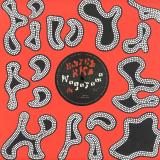
Having established himself as one of the most exciting contemporary dance producers with a string of stellar releases, Japanese producer boys be kko returns triumphantly with the Nagasawa EP, four floor cuts bursting with emotion, shimmering in Tokyo technicolor, and perfectly at home on Bliss Point.
Nagasawa kicks off with a bang. “ChuKii” is a peak time heater: breaks, chopped vocals and punchy toms sear over a low end groove that proves body music can funk. Melodic acid explodes like a firework mid-track, taking the dance floor to psychedelic new heights.
The club psychedelia continues with “Mold Mold”, a minimal, subterranean system roller adorned with swells, bells, and deep, guttural growls dubbed to the vanishing point.
“Sant Esteve (kko Edit)” is melancholic and contemplative jazz house, eschewing cliché and twinging with nostalgia for that moment you felt most free.
“Humor is an important part of my music”, boys be kko reflected over lunch as Izakaya smoke billowed past his face. “Oignon”, the fourth and final track on Nagasawa, is an airy and joyful slice of sampledelia that makes good on this promise. An enormous smile of a track sending listeners off with a slice of sonic sunshine and, dare we say, hope.
- 1: Rock N Roll
- 2: Dream Come True
- 3: Loyalty
- 4: On Fire
- 5: Stealin' Time
- 6: Rickety Ol' Bridge
- 7: Strange Companion
- 8: Possessive
- 9: Lord
- 10: Haunted Man
- 11: Dance On Thru
- 12: Engine 99
Leave it to Langhorne Slim - a pioneer of raw, rule-breaking Americana for more than two decades - to reach far beyond the genre he helped inspire.
The Dreamin' Kind finds the Nashville transplant strapping on an electric guitar and embracing his longtime love of larger-than-life rock & roll. With it's chugging power chords, 1970s-sized riffs, and richly layered arrangements, The Dreamin' Kind is fueled not only by sheer amplification, but by the soul-baring songwriting that's become Slim's calling card, too. Tucked between those anthems are acoustic-driven songs that skirt the outer orbits of folk music, from the bare-boned heartbreak of ''Stealin' Time'' to the organic, orchestral sweep of ''Dance On Thru.'' The result is the more explorative and expansive album of Slim's career: a record made for rock clubs, campfires, and garages alike, produced by Greta Van Fleet's Sam Kiszka, and anchored by a lifelong desire to break down new walls.
''It felt like I was blowing some old shit up so I could plant some new flowers,'' Slim says of the creation process. ''I love acoustic music. I love folk music. But those aren't my only loves. Rock & roll has always tickled the same place in my soul as great singer-songwriter music, and I wanted to explore those influences. Raw songs that make you feel something: that's the stuff I'm after.''
The third instalment of the remixes from J:Kenzo's album 'Taygeta Code' sees four killer producers take on each remix in their own unique style across the 140 bpm spectrum.
BOYLAN (Sentry / Mean Streets) leads the dance with his 140 bpm jungle / breaks flip of 'Like A Hawk' which features vocals by the mighty FLOWDAN. Bringing the heat in heavy and devastating fashion!
MANI FESTO (Rupture / Club Glow) steps up with his electro breaks remix of the modular dance floor heater 'Deadbull', with filtered breaks and a high energy bounce.
Canadian dubstep producer MYTHM (Artikal / Wheel & Deal) delivers his heavyweight remix of album highlight 'Narky'. The Vancouver native flips the groove and levels up the energy bringing additional heat to his version.
The final remix is from UNKEY (Foto Sounds) who takes on the album opener 'Desired State'. Unkey turns the air dark, strips back the vibe and uses sub heavy minimalism to inject a feeling of dread throughout his remix to put a stamp on the finale covering 4 corners of the world of Dubstep and 140 music.
- 1: Time Goes Up
- 2: Hypersonic Super-Asterid
- 3: Charlie's Comet
- 4: The Change And The Changing
- 5: Lorenzo's Desk
- 6: King Cnut
- 7: Barranmode
- 8: Find The Tree And Dig (Deep)!
- 9: Earth-Sized Worlds
Mandrake Handshake announce new remix version of lead single Hypersonic SuperAsterid from W.H.Lung's Tom Sharkett released 24th November and the Special Limited Eco- Green Vinyl Edition of their critically acclaimed debut LP 'Earth- Sized Worlds', set for release 12th December via cult indie label Tip Top Recordings The concept tying together every last note and lyric of 'Earth- Sized Worlds' - the debut album from the London/ Oxford self- dubbed 'Flowerkraut' collective Mandrake Handshake - is an awfully simple one: 'Welcome to Space Beach' .Varying anywhere between 7-10 members - including a dedicated, flamboyant tambourine shaker - their pristine, multi-limbed spectacle of a live show has journeyed up and down the UK and EU in recent times. With multiple headline tours to their name, including a sold- out show at London's iconic 100 Club earlier this year, the group have already ticked off slots at the likes of Wide Awake, Green Man and Manchester Psych Fest, as well as shows with psych-figureheads W.H Lung, Pale Blue Eyes, Triptides and Sugar Candy Mountain, and Del Amitri as their profile soars.
- 1: Waterfalls (Feat. Syndee Winters)
- 2: Doubles (Feat. B Valentine)
- 3: Came To Move (Feat. Syndee Winters)
- 4: Handlebar Breakfast (Feat. Syndee Winters)
- 5: Coarse Chop (Feat. Jeremiah Jae)
- 6: Piano Club (Feat. Lafille (Emmaharu + Million Miles))
- 7: Packin Heavy (Feat. Dina Moursi & Dave Aju. Lyrics + Additional Production By Dave Aju)
- 8: Sunset Starboard
- 9: Dropping Off Tiffany (Feat. Dave Aju)
- 10: Sel Gris (Feat. Syndee Winters)
- 11: Lust (Outro)
Gil Tamazyan Unveils a Timeless Downtempo Journey with His Latest Album
Los Angeles-based producer and multi-instrumentalist Gil Tamazyan returns with his latest release—an evocative fusion of live and electronic soundscapes that transports listeners through a lush, jazzy journey. Featuring authentic compositions performed with live analog instrumentation, the album delivers a warm, organic depth rarely heard in today’s electronic music scene.
The project features an impressive lineup of vocal collaborators, including Dave Aju, Dina Moursi, Syndee Winters, B. Valentine, Jeremiah Jae, and more. Together, they bring life and emotion to 11 handcrafted tracks that flow seamlessly between genres—bridging jazz, downtempo, and electronic textures into a cohesive, immersive experience.
Designed as a soundtrack for calm, everyday moments, Tamazyan’s latest work invites listeners to slow down, breathe, and reconnect with the beauty of the present. With its timeless tone and meticulous attention to detail, this release stands as a testament to the power of real musicianship in modern electronic music.
- 01: Funky Raver
- 02: Get The Groove
- 03: I Misplaced You
- 04: Funky Raver (Victor Muerte Remix)
- 05: Get The Groove (A.fruit Remix)
- 06: I Misplaced You (Nite Fleit Remix)
Belgian producer and DJ Ethan Fawkes returns with Funky Raver, a vibrant six-track vinyl release that channels the spirit of 70s funk and disco through a modern electronic lens. It features three originals alongside remixes from Victor Muerte, A.Fruit and Nite Fleit.
Fawkes, known for pairing raw rhythm with emotional punch, dives headfirst into the golden age of groove and rebuilds it for today's dance floor. The result feels warm and energetic, fresh take that nods to disco's roots while pushing forward.
Each remixer takes the core idea in a new direction without losing its heartbeat.
Victor Muerte takes "Funky Raver" track into a remix out a driving techno rework marked by hypnotic whiper repetition. It taps into the darker side of the groove, building steady pressure and giving the release a powerful late-night edge.
A.Fruit flips her version of "Get the Groove" into a fast, broken beat-driven workout full of tight percussion and futuristic low-end, giving the original a kinetic bass-forward storm that keeps the momentum surging.
Nite Fleit, the producer with a reputation for bold, genre-blending club tracks, injects her remix with electro pressure. She delivers a high-voltage version of "I Misplaced You" to take that turns the funk foundations into pure rave.
Taken together, the originals and remixes trace a full arc, from glittering disco lights to the throb of the warehouse. Funky Raver is a celebration of groove, motion and emotion. A reminder of how timeless dance-floor energy can be.
Swan Song
The vinyl LP at the heart of this éthiopiques 31 tracks 2 to 11 was one of the very last vinyl records ever released in Ethiopia. But above all it represents, we felt, the absolute masterpiece of the Ethiopian Groove – the Swan Song of Swinging Addis. The album leaves a clear idea for posterity of the level of sophistication and mastery that modern Ethiopian music had achieved, before being crushed under the Stalino-military heel of the Derg – as the bloody revolution that was unfolding came to be called.
Ethiopia1976.
The Revolution that broke out in February 1974 rolled on in a ruthless march. The whole of Ethiopian society was utterly stunned. The bouquets of flowers handed joyfully to the first tanks of the coup d'état were to wilt very rapidly. From September 1976 to February 1978, 18 months of Red Terror (the name given by the junta itself) spilled blood throughout the country. This fratricidal conflict took its heaviest toll among students and youth. The shift from feudalism to a cruel and primitive Stalinism left the country's citizens deeply traumatised, and snuffed out any pretence of activism, whatever the sector of society. This ice age was to last for seventeen long years.
ሙሉቀን፡መለሰ Mulukèn Mellèssè Muluqän Mälläsä
It was three tracks by Muluken that served as the opener for éthiopiques-1 more than 25 years ago. Seven more tracks appeared on éthiopiques-3 and 13, all accompanied by The Equators, which was soon to become the Dahlak Band.
The first track, Hédètch alu, also the very first piece that Muluken ever recorded, left audiences both unsettled and amazed. Reflecting the singer's extremely young age (he was just 17 at the time), this angelic voice mystified many, who thought they were in fact listening to a feminine voice. He was not yet 22 when he released his last vinyl record in 1976 with Kaifa Records (KF 39LP), one of the very last to be issued in Ethiopia, before the cassette tape became the dominant medium for music distribution – and before the new revolutionary regime put a stop to all independent musical life, via an unspeakable barrage of prohibitions and other persecutions.
Mulu qèn, literally, “A well filled day”. This tender maternal intention wasn't enough to ward off the cruelty of fate. His mother's premature death drove Muluken to leave his native Godjam, in northeast Ethiopia, to live with an uncle in Addis Ababa. Born Muluken Tamer, he took his uncle's last name – Mèllèssè.
The spelling Muluken appeared in his administrative records. Transcription of Amharic to the Latin alphabet, both in Ethiopia and for scholars, gives rise to controversies and quibbles that can never be neatly settled. French allows for a closer approximation of the original pronunciation, thanks to its battery of accent marks, confusing as they may be to anglophones.
Between rather accommodating administrative record-keepers and the various versions that pop up in interviews given by the artist, Muluken's year of birth oscillates between 1953 and 1955…
1954? One thing is certain: the artist's talent made itself known very early indeed, because he got his start in 1966-67, at the age of 13 or 14. Photos from the period attest to his extreme youth. It's a strange sort of initiation for a very young teenager to become a sensation in the heart of Addis's nightlife at the time, Woubé Bèrèha – the Wilds of Woubé. And what's more, in the club of the Queen of the Night, the Godjamé Assègèdètch Alamrèw herself, the very same that was portrayed by Sebhat Guèbrè-Egziabhér in his novel-memoir Les Nuits d’Addis Abeba2… The legendary female club owner who is remembered to this day by the capital's ageing boomers.
Muluken first tried his hand at the drums, before he grabbed the microphone. He emigrated briefly to the Zula Club, across the street from the old Addis Post Office, one of the ground-breaking bars of the burgeoning musical scene, before joining the Second Police Band in 1968, for around three years. He spent a few months with the short-lived Blue Nile Band founded by saxophonist Besrat Tammènè. As the musical scene grew increasingly successful, and pulled slowly but decisively away from its institutional ties, Muluken released his first 45rpm single in February 1972 (Amha Records AE 440). It was included in two LP Ethiopian Hit Parade compilation albums in September of the same year. All in all, Muluken released eight two-track 45s and the same number of original cassette tapes between February 1972 and 1984, the year that he departed for permanent exile in the USA. After converting to Pentecostalism in 1980, Muluken gradually abandoned all secular musical activity. In 1985, at the end of a concert in Philadelphia, he decided to quit concerts and recording for good. Mèlakè Gèbré, the historic bass player from the Walias band who was playing with him that night, recalls that everything appeared so irredeemably diabolical in Muluken's eyes, that it was to be the end of his contribution to Ethiopian Groove.
The end of the story, the beginning of a legend.
Dahlak Band, forgotten by History
Aside from his personal history and vocal talents, it must be remembered that Muluken Mèllèssè was one of the biggest names in the musical innovations that marked the end of the imperial period. These éthiopiques aim to convince those who are just discovering this hidden gem... As for Ethiopians themselves, they are to this day captivated by this singular and atypical figure in the Abyssinian pop landscape – even though he withdrew from public life some 40 years ago. Incorrigible devotees of poetic twists, of more or less hidden meanings, Ethiopians appreciate above all the care Muluken took in choosing his lyrics and the writers who penned them, such as Feqerte Haylou, Alemtsehay Wodajo and, here, Shewalul Mengistu (1944-1977). Love songs, written by women, a far cry from the conventional drivel that pleases sappy sentimentalists.
Muluken is equally acclaimed for his perfectionism when it came to music, the opposite of the overly casual approach that is all too common. He remained a faithful partner of musicians who came from a lineage that borrowed from several inventive and pioneering bands (Venus, Equators, Dahlak). Amongst them were certain artists who began their musical lives with Nersès Nalbandian at the Haile Sellassie Theatre and who come of age in around 1973 – at just the wrong time, you might say. Among them were the pillars Shimèlis Bèyènè (trumpet), Dawit Yifru (keyboards) and Tilayé Gèbrè (sax & flute). Most notably Tilayé Gèbrè, certainly one of the most important musicians, composers and arrangers of his generation, of the end of the imperial era, and of the early years of the Derg.
It was only in 1981 that a miraculous opportunity arose for Tilayé to escape the Stalinist paradise of the dictator Menguistou Haylè-Maryam. Once again it was Amha Eshèté (1946-2021) who provided a solution. The spirited and courageous producer, who had been in exile in Washington since 1975, succeeded, thanks to his incredible perseverence, in bringing the Walias Band to the USA. It was, in fact an extended Walias Band comprising ten musicians3, six of whom chose to slip away after a few concerts and the recording of an LP (The Best of Walias, WRS 100). Tilayé Gèbrè was one of these. He has been living in the USA ever since. There he joined the then-nascent Ethiopian diaspora, which lived largely unto itself, and was making only very modest headway in the American musical market. It seems unfair that Tilayé Gèbrè and the Dahlak Band were not able to benefit earlier from the public recognition that they do deserve.
A similar draining away of the top-rate talents would lead to the reorganization of the major groups of the “Derg Time”. The remaining artists spread themselves around between Ibex Band (renamed Roha Band), Ethio Star Band and a remodeled Walias Band. That spelled the end of the Dahlak Band.
With this record, produced by the essential Ali Abdella Kaifa a.k.a. Ali Tango, we can appreciate everything that the Derg not only destroyed, but also prevented from flourishing. This gem of Ethiopian-style afrobeat came out in 1976 (and, by way of a parenthesis, before the FESTAC 1977 in Lagos, which was attended by an impressive delegation of Ethiopian musicians — although Fela was already personna non grata in his own country). Despite everything that might distinguish this ethio-groove from Fela’s music – no colonial axe to grind, no question of political confrontation with the authorities, no claims to negritude or Africanism for the Ethiopian musicians, and less extrovertion! –, this LP fits beautifully into the saga of intense and electrified soul of the new “African” groove that Fela and Manu Dibango embodied so well from that point onwards.
In restoring this record to its place in the afrobeat epic, it can be seen that, if nothing else, the timeline bestows a legitimate pedigree and a historical primacy to works that had no international impact when they were originally released.
Warning! Masterpiece!
Raw deep house pressure from Sascha Dive, four cuts blending soul, groove, and late-night mood, with Roland Clark blessing the mic. Limited green vinyl for those who still move to the real sound.
DJ Feedbacks :
Laurent Garnier : Cool tracks
Josh Wink (Ovum) : Liking 'Im Inspired' the best here.
C-Rock : Those Nights for me, nice NYC dub House touch!
Radio Slave (Rekids) : I've always been such a big fan of Sasha's productions and "There Is No Tomorrow" hits the spot.
Fleur Shore (Undergrowth / Cuttin' Headz) : im inspired, beautiful track
Reboot (Cecille / Cadenza) : schöne tracks ️
Satoshi Tomiie (Abstract Architecture) : Solid release!
Alinka (Twirl, Classic, Crosstown Rebels, Batty Bass) : Nice one
PBR Streetgang : Invocation and Im Inspired are great
D'Julz (Bass Culture) : those night is the one for me here
Damian Lazarus (Crosstown Rebels) : Thanks for sending. Xx
Ben Sims : Now downloading... will check asap!
Archie Hamilton (Microhertz / FUSE) : Nice thanks
Eddie Fowlkes (Detroit Wax, Rekids, Classic Music Company) : thanks
Tim Sweeney (Beats In Space) : Lovely
Doc Martin (Sublevel) : Sascha on a good one,with the voice of house music Roland Clark no less!!!
Terry Farley : THOSE NIGHTS WORKS FOR ME
Chloe Caillet (Smile Records) : love this!
Oliver $ (Classic Music Company / Play It Down) : Sooo gooood!
Ame (Innervisions) : thanks
Danny Tenaglia : Downloading for Danny Tenaglia, thanks!
Robert Owens (Trax / Musical Directions) : Cool tracks
Kai Alce (Real Soon) : Nice deep tracks from Sascha
Mark Farina : dig them.
Lea Lisa (Phonica Records / Folklor Club) : Really good definition of House
Alexkid (Rawax / FUSE / NG Trax) : Phonogramme (and Sascha Dive) on fire at the moment...
Harri (Sub Club) : lovely stuff, will play and support
Editions Mego is proud to release the new album by Australian producer Jasmine Guffond. Developed over a two year period, Microphone Permission is an unsettling musical journey utilising contemporary tools of communication to display Guffond's ongoing research into online surveillance and sound as a method of investigation.
Source material on Microphone Permission are from various projects Guffond has been working on; a commission to sonify the data of the city of Melbourne, a dance performance about the future sounds of an extinct forest, an installation that sonifies Twitter meta data in real time, a job as a composer for a theatre work about music and feminism by five young female identifying performers in Western Sydney and a site specific installation at the Linachtalsperre dam that employed the harmonic frequencies of electric currents.
The results are a stark, brooding, disorientating journey into a paranoid musical field that sits somewhere between ambient club music and a dystopian soundtrack. Elements of techno, classical music and sound art form a dark intriguing masterwork that questions the nature of invasive, algorithmic and computational listening practices.
For example Microphone Permission refers to the consent we routinely give when installing various apps. onto our smart devices. Inspired by a 2018 scandal in which fans of Spain's most popular soccer team were effectively turned into unwitting spies by granting the La Liga application microphone permission. No matter which make or model, all smart devices are built with a microphone that is by default, forever listening. Listening in these situations often takes on an algorithmic form that enables tech developers to bypass public response to what is intuitively considered invasive practice, that is, traditional modes of eavesdropping such as using the microphone to listen and record audio.
NPVR is the avant garde duo made up of the late Peter Rehberg and Nik Void. Editions Mego is proud to present their second and final release. No this is not some kind of Beatles synthetic AI that raises the dead reconstructed recordings but rather a new album made by the humans and their machines.
The initial meeting of Rehberg and Void was in London in 2016 and despite or due to their mutual awkwardness found solace and compatibility in the fact that they both had a similar electronic modular set up, along with matching cases to transport all. The idea to collaborate was an obvious and organic process as a means to connect their individual gear together and observe the outcome. The fruits of these initial experiments, recorded in London, resulted in the playful experimentation of their acclaimed 2017 release 33 33 (eMego 251).
Now in 2024 Editions Mego presents the logically titled follow up, 33 34. These sessions were recorded six months after the initial recordings at Peter’s home in Vienna. This was planned out as a mirror city release to the original London recordings. With Peter having access to his full studio set up this time around we encounter a rich audio landscape which organically folds together a variety of musical genres blurring any distinction between these forms so the resulting music hovers as a new cloud of sound. Any musical form, be it industrial, electro-acoustic, ambient, drone and techno all coexist and melt into the other as the ensuing result unveils a hypnotic swarm of divergent sounds (music). When active there were no lines or contexts with NPVR, either between sound or genre within these recordings or live where NPVR were at home playing at a techno club one night and an avant garde venue the next.
The initial session of these recordings was edited by Rehberg and sent to Void to further develop. Over time the final versions were agreed on and then shelved as other outside projects took over. The awkwardness had been surmounted and the two had become close friends. NPVR performed at a range of venues such as Tresor, Sutton House, Corsica, Blitz, Paris GRM #Focus2, LEV Festival and Rigas Skanumezs Festival. Following Rehberg’s untimely passing Void had difficulty listening back to the sessions but eventually thought it fit to complete and release this album, of which even the artwork (like 33 33, an image from Zurich photographer, Georg Gatsas) had been decided upon prior to Rehberg parting ways.
There is an unmistakable joy to these recordings. One encounters an enthralling exploration of their chosen machines which conveys the excitement of what can be randomly conjured when people speak through such devices. There is no grand statement or argument here, just the sheer thrill of creation and the recorded results of random encounters. The art of collaboration was always a mainstay of Rehberg’s practice from the advent of the MEGO adventure. Rehberg & Bauer was an initial collaboration with former business partner Ramon Bauer. Even at this stage one can hear a relaxed sense of delight in the sheer discovery of sound.
A mix made for the Wire magazine following the release of 33 33 hints at the freedom that comes with endless urge for exploration and discovery. Abstract tracks from Z'EV. Jérôme Noetinger and Jung An Tagen are included alongside British stalwarts The Fall and New Order. There were no lines between pop / academic / underground or mainstream in Rehberg’s world. All of it sat at the same table. It is just matter in the atmosphere, like the diverse exploration found in these recordings that comprise 33 34.
Towards the end of his life Rehberg was obsessing over the immense output of the German ambient musician Pete Namlook. An artist renowned for not only his sprawling catalogue of ambient masterpieces but one who often said his main inspiration was nature. This is apt with regards to the work of NPVR which also aligns with such thought as the intertwining of the two individual artists and their machines results in a natural symbiotic flow, as it happens, just like in the world around us.
- A1: Girls Of The Internet - Affirmations (Dennis Ferrer Remix)
- A2: Duck Sauce, A-Trak & Armand Van Helden - Fallin In Love (Butch Remix)
- B1: Low Steppa & Capri - Got The Funk
- B2: Vaggio - Don't You Want Some More
- C1: The Martinez Brothers - H2Daizzo (Peggy Gou Remix)
- C2: Mau P - Merther
- D1: Fusion Groove Orchestra Ft. Steve Lucas - If Only I Could (Liem Remix)
- D2: Nic Fanciulli & Marc E. Bassy - Hold On
- E1: Blackchild - Nothing Better Than Music
- E2: Rapson Ft. Nathan Thomas - Heat (Club Mix)
- F1: Adam Port, Theus Mago & Keinemusik Ft. Martina Camargo - The Dream
- F2: The Shapeshifters - Lola's Theme (Tripolism Remix)
Marking the return of one of house music’s most revered compilation series, Defected In The House Ibiza 2025 arrives to showcase the label’s sonic identity in full. This definitive 12-track release spans three LPs, shining a spotlight on iconic must-haves, tastemaker originals and Ibiza favourites from Defected Records and its associated imprints.
Reconnecting with the importance of curation, a longstanding cornerstone of the Defected ethos, this expansive collection celebrates the label’s role as a trusted voice in house music. Echoing the spirit of its flagship ITH series, which featured the likes of Gilles Peterson, Louie Vega, and Dimitri From Paris, this special 2025 edition continues its legacy by offering a cohesive snapshot of house music now.
Defected In The House Ibiza 2025 bridges the London label’s impressive catalogue with artists old and new, from new summer club anthems ‘Got The Funk’ by Low Steppa & Capri and Nic Fanciulli’s ‘Hold On’ with Marc E. Bassy, to Tripolism’s transformative reimagining of The Shapeshifter’s ‘Lola’s Theme’ and Dennis Ferrer’s fresh remix of Girls of the Internet’s ‘Affirmations’ featuring Anelisa Lamola.
Capturing the energy and emotional pull of the label’s events; Defected’s brand new residency at Pacha Ibiza in 2025 serves as inspiration for the collection. As such, the three volume collection also contains standout records from definitive artists of today’s Ibiza scene including Keinemusik, The Martinez Brothers, Peggy Gou, Armand Van Helden & A-Track as Duck Sauce, Mau P plus many more.