Born as a culture and art movement that began in the Bronx in New York city in 1973, Hip Hop emerged from neigh- borhood block parties thrown by the Black Spades, an African-American group that at the time was describes a being a gang, a club, and a music group. Since then, and for the last fifty years, Hip hop culture has spread to both urban and suburban communities throughout the United States and subsequently the world, Furthermore, it has become a phenomenon that influenced music, fashion and pop culture as a whole. An album that features many of the most influential artists of the genre, including Run DMC, LL Cool J, Grandmaster Melle Mel, Ice-T, Slick Rick, Eric B, & Rakim, Naughty By Nature and Big Daddy Kane among many others. It also includes a curated selection extrac- ted from the Rap Mania: The Roots Of Rap event, which was a bi-coastal simulcast concert that brought together some of the most popular Hip Hop artists of that era for a one-time-only show. East Coast Hip Hop meets West Coast Hip Hop before the gangsta craze and east vs west rivalry really got started. The show was a celebration of the 15th Anniversary of Hip Hop and took place simultaneously at the Apollo Theater in New York City and The Palace Theater in Hollywood. With fantastic artwork and remastered sound, this is essential collection, that any hip hop fan will treasure and that will help as an introduction to those interested in knowing more about a movement that changed the course of pop culture. Also, remember that this is not available on streaming platforms.
quête:mo club
Repress
Sometimes it seems almost effortlessly, how Rampa is not only detecting, but shaping the zeitgeist of clubsounds. The man has done it on various occasions. Not only that. In a no less unerring fashion he
happens to find the best company to vocalize that very state of the art. It once again all comes together here on his „Les Gout“ single. He’s teaming up with Chuala, one of genre-defying’s most distinctive and
bright figures, to lay down „Les Gout“, a track perfectly balancing groove, elegance and irresistible floorappeal. The tune already has become a much requested standout in Rampa’s sets, designated to become a standout in everybody else’s sets over the coming weeks and months.
Bruce is back!! Unveiling his new label Poorly Knit with two warped club creations on 7" vinyl... In Bruce we trust.
Hessle Audio and Timedance alumni Bruce, is cast out of the heavens following his dream-pop-heartbreak excursions, coiling back to the mortal and old faithful dance floor once more.
Fallen in fury, he treads alone on his new imprint, Poorly Knit, lashing out with two twisted and tangling tracks, The Price & Mimicry. Obscure sound design and unhinged samples are stitched into bass-bin-devastating rhythm and melody, cementing and serenading the burial of all DJs brave enough to step up.
Cut to small but deadly hand-stamped 7”, each side taunts a different flavour of his snickering, singular, soundsystem homecoming.
A true and ever-evolving artist, Bruce welcomes us back into his brave new world once again, a wholly refreshing release to start the year, and the new chapter has only just begun…
In 2000 and 2001 the original version of 6TH GATE raged over mainland Europe hitting top 10 in a dozen countries and becoming platinum and gold in Belgium, Holland, Denmark, Greece, Poland,….
In 2023 the track got 2 make-overs by Reinier Zonneveld and Quintino.
2 years on, 2025, the track gets the commercial make-over it deserves.
On the vinyl, besides the new 2025 remix, also the very sought-after ORIGINAL MIX and the, never-on-vinyl-before released QUINTINO Remix
Remix by Erik Hubo, the original producer/author of the 2023 worldwide clubhit METRO (Mau P/Kevin De Vries)
Armin Van Buuren absolutely loves the track and it made it’s debut on Armin’s show A State Of Trance on November 7th. Since A State of Trance has a 3 week exclusive, no other DJ-feedback for the moment.
In the late 1980s, as techno and house made its way around Europe, mutating as it hopped from city to city, one young DJ from Curacao made a mistake that would inspire a brand new sound. While he was performing at Den Haag's Club Voltage, DJ Moortje accidentally dropped a dancehall track at 45RPM rather than 33, and let it play out. Thirsty for a hi-NRG sound, the crowd loved the squeaky vocals and rapid beat, and bubbling (or bubbling house) was born.For the next couple of decades, bubbling was a crucial part of Holland's Afro-diasporic club landscape. And as a new generation of wide-eyed young DJs and producers began to take the reins, it evolved accordingly. In the late-2000s, Den Haag-based teenage prodigy Guillermo Schuurman followed in the footsteps of his uncle DJ Chippie (one of the genre's co-founders) and cousins DJ Daycard, DJ Master-D, Stiko Jnr and DJ Justme, and began performing and writing beats. Using Fruityloops, he fused familiar bubbling rhythms with rap and R&B samples, trance synths and electro house wobbles, and his tracks quickly became a regular fixture on the Dutch circuit."Bubbling Inside" is a collection of Schuurman's most essential cuts from the era (2007-2009), with a couple of newer productions added for context. Crafted solely for the dance, most of these tracks were never properly released and have been painstakingly hunted down and collected by the Nyege Nyege Tapes together with Sascha Roth from Pantropical in Rotterdam and De Schuurman himself. Hearing them together highlights just how forward thinking the young producer was, steering a Dutch institution into the future.2008's 'First One' is a proto-Berghain belter, with booming bass-heavy kicks underpinning the kind of cheeky melodies that remain the calling card of the genre. 'Pier Je Bil!!' ratchets up the tempo, twisting bubbling's syncopated dancehall kicks into a rapid-fire club clatter and decorating them with steel-pan melodies. Elsewhere, 2019's 'Domina' shows how Schuurman's production style has developed as he mutates trap percussion, dubstep bass and eerie synth textures, while retaining the DNA of bubbling. "Bubbling Inside" is a testament to the evolution of the bubbling genre, as witnessed by one of its most visionary producers.
The influence of the UK’s Steel City on electronic music is well documented and undisputed and continues to push the envelope with key figures such as Winston Hazel (Forgemasters, The Step), DJ Parrot/Crooked Man, Richard Benson (RAC, SWAG, Altern 8), Chris Duckenfield (RAC, Popular Peoples Front, SWAG, All Ears Distribution), a thriving underground club scene and the likes of Synaptic Voyager reinforcing the city’s rich musical legacy.
Matt White and Paul Baines have been making off-kilter, emotive, late night electronic jams since meeting in the early 90’s and while life took them on different paths for a while, they have recently blown the thick layer of dust from their synths and drum machines and got busy in the studio to create some amazing new music which draws influence from that classic UK techno sound which played such an important part in the development of dance music culture around the world. With recent releases on Frame Of Mind, Acquit and Telomere Plastic the duo are clearly on a roll, wearing the heritage of their city on their sleeve and delivering what can only be described as heartfelt, authentic machine music made with love and soul.
From the opening beats of lead track Dawn Till Dusk we are drawn in to another place which feels comfortably familiar yet organic, fluid and loose in a way that tugs on the heartstrings. A million miles from cookie-cutter tech house, this is two guys in a bedroom studio, digging deep on hardware machines to create a sound to get completely lost in. Lonely Promontory takes things deeper still with immersive pads, taught electro beats and blissed-out melodic lines which give just hint of optimism and recall those beloved sounds of B12, Redcell and Likemind.
Flipping over we have Stellar Engine which goes a littler heavier on the beats and bass whilst still retaining a floating quality, once again highlighting the hardware jam workflow that Synaptic Voyager utilise in their studio. Once Exposed takes us back to those heady days of the early 90’s when techno, house and ambient electronics combined to create a heady blend of deep atmospherics and driving beats which could work on both dance floors and car stereos alike. Rounding off the EP we have Cognitive Network which goes for a straighter four on the floor techno groove and a killer bassline to lose yourself in. These recordings were delivered to the label in unedited long form (some tracks totalling 15 minutes or more in length!) which Jimpster lovingly edited into the versions which you hear on this release.
- A1: Progetto Tribale - The Sweep
- A2: Onirico - Echo Giomini
- A3: Open Spaces - Artist In Wonderland
- B1: Alex Neri – The Wizard (Hot Funky Version)
- B2: M C.j. Feat. Sima - To Yourself Be Free - Instrumental Mix Energy Prod
- B3: Mato Grosso - Titanic Expande
- C1: Dreamatic - I Can Feel It (Part 1)
- C2: Carol Bailey - Understand Me Free Your Mind (Dream Piano Remix)
- C3: The True Underground Sound Of Rome - Secret Doctrine
- D1: Don Carlos - Boy
- D2: Lazy Bird – Jazzy Doll (Odyssey Dub)
Vol 2[28,99 €]
Volume 1 of this expertly curated project of 90s Italian House - put together by Don Carlos.
If Paradise was half as nice… by Fabio De Luca.
Googling “paradise house”, the first results to pop up are an endless list of European b&b’s with whitewashed lime façades, all of them promising “…an unmatched travel experience a few steps from the sea”. Next, a little further down, are the institutional websites of a few select semi-luxury retirement homes (no photos shown, but lots of stock images of smiling nurses with reassuring looks). To find the “paradise house” we’re after, we have to scroll even further down. Much further down.
It feels like yesterday, and at the same time it seems like a million years ago. The Eighties had just ended, and it was still unclear what to expect from the Nineties. Mobile phones that were not the size of a briefcase and did not cost as much as a car? A frightening economic crisis? The guitar-rock revival?! Certainly, the best place to observe that moment of transition was the dancefloor. Truly epochal transformations were happening there. From America, within a short distance one from the other, two revolutionary new musical styles had arrived: the first one sounded a bit like an “on a budget” version of the best Seventies disco-music – Philly sound made with a set of piano-bar keyboards! – the other was even more sparse, futuristic and extraterrestrial. It was a music with a quite distinct “physical” component, which at the same time, to be fully grasped, seemed to call for the knotty theories of certain French post-modern philosophers: Gilles Deleuze, Félix Guattari, Paul Virilio... Both those genres – we would learn shortly after – were born in the black communities of Chicago and Detroit, although listening to those vinyl 12” (often wrapped in generic white covers, and with little indication in the label) you could not easily guess whether behind them there was a black boy from somewhere in the Usa, or a girl from Berlin, or a pale kid from a Cornish coastal town.
Quickly, similar sounds began to show up from all corners of Europe. A thousand variations of the same intuition: leaner, less lean, happier, slightly less intoxicated, more broken, slower, faster, much faster... Boom! From the dancefloors – the London ones at least, whose chronicles we eagerly read every month in the pages of The Face and i-D – came tales of a new generation of clubbers who had completely stopped “dressing up” to go dancing; of hot tempered hooligans bursting into tears and hugging everyone under the strobe lights as the notes of Strings of Life rose up through the fumes of dry ice (certain “smiling” pills were also involved, sure). At this point, however, we must move on to Switzerland.
In Switzerland, in the quiet and diligent town of Lugano, between the 1980s and 1990s there was a club called “Morandi”. Its hot night was on Wednesdays, when the audience also came from Milan, Como, Varese and Zurich. Legend goes that, one night, none less than Prince and Sheila E were spotted hiding among the sofas, on a day-off of the Italian dates of the Nude Tour… The Wednesday resident and superstar was an Italian dj with an exotic name: Don Carlos. The soundtrack he devised was a mixture of Chicago, Detroit, the most progressive R&B and certain forgotten classics of old disco music: practically, what the Paradise Garage in New York might have sounded like had it not closed in 1987. In between, Don Carlos also managed to squeeze in some tracks he had worked on in his studio on Lago Maggiore. One in particular: a track that was rather slow compared to the BPM in fashion at the time, but which was a perfect bridge between house and R&B. The title was Alone: Don Carlos would explain years later that it had to be intended both in the English meaning of “by itself” and like the Italian word meaning “halo”. That wasn’t the only double entendre about the song, anyway. Its own very deep nature was, indeed, double. On the one hand, Alone was built around an angelic keyboard pattern and a romantic piano riff that took you straight to heaven; on the other, it showcased enough electronic squelches (plus a sax part that sounded like it had been dissolved by acid rain) to pigeonhole the tune into the “junk modernity” section, aka the hallmark of all the most innovative sounds of the time: music that sounded like it was hand-crafted from the scraps of glittering overground pop.
No one knows who was the first to call it “paradise house”, nor when it happened. Alternative definitions on the same topic one happened to hear included “ambient house”, “dream house”, “Mediterranean progressive”… but of course none were as good (and alluring) as “paradise house”. What is certain is that such inclination for sounds that were in equal measure angelic and neurotic, romantic and unaffective, quickly became the trademark of the second generation of Italian house. Music that seemed shyly equidistant from all the rhythmic and electronic revolutions that had happened up to that moment (“Music perfectly adept at going nowhere slowly” as noted by English journalist Craig McLean in a legendary field report for Blah Blah Blah magazine). Music that to a inattentive ear might have sounded as anonymous as a snapshot of a random group of passers-by at 10AM in the centre of any major city, but perfectly described the (slow) awakening in the real world after the universal love binge of the so-called Second Summer of Love.
For a brief but unforgettable season, in Italy “paradise house” was the official soundtrack of interminable weekends spent inside the car, darting from one club to another, cutting the peninsula from North to centre, from East to West coast in pursuit of the latest after-hours disco, trading kilometres per hour with beats per minute: practically, a new New Year’s Eve every Friday and Saturday night. This too was no small transformation, as well as a shock for an adult Italy that was encountering for the first time – thanks to its sons and daughters – the wild side of industrial modernity. The clubbers of the so-called “fuoriorario” scene were the balls gone mad in the pinball machine most feared by newspapers, magazines and TV pundits. What they did each and every weekend, apart from going crazy to the sound of the current white labels, was linking distant geographical points and non-places (thank you Marc Augé!) – old dance halls, farmhouses and business centres – transformed for one night into house music heaven. As Marco D’Eramo wrote in his 1995 essay on Chicago, Il maiale e il grattacielo: “Four-wheeled capitalism distorts our age-old image of the city, it allows the suburbs to be connected to each other, whereas before they were connected only by the centre (…) It makes possible a metropolitan area without a metropolis, without a city centre, without downtown. The periphery is no longer a periphery of any centre, but is self-centred”.
“Paradise house” perfectly understood all of this and turned it into a sort of cyber-blues that didn’t even need words, and unexpectedly brought back a drop of melancholic (post?)-humanity within a world that by then – as we would wholly realise in the decades to come – was fully inhuman and heartless. A world where we were all alone, and surrounded by a sinister yellowish halo, like a neon at the end of its life cycle. But, for one night at least, happy.

2024 was a big year for Regulate Recordings and their sister club night “Shake Your Rump”. DJ Deviant’s “The Rhythm” & “Make Em Bounce” burned up dance floors in spring, “Summer Jam” saw Atomphunk & Deviant team up with Seattle MCs Mugs and Pockets to devastating effect. “Summer Jam” lit up the second half of the year with support from the Allergies, Boca45 and 6 Music and was included in Craig Charles’s “Funkiest Tracks of 2024”.
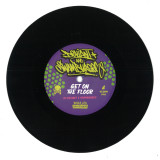
Regulate move into the new year by setting off two certified bangers. Master of the decks DJ Deviant is back on production duties; lead track “Get On The Floor” sees him once again collaborating with Swamburger (Mugs and Pockets) for a full force party starter. The production pulls influences from the earliest days when hip hop and disco were joined at the hip, with nods to The Sugar Hill Gang and The Furious Five, as well as the Golden Age and artists like Chubb Rock and Big Daddy Kane. Swamburger’s machine gun delivery and Deviant’s sharp cuts pull the track right into 2025 for maximum impact.
Flip side “Where’s The Party Clap” is a big trunk of cut and paste funk with a popping bass line, horns, claps, cuts and a groove that just doesn’t quit.
Roma techno legend Marco Passarani dusts off his Studiomaster moniker to present a selection of vibey dancefloor burners on 12” vinyl brimming with energy and packed with 303 squelch, thumping drums, moody synths and perfectly-placed vocal cuts. Marco took the Studiomaster name from his Studiomaster P7 console, which he runs his in-the-box mixes through, to bring extra dirt and character to his tracks. The Studiomaster alias first appeared on the Passarani Bandcamp page just as summer began in 2023. The newly built B.K.S. studio space was running smoothly, and the machines have been buzzing ever since, as Marco fires off vital, futuristic, acid-drenched club tracks, under pseudonyms like Passarani 2099, Analog Fingerprints, and Kids of Rotten Future. In contrast to an internet full of streaming files and AI generated artworks, the Studiomaster brand brings the look and feel of rare 12” white label promos, minimal on design and information.
The tracks here are collected on vinyl for the first time, “They represent proper studio jam sessions,” says Marco “meant to be performed in the club. There are no songs here, just pure dance floor tools!” And it’s to those in the club that this release is dedicated: to those still dreaming about the future while dancing in the dark.
Ploughing lesser-used breaks and finding finesse in the ruffest and tuffest rave emissions, Jason Warlock is back with more of that untouchable clout he rolls out as Hooverian Blur. Team Sneaker have been proud to platform the project plenty in the past, and so it goes on this latest four-strong salvo of blunted samples and head-threading synth hooks.
In terms of pace and sheer sonic breadth Hooverian Blur aligns with the embryonic days of hardcore, before breakbeat dogma had set in. Rather than opting for tear-out intensity, the likes of 'Hypnotizer' and 'Wacky Robot' roll with a lean-on that feels like the sweet spot between rave and rap. It's trippy, ready to take a left turn and tweak your nervous system with a plethora of zaps and pings, and it's got more than enough bassweight and mid-range snap to get bodies twisting, but edgy hysteria has been replaced by a cool and deadly demeanour which makes these joints all the more addictive.
'Project One' still slaps with a crafty one-two between rolling drum licks and machine-powered thrust, and 'Double Depths' digs deep down in the crusty edits, but yet again Warlock demonstrates an assured poise in his Hooverian Blur guise which can only come from serious skin in the game.
UK-based producers b.mod and Essentia debut on Rhythm Werk's Collaborative Series with a four-track EP blending powerful four-to-the-floor rhythms and intricate broken beats. Known for their releases on labels such as Arts, Soma, Liberta Records, and Suara, the duo bring a precise, high-impact sound engineered for dance floor energy and dynamic set transitions.
Each track is meticulously crafted, offering versatility for DJs--whether building intensity, maintaining flow, or creating reflective moments. This 12-inch record is a must-have for those seeking forward-thinking club tools.
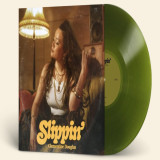
Von Sonny Foderas Top-10-Hit "Angel" bis zu bahnbrechenden Momenten mit Chase & Status, David Guetta, The Blessed Madonna und Dom Dolla – die Leidenschaft, Ausgeglichenheit und pure Emotion des Stimmtalents von Clementine Douglas ist unverkennbar. Die Britin ist eine ebenso starke Songwriterin und tritt nun mit eigenen Singles hervor, die als 7"-Trilogie auf limitiertem, signiertem Farbvinyl erscheinen. Sie weisen subtile Veränderungen auf, wenn darke Momente der Clubkultur, D&B und 2Step in ihren Pop-R&B-Sound einfliessen. Dennoch sind sie genauso hymnisch wie ihre grössten Momente und zeigen, wie Clementine mit süss-gefühlvollen Vocals und warmer Live-Instrumentierung der Dancemusik eine belebende menschliche Note verleiht.
Next in line, a crafty remixes pack of Ethereal Logic's second album "Intergalactic World Music". The A side has two uptempo tracks by S.Moreira (1/2 of Ethereal Logic) and the italian wizard Paolo Mosca, delivering versions that perfectly capture their club essence.
On the B side, more downtempo yet groovy approaches by another extended
- A1: No Right 2 Love
- A2: Wwwww?
- A3: U&I
- A4: Measure Me
- A5: U R Here
- B1: Tormentor
- B2: North
- B3: Empty
- B4: Nightworld
- B5: Pity
Coloured Vinyl[23,95 €]
Das Debütalbum des 2020 gegründeten Leedser Kollektivs um Kernmitglieder George Mitchell, Matt Peel, Josh Lewis und Imi Marston.
Mit Einflüssen, die von Mount Kimbie und My Bloody Valentine bis hin zu Björk und Burial reichen, steht 'U R HERE' für ein neues Gefühl des kreativen Ausdrucks inmitten einer Welt, die manchmal zu zerfallen scheint.
Die Songs auf 'U R HERE' sind eine fließende, mitreißende und einzigartig introspektive Interpretation von Clubmusik, die die psychologischen Auswirkungen des modernen Zeitalters in Töne fast und die Vitalität und Freiheit nutzt, die mit Neuanfängen einhergeht. 'U R HERE', genau jetzt, und nur das zählt.
In den vergangenen 12 Monaten haben sich HONESTY mit der Veröffentlichung ihrer ersten EP 'WHERE R U', dem experimentellen Mixtape 'BOX' und einer Reihe von Singles aus ihrem Debütalbum ein substantielles Publikum erspielt.
Die Gruppe erntete Lob von wichtigen Indie-Magazinen wie The Needle Drop, eine Erwähnung von Alexis Petridis von The Guardian und weitere Kritiken von Mixmag, Rolling Stone, Crack, NME und Brooklyn Vegan. Im Radio wurde die Band von BBC 6 Music und Apple Music 1 gespielt und erhielt viel Unterstützung von BBC Introducing. HONESTY hat kürzlich eine Live-Session für BBC Introducing aufgenommen und gefilmt, die Anfang Januar auf BBC Introducing Leeds und Sheffield ausgestrahlt wird.
HONESTYs hypnotisierende Live-A/V-Show ist einer der wichtigsten Faktoren für den bisherigen Erfolg der Band. Ihr vielschichtiges visuelles Erscheinungsbild und ihr ausgeklügeltes Live-Setup bringen die Textur und die Kraft der Aufnahmen voll zur Geltung, was Mixmag und Clash dazu veranlasste, die Band in ihren Beiträgen zu den besten Sets beim Eurosonic 2024 hervorzuheben.
- A1: No Right 2 Love
- A2: Wwwww?
- A3: U&I
- A4: Measure Me
- A5: U R Here
- B1: Tormentor
- B2: North
- B3: Empty
- B4: Nightworld
- B5: Pity
Black Vinyl[23,95 €]
Das Debütalbum des 2020 gegründeten Leedser Kollektivs um Kernmitglieder George Mitchell, Matt Peel, Josh Lewis und Imi Marston.
Mit Einflüssen, die von Mount Kimbie und My Bloody Valentine bis hin zu Björk und Burial reichen, steht 'U R HERE' für ein neues Gefühl des kreativen Ausdrucks inmitten einer Welt, die manchmal zu zerfallen scheint.
Die Songs auf 'U R HERE' sind eine fließende, mitreißende und einzigartig introspektive Interpretation von Clubmusik, die die psychologischen Auswirkungen des modernen Zeitalters in Töne fast und die Vitalität und Freiheit nutzt, die mit Neuanfängen einhergeht. 'U R HERE', genau jetzt, und nur das zählt.
In den vergangenen 12 Monaten haben sich HONESTY mit der Veröffentlichung ihrer ersten EP 'WHERE R U', dem experimentellen Mixtape 'BOX' und einer Reihe von Singles aus ihrem Debütalbum ein substantielles Publikum erspielt.
Die Gruppe erntete Lob von wichtigen Indie-Magazinen wie The Needle Drop, eine Erwähnung von Alexis Petridis von The Guardian und weitere Kritiken von Mixmag, Rolling Stone, Crack, NME und Brooklyn Vegan. Im Radio wurde die Band von BBC 6 Music und Apple Music 1 gespielt und erhielt viel Unterstützung von BBC Introducing. HONESTY hat kürzlich eine Live-Session für BBC Introducing aufgenommen und gefilmt, die Anfang Januar auf BBC Introducing Leeds und Sheffield ausgestrahlt wird.
HONESTYs hypnotisierende Live-A/V-Show ist einer der wichtigsten Faktoren für den bisherigen Erfolg der Band. Ihr vielschichtiges visuelles Erscheinungsbild und ihr ausgeklügeltes Live-Setup bringen die Textur und die Kraft der Aufnahmen voll zur Geltung, was Mixmag und Clash dazu veranlasste, die Band in ihren Beiträgen zu den besten Sets beim Eurosonic 2024 hervorzuheben.
Efficient Space honours the memory of producer and MC Ali Omar with Hashish Hits, a posthumous selection from the dub rebel’s self-released discography.
One of ten children in working-class Liverpool, Omar drew deep influence from his father's Arabic heritage—a thread central to his identity and sample origins. After art school and a spell clubbing during Manchester's halcyon days, he relocated to Sydney, where he cofounded the blunted downbeat duo Atone with fellow British expatriate Andy Fitzgerald. As an MC, he infiltrated the city’s house, dub, jungle, and bass circuits, becoming a regular fixture at the Bentley Bar, where he commanded the mic with his versatile, rumbling baritone and charisma.
Freakishly talented in the studio, Omar was a pioneer of the Akai sampler and Atari, deftly recording live sessions straight to DAT. Drawing on industry insights from his sister, Merseybeat firebrand Beryl Marsden—who supported The Beatles on their final UK tour and was signed to Decca and Columbia—the non-conformist sought to build a self-sufficient business model. Between 1998 and 2004, he independently issued four albums on CD through his Hashish Studios imprint, hustling copies directly to local record stores and live shows for instant returns, even hand-sewing screen-printed hessian sleeves for his final release.
Uncompromising in his principles and refusing to suffer fools or charlatans, Omar relished the opportunity to collaborate with those who embodied the same spirit. Hashish Hits offers a snapshot of his inner sanctum—Fitzgerald on the opening track's billowing smoke stacks, the serpentine vocals of Gina Mitchell and the magic hands of mixer Louis Mitchell on 'On Release,' and Wicked Beat Sound System’s Kye on 'Poor Man Beggar Man Thief'. Meanwhile, 'Suicide Bomber' smoulders with the tension of a lost Muslimgauze relic, as the instructional 'Roll Up' and 'The Last Straw' spiral deeper into Omar’s signature production vortex— where space stretches in slow motion and walls reverberate with ricocheting delay.
A true icon of Sydney’s underground scene, the larger-than-life Omar passed away on 23 June 2009 after a valiant battle with cancer. He is remembered for his assertive spirit, larrikin humour, wild anarchic personality, and enduring mantra: “Love and live your life”.1
- No Right 2 Love
- Wwwww?
- U&I
- Measure Me
- U R Here
- Tormentor
- North
- Empty
- Nightworld
- Pity
HONESTY are not a band in the traditional sense. With four core members - George Mitchell, Matt Peel, Josh Lewis and Imi Marston - and a rotating cast of collaborators which have included musicians and visual artists like Kosi Tydes, Softlizard, Rarelyalways, Florence Shaw and Liam Bailey, the Leeds-based collective emerged as an exercise in doing things differently on a journey towards self-acceptance.
HONESTY’s debut album, ‘U R HERE’ is released on Partisan Records. With influences that range from Mount Kimbie and My Bloody Valentine to Björk and Burial, ‘U R HERE’ represents a renewed sense of creative expression amidst a world that can sometimes seem like it’s crumbling apart.
The songs on ‘U R HERE’ are a fluid, exhilarating, and uniquely introspective take on club music - sonically mapping the psychological impact of the modern age and harnessing the vitality and freedom that comes with new beginnings. ‘U R HERE’, right now, and that is all that matters.
Black LP in a gatefold sleeve with spot gloss finish.
Terra Utopia returns to Emotional Response with a second long-from EP / mini-LP, 10 more tracks that span the ethereal sounds of ambient, atmospheric beats and liquid drum and bass.
Originally intended as a one-off project from French producer Benoit B, Terra Utopia 1 was recorded in 2 weeks while sojourned in an Athens’ Spring. A personal dedication to a specific sound he loved.
Since the original release, a debut LP under his own name followed, before Benoit embarked on his new club orientated project Blu:sh, releasing a series of acclaimed EPs for the likes of esteemed Kalahari Oyster Club and Roza Terenzi’s Step Ball Chain label.
However, the incredibly positive feedback of the first Terra Utopia recordings led to reappraisal and return to the name and here again, a second set of 10 tracks (8 vinyl and 2 digital bonus).
Once more recorded as short pieces – cut loud for DJ play – they interconnect to feelings of intangible expanses, that embracing summer, the warmth, a latent stillness of the azure sea and sky. This invitation, a narrative forever calling, of long days, calm nights, the infinite astral plain in minds eye.
The ambience has progressed, beats crackle and snap, tracks visualise an individuality, names are anointed, with the collaboration with singer dvdv on Shadows Of Memories, a floating, mesmeric highpoint, a dreaming siren.
No fears, the children of the heat embark.