The industrial treasure chest of Laurent Petitgand & Thierry Mérigout Geins’t Naït unit gets a third and final archival jag, playing to a spectrum of styles from misfit tape cut-ups to sludgy grooves and trampling sidewinds of the filthiest, sickest calibre.
The three volumes mining the Geins’t Naït Archive have parsed some 40 years of work for the most potent industrial blatz, culminating in some of the gnarliest and richest tackle on this final volume. As also highlighted on releases via Vladimir Ivkovic’s Offen Music label, it’s hard to fully surmise Geins’t Naït’s oeuvre, but you kinda know it when it hits. It’s industrial, or more specifically post-industrial, in the classic sense of everything after Throbbing Gristle and their famous label; buzzing with atonality and often heavily rhythm-driven, but not necessarily built for the club. In some senses, it's adjacent to freakier ‘floors in a way shared by the likes of Bourbonese Qualk or Din A Testbild, likeminded miscreants who emerged in TG’s shadow during the ‘80s.
‘Archives 3/3’ opens with a particularly Gallic slant on the paradigm in ‘Michel’, and shells a slew of thee crankiest gear that shares a certain tone and thrust toward trippy abstraction with Anne Gillis. ‘Abstrac 2’ finds them speaking in ogreish tongues on an uncanny waltz, before dialling up the pomp with near-EBM levels of muscularity and fanfare on ‘Poiro’, and unleashing reverse-looped heck like a La Peste joint in ‘GN is Good For You’. The keening pulse and nose attack of ‘Rappel’ reminds us of CHBB, and the evil slug of ‘Hate’ feels summoned from Parisian catacombs, whilst ‘Wladimir’ stands out for its phosphorous synth burn and prototypical Él-G poetry, leaving ‘Base Cour’ to souse the senses in distortion and barnyard squabble.
Cerca:mo style
- 1: True Blue You
- 1: 2Sugar And Spice
- 1: 3Truth Or Consequence
- 1: 4A Short Goodbye
- 1: 5Picking Through The Scraps
- 1: 6Blue Island
- 1: 7Get Wet
- 1: 8You Know Those Things You Wished For?
- 1: 9It's Not The Time
- 1: 0Watertown
The 299 Game is the debut lp from 299, a collection of ten songs with an overarching sense of Lynchian weirdness is offset by songs that ring with crisp melodies and compositional nous. 299 is the solo recording project of Welsh multi-instrumentalist and producer Gavin Fitzjohn (who has worked with the likes of Manic Street Preachers, Gruff Rhys, James Dean Bradfield, Paolo Nutini and more), with 299 coming to life a few years ago while Fitzjohn was making his way across the US. Intoxicating, dangerous in its allure, there are flecks of '60s vocal groups and Tom Waits-style melancholia tied up in Fitzjohn's deliberate American drawl.
In late 2023, Tokyo-based musician, Daigo Sakuragi, temporarily relocated to London, where he revisited material recorded with fellow Japanese musicians in Tokyo, drawing inspiration from the city’s energy, music, and atmosphere. This new perspective culminated in Togenkyo, a 28-minute work blending early 2000s folktronica and contemporary ambient styles. Sakuragi crafts immersive sonic textures with synthesisers and spatial production, while the organic groove of drums and bass anchors the piece, subtly inviting physical movement. Floating above this foundation, the saxophone weaves through the soundscape, leading the music with an elegant yet exploratory presence.
The session took place at aLive recording studio in Tokyo, with the following personnel:
Daigo Sakuragi: synthesiser, guitar, post-production
Jinya Ichikawa: bass
Shoei Ikeda: saxophone
Kazuya Ooi: drums
The lineup reflects a network of notable Japanese artists: Ichikawa, Sakuragi’s longtime collaborator in D.A.N.; Ikeda, known for his work with Maya Ongaku; and Ooi, a drummer for yahyel.
Sakuragi is best known for his band project D.A.N., where he contributes vocals, guitar, and production alongside bassist Jinya Ichikawa and drummer Teru Kawakami. Since its formation in 2014, D.A.N. has gained recognition for their unique fusion of indie rock/pop, dub, and electronic music. Under his solo moniker Daigos, Sakuragi explores electronic dance music through DJing and production, experimenting with Eurorack modules and samples in a refined, microscopic aesthetic. Recently, his creative output has expanded into diverse fields, including advertisements, artist collaborations, and films.
The term Togenkyo resonates with the concept of utopia, yet it diverges—it does not symbolise a flawless paradise but rather an attainable state of peace within oneself. Sakuragi reflects on finding his own Togenkyo in London, far from his hometown of Tokyo. The EP brings a sense of comfort and calm, reminding listeners that such a space exists not far from reach.
180G vinyl pressing
After releasing their well-received 7” and 12” singles ‘Night Time’ and ‘Feel It / So Hot’, Isle of Jura is pleased to present Exotic Illusions, the debut album from D.D. Mirage, the Sydney-based duo of Josh Dives and Disky Dee.
Having first played music together during the mid-2010s in the indie-psyche and punky-shoegaze bands King Colour and SCK CHX, the two Australian musicians/DJs came up in the warehouse party scene that fermented in the wake of the Sydney lockout laws. While organising mixed media events under the Yeah Nah Yeah brand, they discovered the joys of disco, dance-punk and the Balearic beat through Pender St Steppers’ DJ mixes and reissue releases and found themselves changing direction in response.
Written and recorded with a range of vintage keyboards and preamps, instruments and digital studio software, Exotic Illusions is a cosmopolitan love letter to the immaculate blend of Italo disco, Neopolitan funk, Nigerian boogie, cosmic house, synth-pop, UK street soul and lovers rock sounds that have inspired D.D. Mirage since they began this iteration of their ever-evolving musical relationship.
“The name Exotic Illusions refers to our fascination with all of this music made in other parts of the world,” they explain. “During lockdown and thereafter, we indulged in these exotic sounds as an antidote to our lack of travel. This fascination continued as the world opened up again, and we started working on tunes together. It’s also a way of acknowledging that we feel like tourists partaking in these styles and established sounds. They aren’t ours and weren’t born out of the place we’re from, but we hope we’ve been able to add something unique to them.”
In recognition of this, rather than just reinterpreting genre motifs through an antipodean lens, D.D. Mirage opened up lines of communication with some of their favourite musicians from the Neapolitan scene, bassist Daniel Monaco (Rush Hour, Periodica Records) and drummer Andrea De Fazio (Parbleu/ Nu Genea), who recorded the rhythm section for ‘So Hot’. They also wrote to the Manchester-based singer/producer Private Joy, who graced ‘Night Time’ with a smoother-than-silk street soul vocal that helped the single secure crucial plays on NTS and BBC Radio 6.
Opening with the tropical melodies, post-disco machine beats and jilted art-punk singalong chants of the title track, Exotic Illusions unfolds as a series of sturdy, internationally-minded dancefloor excursions. ‘Piranesi’ is boogie with a South American shuffle. ‘So Hot’ is Neapolitan funk with a Leichhardt strut, and ‘Antenna’ (featuring Jofi) is D.D. Mirage’s love letter to ‘80s drum machine bossa nova from Brussels.
On ‘Feel It’, the duo hit a sparking groove that reaches into an eternal sunset of the mind before throwing out a bubbly disco-not disco spoken word bounce on ‘Cat’s Cradle’, featuring psychedelic-pop singer Jermango Dreaming. From there, D.D. Mirage bring it home with a cheeky Aussie drawl on ‘Living Upside Down’ and the nocturnal excellence of ‘Night Time’, making a case for themselves as a significant new force from Australian music to the world.
full sleeve artwork from Bradley Pinkerton.
- 01: Smilin` Faces (Feat. Antonio Mclendon)
- 02: Don`t Be Scared (Feat. Antonio Mclendon)
- 03: Here We Go Again (Feat. Audrey Wheeler &Amp; Brent Carter)
- 04: Doin` Alright (Feat. O&Apos;Bryan)
- 05: Someone I Used To Love (Feat. Antonio Mclendon)
- 06: Time Of Our Lives (Feat. Antonio Mclendon)
- 07: I`m In Love (Feat. Antonio Mclendon)
- 08: Really No Chance (Feat. Katie Holmes-Smith)
- 09: Love Of Another Guy (Feat. Antonio Mclendon)
- 10: True Love (Feat. Antonio Mclendon)
- 11: Every Time You Touch Me (Feat. Antonio Mclendon)
- 12: Can`t Hide Love (Feat. Brent Carter)
Output/Input release their debut album 'Forward Motion' on double vinyl LP, December 1st. The album is an eclectic mix of 70's-inspired soul and funk delivered in a truly 2023-style of recording, with all tracks being recorded remotely across multiple continents. The band is a truly diverse and international group featuring members from countries including the USA, UK, Germany, Hungary and South Korea. Their previous releases have been praised by DJ's and tastemakers, regularly featuring on Jazz FM, BBC Radio 2, BBC Radio 6 and a host of specialist Soul radio stations across the globe. The CD and digital album have been No.1 on multiple UK Soul Charts.
Lead vocalist Antonio McLendon (pictured) has worked and performed with James Ingram, Tata Vega, Gladys Knight and Donna Summer, and features as vocalist on seven of the ten tracks on the album. He has definitely made an impact as a world-class singer this year, with the singles 'Smilin' Faces' and 'Someone I Used To Love'. both being radio hits. Co-incidentally, Antonio's daughter, Samara Joy won two Grammy awards this year for her album 'Linger Awhile'. Here We Go Again' features the vocals of Audrey Wheeler-Downing, who worked with Unlimited Touch and Chaka Khan, and Brent Carter, the current lead singer of AWB and previous to that, Tower Of Power. 'Doin' Alright' features vocals from O'Bryan, who Davis worked with extensively on his albums for Capitol. This re-recorded version, co-written by Melvin, originally appeared on the album of the same name in 1982, and is widely tipped as a stand-out rare groove revival cut on the album and is already hotly anticipated. 'Really No Chance' features the lead vocals of Katie Holmes-Smith, a globally sought-after singer, who backed Adele on her world tour as well as currently performing with her for the duration of Adele's residency at Caesar's Palace in Las Vegas. The CD release featured a bonus track, 'Every Time You Touch Me', recorded very recently, written by Noval Smith and Mark Love and sung by Antonio McLendon, while the 2LP features another bonus cut, a fantastic cover of the Earth, Wind & Fire classic 'Can't Hide Love', penned by Skip Scarborough, with vocals by Brent Carter
Repress!
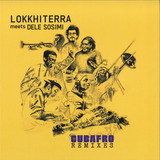
Last summer, London fusionistas Lokkhi Terra joined forces with former Fela Kuti keyboardist Dele Sosimi for the four track album "Cubafrobeat", an ingenious blend of Cuban dance music and Nigerian/Yoruban Afrobeat. MoBlack Records present dope up-tempo re-imaginations of "Cubafro" by Peppe Citarella who contributes an uplifting latin jazz infused interpretation, and Armonica, Francesco Chiocci and MoBlack who serve downright tantalizing afro house renditions oozing with their respective landmark style.
(Limited edition to 500 copies, remastered audio, pressed and printed in Indonesia) The 13 tracks contained in this compilation “Begadang: Soneta Group Best Songs, 1975-1980” are some the most innovative music that came out of Indonesia’s music scene in the 1970s, tunes that has cemented Rhoma Irama’s status as the king of the genre.
Dangdut is the biggest musical genre in Indonesia. Dangdut, onomatopoetic name from the sound of hand drums used in this type of music, is what reggae to Jamaicans, country to Americans or skiffle to mid 20th century British people. And in this genre of dang dut, the name Rhoma Irama looms large. He is until today the undisputable king of dangdut and his role as pioneer of the music is already in the history book. In fact, there's one book documenting the outsized role of Rhoma in establishing dangdut as the father of this music. The book is aptly titled Dangdut Story, written by Pittsburgh University music professor Andrew N. Weintraub.
Among Indonesian fans of dangdut, there’s this one misconceptions that dangdut music is that it is an indigenous art form from Indonesia and that it constitutes an amalgamation of local, traditional music of this Southeast Asian nation, with Malay music being the most prominent feature in the mix.
Dangdut pioneer Rhoma Irama is among the first to reject this assertion. “Dangdut music may have originated in Deli (in North Sumatra) but then got the influences from the West and India”, he said.
Indeed, most of Rhoma’s well-known compositions may have been influenced by Indian tunes but some of his best quality works owed much to the West.
Rhoma had long found home in Western pop music. In the early 1960s, after honing his guitar playing skill, Rhoma set up his first band Gayhand to play the tunes of The Beatles, Paul Anka and Tom Jones. In 1972, Rhoma won best singer title in a Southeast Asia singing competition in Singapore playing Tom Jones “I Who Have Nothing.”
Yet, nothing changed Rhoma’s fortune in the music industry, to a point where he decided to leave pop and switched to playing Orkes Melayu (Malay Orchestra) music, first with Orkes Melayu Purnama and later with Soneta Group.
His career soon took off with Soneta, especially after he introduced what ethnomusicologist William H. Frederick considered as “theatre”, through which Rhoma borrows many elements from stage performances of British and American rock bands. These elements, kitsch and pomp, he liberally adopted and became an inseparable part of dangdut itself; tight pants, long hair, platform shoes, glitter and glamour which would not be out of place in Elton John and David Bowie stage show.
And this is actually the contradiction of Rhoma’s brand of Malay music. “One might legitimately ask how imaginative, not to say bizarre, costuming and dancing with abandon could be related to some of the objectives of Rhoma has set for himself and soneta group”, Frederick wrote on his seminal work on the singer, Rhoma Irama and the Dangdut Style: Aspects of Contemporary Indonesian Popular Culture, published in 1982.
From technical point of view, Rhoma not only replaced the acoustic elements from Melayu Music with electric instruments but also created new synthetic sounds that has never been attempted before in Indonesia’s music industry.
Detractors like to point out how much he was indebted to Deep Purple, but a closer inspection reveals how he in fact had mined his influences even deeper.
Notice how Rhoma reproduced funk, which is all the rage in early 1970s, in the song “Santai” (Relax), this album’s closer or “Credit Title (Instrumentalia)” which opens this Darah Muda (Young Blood) soundtrack. The rubbery bass lines that open both songs can easily find home in any Sly and the Family Stone’s or Isaac Hayes’ tunes from that era. Other highlights of the song is the funky guitar licks and the droning Hammond a la George Clinton that stabs deep in the record groove. In the guitar solo, you can also hear the bark of George Harrison’s licks from “Taxman”.
The 13 tracks contained in this compilation “Begadang: Soneta Group Best Songs, 1975-1980” are some the most innovative music that came out of Indonesia’s music scene in the 1970s, tunes that has cemented Rhoma Irama’s status as the king of the genre. Only 500 copies were pressed for this compilation.
- A1: Para No Olvidar
- A2: La Bella Y La Culebra
- A3: El Mañana
- B1: Nací Mestizo Ft. Nicoyembe
- B2: Amargura
- B3: Son Cimarrón
- B4: Perdi Mi Corazón
Black[32,73 €]
La Pambelé Unveils Nací Mestizo, A Bold New Album Reviving Salsa with a Contemporary Twist Bogotá’s heavy guaguancó orchestra, La Pambelé, proudly presents their highlyanticipated second studio album, Nací Mestizo, now available on all major digital platforms as of November 27th. This album pays tribute to the golden era of salsa, particularly the 1970s, while breathing new life into the genre with modern lyrics and stories that resonate deeply with Latin communities.
All while maintaining a distinct Bogotan essence that highlights the city’s unique cultural flavor. Nací Mestizo seamlessly blends the timeless salsa brava sound with contemporary themes, reflecting the everyday lives of people across Latin neighborhoods. The album’s songs capture the struggles, passions, and joys of ordinary people, presented through the vibrant rhythms of salsa, creating a musical experience that connects the past with the present. Building on Their Rising Popularity Prior to the album’s release, La Pambelé debuted the singles “Amargura” and “Perdí mi Corazón”, which quickly captivated audiences and set the stage for the full album's success. The band’s electric performance of these tracks at the MedPlus Coliseum in Bogotá, before an audience of 22,000 attendees awaiting Marc Anthony, was met with enthusiasm as fans danced and applauded.
This moment marked a significant milestone for the orchestra, cementing their place as a rising force in the global salsa scene. Additionally, La Pambelé’s growing visibility has been marked by their appearances at major festivals such as Salsa al Parque and features on prominent radio stations, including Radio Nacional de Colombia and Latina Stereo. These platforms have helped introduce La Pambelé’s signature sound to a wider audience, building anticipation for the release of Nací Mestizo and reaffirming their influence in Colombia’s tropical and alternative music scenes. A Contemporary Salsa Sound with Classic Roots La Pambelé’s unique blend of traditional salsa brava and contemporary Latin storytelling is showcased through their distinctive nine-piece orchestra, which includes piano, conga, flute, trumpet, trombone, timbales, bongos, and baby bass. The dynamic vocals of Miguel RoRebolledo and Lorena Contento elevate the album’s themes, creating a sound that invites listeners to their feet and onto the dance floor. Under the direction of Camilo Toro Morato, the orchestra has honed its signature style, pushing the boundaries of salsa while staying true to its roots. As a proud defiance of stereotypes about Bogotá’s musical abilities, La Pambelé’s name pays homage to legendary Colombian boxer Kid Pambelé, symbolizing resilience and strength.
The name also draws from the Bantú language, meaning "defender of one's own," reinforcing the band’s connection to their Colombian heritage and pride in their distinctive sound. Global Recognition and Continuing Influence Since the release of their self-titled debut album in 2022, La Pambelé has gained international recognition, especially within the vinyl collector community. Theirdebut album was released in both 45” and LP vinyl editions, further solidifying their unique position in the contemporary salsa movement. Influenced by salsa greats such as Markolino Dimond, Eddie Palmieri, Edy Martínez, and Ismael Miranda, La Pambelé has carried forward the torch of salsa brava with passion and innovation. Nací Mestizo marks a significant evolution in the orchestra’s journey, melding the old and the new, and cementing La Pambelé as a driving force in the future of salsa music. A Collector’s Dream With their 2022 debut album garnering international recognition, La Pambelé’s vinyl releases—including 45” and LP editions—have become coveted items for salsa collectors worldwide. Their music is a bridge between classic salsa traditions and a modern vision, appealing to seasoned fans and new listeners alike. About La Pambelé La Pambelé is a heavy guaguancó orchestra from Bogotá, Colombia, known for their vibrant, rhythm-driven sound that blends 1970s salsa brava with modern Latin influences. With a unique nine-piece lineup and powerful vocals, the band continues to break boundaries, defying expectations and inspiring audiences around the world
- 1: 3-28-8B
- 2: 9-19-17_B_Blackhole_Hifi_V3
- 3: B_Elijah_Therapy_V2 (Feat. Elijah Kessler)
- 4: 7-21-17_Substitute_Hifi_V3
- 5: Tron_New_Rose_Hifi_V2 (Feat. Old Grape God)
- 6: 5-11-15_Outdated_Hifi_V3
- 7: 1-2-1_Intro_Function_Wifi_V3
- 8: Zeiss_Hifi_V2 (Feat. Caleon Fox)
- 9: 4-26-18_Tonys_Drewbanga_Hifi
- 10: Castaway_Tron_Hifi_V2 (Feat. Old Grape God)
- 11: Atherton Hifi
- 12: Drip Bounce _ 7_24_18
Chaz Bear (formerly Bundick) has been immersed in music from a young age, shaped by a household rich with sounds ranging from Michael Jackson and Elvis Costello to The Specials. Growing up biracial in South Carolina, these diverse influences contributed to the unique blend of styles Chaz weaves into his work. Nominated for Best Dance Recording at the 2020 Grammy Awards for his collaboration with Flume on “The Difference”, Chaz’s genre-defying sound has won critical acclaim. His journey began in earnest with early home recordings that showcased his prolific nature, leading to over 10 Toro y Moi albums released independently before signing with Carpark Records in 2009.
Chaz’s debut album under Carpark, Causers of This, was a seminal release that sparked a movement of sample-heavy bedroom recordings. Its success led to early assumptions that he was limited to this sound, but Chaz quickly proved his versatility with 2011’s Underneath the Pine, recorded between tours and featuring entirely live instrumentation. This pivot set a pattern for Chaz’s career: each subsequent release explored new terrain, from the psych rock of What For? to the R&B-influenced Boo Boo, all tied together by his signature production and melodic sensibilities.
Following Boo Boo, 2019’s Outer Peace marked Chaz’s return to the Bay Area after a year in Portland, embodying a celebratory homecoming filled with collaborations and vibrant playfulness. Featuring friends and eclectic references to contemporary hip hop, funk, Eurodance, and ambient textures, Outer Peace was a sharp contrast to the contemplative, isolation-driven Boo Boo and solidified Chaz’s place on the cutting edge of music.
Five days post-release, Chaz teased Soul Trash on Instagram, sharing a cassette titled SOUL TRASH V1 with a Dropbox link, which was later removed. The mixtape was officially released digitally on October 29, 2019, and has since garnered over 39 million streams. This album was also his first collaboration with Elijah Kessler, who later released an album on Chaz’s Company Records. Now available on vinyl for the first time, Soul Trash epitomizes Chaz's experimental spirit, featuring ambient sounds, lo-fi loops, and contributions from Old Grape God, and Caleon Fox. Released alongside more recent projects like Mahal and Hole Erth, Soul Trash bridges his past with his ever-evolving artistry, proving Chaz’s creative well is far from dry.
- A1: Fiesta En La Jungla
- A2: Fuga En La Selva
- A3: Tu Partida
- A4: Agua De Cachilde
- A5: La Chicharra
- A6: Dolor Y Pena
- B1: Izango
- B2: El Shiringuero
- B3: A Jenny
- B4: Linda Tocachina
- B5: Para Mi Gente
- B6: Tragedia En Uchiza
Carrying the torch of psychedelic cumbia, with a healthy dose
of surf guitar and Amazonian dancefloor flourishes from Peru
and Brazil alike, Fiesta en la Jungla by Los Dexter’s de Uchiza
is the first release from the newly formed London-label Ritmo
del Barrio. Originally released in 1982, it captures the finest
cumbia being made in Peru at the time, decked out with
frenetic surf-rock guitar riffs, rhythms floating on crisp
cumbia percussion and occasionally punctuated by carimbó
breakdowns native to the Pará region of north-eastern Brazil.
The album is filled with energy, a gem that was always
intended to animate any dancefloor. Peruvian cumbia came to national attention in the late 60s
through the recordings of Juaneco y su Combo, Los Destellos
and Los Wembler’s de Iquitos, but it’s had many revivals, and
Fiesta en la Jungla arrived when the style was going through a
major transition. In 1977, a passenger plane carrying most of
the members of Juaneco y su Combo crashed, killing everyone
on board. In 1980, Los Destellos retired, and Los Wembler’s
released their tenth and final record, they were ready for a
break. This left a big void in Peruvian music. Wasting no time,
Los Dexter’s Emerson Ruiz Mosquera took the opportunity and
gave his band new life, filling the band’s ranks with young and
energetic musicians who were hungry for success. He built the
new band around a solid base of dexterous guitars, a dynamite
rhythm section, and added oodles of percussion and an electric
organ, giving them a powerful psychedelic sound that called
back to the sounds of the original chichamasters, but added a
new sheen. Along with bands like Los Shapis and Los Walkers
de Huánuco, Peruvian cumbia was reborn as chicha in the
1980s, and was now the sound of Peru’s barrios up and down
the country.
Based in the city of Uchiza, on the edges of the Amazon basin,
Los Dexter’s were uniquely located in central Peru, closer to the
largest urban centres of the country than Amazonian outposts
like Pucallpa or Iquitos, and therefore better positioned to
travel to the furthest reaches of the country with ease. In a
sense, Los Dexter’s were a bridge between the Amazon and the
rest of Peru, a bridge over which the sounds of Amazonian
cumbia could travel to the rest of the country on their way to
becoming one of the most ubiquitous elements of Peru’s musical
identity. Fiesta en la Jungla represents Los Dexter’s in their third
iteration. Led by Emerson Ruiz Mosquera, who was just a
young boy in 1970 when his older brother founded the group
with four of his friends, the ensemble by the time of Fiesta en la
Jungla included Orlando Abad on the timbales and lead vocals,
Lucho Bendezú on lead guitar, Javier Quiroz as second
guitarist, Alejandro Almeira on bass, Rufino Bustamante on
keyboard, Ramon Siu on bongos and bells, Ivan Rios on conga,
and Emerson as musical director and composer. Remarkably,
most of the group’s members helped to write at least one
track, Los Dexter’s were a collective endeavour.
Reissued on vinyl for the first time by Ritmo del Barrio, this
record is essential for any collector of Peruvian cumbia.
Showcasing the unique sound of Los Dexter’s, it carries hits
like “Fuga en la Selva” and “El Shiringuero”, which are sure to
set any dancefloor on fire, combined with slower, carimbó-
infused cumbias like “Fiesta en la Jungla,”and “Agua de
Cachilde.” Its closing track, “Tragedia en Uchiza'', is a key
piece of local history and tells of the flooding of the
Chontayacu River in 1982, a mortal tragedy that affected
thousands of people. Despite the subject matter, the album
maintains a joyful vibe throughout, with high energy riffs and
irresistible rhythms, contrasted with terse love ballads, like “A
Jhenny.” It is both a piece of musical history, and a sure-fire
tool for the dance floor.
Los Dexter’s became a fixture of festivals and celebrations in
the provinces of San Martin and Huánuco, and from expanded
across the country, taking Amazonian cumbia from the
Peruvian Amazon, to the heights of the Peruvian sierra, the
coastal plains, and the capital city of Lima.
2025 Repress
The follow-up to the first Acid Sampler is now in the hands of a single artist. Space Dimension Controller does Running Back the honor to leave his fingerprints on the (usually) silver box - and it’s a match made in heaven. The Irish man’s music is mostly a nod to the subtle and more delicate ramifications of electronic music. His Acid Sampler is no exception. Most of the EP presents itself as an ode to the brain dance vibe of acid house rooted music. While leaving out the harder and faster styles of the genre, SDC manages to pour his heart and soul as a producer into these four charming tracks.
Kosmische Conga works as the leader of the pack and pirouettes with memorable hooks, synthesizer swells and descant acid lines. Echopet introverts the whole concept, while Minehead peaks with it. Named after the seaside town that harbored the Bloc Weekend festival, its a warp-free romantic reflex of the brain dance vibe – or a heartfelt love song for circuits. Carinacid completes the quartet with a chugging and hugging mid tempo beat that could have gone on forever. Acid test passed! Artwork by Gasius.
- A1: Brian Poole And The Tremeloes - Do You Love Me?
- A2: The Big Three - Some Other Guy
- A3: Bern Elliott And The Fenmen - Money
- A4: The Redcaps - Talking About You
- A5: The Country Gentlemen - Greensleeves
- A6: Billie Davis - Tell Him
- A7: Kathy Kirby - Secret Love
- A8: Lyn Cornell - Sally Go Round The Roses
- A9: Eden Kane - Sounds Funny To Me
- A10: Pete Maclaine & The Clan - Yes I Do
- A11: Sounds Incorporated - Keep Moving
- B1: Jet Harris And Tony Meehan - Diamonds
- B2: Anthony Newley - I Love Everything About You
- B3: Jimmy Powell - Remember Then
- B4: Steve Marriott - Give Her My Regards
- B5: The Chimes - Can This Be Love
- B6: The Beat Boys - That's My Plan
- B7: Louise Cordet - Which Way The Wind Blows
- B8: The Tornados - Globetrotter
- B9: Tom Courtenay - Mrs. Brown You've Got A Lovely Daughter
- B10: Tommy Steele - Flash, Bang, Wallop!
- B11: Tsai Chin - Any Old Iron
Once again, Decca Records have been shining a light into the recesses of their vast archive to bring you 'The Decca Years 1963', a newly compiled collection of hits and rarities from the pioneers of British Pop music, available as a 45-song 2CD set, or a 22-song 'highlights' LP. Alongside big hits and familiar favourites from Brian Poole And The Tremeloes, Billie Davis, Kathy Kirby, Jet Harris and Tony Meehan, The Tornados, and Tommy Steele, we are excited to bring you some tracks that are being made available again for the first time in more than 60 years, and a few that have never been on CD before. Both formats come in eye-catching, retro style packaging that references Decca releases from the early '60s, and feature informative track-by-track sleeve notes.
bendrik's 'Aqualung EP' draws inspiration from the club scene of Brussels and his recent travels to diverse countries. It showcases bendrik's ability to bridge electronic genres with a refined touch. The A-side features hard-hitting tracks like 'Dr. Martens' and 'Trust'.
These cuts deliver raw, driving melodies with his signature style - perfect for peak-time moments on the dancefloor! The B-side includes the cover track 'Aqualung' that bridges the previous energy with relaxation. It invites the listener to make its own choice of experience, blending a steady bassline with hypnotic textures.
'Shirahama' paints a portrait of his time exploring distant lands where you join him in the driving seat.
Mutant, in partnership with Hollywood Records and 20th Century Films, is proud to present the premiere physical edition of Mark Korven's terrifying score to THE FIRST OMEN. Combining the inventive and dynamic instrumentation he is best known for, Mark Korven (THE WITCH, THE LIGHTHOUSE) has created a truly unsettling and powerful score to this new chapter to the legendary series. Jerry Goldsmith's Academy Award® winning score for the original 1976 classic THE OMEN is a totemic work of horror cinema. The film is the only time a horror film has ever won an Oscar for its score. Korven clearly knows he has big shoes to fill, because he takes his scoring style to powerful new heights with this brilliant work. It helps that Mark Korven is one of our favorite working composers. His score to THE FIRST OMEN is an incredible achievement and a fitting inclusion in one of the most important legacies of Horror filmmaking. A lot has changed since 1976, but one thing that hasn't is that horror scores deserve to be played as loud as possible, on vinyl, from your home stereo. Pressed on two red vinyl 140gram discs, housed in printed inner sleeves, contained within a die-cut jacket.
“Do you still believe it?” John Ross asks that question after journeying through the wreckage. The genesis of Dulling The Horns goes back to late 2022, when Ross began workshopping new material during soundcheck on the ILYSM tour. Last summer, Wild Pink decamped to western Massachusetts to reunite with engineer Justin Pizzoferrato. Ross decided to record Dulling The Horns live in the room, in an effort to capture Wild Pink’s onstage style — rawer, grainier. Gone are the glimmering atmospherics and studio affectations of recent Wild Pink outings. Instead, Ross’ voice is haggard against the humid distortion coating every song. “I wanted to make economical songs,” Ross explains. “Music that is very much at its core three or four people rocking.” If before, Wild Pink took notes from Springsteen and Petty, they’ve now entered their Crazy Horse era. On Dulling The Horns, you can hear him rediscovering the fire in real time. Tropes discarded along the roadside, songs pulled from the formative DNA of rock music, all filtered through years of messy fog. “There is no answer to these problems,” Ross says, having eventually yielded. But as far Dulling The Horns is concerned, there’s at least one path forward: Burn it all away, and keep moving. The album was mixed by Alex Farrar in Asheville NC, mastered by Greg Obis in Chicago, IL and is out in October on Fire Talk.
- Distilled
- Driving Through, Passing By
- Garden Waltz
- Silent Shores
- When Shadows Dance
- Patterns In The Sky
- The Clown After Dark
- Flickering Lights
- Fading Memories
When Shadows Dance is the new album from Eyolf Dale’s acclaimed trio with Per Zanussi and Audun Kleive, building on theexcitement of his previous trio album Being the Wayfarer, and his recent collaboration with the Norwegian Radio Orchestraconducted by Miho Hazama. Dale’s compositions and performances have been praised for their cinematic scope, blendingflowing lyricism with atmospheric depth, and this new release promises to push those boundaries even further.This album reflects Dale’s unmistakable style—rich in melodic and emotional narrative—while showcasing his sophisticatedcompositional approach. The trio creates dynamic landscapes, shifting seamlessly between delicate, impressionistic textures andmoments of energetic intensity. As always, Dale’s music draws from his deep connection to the Nordic tradition, while exploringnew and evocative sonic territories. His ability to craft music that feels both ethereal and grounded ensures that When theShadows Dance resonates with listeners, inviting them into a contemplative, poetic space.Known for his wide-ranging collaborations, from his trio to working with orchestras, Eyolf Dale continues to innovate, blendingelements of jazz, classical, and folk in a way that feels timeless yet forward-thinking. With the support of Per Zanussi’scommanding bass lines and Audun Kleive’s masterful percussion, this album is poised to captivate audiences, solidifying Dale’sposition as one of Norway’s most versatile and visionary musicians.
- Whistle From Above
- The Snake On Its Tail
- Hung In The Sky Of The Mind
- Scapegrace
- Poem Arrives Distorted
- Later In The Tapestry Room
- Queen's Side Eye
- Synchro Fade Pluck Stutter Slip
"Whistle from Above" is David Grubbs" first Drag City release in over a decade and his first-ever instrumental album for the label. The suspiciously youthful Grubbs is four decades into his career, with former bands including Gastr del Sol, Squirrel Bait, and Bastro, along with a wild ride of collaborators including f.e. Bitch Magnet, Codeine, The Red Krayola, Royal Trux, Dirty Three, Will Oldham, The Underflow and The Wingdale Community Singers. "Whistle from Above" is the first solo collection David has released since 2017"s Creep Mission. During the 2020 shutdown, David played what he precisely quantified as "a shit-ton of guitar," more than he could recall playing ever previously. Reinvigorated by this period of enforced woodshedding, he produced a series of new pieces, mostly for guitar, but also a piano composition and an exceptionally eerie bit of musique concrète. Meanwhile, David was reconnecting with the Gastr del Sol archive, as a new collection of old performances was being prepared from extensive archival material. The duo magic of that storied collaboration (released in 2024 as We Have Dozens of Titles) left David hungry to play in this format again - as he had recently with Loren Connors, Alan Courtis, Manuel Mota, and Liam Keenan. These duo experiences showed David the path forward to complete this new solo material. Thus he sought out collaborations with folks he"s called "some of the musicians whom I adore most on the planet" - Rodri Davies, Andrea Belfi, Nikos Veliotis, Nate Wooley, and Cleek Schrey - and their stunning contributions flesh out Grubbs" innate, deeply person brand of minimalism. "Whistle from Above" is a colourful, compulsive set of instrumental pieces in which David and his chosen collaborators interact amid the steady roll of an expansive landscape based in the hypnosis of David"s immediately recognizable guitar style.
The single release from Jimi Tenor's second thematic album on Timmion Records offers two very different moods. "Summer of Synesthesia" takes us back to those dreamy summer days, a natural overpour of sensations mixing together, sounds becoming colors before turning into flavors. Synthesizers grow into delicate layers over Cold Diamond & Mink's rhythm, and when your heart can hardly bear the beauty of it all, Tenor's soft lyric places the cherry on top. "Tsicroxe" on the flipside couldn't be more different, kicking into gear with a demonic organ arpeggio that sounds like you've just been dropped into a Dario Argento scene. Even though the familiar funk from Cold Diamond & Mink eases the dread a bit, when Tenor busts in with the eerie flute solo, the ritual closes in on its conclusion.
The contents of the backwards vocal bits at the end shall be saved for your turntable so make sure to rewind that track, selector! Also Available From Jimi Tenor & Cold Diamond & Mink: Is There Love In Outer Space? 7", Gaia Sunset 7", Is There Love In Outer Space? LP / CD. The single takes listeners on a sonic journey: “Summer of Synesthesia” flows with warm, dreamlike beauty, while “Tsicroxe” dives into intense, mysterious depths, showcasing Tenor’s dynamic range. Blending synth layers with Cold Diamond & Mink’s classic funk rhythms, both tracks bring elements of 70s soundtrack-style tension and ethereal soul, appealing to fans of both cosmic grooves and suspenseful soundscapes. Tenor’s layered synthesizers, haunting flute, and even backward vocal elements add a captivating texture, making “Summer of Synesthesia” b/w “Tsicroxe” a must-have for fans of genre-blending, atmospheric music.
- 1:
- Panic Attack
- I'm In Love... (Ft. Dot Allison & Michael Rother)
- Madder Lake Deep
- Apple Green Ufo
- Pinball Wanderer
- Music Concrete
- The Notes You Never Hear
- Space Station Mantra
Ride guitarist and songwriter Andy Bell’s third solo album pinball wanderer is an otherworldly collection of intergalactic wizardry that mixes psychedelic melodies, Can-via-The Stone Roses grooves and Arthur Russell-style experimental textures. With guest appearances from Dot Allison and Neu! legend Michael Rother on a cover of The Passions’ peerless post-punk classic ‘I’m In Love With A German Film Star’, it is perfect for both deep-listening headphones moments and cutting across the coolest, most understated dancefloors. The loose-limbed rhythm tracks were the starting point and were laid down with the help of Andy’s old Oasis bandmate Gem Archer. The rest followed after an intense all-night session last summer, with the completed album being delivered the following morning. It’s Andy’s finest work to date; a quintessential nighttime record where you can slip through the gaps in the notes and revel in the moment.
- A1: Beam Down
- A2: Red Shift
- A3: Time Warp
- A4: Cloning Process
- A5: Pulsar
- B1: Laser Attack
- B2: De Materialize
- B3: Fission
- B4: Super Nova Explosion
- B5: Quasar
The cosmic theme is well-served on these ten effects-riddled tracks, with the rockers-style material littered with all manner of stratosphere-breaking sounds from the mixing board and strategically adorned with snatches of ghostly echo and pneumatic percussion. It’s certainly an appropriate mood for a post-apocalyptic battle involving cartoon machines. Another essential dub album from the legendary Scientist, originally released in 1981.