The Poison Touch delves deeper into atmosphere while maintaining the gritty undertone that defines us. From start to finish, the listener is blasted with in-your-face raw energy while simultaneously feeling like a hauntingly beautiful experience. This record captures the essence of our live sound while exploring new realms, serving as both a continuation and evolution of our style.
Search:mo style
In the late 1980s, as techno and house made its way around Europe, mutating as it hopped from city to city, one young DJ from Curacao made a mistake that would inspire a brand new sound. While he was performing at Den Haag's Club Voltage, DJ Moortje accidentally dropped a dancehall track at 45RPM rather than 33, and let it play out. Thirsty for a hi-NRG sound, the crowd loved the squeaky vocals and rapid beat, and bubbling (or bubbling house) was born.For the next couple of decades, bubbling was a crucial part of Holland's Afro-diasporic club landscape. And as a new generation of wide-eyed young DJs and producers began to take the reins, it evolved accordingly. In the late-2000s, Den Haag-based teenage prodigy Guillermo Schuurman followed in the footsteps of his uncle DJ Chippie (one of the genre's co-founders) and cousins DJ Daycard, DJ Master-D, Stiko Jnr and DJ Justme, and began performing and writing beats. Using Fruityloops, he fused familiar bubbling rhythms with rap and R&B samples, trance synths and electro house wobbles, and his tracks quickly became a regular fixture on the Dutch circuit."Bubbling Inside" is a collection of Schuurman's most essential cuts from the era (2007-2009), with a couple of newer productions added for context. Crafted solely for the dance, most of these tracks were never properly released and have been painstakingly hunted down and collected by the Nyege Nyege Tapes together with Sascha Roth from Pantropical in Rotterdam and De Schuurman himself. Hearing them together highlights just how forward thinking the young producer was, steering a Dutch institution into the future.2008's 'First One' is a proto-Berghain belter, with booming bass-heavy kicks underpinning the kind of cheeky melodies that remain the calling card of the genre. 'Pier Je Bil!!' ratchets up the tempo, twisting bubbling's syncopated dancehall kicks into a rapid-fire club clatter and decorating them with steel-pan melodies. Elsewhere, 2019's 'Domina' shows how Schuurman's production style has developed as he mutates trap percussion, dubstep bass and eerie synth textures, while retaining the DNA of bubbling. "Bubbling Inside" is a testament to the evolution of the bubbling genre, as witnessed by one of its most visionary producers.
- A1: Color Me Blu - Fields Of Laughter
- A2: Apple - Love Melody In E Minor
- A3: Tribal Sinfonia - Do You Want Me
- A4: Harve And Charee - New Me
- B1: Kwartet Frits Kaatee - Easy Evil
- B2: Ernie Scott Trio - Souled Out
- B3: Bunker Hill - Dionysis
- B4: San Diego - Sands Of Malibu
- C1: Synod - Sheryl Song Is Gonna Do My Dancing
- C2: Whiz Kids - Long Time Gone
- C3: Ross Miller - I Can Love Her Anyway
- C4: Thunderbolt The Wondercolt - Ragged Edge
- C5: Eyrle Oliver - Lovely Lady
- D1: Lisa Richards - A Day In The Life Of A Fool
- D2: Joe Bozzi Quintet - Masquerade
- D3: George Melvin Quintet - It ´S Good Not To Forget
Watch out! You are holding the 125th (one-hundred-and-twenty fifth!) album on Tramp Records in your hands! We are honored to celebrate this impressive anniversary with the tenth volume in the Praise Poems series. This time, too, we go on a journey to discover previously unheard regions of jazz, folk and AOR from the 1970s and 80s.
Praise Poems Vol.10 presents sixteen (almost) forgotten rare groove gems, all released between the years 1970 and 1984. One of the many highlights is the opening track: "Fields of Laughter" by Color Me Blu - originally released on an acetate only of which two copies exist worldwide. But there is much, much more to discover. This brandnew volume features a wide range of genres, from AOR (Whiz Kids, Ross Miller, and another previously unreleased track by Harve & Charee) to Latin-Rock a'la Santana (Color Me Blue, Tribal Sinfonia, and Apple) to Soul-Jazz (Ernie Lewis Trio, Joe Bozzi Quintet or Dutch saxophonist Frits Kaatee). Right at the end, one track in particular stands out: the wonderful "It's Good Not To Forget" by George Melvin and his quintet - a fabulously dreamy, thoughtful instrumental piece in the style of Ramsey Lewis with catchy tune potential.
Not many compilation series make it to a tenth edition. And if they do, then you often notice that the quality of the songs goes in the opposite direction to the increasing number of series: namely decreasing. Not so with Praise Poems Vol. 10, which the creators prove in an impressive new way. They have found tracks that were originally either a) pressed by the musicians themselves in very small editions or b) released by small, regional labels. It is understandable that neither the musicians nor these small labels had the necessary knowledge or budget to market their albums or singles professionally. The majority of the bands therefore did not manage to reach a large audience - although they certainly had the potential for the big stage.
"Praise Poems 10 - A journey into soulful jazz and funk from the 1970s" makes these almost 50-year-old treasures accessible to a new audience. We hope that you enjoy discovering your personal favorite song(s) and we are already looking forward to many more releases!
- La La La
- Cruz
- Lost Angel
- Taquero
- Dream Suite
- The Mystery Of Miss Mari Jane
- Cha Cha Cha
- Sea Changes
- Cinema Lover
- Die Again, Yesterday
- Hollywood Ten
As Jess Sylvester finished his Hardly Art debut as Marinero in the fall of 2020, he realized it was time for a change. Sylvester grew up in Marin County, on the doorstep of San Francisco. It was a nurturing community for a high-school punk with a pompadour and, later, for a sober songwriter with a proclivity for moody psychedelia. But he wanted to be challenged and inspired by a new setting and scenario around strangers who prompted him to approach his music in unexpected ways. So in September 2020, as the world continued to reel in lockdown, Sylvester headed several hours south to Los Angeles, a city that, despite the relative proximity, the film buff knew largely from classic and cult films situated there. When he arrived, he kept digging into that cinematic past-Robert Altman's The Long Goodbye, with John Williams' classic theme, or classic 90s movies about East LA, many featuring Edward James Olmos. They shaped his understanding of his new town just as it began to open. This is one pillar of the multivalent and endlessly lush La La La, Marinero's new album about sobriety, identity, and fantasy that is playfully named both for the city that helped shape it and the sophisticated pop it contains. Sylvester wrote about characters outside of himself, whether considering the heroine reckoning with her own version of keeping clean or the screenwriters whose work was deemed communist simply as a political convenience. He linked those songs with motivational anthems about self-acceptance and playful numbers about flirting through food, shaping a 12-song set rich with humor, empathy, and encouragement. Sure, La La La is a continuation of the slippery genre play Sylvester started with 2021's Hella Love, 2019's Trópico de Cáncer, or even before that. But it also feels like a fresh beginning for Marinero, as Sylvester realizes how boundless this project can be. He began to think about the music of his childhood, how his mother is from San Francisco with Mexican roots, and how he'd heard so much salsa growing up as an impetuous teenager. So he wrote "Taquero," a red-hot salsa tune that uses tacos and their trappings as a source of endless metaphors for come-ons. And then there was the Ray Barreto or Santana-inspired "Pocha Pachanga," with organ gliding and percussion pulsing beneath his yearning vocals, warped as if by desert winds. In Los Angeles, he found a wealth of players who spoke this music like language itself (including Chicano Batman's Eduardo Arenas), all ready to play with and push these familiar forms. Sylvester has also been sober for 21 years, since a cross-country sojourn to attend college in Boston ended in a chemical haze. Today, he sees friends facing the same decisions he made two decades ago, and he brings bits of that experience to bear in songs that feel like self-help anthems. Recorded with a musical hero (and labelmate) of his, Chris Cohen, "Sea Changes" feels like sunshine breaking through dark clouds, as Sylvester acknowledges the newfound confidence and clarity in a friend who has stepped away from destructive habits. In the past, Sylvester has been intractably linked to his identity as a Mexican-American, born to parents from Mexico and Irish- American descent who settled in San Francisco. That can be limiting, of course, tying him to notions of sound and style that aren't always correct. On La La La, he simultaneously steps into and out of those preconceptions, singing tracks above salsa in joyous Spanish or pondering the dynamics of the Hollywood Ten and blacklists above mysterious lap steel and teasing trumpet. His identity, then, should now be clear: He is a Californian, making music shaped by the diversity of encounters and experiences that are a central part of that state's fabric. Never before has he presented himself so fully and unabashedly on tape as with La La La, an album Sylvester built with new inspirations to deliver new charms.
"Langt Fra Jorden" ("Lejos De La Tierra", in Spanish, for the book) is the result of the dialogue between the Spanish photographer and artist Irene Zottola and the Danish musician and artist øjeRum initiated by IIKKI, between June 2024 and November 2024.
øjeRum is Copenhagen based musician and collage artist Paw Grabowski. In his øjeRum guise, he plucks and strums his treated acoustic instruments, sounding at times like church bells, at times like angelic harp, at time like drones, and suspends the listener in the magic of his melodies.
With a deep back-catalogue of releases since 2014 - spanning labels such as eilean rec., Room40, Line, Opal Tapes and many more - he continues exploring his minimal, textural and deeply personal style of ambient music.
Irene Zottola is a Spanish photographer and artist who explores the limits of analog photography to generate a world of dreamlike and poetic character, often accompanying her images with text.
She has been self-taught in Madrid in the laboratory of the Slow Photo collective since 2016. In 2017 she is a finalist in the Rfotofolio Grant.
Her work has been exhibited in Spain, Italy and Morocco. She has published with editorials such as La Bella Varsovia and Lumen (Spain) and magazines such as She shoots film (Australia), Fisheyemagazine (France) and Vostmagazine (Korea).
In 2021 she received one of the Grants to Creation granted by VEGAP with which she began a new project in Paris and was part of the artistic residence ART(e)gileak of the BBK with a participatory photography project. She is one of the 33 authors of the Mission Region project organized by the Community of Madrid and is part of the platform of the National Image Centre in Spain. Winner in 2020 of the V Edition of the Photochannel Contest, she has published with Ediciones Anómalas her first photobook, "Icarus", which has been a finalist in PhotoEspaña and in Les Photobook Awards of Les Rencontres d'Arles 2022.
"Lejos De La Tierra’’ is her second book.
Fine Art Book, Ltd. to 500 copies:
Hardcover book printed on Munken Print Cream 115g/m2 // 80 pages, 17cm x 23cm, 42 photos // Logo and slot embossed // Hot gold stamping // Visible seam and cutting cover pages // Hand-numbered, hand-stamped.
- A1: Progetto Tribale - The Sweep
- A2: Onirico - Echo Giomini
- A3: Open Spaces - Artist In Wonderland
- B1: Alex Neri – The Wizard (Hot Funky Version)
- B2: M C.j. Feat. Sima - To Yourself Be Free - Instrumental Mix Energy Prod
- B3: Mato Grosso - Titanic Expande
- C1: Dreamatic - I Can Feel It (Part 1)
- C2: Carol Bailey - Understand Me Free Your Mind (Dream Piano Remix)
- C3: The True Underground Sound Of Rome - Secret Doctrine
- D1: Don Carlos - Boy
- D2: Lazy Bird – Jazzy Doll (Odyssey Dub)
Vol 2[28,99 €]
Volume 1 of this expertly curated project of 90s Italian House - put together by Don Carlos.
If Paradise was half as nice… by Fabio De Luca.
Googling “paradise house”, the first results to pop up are an endless list of European b&b’s with whitewashed lime façades, all of them promising “…an unmatched travel experience a few steps from the sea”. Next, a little further down, are the institutional websites of a few select semi-luxury retirement homes (no photos shown, but lots of stock images of smiling nurses with reassuring looks). To find the “paradise house” we’re after, we have to scroll even further down. Much further down.
It feels like yesterday, and at the same time it seems like a million years ago. The Eighties had just ended, and it was still unclear what to expect from the Nineties. Mobile phones that were not the size of a briefcase and did not cost as much as a car? A frightening economic crisis? The guitar-rock revival?! Certainly, the best place to observe that moment of transition was the dancefloor. Truly epochal transformations were happening there. From America, within a short distance one from the other, two revolutionary new musical styles had arrived: the first one sounded a bit like an “on a budget” version of the best Seventies disco-music – Philly sound made with a set of piano-bar keyboards! – the other was even more sparse, futuristic and extraterrestrial. It was a music with a quite distinct “physical” component, which at the same time, to be fully grasped, seemed to call for the knotty theories of certain French post-modern philosophers: Gilles Deleuze, Félix Guattari, Paul Virilio... Both those genres – we would learn shortly after – were born in the black communities of Chicago and Detroit, although listening to those vinyl 12” (often wrapped in generic white covers, and with little indication in the label) you could not easily guess whether behind them there was a black boy from somewhere in the Usa, or a girl from Berlin, or a pale kid from a Cornish coastal town.
Quickly, similar sounds began to show up from all corners of Europe. A thousand variations of the same intuition: leaner, less lean, happier, slightly less intoxicated, more broken, slower, faster, much faster... Boom! From the dancefloors – the London ones at least, whose chronicles we eagerly read every month in the pages of The Face and i-D – came tales of a new generation of clubbers who had completely stopped “dressing up” to go dancing; of hot tempered hooligans bursting into tears and hugging everyone under the strobe lights as the notes of Strings of Life rose up through the fumes of dry ice (certain “smiling” pills were also involved, sure). At this point, however, we must move on to Switzerland.
In Switzerland, in the quiet and diligent town of Lugano, between the 1980s and 1990s there was a club called “Morandi”. Its hot night was on Wednesdays, when the audience also came from Milan, Como, Varese and Zurich. Legend goes that, one night, none less than Prince and Sheila E were spotted hiding among the sofas, on a day-off of the Italian dates of the Nude Tour… The Wednesday resident and superstar was an Italian dj with an exotic name: Don Carlos. The soundtrack he devised was a mixture of Chicago, Detroit, the most progressive R&B and certain forgotten classics of old disco music: practically, what the Paradise Garage in New York might have sounded like had it not closed in 1987. In between, Don Carlos also managed to squeeze in some tracks he had worked on in his studio on Lago Maggiore. One in particular: a track that was rather slow compared to the BPM in fashion at the time, but which was a perfect bridge between house and R&B. The title was Alone: Don Carlos would explain years later that it had to be intended both in the English meaning of “by itself” and like the Italian word meaning “halo”. That wasn’t the only double entendre about the song, anyway. Its own very deep nature was, indeed, double. On the one hand, Alone was built around an angelic keyboard pattern and a romantic piano riff that took you straight to heaven; on the other, it showcased enough electronic squelches (plus a sax part that sounded like it had been dissolved by acid rain) to pigeonhole the tune into the “junk modernity” section, aka the hallmark of all the most innovative sounds of the time: music that sounded like it was hand-crafted from the scraps of glittering overground pop.
No one knows who was the first to call it “paradise house”, nor when it happened. Alternative definitions on the same topic one happened to hear included “ambient house”, “dream house”, “Mediterranean progressive”… but of course none were as good (and alluring) as “paradise house”. What is certain is that such inclination for sounds that were in equal measure angelic and neurotic, romantic and unaffective, quickly became the trademark of the second generation of Italian house. Music that seemed shyly equidistant from all the rhythmic and electronic revolutions that had happened up to that moment (“Music perfectly adept at going nowhere slowly” as noted by English journalist Craig McLean in a legendary field report for Blah Blah Blah magazine). Music that to a inattentive ear might have sounded as anonymous as a snapshot of a random group of passers-by at 10AM in the centre of any major city, but perfectly described the (slow) awakening in the real world after the universal love binge of the so-called Second Summer of Love.
For a brief but unforgettable season, in Italy “paradise house” was the official soundtrack of interminable weekends spent inside the car, darting from one club to another, cutting the peninsula from North to centre, from East to West coast in pursuit of the latest after-hours disco, trading kilometres per hour with beats per minute: practically, a new New Year’s Eve every Friday and Saturday night. This too was no small transformation, as well as a shock for an adult Italy that was encountering for the first time – thanks to its sons and daughters – the wild side of industrial modernity. The clubbers of the so-called “fuoriorario” scene were the balls gone mad in the pinball machine most feared by newspapers, magazines and TV pundits. What they did each and every weekend, apart from going crazy to the sound of the current white labels, was linking distant geographical points and non-places (thank you Marc Augé!) – old dance halls, farmhouses and business centres – transformed for one night into house music heaven. As Marco D’Eramo wrote in his 1995 essay on Chicago, Il maiale e il grattacielo: “Four-wheeled capitalism distorts our age-old image of the city, it allows the suburbs to be connected to each other, whereas before they were connected only by the centre (…) It makes possible a metropolitan area without a metropolis, without a city centre, without downtown. The periphery is no longer a periphery of any centre, but is self-centred”.
“Paradise house” perfectly understood all of this and turned it into a sort of cyber-blues that didn’t even need words, and unexpectedly brought back a drop of melancholic (post?)-humanity within a world that by then – as we would wholly realise in the decades to come – was fully inhuman and heartless. A world where we were all alone, and surrounded by a sinister yellowish halo, like a neon at the end of its life cycle. But, for one night at least, happy.
- A1: Dadge Von O Von Non "83
- A2: Azo Nkplon Doun Nde
- A3: Mo Ngbadun Re
- A4: Fini Les Paves
- B1: Feso Jaiye
- B2: Adigbedoto
- B3: Tu Es Tout Seul
- B4: Yiri Yiri Boum
- C1: Agbadja Moderne No2
- C2: Manzanillo
- C3: L'indomptable Gnonnas
- C4: Bailando Mi Solo
- D1: Gbeto Enon Mon
- D2: El Cochechivo
- D3: Ati Mawuin Dagamasi
- D4: Avivogbe
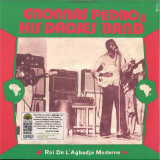
Analog Africa is back with a dedicated project celebrating Gnonnas Pedro, the king of Modern Agbadja, and they press it up on a marvellous double album that includes an eight-page booklet with a ton of extra info. Although four tracks of his have previously appeared on the 2009 Legends of Benin compilation, this bumper pack features 16 of Pedro's best works, all of which captivated Africa at the time. His vibrant blend of Agbadja, Cuban fon, jerk, highlife and more unique styles, all of which come with vocals sung in Fon, Mina, Yoruba, French, English and Spanish, add up to one hell of a rich sound. This is a great testament to the artist's extraordinary legacy.
- A1: Where The Streets Have No Name
- A2: Misirlou (Theme From Pulp Fiction)
- A3: Use Somebody
- A4: Smooth Criminal
- A5: Fragile
- A6: The Resistance
- B1: Hurt
- B2: Welcome To The Jungle
- B3: Human Nature
- B4: Viva La Vida
- B5: Smells Like Teen Spirit
- B6: With Or Without You
Young Croatian cellists Luka Sulic and Stjepan Hauser, together known as 2CELLOS, have achieved sensational success by taking the cello to a new level. Their playing style has broken down the boundaries between different genres of music, from classical and film music to Pop and Rock. 2CELLOS have no limits when it comes to performing live and are equally as impressive when playing Bach and Vivaldi as they are when rocking out AC/DC. Their debut album is a thrilling collection of chart-topping rock and pop songs performed in their signature style.
2CELLOS rose to fame in 2011 when their version of Michael Jackson’s “Smooth Criminal” took the world by storm. The YouTube video became a massive viral sensation leading to a record deal with Sony Masterworks and an invitation to join Sir Elton John on his worldwide tour. The song charted at No. 10 on the Billboard Hot 100 Digital Songs Chart and landed the 2CELLOS’ debut album in the Top 100.
In addition to many sold out solo tours (US, Japan, Europe) and collaborations with the Red Hot Chili Peppers, Queens of the Stone Age and George Michael, the duo have also appeared on major TV shows such as The Tonight Show with Jay Leno, The Ellen DeGeneres Show, The Bachelor and many others. Together with the Chinese classical superstar pianist Lang Lang, they appeared at the CCTV New Year’s Gala for more than 1 billion viewers.
2CELLOS features the duo’s renditions of popular songs such as “Use Somebody”, “Smooth Criminal”, “Fragile”, “Hurt”, “Smells Like Teen Spirit” and more. It is released as a 10th anniversary edition of 1500 numbered copies on white coloured vinyl. It is housed in a heavyweight jacket with soft touch laminate and includes an insert.
After Martin Hederos gathered his dream band, Hederosgruppen has become one of Sweden’s most hyped jazz acts, both live and on record. Yes, they are often placed in the jazz category, but they seem primarily focused on making fun music. Hederosgruppen made their debut with Storstrejk (2020) which was followed by Ståplats (2022), the only album thus far to win the Gyllene Skivan, Grammis and Manifest awards. Expectations for the third album may be high, but the group acts colly, calls their new creation Stilbrott (Breach of style) and puts three ski jumpers on the cover. As before, all five band members contribute ideas and compositions. The result could have been fragmented, but this quintet has created their style out of eclecticism. As before, they mix the riotous with the romantic in any number of styles. The common thread is the joy of being alive and playing live.
- 1: St Boom
- Nxt Msg
- 2: Nd Boom
- Conversion Theory
- Time To
- 3: Rd Boom
- So Ridiculous
- Collection Plate
- 4: Th Boom
- Mind Of
- Push On
Grammy-nominated artist, producer and label-head TOKiMONSTA and prolific composer, producer and songwriter, Suzi Analogue have officially released their collaborative mini-album, Analogue Monsta: BOOM via Young Art Records. Originally released in limited quantities exclusively on vinyl in 2012, the 11-track project has now been remastered. Analogue Monsta: BOOM serves as a time capsule to the eclectic sound of the early 2010’s beat scene, which both TOKi and Suzi’s futuristic production styles helped champion out to a broader audience outside of the world of “bedroom producers.” Suzi Analogue's smooth R&B vocals pair perfectly with TOKiMONSTA's glitchy beats and pulsating bass, demonstrating their versatility and flair for pushing sonic boundaries. The album lays one of the early foundations to the fusion of future bass, alternative R&B and electronica, highlighting the pioneering spirit of two acclaimed female artists.
Analogue Monsta: BOOM marks an important milestone for the two as they reflect on the prescient nature of their early collaboration. “This special project with Suzi Analogue is one of my favorites. It never had a formal release so it feels right to share it with the world a decade later with fresh ears,” states TOKiMONSTA. Both Suzi and TOKi’s journeys converged early in their careers as the two paved the way for a groundbreaking era of femme-identifying producers and songwriters within the music industry. Speaking on the project’s significance Suzi Analogue adds, “The Analogue Monsta project was truly ahead of its time. We felt a strong calling to propel it into the future, recognizing the trailblazing potential it held. It provided a vital space for femme-identifying producers and songwriters to fearlessly explore beats, lyrics and tempos with us. This experimental journey not only influenced the current musical landscape but is poised to leave a lasting mark on the soundscape of the future."
The result is a record that very much is its own world. Where chaos is carefully organized, where being able to ever actually chill out is totally illusory, a trick mirror.
Can anybody think of anyone in contemporary House hustle more adequate to remix an Uncle Waffles tune than Keinemusik’s Rampa? Exactly. We find him attending to Waffles’ Amapiano anthem Tanzania to accentuate its onomatopoetic tone even more, to straighten it out and elicit all the style and peaktime potential Tanzania’s source material conveys. Out now on vinyl!
Imaginary friends Akka & BeepBeep share the third release on their label: Floral Ancestors by Raduns. The 12” offers blooming ambient rooted in dub, lush drone and hand-picked cosmic that’s all grown deep in Detroit.
Spacious sonic arrangements vividly swell yet keep grounded within a sculptural rhythmic core. Raduns sows synth basslines and wispy pads next to harmonious guitars and muted field recordings. Grooving propulsion drives throughout. Rhythms appear, in negative space, like outlines between leaves. Recorded with machines direct to SD card, the compositions represent ephemeral blessings of experience. As if strolling into a verdant conservatory, the layered and diverse sensations blend into one cohesive revelatory experience.
On their first record, Raduns draws an ancestral line in Detroit as inspiration. A time when you could ride a streetcar from Dexter-Linwood to Belle Isle. A time before freeway expansion demolished vibrant Black neighborhoods. A time before the rebellion, motown and white flight. A time when Raduns’ great-grandparents were florists in the city, serving the community in times of celebration and times of grief. This melancholic circle shapes the project in which Raduns summons these Floral Ancestors, stretching upward from the darkness of the earth into the light of the world back down once more.
AKKA’s Side: “Grass Boulevard” exhales a luscious soundscape that develops through wave-crashing synths and circulated guitars to a transplanted acid lead. “Spread” lays out a decoration of blended sample and hold synth with kosmische styled guitar licks. Tracked as a single take in a Detroit community studio, the tune intuitively reseeds the symbiotic sprout between krautrock and Detroit techno.
BEEP’s Side: “Metrograde Bouquet” submerges you into the bulb of a handcrafted vase. Dub techno roots grow out into murky water with energy that is subtle yet profound. “Oldest of Arrangements” textures breaths of misty air cascading ventilating in on itself. The track’s time seems to stretch and disappear within a dark and deep undercurrent. A harmonic and reverberant resonance closes the record in a flowering of beauty and peace.
“You’re a flower child. Put this music out.” - Someone Important in Detroit
Black Vinyl[25,63 €]
Limitiertes indie-exklusives opaque red Vinyl. Mit dem 3ten Album beginnt die Band sich selbst herauszufordern und aus ihrer Komfortzone herauszutreten. Das brillante Rock Album, der 4-köpfigen Band aus Irland, wird gezeichnet durch einen helleren, zeitlosen Sound, welches dem Album Struktur verleiht. Zusammen mit dem britischen Top-Produzent Kid Harpoon (Harry Styles/Florence and the Machine) erschufen die Freunde ein Album, welches in die Fußstapfen ihres vorangegangenen Albums mit dem Namen ,,Cuts & Bruises''steigt. Elijah Hewson (Gesang und Gitarre), Josh Jenkinson (Gitarre), Robert Keating (Bass) und Ryan McMahon (Schlagzeug) gründeten die Band bereits während ihrer Schulzeit und trafen mit ihren bereits erschienen zwei Alben "It Won't Always Be Like This'' und "Cuts & Bruises" den Nerv vieler Fans.
LPcol 30.90€*
Available Feb 07, 2025
Release
US 25
Label
UNIVERSAL MUSIC
Genre
Indierock / Psychedelic
Safety and manufacturer information
More of INHALER
INHALER – open wide (indie-exclusive col. lp) (LP Vinyl)
INHALER
open wide (indie-exclusive col. lp) (US 25)
INHALER – cuts & bruises (CD, LP Vinyl)
INHALER
cuts & bruises (US 23)
INHALER – it won´t always be like this (CD, LP Vinyl)
INHALER
it won´t always be like this (UK 21)
Perhaps you'll like as well
BELL WITCH – demo 2011 (LP Vinyl)
BELL WITCH
demo 2011 (US 23)
BDRMM – microtonic (CD, LP Vinyl)
BDRMM
microtonic (UK 24)
WAR ON DRUGS – live drugs again (CD, LP Vinyl)
WAR ON DRUGS
live drugs again (US 25)
INHALER – open wide (indie-exclusive col. lp) (LP Vinyl)
Luke’s Anger returns in fine form for his 5th full EP on Don’t.
It’s a mixture of straight up ghetto style DJ jams, supremely bendy bangers for Xtra special dancefloor moments and the impactful jugular Electro of ‘Numberz’, all of which have been causing a stir in the hands of a select few. Don’t sleep!
The follow up release to last years Times & Places Volume 1, which sold out in super quick time has the same four artists, each bringing their own style of old skool rave goodness to the table.
Gridzone gets us off and running with beautiful pads and an oh so familiar soothing female vocal sample. But don’t let this fool you, the harsh amens are just round the corner and when they drop, you will know about it.
Midlife Crisis has similar energy levels in their offering, the breaks are more chopped and more in a jungle vein.
On the flip is the highlight of this EP. NewKiller drops a jungle-techno stormer. 4/4 kicks with high speed breaks, hoover sounds and horror film samples. Its like 1993 all over again. Finally the EP ends with a ragga tinged rudeboy of a stepper from Gold Soundz.
Released in 1982 by Rita Marley Music, the label owned by Bob Marley's wife, Rita Marley, CASUAL-T's "Prescriptions For Love" is a record shrouded in mystery. Its mellow feeling, charming visuals, and extreme rarity due to limited pressing make it a coveted item among diggers, representing modern soul and rare groove.
The album is packed with the essence of early '80s US modern soul and disco, starting with the invigorating opening number "Don't Play With Sparks" (M1), reminiscent of EW&F with its horn and chorus work. Other highlights include the disco-infused groove of "Hands Off" (M2), the breezy "All Out Of Breath" (M3), and the urban soul track "Thank You For Your Love" (M7) with its quintessential '80s synthesizer work. The only reggae-style track from Rita Marley Music, "I Want You Here With Me" (M8), features sophisticated chorus work, leading into the sweet soul tracks "Let's Hold On" (M9) and "You Never Walk Alone" (M10) that conclude the album.
Radioactive Man (Keith Tenniswood) presents his 6th album ‘Jam Out The Kicks’ released on self-operated label Asking For Trouble this November 28th. Written while immersed in the throes of touring over the last four years - the album showcases Tenniswood’s singular sound, honed for the international dance floors that he is charged with. Jam Out The Kicks will be released on a triple 12” vinyl package with artwork by renowned artist Lung.
Working together UK rave, jungle, breakbeat and Detroit electro and techno the album plays between these different genres and styles. It brings the grit, joy, grime and funk but also with a big lot of heart in its sensitive softer elements and moments. Opening track ‘Under The Counter’ has been the lead to his live performances - soft and gleaming and with deep warm bass tones it’s his reset track to set the tone for the set. We then move into slap bass funk on ‘See Above’ and through the many sounds on the release - from dense textured and kicking techno to bass heavy rave. Curveball on the release is ‘Sinkhole’ starting out as a collaboration with Suade Bergemann, vocallists Ali Love and Chloe Raunet (C.A.R) both put their touch on it. It’s just one example of Radioactive Man’s desire not to want to be held down to any one sound and to always be developing and moving forward.
X-Coast unveils 9-track 2xLP The Riviera Collection on his label Riviera Records.
Hot on the heels from remixing instant dance hits such as Shygirl's '4eva' and DJ Gigola's 'La Batteria' and spotted in the studio with adored vocalists Eartheater and Miss Bashful, Serbian-born, NYC-based DJ/producer X-Coast returns with a collection of signature tracks that feel like the lost treasure chest of his dance island.
X-Coast is your favorite DJ's favorite producer, whose tracks you’ve undoubtedly danced to, whether on a massive festival stage or at an intimate, underground rave. Over the past decade, he has quietly but consistently shaped the pulse of dancefloors worldwide, with a distinctive style that traverses genres like house, techno, electro, drum and bass, and trance. This rare versatility has led X-Coast to release on the likes of Mall Grab’s Steel City Dance Discs, Diplo’s Higher Ground, Anetha’s Mama Told Ya and DJ Haus’s Unknown To The Unknown, to name a few.
What sets X-Coast apart is not just his ability to move fluidly between styles but the unique character embedded in every track. His productions have an undeniable warmth and authenticity, often evoking the raw, euphoric spirit of the 90s and 00s rave era. This nostalgic yet forward-thinking approach makes his music feel timeless, effortlessly blending old-school rave energy with modern production techniques. It's a quality that has made him a go-to for DJs across the board, whether they’re playing peak-time techno sets or deep, groovy house sessions.
On The Riviera Collection, released on his own label, Riviera Records, X-Coast opens the vault to reveal a diverse range of tracks that showcase his deep connection to multiple eras of electronic music. This collection reflects the breadth of his eclectic DJ sets, where various sounds and styles converge into a cohesive journey. Each track feels like a contemporary reimagining of a classic moment in dance music history.
From the early 2000s tribal influences layered with X-Coast’s signature chord work on ‘Neapolis,’ to the soaring, synthetic trance energy of ‘Desert Storm,’ and the infectious, camp vibe of the diva house ‘Hold Me Baby,’ the collection takes us on a nostalgic trip back to the origins of rave culture. It echoes a time when DJs crafted a journey through genres, playing everything from house to trance to techno in one seamless night.
The collection’s first hidden gems and long-awaited singles are “Da Boing Boing Trak” and "Put Your Hands Together". Both staples in his sets at iconic venues and festivals like Pitch Music & Arts, fabric, Circoloco, AVA Festival, Melt!, and Intercell, this track has been in high demand among fans, finally seeing its release. With The Riviera Collection, X-Coast continues to cement his status as a versatile producer capable of bridging the gap between past and present, while delivering music that moves crowds everywhere.
In February 2023, multi-instrumentalist, producer, songwriter, and “genre-defying melody man” (Billboard) Amtrac released his highly-anticipated third album ‘Extra Time’ via Openers.
Inspired by a period of deep reflection during the 2020 lockdowns, ‘Extra Time’ consists of a handcrafted fuse of delicate textures and gritty styles into an unfiltered sonic trip, with each song depicting the process of emotions during a time of uncertainty for the future. It’s a 13-track exploration of forced introspection, a cohesive story that finishes with a surreal feeling of hope.
Amtrac stated: “I made this record to encompass what I was feeling during the times of uncertainty in the world, it helped me cope and was my outlet for everything I was going through. When the listener is done with this album I’m hoping to create the feeling of when you left the movie theater as a child and just saw something that made you think differently.”
Designed to mimic the tension and release of a classic film score, the unique sound of ‘Extra Time’ was heavily influenced by Amtrac’s immersion in the worlds of Jazz and 90s video game music, particularly the classic 90s computer game Grim Fandango and the sonic landscapes of Miles Davis and Stanley Turrentine in addition to the groundbreaking work of fellow electronic pioneers such as Bonobo and Dan Snaith.
Album highlights include kickoff track “Heard Me Right” which was described by Billboard as a “moving mix of rhythmic bass lines and atmospheric melodies”, “Contrast” featuring vocalist Reva Devito, and “Domino” featuring Future Islands frontman Samuel T. Herring that Fangoria described as “like John Carpenter and Basement Jaxx had a baby”. The album also features vocals from his friend Naeem, who worked closely with Amtrac on the jazzy and suspended-in-time groove of “Hesitation.” “Nobody Else” flips a vocal from the Four Tops classic “I Can’t Help Myself” over energetic drums and sultry guitar, and “Dancing With You” unfolds with traditional house elements toward an explosive climax of layered synths. Having made his name with intense DJ sets and creative remixes and collaborations, ‘Extra Time’ is the perfect showcase for Amtrac’s trademark stylistic dexterity and melodic sensitivity - and redefines what it means to create electronic music in 2023.
This follows his collab with Diplo and Leon Bridges on “High Rise” and the recent release of “I’ll Be Around”, his collaboration with English vocalist/producer Elderbrook.