Heroes Of Limbo strike again with two stunning interpretations of hiphop and R&B staples on one 45. The mystery funk collective took the scene by storm last summer with their flips on Eric B. & Rakim's 'Don't Sweat The Technique' and Pete Rock & C.L. Smooth's 'T.R.O.Y.', moving all copies on release day. Here the reimagine the Beatnuts unmistakable 'Watch Out Now' and Aaliyah's smash hit 'Try Again' in a their hypnotic, polyrhythmic afrobeat-inspired style. A sure shot double sided slice of musical pineapples.
Search:mo style
Captain Planet has teamed up with 2 long-time collaborators (Zuzuka Poderosa & Raphael Futura) for a new Brazilian disco funk song, "Moqueca." The song harkens back to Brazil's legendary funk parties in the 70's and early 80's - where soundsystems bumped legends like Tim Maia, Sandra Da Sa & Gilberto Gil - while infusing some fresh contemporary energy and extra thump for today's dancefloors. Zuzuka's bright vocals bounce over a bubbly bassline, syncopated percussion and wormy vintage synthesizers, while an additional punch is brought in the form of horn arrangements by the prolific maestro Todd Simon, another frequent Captain Planet collaborator.
"Moqueca" takes inspiration from the Brazilian dish of the same name, a nationally famous fish stew that varies across the regions of Brazil. In her lyrics, Zuzuka talks about the origins and variations of Moqueca, starting with the style from Espirito Santo, her home state, and continuing to Moqueca Baiana, from Bahia, which incorporates African influences and ingredients. The result is a song that is as much an homage to Brazilian music as it is its food, culture and people.
- A1: Logic System - Unit
- A2: Kraftwerk - Computerwelt (2009 Remastered
- B1: Whodini - Magic's Wand
- B2: Rocker's Revenger - Walking On Sunshine (Feat Donnie Calvin
- C1: Klein & Mbo - Dirty Talk (European Connection
- D1: Liaisons Dangereuses - Los Niños Del Parque
- D2: Yello - Bostich
- E1: The The - Giant
- F1: The Residents - Kaw-Liga
- G1: Clan Of Xymox - Stranger
- G2: A Split - Second - Flesh
- H1: Severed Heads - Dead Eyes Opened
- H2: The Weathermen - Poison!
- I1: New Order - Blue Monday
- J1: Anne Clark - Our Darkness
- J2: 16 Bit - Where Are You?
- K1: Phuture - We Are Phuture
- K2: Model 500 - No Ufo's (Vocal
- L1: Frankie Knuckles Feat Jamie Principle - Your Love
- L2: Quest - Mind Games (Street Mix
- M1: Jasper Van't Hof - Pili Pili
- N1: Guem Et Zaka Percussion - Le Serpent
- N2: Hugh Masekela - Don't Go Lose It Baby
- O1: Sly & Robbie - Make 'Em Move
- Q1: The Ecstasy Club - Jesus Loves The Acid
- R1: Foremost Poets - Reason To Be Dismal?
- S1: Lhasa - The Attic
- S2: A Guy Called Gerald - Voodoo Ray
- T1: M/A/R/R/S - Pump Up The Volume - Usa 12" Mix
- T2: Bobby Konders - Nervous Acid
- U1: Meat Beat Manifesto - Helter Skelter
- V1: Raze - Break 4 Love
- W1: Sueño Latino With Manuel Goettsching Performing E2-E4 - Sueño Latino (Paradise Version
- X1: Off - Electrica Salsa
- O2: Brian Eno - David Byrne - Help Me Somebody
- P1: Primal Scream - Loaded (Andy Weatherall Mix
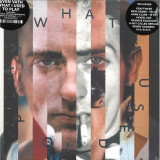
For this uniquely personal retrospective spread over twelve vinyl discs, Sven Väth takes us back to the early days of his DJ career. On What I Used To Play we meet great pioneers of electronic music, gifted percussionists, obscure wave bands, and innovative producers of a bygone 'new electronic' era. Rough beats and irresistible grooves from the identification stage of house, techno, and acid remind us not just how far electronic music has evolved over the past four decades, but how great it was to dance to EBM, techno, and house for the very first time.
If there is one protagonist of the electronic music scene who has remained curious, innovative and at the very cutting edge of music for over four decades, it's Sven Väth. His multi-layered artist albums and Sound of the Season mix compilations have been defining the genre for over two decades, and even today, he is constantly on the lookout for the next top tune to add to the highlights of his next set. At least, that's the case when he's not producing them himself as an artist or remixer. "Actually, it's always been part of my DNA to think ahead," and nothing had been further from his mind than looking back at his past, but when in spring of 2020 the international DJ circuit had to be scaled down to virtually zero, the 'restless traveler' suddenly had time. Time to stop and reflect on "how it actually was back then, at the very beginning of my career..."
"It was a great trip and with every track, beautiful memories came flooding back".
In the London apartment, he had just moved into, Sven has set up a "little music room", where he cocooned himself for several days, "to look way back for the first time and review my musical journey through the eighties, so to speak."
The interim result was six thematically oriented playlists with a grand total of 120 tracks from 'early 80s' to 'Balearic late 80s', together with excursions into afrobeat, European new wave, and EBM sounds and a few epochal techno/house tracks from the USA in between. From these 'Best of Sven Väth's favorites', the project What I Used To Play crystallized. Sven remembers how the Cocoon team reacted to his proposal: "They found the idea of making a compilation out of it MEGA from the beginning and everyone said 'Sven, go for it', but then, of course, the work really started, namely, to clear the rights and to get clean sounding masters of the up to 40-year-old tracks. There was also disappointment, of course. We couldn't clear certain titles because the rights holders in the USA had fallen out with each other or simply disappeared from the scene. In short, it wasn't easy, but now I can safely say we got the most important tracks."
Finally, after two years of research, curation, design, and administrative fine-tuning, the "little retrospective" from 1981 to 1990 is available. The exquisitely packaged, and three-kilo heavy box set is not only physically impressive, WIUTP is also the definitive record of Sven Väth's musical development. On each of the twenty-four sides of vinyl, you can trace track by track, what influenced him during which phase, and how he took off as a DJ from his parents' Queen's Pub straight into the spotlight at Dorian Gray. There and at Vogue (later OMEN), Sven became the style-defining player in the DJ booth that he still is today.
1981 - 1990: Future Sounds of Now
In the early eighties, the crowd in clubs like Vogue and Dorian Gray danced to what nowadays we call 'dance classics' - mainly disco, funk, soul, and chart pop. It was up to a new generation of DJs, including Sven Väth, the youngest protagonist in the Rhine-Main area at the time, to create their own club-ready music mix. Good new tracks and potential floor-fillers were rarities that had to be sought out and found, in order to prove oneself worthy.
Without MP3s, internet streaming, or other digital download possibilities, music didn't just gravitate to the DJ, instead, it had to be tracked down. In well-stocked record stores in Frankfurt and Wiesbaden or even in Amsterdam, London, or New York, Sven and friends sourced the material for countless magical nights. On WIUTP we can follow Sven's very personal journey through this wild, innovative era in which synth-pop, funk, hip-hop, and disco were successively replaced as 'club music' by house, techno, acid, and breakbeat. By the end of the decade, it was clear to see that these once exotic 'fringe' phenomena would soon become 'mass' phenomena.
Early 80s
Dirty Talk by the Italian-American duo Klein & M.B.O. represents the most innovative phase of the Italo-disco genre in the early eighties like no other track. Mario Boncaldo (I) and Tony Carrasco relied entirely on the original synthetic drum and percussion sounds of the Roland TR-808, coupled with the raunchy vocals of Rossana Casale and guitar accents of Davide Piatto. Of course, other tracks from this period were also influential in style, most notably Unit by Logic System, which worked as the perfect soundtrack to the laser lighting system at the legendary Dorian Gray club. With stomping beats and robotic rap interludes, Bostich by Yello also belongs on Sven's eternal playlist - after all, it caught the attention of Afrikaa Bambaataa, who invited the Swiss duo to perform at the Roxy in New York in 1983.
EBM Wave - Mid 80s
From today's point of view, the almost ten-minute-long, downtempo track Giant by Matt Johnson's band project The The, would probably not be considered an obvious club classic. However, a closer (re)listen reveals the rhythmic intricacies of the percussion overdubs by JG Thirlwell (aka Foetus) on Johnson's composition, and it becomes clear why this exceptional piece of music is one of Sven's absolute favorites. Other classics from this phase include Kaw-Liga by the mysterious The Residents, the hypnotic-synthetic Our Darkness by Anne Clark (and David Harrow), and last but not least, the somber, monotonous anthem Where Are You? by 16Bit, one of Sven Väth's projects together with Michael Münzing, Luca Anzilotti from 1986.
US House - Late 80s
You certainly can't talk about Chicago house without mentioning Frankie Knuckles. The resident DJ at the Warehouse not only gave the name to an entire genre, but also produced epochal floor fillers on the Trax label like the timeless Your Love, sung (and moaned) by Jamie Principle. Acid house protagonists Phuture also hail from Chicago, and on We Are Phuture (also released on Trax) we hear the chirping acid sounds of the legendary Roland TB-303 in full effect. Another featured classic is No UFO's by Detroit's Model 500 aka Juan Atkins, who is rightly considered the 'Godfather of Techno' even if the genre-defining track from 1985 still breathes with the spirit of hip-hop and electro from the first breakdance era.
Afrobeat
Le Serpent, by Algerian-born Abdelmadjid Guemguem, is a track that sounds completely different from everything else on WIUTP. Made in 1978, it's a monumental, rousing groove created without bass or synths, just with five congas! Even though Guem sadly passed away in 2021, his immortal, acoustic beats are understood all over the world and will continue to enrich many thousands of DJ sets for years to come. Another classic that not only Sven appreciates beyond measure is Hugh Masekela's Don't Go Lose it, Baby. In addition to being one of the most important jazz pioneers, the trumpeter and freedom fighter from Johannesburg was very experimental, integrating electronic sounds into his music in later years, in a similar vein to Miles Davis and Herbie Hancock. Dutch jazz pianist Jasper van't Hof's afrobeat project Pili Pili has also aged well. The trance-like, almost sixteen-minute-long track of the same name, manages to fill a whole side on the seventh of twelve vinyl discs in the WIUTP box.
UK-US-Euro - Late 80s
Time for a change of scene, in the truest sense of the word, and from a musical perspective, this section is like landing on another planet. First up is Andrew Weatherall's classic remix of Primal Scream's Loaded, featuring the iconic Peter Fonda sample (lifted from the 1966 biker film Wild Angels) that came to personify the mood triggered by the British Second Summer of Love in the late eighties: "We wanna be free to do what we wanna do, and we wanna get loaded...". This period also saw the emergence of M/A/R/R/S whose only single, 1987's Pump Up The Volume, became a club classic with support from DJ legend CJ Mackintosh. In this most eclectic of sections, we also encounter New York house and reggae producer Bobby Konders and his seminal Nervous Acid.
Balearic - Late 80s
Those who know him, know that Sven had already lost his heart to the 'magic island' of Ibiza as a teenager, so with that in mind, the WIUTP project couldn't end without a Balearic chapter. Inspired by Manuel Göttsching's E2-E4, the immortal, eponymously titled Sueño Latino belongs in there without question. Equally popular on the island was, and still is Break 4 Love by Raze, which thinking about it, would also fit perfectly into the house chapter. Last, but not least, there's an overdue reunion with Sven Väth himself, in his role as frontman of the successful Frankfurt trio OFF. Together with Michael Münzing and Luca Anzilotti (later of Snap!) this 'Organization For Fun' created the off-the-wall club hit Electric Salsa in 1986 which incidentally turned into an international chart smash, putting Sven in the enviable position of having to decide between pop stardom and a DJ career. Well, we all know how that decision turned out and the rest, as they say, is history. A not insignificant part of his story is What I Used To Play. Enjoy!
Taking over stages around the world, RUSSKAJA made a name for itself as a unique, diverse formation that moves crowds wherever they go. "Russki Style" is RUSSKAJA in their purest form - balancing catchy heavy riffs, ska, polka and punk while maintaining a blood pumping tempo! With well over 20 million streams on Spotify alone and touring relentlessly while still rocking stages on TV as the house band on the prestigious "Willkommen Österreich" – RUSSKAJA’s Turbo Ska Punk is unstoppable! 2nd SINGLE : Kings & queens of Turbo Polka, RUSSKAJA, bring you a jolly good Christmas time! Brass and violins come together on this ska-infused Christmas classic; with this unique parody version of WHAM’s smash hit "Last Christmas", RUSSKAJA are guaranteed to spice up your holiday season – russki style! With over 20 million streams on Spotify alone and relentless touring while still rocking as the house band on prestigious TV show "Willkommen Österreich" – RUSSKAJA’s Turbo Ska Punk is unstoppable!
MEMORIAM needs no introduction ‐ they are living legends of Old School Death Metal. Not only because the former fields of activity of the Brits belonged and still belong to the pioneers of UK Death Metal, but because they managed to follow their master plan more than precisely. MEMORIAM has built up their own loyal fan base over the past
seven years and developed its own musical identity. It would certainly have been easy for them to just follow the old paths, but the true art of the band is that they never deny their origins, but gradually incorporate something new ‐ with every album a few new nuances and facets are added.
The sheer speed of their creative output shows how consistently MEMORIAM follow this path: Following the initial success of the HELLFIRE DEMOS trilogy, MEMORIAM signed with Nuclear Blast in 2016. The band went on to release FOR THE FALLEN (2017), THE SILENT VIGIL (2018) and REQUIEM FOR MANKIND (2019) ensuring within a very short time that MEMORIAM were firmly established among loyal Death Metal fans. This wassupported by dozens of concerts, which have taken the band from selected club shows to major festival appearances (e.g. Hellfest, Wacken, Summer Breeze, Graspop). Following the success of this initial trilogy, MEMORIAM switched to the young label Reaper Entertainment. The album TO THE END, the first of a new trilogy, was released in 2021. The second album of the trilogy, RISE TO POWER, will be released in early 2023.
RISE TO POWER will not only once again offer an atmospherically dense Dan Seagrave cover, the war theme stylized on it also runs through Karl Willetts’ lyrics: With 'Never Forget, Never Again (6 Million Dead)' about the Holocaust and the, unfortunately, more than current 'Total War' about the war in Ukraine, Karl is more political than ever. "I am
writing 'our burden and shame' instead of 'their' as I believe it is our collective responsibility to ensure that something like the Holocaust never happens again. I feel that it is my responsibility as a frontman and lyricist to write about the things that I feel are important," explains Karl. MEMORIAM transforms aggression and grief into
uncompromising Death Metal energy. Also musically the mentioned above development process continues.
While the opener still serves the essential Death Metal groove, MEMORIAM becomes more variable with each additional song and keeps adding new dynamics into their Old School Death Metal sound ‐ from brutal grooves ('Annihilation's Dawn') via doomy‐melodic parts like in 'I Am The Enemy' up to aggressive Nordic riffing like in 'Total War'. RISE TO POWER is an extremely varied album, as Karl confirms: "That's Scott's style, he comes from a different generation than Frank, Spike and me. He brings in influences from bands I haven't even heard of. It gives us the balance between old and new, and it works pretty well for us.” (Thomas Strater)
- 1: Prologue
- 2: Sikiliza Kwa Wahenga (Main Title)
- 3: Chris & Rose (Love Theme)
- 4: The Deer
- 5: The House
- 6: Meet The Help
- 7: The House Reprise
- 8: I Ce Tea
- 9: Jeremy Enough
- 10: Georgina's Silhouette
- 11: Walter's Run
- 12: Georgina In The Window
- 13: Hypnosis
- 14: Investigations
- 15: Garden Party
- 16: Andre Reveal
- 17: Fist Shake
- 18: Blind Art Dealer
- 19: Georgina Weeps
- 20: Get Out
- 21: The Auction
- 22: Ukulele Walk
- 23: Photographs
- 24: Finding The Keys
- 27: Educational Video
- 28: Behold The Coagula
- 29: Rod Calls Rose
- 30: Mental Prep
- 31: Teacup Tv
- 32: Surgery Prep
- 33: Chris Escapes
- 34: Race For The Teacup
- 35: Jeremy Attacks
- 36: Georgina Hit
- 37: Georgina Attacks
- 38: After The Accident
- 39: Get Him Grandpa
- 40: Walter Shoots
- 41: Rose Returns
- 42: Situation Handled
- 43: End Title (Montage)
- 25: The Sunken Place
- 26: Rod's Bing Search
Waxwork Records is thrilled to announce the release of GET OUT Original Motion Picture Soundtrack Music By Michael Abels. Written and directed by Jordan Peele, GET OUT is a critically acclaimed 2017 American horror film starring Daniel Kaluuya and Allison Williams. The film received numerous accolades and won the Academy Award for Best Original Screenplay. It was also nominated for Best Picture, Best Director, and Best Actor for Kalluya. GET OUT is the directorial debut of accomplished actor and long time horror-fanatic, Jordan Peele. The film's music was scored by composer Michael Abels, and it also features his debut as a film composer. Included in the new deluxe double LP release of GET OUT are exclusive liner notes in the form of an in depth essay by Peele that illustrates the director's first meeting with Michael Abels, their approach to the film's music, and how it all came together to conjure a new sound. "I had some ideas. I envisioned distinctly black voices harmonically creating an unnatural sound. The absence of hope. The void of the voiceless. A disembodied Negro spiritual. The Sunken Place." GET OUT Original Motion Picture Soundtrack features the complete soundtrack by composer Michael Abels, deluxe packaging, new artwork by Leslie Herman, a printed insert with exclusive liner notes by Jordan Peele, 180 gram black and white splatter vinyl, and old style tip-on gatefold jackets with satin coating.
Crystal Clear With Green Mix Colored Vinyl. June McDoom's eponymous debut EP is a collection of songs that collage virtually everything important to her. Growing up in South Florida in a Jamaican household, McDoom was raised around reggae music, which echoed throughout every room of her childhood home. Later, she discovered and nourished her own deep love for folk music and songwriting of the 1960's and 70's. While studying in NYC for a degree in Jazz Performance, her musical palette expanded to include the more intricate influences of jazz and early soul. Realizing that her favorite vintage folk music lacked artists with similar identities as her own, it became increasingly important for McDoom to carve a unique musical space - to push folk music towards a new and different audience. Following the release of her debut single, "The City" - mixed by Gabe Wax (Soccer Mommy, Spoon) - June McDoom was eager to take the reins on the production of her debut EP. Recorded and mixed entirely from home with collaborator Evan Wright, McDoom found herself enthralled with the analog recording process, which began a textural exploration that defines this record. Experimenting with a mixture of vintage analog and modern digital recording, McDoom learned profound new ways to marry the seemingly contrasting genres and style that had individually shaped her. June McDoom's debut EP is steeped in self-discovery, and self-acceptance. Its magic lies in its ability to weave the influences of such seemingly disparate icons as Joan Baez, The Delfonics and Alton Ellis into a new, seamlessly crafted tapestry.
Time to Play Records strikes back with a new 4 tracks ep, late night club-ready, with heavy bass-kicks tracks straight to your chest.
Filippo Tazzer, label manager and executive producer, continues in his search, musical sensitivity and evident production skills. After having entrusted the baptism of the label to Reekee and Colosimo, the moment is propitious to introduce another Italian Producer:
Phonorem, fresh with a new album called “Algorythm”.
Phonorem production skills in those 4 tracks embrace different styles forged by his 90’s hip-hop and drum and bass roots, by mixing synthetizers and drum machines with samples.
SEAMLESS, the track that gives the EP its title, is a deep-house track with double bass – bassline and atmospheric scenarios by manipulating old Italian movie soundtracks samples.
PREE, is a downbeat track which made homage to DJ Premier beats, with some melodies created with a Chinese hammered dulcimer.
FLIP DOWN gives a high contrast experience: fusing a raw drum machine rhytm with dreamy pads and a mysterious vocal.
LOW FAT is a heavy bass kick track with some sythetizers-melodies with a story to tell. With a happy end :)
Following up on reissues of the 2000 compilation »Multila« and 2001’s »Anima,« Sasu Ripatti has thoroughly revisited the classic »Whistleblower« for its first ever vinyl issue on the German Keplar label. Ripatti created entirely new mixes of previously unheard-of alternative versions of the tracks that first appeared on CD through his own Huume imprint in early 2007. He thus shines a new, different light on a record that was as much an expression of reaching a turning point in his life as it also showcased a new, more direct and perhaps more abrasive side of his Vladislav Delay project. »Whistleblower« was marked by the insertion of more noise and disruptive elements into Ripatti’s slowly moving take on intricate electronic music that heavily leaned on dub techniques. Fittingly for an album written at the threshold between one life and the other, »Whisteblower« seems at once melancholic and forward-looking in both tone and style.
»Whisteblower« was the follow-up record to 2005’s »The Four Quarters« and produced in the German capital. »I had quite a hard time in Berlin towards the end and I'm sure the track titles and the music reflect some of that uneasiness,« Ripatti says 15 years later. Changes in his personal life had a profound impact on him when making the record. The fifth track, »Lumi,« was dedicated to his daughter who was born shortly after the album was finished. »I had to reconsider what my life had been,« he recalls this watershed moment in his biography. Having already previously embraced a sober lifestyle—hinted at with the last piece’s title, »Recovery IDea«—Ripatti started questioning his life choices more thoroughly. This is also expressed in »He Lived Deeply,« a track inspired by Miles Davis’s love for Duke Ellington whose title can be read as an implicit question that Ripatti nowadays paraphrases thusly: »Had I been living fully, or fully not living?«
The seven tracks also marked a musical turning point in Ripatti’s work as a producer, not only because it was the last one for which he primarily used analogue and vintage equipment. They are also more straightforward on a music level, more demanding and at times more concerned with subtle rhythms than with the thick textures that were so integral to his earlier work. »Whisteblower« represented the first step in a process of focusing less on sonic abstraction and more on direct (self-)expression. While Ripatti admits that he found working on the album difficult back then, he also points out that he was surprised to hear how »gentle and peaceful« it sounded when he started revisiting the original files he used as a basis for these newly mixed versions. »It probably proves how much more comfortable I had become with sound.«
Ma Spaventi is a wonderfully versatile artist. Over his decade-long career, the Italian musician has turned his capable hand to everything from ambient to techno. Once again, he is expanding his sound palette and challenging expectations with Vicino Lontano.
Across eight tracks, an array of ideas and influences are explored with additional guitar work coming care of Odeon’s Michele Righini. The reflective hues of “Solitario” give way to the warming strings and peaceful brightness of “Crepuscolo.” Written and produced in Amsterdam between 2017 and 2019, beautiful memories of the past are the source of inspiration. Radiating Summer sunshine bathes “Bring Me Back” in a comforting glow, while “Velvet Lights” teases rhythm sections with thick bass lines and shimmering synth work. Moments of introspection arrive in the elegant gliding forms of “Bomber” and “Intermezzo.” The rumbling “End Line” finds harmony amongst a spread of styles, cascading chords and rich textures, all combining beautifully. A moon rise closes, the grand curtain falls on “Bidderosa”, calling time of this stunning collection.
Angel numbers: a series of recurring numerical patterns or sequences which those who believe in such things invest with cosmic significance.
Also, the name of the forthcoming album by Hamish Hawk – an apt title for an artist who bounces between scepticism and wonder, who alchemises the quotidian, who is engaged in a constant quest to outwit and outflank the ordinary. With the release of Heavy Elevator in September 2021, Edinburgh-based Hawk established himself as a writer of heartfelt, headstrong, unashamedly literate songs to stimulate both pulse and psyche. Heavy Elevator offered words to savour and tunes to relish. The songs were filmic and romantic, blending wit, wisdom, resignation and beauty with a kind of sceptical joie de vivre, delivered in a rich baritone that has drawn comparisons to everyone from Jarvis Cocker to Scott Walker. A singer of style and guile peddling accessible intelligence: what’s
not to love? Heavy Elevator established a powerful artistic imprimatur which nonetheless felt neither defining nor confining. While the album has been justly lauded, Hawk’s next steps have moved the story considerably further forward. Angel Numbers meets growing expectations head on, with panache and aplomb.
Angel numbers: a series of recurring numerical patterns or sequences which those who believe in such things invest with cosmic significance.
Also, the name of the forthcoming album by Hamish Hawk – an apt title for an artist who bounces between scepticism and wonder, who alchemises the quotidian, who is engaged in a constant quest to outwit and outflank the ordinary. With the release of Heavy Elevator in September 2021, Edinburgh-based Hawk established himself as a writer of heartfelt, headstrong, unashamedly literate songs to stimulate both pulse and psyche. Heavy Elevator offered words to savour and tunes to relish. The songs were filmic and romantic, blending wit, wisdom, resignation and beauty with a kind of sceptical joie de vivre, delivered in a rich baritone that has drawn comparisons to everyone from Jarvis Cocker to Scott Walker. A singer of style and guile peddling accessible intelligence: what’s
not to love? Heavy Elevator established a powerful artistic imprimatur which nonetheless felt neither defining nor confining. While the album has been justly lauded, Hawk’s next steps have moved the story considerably further forward. Angel Numbers meets growing expectations head on, with panache and aplomb.
The WAEVE - composed of Graham Coxon and
Rose Elinor Dougall – release their eponymous
debut album on Transgressive Records.
Produced by The WAEVE and James Ford (Arctic
Monkeys, Florence & The Machine, Foals, HAIM)
and recorded in London earlier this year, ‘The
WAEVE’ is a collection of 10 new tracks from
songwriters Graham Coxon and Rose Elinor
Dougall.
Joining creative forces in The WAEVE gave the
duo the opportunity to push past their instrumental
comfort zones. Many tracks feature Graham on
saxophone, one of the first instruments he played
as a young musician back in the 80s.
First single, ‘Can I Call You’, starts as a ballad then
morphs into a Krautrock-style motorik number with
a sprawling Coxon guitar solo. ‘All Along’ features
Graham on cittern, a medieval folk lute. Rose plays
piano and an ARP 2000 modular synth.
The heavy weather all over ‘The WAEVE’ recalls
the blustery folk rock of Sandy Denny or John &
Beverly Martyn, while tracks such as ‘Kill Me
Again‘ and ‘Over and Over’ recall the 70s rock of
Kevin Ayers or Van der Graaf Generator, almost
industrial in places.
The second instalment from London Odense Ensemble digs deeper into the group's vision of what modern psychedelic jazz should sound like. Cut from the same sessions as Jaiyede Sessions vol. 1, released last summer, vol. 2 presents a more nuanced approach to the material. On this set the ensemble focuses on shorter, layered pieces - travelling from deep spiritual jazz grooves to gorgeous free-flowing minimalism to full-on acid jazz. There's echo-drenched flutes being absorbed into layers of analog synth pads and guitars, bossa beats and double bass sequences merging with electronics. It's an intoxicating mélange of sounds and styles, spanning wide temporal and geographical distances. London Odense Ensemble came together when two of the finest exponents of London's flourishing jazz scene, flautist and saxofonist Tamar Osborn and keyboard specialist Al MacSween, came over to Denmark to explore new sounds with Causa Sui's Jakob Skott and Jonas Munk, as well as local bass player Martin Rude. For two days the group laid down grooves and ideas and experimented in the studio, and later the best segments were edited and mixed by Jonas Munk, who took a somewhat liberal approach to the mixing process, often dyeing the material with external effects and synthesizers. Jaiyede Sessions are the kinds of records that defy genre-terms, yet have its own instantly recognizable fingerprint. It carries a unique shared vision between the players of what modern psychedelic jazz sounds like. bios: Tamar Osborn: Saxophonist, composer and multi-wind instrumentalist is the creative force behind modal jazz ensemble Collocutor (On The Corner Records). She is a member of the Dele Sosimi Afrobeat Orchestra, performs and collaborates regularly with Sarathy Korwar, Jessica Lauren, Emanative, Ill Considered and DJ Khalab. Al MacSween: Keyboard player & founding member of Kefaya. Collaborations include American jazz legend Gary Bartz, Syrian qanun master Maya Youseff, London Community Gospel Choir, Palestinian jazz singer Reem Kelani & kora player Kadialy Kouyate. Martin Rude: Multi-string instrumentalist & lead singer in Sun River & Edena Gardens with members of Papir & Causa Sui. Jakob Skott: Drummer in Causa Sui with a slew of side projects on El Paraiso, including Chicago Odense Ensemble, Jonas Munk: Guitarist in Causa Sui & studio wizard on most releases on El Paraiso.
Hailing from Mongolia, The HU are unlike any other rock band in the world. Having introduced a new style of music they call 'hunnu rock' - from the Mongolian root word for human being, 'hu' - the group have been #1 on the Billboard World Albums Chart, #1 on the Top New Artist Albums and Top 5 on Global Hard Rock Music Album Charts (US, Canada, UK and more). They have toured the world extensively, with sold out shows in mainland Europe, the UK and the US. Following the success of their 2019 debut album 'The Gereg', which featured the viral rock hits 'Wolf Totem' and 'Yuve Yuve Yu', the group returns with its new album, 'Rumble of Thunder', which connects the world to Mongolian culture and its unique core values of natural preservation and spiritual connection with the earth. These core values are on full display, along with deeply meaningful lyrics that wish for prosperity and peace among all.
Glasgow’s Seated Records return with more archival Scottish New Wave material; this time, in the form of Pop Wallpaper’s disco-not-disco interpretation of the Shuggie Otis classic, “Strawberry Letter 23”. And interpretation is the right word, guitarist Evan Henderson confesses that the lyrics sang by Audrey Redpath on the record were, “err inaccurate due to pre-internet home recording translation”.
The Edinburgh band first released “Strawberry Letter 23” in 1986 as a double A side 12” alongside original song, “Nothing Can Call Me Back". The 1986 record’s sleeve states that the original - “Strawberry Letter 23" has been “re-modelled for special pleasures, namely on the dance floor”. Here the re-model has been re-modelled once more. The track is recontextualised for 2022 playing on a four track 12” that includes an unreleased instrumental demo version of the track, as well as mixes from label founder Pigeon Steve and close friend of the label, Useful Tom.
Wallpaper’s first EP “Over Your Shoulder” was released in 1984. The release received a considerable amount of radio support, not least from Radio 1’s John Peel and Janice Long, which culminated with a live session for Long’s show at the BBC’s studios in London. Released a couple of years later, Strawberry Letter received similar levels of radio play. Despite (much to the band’s confusion) being tracked by Motown UK at one point, Pop Wallpaper did not go on to receive commercial success and eventually went their separate ways.
“Strawberry Letter 23” sits in the singular historical, cultural context of mid-80s Britain. Following the explosion of punk at the end of the 1970s, in the 1980s many British bands began experimenting with new styles and instruments - always keeping an eye firmly on their punk roots. The loose percussion and synthesiser melodies have an almost new-age, balearic mood, while the falsetto vocals of singer Audrey Redpath are an unmistakable embodiment the Post-punk style of the time. The prominent bass-line suggests a reggae or disco inspiration, and bass player Myles Raymond admits that he obsessed over a Sly & Robbie Taxi records compilation around the time the band put the tune together.
This reissue includes an unreleased, unheard instrumental demo-version of the cover, “SL23”. The band recorded the demo during an nighter at Wilf’s Planet studios in Edinburgh, just after Wet Wet Wet had just finished up their own demo for “Wishing I Was Lucky” (Pop Wallpaper all insist they thought it would never be a hit). In this version, we hear the band messing around with drum machines and synths which, in a similar style to Kevin Low and Fiona Carlin on Seated 001, creates a stripped back dance floor work-out that bares almost no resemblance to any version of “Strawberry Letter 23”. In an attempt to emulate the Trevor Horne production style of the time, the band’s drummer Les Cook recalls pushing for more and more reverb on the drums during the session to a reluctant producer Chic Medley, who “eventually obliged, but needed a lot of persuading”. Much to Cook’s disappointment “the reverb was toned down when we got to the final release”.
On the B side, label boss Pigeon Steve delivers a dubbed-out and acid drenched, cosmic rendition of the track with “SL24”, before Useful Tom (son of Pop Wallpaper bass player Myles Raymond) brings the EP to an end with spacey de-construction of fractured vocals and gliding synths on the B2 with “SL25”.
In 1962 Martin left his record label Capitol and signed with Frank Sinatra’s new label Reprise. His debut album for them was French Style, released in April of that year. Martin had recently released an album of songs sung in Italian and would go on to record an
album of Latino material at the end of that year. French Style came in between the two, and collected a number of songs about France ably arranged by conductor Neal Hefti. At this point, France must have seemed impossibly glamorous, with Brigitte Bardot swanning
around St Tropez, while Grace Kelly raced her sports car around the clifftops of Cannes in Hitchcock’s To Catch A Thief. Beatniks filled the jazz cafés, where the New Wave of French cinema was being discussed over Disques Bleu and café au lait. What’s more, the
majority of songs in this collection focus on Paris – and the City of Lights has been a magnet for Americans ever since the days when Hemingway and F. Scott Fitzgerald and Cole Porter first took up residence there. French Style is delivered with his trademark
charm and ease. So, bon appetit!
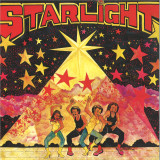
South African production duo of Emil Zoghby and John Galanakis were responsible for a string of high-quality disco singles in the early 80s, typically cover versions of international hits — Klein & MBO’s ‘The Big Apple’, Sly & the Family Stone’s ‘Family Affair’ & David Joseph’s ‘You Can’t Hide (Your Love From Me)’ — backed with their own compositions. When Starlight hit the market with an album in 1983, it featured only one cover, the local hit ‘Picnic’, along with five of the duo’s original compositions, including their similarly styled response, ‘Picnicing’, which replaces the original’s sax with spaced-out synth stabs. Then there’s ‘Jah Jah Love’, an ecstatic disco sermon of dancefloor dynamite weighing in at over eight and a half minutes. Other tracks on this landmark album — ‘Let’s Go Dancing (Boogie Boogie)’, ‘Keep On Moving’ and an eponymous instrumental — offer a similar fusion of classic disco with newer Italo and proto-house influences: machine music with a human touch! Remastered from the original master tapes and reissued for the first time, Starlight will be available on vinyl and digital platforms from early 2023 (40 years after its initial release) via Afrosynth Records.