Ethan James Startzman is a synesthete with chromesthesia, meaning his brain converts sounds to colours and shapes, and this album is an attempt into the use of sounds to “paint" a picture. Shamanic Verse is an audio journey through dark forests, cold lonely mountains, and bustling cities using Eurorack modular synthesis and the meditative technique of following the sounds to their next evolutionary destination to create a film score-like atmosphere. Ethan began as a dancer, working his way up to professional ballet dancer and later found music after an injury ended his career. Originally a bassist, who has played in every style of music from country to rock to salsa, he also works as a film composer in his native New York City. His film work is primarily orchestral and experimental electronic. Shamanic Verse will be released on 4th November, via digital platforms and limited edition pressed vinyl.
Поиск:mo style
Все
Rare & unreleased 80's bangers from Sao Tome e Principe's most iconic singer !
Bongo Joe pursues their work with friend DJ Tom B and are sharing the fourth effort in their São Tomé & Principe series : “Recordar é viver”, the first volume of an anthology dedicated to the one and only Pedro Lima, , "A voz do povo de São Tomé" (the people's voice of Sao Tomé).
“Recordar é viver: Antologia Vol. 1” features some previously unreleased tracks and gives a comprehensive look into the discography of one of the islands’ biggest stars, known for his political outspokenness as much as for his soft voice, delicate rumbas, and high-energy puxas.
With his band Os Leonenses he built a brand new genre around the strong rhythms and infectious energy of Sao-Toméan Samba Socopé ("only with the feet” in Portuguese), but with the influence of Congolese soukous, Cape Verdean Coladeira, elements from French West-Indies Cadence/Compas, and Brazilian Afoxé, it soon developed into the infectiously danceable style known as “puxa”. The band kept playing together up until Pedro’s death in 2019, performing at large events around the islands and on the continent.
But Pedro shined also on his own. Alone, he demonstrated his compositional skills and ability to balance the band’s powerful rhythm section with São Tomé & Principe’s harmonic backing vocal traditions, creating strong, dance floor ready puxas or melodic, delicate rumbas.
Pedro Lima died in 2019, leaving behind the 23 children he fathered, with thousands of mourners accompanying him to his final resting place. The public funeral, paid for by ex-president Pinto da Costa, was one of the biggest the islands have ever seen. Lima, "O cantor do povo” (“The people’s singer”), was buried with his wireless microphone, so his powerful voice would always be heard.
In 2016 lutenist Sofie Vanden Eynde put her instrument aside for nine
months in order to recover from a severe burnout
Five years later, she felt the need to look back. Would it be possible, she
wondered, to use the intense, shared concentration between musician and
listener to convey sensations of over- stimulation, contrast, excess, stagnation,
emptiness, beauty and movement? Would it be possible to articulate the inner
reality of a burnout musically: to make a burnout audible, tangible,
understandable and, who knows, avoidable? The result is Vanishing Point /
Verdwijntijd, an autobiographical recital, a musical narrative, a journey:
somewhere between fragile comfort and cautious happiness. Writer Annemarie
Peeters drew on her interviews with Sofie to write a text that reflects the three
phases of a burnout. The run- up, the phase of total stagnation during, and the
cautious way out. Three colours, three seasons, three ways of being. Lurking
beneath Sofie's personal story are experiences that many will recognize: the
craving for efficiency, the sudden faltering, the unfamiliar and at the same time
disconcerting sense of emptiness, and the tentative search for a new balance.
But also the questions Sofie asked herself – about the connection between her
own little story and the big world that surrounds her – evoke wide recognition. Is
burnout a personal failure or a social symptom?
Sofie went in search of pieces from the solo lute repertoire that she intuitively
associated with the various phases of the text. This resulted in a recital with a
surprising palette of colours, styles and atmospheres. At times she chose the
rich, powerful sound of the theorbo. At others she chose the fragile, hushed
sound of the Renaissance lute. The Prelude by the French baroque composer
Robert de Visee combines phrases full of grandeur with breathing pauses filled
with intimate doubt. The music of John Dowland draws on the typically English
penchant for melancholy. In the fantasias and ricercars of Francesco da Milano, it
is not only the bright colours of the Italian Renaissance that resound, but also the
constant search for a new beginning. Luis de Narvaez's Cancion del emperador is
an arrangement for lute of the famous chanson Mille Regretz by Josquin Desprez,
a song that emanates serene regret for everything that is not. And in Robert de
Visee's Chaconne the same chord sequence revolves around its own axis. Hope,
tenderness, revolt and acceptance each step to the fore in turn.
At Sofie's request, Vladimir Gorlinsky created a new composition, one which
reflects the state of mind in the middle of a burnout. Vanishing Point balances on
the edge of total emptiness, a stagnation that at times is hard to bear. Vanishing
Point starts out from this stagnation to explore the different facets of burnout:
resistance and acceptance, fear and hope, stagnation and movement, absolute
solitude and the desire to interact again with the surrounding world. Vanishing
Point / Verdwijntijd can be listened to in different ways: not only as a lute recital,
but also as a radio play with voice, lute and soundscapes. Annemarie Peeters'
text was recorded by actress Katelijne Damen (NL) and voice artist Caroline
Daish (EN). Vladimir Gorlinsky created soundscapes based on the sounds of the
lute, which were magnified as if under a microscope. The soundscapes weave
themselves between the text and the lute music. Jo Thielemans created the
sound design and provided the live electronics.
Known for her time as vocalist in Fairport Convention and respected
globally , Sandy Denny left a beguiling, ever-evolving body of work - Kate
Bush was to namecheck her in song, and Denny's influence can be heard
in generations of singer-songwriters
From the power chords that open it, 1977's Rendezvous aimed squarely at giving
Denny her commercial breakthrough. It demonstrates an artist evolving. Gold
Dust really underlines how Denny could be viewed as the British Joni Mitchell,
and its late- night jazz funk backing (with Steve Winwood on clavinet) offers a
beguiling glimpse of where Denny may have travelled next. Rendezvous closes
with No More Sad Refrains, which updated her late 60s ballad style. As Denny
died tragically young less than a year after the album's release, it became a
poignant full stop to such a promising career. Long out of print on LP, this re-issue
faithfully replicates the original 1977 Island Records UK release with lyric inner
sleeve and is pressed onto high quality 180g vinyl.
Laurel Premo's latest solo work presents original and traditional music
voiced on finger-style electric guitar and lap steel
Perhaps by its most honest classification "roots guitar," the sonic vocabulary of
'Golden Loam' is informed by guitar's antecedents in American traditions - fiddle
and banjo, the rhythms, melody and intonation therein, as well as that music's
relationship to movement. Glowing, droning, tugging, scraping, revolving, Premo
bears renewed electric dirt, the golden loam layered by centuries of folk.
Following 'The Iron Trios' (2019), Premo's sophomore release builds on the dark
roots world she arranged, with seeking, untethered delivery and a masterful use
of space, on a dynamic wave of warm, gritty sustain. Laurel's vocals on two
pieces "Hop High" and "I Am A Pilgrim" are traditional calls beaconing the guitar's
response, and fold in timberly like additional instrumental lines sustaining the
drone. 'Golden Loam' was self produced and recorded during the pandemic
lockdown of summer/fall 2020. The majority of the record is solo performance,
but two featured collaborators are woven in to this embodied rhythmic collection.
Percussive dancer Nic Gareiss (Michigan) appears on tracks 5 & 9, and bones
player Eric Breton (Quebec) on track 3. Laurel Premo is a Michigan-based artist
who has been writing, arranging music and touring since 2009 with vocal and
instrumental roots acts. She is internationally known from her duo Red Tail Ring.
Saxophonist, dancer and rapper tyroneisaacstuart's debut album S!CK is
a simmering hybrid of choreography and improvisation, featuring some
of the UK's finest jazz musicians
An out- pouring of individual expression and creative collaboration, S! CK is an
album that does not compromise, from an artist whose sound is singular in its
multitude.
Divided into three acts - GUMBO, Apology and Peace – S!CK draws on the spirit of
the traditional New Orleans dish to bring a mix of diasporic musical ingredients to
tyroneisaacstuart's work at the intersection of jazz, contemporary dance, and
visual art.
Peppered with contributions from Moses Boyd, Theon Cross, Shirley Tetteh, Nikos
Zarkias, Jamie Murray, Jack Polley, Reiss Ellis Beckles, Kwaku Aacht and Zuri
Jarret- Boswell, S! CK's gumbo style blends ferocious group improvisations with
punchy production and visceral lyricism. Together it reflects the polyphony of
creative experiences Issac-Stuart has accumulated.
20/20 Vision have enlisted disco overlords Crazy P to curate a brand new series of records for the label, with exclusive tracks produced by some of their favourite artists on the cards. Designed to stretch beyond the world of disco and showcase the band's wide ranging and eclectic musical tastes, there'll be Balearic moments, downtempo beats, indie dance and electronica spread over four vinyl records.
Volume One kicks things off in style with a brand new track from Crazy P themselves, 'People (We Can Transform)', a slinky medium paced groove run through with a slowly opening acid line, funky guitars and an uplifting vocal. Elsewhere, Ashley Beedle declares 'War On The Bullshit (Revive)' with a barnstorming dancefloor stomper and Felix Dickinson remixes ASHRR's 'Fizzy' into a classy noir instrumental where jazz funk keyboards swirl around a rock solid b-line. Change Request & Saucy Lady close the whole affair with soul drenched diva-fest 'Be Dramatic', definitely the most old skool of the lot. It all bodes very well for the next three instalments.
Ever since he remixed Abimaro & The Free’s ‘Mark’ back in 2014, NuNorthern Soul boss Phil Cooper has kept in touch with Daniel Stenger, the producer and self-taught multi-instrumentalist behind the Flashbaxx project. Cooper was always convinced that Sanger would be capable of crafting a very special release for the label but was willing to give him time to come up with something special.
With Take Care My Friend, a mini-album inspired by the German producer’s deeply rooted love of jazz-funk, Stenger has repaid the faith shown in him. He’s deliv-ered a collection of quality cuts marked out by audible warmth, effortless musicality and memorable, sun-soaked songs.
As he makes clear in the liner notes included with the vinyl version of the mini album, the project began with the recording of luscious, Rhodes-laden opener ‘Al-right’. After staying up all night recording the track, Stenger not only decided to continue recording with the same relatively limited set of instruments (think bass and electric guitars, drums, piano, electric piano, organ, hand percussion and a handful of synthesizers), but also stick to a hybrid sound that added a subtle Lat-in shuffle to his Balearic-minded take on jazz, funk and soul fusion.
We’re biased of course, but there’s no denying that Stenger’s creative choices have resulted in a superb set of tracks. While the restricted kit list provided focus during the music-making process, there’s still plenty of musical variety across the six tracks that make up the set.
For proof, compare and contrast the jazzy, loose-limbed headiness of ‘It Just Happens’, where simmer-ing synth-strings, twinkling melodic motifs and glis-tening guitar licks rise above smooth jazz-funk bass and a gentle broken beat rhythm, and the slow-motion soul brilliance of ‘Strangers’, where Kathryn Kempf’s evocative and poignant lead vocals rise above a sump-tuous downtempo groove and heart-aching piano lines.
This subtly varied but musically coherent vibe contin-ues across the mini album. Stenger indulges in a bit of New York daydreaming on ‘Brooklyn Love Boat’, a wonderfully musically detailed chunk of 1970s style jazz-funk heat that offers knowing nods to Roy Ayers, Herbie Hancock and the jazz-fusion stylings of Azymuth, before opting for a deeper, slower and even more seductive sound on the Hammond-sporting bliss of ‘Take Care My Friend’.
Closing cut ‘City Lights’, a gorgeous, soft-focus affair smothered in echoing Rhodes riffs and immersive chords, has the feel of an underground classic in wait-ing: a stirring, string-drenched future sing-along whose emotion-packed lyrics are delivered brilliantly by Glasgow-born singer/songwriter Chris Pookah.
Despite the song’s subject matter – the painful final breakdown of a relationship – there’s something strangely uplifting about the combination of Pookah’s pitch-perfect vocal delivery and the absorbing warmth of Stenger’s comforting and sonically detailed music. It provides a fittingly impressive finish to a mightily immersive mini album.
Michele Manzo is an esteemed producer, musician and DJ who has collaborated with a fine list of globally recognised talents such as Omar Lye-Fook, Georgia Anne Muldrow and Declaime, and Yancey Boys, amongst many others. His new EP on Detroit don Wajeed's Dirt Tech Rack label showcases his original house style with opener 'Around Brasilia' bring that South American flair. The bird claps, shuffling samba beats and lively percussion all bring the heat. Wajeed then remixes it into a tougher, more drum lead rhythm. The flip side offers the deep but metallic percussive workout that is 'A Minha Vida' and the soul drenched grooves of 'Brilhante's Anthem.'
- A1: Somyot Tassanphan - It's Not Raining All Over The Sky
- A2: Wongchan Pairot - Deceived
- A3: Ruangthong Thonglantom - Wedding Tomorrow
- A4: Wongchan Pairot - Begging The Moon
- A5: Songphan Kwanphoon - Touch
- A6: Komin Nilwong - Majesty Above The Sky
- A7: Poonsak Pattayakosol - Look
- A8: Phongsri Woranuch - Sorry Letter
- B1: Phon Pornphakdee - Frightening
- B2: Thanongsak Phakdithewa - One Love
- B3: Wongchan Pairot - Lonely
- B4: Ruangthong Thonglantom & Winai Chulabusapa - Swan & Crow
- B5: Phongsri Woranuch - The Farmstead Awaits You
- B6: Chen Yenkhae - Poor Homeless People
- B7: Nanta Pitanilapalin & Naris Aree - Love Me For A Long Time
- B8: Suwanna Seneewong - Beyond Desire
Begging the Moon is a collection focused upon an early-to-mid 20th century style of Thai popular song, commonly named Phleng Thai sakon (meaning "song which is both Thai and universal"). With recordings taken from the end of WWII until the start of the 1960s, many of these tracks may also be referred to as Luk krung (meaning "child of the city") a more urbanised style of popular song that is in contrast to the Thai country music known as Luk thung ("child of the field").
Following the Thai cultural revolution of the 1930s and the following reign of west-leaning premier Plaek Phibunsongkhram, Thai culture began to adopt more and more western influences - with Thai traditional and classical music starting to incorporate western notation and particularly Jazz-orientated themes. Thai folk melodies were also adapted to create "ramwong" - a merging of popular western dance music styles such as the tango or rumba, spear-headed at the time by the pioneering Suntaraporn band.
In the years following the end of WWII, the Phleng Thai sakon began to gradually develop sub-genres such as phleng talad (market songs) or phleng chiwit (life songs) focused on rural topics, and sung with rural accents. A little while later this would lead to a formal demarcation in the music - with the polished and western ballad-orientated music known as Luk krung, and the more traditional/country style now dubbed Luk thung. The gap between the two would then widen, both musically and culturally, right up to the present day.
The recordings compiled here can broadly be categorised as being in the former Luk krung style, though some tracks may touch on rural subjects and motifs. However that is not to say they are overpowered by western musical influence - many of these tracks display potent aspects of traditional Thai music within their beguiling and romantic arrangements.
Thanks to Peter Doolan/Monrakplengthai.
Beatservice Records are thrilled to present the hotly-anticipated third album from Oslo-based production maestro, Third Attempt. 'The Novel Sound' follows on from the widely acclaimed 'Beats From The Quarantine' album released in April 2021, and further compliments the young artist's deserved reputation as one of the dance underground's most exciting talents to emerge in recent years.
Third Attempt (aka Torje Fagertun Spilde) has been dazzling us with his far-reaching music since arriving in the Beatservice fold with 'Shoreline' back in 2018, and since then his ever-evolving repertoire has continued to serve up immaculate sonic surprises. The fast-rising 23-year old artist has wasted no time making his indelible mark, displaying a frenetic work rate alongside an impeccable ear for constructing compelling leftfield grooves.
'The Novel Sound' opens with the rolling deviance of 'Freak Out', where a dusty string sample makes way for vocal samples, scratches, and searing sirens permeating a bass-heavy groove, setting the tone magnificently for the music that's primed to unfold. Next, we arrive in the mid-tempo chug of 'Age Of Steam'. Evolving over a crisp, club-ready rhythm, heavy funk guitars, dancing keys and distant vocal stabs cascade over driving bass before soaring strings herald the arrival of a slick breakdown section. The icing on the cake arrives as bubbling acid joins sensational horn motifs, breaking down once again for a starry-eyed beatless passage that leaves us yearning for a reprise.
'My Girl' features amorous vocal samples hovering over an irresistible disco beat, with alluring rhythm guitars and dreamy e-piano chords setting the scene for rousing horns to blast off into blissful summer skies. Before we've found time to catch our breath, 'Nu Funk' arrives with snappy hip hop samples scratched over tight beats and a delectable bass guitar hook. The groove pauses for dubbed-out space delays to echo into the night before a singing lead guitar joins the rhythm elements to burst back into life, with flute motifs, elegant strings, and otherworldly sweeps elegantly meandering across the panorama.
Set over a groove that arrives like a cool summer breeze, 'Sunbeam Symphony' drifts over soul-soothing chords, weighted bass and slick, rolling beats. Hypnotic keys guide us into position as the drums build energy and the bass notes power us forward. Third Attempt's dextrous keyboard solo dazzles momentarily before subsiding for a dub-infused break, with spaced-out vocal chops and rising sweeps building tension before the groove resumes and the virtuoso solo once again majestically soars. Maintaining the sun-kissed meditations, 'Definite' effortlessly floats through waves of thick bass, funk guitar chops and elegantly fused samples, with seductive chords, hypnotic horns and laser-tight drums combining to create a near overpowering dream state.
The heavy trip-hop rhythms of 'Nightfall' enrapture the listener as rich chords discreetly beckon, with cascading congas, mysterious melodies and exotic refrains building before the glorious lead vocal appears like a hyper-luminous flash of light. The chords disappear into the nothingness, before the carefully selected sample of 'Working Man' drifts in to fill the empty space. Smokey drums soon arrive, joined by weighted bass, foggy chords and an enigmatic whistle lead, fusing to conjure a half-lit world lifted from the pages of an evocative film noir novel.
The enlivening tablas, glitchy effects and saucer-eyed sweeps of 'Greed' hide subliminal messages casting a knowing eye over the consumer-driven society and self-help culture that pervade our society, before we arrive at the album's charmed finale. 'Last Winter Of My Childhood' yet again manages to transport the listener into a gently hallucinatory realm, with drowsy bass notes, tripped out pads and emotive strings building to a profound and rush-inducing crescendo.
'The Novel Sound' once again sees Third Attempt dextrously merging expansive musical aesthetics that fuse trip-hop, funk, soul and disco to deliver a sound that – although endowed with vintage sensibilities – feels proudly up to date. Continuing his breathtaking development in dazzling style, the album feels destined to echo over blissed-out sunsets, back-room excursions and twilight skies for many years to come.
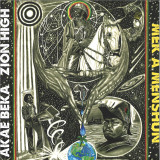
Akae Beka's inimitable style of rich, deep, multi-layered songwriting, uncompromising devotion to RasTafari and soulful healing melodies developed over decades performing with St. Croix based band Midnite and countless recordings. At the point of his untimely passing in 2019, he had released over 70LP's. He is without a doubt one of the most prolific reggae artists ever known.
The stellar production trinity that is Zion I Kings have been involved collectively and individually in creating some of the most highly regarded contributions to the vast Akae Beka catalogue. The timeless songs of 'Mek A Menshun' amply reward the listener who can penetrate into the mystical musical realms of Rastafari. Longtime fans of Midnite and Akae Beka will note that Vaughn Benjamin's singing on 'Mek a Menshun' reached new heights of melodic delivery and emotional intensity. Coupled with his always poetic and insightful lyrics, these 10 original songs rank among his best recordings to date. The title track 'Mek A Menshun' includes vocals by Protoje Grammy (R)-nominated artist.
Mek A Menshun features the stellar musicianship of the ZIK distinguished in typical fashion by the rock-solid drumming of Lloyd "Junior" Richards. On this album, his playing is complemented by Aston Barrett Jr. ("By Day", "Only Now") and Kirk Bennett ( "Kagm Mystory", "Mek A Menshun"). The signature stylings of the other core ZIK musicians are augmented by horns (Andrew "Drew Keys" Stoch -trombone, Donald "Jahbless" Toney -saxophone), flute- Sheldon "Attiba" Bernard, kette- Andrew "Bassie" Campbell, and the guitar of Chet Samuel. ZIK guitarist Andrew "Moon" Bain contributes a string arrangement on "Only Now". Throughout the album, Laurent "Tippy I" Alfred's spot-on organ shuffle bubbles the rhythm forward. Many of the 'Mek A Menshun' tracks were among the last recordings done by the veteran engineer Gary Woung.
Originally released digitally and on CD, this LP is now being released for the first time on as a 12" vinyl LP courtesy of Before Zero Records.
- A1: Fantastic
- A2: Keep It On (This Beat)
- A3: I Don't Know
- A4: How We Bullshit
- A5: Fat Cat Song
- A6: The Look Of Love
- B1: Estimate
- B2: Hoc N Pucky
- B3: Beej N Dem
- B4: Pregnant (T3)
- B5: Forth & Back (Rock Music)
- B6: Fantastic 2
- B7: Fantastic 3
- C1: Keep It On
- C2: 5 Ela Remix
- C3: Give This Nigga
- C4: Players
- C5: Look Of Love (Remix)
- C6: Pregrent (Baatin)
- D1: Things U Do (Remix)
- D2: Fat Cat (Remix)
- D3: Fantastic 4
- D4: What's Love Gotta Do With It (Look Of Love Remix)
- D5: 2 You 4 You
Available again. Note price increase. The contributions of the late Detroit producer James DeWitt Yancey –better known to the world as J Dilla to the world of hip-hop can't be overstated, and nowhere is his legacy more apparent than his work as a member of Slum Village. A founding member of the trio, (Alongside rappers T3 and Baatin) Dilla provided the group's distinctly esoteric, free-wheeling sound, built around winding basslines, quirky drumbeats, subtle low-end frequencies, and classic jazz & soul samples. Against the backdrop of Dilla's rich production, T3 and Baatin's free-flowing style of rhyming would also earn wide critical praise, leading to comparisons as the successors to A Tribe Called Quest. (A label they themselves have rejected.) It's on Slum Village's 1997 studio debut, Fan-Tas-Tic Vol. 1, that all these elements come together in the most proficient manner. An instant hit among Detroit's underground hip-hop scene, the album seemed to combine all the best elements of the reigning alternative and gangsta styles of hip-hop into one cohesive style that was a hit among critics. Fan-Tas-Tic's influence extended far beyond Detroit, as its sound heavily influenced the sounds of D'Angelo, Erykah Badu, and The Roots just to name a few. (Roots drummer ?uestlove has even declared that: "Hands down this album birthed the neo-soul movement.") Ne'Astra Media Group now presents the album reissued on vinyl, for the first time in several years. Every wobbling bass note of J Dilla's production has been preserved and every freestyle line of T3 and Baatin has been re-created, to maintain the legacy of a late-90s rap classic, and the legend of one of hip-hop's greatest beatsmiths.
Repress expected. Date TBA
By 1980 when this was originally released Pharoah Sanders was solidly entrenched with his own voice on tenor. The passing of John Coltrane and Sanders's fruitful years of playing with the prolific saxophone genius resulted with an unmistakable influence on his sound and explorations of the instrument. Beginning with "Greetings to Idris" the structure of the music is one that follows tradition yet opens up for the musicians to improvise within the arrangements. "Greetings to Idris" is in reference to the featured drummer Idris Muhammad who also played with Coltrane during his late period. Naturally Sanders is featured as the main instrument and his horn can be bold and demanding of your full attention. Always interested in other instruments from other cultures, much like Trane, he incorporates the Japanese instrument the koto, a beautifully harmonic stringed instrument to counter his soft rich blowing on tenor with only wind chimes and a harmonium for a delicious peaceful bit of music on "Kazuko"(Peace Child) that has the qualities of a meditative offering. Most of the music, eight tracks, is composed and arranged by Sanders and demonstrates his leadership. There is one John Coltrane composition entitled "After The Rain" that gets the Tranesque treatment by Sanders that makes it hard for even the most discerning listener to distinguish between the original version and Sanders impression. It is a bluesy duet featuring only sax and piano and leaves you wanting to hear it over and over again because of it's simple and haunting melodies. Another song that Coltrane recorded entitled "Easy To Remember" has a gentle swing to it built around a classic quartet (drums, bass, piano, sax) like that employed by Coltrane that results in a superb standard. Sanders incorporates the use of another "foreign" instrument to jazz by working in a tabla and sitar on "Soledad " that takes center stage before Sanders joins in on the music. The result is a thing of genius as the East and West merge and interface for composition that is peaceful. Sanders music on this LP fluctuates between the tranquil sounds of his mellow horn to the outer limits where he left off with the explorations of Trane's late period. What separates this LP from others is that it is a group playing under his leadership where he gives all others close to equal billing. The uptempo, "You've Got To Have freedom" is one such song where Sanders gets out there on some of his solos but works within the group structure as the other musicians, most notably Eddie Henderson on flugelhorn, bring the music back home. There is a chorus sung much of the time throughout where the the proclamation "Ya gotta have peace and love, ya gotta have freedom" is presented in Manhattan Transfer style but with much more soul. The use of vocalists is done again on the track entitled "Think About The One." The chorus features vocalese specialist Bobby McFerrin. This LP shows the different sides of Pharoah Sanders, a man always willing to explore the music, explore his soul and share it with you. The closing track "Bedria" is a mellow exploration of the various ranges of the tenor. It is a ten minute song that displays all the grace of his being, a gentle giant who can manipulate the horn to do extraordinary things, reverberating out and back in undulating waves of harmonic bliss. Sanders on this LP is next to perfect. One of his best recording from his post Impulse career. It belongs in your jazz collection right next to John Coltrane.
Reissue of the oud / viola virtuoso SIMON SHAHEEN's interpretations of pieces by one of the Middle East's most important 20th Century composers, MOHAMED ABDEL WAHAB. Produced by BILL LASWELL, remastered for vinyl at D&M Berlin.
MOHAMED ABDEL WAHAB (1902-1991) was "a giant in the world of Middle Eastern entertainment" (Al Jadid Magazine) - as singer, actor and composer – and is commonly considered "the father of modern Egyptian song". After a visit to Paris, he revolutionized the film industry by introducing the genre "musical film" to the Arabic world, the movie "The White Rose" in which he starred broke all records and to this day is frequently presented in Cairo's cinemas. But in 1950, WAHAB left the film industry to focus on singing and composing – he wrote over 1800 songs (among others for Umm Kalthoum, an iconic artist in the Arabic music in her own right) that were deeply rooted in classical Arabic music but also laid the foundation for a new era of Egyptian music as WAHAB was open to Western elements such as waltz rhythms or even rock'n'roll in Abdel Halim Hafez's song "Ya Albi Ya Khali". He also composed several national anthems (Tunisia, Oman, Libya, United Arabic Emirates) and re-composed the Egyptian national anthem "Belady Belady Belady", based on the original by Sayed Darwish. WAHAB received several decorations of Arabic states, and at his death in 1991, Egypt honored its famous son with a huge military funeral at the Rabia al-Adawiya Mosque in Cairo, the six-horse carriage procession carrying his coffin was actually led by the prime and foreign ministers, followed by the ministers of defense, interior and culture!
SIMON SHAHEEN (born 1955) is the perfect choice for WAHAB's compositions. Born into a family of gifted musicians, he learned playing the oud at the age of 5 and the violin shortly thereafter. He earned degrees in Arabic literature and music performance at the Tel Aviv University, and later pursued further studies at Hebrew University of Jerusalem and after his emigration to the USA (in 1980) at the Manhattan School of Music and Columbia University. SHAHEEN lives in New York where he founded the Near Eastern Music Ensemble and Qantara, a formation that blends traditional Arabic Music with elements of Jazz and classical music, and he also has been organizing the Annual Arab Festival of Arts called Mahrajan al-Fan since 1994. The same year he received a National Heritage Fellowship from the National Endowment for the Arts at the White House. Solo albums like Saltanah (Water Lily Acoustics), Turath (CMP) or Taqasim (Lyrichord) underline his importance as one of the most significant Arab musicians, performers, and composers of his generation. His work incorporates and reflects a legacy of Arabic music, while it forges ahead to new frontiers, embracing many different styles in the process. SHAHEEN has participated in many cross-cultural musical projects with artists as diverse as Henry Threadgill, Vishwa Mohan Bhatt, or the Jewish klezmer ensemble The Klezmatics, contributed to the soundtracks for The Sheltering Sky and Malcolm X and composed the entire score for the United Nations sponsored documentary, For Everyone Everywhere, celebrating the 50th anniversary of the United Nations Human Rights Charter. SHAHEENS biggest success was the Qantara album Blue Flame (2001) which has been nominated for eleven Grammy Awards.
Besides all his activities as performer, he dedicates a good part of his time to working with schools and universities, including Julliard, Columbia, Cornell, Princeton, Brown, Harvard, Yale, University of California in San Diego, University of Michigan in Ann Arbor and many others.
The Music Of Mohamed Abdel Wahab was originally released in 1990 on Axiom, the record label curated by iconic producer and bass player Bill Laswell, and has been carefully remastered for this vinyl reissue at D&M, Berlin.
Press quotes:
"Master oud player and composer Simon Shaheen finds the perfect mix on this collection of Mohammed Abdel Wahab's pieces … seven wonderful interpretations sparkling with oud and strings interplay." Stephen Cook / AllMusic
"Shaheen's violin soars over a slicing string section and a bed of percolating percussion, while accordion, oud, finger cymbals and a chorus of singers weave in and out. Produced with sparkling clarity by Bill Laswell … this record opens a new world of harmonic and melodic possibilities to ears accustomed to Western pop." Greg Kot / Chicago Tribune
Musicians:
Simon Shaheen: Oud, Violin, Viola
Najib Shaheen: Oud
Sheikh Taha: Accordion
Anton Hajjar: Ney
Paula Bing: Flute
Ramzi Bisharat: Tabla
Hanna Mirhige: Mizhar
Michael Baklouk: Daff
Bobby Farah: Sagat
Ibrahim Salman: Quanoun
Artemis Theodos, Gabriel Palka, Nessim Dakwar, Kamil Shajrawi: Violin
Mike Richmond: Double Bass
Michael Finkel, Vladimir Greenberg: Cello
Laura Shaheen, Louise Salman, Maurice Chedid, Nermine Rawi,
Simon Shaheen, Youssef Kassab: Chorus

Clear Vinyl
New Nordic jazz duo Svaneborg Kardyb sign to Gondwana Records and announce NPR Tiny Desk session and captivating third album Over Tage
Svaneborg Kardyb are Nikolaj Svaneborg - Wurlitzer, Juno, piano and Jonas Kardyb - drums, percussion a multi award winning duo from Denmark, where they won two "grammys" at the Danish Music Awards Jazz 2019: New artist of the year and Composer of the year. ?Drawing on Danish folk music and Scandinavian jazz influences, including Nils Frahm, Esbjörn Svennson and Jan Johansson's landmark recording Jazz På Svenska, their music is an exquisite and joyful melding of beautiful melodies, delicate minimalism, catchy grooves, subtle electronica vibes, Nordic atmospheres and organic interplay, all underwritten by the sheer joy of playing together. "We started in the earliest of mornings over the blackest of coffee, sometimes even without talking, just music.
Immediately we felt a connection between our personal style of playing and the compositions emerged like out of nowhere. The vibe from these early sessions is still the backbone of our little band".
Svaneborg Kardyb hail from Aalborg, in Jutland, in the north of Denmark where they first met in 2013 and discussed the possibility of creating a duo over late night talks. Six years went by as they both explored other projects before they eventually realised the idea of making music together. Like their new label mates, Vega Trails, Svaneborg Kardyb are a duo, a format that gives them a lot of space to occupy - or leave blank. "We enjoy the simplicity and focus it gives to the interplay. We come from very different musical backgrounds; Nikolaj from Scandinavian jazz, and Jonas from Roots, blues and folk, so the music is a sum of our personal contributions and doesn't thrive to be anything else than that. It's quite unique for us to have this shared musical tongue and friendship".
Their music is intentionally simple at first glance, but evolves and unfolds through listening over time, with plenty of room for exploration, reflection and improvisation. Their aim is to create music that is as honest and intimate as possible "with melodies and rhythms so strong that we are left as only the messengers". And their fast-developing music chemistry allowed them to give little thought to what their musical influences were. Giving their music a captivating charm. "We explored whatever sounds and musical structures our duality gave birth to and through long jam-sessions we found small seeds of ideas that turned into tunes. Danish traditional songs, community singing and hymns are a big inspiration too. Both the tonal language, the lyrical melodies and the way generations can gather around the music, is something that is close to our hearts".
Over Tage (over roofs) is their third album, following Knob (2019) and Haven (2020) and marks their debut for Gondwana Records a label noted for working with artists such as Mammal Hands, Portico Quartet and GoGo Penguin whose music, like that of Svaneborg Kardyb delights in exploring the fertile spaces between genres. For the duo it is their most serious and thoughtful record to date. "It may be our strongest and most honest record so far. Doubts and uncertainty were kind of the foundation for the sounds of the album but there is also hope and lots of uplifting moments and we're very pleased with how it came out." And it is that mixture of elevation and thoughtfulness, honesty and intimacy that makes the music of Svaneborg Kardyb so special and Over Tage such a joy to listen to. The world awaits.
Einstürzende Neubauten producer Boris Wilsdorf, Karl O’Connor aka Regis and MY DISCO's Liam Andrews assemble as EROS, bottling no-wave/industrial lightning with a tight set of pulverized, widescreen torched-songs that rasp, grate and throb somewhere between This Heat, The Cure, Cabaret Voltaire, Alva Noto x Pan Sonic.
An industrial fantasy of flesh and steel, ‘A Southern Code’ is the stunning continuation of the trio’s work at Wilsdorf’s pivotal Anderesbaustelle studio on Regis’ watershed album, ‘Hidden In This Is The Light That You Miss’. Rejoined by another key muse, Anni Hogan, and Einstürzende Neubauten’s Jochen Arbeit, they effectively galvanised a new band, EROS, during long days and nights in the studio across 2020 and into 2021. The sound they make is fiercely lean, shaped by Wilsdorf’s manacled mixing and anchored in the frankly sexy as f#ck swerve of Regis vocals and his snake-hipped rhythm section.
The first songs issued from those sessions form a lustrous new high point of contemporary industrial and dance music, one porous to Kurdish dabke as much as archetypal goth, pulsing with a metallic bloodlust and spatialized by Wilsdorf’s genre-forming tekkerz in a way that seriously rewards with proper amplification. Judged on its immediate merits, it’s the sort of record that could have feasibly come out at any point between the ‘80s and now, but closer inspection reveals a discreet framework of sculpted subbass and sleekly rolling traction that betrays the modernity of minimalist D&B physics and up-to-the-second sound design that places ‘A Southern Code’ in a timeless echelon.
Registering the venomous drums and over-the-shoulder whispers of its title track, plus the incendiary middle eastern horns of ‘The Crawling Man’ - a real parallel dimension take on The Cure’s ‘The Top’ - to the post-apocalyptic lounge lizard styles of ‘In This Place’, and the unheimlich creep to ‘Nature Unborn (From Sun to Sun)’, the band’s first album plants a vital stake in the ground for industrial musick at the crest of a new decade.
2022 marks the 25th anniversary of Suction Records, the Toronto-based electro/IDM label founded in 1997 by two emerging producers, Lowfish (aka Gregory De Rocher) and Solvent (aka Jason Amm), the latter still overseeing the label to this day. The label’s inaugural release was a split Lowfish/Solvent 12”, marking both artists’ debut vinyl appearance.
Gregory and Jason had known each other since high-school, but a deeper friendship was forged during their university years, after Gregory introduced Jason to early Rephlex releases by Aphex Twin and µ-Ziq. Gregory had been making electronic music in his bedroom for more than a decade, but it was those Rephlex releases that ignited Jason’s passion to do the same. After several years of obsessive gear buying, music making, and playing tracks for each other, Lowfish and Solvent had hit their stride, and their demos even attracted the interest of legendary early IDM labels labels Skam (for Lowfish), and Isophlux (for Solvent). But things were slow-moving in those days — letters, faxes, phone calls… nothing was panning out. So that’s when they decided to start their own label, and put out 300 copies of this 12”, suction001.
The label was heavily inspired by contemporary artists like AFX, Autechre, and Panasonic, but on suction001, those influences collided with their ‘80s synth-pop and industrial roots to create something unique. 25 years later, it still sounds fresh, and like nothing else out there. On suction001, 808 drum machines are run through distortion and breakbeats are chopped and mangled, contrasting with melodic OMD-style leads and catchy synth-pop basslines — a sound the label would refer to as ‘distortion pedal new wave.’
Over the past 25 years, Suction’s sound has morphed and evolved, but in recent years has shifted back to it’s original Rephlex-inspired roots. That makes 2022 the perfect year to revisit this wild, 1997 debut, now reissued in a new, expanded edition for it’s 25th anniversary. The reissue adds 2 bonus tracks — a 1999 remix by Detroit electro-punk duo ADULT., along with a previously-unreleased version of Lowfish’s A1 cut, and also features new and improved artwork, including an insert with full label discography.
Limited to 500 copies, and comes with a Bandcamp download card.
Limited edition on green vinyl.The collective's debut album 'Papara' is an inviting mouthful of afro rhythms, funk, and prog jazz, combined with the spacey soundscapes of the Brussels metropole, as they look to Fela Kuti's afrobeat style for inspiration.
On the isle of Crete, the ancient practice of dipping your bread in different sauces and dips is called "papara". True to its music-as-sauce philosophy, Brussels-based groove formation M.CHUZI invites you to dip your ear into the sonic sauces that are on offer in its versatile menu.
Released 4th November via Sdban Ultra, the collective's debut album 'Papara' is an inviting mouthful of afro rhythms, funk, and prog jazz, combined with the spacey soundscapes of the Brussels metropole, as they look to Fela Kuti's afrobeat style for inspiration.
Winner of the prestigious Sound Track contest held at Ancienne Belgique back in December 2019, the octet has gone from strength to strength, including having album track 'Tzatzìki' feature on the critically acclaimed various artist's compilation 'Lefto presents Jazz Cats volume 2', released earlier this summer. The track was arguably the highlight of the album and received radio support from leading radio DJs including Gilles Peterson of BBC Radio 6 Music and Worldwide FM fame.
It's the tasty 'Tzatzìki' that launches 'Papara', an exotica-spawned, merry bombardment of fizzing percussion and a subsequent brass freakout. Next up is the heavy acid rock of 'Mammoet' featuring rising trombonist Nabou, which soon breaks out into a groove-laden mix of Egyptian-inspired horns and Fela-style rhythms, before poetic warrior Joy Slam, adds her vocals to the dub-centric rhythms of the sweet 'Carbonade'.
Elsewhere, 'Intermetsauce' fuses skittish horns with funky drums while the spicy 'Tahini Miso' bursts into life with trance-inducing beats and mystical, Middle-Eastern seasoning. The album closes with the multi-rhythms of the burning 'Sambal', before we dive-dip into the funky 'Pickles', featuring Mixmaster Menno's (STUFF.) wildstyle scratching skills. With each track named after a band member or featured artists' favourite sauce, M.CHUZI serves you a diverse and flavourful plate of unique compositions, taking afro-groove and its descendants to a new level of eclectic dynamism.
On the isle of Crete, the ancient practice of dipping your bread in different sauces and dips is called "papara". True to its music-as-sauce philosophy, Brussels-based groove formation M.CHUZI invites you to dip your ear into the sonic sauces that are on offer in its versatile menu.
Released 4th November via Sdban Ultra, the collective's debut album 'Papara' is an inviting mouthful of afro rhythms, funk, and prog jazz, combined with the spacey soundscapes of the Brussels metropole, as they look to Fela Kuti's afrobeat style for inspiration.
Winner of the prestigious Sound TrackIB1 contest held at Ancienne Belgique back in December 2019, the octet has gone from strength to strength, including having album track 'Tzatzìki' feature on the critically acclaimed various artist's compilation 'Lefto presents Jazz Cats volume 2', released earlier this summer. The track was arguably the highlight of the album and received radio support from leading radio DJs including Gilles Peterson of BBC Radio 6 Music and Worldwide FM fame.
It's the tasty 'Tzatzìki' that launches 'Papara', an exotica-spawned, merry bombardment of fizzing percussion and a subsequent brass freakout. Next up is the heavy acid rock of 'Mammoet' featuring rising trombonist Nabou, which soon breaks out into a groove-laden mix of Egyptian-inspired horns and Fela-style rhythms, before poetic warrior Joy Slam, adds her vocals to the dub-centric rhythms of the sweet 'Carbonade'.
Elsewhere, 'Intermetsauce' fuses skittish horns with funky drums while the spicy 'Tahini Miso' bursts into life with trance-inducing beats and mystical, Middle-Eastern seasoning. The album closes with the multi-rhythms of the burning 'Sambal', before we dive-dip into the funky 'Pickles', featuring Mixmaster Menno's (STUFF.) wildstyle scratching skills. With each track named after a band member or featured artists' favourite sauce, M.CHUZI serves you a diverse and flavourful plate of unique compositions, taking afro-groove and its descendants to a new level of eclectic dynamism.