Bathurst is pleased to announce the debut album 'All One' by The Motion Orchestra.
The group formed in 2017 in Hamburg as a studio project and outlet for lead writer and bandleader - David Hanke (Keno, Renegades Of Jazz) to explore his Neo-Classical and Jazz sensibilities in a new setting.
Comprising of the US-based Andy Sells on Drums, with Germans Alexander Bednasch on Double-Bass, Mark Matthes on Violins, and David Hanke on electronics and production, as well as a one-off guest appearance from other long term Hanke collaborators - Tristan de Liege on clarinet (for the track 'Maylight'), David Nesselhauf on electronics (for the track 'All One') and Ingo Möll on additional Bass (for the track 'Everything We Are').
Strangely, when considering the intimacy of the album the group has never actually fully met in person, with live recordings taking place over 4 years across studios in Seattle, Los Angeles and Hamburg. With Hanke and Matthes contributing the majority of the writing and arranging, the wonderful musicianship of the group as a whole is obvious to hear in the record, which expertly showcases the performers rare understanding of musical space and compositional balance, yet still allowing for flashes of individual brilliance.
As the first tracks were arranged it became clear that The Motion Orchestra occupy a musical space that sits aside from their obvious stylistic influences, instead bearing a compositional style that deftly fuses the orchestral and electronic worlds more akin to that of modern cinematic composition than most commercial releases. Matthes' lush string arrangements are a beauty to behold, layered elegantly upon the muscular and oftentimes swinging rhythm section low end, all the while Hanke's cerebral sound design and production elements interplay with all throughout, providing an eclectic array of wonderful foils and musical partners to the palette.
With only a small clutch of singles and tracks being released so far they have already turned the heads of Huey Morgan on BBC 6Music and Bandcamp Weekly, as well as closing in on 500,000 streams on Spotify. Exploring themes as time and space, transience, life and death – their music is delightfully relevant, timeless and contemplative in comparison to much of today's disposable music culture.
''All One' is a collection inspired by the notion that everything comes from the same source, the same starting point. And throughout its play time it builds out this concept from the reserved, poignant strings and ambience beginnings of opener 'From Dust', through to the delicate pitter-patter rhythm and memorable melodies of 'Threadspin', before picking up in tempo and dynamics ahead of the epic penultimate track - Sonorous' and its piano chord harmonics, tasteful bass notes, and swirling jazz drum patterns. Indeed by the last notes of title track 'All One' there is a real sense of having mentally journeyed some distance to arrive exactly where you are for the listener. It's a truly atmospheric audio experience that is constantly engaging and inspiring both feelings and thought throughout.
Perhaps the mastermind of the project - David Hanke, sums it up best himself:
"It begins where it ends. Turning these subjects into sounds, creating an emotional sound journey with a deeper note is the idea."
Suche:mo style
- A1: There Is No Time (Prelude)
- A2: The Call
- A3: Theme De Crabtree
- A4: Road Of The Lonely Ones
- A5: Loose Goose
- A6: Dirtknock
- A7: Hopprock
- A8: Riddim Chant
- B1: Sound Ancestors
- B2: One For Quartabe / Right Now
- B3: Hang Out (Phone Off) (Phone Off)
- B4: Two For 2 - For Dilla
- B5: Latino Negro
- B6: The New Normal
- B7: Chino
- B8: Duumbiyay
Now Available On Cassette Tape! Music By Madlib Arranged By Kieran Hebden. Gil Evans to Miles Davis…. Holger Czukay to the ensemble known as Can….Jean Claude Vannier to Serge Gainsbourg on Histoire de Melody Nelson. That’s the only way to explain the specificity of Four Tet and Madlib’s collaboration, in this special album that showcases a two-decade long friendship that has resulted in an album that follows Madlib’s classics like Quasimoto’s The Unseen, Madvillainy and his Pinata and Bandana albums with Freddie Gibbs. “A few months ago I completed work on an album with my friend Madlib that we’d been making for the last few years. He is always making loads of music in all sorts of styles and I was listening to some of his new beats and studio sessions when I had the idea that it would be great to hear some of these ideas made into a Madlib solo album. Not made into beats for vocalists to use but instead arranged into tracks that could all flow together in an album designed to be listened to start to finish. I put this concept to him when we were hanging out eating some nice food one day and we decided to work on this together with him sending me tracks, loops, ideas and experiments that I would arrange, edit, manipulate and combine. I was sent hundreds of pieces of music over a couple of years stretch and during that time I put together this album with all the parts that fitted with my vision.” - Kieran Hebden AKA Four Tet
"Of the records Ayler made during 1964, the LP New York Eye and Ear Control...is probably the most important link between the epoch-making collective improvisation Free Jazz by the Ornette Coleman double quartet, and John Coltrane's Ascension. Apart from that, it is—in my opinion—one of Ayler's very best recordings. New York Eye and Ear Control owes a large part of its success to the contrasting temperaments of the three musicians used by Albert Ayler in addition to his trio, namely, trumpeter Don Cherry, trombonist Roswell Rudd and alto saxophonist John Tchicai. Don Cherry improvises in broad melodic lines or places sharply accented staccato passages. Roswell Rudd interposes fragmentary flourishes in the highest register, or growl sounds and glissandos in the manner of the old tailgate trombonists. John Tchicai presents the polarity of a slightly 'cool,' linear style and offers motivic linkage by insistently repeating melodic patterns. All three inspire Albert Ayler to a breadth of expression which is too often missing in his improvisations with smaller groups. There is less limitation to his sound-span playing, more contrast, more punch and rhythmic accentuation, and with quick response Ayler takes motives from Cherry, Rudd and Tchicai, transforms them
into his own musical idiom, and in turn gives a new direction to the flow of ideas." - Free Jazz by Ekkehard Jost
"The music is fiery but with enough colorful moments to hold one's interest throughout." - Scott Yanow, All Music Guide
"...a valuable window into the music's early history as well as what might have happened outside record dates, more than one is usually privy to." - Clifford Allen, AllAboutJazz
- A1: Saint Etienne - Cool Kids Of Death (Underworld Mix)
- A2: Unloved - Why Not (Gwenno Remix)
- A3: Nots - Reactor (Mikey Young Remix)
- B1: Mildlife - Automatic (Jono Ma Ascend Mix)
- B2: Espiritu - Los Americanos (Mother Mix)
- B3: Confidence Man - Out The Window (Greg & Che Wilson Remix)
- C1: Mattiel - Guns Of Brixton (Rub-A-Dub Style Part 2)
- C2: Baxter Dury - Miami (Parrot & Cocker Too Remix)
- C3: Jimi Goodwin - Terracotta Warrior (Andy Votel Spazio 1975 De-Mix)
- D1: Working Mens Club - X (Minsky Rock Remix)
- D2: Moonflowers - Get Higher (Get Dubber Mix)
- D3: Raf Rundell - Monsterpiece (Harvey Sutherland Remix)
- D4: Cherry Ghost - Finally (Time & Space Machine Edit)
Marshall McLuhan’s famous edict ‘the medium is the message’ has never been more apt than with regard to modern remix culture. Although the idea of the remix goes way back to the Jamaican dub pioneers and New York disco remixers of the 1970s, the form didn’t truly come into its own until the acid house explosion of the 1980s, when remixers’ credentials often subsumed — and sometimes surpassed — the original source material. Some, among them our lost friend Andrew Weatherall, used remixing as a springboard into multiple other directions, and became auteurs in their own right.
Forged in the white-hot heat of post-acid house Britain, these Heavenly remixes are perfectly weighted with respect and irreverence, the remixer in each case carefully chosen to add heft to the song (as on Al Breadwinner’s dubwise reworking of Mattiel’s ’Guns of Brixton’— the pairing more a game of chess than a best-of-three arm wrestle).
Although Heavenly was founded in the wake of huge upheavals in electronic music, it was still imbued with its own curious parallel life. I’ve always thought of Heavenly as one of the UK’s alt-pop labels; a place where brilliant pop bands live and record, if the general public would only realise. Some of them have ended up in the real, actual charts (Saint Etienne, Doves), but that’s missing the point about Heavenly, who are, like Factory and Fast Product before them, pop music’s conscience.
There is no sense of order to this compilation and we make no apologies. It’s the Heavenly way. Think of it as a present from Loki, the Norse god of mischief. You’ll find a smattering of older tracks: album openers Saint Etienne are taken on a Poseidon Adventure with Underworld, who inject ‘Cool Kids of Death’ with typically manic energy. Elsewhere, ’90s Brum duo Mother add dancefloor pzazz to Espiritu’s innate glamour on an all-funked-up reworking of ‘Los Americanos’, and Mark Lusardi’s remix of Moonflowers’ ‘Get Higher’ is an early Heavenly classic.
On ‘Terracotta Warrior’, a perfect, psyched-out, Mancunian union is created betwixt Jimi Goodwin and Andy Votel, whilst Goodwin cohort Simon Aldred, in his Cherry Ghost guise, receives a proper Tamla-Motowning from Richard Norris (aka Time & Space Machine) on an inspired cover of Cece Peniston’s glam-house hit, ‘Finally’.
There are several of Heavenly’s current darlings here too. One of the most exciting young British prospects, Yorkshire’s Working Men’s Club, effectively remix themselves, as Minsky Rock — WMC’s Syd Minsky-Sargeant and producer Ross Orton — cleave ‘X’ into a riotous industrial racket. Jagwar Ma’s Jono Ma takes the Kraftwerkian leitmotif on ‘Automatic’ and drives the Australian jazz-funkers Mildlife down an electro-convulsive psychedelic tunnel (thankfully no-one was harmed during the making of this remix); Sheffield’s DJ Parrot and Jarvis Cocker deliver one of the outstanding remixes of 2018, turning Baxter Dury’s ‘Miami’ into a lovelorn minor opera; and, making its first appearance on vinyl, David Holmes’ Unloved project is taken on a panoramic Welsh waltz thanks to Gwenno.
There may well be no rhyme, nor reason, to how these compilations have been put together, beyond the fact that they are assembled with love, an innate understanding of the power of great pop music, and a skilled marriage of song and remixer — but does one really need anything more than that for an album to make sense? I’d suggest not.
Damage machine delivers a chanting speedcore industrial pearl.
Infamozz is here the more "normal" hardcore tune : an industrial banger.
Komprex goes extreme speedcore, hardish shaker !
The flip opens with a Qualkommando acid uncompromised style. Massive superb savage tune.
Infared is my fave... with a clear clean minimal speed hard HELP tune, travelling in a flashcore, full of life and surprising sequences. Big structure here !
Lawrencium goes even more extreme and success into doing an overspeed hardcore with a high definition... probably the best 400BPM vinyl release of the year !
Scottish DJ Ewan McVicar is tipped for big things, having found support in the likes of Annie Mac and Fatboy Slim. After a stellar year crowned with a release on the hallowed Nervous Records, he makes his debut on Shall Not Fade's "Basement Tracks" series with five explosive earworms.
Amnocairn EP collects the most classic sounds from the dancefloor and melts them together, styles blending throughout songs to keep listeners on their toes and dancing. The title track is a sweeping marriage of insistent house piano and washy dub techno synths, leading into the sugary, hardcore "1001 Freestyle" that calls back to early Lone tracks. Then one for the after hours crew, "Ha Mez", a syncopated 303 techno roller.
McVicar keeps the party atmosphere close across the B-side, flexing laser-cut synth arps with a dark, big-room edge on "Stu Boy", before crowning the EP with a gorgeous sun soaked party number "See U Thru My Eyes", jazzy inflected house with a 90s aesthetic. This EP has something for everyone, bringing together eclectic influences into a smooth festival-ready record.
Features Suspiria housed in a gimmick pop up cover, along with an exclusive LP filled with Goblin rare & unreleased material.
Includes an 8 page booklet featuring liner notes on each soundtrack by Goblin specialist Fabio Capuzzo.
Cinevox, AMS and Light In The Attic present an exceptional collection of Goblin horror soundtracks – including classics such as Profondo Rosso, Suspiria, Zombi, along with a 10th LP of rare & unreleased music – all available for the first time ever in a gorgeous colored 10 x LP set!
Goblin are a unique case in the world of rock: a prog band specialized in film music with striking results. Without denying their roots, they created a new sound, defined precisely ‘in the style of Goblin’. A style that has attracted followers and admirers all over the world. This box set collects the most famous and appreciated soundtracks of this band, the ones they made for ‘giallo’ and horror movies.
The box set contains the following LPs:
- Profondo rosso - Suspiria - Zombi - Patrick - Buio Omega - Contamination - Non ho sonno - Phenomena
- Tenebre - Rarities (LP made specially for this box set – exclusive)
Goblin are a unique case in the world of rock: a prog band specialized in film music with striking results. Without denying their roots, they created a new sound, defined precisely ‘in the style of Goblin’. A style that has attracted followers and admirers all over the world. This box set collects the most famous and appreciated soundtracks of this band, the ones they made for ‘giallo’ and horror movies.
Manchester's jazz scene has produced some of the UK's brightest and most original jazz groups. Now with its eighth releaseMatthew Halsall's Manchester based Gondwana record label shines a light on another of Manchester's well kept musical secrets, the expansive, brilliant piano trio GoGo Penguin.
Featuring pianist Chris Illingworth, bassist Grant Russell and drummer Rob Turner (all still in their twenties), GoGo Penguin, draw on a heady brew of influences from Aphex Twin to Brian Eno, Debussy to Shostakovich and Massive Attack to EST. GoGo Penguin who have already developed a growing cult following in the North West as well as turning in storming performances at the Gateshead International and Manchester Jazz Festival's first came to Halsall's attention when he heard them at a friends night (Norvun Devolution) at the Roadhouse in Manchester. He was immediately drawn to their sublime collective empathy and the seamless fusion of jazz, classical and electronica influences in their music. 'I was blown away the first time I heard them, for me tracks like Last Words and HF are modern anthems and I knew immediately that I wanted to release their music". I am very proud to welcome them to the Gondwana label"
GoGo Penguin met whilst studying music at the RNCM in Manchester. After doing frequent gigs together with various other bands and musicians they started jamming together and started creating new music. They had no specific sound in mind, but just wanted to be free to create freely and honestly. The new band quickly became a vehicle to combine all the best bits from the music they where influenced by and loved. Individually Illingworth brings a lyrical and melodic style influenced heavily by classical piano music and electronica. Turner brings a driving modern style of drumming influenced by jazz, electronica, ambient, classical and dance music. Russell brings a gritty energetic double bass style influenced by the likes of Charles Mingus but also more modern electronic producers. The band's modus operandi is to have one of them bring an idea to rehearsal. Then there's a lot of experimentation, they try out as many different ways to play the piece as they can think of, until it begins to sound like something they all like.
It is their unique ability to synthesis and develop each others melodic and harmonic ideas while drawing on music from classical to electronica that makes GoGo Penguin's music so enthralling and their debut album such a powerful opening salvo from a powerful new voice in UK music.
Originally released in 2005 on Cooper's Hipshot Cd-r label, and reissued here for the first time on vinyl, Spirit Songs deserves to be regarded as a true rediscovered gem, remixed and remastered by Mike Copper himself!
Spirit Songs comes as a highly organic form of Ambient-Folk-Blues with Cooper reordering material to create an immersive listening experience. A stream of cut-up lyrics inspired by Thomas Pynchon's writing slide across multiple electronic layers and masterfully fingerpicked acoustic guitars combining into a moving tide. This is deeply inspired music from a unique artist: Mike Cooper the so called "icon of post-everything music” a true sound explorer constantly pushing the boundaries of genres and styles, Folk, Blues, Free Improv, Exotica, Ambient, Electronica...
"Spirit Songs.. a glorious marriage of all three of Cooper's previous musical strategies; creating a stunning hybrid. The album contains 10 songs performed on finger-picked acoustic and electric lap steel guitar,
often looped and treated in real time, with Cooper singing lyrics in a quietly meandering, semi-improvisatory manner that recalls a more polished Jandek. The style of songwriting is immediately recognizable as blues, but an intuitive, idiosyncratic form of folk-blues, with Cooper narrating laments over matters personal and global, gentle universalisms that double as political messages. All of this occurs over a loose rhythmic framework provided by various noisy loops, with cracks, scratches and pops, echoes and distortions skipping out from every refrain. It's a gentle cacophony with subtle undercurrents of beauty and sadness, effortlessly nostalgic but still very rooted in the now. I think that Mike Cooper can genuinely call this style his own; I've never heard anything remotely like it, and it works beautifully, highlighting both song and singer, as well as the happy accidents resulting from the intersection of structure and chaos."- Pitchfork Review.
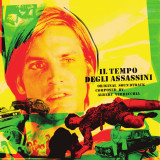
Between the 60s and 80s, Albert Verrecchia played a major role in Italian pop music and on the European disco and Afro-cosmic scene, both under his own name and under the monikers Albert Weyman and Albert Prince. He was the keyboardist of legendary Italian-French r'n'b band I Pyranas, served as a session Hammondist for singer and TV star Raffaella Carrà, and produced the disco trio Belle Epoque as well as the debut album of singer-songwriter Alan Sorrenti. Among his many incarnations, in the early and mid-70s he also composed a few soundtracks for Italian genre cinema, including for movies such as the poliziottesco Roma drogata, la polizia non può intervenire (Hallucinating Trip, 1975, Lucio Marcaccini) and the erotic drama Tecnica di un amore (1972, Brunello Rondi).
The score he wrote in 1975 for Il tempo degli assassini (Season of Assassins, a film about a gang of criminal youths who terrorize the city of Rome in the already violent 70s) is certainly his most accomplished work in the genre. Conceived for a small ensemble, it was written almost entirely on the spot in the recording studio. Verrecchia himself played the Moog, and his dynamic and percussive approach to the instrument resulted in a style midway between funk and proto-disco. A modern rhythmic style - or Ritmico Moderno, which is the title chosen by CAM for the LP containing the soundtrack and released two years later as part of a promotional library music series only distributed to film professionals and radio and TV programmers (CML series, cat. no. 131). One is led to wonder whether it was thanks to that LP that, in 1977, three pieces from the soundtrack found their way into another film about youth gangs, the Spanish Perros callejeros (Street Warriors), written and directed by Jose Antonio de la Loma. On a side but important note, there's the added bonus of popular 70s and 80s entertainer Sammy Barbot singing on Gang Leader alongside female vocal group Baba Yaga. What a pity that Verrecchia's career as a film composer ended here!
The Lauded Krautrocking, Global Groove Ensemble’s First Album On Maverick Producer Madlib’s Label. The late Christian Burchard, who founded the Embryo ensemble in 1969, loved the slogan Auf Auf, German for Up, Up, or Keep On Going. Anyone with anything more than a passing interest in the German Krautock scene of the 1970s and 1980s knows that Burchard followed that intent, all around the world, tirelessly seeking out new sounds and inspirations and creating a catalog of music unlike most anything else the world has ever heard. Madlib has often said Embryo is his favorite rock band. Of course the hip-hop-producer-with-the-deepest-musical-knowledge knows Embryo is more than just a rock band – but, for the purposes of these notes, let’s keep it simple. When Marja Burchard, Christan’s daughter, who grew up with Embryo and toured with them for years, took the reins of the ensemble after Christian’s death in 2018, she started recording what would become this album, over the course of two years, finishing it in the throes of the Covid pandemic in 2020. She approached Madlib and Egon, who had, years back, visited and jammed with Christian Burchard, and Embryo musicians Uve Mullrich, Roman Bunka and Jan Weissenfeldt, in a Bavarian wine cellar, with the idea to issue Auf Auf on Madlib Invazion. The reply was a resounding, definitive “yes.” So here is Marja’s take on the Embryo ethos, continuing with her father’s intrepid style, and leading the band in her own style. Auf Auf ranges from the deep, free-form jazz of “Alphorn Prayer” to modal music from Afghanistan on “Baran” to psychedelic-tinged jazz-rock of the title track Joining Marja are those like Embryo veterans Bunka, on oud and guitar, and Karl Hector and the Malcouns/Whitefield Brothers/Poets of Rhythm producer and guitarist Jan Weissenfeldt and others, including important players on the global scene from Afghanistan and Morocco
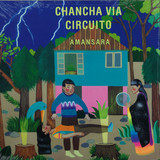
Argentine producer Pedro Canale returns from a three-year sojourn with his long awaited third album. Originally coming out of Buenos Aires's famed digital cumbia scene, Chancha has notoriously broken way outside those boundaries to forge unprecedented mergers between Brazilian rhythms, Paraguayan harp, Andean mysticism and the solitude of Argentinian folklore - all processed through his own futuristic style of postdubstep.
Chancha's sound is without question truly unique and instantly recognizable to the point he has become a key reference point for an entire crop of artists that have begun to carry his genes.
Hailed by the Washington Post, the New York Times, Pitchfork, NPR and countless others, Chancha Via Circuito defies even the shrewdest of marketing geniuses. On one hand, he is something of a cult artist within micro-circles of electronic music, having been invited to perform at Montreal's MUTEK as well as the Roskilde and Vive Latino Festivals. At the same time, Chancha's music has found broad appeal outside of the avant-garde, most notably his magnificent remix of Jose Larralde's "Quimey Neuquen" which was heavily featured in 2013 as part of the final season of the critically acclaimed television series Breaking Bad. Fans of the show undoubtedly remember Walter White burying his millions in the desert, soundtracked by the wide and gentle grooves of Chancha Via Circuito.
Amansara is a natural progressing of Chancha's special strain of electronic South America. Lead single "Coplita" features the haunting vocals of previous collaborator Miram Garcia, while "Sueno En Paraguay" merges Andean folklore sounds with bleeps and blips and pounding drums in a way that sounds completely natural and ordained. "Jardines" features the driving vocals of Lido Pimienta merging with heavy synths, percussion and bells into an unforgettable track, while both "Tarocchi" and "Guajaca" ramp things up into deep, electronic dancefloor inna rainforest territory.
Art for Amansara comes from Argentinian psychedelic folklore painter Paula Duro who has crafted the look of all of Chancha's previous releases.
The second and, as later would turn out, also the last release in Heinrich Tillack's critically acclaimed Tick Trax-series. The first Tick Trax-release by this talented producer from Braunschweig (Germany) was released as Volume 1 on U-TRAX in 1994 (cat. no.: 13 UTR SYS 1). It was a very successful record, however a bit too 'rough' for U-TRAX. Therefore, Volume II is launched on the U-TRAX sublabel Phoq U Phonogrammen, that has a more raw approach to techno, acid and electro.
Heinrich is a bit of an enigma. Having released some 12"s on Detroit's Plus 8 Records (as Sysex), Force Inc. Music Works (as Absolute) and Disko B (as Festival) and his own label Jakpot (both as Festival, as well as Co-Jack, together with Olivier Bondzio aka Hardfloor), he more or less disappeared from the face of the earth. It is said that he is a developer of children's apps for mobile phones nowadays.
This second Tick Trax release has 6 tracks, all in the distinctive raw Chicago-style that Heinrich uses only in his Tick Trax-identity. For minimalists, the CR-78 orientated beats on 'Samba Track' (from '93!) will be the track to go for. For heavy pounding floor fillers you can rely on 'Heavy Weight Track' and 'Super Heavy Weight Track'. Our personal favorite is 'Rush Track', another minimal track, but heavy and dark at the same time. The power is the drive in this one!
Original release date: October 1995.
The third release on U-TRAX in 1993 was also a third debut, this time by Natasja Hagemeier and Jeroen Brandjes. Early in their career, they used several artist names, but became most commonly known as The Connection Machine. With their debut mini-album The Dream Tec Album they more or less described their style: dreamy techno. It became an instant Dutch techno classic and U-TRAX is proud and delighted to offer a fully remastered re-release, including three never before released bonus tracks (one of which is digital-only).
Natasja and Jeroen resided in Utrecht back in the 90s. In 1991 they assembled all their ideas and recorded the track "24 Hours" with DJ Paradize. Soon after this experience, they started to buy their own gear, all strictly MIDI (which wasn't too obvious in those days). In their early recording years, they had three producer-names (Syndrome, The Connection Machine and Bitch&Bites), that were all collected under the The Utroid Machine Missions umbrella, which was used for their debut on U-TRAX.
All tracks on The Dream Tec Album are The Connection Machine's earliest works, from the 1991/1992 years.
"An Overflow of the Mind" is a beautiful, dreamy track with almost divine sounds and strange voice-samples that serves perfectly as an introduction to their entire repertoire.
Their first production was "24 Hours", and what a brilliant one it is! A well-known jazz-musician talks about a "24 hour party going on", on top of a sinister and trancey rug, woven of sampled sounds from pioneers in electronic music and nailed down to the floor with a deep pounding bassdrum. At the time they made this track, 141 bpm was unbelievably fast...
"Evilish Cosmos" is all about a very sad and personal emotion, so everything we say about it will be absolutely wrong. Just listen to the meandering piano line, distorted voice samples - and feel it.
The first bonus track on this release is "Recognized Pain", which was intended to be part of the original The Dream Tec Album. It had appeared on the Phuture Classical Section C cassette in 1993, on the famous Drome Tapes label that formed the roots of U-TRAX. It truly is an amazing track: pure sonic terror with haunting rhythms, psychedelic synth lines and shards of voice samples that make the listener feel slightly uncomfortable.
"X_Manray" is many electronic music lover's favorite track. It is sooo deep that it is hard not to get hypnotized by it. Warm strings are coupled with deep beats that show up and disappear every now and then. Could serve perfectly to start off any DJ's set, as long as she or he has the guts.
Though "Braindrain" is probably the most danceable track on this album, it is carefully designed to tease the listener. Everything in this track drops in too late and every tone, melody or loop last exactly a few bars too long. Designed as a DJ-teaser and so it is.
The second bonus track, "Cafe d'Anvers", is another previously unreleased work, of which unfortunately no master recording was saved. All that is left, as far as we know, was an old VHS Hifi tape from the U-TRAX Archives. And that is where this bonus track was taken from. Mastering engineer Thee J Johanz managed to restore the quality of the recording somewhat, while at the same time maintaining its dark, clubby sound, a tribute to the famous club of the track's name in Antwerp, Belgium.
"Dream Affected Dream" is one of the most recent productions on this album. It was recorded with CNN playing live on top of it. At this exact moment, CNN was having an interview with David Koresh, the leader of the infamous Branch Davidians sect from Waco, Texas, while they were under siege by an armed police force. Natasja and Jeroen were just ready to record Dream Affected Dream, and spontaneously decided to mix in the audio from CNN. Not very long after that, the cult members set fire to themselves. A very strange and oddly funky track, that also serves as a time-document.
The final track is another bonus track. Like Cafe d'Anvers, "Voight-Kampff" is taken from on old U-TRAX VHS Hifi tape and masterfully mastered into a lovely relaxed dreamtech piece. Very suitable to start the Sunday after a long night of clubbing. This track is available for free to buyers of the complete digital album only.
Original release date: July 1993.
Utrecht label U-Trax welcomes 90s legend P.A. Presents for an enhanced re-release of his first two releases on this label, namely "Salicylic Acid" and "Flight Simulator".
Ironically P.A. Presents aka Peter Aarsman is the only artist on U-TRAX that actually is born and bred in the city of Utrecht. Even more irony lies in the fact that he hasn't lived in the city for 25 years and has only recently returned home. He was an early player in the hip hop and boogie scenes and long before house landed in Europe he was playing disco and Italo which helped establish him as a truly vital DJ talent. The two reissue EPs presented here marked his production debut back in 1993, both of which are hugely sought after and pricey techno records on second hand markets. In 2019 he returned to the music scene with two new EPs on U-Trax in the the form of Swirling Gas and Sax Madness and new releases are planned for 2020.
The release kicks off with 'Mesopmorph', an effervescent, nostalgic cut with a deeply buried techno rhythm that eventually takes over in tribal style. 'Pop' is a brilliantly tense and dense track wired up with fizzing synths, chattering claps and haunting effects as well as pending drums, then 'Theme' is cosmic industrial, with powerful hits and metallic sounds married to searching laser synths.
'Vera S' is classic 90s techno with mad vocal sounds and frantic synth lines darting about the mix, then things grow deeper and more heady on the stripped back intergalactic journey that is 'Flight Simulator.' The timelessness continues on the dancing analogue drums and hi hats of the classic Detroit styled 'Experiental' and 'A Gasp' before 'Vexillum' brings more warm solar winds and molten techno grooves whist 'Long Metal' closes out with pounding kicks, skewed synths and real sense of space travel.
These are essential early techno tracks that sound as fresh and relevant now as ever and come with remastering and restoration from Thee J Johanz.
Pressed on 2x12" 180 grams grey marbled vinyl.
Repress in soon, note new price. For Fans Of: The Gaslight Anthem, Jawbreaker, Bouncing Souls, The Lawrence Arms, Bayside. Still a red-hot release more than 10 years later, Chamberlain Waits is now back in stock! Here’s what we had to say about the release when rst issued in 2010: After releasing an especially lauded EP and touring much of 2009, The Menzingers have been dubbed a “Band You Need To Know” in 2010 by Alternative Press and now they have a brand new full length proving why. Chamberlain Waits may very well be the most important record released so far by Red Scare and on it The Menzingers combine many of the genre’s styles (punk, hardcore, folk) to make for an undeniably infectious hybrid of hits. Produced by Matt Allison at Atlas Studios (Alkaline Trio, Less Than Jake, Lawrence Arms), this new album is destined for great, great things.
* Following on from the success of our 'Liftin Spirit Reloaded' vinyl series, we are pleased to announce our next project in collaboration with Ram Records. 'Ram Reloaded' will be a series of limited 12" vinyl from Ram's early years, re-mastered from the original DATs and presented onto our usual, high quality, heavy weight vinyl.
* 1995 was a huge year for Ant Miles & Andy C with new tunes exploding from their studio in Hornchurch, Essex. Once again exploiting the Amen break to the fullest with bass pounding 909’s matching the transients to the rhythm exactly with the profound vocal ‘What goes around comes around’. This track once again featured the Ram style hard impact drop and roll out. For the flipside ‘Here and Now’, Ant Miles invited his regular session singer Maxine Barden over to perform original vocals over a more melodic ‘liquid’ style Drum and Bass track that was awash with haunting pads and strings.
Tenor saxophonist Timo Lassy, one of Finland's leading jazz artists, is back with a new album release "Trio" on We Jazz Records. The album, to be released on 27 August, introduces Lassy's new combo with bassist Ville Herrala and drummer Jaska Lukkarinen – both We Jazz Records roster artists on their own right.
The new Lassy sound is tight, swinging and funky, led by the strong and riff-ready sax of the tenorman. That being said, the album's sound is not limited to that of the swinging trio. Lassy's new vision also brings in some subtle electronics (played by Lassy, Dalindèo frontman Valtteri Laurell Pöyhönen and Ilmiliekki Quartet pianist Tuomo Prättälä) and lush strings performed by Budapest Art Orchestra as arranged by Finnish artist Marzi Nyman. It's a new sound for Lassy, but one which keeps true to his no-nonsense cookin' on the tenor.
This combination proves to be a winning one on the album, ranging from the more solemn moments on tracks such as "Sunday 20" and "Sointu" to the all out groovers like "Pumping C" and "Subtropical". The basic three sylinders of the band tenor sax, bass and drums, are strong throughout and the strings add air beneath the wings to really lift things off. Electronics are used as a tasty condiment, not taking over the main course but adding to it just right.
"We began the process with the bare bones trio but along the way, the sound started evolving into something else" Lassy explains. "That's how I like to work, anyway, while the trio can take this music to great lengths live, on the album I like to paint a fuller, more colourful picture sonically."
Speaking of painting, the sleeve of the album features the original artwork "Subtropic" by Finnish artist Ilari Hautamäki. "Trio" by Timo Lassy will be released by We Jazz Records as blue and black vinyl editions complete with a heavy duty tip-on sleeve, on CD and digitally. The special BUNDLE version includes the LP with a 7" featuring two non-LP tracks, available with blue LP + blue 7" or as black LP + black 7", bound together in a re-sealable "Japanese styled" sleeve, plus a We Jazz sticker.
- A1: Fumiko Yotsuya Let's Dance The Tango
- A2: Kiyoshi Utsumi & Asami Kuji A Wandering Journey
- A3: Kusunoki Shigeo White Camellia Song
- A4: Michiyakko Oh, That's It
- A5: Nakano Rhythm Boys Kazuhisa Yamadera
- A6: Noriko Awaya Blues For Farewell
- A7: Kouta Katsutaro Kanaka's Daughter
- A8: Sato Chiyako Tokyo March
- B1: Wantanabe Hamako I'll Forget It
- B2: Dick Mine Yukari's Song
- B3: Fujiyama Ichiro Recollection
- B4: Kouta Katsutaro & Shigeo Kusunoki Tairiku Bushi
- B5: Issei Mishima Over The Kuroshio
- B6: Fumiko Yotsuya The Izu Dancer (Dancer's Song)
- B7: Hanko Kagurazaka & Toshiro Oumi Hatsukoi Nikki
- B8: Akasaka Koume Is It Really Goodbye?
A further volume of ryūkōka recordings, covering the end of the 1920s though to the late 1930s, supplementing the recent Longing for the Shadow collection...
Emerging during the early stages of the recording industry in Japan, the ryūkōka style adopted western classical, blues & jazz elements into traditional and classical Japanese music.
Is It Really Goodbye? further collects pre-war ryūkōka records which capture the hauntingly unique sound of a cultural merging that was starting to reflect itself via popular song, ahead of the widespread influence of western pop music during post-war US occupation.
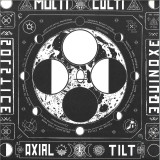
Multi Culti launch a new quarterly 12" series in step with the seasons beginning with SOLSTICE I:
Post-pandemic lockdown inspiration can be found in the great planetary balancing act that has taken place since a cataclysmic impact with an asteroid caused mass extinction and set our earth’s orbit off axis. This AXIAL TILT, or obliquity, is responsible for the seasons, and life as we know it has evolved around these unleashed forces. As our lives and for many, careers, have spun dramatically off axis as of late, we look ahead to the coming seasons, with the hope that we can weather the changes, and maintain inner stability. To aid in this quest, Multi Culti promises to deliver sonic support with utmost regularity at the peak moments of cosmic significance, with each Solstice and Equinox.
Beginning this journey are some of the label’s most beloved artists. Israeli duo RED AXES provide a chakra-elevating soundtrack with their inimitable blend of psych-garage-tronica, a sun-kissed banger that signals a long-awaited return to the togetherness of the dancefloor.
ZILLAS ON ACID turn in a robustly wiggly jam that electrifies, frazzling zaps and frenetic percussion recall the fritzy tension of the past year, a cathartic shock-treatment for traumatized dancers looking to get back to prime spine-shaking shape.
Mexico managed to stay open for the most part, and TYU seems to have not skipped a beat here, still in perfect form after breaking out as one of the hottest young producers to emerge in recent years. Dark disco, Mexi-chug, call it what you want, but the emergent genre is never better represented than here… spooky, phosphorescent tribal dance, Tulumminati-tested and approved.
Finally, the big guy - MANFREDAS - whose remixes and edits have been highlight-reel material the past couple of years, delivers a long awaited original track with his requisite heavy-weight swag. Wonky tunings and a chunky downtempo beat underpin Manny’s trademark masterful arrangement style, building patiently, with breakdowns that managed to wring every last drop of impact out of an odd, other-worldy assortment of sounds.