After taking time out to search for the right blend of carefully curated tracks, Bristol-based dancefloor futurists Innate return with a third multi-artist EP - shot through with melody, warmth and soul.
A quartet of timeless-sounding tracks full of stargazing sounds, undulating acid lines, far-sighted electronics and crackling beats, the A side kicks off with Perseus Traxx's "Drifting In Space": a loose-limbed exercise in analogue house deepness that wraps slowly shifting pads, meandering melodies and pulsating TB-303 motifs around broken house drums.
Welcoming Australian scene stalwart Ewan Jansen to the fray with "Sinders", he effortlessly blurs the boundaries between far-sighted, Motor City style techno and the kind of head-in-the-clouds analogue sounds that have always been his forte.
On the flip, Reedale Rise adds his touch with "Coral". In keeping with the brilliance of his 2018 debut album "Luminous Air", he drops a colourful, picturesque voyage into deep electro territory rich in ear-catching melodies, engaging chord sequences and crunchy machine percussion. To round, label co-founder Owain K returns with "Teifi", another ultra-deep treat: an enveloping, dancefloor excursion rich in fluttering lead lines, slowly expanding chords, vintage bass and punchy drums. A fitting conclusion to Innate's latest immaculate, eyes-closed voyage."
Suche:mo style
This time last year, The Forgotten Man launched the Noctu Recordings imprint via a superb single-sided salvo. It portrayed a producer in tune not only with dancefloors, but also the fundamentally far-sighted, intergalactic vision of Motor City techno. The good news is that this belated follow-up is arguably even better. Epic A-side "Pulsar" is a superb example of his craft; a deep and melodious voyage through shimmering pads, B12 style sci-fi melodies and crunchy machine beats. His ability to wrest every last ounce of soul from his machines is confirmed by delicious B-sides "Sky Birds of Ki" and "Beyond Sector 9", both of which fix dreamy chords and melodies to punchy electro grooves.
TERANGA BEAT proudly presents MAR SECK, a delicate singer and songwriter who marked the history of Senegalese music. TIP!A cross over between Cuban compositions and Senegalese Folklore, his songs gave birth to Salsa-Mbalax, the popular dance music of '70s Senegal that went onto influence a new generation of Senegalese musicians including a young Youssou N'Dour. Featuring 12 tracks recorded over three different sessions, ‘Vagabonde’ focuses on the best of MAR SECK’s career. The first recordings are taken from a raw and unreleased 1969 session at the Dakar National Radio. Recorded with his first group SUPER CAP-VERT from Rufisque, it captures an 18-year old MAR singing the first version of his now famous composition “Vagabonde”. The remaining six tracks from the session includes a beautiful cover of Fonseca’s “Sibouten”. A 1973 live recording is also featured here, made with the STAR BAND de DAKAR in Saint Louis. Previously unreleased, it comes from a time when MAR was establishing his name playing at the legendary Miami Club in Dakar, the “École de Passage” for all great Senegalese musicians. The final two tracks (one of them unreleased) finds MAR accompanied by the most complete band of Senegal, the NUMBER ONE de DAKAR. The 2LP & CD booklet includes photos and liner notes outlining MAR’s career. LP version comes with silk screen print, European 60s style, gatefold sleeve. All tracks are mastered & mixed from the original recording tapes.
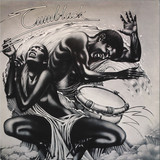
A truly special reissue of a fantastic and incredibly rare Afro-disco 12” from 1978, Tumblack - 'Caraiba/Invocation'. Originally released on the seminal French disco label Barclay, you'd be hard pressed to even find an original copy in the UK, let alone for a reasonable price, so it's high time an officially licensed, remastered reissue came around.
Taking the A side of this EP Stefano Ritteri provides a “Spaziale Version” of 'Caraiba' that seamlessly blends elements of African, Afrobeat, Funk and Disco styles, with segments that continually morph and evolve into new tracks. Irresistibly funky and percussive drumming patterns and melodies hypnotise the listener, with only the occasional outbreak of African chanting breaking up the grooves.
The B-side contains the original version of “Invocation” that is effectively one long drum track broken down into 7 segments that never drop a beat alongside the original version of 'Caraiba' in all it's glory. As EP's go, this really does take the listener on a journey to Africa, via 1978 New York, and is a true one of a kind. And for all those sample-spotters out there, there's no end of complex drum patterns and basslines to dive into.
In 2019, The Mighty Mocambos returned in fine form with their new album "2066", played a storming European tour and celebrated a colourful year delivering their own true style of funk, Afro, hip hop with cinematic compositions and storytelling.
The mean streets groove and furious drums versus car chase workout of "Golden Shadow" and the joyous instrumental stomper "Preaching To The Choir" were soon identified as DJ favourites. ... So here they are on glorious golden 7inch vinyl to jumpstart in 2020 with.
- A1: Zuzu Man
- A2: Quitters Never Win
- A3: In The Night
- A4: She’s Just A Square
- A5: Woman Is The Roo
- A6: The Ear Is On Strike
- A7: Helping Hand
- A8: Danger Zone
- A9: One Naughty Flat
- B1: Bald Headed
- B2: Mama Roux
- B3: Tipitina
- B4: New Orleans
- B5: Qualified
- B6: Loser For You Bab
- B7: One Night Late
- B8: Did She Mention My Name
- B9: Storm Warning
We are privileged to explore on this essential LP a plethora of Dr.
John's earliest and most satisfying recordings. The unique mixture of styles on display is drawn from the music he grew up listening to in the clubs of the Deep South, where he first practised his (witch) craft. The combination would impress many other musicians, including the Rolling Stones and Jools Holland, himself no mean boogie pianist.
Havazelet's story is both fascinating and mysterious. She was born in Aden, Yemen, in 1936 as Havazelet Damari, she immigrated to Israel when she was 8 years old and grew up in the disadvantaged Ezra neighborhood, in south Tel Aviv. Havazelet discovered her love for singing when she was a teen, when she would sing at feasts and family events. At one of these events she was discovered by an impresario who decided to take her under his wing.
He asked her to change her family name from Damari to Ron, as there was already a young singer called Shoshana Damari in Israel, who was becoming quite popular. In March 1960 Havazelet Ron's only Israeli album, "The Music of the Desert" was released, produced by the "Makolit" label, featuring Yemenite folk songs. Both songs on this 7" are from that album. The identity of the promoter, the album's recording date and location, and the identity of the musicians, could not be found.The album was ahead of it's time in that it introduced an innovative sound, comprised of drums, electric guitar and an organ, making it one of the first albums in Israel to record this type of composition.
... However, it confused the Israeli audience of the time: The vocals were in Yemeni-Arabic, preventing it from being played on the radio, which mainly played Hebrew music, moreover, it was too innovative and far from traditional music for the Yemenite scene. The album fell between the cracks and her big breakthrough to mainstream did not happen.
Following the album's failure, Havazelet left Israel in 1963 and went to Germany, where she performed in festivals, TV shows and recorded several more albums. All of this was made possible by her unique singing talent in five languages - Hebrew, Yemeni-Arabic, German, English and Yiddish, her impressive appearance and remarkable stage charisma. The European audience enjoyed the original music she produced and her Yemenite-style cover versions of Hebrew songs.
In 1968 Havazelet married and a year later retired from the music scene. In 1980 she returned to Israel but she left again four years later, this time to Los Angeles, where she worked as a kindergarten teacher. Havazelet Ron passed away in Los Angeles, in 2013, after a long battle with cancer. In Israel, her name is almost unknown among music lovers in general and among record collectors in particular.
Die 11 Neuen Songs Auf "everybody, Anyone" Wurden Wieder In Paul Wellers Black Barn Studios In Surrey Aufgenommen Und Von Den Beiden Stone Foundation-gründern Neil Jones Und Neil Sheasby Produziert. Selbstverständlich Ließ Es Sich Paul Weller Nicht Nehmen Auch Diesmal Wieder Mitzumischen Und Steuerte Piano, Gitarre Und Background-vocals Zu Diversen Songs Bei. Weitere Feature-gäste Sind Dr Robert (blow Monkeys), Mick Talbot (the Style Council), Hamish Stuart (the Average White Band) Sowie Die Britische Singer/songwriterin Kathryn Williams. Entstanden Ist Ein Neues, Grooviges, Songbasiertes Meisterwerk In Bester Britischer Soul-tradition. Ps: Das Streng Limitierte Cd+dvd Format Enthält Eine 31-minütige Dvd Mit Einem 12-minütigen Making-of Des Albums Sowie 3 Videoclips.
This double 10" vinyl features some absolutely enormous remixes that are not to be missed! Hamilton (Dj Ham) steps up to the plate and delivers a blisteringly dark remix of an already dark tune. Tough and rough, this one has a bassline that shakes the speakers to death and is built to last in his customary RAM records style.
Abyss gives us a glorious old skool drum and bass remix, in line with the 1994 sound, full on amen cuts, heavy sines and deep atmospherics.
Lowercase and Psycangle move the whole track into early 90's Ruffneck Records / Malice territory, with a furious old skool gabber remix, hard as nails and noisy as hell.
But perhaps the best is saved for last, because Sunny & Deck Hussy do the near impossible and take a dark tune and flip it on its head, making it euphoric and deep without losing the essential character of the original.
Club / DJ Support
Shimon, Andy C, Randall, Ray Keith, Chase 7 Status, Zinc, Jack Frost, Billy Bunter, the Fat Controller, Glowkid, Slipmatt, Dj Jedi, Dj Luna-C, Dj Brisk, Clayfighter, Jimni Cricket, Bustin, Sc@r, Doughboy, Saiyan, Dave Skywalker, Liquid, Hyper On Experience, Ant To Be, Ponder and many others
After their successful cooperation in the band Arbeit Adelt! Dani Klein and Willy Lambregt started Vaya Con Dios, together with contrabass player 'Dirk Schoufs'. All three musicians shared the same passion for jazz, opera & gypsy/Balkan music, a combination of music styles that was hardly known in Belgium at the time.
Vaya Con Dios (Spanish for Go with God!') stood out for its mixing of these styles, as well as the distinctive voice of lead singer Dani Klein. He's one of the most successful Belgian music acts ever, having sold more than 7 million albums and more than 3 million singles.
Night Owls is the second studio album by Vaya Con Dios, originally released in 1990. The album was certified platinum in several countries, including Germany, France, The Netherlands and Belgium.
The album spawned several international hit singles like Nah Neh
Nah', What's A Woman' and Night Owls'.
As part of the Brewed In Belgium campaign, Night Owls is available as a limited, numbered transparent vinyl edition.
'All We Are' & 'Alex Kapranos' Both Have History With Speedy Wunderground. Label Boss 'Dan Carey' Produced Awa's Shimmering Self-titled Debut Album & Also Franz Ferdinand's Third Long-player Tonight: Franz Ferdinand. For The Latter Carey Also Created A Dub Remix Version Of The Entire Album Called Blood, Tapping Into His Love Of Dub And Earlier Work With Artists Like Lee Scratch Perry And Mad Professor.
In True Speedy Style This New Collaboration Came About Completely Off The Cuff. Kapranos Came To The Speedy Wunderground Stage At London's Label Mates Festival At Moth Club In Late Jan To See An Artist He Had Been Working With Play. All We Are Were Also On The Bill, And After Chatting With The Band And Dan They Invited Alex To Come To The Speedy Session They Had Planned With The Band Two Days Later At Dan's Studio In Streatham.
Once In A Room Together The Music Came Fast. The Remainder Of The Day Was Spent Forming Lyrical Ideas. All Present Including Carey Contributed, Jotting Down Ideas, Excerpts Of The Days Phrases And Conversations And Putting Them Together In True William Burroughs Cut-ups Style. 'It Was A Way To Detach From Conventional Song Subject-matter' Says Kapranos. All We Are Agreed, 'The Writing Process Was A Lot Of Fun And For Us A Completely Fresh Way Of Looking At It.'
... The Resulting Track 'Heart Attack' Is A Skittering Disco-post-punk Jam. Equal Parts Of All Their Day Jobs Form Something Fresh, With Echoes Of Talking Heads And Alex's Unmistakable Vocal Delivery Over The Top. 'The Speedy Tracks Are Always Such A Good Vibe And The Studio Is Such A Special Place' Say All We Are. Kapranos Adds, 'as I Think Is Typical For The Label, Nothing Existed In The Morning When We Got Together, And Then Suddenly Everything Was Completed And Recorded By The Time We Went For A Pizza In The Evening.'
- Get Out Of The K-hole. Get On To The Beach.
‘I Want You To Be Mine’ has all the hallmarks of classic 1960’s Rocksteady, an era which many refer too as the Golden Age of Jamaican music. Over the top of a live one-drop beat, cool & deadly sax and warm analog guitar & bass Deemas J rides the riddim in a ‘old time style & fashion’ whilst Rachel Wallace provides the perfect accompaniment with her gorgeous vocal. On the B-Side we have the deeper cut ‘Questions’, where Deemas delivers a poignant poem over Adam Prescott’s moody instrumental in the style of Linton Kwesi Johnson. Featuring live instrumentation from Harry ‘Papa B’ Bradford (Sax), Clifford Junior (Guitar) & Guillaume Metenier (Hammond Organ). As an integral part of the Reggae Roast Soundsystem team Adam has established himself as one of the finest selectors in the world. Initially with some early support and guidance from Mark Iration (from the Leeds based Iration Steppas), Adam was quickly recognised as one of the key players in the re-emergence of British Reggae, producing first class original songs featuring the likes of Cornel Campbell, Macka B, Sugar Minott, Ranking Joe, Rod Taylor, Johnny Osbourne & Earl 16 to name but a few. Add to that consistent play on BBC Radio One & Rinse FM plus huge support from Sir David Rodigan, featuring Adam on his ‘Best Of British’ show on 1Xtra, Adam has become one of the hottest prospects in the revival of soundsystem music. Deemas J has built a formidable reputation as a go-to MC & vocalist with equally genre-busting credentials; His background in Reggae & Jungle means that his lyrical skills and style holds no bounds. He currently works with 3 of the top London Reggae Soundsystems, Unit 137, Reggae Roast & Solution Soundsystem as well as running his own Sound Limey Banton Bass in Guernsey. He has released music on some very well known labels such as Irie Ites, Irish Moss & Tru Thoughts, which released the cult LP ‘Wrongtom Meets Deemas J in East London’. More recently his latest release ‘Muhammed Ali’ received fantastic support from Don Letts, Sir David Rodigan & Ras Kwame. His virtually endless CV boasts collaborations with everyone across the worlds of Drum & Bass, Old School, Garage, Reggae and Hip hop, including High Contrast, Andy C, DJ EZ and Nick Manasseh to name just a few as well as touring the world with Manudigital
- A1: Pinta Manta - António Sanches
- A2: Dia Ja Manche - Dionisio Maio
- A3: Morti Sta Bidjàcu - José Casimiro
- A4: Pontin & Pontin - Bana
- B1: That Day - Fany Havest
- B2: Odio Sem Valor - Pedrinho
- B3: Mino Di Mama - Quirino Do Canto
- B4: Mundo D'margura - Tchiss Lopes
- C1: Po D'terra - Joao Cirilo
- C2: Corre Riba, Corre Baxo - Abel Lima
- C3: Ilyne - Os Apolos
- C4: Sintado Na Pracinha - Americo Brito
- D1: Capchona - Elisio Vieira
- D2: Djal Bai Si Camin - Antonio Dos Santos
- D3: Stebo Cu Anabela - Abel Lima
repress
2LP 140G VINYL + 12 PAGE BOOKLET.
"Space Echo - The mystery behind the "Cosmic Sound" of Cabo Verde finally revealed!" is the 20th release by the fabulous Analog Africa Label.
In the spring of 1968 a cargo ship was preparing to leave the port of Baltimore with an important shipment of musical instruments. Its final destination was Rio De Janeiro, where the EMSE Exhibition (Exposição Mundial Do Son Eletrônico) was going to be held.
It was the first expo of its kind to take place in the Southern Hemisphere and many of the leading companies in were all eager to present their newest synthesisers and other gadgets to a growing and promising South American market, spearheaded by Brazil and Colombia.
The ship with the goods set sail on the 20th of March on a calm morning and mysteriously disappeared from the radar on the very same day.
One can only imagine the surprise of the villagers of Cachaço, on the Sao Nicolau island of Cabo Verde, when a few months later they woke up and found a ship stranded in their fields, in the middle of nowhere, 8 km from any coastline.
After consulting with the village elders, the locals had decided to open the containers to see what was inside - however gossip as scintillating as this travels fast and colonial police had already arrived and secured the area.
Portuguese scientists and physicians were ordered to the scene and after weeks of thorough studies and research, it was concluded that the ship had fallen from the sky. One of the less plausible theories was that it might have fallen from a Russian military air carrier. The locals joked that again the government had wasted their tax money on a useless exercise, as a simple look at the crater generated by the impact could explain the phenomena. "No need for Portuguese rocket scientists to explain this!" they laughed.
What the villagers didn't know, was that traces of cosmic particles were discovered on the boat. The bow of the ship showed traces of extreme heat, very similar to traces found on meteors, suggesting that the ship had penetrated the hemisphere at high speed. That theory also didn't make sense as such an impact would have reduced the ship to dust. Mystery permeated the event.
Finally, a team of welders arrived to open the containers and the whole village waited impatiently.
The atmosphere, which had been filled with joy and excitement, quickly gave way to astonishment. Hundreds of boxes conjured, all containing keyboards and other instruments which they had never seen before: and all useless in an area devoid of electricity. Disappointment was palpable. The goods were temporarily stored in the local church and the women of the village had insisted a solution be found before Sunday mass.
It is said that charismatic anti-colonial leader Amílcar Cabral had ordered for the instruments to be distributed equally in places that had access to electricity, which placed them mainly in schools.
This distribution was best thing that could have happened - keyboards found fertile grounds in the hands of curious children, born with an innate sense of rhythm who picked up the ready-to-use instruments. This in turn facilitated the modernisation of local rhythms such as Mornas, Coladeras and the highly danceable music style called Funaná, which had been banned by the Portuguese colonial rulers until 1975 due to its sensuality!
The observation was made that the children who came into contact with the instruments found on the ship inherited prodigious capabilities to understand music and learn instruments. One of them was the musical genius Paulino Vieira, who by the end of the 70s would become the country´s most important music arranger. 8 out of the 15 songs presented in this compilation had been recorded with the backing of the band Voz de Cabo Verde, lead by Paulino Vieira, the mastermind behind the creation and promulgation of what is known today as "The Cosmic Sound of Cabo Verde".
The field of electronic music were involved. Rhodes, Moog, Farfisa, Hammond and Korg, just to name a few.
Cititrax presents a full length LP by a new duo called Tornische. Julio Tornero and Hanna Chamiarytskaya (aka Anneq) got together in Madrid after having met through mutual friends. Immediately, they bonded and found a musical chemistry between them. They went into the studio and began revisiting Julio's unreleased archives, incorporating what he had already recorded years ago with fresh sounds and Neu Deutsche Welle style duets. The result is a modern, chaotic, take on 80s European new wave, 90s detroit electro, and contemporary indie pop. The energy level is always high, the melodies are catchy and the vocal delivery and lyrics futuristic, subversive, italo-disco / punk, and surreal. A special album, this one is line with Medio Mutante's classic debut EP, 'Inestable' (2008) and not unlike the pioneering sound of Liaisons Dangereuses.
The vinyl will be pressed on 160 gram ultra clear and limited to 500 copies. The record is housed in a PVC printed sleeve, with a neon graphic designed by Peter Miles. The back features an image by Nastya Porukevich along with the track titles and album info.
The hyper talneted Stellar Om Source (NOT NOT FUN, RVNG, NO 'LABEL) blowing up new styles on this one!
"If there is one thing that leaps out from Stellar OM Source’s music, it is the sense of a highly active mind at work. There is an indivisible feeling that a real person is behind this dynamic flurry of tones, waves, vibrations and modulations. On I See Through You, the first full Stellar OM Source release in over four years, the spark that first LP piqued the interest of so many listeners is glowing stronger than ever.
In the 2010's, Christelle Gualdi carved a name as one of the most essential live electronic musicians around, dazzling dancers and home listeners in kind with her bombastic, acidic hardware jams. Circumstances outside her control forced a stop for the Stellar OM Source project. It was touring, including two shows in the summer of 2019 at Dekmantel Festival and Listen! that Gualdi credits as year highlights, which proved to be the integral jump-start to the engine.
Inspiration came rushing back thanks to the human connection of performing. Seeing a younger generation connect with her put fresh charge into the circuitry of her gear. All this accrued into new material on the road, and thus I See Through You was born.
The spirit of 2013’s cult favourite Joy One Mile is alive and well on I See Through You. There is once again immediacy, urgency and lust. But Stellar OM Source stepping into a comparatively more poppy and playful mode on these four tracks could also throw some. Fundamentally she says, it comes from a similar place, and ends with an enmeshed and positive outcome. Gualdi credits both “1995 rave” and “the clarity, bass and breath” of hi-def hip-hop productions as being twin northern stars for her to follow.
The artwork comes from friend and highly respected photographer & director Pierre Debusschere, whose work similarly flits between arresting close-ups and, well, the widescreen luxe of Beyoncé videos. “I’m definitely not a purist anymore,” Gualdi laughs – and with club-ready impact meeting human warmth, this shows in abundance.
“Night Alone” wastes no time in getting the listener up to speed. Is that an LFO sample running through “Night Alone”? Is this a lost Metro Area classic? Is that Stellar OM Source taking a diversion into searching Ibiza-rousing vocal for a moment, or did we imagine that in a heat haze? Where are the kicks? Oh there they are. How many elements are buried and revived within just over five minutes?
It’s hard to tell. Before we know it, “Lost Codes” is up and away, keeping pulses racing. A pitter-patter of baby kicks feel like a pre-tremor before a welting electro-Italo lead crashes into play. With fizzing energy, rasping synths and a frisson of danger, fans of Unit Moebius and The Hacker will be doing somersaults of joy.
“White Echoes” wastes kicks off the flip side with low gurgles descending briefly like a UFO reverse parking into the spot SOS had vacated. Soon, 303s are twisting like Chinese burns while warm chords offer a salve. The mood maintains on “Wild Palms”, the only song on this record not to feature additional mixing work from Peaking Lights’ dub-wise sensei Aaron Coyes.
True to form, the B2 is all Stellar: elements switching up and out, with all the fun and frenzy of capital-L Live action. Kick drums and bassline darting back and forth like a synchronised swimming routine, all elements in concert. The momentum of a runaway mine cart that you can’t help but strap yourself to. I See Through You is one for the dancers who have given Stellar OM Source the motive to move forward once again."
Two years after an acclaimed first album, Al Sunny and Favorite Recordings proudly present Planets, carrying on their collaboration and bringing it to another level.
Al Sunny is a young and talented singer/musician/composer emerging from the French soul music scene. During his conservatory studies, he refined his knowledge and confirmed his desire to write and compose. He quickly matured the music that he truly loves, inspired by artists such as Tim Maia, America, Al Green, and Al Jarreau. Giving birth to the majority of his compositions through his guitar, he always seeks to bring his songs’ melody to the forefront. During his studies he kept experiencing live performing on different scenes and confirmed his choice for a musical career, while also meeting many brilliant musicians, including Florian Pellissier, who later introduced him to Pascal Rioux and Favorite Recordings.
It resulted in 2017 in Time to Decide release, a dazzling first album establishing Al Sunny’s music and writing style, looking towards the 70s and 80s Westcoast movement, infused with Blue-Eyed-Soul, Pop and Folk flavors. Built on the same influences, Planets is made of 8 new compositions (including a CD and digital bonus), and is clearly a continuation of its cadet, asserting Al Sunny’s talent and singing skills.
Fully recorded live and analogic in Paris, this new album also stands out by an impressive level of production, faithful to some classics of the genre. Mixing catchy melodies, soulful vocals, warm and heavy bass, strong beat and beautiful guitars and keyboards harmonies, Planets just perfectly meets the AOR and Modern-Soul golden era standards.
A chance meeting in a New York club led to the conception of Mowgan’s debut album, in collaboration with renowned African Benin-born Nigeria raised singer and multi-instrumentalist, Kaleta (Leon Ligan-Majek) an ex Fela Kuti, Sunny Ade, Lauryn Hill cohort who also fronted Akoya Afrobeat Ensemble and presently heads up a 70s style afro funk band called Super Yamba based in NYC.
The Frenchman was working at Lina Frey when he overheard a Beninese salsa singer called Laurent Hounsavi channeling Afro-centric vibes through his performance. He approached the singer and was put in touch with Kaleta, who lives in the Big Apple, too. What happened next was pure magic, as the two men got to work in the studio to bring their two worlds together.
It’s the kind of mystical alchemy that only happens once in a blue moon; Kaleta was given carte blanche over Mowgan’s extensive collection of Africa-inspired electronic instrumentals.
He selected his favourites and performed on each one, delivering an original vocal, and his own guitar licks, over the top. To stir up even more electrifying vibes, Kaleta also invited several of his talented friends to join the recordings sessions - they included vocalists Shade Myers Emmanuel, Justin Masters and Gbenga Wise, Freddie Deboe on sax, Mic Dada assisting Mowgan on synth pads and Takuya Kuroda, the infamous Japanese trumpet player from Kobe who specialises in neo-soul, hip hop and electronica.
The result is ‘Karoussel’, a vibrant, dynamic, soul-enriching hybrid between electronica and deep African musicality that sets the standard for contemporary collaborations between western and African artists, and the first in a series of album projects from Mowgan on his fledgling label Mow Records...
They Say: “Driving brass and sax ensemble over funky rhythm section, playing tracks of various feel and style”.
We say: From the Lincoln Continental that memorably adorns the cover to the tranquil funk contained within, this glowing ode to the grooving force of 70s American soul music is ice cool all over. With brilliant contributions from the Three Key Alans™ (Hawkshaw, Parker, Tew) as well as Mike Moran, Les Hurdle and Keith Roberts, this is driving music for only the vibiest cats.
Originally released in 1976, The All American Powerhouse is one of the very best of the Themes library releases. It’s killer. A feast of dramatic jazz, horizontal, melodic funk and bouncing sunshine-y West-Coast feels throughout, there also lurks an intense injection of the Blaxploitation sound. Understandable, given the subject matter and year it was released.
Highlights include Alan Parker’s confident, horn-heavy wah-wah-fuelled album-opener “Sweeny Todd”, Hawkshaw’s graceful “Getaway” glide and dramatic, breathless “Speed Run”, Mike Moran’s loose, organ-driven propulsive B-Boy classic “The Pick-Up” and Keith Roberts’ percussive tour de force “Overide” that closes out the LP.
Yet, perhaps the most significant track here is Les Hurdle’s long-adored “Soul Train”. A grooving, bass-heavy library classic, it’s all swirling strings, stabbing horns, heavy open drums and melodic funk-rock guitars. Add in the funky clavinet, and the combination works beautifully.
As with all of our other Themes re-issues, the audio for The All American Powerhouse comes from the original analogue tapes and has been remastered for vinyl by Be With regular Simon Francis. We’ve taken the same care with the sleeves, handing the reproduction duties over to Richard Robinson, the current custodian of KPM’s brand identity.
“Osondi owendi. What is cherished by some is despised by others. One man’s meat is another man’s poison. Different strokes for different folks. To each their own. Osondi owendi.
It’s a conventional aphorism in the Igbo language but if you utter the word “osondi owendi” in Nigeria today, the first thing that comes to anybody’s mind is the cucumber-cool highlife music maestro Chief Stephen Osita Osadebe and his legendary album that takes its name from the adage. Released in 1984, Osondi Owendi was instantly received as Osadebe’s magnum opus, the crowning event of an exalted career stretching back to the early years of highlife’s emergence as Nigeria’s predominant popular music.
Stephen Osadebe first appeared on the music scene in 1958 as a spry, twenty-two year-old vocalist in the Empire Rhythm Skies Orchestra, directed by bandleader Steven Amechi. With his dapper suits, urbane Nat King Cole-influenced vocal stylings and jaunty, uptempo, calypso-scented dance tunes, he personified the frisky spirit and anxious aspirations of a young, educated generation that had come of age in the wake of the Second World War, in a Nigeria that was rapidly shaking off British colonization and marching towards an independent future. 1959 would be the year that he truly made his mark in the business with his debut solo single “Lagos Life Na So So Enjoyment.” A giddy exhortation of the music, sex, fun and freedom availed by life in the big city, the song became a sensation and an anthem, and Stephen Osadebe became the leader of his own popular dance band, the Nigerian Sound Makers.
Osadebe would ride this wave of acclaim through most of the nineteen sixties, but a change in direction would be called for at the dawn of the seventies. As Nigeria emerged from a devastating civil war, so did a new generation of youth inspired by rock and funk, confrontational sounds reflective of a more violent, less idealistic era. All of the sudden, the idioms of the post-WWII dance orchestras that nurtured Osadebe’s cohort seemed quaint, the stuff of nostalgia. Osadebe needed to evolve to respond to the new tumultuous, turned-up times.
His response? He cooled it down.
Abetted by a new crop of fire-blooded young players, Osadebe slowed his music to a mellow, meditative tempo, brought forward the lumbering, Afro Cuban-accented bass and percussion, from the rockers he borrowed searing lead lines on the electric guitar. Over this musical bedrock, doesn’t so much as sing as he dreamily muses, coos, sighs aphorisms, words of wisdom and inspiration. “When one listens to my music, all I say appears meaningful,” Osadebe explained his lyrical approach, “at times they are in the form of proverbs which provoke much thought afterwards.” The result is a blend that is both rollicking and soothingly languid. Osadebe christened the style Oyolima—a tranquil, otherworldly state of total relaxation and pleasure. Osondi Owendi represents oyolima at its finest, and possibly Nigerian highlife in epitome.
Osondi owendi. What is cherished by some is despised by others. In some way, the album’s title constitutes a paradox. Because Osondi Owendi is a record that it’s almost impossible to imagine being despised by anybody."
Amadeo Savio is next up on Vigenere, the label that has thus far presented a whole host of unknown names in the field of minimal techno all bound together by a shared classiness in their production style. Savio's approach is deep and dubby on opening cut "Isolat", one primed for the after hours. "Trance Later" has a slightly more forthright approach, but there's still plenty of mellow delights to be found in the synth department to keep you chilling. "Encor" heads into more typically minimal pastures, while "Kassion" explores broken beat patterns and fragmented samples with scintillating results.