Shelly y Nueva Generación was a cult Spanish soul and garage band that left an indelible mark on the late 1960s music scene. Their rare 45s, now classic DJ spins in the mod/psych 60s scene, boast a funky Le Beat Bespoke style freakbeat sound. Three singles were released on Philips between 1968-69, including their stunning take on Nonato Buzar's 'Vesti Azul' and the outstanding original 'I'm Just a Fool', as featured on Ivan Zulueta's cult film "Un, Dos, Tres, Al Escondite Inglés". This long-awaited release unveils their complete discography plus many unreleased recordings unearthed from lost tapes now seeing the light of day for the first time! It comes with a 8-page booklet with extensive notes and rare photos of the artists. This compilation stands as both a celebration of the band's legacy and a rediscovery of the timeless allure that made Shelly y Nueva Generación an enduring force in the annals of Spanish music history.
Search:mod it
REISSUED ON GLACIAL BLUE VINYL! Papercuts' You Can Have What You Want is the third phase in Jason Quever's ongoing pop investigations. The relatively earthbound happy/sad pop of Mockingbird and Can't Go Back has been launched into the vault of the skies. Here, Quever delves further into epic dream-pop using mostly vintage organs, pulsing bass, and Kraut-via-Ringo-inspired drum rhythms. Intact from those earlier efforts is Quever's sense of arrangement and drama, as well as his soaring vocals, draped in reverb gauze. The words reveal a fascination with mortality and things cosmic, while sonically the voice acts as another instrument. This obsessively all-analog effort (no computer processing here whatsoever!) cuts across several eras of dreamy sound: '80s/'90s Creation and 4AD Records, The Zombies, '60s French pop, even Can's Future Days--and then there's the inevitable connection to former tourmates Beach House and Grizzly Bear. Indeed, Beach House's Alex Scally helped with some of the arrangements, though You Can Have What You Want is its own strain of addictive pop. For many, it will be the blissful/melancholy jam of the spring and summer. Quever was raised on a commune in Humboldt County, orphaned, and moved up and down the West Coast before calling San Francisco home and starting Papercuts, initially as a four-track recording project. When not performing with his own band, he can often be found recording others in his studio and filling in when needed as a multi-instrumentalist in friends' groups. "It takes a few seconds of Papercuts' second album, Can't Go Back, to think that maybe you've stumbled upon something special, a delicate mood piece made to slice through the din and chaos of modern life." --Pitckfork (8.3 rating
Stellen Sie Ihren Shoegaze-Modus ein und stürzen Sie sich in diese überdimensionale Wolke aus ätherischem Dream Pop. Inspiriert von der Flut britischer Bands mit wirbelnder Verzerrung und erdrückender Lautstärke, spielten Ozean aus San Jose in ihrer kurzen Existenz nur zwei Konzerte und lösten sich auf, bevor die Scene That Celebrates Itself jemals die Siliziumgrenze durchbrach. Die selbstbetitelte Demokassette des Quartetts aus dem Jahr 1993 wurde neu gemastert und mit 45 Umdrehungen pro Minute gepresst, ein zeitloses Dokument spätpubertären Staunens und Experimentierens.
Stevie Ray Vaughan's third studio album Soul To Soul was released in 1985, just two years after his massive debut Texas Flood. Moving more into a soulful R&B-tinged blues sound, Stevie included two new band members on keyboard and saxophone for Soul To Soul. The band know their way around a number of cover versions of songs penned by Hank Ballard, Doyle Bramhall, and Willie Dixon, bringing a variety of influences into SRV's brand of modern blues. His own compositions such as “Say What”, “Ain't Gone 'N' Give Up On Love” and “Life Without You” reveal an artist that is ever passionate in delivering real blues, and growing in his songwriting at the same time.
Soul To Soul is available as a limited edition of 1500 individually numbered copies on blue marbled vinyl.
Rachika Nayar's fragments is a collection of sonic miniatures constructed from guitar loops and in the familiar comforts of her own bedroom. First released as a limited edition cassette by RVNG Intl's Commend THERE imprint in 2021, fragments (expanded) adds an entire new side of previously unreleased music to the collection, which has been newly mastered by Rafael Anton Irrisari. While growing up and developing a relationship with the instrument and her capabilities, using delay pedals to improvise layered guitar pieces evolved from a practice into a deep source of self-exploration and restoration for Nayar. On Our Hands Against the Dusk, Nayar's debut album released earlier this year, the guitar is present but processed, synthesizing with the surrounding instruments and often transforming beyond recognition. Like Our Hands, the form of fragments remains complex, informed by virtuosic, dexterous guitar playing, but the collection of sound retains a sense of primitivism, and represents a new experience for Nayar in sharing such an intimate part of her creative practice. Nayar views this practice as a constant companion. The cyclical, meditative quality of exploring loop-based expression is a means for Nayar to cleanse her creative space, and provide a psychological architecture in her home where she can "access my heart and cultivate some kind of internal movement in times of stasis." The pieces on fragments also pay homage to influences on Nayar's guitar technique, ranging from Pat Metheny's interpretations of Steve Reich's Electric Counterpoint to emotive Post/Math-Rock crossovers like Don Caballero and Toe. fragments is not only a document of Nayar's domesticity and the preliminary writing processes that evolve into song, but also a measurement of memory and spiritual realignment. Much like the metaphorical models of past homes through which Ted Kooser wanders in his essay Small Rooms in Time, Nayar uses fragments to preserve the moment, both fleeting and indelible, through its connection to place, in unchanging, raw detail. fragments provides an intimacy between Nayar and those listening in parallel spaces, activating our collective past and shared unconscious experience. Rachika Nayar's fragments (expanded) will be available in LP and digital formats from RVNG Intl. on April 7th, 2023.
- A1: Joya 00 00:48
- A2: De Frente Pro Crime 00 01:53
- A3: Pesadelo 00 02:55
- A4: Pelo Telefone 00 01:23
- A5: Pede Passagem 00 02:40
- A6: Marcha De Iv Feira De Cinzas 00 02:50
- A7: Opinião 00 01:02
- A8: Chora Doutor 00 01:04
- A9: Quatorze Anos 00 02:34
- B1: A Historia Do Samba 00 01:09
- B2: O Trem Atrasou 00 01:03
- B3: Radiopatrulha 00 00:36
- B4: Acorda Amor 00 02:16
- B5: Mudando De Conversa 00 00:26
- B6: Fado Tropical 00 02:11
- B7: Bodas 00 03:19
- B8: Viola Fora De Moda 00 01:43
- B9: Passarinho 00 01:58
In 1975, Joyce Moreno, who had just wrapped up a tour with legendary Brazilian composer Vinicius de Moraes, found herself in a studio with producer Sergio Bardotti in Rome, Italy. She had been taking a break from writing and she decided to pick up a selection of her favorite compositions from contemporary Brazilian writers who‘s songs were beacons of hope in times of an ongoing intense Military leadership in her home country. Unlike their previous albums, these recordings live from their reductiveness and intimacy. For a long time, Passarinho Urbano was considered a secret masterpiece and was highly sought after by record collectors, now Week–End Records is glad to be making it available internationally on vinyl for the first time ever.
tapetopia 006 In 1983, some more subdued sounds began to waft from the GDR punk underground into the second half of the ’80s. At five to the end of time, it was perpetually striking midnight and the occasional punk band would mix a little laudanum into their potential for aggression. Portents in this vein preceded a dark wave whose foamy crest would break on fog walls of dry ice. Especially in Leipzig and East Berlin, a chain-rattling zeitgeist produced bands that drew from a dark well. Many of these bands arose from the still hot or already cold ashes of punk. The two founding fathers of Neuntage Alt, René Glofke and Taymur Streng (nicknamed “Strangler”), knew each other from the East Berlin punk scene. The third man aboard, Mike Sauer, played drums in the early 1980s for Sendeschluß, a punk band that, lost in thought somewhere in the no-man’s land between punk and post-punk, faded away in 1984. Punk was no longer the order of the day, but it was a form of expression among many and easy to combine. Glofke and Streng found common ground in experimental set-ups with such otherworldly names as Medusa Brahma or Die zeitweilige Erscheinung.
From this far-flung point of departure, a short tunnel led straight into the black light of Neuntage Alt, the coldest star in the low-hanging sky above East Berlin. Neuntage Alt appeared at the end of 1986, during the last blackout phase of the GDR, on the threshold between the underground and the so-called “other bands” – a scene that used the non-socio-critical approach of German Wutwave (“anger wave”) in order to be allowed to perform publicly. In the context of this scene, Neuntage Alt did not belong to the inner circle. Moreover, the band’s subcultural base was initially in Mahlsdorf, on the south-eastern edge of East Berlin. This was where the DIY sound studio of amplitude apostle and great modulator Taymur Streng was situated. Strangler held the position of house electrician and keyboard god in various projects. One of them had the bland alias Mahlsdorfer Wohnstuben Orchester, behind which the avant-garde court chapel of the bungalow studio was concealed. There Taymur also conspired with the East Berlin underground band Ornament & Verbrechen (tapetopia #001). Ronald Lippok of Ornament & Verbrechen remembers how once, at the opening of a joint session, he and his brother Robert attended Taymur’s engaging slide show of his collection of test patterns. Afterwards, they created a piece with the psychedelic title “Das sentimentale UfO”, which sheds an iridescent light on the bizarre atmosphere in the studio. Taymur’s obsession with technology was legendary. The home studio was also his living space; a circuit, a machine park of screwed and soldered equipment, a single keyboard orgy. His own creations were also based on circuit diagrams found in the radio amateur magazine “Funkamateur”. Its somewhat clueless subtitle “Praktische Elektronik Für Alle” (Practical Electronics for All)
2024 Repress
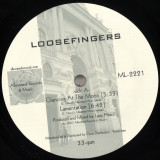
Alleviated Records is proud to present the re-issue of the "LooseFingers" EP and to introduce (or re-introduce for some) the original name that Larry recorded under before it was modified to Mr. Fingers in 1985. This EP contains 3 great selections. First the romantic and soothing mid-tempo "Glancing At the Moon." If you enjoyed selections like "What About This Love" or "Children at Play" from Larry, this will most likely be to your liking. Next up, "Lamentation" a more experimental and tracky kind of tune that should provide an enjoyable experience for DJ's and people who like harder dance flavors. The "B" side gives us "Deep Inside." Larry's mellow vocals are featured along with Atlanta talent, Justin Chapman from KemeticJust on guitar. If you enjoy quality soulful deep-house music with jazzy influences, you will most likely want to add this EP to your collection of Larry Heard releases. Enjoy!
Over the course of five albums, Manchester based trumpeter, composer, arranger and band-leader Matthew Halsall has carved out a niche for himself on the UK music scene as one of it's brightest talents. His languid, soulful music has won friends from Jamie Cullum and Gilles Peterson to Jazz FM and Mojo as well as an ever-growing international following. His new album Into Forever, puts the spotlight on Halsall the composer, arranger and producer. Halsall draws on a diverse range of influences from Alice Coltrane, Dorothy Ashby, Phil Cohran and Leon Thomas to the more contemporary sounds of The Cinematic Orchestra, Max Richter and Nils Frahm to deliver his most complete recording to date. Into Forever features renowned Manchester based soul poet Josephine Oniyama and rising star vocalist Bryony Jarman-Pinto (Werkha) as well as regular collaborators, flautist Lisa Mallett, harpist Rachael Gladwin, koto player Keiko Kitamura, pianist Taz Modi, bassist Gavin Barras and drummer Luke Flowers (The Cinematic Orchestra) and two percussionists Sam Bell and Chris Cruiks. The result is arguably Halsall's finest record, asublime melding of stripped back soulful funk and deep, minimalist, spiritual jazz, that will take you on a journey deep into forever!
Obscure digi dub gem from 2010 by French one-of-a-kind vocal scientist Pupa Jim, available on wax for the first time since its initial short run 14 years ago.
Programmed by the Maffi crew, the Copenhagen riddim experts of the myspace era, this relentless 7″ module aged oddly well, with its futuristic AI-theme and timeless simplicity.
Jahtari main electrician disrupt is taking a closer look into the strippped down riddim schematics on the flip side, kicking it with a minimum set of transistors to wreak maximum havoc dubwise.
Causa Sui's three volumes of Summer Sessions are back in print! This time on the band's own label, on individual LPs for the first time since they were first released in 2008 and 2009. Re-packaged in El Paraiso's signature style. Originally the Summer Sessions were intended as a side project for the band - a chance to explore their love for other genres such as American free jazz, krautrock, 1970s soundtracks, as well as the psychedelia and detuned stoner-rock that characterized Causa Sui's first two albums. But these three albums came to define the band, and have become modern classics of psychedelia and progressive rock since their initial release ten years ago. In a scene often characterized by loyalty to a specific period, there's something refreshing about Causa Sui's eclectic approach. With several guest appearances by Coltrane-devotee Johan Riedenlow on sax and electronics wiz Rasmus Rasmussen, Causa Sui venture far beyond stoner-rock platitudes. Take the grandiose opening statement for example - the 24 minute "Visions of Summer" taking up the entire A-side: here new and old sounds dissolve in a mindbending excursion that recalls Future Days-era Can, breezy tropicalia or Herbie Hancocks Mwandishi group, as much as it sparks associations to Kyuss or Hendrix. Other tracks, such as the frenetic Rip Tide (vol. 2), heads into straight up free jazz territory with Riedenlow going absolutely bonkers on the sax. But this set also allows plenty of room for atmospheric pieces such as the sun-drenched "Venice by the Sea" (vol. 3) or the Morricone-esque "Cinecitta" (vol. 2).
Stellen Sie Ihren Shoegaze-Modus ein und stürzen Sie sich in diese überdimensionale Wolke aus ätherischem Dream Pop. Inspiriert von der Flut britischer Bands mit wirbelnder Verzerrung und erdrückender Lautstärke, spielten Ozean aus San Jose in ihrer kurzen Existenz nur zwei Konzerte und lösten sich auf, bevor die Scene That Celebrates Itself jemals die Siliziumgrenze durchbrach. Die selbstbetitelte Demokassette des Quartetts aus dem Jahr 1993 wurde neu gemastert und mit 45 Umdrehungen pro Minute gepresst, ein zeitloses Dokument spätpubertären Staunens und Experimentierens.
Modern funk meets house on Moniquea's 'Red Light,' produced by XL Middleton. Bouncy synth bass and leads give this one a recognizably west coast feel, but the pulsating house beat and detuned chords give this one appeal for dance floors everywhere. The '97 Remix on the b-side nods to Moniquea's g-funk roots while the bonus Applejac remix of 'Hate To See It blends dance-oriented sensibilities with thick synth strings that hearken back to peak-era Neptunes productions from the 2000's.
Revision of new beats on the horizon
Every 20 years or so, certain musical movements come full circle. Young musicians are inspired by genres dating back two decades, channelling them through their modern sensibility. The legendary J Dilla’s Donuts album was released in 2006 and instantly marked a starting point for the work of musicians worldwide, laying the foundations especially for the beat scene in Los Angeles. A whole young generation of musicians brought up on the new, instrumental and abstract hip-hop has carried jazz into a new era. The four London-based musicians who make up Uniri have gone one step further by abandoning the idea of a jazz band and "bedroom production" in favour of collective composing, creating a new look at the new-beat aesthetics, framing it as a road novel set in an unspecified time and space.
Uniri translates as ‘one unified dream’ and is the key driving motto of the project conceived by Chiminyo (Cykada, Maisha), the band's founder and head honcho. The project materialised in his private studio, where he invited fellow jazz musicians Amane Tsuganami (Jorja Smith, Maisha), Al Macsween (Nubya Garcia, Gary Bartz, Kefaya) and Luke Wynter (Nubyan Twist, Golden Mean) to spontaneously compose together. Hence, despite this being the band's first album, it wouldn't be right to call them rookies. The result of Uniri's collaborative work is the psychedelic, rhythmic album Infinite Reflections, packed with cosmic and warm synths, which neatly balances hip-hop beat and jazz composition. It's safe to say this music is even more appealing when played live, although it's equally suited to the club dancefloor.
UK Jazz has become a permanent fixture in the London landscape, but also across Europe and the US. Today, the musicians who shape the new wave of jazz are drawing on more and more genres, reducing solo improvisation for the benefit of composition and increasingly drawing on influences from the beat scene. Among such formations are the British NOK Cultural Ensemble, the Polish Błoto, the Belgian ECHT!, and the Dutch Comité Hypnotisé. Uniri is part of this emerging yet already international trend, creating an entirely fresh aesthetic that echoes artists such as Flying Lotus, Samiyam, Dorian Concept, Ras G and Nosaj Things oriented around the Californian 'new beats generation' scene.
The title Infinite Reflections alludes to a phenomenon observable on the open sea or during intercontinental flights. Gazing at the horizon blurs the boundary between the ocean and the sky, forming an infinite palette of blue shades. This inspiration sparked an elusive musical narrative, navigating between a sea voyage and an astral journey, destination unknown.
X-Ray Ted's 'Talkin' EP' finally gets the vinyl outing it deserves, a format that this classic was always destined to fit so well on. On the A-side, 'Talkin' layers strings, horn hooks, and guitar licks over a bed of rolling beats and bass, all topped with that soul-infused earworm of a vocal. On the flip, 'So Much' is no less infectious with vocal refrains interplaying with guitar parts and horns to deliver a perfect blend of vintage-sounding soulful beats. Ahead of X-Ray Ted's debut album, these two tracks showcase why he has picked up an army of loyal fans for the way he can perfectly deliver these original old-school sounds with a modern twist. The sunshine vibes and feel-good warmth practically ooze out of the vinyl grooves. This limited run of 7s on Bombstrikes will not hang about for long.
Fabiana Palladino announces full details of her hotly anticipated self-titled debut album. The UK vocalist, songwriter, multi-instrumentalist and producer releases ‘Fabiana Palladino’ via Paul Institute / XL Recordings. Made in the wake of the end of a long relationship, the album is an intimate record that sees Fabiana Palladino confront complex questions about love, loneliness and normativity in relationships. The result is a 10-track full-length of shapeshifting sonics that draws inspiration from the big R&B, soul, pop and disco studio productions of the 1980s and 90s and filters them through a modern lens.
Written and self-produced by Palladino, the album features performances from renowned musicians and close friends including Paul Institute co-founder Jai Paul, her father and legendary session bassist Pino Palladino, brother and Yussef Dayes bassist Rocco Palladino, renowned drummer Steve Ferrone and strings from Rob Moose.
Speaking on the new music and forthcoming album, Fabiana Palladino says: “A central theme of the album is aloneness. Whether it’s a song where I’m searching for connection with someone else, or trying to embrace the aloneness, it tends to come back to me, who I am when I’m alone, what I feel when I really look inwards. I’d say it’s a pretty introspective record overall. The songs are often about trying to go deeper into yourself, exploring your true feelings and how they then relate to and affect your relationships with others
After making the rounds as a digital “test press”, and getting support from some pretty heavy hitters, Super Badman Riddim finally gets its vinyl release! Double A goes full house mode, with tribal drums, a cheeky soul sample flip, and some big badman vocals. Heavy descending sub puts the icing on this cake. This one’s been killing it on dance floors for a while now, so grab it while you can! Side AA / James Nasty / Fan Dem Off A seasoned Baltimore Club veteran, we’re thrilled to welcome James Nasty to the Mountain 45s family. Although this previously circulated as a digital-only gem, this is a 7” vinyl debut for this banger. You don’t see much (any?) B-More on 7” so it’s also a bit of a unicorn. Big Dancehall vocal flip, absolutely banging uptempo drums, and a killer buildup makes for some sure shot dance floor ammo. Don’t snooze!
The Stanford Family Band release their debut EP "For Your Listening Pleasure" via Goo Records on 5th April 2024. Fronted by the captivating lead vocals of Elliot Stanford, the EP's six songs captures a vintage pop aura whilst retaining a fresh indie and garage rock edge.
Offering a sound which journeys through bittersweet memories, nostalgia, and the warmth of sunlit days, The Stanford Family Band have started to make a name for their unique sonic approach - drawing inspiration from iconic acts such as The Beach Boys and The Modern Lovers, built around complex four-part harmonies and irresistibly memorable melodic hooks.
Speaking about the EP, Elliot Stanford (lead vocals, piano, guitar and songwriter) said: "When we were first signing with Goo, we really had no idea what we would release or how it would end up looking. We have a lot of songs, old and new, some of which have been floating around for many years. In the end we just really wanted to put out a body of work that really encapsulates everything we are about! We love big dramatic songs and arrangements, but at the same time, a little cheeky country/garage rock beat has always tickled us so we just really wanted to capture everything that we love in one concise record. It’s been an absolute pleasure to work on this with our friend Harry Hayes (Producer) and we are mega proud of how it all came together!"
Having already garnered tastemaker press coverage (Earmilk, Fame Magazine among others), a whole host of radio play (John Kennedy - Radio X, RTE 2XM), The Stanford Family Band have quickly started to gain critical acclaim. This EP showcases the outfit’s uncanny ability as songwriters, creating memorable, charming and beautifully constructed melodic tracks.
- A1: True Faith
- A2: See You
- A3: Only You
- A4: Make It Good
- B1: Femme Fatale
- B2: Last Word
- B3: Hero
- B4: Silent Night
- C1: Wish Upon A Star
- C2: I Don`t Wanna Talk About It
- C3: Golden Brown
- C4: Cigarette Burns
- C5: Cherry Came Too
- C6: Karma Police
- C7: Two Icicles
- D1: Sound Of Silence
- D2: Speed Skating
- D3: Torch
- D4: I Get You
- D5: Your Koolest Smile
- D6: Under The Covers
The Cover Ups vinyl edition is a double LP consisting of the first Cover Ups (digital only release 2016) and the new Cover Ups 2 (released April 2023).
Recorded mostly on Flunk's annual Christmas parties, "julebord" in Norwegian, with a big dinner and plenty of drinks, rounding off with an acoustic recording of a favourite cover version.
Cover Ups / LP1 consists of coversongs from New Order, Yazoo, Depeche Mode and Fink.
Cover Ups 2 / LP2 consists of coversongs from Rod Stewart / Everything But The Girl, Simon & Gafunkel, Jesus and Mary Chain, The Stranglers, Soft Cell and Radiohead, and some new acoustic versions of old Flunk-songs.
The acoustic downbeat version of Yazoo's "Only You" was featured on the Designated Survivor TV-series.
One of the greatest, heaviest, and most sought-after guitar records from 1970s West Africa, available on vinyl for the first time in over a decade!!!
Bamako, Mali, 1973: Rail Band, the official orchestra of the Malian state railway, drops their self-titled LP. It’s a relentlessly soulful and hypnotic blend of American funk, jazz horns, and Afro-Cuban music, reflected through centuries-old Mandé tradition and blasted at top volume by some of the continent’s greatest artists.
Led by legendary trumpet and saxman Tidiani Koné and held aloft by the intricate web of Djelimady Tounkara’s rumbling, reverb-soaked guitar, Rail Band’s sprawling compositions embody West African storytelling traditions while exulting in the technology and modernity of a newly independent Mali. Vocalists Salif Keita and Mory Kanté, two heroes of African music who would achieve global fame as soloists, are endlessly emotive, oscillating between silky ballads and funk screams. The band’s sound is filled out by layers of percussion, rolling guitars, and melodic horns filtered through the Caribbean.
Starting in 1970, Rail Band played five nights a week, from 2 pm til the early hours, at the Buffet Hotel de la Gare. Their audience was an international array of businessmen, young partiers, and people of the Bamako night. The band was incredibly versatile, switching genres, rhythms, and styles to meet their crowd. It was a volatile mix, one that would fall apart soon after these recordings were made, with Salif Keita’s departure to start the rival Les Ambassadeurs. Though Rail Band continued in many distinguished forms, the eight songs on this album reveal one of the greatest bands to ever exist, at the height of their creative powers.
On “Duga”, a composition dating back to the 13th century and passed on through oral tradition by the jelis (griots), the Rail Band replace balafon with the interplay of Cheick Tidiane’s speaker-rattling bass and Alfred Coulibaly’s tasteful organ. “Marabayasa,” with its iconic sax intro and Mory Kanté channeling James Brown, is a deep-cut favorite of DJs around the world. Part of a long and regal lineage of Malian guitar orchestras initially tasked with translating the region’s traditional music to modern instrumentation, Rail Band morphed and reenvisioned those traditions with a style and energy that has never been matched.