Luigi Madonna is back on his record label Contempo and continues to showcase the darker and more underground side of his sound with the analogue grooves on this hypnotic release.
This four-track EP blends raw sound design with industrial percussion and modulating synth lines, to create dance floor focused cuts in the style that Luigi Madonna has previously championed via Contempo.
Previous releases on Contempo have also featured tracks and remixes from the likes of JSPR, Alarico, Lobster and Marc Faenger.
"Yakamoz" opens the release with its rumbling bassline tense synths and thrashing hi-hats, before the ominous synth stabs, trippy vocals and brutal percussion of "Hydratonic" take control. "Slow Sigh" has a stripped-back style with murky atmospheric, high-speed rhythms and sinister vocal tones. "Ikigai (Jam Edit)" is an experimental track that closes out the release with its breakbeat rhythms, heavy sub-bass and glitching synth lines.
Search:mod it
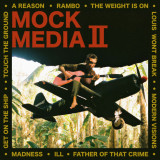
Mock Media, the new Canadian supergroup comprised of Garnet Aronyk (of Crack Cloud), Bennett Smith (of N0V3L), Austin Boylan (of Pottery) and Evan Aesen (of Painted Fruits), share their captivating debut album 'via Meat Machine Records (Crack Cloud, N0V3L, CLAMM)
Mock Media’s debut LP Mock Media II – out on Tin Angel records captures this firebrand four piece’s head-on plunge into enthralling existential contradictions: songs that explore the darkest corners of humanity, yet come out at the other end with the unwavering joy that marked their genesis. It’s an album of sneaky eclecticism: the high-wired punk rock stylings serve as Mock Media’s framework to clad their agog explorations into pop, electronic and world folk music.
La Califfa" (1970) is a rare example, probably very rare, in which the director and author of the book on which the film is inspired coincide, we're talking about Antonio Bevilacqua, who won the Nastro D'Argento prize as Best New Director with this film.
The film deals with the issue of the class struggle, and in particular the love-hate relationship between a businessman (Ugo Tognazzi) and a female worker (Romy Schneider, almost too sensual here) who lost her fiancé at the working place. A romantic and dramatic work, as the music written and orchestrated by Ennio Morricone, here often surrounded by an impressive aura of sacredness. This LP also features, as guests on voices and choirs, Edda Dell'Orso and I Cantori Moderni di Alessandro Alessandroni. Surprisingly, despite the success of the film and its soundtrack received at the time, "La Califfa" has never been reissued on LP since the early '70s.
This new edition on Vinyl Magic record label eventually fills this gap and, except for the front cover image, the artwork has been completely renewed: the inner sleeve contains in fact many reproductions of posters and lobby cards of the film. Various tracks, never released on LP until today, have also been added to the final tracklist.
Limited edition on 180gr. pink vinyl.
Recorded August, 1965, Copenhagen, Denmark.
Original LP issue: OKTAV – OKLP 111
Sahib Shihab (Edmund Gregory) played with many of jazz’s finest musicians. Shortly after he became one of the first jazz players to change their names due to an Islamic conversion, he joined Thelonious Monk for his Blue Note sessions. He also played with Art Blakey, Dizzy Gillespie, Oscar Pettiforn and Quincy Jones. A unique musician, he was at home in every musical style, from the experimentalism of Thelonious Monk to the more direct hard bop of Art Blakey. Sahib Shihab’s distinctive sound was rooted in his modernist compositions and arrangements, complemented by an intense, soulful playing style.
In 1959 he toured Europe with Quincy Jones after getting fed up with racial politics in USA and ultimately settled in Scandinavia. He worked for Copenhagen Polytechnic and wrote scores for television, cinema and theatre. He remained there until 1973. During this period, he recorded several albums as leader for European labels such as Vogue, Storyville and Futura.
In 1961 he joined The Kenny Clarke-Francy Boland Big Band and remained a key figure in the band for the 12 years it ran. He married a Danish lady and raised a family in Europe, although he remained a conscious African-American still sensitive to racial issues.
This record, on the Danish Oktav label, his second as a leader and also his rarest is a true masterpiece !!!
Flying Wig is an album of recurrent dualities; a can of paradoxes, a box of worms. The redwood and pine-surrounded cabin studio where Banhart was “constantly listening to The Grateful Dead” somehow birthed something slick, modernist, city pop-adjacent and Eno-esque. Banhart's eleventh record, it's the actualisation of a “precious friendship” with the acclaimed solo artist, multi-instrumentalist, producer and Mexican Summer stable-mate Cate Le Bon — a coming together prophesied by the mirror-image titles of their early solo albums (Banhart’s 2002 Oh Me Oh My to Le Bon’s 2009 Me Oh My) and a tenderness built on crude haircuts (“we finally met, soon after she was cutting my hair with a fork and that was that”) and home-made tattoos — but never previously translated into the recording studio. “It’s about transmuting despair into gratitude, wounds into forgiveness, and grief into praise,” - the product of a ritualistic creative practice that melts down and re-casts as it mulls, the stuff of sadness beautified as it changes shape — culminating in a record that “sounds like getting a very melancholic massage, or weeping, but in a really nice outfit… if I’m going to cry, I wanna do it in my best dress.”
- A1: Play For The Prisoners
- A2: Gaffer With Cedis
- A3: Major T-Bay Loves Girls
- B1: Shake A Leg High Life
- B2: One Touch
- B3: African Thriller
- B4: Lonely Nights Of Lome
- C1: All Night In Accra
- C2: Jah Bless Africa
- C3: No Show In Togo
- D1: Thrilla - Night Of The Assasin Remix
- D2: Midnight In Accra Remix
- D3: No Show In Togo Remix
- D4: Where Did The Major Go Remix
Referred to as "one of Reggae's quietest superstars" Jackie Mitto aka "The Keyboard King" had a remarkable path in Reggae music, a protege of Sly Stone, he started his career as part of Studio One's in house recording band and later went on to work with artists such as Bob Marley, UB40, Barry White, Peter Tosh and Oscar Peterson. This album was the result of a rare occasion of being on tour in Africa and establishing musical connections with musicians from Ghana, recorded in Accra and mixed in London. Predominantly instrumental, this album is essential to any dub conscientious record collection, as it culminates the career of a Reggae legend whilst under new influences in West Africa resulting in an unmistakably characteristic modern dub sound. Re-issued on vinyl with remixes previously only availably on CD format.
LP reissue of Collective Calls, the first duo LP from Evan Parker and percussionist Paul Lytton. Mythically alluded to as ‘An Improvised Urban Psychodrama In Eight Parts”, Collective Calls utilises electronics, pre-records and homemade instruments to wryly in/act self investigation. Having just recorded the cliff jumping Music Improvisation Company with Derek Bailey, Christine Jeffrey, Hugh Davies and Jamie Muir, Parker was at the point where he was thinking, ‘what’s the next thing?’ On Collective Calls, only the 5th release to appear on the newly minted Incus label, percussionist Paul Lytton arrives with an arsenal of sound making sources to push Parker into ever new territory. Recorded in the loft of The Standard Essenco Co on Southwark Street by Bob Woolford (Topography of the Lungs, AMM The Crypt), Collective Calls has more in common with noise or music concrete than with jazz; sitting comfortably alongside Italian messrs Gruppo di Improvvisazione Nuova Consonanza or the husband-wife duo of Anima Sound. According to Martin Davidson, it was a Folkways record that Lytton was obsessed with around the time of this release - Sounds of the Junkyard - its track titles like “Steel Saw Cutting Channel Iron in Two Places” working to give you a good idea of the atmosphere of Collective Calls. Paul Lytton had encountered the use of electronics in music in 1968 when he was invited to play drums on the recording of An Electric Storm by White Noise (along with David Vorhaus, Delia Derbyshire and Brian Hodgson). He had seen Hugh Davies using contact mics in the Music Improvisation Company, and soon set about assembling a Dexion frame akin to drummer John Stevens’, except that his own was armed with several single-coil electric guitar pickups, long wires and strings with connected foot-pedals to modulate pitch. Influenced as much by Stockhausen, Cage and David Tudor as he was by Max Roach and Milford Graves, Lytton’s percussion is abstract, expressionist and at times totally mutant. Sometimes rolling extremely fast, then screeching almost backwards over feedback, Lytton gives Parker room to play some of his weirdest work. Parker is listed as performing both saxophones, but also his own home made assemblages, including one dubbed the ‘Dopplerphone’ - a length of soft rubber tubing (activated by a saxophone mouthpiece and manipulated to alter the rate of airflow) attached to a longer length of clear plastic tubing (whirled around the head whilst being played) ending in a plastic funnel. Thickening the brew even more, Parker would also add a cassette recorder, on which he would play back collected sounds and previous recordings of the duo. Imagining the set up in a 70s loft, it’s an assemblage more akin to what today's free ears might see at a Sholto Dobie show, spread out on the floor of the Hundred Years Gallery, the shadow of Penultimate Press lurking in the corner. It’s a testament to Parker’s shape shifting sound - the ever present link to birdsong being at its most warped here - terrifically free and unfussy, wild and loose from any of the dogma that might come in later Brit-prov years
With their 2018 debut album, ”Windborne”, Oslo based trio Kanaan quickly established themselves as one of the most important groups in the youngest generation of psychedelic impro-rockers. As accomplished players – all three educated in jazz – they marry fiery energy with musical intricacy, and possess a rare ability to balance power and delicateness. They devote as much energy to exploring airiness and atmosphere as they do to intensity. On this set the trio join forces with Causa Sui guitar player and producer Jonas Munk, for a series of semi-improvised sonic excursions. Recorded in Jonas Munk's Odense studio, where most of the El Paraiso magic happens, the band explores a looser side of their sound. Jonas Munk joins on guitar on every track, and occasionally synths as well, unlocking new modal possibilities and a Grateful Dead-esque dual-guitar flow that suits the band well. These four tracks unfold in a panoramic slow burn, only occasionally exploding in blazing leads. They know just when to hold back and when to let loose. On the final track, ”Urgent Excursions To The Tundrasphere”, the four eventually let it all rip, creating a complete sonic meltdown. For fans of freeform psychedelic rock this is as essential as it gets.
Leo Zero finally gets some of his much sort after edits onto the black wax, with some classic cut-ups that have all been road tested for max dance-floor detonation.
On this first EP a set of classic soul / disco groovers that have been meticulously remastered and extended for the modern floor.
One for the dancers and romancers, ‘Love Affair’ hits you square in the heart - a big spin at the Faith parties. Next up, a classic mid-tempo Soul weekender cut gets a nice chunky re-version.
The flip kicks off with some new live drums and chunkiness added to a huge underground gem, then we head off into more bulletproof dance-floor disco territory with a souped up version that’s been given maximum wallop to compete with house cuts when played out.
Kanaan from Oslo, Norway is back with their 2nd album in 2020. Following the impromptu Odense Sessions with Causa Sui guitarist Jonas Munk released in February, Double Sun is a different beast all together: Treading the same path as their 2018 debut Windborne, Double Sun is a studio effort in the best sense of the word. Perfectly balanced on the edge of dynamic improv, throbbing beats sizzled in scorching fuzz and topped off with deeply layered soundscapes. This album sees Kanaan reach a new plateau. Kanaan presents a unique perspective to psychedelic rock, painting with a wide palette that includes jazz and post-rock. Double Sun devotes as much energy to sonic colour as it does to groove and energy. The spirit of experimentation is everywhere: From the savory, pastoral sounds of opening track Worlds Together, to the soaring exploratory paths of the two-part title track. In the creative process, Kanaan dived deep into the possibilities of the studio, adding intricate layers and twists and turns to these tunes: acoustic guitars, percussions & synthesizers embrace and enhance the Norwegian modern day version of a power-trio.
The Touch Infinity project involves the creation of works of art based on Spira and the way it is harmonized in modern art, an action with an emphasis on design and contemporary electronic music. We live in a spiral galaxy. The first sensation that a spiral shape gives is the image of evolution and the will to touch the infinity. Modern technology and binary code give us the ability to touch the infinity. With the use of modern technology, the music will be rendered in addition to vinyl and in shape and color in the form of a spiral ceramic vase.
With the financial support and under the auspices of the Hellenic Ministry of Culture.
Berlin based producer and DJ, Fletcher, joins the roster of Anthony Georges Patrices’ Ausblick imprint this December with his ‘Blurred Lines’ EP. The past decade has seen Fletcher steadily unveiling his own distinctive twist on dub techno and micro house with a debut album on Steve O’Sullivan’s Mosaic and further material on the likes of Roger Gerressen’s Irenic, Ohm Series, his own Tact Recordings/Tactics. Here though he drops his new two tracker on the growing Ausblick label, following its recent release from label boss AGP with a remix from Playhouse legend LoSoul. Title-cut ‘Blurred Lines’ leads and see Fletcher lay down a sturdy, shuffled percussive groove at the foundation of the composition while ghostly chimes, swelling subs and modulating synths ebb and flow within its eight-minute duration. ‘What’s It All About’ follows and edges into more mind mending, minimalistic realms with oscillating bass tones, organic percussion and murky atmospherics all intertwined to create a low-slung dance floor focused tool.
Orphax & PONI (person of no importance) is a collaboration between the two Dutch brothers, Sietse (Orphax) and Tjeerd (PONI) van Erve. Since their early years they share a broad interest in music, fed mostly from their fathers’ record collection, ranging from early blues to Pink Floyd or Beethoven. But also listening to Belgian radio channel Studio Brussels (which during the late 80s and early 90s was a common listening close to the borders between The Netherlands and Belgium), and the late night Dutch radio inspired them in exploring the rough edges of underground music.
An exploration that gave them a common interest in indie and noise rock, but soon enough both followed their own path in music. Tjeerd moving more into underground guitar music, whilst Sietse developed a wider interest in (experimental) electronic and contemporary music. Both as listeners, but also exploring their own interests as musicians.
Now many years later these musical paths cross again in this album Inheritance (with a slight imagination, a translation of their last name van Erve). An album where Tjeerd brings in his dark and noisy lo-fi guitar songs and Sietse brings in his drones and electro-acoustic composition styles.
The album opens with its longest track, “As Received”. This combination results in a slow developing drone, with the intensity and tension of a well build-up post-rock track, that slowly unfolds Tjeerd his guitar layers and vocals. The title of the song refers to one of the PONI projects, where Tjeerd would send rough recordings to befriended musicians who than would rework those recordings without any restrictions which then would be released side by side with the original rough recordings. A project which actually sparked the idea of this collaboration (and that can still be listened to on PONI’s bandcamp-page).
On the flip side of the record, three shorter works give more room for regular song structures. In “Sunburns” this results in slowcore with subdued vocals, melancholic guitars and nasty synth and organ drones. When Tjeerd wrote the basis for the song, he actually had been listening to a lot of Codeine and Bedhead. One does not need much fantasy to recognize the influences of these bands.
“The Tears Are Necessary” is build up around various broken up piano tracks accompanied by moody drones to develop a fragile song.
The album closes with “Lockdown”, opening with silence as a moment of contemplation after the previous work but then quickly develops in a playful song where improvised play on piano, guitar and modular synthesizer create a lo-fi gem that clearly shows that both brothers still haven’t lost their love for Sentridoh or Guided By Voices.
All together resulting in an album that is an ode to the love of music, experiment, and creativity and a celebration of brotherhood.
- A1: Vicinity
- A2: Shake A Tail Feather
- A3: I Don't Need No Doctor
- A4: Sugar Coated Love
- A5: Sweet Sensation
- A6: Turn On Your Love Light
- A7: My Babe
- A8: Ninety-Nine & A Half
- B1: Out Of Sight
- B2: Fever
- B3: Keep Your Hands Off It
- B4: Teenie Bit Of Your Love
- B5: Barefootin
- B6: Hit The Road Jack
- B7: 36-22-36
- B8: Homework
Eine Sammlung der verlorenen Aufnahmen von Fast Eddie – eine der aufregendsten Live Bands des frühen 80ziger Mod Revival mit Rhythm’n’Blues Einflüssen. Produziert Acid Jazz Gründer Eddie Piller ist diese Sammlung ein wichtig Zeitzeugnis des Mod Revival und der Acid Jazz Records Geschichte.
Temple, Bassey, MacLaine and now, Hurt; in a world of Shirleys, the name Sophia Ruby Katz has chosen for her music is perhaps prophetic as it captures her stunningly emotive vocal approach. And whilst Shirley Hurt might be the perfect nom de plume for the creative Toronto-based artist, it’s her self-titled debut album which positions her as protagonist of her own universe.
Traversing sonic landscapes, Shirley Hurt’s vocals ebb and flow like lyrical Ley lines tracking the contours of her own well-travelled map. By the age of 18, Hurt had travelled extensively, having lived in upwards of 20 different apartments and houses, as a result never really feeling “at home” anywhere. At this age was when Hurt found herself in New York, dipping her toes into various scenes and musical realms. The first and only place she ever felt at home, and a partial home-base for her, she travelled between Toronto and New York until the age of 26.When the project she was working on in New York reached a dead-end she returned West, moving in with musicians Harrison Forman (Hieronymus Harry, Zones) and Patrick Lefler (Roy, Possum). Being surrounded by their improvising at all hours, a new approach emerged. “Harrison is a virtuosic guitar player, and I hadn't picked up a guitar in any serious way since I was 16,” she says, “by osmosis I started playing again for fun.” Without agenda, the process grew organically from there.
Hurt and Forman decided to travel across the US and Canada in a trailer for half a year, with the entire album written in the final months of their trip. Hurt had been writing loose ideas here and there but felt blocked creatively. When the pair reached Berkley, they wound up house-sitting for a tuned-in friend who recommended she pray, in a very direct way, to remove the block. “I took her advice and to my surprise it worked. The album was conceptualized and finished within a couple of months.” Shapeshifting in tone and phrasing, Hurt’s music alchemizes the furthest corners of experimental indie folk, pop, and country into a singular sound with elegant unpredictability.
Whilst Shirley Hurt’s lyrical and structural ideas may have emerged on the road, the album was self-produced and recorded at Joseph Shabason (The War on Drugs)’s Aytche studio in Toronto’s West End. It was engineered by Nathan Vanderwielen and Chris Shannon (Bart), and Hurt enlisted collaborators Jason Bhattacharya, Nick Dourado, Patrick Lefler, and Harrison Forman to hone her vision. “I wasn’t sure what was going to happen with the songs until we returned to Toronto,” she recalls. “Joseph and I had been talking about working together after sending across some demos and Jason happened to recommend his studio at the exact same time, so everything came together naturally at that point.”
Whilst her most recent adventures may have seen Shirley Hurt bound for Texas as an official SXSW artist (hand-picked by Gorilla Vs Bear to perform at their own showcase), she currently resides in her native Canada, more specifically rural Ontario, close to friends and family, and is already working on her second album. The ties to lineage are interwoven in the fabric of the music. Hurt’s mother, artist Leala Hewak, instilled a lust for life and innate value of creativity in her from a young age as she explored the role of gallery owner, vintage jewellery show host, mid-century modern furniture expert, real estate agent, painter. Hurt’s father, a civil litigation lawyer and new-wave obsessed music lover with an extensive vinyl collection, introduced Hurt to a wide-range of artists at a young age such as Nina Hagen, Laurie Anderson, Tom Tom Club, and endless others.
In her video for ‘Problem Child’ Hurt’s grandmother walks her through a generationally revered pie-making process. One would be tempted to hear this, and other songs, as autobiographical. Yet, Hurt’s lyrics are rarely pulled from her relationships or personal history––at least not consciously. Rather, they arise from somewhere less tangible or defined. “Lyrics tend to come to me when I am doing non-musical things - washing dishes, brushing my dogs, walking to the grocery store. I have a lot of voice memos on my phone and half-filled notebooks and when I hear something, I have to stop what I'm doing to get the idea down. Usually it’s bits and pieces. It's rare a full song comes to me in one go, but it's great when they do, and those are often my favourites.”
Carving out a space of her own in an all-encompassing universe, Shirley Hurt is the introduction to a long artistic story, and if the journey so far is anything to go by, it will be stippled with evermore unpredictable chapters.
2023 Repress
It's the quiet ones we should watch, they always say. Which is particularly astute advice right now, when loud, constant self-declaration and saturated 'brand' visibility have become the norm. But above the babble and brightness, some voices will always speak quiet volumes - with calm eloquence and the kind of certitude that comes from valuing the playing out, not just the prize.
Sweden's José González is just such a voice. He first charmed his way into the UK's earshot via the murmurous and elegant, classically finger-picked folk pop of his 2005 album, Veneer, which has since sold over a staggering 430, 000 copies in UK alone. Two years later came In Our Nature, a further exploration of José's influences (Argentinian Folklore, the '60s US folk tradition and the British pastoral folk-pop style of the same era), on which he resisted the temptation to beef up his alluringly introvert aesthetic. The albums made the UK Top 10 and Top 20 respectively.
Conceived as the natural third part in an acoustic trilogy, Vestiges & Claws is a(nother) hushed and delicate solo set that forefronts the artist and guitarist's compellingly intimate vocal style and intricate playing technique, but it's often strikingly rhythmic in nature and cohere's perfectly, with hand claps and taps on the body of his instrument underlining the songs' mantric rise-and-fall pattern, while elsewhere, over-dubbed guitar parts and multi-tracked vocal harmonies entwine to sweetly immersive effect.
The title refers to both cultural practices and biological features that survive despite having lost their original function, and to currently useful tools, ie the 'claws' of modern life.
Vestiges & Claws was recorded almost entirely by José and self-produced, mostly in his Gothenburg home, using computer plug-ins to achieve a warm, analogue sound. He prefers working alone, mainly for artistic reasons. 'There were a couple of things that enabled me to complete this record: one was curiosity, to be able to play percussion and do a lot of harmonies and also to produce and mix the album; the other was aesthetics. I love to listen to Arthur Russell and Shuggie Otis, to music that has been done mostly by one person in their solitary state.'
As José sees it, the record is his personal, 'zoomed-out eye on humanity on a small, pale blue dot in a cold, sparse and unfriendly space. The amazing fact that we are all here, an attempt at encouraging us to understand ourselves and to make the best of the one life we know we have - after birth and before death.
These 4 records reissued for the first time, with so rare and rich contents from 1970's Japanese Jazz which is gathering attention globally, were released on Terumasa Hino private label "LOVE RECORDS" and distributed by Japanese major label.
Representing "Ode to workman" from "J Jazz : Deep Modern Jazz From Japan 1969-1984" released on BBE, in his session with local N.Y. musicians, these 4 records are so important pieces in 1970's independent Jazz !
Terumasa Hino and Reggie Workman's second work. As adding two new energetic members, Takao Uematsu and Yuji Imamura, the sound became heavier and more thrilling. Sometimes it leads to dark depression, but sometimes gives a feeling of euphoria, it is still vivid as Afrocentric Jazz. With its quality and rarity, it has been always wanted all over the world.
Denovali presents the second cooperation album of Italian composer, arranger, producer and guitarist ERALDO BERNOCCHI with Berlin-based Japanese violinist, composer, electronic producer and TANGERINE DREAM member HOSHIKO YAMANE.
Eraldo Bernocchi and Hoshiko Yamane have come together again to create their second album - inspired by the Japanese concept of "Sabi". The record is a unique blend of electronic and acoustic music - with Bernocchi’s pulsating textures and Yamane's haunting treated violin melodies weaving together to create a captivating and emotional sonic landscape.
"Sabi" is a Japanese aesthetic that celebrates the beauty of impermanence and decay. It is often associated with the simplicity, austerity, and solitude found in nature, and is said to evoke a sense of melancholy, nostalgia, and reverence for the passage of time. Bernocchi and Yamane's "Sabi" explores these themes through a collection of minimalist compositions that combine electronic and acoustic instruments immersing the listener in a deeply cinematic experience.
The album takes the listener on a journey through a series of atmospheric tracks, sometimes melancholic pieces that evokes the sense of solitude and simplicity often associated with the concept, other times more energetic and uplifting, optimistic ones that celebrates the beauty of transience.
Throughout the record, Bernocchi's electronics work provides a powerful, quite physical, backdrop for Yamane's violin melodies and harmonies , which are at once mournful and hopeful. Together, they again created a sound that is both beautiful and haunting, evoking the sense of nostalgia and reverence that is at the heart of the "Sabi" aesthetic. "Sabi" is a unique and powerful work of art that explores the beauty of impermanence and the passage of time. With its blend of electronic and acoustic elements, it is a record that is both modern and timeless, and is sure to appeal to a wide range of fans of electronic, ambient and experimental music. The artwork again was created by the renowned designer Petulia Mattioli.
Repress!
Supermercado: a mosaic, tangible, colourful to the point of saturaton, anchored in a very real present.
Behind the metaphor that gives the new album its ttle, Corridor examines modernity, takes on this transitonal transiton by looking at where it went wrong: pushed around by big data, apathy induced by oversaturaton, the speeding up of cycles, efort stripped to its bare minimum, physical detachment.
Afer giving the art-rock and jangle-pop treatment to their frst two eforts Un Magicien en toi and Le Voyage Éternel, Corridor stcks to its signature sound: upfront, dissonant guitars upheld by minimal beats and syncopated bass lines, yet also marks a new directon. Supermercado leans on repeated strong melodies, slow progressions, bolstered by two distnct voices, yielding a more hypnotc, sharper, and strangely, poppier result. Corridor recorded this new record in the hallowed halls of Montreal's Breakglass Studios, with Emmanuel Ethier (Chocolat, Bernhari, Peter Peter) assuming producton dutes.
We Release Jazz is sooooo happy to announce the release of a very limited edition double LP for Boillat Thérace Quintet’s 1974 Montreux Jazz Festival performance, with 3 bonus studio tracks! This gem from the Geneva, Switzerland band follows the acclaimed WRJ reissue of their self-titled album (1974) and My Greatest Love (1975), their full-length with Benny Bailey. The 300-copies-only white sleeved DLP comes with the classic obi and features fully remastered audiophile-ready recordings.
Captured live at Montreux Jazz Festival, July 3rd 1974, this rare audio treat features Boillat Thérace Quintet fan-favorites including their infamous homages to Swiss Marmite ("Cenovis"), and Geneva's public transport line Tram 12 ("1224"), as well as remarkable renditions of timeless jazz numbers by Freddie Hubbard ("Straight Life" and "Backlash") and Chick Corea ("Spain").
Additionally, the double LP offers 3 bonus songs taken from the ensemble’s sessions for their self-titled debut: superb takes on Herbie Hancock’s "Dolphin Dance", Wayne Shorter’s "Adam’s Apple", and Claude Engel’s "5th of July, Dulong Street".
All in all it’s a beautiful soul-jazz/modal fest full of flair and heart, one that perfectly encapsulates the vibrant and inventive Swiss jazz scene of the 1970s. A must have for fans and collectors.
This new album from We Release Jazz follows the label’s celebrated releases of the Ryo Fukui catalogue (Scenery, Mellow Dream, A Letter from Slowboat, Ryo Fukui in New York, My Favorite Tune), Hiroshi Suzuki’s seminal Cat album, and Le Cercle Rouge soundtrack by Eric Demarsan among other jazz wonders.