On a "Balearic-Jazz trip", the phenomenally hyped Thought Leadership returns with another X ideas: the deck this time chooses the Ace of Swords. In the acclaim garnered by III of Pentacles, there were many whispers of “Balearic” from those in the know. As soon as you drop the needle on XI you will be basking in turbo Balearica.
Originally out on cassette only, we present the first ever vinyl issue. It's a hideously limited pressing of 300 for the world, so don't sleep on this.
The sonic palate has been augmented by the addition of synth and bass; there are more guitar layers, more pedals and more organic drums this time – a much fuller production. Still DIY, and still recorded straight to multitrack, just ever so slightly grander in scale; think a rough-hewn, long-lost Claremont 56 cut and you’ll have some idea of how XI opens this future classic LP.
The touchstones so key to the vision of Pentacles (Cocteau Twins, Dif Juz, Durutti Column) are all still present and correct; XII could be a piece from Extractions, XIII is pure Garlands-era Guthrie and, now with the shuffling jazz drums, XV makes TL even more LC – but more disparate influences are found this time out too. ECM guitar legends John Abercrombie and Pat Metheny in the more considered melodic phrasing and harmonic structure of the ideas and a nod to the cosmic Balearic spirit in the overall vibe, means more is offered to the listener across Swords.
XVI and XVII are the biggest indicators to Thought Leaderships’ new found love of The Real Book and their grasp of jazz chords. The former sounds like if Mike Hedges had produced on a heavily sedated ECM date in the early 80s, whilst the latter is Bright Size Life condensed into a most post-punk shard of Strat conversation. The syrupy Phase 90 on the lead parts lends much weight to the guitar melodies, a beautiful tonal counterpoint to the Vox-ish chimes of the plangent chords we’ve all come to love.
The flip again treats us to three extended, improvised jams. XVIII owes as much to Canterbury as it does to Krautrock, another modal voyage through the stars. Light the incense and drift away, guided by delayed cymbals and weaving ribbons of guitar. XIX has almost a New-Wave/Sophisti-Pop energy to it in tone, if not in structure and execution. Something almost Tears for Fears-esque in the chiming chorus guitars. An interesting outlier that has already received a lot of love from those that have heard it. XX is the starkest idea, and the only piece this time with no drums. What we do get, however, is a free exploration over a two chord-vamp. It’s Harvest Time meets Planet Caravan and a fitting end to this Balearic jazz trip.
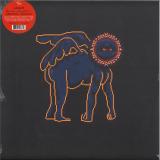
Be With is honoured to present the first ever vinyl release of Ace Of Swords, carefully remastered by Be With's engineer Simon Francis to ensure it sounds better than ever after its initial tape release. Cicely Balston's expert skills have made sure nothing is lost in the cut at Abbey Road Studios whilst the records have been pressed to the highest possible standard at Record Industry, in Holland. The original tape cover artwork, so crucial to Thought Leadership's striking visual aesthetic, has been rejigged for vinyl issue here at Be With.
The last one flew. You have been warned.

quête:mod r
Sex Tapes From Mars presents Outdom Records' boss, LATENT, who shares a brand-new four-track EP that spars with breakbeat, electro, house, and left-field electronics, neatly centring them all into a steady, sexy collision. The record as a whole captures genuinely original-sounding, rough-edged b-boy breaking badness - nostalgic, but never polite. It's a few BPMs slower than Sex Tapes' last few outings, but no less effective. Arguably, it's more late '80s sounding than ever, although, in fact, it's a brand-new, stonking release that showcases the label's versatility and unpredictability.
The opening track, "Break Machine", sets the pace with a clear nod to the '80s US group of the same name, bringing tidy drum workouts and clipped vocal samples that recall early Chicago, as well as choppy rave and street party energy at its most unfiltered.
"Disco Hijack" pushes the clutch into a more functional gear, merging delay-heavy, druggy, chuggy, sludgy bass with more robotic vocoder tropes, sharing something playful but IDM and European skewed. It's a dancefloor tool with a wink - just the style this now accomplished label has made its identity. Oh, don't forget the amens and clattering jungle breaks. 1990 or 2040? Fuck knows.
On "Distress Robot", pneumatic percussion and malfunctioning android chatter bring a darker, more mechanical edge, while "Virtual Body" closes with a spacious, garage-leaning shuffle that pulls the EP into recognisable contemporary yet still very much peak-time territory.
LATENT gives lean grit, pushes the edges, and lets the tracks feel alive in their imperfections. It’s music that thrives on tension between old-school reference points and modern floor pressure.
Bristol's label head Elon Dust HAS done it again.
Vinyl-only as per, don't sleep."
What once slipped out under a veil of anonymity now steps into the light: the original mystery record was, in fact, Tuff City Kids. The duo’s playful fingerprints are all over it— equal parts homage and mischief.
Fast forward to today, and the circle closes with an EP that reimagines the spirit of that covert release, pushing it into sharper, modern focus. Where the first outing thrived on secrecy, this one thrives on revelation—same DNA, but recut for the present tense.
Renegade Methodz continues its forward drive into deep, uncompromising techno with the arrival of Alexey Dunchyk and his striking new release, 'Passion/Aggression'. Known for his refined yet forceful productions, Dunchyk brings a new dimension of raw and unapologetic depth to the label's expanding catalogue of international talent.
The result is a record that cuts through the noise of modern techno, built for DJs who care about substance not hype and shaped with the kind of lasting weight that keeps the true spirit of this music alive.
Hector Lavoe's "Alejate" (Joe Claussell Mix) Extremely Limited yellow Vinyl repress 12” of the timeless Joe Claussell remixes of the Fania Records masterpiece.
Legendary New York DJ, producer and soul magician Joe Claussell delivers yet another of his stunning reworks of one of Hector Lavoe's Iconic Songs the classic "Alejate." Taken from him universally praised Hammock House Remix produced for the Iconic Fania Records Label. As usual, he brings his signature touch while honoring the original's spirit and with great respect for its Latin roots. Claussell still manages to breathe new life into the track by mixing up organic rhythms and
percussive flair to create a version tailor-made for any dance floor. There is a Dance Dub with a heavier low end and plenty of jazzy expression before the Alt instrumental shuts down. This is a 12" that bridges tradition and modernity with care and creativity.
Silat Beksi is back on Afterhours. with Infinite O’Clock, the labels eighth release — an assured statement where minimal house, tech-house, and groove converge. Over recent years, the label has consistently delivered stripped-back club tools with subtle depth, and Beksi’s latest reinvigorates that tradition with fresh energy rather than repetition.
The EP opens with Infinite O’Clock, a hypnotic minimal-house piece built from syncopated rhythms, deep, lush pads, ambient vocal samples, and a groovy low-end that perfectly fits the early club hours — those moments when the light begins to cut through the windows. On the Flip Side, Beksi shifts into early-00s micro-house mode: shuffled hi-hats, crisp claps, and playful, wonky grooves take the lead, while warm aerial pads reminiscent of 90s video games and acid-tinged basslines elevate the track with sophistication. Closing the record, Godbrother turns up the jacking energy — metallic and robotic samples, an infectious bassline, spatial pads, and delayed vocals give it a menacing, dancefloor-ready drive that ends the EP in full swing.
With Infinite O’Clock, Silat Beksi builds on Afterhours.’ reputation for club-focused minimalism and sound-system fidelity — a release that reaffirms the label’s consistent quality while confidently steering its sound forward.
BodyParts presents "We Need You" by Fabe, a four-track release that taps into raw club energy and brings a fresh vibe to the label’s Vinyl Series. Fabe delivers stomping grooves, creative vocal work, and vibrant textures that BodyParts fans will recognize, but with plenty of surprises.
'We Need You' opens the EP with a tech-house roller that nods to UK swingers. Slapping bass, processed vocal snippets, atonal melodies, and bit-crushed synths come together in a track that demands movement. 'Ah Gee' keeps the energy going with a spacious, deep-groove feel, filtered melodies, catchy vocals, and a nod of French Touch house, blending classic styles with a modern edge. 'Teach Your Body' brings tension with a breaky, bass-driven house cut, sensual vocal fragments, and sharp drums, all carried by syncopated grooves. 'Down With The Dolphins' wraps up the record with warmth and color, offering deep house and breakbeat energy that lights up the dance floor — perfect for those early morning moments when light cuts through the darkness of the club and new energy breaks through.
Over time, BodyParts has built a reputation for consistency, with a signature fusion of minimal, tech-house, and groove that always feels dancefloor-worthy but never formulaic. With "We Need You," Fabe delivers another peak-time ready record that sits comfortably in the label's legacy while pushing it just enough to keep ears alert and bodies engaged.
Ruta5 presents Yellow Fever, the debut EP from Chilean duo Yellow Fever — vocalist Nara Back and dj Haiti — a project born to ignite the dancefloor through hybrid sets that blend live vocals, DJ energy, and a visual world steeped in groove and color. Their first release channels over two decades of electronic roots into fresh, immediate form.
The record opens with ‘Díganle (Dandy Jack Remix)’, where Dandy Jack — a pioneering force in Chilean electronic music and co-founder of Ruta5 — transforms the track into a playful, stomping roller: punchy kicks, rolling bass, groovy percussion, and glitchy vocal fragments that nod to his legacy of bridging Chilean and European underground sounds. ‘Fiebre Amarilla’ (Yellow Fever) leans into space and motion, driven by growling bass stabs, modulated synths, and vibrant vocal energy that flirt with house textures while radiating raw dancefloor sensuality. ‘William Borrow’ brings crisp, electro-leaning drums and syncopated grooves that twist through dynamic shifts, hinting at synth-pop while maintaining tight club precision. Closing the EP, ‘Inspector (feat. Pier Bucci)’ folds in Pier Bucci’s unmistakable touch — a deep, minimal-house hybrid rich in warmth and Latin sensibility, connecting Santiago and Berlin with effortless lightness.
Founded to amplify electronic voices from underrepresented regions, Ruta5 remains a cultural bridge — its sound deeply Chilean yet globally resonant. Dandy Jack’s and Pier Bucci’s presence reaffirms that lineage, while Yellow Fever injects it with new energy: a reminder that consistency in quality need never mean predictability.
- A1: Piekna Lola, Kwiat Polnocy (Remastered 2025)
- A2: Leszek I Lugwig (Remastered 2025)
- A3: Piatawka (In 5/4 Time) (Remastered 2025)
- A4: Blues Shmues (Remastered 2025)
- B1: Rozpacz (Despair) (Remastered 2025)
- B2: Tkotkonitkotko (Remastered 2025)
- B3: Wozny - Najwazniejsky (The Caretaker - The Most Important Man) (Remastered 2025)
- B4: Ol' Man River (Remastered 2025)
Altsaxofonist Zbigniew Namysłowski (1939-2022) wird wird oft als der ”John Coltrane Polens” bezeichnet,
so wichtig war er für die Entwicklung des modernen Jazz in seiner Heimat. Sein 1964 veröffentlichtes
Debütalbum “Lola” war zugleich das erste Album einer polnischen Band, das nicht hinter dem “Eisernen
Vorhang”, sondern in den Decca Studios in London aufgenommen wurde. Mit seinem Modern Jazz Quartet stellte Namysłowski auf dem Album sieben teils von polnischer Folklore inspirierte Originale sowie eine
Interpretation des Standards “Ol’ Man River” vor.
Produziert wurden die Aufnahmen von Mike Vernon, der später unter anderem mit Fleetwood Mac, David
Bowie und John Mayall arbeitete. 60 Jahre nach Erstveröffentlichung erscheint dieses für die europäische
Jazzszene eminent wichtige Album in der Reihe “British Jazz Explosion” erstmals wieder auf Vinyl. Gemastert von den originalen analogen Stereobändern von David Turner bei 360 Mastering, geschnitten bei Curve
Pusher, Hastings, East Sussex. Eine Beilage enthält Fotos der originalen Masterbänder und neue Liner
Notes des bekannten Autors, Compilers und Dokumentarfilmers Tony Higgins, der auch als ausführender
Produzent für Deccas „British Jazz Explosion“-Reihe fungiert.
Modern flip of Marco Bosco's classic, Metalmadeira
"In 1983, Grammy-winning Brazilian percussionist Marco Bosco released Metalmadeira — a groundbreaking fusion of hand-built percussion, early drum machines, and lush synth textures. Four decades later, celebrated Curitiba-based collective Alter Disco (Bárbara Boeing, Phil Mill, De Sena) reimagine the album for today’s dancefloors.
Working from the original stereo recordings (the master tapes long since damaged), Alter Disco preserved the organic feel of Bosco’s unquantized rhythms while infusing them with deep, modern grooves. The result is a cross-generational dialogue between Brazil’s early electronic avant-garde and contemporary club culture.
Highlights include Pedra, pulsing at 130 BPM with a vintage vocoder line nodding to Detroit techno pioneer Juan Atkins, and Camila, which wraps Bosco’s sharp percussion in atmospheric synths and hypnotic beats.
Metalmadeira II is raw yet refined — live instrumentation and electronic production in perfect balance, blurring the line between archive and innovation.
In 2018, Rian Treanor left his home in Rotherham, UK, and headed to Kampala for a residency at Nyege Nyege's villa studio. The mind-expanding experience inspired his critically acclaimed 2020 full-length "File Under UK Metaplasm", but that wasn't the end of the story. Treanor also spent time working alongside Acholi fiddle player Ocen James, developing an improvisation-heavy collaboration that would push both musicians' idiosyncrasies into completely new places. Treanor wanted this collaboration to be as tactile and reactive as a live performance with traditional instruments, so he set about working on a digital process that would synchronize with James' approach. Using physical modeling techniques, Treanor created an instrument that explored the tunings and sounds of the a'dungu, an arched harp, and the nah or nag. With Ocen playing his rigi rigi, a single string violin, they intuitively experimented with the spectral properties of sound, using texture and acoustic contours as their structural framework. They were able to develop a sound together that was unconventionally rooted in traditional Ugandan culture, but shuttled into different dimensions of noise, computer music and radical UK rave. "Saccades" is the buffer between two vastly different sonic universes, united in respect and sprightly curiosity. Treanor's hyperactive computer-controlled rhythms are immediately identifiable on opening track 'Bunga Bule', but the sound palette is distinct: it's more flexible and less digital. James' expressionistic fiddle strokes are a revelation, contorted into hoarse squeals and rough vibrations that rub and flex off Treanor's tin can shuffle.
Das Avant-Rock-Sextett aus Beirut verschmilzt auf diesem großartigen Nachfolger seines gefeierten 2023er Debüts "Mais Um" Psych/Kraut, Improv/Skronk, Elektronik, Gothic und Jazzelemente mit traditionellem ägyptischem Gesang und moderner arabischer Poesie. Produziert von Radwan Moumneh (Matana Roberts, Sarah Davachi, Jerusalem In My Heart). Der Titel des zweiten SANAM-Albums ist ebenso vielversprechend wie die Musik der libanesischen Band. "Sametou Sawtan" bedeutet aus dem Arabischen übersetzt "Ich habe eine Stimme gehört". Spukhaft oder spirituell, wie auch immer man die Phrase liest, sie spricht von der Fähigkeit von Klang und Sprache, innezuhalten, Aufmerksamkeit zu stehlen und uns für den Moment zu öffnen. In ähnlicher Weise vermischt die Musik von SANAM zarte Rasereien und feuerverbrannte Balladen, indem sie frei fließende Rock- und Jazzgerüste mit der tief verwurzelten arabischen Tradition verbindet. Sie in vollem Flug zu hören bedeutet, in der Gegenwart gehalten zu werden und sich neu zu orientieren, um einen offenen Horizont zu eröffnen. Die Arbeit an "Sametou Sawtan" begann im Frühjahr 2024. Die ersten Ideen, die in den Tunefork Studios in Beirut entstanden, wurden im April während eines Aufenthalts in Beit Faris, einem mittelalterlichen Haus in der Küstenstadt Byblos, weiter ausgearbeitet. Das Sextett: Sandy Chamoun (Gesang), Antonio Hajj (Bass), Farah Kaddour (Buzuq), Anthony Sahyoun (Gitarre, Synthesizer), Pascal Semerdjian (Schlagzeug) und Marwan Tohme (Gitarren), wurde vom Produzenten Radwan Ghazi Moumneh (Jerusalem In My Heart) unterstützt. Die letzten beiden Tracks des Albums sind Aufnahmen aus den Beit Faris-Sessions, während der Rest in den La Frette Studios in Paris während der Europareise der Band im Sommer 2024 aufgenommen wurde. Die Platte verarbeitet Gefühle der Distanz und der Entwurzelung. "In den letzten fünf Jahren hatte ich das Gefühl, dass jeder den Libanon verlässt", erklärt Chamoun. "Das Album handelt nicht wortwörtlich davon, sondern von der Vorstellung, dass dich etwas verlässt. Eine Distanz zu den Ereignissen, obwohl du in ihnen lebst, eine Distanz zu deinem Haus, obwohl du in ihm wohnst." Ob in der sehnsüchtigen Ballade "Goblin" oder dem langsam brennenden, autotune-überladenen Freakout von "Habibon", Sametou Sawtan fängt das Streben nach festem Boden in einer Welt ein, die diesen nur selten bieten kann . Das Album hat die hypnotisierende Intensität des SANAM-Live-Erlebnisses, während es der Musik Nuancen, Tiefe und eine enorme dynamische Bandbreite verleiht. Wie bei ihrem Debüt sind die Texte vieler Tracks entliehen, Worte, die in neue Kontexte gestellt werden, um die Gegenwart zu verarbeiten. "Hamam" interpretiert ein ägyptisches Volkslied neu. In "Hadikat Al Ams" treibt der krachende Hardrock-Stampfer den Text des zeitgenössischen libanesischen Schriftstellers Paul Shaoul an. Und sowohl "Sayl Damei" als auch der Titeltrack verwenden Gedichte des iranischen Dichters und bahnbrechenden Mathematikers Omar Khayyam aus dem zwölften Jahrhundert. "Wenn man etwas von Omar liest, fühlt man eine Verbindung zur Gegenwart", sagt Chamoun. "Das Gefühl, dass es keinen klaren Weg gibt." "Sametou Sawtan" enthält auch zwei Lieder mit Chamouns eigenen Texten, darunter den Opener "Harik". Es war die Keimzelle des Albums, geschrieben von Chamoun im Februar 2024, wobei die Band den Track um ihre Worte herum aufbaute. Es beginnt mit einem Schauder, zerfetzter Elektronik und einer keuchenden Stimme, die das Schlagzeug durchdringt, bevor sich die Band zu einem triumphalen Aufstieg aufschwingt. Es geht um Eintauchen in "ein unendliches Feuer", verrät Chamoun. Den Text zu "Tatayoum" schrieb sie allein, bevor sie ihn der Band vorlegte. Er spiegelt eine andere Art von Intensität wider, "eine Schleife, eine Besessenheit", wie sie sagt. Buzuq webt durch schwebende Elektronik und drängende Trommeln, während Chamoun arabische Worte rezitiert, die die Liebe beschreiben. Die unaufhörlichen Energien, die in diesen Tracks erforscht werden, sind nicht unbedingt negativ. Sie vergleicht deren Intensität mit der eines Schriftstellers, der in einem Gedankengang gefangen ist, im Guten wie im Schlechten. "Es geht nicht darum, deprimiert oder traurig zu sein", sagt Chamoun. "Es ist eine Falle, aber sie kann auch magisch sein." "Sametou Sawtan" wurde von Farah Fayyad mit ikonischen Grafiken und Design versehen.
The seventh release in the Punctuality canon lands hot with a peak-time four-tracker from Persian-Swedish DJ and producer Mohajer based in Berlin. All In is a bold statement of intent—the music glistens with sleek, modern production aesthetics, drawing from UK-tinged breaks, pumping ’90s house, and sultry, timeless trance moods, perfect for big rigs and intimate dancefloors alike. Like her DJ sets, the tracks are scintillating and high-throttle, twisting and turning through unexpected paths while maintaining a steady dancefloor focus throughout.
“Intake” sets the tone for the EP. The A1 is a high-octane collage of lustrous, contemporary house, where playful, bouncy low-end slips and skips around glitched-out atmospherics, sleazy tech synths, and earworm organs. The arrangement careens and veers without relenting, driven by pumping amens and provocative vox chops fluttering in and around the bass.
A2, “i c u” keeps things heated with rolling breaks and ultrabright melodies that ignite the track with dazzling intensity. A sultry take on UK soundsystem music, its undulating wubs and flirtatious vocals are anchored by a dub sensibility that keeps the groove low, slung, and sexy. Think smoke machines, red lights, and smoldering sexual tension.
Luscious, trancey, and dripping with percussive sensuality, “You Wannabe” carries the sensuous mood to the flip. The track unfolds like the arc of a DJ set, teasing moments of magic amid layers of atmospheric pads, FX, and a pulsing bassline that grounds the arrangement from start to finish. The vibe is sweltering, cosmic, and irresistibly sultry—drawing from many directions but always locked into the groove, built for DJs and dancers alike.
The EP closes with “Backseat,” a hypnotic journey through swirling synthetic flourishes, rumbling subs, and psyched-up lead lines. It expertly builds tension and release, flipping halfway into bright flashes of euphoria and light. The result: a mysterious, sensual number that captures the ephemeral magic of the dancefloor and showcases the expert production skills of Mohajer.
This is buy-on-sight material from start to finish—don’t sleep.
Iconic Club Anthem "Ecstasy (Take Your Shirts Off) by Johnny Vicious" returns with a fresh Remix by DJ Licious.
Belgian label Serious Beats Classics, renowned for reviving essential club tracks for new generations, proudly announces a new remix of the iconic dance anthem "Johnny Vicious feat. Lula - Ecstasy (Take Your Shirts Off)". Originally launched in 1998 on Groovilicious and later immortalized in the club scene with DJ Wout's explosive remix, this timeless track is now reborn with a brand-new remix from DJ Licious.
A fixture of late-'90s raves and clubs around the world, "Ecstasy (Take Your Shirts Off)" became synonymous with sweat-soaked dancefloors and euphoric nights. With DJ Licious's remix, the track fuses the original's raw energy with modern production power, making it as irresistible today as it was in 1998.
"As a kid I was dreaming of becoming a DJ/producer and when I started going out to raves this tune was smashing every dancefloor I went to," says DJ Licious. "Now being able to actually remix that song makes this a full circle moment for me."
It's time to set those jaws to wobble mode as this funky favourite label is back with more serious sounds for the disco, this time from Hysteric. 'Italo Mystery Theme' is a brilliant timewarp to the 80s with its overtly streamy and seductive vocals over neat guitars and stepping disco drums with lush chords. 'After Dark' is more breezy and hip-swinging with its airy vocals and wet claps, then 'Sugar Daddy Again' brings rugged analogue bass sounds and snappy drums under some erotic vocal work. 'All Right' shuts down with a UK street soul-cum-disco groover that's lit up with nice neon chords.
The 12th release on ALIM Music, Brazilian singer-songwriter Rogê delivers a radiant and rhythmically rich reinterpretation of Talking Heads’ “Road to Nowhere,” setting the tone for BBE's Naive Melodies - a bold and visionary tribute to the music of Talking Heads, reinterpreted through the lens of Black musical innovation. Curated by Drew McFadden - the creative mind behind BBE’s acclaimed Modern Love (David Bowie tribute album) releasing this October via BBE Music. Now based in Los Angeles, Rogê, a Latin Grammy nominee and longtime torchbearer of Rio’s samba-soul vanguard - reimagines the Talking Heads classic as a soulful samba jam, infused with earthy guitar, syncopated percussion, and his signature smoky, magnetic vocals. Where the original rides on quirky tension, Rogê’s version flows with saudade and sway, steeped in the Afro-Brazilian traditions that have defined his sound for over a decade.
Produced by Tommy Brenneck (Amy Winehouse, Mark Ronson, Cuco, Charles Bradley, The Budos Band), the track carries a raw, analog warmth that nods to classic MPB (Música Popular Brasileira) and the golden age of 1970s samba-rock, while subtly weaving in the existential overtones of the song’s lyrics. Rogê's “Road to Nowhere” captures the essence of Naive Melodies: a reimagining of Talking Heads’ catalog through the rhythmic and cultural lens of the global Black music traditions that helped shape it. From samba and funk to soul, dub and jazz, the album brings together forward-thinking artists from across the diaspora to revisit, reinterpret, and revive the sounds that have always lived in the band’s DNA.
"Tranquilizer is, Ambience by force" - Oneohtrix Point Never
"Tranquilizer" klingt nicht nach Beruhigung, sondern nach Wiederauftauchen. Daniel Lopatin verurteilt nicht unser Bedürfnis nach Flucht, sondern erkundet vielmehr, was danach passiert. Sein neues Album zeichnet eine Bewegung von schwereloser Ruhe hin zu etwas Bodenständigerem nach – keine Heldenreise, sondern der notwendige Kreislauf von Rückzug und Rückkehr, der uns in einer ebenso überwältigenden wie banalen Welt den Verstand bewahrt.
Wir stürzen aus der triefenden Glückseligkeit von "Lifeworld" in die traurige Melancholie von "Cherry Blue" und die spastischen Grooves von "Rodl Glide". Wie immer bei OPN kollidiert das Reale mit dem Unwirklichen. Wer genau hinhört, hört das Kratzen von Fingern auf einem Griffbrett, einen Stein, der über einen Kerkerboden gleitet, das Quietschen einer sich öffnenden Tür. Lopatins Musik war nie ein abstraktes Farbfeld; sie hat Gewicht, Kanten, Schatten. Während "R Plus Seven" nur aus kristallinen Arpeggiatoren bestand und "Garden Of Delete" ein fieberhaftes Erbrechen gurgelnder Synthesizer war, fühlt sich "Tranquilizer" an, als würde man aus einem Traum fallen, den man noch berühren kann.
Four years on from their landmark Grassroots, visionary half-time heavyweights The Untouchables return with their third album, Lost Knowledge. The duo of Kate McGill and Ajit 'Nitrox' Steyns have carved out a space in modern D&B all their own, building on a legacy that reaches back to the late 00s to keep pushing into unexplored terrain with an assured and deadly line in rhythmic intrigue and atmospheric immersion.
Lost Knowledge launches into action instantly with the high-pressure drum science and dubby splashes of 'Drunken Bells', capturing the loopy techno propulsion and rolling intensity that drives so much of the output on Samurai Music. Where The Untouchables excel is in finding variety and nuance in their relatively forbidding, pared down sound. The heads-down groove of 'Mafia Town' owes as much to dembow and dancehall as D&B, while 'Lost Knowledge' spirals out into psychoactive flurries of synth strafes and organic percussion slathered in tight-locked delay trails. There's no light relief from strident hooks or riffs, just a pure, unshakeable commitment to the power of the beat and deeply designed layers of sound shaping out the space around.
'Busy Bones' makes space for carefully deployed hints of pad tone while the snares snap out of the mix with a sharp set of teeth. 'Four Eared Demon' baits the gabber crowd with its rapid-fire 4/4 hats atop seasick creaks across the midrange, keeping subtlety and patience in the lower frequencies to maintain the signature elegance readily associated with The Untouchables. 'Phase Correlation' teases an artfully unhinged ripple of synth that stands out amongst the murky murmurs filling out the middle distance, but it's still exercised with brutal precision.
Nothing happens by accident or feels out of place - McGill and Steyns are in total control, and they demonstrate incredible range and inventive approaches within their focused style. The accent of the grooves shifts, and individual sounds carry all kinds of artefacts, yet everything gets folded into the exacting Untouchables sound with a liberal dubwise sensibility. Brimming with inspiration and immaculately produced, on Lost Knowledge their one-of-a-kind sound is stronger than ever.
Continuing the trajectory set by last year's EPs and experimental long-player, Reeko returns to Samurai Music to deliver an expansive album that goes further into his experimental practice at the intersection of deep techno, drum & bass and electronica.
Since the early 00s Juan Rico has been applying his exacting vision to the deeper end of dance music culture. As Reeko, he's carved out an imposing presence in the modern techno scene by building up the steely, hard-hitting sound of Mental Disorder while also contributing to scene-leading labels like Modularz, Semantica and Delsin. With a trio of releases through 2024 for Samurai Music, the Spanish producer demonstrated the wider scope of his craft as he opened up to broken rhythms, spacious arrangements and a wholly diferent dimension to his music-making.
Continuing the trajectory set by last year's EPs and experimental long-player, Reeko returns to Samurai Music to deliver an expansive album that goes further into his experimental practice at the intersection of deep techno, drum & bass and electronica.
Since the early 00s Juan Rico has been applying his exacting vision to the deeper end of dance music culture. As Reeko, he's carved out an imposing presence in the modern techno scene by building up the steely, hard-hitting sound of Mental Disorder while also contributing to scene-leading labels like Modularz, Semantica and Delsin. With a trio of releases through 2024 for Samurai Music, the Spanish producer demonstrated the wider scope of his craft as he opened up to broken rhythms, spacious arrangements and a wholly diferent dimension to his music-making.