The duo from North of England (Silverdale) is finally back with their 3rd studio album ‘A Safe Place To Be’. ‘A Safe Place To Be’ comes as the most personal and up-close album from the band.
It’s an album the two of them have been working on, on and off for 2 years, and they and it has been through so much in that time.
The creative aspect of this album (shown in the artwork, videos, and physical formats) is a huge part of this album. The detailed model village where everything was captured, is based on the band’s memories old and new. It’s set in the village (Silverdale) where they both grew up and each song holds a special place in that model village for the two of them. It itself is the band’s ‘Safe Place To Be’, their memories, their hometown, and the songs of this album all in one place. It’s a journey they’d like to take their fans and listeners onto and hopefully, they can find or return to their own ‘safe place to be’.
Buscar:model 3
Abubakar Baker Shariff-Farr (born 12th February 1994) is better known as Bakar, a British singer/songwriter/model. Known for his experimental indie rock style he made his professional solo debut with the mixtape 'Badkid' in May 2018, subsequently releasing the extended play 'Will You Be My Yellow?' in September 2019. 'Nobody's Home' is a 14 song full length album released via Black Butter Recordings. Standard black vinyl and standard CD. Ads, features, interviews and reviews across all press. Specialist radio support with spot plays, sessions and ad campaign. Strong streaming support across all platforms. Online/social media activity.
"Laurel Hell" ist ein Soundtrack zur Transformation. Eine Landkarte für den Ort, an dem Verletzlichkeit und Widerstandsfähigkeit, Trauer und Freude, Fehler und Transzendenz in unserer Menschlichkeit Platz finden und als würdig angesehen werden können - um letztendlich anerkannt und geliebt zu werden. "I accept it all," verspricht MITSKI. "I forgive it all." Auf "Laurel Hell" festigt MITSKI ihren Ruf als Künstlerin, die die Kraft besitzt, unsere wildesten und zwiespältigsten Erfahrungen in ein heilendes Elixier zu verwandeln. "I wrote what I needed to hear. As I've always done." Nach der Veröffentlichung von "Be The Cowboy", einem der meistgelobten Alben des Jahres 2018, das von Outlets wie Pitchfork (u.a.) zum Album des Jahres gekürt wurde, stieg MITSKI vom Kultliebling zum Indie-Star auf. Mit spürbaren Folgen: Die Schinderei des Tourlebens und die Fallstricke die mit der erhöhten Sichtbarkeit einhergingen, beeinflussten ihre Musik ebenso wie ihren Geist, die sich in der ersten Single "Working For The Knife" niederschlägt. Ein Song, wie ein Prüfstein für das Gesamtgefühl von "Laurel Hell": "I start the day lying and end with the truth / That I'm dying for the knife." "Be The Cowboy" wurde von weiblicher Stärke und Trotz angetrieben, lebte jedoch von seinem Spiel mit Masken. Wie der Berglorbeer bzw. die "laurel hell", nach dem das neue Album benannt ist, kann die öffentliche Wahrnehmung, wie das berauschende Prisma des Internets, eine verlockende Fassade bieten, hinter der sich eine tödliche Falle verbirgt. Die sich immer enger zieht, je mehr man sich anstrengt. "I got to a point, where I just knew that if I kept going this way, I would numb myself to completion." Erschöpft von diesem verzerrten Spiegel und unserer Sucht nach falschen Binaritäten, begann MITSKI, Songs zu schreiben, die die Masken abstreifen und die komplexen und oft widersprüchlichen Realitäten dahinter offenbaren. MITSKI dazu: "I needed love songs about real relationships that are not power struggles to be won or lost. I needed songs that could help me forgive both others and myself. I make mistakes all the time. I don't want to put on a front where I'm a role model, but I'm also not a bad person. I needed to create this space mostly for myself where I sat in that gray area." Die daraus entstanden Songs verkörpern genau diesen Raum. Wie die zweite Single des Albums, "The Only Heartbreaker", die gemeinsam mit Dan Wilson geschrieben wurde und der erste Song dieser Art in ihrer Diskografie ist. "The Only Heartbreaker" verbindet treibenden 80er-Pop mit einem trügerisch einfachen Text, dessen aufrichtiger Refrain ins Ironische kippt, sobald dieser "the person always messing up in the relationship, the designated Bad Guy who gets the blame," beschreibt und sich zugleich fragt, ob "the reason you're always the one making mistakes is because you're the only one trying." MITSKI schrieb viele Songs für "Laurel Hell" während und teilweise vor 2018. Das Album wurde allerdings erst im Mai 2021 final abgemischt. Es ist die längste Zeitspanne, die MITSKI jemals für ein Album gebraucht hat und für die Musikerin inmitten einer radikal veränderten Welt endete. MITSKI nahm "Laurel Hell" mit ihrem langjährigen Produzenten Patrick Hyland in der Zeit der Isolation während der Pandemie auf, als einige der Songs "slowly took on new forms and meanings, like seed to flower." Das Album als Ganzes entwickelte sich "to be more uptempo and dance-y. I needed to create something that was also a pep talk" erklärt MITSKI. Die Spannung, die zwischen ihren raffinierten, aber wehmütigen Texten und dem sprudelnden Pop-Sound der 1980er Jahre entsteht, ist eine dringend benötigte Infusion in Zeiten wie diesen und das Werk einer reifen wie unwiderstehlichen Künstlerin, die auch zu fröhlich ansteckenden Dance-Beats immer noch etwas Profundes beizutragen hat.
- A1: Part 1 - Welcome To Coral Island
- A2: Lover Undiscovered
- A3: Change Your Mind
- A4: Mist On The River
- A5: Pavillions Of The Mind
- A6: Vacancy
- B1: My Best Friend
- B2: Arcade Hallucinations
- B3: The Game She Plays
- B4: Autumn Has Come
- B5: End Of The Pier
- C1: The Ghost Of Coral Island
- C2: Golden Age
- C3: Faceless Angel
- C4: The Great Lafayette
- C5: Strange Illusions
- C6: Take Me Back To The Summertime
- D1: Telepathic Waltz
- D2: Old Photographs
- D3: Watch You Disappear
- D4: Late Night At The Borders
- D5: Land Of The Lost
- D6: The Calico Girl
- D7: The Last Entertainer
The wheels rattle into the thrilling unknown on The Coral’s first new music since 2018, finding the unsurpassed, metamorphic gonzo-pop five-piece in the company of crooks, sell-by-date candyfloss and plastic skeletons as they release Faceless Angel. Of misplaced memories from a place and time that might never have been, the track precedes a new and vividly evocative body of work from the legendary Merseyside band in the form of their TENTH and first, ever double-album: Coral Island.
Squinting into the neon-lit penny arcades and draining an after hours glass with the displaced and dispossessed once the power is pulled, The Coral’s latest caper concerns listeners with the light, shade, thrills and profound melancholy of coastal palaces packed with fun and fright. Both now and then, or perhaps never as fiction encroaches on reality, the feverous anticipation of a night amongst the screams, fights and romance of the fair become part of life on the newly-built Coral Island.
Welcoming travellers one trepidous step at a time, Faceless Angel sits amongst a series of promised audio visual portraits of and inspired by the Island’s inhabitants. Conceived and created by artist, Edwin Burdis, the single’s video was filmed ‘on’ Coral Island itself, a sprawling diorama purpose-built inside a deserted Chinese restaurant in Cardiff. It’s the band and fans’ first venture onto the surreal land mass, populated by surreal sculptural forms, charity shop-finds, looming mountains and gathering storm clouds. Filmed in debt to the traditional model-based filmmaking methods of greats like George Lucas or Ray Harryhausen, Burdis navigated Coral Island at waist-height and via camera-friendly pathways to gather 360 degree footage from inside and outside his and The Coral’s fascinating, fabricated world. The expansive and ambitious installation also provides the album artwork for Coral Island as well as designs for Faceless Angel and future singles.
Indebted in part to the classic pre-Beatles rock and roll era of Duane Eddy and Chuck Berry alongside the clattering of a weary ghost train’s rusted wheels on worn steel, Faceless Angel’s title evokes DC Comics ominous occult detective series, Hellblazer and the broken character of the strip’s protagonist, John Constantine.
- A1: Part 1 - Welcome To Coral Island
- A2: Lover Undiscovered
- A3: Change Your Mind
- A4: Mist On The River
- A5: Pavillions Of The Mind
- A6: Vacancy
- B1: My Best Friend
- B2: Arcade Hallucinations
- B3: The Game She Plays
- B4: Autumn Has Come
- B5: End Of The Pier
- C1: The Ghost Of Coral Island
- C2: Golden Age
- C3: Faceless Angel
- C4: The Great Lafayette
- C5: Strange Illusions
- C6: Take Me Back To The Summertime
- D1: Telepathic Waltz
- D2: Old Photographs
- D3: Watch You Disappear
- D4: Late Night At The Borders
- D5: Land Of The Lost
- D6: The Calico Girl
- D7: The Last Entertainer
The wheels rattle into the thrilling unknown on The Coral’s first new music since 2018, finding the unsurpassed, metamorphic gonzo-pop five-piece in the company of crooks, sell-by-date candyfloss and plastic skeletons as they release Faceless Angel. Of misplaced memories from a place and time that might never have been, the track precedes a new and vividly evocative body of work from the legendary Merseyside band in the form of their TENTH and first, ever double-album: Coral Island.
Squinting into the neon-lit penny arcades and draining an after hours glass with the displaced and dispossessed once the power is pulled, The Coral’s latest caper concerns listeners with the light, shade, thrills and profound melancholy of coastal palaces packed with fun and fright. Both now and then, or perhaps never as fiction encroaches on reality, the feverous anticipation of a night amongst the screams, fights and romance of the fair become part of life on the newly-built Coral Island.
Welcoming travellers one trepidous step at a time, Faceless Angel sits amongst a series of promised audio visual portraits of and inspired by the Island’s inhabitants. Conceived and created by artist, Edwin Burdis, the single’s video was filmed ‘on’ Coral Island itself, a sprawling diorama purpose-built inside a deserted Chinese restaurant in Cardiff. It’s the band and fans’ first venture onto the surreal land mass, populated by surreal sculptural forms, charity shop-finds, looming mountains and gathering storm clouds. Filmed in debt to the traditional model-based filmmaking methods of greats like George Lucas or Ray Harryhausen, Burdis navigated Coral Island at waist-height and via camera-friendly pathways to gather 360 degree footage from inside and outside his and The Coral’s fascinating, fabricated world. The expansive and ambitious installation also provides the album artwork for Coral Island as well as designs for Faceless Angel and future singles.
Indebted in part to the classic pre-Beatles rock and roll era of Duane Eddy and Chuck Berry alongside the clattering of a weary ghost train’s rusted wheels on worn steel, Faceless Angel’s title evokes DC Comics ominous occult detective series, Hellblazer and the broken character of the strip’s protagonist, John Constantine.
MOMENTS LIKE THESE, THE NEW ALBUM FROM SUBWAY SECT, PRODUCED BY MICK JONES AND FEATURING THE 1981 SUBWAY SECT LINE-UP, VIC GODARD WITH SEAN MCLUSKY, CHRIS BOSTOCK, JOHNNY BRITTON, & DC COLLARD and guest appearances by MICK JONES, PETE WILLIAMS, TERRY EDWARDS and SIMON RIVERS. Sukhdev Sandhu runs a publishing imprint Texte und Töne in New York.
The LP, the imprint's first, is also the first-ever Subway Sect record to come out in the States. (Perhaps unsurprisingly: they did have a song called U.S. Cunts!) It's been produced by Mick Jones of The Clash. (A White Riot '77 reunion of sorts.) ‘There’s a certain element of unspoiltness about the whole thing and that’s what really appealed to me about it.’
Mick Jones MOJO ‘This is Vic reflecting on a lifetime in the music business. It sounds like a record that he had to make and is perfect for now. When I was a kid, I used to make up my fantasy punk band with members from different bands and they almost always
contained Vic Godard and Mick Jones. The songs are as good as it
gets and with Mick Jones producing and playing piano, what more do
you need?’ Jim Reid, Jesus and Mary Chain ‘The Subway Sect story is one of the strangest, and therefore one of the best. Vic Godard indicated ways that pop should go. He dropped hints, left clues. It is all there.’ Kevin Pearce ‘Vic's always walked his own path. He's a model of independence.
No wonder that he's recorded for some of the best UK independents
(Rough Trade, el, Postcard). Years ago, when I was writing a book
about nocturnal London, he took me on a postal round with him, all
the while telling me funny stories about some of the prog rock
aristos whose mail he delivered, and enthusing about the latest hip
hop and bhangra he was listening to.
Asked by Time Out to write an essay about my favourite Londoner, I wrote it about Vic. Now, in summer 2021, I'm very happy to help release Moments Like These. It's about thinking back and thinking forward, about walking your own path. It's got soul, swagger and swing. Vic Godard: always onward!’ Sukhdev Sandhu ‘It was an accident really as Sukhdev wanted to put What's the Matter Boy out until I told him I'd just recorded a new LP. I'd been in discussions with loads of record labels but they all wanted to get my back catalogue digital rights and weren't into the idea of putting out a new LP. I thought it was on course to be my 2nd lost album until the phone calls with Sukhdev.’ Vic
English jazz-funk band Level 42 released their tenth studio album Forever Now in 1994. While Forever Now marked the return of original drummer Phil Gould, it was the last album before the band’s breakup. Featuring the popular singles “Forever Now”, “All Over You”, and “Love In a Peaceful World”, the album was a commercial success. It reached #8 on the UK album charts. Music critics were also generally favourable, calling it the band’s “best album since the mid-80s heyday of World Machine and Running in the Family”.
- A1: Willie Ninja - I’m Hot (Louie Vega & Josh Milan Remix)
- A2: Willie Ninja - I’m Hot (Expansions Nyc Dub)
- B1: Willie Ninja - Hot (Louie Vega’s Why Because I’m Hot Original Mix)
- C1: Ralph Falcon - Break You (Radio Slave Remix)
- D1: Ralph Falcon - Break You (Original Mix)
- E1: The Messenger - End This Hate (Tensnake Remix)
- E2: The Messenger - End This Hate (Todd Edwards Original Mix)
- F1: Beltram Presents Phuture Trax - Future Groove (Agent Orange Dj Rework)
- F2: Beltram Presents Phuture Trax - Future Groove (Maxed Out Original Mix)
- G1: Kim English - Unspeakable Joy (Dr Packer Remix)
- G2: Kim English - Unspeakable Joy (Maurice Joshua Original Mix)
- H1: Byron Stingily - You Make Me Feel Mighty Real (Kevin Mckay Remix)
- H2: Look Out - Let Your Body Go (Franky Rizardo Remix)
part 2[37,77 €]
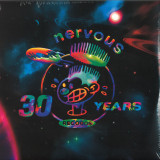
Nervous Records, the iconic label synonymous with the rise of house from the streets of New York City, will mark 30 years in the music industry by releasing the celebratory compilation LP ‘Nervous Records: 30 Years’ on October 1st (Part 1) and October 15th (Part 2).
Featuring original mixes of the label’s biggest tracks, plus remixes by some of its most celebrated acts, ‘Nervous Records: 30 Years’ is both a celebration of the past and of the future. Featuring a who’s who of electronic dance music, the long player sees names including Louie Vega, David Morales Darius Syrossian, Tensnake, Monki, Franky Rizardo, Danny Howard and more take on iconic Nervous cuts: ‘You Make Me Feel Mighty Real’, ‘Treat Me Right’, ‘Future Groove’, ‘Feel Like Singing’, ‘Get Up Everybody’, ‘Break You’, ‘Hot’, ‘End This Hate’, ‘Unspeakable Joy’, ‘Can Ya Tell Me’, ‘Jerk It’, ‘The Anthem’, ‘It Makes A Difference’, ‘Learn 2 Luv’ and ‘Don’t You Ever Give Up’.
The album marks one of the most enduring, extraordinary legacies to grace America’s illustrious music history, not just in electronica but far beyond. Founded in 1991 by Michael and his father Sam Weiss, and recognizable immediately by its distinctive character logo, the label grew rapidly, in no small part due to Michael Weiss’ practically unmatched passion for discovering new music.
“Louie Vega and Kenny Dope woke me at 4am on Tuesday night, Wednesday morning from their studio telling me they had something really different that I needed to hear,” Michael recollects. “I asked if they could play it over the phone. They said if I wanted to hear it I had to come to the studio. So of course I got myself up, got dressed and went there. That “really different track” ended up being ‘The Nervous Track’, a tune that became our signature release and was also highly instrumental in the emergency of London’s ‘Broken Beat’ movement.”
The label’s willingness to take chances on fresh sounds and innovative concepts rising up from the melting pot sidewalks of NYC ensured a body of work that has become a living musical history of the city. House cuts ‘Unspeakable Joy’ and ‘Nitelife’ (Kim English), ‘Get Up (Everybody)’ (Byron Stingily) and ‘Feel Like Singing’ (Sandy B) bump up against hip-hop anthems like ‘Who Got Da Props’ (Black Moon) and “Bucktown” (Smif-n-Wessun) and reggae cut ‘Take It Easy’ (Mad Lion); soulful flows from Mood II Swing (Kim English ‘Learn 2 Luv’, Loni Clark “Rushing”), Armand Van Helden (‘The Anthem’) and Nuyorican Soul (‘Mind Fluid’) sit alongside seminal techno singles like Winx’ ‘Don’t Laugh’. The young artists and producers who joined the Nervous Records’ family have gone on to become some of the most hallowed and celebrated dance acts of all time: Louie Vega, Kenny Dope, David Morales, Tony Humphries, Roger Sanchez, Armand Van Helden, Kerri Chandler, Kim English, Byron Stingily, Josh Wink, to name just a handful.
“We did a release with Josh Wink under his Winx alias entitled ‘Nervous Build-Up’,” Michael said. “It did well and it was obvious how talented Josh was. Subsequent to that release I was pretty persistent in asking him to continue to play me his new demos. During one phone conversation he said, “Mike I’m gonna play you something over the phone but don’t laugh when you hear it.” That demo ended up being ‘Don’t Laugh’, which became one of our biggest international hits and still to this day is one of America’s earliest and most impactful techno hits.”
As much a celebration of the label’s future as it is of their past, Nervous Records: 30 Years is but a marker in the imprints’ history, a clear sign of where they’ve been and also where they’re going. With 30 years behind them, the label’s determination to unearth new raw diamonds in the rough is as unwavering as ever.
“I’ve always been one to look at what others are doing (the industry at large) and think, “ok, are they doing this specific thing for a reason, or doing it because everyone else is doing the same thing” and make my decision based on that,” says Nervous Records’ General Manager Andrew Salsano. “In an age where data metrics and analytics reign supreme, I remain steadfast that they should be complementary to your decision and not the sole indicator to make one. So many songs today are written with 15 second hooks in mind for social media, and while there’s nothing wrong with that business model you will always be chasing the wave instead of carving out your own path and identity.
“My primary focus for the sound of the label has and will continue to revolve around signing good songs and music that has the ability to react at the street level first. The best results come from artists that are firstly given a bit of local love that grows into a global impact. Fresh ideas that express child-like curiosity and artists showing vulnerability in their music are also something I look for, artists and producers that are not making music with certain markets in mind, but rather their own style and signature that is unique but able to straddle the fine line of underground and overground.”
Still as raw, as underground and as finely tuned to the dance floor as they ever have been, perhaps the secret to the success - and the longevity - of Nervous Records has something to do with that hard, dogged, no-holds-barred NYC edge that runs through the veins of the label. With the next generation of producers rising from the clubs of New York, one thing is certain; Nervous Records will be there to find them, nurture them and bring them to the world at large, over the next decade and beyond.
DS-3 is a new lightweight compact digital stylus pressure gauge model. The DS-3 is a miniature ultra precision non-magnetic instrument that tunes your tonearm to the highest possible degree. The DS-3 scale is factory pre-calibrated for high accuracy measurements with the tolerance of +/-0.01 g.
How to use the DS-3
• Turn on the device by pressing ON button. The display will show 0000.
• Press the UNIT button to select the measurement unit. The default setting is gram/g.
• Place the stylus on the measurement plate on the right side of the device. Display will start blinking. It will stop blinking when the measurement is completed. The value displayed on the screen is the stylus pressure.
• The display screen will automatically dim to saving mode after 5 seconds of inactivity and turn off after 60 seconds of inactivity.
• When a battery runs out, a LO indicator will flash on the screen. Then replace both batteries.
• PCS button balances count by calculating the average weight of one piece-weight called a unit weight, then applying it to the total weight of what you are trying to count. Firstly, weigh one PC, then weigh the bundle, then push the PCS button and on the display you’ll get a number of PCS.
Technical data and precautions
•Sensitivity - 0.01g
•Operational weight range - 0.1g to 200g
•Battery - 2 × AAA
•Size - (L) 120mm × (W) 60mm × (H) 17mm
•Weight - 70g
•LCD screen with back lighting
•Auto off function
•Protect the device against high temperatures, dust and humidity
•Carefully lower the measurement object on the measurement plate
•Operating temperature range +10⁰ - +30⁰C
•Do not place objects weighting more than 200 g on the measurement plate
•Do not place the device on an uneven surface, it may result in not accurate measurements
- A1: The Mysterons /Century 21 Television Logo/Main Titles (The Mysterons Version)/The Power Of The Mysterons/ Red Vs Blue
- A2: Winged Assassin/An Officer And A General/The Mysteron Threat (Version 1)/Runway Runaway
- A3: Point 783 /The Oncoming Storm
- A4: Big Ben Strikes Again/Midnight Runner/Atomic Annihilation/The 13Th Hour
- B1: Avalanche/Chills, Thrills And Spills
- B2: Model Spy/Serenade De Monte Carlo
- B3: Seek And Destroy/Walking With Angels
- B4: Operation Time/The End Of Time
- B5: White As Snow/Tvr-17 Pop/Insubordination/End Credits (Original Version)
- C1: Spectrum Strikes Back/Main Titles (Standard Version)/Espionage On The Plains/The Mysteron Threat (Version 2)/ Indigo Fever /Bringing The House Down
- C2: The Trap/Trouble At Glen Garry Castle
- C3: Shadow Of Fear/Of Gods And Men/Wrath Of Phobos
- C4: Fire At Rig 15/Fallen Hero
- D1: Renegade Rocket/Major Disaster/A Wing And A Prayer
- D2: Noose Of Ice /The Tower Crumbles
- D3: Flight To Atlantica /Champagne Buzz
- D4: Expo 2068/Nuclear Detour
- D5: Attack On Cloudbase/40,000 Feet To Heaven/Faint And Empty Hope/Captain Scarlet (The Spectrum Version)
After the international success of Thunderbirds, Gerry and Sylvia Anderson turned their attention to a deadly threat from Mars. Seeking revenge for an attack on their home planet,
the Mysterons plot to use their powers to bring Earth to its knees.
Across 32 episodes broadcast during 1967 – 1968, the series is remarkable for moving away from the more caricatured puppets of previous shows –
they have more realistic body proportions and the storylines are much more violent and darker in tone. Something reflected in the music which has a
more militaristic feel to it although, as always, composer Gray offers up occasional lighter tracks to break up the mood.
The opening narration of each episode sums it up –
"The Mysterons: sworn enemies of Earth. Possessing the ability to recreate an exact likeness of an object or person. But first, they must destroy...
Leading the fight, one man fate has made indestructible. His name: Captain Scarlet."
The Captain Scarlet LP will be sixth album in the series which includes UFO, Supercar, Thunderbirds, Fireball XL5 and Space: 1999.
Lee Gamble completes his ‘Flush Real Pharynx 2019-2021’ album cycle with ‘A Million Pieces Of You’, the third EP of a triptych written in a time when the subjective experience of overload came to a halt, giving way to an overbearing sense of loss, burnout and a desperate need for hope. These seven tracks feel more reflective, more human than the two preceeding EPs; the serpentine dopplers and seductive supercar engines of ‘In A Paraventral Scale’, and imploding motion sculptures of ‘Exhaust’. A deepfake of Lee’s voice appears from the chaotic slow-mo crash of ‘Balloon Lossy’, timidly telling of “garbled… good news”. The uncanny spectre of deep fakes, AI and deep learning models give way to the melancholic loneliness of the solo piano in ‘Empty Middle Seat’. Then glimmering, golden pads on ‘Hyperpassive’ slowly crawl into the hopeful, bright arpeggiations of ‘Balloon Copy’. ‘A Million Pieces Of You’ is a ride through a part-synthetic, part-modelled, part-imitation, part-taught, part-human, part1hopeful, part-reflective and paradoxically affirmative space – an involuntarily fitting finale to an album originally conceived in a world different to the one we now inhabit.
The Esbjörn Svensson Trio, e.s.t. for short, are still
celebrated today as one of the most important and
influential European jazz bands of the last 20
years.
In 1999, the three Swedes achieved their
international breakthrough with ‘From Gagarin’s
Point Of View’. A star rose in the musical sky and a
unique world career followed. But sometimes stars
shine for much longer than one thinks. On ‘e.s.t.
Live 95’ there are recordings that prove that this
was also true for the Esbjörn Svensson Trio.
The band, founded in 1993, found their very
specific sound early on but it was not initially
noticed outside its home country. In 1995, when
the trio’s namesake still wore long hair and a
headband, these recordings were made at various
locations in Sweden. And whoever hears how the
trio played back then is left breathless.
Much of what distinguishes e.s.t. was already
strongly pronounced here: the coherence and
powerful grip of the playing; the catchy themes that
immediately jump out at the listener and yet do not
become clichéd; the fusion of the music of role
models like Thelonious Monk and Keith Jarrett into
a style of their own, always infected by the forward
thrust of rock. Magical moments were saved for
eternity by these recordings.
Now this e.s.t. early work is available on double
vinyl.
Since her debut onto the techno scene with the 2018 release of her EP 'Post-Traumatic Rave Syndrome' on Paula Temple's "Noise Manifesto" and a string of international festival and club appearances, Femanyst has gained a reputation for militant individuality. Akua Grant sets herself apart from the crowd with her aggressive & unrelenting industrial techno sets tinged with elements of Hardcore and Gabber. She has become known for her rebellious and innovative style in her adopted home of Berlin. Her self-assured approach to gripping and brawling techno tension sees her perform a fast paced and fervent flow on the dance floor. Femanyst continues to bring her unapologetically bold signature sound with her own techno imprint "Dark Carousel" as an extension to her much revered DJ sets of twisted and aggressive, high octane electronic music.
A2 Fluid - Post Industrial Transformation
Fluid is a queer DJ and producer based in Berlin. Supporting FLINTA* DJs, producers and party events are one of his priorities. His first release begun in January 2021 and he is still modelling his sound. His interest in electronic music goes from industrial techno to ebm to trance to hypnotic techno.
Post Industrial Transformation is a track which combines aggressive sounds and a lot of industrial elements. The transformation refers to Fluid's evolving own path. This evolution is similar to the tension that builds up all through the track. This track evokes change, modification, passage from one form to another.
B1 Hybral - Unheard Voices
Hybral is a Berlin-based non-binary DJ and producer drawn to eerie energetic industrial techno. They mix and produce haunting techno, EBM, and noisy-driven experimental sounds. Hybral's productions are made of dark atmospheric patterns linked with pushing percussions and basslines as well as heavily distorted kicks and harsh industrial noises. Mixing DJ sets the track selection is ranging from contemplative ambient to stern and fast techno - connecting vast influences from Hybral's personal experiences of spending days and nights on Berlin's dancefloors. They are founder of the queer label, podcast, and event series 'Subverted' which focuses on a distinct program aiming to lead dance music back to its roots of resistance and diversity.
B2 Marsch - Mrs. Jones
Marsch is a Berlin-based dj and producer from France, who initially began 8 years ago as a music curator and selector. She started to produce when she moved to Berlin, and has mostly been focusing on this for the past few years. She would define her music as a balance between melody, energy and texture, with a blend of minimalistic elements, rhythmic and percussions, and voices and futuristic synths.
DURCH BLN/TLV is a queer collective with a clear vision of solidarity and community building. DURCH operates in Tel Aviv and Berlin trying to bring queer people together, building a culture of inclusion, diversity and tolerance. In the tradition of original raves DURCH organizes solidarity events ranging from parties, to art and community events, with the strong belief that raves are a much needed place for people to come together, celebrate their diversity and learn to respect each other. Musically DURCH is eclectic inspired by hardcore, straight forward techno, ghetto and scouse house and 90s acid.
We proudly announce the release of our first vinyl record "dogged boldness". This is a long held dream by the entire crew. With Femanyst, Hybral, Marsch and Fluid we are happy to showcase four artists that are close and dear to DURCH BLN/TLV. The record is a compilation of four hard-hitting, inciting techno tracks. Rough, bold and aggravating, just the way we like it. We are proud that we are able to continuously work with queer artists and to be a platform to further queer artists visibility.
Disclaimer: The world needs more queer artist, more queer music, more queer techno, more queer perspectives, more queer love and more queer intimacy.
No place for any racist, sexist, trans- or homophobic shit.
Artwork by Rory Midhani
Mastering by Chlar
PT 003 –Borrowed CS –Balance|AscendEP PT003 sees Planet Trip take a Trans -Tasman journey to Wellington, NZ for a new EP from the prolific Borrowed CS, alter ego of Lord Echo Drummer, Cory Champion. All four cuts on the EP see his deft drum programming laying a foundation for a tough and diverse record. The A-side holds thepercolating jack track‘Balance’ and the bleepy cinematic synthwork trip “Ururangi”. Flip it over and you’ll find the infectious outsider boogie jam“ Mystic Shuffle” sitting comfortably next to the hazy and dubbed out club construction Ascend (Model 101). Club and or lounge room ready.
Limited to strictly 300 copies. No repress.
"Life, Love And Faith" - Allen Toussaint (p, g, hca, arr); Alvin Thomas (ts); Francis Rousselle (tp); Clyde Kerr (tp, frh); George Plummer, Vincent Toussaint (g); Walter Payton (b); Joe Lambert, Joseph Modeliste (dr); a.o. & The Meters
Allen Toussaint had it all around him – the voices and spirits of black music, rhythm ’n’ blues, funk and soul. He was born in New Orleans and grew up there, the birthplace of jazz. As from 1960, he worked as a record producer and an A&R man at Minit Records, an independent label, which was closely associated with the transformation of the New Orleans Sound. His compositions for fellow musicians landed them in the charts, he frequently participated by performing with them on the piano, and so became a connoisseur and master of all possible sounds.
"Life, Love And Faith" marks his launch into his solo career, and quite rightly so. In the songs, Toussaint amalgamates all he had mastered with a rocking R&B, funky rhythms and expressive soul to create his highly personal sound.
Although it is a soul album through and through, one has the feeling that one is listening to an album from Reprise’s stable of singers/songwriters – including such artists as Randy Newman, Bonnie Raitt, Little Feat and Joni Mitchell – rather than what usually came out of New Orleans in the early Seventies. And also because "Life, Love And Faith" captures an eccentric genius who pursues his own idiosyncratic vision. It is a structured, multi-layered album, which does not show Toussaint in his purest form, but it is his only album that shows just how widely ranged and profound his many talents were.
This Speakers Corner LP was remastered using pure analogue components only, from the master tapes through to the cutting head.
All royalties and mechanical rights have been paid.
Recording: 1972 at Jazz City Studios, New Orleans, by Cosimo Matassa and Skip Godwin
Production: Allen Toussaint
Cassette[12,90 €]
With ‘Harmonizer’, his first album in two years, Ty Segall glides
smoothly into unexpected territory, right where he likes to find
himself. Responding to the challenge his new songs gave him: a
synth-tastic production redesign, Ty kicks back with bottom-heavy
creativity, dialling up a wealth of guitar and keyboard settings to do
the deed.
‘Harmonizer’ is a glossy, barely-precedented sound for him, and
truth, it enraptures the ear - but in Ty’s hands, the sound is also a
tool that allows him to cut through dense undergrowth, making for
some of his cleanest songs and starkest ideas to date.
‘Harmonizer’’s production model couches tightly-controlled beats
in thick keyboard textures, with direct-input guitar signal whining
and buzzing purposefully from left to right.
The Freedom Band appear all over the record, but often one at a
time, their contributions leaving a distinctive footprint on the
proceedings wherever they appear. Operating in this airtight
environment with an eye towards precision, feel, and explosive
mass, Ty’s crafted a formidable listening encounter - and once you
get between the lines, the need to know more grows more
compelling with every song.
The first recording to be released from Ty’s just-completed
Harmonizer Studios, ‘Harmonizer’ benefits from a collaboration
with Cooper Crain, who co-produced the album with Ty. The Venn
diagram of these guys unites them in DIY/punk dyed-in-thewooldom; Ty’s propers you know, but Cooper’s own unique
journey in rhythm, minimalism and DIY (as heard on his
productions with CAVE, Bitchin Bajas and Jackie Lynn) mines the
depths around Ty’s peerless vocal attack and aid in the latest
chapter of his never-ending search for unfathomably corrosive
guitar sounds.
Bursting with transcendent energy, ‘Harmonizer’ is an extension of
the classic style of ‘Emotional Mugger’ and ‘Sleeper’, revisiting the
lonely days and loathsome nights of the alienated, grown-upwrong soul, to make it all right in the end.
Vinyl[29,12 €]
With ‘Harmonizer’, his first album in two years, Ty Segall glides
smoothly into unexpected territory, right where he likes to find
himself. Responding to the challenge his new songs gave him: a
synth-tastic production redesign, Ty kicks back with bottom-heavy
creativity, dialling up a wealth of guitar and keyboard settings to do
the deed.
‘Harmonizer’ is a glossy, barely-precedented sound for him, and
truth, it enraptures the ear - but in Ty’s hands, the sound is also a
tool that allows him to cut through dense undergrowth, making for
some of his cleanest songs and starkest ideas to date.
‘Harmonizer’’s production model couches tightly-controlled beats
in thick keyboard textures, with direct-input guitar signal whining
and buzzing purposefully from left to right.
The Freedom Band appear all over the record, but often one at a
time, their contributions leaving a distinctive footprint on the
proceedings wherever they appear. Operating in this airtight
environment with an eye towards precision, feel, and explosive
mass, Ty’s crafted a formidable listening encounter - and once you
get between the lines, the need to know more grows more
compelling with every song.
The first recording to be released from Ty’s just-completed
Harmonizer Studios, ‘Harmonizer’ benefits from a collaboration
with Cooper Crain, who co-produced the album with Ty. The Venn
diagram of these guys unites them in DIY/punk dyed-in-thewooldom; Ty’s propers you know, but Cooper’s own unique
journey in rhythm, minimalism and DIY (as heard on his
productions with CAVE, Bitchin Bajas and Jackie Lynn) mines the
depths around Ty’s peerless vocal attack and aid in the latest
chapter of his never-ending search for unfathomably corrosive
guitar sounds.
Bursting with transcendent energy, ‘Harmonizer’ is an extension of
the classic style of ‘Emotional Mugger’ and ‘Sleeper’, revisiting the
lonely days and loathsome nights of the alienated, grown-upwrong soul, to make it all right in the end.