Kapingbdi came together in Liberia, West Africa, during the late 1970’s and had their own unique style. This six to seven-piece band played original compositions in a vibrant mix of African Rhythms, Soul, Spiritual Jazz, Funk and Rock. Led by Kojo Samuels on sax, flute and vocals “Born in The Night” presents the essential tracks from their rare studio LPs produced between 1978-1981. The work has been carefully edited and remastered in 2019 for vinyl LP and a 6-Page Digipack CD, which includes two additional recordings. Kapingbdi toured through Europe and the U.S. and were the only Afro funk band to ever come out of Liberia.
Kapingbdi hail from Liberia, West Africa and have their own imitable style. They effortlessly combine traditional African music in a modern mix of Jazz, Funk, Soul and Rock. The band is a fusion of the old and the new.
The word "Kapingbdi" is taken from the Sierra Leone language Mende and means "born in the night". Kojo Samuels was given the name by his Latin teacher whilst attending high school in Freetown, They often meet and debate at night in the city and soon after Kojo is called Kapingbdi. The name serves as a description of his origin. Born In Lagos, Nigeria in 1943. The son of slave children. His mother from Nigeria and father from Sierra Leone who moved the family to Liberia, during the 1950’s.
Kojo has played music for as long as he can remember. He starts with the harmonica and later becomes a drummer and percussionist in his first band at school. During his art studies 1965-1972, he tours Germany and works as an art teacher in the USA. His band Kapingbdi is reorganized five times and consists of up to seven musicians. In a VW-Bulli he drives the group from concert to concert and if the drummer fails, he jumps in himself. Between 1978 and 1981 three Kapingbdi LPs are produced for the independent label Trikont, recorded in Hamburg and Munich. During this creative period, the band plays at festivals in Africa and Europe. In 1984, the band tours the United States and shortly after, they came to an end.
At their best, Kapingbdi would rouse the audience with original compositions like "Human Rights", justice for all, especially for South Africans, and "You Go Go You Go Come". The officials and employees in the government departments have no time for the common man, for any questions such as job search, scholarship or similar, he receives the answer "go, come back tomorrow" and the same thing the following day. Or "Now Is The Time For Cry For Love." Now it is time to scream for love and finally, time for humanity and justice. Despite immense difficulties, the musicians consciously live and work in Africa and are at home in Liberia.
On April 12, 1980, ordinary soldiers and non-commissioned officers organize a coup against the government. This is an attempt to put an end to a policy of exploitation of the Liberian people. Whilst efforts to eradicate poverty, lawlessness and illiteracy are obvious throughout the country, Liberia is still Americanized to a high degree. This is evident, as the radio programs of that time almost exclusively played American disco music. Under these conditions, the people seek a reconnection to their folk music, and Kapingbdi were aware of this. Kojo tried many times to come together with traditional Liberian musicians. This passion takes him north of the country. Meeting and playing with the old hornblowers and playing music on traditional instruments, such as the elephant tusk.
Kapingbdi make high quality tape copies of their own vinyl LPs and patiently try to displace all unauthorized tapes from the domestic "market". Nevertheless, it is hard to make a living through music in Liberia. Kapingbdi, is now celebrated. The radio plays are in abundance, but royalties are not forthcoming. Their musical link is the feeling of Afrobeat and Highlife, which is found in each of the many Kapingbdi pieces. They embody Jazz, which is understood to be the most refined example of black music outside of Africa. In Liberia, Jazz is virtually impossible to hear. Bright shining names such as John Coltrane, Charlie Parker or Miles Davis were widely unknown. Thus, the Black Jazz, including its Back-To-Africa movement of the 60’s and 70‘s, passes by without leaving a trace in Africa itself.
Kojo's claim at the time, was to make African music with the depth, sensitivity and the freedom of the technical level of Jazz. This makes Kapingbdi the torchbeares. The underpaid prophets in small Liberia. It is the passion with which the founder of the band continues to work on their music for years. Tirelessly, stimulating and encouraging his fellow musicians. This is ultimately responsible for the success of Kapingbdi in Liberia itself. The local audience seems to listen to the band in fascinated astonishment. One wonders about the ability to develop as demonstrated by Kapingbdi on the basis of their music. It is African and unusually jazzy, danceable and better than the American disco music heard on the radio.
Rather than chase the money and the job opportunities in Europe, Kapingbdi are firmly rooted in Africa. The musicians live in Monrovia, the capital of Liberia, at the Kabingbdi workshop, located in the Congotown area on the eastern edge of the sprawling city. Kojo works here as a sculptor, painter, batik artist and musician. The sales revenue that his activities generate, gives him the opportunity to support the development of African Jazz music. The highest percentage of funds are from Germany and Kojo’s work ethic is “to work on your own thing“. The stance taken aims to support the welfare of Liberians and Africans. The other musicians of the group live in a second house that is nearby.
For the sake of consistency, Kapingbdi is a full-time band. However, the revenue, from all of the sources, could not keep them afloat. Equally, as important to the group are Kojos's knowledge of traditional African music and his sculpting skills. His knowledge is shared with others at the afternoon workshops. It is here that they discuss new lyrics, engage in political debate and the self-imposed task of improving conditions in Africa. At times the debate became heated, especially during rehearsals. This was regarded as good and integrative, sowing the seeds of innitiative to keep the band together.
From 1980 to 1985 Kojo also opened and ran the club "Panjebota", located on the grounds of the U.S. Consulate in Monrovia. Almost every evening Kapingbdi perform the song "Wrong Curfew Walk", whose lyrics lament the killing of citizens during the curfew imposed by the Liberian government. When the head of state Samuel Doe hears the song, he behaves agressively and forces Kojo to close the "Panjebota". Kojo had already moved on. Soonafter he meets Fela Kuti at the Africa-Festival and plays concerts in Germany with Cecil Taylor's workshop band.
Kapingbdi is for thinking, dreaming, dancing. What they sing about is what they have experienced. Kojo Samuels is 76 years old today and still follows his vocation as a critical musician, artist and activist.
Ekkehart Fleischhammer / Sonorama 2019 (with the help of original press sheets and the memories of Kojo Samuels)
quête:modern art
- A1: Joke
- A2: Locomotive Cheer
- A3: Pink Ice Cream
- A4: I Dreamed When I Was Young
- B1: Ten Days Of Shiver
- B2: Running Scared
- B3: Bonsai Tree
- B4: Century Breaks
- C1: Badgers Of Wymeswold
- C2: Nostaw Boogie
- C3: Sports Bar
- C4: Hard Times
- D1: Silver Breasts
- D2: Caribbean Ginger Cake
- D3: I'm Going Out Tonight To Play Some Pool
- D4: Poppies
Garage rock supergroup The Surfing Magazines have announced Badgers of Wymeswold.
Consisting of one half of Slow Club and two thirds of The Wave Pictures, The Surfing Magazines’ primary influences are Bob Dylan, The Velvet Underground and all the great surf guitar music of the 1960s. They burst onto the scene with their eponymous debut album in 2017, a lauded LP described by Record Collector Mag as “a vintage-yet-modern rock’n’roll classic”.
Mixing the noir surf textures of 1960s garage rock along with west coast sun beaten harmony pop, the 17-track Badgers of Wymeswold follows the acclaimed debut and is to be released July this year. The London based foursome recorded the album at Ranscomb Studio in Rochester in February last year before the start of the first UK lockdown.
Pushing their sound forward, the band utilise their garage rock ethic and have both Drummer Dominic Brider and Rhythm guitar player Charles Watso lead on vocals across multiple tracks. The album sees a return of free form saxophone parts, eerie violins and piano all appear, notably on tracks ‘Nostaw Boogie’ and ‘I’m Going Out Tonight To Play Some Pool’. The title track is drawn from David Tattersall’s nightmare vision about his home town's population of self-governing people, the album artwork was also made by Tattersall and depicts a collage of his referenced dreams. The extensive LP showcases their characteristic sound at their brightest, from softer ballads such as ‘Poppies’ and ‘Silver Breasts’, surf guitar rock anthem ‘Locomotive Cheer’, and to the six bar blues ‘Pink Ice Cream’.
Award winning saxophonist, Kenny G, is the biggest selling instrumental musician of the modern era and one of the best-selling artists of all time. He’s maintained a high level of creative excellence through decades of unprecedented commercial success. After 6 years since releasing Brazilian Nights on Concord Records, Kenny returns with a new album New Standards, an 11-track collection.
Marcel Fengler's IMF begins 2022 with IMF011, the beginning of a new era of the label's outlook, which will combine a focus on new talent, established remixers and a design overhaul.
Belgian artist Milo Spykers is first out of the traps for 2022, with his "Hier & Nu" EP (complete with a remix from Fengler) delivering a four-track punch of modern techno. Spyker's use of dense synths across the EP imbue his tracks with a memorable character that leaps out of the speakers.
From the jagged and oppressive leads of "Hier & Nu" to the outright anthemic riffs of "The Helicity" via the cascading stabs of "Happex", the "Hier & Nu" EP is a boisterous work of controlled chaos. Fengler's remix of "Hier Nu" extracts Spyker's synths, and with clinical precision, reconstructs them around a lean, muscular rhythm track that oozes tension.
"Milo's a very talented young producer. He's got an uncomrpimising taste in techno and that convinced me that he's both a DJ and producer I want to support. I'm really happy to welcome him to the IMF Family." (Marcel Fengler, Jan 2022)
‘The Syd Barrett of the avant-jazz scene’ British jazz composer, pianist, songwriter, Mike Taylor died tragically young, leaving just two albums as well as co-writes with Ginger Baker for Cream’s Wheels Of Fire album to his name. In 1973, under the direction of Neil Ardley, several of the performers who had worked with him recorded an album of Taylor’s surviving orchestral music, jazz tunes and songs as a memorial to him and to preserve his work as a composer and song writer for posterity. Taken from Ardley’s master tapes, this is their critically-acclaimed tribute to a master of his art by friends and colleagues, themselves representing a cross-section of the cream of modern British jazz talent of the day.
Collective Personnel
Tony Fisher, Greg Bowen, Henry Lowther, Ian Carr (trumpets, flugelhorn) : Chris Pyne, David Horler (trombones) : Ray Premru (bass trombone) : Barbara Thompson (flute, alto flute, soprano sax) : Ray Warleigh (flute, alto sax) : Stan Sulzmann (flute, alto sax, soprano sax) : Bob Efford (oboe, tenor sax, bassoon) : Dave Gelly (bass clarinet, clarinet, tenor sax) : Bunny Gould (bass clarinet, bassoon) : Peter Lemer (piano, electric piano, synthesizer) : Alan Branscombe (vibraphone) : Chris Laurence, Ron Mathewson (bass, bass guitar) : Jon Hiseman (drums, percussion) : Neil Ardley (director) : Norma Winstone (vocal)
Composed by Mike Taylor. Music direction by Neil Ardley. Recorded by Denis Preston at Landsdowne Studios, London, 1973. For publishing credits, contact MCPS London, England.
Mastered by Martin Mitchell at Moorend Studios, February 2007.
He looked like a bank clerk, but acted like a mystic”. Obituary – ‘Melody Maker’, February 15th 1969
“You’ll be returning to this for eons to fully unlock its genius.” Record Collector
“From the eerie opening sounds, like an orchestra tuning up, through a searing chord, and then into the frantic countermelody under long brass on Brown Thursday, and the baleful march-time of Land of Rhyme in Time, Taylor's audacity is plain.” The Guardian
More from mystery artist Surrogate, reportedly a veteran Detroit-based techno producer operating under a new alias for the first time in 20 years. As with the publicity-shy artist's recent debut on Misstress Recordings, the four cuts showcased on this EP combine crunchy, distorted and sometimes extremely lo-fi techno and electro beats with dubbed-out electronics, deep space motifs and subtle nods towards vintage rave culture. There's much to admire throughout, from the soul-flecked deep techno crunchiness of 'Poison' and hypnotic, early morning brilliance of 'LX', to the fractured techno minimalism of closing cut 'Moderno'.
BLACK VINYL[17,19 €]
Blue Marble Vinyl[25,00 €]
Clear/White Splatter Vinyl[26,68 €]
At the start of the Fifties Miles Davis' career had hit a barrier which, for a period of time, seemed insurmountable, but by mid-decade, with his substance-abuse troubles behind him, he had established himself as one of the major artists on the modern jazz scene.
'Kind Of Blue' can often be found at the very top of jazz record polls and, despite competing claims, is probably the best-selling jazz record of all time. The listener should be in no doubt that they now own some of the most essential music of the twentieth century and on gleaming blue vinyl!
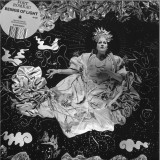
- Followup to 2015's Insides. - RIYL: Jacques Greene, Leon Vynehall, DJ Seinfeld, Project Pablo - Features cover art by Salvador Dalí protégé Steven Arnold. - Silver halide (gray + black marble) vinyl limited to 1,500 copies worldwide - Vinyl is housed in a black dust sleeve inserted in to a matte varnish jacket with metallic silver spot color // After a run of critically-acclaimed singles and EPs, British producer Michael Greene, aka Fort Romeau, returns to the full-length format with Beings of Light, the long-awaited follow-up to 2015's Insides and his second LP on Ghostly International. While a prolific DJ who orients many of his productions for the dancefloor, Greene still sees the album as the ultimate statement of intent, "a space to stretch out, to speak in full paragraphs rather than stunted sentences." He has explored several stylistic fragments in recent years (including the summer 2018 anthem "Pablo," hailed a Best New Track by Pitchfork), but when faced with the extended pause to the dance community in 2020, Greene felt compelled to focus on a larger body of work. Embracing a back-to-basics mentality, he amassed over a dozen hours of sounds, asking himself throughout the sessions: "Does the music move you? Is it honest?" He came out the other end with Beings of Light, an expressive collection traversing rainy day ambient, moonlit disco, and dream-like techno in pursuit of the power found within our subconscious. Album opener "Untitled IV" ushers in a sprinting tempo in its exploration of the human voice, a recurring device in the Fort Romeau project. Greene uses it as a compositional layer, disembodied with its context often opaque or reduced to a single phrase. Here the voice is scattered in percussive twitches, colliding with a kick drum to induce a near state of hypnosis as horns sound off in the distance. Propulsive standout "Spotlights'' is Greene's ode to the romanticised New York City that lives in our hearts, nocturnal and carefree. A vocal snippet repeats the title with a breezy poise, reminiscent of classic house cuts. "Ramona'' honors the beloved Robert Johnson club in Offenbach, Germany. Hazy, spacious, and sustained, Greene designed the beat with their system in mind, "also with a strong nod to the more modern lineage of exceptional minimal house music from Frankfurt," he says. Two ambient pieces surround the track, "(In The) Rain" sets the scene and "Porta Coeli" (a Latin phrase which loosely translates to "heaven's gate") soundtracks the comedown. The album's closer, the title track, is an arc constructed with atmospheric textures, euphoric swings of percussion, and a well-placed piano refrain, "Beings of Light" is adaptive; one could imagine it reverberating from a club, scoring the emotional apex of a film, or radiating through the realm of dreams.
Shawn Lee goes on a soul trip. Together with Hamburg/Germany based The Angels Of Libra he recorded two modern soul steppers for this special 7inch single release. "Bless My Soul" is truly blessed by it's magic hookline, while "Souvenir" tells a smooth soul story.
The Angels Of Libra consists of the wrecking crew in Hamburg's soul musician scene. They set out to work and recor with a variety of talented singers and artists, while producer Dennis Rux (Yeah! Yeah! Yeah! Studios) aims to create a vintage, but modern sound.
clear w/ black smoke vinyl
It would be easy to say that Molly Nilsson needs no introduction, but These Things Take Time is an introduction. Originally self-released in 2008 on a limited CDR run with hand-folded sleeve, Nilsson's debut album has slowly taken over the hearts of many. In 2014 this modern classic of autonomous, DIY pop and punk-as-you-like attitude is presented on vinyl for the first time in a beautiful edition featuring unreleased bonus tracks across two discs, an exclusive screen printed A2 poster and new sleeve notes from the artist.
Molly Nilsson's first recordings under her own name have grown in stature to occupy a prominent positioning in the global pop underground despite initially only being available on CDr. Though Nilsson's songwriting prowess and commandeering of other genres has grown since 2008, her unique voice is seen in raw form on These Things Take Time. Many of the themes she would develop later were inked first here: the romance of loneliness on The Lonely,' Whisky Sour,' Hey Moon!', the folly and intoxication of youth seen in Joyride,' Poisoned Candy' and dogged self-reliance as on The Diamond Song' or Wounds Itch When They Heal.' Also included here are unreleased recordings from the same period that were left off the original release, a further window into a turbulent, exciting time for an artist just discovering her power to touch and communicate with the listener.
- A1: Tyrell (2021 Remaster) 03 42
- A2: Take The Bus (2021 Remaster) 05 14
- A3: Rollen Rink (2021 Remaster) 06 09
- A4: Close, But Not Quien (2021 Remaster) 06 01
- A5: The Official Gm Ski-Wm Theme (2021 Remaster) 01 07
- B1: Temko (2021 Remaster) 05 20
- B2: Boom (2021 Remaster) 06 33
- B3: Madshoes (2021 Remaster) 05 38
- B4: Obvious (2021 Remaster) 03 36
- C1: No Ketting (2021 Remaster) 05 30
- C2: Blob Return (2021 Remaster) 02 12
- C3: Bonden (2021 Remaster) 04 54
- C4: Mimi (2021 Remaster) 01 41
- C5: 11 25 (2021 Remaster) 04:40
- D1: Die Mondlandung (2021 Remaster) 11 00
First time vinyl issue of this 1997 Mego classic. General Magic, the duo of Ramon Bauer and Andi Pieper, who, alongside Pita, first pioneered the classic Mego sound on the Fridge Trax 12” in 1995. The following year proved to be formulative when Mego released Frantz alongside a slew of game changing releases from Farmers Manuel, Pita and Fennesz.
Originally released as MEGO 010 Frantz presented a thrilling digression from what was in vogue in music at the time. This was the advent of portable computing and the Vienna based label was at the forefront of harnessing the potential of audio within this new technology.
At once smart and playful these releases reconfigured once disparate genres such as industrial, techno, glitch and the avant garde, folding them into a bright, audacious and euphoric new system of sound. The music on Frantz (named after the Austrian skier, Franz Klammer) still pushes the boundaries of acceptable audio constructions with it’s startling fried electricity and twisted sensibility. The sense of joy in the audio discovery is palatable as techno laced explorations unfold a variety of unexpected and unprecedented sonic manoeuvres.
Tyrell launches proceedings as schizophrenic stuttering handclaps simultaneously slice into pieces as it propels forward. The bending of the brain is on display with the likes of ‘Obvious’ and ‘Close, But Not Quien’. Temko skewers digital debris in which a ghost melody comes to the fore. Brazen rhythms mobilize the tracks ‘No Ketting’ and ‘Bonden’ whilst the Official GM Ski-WM Theme is a short stab of priceless pop wizardry skittering about a strange exhilarating melody in homage to the finest of winter activities.
This reissue also includes ‘Die Mondlandung’ which was released as a 12” in 1995 (MEGO 002), and has never been released anywhere, physical or digital, since. This track is based on the live German TV coverage of the moon landing. An apt theme for the abundance of exploration contained within this classic release.
--
About Frantz ... and Peter (by Ramon Bauer & Andi Pieper, November 2021):
Listening to the test pressings of the remastered Frantz album for the first time on vinyl, 25 years after the original release on the then still young Mego label in 1997, felt like uncovering an ancient artefact. In those exciting days during the mid-1990s, together with the late Peter Rehberg, we founded a label called Mego to further explore the wonders of electronic music. And that is what we did for the next 10 years until everything became too much with the label in somewhat rough waters. So we dropped out of music business and pursued different things. It was Peter who continued producing and releasing music with the restarted label, now called Editions Mego. Until his unexpected death in July 2021, he developed Editions Mego into the grown-up and much acclaimed outfit for which it is known today. We will forever miss Peter’s inspiring personality and his uncompromising creativity. His legacy will live on in his music and in the vast and rich Mego and eMego catalogues. We are humbled and proud to have played a role in those formative years of the label.
Peter approached us in October 2020 with the idea to do a vinyl reissue of Frantz, just in time for the 25 year anniversary of its release. That came as a complete surprise for us, General Magic had not released any music or performed live for over 15 years. Anyway, we were delighted with the prospect of having that General Magic "classic" remastered (by the exceptional Russell Haswell) and released for the first time on vinyl on Editions Mego.
Frantz is a collection of tracks that we produced in 1995 and 1996 right after recording “Fridge Trax” (with Peter) and “Die Mondlandung” (which comes as a bonus track on this reissue). At that time, we started to migrate our analogue gear to 64 MB RAM computers and used almost every other digital thing that yielded a sound by any means. We even deliberately crashed our then so-called "Powerbooks" and scratched self-produced CD-Rs until they produced previously unheard sounds. Real time audio processing with computers was barely a thing back then (before SuperCollider was released), but cheerful massaging of sound files yielded interesting results and the future looked bright. Listening to Frantz today, with decades of distance, there are some parts that might appear dated by modern standards, but the energy and the general magic of that period is well captured.
All Frantz tracks were produced in Andi's studio in Berlin and at Mego Vienna. The Mego studio/office was a vivid place located in an old factory on the outskirts of Vienna. We shared the place with Tina Frank, who created most of the early Mego covers and videos. Other artists, musicians and friends were hanging out there almost every day. Many ideas on Frantz are a product of that particular environment. “Mimi”, for example, is based on a field recording in the backyard of the factory, where we also shot the video for “Tyrell”. “11.25” contains sounds from the Prague train station we regularly passed through on the night train travelling between Vienna and Berlin. Other sounds were sourced from the early internet and mangled on the computer, carefully preserving those early audio codec artefacts. While working on the Frantz tracks at the Mego Vienna studio, Peter was usually around, as he was literally working and living there. And so, of course, he also made an impact on that album: It might not be widely known but Peter even appeared on Frantz contributing his voice to the choir on “The Official Ski WM Theme”.
Let there be Frantz!
Following the 2019 soundtrack release of ‘Matthias & Maxime’, Mercury KX are thrilled to share Jean-Michel Blais’s upcoming LP aubades. The new album from the Montreal-based icon of modern-classical music shows a new side to the artist. The album features some of his best piano moments but also has grand orchestral elements and arrangements which show a new side to the artist – and has a lot of moments in uplifting major as opposed to melancholic minor.In his own words: “With this album, I was definitely responding to certain trends in classical music. For example, the fact that the solo piano tends to always sounds melancholic. That’s good, but I’ve done that already, I wanted to go beyond that. It was also the first time I’ve ever written so much in major, not minor. So much of piano music, especially in this modern classical music world, is in minor. I wanted to go there but without being kitsch.”
A quick introduction to the soulful recording artist Al Lindsey.
Al Lindsey was born in a small town in Gordonsville, Virginia. He moved to Detroit at the age of eleven. He found a voice for singing at the age of twelve and as a young lad at the age of fourteen he was to sing lead in the adult church choir. Al was performing in nightclubs at the tender age of sixteen.
As a Detroiter it is only reasonable he would be influenced by the sounds of Motown, with David Ruffin and Marvin Gaye as his childhood idols. Back in the day, Al was to perform with the current Four Top Lawrence Payton Jr prior to pursuing a solo career. His first recording was Always on my mind, a Northern soul classic. Followed by three albums, Al has since released his best work ever, Versatility.
In search of a new sound, he teamed with J&J2 Productions out of Saginaw. This production team consist of the dynamic father and son team, James Owens Sr and James Jr. There’s a strong message in this work, as was with Marvin Gaye’s classic “What’s Going On”. Versatility is the featured song on the cd, with it’s primary message addressing the beauty of diversity. Cotton Candy is a blazing dance track with the influence of Maze. Changed is a personal testimony, a must for his gospel fans. Midsummer Dream and Heavy Thoughts represent his trademark balladeer sound.
Al has shared the stage with some of the more prolific entertainers and musicians in the business. This soulful artist is destined for greatness.
This track got picked up on its digital release by any radio station and modern fans and a big than you must go to Mark Turner for introducing Al to MD Records.
In my parents' living room stands an elaborately hand-forged copper kettle - my grandfather's masterpiece, hammered out of a single piece of copper. Growing up in a family of craftsmen, I have been familiar since early childhood with the attitude of perfecting a thing for its own sake.
The deepening concentration and slow maturing of execution, the craft shares with spiritual rituals, with arts, sports and the sciences. I am touched by the sight of almost ideal expressions of human activity, be it a forged piece, a perfectly build sentence or an athletic performance. I dedicate my album SKILLS to this fascination.
A branched succession of changing skills has brought mankind to the present day. The skills that were originally life-supporting grew into handy crafts and art. This development through the times reflects the enormous changes in ethics, aesthetics and morals. People describe this process in many shades, from culturally pessimistic dystopias to posthumanist utopias.
The music of SKILLS lives in this field - between hymn and melancholy.
Led by the unique lyrical and vocal talents of Larissa Stupar, VENOM PRISON’s rise to prominence has been swift and exhilarating. Both 2016 debut album “Animus” and its 2019 follow-up “Samsara” received widespread praise from media and fans alike, while the band’s ferocious live shows notched up acres of wide-eyed acclaim. As a result, the release of VENOM PRISON’s third full-length, “Erebos”, is destined to be one of /the/ metal events of 2022. A wildly inventive but utterly destructive onslaught of genre-defying extremity, “Erebos” is a giant leap forward and deafening confirmation that VENOM PRISON are the real, ground-breaking deal. “Everything needed to be bigger, better, catchier,” says guitarist Ash Gray. “We have said many times in the past that this band will not write the same record over and over again. It wasn’t about showing how heavy we can be. We know we’re a heavy band. We just wanted to be more creative, and this time we had the luxury of having time on our side. Larissa’s distinctive style comes through even stronger. It’s even more poetic, while still critical of the issues we face in Western society.” A thrilling explosion of artful savagery, warped melodies and tumultuous atmospherics, “Erebos” is a powerful, defining statement from one of the most exciting bands of the modern era. From humble origins to undisputed heavyweight status, VENOM PRISON are now an unstoppable force. “’Erebos’ has really opened our horizons as a band, making us want to be more creative as a whole. For us, it has always been about evolving musically and progress with every single step we take, and that will never change. We have a lot more to explore and we are confident that we’re capable of doing so. The grind must continue.”
Brooklyn-based musician and producer Varsity Star makes his Small Pond Records debut with ‘More Than Anything’, a mini-album of deeply moving and emotive electronic music.
Varsity Star is an electronic musician and upright bassist who grew up in Boston and spent time playing with various bands as a multi-genre sideman. After deciding to go it alone and produce music on a synth and Ableton, he had a spell living in Berlin. Now back in Brooklyn, he has become a prolific artist who, in just a couple of years, has put out various singles, remixes and LPs. As a programmer by day, he has put together high spec live shows involving 3D printers, soldering together LEDs and writing his own programs that read Ableton and output light patterns, he is a truly creative mind.
There is a soft and warm late-night melodic glow to the beautiful opening ambiance of 'Christmas Lights' which then makes way for the prickly live drums of 'Mixtape.' Littered with off-grid hits and detuned synth sounds, it's a modern and electronic take on jazz that is deeply absorbing. 'Bedroom' is a gorgeous affair that floats on airy pads and scuffed up, organic drum sounds while the most innocent of melodies play out.
- A1: Opening - 03 24
- A2: Call Center - 02 22
- A3: End Love - 00 58
- A4: Sister - 01 39
- A5: Mdma - 01 33
- A6: Paris 13Th - 01 52
- A7: Mother - 01 27
- A8: Arrival - 01 43
- B1: Nora - 02 05
- B2: Humiliation - 1 34
- B3: One Month Later - 02 37
- B4: Camille & Emilie - 01 39
- B5: Emilie Dance - 01 54
- B6: Looks - 01 10
- B7: Porno - 2 40
- B8: Nora & Amber - 2 56
Sixteen musical vignettes of electrifying emotion at the crossroads of ambient, modern synthesizer productions and organic orchestral music experimentation, which tint French director Jacques Audiard's new feature film with the illuminated glow of a whole new generation.
Textextext - (add your write up)
When Jacques Audiard contacted him, Rone was just a few weeks away from receiving the Cesar award for best film score for his very first soundtrack "Night Ride", the highest honor in French film for a composer.
Throughout his career, the French director has been able to surprise his audience by playing on the codes of "genre films", while remaining faithful to the aesthetics of "art film". His cinema is both profound and entertaining, sophisticated and accessible, dark and dreamlike.
"Jacques' cinema is physical, sensual, modern", Rone says about the director, "when he asked me to do the music for Paris, 13th District , I immediately accepted, without seeing any images or reading the script. He is simply one of the greatest contemporary filmmakers."
His new feature film deals with youth in general and their sexuality in particular in a way no one may have done before. The story is based on four young characters and their existential questionings, whose destinies intertwined against the backdrop of the Parisian "Olympiades" high rises in the 13th arrondissement.
But time was already running out, as the film was set to be nominated for *Cannes' Palm D'or* at the rescheduled edition of the festival in July 2021. Between the releases of "Rone & Friends" and his remixes for Agnes Obel, Go Go Penguin and Jehnny Beth (who also plays a role in the film), the producer decided to lock himself away in in his brand-new Isola Studio in Cancale, French Brittany. He also invested in a large screen on which he projected loops of the film and started manipulating his gear. "I had Miles Davis in mind and the way he composed "Ascenseur pour l'échafaud" by improvising with his band while watching excerpts from the film."
After a first conclusive test on three scenes of the film which allowed Rone to showcase the skills he had developed in composition in various musical fields, a relationship of trust developed between the musician and the director, which resulted in over 45 minutes of Rone's music used for the final cut.
"There was a lot of music to be made in a short time, but the talks with Jacques were very stimulating. He had a fairly precise idea of what he wanted, while at the same time, I think, having the desire to be surprised, or even a little shaken up."
If the black and white aesthetic recalls the great hours of the "Nouvelle Vague", Rone´s music gives a new layer to the film which fits resolutely with 2020's zeitgeist.
This second soundtrack by Rone is a sonic urban adventure in itself. As it is used in the film, colouring in the lives of Audiard's protagonists, it will have the same impact on us, the listeners, in our own everyday lives.
- A1: Dick Khoza And The Afro Pedlars - Chapita
- A2: Ensemble Of Rhythm And Art - Pelican Fantasy
- A3: Spirits Rejoice - Sugar Pie
- B1: Makhona Zonke Band- The Webb
- B2: Abacothozi - Night In Pelican
- C1: The Black Pages - There Goes
- C2: The Headquarters - Moshate
- C3: The Shyannes - Asso-Kam
- D1: Almon Memela’s Soweto - Pelican City
- D2: The Drive - I Have A Dream
‘The Afro Modern Seventies Sounds of Soweto’s First Nightclub
• Over ten years in the making, this is the first compilation from South African vinyl re-issue specialists Matsuli Music
• Ten track double gatefold album journey through jazz, funk, fusion and disco, detailing the incredible story and sounds behind the Soweto nightclub during the height of apartheid
• Uniquely South African take on the trans-Atlantic sounds of Philadelphia, Detroit and New York City
• Cover artwork by Zulu Bidi (of Batsumi fame) with unseen photographs, and liner notes by Kwanele Sosibo featuring interviews with key musicians, players and a former president of South Africa
• Audio mastered and cut for vinyl by Frank Merritt at The Carvery with heavyweight 180g vinyl pressed at Pallas in Germany
A night-time haunt in the backstreets of Soweto run by a well-known bootlegger should have been a prime zone for nefarious underworld activities. Instead, it nurtured an underground of a different kind. Soon after its opening in 1973, Club Pelican became a spot where musicians steeped in the tradition of South African jazz began to cook up experimental sounds inspired by communion, competition and the movements in funk and soul blowing in from the West. Located in an industrial park on the western edge of Orlando East, Soweto, Club Pelican was off the beaten track, among a matrix of railway and industrial infrastructure. In a different time and place, this would have been a prototypical nightclub location, except there was no local precedent to follow. This was Soweto’s first night club.
In the intervening years, this location has served to heighten the now-defunct spot’s legendary status as a singular venue, one that ruled the night in the Seventies. Initially called Lucky’s and established in 1973, the Pelican’s impact on the Soweto cultural landscape was immediate. Lorded over by a charismatic figure known as Lucky Michaels, the club became the jewel in a nondescript collection of family businesses. It boasted a diverse pool of talent in its succession of house bands and an A-list of ghetto-fabulous singers as
its cabaret stars. Its VIP section was a veritable who’s who of Soweto society and its stage, hosting a mix of the day’s pop culture infused with the creativity and individual histories of the musicians, the Pelican filled a live music vacuum.
One Night in Pelican captures the halcyon seventies period with a single nightclub embodying an indomitable spirit of its troubadour players. While schooled and rooted in “standards” and local forms, the music could take any direction, at a moment’s notice. This compilation features all the key groups and players of the time: Abacothozi, Almon Memela’s Soweto, The Black Pages, Dick Khoza and the Afro Pedlars, The Drive, Ensemble of Rhythm and Art , The Headquarters, Makhona Zonke Band, the Shyannes and Spirits Rejoice.’
Tara Nome Doyle is a 24-year old singer-songwriter with Norwegian-Irish roots. In April 2018 her first release, the song Down with You came out. Since then it has been streamed more than four million times. More singles and an EP called Dandelion followed. In January 2020 her debut album Alchemy was celebrated by the German press (“… like Kate Bush singing songs by Nick Cave at Berghain”, SPIEGEL). TND’s second album, Værmin, will be released in January 2022 on Modern Recordings. The album was produced by Simon Goff, a Grammy-award winning producer (for his work for Hildur Guðnadóttir’s Chernobyl score), violinist and engineer.
TND likes to collaborate: In spring 2021 she co-wrote an original song with Isobel Waller-Bridge (Fleabag) for the upcoming Netflix feature film Munich - The Edge Of War. In July 2021 the EP The Moments We Keep, which she co-wrote and co-produced with the Italian pianist Federico Albanese, came out on Mercury KX. In late 2020 TND released recordings with Malakoff Kowalski (Bad Dreams) and 1k Flowers (Clemency). TND has also collaborated twice with Max Rieger (Die Nerven; producer of e.g. Caspar and Drangsal).
On Væermin TND tells a tragic love story, rich in symbolism and nuances, orchestrated with piano, violin and synthesizer and sometimes pulsating beats – and with singing that is both intense and varied, sometimes angelic, sometimes rough and threatening. Væermin is touchingly beautiful – and yet it also celebrates the supposed ugliness that lives in all of us and that we like to suppress and ignore. All songs are named after animals that are considered undesirable pests: leeches, caterpillars, snails and worms. Væermin celebrates their beauty and thus also asks a political question: What would happen if we welcomed these vermin instead of rejecting them? Wouldn't we then arrive at a much richer, balanced relationship with ourselves, to a more differentiated relationship to the world around us and to other people?
Værmin is a grand, wise, deeply moving album. And the songs get stuck in your head immediately, pulling you into their depths: existential music by an extraordinary artist.
Following the immense critical acclaim of Siti Muharam's album 'Siti of Unguja', On The Corner release a limited run of 500 transparent vinyl. Crowned Album of the Year 2021 by Songlines, 'Siti of Unguja' was also selected The Guardian's Global Album of the Month, The Wire's No.1 Global Album and included in best albums of the year lists in NPR and The Vinyl Factory.
Siti of Unguja tells the story of pioneering women, of the ‘golden voice’ of Siti Muharam, heiress to the singular legacy of her great grandmother, the mother of taarab, Siti Binti Saad.
On the Corner teases this first taste of a landmark recording that the label embarked upon two years ago on Zanzibar. Siti of Unguja has a transformative atmosphere, brimming with romance, passion and protest.
Zanzibar is an Island archipelago that lies 6 degrees South of the equator and 30 miles off the East African coast out in the Indian Ocean. Known for its spices, traditional Dhow sailing boats and being a mercantile trading capital of Swahili culture.
The modern history of Zanzibar can be animated through the life and legacy of one artist, Siti binti Saad. Born in 1890 in the small fishing village of Fumba, on Unguja (Zanzibar’s largest island), she became the first Zanzibari recording artist and her recordings sold in tens of thousands across the swahili world.