Black Vinyl, DL Card. Following Lucy Gooch’s acclaimed ‘Rain’s Break’, her first release on Fire Records earlier this year, the artist’s acclaimed debut EP ‘Rushing’ is revisited with new artwork and a brand new track, ‘Orthione’. “Lucy’s sound marries the etheral qualities of ambient music with buoyant, effortless pop” Crack ‘Rushing’ in its original shorter five-track incarnation was heralded as a touchstone beneath the cascading torrent of modern times and an oasis for turbulent times. An intimate collection of songs built around Lucy’s emotive vocals and unique ambient dream pop, the newly added stand-out track ‘Orthione’ trips into the esoteric world of Laurie Anderson and Philip Glass; here her voice is the grounding force that travels to a space that heals and grows. “For an artist whose favourite trick is the seemingly infinite crescendo, she clearly knows the value of restraint” Pitchfork // “Expansive, upfront, spectral pop” KEXP // “The pastoral element of the music resonates more as you tune in to Lucy’s unique vocal.” Loud And Quiet
quête:modern art
- A1: Nanbu Ushioi-Uta (Feat Kifu Mitsuhashi)
- A2: Isohama Bon-Uta (Feat Toshiko Yonekawa)
- A3: Hohai-Bushi (Feat Kifu Mitsuhashi)
- A4: Otemoyan (Feat Toshiko Yonekawa)
- A5: Aizu Bandaisan (Feat Kifu Mitsuhashi)
- B1: Saitaro-Bushi (Feat Toshiko Yonekawa)
- B2: Soma Nagareyama (Feat Kifu Mitsuhashi)
- B3: Yagi-Bushi (Feat Toshiko Yonekawa)
- B4: Asadoya Yunta (Feat Kifu Mitsuhashi)
- B5: Konpira Fune Fune (Feat Toshiko Yonekawa)
Following the already classic Wamono A to Z trilogy, 180g presents an exceptional collection of jazz funk / rare groove tunes recorded in the mid-seventies at the Nippon Columbia studios by three giants of Japanese music: arranger Kiyoshi Yamaya, koto legend Toshiko Yonekawa and shakuhachi master Kifu Mitsuhashi.
- 180g heavy vinyl pressing, reverse board jacket
- Fully licensed Nippon Columbia masters available for the first time outside of Japan
- Mastering and lacquer cut by Jukka Sarapää at Timmion Cutting Lab, Helsinki, Finland
- Artwork by Nker
---
Born in 1932 in Tokyo, Kiyoshi Yamaya started his musical career in 1953 when he played in various jazz bands in town. In 1957, Yamaya joined Nobuo Hara's famous jazz big band Sharps & Flats as a baritone saxophone player and started composing, arranging, and recording for them and other big bands. He became a key jazz figure in Japan in the sixties together with Norio Maeda and Keitaro Miho, both jazz pianists, composers and arrangers, by forming the Modern Jazz Three Association – which aimed at improving the level of Japanese jazz composition and arrangement. In the mid-seventies, his Contemporary Sound Orchestra explored jazz funk fusions with traditional Japanese melodies and instruments such as the shakuhachi, koto, biwa, and shamisen. These works were recorded for a series of panoramic Japanese albums released domestically on Denon and Nippon Columbia, from which the tracks on this compilation are taken from.
Toshiko Yonekawa, born 1913 in the city of Himeji, not so far from Osaka, is the eldest daughter of koto and shamisen master Kin'o Yonekawa. She started studying both instruments with her talented father from the age of 3, played in her first concert at 8, and was only 12 years old when she first appeared on national radio. Her unique style of koto playing is widely recognized due to the extreme accuracy of the intonation and rhythm, as well as the unequaled beauty of the instrument's sonority. After a life decorated with awards and prizes, Toshiko Yonekawa was named a Living National Treasure in 1996.
Born in Tokyo in 1950, Kifu Mitsuhashi is a great master of Koto style shakuhachi. After completing the NHK Hōgaku Training Program in 1972, Mitsuhashi became a member of Pro Musica Nipponia, a group of leading composers and top-ranking musicians devoted to performing a wide-ranging repertoire of classical and contemporary compositions from both Japan and the West – in which all music is performed by traditional Japanese musical instruments. Mitsuhashi has toured the world for hundreds of recitals, also as a soloist, and has performed his art with the greatest ensembles such as the BBC Symphony Orchestra and the Berliner Philharmoniker. In 2020, Kifu Mitsuhashi was awarded the Order of the Rising Sun.
---
All tracks selected and compiled by Greg Gouty and Maxime Brottes, with the assistance of Ryohei "Nitchiku-kun" Tanaka.
All tracks licensed by Nippon Columbia, Japan.
Mastering and lacquer cut by Jukka Sarapää at Timmion Cutting Lab, Helsinki, Finland.
Artwork by Nicolas Kerembellec (Nker.fr).
Proofreading by Brian Durr (Diskotopia).
Executive producers: Greg Gouty and Maxime Brottes.
180GWALP04 - Manufactured and distributed by 180g.
An outstanding raga-like drone lp with a distinctive cosmic vibe, Futuro Antico was a short living collaboration between the two italian Walter Maioli (Aktuala), Riccardo Sinigaglia and Gabin Dabiré (from Burkina Faso). The synthesis between ancient, ethnic and analog electronic music is just perfect, the minimalist repetition with slight changes gives associations of a slow growth; cyclic repetition gives the listener an opportunity to discover the sounds, to meditate, to go into the music, join the same journey trough ancient, primitive cultures and modern electronic soundscapes.Originally released in 1980, the sound is completly analog and warm, this reissue maintain the first tape artwork + info and photos.
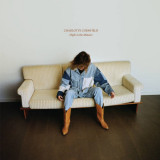
When the world shut down in March 2020, Charlotte Cornfeld was in the
middle of an artist residency in the Rocky Mountains, hunkered down in a
hut with a baby grand piano, sketching ideas for a followup album to her
Polaris-Longlisted 2019 LP The Shape of Your Name - In a matter of
hours, she found herself back home in Toronto with months of touring
cancelled and a wide swath of time ahead of her
She began to write feverishly, mining her memories and dreams and recounting
them with vivid detail. When the songs were fnished, she headed to Montreal to
record with producer/ engineer Howard Bilerman (Arcade Fire, Leonard Cohen),
drummer Liam O'Neill (Suuns), bassist Alexandra Levy (Ada Lea), and guitarist
Sam Gleason (Tim Baker). The group tracked the album in 5 days, mostly live off
the foor, seeking to capture the raw emotion of the songs. The result is Highs in
the Minuses, a memoir in fragments. Here Cornfeld fully embraces the role of
narrator, moving from one vignette to another in a colourful collage. We see her at
21, heartbroken and lost, carrying a friend's 3-legged cat back to her apartment in
a box; then as a teenager, playing a new song for a group of friends on a
trampoline. She sings of a magical frst date, an ex with a mean streak, two
skateboarders gliding in a lakeside parking lot. The brutal honesty in her lyrics
brings to mind writers like David Berman and Adrianne Lenker, while musically
she conjures a Zuma-era Neil Young, leaping from crunchy guitar rock to piano
ballads with effortless grace. Highs in the Minuses is Charlotte Cornfeld's
strongest offering to date, each song a gem in and of itself.
Emerging like and ornate relic, Austin-based power trio Grivo combine
slow, methodical hooks and warm tube amplifers to artfully re-establish
the line between heavy guitars and downtempo pop
Grivo's tones and effects are utilised as active compositional elements, crafting
and pacing their infectious riffs to allow the saturated guitars and bruising lowend to fully bloom. Within the tidal sound waves and bleak timbre, Grivo forges a
distinctive personal connection that challenges the modern defnitions of doom
metal and shoegaze.Shipping on or around 28th January 2022.
Robert Stillman's much-loved, homespun collection of Fender Rhodes improvisations receives the vinyl treatment from Kit Records.
Recorded to tape in the solitude of Robert's Kent studio, PORTALS is truly a candid window into the trance-like process of making: melodies, ideas and themes are added folded, concealed and revealed like layers of paper and paint, combining to form an intimately transportive sonic mural.
Most startling are the shifting voices of the Rhodes - from careening, glassy pads to strident basslines, curveball jazz breakdowns or kaleidoscopic marimba flutter. Keys players take note: PORTALS is a masterclass in restricted virtuosity. Quite how so many worlds are conjured from one instrument across the 35 minute duration of this record, we're not sure.
Recommended if you like Beverly Glenn-Copeland, Arthur Russell, Kali Malone. This vinyl edition of Portals features a previously unreleased track, 'PORTAL 8'.
Robert Stillman is a composer and multi-instrumentalist from the northeast United States. His music juxtaposes the archaic with the futuristic, incorporating influences of Jazz, Minimalism, American Folk music, and experimental electronic music to create a sound described by the Guardian as "lending an avant-garde shimmer to pre-modern American sounds."
After more than a year of strengthening our bodies through workout, our poetic endeavors via the discovery of our inner worlds, and also the life of plants and mushrooms, insects, arachnids, birds and wild mammals, after a year and a half that saw us in lockdown, shattered around the planet, after one a and a half year in which we deepened our production skills and also the meaningfulness of our work, Cómeme returns to a new planet with new music.
The beginning is this unique collaboration between Medellín based musician and DJ Julianna, and Matias Aguayo aka “The Don” himself.
In this deep therapeutical exploration of rhythm and sound, these artists established a magical dialogue on distance, leading up to this EP called “Que si el mundo”, roughly translated: “What if the world”.
Between soulful industrial expressions, emotional breakdowns but also discoveries free of any grids and algorithms, Julianna and Aguayo have created a beautiful piece of work, intense as the movements that we had to experience mentally and economically. “Que si el mundo” is state of the art electronic music of today, a work that is both introspective but also extremely open to the outside world and the universe. Compositions reminiscent of Coil, Angelo Badalamenti, Closer Musik, Steve Pointdexter or Mark Broom, shaped this EP that can be considered a short album in its conceptual layout and narrative. Let’s dive into it...
A1. Hiedra
One of the more danceable tunes, ideal for both a sensual warmup or the very late night to the rising sun sensitivity, is polyrhythmical melancholy and hypnotic inevitability, slow dance, deep trance.
A2. Primer Paso
A fat, slick and modern synth sequence, accompanied by heavy drumming and celestial drops that seem to fall onto the body of the listener or dancer, this post EBM stomper is a manifestation of elegant minimalism and reason. As if Liaisons Dangereuses reincarnated in a cloudy forest, to then pause towards the end of the track, with sentimental and gloomy synth chords that open the view towards the horizon.
B1. Que Si El Mundo
The title track keeps up the more melodic approach - somewhere between ambient, avant- garde and late night jazz. Morphing melodies that are both disturbing and soothing at a time encounter smooth free jazz drumming with drums that seem to have travelled from the sixties to today’s world.
B2. Bajo Tierra
This track continues the deep drumming experience that this record means, between laid back rides and intense taikoesque drumming. Distorted dark pads and subterranean choirs build up to a heavy sadness and intensity. Again, a therapeutical track to send those demons fly.
B3. Micelio
A more hopeful conclusion of the EP is “Micelio”. Open chords, soothing and melancholic, spread over profound drum grooves of champed and house. Nothing seems as it was before. A new life has begun.
Over the last twenty years Comeback Kid have been hailed as one of the major counterparts when it has come to shaping and pioneering both the Canadian and international modern punk and hardcore sound and scene alike.
After having released their first demo in 2002, before quickly drawing the attention of Facedown Records for the release of their debut, Turn It Around, the last twenty-one years have seen the band produce some of the most acclaimed records within the genre. Signing to Victory Records (Thursday, Refused) for 2005’s career defining records, Wake The Dead and Broadcasting, the five piece have undoubtedly over the years been able to balance a DIY ethos and dependability, with that of a humanitarian ethos, and genre defining musicianship which has broken down the boundaries of hardcore, and transcended the genre onto a global stage. With a back catalogue that would produce some of the most seismic and influential anthems to transverse across both punk and hardcore, 2017’s signing to Nuclear Blast Records (Hatebreed, Madball, Slayer) saw the release of powerhouse heavy hitter, Outsider.
Arguably noted as a record and turning point in both sound and the band’s career, this release would be a definitive moment in pioneering a new path of which an entire generation of new artists within the genre would follow, thus solidifying Comeback Kid next to the likes of NOFX, Terror, and Converge as both major headliners, and forefathers to set the course for what it means to be one of the most adverse punk bands of the 21st century. “We’re a hardcore band, but we don’t feel like we belong to any particular sect of that,” states Neufeld alongside band members, Jeremy Hiebert (guitar), Stu Ross (guitar), Chase Brenneman (bass), and Loren Legare (drums). “We don’t want to be limited in any sense and prefer to work on our own terms.”
Now one of the most volatile leaders within the global heavy music community and continuing to break down boundaries and champion new territories, Comeback Kid’s seventh studio album, Heavy Steps is solidifying the band’s revolutionary status.
Returning to their roots, literally, by recording in Winnipeg and co-producing with John Paul Peters (Cancer Bats, Propagandhi) as well as collaboration with prominent mixer Will Putney (Knocked Loose, Every Time I Die, Four Year Strong), Heavy Steps is no longer a prerequisite to realizing Comeback Kid’s influence on modern punk, but a delivery of pure anthemic chaos, sheer speed and force. It is a statement of intent. “It’s about hitting the ground running, not knowing when or where the ground could break from underneath you.” summarizes Neufeld. “It's heavy steps on thin ice. Heavy steps on hollow ground.”
As the 21st century was born, so Kreator underwent what was nothing less than a seismic creative rebirth. By this time, the iconic German band had released nine studio albums in the 1980s and '90s, which had established them as one of the most important metal names of these decades.In the first period, they had helped to shape and pioneer the thrash scene through such releases as 'Pleasure To Kill' (1986), 'Terrible Certainty' ('87) and 'Extreme Aggression' ('89). During the following decade, the band had opened up exciting horizons of experimentation on albums like 'Coma Of Souls' (1990), 'Renewal' ('92) and 'Endorama' ('99).
Now, though, it was time to move into a fresh era, as vocalist/guitarist Mille Petrozza explains.
“During the 1990s, we were definitely experimenting with what the band were doing. But (drummer) Ventor and I decided that for this album – our first of the new millennium – we wanted to go back to the sort of sound that we had at the start of Kreator. In other words, to get back to the reason why we began the band in the first place.”
There was also new guitarist introduced, as Sami Yli-Sirniö (who had made his reputation with Finnish band Waltari) took over from Tommy Vetterli. The latter (also known as Tommy T. Baron) had joined in 1996 and played on the 'Oucast' (1997) and 'Endorama' albums.
The producer for this album was Andy Sneap, who was now making a name for himself as one of the pre-eminent masters of this art in the modern metal world.“I had known and liked Andy since the days he had been the guitarist in Sabbat, as they were signed to Noise Records as Kreator were on that label. He was our first choice to work on this new project. I liked what he'd done for Testament on their album 'The Gathering' (released in 1999). He had given them a sound they'd never had before, and that really was what we were after. It was natural and organic, and also very modern. I remember phoning him at his Backstage Studios in England (Ripley in Derbyshire). And Warrel Dane, the vocalist in Nevermore, answered. Andy was producing their new album at the time ('Dead Heart In A Dead World', 2000). And when I heard this, again I was very impressed. So, I was delighted when he agreed to produce the new Kreator album.”
The album title came from something Petrozza had read. “In a book I came across a comment that John F. Kennedy said (in 1962). This was: "Those who make peaceful revolution impossible will make violent revolution inevitable”. I thought 'Violent Revolution' would make a good title for an album. So, I kept it in my mind for this record. I think 'Violent Revolution' is a title that makes a real impact.”
One interesting aspect of the track listing was that the 52 second instrumental 'The Patriarch' actually came after the opening song 'Reconquering The Throne'. Fans might have been expected that it would have opened the album. But for Petrozza, there was a logical reason for this not to happen. “We really wanted to lead off with a thrashing track, to show everyone what we were now doing musically. After 'Endorama', it was important that everyone should recognise this was a new era for Kreator.”
'Violent Revolution' is without question an excellent album. While in some ways it does hark back to the glories of the band's earlier days, nonetheless it does not sound at all nostalgic. The performances and production values are very much part of the contemporary era, and the strength of the compositions themselves are of the highest values. Rising to the challenge offered by a new generation of ambitious metal bands, Kreator proved they were far from being a spent force. Unlike so many of their peers, here was a band who still had so much creativity to offer, and were also clearly excited themselves by what they were doing. And when you hear the band themselves enjoying the entire process, then you know this is a bona fide revitalisation.
Having produced the Emskee – Wall To Wall 12” released early 2021, AE boss Mr Fantastic is back with another slab of essential Hip Hop made without pretence or adhering to modern trends – in others words, how it used to be. Featuring Teekay of Dragon Fli Empire, hailing from Calgary, Canada, ‘Breakdown’ is a stand-alone single with no plans as being part of any album release right now and comes with the Instrumental version on the flip. Pressed on black vinyl and supplied in full colour card sleeve, as is the standard high-quality packaging from AE Productions.
Although only being acquainted via the internet, Mr Fantastic and Teekay have mutual admiration for each other’s work which lead to this collaboration. This funky 45 features crisp drums and disco funk samples that have been chopped into that good old Hip Hop. The beat has a reasonably sparse stabbing feel with subtle wah-wah guitar between the stabs which bounces along not just at a perfect tempo for DJ’s but also sonically perfect for a big sound system, hence this track being picked for a single release and packs that punch that sounds best played loud. No moody introspective thing here, this is crowd rocking Hip Hop.
Teekay’s rhymes flow over the beat like it is 2nd nature to him because, well, it is 2nd nature to him, and is further evidence of why his group Dragon Fli Empire alongside DJ Cosm, have been able to maintain a steady string of superb releases going all the way back to 2002 and have toured Canada, USA and Europe. The chorus features Mr Fantastic’s turntable skills backing up Teekay’s vocal giving a nicely conceived and executed song structure with a little help from 2 of Soul and Funk’s legends.
The artwork for this one was hand painted by Bristol graffiti heavyweight Turroe who favoured a nod to comic book covers for the theme which was then scanned and arranged into the sleeve format with courtesy of AE artwork regular Nick Pointon of Fine Print.
The ninth album in BBE Music's J Jazz Masterclass Series presents ‘At the Room 427’ by Koichi Matsukaze Trio Featuring Ryojiro Furusawa, a rarely heard exemplar of post-modal power bop and free jazz. Delivered by a trio playing with an intensity and energy that draws on classic Eric Dolphy and mid-era Coltrane but definitely with its own particular vibe, At the Room 427 is an exemplar of febrile improvised jazz that could only come from Japan. This deluxe reissue sees a welcome return to the J Jazz Masterclass series for saxophonist Koichi Matsukaze. Originally issued in 1976 on the cult ALM label, At the Room 427 is the debut album from one of the most exciting and forward-thinking instrumentalists to emerge in the mid 1970s. Matsukaze's distinctively angular, deconstructive style adds an unpredictable quality to the session that is balanced by the muscular bass of Koichi Yamazaki and the kinetic drumming of Ryojiro Furusawa, who provides a sound footing for Matuskaze’s fiery solos and free-form chemistry. The album opens with the epic Acoustic Chicken, a 20-minute tour de force of dynamic and explosive interplay. Featured on J Jazz: Deep Modern Jazz From Japan volume 3 and written by Furusawa, Acoustic Chicken's strong melody lines and scorching sax finely mesh with the driving rhythm section. Furusawa’s Elvin Jones-like rolls and batteries of percussion are underpinned by Yamazaki’s driving and rounded bass. At the Room 427 also includes a radical deconstruction of the Billie Holiday classic Lover Man and three more original compositions by Matsukaze. The album was recorded live in November 1975 before a small audience in – as the title states – Room 427, a classroom in Chuo University, the alma mater of both Matsukaze and Furusawa. However, despite the rudimentary surroundings, the recording by Yukio Kojima, founder of ALM, manages to give the listener the feeling of being in the room itself, up close to the band, bristling with an intense energy. This reissue of a long-lost rarity of post-bop/free playing maintains the exceptionally high standard set by the previous releases in the BBE Music J Jazz Masterclass Series. As with all releases in the series, At the Room 427 comes with full reproduction artwork and extra sleeve notes, with artist interviews and biographies. The J Jazz Masterclass Series is curated by Tony Higgins and Mike Peden for BBE Music.
His partnership with the label has already resulted in a collaboration with Modern Heads, as well as one of the first entries in the Monad series, and now a fascinating new EP that showcases his talent for testing the limits of perception.
Alistair Wells is a producer whose current work is synonymous with a kind of benevolent intensity: he excels at sculpting tonally rich and percussively complex tracks that seem to both enlighten and confront. Under his most well-known alias as Perc, he has established a deep roster on his Perc Trax label to carry out a similar-minded program, and has built up a formidable arsenal of EPs and singles in the wake of enigmatic LPs like 2011's Wicker & Steel. His 'eclectic-yet disciplined' methodology practically guaranteed he would eventually come into the orbit of Stroboscopic Artefacts. His partnership with the label has already resulted in a collaboration with Modern Heads, as well as one of the first entries in the Monad series, and now a fascinating new EP that showcases his talent for testing the limits of perception.
The ominously titled opener "Death of Rebirth" - a title hinting at some form of hellish repetition - starts things off with a sense of dark premonition. Yet, in signature Perc style, that aura of uneasiness beckons listeners to explore further rather than to flee from it: in this context, the reliable 4/4 kick drum throb is the only means of orienting oneself or angling through a glassy and metallic labyrinth where foreign objects conspire to make previously unimagined percussive noises. "Negative Space" is a variation upon this theme of trying to maintain focus within a foreign environment bristling with strange enticements and potential dangers: with the kick pattern from the previous pice still acting as a trusty guide, new sound forms arise at every turn: a novel sort of hybridized piano / gamelan tone, a shuddering assembly line, and snaking delay feedbacks. Like dub music meant to be listened to in a hall of mirrors, "Negative Space" induces a heady feeling of multiplying realities.
The closing "Ma", if translated into Japanese, can mean "space / pause" and thus acts as a nice complement to "Negative Space." However, this massive, side-long audio force field dispenses with the previous tracks' steady pulse, and suggests a rigorous act of ritual contemplation taking place in the midst of phenomenal chaos and challenging blows to the body. "Ma" succeeds in modernizing the industrial-era rhythmic invocations of artists like Z'ev, achieving an almost classical solemnity without sacrificing Perc's usual love for cleverly maniuplated electricity. Altogeher, 'Ma' is an eye-opening, ear-infliltrating statement that will warp your understandings of time and space in a most exquisite way.
London-based record label Wisdom Teeth kicks off 2021 with something close to home: Blush - the playful, dynamic debut LP by label co-founder, Facta. Recorded unusually quickly over a short stint in early 2020, the record is the product of a period of refreshed and unfussy creativity. It’s an innovative and distinctly contemporary album that moves a good few steps beyond the artist’s work to date - loosely rooted in UK dance music but taking added influence from ambient, modern classical, dreampop, Balearic, folk music and beyond. The result is a lush, ornate record populated by aqueous pads, bleeping arps, wandering melodies and sparse broken rhythms; acoustic instruments that play out alongside FM synths, all processed with a pristine UV sheen inherited from modern pop music. The record opens with ‘Sistine (Plucks)’ - a crystalline synth piece with a stumbling, shifting metre revolving around an odd-ended MIDI harp loop, coloured through with washed-out pads and snatches of found sound. This breezy mood follows through to ‘On Deck’, where an FM vibraphone rings out on top of woozy, warping chords and a subby soca groove. Moving forward the record moves cohesively through a range of shifting moods and hues. The machine jazz of ‘Brushes’ is tense and coiled, with nods towards Burnt Friedman, Photek and Eli Keszler. ‘Iso Stream’ sees a rich, colourful sprawl of arpeggiated synths and dissociated vocal chops unspool slowly to form pooling, lowlit melodies. Title track ‘Blush’ is a forlorn Autonomic love song built from clicks-n-cuts - like dBridge & Instra:mental reduced and reinterpreted by SND. Throughout, bold, broad melodies take centre stage, and the tracks build like compositions rather than loops or club tools. There are echoes of the dancefloor - particularly in the slo-mo bruk of ‘Verge’ and the glacial subs underpinning ‘Diving Birds’ (a collaboration with friend and Trilogy Tapes regular Parris) - however the end results find us somewhere far off. ‘Blush’ is the second long-form release to come from Wisdom Teeth following K-LONE’s 2020 debut album, ‘Cape Cira’, which was widely ranked as one the best LPs of 2020.
Having already proven that he is capable of maintaining sonic quality and distinction over the course of a full original program, Chevel (a.k.a. Dario Tronchin) now makes his LP debut for Stroboscopic Artefacts. His other S.A. contributions (including the inaugural entry in the label's singular Monad series, the "One Month Off" EP, his participation to the label's five-year retrospective series) have already hinted that a more complete exposition of his unique inner world would surface, and here it is at last.
Over the course of his young career, Chevel has gained a mastery over several compositional elements: Polaroid-like slow melodic fades, sharp ricocheting beats, and simply making one's headphones feel like a viable means of physical transportation. All of these elements come into play shortly after the needle hits the grooves of (Track A1), a euphoric introductory track marked by a spectral panning sequence and by beats chopped with a culinary expert's sense of elegance. The drum kit sounds that feature throughout are used sparely but - either because of this or in spite of this - provide maximum impact upon the listener's nervous system. The almost 'far Eastern' use of 'block' percussion on (Tracks A2 and B1) perfectly complements the synthetic sheen produced by fuzz distortion, radio static and bandpass-filtered sound bites, taking us to a terrain where a palette of decay effects provides just as much aesthetic inspiration as the presence of technological advancement.
There is more than enough humor and playfulness at work here, too, helping to once again banish the persistent stereotype of the modern techno producer as a sterile technician: the queasy melody line, sliced-and-diced whistling and gelatinous bounce of (Track D2) evoke a child's wonderment at playtime more than they do the rarefied rigour of the laboratory. The less pulsating numbers like (Track C3) and the closing (Track D3) will engage the listener as well, being like short audio films of abiogenesis (i.e. spontaneous generation of life from 'non-living' material) taking place. These tracks are not so much 'interludes' or contemplative retreats from the action as they are enhancers of it, utilizing fluttering cycles of melody to engage in a kind of conversation with the more driving tracks. As to the 'driving' tracks themselves: the places that they drive the listener to are satisfyingly beyond customary experience.
In other words, despite Chevel's keeping the sonic toolkit and overall atmosphere consistent from track to track, there is a rich variety in the emotional affectivity on display here. The net effect is like a dream state that leaves strong impressions even though one can't pinpoint exactly why they are doing so (and which leaves one wanting to dive back into the dream pool and experience something similar again.) This is a talent that unifies the diverse constellation of Stroboscopic Artefacts producers, and one that makes Chevel in particular one to continue watching, listening to, and experiencing.
Wire (USA/Germany/UK) - ''Very intriguing, can/'t wait to dive in.''
Pitchfork (USA) - "Nice use of space, though do find the atmosphere a little one-note. Percussion really pops."
RBMA - "Thanks for reaching out. Having a listen now and the album sounds really good. Happy to give it a shout on RBMA Twitter whenever is best for you."
Paramount Artists (UK) - "20/10 top effort!"
NTS Radio (UK) - ''Nice IDM music with fine textures and bass frequencies..''
Groove (Germany) - ''Very interesting delicate structures. Suggested for review in Groove.''
Exclaim! (Canada) - "I like this. I'll float it to my team and I'll let you know if anyone's interested in covering it."
Big Up Magazine (USA) - "Absolutely epic album."
Vicious Magazine (Spain) - "Great sounds, for our september issue, thx a lot!"
Little White Earbuds (USA) - ''Fantastic album from Chevel. I have unfortunately been at work today without my usual headphones but even listening on very poor quality ones, the rich sonic mastery comes through. Can't wait to get home and listen to this properly.''
Cone Magazine (UK) - "Thanks for sending this through. Looks great, and always interested about a new Stroboscopic release. I'll let you know when something goes up."
- 01: An Easy Slide On
- 02: Weird Little Gopher
- 03: Pulses Of Wind, Real Or Imagined (Feat. David Leon)
- 04: Slow Bell Jawn B (Feat. Ramon Landolt)
- 05: Telefunk
- 06: Dust Moths (Feat. Jaimie Branch &Amp; Matt Mitchell)
- 07: Rain On Cape (Feat. Michael Coleman)
- 08: Days &Amp; Nights, For Em (Feat. Grey Mcmurray)
- 09: Goodnight Moss
Brooklyn based drummer/producer Jason Nazary (of Anteloper) makes his We Jazz Records debut with "Spring Collection", released on 25 June. The album sees Nazary crafting some deliciously sparkly solo cuts plus working long disctance with choice collaborators Jaimie Branch, David Leon, Ramon Landolt, Matt Mitchell, Grey McMurray and Michael Coleman. This is essentially a collection of home recordings and the whole operation has an infectious feeling of immediacy to it. The result is improv adjacent electronic music, with modern production aesthetics transposed over spontaneous compositions.
Jason writes:
"With Spring Collection, my aim was to capture the spirit of spontaneity & collaboration lost in the absence of live music. Like most everyone else last spring, I suddenly had a lot of time on my hands and with all my work cancelled, and with an indefinite lockdown in effect, it became immediately apparent that most of my time – save a walk or two a day around the neighborhood – would be spent in the tiny one bedroom apartment I share with my wife and two cats.
What kind of music does one make during lockdown? I would begin my days with a cup of coffee and all the cables of my modest little modular set up in my lap, slowly discovering new sound worlds as I connected one cable after another – these became the beginnings for the pieces in Spring Collection. With these unformed sketches, I would record an improvisation, an exploration of sonics: a small kit of bells, shakers, pans, pots; their resonance captured in fine detail with ultra sensitive microphones. These became, in effect, a conversation first with myself, but later one I knew I had to open up, make social. In the desire not to diminish my collaborative impulses, I felt compelled to involve some of my favorite musicians in the process alongside me."
"Spring Collection" is released by We Jazz Records on 25 June on vinyl (neon orange & black vinyl editions), tape and digital formats. The vinyl edition comes with a booklet including original artwork and poetry by Todd Colby.
Ambient folk musician and experimental composer from Portland, Oregon David Allred returns to Belgium-based Dauw Label with a full length record, Driving Through the Aftermath of a Storm on a Clear Day. The underlying theme of this music is about exercising calm and learning to find it in the aftermath of all situations. These modern classical compositions are primarily centered around felt piano, strings, brass, tape, voices, synthesizers, guitars, percussion, etc. with methodical dynamic dub-inspired experimental arrangements throughout.
David Allred is a musician, multi-instrumentalist, composer, songwriter and sound engineer based in Portland, Oregon. While primarily working and touring internationally as a solo artist, David has also released music under various collaborative projects such as Allred & Broderick (with Peter Broderick) and Good Enough for Grandpa (with Greg Eldridge). David has additionally appeared on works by Heather Woods Broderick, Lubomyr Melnyk, Masayoshi Fujita, Chantal Acda, Brigid Mae Power, Birger Olsen, Jung Body, St. Tsunami, The Beacon Sound Choir, etc
On January 31st of 2020, the accomplished songwriter turned songstress released her debut EP "Sis.", a 7-track EP produced by Homer Steinweiss and The Menahan Street Band of Amy Winehouse's famous album "Back To Black". With this project the rising, Memphis-bred artist introduced her own take on modern soul, using live instrumentation and melodic prowess to blend contemporary and nostalgia. The project was met with widespread acclaim, earning her a spot on NPR's Tiny Desk 6/11, three separate usages in this season of HBO's series 'Insecure', and over 20 million streams across streaming platforms.
KIRBY is a soul singer from Memphis, Tennessee. She is the talented writer behind “FourFiveSeconds” by Rihanna, Kanye West, and Paul McCartney, “Tell Me You Love Me” by Demi Lovato, “Die With You” by Beyoncé, “Only One” by Kanye West and Paul McCartney, “Break Your Heart Right Back” by Ariana Grande, and more.
For a number of years now, A Guy Called Gerald has largely made music only for himself. But this special EP is borne from Gerald’s unique and long-lasting friendship with Analog Room founders Mehdi Ansari, Siamak Amidi and Salar Ansari. They first met in 2013 when Siamak booked Gerald to play his Analog Room party in Dubai – a leading underground light in the UAE’s then emergent scene. Away from the glossy VIP hotels and expensive bottle service parties
typically associated with Dubai, Analog Room only deals with quality bookings of the caliber of Move D, Roman Flügel, Moritz Von Oswald and the likes. Gerald immediately fell in love with the party. Its strict music-first, no-nonsense policy appealed to him and he’s returned many times over the years.
By then, of course, A Guy Called Gerald’s musical legacy was already assured. The Manchester icon is best known for his 1988 hit single Voodoo Ray – the touchstone of his hometown’s dawning acid house scene. As well as being an early member of 808 State, Gerald embraced breakbeat and jungle, ran his own Juice Box Records label and worked with the likes of Columbia, Perlon, K7! and many other vital labels. His skills on everything from synths to keys, samplers to
drum machines stood him apart then – and still do today.
“This release is based on a real friendship,” Gerald explains. “I feel part of the Analog Room family. Back in the early days, that’s how it was. These days, it’s like, ‘Oh, you’re famous, let’s do something.’ I’m not interested in that. I’m not interested in being a celebrity or living that life. I’m the same as I was 30 years ago, all I care about is the music. With Mehdi, we have spent hours jamming in private in Dubai, we have partied together. We’ve vibed together for so long and he’s shown me new parts of the world I should be making and playing music in, away from the trendy scenes in other places. So this is an exclusive just for him.
I’m not looking at doing anything else with anyone, and the music is just about celebrating individuality rather than trying to fit in anywhere.”
When Iranian-born Mehdi decided to start Moozikeh Analog Room – which translates from Farsi as “the music of the Analog Room” – Gerald was one of the first artists he asked to release on the label. It might have taken some time for Britain’s Dirty Little Secret to materialize, but boy it’s been worth the wait.
Says Mehdi, “The magic comes through proper relationships and friendships.
That’s why Analog Room worked. It was a great room, an amazing sound system, with amazing artists doing their thing. Bookings were so on-point because we had agents around the world, on the dancefloors, spying up artists who were killing it,
and Gerald was one of them. He was a perfect fit from the first gig and our friendship grew from there. He’s always been very kind to me. We have this common language of music without any bullshit, and that is where this EP comes from.”
The EP is a mixture of different things. Some of it is unreleased material from the vaults revisited, some of it is brand new. It opens up with the devastating Old Skool – a writhing, physical track with naughty bass. The drums hark back to Gerald’s early days of making jungle but reimagined through a modern perspective. As the synths spray about the mix and the percussion bounces atop the jostling drums, muttered vocals draw you in deeper. Sugoi is an experimental
track that fuses ambient synth design with the spacious and eerie atmospheres of jungle. Nimble drums get you on your toes as the spangled synths twist and turn in all directions. It is a thrillingly original, impossible to define track.
Flash Fight is built on a captivating rhythm that sits in the area where house, techno and jungle intersect. It is warm and cavernous, physical yet elegant as it bounces on rubbery kicks and lithe synths roam in and out of earshot. Perfect for those sweaty, cozy back rooms, it’s another masterclass from Gerald. Closing out the EP is False Religion, a deep-rooted house track with elastic drums and
haunting, wispy pads. As a subtle acid bassline rises and falls way down below,
Gerald’s own mystic whispers leave listeners hypnotized.
Following on from Analog Room co-founder Salar Ansari’s debut release on the label, this EP is a statement of intent. More releases will follow from some of Analog Room’s most frequent international guests, but only when the time is right. Moozikeh Analog Room is a label of love, one that is focused on putting out the best possible music at all times rather than chasing hype.
A timely reminder of why A Guy Called Gerald is one of the world’s most enduring electronic artists.
The monumental fourth album from Pittsburgh’s heaviest…’Absolvere’ takes a dark conceptual journey into the realm of the human mind and the modern condition. With a pulverising production from Christian Donaldson (Shadow of Intent, Cryptopsy, Ingested) and a beautiful striking red & black artwork, the standard edition is available in 3 variants of vinyl, along with a jewel case cd. To add some spicy sauce, the band have also added two variants of a special ‘Crimson’ edition of the album artwork - featuring two special vinyl variants and an Amaray box cd.