“Joe McPhee is a legend of modern music, which from the release of the classic "Nation Time" album almost 50 years ago has had an incredibly diverse career that's spanned a wide range of expressions, from jazz and improvised music to experimental and electronic free music. McPhee's life in music could basically be read as a map of leftfield music of our time, but after all these years he refuses to stand still or lock back with any sense of nostalgia.
After 30 years of making electronic music Lasse Marhaug is now synonymous with Norwegian noise music, with hundreds of releases and countless collaborations and projects to his name, including music for film, theatre and dance. In the last ten years he has also made a name as a producer for other artists, including Jenny Hval and Okkyung Lee.
McPhee and Marhaug has known each other since the early 2000s, but only in 2015 did they find time to record together as a duo. The result is "Harmonia Macrocosmica", an album that the two considers a science fiction inspired work. For McPhee it can be read in the linage of his 70s work with John Snyder, as well as collaborations with Pauline Oliveros and the Nihilist Spams Band. Marhaug of course is well versed in this field, but McPhee's sax and voice puts his electronics in a whole new perspective. The pair also found inspiration in early electronic music and vintage science fiction films, with McPhee describing going to the cinema in the 50s as a kid to see "Forbidden Planet" and being blown away by its electronic score as the start of a lifelong love of cosmic music.”
quête:modern art
Bill Brown and Al Hall jr met around 1971, they were both in south central L.A and shared the same apartment building, also in the same building was Doug Carn and brownstone singer billy Wilson.
These studio sessions were don't at Paramount studios Hollywood where Al Hall jr was working for producer Art Smith a&c music.
The main distributor for A&C was Accent records. So the Soul Injections very first single "Stay off the moon" was released via Accent, as was Bill Brown's "Bip Bam" The group wasn't that
pleased with how Accent handle the releases so Bill took it upon himself to set up his own label called Brownstone records. Many musicians were called in for studio sessions these included
Doug Carn, organ; Kirk Lightsey, keyboards; Mel Bolton, guitars; Mel Lee, drums; Al Hall jr (trombones), Willaim 'Bill Henderson strings.
The label was met with some confrontation from other Hollywood labels and many of the Brownstone releases were told not to hit the shops by Mafia run labels. Later around 1975 Brownstone released a track by Everyday people feat Alexis "world full of people"....A now cult soul 45 ....We are pleased to give you our last outing for Bill and the Crew. "Dreamworld Fantasies" is a wonderful unissued 1977 modern soul disco tune dreaming of how our lives should be, flip it over and we have given you the rare previously released 1971 single of "Stay off the moon" a political message that still seems relevant today
VENT’s 21st release, a remix EP edition of 120 copies all hand numbered with a risograph printed cover, sees the collaborative works of 2019’s Kına LP by MAYa & Tolga Baklacioglu (VENT017) being reinterpreted through the lens of four prolific remixers. Each has brought their own perspectives and experiences to the table, challenging and redefining the original versions in their own way. Palestinian producer Muqata’a, for instance, has taken the track “Jyoti”, a track dedicated to Jyoti Sing, who was gang raped and murdered in India, reconstructing it so as to emphasize the continuous violence against women, whereas Martial Canterel has universalized the notions of yearning for a homeland in his remix. As a release featuring a broad range of bold and uncompromising remixes in different styles, the themes of nostalgia and yearning helps each remix highlight the qualities of the others. As keys to decrypt each remix more carefully, the artists have provided their brief comments, below:
Silent Servant (legendary dj/producer):
"I tried to give this remix a different approach than what has been my usual. Something based on perceived nostalgia but mixed in a modern way. I wanted it to feel like a lost RMX for the Hacienda from 1984 but hit in a modern club standard.”
Martial Canterel (cult poster boy for 21st century minimal synth):
"In approaching the work of my very dear and old friend, Maya, and her collaborator, Tolga Baklacioglu I wanted to situate differently the atmosphere and longing, to word it entirely otherwise. I wanted to dramatize this yearning for home and homeland, what the Welsh call Hiraeth. I want to place her plaintive strivings for home and tranquility in a festival of upbeat rhythms and releases."
Muqata’a (Palestinian beatmaker):
"It was very interesting remixing this powerful piece, working with the concept and different elements of the track, 'Jyoti', creating a more loop-based structure in an attempt to represent repeated violence against women."
Decimus (uncompromising esoteric artist):
"What I find amazing about the original version of this track is how colossally monolithic it is. It shifts and morphs over its 13 minutes but it never relents in its intensity and density. It feels epic and gigantic. I chose it to remix because I saw it as a challenge to carve something quieter and perhaps more narrative, in form, out of it while trying to stay true to the intensity of the original."
The first vinyl release of 2020 on Nang, belongs to the Parisian producer and newcomer to the label, Kelton Prima. The veteran artist has been producing and Djing since the late 80's, also releasing under the alias of D_Tekt. Prima has released on the Belgian label Disco Praline, Chicago based imprint Mathematics Recordings, Pizzico Nobel and also has contributed remixes for Thieves Like Us and Plastique de Rêve among others. Along side him on this release features Hard Ton, the Italian artist, who released previously on NANG188. The duo deliver a cover version of Culture Club's 1983 hit, Miss Me Blind. The release sticks with a retro aesthetic, yet given a modern high impact make-over and features 4 edits.
The "Miss Me Blind" original takes you you on a voyage, straight to a dance floor worthy of the infamous New Dance Show in the late 80's. The upbeat, nu-disco grooves, with Solid bass lines (that later trans into squelchy acid affair) are counter balanced with Hard Tons sublime vocals. The Vintage drum machine sequence is perfectly matched with shimmering synths and guitar riffs.
Second on the release is the The Caribbean House "Vision". This edit takes things a little deeper with a modulating bass arpeggio, that pans across the stereo field. Spliced and pitched down vocal cuts feature in this version alongside chime bell melody and pads that creates a emotional ride.
DJ Rocca, the Italian producer a Nang Records regular, delivers a rhythmic and percussive remix. This is classic Rocca style with retro drum machine programming, and a variety of smooth and silky Italo synth patches. The final edit of "Miss Me Blind" consists of Club Domani's bouncy, bass heavy club version. This upbeat and energetic remix keeping things rolling with break-downs and snare filled drops.
b 02: Miss Me Blind (The Caribbean House Vision) feat. Hard Ton
[c] 03: Miss Me Blind (DJ Rocca Italo Vocal Remix) [feat. Hard Ton]
[d] 04: Miss Me Blind (Club Domani Remix) [feat. Hard Ton]
Caiphus Semenya, AKA Mr Letta Mbulu, is a South African legend, and Listen To The Wind, his iconic debut album, is simply a superb modern-soul/boogie album. It’s also incredibly rare, especially in good condition, so Be With is delighted to present this reissue.
Now a revered composer, musician, and arranger, Caiphus left apartheid South Africa in the 60s for self-imposed exile in Southern California together with his wife, Letta Mbulu. Settling in Los Angeles he started working with the likes of Hugh Masekela and Miriam Makeba and other exiled and semi-exiled South african artists, as well as, of course, his wife Letta.
Caiphus also found himself working with and composing for a broad range of jazz and pop artists, including Lou Rawls, Nina Simone and Cannonball Adderley. His facility with both jazz and African forms served him well. His LA stay was also the beginning of an ongoing collaboration with Quincy Jones, the fruits of which can be tasted in Caiphus’s African compositions for the scores to Roots and Spielberg’s adaptation of The Color Purple.
Given his decades of work behind the scenes, it’s no surprise that it took until 1982 for Caiphus to get around to putting out the first album of his own. But all that experience shows. Listen To The Wind is a deeply impressive synthesis of early 80s US production and instrumentation together with his traditional South African musical roots.
It’s stylistically diverse but the ingredients are never diluted. There are elements of boogie, soul, funk and jazz, all shot through with pan-African flavour, and moving effortlessly from uptempo floor fillers to more meditative, slower soulful tracks. Produced by Caiphus himself, he makes full use of a stellar line up of session musicians including Nathan East, Michael Stanton, Sonny Burke and Paulinho DaCosta. And of course, there are Letta’s show-stopping vocals. To our ears, Listen To The Wind is just one big party, and lord knows we need that more than ever right now.
Opener “Angelina” is one of Caiphus’s most beloved tracks at Be With HQ. It’s a breezy, feel-good SA boogie-funk classic. Harmonic and horn heavy, it sounds as fresh today as it would’ve done in the early 80s. If this one doesn’t make you move, you may need your pulse taking. The drum breakdown alone, a little over halfway through, is sensational.
It’s followed by the gentle reggae lilt of “Play With Fire”. A real melodic slo-mo delight, carried by the tropical vibes and, above all else, by the extraordinary performance of Caiphus himself and his backing singers.
Closing out side one, the spectacular “Umoya” is driven by triumphant horns and slick bass. With its proto-Graceland vibes, we reckon Paul Simon must’ve been listening. Hard. Caiphus trades verses with the unmistakable tones of Letta, and it sounds divine. Yes, it’s as good as anything on Letta’s canonical In The Music… The Village Never Ends. A wide-eyed wonder, made for unity and togetherness, it’s all infectious, smiling faces for nearly nine minutes. But never mind nine, we could party to this for ninety minutes and “Umoya” would leave us re-energised for ninety more.
Elegantly firing up side two is perhaps the album’s best known track. “Without You” is a heavenly slice of modern soul, an end-of-nighter to end them all. Smooth strutting, disco-fied funk with that unmistakably South African sound, it’s just sublime, with those lyrics that keep coming back to smiling faces and community, “without You the sun won’t shine”. Big with the likes of Rush Hour’s Antal, this is aural perfection.
“Ziph’inkomo” is a soul-soothing, swooning epic. Gently building throughout, its final few minutes are genuinely stirring as the backing vocals and instrumentation swell. Jaw-dropping. The irresistible groove of frantic, percussive workout “Gumba Boogie” closes out what must surely be one of the greatest artistic statements of the 1980s. If his friend Quincy wasn’t feverishly taking notes for Thriller, then you could’ve fooled us.
With Simon Francis handling the mastering of this Be With edition, you know it sounds as fantastic as ever. The cover art, as breezy as the music, has been faithfully restored. All that’s missing is you.
- A1: L'aventurier (Feat Helena Noguerra & Louis Ronan Choisy)
- A2: Putain Putain (Feat Camille)
- A3: Marcia Balla (Feat Adrienne Pauly)
- A4: Sandy Sandy (Feat Soko)
- A5: Ou Veux-Tu Qu'je R'garde (Feat Emily Loizeau)
- A6: Two People In A Room (Feat Cocoon)
- A7: Dereglee (Feat Melanie Pain)
- A8: Oublions L'amerique (Feat Nadeah Miranda)
- B1: Voila Les Anges (Feat Coeur De Pirate)
- B2: Week-End A Rome (Feat Vanessa Paradis)
- B3: Mala Vida (Feat Olivia Ruiz)
- B4: Anne Cherchait L'amour (Feat Julien Dore)
- B5: Ophelie (Feat Yelle)
- B6: Amoureux Solitaires (Feat Hugh Coltman)
- B7: So Young But So Cold (Feat Charlie Winston)
- B8: Je Suis Deja Parti (Feat Coralie Clement)
The 80s owed everything to the punk revolution ... and betrayed it time and again.
ln 76-77, the incredible explosion of English-speaking bands focused the energies of a whole generation of Western youth - rebels ready to pick up a guitar and use it like a weapon. Yet more than punk music itself, it was the creative burst it triggered that radically shaped 80s pop and heralded an unending stream of inspired performers.
Although we often speak of the British and American golden age of post-punk from 78 to 84, with artists that included Talking Heads, Joy Division, PIL and Devo, France (together with Switzerland and Belgium) joined the movement too. Today, on a new album, the group Nouvelle Vague have paid tribute to this sumptuous "Frenchy" period clothed in the nihilism of punk, along with bitterness fuelled by the economic crisis and, paradoxically, the bewitching spirit of pop.
lts title, Couleurs sur Paris (Colours on Paris) is based on both a famous postcard collection and Oberkampf's 1981 punk anthem, and reflects the period, which oscillated between elation and despair. Written by artists sometimes known as "the modern young people" and including faux naïf electropop nursery rhymes by Elli & Jacno ("Anne cherchait l'amour", 1979), Lio ("Amoureux solitaires" , 1980)
and Etienne Daho ("Week-end à Rome", 1984), along with Lili Drop ("Sur ma mob", 1979) and Taxi Girl ("Je suis déjà parti", 1986), the songs clearly express the hopes and disappointments of the day.
The sense of melancholy suggested by the disenchanted lyrics of "Déréglée" - performed in 1977 by Marie-France, an icon of Paris nightlife - is even more noticeable on the 1981 hit by The Civils, who cynically sang, "Tonight, they're dying in Chad, but l'm buying my dream Walkman" before taking it to the chorus: "The economic crisis is fantastic, decadence is the right feel".
The punk shockwave con also be felt in the music of bands who radically shaped French culture and song. Like Rouen, with Les Dogs ("Sandy, Sandy", 1982), every provincial town and city in France began to produce bands at the end of the 70s and the start of the 80s. Wunderbach's 1983 punk pamphlet "Oublions l'Amérique" was a foretaste of what is now called alternative punk, a genre that won acclaim in 1988 with Mano Negra's "Mala Vida". Indochine, French pop legends for the last thirty years, also encouraged the trend in the summer of 1983 with "L'aventurier", after a first single brimming with the spirit of rebellion, "Dizzidence Politik".
Rita Mitsouko, the duo that emerged from the underground Parisian punk scene of the late 70s, rocketed to stardom in 1984 with "Marcia Baïla". Equally baroque, TC Matic - the first band fronted by Belgian singer Arno - released an ironic, political underground hit in 1983: "Putain, putain". Other artists fuelled a post-punk movement that explored the romanticism of machines and the darkness of new wave, including the cult, much-neglected duo from Nancy, Kas Product ("So Young but so Cold", 1982) and Switzerland's Stephan Eicher, whose "Two People ln A Room" (1985) followed on from "Eisbaer", a hit in a more underground style written with Grauzone in 1981. However, the genre's most influential practitioners were certainly Noir Désir. From their first single in 1987 ("Où veux-tu qu' je r'garde?"), they won mainstream success with their unique fusion of 80s gloom and power rock. Beyond from the meteoric success of Bordeaux's Gamine ("Voilà les anges", 1988) and the subversive spirit of Jad Wio ("Ophélie", 1989), French post-punk reached its climax with the success of Noir Désir, Rita Mitsouko, Stephan Eicher and Manu Chao, whose albums reigned supreme in the 90s French charts. From the underground scene to gold records: the eternal story of pop.
Faitiche presents a new album by Frank Bretschneider. abtasten_halten was made as part of the raster.labor installation first presented at CTM Festival in 2019. It is perhaps the most radical work in Bretschneider’s distinctive oeuvre: abtasten_halten is a self-generating composition for synthesizer modules whose sole sound source is the movement of two VU meter needles. The resulting percussive sounds coalesce into rhythmic combinations – all random, without repetition. The album resembles a meditation on infinite rhythmic variation. abtasten_halten is Frank Bretschneider’s first release on Faitiche.
One sound can give birth to thousands of tones through self-fertilization. Pierre Henry, 1982
Frank Bretschneider on abtasten_halten:
abtasten_halten (sample_hold) is a largely self-generating composition for a modular synthesizer system. Self-generating here means that as soon as a current flows, the various modules interact, but within limits set by the composer via the connections between the modules (patches): timing, tempo, timbres, dynamics. These conditions are kept variable to a certain extent or left to chance, so that the composition created is always similar but never the same. On the one hand, the use of random generators opens up possibilities that would not otherwise have been considered. On the other, it offers the fascination of the unfinished and the unique: totally unexpected musical events that you might hear only once.
abtasten_halten combines my preferences for percussive music in general and electronic music in particular. Largely avoiding repetitive structures, the piece is more like a free improvisation, quiet and diffuse, but also extremely dense, in ever-changing contrasts and transformations.
The tone generators are two modified VU meters whose needles, driven by trigger impulses, create a simple one-bar pattern by hitting against a metal spring that is connected to a piezo element (thanks to Gijs Gieskes / Gieskes.NL). The tempo is continuously varied over a period of about ten minutes by several mutually modulating LFOs, ranging from about 0.06 Hz up to the lower audio range of about 18Hz.
The percussive sounds thus obtained are then passed through low-pass filters with moderate resonance and random frequency modulation to additionally colour the sound. Further processing is then executed by an echo module whose tempo and repetitions are again determined by random parameters. Finally the audio signal is occasionally enriched with reverb to add more spaciousness to the sound.
The concept for the installation raster.labor was developed by Olaf Bender, Frank Bretschneider and David Letellier. Many thanks to raster - artistic platform.
On Frank Bretschneider:
Frank Bretschneider works as a musician, composer and video artist in Berlin, making mainly electronic work based on complex rhythmic structures and interlocking textures, whose many-layered sound is inspired by the experimental set-ups of modern physics, often supplemented by perfectly synchronized computer-generated visualizations. In 1986, he founded AG Geige, one of the most influential underground bands in East Germany. In 1996, he co-founded the label raster-noton and has since released many solo albums.
- A1: Veslemes « Planeta »
- A2: Jonquera « Moustaki »
- A3: Panoptique « Avant Les Cartes (Thème X) »
- A4: Bab « Sentenza »
- B1: Prince Stoner « Protohistoire »
- B2: Service « Looking For The Drone »
- B3: Warzou « You Murder With Your Lie »
- C1: Houschyar « Spak Confresa »
- C2: Eva Geist & Steve Pepe « Radiator »
- C3: T-Woc « Candeia »
- D1: Eiger Drums Propaganda « Stormwind »
- D2: Unpronounceable « Who Were Those People »
- D3: S.m. « Les Force De Désordre »
- A1: Brian Bennett - The Swan 1
- A2: Francis Monkman - Stargazing
- A3: Steve Gray - Billowing Sails
- A4: Frank Ricotti - Vibes
- A5: Frank Reidy & Eric Allen - Reflections
- A6: John Cameron - Tropic 2
- B1: Orlando Kimber & John Keliehor - One Language
- B2: Johnny Scott - Utopia Revisited
- B3: Les Hurdle & Frank Ricotti - Dissolves
- B4: John Cameron - Floatation
- B5: John Cameron - Drifting
- B6: John Cameron - Trek
- B7: Alan Hawkshaw - Saturn Rings
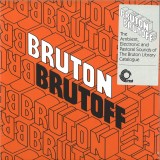
Rare musical magic from the Bruton library catalogue – ambient, spacey, pastoral and electronic. Music by John Cameron, Alan Hawkshaw, Fran-cis Monkman, Brian Bennett and more – all total masters of the scene. All very cool. All very now. All will sell very fast.
Over the last three decades Jonny Trunk has collected and written about library music. But he’s never had a great deal of luck with the Bruton catalogue. By this he means that he’s never stumbled across a massive stash, or lucked-out buying a huge run for practically nothing –that’s the kind of thing that used to happen in the 1990s and the early noughties if you were out there looking hard for library music. But he did manage to get about 25 in one hit about 20 years ago when the BBC shut down their “TV Training Department” near Lime Grove and also when a box of Brutons ended up being dumped at a hospital radio, and they didn’t want the records, so Jonny got a call.
There are lots of Bruton albums in existence – over 330 LPs in the vinyl catalogue, issued between 1978 and 1985. That’s a lot of music to wade through if you are looking for sublime modern day sounds. For many years now the “trophies” from the Bruton catalogue have been the beat or action driven LPs – the two Drama Montage albums (BRJ2 and BRJ8) have always been the big hitters, and others such as High Adventure (BRK2) too.
But Jonny has always found himself drawn to the lime green LPs, the pastoral, peaceful albums (The BRDs), which were full of the kind of gentle, lovely music that would turn up in Take Hart as Tony was paint-ing a woodpecker or a badger or an Autumn tree. The other Brutons he likes are the orange ones (The BRIs) simply because they are full of ex-perimental futuristic electronics and would remind him of 1980s ITV backgrounds. This LP series includes Brian Bennett’s cosmic classic Fantasia (BRI 10). Jonny has been knows to refer to this style of library music as “Krypton Factor library”, because it’s exactly what that strange but successful 1980s TV quiz show sounded like.
In recent years as interest in library music has expanded, we’ve watched
the price of a handful of Brutons really going through the roof - not the just the action and drama ones, but the more esoteric and experimental LPs too – like the BRDs and the BRIs. Jonny gets the vibe that people fi-nally want to hear this other more interesting and experimental side of the Bruton catalogue. So what better time than now to put together a compilation of such sublime period sounds.
Not only does this album bring together a set of fabulous cues that would cost the average man in the street a month’s wages (if the origi-nals were all wanted and if you could even track them all down), but it also chops out the need to listen to other tracks on library albums that are nowhere near as good.
The cues here all date from between 1978 and 1984. They come from the BRD, BRI, BRH, BRJ, BRM, BRR and BRs catalogues.
The composers are all legends within the genre, and here, were doing what great library composers do best – fulfilling a brief and utilising modern studio equipment to both commercial and beguiling effect.
- A1: 33Emybw - Medical Fodder
- A2: Gooooose - We've All Been There
- A3: Lyzza - Rifle
- A4: Amazondotcom & Siete Catorce - Absent City
- A5: Aya - Dare U To Sour Lips With Me
- A6: Hyph11E - Owl Whispers
- A7: E Saggila - E-Saggila
- A8: Debit - Primal Use Of Wind
- A9: Core Self - Suspiria
- A10: Drvg - Funeral Flowers
- A11: Osheyack - Saf E
- A12: Deena Abdelwahed - Abbrejiyeytar
- A13: Lila Tirando A Violeta & Lighght - Ritual For Rusting Metals
- A14: Slikback - Shogai
- A15: Odete - Epilogue For A Banshee Cry
‘Alterity’ is compilation of fifteen warped, experimental and deconstructed club music tracks featuring artists from almost every continent. It pieces together shared sounds that connect disparate scenes across the globe. The music is fuelled by a desire to dissolve borders and transcend perceived norms to promote the existence of alternate viewpoints, lifestyles and identities.
The listener travels to a parallel plane through amorphous techno wormholes, caverns of industrial beat science and colossal panoramas of glistening hyper-stylised trance. Each creation espouses local sounds and adapts global musical styles creating a singular, holistic map of modern dancefloors that champion diversity and inclusivity.
The cover art of a manipulated city shows an ordinary urban landscape remodelled as another world. It hints at an endless, borderless macrocosm concealed within.
The gatefold double LP is pressed on yellow vinyl and comes with a digital download code and printed inner sleeves.
- A1: Marlowe Returns (Intro)
- A2: Spring Kick
- A3: Small Business
- A4: Later With It
- A5: Otherworld
- A6: Future Power Sources
- A7: Sawdust Underground
- B1: Paydirt
- B2: Dead A Lot
- B3: Same Team
- B4: Og Funk Rock (Feat A-F-R-O)
- B5: Can’t Have Me Nothing
- B6: Lamilton Taeshawn
- B7: Preach Honest
- B8: A Madman Of Conviction (Outro)
Marlowe is a collaborative alt-rap project from North Carolina-based hip-hop producer L'Orange and rapper Solemn Brigham. Their unique blend of quick-fire vocals and dusty breakbeats is most well-known on tracks such as "Lost Arts" and "Tales From The East." The project came together in 2018 with the intent of marrying Brigham's lyrics concerning social commentary, police brutality, and poverty with L'Orange's thudding beats and crackling vinyl samples to achieve a new, refreshing take on hip-hop in modern times. Marlowe 2 seeks to continue that legacy.
Almost 35 years after its original release, the magical B side
track “In 80 Tagen um die Welt” from Christoph Moritz
receives a well-deserved reissue on 12” and marks the birth of
Tunesday Recordings. The original is a percussive cross-over
funk gem that paints a picture of good vibes on the lines of
your dreams. Aroop Roy’s Rework gives the original a modern
house outfit for worldwide dancing opportunities in the open,
in the clubs or even at home. Many thanks to Christoph Moritz
for making this reissue possible. Thanks to Dora Cuenca for
putting the vibe into the artwork. Stay tuned for more to come!
"Modern Dread is an album that sees Moore exploring personal demons whilst also voicing her concerns for the world at large, a daring exercise in micro versus macro that pays off richly in what is a dazzling step forward in artistry. It follows on from the critically hailed 2017 album “We Used to Bloom” and represents a delicious quantum leap in her career.
A unique blend of quixotic beats and introspective, sometimes harrowing songwriting which will undoubtedly stamp Moore as one of the most original talents we have around right now."
HIGHLIGHTS First ever reissue of "Kabwlú", a very hard-to-find album released by Discos Fuentes in 1965. The mysterious Los Picapiedra (which translates as The Flintstones, inspired by the 1960s American cartoon show), was a short-lived studio group with one albumto their name, "Kabwlú", mixing 'folkloric' and 'modern' elements with calculated 'caveman' humor. It is very musically diverse; not only are there the requisite genres that could be found on similar Colombian teenage-oriented groups' records of the time, such as cumbia, gaita, rock, twist and pachanga, but there is also a smattering of surf, doo-wop, Latin jazz, guajira, ska, and calypso. But what makes the whole thing so special is the odd, off-kilter arrangements, spooky tunings, rudimentary clanging percussion, invented 'cave' language, prominent twanging electric guitar and many zany sound effects. Several of Los Picapiedra's songs became very popular in Colombia as well as Venezuela and especially in the 'rebajada' (slowed down) version as played by the 'sonidero' sound system DJs in Mexico, such as "La Hossa". Presented in its original artwork and pressed on 180g vinyl. Part of Vampisoul's reissue series of classic Fuentes LPs. DESCRIPTION While Discos Fuentes was known for recording all sorts of interesting sounds from traditional folkloric Colombian music to the latest popular international styles, every once and a while they would put out a "novelty" record, perhaps to exploit a passing fad, and at times the label would green-light something strange or even outlandish. Many of those left-field releases have their merits and have subsequently become collectors' items over the years. One such case is the mysterious Los Picapiedra (which translates as The Flintstones, no doubt inspired by the 1960s American sitcom cartoon show), a short-lived studio group with one album to their name, "Kabwlú" (an unpronounceable, invented "caveman" term that is also untranslatable, but seems to have been the 'traditional rhythm' of Los Picapiedra's 'homeland'). What is interesting about the record is that it is very musically diverse; not only are there the requisite genres that could be found on similar Colombian teenage-oriented groups' records of the time, such as cumbia, gaita, rock, twist and pachanga, but there is also a smattering of surf, doo-wop, Latin jazz, guajira, ska, and calypso. But what makes the whole thing so special is the odd, off-kilter arrangements, spooky tunings, rudimentary clanging percussion, invented 'cave' language, prominent twanging electric guitar and many zany sound effects. Much like its namesake American cartoon The Flintstones, "Kabwlú" trades in creative anachronism, mixing 'folkloric' and 'modern' elements with calculated 'caveman' humor that works on many different levels. For instance the title tune seems to have been inspired by the pachanga craze and recalls the vibe of Ray Barretto's massive 1962 hit, 'El Watusi', but it has a certain joyful simplicity and rock-solid underpinning that elevates it beyond mere novelty or exploitation - and argues for its timely reissue for today's audience. The band was a studio invention that had no major significance in Medellin's live music activity. However, several of Los Picapiedra's songs were very popular in Colombia as well as Venezuela and especially in the 'rebajada' (slowed down) version as played by the 'sonidero' sound system DJs in Mexico, such as "La Hossa". Pablo E Yglesias (aka DJ Bongohead, Peace & Rhythm) Additional research by Luis Daniel Vega
Two years after he strikingly entered the world stage with Iron, a luminous track with a truly iconic video - Woodkid released The Golden Age, his first ever album, crafted and shaped in the utmost secrecy during the year 2012. While some might have just let the media hype do its work, Woodkid also known as Yoann Lemoine, chose to reverse the rules of the game. Following the release of a second single Run Boy Run, which became a classic in a matter of weeks - with the accompanying video nominated at the prestigious
Grammy Award in 2013, Woodkid decided to bring out his first album. A record with incredible ambition for this young Frenchman who America was already crazy about, picking up the momentum for his rise. The Golden Age is an epic quest, a beautiful and surprising adventure. The foundations of the Woodkid staple are of course all on display : percussions, string and brass arrangements, piano, programming and - of course - this powerful and sensitive voice that delicately runs through the melodies with great magnitude. A few months after its release The Golden Age was certified Platinum and
Woodkid went on to collect the Prize for “Best Live New Act” at the French Music Awards on February 14th 2014. As a multi-talented artist, Woodkid thought out his project with all aspects in mind. Initially working as a video director for the greatest (Lana Del Rey,
Drake and Rihanna), he then directs his own videos and starts creating the visuals and stage-design for his own live performances.
Since then, this gifted all-rounder has continued to explore multiple paths. In 2014 he works alongside contemporary artist JR on an original piece commissioned by the New York City Ballet (JR creating and Woodkid producing the music), takes the artistic reins of Pharrell Williams’ live shows and co-writes an original soundtrack with Hans Zimmer.
In 2015, Nils Frahm performs the soundtrack that Woodkid wrote for a
documentary on Ellis Island, directed by JR with commentaries from Robert De Niro.
The same year, cinematographer Jonas Cuaron (creator of gravity) asks him to write the music for his feature film “Desierto” a gruelling thriller set in the Mexican-American desert. Woodkid comes up with a radical and organic piece halfway between sound-design and film score, released in April 2016. He is to this day one of the most sought-after artists, a visionary and altruistic creator whose modern and powerful body of work continues to shape itself with every new encounter.
A modern soul double header 7” that has become increasingly in demand is this gem by Marc LaRoi Cummings. Original copies on the Setting Sun label have been exchanging hands for £60-£80 where they have become available. The original label, song writing and production is courtesy of former Motown artist Ronnie McNeir, now a member of The Four Tops, and always of interest to the soul community through the quality of his work on his own releases and for others. It was his first album on Ronnie’s own Setting Sun label from 1985 that became Expansion’s first artist album release, while his label engaged with other artists such as Marc who worked with Ronnie as a backing singer on work with David Ruffin (“Gentleman Ruffin”) and The Four Tops (he co-wrote “Strung Out For Your Love”)
The founder of Modern Obscure Music (MOM) presents this release which culminates a creative process that has led him to work during years with labels as respect- ed as Hivern Discs of John Talabot to Mathematics Recordings of Hieroglyphic Being.
Pedro Vian surprises us with a an album that is impossible to categorize into a single musical style. This LP guides its audience through musical scenes typically attributed to the artist, with atmopheric tracks like Pandora or Paradiso (available on the digital version). But it also travels through abstract, sonic labyrinths in songs like Maia or Nine is Nine, accentuates the rhythm with techno tracks such as Le Fou, Invisible Objects or Indian Strings, and even submerges us into the depths of pop with 801 Nite, where Pedro Vian collaborates with the young and talented singer of Mourn (Captured Tracks/USA) Carla Pe´rez Vas. Another cut that resonates is the influence of the Cocteau Twins.
Beautiful Things You Left Us For Memories is the most mature work signed by Pedro Vian, where he clearly manifests all of his influences and distances himself from the introspection prominent in his last EP’s, where he collaborated with artists like Inga Copeland from the Hype Williams Duet, or Pye Corner Audio. This is a bold move forward on an international trajectory that has received robust recognition from specialized, international critics.The new project will be published through a digital version with twelve originals; and through a reduced vinyl version where photographers Adria Can~ameras, artist Irene Royo and graphic designer Marc Monguilod have collaborated, and audio engineer Josh Bonati has mastered the sound. This is a kaleido- scopic work, adamantly supported by artists like Gold Panda, Laurel Halo, Barnt, bRUNA, and the north-american producer Chris Taylor (Grizzly Bear) among others
Wow, this one's a biggie! Some smoothed out modern Soul for the discerning right here... dig it!
Released in 1980 Charles Johnson's "Baby I Cried, Cried, Cried / Never Had A Love So Good" is a formidable double-sider, the A-side is a sweet slow jam where Charles lays it on the line in true grown man's fashion over a slick backdrop that is not a million miles away from some Philly style loving. The B-side is the big one though, a proper modern dancer, lovely production and the band is fully in the pocket. Drop this one and watch the dance light up, real music for the dancefloor! This particular 45 has long been a collectors item, and on a good day it can fetch hundreds on the Soul scene. This is a fully legit reissue, and features the classic golden Alston label artwork. A truly beautiful record, with each side primed to be played at the right time. Don't sleep!
Released with love and respect by: Above Board and TK Disco, Miami FL. 2020.
Pianist Roberto de la Barrera was arguably the first musician from Cartagena, Colombia to record music that would later be labeled "tropical" and "salsa" with his own group in the early to mid-1960s. He took the piano seat in the Discos Fuentes house orchestra and was also an arranger on several releases.
In 1970 he recorded his third album for the label, "Se formó la salsa", featuring an irresistible mix of Colombian and Cuban flavors, sometimes within the same tune, and often with that wonderful raw, loose, improvisational quality associated with the "descarga" jam sessions of Cachao and others a decade before.
Roberto de la Barrera was a pioneer in introducing modern Latin sounds from Havana, New York and San Juan. Sadly, his contributions in bringing salsa to the Caribbean region of Colombia and hence the rest of the country have gone largely unheralded, but hopefully this reissue will help set things straight.
Presented in facsimile artwork and pressed on 180g vinyl. Part of Vampisoul's reissue series of classic Fuentes LPs.
Washed Out is Atlanta-based producer/songwriter/multi-instrumentalist Ernest Greene. Over three enchanting, critically-lauded albums and an EP, his music has proved both transportive and visual, each release inviting listeners into immersive, self-contained universes. With Purple Noon, his fourth album, and his return to Sub Pop, he delivers the most accessible Washed Out creation to date. Life of Leisure, Washed Out's 2009 debut EP, set the bar for the Chillwave era, shimmering in a warm haze of off-the-cuff Polaroids and pre-IG filters. Within and Without, his 2011 full-length debut on Sub Pop, morphed into nocturnal, icy synth-pop and embraced provocative imagery. 2013's Paracosm was Greene's take on psychedelia, with a full live band and kaleidoscopic light show, and saw him playing to the largest audiences of his career. The sample-heavy Mister Mellow (2017, Stone's Throw) delivered a 360 audio/visual experience, with cut-n-paste and hand-drawn animation to match the hip-hop influences throughout the album. With each release, Greene has approached his evolving project with meticulous detail and a steadfast vision. For Purple Noon, Greene again wrote, recorded, and produced the entirety of the album, with mixing handled by frequent collaborator Ben H. Allen (Paracosm, Within and Without). Production of the album followed a brief stint of writing for other artists (most notably Sudan Archives) which enabled Greene to explore genres like R&B and modern pop. These brighter, more robust sounds made their way into the songs of Purple Noon and mark a new chapter for Greene as a producer and songwriter. The vocals are front and center, tempos are slower, beats bolder, and there's a more comprehensive depth of dynamics. One can hear the luxuriousness of Sade, the sonic bombast of Phil Collins, and the lush atmosphere of the great Balearic beat classics. Mediterranean coastlines inspired Purple Noon, and Greene pays tribute to the region's distinct island culture - all rugged elegance and old-world charm - and uses it as a backdrop to tell stories of passion, love, and loss (Purple Noon's title comes from the 1960 film directed by Rene Clement and based on the novel The Talented Mister Ripley by Patricia Highsmith). Much like romantic Hollywood epics, the melodrama throughout is strong: a serendipitous first meeting in "Too Late"; a passionate love affair in "Paralyzed"; disintegration of a relationship in "Time to Walk Away"; a reunion with a lost love in "Game of Chance." Purple Noon adds a layer of emotional intensity to the escapism of Washed Out's oeuvre, taking the music to dazzling new heights.