Array expresses the experience of a remote Antarctic research station through the convergence of sound, site and performance. The result is an immersive and affective experience of the spaces, protocols and conditions comprising the bracing polar environment. Array is a companion piece to Polar Force, a performance-installation work by Philip Samartzis and Eugene Ughetti, presented by Speak Percussion.
Array features recordings of radar and scientific instrumentation used for upper atmospheric research and terrestrial communication. These sounds reveal the sophisticated technology and architecture used and heard within the Australian Antarctic Territory. Many of the recordings focus on the way the built environment is transformed through stress and fatigue caused by extreme climate and weather events including freezing temperatures and high velocity winds.
Together with the field recordings are layers of live performance using custom built instrumentation to produce a unique series of textures, rhythmic cycles, resonances and timbral phenomena. The application of tension and pressure upon the assorted instruments recalls the distressed state of highly specialised infrastructure found within the perimeters of a research station.
A polar research station comprises many types and volumes of prefabricated space. In dialogue with this are the unique spaces used to record the instrumental performance. By merging different spaces Array brings into focus various industrial resonances, spatial characteristics, timbres of metal and concrete, and sonic artefacts produced by hard and permeable materials and surfaces.
In three parts, Array presents Antarctica as a liminal space oscillating between representation and abstraction to challenge often repeated tropes. The intent is to blur the relationship between the recorded and performed to produce a hyper-realistic encounter of the powerful forces that operate at the margins of our planet. One hears the precariousness of a remote research station contorted by unrelenting stress, compressed air forced through waterborne fipples and the volatility of weather events.
Life on remote research stations is progressively resembling the broader contemporary experience, in which strict protocols are used to govern and preserve life. The resilient communities who live and work in these places have learnt how to co-exist with an increasingly hostile environment, along with its unknowns and necessity for hyper-vigilance. Rather than consider it as a place on the edge of elsewhere, Antarctica and its assemblage of durable, super modern colonies provides an archetype for an uncertain future in anticipation of the volatility that awaits.
quête:modern technology
- A1: Tyrell (2021 Remaster) 03 42
- A2: Take The Bus (2021 Remaster) 05 14
- A3: Rollen Rink (2021 Remaster) 06 09
- A4: Close, But Not Quien (2021 Remaster) 06 01
- A5: The Official Gm Ski-Wm Theme (2021 Remaster) 01 07
- B1: Temko (2021 Remaster) 05 20
- B2: Boom (2021 Remaster) 06 33
- B3: Madshoes (2021 Remaster) 05 38
- B4: Obvious (2021 Remaster) 03 36
- C1: No Ketting (2021 Remaster) 05 30
- C2: Blob Return (2021 Remaster) 02 12
- C3: Bonden (2021 Remaster) 04 54
- C4: Mimi (2021 Remaster) 01 41
- C5: 11 25 (2021 Remaster) 04:40
- D1: Die Mondlandung (2021 Remaster) 11 00
First time vinyl issue of this 1997 Mego classic. General Magic, the duo of Ramon Bauer and Andi Pieper, who, alongside Pita, first pioneered the classic Mego sound on the Fridge Trax 12” in 1995. The following year proved to be formulative when Mego released Frantz alongside a slew of game changing releases from Farmers Manuel, Pita and Fennesz.
Originally released as MEGO 010 Frantz presented a thrilling digression from what was in vogue in music at the time. This was the advent of portable computing and the Vienna based label was at the forefront of harnessing the potential of audio within this new technology.
At once smart and playful these releases reconfigured once disparate genres such as industrial, techno, glitch and the avant garde, folding them into a bright, audacious and euphoric new system of sound. The music on Frantz (named after the Austrian skier, Franz Klammer) still pushes the boundaries of acceptable audio constructions with it’s startling fried electricity and twisted sensibility. The sense of joy in the audio discovery is palatable as techno laced explorations unfold a variety of unexpected and unprecedented sonic manoeuvres.
Tyrell launches proceedings as schizophrenic stuttering handclaps simultaneously slice into pieces as it propels forward. The bending of the brain is on display with the likes of ‘Obvious’ and ‘Close, But Not Quien’. Temko skewers digital debris in which a ghost melody comes to the fore. Brazen rhythms mobilize the tracks ‘No Ketting’ and ‘Bonden’ whilst the Official GM Ski-WM Theme is a short stab of priceless pop wizardry skittering about a strange exhilarating melody in homage to the finest of winter activities.
This reissue also includes ‘Die Mondlandung’ which was released as a 12” in 1995 (MEGO 002), and has never been released anywhere, physical or digital, since. This track is based on the live German TV coverage of the moon landing. An apt theme for the abundance of exploration contained within this classic release.
--
About Frantz ... and Peter (by Ramon Bauer & Andi Pieper, November 2021):
Listening to the test pressings of the remastered Frantz album for the first time on vinyl, 25 years after the original release on the then still young Mego label in 1997, felt like uncovering an ancient artefact. In those exciting days during the mid-1990s, together with the late Peter Rehberg, we founded a label called Mego to further explore the wonders of electronic music. And that is what we did for the next 10 years until everything became too much with the label in somewhat rough waters. So we dropped out of music business and pursued different things. It was Peter who continued producing and releasing music with the restarted label, now called Editions Mego. Until his unexpected death in July 2021, he developed Editions Mego into the grown-up and much acclaimed outfit for which it is known today. We will forever miss Peter’s inspiring personality and his uncompromising creativity. His legacy will live on in his music and in the vast and rich Mego and eMego catalogues. We are humbled and proud to have played a role in those formative years of the label.
Peter approached us in October 2020 with the idea to do a vinyl reissue of Frantz, just in time for the 25 year anniversary of its release. That came as a complete surprise for us, General Magic had not released any music or performed live for over 15 years. Anyway, we were delighted with the prospect of having that General Magic "classic" remastered (by the exceptional Russell Haswell) and released for the first time on vinyl on Editions Mego.
Frantz is a collection of tracks that we produced in 1995 and 1996 right after recording “Fridge Trax” (with Peter) and “Die Mondlandung” (which comes as a bonus track on this reissue). At that time, we started to migrate our analogue gear to 64 MB RAM computers and used almost every other digital thing that yielded a sound by any means. We even deliberately crashed our then so-called "Powerbooks" and scratched self-produced CD-Rs until they produced previously unheard sounds. Real time audio processing with computers was barely a thing back then (before SuperCollider was released), but cheerful massaging of sound files yielded interesting results and the future looked bright. Listening to Frantz today, with decades of distance, there are some parts that might appear dated by modern standards, but the energy and the general magic of that period is well captured.
All Frantz tracks were produced in Andi's studio in Berlin and at Mego Vienna. The Mego studio/office was a vivid place located in an old factory on the outskirts of Vienna. We shared the place with Tina Frank, who created most of the early Mego covers and videos. Other artists, musicians and friends were hanging out there almost every day. Many ideas on Frantz are a product of that particular environment. “Mimi”, for example, is based on a field recording in the backyard of the factory, where we also shot the video for “Tyrell”. “11.25” contains sounds from the Prague train station we regularly passed through on the night train travelling between Vienna and Berlin. Other sounds were sourced from the early internet and mangled on the computer, carefully preserving those early audio codec artefacts. While working on the Frantz tracks at the Mego Vienna studio, Peter was usually around, as he was literally working and living there. And so, of course, he also made an impact on that album: It might not be widely known but Peter even appeared on Frantz contributing his voice to the choir on “The Official Ski WM Theme”.
Let there be Frantz!
Miles Davis Kind of Blue meets Analogue Productions' UHQR, the pinnacle of high-quality vinyl!
Best-selling album in jazz history; mastered from the original master tapes by Bernie Grundman
Pressed at Quality Record Pressings using Clarity Vinyl® on a manual Finebilt press
Purest possible pressing and most visually stunning presentation and packaging!
Dream team of Davis, Adderley, Coltrane, Evans, Kelly, Chambers, Cobb make history.
Legends have a way of sticking around. If there was ever an album awaiting a high-fidelity, custom-pressed vinyl treatment of the level you now hold in your hands, it is Miles Davis' Kind of Blue. The top-selling jazz album of all time, it has been lauded, entered into "Best Of" lists and Halls of Fame, and universally acknowledged as a landmark recording — a five-track masterpiece of melancholy mood and melody.
It continues to be one of the most listened-to and studied recordings of all time, a required primer for many young musicians, and one of the most transcendent pieces of music ever recorded. Davis played trumpet sublime with his ensemble sextet featuring pianist Bill Evans, drummer Jimmy Cobb, bassist Paul Chambers, and saxophonists John Coltrane and Julian "Cannonball" Adderley with Wyton Kelly playing piano on "Freddy the Freeloader."
Now Analogue Productions, together with Quality Record Pressings, is putting Kind of Blue where it belongs: the Ultra High Quality Record (UHQR) pressed on Clarity Vinyl on a manual Finebilt press with attention paid to every single detail of every single record.
The 200-gram records will feature the same flat profile that helped to make the original UHQR so desirable. From the lead-in groove to the run-out groove, there is no pitch to the profile, allowing the customer's stylus to play truly perpendicular to the grooves from edge to center. Clarity Vinyl allows for the purest possible pressing and the most visually stunning presentation. Every UHQR will be hand inspected upon pressing completion, and only the truly flawless will be allowed to go to market. Each UHQR will be packaged in a deluxe box and will include a booklet detailing the entire process of making a UHQR along with a hand-signed certificate of inspection. This will be a truly deluxe, collectible product.
Kind of Blue is more than Miles Davis's most enduring recording, it's a testament to Miles' experimental approach, drastically simplifying modern jazz by returning to melody unlike the chord complexity more often heard at the time. "The music has gotten thick," Davis complained in a 1958 interview for The Jazz Review. "... There will be fewer chords but infinite possibilities as to what to do with them." Kind of Blue is, in a sense, all melody — and atmosphere.
None of the musicians had played any of the tunes before heading into the first of two recording sessions in early spring of 1959. In fact Miles had written out the settings for most of them only a few hours before the session. Miles also stuck to his old recording procedure of having virtually no rehearsal and only one take for each tune.
Miles remained proud of the album, performing at least two of its tracks — "So What" and "All Blues" — for years after, until his musical path took him in a different direction.
History was on the side of Kind of Blue; it was born in 1959, at the peak of the golden age of high-fidelity, featuring innovations in studio equipment (magnetic tape, high-quality condenser microphones), matched by advancements in home audio reproduction (long-player records — LPs; high-end turntables, and other stereo components). Kind of Blue also benefited from Miles' being signed to the leading major record company of the day — Columbia Records, a part of the CBS media conglomerate. Columbia had the means and wisdom to invest in cutting edge recording technology, and their own professional recording studio.
A minor audio complication with Kind of Blue has been addressed with this UHQR edition. The motor on the studio's 3-track master recorder was running slowly the day of the album's first session. This speed issue affected the album's first three tracks, "So What," "Freddie Freeloader" and "Blue in Green," making them a barely perceptible quarter-tone sharp. Before now, it was only addressed in 1995 for the Classic Records edition and by Columbia Records — or their latter-day parent, Sony Music — on a CD reissue in the late '90s.
Sixty years have passed; this LP bridges that time span in the best way possible, struck from the master reel of Kind of Blue, free of speed issues and replete with all the instrumental detail, sonic environment and minimal noise. As we set out to make our UHQR series the world's best-sounding vinyl records, we have also used Clarity Vinyl, which is free of any carbon black pigment which might introduce surface noise. All-in-all this edition of Kind of Blue meets the highest audiophile standards and offers the truest sound for the most enjoyment.
- A1: Isabelle Mayereau - Jeux De Regards
- A2: Nemo - Jungle Jim
- A3: Erik Tagg - Got To Be Lovin' You
- B1: Achim Kück & Friends - Wind
- B2: The Mike Nock Underground - Wax Planet
- B3: Horace Silver & The L.a. Modern String Orchestra - Scott Joplin
- C1: Carmen Lundy - Have A Little Faith
- C2: Embryo - Knast-Funk
- C3: Siegfried Kessler & Serge Bringolf - Sigi Dance
- D1: Gustav Brom Orchestra - Calling Up The Rain
- D2: Frederic Rabold Crew - Ride On
- D3: Stan Kenton & His Orchestra - Samba Dehaps
- D4: Larry Rose Band - The Sand
DJ Cam & sommelier Frédéric Beneix present Wine4Melomanes, an eclectic and unique
compilation album concept, matching fine wines with rare pieces of music produced in the
same year.
Connecting the complexity, sensuality, liveliness of a drink with the harmony, arrangements,
voice, orchestration, rhythm and melody of a song, Wine4Melomanes tours France,
Germany, Holland, the USA and even Slovakia in search of only the finest musical flavours.
Ranging from jazz, to pop-rock, to blue-eyed soul from the early 70s right through to 2016,
Wine4Melomanes is defined by its sense of musical opulence, with warm rich tones and
understated quality evident throughout. DJ Cam is known for his pioneering abstract hip-hop musical
compositions, his virtuoso use of technology and his fascination for acoustic jazz gaining him
international acclaim.
- 1: Fuenarinu
- 2: Kaendaiko
- 3: Tsubakishishaku No Yuigon
- 4: Tengindoujiken
- 5: Kindaichikousuke Nishie Yuku
- 6: Ougonno Furuuto (Flute)
- 7: Yubi
- 8: A=X, B=X A=B
- 9: Chi To Suna
- 10: Tabiyukumonoyo
- 11: Akuma Fuewo Fukite Owaru
We've got a bit of an obsession with Hozan Yamamoto here at Mr Bongo! A legend of Japanese jazz, he is rightly regarded as a true master and was recognised as a "living national treasure" by the Japanese government in 2002. Over five decades he pushed the genre into new directions, absorbing fusion, funk, spiritual jazz and many other sounds, resulting in a discography studded with gems of rare beauty. Exploring his back catalogue has taken us on an engrossing journey that now sees us reissuing another work from this ground-breaking musician.
Though not translating perfectly into English 'Akuma Ga Kitarite Fue Wo Fuku', (kitarite has not been a modern expression in Japanese) roughly means 'The Devil Comes Playing The Flute' / 'The Devil Is Coming While Blowing The Whistle' or 'Devils Flute’. It is the original soundtrack to Kôsei Saitô’s 1979 mystery and suspense movie, ‘Devil’s Flute’. The film is based on a story by the famous author, Seishi Yokomizo, and is centred around a much-loved fictional Japanese detective, Kosuke Kindaichi. A Japanese Sherlock Holmes that has been popular for generations.
Hozan Yamamoto was invited to compose the soundtrack directly by the producer of the film, Haruki Kadokawa. Mr Kadokawa also hired keyboard player and producer Yu Imai as assistant producer on the project, resulting in a stunning cosmic, breaks and beats-laden, funk, disco soundtrack extravaganza.
When it comes to the soundtrack and the technology of the time, Hozan Yamamoto and Yu Imai got inventive, tripped out, funked up, and experimented, creating a quirky soundtrack masterpiece that needed to be heard more outside of Japan. Differing from the more traditional Japanese music orientation of some of his other albums such as 'Beautiful Bamboo-Flute' (also released on Mr Bongo) the album showcases a number of genres, from lush atmospheric incidental music to disco and funk grooves, experimental nuggets, drum and flute workouts, to neo-classical and more.
A special record that showcases the further depths of this wonderful musician's talents.
Jimmy Tamborello returns with a collection of 10 pop-infused vocal hymns – simultaneously perfect dance floor fillers and lullabies. "Away" is the second of two Dntel albums to be released in 2021 by Morr Music in collaboration with Les Albums Claus. While "The Seas Trees See" showcased Tamborello's more intricate and quiet side, "Away" embraces his love for pop music. A genre which like no other has been resonating the advancements of technology from the very beginning. Songwriting was sequenced and computerized on such a large scale that it would change the sonic aesthetics of the charts forever.
Dntel is a musician who changed pop music forever – and still works in this never-ending labour of love, both effortless and highly focused, constantly tweaking the universe of our musical perception. Whether beatless or uncompromisingly embracing the limelight of collective ecstasy with one of his most remembered tunes "(This Is) The Dream Of Evan And Chan", his almost forgotten anthem "Don’t Get Your Hopes Up" or his work as James Figurine. "Away" features 10 of these extravaganzas – uniting his audience once more in hope and future-bound optimism.
"I grew up with 80s techno-pop – these influences always come through in my music", Jimmy writes from Los Angeles. For this album, though, "I was thinking more of 80s indie pop or labels like 4AD. It is a mix of those influences along with trying to figure out what elements of my own discography I still connect with. I wanted it to reflect old Dntel records as well as the techno-pop band Figurine I used to be in. I have always considered my music basically being techno-pop, but not referring to pop as popular music – I just like pretty melodies. But with the Dntel moniker, I never had the ambition to produce music for a really big audience.”
It is exactly that looseness in approaching music which makes Tamborello’s style of composing so unique. On "Away" he combines a healthy dose of distortion with the most-sticking melodies, vocals and bitter-sweet lyrics he ever came up with – performing all vocals himself, with the help of technology. "My voice has a limited range. When I applied this vocal processing it seemed to bring out the emotions more. I don’t see it as the same as the more artificial, autotuned style of modern pop music. I think it still sounds like it could be a real person singing, just not me."
Using this technique, Dntel disembodies himself from his own art, welcoming all kinds of interpretations re. his current state as an artist. "Somehow this processed voice feels closer to how I see myself than my normal voice, for better or worse…", he writes. Pop music is a fragile entity, making its kingpins vulnerable. Many emotions reveal a lot of the originator’s personality –this is something one has to be prepared for. On "Away", Jimmy Tamborello finds the perfect way of marrying his unique musical personality with both the demands and possibilities of pop music. Just listen to "Connect" and you’ll know what we’re talking about. A perfect, yet timeless album for less than perfect times.
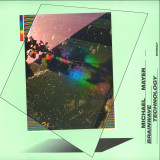
Michael Mayer’s latest EP, Brainwave Technology, comes at you purposeful, stealthy and sly. It’s a glorious left turn for the redoubtable producer, one that sees his typically lean and lithe productions buffed to a metallic, futurist sheen. There’s a gleam in the eyes of tracks like “Brainwave Technology” and “Alpha” that speaks of serious fun, of the intersection of the pleasure zone and the frontal lobe.
“Brainwave Technology” itself is informed by Mayer’s deep dive into the thorny terrain of artificial intelligence, transhumanism and posthumanism. Inspired by reading German philosopher Richard David Precht, Mayer found himself heading down the “proverbial rabbit hole,” as he describes it, “watching hours of YouTube material by self-proclaimed prophets of these ‘inevitable’ changes to come.” Never one to be taken in by the egotist’s dance, Mayer’s cynicism about the whole endeavour is tempered, a little, by the deeper questions that these figures gesture towards: “Is it really an evolutionary step that man and machine become one? Or is it rather a marketing plot by Silicon Valley billionaires?”
On “Brainwave Technology”, Mayer plays the charlatans at their own game, turning their logic against them by exposing the fruitiness of their ‘visions’. “I chose irony as my sword with which I chopped off some quotes from some of those batshit crazy prophets and self-promoters,” he explains of the drooling psychobabble he drops in the track’s lacuna. There’s a sense of humour here – how could you not laugh at these hungover egotists? – but there’s levity too, a sense that Mayer’s using sound to expose the contradictions and double-speak at the heart of these half-formed ideas. It’s a Burroughsian tactic, to slice into the heart of the voice to see what hidden truths surface.
It was Burroughs, too, who once said that “when you cut into the past, the future leaks out”; Brainwave Technology cuts into the logic of the futurologist to leak out the messiness of modern reality. On “Alpha” and “Gamma”, Mayer seems to conjure up the stark, ominous music that’d soundtrack a science fiction reinterpretation – or preinterpretation – of our modern malaise, all funereal wreaths of electronic noise and clatterboxing beats. As the EP resolves with “Device For The Young At Heart”, Mayer’s questions are piling up: “Do we want to become immortal and live on as a download? Do we really give up on Earth and put all our effort into colonising Mars?” There are no answers, of course, but plenty of imaginings-to-be. Brainwave Technology soundtracks both dystopian and utopian possibilities of what could come next.
Airplay from Mary Ann Hobbs, Liz Alker and Tom Ravenscroft and beyond
Reviews in Mojo, The Wire, Quietus, Uncut and more
On October 9ththe multi-instrumentalist Jack Wyllie (Portico Quartet/Szun Waves) presents his new project Paradise Cinema. It was recorded in Dakar, Senegal in collaboration with mbalax percussionists Khadim Mbaye (saba drums) and Tons Sambe (tama drums).
The impressionistic and dream-like quality of 'Paradise Cinema' is a stunningly effective realisation of Wyllie's experience, in ahypnagogic state of aural consciousness:
"I had a lot of nights in Dakar, when the music around the city would go on until 6am. I could hear this from my bed at night and it all blended together, in what felt like an early version of the record."
Atmospherically 'Paradise Cinema' is vaporous and enigmatic, but also percussive; existing in a paradoxical sound-space that's amorphous,yet still purposeful, serene, but propulsive and aesthetically sharp.
Khadim Mbaye and Tons Sambe, provide the rhythmic backbone of the record. There are traditional elements of mbalax rhythm, but it is often deconstructed or played at tempos outside of the tradition, so while it hints at a location it occupies a space outside of any specific region.
'Paradise Cinema' is also informed by notions of hauntology – a philosophical concept originating in the work of French philosopher Jacques Derrida– on possible futures that were never realised andhow directions taken in the past can haunt the present.
On the album's title Wyllie comments, "there are a handful of old cinemas in Dakar – these big modernist buildings dotted around the city built around independence. They're old and derelict now, but feel to me like monuments to that period, when the city was flooded with utopian ideas about its potential futures."
As such it sits closely to 4thworld music – situated in an imagined culture and time that never came to pass. And while it contains rhythmic references to Senegal it combines these elements with ambient and minimalist music to produce a sound that sits outside of any tradition.
Setting the tone for the long-player's themes is the optimism-driven, balmy beauty of 'Possible Futures', where rich-toned drums throb and levitate in a stratospheric ether.
Like a time-lapse video of plants in bloom, 'It Will Be Summer Soon' is the sound of anticipation and growth. Rhythmically it flickers and flutters, evoking rainfall, or the blurred wings of a bird in in flight.
Casamance moves through field recordings drifting in and out of focus, beats pitched-down low and unfurling saxophone, whilst the ambient 'Utopia' was made mainly with processed saxophone and suggests a longing for a perfect world.
Galloping percussion juxtaposes with a wistful mood on 'Liberté' – a title that referencesa derelict modernist cinema in Dakar of the same name– a hauntological landmark, made more poignant by the its name being part of the French national motto.
Tying into the cover artwork, Jack explains, "the 'Digital Palm is a telecommunications mast disguised as a palm tree in central Dakar. As a modern piece of technology that on first glance looks natural, it mirrors the combination of modern and acoustic elements."
Perhaps eliciting a time that never came, or maybe still in hope of it yet to come, 'Eternal Spring' concludes the LP's otherworldly beauty with hypnotic drums powering a subtly-building, sparkling and powerful crescendo.
Jack Wyllie is a musician, composer, electronic producer who draws on influences of jazz, ambient, and the trance-inducing repetition of minimalism.
Wyllie performs and records in Portico Quartet, Szun Waves (withLuke Abbott and Laurence Pike)and Xoros. He has also collaborated with Charles Hayward, Adrian Corker and Chris Sharkey and released on Ninja Tune, Babel, Leaf, Real World and Gondwana.
Khadim Mbaye and Toms Sambe play in various mbalax groups in Dakar. Khadim has also toured internationally with Cheikh Lo.
Snapped Ankles return to the forest, but it's not as they left it. Trees planted in neat rows. A well-ordered monoculture with access roads and heavy machinery. The smell of greenwashed money in the air. There's no sign of the ancient woodland they emerged from on debut album, Come Play The Trees. And it's far cry from the gentrified East London they found themselves hawking on Stunning Luxury. All is not well in the face of progress. Welcome to the Forest Of Your Problems. Even among the famously close-knit woodwose community there are factions forming. Meet The Business Imp, The Cornucopian, The Nemophile and The Protester. Each with their own motivations and belief systems. Their own sense of injustice: contradictions, anxieties and guilt. There are woodwose who have risen to the top in the boom and bust world of real estate and hedge funds. Grab what you can before the next crash. Others find euphoria in the absolute conviction that wealth and technology will see us through this. There are those with their recycling in order, who are well-versed in the prospect of imminent ecological and economic collapse, burying themselves in vegan cookery and extensive international holiday itineraries. And there's an increasing number angry at the state of the world, ready to take to the streets and the trees in an attempt to force real change. Forest Of Your Problems runs the gamut of modern woodwose emotions. In this neat human approximation of the forest, it's an increasingly knotted affair. Despite all of this, Snapped Ankles haven't lost their innate ability to make you want to move your feet - their Teutonic forest rhythms are still shot through with post-punk lightning. Whether they're exploring those opportunities which might arise when a Nigerian prince emails out of the blue on 'The Evidence', or referencing the crooked woodwose attempting to go straight on 'Rhythm Is Our Business', this is music to lose your inhibitions to. The moments of pure elation on 'Shifting Basslines Of The Cornucopians' are worth the admission price alone - "It's a great time to be alive!" ...apparently. Snapped Ankles outsider status has always allowed them to hold a mirror up to society. Now the boundaries are not so clear. In the four years since Come Play The Trees was released, their cult has flourished. Previous album Stunning Luxury saw the band invited to play the BBC 6 Music Festival and a KEXP session on the back of a sold-out UK tour which culminated with two nights at Village Underground in London. As those who have witnessed the shamanic ritual of their live shows will attest, they are a truly unique, communal experience. Forest Of Your Problems will see the woodwose bring their ancient forest rhythms and high-wire, multi-media live act to ever bigger stages - including Camden's iconic Roundhouse in October.
Chris Korda's new album "Polymeter" is unique as entirely composed in complex polymeter sequences, a unique way to compose music with a new generation of algorithm, inside which Chris injects DNA of neo classical, ambient and jazz music.
This refreshing album will please both those who are into complex musical composition, conceptual music and who are just seeking for a beautiful, emotional and accessible, unique, musical moment.
This is a "In your hearts not the charts" album, as Irdial Discs once said.
Chris Korda is a transgender, vegan and relentless critic of consumerism, leader of The Church of Euthanasia (willing to halt the overpopulation through suicide, sodomy, abortion and cannibalism) and composer/performer of electronic dance music. She has previously released albums on Kevorkian, International Deejay Gigolo Records and Perlon.
Please read below Chris Korda's introduction to his new album "Polymeter":
Polymeter is an album of virtual solo instrumental performances. They're mostly piano pieces, along with a couple of guitar pieces. They sound uncannily similar to human performances, but they aren't. On the contrary, they are algorithmic music, pure applied mathematics.
The compositions are generated by elaborate networks of polymeter modulation. This sounds complicated and will need some explaining. But the most important point is that these are compositions I didn't write in any usual sense of the word. I created systems of rules, and the compositions emerged from those rules. The rules that generated these pieces can be conceptualized as kinetic sculptures that produce intricate non-random patterns of musical interference. The resulting patterns repeat themselves over long periods, measured in hours, days, or in some cases years.
In order to create this album, I had to write my own MIDI sequencer from scratch, because commercial MIDI sequencers lack the necessary degrees of freedom. My sequencer is also called Polymeter, and I started writing it in 1994. I used a relatively primitive version of it to create my earlier techno and electro releases, but the rapid evolution of computer technology made my original so ware hopelessly obsolete by the 21st century. Like its immediate predecessor "Akoko Ajeji" (Perlon) this album was created using a much more sophisticated version of my sequencer. It took me many years to learn the programming skills I needed to modernize my sequencer, which is one reason why such a long hiatus occurred between my older and newer releases.
Chris Korda
Eglo Records are proud to present Fatima's highly anticipated debut album 'Yellow Memories'.
Featuring production work from the likes of Floating Points, Theo Parrish, Oh No, Scoop DeVille, Computer Jay, Knxwledge and more... the velvet toned Swede has truly crafted something special.
Offering a modern take on classic Soul and RnB, the album strikes a beautiful balance of cutting edge, contemporary production, soulful expression, melancholic introspection and vibrant, candy coated melody. An accomplished singer /song-writer with a stunning range, her prowess and versatility are a force not to be reckoned with. As powerful and mesmerising on stage as she is in the studio, Fatima possesses a talent heard all to rarely in todays musical climate.
- A1: China Crisis - Jean Walks In Fresh Fields
- A2: Turquoise Days - Grey Skies
- A3: Simple Minds - Real To Real
- A4: Illustration - Tidal Flow
- A5: Care - An Evening In The Ray
- A6: Soft Cell - Youth
- A7: John Foxx - Europe After The Rain
- A8: Patrik Fitzgerald - Personal Loss (Mono)
- A9: Eyeless In Gaza - Lights Of April
- A10: Orchestral Manoeuvres In The Dark - Sealand
- A11: Thomas Leer - Private Plane
- A12: The Electronic Circus - Direct Lines
- A13: The Pale Fountains - Unless
- A14: Chris & Cosey - October (Love Song) (Love Song)
- A15: New Musik - A Map Of You
- A16: The Human League - Wxjl Tonight
- A17: Paul Haig - Christiana
- A18: The Teardrop Explodes - Tiny Children
- A19: Oppenheimer Analysis - Behind The Shades
- A20: Trevor Bastow - Feather Bed
At the turn of the 80's, a new generation of musicians appeared who saw synthesisers not as dehumanizing machines but as musical instruments that could be coaxed into creating modern, beautiful and decidedly emotional music. It was almost as if the musicians were intentionally creating this music to prove the doubters wrong.
Compiled by Saint Etienne’s Bob Stanley and Pete Wiggs, “The Tears Of Technology” celebrates this brief period when scruffy synth duos from the provinces broke through and took over British pop. Like mellotrons before them, synths could project a strange and deep emotion; listen to OMD’s ‘Sealand’, or the Human League’s ‘WXJL Tonight’, and it was clear that something in the wiring had an inherent melancholy.
In the 60's and 70's, the synthesiser had mostly been regarded as either a novelty or a threat. Tomorrow’s World warned us that the cold, heartless synth would soon make orchestras redundant. But by 1980, Korgs, Moogs and Rolands were becoming affordable for all, and post-punk had created a safe place for new groups to experiment with these new toys.
The influence of Kraftwerk – who had made a landmark appearance on Tomorrow’s World in 1975 – is all over this collection. Big names rub shoulders with obscurities by Turquoise Days, Electronic Circus and Illustration, all highly prized recordings among ‘cold wave’ and ‘minimal synth’ afficionados. There are pioneers like John Foxx and Thomas Leer, alongside unexpected synth sadness from Simple Minds and the Teardrop Explodes.
“The Tears Of Technology” celebrates an era of electronic melancholia, synthesized intimacies and insights – even Tomorrow’s World didn’t see that coming.
Twelve years have passed since eedl released their masterpiece “Everse” spa.RK, 2007 and in that time the duo -formed by Miguel Ángel Martínez and Joan Duat- have shied away from the spotlight and stage. Despite this apparent lethargy, their previous two works - "Parallemped EP" spa.RK, 2003 and the aforementioned "Everse"- provided them with cult national scene status, while raising more than a few eyebrows among European “headz”. Both works continue to sound overwhelmingly modern and
undated, an obvious signal that eedl is a special breed of cutting edge electronic music.
Although creatively silent for a number of years they have remained musically active. As well as his career as a product designer, Miguel Ángel has applied his musical experience to the technology sector, and since 2016 has fully immersed himself in “modular”–Winter Modular, Plankton Electronics and Patching Panda–; Meanwhile, Joan, office programmer and classically trained pianist, has found his equilibrium with work and building a family life.
"Unstored" is their long awaited return to the fray and their second studio album. It is comprised of eight songs, some of which have been have been slow cooked since 2002, with others gestating more recently. Maybe such a long hiatus seems excessive, but the meticulousness nature and obsessive love for detail found in "Unstored" more than justifies the wait, which at times felt like a long goodbye.
This collection of songs navigates between perfectionist electronica, new generation electro, noisy harmonies, glitch and deconstructed rhythms; a sonic memoire with strong roots in British experimental electronic music -reminiscent of Autechre or Plaid-, another reason in understanding the longing produced by their extended absence.
It is therefore with great honour that in early January 2020, Lapsus will release the new album from the elusive eedl project in a luxury edition format.
“This album will be part of the everlasting impact the Tribe collective had on our culture, on our hope and possibilities.” - Herb Boyd
Strut and Art Yard present the first compilation bringing together the modern era recordings of Tribe, Detroit’s acclaimed independent jazz collective.
Tribe began as a musical ensemble in 1971 co-founded by Saxophonist Wendell Harrison and trombonist Phil Ranelin that soon expanded into a broad amalgam including a live collective and independent record label. Ignored by the mainstream, many African American jazz artists in Detroit and across the US began creating their own small imprints and Tribe emerged alongside other cultural entities to express selfdetermination goals in the city: saxophonist Ernie Rodgers with his sessions at Rapa House; John and Leni Sinclair’s Artist Workshop; Bruce Millan’s Repertory Theater; the Hastings Jazz Experience and the Strata Corporation led by Kenny Cox. Harrison’s ideas of independence, self-determination and education were central to the Tribe ethos: “I might be possessed with a drive to get the knowledge out,” explained Harrison, “because I see this as sustaining the future of the jazz diaspora, the jazz tradition.” Tribe album releases like Harrison’s ‘An Evening With The Devil’ (1972) and Harrison and Ranelin’s ‘A Message From The Tribe’ (1973) became early ‘70s milestones in Detroit jazz.
In 1977, Harrison teamed up with pianist/composer Harold McKinney to form Rebirth Inc., aided by Detroit cultural warrior John Sinclair, a continuation of the Tribe community ethos. Musically, it formed a link with radio station WDET and began an outreach program to teach children and to publish Harrison’s jazz instruction books. Harrison continue to record extensively as a leader with his own labels, WenHa and Tribe, documenting the collective through sessions led by Phil Ranelin, Harold McKinney, Pamela Wise and more.
The ‘Hometown’ compilation places the spotlight on this later era of Tribe and Rebirth Inc., with rare and previously unreleased recordings from Harrison’s WenHa / Rebirth Studios and the SereNgeti Gallery And Cultural Center. Among many highlights, Harold McKinney and his “McKinfolk” family of musicians contribute the pulsing ‘Wide And Blue’ and dance celebration ‘Juba’; Phil Ranelin re-works his classic ‘He The One We All Knew’; Poet Mbiyu Chui (Williams Moore), pianist Pamela Wise and percussionist Djallo Djakate spark on the uncompromising ‘Ode To Black Mothers’ and the rallying cry of ‘Marcus Garvey’: “If we ever get together we will astound the world.” Harrison himself evokes the power and majesty of juju on ‘Conjure Man’.
‘Hometown’ comes as a 2LP gatefold and 1CD digipak fully remastered by Technology Works from the original session recordings. Both formats include exclusive sleeve notes by journalist Herb Boyd with rare photos from Wendell Harrison’s personal archive.
- A1: Geraldo Pino - Shake Hands
- A2: Sonny Okosunds Ozziddi - Dance Of The Elephants
- A3: The Wings - We'll Get Home
- A4: Alhaji (Chief) Prof. Kollington Ayinla - E Ye Ika Se
- B1: Colomach - Kassa Kpa Sama Kpa
- B2: Geraldo Pino - Heavy Heavy Heavy
- B3: Mfb - Beware
- B4: Tony Grey And The Ozimba Messengers - You Are The One
- C1: Sonny Okosuns - Oba Erediauwa I
- C2: The Wings - Single Boy
- C3: Geraldo Pino - Power To The People
- D1: Original Wings - Igba Alusi
- D2: Don Bruce And The Angels - Sugar Baby
- D3: Geraldo Pino - Africans Must Unite
Soul Jazz Records’ Nigeria Soul Power 70 album showcases the influence of funk, rock and disco on Nigerian music during the 1970s. Originally released as a now-long-out-of-print collectors’ 7” RSD box, this fully expanded album release now also includes extra tracks from Sonny Okosuns, Wings, Chief Kollington Ayinla and more. While for many people the fusion of funk and jazz music with Nigerian rhythms and aesthetics began with Fela Kuti and his afro-beat sound, in fact this can be traced further back to the phenomena of the 1960s Nigerian artists and house bands in nightclubs and hotels who interpreted US soul and pop music with a local flavour and none more so than Geraldo Pino, the ‘African James Brown’ who features heavily in this collection. Other similarly inspired Nigerian funk and soul artists featured here included Tony Grey and his Ozimba Messengers and Don Bruce and The Angels. Nigeria Soul Power 70 includes a number of tracks from the group Wings originally known as BAF (Biafran
Air Force) Wings, an army band formed during the Biafran civil war in Nigeria. The groups’ heavy mixture of funk, rock and African styles was popular among many Nigerian groups at the time.
Beneath the shadow of the few Nigerian artists who signed international recording deals in the 1970s – Fela Kuti, King Sunny Ade, Chief Ebenezer Obey – lies of vast wealth of largely undiscovered musical transmutation and cultural cross-pollination, and included here are heavy afro-funk/rock and disco tracks
from artists such as the legendary Sonny Okosuns as well as rare cuts from little-known outside of Nigeria - groups such as Colomach and MFB. Most of these obscure artists signed to major labels in Nigeria in the commercial slipstream that opened up as Philips, Decca and EMI tried to emulate the international
success of the big three international Nigerian artists. Finally featured here is Kollington Ayinla, one of the co-founders of Nigerian Fuji music, who gives us perhaps the heaviest of all tracks on this album. Ayinla is the great moderniser of the Fuji sound and in the late 1970s began adding Bata drums and synthesizers to his authentic music to create a powerful and heavy new fusion of traditional and modernist aesthetics, embracing both new technology and experimentation while rooted firmly in Nigerian historical lineage. Nigeria Soul Power 70 is released as a heavyweight gatefold double vinyl LP (+ free download code),
deluxe slipcase CD and digital album.
Maybe it’s too much to ask for a moment of your attention. As we grow older and keep
diving into this era of information, disinformation, fake news and all that, we also tend to
take a step back and listen to the intents of those social media adverts that tell us to slow
down, breathe in, breathe out, enjoy everything around you a little bit. So, if it’s not too
much to ask, you can press play and start enjoying “D-A-D”. If you’re doing that, you can
even stop reading this, because you don’t need further instructions.
It’s the second time in less than two years that we release music from London based
Greek musician Tasos Stamou (Athens, 1978). The wordplay of “Musique Con Crète”
(CREP54, 2018) was a backdoor to an adventurous and ‘concrete’ experience with
sound. “D-A-D” follows up on that. Recorded between 2015-2018 as an homage to both
his Dad and the more commonly used tuning on the Greek Bouzouki, D-A-D, Stamou
delivers 40 minutes of music that explores ancient and modern languages, while crossing
his unique instrumentation with celebrations of new/old folk, field recordings and
electronics. In his music, there’s a constant flow of ideas that defy standard tonalities and
the conception of “traditional”.
Improvisation was the starting point for the creation of some of the nine pieces Tasos
Stamou wrote for “D-A-D”. The electronics often serve to interact with field recordings that
are wisely manipulated, while acoustic instruments, like a Bouzouki, build up the
connection with the tradition and the necessity to slow down.
With his unique atmospheres, Tasos is whispering some life hacks to build a better life.
Nowadays, it’s quite rare for a record to organize the way the listener wants to listen to
music, to sounds. “D-A-D” creates a beautiful systematization between old and new,
folk/traditional music and the technology in sound. There’s – still - some boldness in that.
All songs by Tasos Stamou
Mastered and Cut by Rashad Becker
Influenced by the social and political climate of the modern
world, MOTSA’s debut album, ‘Perspectives’, is inspired by his
acute awareness of modern society’s dependence on
technology and the social media bubble also responsible for
the civic polarisation seen globally. The 11 track album takes
the listener on an emotional journey with dark, yet hopeful,
detailed compositions, each representing their own personal
story. The title “Perspectives” refers to a problem we all face:
differing perspectives of the same situation, which in turn
leads to conflict, be it in personal relationships, families and
even political discussions globally. With individuals and
groups often losing perspective in disagreements, MOTSA’s
debut LP calls for more empathy, highlighting our current
trajectory of an ego-driven society. Encouraging listeners to
spend less time behind computer screens and more time
outside in nature to broaden our horizons and reflect on
human decisions, many of the album’s samples were recorded
from MOTSA’s own environment. Using the sounds of children playing in the sand on a Balearic beach, crickets in the grass,
or the ambient soundscapes of bells recorded from his
father’s apartment in Moscow, the producer also recorded and
sampled his own voice to create distant, choir-like melodies in
many of the tracks. The artist’s signature sound – a soulful yet
driven harmonic blend – continues to propel the multi-talented
artist to the highest acclaim into 2019 and beyond.
Chemistry between individuals is an amorphous and elusive notion. It is usually seen as something that occurs between two people who are sharing a physical space, with access to each other's body language and energy. However, modern technology has provided many other opportunities for chemistry to blossom and be explored and this record is just one example of that: Vent is proud to present Kina, a double LP of musical collaborations between MAYa and Tolga Baklacioglu.
Tolga Baklacioglu is an associate professor in aeronautical engineering. He is also a musician. For several years, he has been steadily building a body of work that explores the outer boundaries where techno and abstract textures merge and blur. In 2014, Tolga created a label, VENT, as a platform for his explorations and those of likeminded travelers within this sonic realm.
MAYa Hardinge works in film. She is also a musician. She has collaborated with numerous artists. Beginning in 2008, She released 4 EPs under her solo guise MAYa. Considering her background in film, it comes as no surprise that her work has a strong visual element. Pre- dating Beyonce´'s Lemonade by many years, her last two EPs were visual albums made in
collaboration with various directors.
It makes total sense that MAYa and Tolga should have made an album together. Their interests and backgrounds overlap and diverge meaningfully in a way that has all the hallmarks of good musical chemistry. There is however one unusual element to their collaboration: they have never met. Tolga lives in Eskisehir (Turkey) and MAYa lives in New York City.
Always on the look out for inspiration and new collaborators, Tolga stumbled across MAYa's videos online. What he saw and heard inspired him to reach out and contact her. After some correspondence they decided to experiment with the prospect of making music together. Perhaps deprived of the traditional notions of chemistry defined by proximity, they found inspiration across time and space in the name of exploration and discovery. Tolga began by sending MAYa files of beats and ambiance. Upon finding the ones that spoke to her, MAYa went to work disassembling, adding, subtracting and rearranging. MAYa's work would then go back to Tolga, a world away, for further input and then back again. In this way each track was painstakingly constructed and a true chemistry was born. One built on sensitivity, support and honest artistic communication. In a word: LISTENING.
The songs cover a broad spectrum of topics, from the deeply personal feelings and experiences, to world events, and the fundamental aspects of life and death. Kina is a document of two artists from different backgrounds and their shared visions of the interplay
between one's private microcosm and the global macrocosm of our time; a testament to the fact that, for all its vastness and diversity, this world offers inspiration and potential collaboration around every corner. The music contained within has traveled around the world many times before reaching your ears. As MAYa and Tolga have done before, it is now your turn to LISTEN.
Massturbator was originally recorded 1995 in Bizz O.D.'s kitchen in Brooklyn, New York. This hardcore acid 12" went straight to number #1 of the CMJ techno charts back in the days and has not lost any of it's Acid-Punk power. The four tracks are somewhat of a blueprint for bands like Animal Collective's hyper-jazz or Sleaford Mods proto-punk. They mentioned Massturbator in interviews as an inspirational force. For most DJ's too fast, too hard, but thanks to modern technology you can always pitch down 30bpm to please some fat ass, old, Berghain crowd. Jack Off and hail mAssturbator!
Domestic Exile are proud to present the devastatingly deplorable and malevolent recordings (that are sure to corrode yet electrify your ears) by Glasgow's very own KLEFT.
KLEFT aka Vickie McDonald is rooted in and has actively propagated the underground DIY radical queer punk and feminist movement here in Glasgow. Their projects have included the skull crushing sludge doom of Cartilage, the unflinching and infamous multi- membered hard core stars that were DIVORCE and the sacrificial, druid drone glitch of MOURN. Alongside these projects they have uncompromisingly disrupted, motivated and facilitated collective endeavors to take down the capital power structure of the dominant system of patriarchal club venues and abhorrent fuckers in this town.
For this record 'H+ Sexualis', KLEFT explores the neo-modern space where flesh is left behind. Negotiating, analyzing and tearing to shreds the relationship and balance between flesh and technology. KLEFT's expansive and palpable sonic offerings delve into themes of transhumanism and body hacking and seep into our collective skin begging the question; can flesh ever be created digitally. Does a lack of physicality alienate human experience in a post transhumanism society Are we all destined to be skinless yet digitally connected Will the body become superfluous Toward "the utopian dream of the hope for a monstrous world without gender," as stated on Donna Haraway's essay ''A Cyborg Manifesto.'
From the opening track 'Ossein' the listener grasps a foreboding lethargic build up, lurking out of the spatial ritualistic shadows into a sea of suffocating nothingness. A void where there is no gravity. Skeletal and brittle shattering rhythms which echo DMZ / Skull Disco dubstep alongside the more frozen, glacial ominous explorations of grime are often felt proving KLEFT is an artist whose inspirations run deep and wide and generally exist in the darkest recesses of our subconscious. These fearful, disjointed rhythms are set against weightless atmospheric oscillated synths, as if roaming through bleakly opaque, claustrophobic narrow corridors on a first person survival horror video game such as Resident Evil.
Moving through to 'CMBR', KLEFT's dissonant, degrading soundscape ferociously ascends. The resilient kick drum is propulsive and pulverizing akin to 'ardcore tekno - or intense gabba if you have the guts to adjust the tempo up to +8 - aesthetics that overwhelm and agitate finally revealing it's grotesque biological / amorphous bio structure. Elevating the repetitive 4/4 kick to a destructive, distorted banger of a track as layers of converging atonal noise and sound design simultaneously further enhances the sense of imminent radioactive contamination.
Next is 'Writhe, Squirm, Broken' continuing the convulsive, nauseating permutations of the prior track but reconfigured like a mangled, gruesome Cronenberg-esque parasite that has infiltrated an open wound, excruciatingly feeding off of the inner anatomy of it's hosts body from within. Repulsively reformulating the shape and dimension. The intro is akin to a panic stricken bouncy ball contracting and expanding, the spring reverb building momentum and traveling further away in distance and speed.
'Hackfleisch Deluxe' is a muuurrderous stomper and is one of the more grime / bass orientated tracks that deconstructs and disrupts the tempo familiar to sub-low producers on Black Ops / Jon E Cash / DJ Dread D. The crawling, plummeting frequency of the synth is a nauseating rush of coagulating blood to the heed; a deep throbbing sensory depravation in sharp, paradoxical contrast with the driving harmony layered on top which proves to be infectiously addictive. Furthermore are splintering programmed vocal samples that gives a sense of artificial disorientation, mind over matter, a possible hint at our evolving sentient cognition within a nightmarish simulated, augmented reality
Second to last we have 'Keratin' which is filled with the near fatal dissolving thud of Djax-Up acid that gives the impression that you're a biologist peering through a microscope into a petrie dish and witnessing the rapid and furious genetic cellular replication of bacterial and viral organisms.
Culminating in 'Bruised and Bleeding Hands' where the squashed density of a deflated and depressurized helium filled balloon and elastic umbilical cords, barbed wire and copper wires grind n' coil around the lens of a zooming camera. Taking no prisoners, this is a punishing grime weapon. A phat, surgical kick drum bulldozes its way thru causing carnage, syncopated punching snares after every rave stab and dizzying third beat. It won't be long until ye hear this on Silver Drizzle's youtube channel in the near future.
This record transports us to the hyperkinetic mutation scene on the cult cyberpunk film Tetsuo The Iron Man where the organic flesh / mechanical rust of the Iron Man metamorphoses with the Metal Fetishist during the rebirth sequence and we say 'LONG LIVE THE NEW FLESH!''.
Metric Systems is the name of a covert project of over 20 years duration. It has moved across multiple continents, under multiple names. The 8 songs that make up 'People in the Dark' were recorded between 2000 and 2016 in various locations across Sydney, Melbourne and New York. The bright-eyed sci-fi fascination of Australia's Clan Analogue collective intertwines with the more sinister facets of modern technology - echoed voices pepper the album like fragments of a surveillance tape collected by our digital panopticon. A pervasive sense of paranoia and unease winds its way through these 8 tracks that move between techno, downtempo and more abstract strains of electroacoustic experimentation. Fittingly housed in a striking sleeve by American photographer Trevor Paglen, whose MacArthur-winning work revolves around these same themes of omnipresent surveillance and data mining.
'People in the Dark' opens with the wordless vocals of 'Your Room', drifting over the unspooling synthesizer sequence that seems to swell and recede from the foreground like the ebb and flow of a lapping tide, lapsing into dreamy ambience before the drums come back in. The smartly programmed drums are the focus of 'Chinatown Warehouse', whose hip-hop swing gives a distinct 'nod factor' to the otherwise hazy mechanics of the track. On 'Laika', a 303 line weaves its way across the subdued mid-tempo groove, gently recalling the ambient-acid of Susumu Yokota's 'Ebi' project. The penultimate track, 'Stellarwind' starts with a dark, foreboding drone before shining pads arc over like a glimpse of light through the track's murky darkness, the tension between these two poles moving together as the song unfolds.
This record reflect just a small selection from a large archive of recorded materials. All songs written and produced by Kate Crawford and Bo Daley.
Strut present the frst ever international reissue of in-demand '80s zouk LP 'Las Palé'
by Feeling Kréyol, out of Guadeloupe.
Producer Darius Denon explains: 'This was 1988 and bands like Zouk Machine and Kassav
were huge. I had met producer Frankie Brumier when I was performing at festivals and
parties and he wanted to record a girl group so we began scouting venues, mainly around
the Grande-Terre district in the island's capital, Pointe-à-Pitre. I ran auditions and picked out
the best three voices - Fabienne, Leïla and Yolande. One was singing in a choir and none of
them had met each other previously.'
Recording at a studio in Le Gosier, Denon trained them to sing the songs and spent around
6 weeks recording the album: 'I gave them a couple of compositions that I had planned for
my own solo album. I remember that we all got on really well; the sessions were fun.'
The title track 'Las Palé' was the lead track pushed as a single and achieved modest
success domestically. The band did a few promotional performances in the island's
discotheques but, in the end, the album stalled. 'Studios were expensive and there was
no cheap technology as we have now. So, the producer ended up cutting corners with the
production - the mix was not completely fnished and the voices were not synchronised
right to some of the tracks.'
For Denon, he continued his career to the present day, successfully moving to Paris and
breaking through with the hit 'Je t'emmene' in 1998. Meanwhile, although 'Las Palé' turned
out to be Feeling Kréyol's only recording, the interest in the album has grown in recent years
with the title track's lo-f charm fnding its way into sets by Invisible City and onto Red Light
Radio and more. This frst full reissue is remastered by The Carvery and features full original
artwork along with a new interview with Darius Denon.
KEY POINTS:
- First ever reissue of sought after original zouk LP from 1988
- Sleeve notes by modern day zouk star and album producer Darius Denon
- Remastered by The Carvery
- Tracks already cult classics through plays by Invisible City, Motor City Drum
Ensemble and more
FOR FANS OF:
Sofrito, Digital Zandoli, Kassav, William Onyeabor, Soundway, Invisible City, Motor
City Drum Ensemble, Disques Debs, zouk, Haitian compas, Gilles Peterson, Darius
Denon, Les Vikings
Rhythmic Brutalism' is the title of this release, available as a two CD set or two separate LPs, the title is also a very apt description of the music itself. Romanian-born Alexandra Atnif was fascinated by the harsh, grey concrete beauty and minimally repetitive force of the brutalist post-war architecture of her homeland, and this fascination has given rise to the music here. Vol. 1 is an EM Records edition, compiled from an earlier self-released double CD featuring recordings from 2014-15. Vol. 2 consists of previously unreleased recordings from 2015 to 2017. Using elemental, inexpensive technology, Atnif' s music is heavy and harsh, stripped down to distressed skeletal frameworks, rhythmic noise, rusting metal and weathered concrete, a distorted DIY realization of her beautifully brutal vision. With a background in European modernist/avant-garde music, Atnif has been influenced by early rhythmic industrial music such as Throbbing Gristle, Esplendor Geometrico and Muslimgauze, as well as later practitioners of rhythm and noise including Pan Sonic, Autechre, Winterkälte, Prurient and Scorn. Across the relatively brief span of years contained within these two volumes, we hear the rhythmic structures begin to fracture and fray, and the outlines darken and become more obscure, with Antif's sensibility evident throughout.
Repressed!
Following his collaboraton with Nicolas Jaar's Clown & Sunset label,
Ecuadorian-based producer Nicolá Cruz has self-produced and self-recorded this landmark
album.
Infuenced by new digital technology, blended with local culture, Cruz builds his tracks layer
by layer, instrument by instrument, drum by drum, exploring local
indigenous and Afro-cosmologies in a modern setng - using homeland traditons and
rhythms to build on a vibrant history of visual and sonic art, catapultng them into the 21st
century. The results of which will easily apply to fans of John Talabot, Romare, Clap! Clap!
and Nicolas Jaar.
'drifs efortlessly and at will between down-tempo electronica and woozy, beat-
driven house' Consequence Of Sound
'Woozy club music of lost innocence' Oslo World Music Festval
Prairie is the project of multi-instrumentalist and producer Marc Jacobs, hailing from Brussels with roots in The Netherlands. He previously released an EP (I'm so in love I almost forgot I survived a Disaster - 2013) and an LP (Like a Pack of Hounds - 2015) on the Berlin imprint Shitkatapult. On stage, Prairie plays with two or three musicians and together they re-create a free association of musical ideas and atmospheres. Prairie has played in selected venues and festivals across Europe and toured with Apparat in 2016.If the apocalypse was painted in several layers of pastel gouache, its soundtrack might be PRAIRIE's Flash Flood. Listening to the album, we drift through a series of frozen landscapes that gesture at a post-apocalyptic ambience. This is a kind of blackened music that has been left to sediment, excavated from traces in ice core samples. Flash Flood showcases a deep sensitivity to narrative and rich cinematic textures as Marc Jacobs returns with palimpsestic sonic layers. It has been three years since PRAIRIE's last release—the 2015 Cormac McCarthy-inspired Like a Pack of Hounds—and it is clear that it has been several years of pensive reflection. Now, PRAIRIE takes the sentiment of his 2012 debut, I'm So In Love I Almost Forgot I Survived A Disaster, several steps further: it is after the apocalypse, and no one has survived. And yet with Flash Flood, we can hear the hum of this impossible future.
'After the Flash Flood' introduces the sonic ruins of distorted guitars, field recordings, drum programming and synths that create the textures of the entire album. The melancholic and subdued black metal churn of 'Raindeath' becomes the cold backdrop for unnerving, paranoiac speech. The third track, 'Sisters', foregrounds this coldness while slowly moving away toward alternate vistas where the acoustic timbres of the saz-driven 'A Permanent War Economy' take over. 'Underwater Body Hunting' and 'Rabid Ibrahim' are hard hitting beat-oriented tracks that insist on burning slow. There is a patience with PRAIRIE's FLASH FLOOD that is difficult to deny. The lamentation of 'Elephants Will Rise Again' perhaps signals that it is not only the human that is lost after catastrophe. The album closes with 'Hard Water: Cracked Ice' and 'Hayashi Clock'. The former is a beautiful coalescence of clean harmonious tones and softly overdriven drums, while the latter brings us back to a meditative state, drifting through the final pastel tapestry.
"... his cosmos is located somewhere between Bohren & der Club of Gore and Sunn O))), ambient is as familiar to him as brachial sounds, and he is as much acquainted with guitars as with synths and modern technology" (GROOVE)
"... Like Ben Frost, (Prairie) exudes a certain harshness while tempering his work with moments of sublime beauty. This isn't club material, it's music for the hammer in one's hand, the confrontation of the demon, the soul-shattering revelation." (A Closer Listen)
2025 Repress
On 7th August the godfather Mike Dunn presents an EP fuelled by a pumping heart of pure house, entitled 'DJ Beat That Shhh' / 'Move It Work It'. Taken from his forthcoming album due for release in October 2017.
Both tracks capture Mike's essence, placing his trademark hip house booty style vocals and stripped-back, jacking drums centre stage.
'DJ Beat That Shit' is classic, bumping 90s Chi goodness updated with modern technology, whilst 'Move It, Work It' is a no-nonsence smoke and strobe throbber, that recalls the best of Trax and DJ International.
For anyone who knows their shit, Mike should need no introduction, but for those that don't, he was highly influential in birthing the modern day dance music phenomenon, especially with tracks like 'Face The Nation', 'God Made Me Phunky', 'Let It Be House' and 'Personal Problem'.
Mike created hip house, DJ'd with fellow legends Ron Hardy, Larry Heard and Armando Gallop, produced for house heroes Armando, Fast Eddie and K-Alexi Shelby, and worked with the iconic voices of Byron Stingley and Kym English.
After a long absence from DJing in Europe, Mike returned in 2015 to rock crowds at Panorama Bar, Fabric, Concrete, Sub Club and Glastonbury, demonstrating why the Chicago OG is still very much in demand.
Diseño Corbusier is the avant-garde electronics duo of Javier G. Marín and Ani Zinc, formed in Granada, Spain 1981. Like Sheffield's relation to London during the punk explosion in the UK, Granada developed an experimental music scene 400 kilometers south of Madrid. As a child, there were no records in Ani's house, so she grew up listening to the radio and was hypnotized after hearing 'Remember Love', by Yoko Ono. While attending university in Granada she responded to an ad in a music magazine by Javier, If you're into bands like Cabaret Voltaire or Flying Lizards, call me'.
The duo recorded their debut album Stadia' in 1982 and self-released as a limited edition cassette on their label Auxilio de Cientos. They drew influences from contemporaries like SPK, Throbbing Gristle, Esplendor Geométrico and DAF. They employed the 'cut-up' technique William Burroughs used to write his books to splicing their magnetic tape loops. Instruments used included a Korg Lambda, Boss DR-55 drum machine, Roland SH 101, and MFB 501 drum machine. The lack of money to buy more expensive instruments forced the duo to be more creative. Everything was recorded directly to a cassette player that was plugged into a Revox B77 reel to reel tape machine to add echo. Ani manipulated and treated her naive, menacing vocals to match Javier's processed rhythms. These early sketches contain atonal, arhythmic, thick shifting curtains of synth, loops and radio samples. For this reissue we've added 7 bonus tracks taken from various cassette compilations, as well as three previously unreleased songs. Elements of industrial music, primitivistic techno and vocal manipulation are fused with a Dadaist approach utilizing modern technology.
All songs were remastered for vinyl by George Horn at Fantasy Studios in Berkeley. The front cover is an exact replica of the band's original design, restored by Eloise Leigh. Each copy includes a 4 page xeroxed booklet with photos, press clippings and liner notes from Javier. Powerful and evocative, soundtrack music for a rising storm or revolt.' Sound of Pig magazine 1985
- A1: Abayomy - Obatala (Pd)
- A2: Zebrabeat_Zebrabeat Afro - Amazônia Orquestra (Zebrabeat)
- A3: Burro Morto - Lúcifer Colômbia (Daniel Jesi/Burro Morto)
- A4: Ive Seixas - Cervejas Populares (Ive Seixas)
- B1: Iconili - O Rei De Tupanga (Iconili)
- B2: Zulumbi - Zulumbi (Rodrigo Brandão / Lúcio Maia / Pg / Dengue)
- B3: Passo Torto - Faria Lima Pra Cá (Kiko Dinucci / Rodrigo Campos)
- B4: André Sampaio E Os Afromandinga - Ecos De Niafunke (André Sampaio)
- B5: Fabrício - Feito Tamborim, Pará Céu (Fabrício.)
Over the past few decades, there has been a seismic shift in Brazil's musical landscape. A plethora of varying musical undergrounds has developed across the nation. While Rio and São Paulo have been overwhelmed with networks of talented musicians for a long time, creative life is now bursting all over the country. Amplificador exists to document and propagate the wonderfully diverse music currently blossoming from Brazil's vivacious and geographically varied musical undergrounds. Presenting an up-to date insight into Brazilian music, this compilation draws together some of the components of 'Novíssima Música Brasileira' (brand new Brazilian music), ranging from afro-grooves to rock, to modern samba and MPB. The music reaches back across Brazil's incredibly rich musical and cultural traditions, while also taking in influence from other movements around the globe.
Having begun life in 2012 as a Brazilian music blog run by Marcelo Monteiro, Eduardo Rodrigues, Mateus Campos, and Ricardo Calazans, the aim of Amplificador is to document and propel to wider audiences, Brazilian music of the '00s and '10s generation. This is a task made more significant by obvious changes in the way music is consumed. 'People are no longer obliged to listen to what the radio and TV are presenting. There is a whole new generation that wants to listen to new bands and new sounds and we try to connect those bands with other bands, producers, fans and even the mainstream.' These changes in technology and the way music is discovered and shared have developed parallel to the proliferation of these emerging scenes. The ostensible decentralization of the music industry means the promoting and filtering work of journalists and blogs, like Amplificador, have become increasingly important, as people try to keep up with the tsunami of new music and media flooding the country on a daily basis.
Marcelo uses the example of the Mangue Beat movement to explain a trend in contemporary Brazilian music that looks both inwards, to Brazil's own musical traditions and outwards, to movements around the world to create a novel, localised identity: 'The 90's Pernambuco art-social movement was inspired by Coco, Maracatu and Forró all mixed with modern riffs and grooves. The mythical
revolutionary Chico Science, his Nação Zumbi, Mundo Livre, Siba, and many others do this blend perfectly. There are also the references to the older generations and masters - Gil, Caetano, Luiz Gonzaga, João Gilberto, Tim Maia, Jorge Benjor - as a constant inspiration for all bands.' This is very much the case for the Brazilian artists of today.
Music is unquestionably informed by place. Brazil has always been famed for its regional differences in this sense. Indeed there are still pronounced variations between the scenes of Rio, Sao Paulo, Natal, Goiânia, Belo Horizonte and Belém for example, there are also great divergences within cities and while technology has brought changes to the way musical influences are shared, there are cultural differences, rooted in folkloric traditions, that aren't going away. Expressing his appreciation for this fact, while highlighting the potential of Brazil's spread of musical flavours, Marcelo explains that 'what we have now is new ingredients to make an even better mixture.'
This compilation heavily features music from a scene in Brazil's current musical make-up, which draws inspiration from African music, particularly Afro-beat music. Abayomy Afrobeat Orchestra from Rio formed because of their shared love of the music of Fela Kuti, uniting initially in 2009 for a jam session in his honour. But what sets Abayomy apart from other groups of a similar nature, is the fact that their sound also brings with it the songs and rhythms of candomblé. In this sense, Abayomy was the first band of its kind. The thirteen members of the orchestra have a palpable current of Rio's musical heritage - its rhythms and culture - running through them. So while their sound is distinctly African, it is also inherently Brazilian. Similarly, Zebrabeat Afro-Amazônia Orquestra draw upon traditional guitarradas and carimbos from the state of Pará and fuse these with the poly-rhythms of Afrobeat to create another regional hybrid, which stays true to both its Amazonian and African roots, yet which results in a very fresh, Brazilian sound. From Belo Horizonte (capital of Minas Gerais), Iconilli are another key band on Brazil's Afro-groove scene. With influences as varied as funk, jazz and psychedelic rock, congado, mining harmonies, maracatu, coco, ijexá, carimbó, Iconilli somehow manage to balance all of these sounds in such a way that makes it impossible to pin them down. From the Northeastern city of Joao Pessao, Parayba, Burro Morto's pshychadelic afro sound leans more towards rock and funk influences, with hint of regional Brazilian rhythms such as frevo and forro. They add another flavour to the Brazilian afro-groove scene: just one of the many exciting facets of Novíssima Música Brasileira.
While African-inspired music features heavily on the compilation, it is just one of the many styles within. Ive Seixas has a fresh approach to MPB, based on traditional rhythms and instrumentation, punctuated by a pop sensibility, coupled with a powerful female vocal. As an artist she is a product of a 'Do It Yourself' outlook to creativity, taken from her love of rock growing up. In 2013 she embarked on a project of street performance: wandering, like a lonely troubadour with just her guitar. Ive and her project began to gain notoriety and shortly after, her first EP was recorded, featuring some important names of South Rio's underground scene. 'Cervejas Populares' taken from the EP, is a beautiful, sombre piece of modern Brazilian pop, with a traditional samba rhythm. Another artist of the new MPB scene is Fabricio, from the city of Vitoria, who's 'Feito Tamborim' melds rock and funk and is also clearly reminiscent of the old Brazilian masters. It's an appreciation for the national musical heritage, alongside a keen ear for melody and an acceptance of foreign influences that results in these promising new sounds of Brazilian MPB.
Sao Paulo's super group of the underground 'Passo Torto' have been at the helm of an emerging scene in the city: an innovative approach to samba which draws in and experiments with afro grooves, jazz melodies and rock structures. Their sound is naturally very Brazilian, but the nylon twang of Faira Lima Pra Ca, interspersed with ominous strings and light rolling percussion, seems reminiscent of Captain Beefheart or Tom Waits, as the band lament their frustrations with their native city through their music.
The Future of Novíssima Música Brasileira looks very bright. The main challenge (and purpose of this album) is to get the music beyond Brazil's underground and into view of international audiences. In the last 10 years this goal has become somewhat more attainable, as the Brazilian government has begun to see the internationalisation of the nation's culture as a strategic objective, with public projects gaining increased investment and backing. The continuing project of Amplificador is to reinforce this international bridge by writing, filtering and promoting the scene as a whole. There is a wealth of great music currently blooming in Brazil and using new media tools, Marcelo and the team, alongside many others, will passionately continue to get the voices of Brazil's underground heard.
117 Presents Forbidden Codes.
This compilation project is compiled and envisioned by DJ Trace, a veteran of UK dance music.New School players Verb and Quartz take on two classics to kick things off.
Mutant and Sonar get a modern and minimal touch up on crystal clear 10" collectors vinyl. Three more 10's continue this sonic experience featuring a group of the finest underground producers in today's scene.Kid Lib, Tim Reaper, Gremlinz & Homemade Weapons, Friske, Fade and Genotype appear over 3 plates.
Artist's on the LP display their 2014 vision which compliments the direction that 117 is heading.This moves far away from the soulless noise that plagues in various electronic dance music genres today. They use in this compilation, modern studio techniques enhanced with a passion and respect for the history of drum&bass.This LP is not to be filed under throwaway music.
Breaks and vibes unite to reminisce the days agone whilst outlining a new blueprint that pushes the boundaries of music technology.The essence of the 117 sound is explored and continues into the 24 digital tracks written by a gifted selection of hand picked talent from around the world.
Now is your turn to be possessed by the sounds of the 'Forbidden Codes' Released 28th April via ST Holdings.Mastered by Beau @ Ten Eight Seven, London.