With Collective, the Barcelona- and London-based imprint Rhythm Cult once again proves why it stands among the most respected underground platforms in European electronic music. Founded by Paul Loraine, the label has built a reputation for bridging deep musicality, minimal precision, and timeless dancefloor function´, always with an ear for detail and emotional resonance. The first installment of the Collective series gathers a remarkable lineup of producers Jim Rivers, Satoshi Fumi, DCLVIII OFC, Mark Jackus, and Michael Wardemann, each contributing to a shared aesthetic that defines the Rhythm Cult sound: sophisticated, groove-driven, and deeply human. Subtle textures, rolling basslines, and understated movement shape a release that feels equally suited for intimate clubs and open-minded floors. Collective embodies the label’s dedication to quality, authenticity, and artistry, a modern classic in the making from one of the scene’s most consistent and forward-thinking imprints.
Suche:modern underground music
DJ Vibe, widely regarded as one of Portugal’s most influential and sought-after DJs, has played a pivotal role in shaping the country’s electronic music scene. Not only has he been instrumental in launching some of Portugal's most iconic clubs, but he is also behind some of the biggest anthems in the scene, such as “So Get Up” and “Dance With Me,” both released in 1994 on Kaos Records and Tribal America. Since the early 90s, he has released music on seminal labels such as Nervous, Twisted, and Innervisions, among many others.
From the underground rave scene to iconic club parties, from radio airwaves to packed dance floors, from DJing to production - DJ Vibe has traversed many paths in his decades-long career, contributing to the foundation of the modern "dance culture" that emerged in the mid/late 80s.
After over four decades of dominating clubs and festivals worldwide, what’s left to accomplish? For DJ Vibe, the answer is simple: a new adventure fueled by the same passion and excitement that defined his career. In 2024, he took a bold step forward with his debut album, Frequências—his first full-length work under his own name.
Frequências is an album defined by freedom and passion—two words that might sound cliché but perfectly capture its essence. A balanced body of work that seamlessly moves between high-energy moments for the dance floor and introspective chapters ideal for late-night reflection and relaxation.
- A1: Potent Product
- A2: Guilty As Charged
- A3: Angelic
- A4: Paid In Full (Feat. Rocxnoir)
- A5: Don't Be Long
- A6: Kitchen Counter (Feat. Rome Streetz)
- A7: Soirée
- B1: Favorite Episode (Feat. Daniel Son)
- B2: Stonecold
- B3: Powder2Cream
- B4: Things Change
- B5: Walking Dead
- B6: Pyrrhic Victory
A glimpse through the window into the mind of Ox Omni, No Prayers to the Devil is a declaration of war against all things ungodly—an unflinching, uncompromising statement from an artist who refuses to bow. Fully produced by 94Maax and mixed/mastered by Shiggy, the album weaves razor-sharp lyricism through haunting samples, crisp drumwork, and cinematic textures. Ox Omni blends street wisdom with introspective storytelling, delivering a project that is both raw and thought-provoking.
The album features carefully curated guest appearances that enhance its immersive atmosphere. RocxNoir joins on “Paid in Full,” Rome Streetz lends his presence to “Kitchen Counter,” and Daniel Son adds his touch to *“Favorite Episode.” Each collaboration amplifies the album’s dynamic range, seamlessly shifting between moments of darkness and revelation.
The striking album artwork, created by Stab Master Arson, reinterprets Friedrich August Moritz Retzsch’s classic painting Checkmate, reinforcing the album’s core themes of power struggles, fate, and the fight for one’s soul. Just as the painting portrays a man locked in a high-stakes chess match against the devil, No Prayers to the Devil finds Ox Omni navigating the trials of life with unwavering conviction.
With its eerie production, calculated lyricism, and masterful sequencing, No Prayers to the Devil is a gripping body of work that cements Ox Omni’s place in the modern underground scene.
- A1: 46 Long (Intro)
- A2: La Nova's Freestyle (Feat. Conway The Machine & Jae Skeese)
- A3: Super Gangsta (Feat. Illy Foo)
- A4: Pookies First Love
- A5: Billy Goat (Feat. Benny The Butcher)
- A6: 1000 Watts
- A7: Bars & Noble
- B1: Rns (Feat. Jay Worthy)
- B2: Life Of A Gangsta
- B3: The Oath (Feat. Boldy James)
- B4: 7.62
- B5: One Mic
- B6: Me Vs. Me
Bars & Noble, the latest release by Black Soprano Family affiliate Heem, is a hard-hitting album steeped in the gritty realism and lyrical finesse that define Buffalo's hip-hop scene. Heem brings raw storytelling and powerful street narratives to the forefront, offering an introspective look at survival, loyalty, and ambition.
The album features an all-star lineup of collaborators, including Conway The Machine, Benny The Butcher himself, Jae Skeese, Boldy James, Jay Worthy, and Illy Foo, each adding their signature styles to the mix. With sharp bars and dense production, Bars & Noble is both a nod to classic hip-hop authenticity and a fresh take on the genre’s modern evolution. This project cements Heem’s voice within the underground rap echelon, balancing moments of vulnerability with defiant bravado.
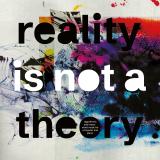
Recorded in concert at the University of Sheffield in March 2025, Reality Is Not A Theory is the first collaboration between Mark Fell and Pat Thomas. Major figures in British experimental music since the 1990s, Fell and Thomas have developed their rigorous practices from radically different backgrounds and perspectives: where Fell’s singular take on synthetic abstraction emerged from Sheffield’s electronic underground, Thomas is a virtuoso improvising pianist steeped in jazz and modernist art music who has simultaneously worked with sampler-based electronics for decades. As the record’s wonderfully academic subtitle explains, we are presented here with two sides of ‘algorithmic and improvised music for computer and piano’, exemplifying both players’ insatiable search for new (and sometimes uncomfortable) playing situations.
The performance begins with Fell’s electronics close to the timbres of acoustic percussion, attacks that suggest wood, metal or glass threaded along a rapid pulse while Thomas focuses on the lowest registers of the piano, deadening the strings. As Fell’s electronics start to ring out and occupy more harmonic space, Thomas turns to wide, repeated clusters, which slowly expand into patterns of chords. Like in his recent solo recordings and his trio work with Joel Grip and Anton Gerbal, Thomas’ playing combines extreme dissonance with a deep lyrical sense. Fell’s work gradually shifts its focus toward drum sounds, drawing on the microtemporal processes that have characterized his practice in recent decades. Heard together with Thomas’ probing piano, the computer sounds call up unexpected associations with the klangfarben antics of improv drummers like Paul Lovens or Tony Oxley. Throughout its second half, the music grows increasingly frenetic, as Thomas sounds out rapid, irregularly repeated figures and beautifully sour chords in the upper register, while Fell’s percussion develops into angular pan-pipe-like feedback and waves of glissandi.
With great confidence and patience, Fell and Thomas often let their individual contributions remain rhythmically distinct and unsynchronised, allowing unexpected correspondence and coincidence to guide the music’s development. Recorded in a hall named after Sheffield steel manufacturer and Master Cutler Mark Firth, the location might suggest a model for understanding how Fell and Thomas interact here: two workers in the same workshop, each immersed in their own part of the production process. Arriving in a striking sleeve designed by Mark Fell, with liner notes by Francis Plagne, Reality Is Not A Theory is an invigorating document of the meeting of two mavericks of contemporary music.
- Roadmap
- Icebreaker
- Again
- New York Attitude
- Underground
- The Lemur
- Tilværelse
- What Get's You
The project is co-led by Copenhagen-born saxophonist Andreas Toftemark, a European Jazz Master and recipient of the Bent Jædig Prize, whose career has taken him from the Conservatorium van Amsterdam to The New School in New York. He is joined by Benny Benack III, the multi-award winning Emmy-nominated trumpeter and vocalist lauded for his charismatic performances with the likes of Christian McBride, Chad Lefkovitz-Brown, Peter Bernstein and more. Rasmus Sorensen adds a vital piano voice, fresh from winning a Danish Music Award in 2024 and releasing Balancing Act (2024) featuring modern drum icon Kendrick Scott. On bass, Finnish talent Kaisa Mäensivu - leader of her own project Kaisa"s Machine - brings international credentials shaped at the Sibelius Academy, Manhattan School of Music, and festivals including Pori Jazz. Completing the lineup is New York drummer Joe Peri, a Grammy-winning artist featured on Tony Bennett & Lady Gaga"s Love for Sale and a familiar face at Birdland, Mezzrow, and other NYC institutions. Together, they craft Roadmap - a set of originals born from tours around the Copenhagen Jazz Festival and honed on the road. Each member contributes compositions: from Toftemark"s modal-driven title track and brisk swinger What Gets You to Peri"s hard-hitting opener Icebreaker, Mäensivu"s funk-tinged The Lemur, and Sorensen"s harmonically dense New York Attitude. The quintet also delivers moments of intimacy, with Again - a co-write between Toftemark and Benack - adding lyrics penned on tour and sung with understated warmth. As Benack reflects: "When I play with Andreas, I"m thinking of Joe Henderson and Kenny Dorham, of Clifford Brown and Harold Land. But this isn"t just a revival of a classic hard bop record-the heart and soul of it is the Copenhagen-New York connection."
- 1: Pure Energy 09:8
- 2: Clint 06:53
- 3: 5.000 Feet Up 1:19
- 4: Give The Vibes Some 05:51
On “Cold Sweat,” James Brown famously called to “give the drummer some.” In 1974, Philadelphia vibraphonist Khan Jamal called to Give the Vibes Some, with superb results. Pianist and composer Jef Gilson’s PALM label gave Jamal the platform he needed to deliver a thorough exploration of contemporary vibraphone. After launching PALM in 1973, Gilson quickly demonstrated that he would only produce records not found anywhere else. Give the Vibes Some, PALM number 10, was another confirmation of this guiding principle.
Raised and based in Philadelphia, Khan Jamal took up the vibes in 1968, after two years in the army during which he was stationed in France and Germany. Decisively drawn to the instrument by the work of the Modern Jazz Quartet’s Milt Jackson, Jamal studied under Philadelphia vibraphone legend Bill Lewis and soon made his debuts in the local underground.
Early in 1972, Jamal made his first recording, with the Sounds of Liberation. The band attempted an original fusion of conga-heavy grooves with avant-garde jazz soloing. Saxophonist Byard Lancaster, an important figure in Jamal’s development, contributed much of the solo work. Later in 1972, Jamal made his leader debut with Drum Dance to the Motherland, a reverb-drenched, never-to-be-replicated experiment with live sound processing. Both albums appeared on the tiny musician-run Dogtown label.
“We couldn’t get no play from nowhere. No gigs or recording sessions or anything. So I took off for Paris,” Jamal recalled in a Cadence interview with Ken Weiss. “Within a few weeks, I had a few articles and I did a record date. It didn’t make me feel good about America.” That was in 1974, while Byard Lancaster was recording the music gathered on Souffle Continu’s recent The Complete PALM Recordings, 1973-1974.
Jamal’s record date delivered Give the Vibes Some. At its core, it was an exploratory solo vibraphone album, even if two tracks added (through technological resourcefulness?) a très célèbre French drummer very much into Elvin Jones appearing under pseudonym for contractual reasons. Another track, for which Jamal switched to the vibes’s wooden ancestor, the marimba, added young Texan trumpeter Clint Jackson III. The most notable article published on Jamal during this stay in France was a Jazz Magazine interview. Jamal’s last word there were “The Creator has a master plan/drum dance to the motherland.” “Give the vibes some” could be added to this programmatic statement.
It was 1985--or at least it felt like it. The chrome skyline of Neo-Milano shimmered in the dusk light, skyscrapers pulsating to the beat of neon advertisements, casting glowing reflections across the silver canals below. In this retro-futurist-old city in Italy called Milan, half modern Rotterdam the Netherlands caught between timezones of nostalgia and tomorrow, the nights were long, the music was loud, and everyone was searching for something real. Fred Ventura was wearing his black leather jacket and was singing loud in his favorite key. It was perfect for his voice! All I Want Is You! This mega future italo classic with a canadian Lime vibe will give you Italo goosbumbs. Italoconnection vs. Tyrell corporation and you know what this means! A super hit in the old Tyrell style, already played by Moustache label boss David Vunk at several festivals and underground club nights for some time.. expect the old analog feel basslines, Roland Jupiter 8 strings and lyndrum drums. It goes deep, it's pure Italo singalong.... be fast super limited copies to keep it real! It won't be better than this. Be fast, live is life, dont play this vinyl under water. Teardrops in your eyes. This text is not AI, its Vunky text. gone is gone. Moustache records 053!
Zur Feier des zehnten Geburtstags von "In Colour", dem 2015er Debüt von Jamie xx, kündigt der Londoner Produzent und DJ eine limitierte Picture Disc Version der LP an. Das ikonische Cover Artwork des ursprünglich am 29. Mai 2015 erschienenen Albums befindet sich bei der 10th Anniversary Edition direkt auf der LP. "In Colour" hat sich über die Jahre zu einem modernen Klassiker entwickelt und wird gemeinhin als eines der prägenden elektronischen Alben der 2010er Jahre betrachtet. Der kaleidoskophafte Trip durch die UK-Dance-Kultur landete bereits im Jahr seines Erscheinens in zahllosen Bestenlisten. Mit Tracks wir "Loud Places" (mit Romy), "Gosh" oder "I Know There"s Gonna Be (Good Times)" (mit Young Thug und Popcaan) wahrt das Album die Balance zwischen Crossover Appeal und Underground Credibility. Es war für den Grammy und die Brit Awards nominiert und landete auf der Short List für den Mercury Music Prize. Auch ein Jahrzehnt später brilliert "In Colour" nicht nur durch seine Produktion, sondern auch durch die emotionale Dimension, die es auf den Dancefloor gebracht hat. Es ist ein Album, das einen persönlichen Liebesbrief an die britische Clubkultur in ein globales Statement verwandelt hat.
Cyphon Recordings proudly presents the latest release from Berwick, a Sheffield by Bristol
producer and DJ carving out a reputation for razor-sharp electro and forward-thinking club
sounds. With a background steeped in underground electronic music, Berwick has steadily built
his name through a string of uncompromising releases and energetic live and DJ sets, blending
the grit of classic electro with a modern rave-inspired touch. His new EP showcases his most
refined work yet—four tracks built for the floor, designed to move bodies and shake systems.
Opening with Fall & Melt, Berwick sets the tone with a punchy, contemporary electro cut. Its
driving percussion, crisp groove, and propulsive energy make it a peak-time weapon, balancing
raw dancefloor impact with seriously fat production finesse. Next up, Powerflip dives deeper
into the shadows. Gnarly synth lines, guttural bass, and clipped vocal hits collide to create a
darker, more menacing side of Berwick’s electro vision. With eyeball-rattling low-end, it’s a track
that demands a big system to unleash its full force.
On Impossible, Berwick shifts gears into an even faster lane. Elasticated bass and synths bounce
around the crisp drum groove, pushing the pace with an adrenaline-fuelled rhythm that’s as
urgent as it is infectious. Rounding off the EP, fellow Bristolian Sam Lester takes Powerflip into
new territory with a remix that leans towards wonky tech house. Stripping back some of the
raw menace of the original, Lester reshapes it with a 4 on the floor kick, layering in hypnotic
textures and a slick low-end that makes it a tripped-out weapon for house and techno sets
alike.
This release cements Berwick’s position as an artist unafraid to push electro into bold and
uncompromising spaces, while also opening the door to cross-genre interpretations.
In between the folds of ceremony and commonality lies a perennial spring of musical expression.
A statement along the time continuum, or a testament to the resilient resourcefulness embedded in that truth, forms the philosophical approach of this album – the first outing of Dídac.
Studying an extensive archive of instruments, artifacts, and field recordings at the Musée d’ethnographie de Genève—a space steeped in folkloric gesture – Dídac encountered a cosmos of liturgical music and folk song. Anchored in reverance for tradition and transformation alike, this album navigates the old-world Mediterranean lore through a post-modern ambient lens, threading drone, gentle rhythm, electroacoustic textures and the crude tactility of archival material into one woven tapestry.
Under the guidance of Dr. Madeleine Leclair, Dídac was invited to work within one of the world’s most extensive ethno- musicological archives—L’AIMP. In the saturated basements and tape-lined backrooms of the museum, he submerged himself in the sounds of ritual and rural life: wax cylinders from the Eastern Mediterranean, tapes of liturgical hymn, the worn edges of communal song.
In a makeshift studio on the fourth floor of the museum, he sifted through the hours of material he collected, gradually discovering that the archive was no static source – It did not dictate; rather, it served as a companion—offering not answers, but questions. Not a beaten track, but a cluster of sonic clues and riddles. Samples do appear occasionally, tenderly interwoven into the dialogue of the songs. In Dídac’s self-titled debut, the past is not worn as ornament or kitsch; it is listened to and responded to. The museum, its archives, and the visit to Geneva became a foundational culisse of sorts, igniting a myriad of rough cuts and improvisational outtakes.
Dídac, or Diego Ocejo Muñoz, was born in Madrid in 1994 to a family of both Catalan and Castilian origin.
Brought up in a religious household, the influence of the Catholic Church innately shaped the social fabric, schooling and daily life. This lingering dominance led the adolescent Diego into a path of rejection of everything sacramental, promptly resorting to subversion in the shape of grafitti, skateboarding and underground music. Only later in life, after a rigorous venture as an acid and electro producer, the Church re-emerged before him in new light, invoking a deep fascination for its mysticism, iconography and choral tradition.
Spain in general and Catalonia in particular, has long served as a crossroads of the eastern–western Mediterranean continuum, with many of its cultures sharing aspects of way of life and ceremony. At the MEG, Diego found himself puzzled with this realization, resulting in a sonic amalgamation that reaches farther away from the rugged mountains of Catalonia than you might perceive at first encounter.
The deeply embedded memory of rite and public ceremony, religious hymn and landscape—sieved through the undercurrent of personal re-emergence, forms the emotional topography of this album. The record does not trace this landscape; it inhabits it. Its repetitive mysticism and ambient, wide-eyed gaze could possibly evoke (perhaps redundant) comparisons to artists such as Dimitris Petsetakis, or Popol Vuh’s late 70’s cinema scores.
The delicate lines between the sacred and the secular – between memory and re-invention – serve as a cipher to understanding this album in its entirety. Titles like Malpàs Mines or Pantocrator’s Portal Outro nudge toward a folkloric and devotional bedrock—places where labor and spirituality coexist, where names preserve both dust and veneration.
Nevertheless, this is far from mere nostalgia. It is a reclamation — singing alongside the spirits of the past, nurturing what still hums beneath the soil. It is an intimate reflection on tradition, rebellion, adolescence, ceremony and fantasy – a pastoral contemplation on what once was and what is to be.
Indo Warehouse / Kunal Merchant ft. Raja Kumari
Indo Warehouse presents Bombay Acid (Incl. SYREETA Remix)
Indo Warehouse presents ‘Bombay Acid’ on Crosstown Rebels, featuring Kunal Merchant and Raja Kumari. The hypnotic new single, fusing heritage and future-focused touches, lands with a remix from SYREETA
Making their debut on Crosstown Rebels, New York collective Indo Warehouse unveils ‘Bombay Acid’. The release is a collaboration between co-founder Kunal Merchant and acclaimed vocalist Raja Kumari, capturing the Indo Warehouse ethos: hypnotic grooves, ancestral textures,and underground energy fused into one expansive, ritualistic journey.‘Bombay Acid’ pairs Merchant’s meticulously layered production, melding deep, hypnotic grooves with textures drawn from South Asian musical traditions, with Kumari’s commanding vocals. The track unfolds as both a club-ready cut and an immersive ritual, bridging cultural heritage and contemporary electronic sounds. A Grammy-nominated rapper, singer, and classically trained dancer, Raja Kumari bridges Indian tradition with contemporary global music. She has collaborated with Timbaland, Dr. Dre, Gwen Stefani, John Legend, and Iggy Azalea, and has performed at Coachella, Wireless, and India’s NH7 Festival. Her imprint, Godmother Records, and projects such as ‘The Bridge’ (2023) and ‘Kashi to Kailash’ (2025) explore resilience and spiritual depth, making her one of the most distinctive voices in modern music.
On the flip, SYREETA delivers a striking rework. Authentic and fearless, the UK favourite has shattered glass ceilings while drawing on chunky basslines and energetic grooves from house and techno to craft her own sound and style. Her remix injects ‘Bombay Acid’ with that signature low-end punch, while driving and harnessing the track’s cosmic energy for late-night dancefloors.Kunal Merchant has spent years building a sound that is simultaneously drawn from his South Asian lineage and futuristic. From appearances at Coachella, Hï Ibiza, Fabric London, and Brooklyn Mirage, to releases across the Indo House spectrum, he has become a central figure in shaping the genre and bringing South Asian voices to the global electronic stage. Indo Warehouse, co-founded by Merchant and Kahani in 2022, has evolved from its underground origins in New York into an international movement. Their live shows are immersive experiences, rituals where identity, tradition, and club culture collide, and their releases continue to push the boundaries of house and techno while remaining deeply grounded in their origins. With ‘Bombay Acid’, Merchant and Kumari deliver a production that is both hypnotic and expansive, inviting listeners
into a universe where rhythm, culture, and underground energy meet in unison.
Enigmatic artist GRANT, a longtime figure in the deep house and techno underground, collaborates with Alex Albrechton the title track 'Tangible Dreams'
The two connected via the Scissor & Thread label and Francis Harris, forming a creative partnership. The EP is a textured homage to late '90s dub techno, echoing Basic Channel and Chain Reaction, while retaining a modern touch. The tracks are timeless, groove-focused, and sonically deep.
On the release, GRANT says: "I've been a fan of Alex's work. Through Francis and Scissor & Thread, it felt natural to collaborate. This EP is the kind of music I love to play - not flashy or trendy, but tracks that hold up and grow on you."
With decades of record collecting and acclaimed releases on Lobster Theremin, Mörk, and his own imprints, GRANT has built a loyal following. His albums The Acrobat, Cranks, Perception, and Fantasy Blues are collectors' favorites.
Alex Albrecht, known for immersive performances at Paradise City, MNMT, Public Records, and Giant Steps, has released on Anjunadeep, Mule Musiq, and his Analogue Attic imprint.
With 'Tangible Dreams', GRANT and Albrecht deliver a collaboration destined to stand out.
Furthering the passionate exploration of cinema that has guided her two previous LPs - 2017’s ‘Fassbinder Wunderkammer’ and 2020’s ‘I Should Have Been a Gardener’ - the Milanese guitarist/composer, Alessandra Novaga, returns to Die Schachtel with ‘The Artistic Image Is Always a Miracle’, two sides off shimmering, tense compositions – culminating as one of her most creatively ambitious and conceptually rich outings to date – freely inspired by the life and work of the Russian director Andrej Tarkovsky and the music of Johann Sebastian Bach.
Classically trained at the Musik Akademie in Basel, Switzerland, over the last decade Alessandra Novaga has emerged as one of the leading figures within northern Italy’s thriving new, experimental, and improvised music scene, rendering striking solo efforts, in addition to collaborations with Loren Connors, Stefano Pilia, Elliott Sharp, Nicola Ratti, Paula Matthusen, Sandro Mussida, Kid Millions, Travis Just, Francesco Gagliardi, and others. Remarkably ambitious and forward thinking, her approach to the guitar embarks upon a relentless deconstruction and rethinking of her instrument’s unique properties through distinct applications of structure, resonance, space, and tone, creating in a deeply personal and emotive music, seeking narrative and meaning within the abstractions of sound.
In 2017, with the LP, ‘Fassbinder Wunderkammer’, issued by Setola Di Maiale, Novaga embarked upon the exploration of her love of film. Having begun with Rainer Werner Fassbinder, this was followed in 2020 by Die Schachtel’s release of ‘I Should Have Been a Gardener’, a deeply intimate mediation on the life and work of Derek Jarman. Rather than focusing on a fixed point of inspiration or a single film to work from, these pieces achieve a form of abstract portraiture, distilling elements drawn from these filmmaker’s life and work into ambient networks of texture and tonality. ‘The Artistic Image Is Always a Miracle”’ freely inspired by the Russian director Andrej Tarkovsky and the music of Johann Sebastian Bach, finds Novaga radically expanding her sonic palette within this approach.
The seeds of ‘The Artistic Image Is Always a Miracle’ can be traced to a conversation that Novaga had with Alan Licht (contained in the highly regarded Common Tones: Selected interviews with artists and musicians 1995–2020, Blank Forms, 2021), relating to the connections between music and cinema, which led her to consider Andrej Tarkovsky’s use of Bach's music within a symbiotic framework: how the music illuminates the imagism of the films, and the film illuminates new dimensions of the music. Slowly developing over the subsequent years, the resulting album comprises six individual works, some of which draw directly upon pieces of Bach’s music that Tarkovsky used in his films – specifically 'Erbarme dich, Mein Gott', 'Das alte Jahr vergangen ist', and 'Ich ruf zu dir, Herr Jesu Christ' - while others draw upon the sensibilities and moods evoked in the imagination by the director’s films.
As a point of departure and illumination into the process and spirit that underscored the creation of the album, Novaga points toward a passage in Tarkovsky’s "Sculpting in Time”:
“Art is born and takes hold wherever there is a timeless and insatiable longing for the spiritual, for the ideal: that longing which draws people to art. Modern art has taken a wrong turn in abandoning the search for the meaning of existence in order to affirm the value of the individual for its own sake. What purports to be art begins to look like an eccentric occupation for suspect characters who maintain that any personalized action is of intrinsic value simply as a display of self-will. But in artistic creation the personality does not assert itself, it serves another, higher and communal idea.”
‘The Artistic Image Is Always a Miracle’ can be understood as a realisation of the collectivism of which Tarkovsky speaks, in the service of something far beyond the expression of self. Encountering Novaga moving into fairly uncharted waters, three of the album’s pieces incorporate the human voice we encounter the voices of others: that of the poet Arsenij Tarkovsky, the director’s father; a singer from Bach’s ‘Erbarme dich, Mein Gott’, capturing a broadcast in an underground parking lot, and Novaga’s own, rendering the melody from Bach’s “Ich ruf zu dir, Herr Jesu Christ”. Roughly alternating between solo excursions on guitar and bristling electroacoustic pieces, over the course of the album’s two sides Novaga weaves one of her most abstract and ambitious bodies of recordings to date, shifting between the complex tonal mediations generated by the six strings of her instrument, and phycological densities activated by the expanded pallet of sonority made possible by the tactics and approaches of musique concrète.
An immersive, deeply engaging meeting of beauty and melancholy within a labyrinth of voices and ideas, ‘The Artistic Image Is Always a Miracle’ transfigures the life and work of Andrej Tarkovski – one of the greatest auteurs in the history of cinema – into a singular, experimental statement of collective truth. Belonging to recent, ambitious stream of contemporary new music releases on Die Schachtel that’s already included Novaga’s ‘I Should Have Been a Gardener’, Stefano Pilia’s ‘Spiralis Aurea’, Jim O'Rourke & Giovanni Di Domenico’ ‘Immanent In Nervous Activity’, Claudio Rocchetti’s ‘Labirinto Verticale’, and Damāvand’s ‘As Long As You Come To My Garden’, among others, ‘The Artistic Image Is Always a Miracle’ is available on as a limited edition of 300 dark turquoise vinyl LPs released on June 21, 2024. The LP, designed by Bruno Stucchi / dinamomilano, comes with an 8-pages insert illuminated by Alessandra’s text as well as the lovely and intense photographs of Matilde Piazzi.
- A1: Light It Up
- A2: Really Seen It
- A3: Cold Michigan Nights (Feat Boldy James)
- A4: Maxwells Peacot Collection
- A5: All Day (Feat Lord Sko)
- B1: And It's Like That (Feat Sonnyjim)
- B2: Hep Taxi
- B3: Not Going
- B4: Empires
- B5: Nowhere To Gob2. "Hansel & Gretel" (Feat. Boldy James)
- B3: Trenchblade
- B4: Past Life (Feat. Mavi)
- B5: Buggin
- B6: Kingdom Come (Hyping Me Up)
- B7: Arîba! Arîba!
LA-based producer Real Bad Man and Michigan rapper Willie the Kid release their new collaborative album, Midnight, via the producer’s own Real Bad Man Records label. The album, which marks the producer’s second collaborative project of the year following Dear Psilocybin with ZelooperZ, includes guest appearances from UK rapper Sonnyjim, New York’s Lord Sko and frequent RBM collaborator Boldy James, who will be releasing his own Real Bad Man-produced album in May.
The album came together naturally for the pair, letting each new song inform the identity of the project as a whole. Speaking about how they identified that central theme of the album, Willie says, “I think where Adam and I agreed upon is that the stand out records were all themes for the night, late night drive, after hours dinners, shopping, private rooftop hotel suites, it’s a thinking album, a cruising album preferably enjoyed at night…midnight””
Midnight marks the early stages of what’s shaping up to be a prolific run of collaborations for Real Bad Man in 2025. His second album of the year builds off of the momentum he sparked last month with his first full-length album with ZelooperZ, Dear Psilocybin, which The FADER called “clear-eyed and focused in its own fantastical way”. Working as a duo with the dynamic lyricism of Willie the Kid after the psychedelic sounds of Dear Psilocybin, Real Bad Man returns to the essential underground beatmaking that he first emerged onto the scene with through his On High Alert series. His crackling, lo-fi production pairs perfectly with Willie’s gritty delivery, laying a foundation for the longtime lyrical stylist who has worked alongside some of the genre’s modern heroes including Nas, Lil Wayne, The Alchemist, Roc Marciano, Curren$y and more.
Listen to Midnight above, see below for more details on Midnight and stay tuned for more from Real Bad Man coming soon
The Argentine-born producer, now based in Munich, presents his long-awaited
debut album Bleeps Don't Cry, born out of a period of emotional upheaval in the
artist's life, and marks an immersive sonic journey through bw's evolving inner
world.
The record blends hypnotic, dub-infused rhythms with haunting atmospheres and
introspective ambient explorations. With this release, bw presents a raw, strippeddown aesthetic and a deeply personal approach to modern electronic music.
Both the artist and his self-titled label, bw, exist as a refined underground entity
with a keen ear for quality and contemporary techno. His tracks are crafted with
minimal yet vital elements, each sound added like a crucial ingredient, emotionally
expressive and essential to the whole.
DEVO’s Hardcore documents the group’s beginning as pre-punk outcasts in the fertile Akron, Ohio, underground rock scene. Spawned at the nearby college of Kent State, site of the infamous May 4 Massacre, DEVO formed as a conceptual art project armed with the radical philosophy of de-evolution. Brothers Mothersbaugh (Mark, Bob and Jim) and Brothers Casale (Jerry and Bob) along with drummer Alan Myers soon whipped up an otherworldly brand of “devolved blues” that could hold its own alongside the beatnik groove of 15-60-75 (a.k.a. The Numbers Band) or the primal rock poetry of The Bizarros. Recorded on various four-track machines and in tiny studios, basements and garages between 1974-1977, Hardcore reveals their strikingly clear vision: rock ’n’ roll stripped bare of its collective cool and jerked back into propaganda fit for post-modern man. It’s no surprise that these transmissions would soon catch the eye and ear of Brian Eno, who later produced their landmark 1978 debut album. Noisy synth, strangled guitar chops and a primitive rhythmic thud power the early DEVO sound. Threaded beneath it all are lyrical themes of post-McCarthy paranoia, middle-class ephemera and DEVO’s long-running topic of choice: sex, or lack thereof. Few moments in pop music history can match the grinding, pent-up energy of “Mongoloid” and the spastic bounce and sputter of “Jocko Homo” (two anthems presented in their earlier and superior versions here). Cult favorites like “Mechanical Man” and “Auto-Modown” make Volume 1 essential listening. Superior Viaduct and Booji Boy Records are proud to present DEVO’s Hardcore to a new generation of spuds, lovingly packaged with Moshe Brakha’s stunning cover photography. As David Bowie said in 1977, DEVO is indeed “the band of the future.”
Unknown Waveforms is the forthcoming album from Belgian trio KAU, set for release on October 10, 2025. Marking an evolution since their 2023 release The Cycle Repeats, this new record captures a more personal, immediate, and unfiltered version of the band's sound. In an increasingly digital world, KAU takes a different route, with an album rooted in human connection, live energy, and creative spontaneity. Here, the trio reflect their take on instrumental music, drawing heavily fromjazz, hip hop, and electronic influences.
At the heart of Unknown Waveforms lies the starting point of three musicians in a room, writing and composing music on the spot. For KAU, this idea mirrors their working method: long jam sessions, free-flowing experimentation, and shared moments of inspiration. Songs often take shape slowly, unfolding over hours or days, but always built collaboratively as a trio.
The album's title reflects the mystery behind how music comes together, but is also both literal and symbolic. Unknown waveforms are the sounds that arise when machines and people interact in unpredictable ways. Whether you're an experienced musician or just starting out, the creative process often feels elusive and hard to fully understand. But there are also certain moments: creative sparks that can't be planned or programmed. It ends up being more than notes, gear, or structure, it's about the process, the tension and energy that builds when people connect and create in the same room.
The title track, Unknown Waveforms, captures that exact process. It opens with a quote from synth pioneer Wendy Carlos: "I'm just trying to show you how we get some of these sounds", inviting listeners directly into the creative space. The track focuses less on a polished outcome and more on the moment before a song is "finished": it's a portrait of experimentation, feeling, and raw expression.
This commitment to honesty permeates the entire album. KAU kept overdubs to a minimum, avoided excessive editing, and prioritized spontaneous choices over calculated ones. In a time when the future of live, improvised music feels uncertain, they double down on the physical, the real, and the immediate. The album resists the pristine polish of modern production, favoring the warmth and imperfection of analog synthesis. The band embraces the character of their instruments, particularly vintage gear, where subtle flaws add beauty, depth, and personality.
One standout track, cr_eye, is driven by the Moog Subphatty-a key instrument in the band's toolkit for its analog warmth and powerful sub-bass. The track centers around the conversation between bass and drums, allowing the keyboards to recede and create space. It draws emotional threads from earlier KAU tracks like Kampala and Kautokeino, bridging past and present with a shared atmosphere and rhythmic interplay.
Another highlight, Stratford, finds inspiration in London's transport system and the UK jazz scene that has long influenced KAU. A field recording snippet of the London Underground kicks off the track, connecting it to the rhythm of everyday commutes. Built around a hypnotic sequencer line from the Roland JX-3P, the track evokes the motion of a metro journey. Artists like Nubya Garcia, Yussef Dayes, and Alfa Mist, giants of the scenethat the band has admired for years, resonate subtly throughout.
Above all, Unknown Waveforms is a statement of intent from KAU: a celebration of imperfection, creative honesty and an insight in the process.
- 1: Blackmail David Ruffin
- 2: Crime In The Street David Ruffin
- 3: Look Out Your Window Frank Wilson
- 4: Just To Keep You Satisfied The Originals
- 5: I Pray You Still Love Me Jimmy Ruffin
- 6: I Hate Myself For Loving You The
- 7: If I Can´t Love You Then I Can´t Love Me Eddie
- 8: When The Lights Come Down On Love Dennis
- 9: You Are The Way You Are Leon Ware
- 10: Don´t You Wanna Come Leon Ware
Satisfaction comes in many forms. When the magical word Motown is uttered, most people are hard-wired to The Four Tops, the Temptations and The Supremes. But to reduce Motown to the effervescent sixties is only part of the label’s remarkable legacy.
By the 1970s, a different sound was gathering. America was on the verge of a nervous breakdown. The Vietnam War had been a disaster, urban street crime was epidemic and the nation’s college campuses were alive with political resistance. The joyful hope that had inspired “Baby Love” now felt anachronistic and out of time.
The music industry was changing too. The vinyl pop single on 45rpm which had been the staple of Motown’s success was being challenged by concept albums. This was the era of Edwin Starr’s anti-war album War and Peace (1970), The Temptations mind-bending Psychedelic Shack (1970) and Marvin Gaye’s state-of-the-nation classic What’s Going On (1971).
By the early 1970s Motown had a stable of male vocalists that was arguably the best in the world, among them former lead singers from The Temptations - David Ruffin, Dennis Edwards and Eddie Kendricks. Alongside them singer-producers like Leon Ware and Frank Wilson were asserting their presence.
David Ruffin’s “Crime in the Street” captured the epidemic of violence in Detroit allowing his exquisite voice to quietly rage against gun crime. Recorded a few years before his underground classic “Rode by the Place”, both sound more modern today than when they were recorded.
If there is a common thread here, it’s the mid-tempo shifting soul soon to be christened as “quiet storm” including groups on the margins of Motown such as The Originals and The Fantastic Four led by the impassioned “Sweet” James Epps.
Just to keep you satisfied, immerse yourself in the overlooked creativity of Detroit’s male voices in the early 1970s.
Candido Cameron was a Cuban percussion maestro who had played with luminaries such as Dizzy Gillespie, Buddy Rich and Count Basie throughout his illustrious musical career which started in 1952. Fast forward to 1979 and Candido finds himself caught up in the Disco boom that had engulfed his adopted New York City. Feeling he could add his trademark quick-fire Conga and Bongo playing to Disco's straight 4 x 4 syncopated rhythm he cut some records with legendary NYC label Salsoul. The fruits of this partnership were 2 full length LP's and a handful of 12" singles that changed the face of underground Disco."Jingo" is an all-time classic dance record, sampled, edited, re-configured and coveted by too many names to mention! It's a killer funky Disco version of master Nigerian drummer Olatunji's 1969 percussion suite of the same name, Salsoul style, while over on the flip we have one of the deepest Disco records of all time; "Thousand Finger Man" a testament to Candido's percussion prowess and a spacey, beautiful voyage that has left more than an indelible mark on modern House music, often being cited as a huge influence by artists such as Masters At Work and more. Essential stuff basically, every collection should have a copy!
This 12" has got to be one of the toughest Salsoul records to find. Changing hands for up to £300 a time for a used copy. Now it has been re-mastered, re-pressed and made available again with all original label artwork intact with the permission of Salsoul Records, New York City.