Bristol-based DJ/producer Jay Singh a.k.a. Indian Man has been a regular on the festival and club circuit for several years, bringing to the dancefloors his distinct blend of musical influences, from electronica to the Punjabi sounds of his Indian roots. Championed by the WOMAD festival, his first official release is a mixtape of tracks he has created with a truly international cast of collaborators he met on his travels with the global music festival from the UK to Europe and South America, including stars such as Emmanuel Jal, La Dame Blanche, and Dobet Gnahoré.
Upon returning from his extensive travels, Indian Man honed his craft in the spare room of his grandmother’s house where he lived as a carer. He spent his evenings playing DJ sets and producing dance music on a midi keyboard left there from his father’s band, inspired by melodies his gran sang around the house. Packed with dance beats, playful melodies, and spin-chilling vocals, the result is Gran’s House — both a tribute to the loving family and diverse cultures that made him who he is, and the bold coming-of-age of a rapidly-rising talent.
Search:modul
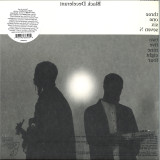
Black Decelerant is the second installment of Reflections, a series showcasing contemporary collaborations orchestrated by RVNG Intl., recently inaugurated by Steve Gunn and David Moore. Black Decelerant, the duo of Khari Lucas, aka Contour, and Omari Jazz, explores jazz traditions, improvising with synthesizers, guitars, and electronics as a practice laid forth by their musical ancestors. This experience allows for sonic meditations on themes such as Black being/nonbeing, mourning/life, expansion/limitation, and the individual/the collective. The two strive to create a sonic surface which can simultaneously allow Black listeners a place to be still, and to serve as a basis for a movement beyond "the moment." The album's ten compositions configure vast, resonant landscapes with signals, weathers and spirits, suspended in memory and distilled in time. The Black Decelerant machine recalibrates archival relics and acoustic impulses into collages of amalgamated timbres, where harmony exists not without discordance. Across the expansive space of the record, cadent storms of modulated sound ascend beside serene melodic spells. Piano keys and bass lines tumble in free fall throughout the release, accompanied on tracks "two" and "eight" by the spectral trumpet improvisations of Jawwaad Taylor. The duo arrived at their name upon reading Aria Dean's Notes on Blacceleration, an article which explores Accelerationism within the context of Black being or non-being as a foundational tenet of capitalism. Coupled with the record's intended effect, "Black Decelerant" references the music being an invitation to slow down, while hinting at the shared politics between themselves and the artists and thinkers who inspire them.
After a hiatus of a few years to concentrate on various studio projects, Steevio’s Mindtours label is back with a vinyl release over 2 volumes, pressed on bio-vinyl at the carbon neutral pressing plant Deepgrooves.
Dod yn ôl at fy nghoed (which is Welsh for ‘to return to my trees’ meaning to return to balanced state of mind) sees Steevio experimenting with deep, broken-beat bass techno awash with polymetric rhythms and jazz infused chord structures. Steevio’s musical approach has in recent years become more free-form, with loose mathematical frameworks, evading clear generic boundaries, and this release continues and expands on that theme.
All tracks were recorded live and improvised from a blank canvas in real-time on an analogue modular synthesizer.
Vol. 1 was all recorded during Covid lockdown and represents some the best material from jams from that period. All tracks were recorded live and improvised from a blank canvas in real-time on an analogue modular synthesizer.
Vol. 2 to be released 1 month after.
Pleasure Planet’s kaleidoscopic debut album has been a long time coming, but good things come to those who wait. Developed over years of late-night studio improvisations, ‘Pleasure Planet’ is an affectionate and colorful patchwork of the New York City-based trio’s knotted influences that’s suspended between the rave and the chill-out room, weaving glistening pads and chunky basslines into vocal earworms and warm, saturated rhythmic cycles. Bandmates Andrew Potter, Kim Ann Foxman and Brian Hersey enter into a lysergic dialog with their discrete personal musical histories, drawing inspiration from vintage EBM, ambient music and heady early ’90s West Coast rave sounds and launching these classic elements into a transcendent new sonic universe.
Celebrated DJ and producer Foxman was a lead singer of Hercules and Love Affair when she first ran into DC rave veteran Potter, and the two rapidly realized their musical interests overlapped. So when Potter was recording with his studiomate Hersey, a NYC underground club scene mainstay, and they needed to bring in a vocalist, the choice was simple. Working together was a refreshing, freeing experience for the three seasoned artists, and the more they experimented, the closer they became; Foxman ended up moving into the studio, and Pleasure Planet was manifested into existence. “We’re like family,” says Potter. “We’re always on the same page – we couldn’t make this music solo.”
For Foxman, the open-ended jam sessions provided her with a chance to try something new, a few steps from the dancefloor-forward DJ tracks she’s best known for producing. And as the trio pooled their adolescent rave memories, reflecting on them with more mature ears, they began to develop the signature sound that was first heard on the Throne Of Blood-released ‘Animals’ 12″. Pleasure Planet aren’t trying to re-capture the past, but suggest a poetic contemplation that layers their recollections and musical obsessions into a hypnotic sci-fi dream. Harnessing a self-described “Aladdin’s cave” of analog and digital gear that help galvanize the timeline, they bridge the gap between avant-pop and icy bleep techno, curving suggestive words through lattices of tightly-engineered electronics.
On ‘Endless’, Foxman’s voice is echoed into a glistening haze that hovers around ethereal pads and tense, electroid pulses. Slow-moving and evocative, it’s a track that capture the open endedness of post-rave euphoria, touching the afterparty but moving far beyond the material world. She’s more recognizable on ‘Alien’, the album’s most upfront track, singing in a glassy, upper-register coo over urgent bass bumps, taut guitars and florid electronic atmospheres. “Are you an alien, or are you an angel?” she asks, fractalizing the borders between genres. And the band’s sense of cosmic togetherness bubbles to the surface on ‘Saved by the Bells’, a meditative after-hours experiment that diminishes the pulsing beats for a moment to bring out a spectrum of interconnected, serpentine melodies.
Modular bleeps and echoing percussion anchor the swooning ‘Planet Love’, one of Pleasure Planet’s most recent compositions and one of the album’s most outwardly psychedelic cuts, while the urgent and anthemic ‘Go With Madness’ steps back towards the main stage, evaporating Foxman’s memorable calls into a thumping procession of analog drums and squelchy, acidic bass tweaks. But they save the best for last, tugging at the heartstrings with ‘Remember (In Dreams)’, a giddy spiral of blipping synth arpeggios and haunting, reverberated chorals. It’s the perfect way to conclude an album that cryptically gestures towards the vulnerability of friendship, celebrating the shared experiences that result in some of the most meaningful memories of all.
At the latest with the release of the albums "Zauberberg" and "Königsforst", in the mid-1990s, one associates GAS, Wolfgang Voigt's very own artistic cross-linking of the spirit of Romanticism and the forest as an artistic fantasy projection surface, with intoxicatingly blurred boundaries of post-ambient infatuation and the impenetrable thicket of abstract atonality. The distant, iconic straight bass drum marching through highly condensed, abstract sounds taken from classical music by the sampler or modulated accordingly, and the enraptured gaze through pop art glasses into the hypnotic thicket of an imaginary forest, manifested over the years this unique connection of audio and visual, which to understand fully, then as now, would be neither possible nor desirable.
Quite the opposite. The album GAS - DER LANGE MARSCH once again invites us to follow the deep sounding bass drum, to give in to its irresistible pull into a psychedelic world of 1000 promises. In the process, the journey leads us past stations of memories sounding from afar, from "Zauberberg" to "Königsforst" and "Pop", from "Oktember" to "Narkopop" and "Rausch", back and forth, now and forever.
Way. Destination. Loop. - Forest loop.
No beginning. No end.
Spätestens mit der Veröffentlichung der Alben „Zauberberg“ und „Königsforst“, Mitte der 1990er Jahre verbindet man mit GAS, Wolfgang Voigts ganz eigene künstlerische Vernetzung mit dem Geist der Romantik und dem Wald als künstlerische Fantasie-Projektionsfläche, rauschhaft verschwimmender Grenzen von post-ambienter Betörung und dem undurchdringlichen Dickicht abstrakter Atonalität. Die entfernt, durch stark verdichtete, abstrakte, der Klassik durch den Sampler entnommene oder entsprechend modulierte Klänge marschierende, ikonische gerade Bassdrum, der entrückte Blick durch die Pop-Art Brille hinein in das hypnotische Dickicht eines imaginären Waldes, manifestierten über die Jahre diese einzigartige Verbindung von Audio und Visuellem, die ganz verstehen zu können, damals wie heute, weder möglich noch wünschenswert wäre.
Ganz im Gegenteil. Das Album GAS - DER LANGE MARSCH lädt uns einmal mehr ein, der tief tönenden Bassdrum zu folgen, ihrem unwiderstehlichen Sog hinein in eine psychedelische Welt der 1000 Verheißungen nachzugeben. Dabei führt die Reise vorbei an aus der Ferne klingende Stationen der Erinnerungen von “Zauberberg” bis “Königsforst” und “Pop”, von “Oktember” bis “Narkopop” und “Rausch”, vor und zurück, in alle Ewigkeit.
Weg. Ziel. Loop. - Waldloop.
Kein Anfang. Kein Ende.
Following two successful dancefloor-orientated releases with remixes by Marco Shuttle and S.O.N.S., London-based label E2-E8 takes an ambient turn while remaining faithful to its ethos of putting new artists on the map. Water Locks is the debut release from Szl0, a sound artist who’s been living and breathing East London’s inspiring atmosphere and contradictions for the last 10 years.
Water Locks is a tale of boats, canals, twists and turns of a quietly ever-changing life. A misty, smoky dive into a soul in constant search for itself. For his debut album, Szl0 peeked into instincts and fantasies and crafted a series of deep live improvisations.
The beauty is in the tension: Szl0’s music is for pause and reflection, yet it’s the moment that matters. A series of intense movements firmly grounded in the here and now which, taken together, becomes bigger than the sum of its parts. A late night listening at sea.
Limited run of 50 tapes. Includes a download code with a bonus remix from E2-E8’s own Miro Sundaymusiq (“First Light” – Pacifist Techno Soul Edit) who reinvents one of Szl0’s movements and gives it an unexpected dancefloor appeal.
A new album is finally on Drivecom. A 2xLp full of new tracks recovered and rearrenged around 2022-23. No doubt the legacy of the past works are represented. Some arpeggios and melody lines will remember us to sonic landscapes from the “La Hora de las Máquinas” or “The Source” albums by Boris Divider but with a new and refreshed production sound, for sure this will be a must item for all the electro community and fans of the label.
The album opens with the intro track “The Way You Feel Me” a mix between electro and synthwave with a moog bass and arpegio reminiscent of some Arpanet’s “Wireless Internet” tracks. Then followed for the “Letters From A Sleeper” theme. As the track’s name reflects, it's a clear tribute to the synth era of David Harrow/Anne Clarke’s “Sleeper in Metropolis” just like a reply from a postnuclear future, with a big role carried out by the initial synthline. Then the first slow bpm track is for “Distante” where synthlines a la Tangerine Dream are crossed and mixed with vintage digital rhythm machine sounds and the pattern seems to be taken from those Dire Straits’ “Money for nothing” intro drum arrange in an infinite and repetitive way.
In the B Side “You Know What I Know” track is again showing an Arpanet-ish intro synthline followed by a sequential prophet's arpeggio which bring us back to the old “La hora de las máquinas” sound. Closing the first 12 inch is “Sin Mirar Atrás”. One of the most important tracks of the album for the author. A big dimensional and introspective track full of vintage synthlines and reverb. Time for “Your Light” track is again here. This song was already presented with its own reference on Drivecom. A future pure Electro classic which was announcing the album months before.
In the same side, we find another slow tempo theme called “Recursos Infinitos” an instrumental track which implements several synthlines that interlink themselves into an infnite Tangerine Dream’s soundtrack that serves as a little break to the power and darkness of “Cenital”. Electro rhythm patterns and dark arpeggio synthlines in the vibe of Vangelis’ Blade Runner are mixed in this cold dystopian agressive dancefloor track. Later we find the theme that gives name to the album: “ Memories From The Dust” a slower track which mixes sounds and melodies between “La Hora de las Máquinas“ and other 80's digital keyboard sounds. The last track is just an outro theme called “Out of Sync”. Its name is a clear statement of its own musical arrangement, synthlines are full out of timing and synchro, it was recorded in realtime from a modular synth to a digital device in one take.
Modular Wizard Adam Arthur issues forth another sonic spell from his remote fortress! Hot off a searing 12" for Detroit's Interdimensional Transmissions, Adam returns for the third release on his Arkansas imprint, Danger Close. Throbbing with raw analog energy, DANG 03 is soaked in the sound of his chosen instrument, the Buchla 200. Prepare for a journey through the dark night of the soul. Only fools rush in.
Two years after Strange Effect, the Parisian band are back with Half Asleep Half Awake, a second album that will restore your faith in rock. And how do they do that? With a compendium of overpowering hits, luminous melodies and finger-burning demonic jams. The trio of Djivan Abkarian (vocals, bass), Lucas Humbert (guitar) and Baptiste Leon (drums) went back to London to Liam Watson's studio (White Stripes, Madness, Tame Impala, Supergrass) for this new opus. Half Asleep Half Awake is a string of XXL hits. There are Proust ballads, hysteria, a remarkable home run and 18-carat diamonds. To reinforce this kaleidoscopic feel, Howlin' Jaws haveincorporatednewinstruments (a djura, a kind of mini Greek bouzouki; sagattes, smallcymbals used in Egypt and Turkey) to add depth and diversity. VocalsweredubbedandthenpassedthroughLeslieboothsforvibratoeffect, and solos were infused with phaser. This is an album wherealchemyandexperimentationgivebirthtofrenzy,savageryandemotion
A true packing backpack designed to carry what you need.
Made from 120 recycled 0,5l (16oz) plastic bottles, the SOLID BLAZE PACK 120 is an all-purpose travel backpack with modular interior layout crafted for versatility. Whether you are hauling DJ or production gear, photo or video equipment, or other electronics, the SOLID BLAZE PACK 120 enables you to easily and conveniently organize your gear. The spacious and expandable main compartment features removable EVA padding and multiple dividers for ultimate packing experience. The customizable padded interior ensures your gear travels with you safely. Loads of additional compartments, pouches and zippered pockets offer intuitive accessory management and quick access to your belongings. The SOLID BLAZE PACK 120 is crafted from only the highest quality materials, such as its water-repellent RPET 900D shell and YKK® AquaGuard® zippers to protect your laptop, tablet, timecode records and other expensive gear from the elements. Travel comfortably knowing your gear is safe inside the MAGMA SOLID BLAZE PACK 120.
Fabrics made from recycled PET plastic bottles (Global Recycling Standard certified)
Outer material crafted from robust and water-repellent RPET 900D Polyester (with eco-friendly water-based PU-coating)
Lining made from RPET TC Polyester
Lockable dual PVC-coated YKK® AquaGuard® zippers (padlock not included)
Expendable equipment storage compartment with EVA side walls and bottom padding
Includes removable dividers to customize individual sections
Separate padded laptop and tablet compartment fits up to 17” laptops
Numerous internal pouches, compartments and zippered pockets to organize smaller gear
Quick-access front-compartment with internal pockets to organize smaller gear
Dedicated headphone-pocket (also holds cameras)
Side-pocket with pen and key-holder
Side-pocket with USB charger port (power bank not included)
Side-pocket for bottle or tripod storage
Comfortable air channel back padding with hidden document pocket
Carrying-handle with magnetic closure
Contoured and ergonomic riveted shoulder-strap with metal buckles
Adjustable chest-strap
Detachable hip-belt transfers heavy-loads to your hips
Trolley-Sling
Cabin luggage compatible
+ Outer dimensions: (H/B/T): 52 x 35 x 23-26*cm / 20.5” x 13.75“ x 9“-10.25“* (*extended)
+ Inner dimensions: 45 x 32 x 14 -17* / 17.75“ x 12.5“ x 5.5“-6.75“* (*extended)
+ Weight: 2,3 kg / 5lb
+ Color: black/grey (Item-No.: 47892 / EAN:4041212478924)
SABÏRE has now returned in 2024 with a 15 track epic, self-styled "half-concept" album, "Jätt", 5 years in the making. SABÏRE began at the tail end of 2010 as an idea to have a band that played simply what came naturally on guitar to Scarlett Monastyrski with no set genre or category. Simply the natural music. Shortly thereafter, the concept grew to accompany that sound with a big show and distinctive stylisation. The biting and sharp sound production, along with their personal lyrics, birthed for them a label for their music: ACID METAL. Not to be confused with the mind altering substance, Acid Metal took its name from the concentrated corrosive fluid not unlike the blood of the Xenomorph in the Alien films. The instruments are awash with acidic modulation, "like a drop of acid in the dark." The lyrics all hold a tinge of biting realism that once realised by the listener, stings them like a droplet of acid resting upon their skin. To take their metaphor further, their distinctive production style let's stand apart from the rest of the "modern" sound that degrades the potentcy of many new bands. They call it "brick culture," because it all sounds the same. Concentrated acid burns all the way through anything solid leaving a hot trail behind it, like the band continues to do so with garnering the attention of the world of heavy music. Band leader Scarlett Monastyrski comments : " 'Jätt' is meant to be THE sound of SABÏRE. A monolith to what we stand for artistically. We wanted this album to be its own art piece rather than simply a collection of arbitrary songs, a really 'blue' coloured sound. The physical copies hold beautifully styled texts detailing the concept for those chosen songs, as well as small epistles to accompany each track," says . “ 'Jätt' is a “blue” sounding album; the colour. You may understand that more when listening to the album yourself. The cover of 'Jätt', “Dante and Virgil in the Ninth Circle of Hell” - Gustav Doré, 1861, could be seen through a symbolic lense in which the listener is symbolised as Dante, the artist as Virgil, and the bodies locked within the ice of frozen lake as the music surrounding them; we as the artist are shepherding the listener through the mire. This could be perceived like this, or you may just see it as an attractive album cover. “ "We put our heart and soul into this one and can't wait to give our Wild Ones and Acid Fiends what they've been so patiently waiting for
Dive into the collaborative soundscape of Monophonik and Kohra with the Jugalbandi EP. Written in Goa, Monophonik's modular wizardry and Kohra's stylish production blends deep techno, progressive trance and intricate breakbeats.
We've got pulsating rhythms intertwining with ethereal melodies, rolling basslines and shimmering percussion. Each track is a sonic tapestry, weaving intricate textures and immersive atmospheres.
Jugalbandi is an Indian term for a collaboration between classical musicians, where two solo artists combine for a duet and on space•lab 012 we have a beautifully futuristic interpretation, primed for the dancefloor.
- A1: Un Buen Sueño Feat Carmen Cano
- A2: N'goni Feat Mikkel Nordsø & Anders Pomsaing
- A3: Aire Feat Antonio Jimenez Muñoz
- B1: Golden Hour Feat Jade Praize
- B2: Dance First Think Later Feat Paul Powell
- B3: Island In The Sun Feat Santino Surfers
- C1: Soul Free Feat Chilani, Walther & Olio
- C2: Harmonized Feat Mathias Heise
- C3: Let Me Show You
- C4: Faz Favor Feat Rodrigo Sha & Pere Navarro
- D1: Universal Language Feat Mathias Heise
- D2: Anta Lika Feat Reinhard Vanbergen
- D3: Noche De Primavera Feat Troels Hammer & Rodrigo Sha
Dj Pippi & Willie Graff present their sophomore LP Universal Language, continuing their pioneering experiments with the Balearic sound.
This duo of Ibizan royalty began their collaboration 17 years ago, connecting through a special enthusiasm for the freedom and diversity of Balearic music. Odd singles here and there found their way to the labels such as Compost, Leng and Archipelago but not until 2022’s Follow Your Dreams (Music For Dreams) did a longer release see light of day.
Now following up that celebrated debut, Pippi and Graff present a fresh batch of soulful, luxurious and highly original Balearica. Twelve tracks escort us through the duo’s manifold styles, modulated with subtle layers of eloquent instrumentation and effervescent synths.
Starting with the nebulous Latin-flavoured drama of ‘Un Buen Sueno’ featuring vocalist Carmen Cano. On through ‘N’Goni’, a luscious synth-chugger laden with the effortless artistry of guitarist Mikkel Nordsø.
There’s the shaded machine funk of ‘Golden Hour’, which introduces vocalist Jade PraiZe; the impossibly infectious sun-drenched house cut ‘Soul Free’; the beatless bliss of ‘Harmonized’; the downtempo exotica of ‘Let Me Show You’; the Balearic bossa of ‘Faz Favor’; or the timeless easy-breezy nothing-but-good-times title track.
Released in 1999 on Taylor Deupree’s 12k label, »optimal.lp« was the debut album by Dan Abrams under his Shuttle358 moniker. For its 25th anniversary, Keplar presents it on vinyl for the first time with three previously unreleased tracks—the digital version also includes a alternative version of »Tank«—as well as a new artwork recreated by Daniel Castrejón and a remaster by Andreas LUPO Lubich based on the original pre-masters that were been restored and cleaned up for the reissue project by Abrams. »optimal.lp« was inspired by the rich tradition of ambient music and the rhythmic complexity of 1990s electronica while also sharing many traits with the then-emerging clicks’n’cuts movement, making it a true sui generis piece of work—both informed by tradition and visionary, idiosyncratic and seminal for many artists after him.
Abrams developed an interest in ambient music when he was still a child, scouring through cassette tapes of environmental sounds, new age music, and world percussion. Discovering Brian Eno’s »Thursday Afternoon« as a young teenager marked a turning point for him. »It gave me the idea that ambient music could be an intentional creative act, that tone itself is a legitimate form of expression,« he says today. During the 1990s, he increasingly immersed himself in the electronica scene and the output of labels such as Instinct, where Deupree worked as an Art Director and released his first records as Human Mesh Dance. Abrams found a home on 12k after sending Deupree a demo tape that would later evolve into »optimal.lp,« released as the label’s fifth catalogue number.
Abrams was still in college when he started experimenting with a sound module, his laptop and a mixer as well as a MIDI card and a small controller. »Each note was composed in MIDI and played back when I was ready to record,« he explains his working process at the time. »The tracks could be replayed, but the sound interactions with glitches and noise would be a little different each time. I decided to base the concept of the album on these interactions.« Each piece started with a single sound or tone that, as Abrams puts it, already contained the entire composition: »I let these interactions guide me, and tried to complement them as I added sounds. It’s a conversation of sorts with the medium.«
While refining this technique that he would go on to use on every album until 2004’s »Chessa,« reissued by Keplar in 2021, he also used the first-ever Native Instrument product, the Generator soft synth, to write the record’s title track—possibly making it the first album on which it was being used. »optimal.lp« is marked by this curious interplay of cutting-edge technology, the limitations with which every college student with a small budget is faced, and boundless creativity. »I’ve talked with other artists about how we feel about our early work,« Abrams says today. »We all agreed that there were elements that remain a part of us in a timeless way, despite our techniques—or lack thereof—at the time. ›optimal.lp‹ has a lot of things that will always be with me, that are me. I think I left some clues in there for my future self.«
This sense of timelessness remains tangible after a quarter of a century after the album’s original CD release and is even being expanded upon by the vinyl reissue, which is complemented by three pieces that were made while Abrams was working on the album. The digital release even features an entirely new take on the original album’s final piece, »Tank.« While Abrams let one of the masters go through his customised reverb unit when preparing the reissue, he started recording the results of this accidental dialogue between past and present. It’s a fitting tribute to an album whose delicate circular rhythms, rich textures, and ethereal melodies are precisely so exhilarating because their interplay seems to suspend the passing of time altogether.
Pone is one of the founders of The Fonky Family : a French hip hop band from the 90's. He won many gold and platinum records. Paralyzed by amyotrophic lateral sclerosis (ALS) since 2015, also known as Charcot disease, he started producing again in January 2019. Since then he produced the first album in history to be composed, made and mixed with only eyes, called Kate & Me. Pone used samples from Kate Bush to whom this album is dedicated.
Eleventh album consisting of eleven songs, Pink Air, by Elysian Fields, cult New York band led by Jennifer Charles and Oren Bloedow, was released in September 2018. Recorded in the mountains around Woodstock, Pink Air was finalized in Thomas Bartlett's studio (The National, Sufjan Stevens) in Manhattan. A single rock wave unites the tracks with its cavernous reverberation, as if shrouded in the darkness of a night club or pinned to the shadow of a modern nightmare. Pink Air is a post-apocalyptic rock'n roll getaway. The album tackles themes as varied as the ecological threat, the regime of a potential narcissist dictator, white supremacy, censorship, the erasure of history, the social drama of families ... as well as meditations on time, friendship, loss, death. Despite the biting tone, the words never sound too heavy, lightened by many touches of humor. Jennifer Charles's vocals are at their highest, infusing each song with its legendary languid charisma, in a lyrical breath whose spellbinding power has remained intact. By portraying the landscape of the present day with her precise, often caustic lyrics, Jennifer sets her special veil on the intimate, the spiritual, brushing her characters, friends and lovers, in a pure novelist style. All against a background of fear of our time, of its social and political drifts. With Elysian Fields, the angelic singer and her acolytes have always been carried by the highest currents of the sky. For Pink Air, they fold their wings, land on the ground, and roam the scorched lands of America, animated by the rock'n roll spirit of the animal. The feathers turned into so many spiky hairs
Black Truffle is thrilled to present the first vinyl reissue of David Rosenboom’s unique Future Travel, originally released on the short-lived Detroit label Street Records in 1981 and here presented in an expanded edition with an additional LP of wild, previously unheard live and studio material from the same period.
Future Travel emerged from the confluence of two important streams in Rosenboom’s work at this time. First, his exploration of ‘propositional music’, defined as ‘complete cognitive models of music’ that start from the radical question, ‘What is music?’ In this case, the music belongs to the universe of Rosenboom’s In the Beginning (1978-1981), in which proportional relationships determine the material available to the composer in all musical parameters (harmonic relationships, melodic shapes, rhythmic subdivisions, dynamics, and so on). Second, the work documents a key moment in Rosenboom’s long collaboration with synthesizer pioneer Don Buchla. Having played a role in developing concepts for some of the modules of the Buchla 300 Series Electric Music Box (an innovative analogue modular system controlled by micro-processors), Rosenboom went on to write the software for Buchla’s hybrid analogue-digital keyboard synthesiser, the Touché, the instrument heard most prominently here.
In a way that no purely analogue synthesizer could, the 300 Series and Touché allowed Rosenboom to work with the In the Beginning algorithms in real time, the synthesizers becoming ‘intelligent instruments’ that actively collaborate with the performer. Developing the open structures of the electronic pieces from In the Beginning, Future Travel explored the possibilities of simply ‘playing the system’, recording live at Francis Ford Coppola’s Zoetrope studio in San Francisco. Working from loose sketches, Rosenboom added acoustic instruments to the electronic sounds and, on some pieces, the processed voice of Jacqueline Humbert. Like Rosenboom’s collaboration with Humbert on the abstracted synth-chanson of Daytime Viewing, this music set out deliberately to challenge the ‘stratified and illusorily coagulated identities in the musical culture of the time,’ refusing distinctions between ‘serious’ and popular music. But where Daytime Viewing achieves this in part through genre references, Future Travel is bracingly sui generis, existing in a unique universe where radical formalisation à la Xenakis spontaneously gives rise to expressive jazz harmonies and old-timey folk melodies.
The crystalline quality of many of the Touché sounds gives Future Travel a sparkling, immediately enticing surface, its layers of shifting ostinato patterns pulsating outside conventional meter, rippling like waves on the surface of water. On opener ‘Station Oaxaca’, ping-ponging synth arpeggios and hand percussion accompany a sentimental violin melody, abruptly overtaken by layered keyboard runs, before the entry of tinkling marimba-like sounds reframe the scene as sci-fi Martin Denny exotica. ‘Time Arroyo’ begins as an austere study in staccato synth sounds in multiple overlapping tempi, reminiscent of Ligeti’s famous ‘clock’ rhythmic effects. Before long, it opens up into a melodic passage with the gentle heroism of classic Roedelius, which proves to be only a brief interlude before the layers of rhythmically distinct synthesiser patterns begin to build and accelerate into an increasingly dense cacophony. The wildest twists and turns are saved for the epic closer ‘Nova Wind’, where the arrangement focuses on Rosenboom’s virtuoso piano playing, perfectly embodying the project’s radical disregard of stylistic orthodoxies as he moves from hyperactive pointillistic flurries to a kind of space-age gospel.
At several points throughout the record, the distinctive voice of Jacqueline Humbert is heard reading passages from the text component of In the Beginning, a dialogue between The Double (an embodiment of humanity’s timeless desire to replicate itself in spiritual and technological copies) and two Spirit Characters. Fittingly, as all are conceived as embodiments of a future form of techno-human collective consciousness, distinctions between the three characters are not immediately evident in Humbert’s delivery, just as the music blurs the boundaries between intelligent computing and human spontaneity. Adorned with a striking retro-futurist cover (and here accompanied by extensive new liner notes and archival images), Future Travel is a time capsule of radical imaginings at the birth of our digital age, reminding us of utopian possibilities of which our own present seems so often to fall short.
A decade after releasing their debut EP through Planet Mu's Timesig imprint, Speed Dealer Moms—a collaborative electronic music project with a fluid line-up commonly made up of Aaron Funk, John Frusciante and Chris McDonald—are set to make their long-awaited return this summer with a new offering entitled SDM-LA8-441-114-211. The 3-track EP, arriving June 11 through Evar Records, offers a glimpse into the treasure trove of Speed Dealer Moms' unreleased material, with each song title alluding to the date in which it was recorded and in how many takes.
Over the years, Speed Dealer Moms have considered various ideas on how to release more of their unorthodox recordings in unconventional ways, with their latest to arrive in the format of a limited edition vinyl pressing. Although a lot has changed since first sharing their intricate creations with the world in 2010, Speed Dealer Moms have routinely gotten together whenever schedules and circumstances allowed, picking up wherever they last left off creatively and adding to their growing archive of recordings. While there are plenty of reminders that time is both irrelevant and an illusion—especially in the fickle music business where trends are fleeting—the chemistry these collaborators exhibit in the studio has no expiration date, offering a purity in approach that reflects the cherished importance of creating in the moment and subsequently celebrating timeless music.
During the writing process, which includes in-depth discussions and days of programming, Speed Dealer Moms record live to stereo with no overdubs or edits, improvising arrangements that often feel composed. In the same spirit of prodigal IDM acts such as Autechre and Luke Vibert, each Speed Dealer Moms session pushes the limits of what an arsenal of modular synthesizers and other machines are capable of, creating tracks that are driven by mathematics, mechanical understanding and musical spontaneity alike. As exemplified by their forthcoming Evar release, each recorded session captures an undeniable magic that is both distinctive and hard to describe, creating a listening experience that transcends genre lines and sonic boundaries.
'The trombonist, in a musical search for the organic origins of life, explores ancestral rhythms and sounds through electro-acoustic landscapes shaped by his modular synth.
Rooted in jazz and Middle-Eastern scales, MŸA revolves around the wordless vocals of the band members and guest singers Lynn Adib and Natacha Atlas.’
The Guardian wrote “the Canadian songwriter has one of the all-time great singing voices in popular music, an intensely romantic Chet Baker-ish instrument that seems to float with piercing direction, like a paper aeroplane thrown hard through mist.” With Uncut describing his songcraft “as delicate and lovely as a rare orchid” and Record Collector praising the album’s “sublime alien balladry” such are the accolades that have accrued throughout Chenaux’s unique and consummately uncompromising solo music for well over a decade now. Delights Of My Life opens a new chapter for the singer/guitarist and formally introduces the Eric Chenaux Trio, with Toronto-based musicians Ryan Driver on Wurlitzer organ and Phillipe Melanson on electronic percussion. Driver is a longtime collaborator, appearing on several of Chenaux’s solo albums (even embedded into the very title of the 2010 masterpiece Warm Weather With Ryan Driver). Melanson has a long list of involvements that include Bernice, Joseph Shabason, and U.S Girls, and a recent release with his Impossible Burger project on Chenaux’s own experimental label Rat-drifting, but this marks the first fulsome involvement between the two as players on a recording. In many ways Delights Of My Life also picks up right where Chenaux’s previous album left off, in its subversions of a classic, timeless jazz-inflected balladry, while the interplay of the trio formation indeed unfurls many new delights. Recording together at Chenaux’s spartan home studio in rural France, Driver’s harmonically warped organ and Melanson’s electroacoustic sampling and percussion hold time in newfound ways. Where previously Chenaux relied on a freeze/sustain pedal and minimalist rhythmic triggers to generate both pulse and chordal foundations, Melanson now paints timekeeping with expressive and intricate colourations, through live deployments of fluid sampled percussion (including orchestral timbres like timpani, kettle drums, and woodblock) that blur the boundaries between acoustic and electronic. Driver also ramps up his role in the song arrangements (prefigured in his support playing on Say Laura), teasing out chords and melodic filigree on Wurlitzer that percolate more prominently with Chenaux’s signature fried guitar solos and succulent singing. Both trio members add dulcet backing vocals, most notably on the 10-minute tour-de-force of fuzzed and ring-modulated swing “This Ain’t Life” that opens the record. All seven songs on the album groove and sway, simmer and sparkle, like nothing in the inestimable Chenaux discography to date. Chenaux’s tunes have the uncanny ability to sound like jazz standards; songs you feel you’ve heard before, though certainly never quite like this. Yet these are of course all originals, compositionally and interpretively, bent through an inimitable avant/out-music lens. Delights Of My Life conveys warm familiarity, shot through with the exuberantly experimental subversion and playful, even mischievous, iconoclasm that continues to mark Chenaux as defiantly, virtuosically, and genially one-of-kind