2026 Repress
Marking the anniversary of three decades of career, Dopplereffekt debuts on Tresor Records with Metasymmetry, arriving 12 December 2025. This latest release finds members Rudolf Klorzeiger and To-Nhan in deep inquiry in sound, contemplating structure and pattern in physics and nature resulting in a harmonious audio tessellation.
Metasymmetry itself relates to a kind of second-order reality found not in the structures of life but in the rules that govern these structures; that order exists not only in things but in the relationships among systems of order. It is a structure of structures, a logic of laws, an abstract unity embedded in the act of transformation itself.
Accordingly, the four-track EP reflects this duality. Each side opens with a piece of electronic music at its most precise and immovable: defined, kinetic, architectural. This is followed by a second composition that dissolves into a weightless, atmospheric counter-form.
The shift evokes a higher symmetry: an alignment not of parts, but of principles; a sonic model of the universe’s hidden invariance.
Metasymmetry also echoes across Dopplereffekt’s extended sonic continuum; this stands as the first offering on Tresor under the Dopplereffekt name despite an association with the label and club going back to the start. In this, it becomes the source of an echo that reverberates backwards through time; its own reflection:
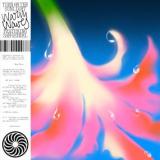
Cerca:modul
‘Warm Waves’ first appeared in 2020, ten years after Turn On The Sunlight’s debut self-titled album was first released in Japan. During that decade, Turn On The Sunlight’s Jesse Peterson and Mia Doi Todd welcomed their first child and co-founded a music venue in Los Angeles. When performance spaces were required to close at the start of the pandemic, Jesse’s focus shifted back towards home recording. Since ‘Warm Waves,’ five more Turn On The Sunlight albums have followed (including ‘Drives To The Beach,’ also on Tokonoma Records), all of which can be seen as an expansion of the musical direction set forth on this album.
The group heard on ‘Warm Waves’ consists of musicians who Mia and Jesse were regularly playing with at the time - Sam Gendel, Mitchell Brown, Andres Renteria & Gabe Noel - joined by Laraaji, Arji & Luis Pérez Ixoneztli, making their first recordings together.
The group’s blended signal was routed through Mitchell’s tape loops and modular synthesizer, which contributed to the unique communal sound of these recordings. Further extending this approach, Carlos Niño then reprocessed and reimagined ‘Passing Rain’ with Jamael Dean for his Elemental Beat Mix.
Originally released one week into the official lockdown period, some listeners found the warm, collective sound well-suited for the time of introspection and shifting priorities that followed. Now, in 2026, ‘Warm Waves’ returns on vinyl to once again encourage peaceful contemplation and open-hearted togetherness, in echo of the spirit of its creation.
Credits
Sam Gendel: Saxophone & Electronics on A1, A2, A3, B1, B2, B3
Laraaji: Voice & Zither on A3
Luis Pérez Ixoneztli: Bird Sounds on A1, Aerophones & Water Drums on B2
Mia Doi Todd: Voice on A1, A2, B2, B3; Piano on A3
Jesse Peterson: Guitar, Bass, Organ & Bird Sounds on A1; Organ on A2; Guitar & Bass on A3; Wooden Whistles, Guitar, Ukulele & Piano on B1; Ice Breaking on B3
Andres Renteria: Percussion on A1, A2, B1, B2, B3; Marimba & Percussion on A3
Mitchell Brown: Synthesizers & Magnetic Tape on A1, A2, A3, B2, B4
Gabe Noel: Bass on A2, A3, B1
Arji: Bells & Shells on A3
Carlos Niño: Production / Remix on B4
Jamael Dean: Additional Keyboards on B4
Produced, mixed & recorded by Jesse Peterson
Except B4, produced by Carlos Niño
‘Warm Waves’ first appeared in 2020, ten years after Turn On The Sunlight’s debut self-titled album was first released in Japan. During that decade, Turn On The Sunlight’s Jesse Peterson and Mia Doi Todd welcomed their first child and co-founded a music venue in Los Angeles. When performance spaces were required to close at the start of the pandemic, Jesse’s focus shifted back towards home recording. Since ‘Warm Waves,’ five more Turn On The Sunlight albums have followed (including ‘Drives To The Beach,’ also on Tokonoma Records), all of which can be seen as an expansion of the musical direction set forth on this album.
The group heard on ‘Warm Waves’ consists of musicians who Mia and Jesse were regularly playing with at the time - Sam Gendel, Mitchell Brown, Andres Renteria & Gabe Noel - joined by Laraaji, Arji & Luis Pérez Ixoneztli, making their first recordings together.
The group’s blended signal was routed through Mitchell’s tape loops and modular synthesizer, which contributed to the unique communal sound of these recordings. Further extending this approach, Carlos Niño then reprocessed and reimagined ‘Passing Rain’ with Jamael Dean for his Elemental Beat Mix.
Originally released one week into the official lockdown period, some listeners found the warm, collective sound well-suited for the time of introspection and shifting priorities that followed. Now, in 2026, ‘Warm Waves’ returns on vinyl to once again encourage peaceful contemplation and open-hearted togetherness, in echo of the spirit of its creation.
Credits
Sam Gendel: Saxophone & Electronics on A1, A2, A3, B1, B2, B3
Laraaji: Voice & Zither on A3
Luis Pérez Ixoneztli: Bird Sounds on A1, Aerophones & Water Drums on B2
Mia Doi Todd: Voice on A1, A2, B2, B3; Piano on A3
Jesse Peterson: Guitar, Bass, Organ & Bird Sounds on A1; Organ on A2; Guitar & Bass on A3; Wooden Whistles, Guitar, Ukulele & Piano on B1; Ice Breaking on B3
Andres Renteria: Percussion on A1, A2, B1, B2, B3; Marimba & Percussion on A3
Mitchell Brown: Synthesizers & Magnetic Tape on A1, A2, A3, B2, B4
Gabe Noel: Bass on A2, A3, B1
Arji: Bells & Shells on A3
Carlos Niño: Production / Remix on B4
Jamael Dean: Additional Keyboards on B4
Produced, mixed & recorded by Jesse Peterson
Except B4, produced by Carlos Niño
LN013 presents a four-track electro compilation entitled Network Not Found. On the A1, Watts provides an electro-funk workout reminiscent of early Kraftwerk. Modulating basslines, delayed breakbeats, and haunting synths call back to early tropes of the sound while contributing to and reinventing the style. LA's 5tr8tch debuts his future classic, "Sleight of Hand." This track delivers tight 808 programming and unique sound design that takes the listener on a timeless journey. The B1 features The Advent and Zein in classic Kombination Research fashion—advanced B-side business for true lovers of the movement. Pulling from the Teknotika archives, GiGi Galaxy provides a rare DAT recording from 1997. The track's growling bassline, warm 808 beats, and experimental sound design take the listener on an ever-changing journey.
With Morocco Palace, Cybercafé aka Adam Dirk’heim delivers his very first full EP on Sequence Records - a record that balances raw energy and melancholy, blending emotional depth with a strong, forward-thinking dancefloor edge.
The EP opens with Electroskit, driven by an electric, almost extraterrestrial voice, before diving into raw electronic textures that set the tone. Dance & Control marks a first shift with its slow tempo, massive modulated synths and stretched tension. Then comes Nightshade, where the energy rises further through a rhythmic and emotional build-up carried by deep, melancholic, yet dancefloor-oriented synth lines.
On the B-side, Don Dolor flirts with instrumental EBM influence, while What Am I Talking About? closes the record with a hypnotic groove that stays with you long after the last note.
Morocco Palace lays the foundations of Cybercafé’s universe: a subtle balance between introspection, intensity, and dancefloor energy.
Chris Liebing and Charlotte de Witte announce their second-ever collaborative release, 'Symphonie des Seins' (Symphony of Existence). The release, taking in an original alongside a Dub mix from Liebing, follows 2019's 'Liquid Slow' from the pair and marks the second release ahead of Chris Liebing's 'Evolver EP' releasing in late-March.
A surging acid-beast channelling mid-90s techno energy, 'Symphonie des Seins' sees de Witte delivering a tweaky, spoken
vocal comprising the hallucinogen-fuelled diaries of ayahuasca and DMT trip reports that Liebing stumbled upon online. Crisp
but heady, old school but utterly contemporary with its delivery, 'Symphonie des Seins' sees two techno artists with very
di?erent formative eras converge perfectly with a razor-sharp piece of dancefloor mayhem.
Following January's 'Roy Batty' EP, Chris Liebing and Charlotte de Witte's 'Symphonie des Seins' is the last single before Liebing's thirteen-track 'Evolver' LP lands on March 27th. The 'Evolver LP' features additional collaborations with Luke Slater, Speedy J, The Advent, The Alte Stuben Modular Ensemble aka Daniel Miller, Terence Fixmer, and Pascal Gabriel and is Liebing's first solo Techno LP, having focused on long-form electronica output alongside co-writer Ralf Hildenbeutel for 2018's 'Burn Slow' and 2023's 'Another Day' for Mute Records, and the André Walter co-produced 'Evolution' in 2002.
"On its Various 2 compilation, Altered Circuits returns with a gripping four-track selection by an equal number of distinct-voiced artists. Perrax En La Calle sees tINI merge sturdy drums, arpeggiated basslines, and ominous synth work. She knows what makes the floor tick blindfolded, and keeps the energy high here, channelling electronic body music and Italo into a contemporary club knockout. Up next is Ionic, a fusion of quirky, pointillist hooks that play call and response, driven by 909 kicks and a sub pattern underneath. Mogwaa spellbinds, and often pulls the rug only to reveal more intricate melodic needlework -- it's done so nimbly and enticingly, there's no way not to get drawn in. On the flip side, rising talent Desiree Falessi joins with the peak time Scandal. Statically-charged basslines mesh with reverb-drenched percussion salvos, and as slinky pads and subtle theme variations emerge, the intensity builds toward a tipping point. Closer Flex features a sharp arpeggiated bassline that funnels through misty, LFO-steered synths, scattered alarm-like melodies, muffled vocals, and gated-reverb snares. When classic high-pass modulation intermezzos are introduced, Monile demonstrates how sparse means, when deployed precisely, can sustain considerable tension."
2026 Repress
As electronic music pioneers and co-founders of Soma Records, Slam have continually shaped the landscape of underground techno. With their forthcoming album, Dark Channel, they present a raw, club-focused record that stands as both a reflection of our turbulent times and a celebration of the dance floor's enduring power.
In 2025, the world feels fractured, dominated by division and extremism. Amidst this chaos, the dance floor remains a rare sanctuary-one of unity, self-expression, and collective escape. Dark Channel is an unapologetic tribute to this sacred space, where rhythm dissolves barriers and music serves as a universal language. Through relentless energy, deep textures, and hypnotic grooves, the album embodies the essence of club culture: a place where we reconnect with ourselves and each other.
Slam make no mistake when it comes to the sonic tone of the album as it opens with the tribalistic Use It, Lose It before the discordant sounds of title track Dark Channel hints at the relentless nature of things to come. The intensity continues with Parametric Factor & Glide - both pushing a pulsating, synth driven trip; the later leading on a more traditional Slam percussive workout. The dance floor warping Morganatic pursues dark territory while Infinit Spaces adds trippy FX to an already animated synth hook. The beautifully crafted Kuture Version delves into a more immersive sound as more direct, chord driven elements take the lead. The pace quickens yet again with Ghost Dancer highlighting sub tones whilst still crafting ominous intonations with its modulating FX. Approaching the conclusion, the ferocious Beat On The Drum delivers a lesson in rhythm and energy before the contorted Irregular Object completes proceedings in a suitably hypnotic fashion.
Mastered By Conor Dalton @ Glowcast Mastering
Modeight proudly adds another chapter to its vinyl legacy with Fedo - a Ukrainian artist with deep Greek roots, known for his meditative groove architecture, percussive depth, and the raw spirit of live music. On Nuke Hook EP, Fedo delivers four deep and dynamic cuts that strike a perfect balance between minimalistic precision and emotional richness.
Each track feels lived-in - jammed rather than programmed - crafted to resonate both on the dancefloor and in the mind. "Life is Life" opens with a thick, dubby beat and a jagged, growling bassline.
Midrange sequences curl around the low-end like vapor trails, creating a shadowy, hypnotic space built for late hours and strobe-lit intimacy. "Madam from Athens" pays homage to his Hellenic roots - dipping into dreamy chords, textured atmospheres, and modular motifs wrapped in velvety vocals. Warm and transportive, it's a love letter to place and memory.
On the flip, "After Out" hits hard. Sub-heavy, percussive, and driven by acidic synth lines, it's a peak-time weapon that doesn't ask - it commands.
Rounding off the EP is the cerebral yet groovy "Nuke Hook," where crisp percussion dances around mysterious piano phrases and immersive textures. A subtle but magnetic closer that lingers long after the drop.
Fedo joins the Modeight family with a statement of intent - deep, expressive, and forged in the heart of the underground. The journey continues.
Texas-based producer Declan James runs the VOIDWARE imprint and events, also listing music on labels such as Edit Select Records, Max Gardner's Peer, drxvo's Synergie, and Secus' Rituals amongst others. The Dallas native is making a significant contribution to the upcoming generation of American techno producers with both a domestic and international touring schedule.
Beginning with "Pendulums," a classic sci-fi trip with modular bleeps amidst a slinking, bouncing rhythm section for a perfect lesson in patience and restraint.
"Levitation" has an otherworldly feeling and floats along a sparse track of swirling drones, chugging bass pulses, and classy percussion taps for a mesmerising and introspective journey.
"Transmutate" throws down a stuttering kick drum, haunting tones, and bending modular notes for a grooving yet dystopian analogue concoction.
The final track "Absolved" sees a deep dive into details and dub influences. Where eerie rattles and precision production form a memorable dose of sizzling hot, futuristic, and fantastic techno.
Texas-based producer Declan James runs the VOIDWARE imprint and events, also listing music on labels such as Edit Select Records, Max Gardner's Peer, drxvo's Synergie, and Secus' Rituals amongst others. The Dallas native is making a significant contribution to the upcoming generation of American techno producers with both a domestic and international touring schedule.
Beginning with "Pendulums," a classic sci-fi trip with modular bleeps amidst a slinking, bouncing rhythm section for a perfect lesson in patience and restraint.
"Levitation" has an otherworldly feeling and floats along a sparse track of swirling drones, chugging bass pulses, and classy percussion taps for a mesmerising and introspective journey.
"Transmutate" throws down a stuttering kick drum, haunting tones, and bending modular notes for a grooving yet dystopian analogue concoction.
The final track "Absolved" sees a deep dive into details and dub influences. Where eerie rattles and precision production form a memorable dose of sizzling hot, futuristic, and fantastic techno.
LOSOUL is back on SLICES OF LIFE with two minimal house gems!
Frankfurt-based DJ and producer legend LOSOUL is renowned for his unique sonic language and deep, captivating grooves.
On his latest release for the Berlin imprint, the tracks take us on a journey back to the roots of minimal house - raw, stripped-down, and deeply immersive.
"Post Service Pop" on the A-side flows deep and funky, spreading pads like hot oil, topped with subtly modulated vocal snippets.
"Modesty Bump" on the B-side dives into rawer territory with high-energy sounds and edgy sonic sparkles, while maintaining that minimalistic, steady, driving groove we all love in Losoul’s work: groovers and grinders for the long-distance runner’s soundtrack.
In spring 2025, Abul Mogard and Rafael Anton Irisarri created the source material for their second album, Where Light Pauses in the Silence of the Sun, during a three-day residency at Morphine Raum in Berlin. Functioning as both recording studio and performance venue, the space has no stage, with the audience gathered around the performers. Working within an open framework, the duo reshaped the music each evening while recording the performances live to multitrack. Rotary speakers, modular synthesizers and bowed guitar formed the core of their sonic language, captured through a 1970s mixing console and microphones placed around the room.
Back in Mogard’s studio in Rome, the material was further crafted as motifs were stretched, fragments isolated, and tempos dissolved. Irisarri recorded additional guitar textures and treatments in New York, while passages recorded by Martina Bertoni and Andrea Burelli in Berlin reinforced the harmonic centres and brought breath, refinement and a new sensibility to their compositions. The process continued as Mogard’s layering and subtraction reassembled everyone’s parts into the final arrangement.
The album opens with “In the Eastern Wild,” building from a sparse outline into a monumental formation of low-frequency weight, its internal motion shaped by the rotating Leslie speaker. “Over the Domes” widens into a broader acoustic field, where sustained modular tones meet waves of softly plucked guitar. The music then turns inward with “A Blue Descent,” centred on Bertoni’s cello, whose growling timbre introduces a melancholic depth.
At the album’s centre, “In a Quiet Radiance” unfolds around a slow guitar ostinato, its luminous stillness opening into a more expansive and reflective state. Across its ten-minute span, Burelli’s violin lines and Bertoni’s lower cello phrases gradually surface, weaving through the harmonic field. Mogard brings Burelli’s processed voice to the fore, its emotive, operatic presence becoming one of the record’s pivotal moments. “Of Blessed Ages” suspends the sonic flow, shifting between parallel major and minor chords as lingering, slowly decaying melodies shape the music’s internal drift. The closing “Among Shadows” settles into a darker resonance as layered textures recede.
Mogard and Irisarri’s shared language balances restraint and maximalism. UK magazine Crack describes the music as “a tidal wave held in suspension,” while Dutch newspaper de Volkskrant writes, “What a colossal sound, and how this music strikes at the emotions.” Reflecting on the residency sessions, Irisarri recalls: “At moments I genuinely couldn’t tell if a sound was coming from me or from Abul. It stopped feeling like two people making decisions and began to feel like we were inside a system moving on its own."
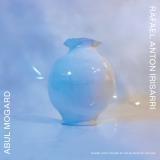
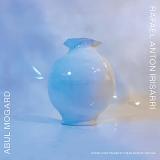
Marja de Sanctis’ cover artwork revisits the vessel sculpture from the duo’s first album, Impossibly Distant, Impossibly Close. There it appeared as raw, unfired clay. Here it has been fired in the kiln and finished with a glaze. Light gathers on its polished surface and spills into the surrounding space. As she explains, “I wanted to convey the idea of continuity within the duo, and the vessel became a kind of container for that idea. However, their music felt different this time, and with the collaboration of Martina and Andrea, I felt it should have a sleeker, softer, more glamorous look, very distant from the first raw appearance.” The transformation of the vessel from raw clay to fired form suggests a passage from immediacy toward permanence, mirroring the music’s gradual expansion.
In spring 2025, Abul Mogard and Rafael Anton Irisarri created the source material for their second album, Where Light Pauses in the Silence of the Sun, during a three-day residency at Morphine Raum in Berlin. Functioning as both recording studio and performance venue, the space has no stage, with the audience gathered around the performers. Working within an open framework, the duo reshaped the music each evening while recording the performances live to multitrack. Rotary speakers, modular synthesizers and bowed guitar formed the core of their sonic language, captured through a 1970s mixing console and microphones placed around the room.
Back in Mogard’s studio in Rome, the material was further crafted as motifs were stretched, fragments isolated, and tempos dissolved. Irisarri recorded additional guitar textures and treatments in New York, while passages recorded by Martina Bertoni and Andrea Burelli in Berlin reinforced the harmonic centres and brought breath, refinement and a new sensibility to their compositions. The process continued as Mogard’s layering and subtraction reassembled everyone’s parts into the final arrangement.
The album opens with “In the Eastern Wild,” building from a sparse outline into a monumental formation of low-frequency weight, its internal motion shaped by the rotating Leslie speaker. “Over the Domes” widens into a broader acoustic field, where sustained modular tones meet waves of softly plucked guitar. The music then turns inward with “A Blue Descent,” centred on Bertoni’s cello, whose growling timbre introduces a melancholic depth.
At the album’s centre, “In a Quiet Radiance” unfolds around a slow guitar ostinato, its luminous stillness opening into a more expansive and reflective state. Across its ten-minute span, Burelli’s violin lines and Bertoni’s lower cello phrases gradually surface, weaving through the harmonic field. Mogard brings Burelli’s processed voice to the fore, its emotive, operatic presence becoming one of the record’s pivotal moments. “Of Blessed Ages” suspends the sonic flow, shifting between parallel major and minor chords as lingering, slowly decaying melodies shape the music’s internal drift. The closing “Among Shadows” settles into a darker resonance as layered textures recede.
Mogard and Irisarri’s shared language balances restraint and maximalism. UK magazine Crack describes the music as “a tidal wave held in suspension,” while Dutch newspaper de Volkskrant writes, “What a colossal sound, and how this music strikes at the emotions.” Reflecting on the residency sessions, Irisarri recalls: “At moments I genuinely couldn’t tell if a sound was coming from me or from Abul. It stopped feeling like two people making decisions and began to feel like we were inside a system moving on its own."
Marja de Sanctis’ cover artwork revisits the vessel sculpture from the duo’s first album, Impossibly Distant, Impossibly Close. There it appeared as raw, unfired clay. Here it has been fired in the kiln and finished with a glaze. Light gathers on its polished surface and spills into the surrounding space. As she explains, “I wanted to convey the idea of continuity within the duo, and the vessel became a kind of container for that idea. However, their music felt different this time, and with the collaboration of Martina and Andrea, I felt it should have a sleeker, softer, more glamorous look, very distant from the first raw appearance.” The transformation of the vessel from raw clay to fired form suggests a passage from immediacy toward permanence, mirroring the music’s gradual expansion.
In spring 2025, Abul Mogard and Rafael Anton Irisarri created the source material for their second album, Where Light Pauses in the Silence of the Sun, during a three-day residency at Morphine Raum in Berlin. Functioning as both recording studio and performance venue, the space has no stage, with the audience gathered around the performers. Working within an open framework, the duo reshaped the music each evening while recording the performances live to multitrack. Rotary speakers, modular synthesizers and bowed guitar formed the core of their sonic language, captured through a 1970s mixing console and microphones placed around the room.
Back in Mogard’s studio in Rome, the material was further crafted as motifs were stretched, fragments isolated, and tempos dissolved. Irisarri recorded additional guitar textures and treatments in New York, while passages recorded by Martina Bertoni and Andrea Burelli in Berlin reinforced the harmonic centres and brought breath, refinement and a new sensibility to their compositions. The process continued as Mogard’s layering and subtraction reassembled everyone’s parts into the final arrangement.
The album opens with “In the Eastern Wild,” building from a sparse outline into a monumental formation of low-frequency weight, its internal motion shaped by the rotating Leslie speaker. “Over the Domes” widens into a broader acoustic field, where sustained modular tones meet waves of softly plucked guitar. The music then turns inward with “A Blue Descent,” centred on Bertoni’s cello, whose growling timbre introduces a melancholic depth.
At the album’s centre, “In a Quiet Radiance” unfolds around a slow guitar ostinato, its luminous stillness opening into a more expansive and reflective state. Across its ten-minute span, Burelli’s violin lines and Bertoni’s lower cello phrases gradually surface, weaving through the harmonic field. Mogard brings Burelli’s processed voice to the fore, its emotive, operatic presence becoming one of the record’s pivotal moments. “Of Blessed Ages” suspends the sonic flow, shifting between parallel major and minor chords as lingering, slowly decaying melodies shape the music’s internal drift. The closing “Among Shadows” settles into a darker resonance as layered textures recede.
Mogard and Irisarri’s shared language balances restraint and maximalism. UK magazine Crack describes the music as “a tidal wave held in suspension,” while Dutch newspaper de Volkskrant writes, “What a colossal sound, and how this music strikes at the emotions.” Reflecting on the residency sessions, Irisarri recalls: “At moments I genuinely couldn’t tell if a sound was coming from me or from Abul. It stopped feeling like two people making decisions and began to feel like we were inside a system moving on its own."
Marja de Sanctis’ cover artwork revisits the vessel sculpture from the duo’s first album, Impossibly Distant, Impossibly Close. There it appeared as raw, unfired clay. Here it has been fired in the kiln and finished with a glaze. Light gathers on its polished surface and spills into the surrounding space. As she explains, “I wanted to convey the idea of continuity within the duo, and the vessel became a kind of container for that idea. However, their music felt different this time, and with the collaboration of Martina and Andrea, I felt it should have a sleeker, softer, more glamorous look, very distant from the first raw appearance.” The transformation of the vessel from raw clay to fired form suggests a passage from immediacy toward permanence, mirroring the music’s gradual expansion.
UTTU hits the 200 mark (officially) with DJ Haus in the command module navigating wild meteor showers, solar flares and of course WORMHOLES - along for the ride are fellow cosmonauts Legowelt (under his amazing new ZORLOK COMPRESSOR alias), Berlin legend SHED & Tokyo's 'modular dub enthusiast' YASSOKIIBA - each reworking EneGiZer into unique outer reaches of the sonic cosmos - absorbing DUBSTEP, REGGAE, TEKNO, BREAKZ and HOUZ!"
Two Lisbon mainstays from contiguous generations join forces as Scam Dust for the new Paraiso record: Tiago, Lux Fragil resident, world-renowned DJ's DJ and all-round music whizz plus Shcuro, Paraiso's co-founder, scene documenter and impeccable selector & producer. Funnily enough they also live in contiguous beach towns in the outskirts of the capital, Parede and Carcavelos. That's where they zig-zagged amid home-studios and, four hands in various machines, concocted this refreshingly to-the-bone record. Like a non-local entanglement between Lisbon, Sheffield, The Hague and somewhere in the American Midwest, 'Gastric Pulse' EP opens with a saturated, modulated acid line over a tight, industrial-tinged techno beat, peppered with sonic dirt of the highest order. It sounds like music projects like Downwards and Mathematics would put out. 'Enzyme Breaks' follows suit with a comparably raw spirit, adding some mysterious atmospheric scintillation and drum variations. A certain recluse techno (is that a thing?) comes to mind (and heart), Unit Moebius style. Toms abound in 'Pepsin Drive' - always a promising sign in our book - and the playfulness continues in the cheeky bassline and the intricate clap work. Soulful stabs give the tune extra magic via the mantra-like structuring power of repetition. The final track in the record comes from Pacific North-West transplant Doc Sleep and her collaborator Elias FS step in for remix responsibilities and flip the B1 into a hypnotic, dubby - and yes, jazzy - piece complete with a dive into glitchy, sonic sculpture territories towards the end of the arrangement. Quite the brilliant take. Music still counts (and always will), after all is said and done - and nothing like two hard-working music-makers to remind us of that.
This record is like the lost crown jewels of House Music with a story that spans decades. Originally programmed in 1998 on an Akai S3000XL, this was meant to be released on Bjørn Torske's Footnotes in 2001. Unfortunately the original matrix and the master DAT tapes got lost under crazy circumstances. Yet several years later the tapes were found by Sex Tags Mania in the studio of mastering engineer Helmut Erler and the record eventually got issued in 2009 when a totally different House sound was "en vogue." Then due to some unfortunate coincidences most of the records ended up in far flung Japan, and so this record stayed totally underground. Yet it became a cult hit when House Music and later Disco got a proper revival around 2010/11. So over the years prices for this rarity were rising and rising... Then fast forward to 2025: after a sunny day off Berlin's modular synthesizer show "Superbooth" ATJ boss Mr. Fonk and Doc L. Junior teamed up to finally reissue this gem with new masters by Andreas Kauffelt of "Schnittstelle" / Berlin. On this 12“ Norwegian Disco and Balearic sounds meet: funky but deep to the core, playful but hypnotic, stripped down but with baroque details. Truly one of House Music's greatest productions.
Following FATPOD-58 (2020) and his contribution to the latest Freude am Tanzen compilation, Module One now presents his first solo EP on Jena's Finest: Freude am Tanzen. The record combines minimalist, functional dub techno with gently playful ambient textures and is complemented by a rework from Japanese producer Yone-Ko (Closer Kiew). On the A-side, ‘Against The Tide’ and ‘Utopia’ are clearly aimed at the dance floor: both tracks fuse influences from deep house, minimal and techno into versatile club tracks that feel at home in a wide variety of DJ sets. The B-side, featuring ‘It's November Again’ and Yone-Ko's reinterpretation, opens up the sound spectrum – from introspective listening to subtle grooves. A release that mediates between functionality and atmosphere – ideal for listening, drifting away and dancing.
A1
Künstler: Module One
Titel: Against The Tide
Spielzeit: 06:10
- - - - - - - - - - - - - - - - - - - - - - - - - - - - - - - - - - - -
A2:
Künstler: Module One
Titel: Utopia
Spielzeit: 06:46
- - - - - - - - - - - - - - - - - - - - - - - - - - - - - - - - - - - -
B1:
Künstler: Module One
Titel: It’s November Again
Spielzeit: 02:06
- - - - - - - - - - - - - - - - - - - - - - - - - - - - - - - - - - - -
B2: Künstler: Module One
Titel: It’s November Again
Version: Yone-Ko Rework
Spielzeit: 08:08
Haino sings. Hasunuma plays. It’s a minimal framework, but what emerges is a boundary-blurring sonic exploration. Across the album, Haino’s voice threads through Hasunuma’s layered soundscapes built from analog synths, electric guitar, piano, field recordings, and more. Haino entered the studio with only lyrics in hand, improvising melodies in response to Hasunuma’s evolving arrangements. The result is a work of deep trust, intuition, and sonic tension.
Keiji Haino and Shuta Hasunuma’’s creative connection began in 2017 with an impromptu performance in Shibuya—Hasunuma on a Buchla modular synthesizer, Haino responding with the Japanese national anthem, “Kimigayo.” That moment sparked their unlikely collaboration.
In 2018 Haino appeared at the Hasunuma-organized event “MUSIC TODAY IN KYOTO” at Rohm Theater, alongside Nobukazu Takemura, Manami Kakudo, Elena Tutatchikova, Kukangendai among others. In September 2021 during the pandemic, the two performed "U TA" for the first time at in Shibuya. They began planning the album soon afterwards.
For the recording of U TA, Haino entered the studio with only the lyrics in hand, with no knowledge of what sounds Hasunuma would produce. Responding to Hasunuma’s music in real time, Haino composed the melodies and layered in his voice on the spot. With additional sessions at Hasunuma’s private studio and Haino’s preferred studio, the album was completed.
All melody and vocals by Keiji Haino
All instrument, written, played, arranged, mixed and produced by Shuta Hasunuma
Recorded by zak at st-robo studio, Shuta Hasunuma at Studio i.M.O and windandwindows
Mastered by Rashad Becker at clunk
Production Management: Eishin Yoshida, Kento Ono (windandwindows)
For Temporal Drift: Yosuke Kitazawa, Patrick McCarthy
Art Direction: Aiko Koike
Special Thanks to Toshihiko Kasai, Ryoichi Kiyomiya, zAk, Yumiko Ohno
license