
4

We are back with our fourth vinyl release between the Berlin-based Colombian producer Brayan Valenzuela and Cologne-based native polish artist Rezystor. These guys are already connected with BRVTAL., because they released tracks on SZROGH compilation and participated on our podcast series.
On the tough side Brayan who is a well-known modular synthesis enthusiast hit us with his heavy hard tracks, like a road roller in your face, but it's all done with the best humor, the dark side has never been so cheerful!
While Rezystor on the banger side delivered his own professional obscure sound with high speed tempo and deep melodies. Long awaited perfect rave anthems on the altar of the best period of trance area!

The debut from new splinter alias of Manchester producer, sequencer designer, and Cong Burn label boss John Howes was made entirely on a Nord Modular G2, Elektron Machinedrum, and Monomachine – a rig he characterizes as “an authentic 2006 studio, best listened to on Windows XP Media Player or Winamp.” Paperclip Minimiser’s self-titled full-length collects eight elusively multi-dimensional constructs of stereo panned synthetics and slithering ambient techno, born of a web of generative patches subjected to improvisational alterations. Taking things further, Howes’ process involves “planting ghosts in the machines,” instilling each element with “some self-correcting behavior in a cybernetic / lo-fi AI / semi-autonomous agent kinda way.” The result is an ambiguous and dynamic hybrid of accident and intention, chaos and control, shuffling through an innerspace wilderness of psychic circuitry.
The title alludes to a 2003 thought experiment about the existential risk of artificial intelligence; how even a mundane objective, algorithmically extrapolated, could culminate in catastrophe. Here the notion is inverted, demonstrating the sonic infinities to be mined by “pushing and pulling at the strings” of musical systems. Howes aptly samples a vintage interview with electronic music pioneer Bebe Barron – co-composer of the Forbidden Planet soundtrack – discussing the anthropomorphic potential of randomized audio generation: “We thought of our circuits as actors in a script.” Paperclip Minimiser descends from a similar family tree, coaxed as much as crafted, flickering rhythmic synchronicities glimpsed in a mirage of wires and glass.


Gold Vinyl
No binaries, no simple opposition. Either/or is subsumed by infinite relations and dizzying possibilities, by the perpetual crest of and/and. Freedom is the key to bring about all complex and incongruous multiplicities. Embodied, embedded, relational freedom is the key.
Mue is a duo based in Tiohtià:ke/Montréal composed of Catherine Debard and Léon Lo. Formed in the Spring of 2020, the electronic musical project merges two distinct practices and explores the way they interact with each other. Drawing on early-IDM, illbient, minimalism, and natural phenomena, the resulting real-time hardware improvisations weave asymmetric patterns, create spaces, and digest various sounds.
Recorded in 2020, Les vasières explores unsynchronized hardware electronic impro-visations where individual sonic elements come to life by creating new and complex layers and organizational logics — melodically and rhythmically modulating each other.
The French album title translates to “The mudflats.” Sounds from disparate sources form an aural silt that is brought to life by waxing and waning cycles, each improvi-sation presenting a new, different mudflat scenario.
Mue asked visual artist Katherine Melançon to create the album’s artwork, which was the artist’s first dive into compost as source material. The resulting image—an otherworldly organic smear, both intimate and alien — was incorporated into graphic designer Haley Parker’s montage, hard frames recalling the flatbed scanner used by Melançon, and branch-like typography nodding to the organic concerns of all the artists involved.


NOT EXPORTABLE TO France, Italy, Spain, Benelux, Greece, Balkans. "Center. The name may define the furtive action of search engines, but it says plenty about the music made by this trio, whose members reside in New Haven, Connecticut. Stefan Christensen, Ian McColm, and Dave Shapiro make music so weighty that it generates its own gravity, and yet transparent enough to see straight through to its center. They have arrived at a sound located within a matrix of possibilities suggested by their many shared and separate ventures. It is the sonic orb around which Christensen's post-Xpressway analog alchemy; Shapiro's expositions of acoustic guitar expressivity under the name Alexander and as an accompanist for Kath Bloom, McColm's generation of pulsing freedom as the drummer for Heart of the Ghost and diverse improvisational ensembles, Shapiro and Christensen's unification of historically sound psychedelic practices from either side of the Pacific Ocean as part of Headroom, and McColm and Shapiro's explorations of electric guitar turbulence in Nagual all turn. If you were to search for Center's generative root, you'd find it in Nagual. Christensen first joined the duo in 2016, first as a deputy, and ultimately a full member. Their improvisations acquired a quieter, more spacious character. This transformation necessitated a new name, and they have been working towards completing this LP ever since. While all of the music on Over The Stations originated spontaneously, it has been subjected to centrifugal forces of evaluation and collective debate in order to distill the trio's essence. Modulated chimes, squeezebox respirations, strategic drum beats, humid reeds, and pond-dwelling synth voices augment what is essentially a stringed instrument trio. Listen in, and listen deep. - Bill Meyer" TRACKLIST: "A1 Over The Stations A2 The Empty Gesture A3 10 / 10 Sky A4 White Pine Oval A5 Modern Heights A6 Birds Fall From The Dam B1 Door 5-4 B2 Pysyvä"
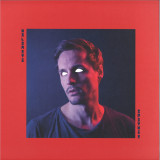
Belgian artist Melawati steps up to Ellum Audio with an arresting debut album, Artimia. Produced with an array of modified machines and modular synths, it is a testament to finding beauty in chaos.
Martijn Ravesloot aka Melawati makes music out of mistakes. He comes from an indie background but has always admired Aphex Twin while playing in bands such as The Subs and working in theatre. He has a love of experimenting with soundwaves that gives rise to his complex, experimental and improvised sounds. He first met Maceo Plex while jamming and that session turned into the track 'Daliah' which dropped on Ellum Audio and was remixed by Tale of Us.
After that, Melawati wrote this most absorbing and beautiful album during the pandemic in a dark studio attic in the heart of Brussels. He set about recording live experiments on analog synths and then deconstructed and reconstructed them into the tracks presented here. The angelic tones of guest vocalist Lisa Jane feature on two tracks though the pair have never met, and Melawati is now set to take his impressive live show to Tomorrowland. His life has changed since writing the album, he now has two children and lives on a farm, but the power of this music where organic and alien worlds intersect remains utterly compelling.
Opener 'I Just Want To Go Walking' pairs a heavenly vocal with celestial chords and a bustling broken beat that strikes a powerful emotional note right from the off. The excellent 'Riddles' showcases more majestic synth work and molten melodies that suspend you in mid-air while 'Slow Pulse' is an intense layering of drones and heavy drum tumbles that again offsets light and dark, tension and release. 'Red Herring' rests with beautifully pensive synth patterns that twinkle, warp and melt before your very ears and 'You And I' takes off on a rubbery groove overlaid with heart-aching keys and shimmering, wordless vocals. 'Somebody' is brain-soothing synth bliss with lush patterns and icy drums that gently unfold to get you in a trance and the gorgeous 'Radiate' then offers a widescreen and cosmic ambient interlude. The heartbroken synths of 'Let Your Love Wash Over Me' speak of the end of a cosmic love affair and 'Violent Thoughts' rebuilds on smooth arps and smeared pads over downtempo drums. The final trio of tracks offers rousing breakbeats on 'New White Noise', uplifting synth catharsis on 'Pain And Pressure' and a melancholic lullaby on 'Stellar'.
Artimia is a beautiful mix of harmony and dissonance, of real emotional power and improvised musical elegance.

After a summer of touring and working on remixes, Big Miz readies this new self-released 5 track EP. The first outing on Miz Records since February, three solo cuts and two collaborations
bring us yet another versatile spin on the modern house sound.
With aquatic sound design and tight kicks introducing ‘Causal Loop’, an opener that quickly morphs into a Legowelt / Alden Tyrell type synth-led jacking house jam, the EP wastes no time in getting going. There’s a sharp vocal sample of the narcotic persuasion that brings to mind Paul Johnson’s classic ‘Give Me Ecstasy’, whilst the clubbier vibe of those early LIES 12”s is also present. The title track is a drum machine workout that gradually ends up in a loopy 90s style minimal techno groove, whereas ‘An Facile’ pushes and pulls at the dancefloor with a mean acid line and makes reference to a gig that may or may not have taken place at a now shut-down Glasgow club many moons ago. You’ll need to ask Miz.
Over to Side B and ‘Sleep Well’ brings in production help from fellow Scottish stalwart Ewan McVicar, the pair working on the tune in a hotel room after a show. Evidently no sleep was had as the swirling acid lines, modulated rimshots and tempo trickery combine to make one of the trippiest jams on the record. Things draw to an end with an Underground Resistance sampling colab with Good Thing resident DD Watermelon.

repress !
Wax’o Paradiso Recordings presents its debut outing on vinyl, OK EG’s Intertidal Zone EP. The new label from the long standing Naarm (Melbourne) party is set to explore hi-fidelity, landscape-driven and cerebral music from the antipodes and beyond.
After sold out pressings on local imprints Animalia and Steeplejack, this EP explores a more contemplative side of OK EG, suitable for discerning dancefloors and meditative home listening alike.
Conceived in 2019 and completed in 2020, Intertidal Zone was recorded in collaboration with percussionist Phil Stroud. The rhythm tracks are a fusion of drum machines and hand drums, loose percussion, human voices and tuned percussion immersed in water. Joined by analog synthesisers, layered vocals, processed guitar and field recordings, the music evokes solastalgia and a reverence for nature.
The final track, Golden Hour, came from an improvisation with multi-instrumentalist Adam Halliwell on flute and jazz musician Jack Doepel on Korg bass, later transposed to modular synthesiser.
Wax’o Paradiso and OK EG acknowledge the traditional owners of the land on which this music was recorded, the Wurundjeri people of the Kulin nation, and pay their respects to elders past, present and emerging.

Gems Under The Horizon, the chillout division of Belgium’s Basic Moves returns with its second release this July, comprised of four original cuts from various artists across the globe.
Gems Under The Horizon was launched by Basic Moves label boss
Walrus originally as a Sunday daytime party series aimed at sharing electronic music in the chillout, ambient and downtempo sphere to wind down the weekend. The affiliate imprint was launched in April 2021 with material from Astral Industries artist Sonmi451 and Dylan Thomas Hayes.
Here the label returns with four new tracks welcoming an array
of new artists onto its roster and leading the way is &Apos who delivers ‘Vigo’, a hauntingly beautiful journey through swelling textures, plucked strings ethereal voices and synth modulations. Salamanda’s ‘No Vacation’ follows, the Seoul, South Korea based duo of Uman Therma a.k.a. Sala and Yetsuby a.k.a. Manda turn their focus
towards an amalgamation of gamelan like chimes, metallic percussion, organic drum grooves and flute like synth work.
Ugné & Maria’s ‘Into Orbit’ opens the flip side, as the name would suggest embracing a spaced-out aesthetic with intricately unfolding melodies, cinematic atmospherics, and gritty broken drums. Bogota, Colombia’s Manta Ray then rounds out the release with ‘Mysterious Ways’ as she traverses through off-kilter rhythms, unfurling pads,
choppy scratches, broken vocal cuts and meandering subs.

The debut of Hamburg trio Cloud Management stages the meeting of three proven exceptional figures: Thomas Korf and Sebastian Kokus have been responsible for some stunning leftfield neo-kraut releases with their band Love-Songs in recent years; Ulf Schütte has been one of the most productive, and innovative protagonists of experimental electronic music in Germany for many years (see Datashock, Phantom Horse, or his most recent collaboration with G. Steenkiste/Hellvete on Umor Rex, for example). Following Love-Songs' highly acclaimed collaboration with Schütte, »Spannende Musik«, released in 2021, the formation of Cloud Management as a group in its own right marks a new beginning, which is celebrated with the long player on Altin Village & Mine.
The album is characterized by a dense texture of repetitions in which (modular) synthesizers and bass go head-to-head. It is on this foundation that the formal grammar of the album develops over its nearly 45-minute running time, organized along precise interventions into the hypnotic pulse: What is recognizable as echoes of 1960s/70s minimalism or Cluster functions on »Cloud Management« not in the sense that the sequences or the sequencers are left to themselves, but as highly concentrated, microscopic work on repetition. This virtuosically arranged, groove-based and even danceable density of the seven pieces never sounds strained or as an end in itself, but floating, cloud-like. The polyrhythmic workouts are at all times in the service of a refreshing expanse that opens up from the sonic saturation and is far removed from the formulaic box-checking often associated with the attribute ›kosmisch‹. »Cloud Management«, thus, marks not an exercise in the traditions of a musical past, but a distinctive position within contemporary electronic music.
All songs are written, recorded and produced by Ulf Schütte, Thomas Korf and Sebastian Kokus.

Amsterdam based DJ and producer Mayo joins the Fides family with her Frenemies EP marking the 15th release of Fides Records.
Mayo showcases 5 cuts of finely crafted electro and EBM-influenced Techno, it's impossible not to be drawn by her distorted voice that defines each track.
Unrelenting grooves and a deeper look into her analog sound design flair, these tracks are timeless in sound and production quality.
“Tell me how you die” kicks it off as the A1 with stomping analog kick and drums, a dark jumping bassline pushing the groove with ethereal synths.
“Not your shadow” as the A2 strips it back into a 303Acidbass-based track marked by singular industrial sounds and Vocal Shots that are lost in the groove carried by a background synth sequence that follows throughout the track.
The last track of the A Side is “Frenemies” a pulsing, meditative composition featuring label owner and Tresor resident Z.I.P.P.O, who added to Mayo's energetic, analog and eventually dark sense, a more mental, deep and intense face typical of the Italian artist. The B Side starts with Miami Legend Danny Daze’s Hell Mix of “Frenemies” in which he exhibits his unique sound design techniques, combining tribal-tinged rhythm, sharp FX that pops up from the corners of the soundscape with stretched vocals in order to highlight the track's protagonist: a modulated brass bass.
Mary Lake’s Remix of “Tell Me How you Die” closes the EP with a deep kick drum driven forward with rolling and modulated closed hats that run through the track while atmospheric sounds carry the filtered Brass before dissolving into the end of the track.

Módulo 1000 were not messing around when they made 'Não Fale Com Paredes’. It holds its own, not just as a raw, heavy, experimental “Brazilian” psychedelic rock album, but as a raw, heavy, experimental psychedelic rock album, full-stop!
Formed in Rio de Janeiro in 1969, Módulo 1000 honed their craft as the house band in clubs and resorts in São Paulo where they predominantly covered American artists such as Jimmy Hendrix as well as British giants, Led Zeppelin. After acquiring a taste for fame following the performance of one of their tracks at the Rio International Song Festival, the band focussed their attention on composing original material. Their manager, Marinaldo Guimarães, encouraged the band to explore their experimental and creative sides. This, in parallel with the explosion of experimental music in Brazil, resulted in the band performing alongside heavyweights such as O Têrço; there was a happening in the air.
Módulo 1000 recorded just one album. Released on Top Tape records in 1972, it featured Eduardo Leal on bass, Candido Faria on drums, Daniel Cardone on guitar, violin and vocals, and Luiz Paulo Simas on organ, piano, and vocals. 'Não Fale Com Paredes' was produced by the popular DJ, Ademir Lemos, and came housed in a fold-out cover featuring tripped-out artwork and design by Wander Borges. However, due the uncompromising nature of its wild, heavy psychedelic rock sound, the album was destined not to be played on the radio in Brazil. Rumours suggest that the label didn't understand the album, and as a result, it wasn't promoted or marketed. Thus, like many other underground cult classics, it was lost in the ether, only later to be rediscovered by a new audience at a different time.
One thing is certain, you definitely know when you've heard Módulo 1000. The sound is raw, heavy and at points quite aggressive, more Black Sabbath than Os Mutantes. It floats between psychedelic rock, prog rock, early metal, and dare we say, displays elements of proto-math-rock.
The band’s discography includes a 7" single, as well as their music being featured on several compilations for Odeon Records, additionally they released a 7" single under their alias 'Love Machine' for Top Tape Records. These compositions are included as bonus tracks on the CD version of our reissue.

Following two manifesto-albums, which quickly became an influence of marginal musics in France, Olivier Demeaux & Armelle Oberlé asked artists whose directions they share to revisit some of the flagship titles of their catalog.
We thus find there the priest of the English pysché Sonic Boom, the cantor of slow techno Toloose Low Trax, the experimenter of the modular_synths Le Crabe or Zohar, UVB76, PlimPlim and many others.

Following the hypnotic sounds of the Existense Is Absurd EP comes a more driving, club orientated release from Duncan Macdonald. The four track release puts 2 high energy, driving tracks at the helm with minimal breakdowns and constant energy. The B side contains a trippy number with a constant, gurgled and modulated Bassline leading the track. Followed by a powerful, metallic tinged driver to close out the EP.

Violet Vinyl
The debut of Hamburg trio Cloud Management stages the meeting of three proven exceptional figures: Thomas Korf and Sebastian Kokus have been responsible for some stunning leftfield neo-kraut releases with their band Love-Songs in recent years; Ulf Schütte has been one of the most productive, and innovative protagonists of experimental electronic music in Germany for many years (see Datashock, Phantom Horse, or his most recent collaboration with G. Steenkiste/Hellvete on Umor Rex, for example). Following Love-Songs' highly acclaimed collaboration with Schütte, »Spannende Musik«, released in 2021, the formation of Cloud Management as a group in its own right marks a new beginning, which is celebrated with the long player on Altin Village & Mine.
The album is characterized by a dense texture of repetitions in which (modular) synthesizers and bass go head-to-head. It is on this foundation that the formal grammar of the album develops over its nearly 45-minute running time, organized along precise interventions into the hypnotic pulse: What is recognizable as echoes of 1960s/70s minimalism or Cluster functions on »Cloud Management« not in the sense that the sequences or the sequencers are left to themselves, but as highly concentrated, microscopic work on repetition. This virtuosically arranged, groove-based and even danceable density of the seven pieces never sounds strained or as an end in itself, but floating, cloud-like. The polyrhythmic workouts are at all times in the service of a refreshing expanse that opens up from the sonic saturation and is far removed from the formulaic box-checking often associated with the attribute ›kosmisch‹. »Cloud Management«, thus, marks not an exercise in the traditions of a musical past, but a distinctive position within contemporary electronic music.
All songs are written, recorded and produced by Ulf Schütte, Thomas Korf and Sebastian Kokus.

The Malta-based label Lost & Found brings over 20 minutes of exciting material by one of the label's bestselling artists, Khen. The three-track release delivers ideal music for clubs with robust sound systems. The opening track is Khen's collaboration with Shahaf Efrat, best known for his renowned Psy-Trance project Freedom Fighters. Khen and Shahaf successfully fuze together the authentic sound containing hypnotic elements, percussions, and modulated background noises. The tandem leads a spiritual take on underground dance music, pushing the boundaries of genres and making a statement in the world of audio production. The second track, Angel ?s Share, is Khen's solo creation taking an arpeggio trip down the melodic mysticism. The final piece, Cumulus, displays Khen's exceptional arrangement skills. It fuses broken beats and epic melodies and represents a masterful ending to a masterful release.

Cosmoba is a brand new Manchester based imprint from Kalcagni. Fresh from releasing his ‘Manners’ EP on Distrito 91, Kalcagni dishes up 4 slices of funk fuelled electro for this label debut.
Lead track ‘Lost In The System’ features retro stylings and gritty electro bass hooks. This is swiftly followed up by ‘Multislacking’, the result of a weekend spent twisting up a modular rig, with wonky bass squelches and 80s pads underpinned by slamming beats.On the flip side, ‘Culture Vulture’ introduces some heavy 303 workouts, before 'After The Fact’ rounds off the EP nicely, taking the acid vibe in a slightly darker direction with wonky reese synth fills and jacked up breaks.

Berlin-based producer Rampue has not released an album in 14 (in words: fourteen) years. Between 2008 and 2020 he toured the world and worked mainly on his live sets in the meantime. So now only a worldwide pandemic had the power to prevent the traveling musician from continuing this hustle and bustle and eventually share a new record with the public. Corona was what brought this standstill and the otherwise well- traveled individual experiences cabin-fever during lockdown. Hence, the new Rampue album "Tragweite" came into existence in February 2021, which portrays the artist's desire for experimentation.
Inspired by a modular synthesizer (Buchla), Rampue has seemingly put himself into a kind of trance, in which he lets the machines work and combines randomly created sounds with airy structures such as low drums or simple grooves. Rampue accomplished to break free by using random sounds as a new impulse and a way out of a creative crisis, which stemmed both from the enforced home isolation and from the self-perceived paralysis. The result is literally unique, as many of the sound products cannot be reconstructed and are preserved in album form for the general public.
Listening to "Tragweite" one gets the impression that the dialectical relationship between chaos and order, further supported by its production, is the defining theme of the album. After an initially perceived chaos, a delicate order, which is determined by structuring drum patterns and basslines, takes over throughout the course of the album.
Later, it frays and loses itself again in sounds and tones created mechanically However, it never seems arbitrary, but willful and skillfully staged. For instance, "Furo?" begins with apparent arrhythmia. The combination of bass and subtle percussion, however, gives this arrhythmia a shape, guiding the track which gradually becomes more and more driving without losing its original playfulness.
Although one might be inclined to think of genres such as Downtempo or Ambient at the beginning in the further course of the album results in such a diverse sound and rhythmic landscape that one willingly questions one's own perception of music while listening and finally throws every type of categorization overboard joyfully. The listening experience is too intoxicating and enlightening to stick to simple genre boundaries. The musical spectrum ranges from straight arrangements that live entirely without a drum foundation ("Fu?r Dich") to almost meditative sound collages ("Regengesicht") to the four-to-the-floor banger "Kembang" which adds a grimmer note with a certain industrial appeal to the overall rather melancholic-progressive curation. "Direct Faden" on the other hand, surprises with its simple guitar-based foundation on which the omnipresent synth snippets and pads are allowed to let off steam towards the end of the record. The track that most closely combines the progressive production style with a danceable club atmosphere is probably "Phobia". Wafting, partly breaking away synthesizer sounds rise higher and higher, while the driving mixture of bass and drums consistently march forward.
Rampue breaks with his old, musical habits as "Tragweite" creates the impression of improvisation and jam character without getting lost. Rampue takes his listeners on a journey that is stirring and moving, sometimes demanding or even a bit disturbing, yet always one thing: incredibly exciting.
