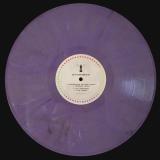
Fresh as morning dew, “Sundays” marks Module One’s debut EP on Luck of Access. Throughout this beautiful release, the Berlin-based artist continues exploring the deeper shades of electronic music, our favorite, as he has done for the past decade. The EP is complemented by an ambient rework from Leafar Legov’s new alias “rfl”, making it the perfect closing piece, and the ideal soundtrack for a reflective Sunday at home.
Suche:module one
Following FATPOD-58 (2020) and his contribution to the latest Freude am Tanzen compilation, Module One now presents his first solo EP on Jena's Finest: Freude am Tanzen. The record combines minimalist, functional dub techno with gently playful ambient textures and is complemented by a rework from Japanese producer Yone-Ko (Closer Kiew). On the A-side, ‘Against The Tide’ and ‘Utopia’ are clearly aimed at the dance floor: both tracks fuse influences from deep house, minimal and techno into versatile club tracks that feel at home in a wide variety of DJ sets. The B-side, featuring ‘It's November Again’ and Yone-Ko's reinterpretation, opens up the sound spectrum – from introspective listening to subtle grooves. A release that mediates between functionality and atmosphere – ideal for listening, drifting away and dancing.
A1
Künstler: Module One
Titel: Against The Tide
Spielzeit: 06:10
- - - - - - - - - - - - - - - - - - - - - - - - - - - - - - - - - - - -
A2:
Künstler: Module One
Titel: Utopia
Spielzeit: 06:46
- - - - - - - - - - - - - - - - - - - - - - - - - - - - - - - - - - - -
B1:
Künstler: Module One
Titel: It’s November Again
Spielzeit: 02:06
- - - - - - - - - - - - - - - - - - - - - - - - - - - - - - - - - - - -
B2: Künstler: Module One
Titel: It’s November Again
Version: Yone-Ko Rework
Spielzeit: 08:08
Skillful producer, Module One unveils with "Voyage" a melodic, sophisticated and rousing EP, that oscillates between down-to-earth (A1, A2) and mindblowing deep-house (B1, B2).
As Usual ! Vinyl Only !
After being released on labels such as Fauxpas, Motech, Thema, Detroit Underground and Modelhrat, Module One a.k.a. Viktor Kiktenko makes his debut on Another. With this EP, Module One drops a 3 mesmerizing and efficient deep house tracks ! Beautiful textures and irresistible house grooves ! top notch !
Scissor and Thread presents Tailored Cuts, Vol. 06, a four-track selection that accompanies the digital compilation album. All four tracks appear on vinyl for the first time. Opening the A-side is a brand new and exclusive dub mix of Soela & Module One’s Drowning, reworked by Matthias Reiling (one half of Session Victim). Originally taken from Soela’s Dark Portrait album, the track is reshaped here into a spacious and hypnotic dub that emphasizes texture, atmosphere and patient groove. "I have been a fan of both Soela's and Module One's music for quite a while now," says Reiling, "so getting the chance to remix their collaboration from Soela's beautiful Dark Portrait album is a huge honor. I tried to keep the elegant and somewhat tender synth work close to it's original spirit and combine it with simple drumkit samples, acoustic guitar, electric bass and a dash of space echo. The process put me in a slightly eerie, yet romantic mood, which, so I hope, translates a little when listening to the result."
Also on the A-side, Black Light Smoke’s Love Triangle appears in ZG’s remix, a lush and understated reimagining that balances warmth with rhythmic precision. On the B-side, Hidden Spheres remix of Francis Harris’ Earth Moves feat. Eliana Glass appears alongside DaRand Land’s Passion Motion from his album Wander Being, "a more upbeat ride, with melodic overtones that drive the “passion”. Personally, it’s my interpretation of some of the sounds from mid-90’s Chicago." says DaRand Land.
The Danish/Norwegian duo of Ida Urd and Ingri Høyland believe that music is an extension of one’s immediate sensory environment. Duvet, their collaborative full-length debut, explores the way that creating sounds together is intertwined with various quotidian actions: establishing surroundings, rearranging furniture, moving towards the light, collecting flowers or other objects for aesthetic and sensuous impulses. Through a quiet and attentive process, music becomes a way of nurturing space: a soft architecture for play, writing, care, or simply rest.
Sonically, Duvet feels like an extension of Høyland’s last album, 2023’s Ode to Stone, which also featured Urd along with ambient musician Sofie Birch and visual artist Lea Guldditte Hestelund. But where that album, created in response to an open call for work themed around Denmark’s national parks, suggested rolling landscapes and endless horizons, Duvet turns inward, countering chill winds with glowing warmth. Its eight tracks seek a balance between abstraction and melody, intention and happenstance.
“We had a truly inspiring and rewarding process working with Birk Gjerlufsen Nielsen from Vanessa Amara, who co-produced and mixed the album with us,” Ingri adds. “He approached the material with great care and sensitivity, while also bringing his own distinct presence and creativity into the sound.”
Høyland and Urd both studied at the Rhythmic Music Conservatory in Copenhagen, which has turned out many acclaimed artists over the past few years, including Erica de Casier, Astrid Sonne, and Smerz. Over many years, the two composers have developed a collaborative method based on connection and trust. A practice, they write, “where composing, or rather suggesting, sounds and melodies for one another is a way of carefully talking, mending emotions and obstacles. Saying yes to one another. The compositional space becomes a nest for entangling whatever emotions, thoughts, or barriers one of the composers brings to the given day or moment.”
Quiet and contemplative, Duvet is simple on the surface but rich in timbral, textural, and emotional complexity. Høyland and Urd sourced their sounds from an array of instruments and techniques—electronic devices, modules, pedals, and also electroacoustic treatments of various wind instruments.
Mixing primarily through analog tape units added further mystery and depth, weaving together wordless voices and unknown sounds—breathing, rustling, perhaps the coppery gleam of Urd’s electric bass—into a dynamic matrix. Like a nest, pull one twig and the whole thing unravels.
In the winter of 2023, Ingri Høyland and Ida Urd retreated to a summer house along the coast to create the album. Picture the scene: an abiding quiet all around. Gardens carpeted by snow; beach grass silvery against the silvery sky; a tendril of smoke rising from the chimney. Not another soul in earshot. This sanctuary was the perfect setting to yield this meditation on shelter, trust, and communication. The two composers hope the album can be a similar space for others—a temporary space of residence, it can represent a summerhouse, a cabin in the woods, your favorite bench or wherever you need to go. “The album also works really well when picking out apples in the supermarket” Urd laughs.
Musician and Zoitrax record label owner ZOiD, also known as Daniel Jacobson, announces the release of his sixth album, ZOiD Vs Musicians Vol 2.
Featuring thirteen tracks digitally, seven of which will be released on a 12” purple marbled translucent vinyl album distributed by Rubadub, ZOiD Vs Musicians Vol 2 will be available in record shops and on all streaming services and Bandcamp starting Friday, 22 November 2024.
ZOiD Vs Musicians Vol 2 is an electronic music album showcasing ZOiD's global collaborations with jazz musicians, creating a unique form of electronic jazz. Notably, his work with jazz drummer and brother Matthew Jacobson shines on the first single “Fit In Tree” debuting on September 13. Building on this momentum, the second single, "Module Bone, " featuring jazz trombonist Colm O'Hara, will be released on September 27, followed by the third single, "ZVSW, " featuring saxophonist Steve Welsh, on October 11. A special REMIX EP by Kirk De Giorgio, Sunken Foal, Americhord, and TR-One will be out on October 25.
Expanding the album's diverse sound, ZOiD collaborated with Dublin vocalist, composer, and jazz improvisation specialist Jenna Harris on “ZVJH” and with Niwel Tsumbu, a Cork-based Congolese guitaristwho tours with Rhiannon Giddens on “ZVNT.”
ZOiD Vs Musicians Vol 2 is further enriched by the talents of Shane O’Donovan (H-Ci), who combines electronic and jazz elements, Australian saxophonist Daniel Rorke, US-based free improviser Catherine Sikora, Galwegian multi-instrumentalist Matthew Berrill, Dublin saxophonist Matthew Halpin (flute), and trumpeter Bill Blackmore, a key figure in Dublin's jazz scene.
ZOiD released his debut album, ZOiD Vs The Jazz Musicians of Ireland Vol. 1, in 2007. Production of ZOiD Vs Musicians Vol 2 began soon after, taking nearly 17 years. For Vol. 2, some musicians recorded their parts independently, while others recorded in Arad Studio with Les Keye and ZOiD's Dublin studio.
The album artwork is by New York-based artist Shane Ingersoll. The front cover displays black-and- white illustrations of Dublin in the year 2116, a city at war centred around a bold purple "ZOiD" logo, with the title "ZOiD Vs Musicians Vol 2" on the upper left. On the back cover is a 12-panel comic book story (originally written by ZOiD using stick figures) and a glowing robotic hand.
Astral travel with Cybotron into the meta-narrative of the Parallel Shift, a new sonic fiction that raises many questions about military science of the near-future and the possibility of other worlds.
Descending backward through the rhythms of time, the Skynet module retracts from the hyper-structural society of 2100, edging toward the mid-century modern age teetering on the brink of what was then the frontier of “the future”. The system boots the Infiniti process, morphing into a cosmotechnic vessel coursing the superhighway of burgeoning general intelligence, seeking data from just before “the overshoot and collapse.”
R&D methods, rhythmanalytically applied, dissect the aftermath of an industrial society that burst through the ecological capacity of Spaceship Earth. Fractal visions of war and innovation spike and recede from and into the surfaces of reality being bent and guiding the eyes, ears, touch towards a laboratory in the year 1961. A nuclear expert, Don Lewis, receives orders to decrypt the mysterious black dodecagonal disc known as Fortec and the extraterrestrial biology unearthed in Roswell. He joins a team disassembling Fortec and studying the recurrent dodecahedral patterns linked to the human nervous system.
Through dismantling and probing, the team cycles through a saecular search devoid of finite conclusions, limited by Earth’s intellectual and technological prowess. One 1960s night, Lewis, while meddling with Fortec’s cyborganic innards, accidentally electrifies himself. His cyclotron and missile experience guides him to circuit-bend Fortec, stirring the entity from a mechanical slumber. Lewis and Fortec communicate in resonances, until it drifts back into a tranquil stasis.
The US Defense and contractors, unbeknownst to them, observe this breakthrough. They later permit Lewis to exit military service as the Air Force forms the Foreign Technology Division. Concurrently, MJ12 evolves into CY12, delving into second-order cybernetics. Lewis clandestinely keeps working on Fortec fragments, transitioning from military engineer to musician, pioneering the LEO module, a fusion of Fortec’s essence and audio engineering.
He shares his insights with Roland founder Ikutaro Kakehashi, aiding the creation of the iconic TR-808. Meanwhile, Fortec branches out, coining “Cyberspace” – a collective illusion of liberty unshackled by physical, political, or spiritual bounds, anchored in the equitable distribution of The Golden Ratio across realities. Yet “Cyberspace” morphs into a chaotic truth reservoir, spilling over into deception.
The Parallel Shift manifests in the perpetual “Now,” a collapsed event horizon where past and future are ensnared in a relentless present, unfurling along a dissolving timeline, overseen by a monolithic simulation under ceaseless watch…
— The Rhythmanalyst aka DeForrest Brown, Jr.
Soela is the DJ and production alias of Elina Shorokhova, a Russia-born Berlin-based experienced pianist and vocalist who has made a hugely impactful transition into electronic music. Having released material on such labels as Kompakt, Dial, Shall Not Fade, Lost Palms, E-Beamz, Red Ember Records, Sushitech, and others, Soela joins the ranks of Scissor & Thread for this exquisite album - Dark Portrait.
The album opens in a typically understated manner with Unsuitable - a melancholic trip-hop adjacent track that sets the tone for the next 8 pieces. As Soela explains, “I was dealing with some very complex feelings, so I came up with this album, which helped me not to despair, to work on myself, to grow internally, and to start listening to myself. It helped me to keep sane when my country invaded Ukraine with a full scale war. It absolutely broke my heart, and music was one of my main salvations.”
This complex mix of emotions plays out across the album with tracks that utilize her beautiful musicality (Through the Windows feat. Francis Harris and Philipp Priebe, Drowning feat. Module One) and ear for details with skittering beats, ambient soundscapes (Spirits, Lost In The Fog) and lose-yourself dancefloor moments such as the collaboration with Lawrence on February Is Not Going To Be Forever. The title track Dark Portrait combines dubby elements with affecting pads and melodic touches, while the lead single Even If I Ask You Stay delves into multiple feelings around escaping toxic situations, and battling depression. It features a powerful vocal from Soela supported by a deeply affecting arrangement. The closing track The Darkest Hour Before Sunrise brings a sense of hope and light, balancing subdued keys and strings with ethereal tones and atmospheres
Heels & Souls Recordings roll into reissue number eight with a double dose of early '90s UK street soul magic, splitting the sides between two sought-after cuts from Elaine Vassell and 3rd Zone.
Step back to 1993, house music has hit, UK Soul is in full flow and its rawer, DIY street soul sibling is making its mark across the UK’s underground. Fuelled by accessible, affordable production gear and ignited through enthusiasm and an influx of ideas and sounds, two acts drew inspiration from a melting pot of genres they were exposed to, providing their take on soul as they saw it.
Up first, Elaine Vassell - ‘Never Give Up’. A rough breakbeat-driven, mid-tempo groover from a North West London production triple threat, made up of Longsy D, Pinky and Murray. Utilising Pinky’s home studio with its DX7, Juno 106, LinnDrum and 808, they masterminded a track that sits at the intersection between soulful house, hip hop and R&B. Its crunching drum loop, chest-rattling low-end and serene synth lines, lay the foundation for Elaine’s powerful yet emotive voice to take centre stage. ‘Never Give Up’ should have been a future classic, but never quite found its feet.
On the flip side another 1993 gem, as Sansel Ali and twin brothers Mark and Stephen Anglin joined forces to form 3rd Zone. Conceived in Mark’s makeshift bedroom studio, the trio laid down their first foray into recorded music, ‘You Stole My Heart’. Originally promoed as a limited whitelabel in 1991, it officially landed on the group's one and only EP ‘No Real Reason' in '93.
Armed with a handful of synth modules, a drum machine and a Korg M1, Mark, Stephen and Sansel hit with a tough but tender, underground triumph. Part dance, part romance, layering synth strings, chunky breaks and M1 stabs underneath Sansel’s heartstrung vocals and Stephen’s hip house rap interlude, it provides another perfect example of house seen through the street soul prism.
Two timeless tracks that fly the flag for the fact that big studios and big budgets aren't necessary to create songs that really resonate. Each side also contains an alternate version, with the A housing a beatless reprise of ‘Never Give Up’ and the B a tougher, bassier remix of ‘You Stole My Heart’.
Licensed from Pinky Music and 3rd Zone respectively and remastered from the original DATs by Justin Drake.
Freude am Tanzen is back for a very special occasion. In 2022, three Various Artists EPs will bereleased, celebrating the 24th anniversary of the label from Thuringia. Whilst occasions like this would normally be celebrated on the quarter century, this release makes sense not only on the mathematical level. 3 compilations with 4 tracks provide the half of 24.
The release however also makes sense in terms of history. Freude am Tanzen is showcasing a broad range of electronic music, never neglecting their history but also looking into the future.
Chapter 001, as the first of three, comes with four deep house tracks.
The A-Side comes with a focus on broken beats and versatile arrangements. Module One delivers a dreamy ride containing a stunning vocal sample. Rising Sun has provided a superb collection of samples that have emerged into a track, that’ll light up moods everywhere its played.
On the flip side in contrast, Chuck Boris has contributed the catchy house roller „Put A Mask On Your Face“. Soela rounds of the first edition off with a very emotional yet forward thinking production, making it a gem your record bag should not miss.
- 1: Eatin’ Dust
- 2: Shift Kicker
- 3: Orbiter
- 4: Mongoose
- 5: Pigeon Toe
- 6: Module Overload
- 7: Living Legend
- 8: Godzilla
- 9: Grendel, Snowman
- 10: Strolling Astronomer
- 11: Urethane
- 12: Jailbreak
Godzilla’s/Eatin’ Dust is the most popular release in Fu Manchu’s 30 year recorded history. It is the combination of what were originally 2 distinct 10” releases: Godzilla (1997) and Eatin’ Dust (1999).In 2018, Scott Hill (vocals/guitar) found the original tapes from the Godzilla recording sessions produced by Josh Homme (Queens Of The Stone Age/Kyuss) and unearthed a secret that had been in his garage since 1996...The band had recorded 4 songs that had never been released. These extra songs are early versions of "Grendel, Snowman," "Strolling Astronomer" and "Urethane” (whose final versions appeared on 1997’s The Action Is Go) and a cover of Thin Lizzy's "Jailbreak" (which is a different version than the one which was released on 7” in 1998). The songs line up perfectly with the original tracklist, which includes the band’s crowd pleasing cover of Blue Oyster Cult’s “Godzilla” and fan favourites “Eatin’ Dust” and “Mongoose” (which was featured in a Super Bowl commercial for Toyota and included in the TV series “Sons Of Anarchy” and the films “Boondock Saints II” and “The Hot Chick”).In 2019, the band released a 2,000 unit limited edition of this new version in a triple 10" package. Due to the continuing demand after this version sold out, in 2020 the band issued a new limited edition version of 1,500 units neon green and white splatter double 12" gatefold package with 2 sided insert including the previously unreleased tracks at 45 RPM for the heaviest audio possible. Five years later, they are finally doing a repress of this 45RPM double 12” version on white with brown splatter vinyl in a limited edition run of 2000 units.
In collaboration with Telekom Electronic Beats, HOMEAGAIN005 captures the spirit of this year's Home Again Club Festival 2025 with a forward-thinking selection of tracks from artists across the festival roster.
Spanning house, tech house, breaks, ambient, and progressive sounds, this 7-track VA is a deep dive into late-night euphoria, sunrise moments, and everything in between.
Side A opens with Thabo's "Cheza Mwili" featuring Nairobi's Brian Msafiri-a high-octane Afro-electronic anthem with Swahili vocals and dancefloor urgency. Miura follows with the punchy and introspective "Home Alone," while Meggy delivers pure Berlin house warmth on "Around." Soela & Module One close the side with "Obsidian," a deep, shimmering journey built for long-form sets.
On the flip, "Pull Me Back" by LUV ATTACK pushes progressive, fast-paced house to an emotional edge. Thalo Santana & Oran Ray shift gears into breaksy territory with the playful, rhythm-heavy "Sweet Potato," before All Shade rounds things out with "Something Like This"-a sleek, driving tech house roller built for peak-time sets.
Mixed and mastered by Matthias Millhoff, and adorned with artwork by Ken Hanamura, HOMEAGAIN005 is a celebration of the diverse sonic threads running through Home Again's dancefloor community.
In late 2023, Tokyo-based musician, Daigo Sakuragi, temporarily relocated to London, where he revisited material recorded with fellow Japanese musicians in Tokyo, drawing inspiration from the city’s energy, music, and atmosphere. This new perspective culminated in Togenkyo, a 28-minute work blending early 2000s folktronica and contemporary ambient styles. Sakuragi crafts immersive sonic textures with synthesisers and spatial production, while the organic groove of drums and bass anchors the piece, subtly inviting physical movement. Floating above this foundation, the saxophone weaves through the soundscape, leading the music with an elegant yet exploratory presence.
The session took place at aLive recording studio in Tokyo, with the following personnel:
Daigo Sakuragi: synthesiser, guitar, post-production
Jinya Ichikawa: bass
Shoei Ikeda: saxophone
Kazuya Ooi: drums
The lineup reflects a network of notable Japanese artists: Ichikawa, Sakuragi’s longtime collaborator in D.A.N.; Ikeda, known for his work with Maya Ongaku; and Ooi, a drummer for yahyel.
Sakuragi is best known for his band project D.A.N., where he contributes vocals, guitar, and production alongside bassist Jinya Ichikawa and drummer Teru Kawakami. Since its formation in 2014, D.A.N. has gained recognition for their unique fusion of indie rock/pop, dub, and electronic music. Under his solo moniker Daigos, Sakuragi explores electronic dance music through DJing and production, experimenting with Eurorack modules and samples in a refined, microscopic aesthetic. Recently, his creative output has expanded into diverse fields, including advertisements, artist collaborations, and films.
The term Togenkyo resonates with the concept of utopia, yet it diverges—it does not symbolise a flawless paradise but rather an attainable state of peace within oneself. Sakuragi reflects on finding his own Togenkyo in London, far from his hometown of Tokyo. The EP brings a sense of comfort and calm, reminding listeners that such a space exists not far from reach.
Black vinyl 180g made only in 100 numbered copies.
This record is different. It is different from what might be expected of Jan Emil Mlynarski by those who know him, from sold-out shows and platinum albums of his bands – Jazz Band Młynarski – Masecki and Warsaw Dance Combo, as an old-timer, curator and reenactor of pre-World War II Warsaw's plush dancehalls and backyards folklore. Quite likely they may not recognize him until the last song, when he removes his shaman mask and bows down: Yeah, that's really me, folks, your good ol' Jan Emil, the entertainer. They might not have even known that he ever played drums because in his flagship bands, clad in a white tux in the former or in a Peaky Blinder hat in the latter, he sings and plays mandolin banjo. In fact, Młynarski has been a drummer for a lot longer than a singer. He stands clear of the jazz mainstream but is active on the progressive scene. A record he contributed to, trumpeter Tomasz Dąbrowski's 2022 release The Individual Beings, was recognized by Downbeat magazine as "excellent" and awarded the highest rating of five stars.
However, this is the first instrumental record to bear his name. As an album by a drummer, it stands out from other records, especially as it features drums as the principal content rather than the performance by a band with a drummer as the leader. It's all about drums, there is neither an articulate melody – because the melodies that are there are only micro-linesencased in ostinato modules – nor is harmony as an intentional chord progression – because whatever harmony-wise there is, is rather a product of the counterpoint of overlapping voices. All sounds other than the drums make only a riverbed through which runs a raging stream of rhythms. And indeed, this record took off just with this stream. At first all the drums were recorded live onto an analog tape, all at once, without overdubs or editing. After that, synthesizer riffs were added, and the record was ultimately assembled on tape without the use of computers or complex postproduction, which sets it apart from most releases today.
Młynarski the drummer acknowledges that he follows the trail beaten by Art Blakey, Max Roach, Roy Haynes, and Billy Higgins, but he walks it in his own strides. He treats the jazz drumming with specific reversed engineering by decompiling the jazz drum kit originally compiled by the pioneer jazz drummers from an array of instruments that had made their way from a jungle to New Orleans, first to Congo Square and then to street brass bands.
This takes him back to the jungle, his drums don't sound like jazz drums, the snare is rare, and the hi-hat and ride aren't there at all. Instead, there are drums and bells from Nigeria, Ghana, Burkina Faso, and Côte d'Ivoire. He doesn't sound like a jazz drummer either, but like a gang of drummers, each playing their own rhythm, and it's hard to believe that all this is the work of one man.
Not only his drumware comes from the jungle, but also the software – his approach to rhythm and time. Its essence is polyrhythm and ostinato. The polyrhythmic matters were unveiled to Młynarski and Piotr Zabrodzki, his creative partner in many projects and co-composer/producer of this album, by the legendary eccentric veteran-drummer Władysław Jagiełło, who introduced them, aged thirteen, to his concept and practice of "17 Latino rhythms at once". Ostinato, an obstinate repetition of a phrase or rhythm, "arrests" time, turning its linear course into cyclical in-place rotations. This is specific not only to African music but also to cultural music of other regions and differs from Western artistic music in that it does not "run" to fulfil an aesthetic intention but "stays" to provide the framework for recurrent routines of communal proceedings.
So, this record is different. And, if you are different too, this is the record for you.
Released in 1999 on Taylor Deupree’s 12k label, »optimal.lp« was the debut album by Dan Abrams under his Shuttle358 moniker. For its 25th anniversary, Keplar presents it on vinyl for the first time with three previously unreleased tracks—the digital version also includes a alternative version of »Tank«—as well as a new artwork recreated by Daniel Castrejón and a remaster by Andreas LUPO Lubich based on the original pre-masters that were been restored and cleaned up for the reissue project by Abrams. »optimal.lp« was inspired by the rich tradition of ambient music and the rhythmic complexity of 1990s electronica while also sharing many traits with the then-emerging clicks’n’cuts movement, making it a true sui generis piece of work—both informed by tradition and visionary, idiosyncratic and seminal for many artists after him.
Abrams developed an interest in ambient music when he was still a child, scouring through cassette tapes of environmental sounds, new age music, and world percussion. Discovering Brian Eno’s »Thursday Afternoon« as a young teenager marked a turning point for him. »It gave me the idea that ambient music could be an intentional creative act, that tone itself is a legitimate form of expression,« he says today. During the 1990s, he increasingly immersed himself in the electronica scene and the output of labels such as Instinct, where Deupree worked as an Art Director and released his first records as Human Mesh Dance. Abrams found a home on 12k after sending Deupree a demo tape that would later evolve into »optimal.lp,« released as the label’s fifth catalogue number.
Abrams was still in college when he started experimenting with a sound module, his laptop and a mixer as well as a MIDI card and a small controller. »Each note was composed in MIDI and played back when I was ready to record,« he explains his working process at the time. »The tracks could be replayed, but the sound interactions with glitches and noise would be a little different each time. I decided to base the concept of the album on these interactions.« Each piece started with a single sound or tone that, as Abrams puts it, already contained the entire composition: »I let these interactions guide me, and tried to complement them as I added sounds. It’s a conversation of sorts with the medium.«
While refining this technique that he would go on to use on every album until 2004’s »Chessa,« reissued by Keplar in 2021, he also used the first-ever Native Instrument product, the Generator soft synth, to write the record’s title track—possibly making it the first album on which it was being used. »optimal.lp« is marked by this curious interplay of cutting-edge technology, the limitations with which every college student with a small budget is faced, and boundless creativity. »I’ve talked with other artists about how we feel about our early work,« Abrams says today. »We all agreed that there were elements that remain a part of us in a timeless way, despite our techniques—or lack thereof—at the time. ›optimal.lp‹ has a lot of things that will always be with me, that are me. I think I left some clues in there for my future self.«
This sense of timelessness remains tangible after a quarter of a century after the album’s original CD release and is even being expanded upon by the vinyl reissue, which is complemented by three pieces that were made while Abrams was working on the album. The digital release even features an entirely new take on the original album’s final piece, »Tank.« While Abrams let one of the masters go through his customised reverb unit when preparing the reissue, he started recording the results of this accidental dialogue between past and present. It’s a fitting tribute to an album whose delicate circular rhythms, rich textures, and ethereal melodies are precisely so exhilarating because their interplay seems to suspend the passing of time altogether.
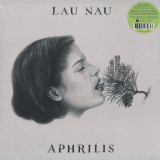
The title of the Lau Nau's 10th album, Aphrilis, derives from the Latin word aperire, meaning "to open." A fitting verb for the month of the year it is closely associated with — April. And while the images of plants and blossoms coming back to colorful life after a long, cold winter feels appropriate when listening to the rich and lustrous bloom of music on Aphrilis, another definition of open feels even more apt. For under the abundance lies the memory of times of austerity, the friction of hard choices, the acceptance that nothing is fixed and the future is unknown. This literal and metaphorical exploration of complexity and contradiction makes Aphrilis a multi-dimensional antidote for our troubled times, one that emphasizes the quiet and communal over noise and spectacle. Laura Naukkarinen, the Finnish artist behind this project, has long kept her mind and spirit open to whatever sounds and creative ideas felt appropriate for the moment. For the past six years that has meant primarily working with modular synthesis — learning how to build modules and releasing acclaimed work centered on its sounds like 5x4 (2023) or Puutarhassa (2022). Running parallel to this work, however, has been a continued exploration of acoustic instruments and group performances with her trio Lau Nau ja Seitsemäs Taivas. Aphrilis arrives then like fresh growth in a creative season cycle. A companion to her brilliant 2017 release Poseidon, the album, says Naukkarinen, "felt like a needed moment to embrace songs with lyrics again." And through the creation of this work, she remained open not only to her own creative muse, but also the input of her chosen collaborators. Each player on Aphrilis — Matti Bye on celesta and synths, Pekko Käppi on jouhikko, Hermanni Yli-Tepsa on violin and contrabass, Topias Tiheäsalo on electric guitar, Samuli Kosminen (Múm) on various instruments — was given free reign to arrange their own parts to accompany Naukkarinen's compositions. Kosminen’s lush fingerprint can also be heard in the mixing and production of the album, as with Poseidon six years ago. The moniker of this project may be taken from Naukkarinen’s own name, but Lau Nau feels more like a band than ever before. The delicacy and softness of the music is reflected in Naukkarinen’s lyrics. Each song is rife with imagery and creatures from the natural world. The spiders in the forest. The animals that keep a young woman company in her refuge in the woods. Wet grass. The feeling of the music is almost tactile, as if listening to the album will leave a bit of dew or sap on your fingers. The theme of this material, says Naukkarinen, runs even deeper. “The songs tell about cracks and changes of direction in different histories: personal, societal, planetary,” she says. “About moments when a yes can become a no and vice versa. The album wants to propose that at the moment of a crisis there is a possibility to influence the histories by our choices.” That may feel like a lot for such a fragile sounding collection of songs to bear. But Aphrilis is an album of surprising strength and resilience
Obscure digi dub gem from 2010 by French one-of-a-kind vocal scientist Pupa Jim, available on wax for the first time since its initial short run 14 years ago.
Programmed by the Maffi crew, the Copenhagen riddim experts of the myspace era, this relentless 7″ module aged oddly well, with its futuristic AI-theme and timeless simplicity.
Jahtari main electrician disrupt is taking a closer look into the strippped down riddim schematics on the flip side, kicking it with a minimum set of transistors to wreak maximum havoc dubwise.
It all started with a crashed computer and it certainly didn’t end there. »Cinnte le Dia« is the third collaborative album by Hanno Leichtmann and Valerio Tricoli, their first entry into Ni Vu Ni Connu’s duo series that focuses on Berlin’s Echtzeitmusik scene and beyond. Having already released two joint records on the now-defunct Entr'acte label, the two musicians wanted to document a 2018 concert in Berlin, but technology failed them. Undeterred, the sound artist and percussionist and the electroacoustic composer went to the former’s Static Music Studio to record six of the eight tracks on this record straight to tape, with two additional ones being recorded during a performance at Eupen’s Meakusma festival in 2019.
After 2016’s »The Future of Discipline« saw the duo enter the studio for a one-take session with added synth-bass overdubs and 2018’s »La Casa delle Chimere« documented a live gig in Kyiv, »Cinnte le Dia« presents a synthesis of the two approaches. Mixing the album together and adding overdubs—Leichtmann with his synth-bass again, Tricoli with his trusted Revox B77—the duo combined the special energy of their performance in front of a live audience with the intimate atmosphere of a studio session between two exceptional improvisers and composers. The pieces are accordingly marked by their sonic density, but also a rhythmic intricacy that makes the album as a whole negotiate its place in music history between bass-heavy, dubbed-out club music and electroacoustic as well as musique concrète techniques.
Leichtmann worked with a mix of acoustic percussion routed through a modified looper and a granular live sampler as well as electronic drums consisting of three modular sampleplayers, a Syncussion drum synth and a bass drum module. Depending on the current set-up, the two fed this input through Tricoli’s B77 either individually or collectively to further manipulate single elements or the entire sound. What might look complicated on a tech rider sounds intuitive on record: these are two versatile musicians engaging in a play of difference and repetition, acting and reacting to each other in real-time, but also creating additional layers by inserting new elements after the fact. In a very literal way, »Cinnte le Dia« is the duo’s most refined album, yet at the same time a testament to the uncanny energy they unleash during their improvisations. It’s solemn and moody, spontaneous and driving at once. Of course a computer couldn’t handle that.
This vinyl contains analog live one-takes by DJ Lily, recorded during April to June 2023 in Gothenburg. A1, A2 & B1 rely on playfulness, whereas B2 & B3 are blistering. Sequences were made with a Syntrx, the bass module of a Pulsar23 and a modern FM synth.
Mastered by Paul Mac at Hardgroove Mastering.
- A1: Nicolas Bredin - Dive
- A2: Nicolas Bredin - Moon
- A3: Nicolas Bredin - Maintenance
- A4: Nicolas Bredin - Stan
- A5: Hanging Fields - Float
- B1: Hanging Fields - Remembrance 1
- B2: Nicolas Bredin - Sea
- B3: Nicolas Bredin - Nature
- B4: Nicolas Bredin - Emma
- B5: Nicolas Bredin - Wreck
- B6: Hanging Fields - Dust
- C1: Hanging Fields - Chloe
- C2: Nicolas Bredin - Pearl
- C3: Nicolas Bredin - Memories
- C4: Nicolas Bredin - Abyss
- C5: Nicolas Bredin - Whale Song
- D1: Nicolas Bredin - Unitrench
- D2: Nicolas Bredin - Life Module
- D3: Nicolas Bredin - Fragile
- D4: Nicolas Bredin - Alpha Site
- D5: Hanging Fields - 0042
Plastic-free disc production: Under the Waves OST vinyl is the first of its kind Biovinyl, with all petroleum in S-PVC replaced by recycling used cooking oil or industrial waste gasses. Plus this vinyl comes in a nice transparent green color called "petrol"
Eco-friendly packaging: this 2xLP gatefold packaging is made of 100% recycled paper and cardboard, and printed with sustainable inks made from plant oils.
Eco-friendly design: we set up a minimalist approach throughout the whole design to save the use of paper and ink: no printed booklet, no large plain-colored full-surfaces, only 1 color used.
Under the Waves OST is a 21-track piece of art composed by Nicolas Bredin, influenced by Icelandic composers such as Valgeir Sigurdsson and Ólafur Arnalds, as well as post-rock bands like Mogwai, Sigur Ros and Radiohead. Released by Kid Katana Records, it had to be consistent with the game’s ecological commitment, especially when talking about a physical edition. That’s why Kid Katana has found the most eco-friendly solution: this OST vinyl will be manufactured in Germany using the brand new Biovinyl process developed by one of the leading manufacturers in Europe, Optimal Media.
This third release from Rubi Records sees Ashley Tindall—aka Skeptical—stepping out of his usual drum and bass territory and slowing things down with three seriously deep dub-infused bass tracks in the 140-150bpm realm. While not the first time Skeptical has dipped his toes in such waters, these are easily among the finest, most musically mature examples to date. For those drum & bass fans out there unsure about Skeptical branching out into other genres, this EP shows that an open mind and listening without prejudice will reward your ears.
First up is the utterly dub-soaked 75/150bpm track 'Tell Me'. This solid stoner groove takes clear elements of Skeptical's more dub-orientated D&B and adds mesmeric pads and soulful vocal hooks, making it one of the deepest head-nodders in his overall catalogue. This is more a refined track for the 'listener' than for the dance floor, and while you can still easily throw some shapes to it, it's great to just immerse yourself in as a purely audio experience.
Next is the 140bpm 'Tapestry', which is somewhat the darker twin of 'Tell Me'. Again, we have a slow dub-infused head-nodder, but this time more menacing in tone thanks to the finely-judged use of some moody sound modules that Skeptical has tweaked and twisted in his inimitable fashion. This one's the audio equivalent of a restless mind in the depth of night.
The final offering is another 140bpm track – the unsettling beast 'Atomic v1'. It begins with a slow-burn build up of an off-kilter metronomic beat, subtly growling bass and haunting strings. This, in turn, gives way to a distorted rendering of Oppenheimer's famous use of 'Now I am become death, the destroyer of worlds' from the Bhagavad Gita, before becoming a sinister slow-motion dubstep rumbler. With its dragging beat and the purposefully off-point main sonic hook running over the top, this is a disorientating and unsettling weapon for the discerning DJ.
This EP continues the fresh direction of Rubi Records, showcasing exceptional, forward-thinking music without borders.
Support: Ben UFO, Joy Orbison, Gilles Pererson, dBridge, Break, DLR, Doc Scott, Mefjus, Kasra, Kings of the Rollers, Alix Perez, Jubei, Dub Phizix, Flight, Tasha, Loxy, Randall, Lens.
Radio Support: BBC Radio 6 Music, Rinse FM, Kool FM
The long awaited official reissue of ‘She Wants’, one of the first UK Street Soul singles originally released in 1985 by The NM Band.
The NM Band was an alias for UK Lovers Rock band Natural Mystic, responsible for a number of hits in the late 70’s and early 80’s most notably ‘Runaway Love’ and ‘Groove Rocking’. They released a string of acclaimed reggae LPs and toured extensively throughout the UK, but by 1985 wanted to try something away from their trademark roots reggae sound. Influenced by the availability of affordable hardware the band set about fusing Reggae and Soul using an Akai Drum machine, Yamaha DX7 and Roland sound module. ‘She Wants’ is one of the forebearers of UK Street Soul, raw machine drums paired with an incredibly soulful vocal from Ashley Sommers. The band created their own imprint ‘Mixdown’ to release the single, but it slipped under the radar, despite strong radio play from Choice FM and the then pirate station Kiss. The 12” is backed with Dub Version ‘She Wants’ (More).
A 140gram pressing in 3mm spine black disco sleeve with metallic sticker designed by Bradley Pinkerton.
- A1: Module One - Movement
- A2: Rising Sun - Say Yes
- B1: Chuck Boris - Put A Mask On Your Face
- B2: Soela - The Thing For Him
- C1: Caldera - 30 Friends
- C2: Freund Der Familie - Shizoid
- D1: Gathaspar - Wy Lecz One
- D2: Front Left - Am3N
- E1: Effgee - Lost My Things (In The Club)
- E2: D M.s - Jungila
- F1: Lauer - Janitors
- F2: Loyoto - Trojena (Blockparty Dub)
Tilman teaches us how to fly. His Atmospheric Mix of Marc Brauners „The Feeling“ is a 90s shaker and takes you straight to the stars - What a feeling, what a rocket!
The A-Side ends with a solid groover. Soela teams up with her partner in crime Module One. They deliver a classy interpretation of Max Taelers „Running“. You like it deep? - this one is for you!?
On the flip side waits for you Eddie C. He maximized the Funkyness of „Heads Up High“ without losing sight of its origins. King Eddie does royal things!
Last but not least Denyl Brooks interpretation of Shakas „Overminded“ is a peak time dance floor shaper. This belter goes in the ears, stays in the legs - for sure!
Following previous releases on Shall Not Fade and KOMPAKT, Soela will release her debut on Australia-via-Berlin imprint Nerang Recordings with the ‘Downfall’ EP.
The EP showcases the studio and creative mastery of the Russia-born and Berlin-based artist, who has years of experience as a pianist and vocalist under her belt.
The tone always makes the music. But only those who actually make the sound An ancient-house-avantgarde dream has always been there since the legendary -Warehouse- days of Ron Hardy, to bring more sounds and tones constantly to an independent, repetitive development. And thus beyond the limits of an executive creative artist on the otherwise purely commercial sense what we call in common -beyond imagination-. -Raw Footage-, the latest album concoction of Chicago house legend Ron Trent (Prescription) on his new imprint -Electric Blue- works in the best sense of Stanislav Lem heroes Trurl & Klapauciusals, cruising like those two metal brains frantically invented by the universe of 4/4-Sounds to get insane tracks out of the new material matter located there, and put them together to brand new ones. This trackwerk varies as well as of course between classical Chi-Town to the context of contemporary, epic house dubs and lives in a perfidious manner from the interaction of various computer
modules that constantly spits out new and exciting interactions. In the end, the software sings only as digital output of great analog sounds, which may well be understood as a mocking voice to the majority of contemporary Homeboy wackiness formats.-Unpredictable- and less -cryptic- might fit here as a keyword excellent, where you kick out of the rough house plant a significant entertainment value must, without the need to posess necessarily the same nerves of steel. Anyone who has ever really wondered what House sound could be appropriate for a journey through the vastness of the universe is, gets there now at this point completely to his fullest expense. Trent 2012 and its tracks on this album reflect a lot about the revolutionary founder of -Spirit of music- from the mid-80s, who is recorded then as now but with inadequate slogans such as -light years ahead of its time-. For as
Trents body of work -Raw Footage- is also particularly scary genius material, although still of totally solid stress field and background from the musical spectrum between the Windy City and the Motor City engine bridled her.-But heres to the Future- For Sir Trent more than twenty years after -Altered States- and the relevant follow-ups, thats not really a problem!
Der Ton Macht immer die Musik. Nur wer macht eigentlich den Ton Ein uralter-House-Avantgarde-Traum war und ist es seit den legendären
:Warehouse: Tagen eines Ron Hardy, Sounds und Töne immer ständig neu zur selbstständigen, repetitiven Entfaltung zu bringen und somit die kreativen Grenzen des exekutiven Künstlers über die sonst im rein kommerziellen Sinne gängige Vorstellungskraft hinaus zu sprengen.
:Raw Footage:, das neueste Album-Machwerk von Chicago House-Legende Ron Trent (Prescription) auf seinem neuen Imprint :Electric Blue: kommt im besten Sinne der Stanislav Lem Heroen Trurl & Klapauciusals, und cruiost wie jene beiden Metallgehirne wie wahnsinnig durch das All der 4/4-Sounds, um aus dem dort befindlichen Materiematerial neue, wahnsinnige Tracks zu erfinden und zusammenzustellen. Dieses Trackwerk variert denn auch wie selbstverständlich zwischen dem klassischen Chi-Town-Kontext bis zu kontemporären, epischen House-Dubs, und lebt auf perfide Art
und Weise aus der Interaktion verschiedenster Computermodule, die dabei ständig neue aufregende Interaktionen ausspuckt. Am Ende singt eine digitale Software nur noch als Output großer analoger Sounds, die durchaus als Spottgesang auf den Großteil eitgenössischer Homeboy-Frickelei Formate verstanden werden dürfen.:Unberechenbar: und weniger kryptisch mag hier als Schlagwort vortrefflich passen, wo man dem rohen Housewerk ganz erheblichen Unterhaltungswert abgewinnen muss, ohne das man dazu unbedingt gleich Nerven wie Drahtseile benötigt. Wer sich je
eigentlich gefragt hat , welcher House-Sound so für eine Reise durch die endlosen Weiten des Universums angemessen sein könnte, kommt an dieser Stelle jetzt völlig(st) auf seine Kosten. Trent 2012 und seine Tracks reflektieren mit diesem Album zwar viel von dem revolutionären Gründerspirit einer Musik aus der Mitte der 80er-Jahre, die damals wie heute dennoch nur unzureichend mit Slogans wie ihrer Zeit um Lichtjahre voraus zu erfassen ist. Denn wie Trents Gesamtwerk ist eben auch :Raw Footage: insbesondere furchteinflößend genialer Stoff, wenngleich auch immer noch vom ganz und gar soliden Spannungsfeld und Background des musikalischen Spektrums zwischen der Windy und der Motor City her aufgezäumt. :But here's to the future: - Für Trent auch mehr als zwanzig Jahre nach :Altered States: und den einschlägigen follow-ups nicht wirklich ein Problem!
Carl Finlow keeps on keepin' on. Not only is Finlow one of the most respected names in electro, a producer who boasts a sprawling catalogue that takes in a wide variety of aliases, but he's also spent recent years establishing himself as a mainstay for Sheffield's Central Processing Unit label. Soft Robotics, the new EP from Finlow's Silicon Scally project, is the fifth Silicon Scally release in five years to boast one of CPU's instantly-recognisable black-and-white covers.
The reason that Silicon Scally and CPU keep linking up is simple; they're a perfect fit for one another. Central Processing Unit has established itself as a haven for post-Drexciya producers since launching in 2012, and there are few artists better than Finlow at building on the Detroit group's sound. The union bears fruit once more on Soft Robotics, an EP of lithe machine-funk jams that will both do damage in the dance and also reward more concentrated home listening.
Things begin at a steadier speed than one might expect. Rather than barrelling off with the kind of sinewy roller one associates with the CPU name, Soft Robotics' title-track takes things at mid-pace. The groove reveals itself without hurry, Silicon Scally adding or subtracting elements - twitchy modular loops, pensive pads, the occasional blurt of low-end - atop the chugging bass/drums groove. It's a track which wins you over with guile rather than force.
As the name of subsequent cut 'Jitters' intimates, this one picks things up a little after 'Soft Robotics'. The tempo is higher here, the central beat more nervy. At their cores, though, 'Jitters' and 'Soft Robotics' are kindred spirits. Here, another slyly insistent bit of drum programming comes swirled up with all sorts of extraterrestrial tones, from little nuggets of melody supplied by the keys to electrifying synth stabs and percussive squelches.
Things limber up further still on first B-side 'Spin Ratio'. The track's 808 kicks are punchier than those of the A-side jams, and there's a dizziness to the bass tone which gives 'Spin Ratio' an intriguingly off-kilter feel. Atop the booming beat we find ourselves hypnotised by cells of melody and harmony interlocking or moving apart - particularly the staccato module at the track's heart. Sure enough, 'Spin Ratio' is the Soft Robotics joint which cleaves closest to Drexciya, invoking other Detroit disciples like Jensen Interceptor in the process.
After Soft Robotics picks up speed in the middle, closer 'Super Fluid Tones' brings us back to where we started. This track returns to the more measured delivery of the record's opener - there's a steady pulse to the drums, and once again Silicon Scally packs the mix with so many intriguing whizzes, bangs, blips and blurts that it's impossible not be won over by this tune's construction. 'Soft Robotics' and 'Super Fluid Tones' bookend Soft Robotics very nicely, and Silicon Scally's smart pacing gives the EP a lovely ebb and flow.
The ever-excellent Carl Finlow drops a Silicon Scally release via Central Processing Unit for the fifth year running. Like its predecessors, Soft Robotics is an excellent and deftly-crafted collection of modern machine-funk.
RIYL: Drexciya, Jensen Interceptor, Fleck E.S.C., The Advent
Unreleased but perfectly formed "hidden" album, recorded in 1989-90 by Nuno Rebelo on the wake of his "Sagração Do Mês De Maio" double LP (composed in 1988 as soundtrack to the third Manobras de Maio fashion event in Lisbon). The tracks convey a sense of investigative curiosity regarding computer composition and they sound wonderfully artificial. Titles as "Moon OK", "Tiny Space Ships" or "Dança Das Creaturas Elásticas" ("Elastic Creatures Dance") embody this idea of otherworldness, a kind of music actually coming from another place, composed and played by elastic creatures. It displays the functional qualities of Library Music, illustrating playful as much as moody and dense moments. In this way the album comes across as a soundtrack for moving images, sure, but with unusual framing and sharp angles. A unique object in the Portuguese avantgarde, keeping its distance from Academia but also from contemporary independent releases ("Plux Quba" by Nuno Canavarro comes to mind). António Duarte's 2019 mastering enhances this collection of music liberated from the archives of one of the most brilliant, active and challenging musicians of his generation.
Nuno Rebelo was born in 1960, graduated in Architecture, founded Street Kids and Mler Ife Dada, played in the "transitional" line up of GNR in 1982. His creativity expanded into improvised music. Performances and recordings with other musicians multiplied. He composed music for theatre, dance, jingles and, on an almost contradictory scale to his underground credentials, soundtracks for the Expo 98 and Porto 2001 mega events.
“Improvisações Cristalizadas” by Nuno Rebelo:
Short electronic pieces composed in 1989-90 using the Atari 1040ST computer with Steinberg Pro24 Software, Two Yamaha Sound Modules (TX81ZX and TG55) and Ensoniq Mirage Sampler with keyboard. The composition method for each piece evolved from a short improvisation on the Mirage keyboard, recorded in MIDI to the computer. Counterpoint permutations (inversion, reversion, inverted reversion, transpositions) were then applied through the software, distributing the variations of the initial improvisation by other timbres. No other musical material was used.
AsOne² introduces the addition of Catherine Siofra Prendergast to the As One line-up after a series of successful live shows together with Kirk Degiorgio. The live duo entered the studio to focus on adding a melodic sensibility to the harmonic structure of the existing AsOne sound. The resulting album once again finds it perfect home with the Belgian record label De:tuned.
Following on the heels of the teaser EP featuring the duo's acclaimed 'Descent Module' - AsOne² is a blend of vintage, warm analog gooeyness and pristine post-modern production techniques. Prendergast's melodic additions veers the AsOne sound towards a more accessible arena without compromising on the core AsOne sonic signature. Yearning chords, sparkling lead lines, bubbling funk basslines and ethereal ambient washes merge to form a coherent whole in this new advance in the development of AsOne - now in its 30th year.
Kevin Foakes (Openmind, DJ Food, Ninja Tune) created all the graphic work. Mastered by Matt Colton at Metropolis and pressed on 180 gr vinyl. A separate digital release will also be available at the usual digital shops. Stay tuned!
AsOne² introduces the addition of Catherine Siofra Prendergast to the As One line-up after a series of successful live shows together with Kirk Degiorgio. The live duo entered the studio to focus on adding a melodic sensibility to the harmonic structure of the existing AsOne sound. The resulting album once again finds it perfect home with the Belgian record label De:tuned.
Following on the heels of the teaser EP featuring the duo's acclaimed 'Descent Module' - AsOne² is a blend of vintage, warm analog gooeyness and pristine post-modern production techniques. Prendergast's melodic additions veers the AsOne sound towards a more accessible arena without compromising on the core AsOne sonic signature. Yearning chords, sparkling lead lines, bubbling funk basslines and ethereal ambient washes merge to form a coherent whole in this new advance in the development of AsOne - now in its 30th year.
Kevin Foakes (Openmind, DJ Food, Ninja Tune) created all the graphic work. Mastered by Matt Colton at Metropolis and pressed on 180 gr vinyl. A separate digital release will also be available at the usual digital shops. Stay tuned!
REPRESS
Alessandro Cortini (Nine Inch Nails/How To Destroy Angels) composed the Forse series using a Buchla Music Easel. Forse, meaning "maybe" In Italian, is a series of 3 double LP releases Cortini recorded for Imprec to release in 2013.
"All pieces were written and performed live on a Buchla Music Easel, in the span of one month. I found that the limited array of modules that the instrument offers sparked my creativity. Most pieces consist of a repeating chord progression, where the real change happens at a spectral/dynamic level, as opposed to the harmonic/chordal one. I believe that the former are just as effective as the latter, in the sense that the sonic presentation (distortion , filtering, wave shaping, etc) are just as expressive as a chord change or chord type, and often reinforce said chord progressions.
Of all the years with Nine Inch Nails the period spent writing and recording the instrumental record Ghosts I-IV is probably the one which changed my approach to music making the most. After that record I started getting more into instrumental composition, although I tried to approach it in a different way. While we had a vast array of tools and instruments at our disposal then, I decided to approach my pieces limiting myself to one instrument only, as I found myself being more decisive when faced with a limited creative environment."
- A1: Alan Fitzpatrick & Reset Robot - Alpha
- A2: Red Axes - First Look
- A3: Ak Sports - Accept That All Things End And Your Life Will Improve In These Five Ways
- B1: Lis Sarroca - Oasis Floor
- B2: Laurence Guy & Miller Blue - My Heart Still Leans On You
- B3: Marc Brauner & Tender Games - Iss
- C1: Main Phase - All The Girls
- C2: Soul Mass Transit System - Take Me To Xtc
- C3: Borai - Seafoam Green
- D1: Coldpast & Tuff Trax - Wilder
- D2: Killjoy & Kwam - Active
- D3: Peaky Beats - Cats From The Back
- E1: Testpress - On My Own
- E2: Ams - Rue Du Transvaal
- E3: Kassian - Burst Mode
- F1: Module One & Soela - If I Only Knew
- F2: Kaysoul - Woodward Avenue
- F3: Alex Virgo & Benjamin Groove - Relie
blue + red + pink vinyl
It's a huge link-up. We proudly present our fifth compilation, celebrating seven years of service. Over the course of the 18 tracks, divided across 3 discs, a whopping 25 individual artists show us what they can do, repping the distinct sound they bring to the label.
On the first disc, techno giant Alan Fitzpatrick teams up with Drumcode affiliate Reset Robot on a big-room techno slammer before Israeli duo Red Axes take us into the big room of our mind with a transcendental techno cut. Laurence Guy guides us in a different direction completely, joining Lis Sarroca, Marc Brauner and Tender Games in creating a groove that you can sit back into, losing yourself amongst Lis' syrup-smooth house, Miller Blue's soul-stroking vocals and MB & TG's piano tickles.
Before you get too comfortable, the Time Is Now lot come through with a suitable dose of ruffage, from Main Phase and Soul Mass Transit System's giddy UKG and speed garage, to the '90s-inspired atmospheric garage house of Borai and Coldpast & Tufftrax.
Closing proceedings are SNF's melody specialists. Ams, Kassian and Kaysoul each offer their take on blissed-out deep house whilst Module One & Soela and Alex Virgo & Benjamin Groove infuse stripped-back garage and breaks instrumentals with contemplative atmosphere.
Order SNFLP013 now
Kirk Degiorgio is becoming somewhat of a mainstay on the Belgian De:tuned label. Here he returns with 'The Unveiling'. The title track stands out with a classical synth progression and beautiful harmonies, resulting in an uplifting Detroit fused techno cut. 'Descent Module' takes you on a driving acidic trip and has all the characteristics of a hypnotic floater for the after-hours. On the flip you'll find two exclusive remixes from Kirk's 'Communion' album on De:tuned. Ian o'Brien showcases his vast musical talent and opens up his soul with a warm and lengthy retake of 'The Ladder'. Luke Slater debuts strongly on De:tuned and provides a rare The 7th Plain remix of 'Absorption Spectra'. Luke's take is a sentimental and lush ambient techno interpretation where its unique sound oscillates between a melancholic state of nostalgia and modern escapism.
Kevin Foakes (Openmind, DJ Food, Ninja Tune) created all the graphic work. Mastered by Matt Colton at Metropolis and pressed on 180 gr vinyl. A separate digital release will also be available at the usual digital shops. Stay tuned!
blue marbled vinyl
Kirk Degiorgio is becoming somewhat of a mainstay on the Belgian De:tuned label. Here he returns with 'The Unveiling'. The title track stands out with a classical synth progression and beautiful harmonies, resulting in an uplifting Detroit fused techno cut. 'Descent Module' takes you on a driving acidic trip and has all the characteristics of a hypnotic floater for the after-hours. On the flip you'll find two exclusive remixes from Kirk's 'Communion' album on De:tuned. Ian o'Brien showcases his vast musical talent and opens up his soul with a warm and lengthy retake of 'The Ladder'. Luke Slater debuts strongly on De:tuned and provides a rare The 7th Plain remix of 'Absorption Spectra'. Luke's take is a sentimental and lush ambient techno interpretation where its unique sound oscillates between a melancholic state of nostalgia and modern escapism.
Kevin Foakes (Openmind, DJ Food, Ninja Tune) created all the graphic work. Mastered by Matt Colton at Metropolis and pressed on 180 gr vinyl. A separate digital release will also be available at the usual digital shops. Stay tuned!
If you check the credits of The Rolling Stones' Goats Head Soup LP from 1973 you'll find a certain "Pascal" listed on the percussion section. That is none other than Los Angeles based artist Nicolas Pascal Raicevik (1933-1994), aka 107-34-8933, aka Head, aka Nik Pascal, aka Nik Raicevic. Besides his hitting the bongoes on the Stones album, Nik was a great artist on his own, both as a painter and as a musician. As a musician, he was a pioneer in the use of synthesizers, preceeding the Berlin school by some years when his Head LP was released on on Buddah in 1970. Buddah probably saw in Head the opportunity to cash in some money from the remains of the psychedelic scene - the three tracks on the LP are named after drugs used in the late sixties. The sounds, however, are accomplished works that show Raicevic as one of the most interesting pioneers in the use of synths. The album probably didn't do too well, since Buddah didn't renew the contract with Raicevic, who instead took his own way releasing his works on his very own Narco Records and Tapes label. Between 1968 and 1975 Narco would issue 4 LPs credited either to Nik Raicevic (Beyond The End... Eternity) or Nik Pascal (The Sixth Ear, Magnetic Web and Zero Gravity) plus one credited to 107-34-8933 (Numbers, which is in fact the same LP as Buddah's Head, albeit with different cover art). Copies of these LPs came with an ironic sticker over the shrinkwrap that read "Do not listen to this LP if you are stoned".
"Raicevic is clearly still in the early learning-curve stages," which it a key LP to understand Nik's evolution and setting the path for more evolved works to follow.
Besides his musical explorations, Nik was also an interesting painter. His paintings are auctioned from time to time, and are consciousness expanding works influenced by abstract cubism and surrealism, some kind of Salvador Dalí on drugs exploring the outter and inner space. All the artwork on the sleeves of his LPs is done by himself. Spacey landscapes and psychedelic colours that fit perfectly to the music they contain.
"Nik Raicevic's music is at the intersection of radical psycho-electronic weirdness and kraut kosmische music (in particular the scifi-hypno-minimal modules of Conrad Schnitzler in Grun, Rot and Blau). It presents mega epic & tripped out electronic improvisations.
"This is an absolute must for collectors and fans of visceral, neurotic soundscapes."
"As far as late-60s / early-70s American Bedroom' Electronic Music goes, these LPS have to be among the first transmissions from this sector, made all the more attractive when coupled with Raicevic's alien topographIes - the covers are high-color portrayals of Venusian lanes, knotted growths, & future-past architecture in a style you might equate with Vintage' sci-fi pulp-novel covers - & copious Downer' sentiment. This music is imbued with a sort of lonely, anti-social sensibility that's about as far as you can get from the Academic' Early Electronic vector. I will say that if the Steve Birchall, Cellutron & the Invisible, and/or Pythagoron™ seed your garden, this will likely do the same."
Never reissued before on vinyl format, the Wah Wah reissue features original sleeve artwork made of paintings and drawings by Nik himself and reproduction of the famous ironic "Do not listen if you are stoned" sticker. Limited edition, 500 copies only.
If you check the credits of The Rolling Stones' Goats Head Soup LP from 1973 you'll find a certain "Pascal" listed on the percussion section. That is none other than Los Angeles based artist Nicolas Pascal Raicevik (1933-1994), aka 107-34-8933, aka Head, aka Nik Pascal, aka Nik Raicevic. Besides his hitting the bongoes on the Stones album, Nik was a great artist on his own, both as a painter and as a musician. As a musician, he was a pioneer in the use of synthesizers, preceeding the Berlin school by some years when his Head LP was released on on Buddah in 1970. Buddah probably saw in Head the opportunity to cash in some money from the remains of the psychedelic scene - the three tracks on the LP are named after drugs used in the late sixties. The sounds, however, are accomplished works that show Raicevic as one of the most interesting pioneers in the use of synths. The album probably didn't do too well, since Buddah didn't renew the contract with Raicevic, who instead took his own way releasing his works on his very own Narco Records and Tapes label. Between 1968 and 1975 Narco would issue 4 LPs credited either to Nik Raicevic (Beyond The End... Eternity) or Nik Pascal (The Sixth Ear, Magnetic Web and Zero Gravity) plus one credited to 107-34-8933 (Numbers, which is in fact the same LP as Buddah's Head, albeit with different cover art). Copies of these LPs came with an ironic sticker over the shrinkwrap that read "Do not listen to this LP if you are stoned".
Numbers was the first reference in the Narco catalogue (NR101), each of the three tracks it contains is named after a drug: Cannabis Sativa, Methedrine and Lysergic Acid Diethylamide. The album was credited to 107-34-8933, there is no date of release on the disc, some sources take it as back as 1968 - in any case, this is the same record that was issued on Buddah in 1970 credited to Head and eponymously-titled. The Wah Wah reissue features the original cover artwork from the Narco edition.
Besides his musical explorations, Nik was also an interesting painter. His paintings are auctioned from time to time, and are consciousness expanding works influenced by abstract cubism and surrealism, some kind of Salvador Dalí on drugs exploring the outter and inner space. All the artwork on the sleeves of his LPs is done by himself. Spacey landscapes and psychedelic colours that fit perfectly to the music they contain.
"Nik Raicevic's music is at the intersection of radical psycho-electronic weirdness and kraut kosmische music (in particular the scifi-hypno-minimal modules of Conrad Schnitzler in Grun, Rot and Blau). It presents mega epic & tripped out electronic improvisations.
"This is an absolute must for collectors and fans of visceral, neurotic soundscapes."
"As far as late-60s / early-70s American Bedroom' Electronic Music goes, these LPS have to be among the first transmissions from this sector, made all the more attractive when coupled with Raicevic's alien topographIes - the covers are high-color portrayals of Venusian lanes, knotted growths, & future-past architecture in a style you might equate with Vintage' sci-fi pulp-novel covers - & copious Downer' sentiment. This music is imbued with a sort of lonely, anti-social sensibility that's about as far as you can get from the Academic' Early Electronic vector. I will say that if the Steve Birchall, Cellutron & the Invisible, and/or Pythagoron™ seed your garden, this will likely do the same."
Never reissued before on vinyl format, the Wah Wah reissue features original sleeve artwork made of paintings and drawings by Nik himself and reproduction of the famous ironic "Do not listen if you are stoned".
Limited edition, 500 copies only.