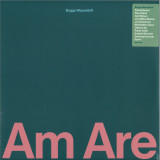
Bugge Wesseltoft has long been a shaper of his own jazz idioms, through his diverse solo albums, his group projects such as New Conception of Jazz, OKWorld! and RYMDEN, and collaborations with artists such as Sidsel Endresen, Henning Kraggerud or Henrik Schwarz.
"Am Are" features special constellations of superb musicians that spans both generations and styles, and is an exploration of sonic textures, dynamic contrasts of mood and style, and ranges from sparse arrangements through to complex layers of dubs and loops and improvisational interplay.
The album begins with Bugge alone on "How?" with layers of undulating atmospheric synth, brought into focus by Bugge's piano at the forefront, creating a minimalist miniature that is both emotive and serene. For "Villrein" Bugge is joined by Elias Tafjord on drums, beginning with a santur-like synth figure, floating over ominous formant sci-fi bass synths bubbling and pulsing, and overlaid by phrenetic piano that only stops to lock into the santur figure before relaunching on its own journeys, all underpinned by Elias Tafjord's expressive drumming. "Is Anyone Listening?" demonstrate's Bugge's songcraft, layering muted percussive piano behind Rohey's distinctive and beautiful vocals punctuated by Martin Myhre Olsen's tenor saxophone, creating a soulful mood tinged with desperation.
"BAG" presents the first classic piano trio of the album - Bugge on piano and synths, Arild Andersen on bass, and Gard Nilssen on drums - announcing itself with an insistent riff, chattering drums, breaking into a progressive rock-style passage of bass and piano in unison. "Reel", the second track from this trio, is a mellow soundscape that evolves to become hazy urban downbeat jazz.
The second piano trio of Bugge (Rhodes and Korg MS20 synth), Sveinung Hovensjø (Electric Bass), and Jon Christensen (Drums and Bells) offers a completely different perspective. The first track "Render" features Bugge's Zawinul-esque Rhodes and monosynth leads, Sveinung's fuzz bass in something of a leading role, all carried with chattering gusto by Jon Christensen's dynamic drumming that brings texture and space as well as rhythm to the piece. "Vender" begins as an atmospheric piece, with reed organ-like synth washes, and octave-processed bass with a somewhat sitar-like tone, meandering until the track breaks down into drums and bass weaving around an insistent drum machine loop, dripping with synth pads and monosynth lead.
"JazzBasill" introduces the third piano trio - featuring Bugge (Piano), Jens Mikkel Madsen (Acoustic Bass) and Øyunn (Drums) - and offers a classic piano trio style with urban sophistication, that is lyrical, and interspersed with staccato cadences, giving a feeling of broken swing, slightly staggered yet driving forwards. The title track "AM ARE" is late night jazz, with baroque whispers, and distinctly melodic.
The final track, "Think Ahead" features the non-standard trio of Bugge (Piano/Organ), Oddrun Lilja (Guitar) and Sanskriti Shrestha (Tablas/Harp). Beginning with a minimalist piano figure, table, and sustained guitar, the track breaks down to a noise surge and ambient windscape, with guitar birds and abstract grinding, before returning to minimalist melodicism.
The shifting personnel across the album, as well as the three different studios in which it was recorded - Village Recording in Copenhagen, Rainbow Studios in Oslo, and his own Buggesroom Studio - creates a feeling of dynamic change and musical variety that is unified by Bugge's piano and keyboards. His playing moves between foreground, where he allows the music to elevate him, and background, where he move gently like a beneficent presence, tending to the demands of the spirit of the musical moments he has captured. It is an album powered by restless exploration and shaped by distinctive musical personalities; it is a journey through different moods, illuminated and brought into focus by Bugge's measured approach and guiding hand.

Поиск:mom
Все
- A1: Montego Bay - Everything (Paradise Mix) 04 59
- A2: Atelier - Got To Live Together (Club Mix) 06 06
- A3: Golem - Music Sensations 04 56
- B1: The True Underground Sound Of Rome Feat. Stefano Di Carlo - Gladiators 05 26
- B2: Eagle Parade - I Believe 04 26
- C1: Dj Le Roi - Bocachica (Detroit Version) 05 28
- C2: Green Baize - Synthetic Rhythm 01 41
- C3: M.c.j. Feat. Sima - Sexitivity (Deep Mix) 05 30
- D1: Kwanzaa Posse Feat. Funk Master Sweat - Wicked Funk (Afro Ambient Mix) 06 31
- D2: Progetto Tribale - The Bird Of Paradise 06 29
- D3: Mbg - The Quite 06 59
Vol 1[28,99 €]
Googling “paradise house”, the first results to pop up are an endless list of European b&b’s with whitewashed lime façades, all of them promising “…an unmatched travel experience a few steps from the sea”. Next, a little further down, are the institutional websites of a few select semi-luxury retirement homes (no photos shown, but lots of stock images of smiling nurses with reassuring looks). To find the “paradise house” we’re after, we have to scroll even further down. Much further down.
It feels like yesterday, and at the same time it seems like a million years ago. The Eighties had just ended, and it was still unclear what to expect from the Nineties. Mobile phones that were not the size of a briefcase and did not cost as much as a car? A frightening economic crisis? The guitar-rock revival?! Certainly, the best place to observe that moment of transition was the dancefloor. Truly epochal transformations were happening there. From America, within a short distance one from the other, two revolutionary new musical styles had arrived: the first one sounded a bit like an “on a budget” version of the best Seventies disco-music – Philly sound made with a set of piano-bar keyboards! – the other was even more sparse, futuristic and extraterrestrial. It was a music with a quite distinct “physical” component, which at the same time, to be fully grasped, seemed to call for the knotty theories of certain French post-modern philosophers: Gilles Deleuze, Félix Guattari, Paul Virilio... Both those genres – we would learn shortly after – were born in the black communities of Chicago and Detroit, although listening to those vinyl 12” (often wrapped in generic white covers, and with little indication in the label) you could not easily guess whether behind them there was a black boy from somewhere in the Usa, or a girl from Berlin, or a pale kid from a Cornish coastal town.
Quickly, similar sounds began to show up from all corners of Europe. A thousand variations of the same intuition: leaner, less lean, happier, slightly less intoxicated, more broken, slower, faster, much faster... Boom! From the dancefloors – the London ones at least, whose chronicles we eagerly read every month in the pages of The Face and i-D – came tales of a new generation of clubbers who had completely stopped “dressing up” to go dancing; of hot tempered hooligans bursting into tears and hugging everyone under the strobe lights as the notes of Strings of Life rose up through the fumes of dry ice (certain “smiling” pills were also involved, sure). At this point, however, we must move on to Switzerland.
In Switzerland, in the quiet and diligent town of Lugano, between the 1980s and 1990s there was a club called “Morandi”. Its hot night was on Wednesdays, when the audience also came from Milan, Como, Varese and Zurich. Legend goes that, one night, none less than Prince and Sheila E were spotted hiding among the sofas, on a day-off of the Italian dates of the Nude Tour… The Wednesday resident and superstar was an Italian dj with an exotic name: Don Carlos. The soundtrack he devised was a mixture of Chicago, Detroit, the most progressive R&B and certain forgotten classics of old disco music: practically, what the Paradise Garage in New York might have sounded like had it not closed in 1987. In between, Don Carlos also managed to squeeze in some tracks he had worked on in his studio on Lago Maggiore. One in particular: a track that was rather slow compared to the BPM in fashion at the time, but which was a perfect bridge between house and R&B. The title was Alone: Don Carlos would explain years later that it had to be intended both in the English meaning of “by itself” and like the Italian word meaning “halo”. That wasn’t the only double entendre about the song, anyway. Its own very deep nature was, indeed, double. On the one hand, Alone was built around an angelic keyboard pattern and a romantic piano riff that took you straight to heaven; on the other, it showcased enough electronic squelches (plus a sax part that sounded like it had been dissolved by acid rain) to pigeonhole the tune into the “junk modernity” section, aka the hallmark of all the most innovative sounds of the time: music that sounded like it was hand-crafted from the scraps of glittering overground pop.
No one knows who was the first to call it “paradise house”, nor when it happened. Alternative definitions on the same topic one happened to hear included “ambient house”, “dream house”, “Mediterranean progressive”… but of course none were as good (and alluring) as “paradise house”. What is certain is that such inclination for sounds that were in equal measure angelic and neurotic, romantic and unaffective, quickly became the trademark of the second generation of Italian house. Music that seemed shyly equidistant from all the rhythmic and electronic revolutions that had happened up to that moment (“Music perfectly adept at going nowhere slowly” as noted by English journalist Craig McLean in a legendary field report for Blah Blah Blah magazine). Music that to a inattentive ear might have sounded as anonymous as a snapshot of a random group of passers-by at 10AM in the centre of any major city, but perfectly described the (slow) awakening in the real world after the universal love binge of the so-called Second Summer of Love.
For a brief but unforgettable season, in Italy “paradise house” was the official soundtrack of interminable weekends spent inside the car, darting from one club to another, cutting the peninsula from North to centre, from East to West coast in pursuit of the latest after-hours disco, trading kilometres per hour with beats per minute: practically, a new New Year’s Eve every Friday and Saturday night. This too was no small transformation, as well as a shock for an adult Italy that was encountering for the first time – thanks to its sons and daughters – the wild side of industrial modernity. The clubbers of the so-called “fuoriorario” scene were the balls gone mad in the pinball machine most feared by newspapers, magazines and TV pundits. What they did each and every weekend, apart from going crazy to the sound of the current white labels, was linking distant geographical points and non-places (thank you Marc Augé!) – old dance halls, farmhouses and business centres – transformed for one night into house music heaven. As Marco D’Eramo wrote in his 1995 essay on Chicago, Il maiale e il grattacielo: “Four-wheeled capitalism distorts our age-old image of the city, it allows the suburbs to be connected to each other, whereas before they were connected only by the centre (…) It makes possible a metropolitan area without a metropolis, without a city centre, without downtown. The periphery is no longer a periphery of any centre, but is self-centred”.
“Paradise house” perfectly understood all of this and turned it into a sort of cyber-blues that didn’t even need words, and unexpectedly brought back a drop of melancholic (post?)-humanity within a world that by then – as we would wholly realise in the decades to come – was fully inhuman and heartless. A world where we were all alone, and surrounded by a sinister yellowish halo, like a neon at the end of its life cycle. But, for one night at least, happy."
- A1: No Monkey's Paw (Objects Outlive Us 23 17) (2 01)
- A2: The Buddha Of The Modern Age (2 22)
- A3: Objects Meanwhile (3:03)
- A4: The Cicerones (3 13)
- A5: Ark (3 33)
- A6: Cosmic Sons Of Toil (2 46)
- A7: No Ghost On The Moor (1 55)
- A8: Heat Death Of The Universe (3 52)
- B1: Perspective (The Overview) (1 39)
- B2: A Beautiful Infinity I (2 17)
- B3: Borrowed Atoms (3 14)
- B4: A Beautiful Infinity Ii (2 39)
- B5: Infinity Measured In Moments (4 39)
- B6: Permanence (3 14)
Der weltweit gefeierte Musiker, Produzent und Songwriter Steven Wilson veröffentlicht sein achtes Studioalbum ”The Overview”. Das 42-minütige Werk, bestehend aus zwei epischen Tracks – ”Objects Outlive
Us” und ”The Overview” – ist inspiriert vom “Overview Effect”, einem transformativen Erlebnis, das Astronauten beim Blick auf die Erde aus dem Weltall erfahren.
Mit ”The Overview” kehrt Wilson zu seinen progressiven Wurzeln zurück, einem Genre, das er maßgeblich
mitgestaltet hat. Die beiden ambitionierten Stücke bestehen aus einzigartigen musikalischen Abschnitten, die nahtlos ineinander übergehen, und kombinieren klassische Prog-Elemente mit modernen Einflüssen
wie Elektronik und Post-Rock. Die Texte, teils von XTCs Andy Partridge, erzählen Geschichten über die
Schönheit und Herausforderungen des Lebens auf der Erde.
Das Album spiegelt 30 Jahre Wilsons Karriere wider, mit Anklängen an Porcupine Tree, The Raven That
Refused to Sing und The Future Bites. Wie immer liefert Wilson ein audiophiles Erlebnis: ”The Overview”
wird in Spatial Audio und als speziell gemastertes Half-Speed-Vinyl erhältlich sein.
”The Overview” ist ein einzigartiges Werk für 2025 – ein Erlebnis für offene Ohren und weite Gedanken.
- A1: Mama
- A2: That's All
- B1: Home By The Sea
- B2: Second Home By The Sea
- C1: Illegal Alien
- C2: Taking It All Too Hard
- C3: Just A Job To Do
- D1: Silver Rainbow
- D2: It's Gonna Get Better
In the spring of 1983, members of Genesis reconvened at their studio, named The Farm in Chiddingfold, Surrey, to start work on a new studio album, their first since Abacab (1981). Genesis became their first album written, recorded, and mixed in its entirety at the studio room; previously they had to write in an adjoining space. Having the group work in their own space without the additional pressure of booking studio time and fees resulted in a more relaxed environment. They were joined by engineer Hugh Padgham, who had also worked on Abacab,
AllMusic writes: "Moments of Genesis are as spooky and arty as those on Abacab — in particular, there's the tortured howl of "Mama," uncannily reminiscent of Phil Collins' Face Value, and the two-part 'Second Home by the Sea' — but this eponymous 1983 album is indeed a rebirth, as so many self-titled albums delivered in the thick of a band's career often are. ... Anybody who paid attention to 'Misunderstanding' and 'No Reply at All' could tell that this was a good pop band, primarily thanks to the rapidly escalating confidence of Phil Collins, but Genesis illustrates just how good they could be, by balancing such sleek, pulsating pop tunes as 'That's All' with a newfound touch for aching ballads, as on 'Taking It All Too Hard.'" AllMusic reviewer Stephen Thomas Erlewine gives the album 4.5 Stars.
For fans who appreciate the evolution of the band's music over the years, owning this album is important as it represents a distinctive phase in their career.
This is the definitive deluxe 45 RPM 2LP Analogue Productions (Atlantic 75 Series) reissue of the classic Genesis. A classic for all true Genesis fans!
OHYUNG aka Lia Ouyang Rusli describes their new album as “my trans self and my former self in conversation, from both perspectives.” The record represents their lengthy, complicated, but crucial journey between lives, strewn with both doubt and excitement. It is an ecstatic, pop-oriented shift in direction from an artist primarily known for noise, experimental hip-hop, and ambient music, but carried with sleek confidence, maturity, and a silvery, hallucinogenic shimmer that reveals Rusli’s experimental background. It is, writes Rusli, “sometimes written from a dark place and other times from a place of happiness.” Throughout, darkness and light rise and fall in layers of phased strings, trip-hop drum production, and earworming vocal lines.
Also a film score composer, Rusli’s songwriting craft is meticulous and nuanced. You Are Always On My Mind was, perhaps surprisingly, formed primarily from processed “generic string loops” found in online sample packs - a strange and wilfully jarring reminder that what seems to be is not always what is. Recontextualised, these string loops enshadow the simplicity of their origins and reveal a grace and purposefulness perhaps not even imagined by their authors, subtly drawing out euphoria and tension in equal balance.
Rusli also writes of the influence of rave culture central to their transition, and of the record’s production and theme. “It’s a declaration of love for raves and the dark hazy rooms that helped me to be free and true with myself— seeing other people who are so free and beautiful and thinking that one day that can be me— that’s me in the future.” But there is also a fear and unease present. Key moment “no good” explores “the worst version of myself as a trans person, feeding doubt to my pre-transition self” with its core lyric anyone can see / I’m no good for you, delivered over a relentless beat, swooning strings, and glistening synthesis.
Later, “i swear that i could die rn” renders a Spectreish Motown beat lamenting and lush with breathy synths and knife-edge melodies that eventually yield a hazy, gliding string section, created again from mutated, spliced, and transitioned royalty-free sample packs. The track is about “seeing my beautiful friends at raves and feeling at home appreciating the harsh noises of hardcore techno and acid. Feeling that I could die at this moment and be happy.”
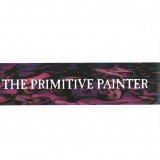
Apollo / R&S are delighted to welcome back The Primitive Painter, aka the duo of Roman Flügel and Jörn Elling Wuttke for a timely reissue of their 1994 lost classic self-titled album of sonorous IDM.
Growing up in Frankfurt, in the 80s and 90s the duo met at an indie rock club in their home town of Darmstadt, bonding over their shared obsession with the first wave of acid, Chicago house and early Detroit techno as well as their patronage of now iconic Frankfurt club nights like The Omen or Dorian Gray or the infamous Delirium Record shop run by scene stalwarts Ata (Robert Johnson) and Heiko MSO (Playhouse).
Taking inspiration from the likes of The Black Dog and Transmat as well as seminal compilations such as Planet E’s Intergalactic Beats and Warp’s Artificial intelligence compilation the duo honed their inventive take on the Detroit techno blueprint under the monicker Acid Jesus, debuting on their freshly minted Klang Elektronik label. The label was started in conjunction with Ata and Heiko after Fluegel & Wuttke (regular patrons of the Delirium store) pressed a demo on them, muttering the immortal line; “Please listen to the tape, we are big Mr. Fingers fans.”
Through the mid ’90s the project flourished giving rise to a classic album and a brace of singles that number amongst the best of the era’s techno, winning them a influential fans most notably Sven Väth, David Holmes and Andrew Weatherall who invited them to play live at one of the legendary Sabresonic parties in London.
Alongside the success of the Acid Jesus project, the duo found great inspiration in outside of the club, including an ambient happening when the KLF came to play Frankfurt; “There were live sheep eating grass on stage while they played at Mark Spoon’s club XS”, as well as cinematic influence from the likes of Jim Jarmush and Wim Wenders. It was however the euphonic IDM grandeur of Apollo Recordings self titled compilation of 1993 that really got their creative juices flowing: “It was a ten track compilation with artists like David Morley, Model 500, Aphex Twin which still sounds so good today,” Jörn enthuses. “ It was really the trigger to go away from the Detroit sound and more towards the big melodies of B12 etc.”
Deciding to make their tribute to this style of music the duo turned out 10 tracks of gauzy, melodious electronica in a white hot fever, one after another over the ensuing months. Settling on a name for the new project they picked ‘The Primitive Painters’ taking inspiration from the band Felt. “We are both children of the C86 movement,” explains Jörn. “this attitude of noisy art school influenced rock like Primal Scream, MBV, The Jesus & Mary Chain really inspired us to take a DIY approach to our music.”
They sent the resulting demo cassette to Renaat at R&S / Apollo. “We really had no expectations,” Jörn explains. “So we were shocked and delighted when we received a fax saying that he wanted to release it”.
The resulting release was bungled by an R&S mix up that attributed the album to the duo’s own Klang Elektronik label which confused both fans and distributors alike, denying the release the critical boost and attention that it so richly deserved. Accordingly the release slipped out without much fanfare, with a chastened Fluegel & Wuttke returning to their Acid Jesus activities which would eventually lead to their blockbusting success as Alter Ego.
Over the ensuing years the reputation of The Primitive Painter album has only grown, with second hand copies (only 500 vinyl were pressed) changing hands for exorbitant amounts on Discogs, leading us to this opportune moment of a richly deserved ‘first’ release on the label for which the project was started, Apollo / R&S.
“This really brings us full circle,” says Jörn. “Apollo / R&S meant and means so much to us as artists and so it was bittersweet to not have the official release - to put that right all these years later feels really good.”
This new vinyl release comes in re-created original gatefold artwork and includes all original 10 tracks (Stoned Soul Picnic was previously on the CD only).
- Rabbit
- Sister
- Roll Maggie
- Runaway
- Rico
- Hotel New Orleans
- Got A Heart
- Lorelei
- The Fiddler
- Twenty Dollars
Cactus Lee ist texanische Musik in ihrem Kern, eine Mischung aus Austin-Nachtclub-Vibes und staubiger Dancefloor-Energie. Cactus Lee ist ein Projekt des Austiner Songwriters Kevin Dehan und spiegelt eine tiefe Liebe zu texanischen Country-Songwritern wider, die mit dem kühnen Geist von Outlaw- und Outsider-Einflüssen verwoben ist. Mit einem Sound, der gleichzeitig kindlich, verträumt und scharfsinnig ist und an Ikonen wie John Prine und Tom T. Hall erinnert, hat sich Cactus Lee seit seiner Gründung 2019 eine unverwechselbare Nische in der Musikwelt geschaffen. Über sechs Alben, darunter zwei Veröffentlichungen im Jahr 2023, ein Live-Album und mehrere EPs, waren Dehans Songwriting und seine auf vier Spuren selbst aufgenommenen Bemühungen die Grundlage für ein sich ständig weiterentwickelndes Projekt. Auf dem neuen, selbstbetitelten Album Cactus Lee beschäftigen sich die Songs mit Themen wie Liebe, Verlust, Familie und Selbstfindung und bieten flüchtige Momentaufnahmen von Charakteren und Momenten, die von einem einladenden texanischen Charme durchdrungen sind. Das Eröffnungsstück "Rabbit" stellt einen verliebten, aber schwer fassbaren Protagonisten vor, der durch Bukka Allens Akkordeon und Adam Amrams ansteckenden Rhythmus zum Leben erweckt wird. "Sister" ist ein zartes Versprechen auf bessere Zeiten und gemeinsame Momente, perfekt für offene Straßen und luftige Tage. Roll Maggie" mit seinem Zusammenspiel von Saxophon und Steel-Gitarre erforscht das Glücksspiel der Liebe als ein aufregendes Glücksspiel. "Got A Heart Like Rainwater Blues" zelebriert die unnachgiebigen Bande einer Familie auf der Flucht, durchdrungen von einer bluesigen Unverwüstlichkeit. "Lorelei" zeichnet das rätselhafte Porträt einer fesselnden Figur, untermalt von Doo-Wop-Harmonien. "The Fiddler" fängt die hypnotische Magie einer Tanzfläche ein, untermalt von einem eindringlichen Bratschensolo. "Twenty Dollars", das das Album abschließt, ist eine zutiefst persönliche Ode an Dehans Tochter Jolene. Das selbstbetitelte Album von Cactus Lee unterstreicht die Fähigkeit von Kevin Dehan, die Essenz des texanischen Twang in Songs zu destillieren, die weit über den Lone Star State hinaus Anklang finden, und zwar durch eindrucksvolle Texte und eine durchdachte Instrumentierung.
RUSSELL HASWELL is an artist, record producer, free improvisor, computer musician, noise aficionado and curator.
Trained at Coventry School of Art, graduating in 1992, Russell’s extraordinary conceptual oeuvre resists easy summarisation, focused on the site-specific, performance and methodology of large-scale sound works, sometimes in surround sound. Russell has given solo audio presentations at major Art and Music festivals and events, in art galleries, concert halls, clubs, rock venues, and even squats in 30 countries, and counting. Most recently he has performed at SONIC ACTS, SONAR, Pirelli Hangar Bicocca and Coventry Cathedral.
As a curator, Russell has delivered projects for PS1/MoMa, All Tomorrows Parties, Aldeburgh Music, Thyssen-Bornemisza Art Contemporary, and Cafe Oto. He now lives and works in Glasgow.
Recorded in real-time (ADDAC System, ALM/Busy Circuits, Cwejman, Epoch Modular, FANCYYYYY Synthesis, Flight of Harmony, Instruo...)
- Intro
- I Just Do!
- Champ
- In My Eyes
- Windows
- Since April
- Beaches
- I Was Her Too
- For You Two
- I Think I Did
Auf ihrem ersten Album mit Alt-Pop-Hymnen - "When I'm Alone" (2022) - hatte girlpuppy (geborene Becca Harvey) oft das Gefühl, im Schatten ihrer Mitstreiter zu stehen. "Sweetness" entstand auf der anderen Seite einer Beziehung, in der sie sich oft an den Rand gedrängt fühlte. Für die 25-jährige Singer-Songwriterin aus Atlanta war "Sweetness" das richtige Projekt, um ihre kreative Herangehensweise zu überdenken und ausschließlich mit ihren eigenen lyrischen und melodischen Ideen zu arbeiten. Das Ergebnis dieses Prozesses ist ein dunkleres, textlich weitläufigeres Album als sein Vorgänger, voller herzzerreißender Songs über das Zurückdrängen von Selbstvorwürfen und Zweifeln. Von den kraftvollen Klängen über die natürlich fließenden Melodien bis hin zu den emotional großzügigen Texten strahlt jedes Element von "Sweetness" Zuversicht aus und zeigt, dass Harvey die rohe Kreativität genießt und ihren Neigungen vertraut. Das Album spielt sich in dem Moment ab, auf den alle Künstler warten: wenn ihre "Stimme" so klar wird, dass sie einfach den Mund aufmachen und anfangen können zu sprechen. Befreit von der nagenden Unsicherheit, dass sie keine Songwriterin sein kann, ohne ein Instrument zu spielen - sie nennt Matt Berninger von The National als Inspiration - begann Harvey für "Sweetness" mit der Aufnahme von Acapella-Stimmnotizen in voller Länge. Um einen Hintergrund für den Gesang zu finden, griff Harvey auf ihre vielfältigen, lebenslangen musikalischen Bezugspunkte zurück, von der Country- und Top-40-Popmusik, mit der sie in der Kleinstadt Georgia aufgewachsen ist, bis hin zu ihren späteren Lieblingsliedern, die ihre Vorstellung davon, was Songwriting erreichen kann, erweitert haben: Elliott Smith, Lana Del Rey, Yo La Tengo und mehr. Mit Hilfe des in Asheville ansässigen Produzenten und Co-Autors Alex Farrar und den weiteren Co-Autoren Tom Sinclair und Holden Fincher hat Harvey den Sweet Spot zwischen Shoegaze, Dream-Pop und Pop-Rock-Hymnen der Jahrtausendwende ausfindig gemacht. Harvey mischt das Verspielte mit dem Zerstörerischen und schwimmt in "Sweetness" auf kathartischen Wellen von Emotionen und Monster-Hooks - eine Dynamik, die sie garantiert an die Spitze der furchtlosesten aufstrebenden Indie-Pop-Singer-Songwriterinnen von heute katapultieren wird.
1-800 FANTASY is the third studio album from producer, artist, and visionary, BLK ODYSSY. In what represents somewhat of a sonic shift for BLK ODYSSY - from the dark, brooding blend of R&B & G-Funk to a brighter, warmer and more upbeat Alternative leaning sound - the concept album tells a coming of age story of a teenage boy in the 90s navigating the unfamiliarities of love and lust. The 13-track album includes the previously released singles, “WANT YOU,” “XXX (feat. Wiz Khalifa),” “STANK ROSE (feat. Joey Bada$$),” & “CHANGES” - as well the song, “PHASE,” which was premiered via COLORS. This latest project marks a pivotal moment in BLK’s career, cementing his role as a forward-thinking artist who continues to push the boundaries of R&B and beyond. “Between exploring a new level of storytelling and also a new world of production and songwriting, this record has been a new chapter for me as an artist.” BLK ODYSSY says about the new album. Pressed on Baby Blue Galaxy vinyl, includes double sided insert.
Transparent Orange-Blue-Green Vinyl[41,81 €]
Black Vinyl[23,32 €]
Oxblood Vinyl[24,58 €]
LTD Blue Vinyl[24,58 €]
Mint green vinyl, limited to 350 copies. Dead Meadow's highly anticipated tenth studio album Voyager to Voyager marks a defining moment in their illustrious 26-year journey. Revered as a pioneering force in the heavy psychedelic rock scene since their formation in the late '90s, the band delivers not only their most emotionally charged and sonically expansive album to date but also a powerful tribute to their brother, late bassist Steve Kille, whose battle against cancer and untimely passing in early 2024 has made it the poignant end of a chapter in the band's history. Written and recorded across three intense sessions in downtown LA's Ultrasound Studios, Voyager to Voyager perfectly encapsulates Dead Meadow's raw energy and creative chemistry. During the sessions, the band worked quickly, using only the first or second take to preserve the immediacy found in their live show, with drummer Mark Laughlin delivering some of his best performances to date.
- A1: Focused
- A2: Idntknwyt
- A3: Lover's Potion
- B1: G.r.e.a.t
- B2: Full Sentimental
- B3: Put Out The Fire
‘LIVE. SHIFT. DREAM.’ : three words for a first EP that invites you to embrace existence, shift gears when opportunities arise and keep your hopes and ambitions alive. That's what PAMELA is all about: electric energy, raw momentum, urgency. There's no time to get bogged down, it's all there in front of us, so let's make the most of it.
In this EP, each track is a facet of themselves, a distillation of their influences and raw energy. ‘Focused’ opens like an adrenalin rush, oscillating between desire and loss of control. ‘G.R.E.A.T.’ ? An explosive Britpop anthem, celebrating individuality with saturated synths and a heady riff. ‘IDNTKNWYT’ invites you to let go and dance without restraint. Then there's ‘Lover's Potion’, which reveals a softer, more intimate side, with a retro, hushed voice that's transporting.
And that's not all: ‘Full Sentimental’ is a powerful confession, where nostalgia becomes an outlet, while ‘Put out the Fire’ burns with urgency and sounds the alarm about the current climate situation.
Co-produced with Pierre Cheguillaume (who also produced Zaho de Sagazan), their tracks oscillate between LCD Soundsystem, The Cure, and Soulwax, blending into dance music tinged with indie rock and britpop. Showcasing their full power live, PAMELA will perform at La Maroquinerie (Paris) in March, after supporting Zaho de Sagazan on her Arena tour.
‘LIVE. SHIFT. DREAM.’ is more than just a start for PAMELA: it's an invitation to feel, to vibrate, and never stop.
CLEAR Doppel-Vinyl + Bonus 7"[32,35 €]
Following the success of their Mercury-nominated debut album, Vehicles & Animals, Athlete reached new heights with Tourist, featuring the massive hit singles "Wires" and "Half Light". The album was both a critical and commercial triumph, climbing charts around the world and earning a #1 spot on the UK album chart. An evocative blend of atmospheric melodies and heartfelt lyricism, Tourist is rich in emotional depth and sonic grandeur. With its lush instrumentation, anthemic choruses, and tender moments of introspection, Tourist captures Athlete at their most expansive and vulnerable. A 2LP vinyl version is also available. Long out of print on vinyl (and now highly collectable), this special edition celebrates the album's 20th anniversary with new remastering by Phil Kinrade at AIR Mastering. Pressed on 140g black vinyl and housed in a gatefold sleeve with printed inner sleeves and an obi strip
CLEAR Doppel-Vinyl + Bonus 7"[39,08 €]
Following the success of their Mercury-nominated debut album, Vehicles & Animals, Athlete reached new heights with Tourist, featuring the massive hit singles "Wires" and "Half Light". The album was both a critical and commercial triumph, climbing charts around the world and earning a #1 spot on the UK album chart. An evocative blend of atmospheric melodies and heartfelt lyricism, Tourist is rich in emotional depth and sonic grandeur. With its lush instrumentation, anthemic choruses, and tender moments of introspection, Tourist captures Athlete at their most expansive and vulnerable. A 2LP vinyl version is also available. Long out of print on vinyl (and now highly collectable), this special edition celebrates the album's 20th anniversary with new remastering by Phil Kinrade at AIR Mastering. Pressed on 140g black vinyl and housed in a gatefold sleeve with printed inner sleeves and an obi strip
"“We can still hold the line of beauty, form, and beat. No small accomplishment in a world as challenging as this one... hard times require furious dancing. Each of us is proof” Alice Walker, Hard Times Require Furious Dancing
Snapped Ankles have given up trying to make sense of it all. The forest only offers so much protection. Feeding on a diet of fractured narratives, meme culture, viral moments and the very worst of human impulses weighs heavy. The woodwose hold up a mirror to the absurdity of modern life once again. The only sane response is to dance. Make your way to the clearing, gather around the megalith of speakers, drum machines, amps and synthesisers and dance like there’s no tomorrow.
Hard Times Furious Dancing is an invitation to all those lost in the unrelenting noise of the present, to leave it all behind and come together in the forest. Driven by the primitive thrust of their single-oscillator ‘log’ synths, high and low culture collide in a surreal, free flowing narrative - but the rhythm is universal. This is easily the closest Snapped Ankles have come to capturing their rapturous live energy in the studio.
The sound of Hard Times Furious Dancing evolved at Snapped Ankles’ South London ‘Forest Rayve’ club nights in 2024 in response to that age-old primal urge to bring people together and make them move. It’s the first time the woodwose have road tested new material to this extent before committing it to tape since debut album Come Play The Trees, and in doing so have harnessed that feral energy once again. This surreal human/woodwose connection is the very best release from an algorithm that knows you better than you know yourself. Dance it all loose."
GN offers a bevy of tales, laments, and triumphs, which recount near-tragedies by the train tracks, crippling episodes of loneliness, remembrances of a deceased family pet with freezer burn, and on and on. The songs shift and breathe as worlds all their own, tied together by the group's self-proclaimed 'post-country' sound, which combines moments of distortion and a DIY aesthetic with a devotion to simple songwriting and ties to the Americana sounds of years past.
- A1: Jungstötter - Waiting For Sleep (Short) 1 39
- A2: Gregor Schwellenbach - Vorspann 1 10
- A3: Gregor Schwellenbach - Ein Magischer Moment 1 30
- A4: Gregor Schwellenbach - Wie Eine Kathedrale 0 54
- A5: Gregor Schwellenbach - Freiheit Der Forschung 0 33
- A6: Gregor Schwellenbach - Verwildertes Zimmer 2 26
- A7: Gregor Schwellenbach - Körperkontakt 3 06
- A8: Gregor Schwellenbach - Da Ist Irgendwas 5 14
- A9: Gregor Schwellenbach - Rot 4 2 24
- B1: Jungstötter - Ploughing 1 39
- B2: Gregor Schwellenbach - Befreiung 1 2 23
- B3: Gregor Schwellenbach - Verrat 0 43
- B4: Gregor Schwellenbach - Bunte Pillen 1 37
- B5: Gregor Schwellenbach - Befreiung 2 2 21
- B6: Gregor Schwellenbach - Tischtennisball Walzer 1 11
- B7: Gregor Schwellenbach - Libidolos 1 18
- B8: Gregor Schwellenbach - Morgendämmerung 1 15
- B9: Gregor Schwellenbach - Am Rand Der Lichtung 1 56
- B10: Gregor Schwellenbach - Waldhaus In Flammen 1 35
- B11: Jungstötter / Isabelle Pabst - Waiting For Sleep 3 00
VINYL COMES IN A HIGH-QUALITY SCREEN-PRINTED COVER!
LIMITED TO 200 COPIES!
Coinciding the cinema release of ‘Der Wald in mir’, the soundtrack by Gregor Schwellenbach is being released in an exclusive edition in high-quality screen-printed covers by director and artist Sebastian Fritzsch. Microtonal strings in dialogue with electronic sounds, noise music, drones and ambient, complemented by improvisations by experimental string wizards Emily Wittbrodt and Matthias Kaiser. These different worlds of sound are linked by melodic motifs that come together in the final end credits song. This closing track was created in collaboration with indie artist Jungstötter, 'a singer, whose intense aura I associate with the sensitivity and emotional depth of the main character Jan, just as I hear the strength and unflinching devotion of the character Alice in co-singer Isabelle Pabst.’ (Gregor Schwellenbach)
Pünktlich zum Kinostart von „Der Wald in mir“ erscheint der Soundtrack von Gregor Schwellenbach in einer exklusiven Schallplattenedition in hochwertigen Siebdruck-Covern von Regisseur und Künstler Sebastian Fritzsch. "Um Jans Innenwelt gerecht zu werden, wollten wir uns einer enormen musikalischen Vielfalt bedienen: Mikrotonale Streicher im Dialog mit elektronischen Klängen, Geräuschmusik, Drones und Ambient, ergänzt durch Improvisationen von Emily Wittbrodt und Matthias Kaiser, bis hin zu New Wave und zur Indiepop-Ballade. Diese verschiedenen Klangwelten werden durch melodische Motive verbunden, die im finalen Abspannsong zusammenfinden. Dieser Schlusstitel entstand in Zusammenarbeit mit Jungstötter, einem Künstler, dessen intensive Aura ich mit der Sensibilität und emotionaler Tiefe der Hauptfigur Jan verbinde, so wie ich in Co-Sängerin Isabelle Pabst die Stärke und unbeirrte Zugewandtheit der Figur Alice höre." (Gregor Schwellenbach)
Sunset edition - 300 copies
Driving is Sam Wilkes’ Indie Rock record. Iit is the first release on Wilkes Records, an imprint borne of the artist’s emergent need to self-release. The songs presented here exist comfortably within the ever-expanding Wilkesian cosmos, characterized as they are by virtuosity, torqued experimentalism, and collaboration with a range of talented musicians. But Driving’s influences, its sincerity, and its allegiance to a certain pop sensibility reflects a departure for an artist who has primarily staked his claim within the experimental jazz idiom.
Take the first track, “Folk Home,” which inaugurates the album’s fecundity—a bright, green, humid, summer feel. A swirling, freakout coda of reversed vocals gives way, in no short order, to a caterwaul of flute work that conjures Van Morrison’s (in)famous Astral Weeks sessions. Standing beside Morrison, the usual suspects are all present, if somewhat abstractedly. Dylan, The Dead, Joni, the Fab Four. Wilkes has developed a reputation as an experimental jazz luminary, but his deep affinity for the pop/rock/folk idiom of the latter twentieth century rings clear throughout Driving. More so than any Wilkes release to date, Driving is a collection guided by and dedicated to the man’s attention to songcraft.
Written and recorded during a period of rain-damage induced renter’s itinerance (and the attendant desire to produce a kind of therapeutic, self-soothing, home-feeling music), Driving loosely charts the trajectory/experience of “a protagonist,” both Wilkes and not, “who has figured out how to live an enlightened and fulfilled life, but is unable to do so because he thinks about it too much.” This friction is surely relatable — a symptom of our compulsively self-aware present. But Wilkes avoids the obvious pitfalls of public hand-wringing. Rather, Driving’s nine tracks evince a genuine, and mature searching-ness, both sonically and lyrically. The ending refrain of “Own” serves like something close to a thesis— “Letting go // isn’t a concept // it’s an action.” In an attempt to beat back ego, hyper-cogitation, language itself, Wilkes arrives at an axiom that feels so true and familiar, you’d swear you’d heard it one hundred times before.
Driving’s final third is, fittingly, its most emotive and cathartic. Tracks seven and eight, “Again, Again” and “And Again,” form a diptych, joined most obviously by the jangling, recursive grooves of guitarist Daryl Johns. Wilkes is said to have encouraged Johns to go “full Lindsey Buckingham” (clearly a welcome and resonant prompt), but one also catches stray Knopfler vibes, some intermittent Fripp, and (perhaps more-so in tone than technique) the spirit of DIY prophet and jangling man himself, Martin Newell (the Cleaners from Venus). Wilkes has stated that he finds joy in creating musical environments suitable to the contribution and flourishing of his favorite musicians. Throughout Driving, and in these two tracks especially, he has more than succeeded.
The record closes with the titular track: a story-song that, according to Wilkes, poured out of him (melody, composition, and lyrics) in a single sitting. The tale is told plainly, bravely, starkly; a mistake was made, regrets have been had, and all is wrapped up in the recollection of a deeply felt adolescent heartsickness—a time when the narrator was first afire with music and automotive freedom. The song captures the moment when meaning inexplicably falls into place, when a long-nagging memory suddenly assumes narrative form, and the subsequent sense of lightness and unburdening. It is fitting that Driving, a record conceived as a form of self-therapy, should culminate with a sense of humble revelation. That Wilkes is plainly eager to share the vulnerable fruits of this labor constitutes Driving’s joyful offering.
Words by Emmett Shoemaker
SC returns with a full length LP showcasing his vast armoury of musical ability in a controlled, contemplative reflection of his inner self, laid bare in breaks-driven form for the enjoyment of Spatial fans new and old - continuing the ongoing celebration and evolution of classic atmospheric drum & bass.
A1 - Fear of the Deep
Curious, high twinkling bells cautiously introduce Fear of the Deep, reminiscent of classic sci-fi movies building atmosphere and intrigue, before the hi-hat heavy, snappy break previously used in Spatial classic Essence (also by ASC) makes a welcome return. The 2-step - occasionally broken - beat pattern drives the track along with a darkly, investigative energy, while a typically deep bassline rumbles beneath, setting the scene perfectly.
A2 - Concentric Circles
A change of pace for ASC here with Concentric Circles, exploring a jazzier spectrum of influences not often broached in his production adventures, with broken scattershot beats toying and playing around a wealth of reverberating brass samples to create a minimal yet quietly imposing undertone. Double bass props up the composition wonderfully, completing an exquisitely quirky entry to the LP.
B1 - Say It
Opening with rousing strings and quietly ominous effects, ASC utilises a unique fusion of melancholic atmospherics, jazzy basslines and a classic old-school breakbeat to form Say It. Dense, purposeful kicks stomp across the mix as the strings and synthwork wash in the foreground, developing a sombre, contemplative tone to the track throughout, before a wonderful outro ending with those delightful strings.
B2 - Virtual World
Filtered Hot Pants breaks gently ease their way to the forefront of a beautifully constructed intro to Virtual World, trademark crispness and intricacy etched onto the beats effortlessly, as we've come to expect from ASC. Delicately nuanced vocal samples combine with an intense concoction of synths and micro-melodies, dancing over the sharp breaks and a suitably earthy undertone bassline.
C1 - Eons
The classic, intense atmospherics continue with Eons, a spacey piece introduced by a memorable melody, tinged with purpose and allure. This melody continues through sci-fi computer FX reminiscent of early 720, and persistent backdrop synths as we are treated to a gentle flurry of perfectly edited amens leaping and falling over subtle, juddering basslines creating that elusive blend of both headphone and dancefloor appeal.
C2 - Timeslides
ASC flexes the timeless Hot Pants break again - crisply edited with a sharpness in the mix which is simply to die for - in Timeslides, a track which continues the brooding, introspective tone of the LP. Utilising a varied array of samples and effects which will transport you straight back to that unmistakable era of 90's atmospheric heaven with several nods to forefathers of this wonderful sound - just how we like it at Spatial.
D1 - Lightspeed
Take a moment to appreciate the bells tolling, glimmering and colliding during an enchanting intro, freely crafting layered melodies without a care as ASC presents us with an immensely memorable piece in Lightspeed. Long, elongated vocals drift and swirl through the airy soundscape, all punctuated by finely tuned and arranged Circles breaks, energetically deployed for the discerning breakbeat aficionado.
D2 - Nightvision
Intensity is dialled up to 11 in Nightvision, a deeply atmospheric track which showcases a perfect, symbiotic combination of melancholy, drama and raw energy. The lively breaks take center stage over a heavy, consistent 808 bassline with enveloping masses of atmospherics circling, gripping your attention, joined by dreamy vocal samples deployed subtly in an ever-changing tone to close the LP in style.
Words by Chris Hayes (Spatial / Red Mist)