
Suche:mom

- A1: 3 Horas Da Manha (Ivan Lins, Waldemar Correia)
- A2: Samba Do Aviao (Antonio Carlos Jobim)
- A3: Tema Medieval (Agustin Pereyra Lucena)
- A4: Despues De Las Seis (Agustin Pereyra Lucena, Guillermo Reuter)
- A5: Tema Barroco (Guillermo Reuter)
- A6: La Rana (João Donato)
- B1: Pra Que Chorar (Baden Powell)
- B2: Encuentro De Sombras (Agustin Pereyra Lucena)
8
Far Out Recordings proudly presents Argentinian guitarist Agustín Pereyra Lucena’s 1980 album La Rana. Recorded in Oslo, La Rana features Agustín’s stunning takes on compositions by Ivan Lins, Antonio Carlos Jobim and Agustín’s friend and musical hero Baden Powell. In addition to these, and a number of Agustín’s own compositions including the fifteen-minute masterpiece “Encuentro De Sombras”, the album’s title track is an idiosyncratic version of Joao Donato’s “A Rã” (Eng: The Frog/ Esp: La Rana) from his 1973 album Quem É Quem.
Forming the rest of the quartet are two fellow Argentinians who were also Agustin’s bandmates from the group Candeias: bassist and multi-instrumentalist Guillermo Reuter and flautist Ruben Izarrualde; with Norweigan drummer Finn Sletten on drums and percussion.
Throughout La Rana we hear not only Agustín’s fabled guitar playing, which ascended him to share stages with the likes of Vinicius de Moraes, Dorival Cayymi, Toquinho, Maria Bethania, Chico Buarque and Quarteto Em Cy, but also his talent as a vocalist. He also provided the heartening illustration for the cover art, which perfectly fits the cordial, inviting tone of the music. Inspired in equal measure by South American rhythms and Norweigan glaciers, mountains and waterfalls, La Rana is filled with the warmth, humility and sincerity of a man seizing a joyful moment in life through music.


- A1: Progetto Tribale - The Sweep
- A2: Onirico - Echo Giomini
- A3: Open Spaces - Artist In Wonderland
- B1: Alex Neri – The Wizard (Hot Funky Version)
- B2: M C.j. Feat. Sima - To Yourself Be Free - Instrumental Mix Energy Prod
- B3: Mato Grosso - Titanic Expande
- C1: Dreamatic - I Can Feel It (Part 1)
- C2: Carol Bailey - Understand Me Free Your Mind (Dream Piano Remix)
- C3: The True Underground Sound Of Rome - Secret Doctrine
- D1: Don Carlos - Boy
- D2: Lazy Bird – Jazzy Doll (Odyssey Dub)
11
auch erhältlich
Vol 2[28,99 €]
Volume 1 of this expertly curated project of 90s Italian House - put together by Don Carlos.
If Paradise was half as nice… by Fabio De Luca.
Googling “paradise house”, the first results to pop up are an endless list of European b&b’s with whitewashed lime façades, all of them promising “…an unmatched travel experience a few steps from the sea”. Next, a little further down, are the institutional websites of a few select semi-luxury retirement homes (no photos shown, but lots of stock images of smiling nurses with reassuring looks). To find the “paradise house” we’re after, we have to scroll even further down. Much further down.
It feels like yesterday, and at the same time it seems like a million years ago. The Eighties had just ended, and it was still unclear what to expect from the Nineties. Mobile phones that were not the size of a briefcase and did not cost as much as a car? A frightening economic crisis? The guitar-rock revival?! Certainly, the best place to observe that moment of transition was the dancefloor. Truly epochal transformations were happening there. From America, within a short distance one from the other, two revolutionary new musical styles had arrived: the first one sounded a bit like an “on a budget” version of the best Seventies disco-music – Philly sound made with a set of piano-bar keyboards! – the other was even more sparse, futuristic and extraterrestrial. It was a music with a quite distinct “physical” component, which at the same time, to be fully grasped, seemed to call for the knotty theories of certain French post-modern philosophers: Gilles Deleuze, Félix Guattari, Paul Virilio... Both those genres – we would learn shortly after – were born in the black communities of Chicago and Detroit, although listening to those vinyl 12” (often wrapped in generic white covers, and with little indication in the label) you could not easily guess whether behind them there was a black boy from somewhere in the Usa, or a girl from Berlin, or a pale kid from a Cornish coastal town.
Quickly, similar sounds began to show up from all corners of Europe. A thousand variations of the same intuition: leaner, less lean, happier, slightly less intoxicated, more broken, slower, faster, much faster... Boom! From the dancefloors – the London ones at least, whose chronicles we eagerly read every month in the pages of The Face and i-D – came tales of a new generation of clubbers who had completely stopped “dressing up” to go dancing; of hot tempered hooligans bursting into tears and hugging everyone under the strobe lights as the notes of Strings of Life rose up through the fumes of dry ice (certain “smiling” pills were also involved, sure). At this point, however, we must move on to Switzerland.
In Switzerland, in the quiet and diligent town of Lugano, between the 1980s and 1990s there was a club called “Morandi”. Its hot night was on Wednesdays, when the audience also came from Milan, Como, Varese and Zurich. Legend goes that, one night, none less than Prince and Sheila E were spotted hiding among the sofas, on a day-off of the Italian dates of the Nude Tour… The Wednesday resident and superstar was an Italian dj with an exotic name: Don Carlos. The soundtrack he devised was a mixture of Chicago, Detroit, the most progressive R&B and certain forgotten classics of old disco music: practically, what the Paradise Garage in New York might have sounded like had it not closed in 1987. In between, Don Carlos also managed to squeeze in some tracks he had worked on in his studio on Lago Maggiore. One in particular: a track that was rather slow compared to the BPM in fashion at the time, but which was a perfect bridge between house and R&B. The title was Alone: Don Carlos would explain years later that it had to be intended both in the English meaning of “by itself” and like the Italian word meaning “halo”. That wasn’t the only double entendre about the song, anyway. Its own very deep nature was, indeed, double. On the one hand, Alone was built around an angelic keyboard pattern and a romantic piano riff that took you straight to heaven; on the other, it showcased enough electronic squelches (plus a sax part that sounded like it had been dissolved by acid rain) to pigeonhole the tune into the “junk modernity” section, aka the hallmark of all the most innovative sounds of the time: music that sounded like it was hand-crafted from the scraps of glittering overground pop.
No one knows who was the first to call it “paradise house”, nor when it happened. Alternative definitions on the same topic one happened to hear included “ambient house”, “dream house”, “Mediterranean progressive”… but of course none were as good (and alluring) as “paradise house”. What is certain is that such inclination for sounds that were in equal measure angelic and neurotic, romantic and unaffective, quickly became the trademark of the second generation of Italian house. Music that seemed shyly equidistant from all the rhythmic and electronic revolutions that had happened up to that moment (“Music perfectly adept at going nowhere slowly” as noted by English journalist Craig McLean in a legendary field report for Blah Blah Blah magazine). Music that to a inattentive ear might have sounded as anonymous as a snapshot of a random group of passers-by at 10AM in the centre of any major city, but perfectly described the (slow) awakening in the real world after the universal love binge of the so-called Second Summer of Love.
For a brief but unforgettable season, in Italy “paradise house” was the official soundtrack of interminable weekends spent inside the car, darting from one club to another, cutting the peninsula from North to centre, from East to West coast in pursuit of the latest after-hours disco, trading kilometres per hour with beats per minute: practically, a new New Year’s Eve every Friday and Saturday night. This too was no small transformation, as well as a shock for an adult Italy that was encountering for the first time – thanks to its sons and daughters – the wild side of industrial modernity. The clubbers of the so-called “fuoriorario” scene were the balls gone mad in the pinball machine most feared by newspapers, magazines and TV pundits. What they did each and every weekend, apart from going crazy to the sound of the current white labels, was linking distant geographical points and non-places (thank you Marc Augé!) – old dance halls, farmhouses and business centres – transformed for one night into house music heaven. As Marco D’Eramo wrote in his 1995 essay on Chicago, Il maiale e il grattacielo: “Four-wheeled capitalism distorts our age-old image of the city, it allows the suburbs to be connected to each other, whereas before they were connected only by the centre (…) It makes possible a metropolitan area without a metropolis, without a city centre, without downtown. The periphery is no longer a periphery of any centre, but is self-centred”.
“Paradise house” perfectly understood all of this and turned it into a sort of cyber-blues that didn’t even need words, and unexpectedly brought back a drop of melancholic (post?)-humanity within a world that by then – as we would wholly realise in the decades to come – was fully inhuman and heartless. A world where we were all alone, and surrounded by a sinister yellowish halo, like a neon at the end of its life cycle. But, for one night at least, happy.

Von Sonny Foderas Top-10-Hit "Angel" bis zu bahnbrechenden Momenten mit Chase & Status, David Guetta, The Blessed Madonna und Dom Dolla – die Leidenschaft, Ausgeglichenheit und pure Emotion des Stimmtalents von Clementine Douglas ist unverkennbar. Die Britin ist eine ebenso starke Songwriterin und tritt nun mit eigenen Singles hervor, die als 7"-Trilogie auf limitiertem, signiertem Farbvinyl erscheinen. Sie weisen subtile Veränderungen auf, wenn darke Momente der Clubkultur, D&B und 2Step in ihren Pop-R&B-Sound einfliessen. Dennoch sind sie genauso hymnisch wie ihre grössten Momente und zeigen, wie Clementine mit süss-gefühlvollen Vocals und warmer Live-Instrumentierung der Dancemusik eine belebende menschliche Note verleiht.
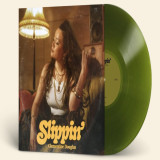
Von Sonny Foderas Top-10-Hit "Angel" bis zu bahnbrechenden Momenten mit Chase & Status, David Guetta, The Blessed Madonna und Dom Dolla – die Leidenschaft, Ausgeglichenheit und pure Emotion des Stimmtalents von Clementine Douglas ist unverkennbar. Die Britin ist eine ebenso starke Songwriterin und tritt nun mit eigenen Singles hervor, die als 7"-Trilogie auf limitiertem, signiertem Farbvinyl erscheinen. Sie weisen subtile Veränderungen auf, wenn darke Momente der Clubkultur, D&B und 2Step in ihren Pop-R&B-Sound einfliessen. Dennoch sind sie genauso hymnisch wie ihre grössten Momente und zeigen, wie Clementine mit süss-gefühlvollen Vocals und warmer Live-Instrumentierung der Dancemusik eine belebende menschliche Note verleiht.

- A1: Slaw 03 52
- A2: Dirtmouth (Feat. James Brandon Lewis) 04 42
- A3: Solanin (Feat. Brandee Younger) 03 54
- A4: Never In My Short Sweet Life (Feat. Mononeon) 03 50
- A5: Robert Pollard 01 54
- B1: Unified Dakotas (Feat. Jeff Parker) 05 04
- B2: Fast Asleep 04 34
- B3: (If You Don't Leave) The City Will Kill You (Feat. Daedelus) 05 11
- B4: Fatigue (Feat. Kurt Rosenwinkel & Telemakus) 03 20
- B5: Bad Infinity 04 44
10
Los Angeles-based experimental jazz collective High Pulp will release
their new album Days in the Desert in peak sweltering summer heat on
July 28
The titular desert is both literal and metaphorical: it's the Mojave Desert that the
band powers through on their many DIY tours around the country, and the band's
founder / drummer Bobby Granfelt perceives the desert as "a spiritual quest" as
well. Amid the trials of our present moment, you must look within, relying solely
on your own instincts to keep moving forward. "You're in the desert and it's a long,
lonesome process and a lot of times you have to check yourself to ask 'Is this
right? Is this good? Is it too out?'" he says.
High Pulp's Days in the Desert makes this vision come true, finding the West
Coast band fully emerging into their own sound. Rooted in the jazz tradition while
also smitten by indie- rock and electronic music, High Pulp was willing to grab
from all these sounds at once to pursue something truly their own. Their third fulllength album (following 2022's promising Anti- debut Pursuit of Ends), Days in the
Desert reveals the band realizing their strengths, deepening their own bonds, and
pushing all these skills into a thrilling new sonic vista all but unimaginable just a
few years before

10
auch erhältlich
Clear Vinyl[27,52 €]
Faye Blue Vinyl[27,52 €]
Cassette[14,50 €]
BLUE & WHITE BULLSEYE Vinyl[23,49 €]
Faye Webster hat heute ihr neues Album “Underdressed At The Symphony” für den 01. März 2024 bei Secretly Canadian angekündigt und teilt gleichzeitig ihre neue Single “Lego Ring (feat. Lil Yachty)”.
Eine Art Unbeschwertheit, allerdings mit melancholischem Rückgrat, ist die treibende Kraft hinter dem Song, auf dem Atlanta-Multikünstler Lil Yachty zu hören ist.
Im zugehörigen Musikvideo spielen Faye und Yachty ein Videospiel, bei dem Fans die Möglichkeit haben, über diesen Link mitzuspielen.
Faye Webster - “Lego Ring (feat. Lil Yachty)” (Official Video)
Die Songs von Faye Webster sind ein direkter Draht zum menschlichen Unbewussten, und "Underdressed at the Symphony" dokumentiert, was passiert, wenn man beginnt, aus den Trümmern der alten Routinen ein neues Selbst aufzubauen. Schon ihre zuvor veröffentlichten Songs "But Not Kiss" und "Lifetime" zeigen das selten erforschte Gebiet emotionaler Intimität, in dem Verlangen und Leidenschaft im Konflikt mit Trost, Verständnis und sogar platonischer Liebe stehen. Diese Themen finden sich in “Underdressed at the Symphony” wieder, zusammen mit hyper-spezifischen Symbolen, die ein Bild von Websters Leben zeichnen, wie z.B. "eBay Purchase History" oder die Objekte, die sie bei "Lego Ring"begehrt.
“Underdressed at the Symphony” wurde mit ihrer langjährigen Band in den Sonic Ranch Studios in Texas aufgenommen und schwelgt in Experimentierfreudigkeit, Verspieltheit und Abenteuerlust. Vocoder-Momente, Schnörkel eines Orchesters, gruselige Harmonien und Synthesizer kommen zum Vorschein, ohne die räumliche Qualität von Websters früherer Musik zu beeinträchtigen, sodass ihre Texte nach wie vor genügend Raum haben, mit zusätzlichen Bedeutungsebenen an die Oberfläche sprudeln. Matt „Pistol“ Stoessels Pedal Steel-Klänge sorgen für genau den richtigen Schimmer, während Nels Cline von Wilco seine unbestreitbar gefühlvollen Fingerfertigkeiten zu einer Reihe von Songs beisteuert. Das Zusammenkauern an der buchstäblichen Grenze zwischen den USA und Mexiko bot den Musiker*innen Raum zum Isolieren, Konzentrieren und Experimentieren. Alle Songs auf diesem Album sind Live-Aufnahmen, von denen einige bereits beim ersten oder zweiten Take aufgenommen wurden und Websters Talent zeigen, aus einem ganz bestimmten, scheinbar kleinen Moment eine universelle Erfahrung zu ziehen.
Miki Yui is a musician, artist, and composer, originally from Tokyo, who has been based in Düsseldorf since 1994. Her whose work has long explored multiple forms of media, while documenting liminal zones of perception. On her latest album, As If, Yui creates a subtly connected suite of electronic music, drawn from improvisations and randomised processes that she has engaged with modular synthesis. Deeply poetic in its expression, even at its most minimal, the six pieces on As If have a curious tenor – they are, each of them, intensely sensuous, almost haptic listening experiences, as though the laser focus that Yui displays towards her compositions allows her to engage them as almost physical presences in the world.
One of the keys that unlocks the intimate complexity-in-simplicity of As If was Yui’s encounters with the Amazonian rainforest in Manaus, Brazil in 2018. Finding that the sounds in the rainforest both shadowed and echoed the music she had been making for two decades, she embraced the possibilities of modular synthesis, the sounds of which she discovered “have astonishing similarities to the sounds I experienced in the rainforest.” There is, indeed, something natural about the way these sounds bloom in real time; in their dedicated focus to the subtle development and mutation of several discrete parameters of sound, they grow slowly, gradually, their rhizomic structures suggesting that we are always situated within the middle of sound.
Sometimes, the material here has a kind of febrile energy, as on the ticking, clacking electronics of “Generativ”, a track that seems to rotate in the air in front of the listener, the light reflecting off its multiple surfaces as we catch the intricacies of its micro-patterns. Elsewhere, we slide into a cooled but welcoming environment, like the late-night fire-fly horizon of “Song 4”; there’s also the humid, dripping tropical sunset that’s documented on “Summernight”. It’s a music that’s hard to locate external coordinates for, though there are, perhaps, some parallels with the work of Laurie Spiegel, Eliane Radigue’s Vice Versa, and Pauline Oliveros’s “Roots of the Moment”. But As If is an extraordinary collection of naturally developing, rich studies for slowly mutating, enveloping, elemental electronics.

13
Berlin’s Moses Yoofee Trio have confirmed details of their first new material since their 2023 mini-album, Ocean. ‘WHIP.wav’ will be released digitally on October 18, 2024, and represents the first taster for their debut full-length, MYT, set to be released by Nils Frahm’s LEITER on February 7, 2025. The German group recorded much of the album over ten days in April 2024 at Glaswald Studios, in the countryside outside Stuttgart, before returning to Berlin to polish the results and record two further tracks at LEITER’s Funkhaus studio. Available on vinyl and via all digital platforms, the album was produced by the trio with long-time collaborator and mixing engineer oh.no.ty. ‘WHIP.wav’, the original version of which was previously shared to social media to great response, is a perfect showcase for the band’s unique brand of sophisticated jazz, its laidback summer grooves lit up by Moses’ fluid piano lines, while drummer Noah Fürbringer’s deft rhythms lock in with Roman Klobe-Barangă‘s understated bassline. At just 100 seconds long, it’s also as succinct and straightforward as MYT’s title – and indeed many of its tracks – which reveals a lot about the Moses Yoofee Trio. The new album’s tracks display a remarkable determination to distil their work to its essence, allowing their prodigious talents and graceful versatility to flourish in uncluttered surroundings. Their goals, they state concisely, are “emotions, moments and bangers”, and careful attention was paid to arrangements to ensure nothing superfluous made the cut. Before coming together as a band, all three members were already deeply involved in the music scene, touring, recording, and producing for a wide range of artists and bands. They connected in 2020 when Moses met Roman at Berlin’s Jazz Institute, and it was the latter who suggested they jam with his friend Noah, who was living in southern Germany at the time but frequently visited Berlin. Amid the extended lockdowns of the Covid-19 pandemic, the trio embraced the chance to fully immerse themselves in the creative process. Since then, Moses Yoofee Trio have cultivated an extraordinary reputation for their shows, and this year they won the German Jazz Prize’s prestigious Live Act of The Year award. Recent highlights include a 2,500-capacity Elbjazz Festival booking beside Hamburg’s harbour, a riotous appearance at London’s Jazz Festival, and an intimate gig before 200 people at the German capital’s now redundant Tempelhof Airport on the rooftop of an air traffic control tower. Despite their own work as a trio, all three musicians remain busy elsewhere, with Moses, like Roman, often working with chart-topping Berlin-based Peter Fox, a frontman for reggae/dancehall/hip hop crossover act SEEED, and accompanying him on his extensive solo tours. Noah, meanwhile, plays with another renowned artist, German-American rapper Casper, as well as Sweden’s acclaimed Petter Eldh and German comedian / actor / musician Teddy Teclebrhan.

10
From the off, Sharon Van Etten & The Attachment Theory is sonically different from Van Etten's previous work. Writing and recording in total collaboration with her band for the first time, Van Etten finds the freedom that comes by letting go. The result of that liberation is an exhilarating new dimension of sound and songwriting. The themes are timeless, classic Sharon - life and living, love and being loved - but the sounds are new, wholly realized and sharp as glass. Reflecting on this new artistic frame of mind, Van Etten muses, "Sometimes it's exciting, sometimes it's scary, sometimes you feel stuck. It's like every day feels a little different - just being at peace with whatever you're feeling and whoever you are and how you relate to people in that moment. If I can just keep a sense of openness while knowing that my feelings change every day, that is all I can do right now. That and try to be the best person I can be while letting other people be who they are and not taking it personally and just being. I'm not there, but I'm trying to be there every day." Sharon Van Etten & The Attachment Theory is a quantum leap in that direction. - Lol Tolhurst

10
Awareness Edition: Amber Galaxy Vinyl. From the off, Sharon Van Etten & The Attachment Theory is sonically different from Van Etten's previous work. Writing and recording in total collaboration with her band for the first time, Van Etten finds the freedom that comes by letting go. The result of that liberation is an exhilarating new dimension of sound and songwriting. The themes are timeless, classic Sharon - life and living, love and being loved - but the sounds are new, wholly realized and sharp as glass. Reflecting on this new artistic frame of mind, Van Etten muses, "Sometimes it's exciting, sometimes it's scary, sometimes you feel stuck. It's like every day feels a little different - just being at peace with whatever you're feeling and whoever you are and how you relate to people in that moment. If I can just keep a sense of openness while knowing that my feelings change every day, that is all I can do right now. That and try to be the best person I can be while letting other people be who they are and not taking it personally and just being. I'm not there, but I'm trying to be there every day." Sharon Van Etten & The Attachment Theory is a quantum leap in that direction. - Lol Tolhurst

10
Awareness Edition: Amber Galaxy Vinyl + Laptop Sticker. From the off, Sharon Van Etten & The Attachment Theory is sonically different from Van Etten's previous work. Writing and recording in total collaboration with her band for the first time, Van Etten finds the freedom that comes by letting go. The result of that liberation is an exhilarating new dimension of sound and songwriting. The themes are timeless, classic Sharon - life and living, love and being loved - but the sounds are new, wholly realized and sharp as glass. Reflecting on this new artistic frame of mind, Van Etten muses, "Sometimes it's exciting, sometimes it's scary, sometimes you feel stuck. It's like every day feels a little different - just being at peace with whatever you're feeling and whoever you are and how you relate to people in that moment. If I can just keep a sense of openness while knowing that my feelings change every day, that is all I can do right now. That and try to be the best person I can be while letting other people be who they are and not taking it personally and just being. I'm not there, but I'm trying to be there every day." Sharon Van Etten & The Attachment Theory is a quantum leap in that direction. - Lol Tolhurst

- Talking Haunted
- Ordinary Voices
- Wish Defense
- A Room
- Desire Path
- Sometimes Only
- You Future
auch erhältlich
BLACK & WHITE SPLIT VINYL[20,13 €]
Cassette[13,99 €]
CLEAR & BLACK SPLATTER VINYL[20,13 €]
The duality of "man" is a subject that has been explored in art for centuries, from writings of the Bible to Descartes, all the way up to filmmakers like Lynch, Cronenberg, & Carpenter. Who is your "true self" & what do they want? With their sixth studio album "Wish Defense" (again for longtime home Trouble In Mind Records), Chicago trio FACS take a good, long look in the mirror to face themselves. The return of original member Jonathan Van Herik - who stepped away from the group just before their debut album "Negative Houses" was released in 2018 - replacing longtime bassist Alianna Kalaba brings renewed vigor & a marked angularity from the band's more recent output. The songs still hit hard, but the approach is sideways - the roles have changed since Van Herik's original tenure & his previous time with Case & powerhouse drummer Noah Leger in Disappears; now on bass, Van Herik was originally the group's guitar player and features on the debut, while current guitarist Brian Case played bass. This role reversal has helped the band's dynamic, offering up a different musical perspective than before, now revisiting the trio's long-going collaboration with some distance and time. Case notes that the lyrics on "Wish Defense" revolve around doppelgängers or "doubles", tackling the idea of facing yourself and observing your ideas and motivations. Look no further than the album's title track; "Enter the mirror / Double walker / An intimate / Wish defense / Is it real? / You beside me / The detail / Terrifying / Abject self / Your grief / A public / Performance". Case lays out the entire album's theme in one stanza; Are your actions & emotions your true self? Or are they a performative aspect of that "other" person you put forward? Case says that ultimately the sentiment is "_don't let the bastards get you down, there's something beyond this moment, like hope - but not in the naive belief that ultimately people are good". "Wish Defense"s artwork is also a subtle reference to "Negative Houses"' art, returning to that album's black & white starkness & minimalism. The album's checkerboards everywhere are offset reflections of themselves, mirrored with the album's lyrics printed front & center on the cover. Everything is out in the open. A final note; "Wish Defense" is the last album engineered by Steve Albini. Two days were recorded at Electrical Audio in early May of 2024 before Steve's untimely passing, with renowned engineer & friend Sanford Parker stepping in to finish the session 24 hours later, tracking the last bits of vocals and overdubs. Longtime collaborator John Congleton mixed the album as Albini would have; in Electrical Audio's A room, off the tape, using Albini's notes about the session.

7
The duality of "man" is a subject that has been explored in art for centuries, from writings of the Bible to Descartes, all the way up to filmmakers like Lynch, Cronenberg, & Carpenter. Who is your "true self" & what do they want? With their sixth studio album "Wish Defense" (again for longtime home Trouble In Mind Records), Chicago trio FACS take a good, long look in the mirror to face themselves. The return of original member Jonathan Van Herik - who stepped away from the group just before their debut album "Negative Houses" was released in 2018 - replacing longtime bassist Alianna Kalaba brings renewed vigor & a marked angularity from the band's more recent output. The songs still hit hard, but the approach is sideways - the roles have changed since Van Herik's original tenure & his previous time with Case & powerhouse drummer Noah Leger in Disappears; now on bass, Van Herik was originally the group's guitar player and features on the debut, while current guitarist Brian Case played bass. This role reversal has helped the band's dynamic, offering up a different musical perspective than before, now revisiting the trio's long-going collaboration with some distance and time. Case notes that the lyrics on "Wish Defense" revolve around doppelgängers or "doubles", tackling the idea of facing yourself and observing your ideas and motivations. Look no further than the album's title track; "Enter the mirror / Double walker / An intimate / Wish defense / Is it real? / You beside me / The detail / Terrifying / Abject self / Your grief / A public / Performance". Case lays out the entire album's theme in one stanza; Are your actions & emotions your true self? Or are they a performative aspect of that "other" person you put forward? Case says that ultimately the sentiment is "_don't let the bastards get you down, there's something beyond this moment, like hope - but not in the naive belief that ultimately people are good". "Wish Defense"s artwork is also a subtle reference to "Negative Houses"' art, returning to that album's black & white starkness & minimalism. The album's checkerboards everywhere are offset reflections of themselves, mirrored with the album's lyrics printed front & center on the cover. Everything is out in the open. A final note; "Wish Defense" is the last album engineered by Steve Albini. Two days were recorded at Electrical Audio in early May of 2024 before Steve's untimely passing, with renowned engineer & friend Sanford Parker stepping in to finish the session 24 hours later, tracking the last bits of vocals and overdubs. Longtime collaborator John Congleton mixed the album as Albini would have; in Electrical Audio's A room, off the tape, using Albini's notes about the session.

7
auch erhältlich
Black Vinyl[19,29 €]
BLACK & WHITE SPLIT VINYL[20,13 €]
CLEAR & BLACK SPLATTER VINYL[20,13 €]
The duality of "man" is a subject that has been explored in art for centuries, from writings of the Bible to Descartes, all the way up to filmmakers like Lynch, Cronenberg, & Carpenter. Who is your "true self" & what do they want? With their sixth studio album "Wish Defense" (again for longtime home Trouble In Mind Records), Chicago trio FACS take a good, long look in the mirror to face themselves. The return of original member Jonathan Van Herik - who stepped away from the group just before their debut album "Negative Houses" was released in 2018 - replacing longtime bassist Alianna Kalaba brings renewed vigor & a marked angularity from the band's more recent output. The songs still hit hard, but the approach is sideways - the roles have changed since Van Herik's original tenure & his previous time with Case & powerhouse drummer Noah Leger in Disappears; now on bass, Van Herik was originally the group's guitar player and features on the debut, while current guitarist Brian Case played bass. This role reversal has helped the band's dynamic, offering up a different musical perspective than before, now revisiting the trio's long-going collaboration with some distance and time. Case notes that the lyrics on "Wish Defense" revolve around doppelgängers or "doubles", tackling the idea of facing yourself and observing your ideas and motivations. Look no further than the album's title track; "Enter the mirror / Double walker / An intimate / Wish defense / Is it real? / You beside me / The detail / Terrifying / Abject self / Your grief / A public / Performance". Case lays out the entire album's theme in one stanza; Are your actions & emotions your true self? Or are they a performative aspect of that "other" person you put forward? Case says that ultimately the sentiment is "_don't let the bastards get you down, there's something beyond this moment, like hope - but not in the naive belief that ultimately people are good". "Wish Defense"s artwork is also a subtle reference to "Negative Houses"' art, returning to that album's black & white starkness & minimalism. The album's checkerboards everywhere are offset reflections of themselves, mirrored with the album's lyrics printed front & center on the cover. Everything is out in the open. A final note; "Wish Defense" is the last album engineered by Steve Albini. Two days were recorded at Electrical Audio in early May of 2024 before Steve's untimely passing, with renowned engineer & friend Sanford Parker stepping in to finish the session 24 hours later, tracking the last bits of vocals and overdubs. Longtime collaborator John Congleton mixed the album as Albini would have; in Electrical Audio's A room, off the tape, using Albini's notes about the session.

- A1: Intro (Feel The Positive Flow)
- A2: Stand Up
- A3: Work It Out
- A4: Joy (With Ann Nesby)
- A5: Praise Break
- A6: Life (Feat. Ron Carroll)
- A7: Without Ya
- B1: Glory
- B2: High Above (Feat. Lady Blackbird)
- B3: Exceptional (Interlude)
- B4: House Is The Religion
- B5: Say You Wanna Be
- B6: Divine Stuff
- B7: Save My Soul (Feat. Amanzi)
- B8: Your Shine (With Fly Disco Butter)
Bakermat’s upcoming album, Grace Note, is a heartfelt tribute to the powerful connection between House music and Gospel. Celebrating the joy and spiritual essence of these genres, the album invites listeners to rediscover the magic of the dancefloor, where Bakermat's music has fostered moments of joy and connection for over a decade.

UK-based producers b.mod and Essentia debut on Rhythm Werk's Collaborative Series with a four-track EP blending powerful four-to-the-floor rhythms and intricate broken beats. Known for their releases on labels such as Arts, Soma, Liberta Records, and Suara, the duo bring a precise, high-impact sound engineered for dance floor energy and dynamic set transitions.
Each track is meticulously crafted, offering versatility for DJs--whether building intensity, maintaining flow, or creating reflective moments. This 12-inch record is a must-have for those seeking forward-thinking club tools.

- A1: Drink Ring Jesus
- A2: Time To Pay
- A3: Carpenter Skills
- A4: You Give Us
- A5: Devil’s Work Is Never Done
- B1: Cryin’ Elvis
- B2: Dante’s Blues No.7
- B3: His Time
- B4: Next Stop Redemption
- B5: Long Way To Go
Drink Ring Jesus, the second album from Nashville based singer-songwriter Simmons was originally released in 2006 during a period of vast political and social change in America. Post 9/11 the age-old battle between good and evil, God versus Satan if you want to get personal, once again eased into view agitating hearts and minds. Like all songwriters with just their art to carve themselves a foothold in a world becoming less identifiable, Simmons produced an album that is both intimate and deeply inquisitive yet, like all the great folk records, its universal themes of hope, redemption, pain and despair will resonate with all who hear it.
Nearly twenty years on from its initial release Drink Ring Jesus feels as relevant now as it did then. From the opening lines of the title track Simmons is clearly caught in a time of intense personal reflection. It’s not an unusual pathway to tread for songwriters and artists alike, indeed many have fell by its wayside over the years, yet here our narrator is both looking for a way through and calling on something deeper than just instinct for guidance. We are right on the frontline, characters battling on the very precipice of sanctuary or sacrifice on the likes Time To Pay and Devil’s Work Is Never Done, before literally scavenging a ticket to Hope Station on the evocative Next Stop Redemption. There isn’t a moment where you feel Simmons is taking the easy way out or shying from titanic confrontation. Anything but. It’s in the no-mans land where these songs impact the most, at the very alchemy where despair turns to optimism or defeat.
