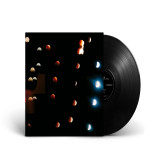
Die gefeierte Can Live Serie wird mit einem Konzert in Paris mit Damo Suzuki fortgesetzt! Die zweite Phase der gefeierten Can Live-Serie, Can Live in Paris 1973, wird am 23. Februar 2024 auf Vinyl, CD und digital über Mute und Future Days (das neue EU-Label von Spoon Records) veröffentlicht.
Live in Paris 1973 zeigt Can in magischer Form bei einem Auftritt, der am 12. Mai 1973 im Pariser L'Olympia aufgezeichnet wurde und bei dem erstmals Damo Suzuki am Gesang zu hören ist. Von 1970-73 wurde die Stammbesetzung von Irmin Schmidt, Jaki Liebezeit, Michael Karoli und Holger Czukay durch den japanischen Improvisator und Sänger Suzuki ergänzt. Sie lernten sich durch eine zufällige Begegnung kennen, als Suzuki als Straßenmusiker in München unterwegs war; einige Monate nach dem hier veröffentlichtem Auftritt verließ Damo die Band. Dieses neue Album in der Reihe ermöglicht es uns, die Band in einer besonders wichtigen Phase ihrer Karriere zu erleben, da zwei ihrer am meisten gefeierten Alben - Tago Mago und Ege Bamyasi, wobei letzteres in den Pariser Auftritt einfließt - erst kürzlich veröffentlicht wurden. Die Aufnahmen wurden von Gründungsmitglied Irmin Schmidt und Produzent/Sound Engineer René Tinner, die alle Alben dieser Reihe zusammengestellt und bearbeitet haben, aus Aufnahmen in den Archiven von Spoon Records und von hilfsbereiten Fans eingesandten Aufnahmen zusammengesetzt und für das 21. Jahrhundert aufgearbeitet. CAN, die in den späten 60er Jahren gegründet wurden und sich ein gutes Jahrzehnt später auflösten, haben sich mit ihrer beispiellosen und kühnen Verbindung von hypnotischen Grooves und avantgardistischen Instrumentalstrukturen zu einer der wichtigsten und innovativsten Bands aller Zeiten entwickelt, und diese Alben zeigen die Gruppe aus einer ganz anderen Perspektive. Man hört vielleicht vertraute Themen, Riffs und Motive, die auftauchen und sich durch diese Jams wälzen, aber es sind oft nur flüchtig wiedererkannte Gesichter in einer wirbelnden Menge. An anderen Stellen hört man Musik, die es nie in den offiziellen Albumkanon geschafft hat. Bei diesen Aufnahmen gehen Can in noch extremere Bereiche als bei ihren Studioarbeiten: von sanftem, atmosphärischem Drift-Rock bis hin zu Momenten, denen die Band den Spitznamen "Godzillas" gab. Und selbst wenn sie sich von Minute zu Minute dem Rhythmus anpassen und hinterher jagen, kann man die außergewöhnliche musikalische Telepathie hören, die ihre Mitglieder miteinander teilen.
Die neue Veröffentlichung folgt auf Can Live in Brighton 1975 "Pure dynamite... keep them coming" - MOJO; Can Live in Stuttgart 1975, UNCUT's Reissue of the Year, #2 in MOJO's Reissues of the Year, #7 in THE WIRE’s Archive Reissues of the Year, und Can Live in Cuxhaven 1976, das ebenfalls in den “Reissues of the Year” stark vertreten war.
Can Live in Paris 1973 wird am 23. Februar 2024 auf Doppel-Vinyl, 2 x CD und digital über Mute / Spoon Records veröffentlicht.
Поиск:mom
Все
Darning Woman is an intentional, beautiful, sometimes confrontational album that shreds expectations of DIY, bedroom music, and feminine themes. There's a lushness and maternal instinct at play, as Coope connects the dots between physicality, ephemera, and the ultrafeminine. "I don't really like to deal that much with themes of personal hardships, or heartache and love," says Anastasia Coope. "Ultimately, I work most honestly with the language of what is happening in a moment and the passage of time around it. That, coupled with my reaction to entering the artistic landscape, and my thoughts about what does and doesn't get representation, comprises most of this album." Darning Woman explores, among other things, the meditative aspect of sewing, patching and embellishment, care and repair, collection not as modern, craven consumption but as a counterpoint to materialism. This sort of collection - the good kind, the gathering of things to make a home - can be, in Coope's words, "A very baby way to critique capitalism. Birds make nests, right? It can be a new life for a thing that was made. What you surround yourself with matters." To that end, Anastasia Coope is also the founder and leader of the Bonzo collective and show series, an exciting new home for the type of expansive, profoundly creative scene that New York has been missing for some time. And while Bonzo may well be the ascent of a new community, Darning Woman is the story of Anastasia Coope, herself. It is the sound of Coope entering the world as an artist, acknowledging the tangle of what changes - the gaze of the world, Coope's art in reaction and community to art in general - and what does not: her ideas and her own self.
Winston Hytwr is a co-release presented by K and Perennial. Born in Columbus, Ohio in March 1993, Winston Hightower is a prolific home recording artist with an expansive discography that crawls across space and genre. A staple in the Midwestern punk/DIY scene, his first work under the eponymous moniker was a self-released tape in January 2015. Since then, he has put out over 100 songs on tape, online and on video. The music defies easy categorization, and instead breezes through a landscape of synths that effortlessly blend pop, rock, rap and jazz. In doing so, Hightower continues to build a cohesive, ever-morphing experiment in pushing the boundaries of underground guitar music, all with his signature wit and charm. This body of work is almost entirely written and recorded alone in his room, causing many to refer to him as `the Black R Stevie Moore,' a fitting epithet as his influences likewise include modern "lo-fi" progenitors such as Guided by Voices and Vivian Girls. Hightower has released much of his own work and more on his tape label, the FAH-Q Catalog, which boasts over 12 releases He has also collaborated with numerous other Ohio legends such as members of Times New Viking, Slant 6, and Ron House. Both mysterious and effervescent, Winston shape shifts into roles that have also included pro skater (UNITY, Adidas) and touring hardcore guitarist/bassist (most recently with the groups Minority Threat and Twompsax). With such an extensive pedigree, and having toured ceaselessly since he was a teenager, it's shocking that Winston Hightower is largely unknown outside of the Midwest. K records is thus thrilled to be putting out his first ever record, "Winston Hytwr" KLP292/PRNL50 which will cull songs from his previous and impossible to find releases. Remixed by Capt. Tripps Ballsington and Remastered by Amy Dragon. This release continues the rich tradition of DIY bands crafting instant pop hits entirely on their own terms, which has long been the hallmark of the International Pop Underground. 1000 vinyl copies.
A Human Home“ wurde während des Einschlusses in Lucys Zimmer in Berlin geschrieben.
Es ist eine intime und ausdrucksstarke Sammlung von musikalischen Skizzen, die erforschen, was es bedeutet, ein Zuhause zu finden und sich zu Hause zu fühlen.
Mit einer Reihe von zufälligen und absichtlichen Kollaborationen aus der Ferne dokumentiert es einen spezifischen, persönlichen und universell geteilten Moment in der Zeit.
Die Entstehung des Albums war ein bewusster Versuch, den Einfluss von anderen auf ihren kreativen und persönlichen Prozess zu fördern.
Sie erkennt an, wie viel Heimat nicht nur an einem Ort liegt, sondern auch an den Menschen, die wir lieben.
Das Artwork des Albums wurde von Julia Schimautz von Don't Try Anything New gestaltet, die Fotografie stammt von Francis Broek und das Styling von Lenny-Dee Doucha.
- A1: Big Swimmer (Vocal Harmonies By Sharon Van Etten)
- A2: New York, Let's Do Nothing
- A3: The Mattress
- A4: Milk Boy (I Love You)
- A5: Suddenly, Your Hand
- B6: Somewhere Near El Paso
- B7: Lily Pad
- B8: Davey Says
- B9: Scully
- B10: This Wasn't Intentional (Vocal Harmonies By Sharon Van Etten)
- B11: John Prine On The Radio
Black Vinyl[23,95 €]
Neues Album erscheint am 31. Mai 2024 bei City Slang inklusive der Single 'Big Swimmer' featuring Gesangsharmonien von Sharon Van Etten!
King Hannah entwirft einen musikalischen Wandteppich, der nahtlos zwischen den ruhigen Tiefen des meditativen Pops und den weitläufigen, klangvollen Landschaften voller Dunkelheit, Witz und schrägem Humor pendelt. Merricks Gesang, ein rauchiges Vergnügen, verleiht ihren Worten tiefes Gewicht und Kraft, ergänzt durch die bluesigen Leinwände, die Whittle meisterhaft unter ihnen malt. Ihr Sound wechselt mühelos von Momenten post-rockiger Weite zu dem Gefühl, dass Springsteen auf eine düstere Seitenstraße abseits seines Highways zur Freiheit gerät. In jüngster Zeit hat das Duo die Bühnen neben geschätzten Künstlern wie Kurt Vile, Thurston Moore, Kevin Morby und DIIV geziert und das Publikum auf Festivals in ganz Europa und Nordamerika, darunter End of the Road, Green Man, Primavera Sound und Fusion, in seinen Bann gezogen. King Hannah wurde unter anderem von Stereogum als "Band to Watch", von The Guardian als "Ones to Watch" und von Paste als "Best of What's Next" gefeiert und in der Rubrik "NEU" des DIY Magazins sowie als "Rising Artists" von SPIN vorgestellt.
witching seaside ambience for a sound shaped by inner-city living, Atelier’s second full-length studio album, Lights Towards The Exit, channels the mood of a sleepless cityscape.
Lights Towards The Exit is Atelier’s second full-length studio album. After the release of Varsam Court at the end of 2019 on Lossless, run by mentors and friends Mathias Schober and Thomas Herb, the duo experimented with different ideas in the studio, and at the start of 2020 a common thread began to appear between a few of the tracks which laid the foundation for the sound of their second album.
Both Alexander and Jas moved to Berlin in the period before the release of Varsam Court from their hometown of Cape Town, South Africa, where their first album was written and recorded. Moving provided some challenges, particularly with what was the most essential equipment to bring from their previous studio set-up, but those limitations proved to be useful in incorporating new instruments and techniques to the recording process.
Lights Towards The Exit was written and recorded in different spaces in Berlin – from bedrooms in apartment blocks to three different studios across the city. The different locations all had a specific ambience – such as 4th- and 5th-floor bedrooms with busy street views; a studio with no windows in a typical old Berlin backyard complex forever under threat of being sold and gentrified; and a bigger studio with windows on the opposite side of the corridor overlooking the backyard of a mechanic workshop. The final details and edits were completed in Atelier’s current studio, in a contrasting area surrounded by office blocks, plazas, 9-5ers and, most importantly, their friends and colleagues.
Swapping the mountains, sea and seclusion for tall buildings, backyards and a new community, Lights Towards The Exit channels the sensation of being surrounded by people, but still feeling like you're on your own. The album was written through three years of cold winters, sweaty summers and a period where the world stood still during the pandemic. Frustrated with the cease of momentum, but still optimistic, Atelier disappeared from public view, abandoning social media to focus on recording, songwriting and experimentation.
It was a difficult time: the duo longed to perform and continue producing music, and the imposed limitations sometimes felt like an impossible obstacle. Ultimately, though, this would provide inexpected inspiration and influence the sound and direction of the new album.
The sound of Lights Towards The Exit is not a departure from their first album, but a progression: influenced by the new surroundings in the duo’s adoptive city, Atelier’s second album is an ode to first-time experiences, new languages, challenges, club culture and the shift from youth to maturity, as well as a balm to those stuck somewhere in between.
The overall sound is a lift not in tempo, but in energy, matching the openness needed to make a new start in a new place.
Volume 3 of a set of collaborations between the prolific Argentine polymaths Reynols and the inescapable Acid Mothers Temple. Recorded in Buenos Aries on AMT’s 2017 South American Tour, the music has identifiable sonic elements from both groups but ends up sounding like neither, with a surprising weightlessness that keeps things jammy and psychedelic until the final track’s blustering rock. Taking up most of side 1, “Kicking Air Bricks” has a loose Gong/’70s Euro-classic vibe, with Satoshima Nani getting to swing on the drums in a way that isn’t always part of AMT’s steamroller, while the rest of the gang layers in abstract piano, percussion, glissando guitar, etc. “Multiverse Turtle Reflex” closes the side with a thick drone coda. Side two starts with Miguel Tomasin’s gentle vocal and organ accompaniment on “Smelling Oneiric Asado” before the group gradually gathers momentum with Wolf’s thick bass anchoring layers of clean and loose guitar interplay. “Lemurian Tsunami Inside A Hat” is a thriteen-minute heavy rock epic, with the Reynols’ guitars going head to head with Makota Kawabata’s easily recognized interjections, ramping up into a riffy crescendo.
Colored[29,37 €]
Atmosphere and gravity lean into each other. They are simultaneously expansive, and anchoring. They hold us, and lend a sense of perspective. They provide a stability and a knowingness which is essential in the absolute, and yet we can't help but find ourselves gazing upward, outward and reaching towards that which sits outside those things and ways we know. Selene is a record about that this lingering desire for that which sits beyond. It is work that seeks new perspectives snatched from familiar vistas, and it meditates on that sense of anchor and perspective. The work is also a speculative hymn to the visions of the celestial zones that spill ever outward. These visions, once merely what we could perceive with the naked eye are now so much more. Our minds eye is fed in equal parts by radio telecopy, filmic dreams and fiction renders of a place most of us will never know first-hand. This recording ties into a linage that reaches back, while stretching forward. It is just one story of so many, told across places, across cultures, across generations. It sits in the in-between of before and after, and in that moment invites us to situate ourselves and lean into it.
THE 1968 ALBUM ON WHICH JOHNNY CASH BECAME A LEGEND: AT FOLSOM PRISON AMONG THE MOST IMPORTANT AND POTENT STATEMENTS OF THE 20TH CENTURY
Johnny Cash already knew his way around Folsom Prison when he and his band stepped inside the institution’s forbidding walls on the morning of January 13, 1968 to record At Folsom Prison. He’d played there two years prior. But this time was different.
Cash took the stage that day for two shows amid a darkening sociopolitical atmosphere and a raging war in Vietnam, as well as the knowledge his career and health hung on by a thread. The Arkansas native shared many of the long odds and abject failures of the inmates for which he performed. The songs he chose, and the conviction with which he delivered them, say as much. The point at which Cash transformed from a country star into a legendary artist, and a bold statement about the American prison state and its commitment to rehabilitation, the triple-platinum At Folsom Prison remains one the most important, potent, and fabled records of the 20th century.
You can hear it echo off the walls of the room; pulse through the itchiness of the Tennessee Three’s acoustic-based boom-chick rhythms; crackle in the announcements conveyed over the intercom; ring in the comedy of the off-cuff remarks and pair of novelty tunes; sense it in palpable energy that wells up within Cash and his audience. And you can experience it like never before via Cash’s knockout singing. The bedrock foundation of all his music, the singer’s baritone resonates with profound degrees of depth, pliability, and passion that underscore how much this appearance meant to him — and the extent he was living the narratives.
Indeed, every song on At Folsom Prison serves a purpose and speaks to the conditions — mental, emotional, physical, geographical, legal, social — the inmates confronted on a daily basis. Beginning with the explicit messages of the opening “Folsom Prison Blues,” Cash makes it clear he understands and shares many of their plights. Not for nothing did the myth of Cash having done hard time persist for decades once this record hit the streets. That’s how real it is, and how dedicated Cash remains to conveying every note with the same truth he invests in the impromptu comments he makes between and amid songs.
Listen to the sorrow, regret, pity, and loneliness of Merle Travis’ “Dark as the Dungeon,” Cash pulling syllables til they threaten to break and inhabiting the mood of bleak phrases such as “pleasures are few” and “the sun never shines.” Witness the isolation, dejection, and sadness punctuating the walking-blues “I Still Miss Someone,” matched in gravity by a solemn reading of “The Long Black Veil” — a traditional dirge that involves murder, cheating, and deception. Cash cuts even deeper on a heartbreaking solo rendition of “Send a Picture of Mother” and plainspoken version of Harlan Howard’s “The Wall,” detailing a suicide disguised as jailbreak through cliched-jaw deliveries that softly curse the impossible situation.
In chronicling temptations, mistakes, mortality, punishment, and life “inside” — for better or worse, the stories of the disenfranchised, forgotten, written-off, and unrepentant — At Folsom Prison also has a blast playing the outlaw role. Cash captures wild-eyed craziness and out-of-control mayhem on a revved-up take of “Cocaine Blues,” taking extra satisfaction in its dastardly tales by way of voice that shifts into character for the sheriff and judge. The gallows humor and racing drama of “25 Minutes to Go”; quicksilver accents and resigned acceptance of “I Got Stripes”; train-whistle blare and twangy locomotion of “Folsom Prison Blues” — all fight the law only to see the law win.
Cash remains deeply committed at every moment, and inseparably connected with the tortured souls removed from the goings-on of the outside world. No wonder all but two songs here stem from the day’s first performance that saw Cash, Luther Perkins, Marshall Grant, and company give everything. As does the Man in Black’s soon-to-be-wife, June Carter. The couple’s fiery duet on “Jackson” scorches; their combination of surrender and fortitude “Give My Love to Rose” puts us in the dying protagonist’s shoes.
And with the closing “Greystone Chapel,” famously penned by convict Glen Sherley, who watched it all happen under the watchful eye of guards, Cash separates the corporeal from the spiritual, relaying lessons about salvation and survival. Heady themes to which he’d return for the remainder of his illustrious career.
Another Michael's next chapter begins with Pick Me Up, Turn Me Upside Down, their new album due out this spring on Run For Cover Records. Following last year's sibling album Wishes to Fulfill, Pick Me Up is a more expansive output, patiently unfolding to reveal an exploratory side that brings new hues into the band's vibrant sound. Helmed by lead singer/songwriter Michael Doherty and producer/bassist Nick Sebastiano-along with signature contributions of multi-instrumentalist/vocalist Alenni Davis, drummer Noah Dardaris, and longtime engineer/co-producer/confidante Scoops Dardaris-Pick Me Up, Turn Me Upside Down came to life over three years of intermittent writing and recording sessions that proved unexpectedly fruitful. The band decamped at Headroom Studios in Philadelphia, PA, as well as the same Ferndale, NY house where they made their debut LP, 2021's New Music and Big Pop. The songs on Pick Me Up, Turn Me Upside Down often take the knack for melody that defined Wishes To Fulfill and apply it to left turns like the hypnotic quasi-krautrock of "I've Come Around To That," the sparse balladry of the title track, or the pulsating synth explorations of "The Diner's Spoon." The album's world is weirder and more improvisational, like in the twisting ends of "Hub of Dreams" or the spontaneous performances of "Like I Won A Car"-but Doherty's warm singing and conversational lyricism always keep things grounded. On Pick Me Up, Turn Me Upside Down, the band didn't set out to capture the all encompassing, existential value of music, but they did contribute to it-offering more songs to the world, and with them, chances to create one of those moments.
Eine Platte zu machen ist beides: Musik, die als Momentaufnahme festgehalten wird, und gleichzeitig eine Dokumentation des Zeitraums, in dem die Lieder entstanden sind. Wenn man dieser Dokumentation und dem Zeitrahmen einen Namen geben möchte (wie einem Albumtitel), stellt sich die Frage: Was ist seit der letzten Aufnahme passiert - auf persönlicher, sozialer und vielen anderen Ebenen? Was hat sich verändert? Oder ging es einfach nur um "mehr" vom Gleichen: in immer kürzerer Zeit zig Dinge parallel erledigen, optimieren, wiederholen? Entwickeln sich diese Dinge in die Richtungen, in die sie sich entwickeln sollten? Schreitet der Fortschritt überhaupt voran? Oder geht es einfach nur darum, das zu tun, was wir schon vorher getan haben - nur schneller, effizienter? Der Ausdruck "L'inertie polaire" (fast 35 Jahre alt) erklärt nicht alles, was in der Welt vor sich geht, aber eine, ziemlich unangenehme, Menge_ 3 Jahre nach Extract.Transform.Debase veröffentlichen The Antikaroshi ihr 6. Album, das inhaltlich direkt an den Vorgänger anknüpft. Das Trio setzt genau dort an, wo es aufgehört hat: Lieder, die sich Zeit nehmen, die atmen um dann im nächsten Moment hektisch zu lärmen! Die Lautstärke ist immer ein Mittel zum Zweck und das Spiel mit ihr ein Markenzeichen von The Antikaroshi. Während Drums und Bass die Grundlage bilden, aber trotzdem immer wieder bekannte Muster durchbrechen, ist die Gitarre hypnotisch und forschend. Die Vocals wechseln zwischen rezitativem und melodiösem Ausdruck und geben der Musik genügend Raum. So bilden The Antikaroshi die Welt ab, die sie umgibt: Hektik und Stillstand schließen einander nicht aus, sondern sind kulturelle Pole zwischen denen sich Gesellschaft entfaltet. Und so wird ihre Musik politisch: Während eine Handvoll superreicher Menschen bereits Abschied von diesem Planeten nimmt (Lost In Compassion), läuft die Medienmaschine geölt wie ein Uhrwerk und hat gelernt, schlechte Nachrichten als gute zu verkaufen (Shiny White Teeth). Kriege werden zu Friedensmissionen (Authority) und das Ergebnis rechtfertigt allzu oft die Mittel (Gravity), wenn es darum geht, der eigenen Schwerkraft zu trotzen. Sogar Seen stehen inzwischen zum Verkauf (Thousand Lakes) und alle verfügbaren Mittel werden genutzt (Sticky Hands). Die Menschen schwanken zwischen gegensätzlichen Sichtweisen, handeln gegen ihren Verstand und viel zu oft auch gegen ihr Herz (Doxa). Was lässt sich dem entgegensetzen? Solidarität und metaphorisch die Wölfe zu vertreiben (Homohominilupus). Und natürlich der kollektive Protest (Tang Ping).
The Telescopes Radio Sessions collects together the essence of three live session recordings in 3 different countries over a three year period between 2016-2019. This is the third in a series of radio session releases from Tapete Records that have so far included The Monochrome Set and Comet Gain. More session releases are being lined up for the rest of the year and beyond - enjoy the sonics and stay tuned. Over the years I have read a lot on people’s impressions of The Telescopes. Some folk think it’s a collective, others imagine it used to be a band and feel nostalgia towards what they consider to be the original line-up (even though many had come before, during and since) and some people refer to it as currently a solo career. In a way this is all true and none of it is. When faced with these kind of questions, along with questions about the style of music that The Telescopes make I often say The Telescopes house has many rooms, which explains things perfectly for me but for people on the outside looking in it only serves to increase their confusion. For me, confusion isn’t such a bad thing. Everything is born into confusion, the sense we try and make of that chaos is interesting and excites me. The universe often disorientates, it sends me a jumble of thoughts and impressions coupled with a feeling of something I need to express… if I could only decipher the encryption. This is how The Telescopes music comes to be and it is also how The Telescopes came to me. I regard The Telescopes as an entity of it’s own that introduced itself in my darkest hour and I was chosen as its vessel. From the second it arrived I was obsessed to the point where there was nothing else. A bit like having an imaginary friend. As the obsession grew it began to infect others, everybody loved my imaginary friend and wanted a piece of it. As its success grew however, so did the corruption, until one day the entity fell silent. The silence lasted for years, I tried everything to reconnect but it was having none of it. I had been a bad caretaker, I had let the house become infested and I had lost my way. This epiphany served to remind me of simpler times when anything felt possible with this entity by my side. It had trusted me with something so simplistically profound and I had let it down. The realisation of this was a eureka moment. I am not The Telescopes, I never was and never will be, I am the caretaker, the lighthouse keeper and if a job is worth doing it is worth doing well. With this dawning, I felt a crack open up in the cosmic egg and a familiar confusion in my head. The entity had returned. It was time to start untangling its tangled threads once more, to make sense of what it was saying, this time without corruption. It’s all about listening. I listen to what my cosmic friend sends me and channel this expression into what you hear through your speakers. It may take one person to achieve this, it may take more. There is no set line up or instrumentation that can hold The Telescopes. Whatever it takes to hit the zone, whatever is available, absolute focus is imperative. Sometimes it takes sabotage to keep that line of vision intact, there is no room for preconceptions or complacency in making the music. The Telescopes music is the now
incarnate and a state of total being is necessary to achieve. From the outside looking in... again, it’s all about listening. What comes through your speakers is the only thing that matters. The music either reaches you or it doesn’t. Everything else may seem interesting or confusing but ultimately it is corruption. So if you’ve bought the record, read the sleeve notes and bought a ticket to see a live show, don’t be surprised if the line-up is or isn’t the same as the recording. The only thing that is for sure is that The Telescopes as an entity is speaking to you in its own voice in every scenario.
Of course the difference between albums and live shows is that you can play the record over and over again to the point where you know every line and every note that was played. Whereas with live events you are left with an impression that can only be replayed in your mind. It can be frustrating at times. When you are touring with a great line-up and feel like something exciting is happening, you want everyone to hear it, not just the people at the shows but the people that couldn’t make it on the night as well. There is no guarantee that there will be the same line-up at a live show as there is on the album. This is why live sessions are important, they document a side of things that is often fleeting. Here we have three sessions, all different people transmitting The Telescopes sound on each. Some are regulars, some dip in and out and some were just passing through. In each case The Telescopes chose them as their vessel and as the lighthouse keeper I did everything I could to help them on that journey while trying to be a good caretaker to the house of many rooms. The Telescopes have been invited in for many sessions over the years, the first two were for John Peel on BBC Radio 1. We also recorded a session for Marc Riley and Mark Radcliffe before their
celebrity when they had a show on BBC Radio Manchester. We could have compiled this album from those sessions, it was certainly considered but Tapete and myself believe this selection gives an exciting glimpse into that fleeting side of The Telescopes in a constant state of flux that is left mostly to myth and imagination. For those who listen to the records but have never had the chance to take in the live experience, welcome to the other side. For those that follow us live, here’s a little reminder and a keepsake. Infinite suns. Stephen Lawrie February 2024.
Es ist das Jahr 2007. Die Welt gehört dir und der Rest deines Lebens beginnt. DIY ist das Motto der Stunde. Nach dem überbordenden Vorgänger „Geräusch“ wirken die ärzte harmonischer und kompakter denn je zuvor. Genau dieser Moment, er ist perfekt. Mit „Jazz ist anders“ präsentiert sich die Beste Band der Welt in exzellenter Spiellaune und vervollkommnet das System BelaFarinRod. Es gibt die irre vielen zwingenden Melodien, die elektrischen Gitarren, den Quatsch, das Nachdenken, das Rausbrüllen, die ganz großen und die ganz kleinen Gefühle.
„Lied vom Scheitern“ ist die schmissige Hymne zur Selbstermächtigung, „Niedliches Liebeslied“ hebt das Genre Rodballade auf ein neues Level, „Licht am Ende des Sarges“ probt den Perspektivwechsel zum lustigen Vampir. „Tu das nicht“ ist ultimatives Statement zur Lage der Musikindustrie im beginnenden Breitband-Zeitalter. Und „Junge“ protokolliert nicht nur pedantisch allseits bekannte elterliche Sorgen, sondern schafft auch ohne Versmaß und echte Reime die Aufnahme in den Klassiker-Kanon der deutschen Popmusik. die ärzte: Jetzt gegen Angst, Hass, Titten und den Wetterbericht. Immer noch ohne Festanstellung und Barry Manilow. Dafür mit Schalala und Schalalu und ein bisschen breit. Und ständig dieser Lärm.
Blue vinyl. Since forming in Western New York in 2016, Feeley and his musical partner Matt Cox have blurred the line between absurdism and existentialism, swirling ‘90s melodicism, new-millennium pop-punk energy, and heartfelt emo into a wry, smirking rock sound. Now, on their third album, Gangster of Love, the duo let their melting pot sonic palette go further than ever, exploring the outer edges of their musical spectrums. Produced by Sam Guaiana (Neck Deep, Bayside), Gangster of Love follows
2021’s SUP and 2018’s Tequila Sunrise and found the duo fleeing Buffalo for Los Angeles, where the push and pull between the two songwriters – the real magic at the heart of Super American – was allowed to flourish and grow in a brand-new environment
Luka Kuplowskys Stimme ist ein Paradoxon - manchmal klingt sie zu leise, um eingefangen zu werden, als würde sie sich in Rauch auflösen, und im nächsten Moment ist sie so groß wie der Himmel. Es ist eine Stimme, die das Ohr beugt, um zuzuhören, und deren Musik einen einzigartigen Raum für poetische Sprache und improvisatorische Verspieltheit schafft. In den vier Jahren nach "Stardust" von 2020, einem reichhaltigen, jenseitigen Album mit Pop- und Jazzromantik, hat Kuplowsky den Umfang seiner Kreativität durch eine Reihe von Singles und Kollaborationen, die sich mit Ambient-Elektronik, Avant-Pop und psychedelischer Tropicalia befassen, still und leise erweitert. Auf seiner neuen Doppel-LP "How Can I Possibly Sleep When There Is Music" erweitert Kuplowsky sein Interesse an Improvisations-Ensembles und Live-Aufnahmen. Die siebenköpfige Band (Alex Lukashevsky, Anh Phung, Evan Cartwright, Felicity Williams, Josh Cole und Phillipe Melanson) schafft einen einzigartigen Sound aus Weite, Experimentierfreude und ungezügelter Ausdruckskraft, der Traditionen von Jazz, Folk und Blues durchquert. Konzipiert als eine Platte von Adaptionen und Antworten "auf ein Jahrtausend Poesie", vereint das Album die Poesie von Ryōkan Taigu, Bohdan Ihor Antonych, Maria Rainer Rilke, Yosana Akiko, Du Fu, Jalāl ad-Dīn Muhammad Rūmī, W.W.E Ross, Li Bai und La Fontaine und stellt sie in ein dynamisches Umfeld ekstatischen und fantasievollen Ausdrucks. Die neue LP wurde von dem bekannten Produzenten und Songwriter Sandro Perri aus Toronto produziert und vereint internationale literarische und musikalische Einflüsse mit hyperlokalen Toronto-Touchstones zu einem wunderschönen, ausufernden Album voller meditativer und freilaufender Klangabenteuer. In seiner Heimatstadt Toronto ist Kuplowsky nach wie vor ein aktives Mitglied der Jazzund Songwriter-Gemeinschaft. Er organisiert und spielt regelmäßig mit der eklektischen Tribute-Gruppe The Holy Oak Family Singers und arbeitet mit Ian Daniel Kehoe in ihrem Avant-Pop-Duo Ingredient".
This work, imbued with Rastafari philosophy and messages of resistance and unity, reinforces Marley’s status as the voice of the people. Blending captivating melodies with powerful lyrics, “Small Axe” addresses social injustices, calling for a fight against oppression. Marley, with his mastery of reggae, delivers a message of hope and revolution, thus marking a landmark moment in his musical career
Mit ”kühnem und visionärem Geist”, um eine Downbeat-Rezension aus dem Jahr der Veröffentlichung dieses Albums zu zitieren, haben die drei Meisterimprovisatoren John Abercrombie, Dave Holland und Jack DeJohnette auf ihrem ersten gemeinsamen Werk unter dem Namen Gateway einen unvergleichlichen Ansatz des Triozusammenspiels geschmiedet. Das Trio geht die Eigenkompositionen von Dave Holland und Jack DeJohnette feinsinnig und mit innovativem Gespür an.
Wie The Observer seinerzeit in einem Artikel bemerkte, ”machen das telepathische Zusammenspiel und der perfekte Vortrag es schwer zu glauben, dass diese Musik fast vollständig improvisiert ist”. Die jeweils einzigartigen instrumentalen Stilistiken der Musiker hatten sich hier bereits voll herauskristallisiert und deuten außerdem auf die große Musik hin, die von den jeweiligen Individuen noch kommen sollte.
Die Luminessence-Edition des Albums erscheint in einem Tip-on-Klapp-Cover und ist mit bisher unveröffentlichten Archivfotos sowie einem neuen Begleittext des Wilco-Gitarristen Nels Cline ausgestattet. Eine Gemeinsamkeit der meisten Aufnahmen des Labels ist das Einfangen besonderer Momente in Echtzeit.
Das ist es, was ”Gateway” ausmacht, und so fühlt es sich auch so viele Jahre später immer noch an, und solange wir Ohren haben, um zuzuhören. – aus den Liner Notes von Nels Cline.
A landmark recording and masterful symphony of performance, composition, and execution, Miles Davis' E.S.P. established the template jazz would follow for the following decade. The 1965 record splits the gap between accessible hard-bop and the cutting-edge approach Davis increasingly pursued into the 1970s. Adventurous, sophisticated, and yet altogether cohesive, E.S.P. stands out not only due to its elastic compositions but via its chemistry, interplay, and feeling attained by the instrumentalists. The first album Davis' classic second quintet made together, it's also very arguably the group's best. Never before has the effort been experienced in such transformational sound.
Pressed at RTI, this 180g 45RPM 2LP set of E.S.P. renders the music's dynamics, pitch, colors, and textures with lifelike realism and proper scale. Reference-caliber separation, wall-to-wall soundstages, and distinct images magnify the intensity and beauty of Davis and Co.'s creations. Whether it's the distinctive snap of Tony Williams' drum sticks against the snare head, air moving through Davis' trumpet, acoustic thrum of Ron Carter's bass, or upper register of Herbie Hancock's piano, the sound is better than you'd even hear in the most intimate jazz clubs. Prepare to be swayed on every level.
For many, E.S.P. looms among the decade's best albums if only because of the significance of Davis' line-up. While Hancock, Williams, and Carter are holdovers that began playing with one another on 1963's Seven Steps to Heaven, Wayne Shorter functions as the secret weapon and key addition responsible for this ensemble hitting a new peak. Indeed, the saxophonist helped pen two of the seven compositions here – notably, E.S.P. is entirely comprised originals and clocked in as one of the longest-running jazz LPs issued at the time – and, more importantly, grants Davis the confidence and leeway necessary for the eruption of enigma, steadiness, and tension.
As he did with John Coltrane year earlier, Davis hangs back and picks his moments to solo, with Shorter stepping up to supply the churn. Their bandmates respond in kind, itching to take off into new stratospheres all the while keeping their improvisations grounded and connected to the piece at hand. Guided by Davis' visions and inspired by current boundary-pushing works by the likes of Ornette Coleman, Cecil Taylor, and Coltrane, the magnificent results spark with variation, harmony, emotion, energy, and brilliant movement.
Interlocking lines drive "Little One," alternating rhythms pulse through the funky "Eighty-One," melodies soar on the balladic "Iris," the aptly titled "Mood" broods over minor-key structures, and "Agitation" – goosed by a two-minute percussive introduction by Williams – delivers on its promise. No record – and no group of musicians – have ever balanced coherent themes and exploratory playing in better fashion than Davis' quintet on E.S.P. It's the avant-garde record even jazz traditionalists love, and essential on every level.