SPRINTS' debut album ‘Letter to Self' embodies their substantial evolution over the past 3 years. Transforming pain into truth, passion into purpose and perseverance into strength, the Dublin four-piece have steadily grown in stature, releasing two acclaimed EPs and building a fearsome live reputation.
'Letter to Self' is the sound of SPRINTS consolidating and levelling up. Exhibiting their most vulnerable moments and imbuing their visceral garage-punk with a palpable sense of catharsis that we can all benefit from.
Inspired by Savages, their sound matured into energetic and abrasive garage-punk, synthesising influences ranging from early Pixies, Bauhaus, Siouxsie Sioux, IDLES and LCD Soundsystem.
Search:mom
The British progressive rock band Quatermass existed from 1969 until 1971, during those days they released one album, the self-titled Quatermass. The trio, which formed as a power trio with Hammond organ as the main instrument, consisted of bass player and vocalist John Gustafson, keyboardist J. Peter Robinson and Mick Underwood on drums. They keyboard-driven album gained a cult status during the years and received a lot of credits from both critics as prog rock fans. This overlooked masterpiece rocks every moment, sometimes in a funky way and other times in the strength of their heavy sound. The most rock-ish song here is “Black Sheep Of The Family”, later covered by Rainbow on their first album. Progressive parts of the album features surprising time shifts and unique sounds, which gives both lovers of rock as metal the thrills.
Why is it that thousands of clubbing tourists land at Berlin Schönefeld airport every weekend? Why have clubs like Berghain become the stuff of legend the world over? Why have some of the best-known producers and techno DJs like Richie Hawtin and DJ Hell moved with their labels to this city? These are the kind of questions explored in Lost and Sound by Tobias Rapp, a German music journalist who has been living, working and partying in Berlin since the beginning of the nineties. He has spoken with DJs, clubbers, label bosses, hostel managers and urban planners; he has looked and listened carefully; and most important of all, he has been part of the dance floor himself. Every day of the week – from Wednesday night (in Watergate) right through to Wednesday night (back in Watergate).
Lost and Sound is not one of those books that try to grasp techno from a desk-bound position. Rapp zooms in to relate intimate moments in front of the DJ booth and at the bar, and then cuts to historical tangents and theoretical reflections. Detailed research is interspersed with accounts from a first-person perspective. An excellent portrait of Ricardo Villalobos, the biggest star of the Berlin minimal techno and after-party scene, stands alongside a precise sociological portrayal of the queue for Berghain. Through this interplay of music, architecture, infrastructure and drug-induced explorations of personal limits, Rapp is able to capture what makes Berlin such a unique place for electronic music and how this music is experienced.
Following its publication in Germany in February 2009, Lost and Sound made an impact not
seen from a book about popular music for a long time. This was undoubtedly due in part to the
term coined for its subtitle: the ‘Easyjet set’ is a new group of music fans who – thanks to the
deregulation of the European air travel market – now regard the aeroplane as a taxi service for
parties, effectively making Barcelona, London and Paris suburbs of Berlin.
- A1: Stolen Moments
- A2: Hoe Down
- A3: Cascades
- B1: Yearnin
- B2: Butch And Butch
- B3: Teenie's Blues
Blues And The Abstract Truth is Oliver Nelson’s triumph. Featuring his all-time classic ‘Stolen Moments’, Nelson assembled one of the most potent modern jazz sextets ever. Lead trumpeter Freddie Hubbard is at his peak of performance, while alto saxophonists Nelson and Eric Dolphy (Nelson doubling on tenor) team to form an unlikely union that was simmered to perfection. Bill Evans (piano), Paul Chambers (bass) and Roy Haynes (drums) can do no wrong as a rhythm section. Verve’s Acoustic Sounds Series features transfers from analog tapes and remastered 180-gram vinyl in deluxe gatefold packaging.
Texan rhythm and blues icon Barbara Lynn made an incredible impact in 1962 with the chart-topping debut single, ‘You’ll Lose A Good Thing,’ which has since been covered by Aretha Franklin, Freddy Fender, and countless others. A southpaw guitarist who wrote her own material, debut LP You’ll Lose A Good Thing captured our heroine at her best, the soulful smoky voice a striking contrast to the blues base of her backing musicians (including Dr John on keyboards). Containing the follow-up hits ‘Second Fiddle Girl’ and ‘Letter To Mommy And Daddy’ as well as the cherished title track, it’s a winner from start to finish.
EASYGOING PORTRAIT OF DOWN-HOME SOUL SINGER COMING INTO HIS OWN AND ESTABLISHING AN INDELIBLE BOND BETWEEN PERFORMER AND AUDIENCE
1/4" / 15 IPS / Dolby A analogue master to DSD 64 to analogue console to lathe
On par with the most treasured concert albums of the 60s and 70s, Bill Withers' transformative Live at Carnegie Hall is a forgotten classic – an easygoing portrait of a down-home soul artist coming into his own in front of an audience eager to share every moment of his brilliance. Soothing with subtlety, charming with calmness, and healing with a vocal timbre as relaxing as his grooves, Withers uses the stage to expand the range of favorites and engage in dialog with the crowd. Distinguished with sonics that restore the performances' balance and improve the sound-staging, this reissue takes you inside the venue.
Moreover, aspects that really make this concert document unique – the energetic crowd, Withers and his band's willingness to extend arrangements, and the undeniable communicative bond between the performer and his fans – are brought into fuller relief. While most live albums give you the sense of what transpired, our reissue allows it to seem that what you're hearing and sensing is happening right now, in the moment. You are as much a participant as listener. For this reason and more, Live at Carnegie Hall ranks with James Brown's Live at the Apollo and B.B. King's Live at the Regal. No small claims, but the proof is in the grooves.
The antithesis of the sweaty R&B shouter that prowls the edge of stages, Withers deals in mellowness and vulnerability, qualities that come to fore. The songs here span soul, blues, and folk and often times, contain elements of all three styles. Live at Carnegie Hall also deals with serious subject matter with unflinching honesty and simple directness. Companionship, poverty, war, maturity, family, and love all crop up within Withers' tunes, yet the messages are never overly cumbersome or preachy. Credit goes to his easygoing style and relatable lyrics, not to mention a tight-as-a-vice band that on this night is simply "on."
"One more time?" Withers asks in response to a request for another stanza during "Use Me," and like the snap of fingers, his musicians are right back on cue, the crowd clapping along on every beat. This classic, as well as the instantly familiar "Ain't No Sunshine," poignant "Grandma's Hands," and all-time favorite "Lean On Me" are delivered with utmost soulfulness, passion, and electricity. Few, if any, live albums demonstrate such a bond between the crowd and artist as Live at Carnegie Hall. You'll definitely want to be there.
Seven suites of deep and sprawling sonic meditations built around ‘call and response’ improv sessions between Randy Raine-Reusch and Michael Red.
Slow and tempered recordings of Asian flutes, African harps, temple gongs and a myriad of obscure instruments from Randy Raine-Reusch's deep collection mutate and ebb into swirling gossamers of tone. Sonic incantations stretched and magnified further by Red's Sends. An otherworldly play between light and shadow worlds; at times idyllic and light-filled, at times dark and eerie– all engrossing. Dream-reality reconciliations weave between the spectral world of Michael Red's sound processes and the direct physicality of Raine-Reusch's playing. The tension across the pieces builds between the live playing and processing techniques, dutifully revealing a growing familiarity with collective transcendence through sound (bigger than the sum of its parts). Real-time interactive dream music.
Initially realized over the course of a few days in Randy’s instrument museum in Vancouver BC December, 2014 'ERAS' is made up of processed, and sometimes multi tracked, improvisations between Randy and Michael. Through these sessions Randy would choose instruments he sensed possibilities within, and Michael then revealed and sculpted these possibilities. Both resonating, sensing sonic structures, environmental nuances, and further worlds in each other’s art, all within the moment. Being present for each other, they acted on instinct, trusting a first thought, trusting each other; committing, responding to that commitment, then mutating and letting go. Always moving forward, synthesizing and letting the living moment lead the way.
The recordings were left to distill and mature for many years before the composers felt it was ready. With minimal judicious edits and a very light dusting of FXs, both careful to preserve the direct and intuitive process that permeates the recording, ERAS now emerges.
Melanie Martinez’s debut album “Cry Baby” has remarkably kept growing in stature since its 2015 release, now approaching its high-water mark of 1 BILLION global audio streams for the second consecutive year. The RIAA recently re-certified the record at 2x platinum, in large part due to TikTok trending moments for several of the album’s tracks. These trending moments, occurring over the course of 2020-1, most notably included the digital bonus cut “Play Date,” which became a TikTok phenomenon and is now Melanie’s most popular song with over 700M streams.
On this expanded deluxe edition, “Play Date” and 2 additional digital bonus tracks (“Teddy Bear” and “Cake”) are – for the first time – added to the original, standard vinyl album. These songs were only previously available on vinyl on the now out-of-print, limited edition Extra Clutter EP from 2016.
With an expanded booklet featuring 3 new illustrations for the 3 bonus tracks, this deluxe edition will be the one, primary Cry Baby vinyl product moving forward.
Telephone Explosion proudly presents the self-titled debut LP from Toronto’s UH HUH, out physically and digitally on April 14, 2023. The album features eight tracks of dub-damaged art rock which conjure a potent vision of spaced-out 1980s post-punks feeding their angular rhythms and bass-heavy grooves through layer upon layer of grime-spattered spring reverb.
There is a palpable sense of discovery and exploration throughout UH HUH’s 37 heady minutes. Elastic basslines and serpentine guitar phrases throb and glide, cutting through dubwise reverberations like hands moving through an opaque cloud of reefer smoke.
Formerly known as Teenanger, the reconfigured (and reinvigorated) group’s newfound sense of sonic identity is put on display the moment the door kicks open. The percolating spaciousness of opener “Somewhere Beyond” is followed by the cyclical grooves of “Redemption Pause.” Vocalists Christopher Swimmings and Melissa Ball each take respective turns at lead vocal duties, showcasing their contrasting yet complimentary styles.
“Babylon”, a slab of overcast, loping funk features both singers on the same track, alternating between Swimmings’ stoned syncopation and Ball’s saccharine melancholy. This juxtaposition leans against a backdrop of reverb-soaked drums, watery guitar chords and rippling trumpet.
The slinking, fractured grooves of “Rain (In The Afternoon)” and “Citrus Song” call to mind the deranged minimal dub-wave of Naffi or Vivien Goldman. Both songs feature lyrical content heavily inspired by the Florida swamplands, although the aural landscape on these tracks is decidedly more brutalist than Boca Raton. Two of the songs included here are reworkings of previously released Teenanger numbers. “Blinds Drawn” is reduced to its core elements of bottom-heavy rhythm, spliced guitar shanks and Swimmings’ murmured ruminations. “Good, You”, on the other hand, is completely re-imagined as a blissed-out melt of opiated bossa nova.
After countless hours of experimentation during the album’s recording sessions at Toronto’s Studio Z, the band decided to send their drum machines, snare drums and percussion through an obscure 1960’s Japanese Guyatone guitar amp with a notoriously ecstatic spring reverb sound. The result was immediately inspiring.
The dank, busted and clanking tones produced by the Guyatone evoke a muggy, humid atmosphere that mimics the photo on UH HUH’s cover. The process of re-amping is literally the means through which UH HUH found the sound of this record. UH HUH is a record that asks more questions than it does provide answers. This is searching music that requires that the listener lean into it, the more time you spend in between the beats, bars, notes contained within, the more vivid the picture becomes.
Announcing the new cassette release from London based solo artist, Bubble People.
Both sides of this tape were recorded in continuous takes over the course of a few days. A mixing session was performed shortly afterwards, in order to preserve the moment that was captured here.
Jasper Sdougos performs using a DSI Prophet 12 and an array of borrowed, vintage drum machines, his melancholic vocals echoing through cascades of drones and synthesis.
Bubble People is a live AV electronica act based in London, UK. Jasper Sdougos performs alongside visual artist Mamoru Watanabe.
50 turquoise cassettes pressed exclusively by Squeeze Trip Records (JP).
This audio was written especially for cassette format.
Includes 2 continuous live recordings, timed to 22.5 minutes in length, for sides A and B.
#40 ON ROLLING STONE'S 500 GREATEST ALBUMS OF ALL TIME: ANTICIPATES LATE 1960S TURBULENCE VIA PROPHETIC SONGS AND DARK THEMES
1/4" / 15 IPS analogue master to DSD 256 to analogue console to lathe
Any discussion about the finest psychedelic rock record ever recorded is incomplete if it doesn't grant consideration to Love's Forever Changes. Ranked by Rolling Stone as the 40th greatest album ever made, and named by Mojo the second-greatest psychedelic set in history, the effort is an internationally recognized seminal work of art. Transcending language and convention, its magnitude and magnificence need to be heard again and again. For here is an effort whose mind-boggling acoustic complexities and kaleidoscopic nuances are tailored for high-fidelity playback.
Nearly unlimited headroom, vast instrumental separation, transparent clarity, artifact-free atmospherics, and faithful balances appear out of jet-black backgrounds. Turn it up as loud as you want; the sole limitation will be your system's potential.
Commercially ignored upon release in November 1967, Forever Changes confronts the alienation, paranoia, violence, and strife that would soon plague the countercultural movement and send the Summer of Love into a tailspin. Apart from its lyrical themes and prescient malaise, the record's enduring nature equally owes to intertwined arrangements sewn together with Latin guitar-picked lines, finessed folk harmonies, mariachi-inspired horn charts, and subdued strings.
The seemingly opposing combination – ominous, dark reflections situated amidst lush, light melodic beds – affords Forever Changes a distinguished tension of claustrophobia and openness, dourness and ecstasy, ugliness and elegance enjoyed by no other record in the rock canon. Much of the contrast owes to leader Arthur Lee's mental state and pertinent observations. Lee, whose suppressed romanticism often surfaces even amidst the blackest shadows and most cynical moments, believed he would soon die, and hence channeled everything from lasting hopes to acid-addled decay to the chilling testimony of a Vietnam veteran in his narratives.
Alternatively sad and beautiful, the album-opening and flamenco-inspired "Alone Again Or" establishes the mood for what follows. Vocals overlap and soar; tempos rise and fall; surrealism trades places with reality.Forever Changes thrives both because of and in spite of a surfeit of labyrinthine chords and difficult notes that never repeat. Its ambitious construction almost forced the already fractured band to cede responsibilities to session musicians, which appear on two tracks. The quintet's resolve to not only complete the album, but to do so with such poignancy and curiosity, further enhances Forever Changes' standing.
No wonder that, in the twilight of his troubled career, Lee performed the record in its entirely during concerts met with overwhelming critical acclaim. It was, and will always be, a personal manifesto of timeless relevance and appeal.
SOURCED FROM THE ORIGINAL MASTER TAPES: 2LP SET PRESENTS 1991 ALBUM IN 45RPM SPEED FOR FIRST TIME.
PCM Digital Master to Analog Console to Lathe.
Dire Straits never made a big to-do about its final run. In classic understated British fashion, the band simply let its music speak for itself. And how. Originally released in September 1991, On Every Street became the group’s swan song – a lasting testament to the influence, musicianship, and integrity of an ensemble whose merit has never been tainted by cash-grab reunions or farewell treks. It remains an essential part of the Dire Straits catalog and a blueprint of the distinctive U.K. roots rock the collective played for its 15-year career.
Sourced from the original master tapes, housed in gatefold packaging, and pressed at RTI, Mobile Fidelity’s 180g 45RPM 2LP set of On Every Street presents the album like it has always been meant to be experienced: in reference-grade audiophile sound. Recorded at AIR Studios in London and produced by Dire Straits leader Mark Knopfler, it features all of the band’s sonic hallmarks – wide instrumental separation, visceral textures, seemingly limitless air, broad soundstages, atmospherics that you can almost reach out and feel. Each element is made more vibrant, physical, and lifelike on this collectible reissue, which marks the first time this 60-minute work has been available at 45RPM speed.
Afforded generous groove space and black backgrounds, the songs from On Every Street burst with nuanced details and vibrant colors. Dire Straits’ playing appears to float, their intricate performances organized amid hypnotic, fluid, three-dimensional arrangements. Mobile Fidelity’s definitive-sounding set also brings into transparent view Knopfler’s finely sculpted guitar lines, expressive tones, and laid-back vocals – as well as the balanced accompaniment from his band mates. Here’s a record on which you can hear the full blossom and decay of individual notes, and imagine the size and shape of the studio. It is in every regard a demonstration disc. And it happens to be filled with timeless fare.
Remarkably, On Every Street almost never came to light. Dire Straits initially dissolved in September 1988 after touring behind its blockbuster Brothers in Arms and suffering the departure of two members. At the time, Knopfler professed his desire to work on solo material; bassist John Illsley also explored side projects. But Knopfler’s decision in 1989 to form the country-leaning Notting Hillbillies reignited a spark to reconvene his primary band and craft a fresh batch of songs. Six years removed from Brothers in Arms, Knopfler, Illsley, keyboardist Alan Clark, and keyboardist Guy Fletcher teamed with A-list session pros – steel guitarist Paul Franklin, percussionist Danny Cummings, saxophonist Chris White, guitarist Phil Palmer included – to create what still stands as an unforgettable farewell.
The platinum record brings the band full circle in that it returns Dire Straits to a quartet formation; finds the group refreshingly out of step with the era’s prevailing trends; and sees Knopfler and Co. knocking out song after song with the deceptive ease of a punter tossing back a pint at a pub. That subtle cool, clever poise, and innate control – signature traits that no other band ever matched – dominate On Every Street. Knopfler’s clean, virtuosic six-string escapades unfurl with dizzying melodicism and economical efficiency. Led by his winding fills and focused solos, Dire Straits traverse a hybrid landscape of rock, jazz, country, boogie, blues, and pop strains with near-faultless prowess.
More than any other entry in the group’s oeuvre, On Every Street welcomes quick detours down back alleys and into the depths of human souls. What makes it more brilliant is its staunch refusal to cater to commercial expectations or take advantage of prior successes; every passage feels true, every measure echoed in the service of song. It’s evident in the humorous satire of “Heavy Fuel,” closeted desperation of the witty “Calling Elvis,” and shake-and-bake bounce of “The Bug.” It pours from the album’s darker corners, as on the high-and-lonesome melancholy of the title track and bruised emotionalism of “When It Comes to You.”
Hinting at the open-minded approaches and boundless curiosity he’d embrace as a solo artist, Knopfler doesn’t limit himself when it comes to style or subject matter. Look no further than “You and Your Friend,” a shuffle whose all-inclusive lyrics encourage an array of interpretative meanings. Another of the album’s deep cuts, “Iron Hand,” comes on as one of the band’s most memorable moments – the narrative addressing the abuses of power at the 1984 Battle of Orgreave during the U.K. miners’ strike. Given cinematic heft by the expert production, the true-fiction account puts into perspective the richness, poetry, and depth of On Every Street.
“Every victory has a taste that’s bittersweet,” sings Knopfler on the title track. At least that bittersweetness seldom sounded so damn good on record.
Trailblazing instrumental synth pop experiments created to soundtrack Japan’s booming 1980s cartoon and comic industries. The brightly futuristic instrumentals on this collection reflect the mindset of composers and musicians who believed in a technological future where everything was possible.
In the late 1980s Japan experienced a brief but heady period where societal changes combined with new-found wealth to open up a world of possibilities. A huge influx of cash - artificially created by slashed interest rates after an agreement with the US to weaken the dollar relative to the yen - resulted in the inflation of real estate and stock market at a rapid pace. While the economic bubble it created was unprecedented and impossible to sustain, for a while money was in plentiful supply.
The musical genre City Pop reflected the aspirations of the country’s booming leisure class. Video games flourished with Nintendo's 1983 launch of their Family Computer (or FamiCom). Studio Ghibli was founded 1985 to later became one of the most famous and respected animation studios in the world, and Anime and Manga were established as major forms of entertainment for all generations of the Japanese public.
Music was no mere footnote to the anime and manga boom: the two forms of media often went hand in hand, and not simply through the presence of background melodies. With generous budgets available, even two-dimensional static manga comics could be released with an accompanying soundtrack of original music known as an ‘Image Album’.
Composer and arranger Kazuhiko Izu was one such beneficiary of this open budget approach. Written to accompany artist Katsuhiro Otomo’s manga comic Domu, the composer and arranger took advantage of the world-leading (and wallet-busting) Japanese synthesiser technology available at King Records’ fully equipped studio. Featured on this compilation, A3: Act 2 Scene 26 reflected the story’s sci fi themes with a blazingly futuristic yet warmly funky slice of synth pop that presents a joyful celebration of synthesisers and their seemingly endless possibilities.
Kan Ogasawara was another composer who made early mastery of the litany of synthesisers, drum machines and sequencers that had become available. Two tracks written to accompany the 1985 period manga Yume No Ishibumi are featured here; Honowo’s experimental electronic textures add spice to a jaunty electro pop melody that recalls the Rah band’s 1983 hit Messages From Stars; the jazz-tinged Utage rounds out Ogasawara’s shimmering synth textures with beautifully crafted backing from legendary musicians Yuji Toriyama (guitar), Pecker (percussion) and Jun Fukamachi (piano).
Before becoming one of the pioneers of Japanese Kankyo Ongaku (Ambient Music), Takashi Kokubo worked on the proto techno track Kiki (Jungle At Night). It was put together for the 1984 anime film Shonen Keniya (Kenya Boy) using some of the most expensive music technologies available at the time. This Africa-Inspired dance track offers a contemporary parallel to the early techno music that young Detroit based producers were then creating using cheap Japanese Roland drum machines and synthesisers.
This is the first compilation of Japanese anime and manga soundtracks curated by Kay Suzuki and Rintaro Sekizuka from Vinyl Delivery Service (a Tokyo based online record shop which also operates in East London's renowned wine and hifi shop Idle Moments). With a cover by artist Kazuki Takakura and two pages of liner notes, this vinyl only compilation of music never before released outside of Japan, captures a vital aural snapshot of an era whose forward-thinking sounds went hand in hand with cutting edge technology.
Boukou Groove – the soul-funk band from New Orleans – consisting of the charismatic singer/keyboardist/songwriter Donnie Sundal and the virtuoso guitarist/songwriter Derwin 'Big D' Perkins, is the best-kept American soul secret of the moment. Donnie, the frontman of Boukou Groove, is rightly considered one of the best white soul singers of the past fifty years. His soulful and funky voice evokes comparisons with greats such as Curtis Mayfield and Ronald Isley.
But let's not forget Big D, who is celebrated as one of the best guitarists in New Orleans. As a regular session musician, Big D regularly showcases his unique mix of jazzy and funky guitar playing on albums by icons such as Maceo Parker, Dr. John and Snarky Puppy. The latest album, 'Groovin'', released for the first time on vinyl under the 'Juicy Records' label, is a collection of their best work to date. After two successful tours in Japan with performances at the Live Magic! Festival and at the Blue Note in Tokyo, the album serves as a wonderful introduction before the European tour begins. While Donnie controls the vocals and bass role with his funky Moog Bass, Big D enchants with catchy guitar riffs and sublime guitar solos. Together with a talented drummer and sometimes horn players, they create an irresistible mix of New Orleans Funk, Southern Soul and Rhythm 'n' Blues. Boukou Groove has delivered one of the most enchanting modern funky soul records of this decade with 'Groovin''.
Colbie Caillat is a master storyteller whose breezy SoCal folk-pop songs laced with a country shimmer speak truth to both the pain of endings and hopefulness of what’s to come when you’re brave enough to follow your wild, wild heart. Along The Way, Caillat’s solo country debut, embodies the positivity in heartbreak’s wake. Though her move to Nashville was done as one-half of a romantic partnership - a personal and professional adventure to the southern city for this west coast girl - she thrived in all of life’s changes. In her musical journey and experimentation with new sounds, Caillat vividly captured a moment in her life through song. The California-raised, Nashville-based girl delivered songs with gratitude for having known this love, learned so many lessons and the joys shared along the way. “The love that you shared shouldn’t be wasted: you help each other grow and become a wiser and more evolved person. We needed to be together to become who we are today, even if we didn’t end up together.” If Joni Mitchell’s quintessential Blue is the deep dive into the caverns of grief following a break-up, Along The Way is a bright, shiny compass Caillat offers to guide people through the tough times and raw feelings that accompany any dissolution. Lover, leaver, left, the woman who’s sung at the Nobel Peace Prize Concert wants to sow compassion for all parties involved.
Born in South Carolina and raised in Harlem, Etta Jones began her career in the mid-1940s, recording for Black and White and RCA, and performing with Earl Hines’ sextet. Further recordings for Decca and King helped solidify her reputation but Prestige truly upgraded her status with the million-selling album Don’t Go To Strangers, the most outstanding of her career. Her expressive voice is never short of excellent here, as heard on Fine And Mellow and an excellent arrangement of I Love Paris, and most especially on the title track, which hit the US top 40. Get your copy of this great LP now and savour every moment of it!
- Re:member 6:09
- Unfold 3:58
- Saman 2:12
- Brot 2:54
- Inconsist 4:32
- They Sink 2:36
- Ypsilon 3:55
- Partial 3:16
- Momentary 2:05
- Undir 6:31
- Ekki Hugsa 4:42
- Nyepi
Silver Biplanes are Tim Vass (one half of Razorcuts - the Creation-signed indie pop darlings) and Vanessa Vass (singer of Radcliffe jangle pop favourites The Melons. "A Moment In The Sun" is the debut long player by silver biplanes, a melodic indie band based in Bedfordshire, England. The band features wife-and-husband team Vanessa Vass and Tim Vass alongside drummer Rob Scott and the album is the pinnacle of a musical career which has previously seen Vanessa and Tim release songs on no fewer than 30 different labels between them! The band are lifelong fans of the highways and bi-ways of music and the album draws upon a wide range of influences. It's a heady mix of choruses, hooks and catchy tunes in which you'll hear traces of psychedelia, post-punk, krautrock and more. Tim was bassist and lyricist in cult indie band Razorcuts, co-writing all of their songs. Razorcuts releases regularly featured in the higher reaches of the independent charts throughout the late 80s, and included two top five albums recorded for the famous Creation label. Both albums were reissued in sellout deluxe vinyl editions in 2020. Razorcuts continue to appear on numerous compilations and their influence is often cited in books and internet articles. Tim has also played in Red Chair Fadeaway, Dandelion Wine and the Forever People. Vanessa was the singer in 90's indie band The Melons who are probably best remembered for their two legendary live sessions on Mark Radcliffe's Radio 1 show. The Melons released 6 singles and were regularly featured in the British music press.
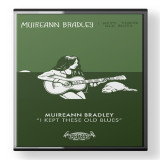
Muireann Bradley is a young blues, ragtime, roots and folk guitarist and singer based in Ballybofey in County Donegal Ireland. “This is my first album. Most of these tunes were originally recorded by the great blues men and women who were making records from the 1920s and 1930s right up in some cases to the early 1970s. I have also found inspiration for the renditions recorded here in the playing of some of the musicians who began recording this music in the 1960s and later, and who in some cases learned at the feet of the greats. Many of these guitarists played pivotal roles in the 1960s blues revival and subsequent “rediscovery” of many of the greats of country blues. I grew up steeped in these old blues in the hills overlooking the valley of the River Finn just outside the town of Ballybofey in County Donegal. My father would play this music constantly at home and wherever we went in the car and talk about it endlessly whether anyone was listening or not, telling stories about the lives of these musicians as if they were legend, mythology or the evening news. My father could of course play all this stuff on guitar, I remember watching him when I was very young and thinking “I want to be able to do that”. When I was nine he agreed to teach me and bought me my first little travel guitar. I worked hard to learn how to play but as time wore on I seemed to have less and less time to practice as I became more and more invested in the combat sports I was regularly training and competing in. Then in March 2020 the first Covid lockdowns happened and all contact sports were shut down. I was lost for a while but soon found my way back to the guitar. I was now listening, playing and practicing with a new intensity and focus. In a very serious moment, I wrote out a list of tunes I was going to learn. The first tune on that list was Blind Blake’s “Police Dog Blues”. I’m not sure now how long it took to get that arrangement together but when it was ready we videoed me performing it and posted it on YouTube. It ended up getting a lot of attention, I remember my parents being quite shocked and soon after that Josh Rosenthal got in touch… and here we are! Each individual track on this album was recorded live in the studio and represents one entire take with me singing and backing myself up on guitar simultaneously. Most are either first or second takes. Nothing has been added or taken away, no overdubs or modern recording tricks of any kind have been used at all so at least in some respects this album has been recorded in the same way as those classics of the 1920s and 1930s